Another blogging milestone. It's taken almost three-and-a-half years to chalk up another thousand posts, but we made it. 3,000, the big 3,000. Yes, it's enough blog posts which, if laid end to end, would stretch from Land's End to John O'Groats and back. Or fill several hundred Blu Rays. Ridiculous, no?
Here then for your pleasure and mine are the top ten most-read blogs from 4th October, 2015 to the present day.
10. Besmirching Labour's Name (July 2018)
9. Yvette Cooper's Alternative Vision (July 2017)
8. A Terrible Stalinist Purge (March 2018)
7. Why I Voted for Jeremy Corbyn (September 2016)
6. Reluctant Corbynism (August 2016)
5. Toby Young and the Taming of Higher Education (January 2018)
4. Suspend Labour Friends of Israel (May 2018)
3. The Bourgeois Politics of the People's Vote March (October 2018)
2. Guido Fawkes: Troll and Hypocrite (October 2017)
1. Owen Jones and Naive Cynicism (March 2017)
Hardly a shock to find dispatches from Labour's civil war featuring so prominently. The story of these posts are, more or less, the story of Corbynism too. This is a big improvement as last time, lists of things (blogs, musics) ruled the roost. No far left gossip either, thankfully. I guess the old dialectical laws are true: quantity passes over into quality eventually. Nevertheless, there are some highlights you might have missed that you haven't had the chance to check out. So what better time than now?
After Neoliberalism (August 2016)
Beyond Class and Identity Politics (August 2017)
Class Struggle and the Common (August 2017)
Fascism and Economic Anxiety (August 2017)
Jeremy Corbyn and the Working Class (July 2017)
Party Before Country (February 2019)
Racism and Capitalist Exploitation (July 2017)
The Thatcherite Offensive (February 2019)
Theorising Conservative Catastrophe (May 2018)
Whitney Houston: Celebrity and Alienation (September 2017)
What will the next thousand bring, assuming this blog will be around to mark its 4,000th entry? There's only one way of finding out ... and that's by staying tuned.
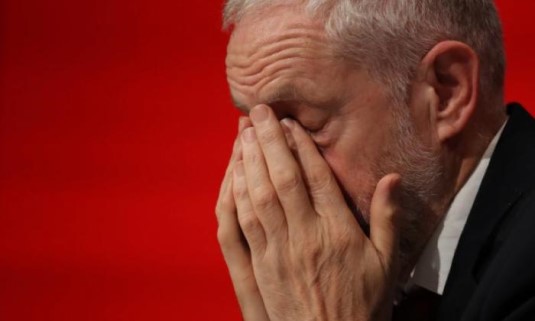
The Labour Party is in crisis. People are shaking their heads at the state of the anti-semitism wars, with some greeting it as the harbinger of the party's doom. It's a crisis, as Tom Watson put it, of the party's very soul. Well, he's right. And he's wrong. There are in fact two parallel and intertwined crises working their way through the party: a crisis of recomposition for one of its wings, and a crisis of decomposition for the other. Each have different roots, involve different forces, networks and patterns of class forces and fractions in Labour. In this post we look at the first of these crises - the problems of recomposition.
We've talked about the character of Corbynism before, but not for a while so it's good to have a recap. There have been three waves of Corbynism. The first broke over the Labour Party with the 2015 leadership election. The mere glimmer of something different to the received wisdom, married to the permissive voting regime saw new members and supporters flood in to the party to back the Corbyn candidacy. Then in 2016 in the aftermath of Dave, the Cameroons and the continuity Blairists blowing the remain campaign, Corbyn's critics and enemies in the parliamentary party made their move ... and failed utterly. What it did ensure, despite attempts at pricing supporters out of the contest and finding spurious excuses to suspend people from party membership, more people joined the party and ensured Corbyn's leadership was affirmed by an even stronger vote. These two waves of members, who now by far constitute the largest bloc of dues-payers, come in a couple of types. The first, as described in Alex Nunns's excellent book, The Candidate, were networks of activists who were around the labour movement and other campaigns and causes. The second, equally important group were those interested in but otherwise new to politics, or had previously supported Labour but felt driven away by the Blair/Brown years. These tended to be atomised socially but linked up digitally, and effectively entered the party as a mass of individuals. This was both connected to a wider process of political recomposition where a number of constituencies were effectively finding their feet again through political parties, and the growing dominance of network, socialised, affective and immaterial labour among the working class. Labour, via Corbynism, was speaking to this class fraction because Corbynism was, effectively, their eruption into politics. I argued that if this was correct, then to reverse the (then) sliding electoral fortunes of Labour using the latent, but networked strength of this section of our class was the only way forward.
The third wave of Corbynism then was the occasion of the 2017 general election. While Labour didn't win, partly thanks to the best efforts of whingers and wreckers of the previous 18 months, the party came from a low base precisely because it had a programme that spoke to affective and immaterial labour, and it was able to mobilise its mass strength through the digital networks and the social weight of the party itself. Having a party member in practically every social circle, every friendship group, every workplace in England and Wales is the most effective way of countering the same old fear-mongering and divide-and-rule. The third wave then is the 13 million voters - the highest number of votes Labour polled, save in 1997, since 1966. And despite the setbacks since the bulk of this vote has remained loyal, and is likely to do so regardless of what the polls might say.
However, the influx of such a large number of people brought with it its own challenges. The structure of the party is unwelcoming and bewildering to the uninitiated, and too many of its meetings are politics-free zones. As I often tell folks, if you want to avoid politics then go to a Labour Party meeting. This is before you touch on the pains various MPs and local government cliques went to to block and hinder the participation of new members in the party, and the straight up fact that meetings are, on the whole, incredibly boring. Secondly, most Corbyn supporters remain passive - at least from the point of view of voluntary participation. In Stoke Central, despite having more than 500 members on the books, as per pre-membership surge only a small fraction attend constituency meetings, branch meetings and get involved in campaigning. Nowhere near half turned up to the selection meeting for the February 2017 by-election - had more new members done so, it could have changed the outcome. Similarly in the campaigning itself the local party totally relied on outside activists travelling in. Nevertheless, while some new activists have filtered through, in Stoke at least the numbers aren't massive, but where the new members do matter is, obviously, as advocates for Labour outside formalised activism and, much to the chagrin of the Labour right, as members who can be relied on to vote for Corbyn-supporting candidates in internal elections.
We need to think more about integrating these supporters into the wider movement. Momentum proved useful to get people to targeted campaign sessions, and was an absolutely crucial factor in steamrollering the feeble forces of the Tory associations in 2017. But the promise of Momentum as a campaigning vehicle involved in a different kind of politics, be it what the political scientists patronisingly term 'unconventional politics', or in the community politics of re-engagement is yet to be fulfilled - at least as far as I'm aware. Quick wins here would be Momentum getting involved in (but not taking over) existing campaigns, and using their reach to mobilise people who find ordinary party activism intimidating and unrewarding. Also, if we want to move more members away from the 'atomised-but-networked' category, we need to think more seriously about trade unions. One of the paradoxes of Corbynism is its reassertion of class politics has taken place without much of a movement in and through the trade unions. Indeed, while there is no data for this I suspect most Corbyn supporters are not members of unions, despite it being a condition of party membership (there's nothing unique about this - I've interviewed would-be council candidates who weren't either). There is no reason why the party can't do more to promote trade union membership, nor of linking Momentum into initiatives around this. For instance, over the years my local trades council has moved from hidebound bureaucracy to campaigning organisation. Though, crucially, trade union power remains concentrated in the workplace and while getting isolated ones and twos to take out membership is good for the recruitment figures, they still remain atomised despite the connections forged through keyboard and touchscreen. Recruiting and supporting isolated workers has been the focus of many a long-term project and one we're yet to crack, but a more joined-up approach would certainly help integrate some who would otherwise not be.
Party education has always been appalling for a number of historic reasons. And the consequences of this neglect is costing the party dear with the anti-semitic and conspiranoid idiocies circulating about too many self-identified Corbyn supporters online. If you live on Twitter, like the majority of Westminster pundits do, it can easily appear as if the party is infested with troofers, troglodytes, and Israel obsessives. Instead of becoming familiar with socialist analysis, the boosterism and poor content of the likes of The Canary reinforces a black and white view of the world. Politics is not a struggle of interests pitted against one another, but a question of the machinations of bad people determined to get Corbyn/Labour. It has now reached peak absurdity with people like Jon Lansman and Owen Jones cast as pro-Israel plotters against the left. This adjunct of Corbynism is the gift that keeps on giving as far as the Tories and Labour right are concerned, always ready to offer up material that can discredit the left project. Could this be solved by a better and more systematic approach to party education? It could certainly help, but the leadership could do with taking a more active role. While attention has been focused on the so-called alt-left outlets, less has been said about other resources that do push socialist analysis, like New Socialist, Novara Media, the rebooted Tribune and the burgeoning network of good leftist podcasts - and not forgetting the old stuff either, like New Left Review. Of course, these are not for everyone but those with large social media followings, as well as key leadership figures should do more to promote their output. It would also help if there were more party-branded regional educational events as well, along the lines of last year's Derby Transformed and the upcoming Bristol Transformed.
These are difficult challenges to be sure, and each in their own way present issues that, unless addressed, could sink the left in the long-term. We cannot be content with a situation where the majority of Corbyn supporters are spectators who will chuck in a fiver here, and share a social media post there. We cannot leave political participation down to chance without concerted efforts of encouragement, and we cannot let utter bullshit and conspiracy thinking rule the roost. All these are consequences of Labour ballooning in size, of the left defeating and repeatedly defeating the right in the party through the weight of numbers. The left's crisis is one of coping with a mass following that more or less appeared over night, whereas that suffered by the Labour right is thanks to its disintegration and long-term tendency to decomposition. Something we'll deal with in part two.
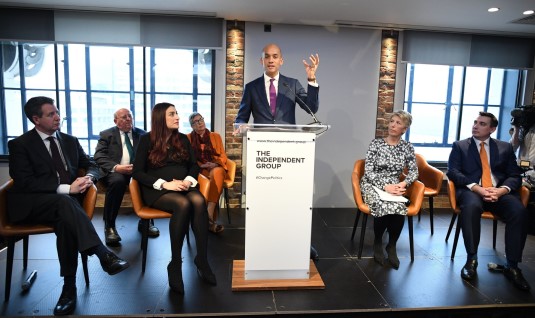
Who doesn't like a bit of straight talking and honest politics? In a world weary of spin, the novelty of a politician open about their opinions and, well, striking an authentic note can have considerable appeal. It hasn't done the reception of Nigel Farage and Jeremy Corbyn any harm, after all. Perhaps this is one reason why Chuka, the wannabe leader and spox for Westminster's most dismal project has decided to put his cards on the table. "You see", says Chuka, "I never felt totally comfortable in the Labour Party." Nice of him to come clean now the party is no longer providing him a cushy berth.
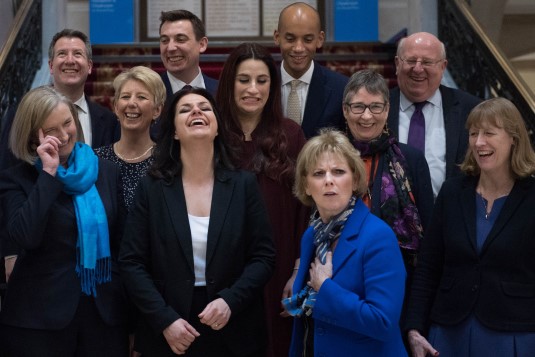
Chuka is a typical, if not banal, parliamentarian. The only party he owes time and devotion to is, well, his personal, private self: the Chuka Umunna Party. Once you're then in the Commons interacting with the big wigs and being a Person Who Matters, you can get swallowed by your own legend. And the more careerist and less principled the politician in question is, the more likely such a disposition consumes them. When you look at Chuka's career, it's nowhere near as egregiously offensive as his TInG compadre, Chris Leslie or, for that matter, TInG milk monitor Mike Gapes. But it is indicative of the trajectory of your common-or-garden social climber. He spent a few years swanning about London as a junior lawyer in the early-to-mid 00s before latching on to Compass (remember them?) and using the group to boost his profile. His first appearance on Question Time was way back in 2007, where he was feted then - even before he was selected for Streatham - as a great future hope for Labour. As for the Streatham selection in 2008, unlike Leslie and Luciana Berger's selections, it does appear it was a straight up and fair contest. That is unless he had help getting through to the shortlist as the automatic BME nominee - unlikely given the faction he was then aligned with. Nevertheless, he obviously impressed the selection meeting which went for him 175 to 162 over then Lambeth Council Leader (and now Lambeth MP) Steve Reed. And what happened once Chuka entered the Big House? Compass, any association with the (soft) left, and the politics that got him there was dropped and the rather staid, boring technocrat we know today was born. One can easily suppose he would not have got far at that February meeting 11 years ago were he upfront about his feelings about his fit in the party.
Here then is a cynic, someone who will do and say anything to advance his project of self-advancement. Even the innocuous but weirdly well-publicised links to the UK garage scene have a contrived whiff about them, as one of my comrades found out when he quizzed Chuka about the club nights and DJs he was into back in the day.
Of his not feeling the part, Chuka says it was his background of being mixed raced and having a working class dad and a middle class mum that meant he was out of place in Labour's culture. In the 1970s Labour Party perhaps, but in one of the most diverse and mixed constituency parties in the country in Europe's most cosmopolitan city? If it looks like self-serving nonsense and quacks like self-serving nonsense ... On and on the piece goes, but unwittingly Chuka skewers himself. On immigration, he - rightly - criticises Labour MPs who capitulate to anti-immigration sentiment and instead engage, address, and resolve concerns people might have. How short his memory is. Here is the difficulty. If vanity is your guide as opposed to politics, you become the most twisty of weather vanes. You reactions, your attention seekings are reduced to the demands of the moment regardless of what might have been said and done in the past.
Chuka has described the foundation of TInG a liberating experience. No doubt it is. No members expecting monthly reports, no whips asking you to abide by the manifesto you were elected on, no Electoral Commission scrutinising "party" finances. But deep down, Chuka knows the most liberating aspect of the whole experience, perhaps one he suspects but can't admit to himself yet, is his liberation from the tyranny of relevance.
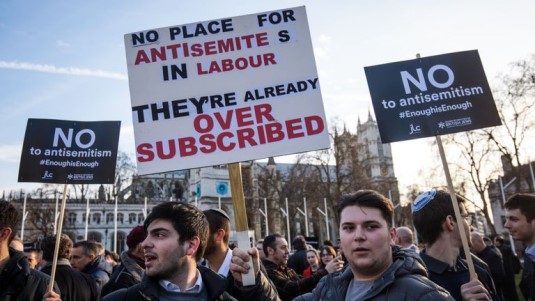
In recent days, the charge Labour is institutionally anti-semitic has surfaced again. The evidence marshalled are the interventions of Chris Williamson - long a bane for Labour MPs for other reasons. Then there are the idiots posting in Corbyn-aligned Facebook groups, the abuse received by sundry MPs, the odd activist hanging about with David Icke and, of course, the very fact Jeremy Corbyn has long-aligned himself with pro-Palestinian groups and causes. Then again, the charge isn't new. It aired last Summer too. You may recall Pete Willsman - he of "Jewish Trump fanatics" fame - was re-elected to the NEC after a secret recording of these comments were publicised. Because this didn't sink his chances and stopped trendy lefty and centrist hero Eddie Izzard from retaining his seat, ipso facto the party is anti-semitic from top to tail. That the polls opened and most of the voting was done before the comments gained wide currency is a trivial detail we need not bother with.
What then does it mean to say an organisation is institutionally racist? Presumably, it is stating that racism or a particular type of racism is endemic and constitutive of its structure and operation. Here then we can outline three different approaches to the issue. The first is that because capitalism itself is intrinsically racist. When you have exploitation, and seeing exploitation is dependent on managing populations, the stirring up of racist and xenophobic sentiments is a useful means of dividing and conquering, of blocking subaltern classes from ever becoming a threat to the social order. Therefore because racism exists in wider society it is bound to penetrate and permeate its institutions, all institutions. The Labour Party then, with its 540,000 members, is going to reflect the prejudices of its context. This includes anti-semitism, reported incidents of which last year were at an all-time high.
Necessary context then, but also a bit of a cop out. While all institutions are only as good as the society that hosts it, undeniably some are less racist than others. Labour has and continues to have a strong anti-racist record, and of the main parties is much stronger at actively rooting out all forms of racism, including anti-semitism. You then have to take institutional intent into consideration. If any member makes anti-semitic remarks, there is a reporting and complaints process, an investigation, and the application of sanctions with varying degrees of severity if one is found to have a case to answer. It is interesting that attacks on the disciplinary process itself have intensified since Jennie Formby took over, while her predecessor escaped all vitriol over the backlog that built up under his watch. But let's put that to one side. Formally speaking, thanks to the measures put in place over the last few years Labour is an anti-anti-semitic organisation and now has more elaborate definitions and procedures for dealing with this than, arguably, other kinds of racism as well as sexism and homophobia.
Nevertheless, the formal is not the same as the substantive, which brings us on to the third understanding of institutional racism. That is at best the blindness to and at worst the encouragement of racist practices. This is more or less the understanding the Stephen Lawrence Inquiry came to regards the Metropolitan Police, defining it as the "... collective failure of an organisation to provide an appropriate and professional service to people because of their colour, culture, or ethnic origin. It can be seen or detected in processes, attitudes and behaviour which amount to discrimination through unwitting prejudice, ignorance, thoughtlessness and racist stereotyping which disadvantage minority ethnic people." Does this fit the Labour Party? Yes. And no.
As I've argued before, there is an historic culture of carelessness in parts of the left vis anti-semitism. A strand of this certainly comes from a more troubling source. The problem, however, is because this is overlaid by factional struggle there is now a blockage, an over-defensiveness and lack of willingness to countenance the very existence of a problem on the part of those who share and push anti-semitic tropes, or promote the work of anti-semites. This, of course, is compounded by the over-amplifying of anti-semitism by the media and the alacrity with which it has been taken up by Corbyn opponents, including hypocrites who floated "rootless cosmopolitan" criticisms of Ed Miliband when it suited just a few years ago. Here's the thing. Just because your opponents take up an issue, some times cynically and in bad faith. and use it to inflict as much damage as they can does not mean the problem is fictitious. Precisely because they can point to Facebook groups full of useful fools, and Twitter accounts with Corbyn-supporting hashtags acting as if the Israel lobby and "Zionists" are the only active force in British politics, this is the stuff that makes the attacks effective and trashes the standing of the party in the eyes of many Jews and the community's allies and friends.
The institutional anti-semitism in the Labour Party is, therefore, somewhat different to the kind you find in other institutions. It is sustained by the battle for the party, a grim battlefront in a zero sum game of entrenched position vs entrenched position. As such, whatever the leadership do, whatever new processes the General Secretary introduces for one side it will never be enough because, as far as many of them concerned, the leadership are politically illegitimate; and for the other it's a sop and capitulation. The resolution of the anti-semitism crisis then is not a matter of compromise - for each side the issue will only go away with the complete crushing and driving out of the party of the other. A situation that can only poison the well further, and guarantee anti-semitism won't honestly and comprehensively be confronted.
Some necessary context for understanding the presence of anti-semitism on the left. This is courtesy of Dave Renton, which he first posted to Facebook.
I'll start with my position and then get on to the detail which will be less familiar to people, i.e. the analysis.
There are more important things happening in global politics even than the electoral fortunes of the British Labour Party. Think of Palestine. This is a country of something like 5 million people, the vast majority of whom are compelled to live as if in an open prison: with inadequate food and water, have the legal status of second class citizens, are deprived of work and, when they protest, shot at by soldiers. In the last decade, there has been an increasing move to boycott Israeli institutions. But Israel's defenders have responded with a propaganda war of their own: including (in the US) attempts to criminalise the advocacy of cultural boycotts, and including a repeated silencing of anyone who speaks up for the Palestinians. Among the many things which are wrong about this attempted silencing is that it works through a series of lies: that Israel's racist despoiling of the Palestinians is somehow race-blind, that Israel's critics are the successors to the interwar fascists ... In that context, if you are any sort of socialist or even a liberal deserving of the name, the only moral starting point must be support for Palestinians, hostility to the occupation, and to the lies used to justify it. But a pro-Palestinian politics can't succeed as if by saying "You call us racists, very well, we will be racists." Every time the movement does that, it makes life easier for the advocates of occupation, imprisonment and genocide.
Now, on to Williamson.
One thing very few people on the left seem willing to admit is that since 2003 the anti-war movement here has been subject to a process of infiltration by currents of opinion, and sometimes organised groups, behaving like the local representatives of the British far right.
In 2003-5, this was mainly about opinions. In particular, there was a current of opinion within the movement, which grew stronger the occupation of Iraq went on, to say that 9/11 was an American inside job. That strand of opinion was assisted, inevitably, by the need for people - who were against the war - to find websites which would give an honest, objective account of what was actually happening in Iraq. This meant disassociating from mainstream media, going to anti-war news sites. In the US a large number of these sites were hosted by the so-called "libertarian" right and saw no reason against promoting conspiracy theories, 9/11 Truth accounts, etc. Movements such as Stop the War did try to keep these sort of opinions out - banning them from our platforms, etc. But this was a matter of silent gatekeeping - the left didn't like to admit we had a problem in a movement we led - we would never say openly that we were worried about X or Y Stop the War group. The only time when the left in Stop the War came out publicly against the right was George Monbiot who in two Guardian pieces tore into the 9/11 Truth movement. In retrospect, that was a sign of the sorts of difficulties the left has been having in 2018-19: not least in the very many people who saw themselves on the left but posted in the Guardian comment threads criticising Monbiot.
By the time of the uprising in Syria, the counter-revolution, and the attempts by the worlds' imperial powers to stake an interest in it, this amorphous opinion strand had begun to acquire an infrastructure. Websites promising an independent take on events in the middle east had been going for 10 years. They were, in some cases, much better read that conventional media. (There were also parts of state media which backed them, notably Russia Today which finds that this kind of politics dovetails with its own).
Like the "conventional" far right, today's anti-war anti-semites have grown through a process of individual activists building up a social media infrastructure which at a certain point they have monetised on YouTube, Patreon, etc, enabling previously isolated individuals to become full-time organisers on behalf of a certain political argument.
Probably most of my friends haven't heard of them but that doesn't meant they haven't been able to achieve an influence much larger than they deserve.
A typical individual is Vanessa Beeley who was at one stage associated with an anti-war group in Frome, but has built up a Twitter following of 40,000 people which she uses to applaud dictators everywhere - Assad, Putin. And to say that the people she dislikes are in the pay of the Jews.
Or Gilad Atzmon, who tours the world promoting the Protocols of the Elders of Zion, saying that Jews should be blamed for the death of Jesus. And tells his followers on the hour why their greatest political enemy is the left.
Or Atzmon's British follower, Cyril Chilson.
[EDITED: Or Scott Nelson who tweets as @SocialistVoice, and who has written that Tesco's and M&S are "Jewish" businesses with "Jewish blood" and uniquely blameworthy for "human rights abuses" and "barbaric war crimes"]
These people aren't just an opinion trend any more, but like the other parts of the far-right they work through a process of mutual boosting and promotion. They are an organised and coherent faction united by a common insistence that the world's difficulties should be blamed on the Jews.
Moreover, while they seem to inhabit what looks like a left-wing space (i.e. opposition to the American wars in Iraq and Syria) their behaviour within that space is consistently not just right-wing but far-right: they oppose popular uprisings (e.g. in Syria), they support dictatorship, they oppose left-wing analyses of poverty and oppression which blame them on class, and argue for a conspiratorial, anti-semitic and racist politics.
You'll notice that I haven't mentioned Williamson.
The point about Williamson is that over the last 12 months he has liked the social media accounts of each of the four people/groups I've just mentioned, used his own social media to boost their profile, and treated them like the allies in a shared political project which he undoubtedly regards them to be. In so far as this part of the far right has a "shield" in official politics, he provides it.
Every time someone points out to Williamson that he is promoting anti-semites he goes through the same cycle of denial, insisting that his allies are good socialists being unfairly targeted for their views on Israel, belated admission, apology, promises not to do it again.
But he always does.
I am sure Williamson thinks of himself as a brave a defender of Corbynism and the Palestinians. But he behaves like someone who is trying to push forward certain current on the right - assisting them in permeating the left, and therefore in choking of the other strands of opinion which aren't willing to compromise with racism.
So, any sensible account of Williamson's proposed suspension has to begin from the deceit of some of the people accusing Labour of anti-semitism, their willingness to play a role as the public advocates of awful crimes, their inability the essential racism of the project they support.
But no principled politics could stop there.
Party | Number of Candidates | Total Vote | % | +/-
Jan
| +/- Feb 18 | Average/
Contest | +/-
Seats |
Conservative | 10 | 6,267 | 24.0% | -12.5% | -12.5% | 627 | 0 |
Labour | 10 | 7,858 | 30.1% | +26.0% | +2.9% | 786 | -2 |
LibDem | 9 | 6,854 | 26.2% | +9.8% | +6.1% | 762 | +1 |
UKIP | 3 | 301 | 1.2% | -2.9% | +0.4% | 100 | 0 |
Green | 5 | 677 | 2.6% | +1.2% | -1.6% | 135 | 0 |
SNP | 0 |
| |
| | | 0 |
PC** | 1 | 831 | 3.2% | +3.2% | +3.2% | 831 | +1 |
Ind*** | 3 | 1,132
| 4.3% |
-33.2% | -2.3% | 377 | -1 |
Other**** | 5 | 2,216 | 8.5% | +8.5%
| +7.6% | 443 | +1 |
* There were no by-elections in Scotland
** There were two by-elections in Wales
*** There was no Independent clashes this month
**** Others this month consisted of the Women's Equality Party (46, 65), Aspire (1,012, 1,002), House Party (89)
Now there's a first. I've been covering these now for six years and this, I think, is the first time the Tories have come third in the by-election monthly tally. A symptom of their long-term decline? As much as I would prefer a centrist outfit like the Liberal Democrats to replace the blues as the main party of the British ruling class this, unfortunately, has more to do with the distribution of contests than anything else.
Still, that is a very good LibDem result, far, far outperforming its national polling figures. There is no doubt about it. They have re-won their position as the go to for none-of-the-above voters in by-elections. And following Brexit, whenever that happens, they are likely to sustain this position.
Is there anything else worthy of note? Not really, except Aspire - the 'other' party that did very well in a couple of by-elections, taking a seat off Labour - is the vehicle of former mayor of Tower Hamlets, Lutfur Rahman . Clearly he still has some very substantial levels of support in that part of the world.
7th February
Bradford MBC, Bolton & Undercliffe LDem gain from Lab
Buckinghamshire CC, Totteridge & Bowerdean Lab gain from Ind
Lambeth LBC, Thornton Lab hold
Tower Hamlets LBC, Lansbury Lab hold
Tower Hamlets LBC, Shadwell Oth gain from Lab
Wokingham BC, Evendons LDem hold
14th February
Vale of Glamorgan, Rhoose Con hold
21st February
Cardiff UA, Ely PC gain from Lab
Northamptonshire CC, Oundle Con hold
28th Feb
Stroud DC, Berkley Vale Con hold
As the temperature rose and late February felt more like late May, the blog thermometer registered a modest rise in audience activity but still down on its 2017 peak. Perhaps we'll return to those dizzy heights some day. Until then, here are the five posts that did the most business. Why not read them again? And again after that?
1. Is The Independent Group a Wind-Up?
2. Decomposing Liberals
3. A New Centrist Party is Still a Stupid Idea
4. On Centrist Party Polling
5. Chris Leslie and Elitist Politics
A casual observer might think I spent the month writing about nothing but the idiocies and conceits of centrism, but it's not true! There were 17 other posts about other stuff! Like I'm going to complain, anyway. If they bring the boys to the yard, they bring the boys to the yard. And there is some enjoyment to be had scribbling as their politics fizzle and implode. No doubt March will bring more of the same. And, of course, next month is Brexit month. Or is it? We shall see what happens, but surely the smart money is going to be on requesting an extension to Article 50. Unfortunately, I have poor form on the prediction front so I won't be staking anything on it.
Okay, second chance saloon time. Who deserves another look? On this occasion Party Before Country gets the nomination. Here, in the context of the long-term decline and crisis in the Conservative Party I plot Theresa May's moves to subordinate everything about Brexit to the short and medium term interests of her party because, ultimately, its preservation as a going concern is the same as preserving the organising centre of bourgeois interests in official politics. If the Tories split there's no other party they can rely on to pick up the baton. Whereas this wasn't an issue when Blair and Brown ran the Labour Party, that definitely isn't the case under Corbyn and McDonnell.