Showing posts with label Blairism. Show all posts

Saturday, 30 May 2026

A Rare and Unusual Intervention

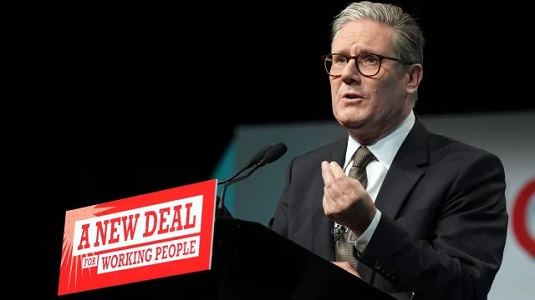
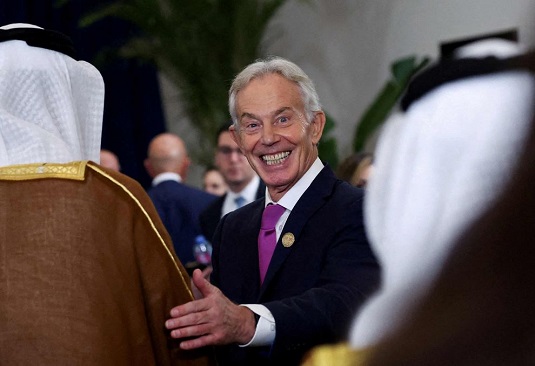
Tony Blair's essay about what's gone wrong in the Labour Party has been widely read and discussed, and earned decent length ripostes from Wes Streeting, Andy Burnham, and Keir Starmer. The cage of Labour statecraft was well and truly rattled. Still, if you've read one Blair essay you've read them all. There was nothing new here that he hasn't already said in a thousand-and-one other rare and unusual interventions. Blair is a massive fan of ChatGPT and its like, but even he doesn't need to engage their services when a cut and paste from his archives does the job.

Blair was right about one thing, and that's the absence of strategic direction at the heart of this government. A point so obvious that even my cat knows it. But apart from that, the 5,700-word screed is interesting for one reason: for unapologetically laying out the empty world view of the ruling class. Something that "this shows Blair has moved to the right" takes fall far short of. In the piece, Blair says that welfare needs cutting (of course he does), military spending boosting, net zero ditching, state intervention and regulation pared back, and more government funds made available for AI development. On world affairs, he says Britain needs to carry on sucking up to the United States. And does so with an argument identical to that pushed by Peter Mandelson during Donald Trump's Greenland bullying at the beginning of the year.

Central to Blair's argument is that rudderlessness comes from a lack of policy. That is what drives the politics. But politics, which is always a clash of interests, counts persuasion among its properties. While lecturing others about doing politics properly, this is entirely absent from the essay. What the state should be doing, the backing of AI, and continued subservience to the US under Trump are treated as self-evident truths. They certainly are to Blair, because having trousered tens of millions since leaving office his personal, private interests are now entirely aligned with the class interests of the super rich, whose ranks he long aspired to join.

There are two forms of ruling class politics that dominate the powers-that-be. The technocratic managerialism personified by and incompetently manifested by Starmer and his cabinet of right wingers is what "sensible" and "grown up" politics is. Living in the real world means never changing the fundamentals, keeping the present class settlement as is - even though it's breaking down - and fiddling around the edges and selling that as "change". The alternative is just letting it all hang out in the open. The establishment's euphemism for this is populist right wing politics, but it's just the rule of oligarchic capital transacting in full view of everyone. The endless enrichment of the already rich is its programme, and the scapegoating and culture war rubbish are its politics of distraction. Neither, you'll note, come anywhere near to Gramsci's view that ruling hegemony requires intellectual, political, and moral leadership. Both rest on what was established by Thatcher and Reagan, and consolidated by their successors. One perspective says this is the way of the world, while the other almost goads everyone outside the private jet class to do something about them. There is no effort to persuade, let alone mask the realities of class rule.

Blair's essay manages to bridge both camps, making a technocratic case for big power bullying, the oligarchical interest, and what needs to be done to consolidate both. Not in terms of winning an eroding popular consent for this state of affairs, but simply letting ruling class interests run riot. AI for perfecting new forms of exploitation, more markets to keep the balance titled for capital over labour, and the bombs and guns to continue enforcing their grip on global affairs. Blair used to say class politics was old hat, but here he is proffering a manifesto for open class warfare. One comfort zone that he's always been more than happy to inhabit.

Image Credit

Sunday, 8 February 2026

A Farewell to Morgan McSweeney

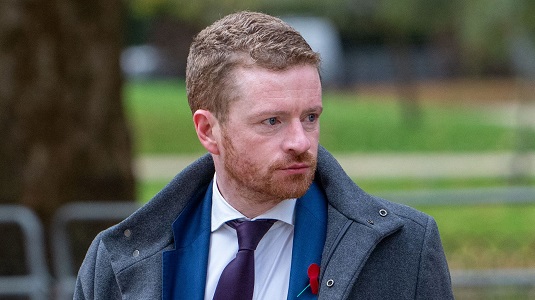
What a fantastic week. Peter Mandelson toasted to charcoal, the government being forced to make public all communications about him, the possibility of massive reputational damage hitting Wes Streeting when private messages between the pair come out, and capping it off Morgan McSweeney falls on his sword. Rare are the times when the doings of the worst people in politics catches up with them, but this is one such spectacular occasion.

It's not true that McSweeney was the most malignant presence in the contemporary Labour Party, because we found out that he willingly, happily had his strings pulled by Mandelson. We've learned that Uncle Peter had a hand in nodding through and barring candidates for selection ahead of the general election, displaying the customary contempt for data protection laws that the Labour right normally has for their own party rules. And that Mandelson effectively reshuffled the cabinet after Angela Rayner's departure, ensuring a leadership team more right wing and authoritarian than anything Mandelson had a hand in during the New Labour years.

That McSweeney, like large chunks of the Labour right, lionised Mandelson is common knowledge, but why? As argued here previously, McSweeney is no genius, and was only ever an "operator" when he was secure in a position of unaccountable power. McSweeney was Mandelson's apprentice, and only ever approached his master in cynicism and mendacity. His actual achievements are somewhat lesser, and among them one can count hollowing Labour out before it entered government, relying on antipathy to the Tories and the split right wing vote to win an election, and securing a weaker public endorsement than Jeremy Corbyn managed in 2019. It is under his direction that the party's support has eroded to a historical nadir, to the point where Labour's actual liquidation is on the cards, and McSweeney's relentlessly racist push on immigration has boosted the extreme right.

Obviously, none of this happened without the nod from Uncle Peter. But there is a significant difference between the two. Mandelson, like Blair and Gordon Brown, were political. Working their way up and through the party in the 1980s demanded skill, of knowing the balance of factions, the importance of the unions, the strength of the fiefdoms in the apparat, how to play to constituency parties and, where necessary, deploy political arguments to secure quiescence from opponents and find new allies. This isn't to say Labour was a nice place, far from it. But it was an institution that was significantly more than a bureaucracy for organising campaigning teams, which is what the party has become. New Labour was not inevitable, and Blair, Brown, and Mandelson had to win political fights to win the leadership and push it further to the right. The problem was they created a desert and called it peace. By battling and clearing out the left, and reducing trade unions to piggy banks that would occasionally complain but never rock the boat, successive generations of councillors, MPs, internal office seekers, and party full-timers came of age when the party was becalmed. Even in the Iraq War did little to nothing to challenge the leadership's writ.

This was the Labour Party McSweeney joined in 2001. He did the unglamorous hard yards of carrying bags, drawing up countless road groups, knocking on doors, all the things that party campaigning staff are expected to do. And, as we know, he organised campaigns too. But internal struggle? He undoubtedly listened to what Mandelson told him, heard all the stories of 1980s shenanigans from the John Spellar/constituency bore wing of the party. There will be a copy of John Golding's The Hammer of the Left lying around somewhere, but he never actually lived it. And that showed when the 2015 Labour leadership election rolled around, and his campaign - the Liz Kendall effort - mustered only four per cent of the vote. He, nor Kendall, hadn't realised that New Labourism had no base in the party outside of sections of the PLP, the bureaucracy, and the leaders' offices of a couple of tame unions. The lesson McSweeney took from this was not to wage a political struggle to make these positions popular, as the evidence of his own eyes showed he was completely clueless on this front. Instead, to defeat the left and return Labour back to its rightful professional/managerial leadership cadre, there was only one thing for it: lying.

If McSweeney has a genuine talent, it's as a con man. Because McSweeney and mates couldn't resist telling all and sundry about how clever he was, we know he ran Labour Together as a Janus-faced operation. Outwardly a soft left can't-we-all-just-get-along kumbya outfit, in reality it was a front for organising hit jobs on left wingers, left wing publications, of providing friendly media with copy targetting party members and the leadership, and once Corbyn was gone it, despite denials, ran Keir Starmer's leadership campaign - a confidence trick in which every single one of his pledges turned out to be a lie. And once McSweeney was at the top of the tree, the power of the bureaucracy was turned against the left. No persuasion, no alliance-building across party constituencies. Nothing but a petty-minded, vindictive pursuit of real and imagined enemies. There was never anything "genius" about any of this. Wielding power against the small and weak is the easiest thing in the world.

The rest is history. They say that if you wait by the river long enough, the bodies of your enemies come floating past. Many people across the labour movement have waited decades for Mandelson's cadaver to bob along with the current. And dragged in his wake is the fast festering foulness of McSweeney's former career. But unfortunately for the survivors of this last week, the damage these pair have done is so great, the dispersion of their natural constituency and core support so advanced, that something else is teetering on the bank further upstream and looks certain to topple into the water. And that is the swaying, barely-living figure of the Labour Party itself.

Image Credit

Saturday, 13 December 2025

Wes Streeting's "Change of Course"

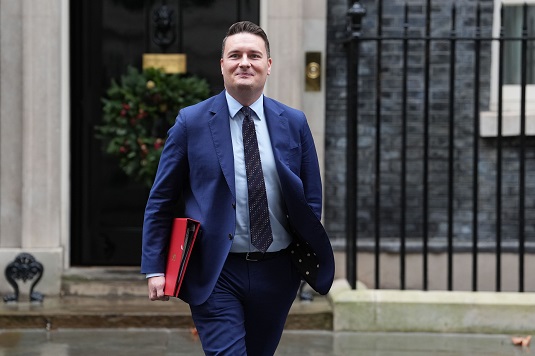
If Wes Streeting is the answer, is the question 'can Labour do even worse?' I ask, because the previous round of hostile briefing/leadership speculation has whetted the appetite for more. Saturday saw a big Times splash on two coded criticisms Streeting made of Keir Starmer and the Number 10 operation. This government is too technocratic, and presents itself as "the maintenance department for the country." He later added that ministers shouldn't do the broadcast rounds with a "shopping list" of achievements because they do not capture the popular imagination. A friends of Wes, enjoying the shield of anonymity, added that Starmer is steering the country into the catastrophe of a Reform-led government. Only a new leader and a change of course can avert the coming cataclysm.

Nothing to dispute here. Since Starmer became the leader of the Labour Party, he has dispersed the party's coalition of voters. A process that has accelerated in office. Not because of inevitable disappointments, but thanks to stupid and counter-productive strategies. Who, for instance, did Rachel Reeves think would be impressed by taking winter fuel payments off most pensioners? The bond markets? The very ones who were quite happy with her recent fairly Labourish budget? Likewise, the effort at leapfrogging Reform to nullify refugees and channel crossings as a toxic issue is not winning anyone over, nor keeping what's left of Labour's support from dwindling further.

Does Streeting offer a break from this? It's all very well talking about a "change of direction", but in Streeting's case past behaviour is the best indicator of future behaviour. Is he going to stop the race to the gutter? Will he abandon Starmer's efforts to water down the European Convention? I doubt it. Streeting turned on trans people when he believed it was politic to do so, and he can barely conceal his contempt for normal people - most recently, resident doctors - who stand up to him. He's made no bones about being private health's man in the NHS, drafting in Alan Milburn to show their business is his business. He has the dishonest streak customary on the Labour right, and is the Blairiest of Sir Tony's epigoni in cabinet. Is this really what Labour are putting their hopes in?

True, Streeting doesn't sound like a wooden top when he speaks. But politically, there is no difference between him, the hapless Prime Minister and, if we're brutally honest, the other leading contender for the job. Labour's problem is political, and therefore theirs is a crisis of politics. Swapping out the PM for Streeting won't make any difference, because he's committed to the exact same trajectory. If things carry on as they are, in years to come Starmer will be remembered as Labour's last ever election winner. If Streeting makes it to Downing Street, he'll become the leader that took the party to its worst ever defeat.

Image Credit

Monday, 1 September 2025

How Not to Cover a Reshuffle

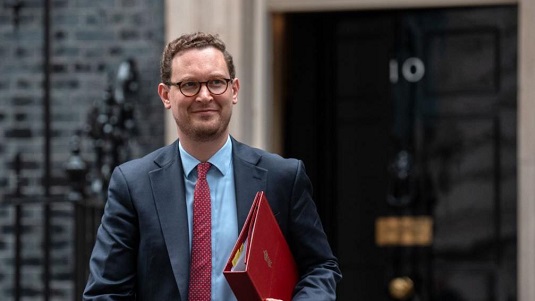
The new parliamentary term began today, and Keir Starmer led it off with a small reshuffle. Darren Jones has moved from the Treasury to 'Chief Secretary to the Prime Minister', a new position in charge of "delivery". Baronness Minouchie Shafik, having previously done stints at the IMF and Bank of England is now Starmer's chief economic advisor, and Tim Allan - former Blair lackey and founder of the Blairite comms firm, Portland, is confirmed as the sole head of Downing Street's PR machine. Gone is Liz Lloyd, another Blair era appointee, to make way for Jones. Politically, does it mean anything? Does it signify a fresh start? No. The government remains the same slow motion car crash it was yesterday.

That hasn't stopped some from trying to read significance into these mainly managerial moves. In some of the most tenedentious commentary I've read recently, for the Telegraph associate editor Gordon Rayner declares this was "a power grab" that shows Rachel Reeves is on borrowed time. The evidence? Moving Jones to Number 10 leaves the chancellor "publicly humiliated". Mindful that Prime Ministers who sack their next door neighbours aren't long for this political world, this is apparently an element of a low-key campaign to make her life impossible and force Reeves's resignation after her multiple misfires in office.

This, alas, is an exercise in right wing wishful thinking. A point underlined by the additional comment provided by John Redwood. For one, if the framing was true there would be "insiders" touting anonymous briefings. Maybe Rayner's contact list has a dearth of Labour numbers, so he couldn't find anyone to give him the inside track. But nowhere else is running the line that this is a constructive dismissal effort. Not even the gossip mongers at Guido, who prefer to dwell on how Jones's appointment takes some responsibilities off Pat McFadden. If displeasure underpins the reshuffle, one could make a more plausible case for it being at the expense of his brief, not Reeves's.

Since Reeves's appointment, there is some truth to the notion that she has blindsided Starmer, particularly with last summer's debacle over winter fuel payments. One might suggest Starmer had no choice but to stick by his chancellor so early in the new government, but her initiative was consistent with the Labour right's approach to social security. And it proved to be the jumping off points for further attacks, most of which have been blunted or abandoned. These cannot be layed solely at Reeves's door. The Prime Minister nodded every one on, and his unelected henchmen were greenlit to do their worst "persuading" opposition-minded MPs to back the line.

There is no truth in the view that Starmer and Reeves are in tension, let alone at splitting point. He has accepted her outlook, conditioned as it is by the Treasury/Bank of England/City nexus as the commonsense view on matters economic - reinforced by Shafik's appointment. This reshuffle is business-as-usual and more of the same. And Rayner's Telegraph piece? A case study of forcing the facts to fit a baseless conclusion. Which just about sums up the entirety of right wing politics in the moment of Conservatism's collapse.

Wednesday, 11 September 2024

Residual Welfare Vs Universal Social Security

It's now abundantly clear what Tuesday night's Winter Fuel Allowance vote was about. It wasn't, according to the cynical and dishonest household budget metaphor, a money saving measure. Showing the political establishment that, like in opposition, Keir Starmer's Labour would carry on being strong on the weak was a useful by-product, but not the main reason. Nor was it an exercise in a twisted notion of fairness, where pensioners are going to have to suffer because it's "their turn" - following 14 years of attacks on younger, working age people. No, what Rachel Reeves really set about doing was abolishing an example of universalism, of rubbishing the idea that social security should be accessible to all.

How do we know this? The new Labour government have told us in not so many words. From the beginning, Reeves said stopping the payments would be mitigated by a campaign to get more eligible pensioners on to pension credits. My friend Pete Nicholls has roughly calculated that the take up of pension credits by an extra 800,000 eligible pensioners would cost over £2bn - wiping out the £1.2bn it would contribute to closing the famous £22bn black hole. Regardless of what one thinks of Reeves, Starmer, and the rest, they are not stupid people. They know this is the case, which ineluctably points away from fiscal prudence towards a different objective: universal provision.

In this respect, Reeves truly is the heir to Blair. Universalism is not "progressive". It costs a bomb and is "inefficient" because people who don't need it get it. I'm sure His Blairness would have performatively disavowed his Winter Fuel Payment, if the government was in a bit of a spot and they asked him. But this is ideology masking interests. Since the battles successfully waged by Thatcher in the 1980s, her aim of stripping back the welfare state and public services to the barest minimum has largely succeeded. Residualism is the common sense. This was a strategy in her class war to permanently tip the scales away from labour to capital. I.e. Clawing back benefits, introducing conditionalities, holding them down at barely subsistence levels, was an effort to centre the wage as the primary, if not the only means of income for millions of people - giving capital the whip hand. In Thatcher's scheme, it sped up labour "flexibility". By cutting social security, she made sure any job was better than no job, even if the pay was poor and the conditions abysmal.

This contrasts with how the architects of thw welfare state saw things. Whether one was Labourist, one nation Tory, or Liberal, it represented a social wage. Universal social security provided a floor designed to catch anyone who fell on hard times. Welfare was never a luxury, despite how the unchanging propaganda of the last 45 years styles it, nor was it a product of high-minded enlightenment by clever, compassionate politicians. It was a gain extracted from capital by labour as the cost of avoiding social unrest and certain kinds of events. The fact of universalism gave other layers in society a stake in the social security system. Better off families might not have needed child benefit, for example, but it gave them extra spending power they could splash on extra clothes, treats for the children (and treats for themselves). But by extending them a stake, it was hoped opposition to their losing an entitlement would protect those who really needed it - families crippled by low wages and debt, mums financially controlled by abusive husbands, and so on. And as imperfect as it was, universalism was a bureaucratic expression of solidarity. Universalism, as a product of heightened class struggle when our people were politically ascendant, went into retreat as the tides of battle flowed in the bosses' favour. As class consciousness eroded it was easy to characterise universal entitlements as largesse/symptoms of administrative inefficiency, and the axe fell on them in due course. Unsurprising that getting shot of Winter Fuel Payments, ironically introduced under the otherwise anti-universalist Gordon Brown, fits the Starmer project like a hand in a glove.

As we noted the other day, this was not a "tough choice" for the government. But one, from the standpoint of Starmer's statecraft, a politically necessary one. Universalism raises the idea of everyone getting something, of building on collective aspirations that lie outside the class alliances and type of capitalism the Labour right want to build. This is a capitalism that offers steady, stable growth, is run by Treasury-brained technocrats like Reeves, has a re-legitimated state that works, a pacified work force interested in consumer durables and coffee shops, and returns a semi-permanent government of centrist sensibles at election time. There is no room for alternative ways of doing things. Hence universalism is anathema not just to the nuts and bolts of this dismal project, but to their very conception of politics.

Image Credit

Wednesday, 14 August 2024

Rachel Reeves's PFI Enthusiasm

Having ripped off Wikipedia, is Rachel Reeves about to rip off the Treasury? According to Monday's FT, the Chancellor is mulling over a Private Finance Initiative-style scheme to build a new £9bn highway and tunnel linking Kent and Essex just east of Gravesend. This "reinvented" form of PFI differs from the predecessor pioneered by John Major and made New Labour's own during the Blair/Brown years in several respects. The state will underwrite the risky parts of the investment (i.e. the tunnel), with the rest coming from private capital. In return, investors would receive returns from the tolls levied. However, these would be capped and the operation of this son-of-PFI would come under the scrutiny of an independent regulator ("changed" Labour loves its quangos, as forecast).

Leaving aside whether such a project is "necessary" when we should be reducing road traffic, it is politically attractive to Reeves because like Gordon Brown before her, it would keep some of the costs off the government books, enabling her to claim fidelity to her self-imposed fiscal rules. It would score points with FT and Economist editorials, while signalling to overseas capital that returns are guaranteed thanks to Labour's industrial activism. But there are wider concerns impinging on Reeves's decision about the Thames crossing. What you might call the good reason and the real reasons.

There are close parallels between Keir Starmer's authoritarian modernisation project and the drum Will Hutton has spent the last 30 years banging. Starmer is appalled by and opposed to "sticking plaster politics", and wants to renovate the mindset of the state so it takes the longer view. Hutton back in his celebrated (but, pointedly, ignored by Blair) The State We're In railed against the short-termist culture of British capitalism, and argued building a competitive economy in the 21st century requires planning and interventionism. In this respect, the new PFI - rebrand incoming - can be seen as a government effort at tackling the short-termism, a habit picked up from the City, and therefore endemic amongst British capital and its hangers ons. Underwriting risk while capping returns forces investors to think longer-term. And if more similar schemes can be spun off (aspects of this are included in Great British Energy, for instance), Starmerism could affect the attitude change it wants to see. On paper, it could lead to a more stable economic environment, and one where investors are prudent with their stakes instead of chasing high risk, high reward fancies that have the periodic tendency of bringing stock markets crashing down.

As for the real reasons, the same applies here as it has always done with PFIs. Creating public-private partnerships brings business interests to the top of ministers' in-trays. It works as a pressure as office holders come and go, making sure they're treated as preferential clients as opposed to contractors engaged to provide a service. And, as everyone knows, if a minister is seen as "good for business", the rewards will be there when the political career is over: consultancies, board positions, chairs, retainers. All offering the promise of a comfortable retirement. We cannot forget the politics either. What motivates the Labour right more than anything else is their self-importance, and that is guaranteed by sustaining their careers as stewards of the state. PFI is a means of offering the fearless risk-taking animal spirits of British business guaranteed markets. Just as in the New Labour years a section of capital was annexed by Blairism, the aim is to repeat history - hopefully not as farce - and create a big bourgeois tent. If Labour are good for business, most sections of capital will support them. Which makes it harder for the Tories to come back and take their ministerial cars from them.

In other words, Reeves's preference for PFI-style schemes has nothing to do with "learning the wrong lessons", or "ideology", nor nostalgia for Blairism. It's about interests, which is what politics always is.

Image Credit

Sunday, 19 May 2024

What a Card

In the not-at-all-expected announcement that he was throwing his hat in the ring for Islington North, Paul Mason said something that rings true about the state of British politics. He argued the incoming Labour government has one chance to restore popular support in British politics by delivering on its programme. A point that was also echoed by Andrew Marr and has become an occasion for fretting among Keir Starmer's base in the state and among professional/managerial layers. On the one hand, Starmer expends a lot of energy about how things are going to change, but actual promises to do anything are thin on the ground. Labour is producing a set of contradictory vibes, with the result that expectations of what a Starmer government will do are south of rock bottom.

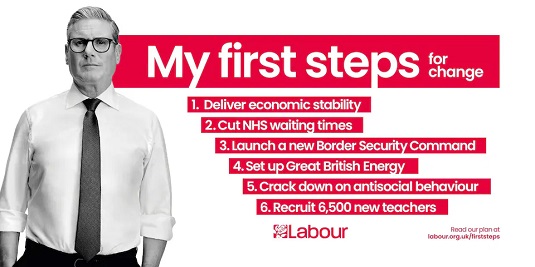
But there is an answer! The very clever strategy people in the leader's office were able to hog political coverage going into the weekend with a Blairite retread: the pledge card. As my wallet is a strange attractor for all the loyalty cards and bits of ID, I happen to have my 1997 original. Comes in handy for infiltrating Labour To Win meetings. These pledges were designed as quick policy wins to show Blair and Brown meant business. There was the punishment of the privatised utilities with the windfall tax. But New Labour meant changed Labour, so we also had "fast-track punishment for persistent young offenders" and "set tough rules for government spending and borrowing".

Starmer's leadership has never pretended originality, and so the resemblance between the 1997 and 2024 cards are more than coincidental. Our new fangled version, with its 'cut NHS waiting times' and 'crack down on anti-social behaviour' are straightforward lifts. The mix of the Milquetoast progressive with the authoritarian and the reactionary continues with 'set up Great British Energy' (which is always mis-sold as a publicly-owned company, when in fact it's a Blairesque Public Private Partnership investment vehicle), and 'Launch a new Border Security Command'. I wonder how many Tory-voting focus groups that went through. And, top and tail, 'economic stability' and 'recruit 6,500 new teachers'. How the leadership managed something less inspiring than Blair's 'New Life for Britain' is a real achievement.

Despite the obvious resemblances the real inspiration for these six pledges is ... Rishi Sunak. At the beginning of 2023, he set out his five promises for government. In case you have forgot, these were halve inflation, grow the economy, get the national debt falling, reduce NHS waiting lists, and stop the boats. An incredibly low effort list of priorities that barely required Sunak to do anything. Taking on board the then economic outlook, falling inflation, GDP growth, and keep tight rein on public spending so debt could fall (as a proportion of GDP) were easy because they would happen spontaneously. NHS waiting lists were a bit of a hostage to fortune, because no Tory government has exited office with waiting times lower than the one it inherited. Sunak might have met this pledge had he decided not to underfund it. And stopping the boats was pure amateurism in the sense he signed himself up to something he couldn't deliver. Hence the grim theatrics of the Rwanda scheme.

Because big brains are in charge of Labour, nothing has been left to chance. Border Security Command, Great British Energy, and anti-social behaviour policies can be brought into being at a stroke of a pen. Economic stability is also relatively easy seeing as Rachel Reeves, when she's not busy plagiarising other people's work, has no ideas of her own and will leave the regulatory frameworks intact and won't haphazardly chop and change the rules like the Tories do. NHS waiting lists are likely to start coming down at the point Labour enters government just as we're over the worst of the seasonal hospital admissions - and this before Wes Streeting's plan to use imaginary spare private capacity. And lastly, 6,500 new teachers works out at increasing recruitment by about 1%. Starmer's government would have to be spectacularly incompetent to not meet any of these aims.

The new pledge card is not the programme for the incoming government, and should not be judged as such. But by setting a low bar in what the Labour leadership takes to be the public imaginary, they can easily exceed their own expectations. On teachers and teaching, where the big challenge is the triple threat of underfunding, workload, and retention, anything on top of the extra teachers' pledge tick the under-promising and over-delivering box. On GBE and BFC, setting them up and branding them provides an illusion of forward motion. And on it goes. Starmer will be able to say his project of authoritarian modernisation, or mission-driven government as he styles it, is well underway.

The problem with this is the assumption the public aren't paying attention and can't smell bullshit. Just as talking about hope a lot does not call it out of the ether, most people won't notice a Labour government unless it materially improves people's lives and is experienced as such. Being able to get doctors' and dentists' appointments, seeing wages consistently rise faster than prices, experiencing the green transition in the form of lower energy bills, these are ways Labour could and should make a difference. And Starmer would be rewarded for enabling this with more future general election victories. But the actual chances for that are very slim. Why? Because of the alliances he's actively pursued with the right aligns him and his project with the interests arrayed against the people - the overwhelming majority - who would benefit a progressive prospectus.

Wednesday, 16 August 2023

Keir Starmer's Radicalism

Is Labour going to be more radical in office than the image currently projected by Keir Starmer and the shadow cabinet? Yes, if you take this New Statesman headline as good coin. But what counts as radicalism? After all, Tony Blair's period in office, which saw the retrenchment of the Thatcherite settlement under new branding and the continued undermining of Labour's own base was dubbed "radical". Mostly by Blairite loyalists and no one else, but the point remains.

Radical, if it's to mean anything in politics, refers to a break with the status quo. I.e. The conventions, practices, and ideas that dominate the bourgeois mainstream. But anyone can do that. Boris Johnson's contempt for constitutional niceties and probity would, by this definition, cast him as a radical politician. But this was subordinated to a very conservative aim (self-promotion) with equally conservative outcomes: the continued political dominance of the Conservative Party. Radicalism has to do more than upset: it has to fundamentally threaten the power relationships that structure and are upheld by a political settlement, and does so in a way that opens up opportunities for more democracy. Radicalism is a politics that embraces the potentials of the mass, and looks to invite the demos in. It cannot therefore ever be about replacing one ossified elite structure by another. New Labour then? Very obviously not radical. The "gains" of that period of government, where they were not undercut, raised living standards and made life better for millions of people. But it did not alter the fundamentals.

And according to Freddie Hayward, our NS scribe, neither will Starmerism. He says that Labour have opted for a "better managers" strategy, and as such have decided to follow political opinion. Which, in practice, has meant not saying much. But we can look forward to a veritable policy blitz this Autumn as per Starmer's five missions. There are announcements due on net zero, economic growth, and plans to cut violent crime. These are the headline grabbers-to-be, but the real radicalism on offer is virtually cost-free: planning regulations, public sector reform, devolution, collective bargaining.

Are these radical? They are certainly different to what the Tories are offering, as well as Labour pre-Corbyn. The change to planning will allow building on the greenbelt, which would increase housing supply and should contain the rise in prices. Except this is what developers have been lobbying for for years. Reforming the public sector suggests making state services work better and be more responsive, but could easily be the Trojan horse for more private sector involvement and reinscribing the state/citizen relationship as provider/customer. I doubt private health and other outsourcing specialists are bunging shadow ministers because they agree with a radical democratic vision of politics. Devolution will see more powers pushed out of Westminster, but this is more consistent with setting up a new regime of accumulation. And the one unalloyed good, the expansion of collective employment rights and bargaining backed by statute itself owes more to managerial imperatives than an endorsement of workers' self-organisation.

What of the other claim Hayward makes? He says that for all Labour's caution on fiscal matters, "you can already picture [Rachel] Reeves standing at the despatch box, brow furrowed, proclaiming that action is required because the situation is worse than she understood." Can you? This is exceedingly unlikely, because she routinely defers to Bank of England orthodoxy. Be it on the causes of inflation and how it should be dealt with, her understanding of state finances, attitude to social security recipients, and suspicious attitude toward spending money, all come with a whiff of City consensus about them. Just because something is broken and it's necessary to fix it doesn't mean a government will cleave to this necessity. As the lessons of this very Tory government teaches us week in, week out. But supposing Reeves, faced with collapsing public services, does act. The options are borrowing more or taxing more. Closing tax loopholes, equalising capital gains and income tax rates, and upping the higher bands to address the NHS and teacher retention crises would be welcome. Chances are it would be very popular, but it's not radical.

Here's where we get to the nub of the matter. Labourism, apart from the programme the party had between 2015 and 2019, has never been radical. It is an ameliorative project, the political expression of a workers' movement that has long been integrated into the UK's constitutional order. It is circumspect and loyal, and is intellectually impoverished and intellectually elitist at the same time. The shock of Starmerism isn't that it abandoned Labour's radical tradition, but has rather forcibly returned the party to the historical mean. Starmer's politics does not break with Labourism, it's a rude instantiation as authentic to its tradition as any of its predecessors in government. If there is a radicalism here, it's the stark way Starmerism is presenting Labourism's true face to the public's gaze.

Image Credit

Monday, 7 August 2023

The Repeated Surrender to Tory Framing

In the 18 months prior to the 1997 general election, Labour was often criticised from the left for being overly cautious. This gently-does-it was encapsulated best by the Blair-Brown pledge to stick with Conservative spending plans for the first two years of government. The idea was to settle any jitters so-called Middle England (the right wing press) might have about New Labour, while taking the sting out of any attacks the Tories might launch. As the self-identified party of economic competence, Tony Blair and Gordon Brown wanted to annex this Tory asset and neutralise it. By this time, with Labour enjoying similar poll leads as the party does today it was probably moot. But it was understandable. Economic concerns torpedoed the 1992 general election for Labour, and so nothing was left to chance. Accepting these plans came with a price. It allowed the Tories to litter the Treasury with land mines that Blair and Brown then promised to tread on. The most explosive of which was cutting social security support for single parents, a political trap designed to force Labour to attack some of the most vulnerable women for point scoring purposes. And true to their word, the new government saw the attack through.

In other areas, however, New Labour was not so reticent. Though its programme didn't offer a qualitative change in the sense of breaking with the pro-market, neoliberal consensus established by Thatcher and bedded down by Major, a combination of rhetorically vicious attacks on the Tories, some good-sounding lines (tough on crime, tough on the causes of crime; education, education, education), a set of very modest pledges that at least gestured toward a fairer society, riding the tide of hope, and the baleful record of the Tories themselves ensured Labour scored a crushing victory.

Nearly 30 years on, and it seems the lessons learned by Keir Starmer from this period is to abandon the field of politics altogether. Or, to put it another way, accept Tory framing as sacrosanct on everything. The dishonest attacks by the likes of Grant Shapps that accuse Labour of being the political wing of Just Stop Oil are taken seriously by just one man: the Leader of the Opposition. Blair and Brown capitulated on economics but retained some autonomy on other political matters. Starmer, however, has surrendered across the board. North Sea exploration must be honoured, so the Tories gleefully issue scores of new licences while Starmer attacks Just Stop Oil as "contemptible". The Tories have their stop the boats/Rwanda scheme, and in their race to the gutter they want to use unsafe barges - redolent of 19th century prison hulks - to detain asylum seekers. This finds no opposition from Starmer, who says Labour will keep them too for as long as there's a backlog. And on the NHS, having thoroughly marketised it the Tories are busily defunding medicine and health to create a two-tier service. To this all Labour manages is a shrug, followed by a commitment to using private providers to plug the gaps the Tories have left. Despite it being a complete non-starter.

You could call this cowardly behaviour, but that lets Starmer and friends off the hook. They know an election win is virtually certain. You can look at the polls and note how Labour's double digit leads have been the norm for over a year now. The Tories have had their Black Wednesday moment. There's no chance of a John Major repeat, especially with Labour's huge support among working age people and a collapse in the Tory vote among the older/retired base. Blair's and Brown's caution on economics was well founded, as much as one might disagree with their take then. There is no such excuse now. Which ineluctably leads to one conclusion, that Starmer and co are not so much interested in power for a purpose as power in itself. His project, as correctly divined here many years ago, is interested only in restoring the authority of and modernising the state. It is an authoritarian project that puts state managers in the driving seat of politics, and anything that benefits people in general is a by-product of and not the objective of Starmerist policy. Without wanting to get too romantic about the history of the Labour Party, for them Labourism is about ministerial cars and briefcases. Not using the lever of policy to make life better or, with the looming catastrophe of climate change, dealing with serious and unavoidable problems.

This explains Starmer's willingness to accept Tory framings. There are no "tough choices" here, just a set of easy things to say that keeps the Tory media off their backs until they win the general election by default. And because they have accepted Tory framing, don't be surprised if Starmer is constantly steered by the front bench opposite as it gallops off further to the right. What a despicable position for the Labour Party to be in.

Image Credit

Wednesday, 5 July 2023

Tony Blair Vs the NHS

It's the 75th birthday of the NHS, so what better time for another rare intervention from Tony Blair. This morning his institute published a paper about the future of the NHS. In line with current Labour thinking that what public services need is reform, not funds (which, in turn, are informed by Tony Blair Thought of two decades ago), the report offers a number of technical and seemingly technical fixes to improve the health service. But the overall thrust is clear: bureaucratic centralisation is the chief opponent of efficient delivery, not lack of cash.

It shouldn't need saying that this corner of the internet rarely receives Blair's missives with open arms, but it would be churlish to file the report in the desktop recycling bin just because of its provenance. The report, authored by a health policy wonk and an academic, does make some good points. Yes, there does need to be an injection of capital so the NHS can fully utilise new technologies. Who would be against that? The report says this can be utilised to cut waste and introduce less labour intensive treatment. There should be local autonomy for what are termed 'integrated care systems' to treat and improve health outcomes in their areas, backed by the stability of multi-year budgets and incentives to innovate - which include keeping and reinvesting any savings made. A digitised 'Personal Health Account' - a souped-up NHS app enabling access to services and putting patients in charge of their own health data, which can be linked to secondary apps and wearable technology, would revolutionise and personalise our relationship to the NHS. Rolling health services out from GP surgeries and hospitals, which would reduce demand on those services through an expansion of provision is another floated suggestion. And making more use of personal-use genomic medicines, making sequencing available on a mass scale and integrating genetic susceptibilities it into one's personal data is another ambitious goal. If we absent social relationships for a moment, this is what a 21st century health service should look like.

But social relations aren't about to go away, and how the report frames this technologically enabled vision raises a lot of political questions. Firstly, the report says it wants to move the NHS away from a patch-them-up-and-let-them-go model of treatment to one more reflective of complex health needs. This is nothing new. In fact, the first NHS reorganisation in the mid-1970s was premised exactly on these terms. Of moving from treating disease to addressing the long-term health problems of a population that was living longer. Indeed, that is the main business of the NHS today. Therefore, the report's argument that we "must move from a health-care model set up to treat episodic sickness to one that prioritises continuously improving individual and population health" is an extension of what the NHS already does in part to the whole. A useful straw man if you want to exaggerate the case for reform though.

Then there are the rocket boosters these proposals have put under the so-called patient choice agenda. This is not an innocent idea of simply allowing patients more choice in their treatment, but was under Thatcher, Major, and Blair designed to introduce and bed down marketised relationships between different parts of the NHS. In the New Labour years, the idea was to allow patients complete choice of where they were treated. NHS organisations would compete with each other for patients, allegedly driving up standards and increasing efficiency. This was swept away by the Tories in 2012 for thoroughgoing marketisation, semi-privatisation, and outright scamming in which "any willing provider" was in with a shout of scooping up NHS money. What happened over Covid procurement and the missing billions was this writ large. The Blair Institute are proposing is something a bit more subtle. Through the use of personal health technologies, they want to bed down principles of individual responsibility for health - which can be monitored via the app. This builds on the individualist (and individuating) thrust of public health strategies in the Blair years, and one that attempts to evacuate politics from health altogether. I.e. You have the power to choose healthy outcomes informed by constantly updated metrics, and therefore what happens to you is (largely) in your hands. It's consistent with the modes of governance Blair enforced across the public sector, and one that proved (politically) effective quite recently. If you get ill, it's going to either be a case of 'pathogenic life factors' or bad luck. Never air quality, food quality, environmental despoliation, unhealthy work practices.

And then we have the private provider argument, because of course we do. There's the useless argument about "spare capacity" in private health that gets mentioned every five minutes by Wes Streeting. As an aside, Streeting often defends this saying he wants the NHS to get to the place where it can out-compete the private sector. Yeah, right. I'm sure the private health interests funding his operation do so because they want to be put out of business. The Blair Institute goes there, but they flag up more opportunities for private sector involvement. Remember the localised integrated care systems? "Freedom" of ICS chiefs would inevitably mean contracting in for-profit providers to meet targets, just as they did 20 years ago. Indeed, these organisations should "empower" patients to make "informed choices" about choosing between GPs and "secondary providers". On the dispersal of health services, the report is explicit that "high-volume, low complexity" services should routinely be hived off to "multiple providers". Again, it's all about patient choice. The patient data revolution the report envisages allows for more public private partnerships, and larger market for data add-ons to the key NHS app as well as "innovation". Undoubtedly encouraged by a generous system of state grants and inducements.

This, again, carries on where Blair left off in 2007. While there were plenty of New Labour true believers in marketised policies as drivers of best outcomes (the Tories, despite their well earned 'stupid party' monicker, are never daft enough to really believe this twaddle), the politics of this made sense because NHS outsourcing, PPPs, and Private Finance Initiatives tied - at least for a while - sections of British capital to what you might call the Blair Rich Project. By pouring state money into private pockets, this was one means by which New Labour was able to cultivate patronage and crony networks that helped ensure, for a brief window, that it was the favoured party of (most of) capital. It's entirely a matter of coincidence that ex-health ministers and certain MPs later enjoyed handsome consultancies and board positions advising private health and outsourcing giants. It didn't last, and when Labour was dumped out of office the Tories ramped up the openings through the total marketisation of the NHS. Here, the Blair Institute's programme for change is more than just about the future of the NHS. It is directly advising the incoming Labour government about how to use NHS reform to win over a section of British business, with the obvious consequence of diluting the popular pressures that will bear down on the party after such a long period of Tory rule.

Image Credit

Tuesday, 20 June 2023

Triangulating Trouble

Looking at Monday's speech about Britain becoming a "clean energy superpower", Keir Starmer again focused on the "iron rules" of fiscal credibility. And those rules mean limiting daily spending to the taxation take and getting the public debt falling by the end of the next parliament. It's like we've gone back 10 years and disinterred the "in the black Labour" prospectus that got the wonks hot under the collar. Fat lot of good Labour's adaptation to this agenda did when 2015 swung round. But now the lay of the land is different. After a modest convergence of the polls the gaps after this weekend of partygate reminders have widened again. It appears nothing can stop Labour from winning the next election, which raises the question about why Starmer and Rachel Reeves are not just pushing the fiscal rules line, but are rowing back on a slate of promises. What's in it for them politically?

If we want to take a 4D chess approach, remembering that Reeves is a whizz on the chequered board, being seen to gut Labour policies has a theory of political success behind it. Following the self-serving incantations of electoral wizard Peter Mandelson, if a Labour leader seizes hold of a radical pledge and opens its throat in full view of the public, those voters will beat a path to the party's door. Seriousness and intent is measured not by the desire to implement and deliver a policy, but by abandoning it. This demonstrates ruthlessness and leadership, qualities swing voters apparently are ga-ga for. It shows a Labour leader will not be bound by their supporters, and can be trusted to kick them in the teeth. Even when it's not necessary. Added to this is Ed Miliband's contribution to received Labour thinking. If you don't promise anything, that gives you room to pull policy rabbits out of a hat. This approach of under-promising so one can "over-deliver" keeps the party in charge of the political agenda, its opponents guessing what might come next, and avoids the bad press that comes with making policy commitments in advance. Boris Johnson's 2019 manifesto was a variant of this. Rustle up a thin document, concentrate on one thing (Brexit), and then boosterise every meagre "achievement" afterwards for political gain. We know how well that ultimately turned out.

And there are the elite vibes Starmer has to mollify. The oil interests must be placated. The Tory press have to be assured Labour aren't going to encroach on monopoly property, and our friend Mandy knows it's important to dampen down expectations that government might do something beneficial for the people of this country. The palest red reflection of Rishi Sunak's grim determination to do absolutely nothing. And, in classic New Labour style, there's no political price to pay. Those who were inspired to vote for Jeremy Corbyn's Labour twice aren't about to support the Tories, so fuck 'em. There are no costs for offering a pro-establishment, pro-consensus programme. And the fact their opponents on the left can't lay a glove on them only emboldens their "hard-headed" approach to winning power.

But there is a problem. People who voted Labour recently and are put off by Starmer's shameless abandonment of soft left Corbyn-lite politics do have places to go. It's unlikely they will give Labour the heave-ho in the short-term, but once in office and carrying on in this vein, opportunities will open up for the Liberal Democrats and the Greens. One previously supportive milieu, already disappointed with Starmer's dishonest disavowal of recent history, will use remainism and calls to return to the EU as a rallying cry. Starmer's cowardice on trans rights and pretending to be as "unreconstructed" as a Daily Mail editorial is already seeing millions of people putting on their nose pegs. Once in Number 10, it will be their voting allegiances that switch. Continuing with an authoritarian politics will sap Labour's coalition. And the stalling of the green energy transition will toxify Labour, particularly among younger people, for years to come. The Lib Dems and the Greens will be there, waiting to seize their chances. And those chances will fall and fall regularly.

Image Credit

Sunday, 28 May 2023

Untangling Reevenomics

Rachel Reeves hit the headlines last week after flashing her swanky first class pass on the plane to New York. But the reason for her trip was of more political import. Speaking at the Peterson Institute in Washington DC, Reeves outlined what the economics would be like under an incoming Labour government. Again, following Keir Starmer's NHS speech, this was more an exercise on contouring the policy to come rather than promising anything concrete. An approach we'll see repeated on social security, education, and the other "missions" before promises are made ahead of the next election.

What did Reeves have to say for herself? Her speech, which is expanded on in her pamphlet for Labour Together calls her approach "securonomics". This is based on two positions: a recentering of the nation state as the centre for economic policy making, and a move away from the deregulated phase of globalisation to one overseen by greater state management - based on multilateral agreements, and particularly a convergence of and greater cooperation between liberal democratic states.

Praising Joe Biden's economic policies, she approvingly notes that the United States has
A more active state, pursuing a modern industrial strategy, is selecting the areas where America must guarantee its ability to produce what America needs ... Your government is working in partnership with a dynamic open market, where the state does what a government does best. Making and shaping markets that are essential to America’s resilience and future prosperity. Meanwhile, the free market does what only it can do - innovating, competing, creating wealth.
Translating this into the UK means "good jobs, decent pay, strong public services and an end to relentless increases in the cost of living." Okay, but how does this differ from the Tories? Aren't they, on face value, for these things as well? Reeves's economics, she argues, differs because it starts with where Britain is and what its strengths are. The model is not the Singapore-on-Thames beloved of the Tories nor the idea of Germany, which used to so beguile George Osborne. Rather, the model is Britain - but better. For Reeves, building on Britain's strengths requires state promotion of green energy, life sciences, professional services, universities, remaining strategic industries, as well as promoting "financial resilience" for every household.

This requires state activism. Reeves talked about industrial strategy and her "green prosperity plan", as well as institutions like a Norway-style "national wealth fund" and the much-vaunted GB Energy, which is often sold as a state-owned renewable energy entity but is in actual fact a repackaging of the Private Finance Initiative - but for green electricity generation. This is also where Starmer's plan to fix public services comes in: Reeves sells the putative programme as the "removal of barriers that hold people back". This is premised on sorting out the NHS, childcare, more vocational education, and employment support "to get people back to work". In this light a Labour government would be working toward easier and better trading relationships with the EU when the trade deal is reviewed in 2025.

The speech got some excited. Martin Kettle for the Graun gushed that this was a vision for social democracy and was a break with Blairite thinking. Stacking in his argument's favour is the idea the politics should shape the economics, though in Reeves's hands state intervention is just technocratic common sense. No need for the socialist gloss as per Tony Crosland. It's economically efficient, and has little do do with social justice which even the Blairites used to invoke for their own purposes. Multilateral cooperation sounds nice, until you look at foreign affairs custom and practice and see it as a realisation of the West (and Japan) pooling their efforts to remain at the top of the global economic tree. And, not mentioned by Kettle but noted here a while back, a move to tripartite industrial governance with the state, business, and the trade unions each having their say about economic policy. Though into this corporatist mix Reeves adds universities as one of the "partners". Interesting.

There are other items in Reeves's speech and pamphlet that do sound decidedly Blairish. She wants to see "dynamic markets" and more competition, which means breaking up concentrations and monopolies. I'll believe that when I see it. She wants some deregulation, such as reform of the planning laws - in line with Starmer's recent desire to see more building on the green belt. There's a promise of reforming corporate governance to tackle the short-termism of shareholder value, and a change to business taxation to encourage longer-term investment. If the latter sounds like a bung ... But perhaps the biggest tell, and one that will assuage the UK's economics establishment is her continued commitment to Bank of England independence. That's going to be music to the City's ears. As a former Bank economist, of course she'll be their woman in Number 11. That, more than anything, says no matter what happens with governance, state strategies, and industrial councils the core relations between the Bank, the Treasury, and the City are going to weather the next Labour government and that the priorities of finance and commercial capital will continue its hegemony over the policy preferences, personnel, and habits of the core state apparatus. To throw things into sharp relief, even someone as awful as Kemi Badenoch favours breaking up this cosy relationship. Then again, even when the Bank was under political control did post-war Labour governments challenge the power of the City, or did their best to cultivate it?

Assuming Labour accomplishes its restructuring of the state (or does it half-arsed, which is more likely given custom and practice), this will open up political opportunities and dangers for the labour movement. Reeves is apparently relaxed with a return to collective bargaining and the extension of workers' rights, but as we saw with post-war trade unionism partial integration into the state incentivises labour movement growth and firmly weds union officialdom to industrial priorities. Let's be clear, it's better for trade unions to be in that position than what we have now. It creates a space for labour movement consolidation and for that reason alone means there's a qualitative difference between Labour and the Tories, but let there be no illusions. What Reevenomics offers is a more favourable terrain for struggle, not a land of milk and honey.

Image Credit

Sunday, 30 April 2023

Keir Starmer and Public Sector Reform

The left - the far left in particular - are often criticised for their commitment to certain shibboleths. These can take a variety of forms, such as how China today is some sort of workers' state, that the crisis of our times can be reduced to the problem of proletarian leadership, and that Labour at the height of Jeremy Corbyn's leadership remained a "bourgeois party" no different in quality and kind from the Tories and Liberal Democrats. But the grown-ups of so-called centrism have their own as well. Like believing that beating up your own party wins votes. That defending tuition fees and hospital car parking charges are very good actually. How the NHS could do with more private involvement. Last and, by no means least, public services need one thing more than money: reform.

Which brings us to Keir Starmer's Sunday interview with The Observer. While the headline goes with "I’ll be bolder than Blair on public service reform", not much is given away as the article concentrates on other things. But on public services themselves, Starmer said his government would be a "reforming government ready to go from day one, further than Blair on public services, further than the Tories in the private sector", noting that "“I think we can go beyond what the Blair government did on public services … because I think there is unfinished business there.” That doesn't sound particularly heart warming.

Casting our minds back to the Blair years, it is true to say New Labour did renovate public services, expanded them, and improved them with great wodges of cash. One of the ironies of the early period of the Tory-led Coalition was how many of these services were subsequently defended by leftists who'd spent the previous decade attacking Blair for being no better than a Tory. I was one of these people. But, as ever, the detail is where the Devil resides. Blair accomplished this by forcing public sector bodies to take up costly PFI schemes to refurbish or rebuild their physical infrastructure. There was the imposition of targets and competition between state bodies, a scheme carried over from John Major's Citizen's Charter (more in the book), and the bedding down of "choice" agendas designed to make the public sector more "responsive", as if local community centres were branches of New Look. It still jars with me how local authorities refer to its service users as "customers". Blair's plan was to take this even further with more markets, more outsourcing and privatisation, and more attacks on the people Labour is supposed to represent. And, reportedly, that he wasn't able to see this through was his one regret upon leaving office.

You can see why Starmer's comments on public services are enough to give any labour movement person pause. Mindful of what went on 20 years ago, the Labour leader was quick to add that this did not mean the expansion of private provision but repositioning services so they meet current needs, and with an accent on prevention. Let's pretend we trust Keir Starmer for a moment. It sounds innocuous enough. As is well documented, the Tories have been running public services into the ground. In the NHS, the refusal to pay nurses and junior doctors the market rate for their services has nothing to do with the struggle against inflation and everything to do with their efforts at residualising the health service. Management have been given carte blanche to run down the semi-privatised Royal Mail. Local authorities struggle to deliver statutory services. Dental deserts are common. Even getting a passport these days is a slog. Wanting to make sure these services work properly, as Starmer appears to, is like pushing at an open door. It's a concern that chimes with the experiences of millions of people.

We know what the problem is: the withholding of monies. And quite deliberate it is too. When this is obvious, are we right to be worried that the Labour leader goes on about reform instead of funding? The more credulous Starmerites might think this is more clever-clever politics, or "hard ball" as they call it these days, whereby promising nothing is smart politics because if you don't stand for anything then the Tories will have a problem nailing you down. Good luck with that. Or you might believe in the equally preposterous notion that all the reactionary rubbish pushed by Starmer so far is establishing "permission" to be heard so the bag of goodies he's itching to open won't frighten former Tory voters.

It's better to be realistic about such things. In as far as a coherent Starmerism exists, it's a programme of state modernisation. To be a little bit more sociological, in terms of bourgeois politics it's the collective effort of bureaucrats and technocrats to take the state back from the show boaters, wreckers, and placemen that have run it into the ground over 13 years of Tory government. This is also an authoritarian politics. You don't need to look at Labour's equivocations over spy cops and war crimes legislation, Starmer's approving comments about locking Just Stop Oil protesters up, and the heavy handed way he policies the Labour Party (with extreme hypocritical prejudice) for clues. It's been there in the DNA of his politics all along, and one with deep roots in the Labour and Fabian traditions. I.e. Vote us in, we'll look after the politics, and you only need bother about this stuff in another four or five years' time. The flip side of this is, of course, do as I say not as I do, and treating promises instrumentally. I.e. Sticking to them for as long as the expedience is there.

I have no doubt Starmer wants to reform the state and make it work, and how it plays out in his project involves two things. Subordinating everything to economic growth, which is restated as the driving principle of his government and legitimating essence of everything he does. As per the recent embrace of decentralisation and devolution. And modernising the state also means repositioning the British people. In recent years, too many have become an angry, unruly, and irreverent (elderly) mob motivated by Brexit and other right wing hobby horses. Even worse, more have been actively politicised in the other direction. First Corbynism, and now millions of workers are participating in industrial action of some description, exacerbated by the Tories' abrogation of responsibility and refusal to negotiate. Starmerism wants to put a lid on this by partially re-institutionalising the labour movement in state structures. Second, whatever reform comes forward from Starmer-friendly think tanks and the Fabians' policy pamphlets, finding other ways of gifting state money to business is only secondary. What matters is getting the state running and offering new and improved public services so millions have a stake in it again (which Labour can reap the election benefits of), and so millions more people relate to it as service users. This repairs the authority of state institutions, which have taken a battering, the legitimacy of the state itself, and recasts politics around the Starmerist/Fabian model. In short, it's a depoliticisation strategy. Depleting the state is the Tories' not-very-successful attempt at the same, whereas Starmer's approach - gleaned from everything said and promised so far - is suggestive of a politics marked by redrawing the boundary between lay people and experts, reconstituting a consumerist relationship to state services (perhaps with some funky "co-designing" going on), and letting the technocrats and high foreheads get on with the business of government.

A bit speculative, perhaps, but this is what drives Starmer's preoccupation with public sector reform: the definition of politics and what the limits of acceptable discourse under his government are going to be.

Image Credit

Tuesday, 4 April 2023

Why Keir Starmer is Polling Poorly

Three years into the job, how is Keir Starmer doing? Labour are enjoying healthy polling leads. The 20 points ahead meme has died as the score is routinely achieved. The Labour leader has also avoided attracting negative press, and what little he cops doesn't stick. The money bags donors are returning too, while the trade unions are relatively quiescent. Unfortunately, not everything is peachy. There is trouble at t'mill. According to Ipsos polling, he and Rishi Sunak are pretty much level pegging on 'best Prime Minister'. Starmer's score is less than what Jeremy Corbyn's was during this point of his leadership, and among Labour voters 48% are satisfied with his performance vs 45% dissatisfied. Not great when this is compared to Sunak, whose scores are 75% and 15% respectively among Tories. If that wasn't bad enough, Starmer's net rating among voters in general is -20 (31% vs 51%). No wonder the Conservatives are beginning to think they can win the next election.

How can we explain the difference? Are Labour voters just harder to please? Don't be silly. For one, Sunak's "record" of "delivery", such as the UK's entry into the Comprehensive and Progressive Agreement for Trans-Pacific Partnership, has focused on crowd pleasers for the Conservative base. The more he's able to pass off the "advantages" of Brexit, attack refugees and trans people, the happier Tory support will be. Though, as the pollsters show, everyone else are not so easily impressed. Starmer on the other hand has done practically nothing, apart from occasionally saying nice things about trade unions. In recent days, we've seen Starmer capitulate to the gender police on trans rights, repeat that public services can look forward to more reform as opposed to more money, has flailed miserably on asylum, and is acting as if Labour voters shouldn't be cultivated, let alone inspired.

There is some logic to this. Albeit a flawed one. Going back to Tony Blair, there is a theory that Labour only earns a hearing if it publicly gets itself into lathers of self-hatred. By distancing the party from anything that seems distinctively Labourist can it hope to win voters over. This typically involves the ritualistic bashing of the left, and eternal vigilance lest they stage a comeback. The big Labour poll leads supposedly prove this contention. I.e. In the wake of the Tories' spectacular implosion, former Tory voters have only turned to Labour precisely because the attacks on Corbyn et al have demonstrated Starmer's "credibility". Possibly, but even these people expect Labour to offer something more than managerialist vibes. They want to know that Labour are going to fix the issues Sunak avoids mentioning, and offer a different way of doing things. Not the same old rubbish in a red rosette.

As I've long argued, alienating loyal Labour voters - particularly the new base built during the Corbyn years - is anything but clever clever politics. Assuming things stay as they are and Starmer's vow of silence on things like hope, making life better, and ensuring people have enough money to live on doesn't change, hoping Labour are going to win by default because these supporters have nowhere else to go smacks of entitlement and little to no understanding of what this base is about. If Starmer persists with his authoritarian rubbish, some might conclude Labour have it in the bag anyway and therefore support the Liberal Democrats or the Greens at the next election. Not enough to endow them with shedloads of MPs, but it could be enough to make a difference in the key marginals. Because one thing the "worst result since 1935" rubbish misses is how Labour's vote tally was relatively healthy (for a losing party), but one that was poorly distributed where FPTP constituencies were concerned. Since then, Covid, the cost of living crisis, appalling house prices and spiralling rents suggest that support is now more geographically dispersed. If Labour is serious about winning, does it really want to alienate this key growing constituency? If the supporters' ratings of Starmer are anything to go by, they're annoyed at present. But how long before ignoring and shafting them turns into antipathy?

Europe is awash with lessons from centre left parties that have sacrificed their base. Only a few have been half-way successful in getting a new one. As we mark three years of Starmer's leadership, the political game he's playing appears bent on liquidating Labour's also - but before it's anywhere near office. This might not matter as anti-Tory feeling runs high, but the Starmer's political positioning risks passing up the prospect of an overwhelming victory while setting in motion the oppositional dynamics to the government to come.

Image Credit

Friday, 10 March 2023

Gary Lineker Vs the BBC

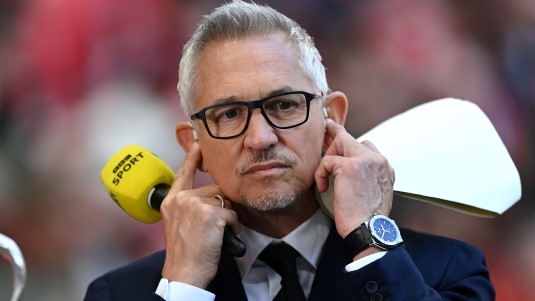
From the Queen Mother of football to woke Anti-Christ, the weekly hate has settled on Gary Lineker for not playing by the establishment's rules. Tory politicians, right wing commentators, and the Conservative press have called for his head for likening the government's anti-immigration bill to the rhetoric you might expect from 1930's Germany. When people trafficked to the UK via small boats in the Channel are set to be criminalised, the comparison is neither crass nor far-fetched. In true fashion, the BBC relented to the pressure and said Lineker had "stepped back" from Match of the Day. He denied any such thing, and his co-presenters - Ian Wright and Alan Shearer - announced they would be walking out in solidarity. Immediately, in its clumsy stupidity the BBC's Tory management have created a cause celebre and shone a spotlight on its much vaunted "impartiality".

We don't need to recall the most egregious examples. They're readily found on your social media outlet of choice. But they all follow a distinct pattern. Right wing "celebrities" and "stars", like Alan Sugar and Andrew Neil, copped nothing but acquiescence from the BBC when they were letting the world know their very important opinions. Even Lineker himself got a pass when, in April 2017, he tweeted "bin Corbyn". It's almost as if impartiality and balance at the BBC was and is a complete fiction, as long as it's tilted toward the right.

There is something different about the Lineker sacking. With sport stars voicing support, celebs having a go, and prominent ex-BBC staff putting the boot in, it seems we're at something of a moment. Even Labour reversed the mid-week "it's a matter for the BBC" line and has said the "BBC’s cowardly decision to take Lineker off air is an assault on free speech in face of political pressure. Tory politicians lobbying to get people sacked for disagreeing w govt policies should be laughed at, not pandered to. BBC should rethink decision”.

As argued here many times, the BBC has always been a defender and a champion of establishment politics. When the Labour left were a threat, it was only too happy to join in the charge by running anti-Corbyn material morning, noon, and night. Meanwhile, it indulged the populist turn in right wing politics. It not just enabled the likes of Nigel Farage and Boris Johnson, but has happily promoted back bench Tory horrors these last 13 years. Nadine Dorries and Jacob Rees-Mogg didn't get their prominence because of loyalty to Johnson, it was because the BBC boosted and authenticated them. But more than this, the BBC has accepted whatever rubbish the right wing press define as news as the news. Consider the moment we're in. Another energy price hike due, despite the falling wholesale cost of gas, the NHS on its knees, the cost of living making life a misery everywhere, and what we get are the BBC bulletins faithfully parroting Tory crock about refugees crossing the English Channel.

How has this happened? The merry-go-round between senior BBC staff and the Tory party's associates do play a role. The most obvious being the BBC's Chair, Richard Sharp, as a Tory donor and facilitator of Johnson's spendthrift lifestyle. These two happenstances and his appointment to the position being entirely coincidental, of course. And we have to mention John McAndrew, head of programming at the ever-so-successful GB News, migrating over to the BBC as Director of News. Never has the top of the BBC been so nakedly partisan. But this is rather effect than cause, a culmination. One of the ironies is the men leading the counter-charge against Lineker's effective sacking is Alastair Campbell, whose attacks on the BBC as Tony Blair's top spinner put the corporation on its current slavish trajectory.

Readers with long memories will recall how Downing Street went to war against the BBC in 2003 after Andrew Gilligan alleged the then government had "sexed up" its dossier on Iraqi weapons of mass destruction, which subsequently created quite a stir. After threats, the BBC let Gilligan go and prostrated itself before Blair and Campbell. Never as fearless nor as independent as advertised, the BBC did surrender a degree of editorial independence and started working towards the government. I.e. Ensuring its reporting never crossed the line to challenge official narratives directly, and merely repeating critical stories when they had first got a proper trailing in the Tory press. It was a period of accommodation to those who held all the power, bringing its editorial practices in line with the cosy relationships its politics journalists had long forged with New Labour figures. When the Tories came to office, what was now customary continued. Ingratiating itself to the new government, taking its lead from the right wing press, and happily doing the spade work of framing their austerity politics in commonsensical/there is no alternative terms is what the BBC then went and did. With the right in government, they accommodated and, indeed, went out its way to appease the Tories lest they chop down the licence fee or privatise/sell off bits of the corporation. Which the Tories did anyway. Hence the easy ride given to right wing populism, and the rough treatment doled out to Corbyn and the left.

Given the BBC's capture by a Tory cabal, the Lineker nonsense and its refusal to screen a David Attenborough documentary because of his sharply critical remarks demonstrates how far this accommodation to those with power has gone, and out of step the BBC is with the changing political situation. Given his authoritarian character, it's unlikely a Keir Starmer government would stand for such an overtly Tory BBC. They would expect it to start working toward its priorities, and framing political issues in the way they, and not the dying right wing press, would frame them. In this the BBC is an outlier, and why there is an establishment-based push back. The problem is the BBC is not being run by people with its institutional interests at heart, and they care nothing for its health in the time before the next election, let alone afterwards.

Image Credit