Sunday, 2 March 2025
Cuddling the Russian Bear
Why the break from this and the spurning of traditional allies? Why does Trump want to cuddle the Russian bear? The theatrics of the last month are overkill if it was all a crafty move to get European governments to cough up more on military spending. Ditto if it's just for domestic consumption too. Some Trump voters will be amused, the majority bemused, and for nearly all of them they're secondary considerations to the cost of living crisis - a key reason why they put him back in the White House. Nor are the intelligence reports that compromises Trump in all sorts of ways. As head of the most powerful military and intelligence capability the world has ever seen, in a sharply divided America front page splashes about Russian money and grim-sounding sex tapes would make little difference where Trump's support is concerned.
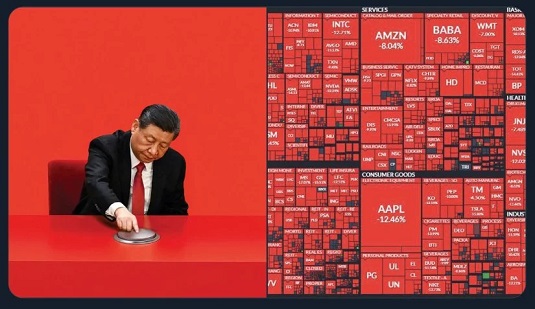
The more compelling answer lies in divisions within the American establishment about the strategic orientation their state should have in the 21st century. The shifting economic centre of gravity towards East Asia coupled with the long-term demographic decline of Europe's wealthy markets provides a compelling case for orienting away from the Atlantic to the Pacific. Something that Britain has tried doing too. But this is not just about where the new profitable opportunities lie. Under Barack Obama, the US downgraded Russia as a rival and therefore European states as clients as they switched attention to the strategic challenge of China. During the 2007-8 stock market cataclysm, the US was weakened by its indebtedness to Beijing, and while the winds of recession blew through Western economies China only grew more, and kept on growing. Over the last decade, Chinese multinationals have been winning strategic infrastructural contracts across the West and is starting to threaten American technological supremacy. The desperate efforts at trying to ban TikTok and the embarrassment of the tech oligarchs by China's cut price AI application are harbingers of more to come.
This context is most useful for thinking about Trump's foreign policy. As a well-known China hawk, he and his goon squad are executing a turn away from the Biden era's preoccupations (save one) with Europe, Ukraine, and Russia to ultimately face down and box in China. Russia fits this picture for a couple of reasons. Gone are the days of the Sino-Soviet split, China and Russia have grown closer to one another. Beijing has tried exerting a moderating influence on Putin over Ukraine without much success, but that doesn't detract from the common interest they share in resisting the American "international community" of allies, lackeys, and puppets that marked the pre-Trump world. For the White House, its overtures appear to be aimed at prising Russia away from China. It also helps to explain the thinking aloud about readmitting Russia to the G8, and the possibility of joint exploitation of Ukrainian mineral wealth in Russian-occupied zones. The economic and diplomatic reintegration of Putin's gangster state could turn Putin's head and leave Beijing without a major military ally. Secondly, on the subject of minerals the bulk of the vast natural resources of Russia remains in the ground. Bringing Moscow in from the cold not only promises US companies the chance of super-profits from exploiting this wealth, it denies China these strategic resources. A strong friendship between Trump's America and Putin's Russia is not just good for business. It would stymie China and keep the US secure in its position as global hegemon.
Others would prefer to prattle on about Trump's alleged cognitive decline or the doings of the FSB to explain all this. They prefer fairy stories that obscure more than they reveal because anything else compromises the fantasies that have been crafted about the US, its actions, and its prime position in the global order. But Trump's embrace of Russia is not without risks. Another reason why post-war American foreign policy has stressed Transatlanticism is to keep Europe under its thumb. Washington's Marshall Plan, the rebuilding of Western Europe, and the encouragement of the EU created affluent markets for US corporations, while tying the West and later the East to NATO ensured that European states were never strategically at odds with them. Trump deciding to position the US as an unreliable ally has had the desired effect of increasing military spending, but at the price of becoming unmoored from US interests. For as long as Putin or a similar nationalist/military adventurist regime remains in the Kremlin, Ukraine reminds everyone that none of Europe's eastern states are safe. Europe also has the wealth and the military and technical expertise to put together an alliance without Trump that could deter Russia. But the real problem for him is if Europe is shepherded down this road by US vibe, US statements, and US actions (notwithstanding attempts at bridging the divide), then far from isolating Beijing we might find a new alignment of east-west interests without America and without Russia. And that could be a recipe for accelerating the decline of US world dominance.
Trump is playing a high stakes game that many in the State Department and the wider American oligarchy are opposed to because it hurts their immediate interests and weakens them in the long-term. Establishment opposition so far appears thin on the ground, but as their power is at stake they cannot and will not sit back in a bewildered haze forever.
Image Credit
Tuesday, 28 January 2025
AI as an Apparatus of Capture

America, the self-proclaimed home of buccaneering entrepreneurship and freedom stopped exporting advanced chips to China and showered the techbros with staggering sums. The ludicrous resources at their disposal brute-forced the pace of innovation. Think of all the money that has gone into producing applications less accurate than internet search engines, creates its own "facts" through "hallucinations", and has trouble drawing hands. A hell-for-leather effort that wanted to cement an unassailable technological lead. And that's been shown up by a network of Chinese coders using open source software, no state backing, and little but their skill and ingenuity. They have produced a better model with nowhere near the same demands on chips and energy. The tech oligarchs have got to be hoping the PhD-level language models, which according to the much-publicised rumour mill is weeks away, is more than a case of their getting high on their own supply. If not, some are looking at significant dips in their fortunes.
Yet none of this changes the fundamentals about so-called AI. It is a technology designed not to speed things up and make life easier. Like the vast majority of innovations in production, it's designed to deskill and disempower labour, forestalling the looming threat of a long-term shift in the balance of capital and labour in labour's favour. As discussed many times here, capital accumulation, particularly in the most advanced industrial countries, has become increasingly dependent on immaterial labour: the knowledge, skills, personalities, and social aptitudes. This is because capital itself is directly dependent on the production of information and relationships to sell a service of some description. However, the main force of production that counts is the brain, or rather the person of the worker. And it's inherently leaky. Despite the stringencies of copyright, industrial secrets, non-disclosure agreements, whatever competencies someone builds working with one employer remains with the worker, and can be the basis for future work elsewhere - be it for other employers (competitors), their own business, or outside the economy entirely. Capital ponces off the commons and whatever is produced "leaks" back into and builds the commons, leaving capital revealed as a parasitic social relationship. Whereas previous waves of technological development have increasingly done away with the masses of people production required and, more importantly, the knowledge of production that gave labour some leverage over the capital that employed them; the creativity, the ability to produce new information and maintain relationships appeared impervious, except around the edges where repetitive tasks were concerned.
AI changes this. The tech bro dream are machines that can code the software for other machines, which to a degree is possible now. They want to be able to generate their own images and text without having to bother with human artists and writers. Or the production of films, television, and music that can do without crews, actors, and musicians. In corporate and public sector bureaucracies, it's the automation of clerical tasks and, in some cases, front-facing work involving customers and clients that promises the most, freeing up managers for "strategy". Who themselves will become increasingly replaced by "thinking" machines. Even everyday communication skills, such as how to craft an email, is now something any old AI chatbot will happily do for you. What only a few short years ago was temporarily "captured" to generate surplus value is in the process of becoming absorbed into itself as 21st century fixed capital. AI might seem convenient, but it's first and foremost there at capital's convenience.
Opposition to so-called AI is not reactionary, or anti-technology. It is a healthy response to a power grab that will result in a privately-owned monopoly over creativity. This means, ultimately, to put hundreds of millions out of work globally and secure capital against its dependence on the intellectuality and sociality of human beings. These bots are "trained" by "reading" the sum total of our species' cultural output without any recompense whatsoever. What is presently ours becomes theirs, with the possibility of our common heritage being reduced to regurgitated AI slop that becomes a cultural staple, and one owned by the firms who end up winning the AI race. The loss of, the possibility of the privatisation of social competencies is real. Therefore, the rapid rise of DeepSeek and the humbling of the USA's richest companies, while funny, does not change the dynamics of the situation at all. Because this is capitalism, AI is more than a toy and a liberator of free time: it's the latest, and possibly the most complete means of capturing and imprisoning the soul.
Sunday, 19 January 2025
Pausing the Massacre

The sorties might have paused, but some things never change. At the time of writing the BBC News website leads with four stories about the three Israeli captives released as Hamas's part of the ceasefire deal. The dedicated Israel-Gaza War [sic] page is little different. 'What was it like to be a Hamas hostage?' goes one of the stories. 'Who are they?' asks another. Nothing on the Palestinian hostages Israel is releasing, on the abuses and torture meted out to the incarcerated. And you can forget anything about extra-judicial killings in Israeli jails. There are no interviews with Palestinian families welcoming home their loved ones, no human interest portraits about people being united amid the rubble of Gaza. The active phase of the massacre might be at an end, but the dehumanisation of Palestinians by the BBC continues unabated.
When the deal was announced last week, social media was awash with self-congratulation. Democrat supporters were praising the leadership of Joe Biden and thanking him for bring such a terrible episode of recent history to an end. It's as if the 50,000 tonnes of weapons shipped from American shores and making available United States surveillance capacity in service of the massacre of the Palestinians didn't happen. It was gut churning. But just as objectionable was their employment of the truce to score points against Donald Trump. "This is the Dems' victory. Trump had NOTHING TO DO WITH IT" was the flavour of many a contribution. It was, of course, completely wrong. Biden needed something for his legacy other than prices galloping ahead of wages, and Trump wants to start his second presidency on a high note. And so we had close collaboration behind the scenes in making sure a deal was done.
The truth is, as far as the US is concerned, Israel's massacre inadvertently led to rebalancing the Middle East squarely in the State Department's interest. Hamas might claim victory, but its most experienced cadre are nearly all dead, its tunnel network partially demolished, and its ability to wage asymmetrical warfare severely blunted. Likewise Hezbollah in Lebanon. The IDF's invasion was much bloodier than military planners were expecting, but its capacity is also stymied. It also appears the "reply" to the Iranian assault on IDF targets was more effective than the damage Israel sustained. And there was the small matter of Bashir al-Assad's collapsed regime, an Iranian ally, and the subsequent withdrawal of Russian military assets from Syria. The US did not foresee any of this, but with the benefit of hindsight the deaths of tens of thousands was a price they were happy for the Palestinians to pay for their regional goals to be met.
And now? Trump wants to keep everyone guessing with regard to his foreign policy, but it's not hard to discern what his priorities are. There is bipartisan agreement that China is the big threat to American hegemony. Biden did nothing to help thaw relations with Beijing, and Trump is keen to big up their "threat". It seems likely he doesn't want any distractions from confronting Xi Jinping. So a becalmed Middle East with Israel the regional arbiter, some sort of peace in Ukraine with a view to US rapprochement with Russia, and perhaps a rejuvenation of the North/South Korea peace process. Success is not just about boosting Trump's ego as a deal maker, they are steps aimed at isolating China diplomatically and reasserting American leadership on the world stage. By the end of his presidency and regardless of the horrors Trump commits domestically, centrist and establishment Democrats will show their appreciation for his positioning by carrying on where he leaves off - just as retiring old Biden did.
What that means for Israel and the Palestinians is anything but a lasting peace. The occupation continues, and so the resistance will continue. Assuming Trump's State Department follow through with the logic of peace through strength for the Middle East, that means an endless flow of weapons to Israel continues, and the turning of a blind eye to the pre-7th October business-as-usual of internment, "targeted" assassinations, and sporadic punishment bombings. Meet the new peace, just like the old peace.
Image Credit
Sunday, 25 February 2024
The Problems with The Three-Body Problem

Spoilers below.
After eight millions copies sold, plenty of people have said plenty of things about The Three-Body Problem. I'm no different. The seriousness with which the trilogy begins sits uneasily with its daft premise. We open during the Chinese Cultural Revolution. Ye Wenjie witnesses her astrophysicist father get beaten to death by a troupe of Red Guards after refusing to condemn the basics of the physical sciences as bourgeois. Dubbed the daughter of a class traitor, she is forced to join a labour brigade felling forests in Inner Mongolia. An accomplished scientist herself, she is betrayed by a close comrade and is found in possession of Rachel Carson's Silent Spring. Given the choice between a trial and getting drafted into a secret project, Ye chooses the latter. It's gradually revealed that this is part of an effort to leapfrog the West and the USSR by being the first to contact an alien civilisation. And, using the sun to amplify her signal, Ye becomes the first human to communicate with an alien world.
The first section of the book is very good at ramping up the tension as it flits back and forth between Uncle Mao's SETI efforts and the present day mystery of our suicidal scientists. The main guy in the 21st century is Wang Miao, a nanotech specialist working on super strong materials. While taking photos he discovers that, no matter what camera he uses, a count down is imprinted on them. And this only happens when he's the one taking the picture. Spooky. Terrifying. What's happening? And this is when the great pacing stumbles into a drunken stagger. Wang is invited to play a new video game called Three-Body. This is an immersive puzzle solving game in which the player has to save civilisation by predicting the orbital dance of the three suns its planet orbits around. The three-body problem in physics believes this is impossible to compute with certainty as the interaction of the gravitational dance between three objects can only result in a chaotic system. The game ends when one of the suns scorch the surface, seemingly sterilising the world, or when it's thrown out on a long freezing orbit. Wang is able to make some partial breakthroughs in the game and is invited to become part of a select group of players who are on a mission.
There are some real issues with The Three-Body Problem. The writing is flat and the characters wooden. As Matt rightly argues this has more to do with Liu's style, informed by the influences of Clarke and Heinlein than the quality of Ken Liu's translation. The second issue is the physics. Some reviews have gone into great detail about the issues of using higher dimensions to fold a super computer into the size of a proton, which the aliens fire at Earth to disrupt our particle accelerators and harass our scientists. This should prevent humanity from progressing technologically so we could easily see off the colonisation fleet when it turns up in about 400 years. Fair enough, but there's one glaring physics problem that should be obvious to everyone, including those like me suffering from a Maths allergy. In trying to calculate the orbits, it seems Wang - and Liu - have forgot they're computing a four-body problem. The three suns and one planet because, though much weaker, its gravity would tug on all three stars and add to the overall complexity of the system. And if that wasn't bad enough, one particular alignment with the suns see the planet partially ripped apart, creating a small moon that now orbits the home world. We now have a five-body problem. For an author that prides himself on didactic flourishes, this is embarrassing.
The other issue is the aliens themselves. We don't have descriptions of them, save an ability to dehydrate tardigrade-style to wait out the heat and the cold. But we do get a sense of how their civilisation works and it turns out the initial suggestions of eldritch terror was a waste of time. In their communications with us, in the scenes in which their fleet and their multi-dimensional computers are constructed, Liu imagines them no different to us. Their government is a quasi-feudal/totalitarian regime with Bond villain-esque qualities. Via their proton-sized computers, which are quantum entangled with machines on their own planet, the aliens - dubbed the pulpy-sounding 'Trisolarians' - can keep real-time tabs on what the governments of the Earth are doing. I guess because the colonisation fleet is out of sync due to its travelling at a tenth of the speed of light that time dilation and discrepancy between human and Trisolar time, and fleet time will become something the future volumes play with.
The Three-Body Problem has come in for a lot of stick for being an apologia for Chinese authoritarianism as well. Liu has publicly been supportive of the government, and in his The Supernova Era faithfully reflected the party's (then) view of video games as promoters of violence and anti-social behaviour. But such hackish loyalty is not present here. You might say his obvious distaste for the excesses of the Cultural Revolution are very party line, but who - apart from hard Maoist hold outs - would celebrate that as a glorious episode? You could make the case Trisolar civilisation survived cycles of disaster by building an authoritarian regime and forcibly subordinating the individual to the collective. And in the Three Body game (which, you might have guessed, is based on the scenario faced by the Trisolars) there are North Korean mass game-style displays of totalitarian power, but their collectivism is shown to be monstrous and other. Indeed, Liu's critical take on the Cultural Revolution, which got published because in the Chinese edition these scenes were located in the middle of the book and censors were too lazy to read that far, fits in with the tone of his other work. For instance, 2005's Ball Lightning has China losing very badly to the United States in a war and is devastated when it accidentally unleashes a weapon that completely shreds its electrical infrastructure. Liu may publicly toe the party line, but his work, at least what I've read of it, is ambiguous.
That isn't to say The Three-Body Problem isn't a morality tale. You could say it is two. The first is an extreme exploration of the law of unintended consequences. Because of her experiences, Ye nurtures a nihilistic grudge against humanity in general. So when she receives a reply from a lowly pacifistic Trisolar radio operator urging us to not reply because of the danger his species poses, she goes ahead and does so anyway hoping they'd turn up and wipe humanity out. Who knew the Cultural Revolution set our species on the road to subjugation and extinction? The second is an SF staple, and one we've recently encountered: the defence of rationalism. Unlike Le Tellier for whom the threat to reason comes from within, for Liu it's the aliens' computers playing tricks with us by creating nonsense results in particle accelerators, and enveloping the Earth in a two dimensional screen to screw with our perception of the cosmic microwave background. The traitors recruited through Three Body also run disinformation and anti-science campaigns to lower the general intellect. A comment on foreign, and particularly Western (American) cultural imports to China and their dumbing down effects? A warning where anti-intellectual culture could lead? Liu is far from the the first to make such warnings.
For a nowhere-near-as-clever-as-it-wants-to-be novel, there are lots of interesting threads worth picking at. Just be aware that the literary quality isn't great, ignore the poor treatment of one the most famous problems in physics, and the aliens are as unimaginative as anything you'd find in the dullest Star Trek episode. If you can overlook these excruciating issues, you might enjoy.
Sunday, 2 April 2023
The Class Politics of the Tory Pivot to Asia

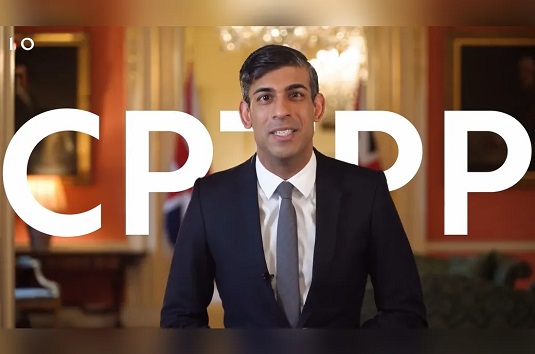
Rishi Sunak has decided to play the sensible game. At the beginning of the year, he announced he was going to become Mr Delivery. Putting distance between himself and his calamitous, chaotic predecessors, the high foreheads on retainer have advised more briefcase, less headcase is the passage to voters' hearts. Especially when his opponent is the epitome of administrative politics. On this score, Sunak has had a good few weeks. Northern Ireland has been solved, even if the DUP are running out of toys to throw out of the pram. The ERG threats and a Boris Johnson-led rebellion were brushed aside, and Jeremy Hunt's budget carried forward the do-nothing logic of "Sunakism" while not upsetting too many people. And now there's another feather in the cap: the UK's admission to the Comprehensive and Progressive Agreement for Trans-Pacific Partnership.
Yes, it does seem a bit strange. We've flounced out of one trading bloc - the world's largest - that happened to be on the country's doorstep and traded it in for another about six thousand miles away. But good headlines for Sunak as the government clinches another trade deal. It, apparently, shows the "real economic benefits of our post-Brexit freedoms". Oh good, guess that means we're all quids in as the beleaguered British economy gets a boost. Actually, no. The government's own briefing suggests CPTPP will increase GDP by 0.08%. That's right, by less than a tenth of one per cent. Or the equivalent of the average family's food shop these days. Seems ridiculous? It is. Trying to big it up, Kemi Badenoch suggested this was a down payment on the future. It's about potential: "40% of the world's middle class is going to come from that region". Nice to know, considering how Britain under the Tories is such an exporting powerhouse. And there's the rest as well. The fact we already have free trade agreements with 11 of CPTPP's 13 members, and how it hammers British farmers. Something the Tories are well practised at. What's the point?
We have to think about the core class component in the confluence of forces the Tories draw together: commercial and finance capital. As explained before, the City cannot be disentangled from the Tories - as Number 10's current resident reminds us. But when it came to Tory divisions over Brexit, the guff about sovereignty was partly about statecraft, of granting the Tory class interest untrammelled political power without limit in its home territory to shape British capitalism and manage its labour force as they see fit. And it was also about commercial opportunities and projecting the global influence of the City. Some city slickers, probably a majority, were happy with the status quo, while others thought their (note, not the country's) best interests were served outside the EU so London can consolidate itself as the global clearing house for laundering dirty cash, parking capital, and networking between commercial elites for future opportunities.
This helps us understand the Tory enthusiasm for CPTPP. Badenoch is right. Asia is on the rise while the EU, no matter how much it grows, is in long-term relative decline. The City needs to be where the action is at. Second, CPTPP is set to grow. China has applied to become a member. The UK is nowhere near as successful at trading with China as other West European countries, but as a CPTPP member with application veto rights the Tory government now hav a say over its terms of entry into the bloc. The naive might celebrate this as a chance to remind China about human rights and democracy. It also puts the UK in a strong position when it comes to the strengthening and enforcement of intellectual property rights, which are notoriously disregarded, unofficially of course, in China. This gives the government leverage and puts them in an advantageous position to extract concessions. More Chinese money in the City? Better (preferential) access for British finance? More opportunities for UK services? And also, the City could become even more of a conduit for Western capitals looking to profit from China's rise. Especially American capital.
All told, even if Badenoch's dreams come true we're not looking at more than a few percentage points on GDP. But that's not the point. Projecting the City is what matters, helping secure the UK's role as a global player is what matters, and ensuring the interests the Tories have traditionally articulated and served have long-term profitable futures are what matters. The UK's membership of CPTPP offers the electoral equivalent of a nice photo opportunity, but as with all things Tory it only makes sense in the context of the interplay between class politics and commerce.
Image Credit
Wednesday, 15 December 2021
Capitalism Vs Covid Shutdowns
Monday, 20 September 2021
The Politics of AUKUS

As ever, please consider supporting Alex Doherty's work via Patreon
Sunday, 15 August 2021
What Next for the Taliban?

None of this soft soaps the Taliban. This might be Taliban 2.0, one savvier when it comes to diplomacy and cutting deals with regional powers, not executing Western journalists and allowing aid agencies to stay, but their extreme gynophobia and suppression of select aspects of modernity remains. What happens next? In this discussion between Alex and Paul Rogers of Bradford University's Peace Studies department, Paul explores the difficulties the American-led coalition faced, the division in their foreign policy establishment, the stupidity of the occupation authorities, and how the Central Asian great game is going to play out between Pakistan, India, and China as well as the US. Events have unfolded rapidly since this was uploaded yesterday, but the analysis underpinning it is a must listen.
And don't forget to help support Politics Theory Other out via its Patreon.
Thursday, 13 May 2021
China's Smooth Path to Capitalism
Please remember to check out the archive and help build new left media by supporting the show.
Thursday, 6 August 2020
The USA, China, and the New Cold War
There are plenty more where this came from, so check out the PTO archive here, and help build new left media by giving the show some cash!
Saturday, 16 May 2020
An Apologia for Racism

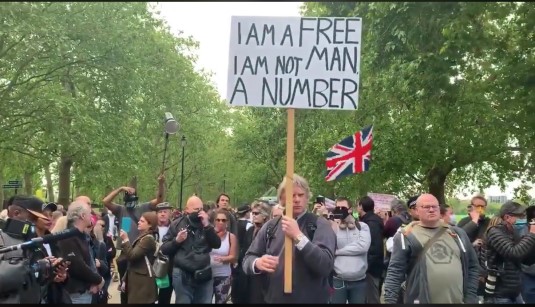
It's easy to dismiss the UK Freedom Movement and the paltry numbers it turned out at its "mass mobilisations" today, but should we? In his recent interview on Politics Theory Other, Philip Mirowski cautioned the (American) left against letting anti-lockdown protests slide. What they represented was the next phase of reactionary street politics on behest of the Koch family and their cabal of semi-fascistic billionaires. The left ignores these movements at their peril. But that is there and this is here, so do the same arguments apply?
Britain's fascist movement is a far cry from what it once was, though sadly less to do with their being smashed to pieces by the left and more their agenda getting gobbled up by UKIP first, and then the Conservative Party. However, the political problem doesn't lie, for the moment, in a new far right street movement tearing up city centres. The danger resides in the spread of their conspiracy theory.
The Coronavirus/5G theory, having inspired a spate of attacks on phone masts, is particularly worrying not because we've grown attached to decent mobile coverage, but because of racism. Sanctified by the moron in the White House, the more catastrophic Trump's handling of the pandemic becomes obvious the more he and his allies will keep blaming China. And in an election year, he's got to rescue those tumbling poll ratings among older voters somehow. Here in the UK, there are Tory MPs and right wing commentators only too happy to jump on the anti-China bandwagon. They might sidestep the ravings about the "Wuhan virus" and its disproven narrative of having got concocted in a laboratory, but the "genuine concerns" argument provides a nice bridge to the demonisation of an alien other. A new spectre to frighten the Tory faithful with. But this is not without consequence. From the moment Coronavirus became global news, racist attacks on Chinese and East Asians went up. Racists don't care about the minutiae of nationality and the truth. As long as there's a group that can be identified and othered, cut off from the rest of society, and victimised with minimum social cost they're up for it.
Can criticisms be made of China's handling of the virus? Of course. And there's plenty to have a go at our own government about too. But the truth is the lockdown is there to save lives. It was insisted upon by the public and continues to enjoy mass support, especially now when its relaxation has already seen an uptick in infection. There is no grand conspiracy to destroy our liberties. Apart from curtain twitchers and overreaching coppers, a Johnson-led dictatorship is not in the process of formation. If anything, it's the tardiness the government showed and its continued willingness to put people in harm's way that's the real scandal. This is where the focus of criticism should be. Anything else is distraction and, as per the pathetic Freedom Movement, can lead to an apologia for racism.
Friday, 10 April 2020
Coronavirus: A Crisis Like No Other
As always, please help keep the show going by supporting it via here. Not least because you are guaranteed better, more thoughtful consideration of the crisis than in broadcast journalism and the bourgeois press.
Wednesday, 8 April 2020
Coronavirus and the End of Neoliberalism

A question of timing? The highly infectious COVID-19 coronavirus disease, an acute respiratory syndrome first seen at the end of 2019 in China, is now spreading rapidly across the globe. The World Health Organization (WHO) has declared a pandemic. At the time of writing (8 April), there are 1,453,247 confirmed cases of the illness globally, 83,585 of which have proved fatal. The numbers are rising all the time, with the largest impact of the illness now being felt in Western Europe (including Britain) and the USA. Estimates of the illness's mortality rate currently range from less than one to over three per cent.
It is too early in the life of COVID-19 for the medical community to have much certainty about the number of fatalities likely to result from it. When the illness first struck the UK back in January this year (or, to be more accurate, when the first cases were identified: many now assume that it had already been circulating here for some weeks unidentified) it was suggested that up to 80 per cent of the population might contract it. Given a 1 per cent mortality rate, this implied a toll of 500,000 lives in a worst case scenario. The government's initial reaction was to advise plenty of hand-washing and self-isolation for those with symptoms of infection by the virus. Then, in the March Budget, it released £5 billion of extra resources into the NHS along with £7 billion to support business, and called for social distancing to reduce contagion. In Western Europe, many nations had by this time embarked on stringent lockdowns to minimise interaction and contact between people, although even these did not stop a dramatic and distressing rise in fatalities, especially in Italy and Spain. WHO officials were by now making clear the importance of increasing testing to identify who had and who had not been struck by the virus; but the British government's approach to this, and indeed to the need for many more ventilators and Intensive Care beds for the large numbers likely to require hospital treatment, was somewhat sluggish. There were leaks which suggested that senior advisers were prepared to let the disease circulate within the population in order to achieve a level of 'herd immunity', which would minimise its impact until a vaccine could be found.
All this changed shortly after the Budget, when rapidly rising number of cases suggested Britain was on a path to the worst case scenario and likely to follow the example of Italy. The NHS, so poorly funded thanks to the austerity regime imposed after 2010 that the normal winter flu regularly sends parts of it into a flat spin, was in no position to handle a crisis on this scale. The government introduced a lockdown, leading to the suspension of activity across large parts of the economy. To mitigate the impact of this it dramatically increased NHS capacity and introduced a series of packages to support business through the crisis. Paradoxically, it is this dramatic extension of the State's role in the economy following from lockdown and from the need for a rapid expansion of the hospital system and its provision of staff, beds, IT facilities and ventilators, as well as of testing, which explains the government's slow response to the COVID-19 crisis. Its initial strategy had been driven by a team of behavioural scientists appointed as advisers by David Cameron in 2010 and known as the 'nudge unit' because it operated on the assumption that social change could be achieved simply by influencing human conduct through a mix of incentives and messaging, delivered through charities and existing government institutions. This idea of reform (usually in the direction of attempting to create the population of rational, self-interested economic actors appropriate to a free market world) was of course designed to avoid large financial commitments, collectivism and State intervention. Applied to COVID-19, it meant that the government's intention was to manage the crisis without sacrificing the neoliberal consensus in place since the Thatcher years.
By late March it was very clear that this approach was totally inadequate and likely to result in a human and social catastrophe. In common with other governments throughout the advanced capitalist world, therefore, the British government embraced emergency measures likely to fill the fuglemen of the 1970s and 1980s free market counter-revolution with profound gloom. These included access to large-scale loan finance, grants to pay 80 per cent of the salaries of all workers laid off thanks to firms closing, a commitment extended (after a delay) to the self-employed, and deferrals if VAT and income tax payments. The railways were nationalised (this was said to be a temporary measure), to ensure they kept running throughout the crisis. The Institute for Fiscal Studies estimated that the stimulus would lead to a UK Government budget deficit of more than eight per cent of GDP in the coming financial year (the Budget of March 19 had projected one of between two and three per cent) - and this on the questionable assumption that output in 2020 would fall by just five per cent below. Leaving to one side the loans and tax deferrals, the spending commitments alone amount to 2.3% of GDP in 2020-21. This exceeds the boosts to GDP of 0.6% and 1.5% introduced by the Labour government in 2008 and 2009, at the peak of the financial crisis.
Coronavirus, whose rapid transmission across the world is a function of neoliberal globalisation, facilitating free movement of people, goods, capital and viruses, now presents three potentially fatal dangers to the very political and economic environment which allowed it to spread so fast and so widely. First, the era of 'sound finance' appears to be ending. This is because the most serious impact of the virus has been felt in those societies whose health and social services have either been run down thanks to austerity (voluntarily accepted by British governments and a function of Euro group membership in Italy and Spain) or neglected on ideological grounds for over 40 years (as in the USA). Since it has now become clear for everyone to see where a political economy founded on the principle of private affluence for a few and public squalor for the many ends up, future political debate in western democracies may revolve not around balancing budgets and redeeming debt but around which parties can best deliver well-funded health and welfare services, leading to more hospitals, doctors and nurses, more social housing and more generous support for the poor, the elderly and the infirm.
There will certainly be calls for cuts, 'to repay the debt' once the crisis is over. But it will not be so easy to panic populations into supporting them as they did after 2010 with lurid warnings about looming national bankruptcy, given that we shall all be able to point to the ease and speed with which governments ramped up spending to beat the virus. If they can do it for that, why not afterwards, to build better, kinder and healthier countries? Moreover, the crisis has highlighted the central role in our society of the 'key workers' - doctors, nurses, administrators, carers, delivery drivers, postal workers, supermarket staff - whose efforts are so vital to our survival right now. As has been pointed out many times in this blog these comprise the new working class whose labour is immaterial and concerned with the reproduction "of relationships, of data and knowledge, of care and socialisation processes." This constituency, radicalised and empowered by the crisis, is capable of leading society away from austerity towards social democracy and possibly beyond, to a system of production for use and not for profit; in short, in the direction of socialism.
Secondly, the lockdowns have led to fractures in the circulation process essential to the survival of capitalism. Production has fallen sharply as has the consumption of goods in the market (realisation). Output in the UK in the second quarter of this year has been forecast to fall by 15 per cent, with unemployment likely to double. In the USA second quarter output is estimated to have plummeted by up to 30%, while unemployment grew by 9.95 million in the last two weeks of March. A capitalism short of commodities being produced for profit and with a drastically reduced number of consumers for those that reach the market is facing profound crisis. Barring an early end to the emergency, it is hard, in the absence of government interventions including measures of widespread socialisation unprecedented since World War Two, to see how the economies of the USA and the UK, and in fact of much of the world, can escape a depression as great as or even more severe than the one which started in 1929.
Thirdly, there is a distinct possibility that the fall in output and concomitant supply chain disruption caused by the lockdowns will prevent countries throughout the advanced capitalist world from producing the volume of goods and services they need for the trade which sustains populations at their current standard of living. In short, for a time many countries will not be able to afford all the imports they normally consume and even if they can it may be very hard to find them. The result? Either a sharp rise in inflation as governments stimulate demand in societies where goods are scarce, or increasing dependence on Chinese imports to fill the gap. China, now recovering from the damage done by COVID-19, has the capacity to do this and moreover will need the markets. It seems possible in this scenario, therefore, that the Chinese government may well extend credits and grants on a scale large enough to keep the global economy turning over - much as the USA did after 1945. This implies the replacement of the USA by China as the world's hegemonic power, with political and ideological consequences likely to prove fatal to the neoliberal order.
The longer the COVID-19 crisis lasts the longer it will be necessary for governments to take up the slack left by a collapsed private enterprise system and the more likely it is that their responses will embed profound changes to the nature of the global economy and the geopolitical system sustaining it. It therefore makes sense for nation states wishing to avoid such an epochal transformation to seek to end the coronavirus emergency as soon as they can. A recent study at Bristol University suggested that if the fall in the UK's economic output exceeded 6.4%, "the benefit of a long-term lockdown in reducing premature deaths could be outweighed by the lost life expectancy from a prolonged economic dip." These findings have been disputed but it would not be surprising if they (and similar research) are even now being used by governments to influence discussions and planning about the 'exit strategy' from the lockdown. This will not be guided solely by the requirements of the war against COVID-19: suitably glossed by 'experts' (no doubt behavioural scientists will loom large) other issues will be invoked. Public discussion is likely to be dominated by the question of whether ending lockdown will save more lives than prolonging it. But for administrations in London, Washington and elsewhere the prime consideration is whether this can be done in time to prevent the death of the neoliberal order.
Image Credit
Wednesday, 1 May 2019
Sympathy for Gavin Williamson

My compassion is in meagre supply when it comes to sympathy for senior Tory ministers, so don't get me wrong. Williamson was a grotesque in a cabinet of grotesqueries, a cruel-minded farce and a fool where such qualities are commendations for high office in Conservative circles. In the 18 months at the Defence brief, he has run an unconcealed leadership campaign peppered with idiot stunts. His terrifying menaces aimed at Russia, and dilly-dallying with the Royal Navy in Odessa; the prejudicing of legal process to appear tough on critics of the armed forces, and offering to put troops on the streets in the event of a no deal Brexit, these are the actions of an amoral chancer who, like the two Prime Ministers who groomed and sponsored his rise, learned from them that no move was too crass, no issue too weighty to subordinate to the narrow and petty interest of his leadership ambitions.
Yet I can't shake the feeling, call it a hunch given the number of times it's brought up, that some of the opprobrium his person attracts is thanks to his comparatively humble origins. To see snotty-nosed columnists cast aspersions on Williamson because he's an over-promoted fireplace salesman sticks in my craw. His politics stink, but not because he did a stint in the kind of sales job millions of people have to do. He might be stupid, but not thanks to doing a career sundry poshos have only read about.
To be truthful, you don't need to be a Williamson groupie either to believe he's paying the price for doing the right thing, however self-interested his motives. Yes, there is fun and larfs in watching the Tories scuttling around in the wake of a defence secretary seemingly incapable with being entrusted with national security secrets. But why is a discussion of Huawei's participation in building the UK's 5G network not considered a matter for public debate? The firm has attracted the wrong kind of headlines elsewhere precisely because, as a state-owned enterprise and therefore an arm of the Chinese state, it might, um, pose security issues. Perhaps that's why May and friends wanted it keeping out of the public eye, considering the Tories have form in seeking Chinese input for security-sensitive infrastructure projects.
Gavin Williamson then is a wrong 'un who, for the first time in his miserable political career, did good. He has (apparently) exposed a Tory love-in with a "left" authoritarian government, the kind of thing they routinely accuse the shadow cabinet of doing with x, y, z regimes. And for this service, not only has Williamson done us all a favour by removing his useless carcass from the frontline of politics, he's accelerated the demise of the Tories that little bit more.
Sunday, 11 March 2018
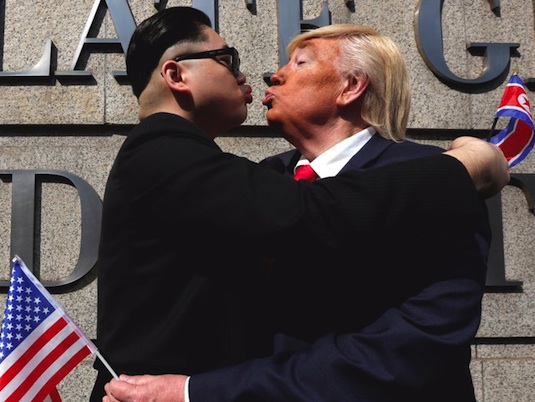
Kim & Donald: A Love Story

On Kim's side, as argued here repeatedly, North Korea is not "mad". Kim is caricatured as some kind of Bond villain with the sinister global designs and weapons to match, but these lazy takes cover for the failure to analyse the North Korean regime, make sense of its internal dynamics, tendencies and power struggles, as well as the preoccupations of its leaders, its position in the international system, and the drivers of the regime's militarism. It is eminently knowable and can be understood in such terms. There are two main concerns Kim has: the keeping of power and its preservation in the long-term. These objectives were shared by pops and grandpapa, and is the main filter through which the regime's actions should be perceived.
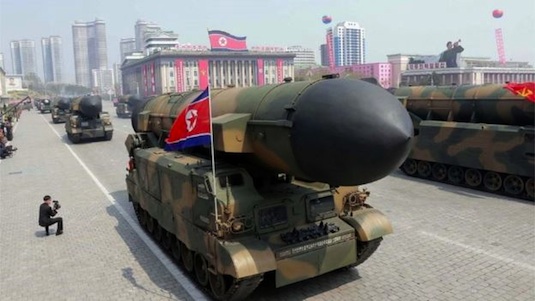
Take the nuclear programme and missile programme. An attempt to conquer the world? Or the means of deterring an attack from a cabal of the most advanced and powerful nations in possession of a record of attacking and invading countries without access to such weaponry? For decades, the North has maintained their own cold war frontier against bigger and more sophisticated militaries not by mutually assured destruction, but making certain any war would be prohibitively expensive. Whether it's artillery pieces pointing at Seoul and threatening to obliterate it before American and South Korean air power can take them out, to the extensively booby-trapped border, to over a million personnel on active service at any given time, to nuclear weapons and the means of delivering them, a war would be catastrophic with a huge price due the victors payable in blood. Since Soviet aid was withdrawn in the 1970s, being forced to rely on itself to maintain the stand off has led to a lop sided development of the economy and a huge diversion of resources into unproductive assets. Infrastructure and consumption has suffered - to the point of not irregular food shortages and famine - and only intense repression maintained by an overblown police state has kept a lid on tensions. Yet Kim isn't stupid. China provides a model of a dynamic state-led capitalism, massive growth figures and breakneck development alongside the retention of the party and, now Xi has got his way, one-man leadership for life. This is what the regime aspires to, and going down this road means freeing up scarce resources currently pouring into the army. Nukes and rockets, while initially expensive, over the long-term render obsolete the need for a huge military. Just as Deng Xiaoping struck deals with the People's Liberation Army that allowed them to become a privileged economic actor, so Kim the younger has tried taking a similar approach.
Following this, the overriding objective of North Korean foreign policy is neutralising the militarised frontier. Not that Kim wants to relive the early days of the Korean war, but because taking them out of the equation removes the requirement for the weapons' programme. Therefore it is seeking an accommodation with the US and would like to draw it into a non-aggression treaty. In this it is entirely unremarkable. Much of Trotsky's output in the 1930s was his persistent criticisms of the Soviet Union and its willingness to sell workers' struggles down the river on condition Stalin's regime be left alone with its special shops for the favoured and the gulags for the unpeople. As the broken machinery of state planning in North Korea can't keep the regime afloat indefinitely, especially as new sanctions start biting, including China's capping of petrol exports, it's clear something has to give before the hairline cracks in the regime's foundations become something more serious.
How about Trump, what does he and the US gain from brushing aside the Bush and Obama-era approach and coming to a deal with Kim? There is personal vanity, of course. Defusing the tensions on the Korean peninsula would be a masterstroke of diplomacy and assure Trump goes into the history books as something other than a joke. It wrong foots the Washington foreign policy establishment and enhances his credibility over whatever Beltway insider the Democrats decide to run against him in 2020. Also, because a deal is possible. Trump may be profoundly unintelligent and ignorant, but he knows deal making. He has the sort of low cunning to be able to read the position of opponents vis a vis his and act accordingly. What he sees in Kim is someone not too dissimilar to himself, but is playing a poor hand well. And he knows how desperate they are to come to some kind of arrangement - the threats the regime is famed for compute as cries for help to Trump, but he's savvy enough to realise they're playing the same sort of unconventional game that brought him to the White House. Additionally, the issue just isn't that intractable. As complexity goes it's nothing like Syria, Israel and Palestine, or Northern Ireland before the Good Friday Agreement. A little bit of give, perhaps the phased removal of troops and easing up of sanctions, costs America very little assuming the North reciprocates and they agree to means for each side to monitor the other. Second, there is a real will in the South for better relations. The President, Moon Jae-in, is a popular centre left leader associated with a new "sunshine policy" with regard to the North, and one of his objectives is a formal peace treaty that brings the official state of war to an end. He has certainly drawn criticisms from the right but, as elsewhere, the Democratic Party's key voters tend to be younger and are less amenable to the anti-Kim buttons frequently pushed by conservative opponents. Conservative voters are never going to vote for him regardless, and as his right wing predecessor got sent down for 30 years and another former president is in the dock on serious corruption charges, Moon can afford to sideline the right as so much bleating. Therefore Trump has a willing partner with connections and a good relationship with the regime.
Lastly, there are realpolitik aspects to consider. Detente with the North opens a possible front against China. Relations between China and North Korea grew more strained over the course of 2017, even to the point of the regime declaring Russia its BFF. Cooperating with UN sanctions helps China's reputation as a responsible actor on the international stage, but ultimately they are a weapon to try and bring the North to heel. Beijing prefers having the North as a buffer against the US-dominated South, and is trying to use economic pressure to render them a quiescent if occasionally noisy client. For Trump a US-North Korea deal weakens Kim's dependence on its big neighbour, and could drive a wedge between them in much the same way Nixon used clever diplomacy to widen the rift following the Sino-Soviet split. With a firm if unstable ally suddenly became less reliable, then China might not prove to be as assertive elsewhere - such as prosecuting its claims in the South China Sea. It also gives Washington a lever for inflicting economic damage in the event of Trump's trailed trade war. North Korea might not amount to much with regard to the Chinese economy as a whole, but shrinking trade with them will impact negatively on a region not quite as dynamic as other parts of the country.
Whatever the case and whatever the motives, the prospect of a permanent settlement is suddenly possible. One that serves the interests of an appalling regime, the designs of the world's biggest superpower, and the vanity of the White House's most awful occupant certainly. But there is also a chance of burying permanently the prospect of an ugly, mass casualty conflict with worrying geopolitical implications. An imperial peace is still a peace, and can only open a new period with new tensions and contradictions, not to mention new opportunities for political change.
Monday, 4 September 2017
North Korea and Bad Faith

As we've seen before, North Korea isn't mad. The regime is disgusting, but it is not stupid. Kim Jong-un doesn't head up a death cult. He, like every other Stalinist despot to have blighted world history has an overriding interest in keeping the apparatus on the road and his flabby ass in the driving seat. As far as the North is concerned, that would mean such a readjustment to international relations so the government would feel able to divert capital and resource away from the military and modernising the decrepit and rotting economy. China is the vision: a society catching up with the West carrying a monstrous dictatorship on its back. However, Kim has learned a very valuable lesson from recent history. Regimes that earn the displeasure of the United States and its allies tend not to last very long, especially if they lack the means to deter attack. George W Bush and Tony Blair went to war precisely because Saddam Hussein lacked weapons of mass destruction. Britain and France felt empowered to "rescue" the Arab Spring in Libya precisely because Colonel Gaddafi had abandoned his weapons programme.
Here's where the bad faith comes in. How the US can condemn any country for "abusive use of missiles" when it regularly turns the skies over the Middle East black with smoke from its cruise missile strikes. How can the US condemn North Korea for developing nuclear weapons when it previously had tactical nuclear weapons attached to its military presence in South Korea, and can target the north with land and sea-based ICBMs at a whim? And how can the US lecture the Kim regime on peace when Dubya himself vetoed a non-aggression treaty, something which the Clinton administration had put some time and effort into achieving?
Blaming China, as Trump stupidly does at every opportunity is wrong as well. China has a clear interest in maintaining the North as a buffer for a number of reasons. A reunited Korea would be a powerful and wealthy neighbour in its own right, and one enjoying considerably more freedoms than Chinese citizens. The government has a hard enough time keeping a lid on the clamour for democratic reform, the strike waves and peasant struggles that regularly convulse the country, as well as the allure of Western-style consumerism and its more individuated and open culture. Having an advanced capitalist state right on the border presents a threat in the medium and long-term. In the short, if the south gobbles the north that means freer range for the US military as well as the possibility of millions of refugees. There are also limits to what the Chinese can do re: the North. They can browbeat and arm-twist, but Kim and his henchmen are fully aware of the interests its large neighbour has in making sure the regime doesn't go under. Furthermore, turning off the oil and implementing sanctions from the Chinese side make things much less stable. A harsh winter without fuel imports could collapse the regime, create the refugee problem, and let the nuclear technology and expertise vanish into the who knows where. Like Kim, Xi would like his and his party's monopoly on power to continue.
Anyone with a hint of humanity would like to see the North Korean regime fall and Kim and his lackeys brought to account for their crimes. But, presumably, because leftists and socialists care about human life we have to think about the best way of doing this. Letting the appalling, blood-curdling rhetoric dominate the headlines and causing millions in Korea and elsewhere to fear their lives might evaporate in an instant is not sustainable. The longer the stand off, the greater the chance of something horrendous happening. Perversely, the best way of bringing Kim down is by normalising relations, by allowing the economy to open and develop, to let foreign capital flood in with the kinds of values and aspirations that, ultimately, tend to something better than the Orwellian hell of Stalinism and, eventually, neoliberal capitalism. Here, the Chinese are right and the British government is wrong. It's not for the North to make a statement of intent, it's the responsibility of both sides to do so. Because pushing Kim further into the corner to the point where there is nothing left to lose, that's when the situation becomes its most dangerous.
Thursday, 31 March 2016
Conservative Steel Hypocrisy
The politics of the situation couldn't be more stark. The Tories' strongest gambit has always been their cruel-but-competent line, and it seems enough voters have allowed them to get on with it as long as a) they're not the ones at the sharp end, and b) the Tories appear to have got the engine running smoothly and it's motoring the country in the right direction. This is where things are starting to get tricky.
Their bloody-minded treatment of the junior doctors, the forced u-turn on bashing the disabled, and now their seeming willingness to let 40,000 steel and supported jobs disappear is widening the pool of folk at the sharp end. These are "the strivers", not the skivers. The second is their "vision thing", the much-heralded but entirely vapid "long-term economic plan" is supposedly about Britain's manufacturing renaissance, a rebalanced economy both away from the South East and financial services, and some nonsense about "march of the makers". With all these infrastructure projects in the pipeline and the decision to replace Trident to be taken soon, to have the core base of your manufacturing economy facing shutdown is a headache the Tories could do without, especially when they're singly ill-equipped to deal with it.
There is a cultural/political dimension over the refusal to do for Port Talbot what Labour did for the banks. Part of it is their utter indifference to the fates of the industrial worker. "They do not give a shit", as Paul Mason puts it. And part of it is their deeply skewed, deeply sectional view of how the world works. Taking at face value Tata's claim that Port Talbot is losing just under a million a day (a figure that, rightly, isn't entirely accepted by all concerned), should the government take it on the tax payer could lose up to £350m/year. I say lose, but this money would support tens of thousands of jobs, keep communities viable, prevent many thousands from developing physical and mental health problems, and still churn out a useful product at the end of it. All this is invisible to the Tories, and yet they have zero issue with a £2bn loss for RBS last year, contributing to a colossal £50bn flushed down the proverbial since 2008. What's good for finance isn't good for strategic heavy industry, it seems.
From the Tories' point of view, confronted with China flooding global markets with cheap steel (they have to keep the mills running at the price of severe social dislocation and likely unrest) there is little point having a British steel industry. If steel gets nationalised, then what industry will next ask for a bail out? And what would that do to the chancellors finely-tuned (cough) figures? Well, that's assuming the Tories are spinning a wrong but honestly-held view. The evidence suggests otherwise. It transpires that the Tories have spearheaded efforts to prevent the European Union from doing anything about Chinese steel dumping - in other words, this isn't the headwinds of the global economy mindlessly wrecking all in its wake, the destruction is aided and abetted by our government. Just think about the absurdity of it for a moment: a right wing Conservative government is letting a strategic industry collapse to curry favour with the world's leading communist power. There is profaning the sacred, and then there is this.
The question remains whether they're willing to take another political hit for their intransigence. It's worth noting Jeremy Corbyn was on the ground immediately traipsing around and offering a very clear Labour view - not bad for an "ineffective leader". Meanwhile, all the government can do is dither and mouth platitudes about finding the best solution, which will probably mean throwing subsidies and guarantees at a buyer whereby the profits are privatised and the losses effectively nationalised. Unfortunately for them, coming on top of all their recent difficulties it's hard to see how continued inaction won't inflict considerable political damage to their rapidly re-toxifying brand. It's the least that they deserve.
Thursday, 26 November 2015
Mao, McDonnell, and Mirth
Yet it could have worked. Could. John made some very serious and pertinent points about Osborne's relationship to the Chinese state, a relationship that would have called down Tory fire and brimstone on the chancellor's head had Labour flogged off a key part of Britain's energy infrastructure to - effectively - the Chinese government. It highlights the Tory approach to selling off infrastructure, that they're okay with state ownership as long as it's anyone but the British state. After making observations about Osborne's new comrades, he could have just got the book out and handed it over with a quip. That was all. That could have worked as a bit of political theatre. Unfortunately, as we know, we ended up in the present ridiculous situation instead.
John, however, isn't the only MP to have recently quoted the Great Helmsman on the floor of the Commons. As @woodscolt79 notes, three members from the Conservative side have done just that. It's all there in Hansard. Should our friend Robert Halfon have said:
"This Gov are more Chairman Mao than Joseph Stalin and we believe in letting a hundred flowers bloom when it comes to devolution."
Or how about chum-of-the-coppers Andrew Mitchell when he noted "As Chairman Mao once said, fishes need water to swim in."
What a pair of inconsiderate bastards. How dare they quote Mao without condemning his heinous crimes. Particularly that Halfon, whose words can only be construed as shading into praise-worthy.
The fact of the matter is there is nothing particularly outrageous about quoting Mao, Stalin, or any other despot you care to mention. Nor does it indicate that those who utter their words would minimise the crimes or prefer for them to be forgotten. While John was foolish to do what he did, I think those imputing further motives need to get a grip.
Sunday, 25 October 2015
Britain's China Syndrome
On the nuclear deal itself, it's absurd on two levels. First is on the nuts and bolts of nuclear energy generation. In recent years, governments of all stripes and "reformed" environmentalists have green washed nuclear. It's reliable, they say. It's carbon-free, they say. It's sustainable, they say. On all three they're plain wrong. Conventionally mined uranium has, depending on who you ask, between 90 to 200 years worth of stocks left, assuming energy consumption stands still. Which it doesn't. Of course, getting that stuff out of the ground in the first place, transporting it across oceans, and refining it to be reactor-ready is hardly an emissions-free process either. And sustainable? If you can sort out the supply and ensure they remain safe (pray for no more Fukushimas), there's only so many places you can store spent fuel rods, irradiated water, and other by-products for the requisite 50,000 years or so.
Second is the taxpayer subsidy destined to end up in China's bank accounts. 10 years from now, if all goes according to plan, the new Hinkley Point plant will come on stream at the cost of some £25bn. The largest inward investment ever, except the government is acting as guarantor of a fixed energy price. Regardless of what's happening in the markets - you know, those very things Tories ordinarily bow and scrape toward - EDF, the French state company fronting for the Chinese, are guaranteed a floor price for their electricity regardless how low wholesale prices may plunge. In effect, the taxpayer is guaranteeing the investment. But it's not a public subsidy, you understand. The government are very much opposed to those. Meanwhile the vast potential of wind and wave, particularly around the northern quarters of these isles, remain untapped.
Why is this happening? Uncharacteristically, the government have played this straight. They want to be China's best buddy in the West. When their currency becomes fully convertible the Tories need the City of London to be the primary clearing house for capital flows. While London is ideally located between the stock markets of the East and North America, there isn't an exchange in Europe who'd turn down the chance to be the preferred partner of the Chinese government. And, as we've noted before, it helps support a key prop of the Tory base. Naturally, there are many other investment opportunities in Britain for footloose Chinese capital. Osborne has already mentioned the HS2 debacle. Again, billions earmarked for a useless piece of infrastructure from government coffers is a guaranteed return for anyone investing in it. There will be plenty of other opportunities.
Politically, being the number one investment destination for China in the West will help the British economy grow - and if you're a GDP fetishist like the Chancellor those numbers are the only ones that matter. It also allows for infrastructure spending to take place without blowing holes in his deficit and debt reduction schemes, and also allows Dave and successor to stride about the world stage as if Britain matters. We've sucked up to one global hegemon since 1945, so why shouldn't we carry bags for the next one too?