Showing posts with label Russia. Show all posts

Monday, 13 April 2026

An End to Orbanism?

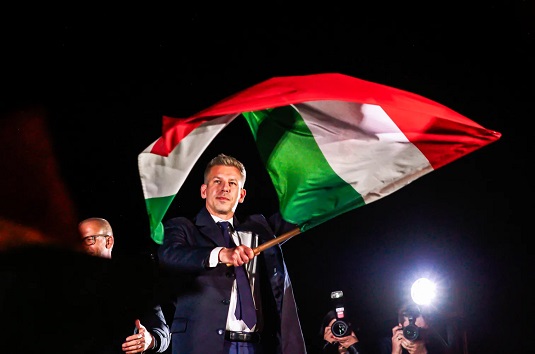
Orban's gone, but so has Orbanism? Sunday's election results must be beyond Péter Magyar's wildest dreams. 138 seats, well over the two-thirds majority required to make sweeping changes to Hungary's constitution does, on paper, give the incoming Prime Minister the tools he needs to address the damage wrought by Orban. The crony appointments to the judiciary, to the media regulators, to the ministries, for 16 years these have been nothing but so many troughs for his allies. The end of his premiership and the impressive electoral performance means, for Magyar, that expectations will be sky high. Is he in a position to reverse Orbanism and clear out the state apparatus? Does he have the trousers to back up what his mouth says?

Unfortunately, even as Hungarians are dancing in the streets and observers abroad cheer on Orban's downfall, the warning lights have long been flashing. If anything, Magyar is more anti-immigration than Orban, having roundly criticised him for the introduction of a guest workers' scheme. Much has also been made of Magyar not being pro-Russian, what with the chants of 'Russians Go Home' echoing as much around Western social media as the streets of Budapest. But this does not necessarily mean he's supportive of Ukraine's war effort. He has, for example, gone on the record to say he supports Hungary's opt out from contributing to the EU's loan to Kyiv, albeit using more emollient tones than Orban's. Likewise he hopes to take advantage of the cheap oil deal Hungary has with Russia, though who knows where that is now Moscow has declared them an "unfriendly country". Nevertheless, Magyar is keen on receiving the €17bn in frozen EU funding, so there are costs to continuity Orbanism.

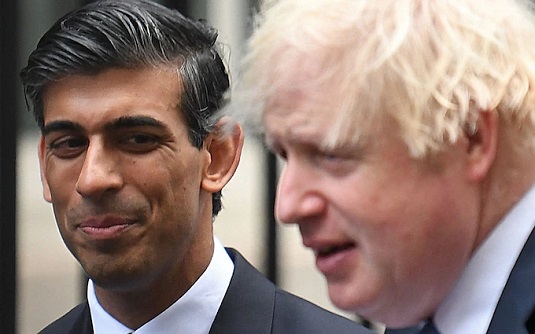
Apart from this, there are other problems too. The Tisza Party was a down-and-out centrist outfit before Magyar joined, following his exile from the Orbanist state apparat. And he has built it up as a formation distinctly of the centre right, despite its becoming the repository of democratic aspirations across Hungarian society. And how effective could such a figure prove to be in resetting government, untangling institutional corruption, and addressing the fusion of state and oligarchical interests? Imagine if Rishi Sunak were to lead a popular upsurge against a Nigel Farage Reform government. The analogy isn't a million miles away. I'm not in the business of forecasting doom before Magyar has attempted anything, but given his background, his political programme, and the fact unpicking the oligarchy too much could have far reaching progressive consequences for Hungarian politics, which might include a revival of independent working class politics in the long run, there are limits to how far he's going to go. And that could mean a return to Orban or another right wing authoritarian after the next election. The United States and the failure of the Democrats to follow through after the January 2021 putsch debacle serves as a warning.

Outside of Hungary, however, the significance of Orban's loss is obvious. For the United States and Russia, for Trump and for Putin, Orban was a natural ally, a seemingly successful experiment in open class rule, of not bothering to drape the obscenity of the naked oligarchy in anything but a few rags of scapegoating and welfare bribes. That has not only failed, but the record turn out for a Hungarian election shows that even the limited liberalism of an illiberal democracy can be seized upon to lever their sort out of office, if not out of power. Putin is more secure thanks to his extensive domestic security apparatus, but Trump is not. The efforts to try and rig the mid-terms through the ill-fated re-districting efforts and ballot conditionalities shows the forces he coheres are still concerned that there's enough life in American constitutionalism to bring them down. Magyar's victory then has a double edge. His failure to undo the last 16 years could lead to a retread of precisely what's just been cancelled, but simultaneously it shows that no authoritarian leader can indefinitely manage a restricted democracy to their benefit.

Image Credit

Tuesday, 4 March 2025

Rumpus on the Right

Associating a right wing political project with Donald Trump is a risky move. Though you can't say Nigel Farage wasn't warned. There was a four-year record of chaos available for review, well-telegraphed statements of intent, and before he took office Trump's unprecedented and stupid attacks on friendly nations and allies. And now that transatlantic alliance, which has bitten Farage once is back to tear off a larger chunk.

Following the double-team ambush of Volodymyr Zelenskyy on Saturday, the latest entertainment from the White House include suspending military aid to Ukraine, and JD Vance attacking "random countries" (i.e. Europeans) for not having fought a war for 40 years. The latter, of course, is in poor taste considering personnel from almost every NATO member died needlessly in the occupation of Afghanistan. Fewer countries were in Iraq, but the losses were by no means insignificant. And as for Ukraine, its case against Russia is almost sacrosanct as mainstream politics and public opinion goes. Woe betide anyone who sets their face against this.

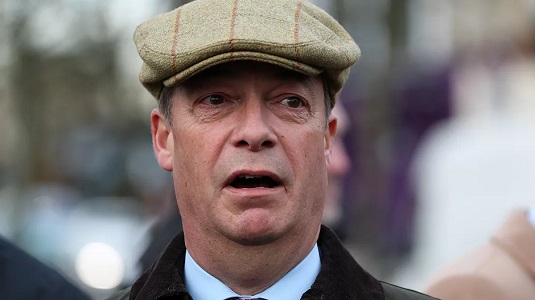
Farage is having a go, mind. Josh has done a good job listing his recent compromising utterances. These include criticising Zelenskyy for being "rude" in the White House, excusing Trump's treatment of the visiting leader, and supporting the pathetic question about his attire lacking "respect". There was also his suggestion Ukraine was a uniquely corrupt country, admitting he was not a "huge fan". Whether Farage is actually in the pocket of the Kremlin or not is a moot point. Like Trump, he acts as though he is.

Might this dent the (resistible) rise of Reform? As Josh rightly notes, like all far right outfits there is an inherent instability to the project. The evidence is there in the waxing and the waning of its continental counterparts (who, unfortunately, are on the up), and the history of UKIP had similar peaks and troughs. Farage knows this better than most given the dozen or so times he quit as the party's leader, which is why he ensured the Brexit Party and now Reform were private companies he was the majority shareholder of. As noisy the internal life of the party might be, he can never be challenged because it's his personal, private property. So if the combination of Trump's colourful behaviour and Labour's adoption of military Keynesianism does chip away at Reform's polling, Farage is safe in his manor.

Safe, but politically vulnerable. Vladimir Putin has become a bruise on Reform Labour wants to, and is, punching. Yet this is an opportunity for someone else too. Typically languishing third in the polls and desperately looking for a way back into contention, this is an opportunity to turn the tables on Reform. After all, it was a Tory Prime Minister who was enthusiastic about sending weapons to Ukraine and was critical in persuading Washington to do likewise. Under the Liz Truss interlude and Rishi Sunak, the arms kept making their way to the front lines and there was no suggestion of letting Kyiv roll over. And like Labour, they have tried to capitalise on the moment. At the weekend, Robert Jenrick put out a release condemning the behaviour of Trump and Vance in the strongest terms. Priti Patel has attacked Farage for equivocating on Russia's invasion. The goal is not just open, it's begging the Tories to score against Reform.

Sadly for them, it's Kemi Badenoch in the striker's position. After mildly criticising the Americans at the weekend, she was today making excuses for Vance's comments. The Tory leader said "I've looked at the comments. I don't think he actually said that. A lot of people are getting carried away." Her weak apology meant that Farage, putting self-preservation first, was able to get out a stronger statement that demonstrated a better understanding of how the politics of Vance's comments would land on the right. Instead of Farage looking vulnerable, it was Badenoch. He used the situation to mount a successful rear guard action. The Tory leader completely blew it.

Yes, Reform and their ilk are volatile parties with Russia-sized weak spots. But when the Tory leader is reluctant to get involved in the rumpus to save her party, probability suggests her time at the helm will be short.

Image Credit

Sunday, 2 March 2025

Cuddling the Russian Bear

Following the "great television" of Donald Trump and JD Vance berating Volodymyr Zelenskyy in public, the Kremlin have said the new foreign policy positions of the United State largely aligns with theirs. But this begs the question, how has this come to be? From the end of the Cold War up until Trump's re-election, the settled position of the US has been to contain Russia. As the only power that can presently face down the Pentagon thanks to its huge stocks of nuclear weapons and capacity to turn the US homeland into glass, keeping it strategically boxed in tried ensuring it was never in a position to challenge the unipolar world worked out in the Project for a New American Century.

Why the break from this and the spurning of traditional allies? Why does Trump want to cuddle the Russian bear? The theatrics of the last month are overkill if it was all a crafty move to get European governments to cough up more on military spending. Ditto if it's just for domestic consumption too. Some Trump voters will be amused, the majority bemused, and for nearly all of them they're secondary considerations to the cost of living crisis - a key reason why they put him back in the White House. Nor are the intelligence reports that compromises Trump in all sorts of ways. As head of the most powerful military and intelligence capability the world has ever seen, in a sharply divided America front page splashes about Russian money and grim-sounding sex tapes would make little difference where Trump's support is concerned.

The more compelling answer lies in divisions within the American establishment about the strategic orientation their state should have in the 21st century. The shifting economic centre of gravity towards East Asia coupled with the long-term demographic decline of Europe's wealthy markets provides a compelling case for orienting away from the Atlantic to the Pacific. Something that Britain has tried doing too. But this is not just about where the new profitable opportunities lie. Under Barack Obama, the US downgraded Russia as a rival and therefore European states as clients as they switched attention to the strategic challenge of China. During the 2007-8 stock market cataclysm, the US was weakened by its indebtedness to Beijing, and while the winds of recession blew through Western economies China only grew more, and kept on growing. Over the last decade, Chinese multinationals have been winning strategic infrastructural contracts across the West and is starting to threaten American technological supremacy. The desperate efforts at trying to ban TikTok and the embarrassment of the tech oligarchs by China's cut price AI application are harbingers of more to come.

This context is most useful for thinking about Trump's foreign policy. As a well-known China hawk, he and his goon squad are executing a turn away from the Biden era's preoccupations (save one) with Europe, Ukraine, and Russia to ultimately face down and box in China. Russia fits this picture for a couple of reasons. Gone are the days of the Sino-Soviet split, China and Russia have grown closer to one another. Beijing has tried exerting a moderating influence on Putin over Ukraine without much success, but that doesn't detract from the common interest they share in resisting the American "international community" of allies, lackeys, and puppets that marked the pre-Trump world. For the White House, its overtures appear to be aimed at prising Russia away from China. It also helps to explain the thinking aloud about readmitting Russia to the G8, and the possibility of joint exploitation of Ukrainian mineral wealth in Russian-occupied zones. The economic and diplomatic reintegration of Putin's gangster state could turn Putin's head and leave Beijing without a major military ally. Secondly, on the subject of minerals the bulk of the vast natural resources of Russia remains in the ground. Bringing Moscow in from the cold not only promises US companies the chance of super-profits from exploiting this wealth, it denies China these strategic resources. A strong friendship between Trump's America and Putin's Russia is not just good for business. It would stymie China and keep the US secure in its position as global hegemon.

Others would prefer to prattle on about Trump's alleged cognitive decline or the doings of the FSB to explain all this. They prefer fairy stories that obscure more than they reveal because anything else compromises the fantasies that have been crafted about the US, its actions, and its prime position in the global order. But Trump's embrace of Russia is not without risks. Another reason why post-war American foreign policy has stressed Transatlanticism is to keep Europe under its thumb. Washington's Marshall Plan, the rebuilding of Western Europe, and the encouragement of the EU created affluent markets for US corporations, while tying the West and later the East to NATO ensured that European states were never strategically at odds with them. Trump deciding to position the US as an unreliable ally has had the desired effect of increasing military spending, but at the price of becoming unmoored from US interests. For as long as Putin or a similar nationalist/military adventurist regime remains in the Kremlin, Ukraine reminds everyone that none of Europe's eastern states are safe. Europe also has the wealth and the military and technical expertise to put together an alliance without Trump that could deter Russia. But the real problem for him is if Europe is shepherded down this road by US vibe, US statements, and US actions (notwithstanding attempts at bridging the divide), then far from isolating Beijing we might find a new alignment of east-west interests without America and without Russia. And that could be a recipe for accelerating the decline of US world dominance.

Trump is playing a high stakes game that many in the State Department and the wider American oligarchy are opposed to because it hurts their immediate interests and weakens them in the long-term. Establishment opposition so far appears thin on the ground, but as their power is at stake they cannot and will not sit back in a bewildered haze forever.

Image Credit

Thursday, 27 February 2025

Trump/Starmer

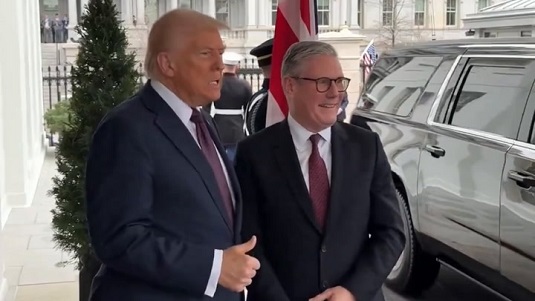
Keir Starmer had two objectives when he met Donald Trump on Thursday. To keep intact the so-called special relationship, and therefore the "bridge" this represents between the US and a chastised/hurt Europe. And ensuring Britain does not fall victim to Trump's tariff scheme, which is threatening to fall on European Union exports when the whim takes the White House. The Prime Minister will be very glad to have banked Trump's assurances on these.

But Starmer got much more than that. Yes, the government's increased military spending was noted and appreciated by Trump, and the letter from the King inviting the Donald for an unprecedented second state visit went down very well indeed. No one does flattery quite like the Brits, and so Starmer will come home lugging two big bonuses: the possibility of a trade deal (hello again, chlorinated chicken!), and US backing of the Chagos Island plan. The very same one Kemi Badenoch and Nigel Farage have berated Starmer for because it serves China's interests or something. I look forward to the leader of the opposition rising at the next PMQs and taking credit for the negotiations she was against, until Trump supported them.

Trump also spoke approvingly of the Ukraine mineral deal that has been cooked up in double quick time. Asked by the BBC's Chris Mason about whether the President still thought Volodymyr Zelenskyy was still a dictator, Trump replied dead pan, "Did I say that? I can't believe I would say that". Some would take that as evidence of cognitive decline. Others as someone who enjoys toying with and discombobulating the press pack. Either way, the Ukrainian president is due to visit Washington, and while Trump refused to be drawn on security guarantees he's unlikely to begin digging without the threat of force backing US investments. However, knowing most of the resources he wants to dig up are in the Russian-occupied east, a partnership there with Putin's regime is unlikely to spark off a shooting war once the signatures are on the armistice. Therefore, the security guarantee isn't there in words but it's implied in the scheme the White House are drawing up for Ukraine after the war. In short, Starmer got all he wanted and then some.

The Prime Minister knows he had to walk a tricky tightrope with Trump. He knows how unpopular he is here (and undoubtedly there will be a large crowd welcoming Trump to London, just like last time), how toxic Tony Blair's relationship with George W Bush was, and would like to avoid similar problems. But while most don't like Trump, public opinion knows that Starmer cannot denounce the president from the roof tops and has to deal with him. The game of diplomacy must be played, and Starmer has so far managed this well. He had to avoid was looking like a supplicant, and for those watching at home this pit fall was side stepped. For now at least, where domestic politics are concerned, Labour is probably going to avoid any negative fall out from this meeting. But it won't always be as easy as this.

Image Credit

Tuesday, 25 February 2025

The New Realpolitik

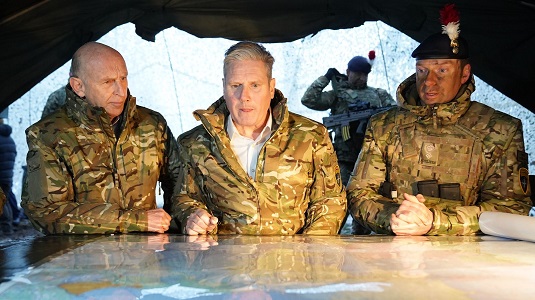
Two speeches about changed geopolitical realities. Ahead of his visit to see Donald Trump on Thursday, Keir Starmer has announced an acceleration in the government's plans to raise military spending to 2.5% of GDP by 2027 and 3% after the next election. This will be funded by cuts to the foreign aid budget, reducing it from a "protected" 0.5 to 0.3%. It was a "hard choice" said Starmer, but with uncertainty abounding ("a dangerous new era") and an aggressive Russia on the edges of Europe he maintained there weren't any other options. But there is the happy by-product of this boosting jobs as war industries are expanded.

There was also a speech by Kemi Badenoch, who readers might recall is the leader of the opposition. Trying to pre-empt whatever Starmer was going to announce on Tuesday afternoon, the Tory leader demanded an increase in military spending to 3% of GDP by gutting foreign aid entirely. She also doubled down on a suggestion made by James Cartlidge, the shadow defence minister, on Sunday's Laura Kuenssberg. He floated the idea of cutting more from social security for disabled people specifically to buy bombs and bullets. Badenoch confirmed that further "savings" could be made from the welfare bill, one of many "painful decisions on government spending" she would find morally wrenching in an unfortunate world where she becomes Prime Minister.

She went much further than Starmer did on Britain's place in the world. Badenoch said Britain believes rules are important because it is a trading nation. "... other countries are breaking the rules and we need to get serious about that and not pretend that those things aren't happening ...". Is she saying that the UK should take rule breakers to task for flouting global obligations, or is she suggesting we should be prepared to discard them ourselves? The implication tends toward the latter as she attacked Britain's membership of the European Convention, saying the ECHR should not stop this country from doing what is right for its people. This is "conservative realism". Not the "progressive internationalism" supposedly characterising Labour's approach to world affairs (a demonstrably stupid charge).

"It was so bland, formulaic, and unsurprising that it would have made Chat-GPT blush" went Conservative Home's scathing review. Quite. But Badenoch's address wasn't without politics. Because the Tory leadership are desperate, desperate to court Trump's administration they are in their own pathetic, twee way pantomiming US unilateralism and prostrating themselves as doormats and supplicants. Ironically, the US strategy they're kowtowing to was the stock-in-trade of the Tories themselves for the latter half of the last government. This was sovereignty without limits, or to put it more baldly, power without checks. Having seen off the encumbrances of the labour movement and institutional autonomy within the state during the Thatcher/Major years, and then extricating the country from the very limited checks on executive authority represented by the EU via Brexit, the Tories want to set Britain free from any remaining obligations, including those enforced by treaty, allowing it to pick and choose. For what purpose? To give them maximum flexibility to manage class relations at home in an uncertain world where unexpected, unwelcome upsurges happen.

But this is so very academic considering how Badenoch is exceedingly unlikely to see the next election as leader, let alone be within a shout of capturing Number 10.

Starmer, however, must be eagerly awaiting how this militarist turn lands. Yes, it will go down well with with the Donald on Thursday - especially the move to cut foreign aid (which is equally as stupid as the USAID cuts, considering how much soft power is bound up with the disbursement of funds). But domestically, more military spending might cut the mustard with the Reform-curious reactionary Labour voter. It's Britain standing on its own feet and not being reliant on America any more (therefore being implicitly anti-Trump), while being framed as against Russia - something that Nigel Farage and the other bad boys of Brexit have an ambiguous relationship with. Starmer is pummelling Reform exactly where they have a significant weakness and are in a position to challenge its patriotism, and without Reform having a convincing counter-argument. Starmer, therefore, is well positioned to reap some much needed political capital from the changed circumstances and reverse Labour's mediocre polling position. Badenoch? Not so much.

Image Credit

Monday, 17 February 2025

Explaining Insanity

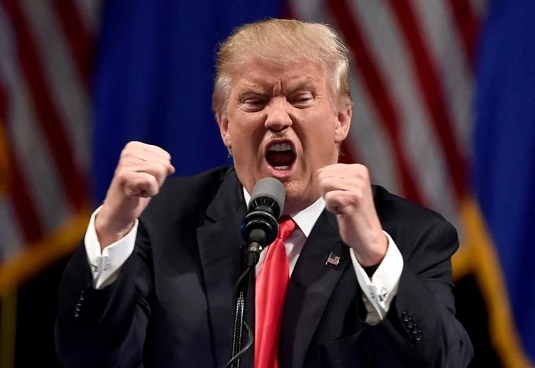
That Donald Trump, coming over here and tearing up the post-war international order, putting a question mark over the United States' support for Europe and chumming up to Vladimir Putin. His second coming has continued as it started: unsettling friends and upsetting certainties while turning everything the new administration touches into chaos. Who can disagree with Keir Starmer that, from the standpoint of great power politics, this is a "once in a generation moment"?

The calling of an emergency European summit sans the US in response to the Trump "peace plan", that freezes Europe and Ukraine out while he and Putin draw new lines on the map is the biggest breach in the Western alliance since the Suez crisis. Then, in no uncertain terms, the Americans said the Anglo-French-Israeli invasion of Egypt was a no and that overseas military adventures without Uncle Sam's blessing were over. With talks between the US and Russia to start as early as Tuesday in Saudi Arabia, it appears now that Trump wants to break with seven decades of foreign policy common sense and let Europe do its own thing. Suddenly, the talk is about Europe ramping up military spending and huge numbers of soldiers being shipped to Ukraine to act as peace keepers to police the eventual peace. Starmer was quick to volunteer British troops for any such force, with estimates for the combined mission topping out at 100,000 soldiers. But also Starmer as the "bridge" between an aggressive US and an appalled EU/rest of NATO has carried on talking up the need for US security guarantees to back an armistice and a permanent end to the war. Which will probably come to pass, seeing as Trump has made no bones about his desire for Ukrainian mineral stocks. Though it is worth noting the bulk of these materials are in the eastern Russian-occupied zone of the country.

For liberal internationalists, the supporters of the fictional "rules-based order" it's enough to drive them into despair. The rights of a small nation trampled on and disregarded as the big players sit down to haggle over its fate is a grotesque spectacle. But what Trump is demonstrating is the naked truth of global politics. The US is the (declining) hegemon, but is dispensing with the usual protocols and politesse about "allies" and "partners". But what is the game plan here? Not normally known for his political insights, on Sunday's Laura Kuenssberg Reform's Richard Tice said this was the hardball way of ensuring Europeans meet a long-held Trumpist aim: a collective increase military spending so the continent's security is no longer bankrolled from the Oval Office. This take is fine as far as it goes. It would allow for more tax cuts at home, which Trump can then crow about. But it only goes part of the way.

As forecast before the election, Trumpism wanted to shake down the state for the benefit of the billionaires. Not just so capital can pocket more tax cuts and enjoy a freshly enfeebled regulatory environment, but to ensure the balance in class relations is tilted further in their favour. Cutting the state reduces the checks and encumbrances placed on capital by generations of workplace, court room, and legislative struggles. The prize here is the sovereignty of unfettered class rule - a project identical in intent, but much larger in scale than the obsessions of the Conservative Party in this country.

Trump's rude antics overseas are an extension of the domestic project. Never mind the international order he's seemingly intent on smashing up was constructed by the US for America's benefit, Trumpism here is the extrication of the US from obligations to allies (if they're not deemed in the White House's immediate interests), and a decisive move away from soft power operations so the US can bestride the world as a military colossus. The peace-through-strength impulse of Trumpism is really strength-through-fear, of the presidency openly and clearly declaring that it alone is sovereign and nothing can stop US capital from getting its way. This is not a new isolationism, as the talking heads on respectable podcasts keep saying, but a shift in the US's imperial orientation to the world. An overly aggressive posture rather than diplomacy, a readiness to rely on threats and cajoling if not force to get its way. The limits of such an approach are not infinite, but they are distressing for anyone unused to seeing international power politics for what they really are.

In other words, Trumpism - despite its chaotic outbursts, upending of custom, and seemingly self-defeating decisions - is not an expression of insanity. Its actions over Ukraine and the rapprochement with Russia are the open politics of the American oligarchy. Once again, it comes back to interests. Class interests.

Image Credit

Sunday, 8 December 2024

The Death of a Dictatorship

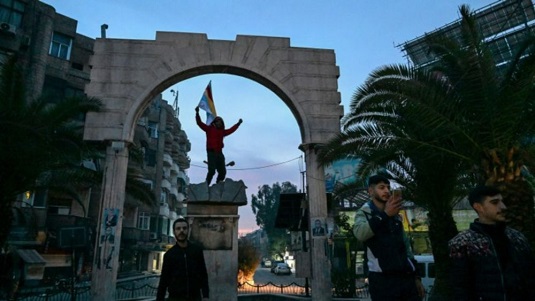
Unless you have a heart of stone or are in hock to a strongman theory of anti-imperialism, you cannot fail to be cheered by the scenes pouring out of Syria. Political prisoners, some of whom have been incarcerated for decades, reunited with their families as rebels open up the cells. The inmates of the Assad regime's torture pits, freed. Civilians flooding the streets welcoming fighters and tearing down statues of Hafez al-Assad. One of the world most disgusting dictatorships is finished.

There are those who are arguing that the fall of Assad is an outcome of US-Israeli activities, and that the rebel movement Hayat Tahrir al-Sham (HTS) - whose offensive drove the final nail into the regime's coffin - is about to consume Syria in the darkness of an Islamist caliphate, with full backing of the US and Israel. But this gives the West and its clients too much credit and reduces international politics and war to their manoeuvres only. Rather, what has happened is the unforeseen outcome of the acceleration of the Middle East's instabilities, which began with the 7th October Hamas offensive and the appalling genocide Israel has carried out in response.

While there are also domestic political reasons why the United States have generously supplied Israel the weapons necessary for the ongoing massacre of the Palestinians, as previously argued the relationship between the two is straightforward. Israel is a tool of US foreign policy, and its reason for existence in the eyes of the State Department is to enforce the US-led global order. As we'll see when Donald Trump takes over, this is likely to include recognising Israel's annexation of more occupied territories so the new administration can present itself as the presidency that brought "peace" to the Middle East. That's for the immediate future. In the present under Joe Biden, the atrocities in Gaza - despite unconvincing hand wringing - are justified because it's a "war" against Hamas, and therefore rooting out an Iranian proxy. Likewise, the Israeli army's confrontation with Hezbollah in Lebanon was far from the one-sided fight it's typically accustomed to, and poor performance on the battlefield is why Israel quickly suspended ground operations. But its programme of air strikes seriously degraded Hezbollah's capacities, and regular bombings of Assad regime targets and Iranian assets in Syria stemmed Hezbollah's supply of arms and the support Assad has enjoyed from Iran throughout the civil war.

Israel meeting the US's war aims is only part of the story. The Assad family have never benefited from popular consent, choosing instead to rely on fear and coercion. At least outside of the Alawite minority. When Hafez al-Assad seized power in 1970 he institutionalised sectarianism, ensuring that anyone who became a figure in the state had to have a power base among this community. Or, to be more exact, its elite cadres. This included non-Alawite Sunni Arabs. Assad also moved Syria away from Ba'athist commitments to (state) socialism. He championed private property and sought development along capitalist lines, which handily enriched his family and those of his cronies. It was the same old story: kickbacks and the dubious channelling of state funds into enterprises owned by the elite. None of this prevented its aligning with the USSR, though ostensibly out of "anti-imperialist" and anti-Israel commitments. The domestic state of affairs exploded toward the end of the 70s with the outbreak of armed opposition, and after 1980 the state cracked down with repression rather than conceding to demands for a non-sectarian state and anti-corruption drives. This culminated in massacres and the levelling of Homs. The repression only loosened by degree for the remainder of al-Assad's life. When his son, Bashir, secured the succession in 2000 there was a brief period of liberalisation in which some of the worst aspects of the regime were shorn, but almost immediately it clammed up again with a wave of further repression. It was almost as if conceding a measure of freedom was designed to flush out pro-democracy oppositionists. This did not stop Syria from pivoting away from anti-imperialism to cosying up with Uncle Sam during the War on Terror. Having previously dealt with one insurgency that was part Islamist, under Bashir al-Assad it, like Gadaffi's Libya, came in from the cold to strike a new deal with the global hegemon. Syria dutifully played its role during the CIA's extraordinary rendition programme - it was a centre for torturing detainees captured in Afghanistan and Iraq.

When the Arab Spring broke out in 2011, mass protests against the regime was met with the customary brutality it had become known for. With ugly scenes filling up television screens, the Assad regime was hypocritically but ruthlessly abandoned by its US patron and condemned. Syria became subject to Western sanctions. As revolution descended into civil war, Assad's regime distinguished itself by killing even more people than its gruesome opposition in Islamic State managed, which had taken advantage of the power vacuum and seized huge swathes of the country. The regime increasingly became paralysed by infighting and passive opposition among Alawites as IS rolled over government troops. This was despite the fact Iran had begun shipping "volunteers" to Damascus to defend Assad from 2012, backed by fighters from Hezbollah. But it was only the intervention of Russia that prevented the regime from falling to Islamist insurgency. This turned the war around, and though unable to reconquer the entirety of Syrian territory the application of psychotic levels of violence stabilised the situation. As a measure of how successful this appeared, it was only a fortnight ago that neighbouring states were engaged in efforts to normalise diplomatic relations. What the temporary victory Putin's forces brought Assad did not bring was a peace dividend. Sanctions and inflation have made the lot of the ordinary Syrian miserable, giving them no material stake in the regime's continuance either. As such, in retrospect, too much repression and too much recession fatally undermined Assad. All it required was a shove.

And that came from HTS. Having operated in an enclave around Idlib for the last seven years, despite its roots in al-Qaeda it has been in running battles with its local affiliates throughout the 2020s. It's this, rather than a desire to appear acceptable to the West or a cloak and dagger master plan to hide Islamist intent that explains their relative moderation, religious tolerance, and degree of pluralism. Its offensive against Aleppo, which seemingly came out of nowhere on the 27th November was like steam-rolling a collapsing barn. Having been softened up by Israeli attacks but sapped by years of internal crackdowns, massacres, and stagnation, the army melted away. Less than a fortnight later from the initial attacks we are here: to all intents and purposes the dictatorship has evaporated.

None of this was expected by the US, Israel, and the so-called international community. It introduces a range of unforeseen complications. Local powers will try and seize the moment to extend their interests. Israel has occupied its "buffer zone" with Syria, and will undoubtedly look to extend it further. Turkey likewise will be looking to guard its "perimeters" in the north of the country, while making life difficult for the Kurds in their US-backed autonomous zone. But both are consequences of actions to which they were bystanders. Undoubtedly, the latter day cold war re-enactment society will be pleased. If Russia's intervention in 2015 was a demonstration of strength and confidence, this marks an eclipse of such ambitions. Attempted air strikes against bridges in the Aleppo region marked its desultory effort at defending Assad's folding regime, and will encourage the incoming administration to play hard ball over ending the war in Ukraine.

But they are not the only ones looking on with glee. The truth is for hundreds of millions across the Arab world, the final reckoning of a hated tyrant will give heart in the same way the eruption and initial victory of the Arab Spring in Tunisia and Egypt did over a decade ago. For Cairo, the Gulf's absolutist monarchies, for the opposition in Iran, and even here in the West, successful uprisings help encourage and embolden movements from below. As establishment figures welcome Assad's fall, and particularly so in authoritarian states, there is always that sliver of fear that they could face a similar fate. That a movement of the immense majority could come and sweep them away.

Monday, 26 June 2023

The Humbling of Vladimir Putin

How many humiliations can an authoritarian leader take before his reputation disintegrates and the people's fear of him evaporates? Following the bewildering events in Russia this weekend, we'll probably find out soon. That the Russian state is decrepit and chaotic is news to no one. The institutionalised corruption and general incompetence of Putin's creatures in the Ministry of Defence has turned the so-called special military operation into a quagmire, with all the implications for stability that entails. Therefore, the longer the war drags on the likelihood of discontent boiling over into rebellion becomes more certain. What canot be forecast in advance is the how.

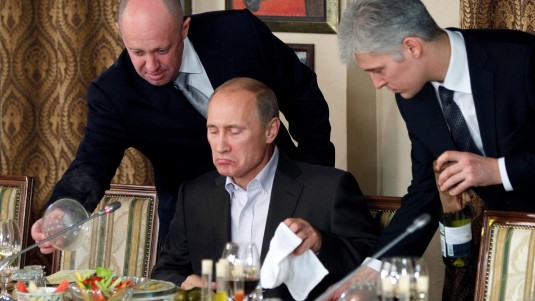
It's fair to say the spectacle of and the rapid demobilisation of Saturday's uprising weren't foreseen by anyone. The tensions on the front between the regular military and Yevgeny Prigozhin's Wagner mercenary forces are well known. Recruited primarily from Russian prisons with the promise of a pardon, Wagner have proven themselves the most effective detachment of the invasion force simply because Prigozhin has ground down Ukrainian defenders in and around Bakhmut with human wave tactics. Like Uncle Joe back in the day, it never mattered how many troops were sacrificed as long as the objective was met. This gave Prigozhin a certain standing among Russia's army of military bloggers and public at-large, and through his own colourful social media outbursts was able to heap calumny onto the heads of Sergei Shoigu, the hapless defence minister, and Valery Gerasimov, Russia's top general, for their abysmal management of the war. Following long-running internal battles that occasionally broke out into firefights behind the lines, on Friday regular army units - according to Prigozhin - shelled a Wagner encampment and raked the area with helicopter gunship fire. This was after he'd received orders to wind his outfit up and fold it into the army. Prigozhin's audacious response was to march Wagner forces out of Ukraine to seize control of Rostov in southern Russia, and declare he was heading to Moscow "with 25,000 troops". As his convoy began heading north, there was panicky footage of plod in the capital setting up machine gun nests, police organising roadblocks, loyal civilians digging up the roads, and a rattled-looking Putin making a national address. And then as quickly as it begun, the would-be coup was all over. Prigozhin announced he was turning Wagner around following talks mediated by the Belarusian hard man, Alexander Lukashenko. The Kremlin, it seemed, had caved in to his demands: the removal of Shoigu and Gerasimov, sweetened by legal immunity for Prigozhin and his cronies. One moment Russia was staring down the barrel of bloody street battles in the capital, and the next the crisis simply vanished.

What this wasn't was elaborate theatre to throw interference in the face of Western intelligence agencies. There were gun battles along the convoy's route, a fuel depot in Voronezh was attacked by Russian helicopters while the city was in Wagner's hands, and their military vehicles were subject to air strikes. For their part, Wagner anti-air assets brought down six helicopters and one command plane, killing 14 experienced air crew. Putin's presidential jet really did fly to St Petersburg when things were getting especially spicy, and given the welcome Wagner received from civilians as the column moved north and piecemeal opposition, it looked like Prigozhin held all the cards. So why not finish Putin off and install himself the new president?

There are claims his family were in danger, and that Prigozhin's forces were somewhat less than the 25,000 soldiers he boasted about. But it's not difficult to fathom why he snatched defeat from the jaws of victory. Forcing Putin from office would have been one thing, but consolidating his grip on the state something else. If we're looking for a useful analogy from Soviet history, it would have been like dumping Stalin for Beria, and we know what happened to him after old Koba's corpse went on public display. Putin has stayed on top because he's been able to balance, in the first instance, the competing demands of the departments of the state and the oligarchs who leech off them. You'll remember this was how Prigozhin came to prominence: as the provider of catering contracts for public bodies, above all the military. Furthermore, Putin's base rests on the shadowy apparatus of the FSB. It's hard to see how any of these would gain from a Prigozhin leadership that they don't already enjoy under Putin. Then there's the issue of Wagner itself. Having a heavily armed group of convicts elevated to the summit of the state doesn't have much appeal, especially if they fancied a slice of the oligarchs' pie for themselves. Between Putin and a band of actual murderers and rapists, the elite were pretty clear sighted about what suited them best. Therefore the most convincing explanation is Prigozhin, who is far from a stupid man, made a similar assessment of the politics. He might have taken the Kremlin, but for how long? With no one but his men at his back, he quickly calculated he was on a hiding to nothing and became more concerned with saving his own neck. Having crossed the Rubicon, he hastily assembled a pontoon bridge back. Hence the rapid about turn and departure to a comfy hotel in Minsk.

What happens now? Despite the deal that was negotiated, it appears Shoigu and Gerasimov are still in position. The mutiny charges against Prigozhin and his lieutenants remain live. Luckily for Putin, the chaos did not bring about sudden changes on the front lines. Ukraine were able to improve their tactical position around Bakhmut and established a modest bridgehead on the south bank of the Dnipro, but there was no generalised Russian collapse as per last year's Kharkiv and Kherson offensives. But the Wagner rebellion was like taking a pneumatic drill to the Putin regime's shaky foundations. In many ways, what happens to Prigozhin now is immaterial. Whether Lukashenko does the dirty and bangs him up, or by a catering mishap he ends up having a bowl of polonium for breakfast, the hard edifice Putin projects is riddled with cracks, and they're multiplying. Putin didn't just beg for his rule to be saved, he was seen to be begging. And short from a purge more extensive and terrifying than anything Stalin mustered, it's difficult to see how he can stay in situ for long.

Image Credit

Friday, 30 December 2022

The Rights and Wrongs of 2022

A few years ago I learned a lesson. Having predicted Labour would win in 2015, that Remain would come out top in the EU referendum, and that Donald Trump would be defeated by Hillary Clinton, I gave up the New Year Nostradamus act. But in reality, I never stopped making forecasts about politics. The whole shtick of this blog is to analyse the present to grasp the likely trajectories of politics in the hope it will inform leftist strategy and practice in this country. And you know what, as everyone has taken to social media to burnish their finest contributions to the discourse it's fair to say, given how things have played out, much of what I've written about over the last few years have come to fruition. But to err is human, and there are a couple of things I got wrong as well. This post is me blowing my own trumpet, followed by a few toots on the sad trombone.

The biggest, of course, is the centrepiece of my book and the mainstay of this blog: the long-term decline of the Tories. Just over a year ago, one of its reviewers dismissed it as wishful thinking. In 2022 the arguments came home to roost. The central thesis, that property acquisition is breaking down and therefore destroying the basis of the political reproduction of mass conservatism, assisted by the decline of social conservatism and the rise of social liberalism as a class cohort effect, and how gluing together the Tory coalition of mostly older, property-owning people demands attacks on working age and younger people has been increasingly obvious since the Coalition years. Indeed, Boris Johnson's 2019 triumph was the argument's mic drop moment, not its refutation. However, the precise pattern of this decline, which I have been suggesting was starting to bite since Labour did unexpectedly well in 2017, could not be mapped out in advance. The Tories were never going to level up because it clashed too sharply with the priorities of briefcase Toryism and the needs of their base, and so the long slog to oblivion was locked in. As things stood, even with Johnson as leader, 2024 would be a much harder election than the one previous without the scandals of Party Gate and his own obvious corruption and dissolute behaviour. And if Johnson quickened the rot, Liz Truss enthusiastically pumped the poison round the Tory body politic to bring one a cardiac arrest. It was like John Major in reverse, the drawn out destruction of one Prime Minister's authority followed up by completely unforced Black Wednesday cosplaying - just over 30 years on from the original event. Rishi Sunak may have steadied the ship, but taking on so many striking workers can only hasten his party's decline.

Therefore, three related pieces on the specifics of the Tories' trajectory have come to pass. A year ago, Truss was tipped as the next leader and her approach to politics characterised as "the promise of handbagging the world and making it conform to a reheated Thatcherism." Reader, it was she and the British economy that got the handbagging. And second, the tensions explored in Johnson's cabinet over his levelling up failures and, particularly, the active desire of Sunak et al to not do anything to dampen expectations and therefore demands made of politics became the dominant strand in Tory ruling circles once Johnson was tossed out the window. Truss and Sunak offered variants of the same. The former brash and reckless, the latter more cautious and subtle and had been burrowing away at state capacity from the very moment Covid forced government to take emergency measures. Sunak's statecraft is the culmination of the class politics of government shoulder shrugging. On the topic of the same, having announced the withdrawal of any and all mitigation measures, we're dealing with the consequences. "Self-responsibility" has meant tens of millions think Covid has gone away or that they have some residual immunity to it, as if the disease is like measles. These vibes are entirely the Tories' fault for scrapping all public health messaging, and refusing to spell out the fact it attacks the immune system and can store up medium and long-term difficulties, even if the most immediate experience it is the sniffles and a light fever. And the consequences are plain to see: collapsing A&Es exacerbated by 12 years of defunding as the Covid afflicted fill departments up, and millions coming down with "bad colds" and other illnesses that prey on weakened immune systems. 10 months ago, I wrote "we are in a damnable situation with those in charge caring for everything but mitigating the mass casualty event we continue to live through." Nothing has changed. Hundreds continue to die unnecessarily. Tens of thousands are newly debilitated by serious, long-term illness that need not be.

I've got a bit of a claim to make about Keir Starmer as well. Unfortunately, most left takes on Starmer treat him as no different to a Tory and that's all that needs be said, or that he is a moustache-twirling villain who's the baddie to Jeremy Corbyn's goodie. To be opposed to Starmer means taking him seriously, and just like the Tories it's useful for left and labour movement people to know what his politics are about and what his trajectory is so we can take advantage of any openings and prepare for incoming attacks. It's ABC socialist politics. The analysis first ventured in February 2021, that Starmerism is a politics about state management and restitution of legitimacy in its institutions, has been borne out by Starmer's strategy ever since. His attitude to trade unionism smacks of it, and his recent commitment to constitutional reform confirms it. This is bourgeois politics, but a one different to that offered by the Tories. It has it own opportunities and threats for the labour movement, and we need to be ready for them.

On wrong things, there have been a few mistakes along the way. There's this analysis of Labour's local election performance which, I think, was right at the time but - particularly in the south - has been superseded by events. Albeit with caveats. In early August, I thought about how Liz Truss could pose a threat to Labour. I'd have been better spending my time chasing the cat around the house. I suppose the most egregious mistake was doubting the seriousness of Putin's posturing over Ukraine. In mitigation, plenty of Russia watchers made the same bad take. For once, the public briefings released by the US and UK governments were right. But, making up for the initial mistake the following analysis of state decrepitude has been confirmed by the course of the war, both in terms of Russia's stupid brutality and battlefield reverses, and has humiliated of Putin on the world stage. With any luck, this time next year he'll be in a war crimes court.

2022 has been a complex year, of so-called "poly-crisis". And this seems more concentrated and badly borne in the UK. The demise of the Tories, the stirrings of Starmerism's hegemony over establishment politics, and how both respond (or, in the Tories' case, don't) to the emergencies presenting as a grim version of whack-a-mole are going to be the main subjects covered by this blog next year. What a jolly thought. See you in 2023!

Image Credit


Saturday, 12 November 2022

Putin's Kherson Humiliation

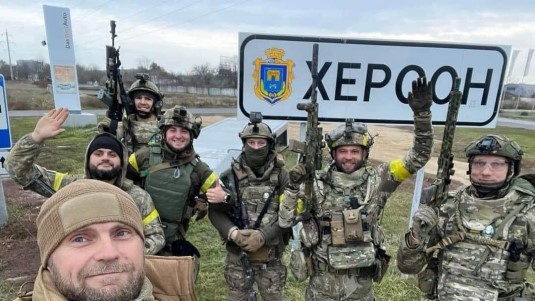
Seeing Ukrainians enthusiastically welcoming soldiers on the streets of Kherson would move all but the stoniest, politically blinkered hearts. The Russian withdrawal from Kherson region - long planned but rapidly executed - is testament to the resilience. skill, and sacrifices of the Ukrainian military. The Russian Ministry of Defence's removal of all its troops, though certainly not all its heavy equipment, is just about the first outright battlefield success Vladimir Putin's regime has enjoyed since the war began. But the price paid is Russia's utter humiliation on the world stage. Its military losses are staggering and the pre-war edge the Russian army had over Ukraine in properly-trained personnel and materiel has taken such a dent that Moscow is now pressing prisoners and draftees into the line, where casualties are proving particularly horrendous. And in further blows to Putin's prestige, his military is proving to be the biggest donor to Ukraine thanks to the machinery and ammunition fleeing troops are wont to leave behind. What should have been a quick, sharp policing action has become a grind that can only imperil Putin himself.

He can't say he wasn't warned. Indeed, one of the reasons why a lot of commentators were caught on the hop by his invasion, despite his weeks of posturing and fiery rhetoric, was the fact the troops assembled for the "special military operation" were too few and that Ukraine not only had a larger and better equipped army than in 2014, when Crimea, Luhansk, and Donetsk were claimed by the Russian Federation, it would mobilise for total war. Forget the nonsense about the United States goading Russia into war, this catastrophic misjudgement was Putin's and Putin's alone.

Consider the last nine months. The Russians poured over the border and headed toward Kiev where their armour simply sat on the roads and was gradually worn down by determined resistance to the point they had to abandon the attack and with draw from the environs of the city. In the summer, Ukraine very loudly announced to the world that it would be undertaking a counter offensive in the south of the country to liberate Kherson region. The Ministry of Defence took it on face value and rushed troops and heavy equipment across the Dneiper. The Ukrainians then shelled and knocked out the bridges, and slammed the real counter attack into the thinly held region around Kharkhiv. The Russian lines melted and 12,000 square km of land was recaptured, along with masses of equipment and the grim findings of multiple mass graves. By October, the pressure on the southern front was too much for Russia and the withdrawal began, with all soldiers making it back to the east bank of the river within the space of 24 hours. A decrepit state can only ever field a decrepit army.

Apart from withdrawing from Kherson in a timely manner, the only other success Russia can point to presently is the fighting on the borders of Donetsk where, for the best part of two months, its has been grinding towards Bakhmut. Almost two thirds of the city are in rubble, and it's been the site of some of the most intense fighting seen in the war. Every advance by Russian forces has been countered and thrown back but, with the remorseless logic of a First World War meat grinder, hundreds of newly mobilised Russian troops are thrown into the fray day after day. Yet the price paid in blood and equipment doesn't appear to be allied to any strategic perspective. Should the town get captured, it doesn't really improve Russia's tactical position. Indeed, the Ukrainian army would, if anything, find it even easier to degrade their opponent's forces by artillery from nearby higher ground. It appears to be an operation aimed at taking the city for the sake of taking something.

That is indeed the case. This region of the front line is under control Yevgeny Prigozhin, the former caterer/restaurateur turned private military contractor. His Wagner Group (who harbour as many if not more Neo-Nazis than Ukraine's famous Azov Regiment) have fielded their own private army outside of the Ministry of Defence's chain of command. It's Wagner that have recently been allowed to recruit from prisons. The use of mercenaries on the battlefield are normally problematic. Fighting for coin rather than country marks them out as more risk averse troops, but on the face of it the modest advances made since the beginning of the Autumn compares favourably to the 'official' army's performance in the north and south of Ukraine. And this is entirely the point of the Wagner "offensive". Prigozhin, as a long time Putin crony who amassed a huge fortune from corrupt state contracts, is angling for more power. It is an instance of how, as per all authoritarian regimes and dictatorships, elites compete with one another for favour and office. What does it matter if Ukraine are chewing up hundreds of troops around Bakhmut as long as Prigozhin's star carries on rising? No amount of deaths or setbacks can stop this from being a good war, as far as he's concerned.

The question now is where does the war go next. The Russians are dug in on the south bank of the Dneiper and with crossings across the wide river out of action, a lightning fast thrust from the environs of Kherson seems unlikely. However, the two main access roads into Crimea are within range of Ukrainian artillery and so we can expect the Russian occupation there to come under pressure. Which hasn't been great since a (seeming) special forces attack severely damaged the Crimean Bridge that linked the peninsula to Russia proper. An attack further to the east to cut off Russian holdings from Donetsk would appear to be a logical choice - one so obvious even Putin's MoD should be able to anticipate it. On the other hand, there are concerns Belarus might enter the war on Russia's side, imperilling Kiev once again, and the situation in the East could do with reinforcements and added firepower to squash Wagner and prosecute an advance into Luhansk. With momentum, confidence, strategic nous and a steady stream of Western weapons, Ukraine has the initiative.

There are no good options for Putin. The recapture of Kherson underlines how unwinnable the war has become for Russia. So low are its military stocks that it's relying on Iran for drones and missiles and, incredibly, North Korea for small arms munitions. The professional army has been virtually thrown away without enough left to train the draftees, meaning hundreds are showing up on the front lines every morning who will be dead by evening. And, it was widely reported, that Russia has begged Syria to send troops and is looking at recruiting Afghan commandos abandoned by the West after the Taliban took back power. Unfortunately for Putin, his humiliation has cost tens of thousands of Russian deaths and a growing crisis of confidence in his regime. The protests that greeted the outbreak of the war have become muted under the cosh of heavy policing, but the resentment of the partial mobilisation, and the inevitable turning of grief into anger is something that no regime, let alone one as decayed as Putin's, can forestall forever. It will not be molified by crude propaganda, nor by pointless punishment bombings of Ukrainian residential blocks and power stations. In Russian history, war has had the tendency of being the midwife of revolution. Putin beware.

Image Credit

Monday, 4 April 2022

Propaganda and Ukraine

Truth, they say, is the first casualty of war. Every engagement, every attack, each piece of footage, versions of situation maps, and reports from the battlefield are occasions for propaganda. Everything can be spun and is indeed spun to boost and traduce the respective sides of the conflict. And this is even truer with the Russian invasion of Ukraine. This most televised and scrutinised war in human history has saturated social media. Disinformation and fake news are difficult to tell from the real thing, and both kinds are manipulated and pushed. To avoid naive accounts of war, whether trusting or cynical, this has to be kept in mind. Especially when the most disgusting crimes are reported.

Crimes like those to have befallen Bucha, a satellite town of Kyiv. The Ukrainian government claims to have uncovered the bodies of 280 civilians. Not all of these were people caught in crossfire. Corpses were found with their hands tied and bullet holes in the back of their heads. There are also reports of partially burned bodies left at the side of the road, and evidence is being documented for the International Criminal Court with a view to bring prosecutions. Despite dozens of residents speaking to the press about the killings they witnessed, the increasingly ridiculous Sergei Lavrov branded evidence of war crimes a "fake attack."

With a whirlwind of propaganda blowing through the media, how to tell the truth from a lie? As it happens, it's not too difficult. An application of common sense or Occam's Razor helps. Which is more likely to be true? Did the forces of Putin's regime, as the occupying army, do it? Or did the Ukrainians "dress" the wrecked town with executed and mutilated bodies? To ask the question is to answer it. There is also context. As acres of footage of burnt out and wrecked residential districts have shown, the Russian military has shown no compunction about flattening civilian buildings. Unless you believe the Ukrainians did it themselves just to make the invading power look bad.

And there is the rhetoric coming from Russian media about Putin's aims and objectives in Ukraine. What was once a "special military operation" is now assuming the proportions of a war of annihilation. From RIA Novosti, a state-owned-and-run news outlet, we have 'What Russia Should Do About Ukraine'. Ostensibly a comment piece, it reads like something out of the Great Patriotic War reconditioned for the 21st century. It says Ukrainians are "passive Nazis" and "Nazi enablers" and deserve "just punishment", as well as "ideological suppression" involving "harsh censorship". It also calls for the ceding of Ukrainian sovereignty to Russia for "denazification" and "deukrainification", and be occupied like a defeated enemy state. It goes on that the idea of Ukraine is de facto anti-Russian, and that everyone who has supported "the Nazis" must "experience war and terror". There you have it, straight from the horse's mouth.

As previously noted, the fact NATO has a clear interest in Ukraine defeating Russia, or at the very least investing them so Russia's military bleeds white and is humbled by a power many times weaker than them does not overdetermine the situation. Ukraine is not the West's dupe. Wherever there are wars and revolutions, the US and its allies will intervene to shape them in a direction conducive to their interests. Sometimes they're successful, sometimes not. In the case of Ukraine, rhetorical support backed by weapons supplies and cash gifts does not mean Ukrainians have no right to resist, or that they should lay down their arms as some idiots on the left are arguing. Bombed out blocks of flats are not blows against US and UK imperialism, and to pretend otherwise is to peddle Moscow's line.

Therefore, taken in the round, the substance of distinguishing between the types of propaganda aren't really that difficult. One serves the aim of subduing Ukraine and transforming it into a vassal state, with dark hints of further mass killings and repression. And the other is of a people fighting for their very existence. These are the filters that matter.

Image Credit

Friday, 25 March 2022

Freelancing for Putin

Reading the latest piece from Socialist Action, you could be forgiven for thinking it was the United States and Britain who had invaded Ukraine, was terror bombing civilians, and playing radioactive roulette by shelling nuclear power stations. And yet here we are, an example of where prioritising the defeat of one's own ruling class and its ambitions is interpreted as throwing your lot in with Russia. What happened to no war but the class war, eh?

Nuance is unpopular in politics, but it is vital for the analysis that informs our politics. What SA say about supplying Ukraine with weapons, and the disgraceful role the Tories played strutting like plucked peacocks on the world stage is right. As are comments and contributions made by others concerning the illiberal turns of Volodymyr Zelenskyy's government and the blind eye conservatives and liberals alike turn to the activities, if not the existence of the openly fascist Azov regiment. All these things are true, but they don't change the fundamentals of the situation: that Ukraine has been invaded by its authoritarian and, to use the old language, imperialist neighbour. The Americans and British might have prefaced the invasion with goading language while France and Germany preferred shuttle diplomacy, but it's obvious Putin was set on this course of action long before the Liz Trusses and Ben Wallaces happily reduced the UK's reputation as a serious nation further.

Again, to restate the ABCs, there are just wars and there are unjust wars. In moments of tension between big powers, in this case between NATO on one side and Russia and Belarus on the other, labour movements have no truck in prettifying either side, let alone offering political endorsements. Britain and America, after all, have done more to destabilise global politics these last 20 years than any other power or alliance. The condemnation they heap on Russian shells flattening Ukrainian concert halls and residential districts are not matched by a scintilla of concern for what their allies are doing in Yemen or Gaza and the West Bank. However, being clear eyed about the blood on our governments' hands does not mean that Putin's regime is shoved in a black box and ignored. Our enemy's enemy isn't necessarily our friend.

The second point is while NATO and Russia are confronting one another, the actual shooting war is between Russia, a big power, and Ukraine, which is a minor power. One of the primary dividing political lines in Ukrainian society since the dissolution of the Soviet Union has been between rebuilding close ties to its former occupier, or tilting toward the West via the European Union and NATO. Both sides have, historically, been bound to their own home-grown groups of oligarchs and when it came to corruption you couldn't get a credit card between the two sides. As a minor power, both the West and Putin have skin in the game - for the West having Ukraine firmly in its camp helps stymie Russia, while for Russia it covets a friendly buffer state to complement the subservience Lukashenko has shown Moscow. Both sides have and continue to find willing support in Ukrainian society, but this does not mean they are the sole active agents. The dynamics that give rise to this split are driven from within. Therefore, the Euromaidan protests that culminated in the Orange revolution was not a CIA coup or some such as the Putin apologists pretend: it was an organic development that the EU and US supported, but did not cause.

A pretty banal statement all told, but something that needs stating. The SA piece strongly implies that Ukraine is but a puppet whose strings are pulled from Washington (with a few tugs occasionally delegated to London). Not a word on how the "special military operation" was designed to force the country into Russia's sphere of influence in violation not just of Ukraine's sovereignty but its national right to self-determination - a principle Marxists are supposed to uphold. Had Putin not rolled in the tanks, the weapons shipped to Ukraine's military would not be exacting their grim price on Russian soldiers and materiel. War is politics by other, more violent means, and Ukraine's will to resist is not a product of Western brainwashing and arms shipments. The onus therefore should be on Russia to stop its attacks and withdraw, not on Joe Biden and Boris Johnson telling Zelenskyy to throw himself and his country on Putin's mercy.

If the main enemy is at home, effectively freelancing for Putin's war undermines the left's political response to the Tories. Not because of optics, though being seen to put a plus where the West puts a minus is bad enough, but because Johnson and his cronies are utterly compromised by their close relationships with Russian oligarchs present and past. There's Johnson's close relationship with Evgeny Lebvedev, an FSB-linked man whose money he was so keen on that he overrode the spooks' security concerns to appoint him to the Lords. There are the millions that have saltered their way into Tory coffers, and the untold billions that have sloshed through the City and the London property market. And just today, we learn Akshata Murthy, the chancellor's wife, has over a billion sunk in Infosys, which also operates unimpeded in Moscow. The threads are anything but red, but there are thousands of them tying the Tories to Russian ruling interests - and helps explain the reluctance the government has shown to sanction them, despite the tough-sounding rhetoric.

Putin's invasion has laid bare this corrupt and corrupting relationship. It's a goal so open that even Keir Starmer has taken a couple of shots at it. This is an obvious vulnerability the left should bang on about, but if we follow the logic of SA, the Chris Williamsons and George Galloways, and sundry tankies, lining up with Putin and pretending the West are responsible for the war prevents us from being the opposition we aspire to be. By conjuring up absurd "anti-imperialist" reasoning to defend the military actions of a brutal imperial power, they make the revolution they profess to work toward in our key metropolitan heartland much more difficult. It's just as well they're stuck out on the margins, a place their politics will forever doom them to inhabit.

Image Credit

Saturday, 19 March 2022

Bloviating in Blackpool

Boris Johnson was probably right about two things in his address to the Tory party at their Spring Conference in Blackpool. If Vladimir Putin prevails in Ukraine, that might well embolden him to make demands of his neighbours. And autocrats and dictators everywhere will take heart at an authoritarian snuffing out a weak and not untroubled liberal democracy. He went on to criticise those in Western governments who, in the name of real politik, seek to make accommodations with tyrannies. Statesman, if one was being thorough, that would include ... Boris Johnson, and his humiliating cap in hand approach to the Saudis and UAE just this week. Accustomed to tame coverage of his speeches, perhaps the Prime Minister thought no one would notice.

After praising the tough, freedom-loving people of Ukraine, Johnson's speech segued into a clumsy comparison with the British. The vote to leave the European Union was a blow struck for freedom. Likewise, 90% of Britons queued up for their booster jabs to throw off the restrictions that weighed heavy on their everyday lives. Sticking with the freedom theme, he criticised Putin for "pushing hydrocarbons on the West" to increase dependency, again forgetting the alacrity with which the Tories grab oil money. Putin is also named and shamed for punishing us by driving up the cost of living - a trend well in train before the cruise missiles found their Ukrainian targets. This set the scene for the big announcement, and one that no doubt played like a pleasing tune in the ears of Tory-adjacent oil executives: a British energy security plan with domestic hydrocarbons part of an otherwise green mix. Nigel Farage may well have won after barely starting.

At this point, Johnson's congenital boosterism overcame the tissue-thin restraints in place. He invoked images of international investors queuing up to build the country's green infrastructure, attracted by the barely discernible levelling up wheeze and, he said, replacing the coppers the Tories had spent the previous decade cutting and tackling ... county lines drugs gangs. He followed this up with 10 minutes of bumbling that Tory members chuckled their way through. Why this act hasn't grown tired by now beats me.

Remembering the Labour Party exists, he banged the tried and trusted you-can't-trust-those-lefties-with-defence drum, noting eight shadow cabinet member were against Trident replacement. "Can they be relied on to stand up to Russia?" Johnson asked his audience. Which is funny considering how tardy the Tories have been sanctioning their bourgeois counterparts, and the news this evening that on the day of Putin's invasion itself Johnson was hobnobbing with a cash rich Russian donor.

All told, the usual puff from Johnson then. Nothing new under the sun, and surely the same lines will dutifully appear in The Sun as they have many times before. Already acting as if the Met inquiry and PartyGate fall out is behind him, he knows he has to play up to the opportunities of the moment. And as distasteful as liberal Johnson watchers have found it, linking the freedoms of a nation struggling to throw off an invasion with Brexit is exactly the kind of bulldog flattery swathes of the Johnson base lap up. He's seen the partial Tory recovery in the polls, and thinks reminding those Tory voters who've moved from the Conservative into the Don't Know column can be wooed back by playing to what they see as his strengths. It could work.

Image Credit

Friday, 18 March 2022

The Johnson/Lebvedev Love-In

I have something brewing on Russia and the liberal imagination, but it's a Friday night so the heavy lifting falls on Michael Walker and his latest video for Novara
.

Monday, 14 March 2022

The Main Enemy is at Home

Politics craves simplicity, and tries to create it where none exists. The with us or against us populisms of the last 20 years are, in this sense, nothing new and are merely a condensation of existing logics. Politics is always and everywhere a question of power, of yeses and noes, and of individuals, groups, parties, classes, and states seeking to impose their wills on one another. It is war by more peaceful, persuasive, and often skullduggerous means. The reception in this country to Putin's invasion of Ukraine is no different. On the one hand we have Twitter-travelling liberals demanding no fly zones, as if war could be confined to evening news bulletins and not be visited on British cities and infrastructure by volleys of cruise missiles. And there is their opposite. Not the Tories, who are compromised by Moscow gold, but segments of the left who have thrown their lot in with Vladimir Putin.

People like Chris Williamson, for instance. His descent from a good, respected MP into "leftist", and I use that term advisedly, contrarian is a lesson for the ages. His advice to Ukrainians is to end the war by affirming neutrality and allowing self-determination for the Donbas region. As Williamson is a teetotaller I have no idea what's he's been drinking, but whatever it is has made him blind to an obvious territory grab. Joining him in the gutter is George Galloway's so-called Workers' Party of Britain. Taking time out from posting transphobia and puff pieces about the Ottawa truckers' protests against Covid precuations, they've republished Ranjeet Brar, of Britain's foremost Stalinist dynasty, for whom the war in Ukraine is Russia's crusade against fascism. Not as good as his spin on Russian occupation. To think all Ukraine needed was Papa Putin's tanks to roll in and the black earth would yield bountiful quantities of milk and honey. Our dozy friends at the Communist Party of Britain have chipped in their two penneth, celebrating the refounding of communism in Ukraine at the point of Russian bayonets.

Putting a minus wherever the British establishment places a plus is several things, but not the Marxism they pay lip service to. If we go back to another Vladimir, in his famous 1916 pamphlet Imperialism, the Highest Stage of Capitalism*, Lenin argued the world had been divided by the great powers into colonial territories and spheres of influence. The outbreak of the First World War was thanks to the inescapable tensions this produced. All it needed was a flaming touch paper. Russia then was one player, having secured its own colonial empire as one contiguous territory - a gigantic prison-house of nations, as Lenin put it. Fast forward 100 years and the pink and purple bits of the atlas are gone, but the tensions remain. The American-led Western alliance with its Middle Eastern and East Asian clients and allies is the world's predominant constellation of military forces, albeit one giving way to Chinese soft power in sub-Saharan Africa and humbled by Islamist insurgency in Afghanistan. Contrary to the decline of the West rubbish pushed by war on woke-types, NATO has expanded its influence and remit by taking in former Warsaw Pact and Soviet Republic countries and going to war in the Balkans, Libya, Syria, as well as Afghanistan in the last 30 years. Tensions within NATO over Iraq ensured the alliance took a formally non-combatant role in the conflict and subequent civil war.

Meanwhile, following the break up of the USSR, the brute privatisations of the 1990s and the looting of state-owned industry by the first round of post-Soviet oligarchs left Russia and its institutions in a decrepit condition. But while the country was starved of investment, untold billions of Roubles fled abroad to find profitable homes in the City of London and its associated baubles - property, football clubs, newspapers. Latterly the Russian economy got back on its feet as an exporter of energy, metals, and foodstuffs while its ties to global finance via oligarch money brought about a new gilded age for the Moscow elite. Here in lies the roots of the renewal of authoritarianism in Russia - a tiny elite protecting its ill-gotten loot with a corrupt and brutal state apparatus. And as this was in a process of formation during the chaotic Yeltsin years, the new state started flexing its imperial muscles. Russian power was humiliated in the first Chechen war, but succeeded under Putin after a slow but remorseless grind - one that also stamped mercilessly on the independence aspirations of nearby Degastan. In 2008 Russia invaded Georgia to underline the separation of South Ossetia and Abkhazia, and we know what happened in Ukraine in 2014 - the pro-Western revolution was a pretext for dismembering the country to Putin's advantage. Russia's movement against internal insurgencies and neighbouring states is not, in the first instance, a response to NATO moves but from the dynamo of Russian capital itself, one that aspires to a network of dependent states to satisfy its commercial and financial capital backed by the might of the state. The very picture of an imperialist power, to apply Lenin's arguments.

In a war between imperial powers, Lenin's advice is very clear. It's not a case of plague on both your houses and studied neutrality, but one of mobilising labour movements against a ruling class demanding we sacrifice body and soul for their profit margins. But when it's an imperial power versus a revolting colonial possession or a formally independent semi-colony (i.e. non-imperialist state), the matter changes. In his famous 1930s discussion of a hypothetical war between 'democratic' Britain and a 'fascist' Brazil, Trotsky suggested that, despite its political character, a victory for Brazil in these conditions would be a boon to national liberation movements everywhere and a huge blow to the then chief prop of the pecking order. If anything, the situation in Ukraine is even more clear cut. The country's dalliances with the West are entirely understandable, given the predatory behaviour of its large neighbour. To preserve their independence and expand their room for manoeuvre, small states have always curried favour with the bigger powers and played them off against one another. Indeed, they have to if their own home-grown capitals aren't going to be completely subsumed by and subject to foreign capital. Ukraine has had to play this game for the three decades of its independent existence, and now it is being invaded by an imperial power only a fool or a Putin apologist would deny the country's right to resist, as well as source support and weapons from whatever source.

In other words, in Lenin's terms when a semi-colonial country is attacked by an imperial power, in this case an attempt by Russia to wrest Ukraine from a slide into the West's sphere of influence by forcefully incorporating it into its own, our sympathies and support goes to the victims of aggression and where possible, our practical support to its labour movement and radical militias. What we don't do is play a stupid guilt by association game, whereby Ukraine's efforts to secure its position by courting the West invalidates its right to self determination. The meaning of 'the main enemy is at home', one of Lenin's most famous slogans, does not mean prettifying, supporting, and amplifying the propaganda of our ruling class's bourgeois rivals. For example, Putin's supporters here make much of Moscow's rhetoric against the neo-Nazi Azov regiment and the efforts to "denazify" Ukraine, but say nothing about the Wagner Group, a far right mercenary outfit closely intertwined with Russian intelligence. Nor the Chechens vomited up from Grozny, some of whom are drawn from the fascist Sparta batallion. I don't know what Putin's leftist friends are trying to achieve, but it's certainly not mass influence among the labour movement.

Our enemy's enemy isn't necessarily our friend. Our job, as always, is about opposing the ruling class. And handily, Putin's invasion offers us an opportunity. While supporting Ukranian resistance and rendering help to refugees, the crooked links between the Tories and Moscow are under public scrutiny like never before. This is where our own fire should be concentrated because it's where we can make a meaningful change, and because it's the right thing to do. Parroting Putin's propaganda can never be this.

Image Credit

Saturday, 12 March 2022

Note on Everyday Digital Internationalism

Are younger generations more pacifistic than older people? Commonsense, as well as evidence would say yes. As discussed plenty of times on this blog, the turn away from social and political conservatism by young people isn't a consequence of "being young" and full of idealism. It's part caused by right wingers of all stripes repeatedly pushing policies that harm their interests, a culture where struggles against inequalities and prejudice have made enormous advances in the last 50 years, and the decades-long reorientation of work around immaterial labour. These processes were underway before the internet became an party of everyday life, but have in significant ways reinforced them.

This short guest post from @catherinebuca sees her teasing at one thread about how online communities among the young strengthens networked social liberalism, and why it irks authoritarians and would-be warlords everywhere.


Been thinking a bit around this lately. Younger generations have far less appetite for war in part because international interconnectedness via social media platforms buffers against the Othering that is required to manufacture mass consent for conflict.

Last month (before the invasion) a gaming community I'm part of was up in arms when EA weren't going to release a piece of downloadable content in Russia because of Putin's stance on LGBTQI+ issues. Russian fans set out in-depth and convincing reasons why this wouldn't hurt the Russian state and instead hurt only ordinary people who, in the case of this fan base, are largely LGBTQI+ supportive. It inspired an outpouring of solidarity amongst players around the world, and as a result Electronic Arts reversed their stance and went ahead with the release.

Platforms and online communities help erase - or at least make less solid - national boundaries and feelings of difference. When people share interests, it's those interests that inspire a sense of belonging and familiarity, and which country or culture someone is from is often unimportant to the point of it often not being known by participants in these spaces.

Severing those links makes sense if you're trying to reinforce nationalistic boundaries and set people apart from one another, creating antagonisms where they had previously been ameliorated.

Banning things like Instagram is done for the usual obvious reasons: economically punishing international (often American) companies, stopping information getting out/in, etc. But it also threatens that no-border solidarity inherent to online communities.

The problem for Putin - and other leaders - is that it's too late. Young people's social worlds are organised through nationless online engagement, where other groupings and identifications are more important. The idea of national loyalty is muddied and confused and no longer adheres to the more stable, traditional pre-social media identification. People still rally around their nationalities, and there's a lot of silly 'my food is better, your pronunciations are daft' stuff, but when it comes to sincere expressions of belonging, our shared interests trump what we see as artificial and arbitrary national divisions that are for the benefit of power.

That's a long-winded way of saying part of why I think this war feels different is because online social interconnectedness is a far greater force than it has been in previous inter-state conflicts, and it's going to be a problem for leaders from now on. We can also (and should try to) expand this to (partly) understand why this same effect isn't apparent to the same extent for Yemenis or others suffering under constant bombardment.

Not all populations have the same access to social platforms, not all have become part of the wider borderless, nationless online social commons. And because of this they are not as co-present. Younger people are still more solidaristic perhaps than they otherwise would have been though, because this has effects beyond the individuals they interact with.

These are rough and indistinct thoughts on the subject. It's basically just to say while there are lots of awful things about the platforms, more broadly they've complicated (in a good way) national identifications, which is having (and will continue to have) a significant impact on the ways consent for war and other types of conflict are manufactured, and ultimately support for an unrestricted internet should be one of our primary concerns.

Obviously, blind support for the companies that own these platforms isn't what we should be championing. Control of these platforms should be in the hands of the users (as per democratic ownership or whatever method you prefer).