Showing posts with label UKIP. Show all posts

Saturday, 10 December 2022

The Prospectless Future of Reform UK

UKIP was the most significant political force to the right of the Conservative Party that has ever arisen. At the 2015 general election it polled four million votes, had won two parliamentary by-elections in the year previous, steadily built up a base in local government and routinely dominated European Union elections. In 2019 and the EU elections that should never have been fought, its Brexit Party successor cleaned up with over 30% of the vote and saw the Tories reduced to seven per cent - their worst result in a national election ever. But success did not come from nowhere. Without its indulgence by the right wing press and, more crucially, very generous coverage given to by the BBC it's likely UKIP and Nigel Farage would have remained footnotes in the political history of the early 21st century.

The rise of UKIP is a case study in how a challenger party can break through if it suits the purposes of well-heeled and well-connected establishment figures. Initially, the 2004 circus around Robert Kilroy-Silk becoming a UKIP MEP gave the columnists and the 24 hours news editors something to fill their politics schedules with. As Farage built up his brand via frequent visits to BBC studios, he filled in following Kilroy's implosion. Never underestimate the ability to give good copy. After the 2009 EU elections, which awarded UKIP second place and 13 seats, they could be used as a means of pressuring the Coalition if the editorial offices at Tory papers thought the new government too liberal for their liking. On equal marriage, environmentalism, and latterly Europe the menace of UKIP was talked up to skew Tory politics, and therefore politics in general, to the right. This suited plenty of Conservative backbenchers fine, who had not forgiven Dave for throwing a commanding poll lead away and landing in Number 10 only because the Liberal Democrats supported him. A mix of threatened rebellions and grumbling, plus UKIP starting to perform well in parliamentary by-elections - especially after 2012 - began the tradition of appointing absolute horrors to cabinet, and eventually extracted the concession of the referendum on EU membership.

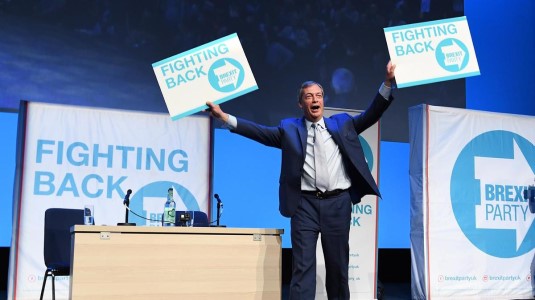
But since 2017, the ground hasn't been fertile for the right outside of the Conservatives. Save for the brief interlude of the Brexit Party's triumph before the general election, and the service it rendered the Tories by bleeding off Labour leave votes in seats where punters couldn't bring themselves to vote Tory in protest against the second referendum position (not that Labour had many options). With Boris Johnson straddling the ground from mainstream Tory voters to right wing populism, there was no space for the Brexit Party, long since renamed Reform UK. And especially so now since Farage retired from politics to become just another right wing grifter paid to say "outrageous" things.

But now things have changed. Liz Truss crashed and burned after appealing to Tory instincts, and Rishi Sunak is in with his near-billion pound fortune and briefcase Tory vibes. Apart from not sinking the economy to give the rich another tax cut, for all intents and purposes this government is a fusion of the party's hard right and far right. Obstinance on strikes, employing Putin-style legislation to protests, and appointing a fash-adjacent zealot with a penchant for antisemitic conspiracism as his Home Secretary, but this isn't enough for some. Sunak doesn't look the part for a layer of Tory supporters, while others are displeased by his dodging a membership contest. But what evidence is there that Reform UK are shaping up to be a force the Tories are going to have to reckon with?

If you keep an eye on the Tory press, there's heaps of it. Early last month, Richard Tice, the party's leader/trustee appeared in The Telegraph boasting about an influx of 4,000 new members - some two-thirds of them disgruntled Tories. By any standards, this is not significant beyond broadening the "membership" subs base. The same paper (again) came with a second bite at the cherry this week. "Conservative jumps ship to Reform UK as talks over more defections continue with MPs" is not as exciting as it sounds. The Tory in question is ... a councillor who held a senior regional lay position in the Yorkshire region. There are conversations "across the board, said Tice, and suggesting Reform posed the Tories an existential threat. And then on Saturday The Telegraph again bangs the drum for the party, highlighting polling undertaken by the always ridiculous Matt Goodwin that shows Reform on nine per cent, almost half of the Tory showing on 20%.

Valiant efforts at inventing a right wing party to needle the Tories, but there's little to no evidence for much appetite for reheated Faragism. Goodwin's People Polling outfit flatters Tice and co, but nearly all other companies put Reform on three to six per cent. Territory inhabited by the Green Party, sure, but unlike Reform they are regularly road tested in council by-elections and often poll respectably as well as winning seats. Reform barely bothers, and when it does they're level with the likes of TUSC and the Elvis Bus Pass Party. This differs significantly from UKIP who did take council elections seriously where and when they were able. Then there are the parliamentary by-elections. In Chester they managed 2.7%, coming behind the Greens. In others that have taken place during 2022, where Reform has stood previously they actually lost ground. With protest voting currently advantaging Labour, the Lib Dems, and the Greens it's hard to see how Reform can capitalise on current Tory difficulties. Especially with no EU elections to fall back on.

Nor do things look rosy in the medium term. Assuming the Tories are hung out to dry at the next election, it's very likely they will move right to try and consolidate their base after the trauma of heavy defeat. Little room there for Reform. And when opposition starts manifesting against Keir Starmer at the polls, either the Tories would benefit (doubtful) or following what we've seen in Germany, the Lib Dems and Greens start making inroads into Labour's support at council level - with new opportunities here assuming the planned constitutional overhaul goes through.

The tide came in for UKIP after 15 years of press campaigning. In the completely different context of Labour's ascendency, and that of left wing politics more generally, pushing the boat out a second time will not see the populist right ruling the waves.

Image Credit

Thursday, 25 August 2022

Emily Maitlis and "BBCism"

As liberalism has been cooing about Emily Maitlis's MacTaggart Lecture all day, some remarks are in order. Titled 'Boiling Frog: Why We Have to Stop Normalising The Absurd', she takes aim at how the BBC and journalism more generally handles impartiality and balance, and how "the populists" have taken advantage of the Fourth Estate's naivete to carve out space in the public's consciousness.

What a load of self-serving drivel.

For over 20 years, the BBC has risen to the challenge of right wing populism ... by enabling it. The two politicians who've done more damage to the progressive consensus as imagined by centrist hacks and establishment politicians - Nigel Farage and Boris Johnson - were indulged and cultivated by the BBC. The ha-ha celebrity enjoyed by Johnson wasn't a question of journalists not knowing how to handle him, but of promoting him on Have I Got News For You as a noted card. Thanks to Question Time, Farage enjoyed the safest seat UKIP ever had. But it was more than the BBC's flagship politics programme at fault; all of its news apparatus promoted him. Partly it was curiosity, a high-minded fascination with a new politics that could easily fill up news schedules that needed filling. Farage's tedious act of saying the unsayable (except for what tabloid editorials had been saying for years) created feedback responses where "fearless" journalism would parrot his talking points to senior Tory and Labour politicians, and they adapted accordingly by shifting right. Too many times the BBC put questions to senior figures UKIP itself was unable to. And getting the BBC treatment meant the doors were open to Farage for further mainstream coverage. If he was good enough for them, he was respectable enough for everything else.

Yes, this was a failure of establishment journalism. They did not hold Farage to account, because he was virtually their ally. Contrary to what Maitlis argues, the dominant interview style in the age of social media is the gotcha. If hacks can get politicians to trip over their words, look foolish, make a gaffe, or let slip an unvarnished opinion or policy, that's what gets clipped and circulated by media outfits. They are incentivised to make their encounters with politicians newsworthy in and of themselves. Because Farage's power was not institutionalised, his arguments - particularly on immigration and, for a while, on same-sex marriage - were repeated by journalists because it helped them hit the gotcha quota. He was challenged on occasion, but this was only a minor part of the coverage he commanded.

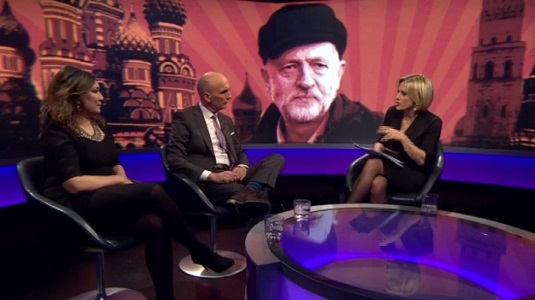
But not all populisms are equal. While Farage was flattered, once it was obvious Jeremy Corbyn was going to win the Labour leadership election seven years ago he was treated as an abomination. Maitlis moans about the infamous episode of Newsnight where the graphics team mocked Corbyn up with a Russian-looking hat and a red Muscovy background. She lamented that inviting a Corbyn supporter on later that week to challenge this was a mistake. The populists had played the BBC's naive desire for even handedness. Never mind Newsnight was repeating the sort of nonsense Corbyn copped from the press, and no amount of innocent face protesting alters it. They made Corbyn out to be Voldemort after all, and every time the former Labour leader sneezed BBC journalists were there to cover it. But unlike Farage, there was no de facto alliance of convenience between them. Corbyn and Corbynism was the target.

That's the fundamental difference. Using the talking points of rightist populism assisted career trajectories. Doing so from the left was suicidal. That Maitlis couldn't tell the difference is no surprise. But too late she laments the Tory cuckoo in the BBC nest, naming former Downing Street spinner Robbie Gibb as an "active agent" of the Tory party. Gibb uses his position on the board to act as "as the arbiter of BBC impartiality". What Maitlis finds offensive is "BBCism", the enlightened and aloof viewpoint from which the fraught tussles of politics can be viewed with equanimity, is getting enroached on by the Tories. She refuses to acknowledge, let alone reflect on the biases and political economy underpinning this establishment view. If the state is the committee for governing the common affairs of the bourgeoisie, BBCism is a certain truce among its factions and fractions. A studied neutrality and balance when discussing and covering permitted politics, and a smear machine as scurrilous as any tabloid when the consensus is under pressure.

Holding politicians to account while seeking to inform, educate, and explain, these are the only journalistic ethics worth a damn when it comes to politics coverage. On the occasion the BBC meets these standards, it's more by accident than design. And in her new venture with Jon Sopel, we can expect Maitlis to continue with her shoddy, establishment-friendly output.

Saturday, 16 October 2021

Meet the New Left Challengers ...

... Same as the Old Left Challengers? It was inevitable some of the left were going to decamp from the Labour Party with Keir Starmer's election as leader. But to do what? That was always the interesting question, and now it has a clear answer. Since Corbynism's defeat and the tightening of thumb screws on the left who've remained, several new left parties have come into existence. The best known and attracting the lion's share of media interest is the Northern Independence Party, but it is far from alone. The Breakthrough Party, self-identifying as a youth-led democratic socialist party, stood its first candidate in the Chesham and Amersham by-election. Joining it one would find the Harmony Party, the BLM-linked Take the Initiative Party, and Chris Williamson's Resistance Movement, which happened to hold a festival in Nottingham this Saturday.

Political science ain't rocket science, and you don't need to hold a professorial chair in politics to understand why this is happening. Frustrated hopes, defeat, and the double whammy of an incompetent, right wing Labour leadership with the hapless politics to match call political consequences into being. The main question is whether there's a space for these new parties to make a go of it?

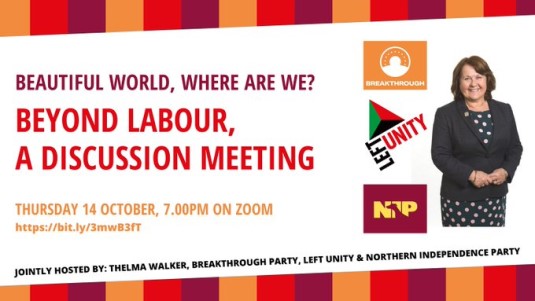
This was the subject of a joint public meeting hosted by NIP, BTP, and our old friends Left Unity. The subject? What the parties are about and what they're going to do. Chaired by Thelma Walker who stood for NIP in Hartlepool, she rightly identified there's a political vaccuum existing on the left, but how's it going to be filled?

The first contribution was from Joe Skeaping of BTP. He argued politics was geared toward older people, and therefore the new party wanted to address youngsters as they're at the sharp end of multiple crises - rents, lack of propery, precarious work, large debts, problems with the police, and the looming spectre of climate disaster. Despite billing itself "youth-led", BTP is not an exclusivist organisation and membership is open to all ages. The new party is a work-on-progress as it builds its policy platform, but already it claims "hundreds of members" and "thousands of supporters". Its immediate focus is on video content to articulate the urgency of the moment and get the party's name out there, but it is more than a Twitter pop-up. It attends demos as a party, has its first elected representative (Samantha Cooper, a town councillor in Bradford) and contested Chesham and Amersham from a standing start. Joe said the party hopes to deepen its electoral work by building support in targeted constituencies, and is planning on having a BTP presence at COP26. In a welcome break from the usual sectarianism, Joe said the party's core focus wasn't just on building Breakthrough but the wider movement too.

Speaking for Left Unity, Kate Hudson said LU was founded in 2013 because Labour had moved too far to the right. In office it embraced neoliberalism, failed to restore trade union rights and renationalise what the Tories sold off to their cronies. LU also saw itself as an expicitly internationalist party and aligned itself with the European radical left, like Greece's Syriza and Podemos in Spain. Before 2015 the party only took modest steps forward, but Corbynism saw most of its membership move into the Labour Party. LU persisted because even if the Corbynist revolution in Labour had become permanent (if only), there would still be need for a radical left party. This is because different perspectives on the left should be valued and Labour's history and policies are problematic. For example, the party of the NHS and the welfare state was, at the same time, the party of the atom bomb, NATO, and the Partition of India. Anti-imperialism needs political expression too. Therefore, it's time to stop hoping Labour will be a useful vehicle and the left should be building something new - though the left outside should be open to cooperation with left the in Labour while remembering we're all on the same side.

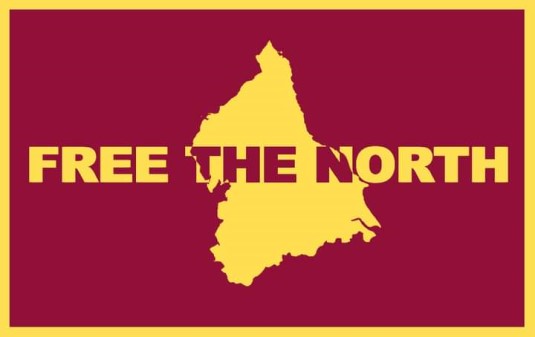
The founder of NIP, Philip Proudfoot, went next. He asked what was the future of the left? For starters, it had to ask constitutional questions and offer a vision beyond the UK itself. He roboustly defended why NIP are a separatist party, saying this was because the UK isn't a normal country: it's over-centralised with the sorts of unevenness and inequality one would expect from a state recovering from civil conflict. London parliamentary parties are the root of these disparaties, and so the left needs to take up these centre/periphery grievances lest centrists like Andy Burnham does, who'll only use it to ride to power without substantially addressing the problems. Likewise, there are regional disparities between the working class in different corners of these isands, and therefore requires different political responses. Touching on what has been built so far, Philip said the party has thousands of members all across northern England, is currently establishing branch structures, has (finally) properly registered with the Electoral Commission and is and ready to contest elections.

Coming in at the end, Thelma Walker talked about what the next steps are going to be. She identified an opportunity with existing non-voters, noting the low turnouts at the last three parliamentary by-elections. Many of them don't vote out of apathy, rather its a political passivity born of anger and frustration. What then are they going to do about it? The parties have to engage with those who believe no one's sticking up for them, offer policies that improve their lives, and work to turn them out at election time. The second opportunity is the break up of Britain. The SNP and Green pact in Scotland and could see it replicated across the country as they make a success of devolved administration, while Boris Johnson works at stalling a referendum and Labour cling to the union to preserve its junior position in the Westminster duopoly. When Scotland breaks free, Wales and Northern Ireland will too and this opens opportunities for NIP. But in the immediate term those outside of Labour have to organise and build an alliance on the left. Therefore, it's not just BTP targeting constituencies but all three parties are with an informal agreement to support each other, and avoid clashes.

This place is an old hand when it comes to commenting on the far left, so does this new alliance of new parties stand a chance under First Past the Post? Unike the delusional nonsense and official optimism from the established far left, at the very least none of these parties are pretending the mountains they face are gentle gradients. Philip is fond of using the example of UKIP who were able to sucessfully menace the Tories to achieve its policy objective, despite doing consistently poorly at general election time (at least in seat terms). He said they were able to leverage by-elections and turn them into publicity victories, something the new parties could do too. I'm a bit more sceptical. It wasn't mid-term Westminster contests that powered UKIP, but rather the five yearly cycle of EU elections. Fought on the basis of PR, they pulled in the anti-political establishment protest vote as well as right wing discontent. They ensured its leading figures a platform, Nigel Farage particularly, and gave them an institutional base and resource from which to strike. Additionally, they had sympathetic media on their side. The Daily Express in particular, now the most slavish of Johnson supporting titles, happily amplified UKIP's messaging and therefore ensured they were a constituency of opinion broadcast journalism had to take seriously. For obvious reasons, this is not open to any of our three new parties and so they've got to find their own way to impinge on mainstream politics. Hence where a strong record of activism outside of elections would come in handy, and why they're prioritising them.

As I've argued previously, it's not just that there's a "left space" going unfilled but thanks to Starmer's stupidity, his disassembling of the Corbynist voter coalition is seeing chunks of that support drift away. More might if these parties are able to make a splash. The rising working class are there, not going anywhere, and are only getting larger over time. But the question of treating with others who already inhabit the left-of-Labour space can't be ducked, either. In Batley and Spen, George Galloway performed very credibly, showing there is space for what we might very generously call left populism. But the issue is how does the three-party alliance deal with him, especially given his recent adventures in voting Tory, the crass pro-UK constitional politics, and the downright scabby positions his Workers Party of Britain fan club have on women's equality and LGBTQ issues? Likewise, the Socialist Party's Trade Unionist and Socialist Coalition has contested elections for nearly 12 years without any success. If they want to maximise socialist votes, then an understanding should be sought from them.

However, the three-party alliance does have some advantages that TUSC lacks. In the first place, the SP has an antiquated conception of class, which has fed into a strategy that, at best, has seen them tread water for the last decade and left them unable to comprehend Corbynism and its eruption in the Labour Party. Second, the SP is utterly focused on building the SP. There are no other considerations, which has meant TUSC challenges are haphazard, sporadic, and amateurish. There is no consistency in working an area, and because it is less than the sum of its parts there's nothing to build even if TUSC worked a seat over time. NIP, BTP, and LU aren't beholden to this approach and therefore enter the fray without these impediments.

The best indicator of future behaviour is past behaviour, and leftwing splits from and alternatives to Labour have never fared well. It's taken 40 years for the Greens to start looking tricky in some circumstances. Can a renewed LU with NIP and BTP break with electoral history? The smart money would say no, but then again the smart people are set on driving Labour into the ground, taking the votes of millions for granted and others left up for grabs, so who can say? If the parties put their efforts into targeted localities, standing paper candidates far and wide, getting their banners seen on demonstrations, supporting high profile campaigns, and generating their own buzz via social media, there is an outside chance they could do better than any other left challenge of the last 20 years has managed to. But it is a hard road and the odds are stacked against them.

Friday, 18 June 2021

After the Chesham & Amersham By-Election

When the unexpected happens, hottakes rush into the interpretative vacuum. The victory of the Liberal Democrats in overturning the Tories' 16,000 vote majority has occasioned a flotilla of opinion. Stephen Bush said its significance was of no significance, and there is nothing that can be read into it. Paula Surridge suggested all the Tory voters stayed home because the combined LibDem/Labour vote was roughly the same in 2021 as it was in 2019, and so a case of tactical switching was happening. And others point to the seat's characteristics: HS2 is due to go through the constituency without any discernible benefit for residents, this is a remain voting seat ill-disposed to Brexit grandstanding, the LibDems have been working the seat hard, the punters are fed up, or, perhaps the most incredulous, southern voters are fed up hearing how bad the north has it.

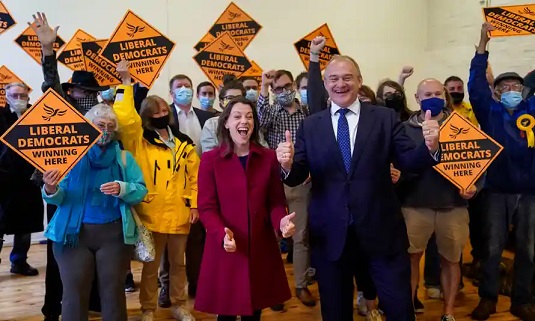
There's some grain of truth in all of them. Yes, even the last one. We know Boris Johnson is taking elements of his electoral coalition for granted. We know local grumbles over things like HS2 are electoral bromides for governments in by-elections where decisions from remote Westminsterland are imposed on locals. And ye, it was a seat ripe for the plucking for the Liberal Democrats. They are a party skilled in opportunism and slippery politics. A one off, then? Nothing to be seen here? Not so fast. Enjoying his moment, when Ed Davey took his orange hammer to break the flimsy blue wall built for this afternoon's photo op, he was right to note the Tories are, in the main, more vulnerable to LibDem than Labour assaults. This has been starkly clear since after the 2015 election when they started picking up council by-election seats disproportionately from the Tories. It was a measure of their cluelessness that Tim Farron and Jo Swinson swallowed the anti-Corbyn demonology and thought pickings were easier from disaffected Labour supporters than the actual evidence of electoral performance. To Davey's credit, on assuming his party's leadership he penned a piece suggesting he'd passed this most basic of comprehension tests.

But was it a case the Tories lost the seat as opposed to the LibDem's winning it? If we accept the Surridge thesis that the Tory voters all stayed at home and the anti-Tory bloc got its act together (for once), then there's nothing for Johnson and co to concern themselves with. It can be put down to a mid-term protest and one that means little as it'll bounce back at the general election. This, typical of the empiricism customary to political science, misses a lot of complexity. As explained many times here before, one of the peculiarities of our age-divided (class cohort and property-divided) politics is how older people are more likely to vote at election time. In second order elections like by-elections this is even more the case. Turn out generally goes down, but the propensity to sort out the postal ballot or turn up at the polling station for working age and younger voters decreases at a much faster rate than the over 60s. Given the propensity for older voters to support the Tories, we are left with two possible outcomes. Either older and retired folk broke with the established patterns of second order elections and stayed at home in greater numbers than younger punters, or they turned out as normal and a good chunk switched their preferences for this contest. I know which one is more likely.

This does present the Tories a problem. From the experience of UKIP and the Brexit Party, we know how these helped loosen the fealties of older Labour voters and opened the way for Tory voting, among other things. If more by-elections occur in the so-called blue wall (or deep blue sea, considering their geographic domination of England), and with the LibDems primed for these sorts of seats, there is a happy danger of a chain reaction unfolding, of momentum building on momentum, and breaking habitual Tory voters from their habitual voting patterns.

But is there wider significance? Contrary to Stephen Bush's argument, I believe there is. It plays out differently (in England) depending on the seat, and that is anti-political establishment protest. Between 2012 and 2015 with the LibDems in government, UKIP became the protest party of choice. It didn't win, except on the occasions of Douglas Carswell's and Mark Reckless's defections and subsequent by-elections, but came second in practically every contest after the Eastleigh contest. They served as the repository of angry brigade voting whether the defending party were the Tories, Labour, or LibDems. These dynamics so conducive to a populist politics haven't gone away, and our most recent contests - Hartlepool and Chesham and Amersham - affirm them. In Hartlepool Labour selected the worst possible candidate in a seat lousy with resentment at being taken for granted. As perverse as it may seem, the Tories were perceived as the best possible protest vehicle for giving an uncaring Labour Party a bloody nose. Hence the much worse result than even 2019 under Jeremy Corbyn. The LibDems opportunistically exploited HS2 grumbles (the party is formally supportive) and the diffuse discontent in Chesham and Amersham, and reaped the reward.

What this also suggests is future parliamentary by-elections are likely to repeat this pattern: a reaction against whoever is seen as 'the establishment' in any given seat. Fortune then is doing anything but smiling on Labour's chances in Batley and Spen. With Keir Starmer announcing on Thursday that Labour is spending the next 18 months determining what its policy is going to be, the party has little to nothing to say except the Tories are bad. Hardly a prospectus to see off a populist challenge, let alone power insurgencies in places like Wakefield (which may become vacant) where the party came second 18 months ago. The Tory and George Galloway's challenges are tapping into the anti-establishment dynamic in the seat, making a comfortable Labour hold the least likely outcome.

For almost a decade parliamentary by-elections in England have seen the populist dynamic deliver upsets and seemingly bewildering results. It's astonishing the combined wit of professional politics, the commentariat, and the wise sages of political science have yet to cotton on.

Image Credit

Wednesday, 7 April 2021

Whither the Northern Independence Party?

There's a bit of a puzzle with the formation of the newly-minted Northern Independence Party. As the UK state is hopelessly over-centralised and menaced by the SNP in Scotland and, to a lesser extent in Wales by Plaid Cymru, it's curious how NIP-sryle parties haven't formed sooner corresponding to England's stark regional divides. "Ah!" Might exclaim the nerds who follow things like local council by-elections, "don't you know about the North East Party and the Yorkshire Party?" Indeed I do, with three and seven councillors respectively. Regionalist parties are, actually, ten-a-penny. Mebyon Kernow down in Cornwall has been punting for independence for 70 years, and local authorities are littered with independents claiming to put their communities before party politics. My beloved Stoke-on-Trent is no different.

What makes NIP different from these other manifestations of what the pol profs call the centre/periphery cleavage? First off, it's explicitly socially liberal. As NIP's statement of aims makes clear, "We have members from across the LGBTQ+ rainbow and those of many different faiths and none. We will always fight against bigotry of all kinds - including racism, antisemitism, misogyny, homophobia and transphobia." And second? It's where the party is from. Most regionalist parties and independent groups usually start life as a split from one of the two big parties, and typically as a result of fallings out in a council chamber. In this sense they are elite projects, albeit local government elites. As such, they tend to be older and have some years of experience behind them. Recall what happened with our unlamented friends Change UK, albeit at a municipal level: their characters are fundamentally the same. NIP, however, is not cut from the same cloth. It has come together out of the debris of Corbynism as a self-organised network of activists appalled with Labour's record since Keir Starmer assumed the leadership. Furthermore, while social liberalism is consciously stressed to jar Westminster-centric accounts of the north as a dessicated racist tundrascape, it reflects the basic common sense of the class cohorts who founded NIP: the immaterial workers and generation left, the backbone and natural base of Corbynism. Neither is it different to the cohorts lining up behind the SNP and an independent Scotland, except obviously the magnitudes of numbers involved are qualitative leaps apart.

But new political movements have to start from somewhere, and this is never from a position of strength. What prospects for NIP then under First Past the Post? As founder Philip Proudfoot says in his interview on Novara Media, electoral success is not the be-all and end-all for the new party. As Nigel Farage via UKIP and the Brexit Party was able to show, the mobilisation of a critical enough mass can impinge on and infuence the direction of the mainstream. True, though NIP will never have the same advantages enjoyed by UKIP in terms of media coverage and handy, five-yearly elections fought under proportional representation. But like these two parties and unlike other left-of-Labour outfits, it does have the possibility of building something out of its regionalist orientation. For one, few can pretend the north of England does well out of the current constitutional set up. Even Tory backbenchers know this and organise accordingly. And so while there isn't a generic northern identity outside of the imaginations of London journos as they head north on gammon safaris, there is an inchoate grievance ready to be drawn on.

One advantage NIP does have is the records of its activists. Having gone through the struggle Corbynism was thrust into and having a baptism of political realities at the font of scabbing by "comrades" and "allies", one would think they're not prey to the delusion of winning Westminster seats any time soon and have a grasp of how difficult making a breakthrough is. With this in mind, where it has enough members in a locality is it going to focus efforts on elections, building support in workplaces, the community organising Labour is foolishly abandoning, and/or the politics of the street? I imagine they will try all to build name recognition and recruit, but ultimately it was the electoral threat UKIP brought to bear that allowed Farage to set up his abode in Dave's head. Going for every local authority contest they can, and contesting seats consistently is the tried and tested method of other small parties.

Hence NIP's contesting of the Hartlepool by-election is quite interesting. The Survation poll for the CWU puts them on two per cent. Not a great score, but more than any of the other parties running apart from Labour and the Tories. Here the circumstances of the contest, particularly Labour's arrogant approach to the selection of Paul Williams and their entitled attitude could be grist to the NIP mill. Having selected the former Labour MP Thelma Walker and with campaigning now underway, including targeted Facebook advertising, we'll see if the party can scoop up any anti-Labour protest votes currently heading in the Tories' direction. And, given NIP's social base, whether it can flush out more votes from the corresponding milieu in the constituency.

The limiting factor for NIP is also its strength, and that is the party's regionalism. What it stands for requires little explanation, and undoubtedly a segment of any electorate it attracts will be on that basis - a bit like how the Greens have a record of winning Tory council seats in Tory areas despite being a socially liberal party with roots in the post-war expansion of immaterial labour. But the problem is, despite billing itself a democratic socialist party, is its efforts are always limited by this and if success comes, sooner or later the class interests of the coalition NIP's trying to build are going to come into conflict with the self-imposed geographic extent of its ambitions. Indeed, as Philip said in his Novara interview about this issue is people in other parts of the country should start their own regionalist rebellion against Westminster or move to the free North after independence. As we have seen in the UK, the nationalism of the mass politicisation in Scotland, even though it has a similar base to Corbynism has ensured its radicalism is boxed in and isolated from the rest of the UK body politic.

That said, the responsibility of NIP's emergence lies squarely with the Labour leadership for dumping on its people. And, I'm afraid to say, the Labour left. Little to no work was done to prepare Corbyn supporters in the event of losing, and since then the Socialist Campaign Group of MPs have not assumed the mantle of leadership. Seeing Jon Trickett tweet about policy, Richard Burgon pushing zero Covid, and Claudia Webbe talking about racism, there is no strategy let alone a good argument forthcoming for staying in the Labour Party. Keir Starmer is disaggregating and dispersing Labour's vote. Who knows, it might be enough to make NIP and similar parties viable, but those who would be leaders of the left are practically standing by, seemingly indifferent as our activists are carried to the four winds.

Friday, 11 December 2020

If Remain Had Won

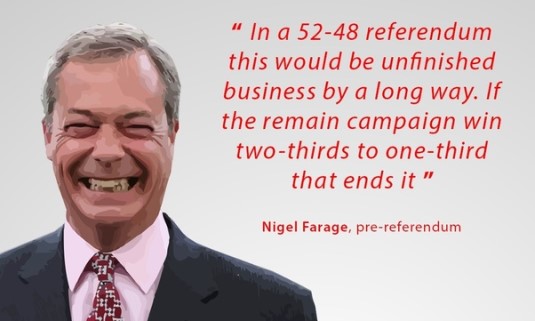
On the morning of Friday 24th June, Prime Minister David Cameron emerged from Downing Street looking tired. Tired, but relieved. In the early hours of the morning, Nigel Farage had conceded Leave had lost and attacked the government and the media for leveraging their institutional weight to secure a vote for Remain. It was tight, 52% for Remain and 48% for Leave, but a win was a win. The great gambler had promised a referendum on EU membership to pacify his right wing and see off the threat of UKIP who, just a year before, had polled four million votes. As he blinked into the cameras from the podium, he said the EU issue that had divided British politics for so long was settled and he looked forward to carry on governing in the national interest thanks to the mandate afforded him by the British people.

Cameron was the toast of the town as far as the liberal press were concerned. There were some voices raised about the recklessness of risking something as important as the UK's economic wellbeing for a prize so paltry, but this was largely ignored as centrist columnist and Labour backbencher spoke up to congratulate him for seeing us through the referendum. For the time being, the Tory right and their UKIP outriders were quiet and stunned into silence. The attention, however, swiftly moved to the Labour Party. While welcoming the outcome of the referendum, Jeremy Corbyn was roundly attacked by his backbenchers for offering "lacklustre leadership" and refusing to campaign alongside the Prime Minister to keep Britain in. Rumours of a move to depose the Labour leader did the rounds, and then went into action. On the following Monday, shadow minister after shadow minister lined up to resign, with some timing their departures to meet the hourly headlines on BBC News and Sky News. And then, that evening, Margaret Hodge tabled a motion of no confidence in Corbyn at the PLP's weekly meeting. It easily carried by 172 votes to 40, but the embattled Labour leader said this had no constitutional legitimacy and he would carry on after 60% of members had put their trust in him. Unfortunately for Labour, the crisis continued which, eventually, saw the little known South Wales MP and DWP shadow Owen Smith emerge as a challenger. As the party turned in on itself, Cameron's star rose even higher and Tory party polling received a renewed boost as he affected a statesmanlike gait vs the unseemly rabble across the Commons.

It wasn't long before matters started slipping for the Tories. In the first weekend after the referendum, a small crowd of Leave supporters held a rally in Trafalgar Square protesting the referendum con job. This weekly occurrence, not always in the same location, received little coverage and got scraps of notice in the press, but following the shock victory of Donald Trump in November's US Presidential election they became increasingly emboldened. Nigel Farage, forgetting earlier remarks where he promised to stand down as UKIP's leader began addressing the weekly rallies. They grew and, as the glow faded from the Prime Minister's referendum victory, he started looking increasingly vulnerable to backbench rebellion. The complaints about government spending and "dirty tricks" Farage raised on referendum night started coming back. The Daily Express ran lurid tales of public sector employers expecting their staff to vote remain, while acres' worth of articles complained about how the government flouted its own rules on campaigning spend. It wasn't long before the legitimacy of the referendum result was questioned - first by UKIP, but then increasingly by Tory backbenchers out of sorts in the renewed Kingdom of Dave.

For the moment, there were few opportunities for putative rebels to flex their muscles. When the Commons resumed in the Autumn following Jeremy Corbyn's second emphatic leadership victory, legislation due for introduction into the House was, for a rebellion-minded Tory malcontent, uncontentious. Likewise the obvious successors to Dave were very much bound close to him. George Osborne carried on in Number 11, and Theresa May remained at the Home Office where she'd been since 2010. A new addition to the cabinet was Boris Johnson, rewarded with the Foreign Secretary post for playing a leading role in the remain campaign, a position consistent with his pro-EU journalistic outpourings in recent years. The right inside and outside of the party might have been getting restless, but so far Cameron was shielded and the slow roll out of manifesto promises, such as a new (and punitive) Youth Allowance scheme designed to replace the dole for 18-21 year olds, the £10bn "war on waste" (a new programme of public sector cuts as opposed to an initiative aimed at curbing Britain's growing refuse problem), and extending the Free School programme further gave internal Tory opposition few opportunities to make strides.

And then, trouble. In December Jamie Reed, the Labour MP for Copeland announced he was resigning his seat. This was followed in early January by Stoke Central's MP, Tristram Hunt. Both were well-known critics of Corbyn, but had decided to pursue careers outside of Parliament instead. The contest in Stoke immediately captured the attention of the London-based media. As the city had an inglorious recent track record of returning far right councillors and, during the referendum, had voted by a large margin to Leave (Stoke Central itself was 62%/38%), this seemed like ripe territory for a UKIP challenge at the subsequent by-election. Having been burned so many times by failures at the polls, Farage was reluctant to stand but after some dithering was confirmed as the party's candidate in the by-election. For six weeks the media circus descended on Stoke-on-Trent. Activists from across the country poured in to help Labour's Gareth Snell retain the seat, and the campaign was very close. As the early hours of 24th February came in, first the awful news Labour had lost Copeland to the Tories, but then the shattering chaser. Mobilising the constituency's Leave discontent, Labour's vote held up but a collapse in Conservative support saw Farage squeeze home with a 800 vote majority. The scenario Cameron dreaded the most had come to pass: he would now face occasional questions in the Commons from the UKIP leader.

This plunged Labour into further crisis, with claims about Corbyn's incompetence doing the rounds and crisis talks over whether the party was doomed in its former working class heartlands. Even some leftwingers took to print to raise doubts about Corbyn's suitability. However, the momentum was with UKIP and while Labour looked inwards it was on the right where the effects of the by-election triumph were most felt. On entering the Commons Farage was welcomed by a rally of several thousand elderly leavers, and a march the following weekend saw 20,000 take to the capital's streets. Not a big demonstration by the standards of the left, it commanded disproportionate media attention with senior BBC and ITV journalists dipping in and out of the crowd. And then when the excitable "people's army" descended on Hyde Park to hear the words of Nigel Farage MP, they were driven to ribbons of ecstasy as he denounced the fraud perpetuated on the British people and raised a new rallying cry. The first referendum was deeply flawed, unfair, and distorted by the liberal elites who set it: it was time for an unsullied People's Referendum. Matters were not helped when, it emerged weeks later, Farage had been having regular meetings with the European Research Group faction of backbench MPs, and had even spoken at one of their gatherings. The press could smell trouble brewing and captivated by the splash Farage had made in the Commons, attention switched away from Labour's difficulties. Matters came to ahead over Osborne's Budget speech. Having learned from his second omnishambles budget of the previous year, he tried keeping matters on an even keel. Strong GDP data helped by renewed investment, following a brief pause while business awaited the referendum's outcome, meant increased tax receipts and so, Osborne argued, more room to raise the basic tax threshold even higher. However, when earlier drafts of his chancellor's speech leaked it was revealed this was initially going to be dubbed the Remain Dividend. The fact Osborne never used the phrase didn't matter. He was harangued by The Mail and The Express for lording it over the leavers, and (anonymous) Tory MPs made sure the press were well briefed about their outrage. It looked like the Tories were going to tear themselves apart.

As it happened, the next big shock struck at the very heart of the Tory programme. On 14th June fire crews were called to a fire at Grenfell Tower, which quickly burned out of all control. The blaze killed 72 residents and made hundreds more homeless. It quickly transpired the local Conservative council had cut corners on the external cladding and it did not meet fire safety requirements - all for the sake of a saving of a few thousand pounds. Immediately, Labour's internal distractions fell away and Jeremy Corbyn connected the tragedy to Cameron's and Osborne's austerity measures. Within days Corbyn was out meeting the families and speaking with the community, whereas the chancellor completely went to ground while Cameron was on an overseas trip. Caught flat footed, it eventually fell to Boris Johnson, as former London mayor, to do the official walkabout - though even he failed to meet with the families. This appalling spectacle, rightly perceived as callous and uncaring, hit the Tories hard. Already suffering thanks to UKIP's sustained 15-20% in the polls, for the first time under Corbyn Labour moved into the lead. Sensing an opportunity to embarrass the government into backtracking on cuts, Corbyn launched a nationwide tour with Grenfell community representatives. The PLP were not too happy, but by all accounts the programme of events were a success, with large crowds turning up to hear him put the anti-austerity message. Keen not to miss a bandwagon, Farage and UKIP discovered they were an anti-austerity party and said for too long the posh liberal Tory elite had balanced the books on the backs of the poor. Squeezed from two directions, Cameron was in a difficult place.

Another unhappy circumstance of the Remain victory was the fact subsequent EU meetings attended by Cameron were subject to the keenest, and some might say hysterical press scrutiny. The "renegotiations" he had undertaken prior to calling the referendum turned out to be cosmetic changes. The right wing press gleefully seized on EU migration figures, and beggar-thy-neighbour stories about EU citizens claiming benefits and "health tourism", which continued to aggravate the steadily diminishing newspaper audiences. Every time the EU agreed something which Cameron simply accepted, this was more proof of Britain's betrayal by its leaders. And when Cameron had to report on matters European in the Commons invariably the Speaker John Bercow would impishly allow Farage to ask a question.

By early 2018, Cameron had had enough. The feeling of being trapped by his backbenchers, of wincing at the UKIP thorn in his side and now, facing an energised and confident Corbyn in the Commons, was by no means guaranteed to "win" each week at Prime Minister's Questions. Following what was to be Osborne's final budget, which begrudgingly released funds for the safe recladding of Britain's public housing tower blocks, he announced the timetable of his departure as per the promise he made prior to 2015. Suggesting the Conservative Party had some hard choices ahead, he fired the starting gun on the contest so the party had the summer to debate and regroup. In the first round, the expected big beasts in the form of Johnson and May declared their intentions, but as always a few no-hopers wanting a bit of recognition stuck their names in. Sajid Javid, Dominic Raab, and Andrea Leadsom tipped their hands from the right, while the relatively unknown Rory Stewart pitched in from the party's centre. Interestingly, Osborne didn't contest - divining correctly someone who is virtually the ancien regime wouldn't stand a chance. Michael Gove, exiled to the backbenchers since heading up the Leave campaign, also put himself forward and established himself as the most credible Leave adjacent voice - and the potential leader most able to see off UKIP. For her part, May won plaudits for talking about social justice and rediscovering a Tory sense of responsibility to those at society's sharpest end. To hear one nation rhetoric not entirely dissimilar to the arguments made by Ed Miliband a few years previously turned heads and captured a great deal of broadcast and liberal press coverage. Johnson, for his part, must have been left wondering if stumping for Remain was the right career move. Popular in the party for his jovial bon homie, unfortunately for him there was little to offer. He claimed to be an election winner who could take on the left, but on matters of policy he was either vague or sounded like he was copying May. And he promised to stand up to Brussels, but given his role in the referendum Gove had greater credibility on this score.

In the end, Johnson was squeezed out by the rounds of voting and Gove and May went to the membership. The election was a strange affair, with May successfully avoiding public face-to-face debates with Gove. This allowed her to set out her stall as a reluctant remainer who treasured the sovereignty of the UK, but on balance believed staying in the EU was the right thing - but that the government should take tougher stances versus Brussels and seek to reopen negotiations on the terms of membership. Gove was able to easily outflank this from the right, and hinted on more than once occasion that perhaps UKIP and the second referendum campaign had a point. However, on matters of wider policy Gove praised Cameron and Osborne and stated in no uncertain terms he would more or less offer the same. May on the other hand seemed to take the threat from Labour seriously, who were leading in the polls despite an outbreak of infighting over the Shrewsbury poisonings and the long-running disputes over antisemitism. As such, of the 100,000 Tory members who returned their ballots on an 80% turnout they narrowly, and comedically, went for May over Gove by 52% to 48%. The significance of the ratio was not lost on anyone.

May enjoyed a brief honeymoon, and shored up Tory fortunes in the polls by winning back floating support from UKIP and Labour. However, she was conscious of her slim inherited majority and the tight margin of her victory. Her speeches intoned on the one nation theme, which seemed to suggest she was determined to put pay to the party squabbling over Europe once and for all. But inevitably, when faced with the other heads of government at Commission meetings she was not seen to be pushing right wing peccadilloes enough. Her promises to act tough came to nought, because there was nothing to act tough about. No bail outs for southern EU states, no Turkey accession, no new agreements necessary for the transfer of more powers. She started to find even the zone of non-punishment was punishing, and when she did try to contrive rows on the approval of the EU budget the press, Farage, and increasingly her backbenchers took her to task. In time, the infighting returned and the poll recovery was slipping. If she was mulling over an early election, by the time of the Spring budget - delivered by the newly promoted Philip Hammond - there was little he said or promised that would make a contest much of a go-er. And so when the EU elections swung by, the Tories fell to third place. The Leave movement found its feet again and returned UKIP as the largest party, with Labour coming a close second. It was unclear if the government would last the distance until May 2020.

Except May 2020 did not happen. Wounded by the awful losses in the EU elections, though not quite as bad as those sustained by John Major in 1994, throughout the Summer and Autumn Leave took to the streets in increasing numbers, culminating in a 100,000-strong march through London that October. The idea the government cheated in 2016 increasingly took on the form of a conspiracy theory, drawing together the liberal elite, collusion between Brussels and "shadowy financiers" (usually, but not exclusively George Soros and the Rothschilds), and evil teachers/lecturers filling younger generations' heads with internationalist rubbish. As the temperature rose because May elected to ignore the movement, some took to camping outside Parliament with sound systems, UKIP banners, and garish Union Jack suits. Questions were raised in the house following the public abuse of Tory remainer MP Anna Soubry while she tried entering the parliamentary estate. On the left, despite May's promises there was little evidence of helping out the poor in Hammond's statements. Osborne's deficit targets are long discarded, but it seems the precarious state of her party and wishing not to give any recalcitrant backbencher an excuse to jump ship and join Farage, as per Douglas Carswell and Mark Reckless in 2014, stayed any reform mindedness she may have had. As a result, when the din from Labour internal warfare died down, as it did for short lulls, there was polling evidence the party was seen more in tune with the sentiments of the British people.

And then Coronavirus happened and up ended politics. May's initial response was widely praised. She entered lockdown when the scientists recommended it, although there were loud complaints about the cancellation of Cheltenham and football fixtures, but the initial three-month quarantine period ensured UK deaths stayed below the hardest hit countries in the EU, like Spain, Italy, and France. But once lockdown was over and everything opened up again, stories came to light of PPE procurement scandals - stories that have not gone away. Farage, before jumping on an anti-face mask bandwagon, temporarily made hay over "careful Britain" handing over cash to states in southern Europe who had not taken the pandemic "seriously". Meanwhile, the furlough scheme offered by Hammond was very obviously influenced by the pressure Labour were applying, but then the chancellor showed a stubborn resistance to extending it and making sure its coverage was as comprehensive as it should have been.

Under the impact of a national crisis, any government's polling figures are going to go up. And May's duly did, reaching a high of eight points in mid-April. But since they've been falling. Labour have regained ground thanks to those losing out and angry at the mismanagement they see, and UKIP are regularly at around 20% as it adds Covid-scepticism and a toddler-like tantrum over tier restrictions and the second lockdown to its populist repertoire.

With all elections postponed until May 2021, by which time most people will have received a vaccination, it looks like May's Tories are in for a very difficult time. In 2016 David Cameron opened a wound to scratch an itch, and the politics flowing from that event have festered. And no amount of telling Leave they lost, the people had spoken and so they should get over it works. Britain is polarised, albeit with the right seemingly helplessly split. Can Labour take advantage and put Jeremy Corbyn into Number 10 next May? It's highly likely - unless May goes to the country promising a second in/out referendum. That might see off UKIP and cohere a block of voters behind the Tories, but poll after poll shows the public are fed up of hearing about Europe. But if making such a rash promise means preventing themselves from getting wiped out, Theresa May will certainly do it.
Friday, 1 November 2019

Is Nigel Farage Labour's New Best Friend?

After rumours and rumours of rumours that Nigel Farage was planning a targeted campaign in this general election, he (sort of) launched the Brexit Party's campaign Friday morning with the intent to stand everywhere. This was trailed by an intervention from none other than The Donald himself, who just so happened to have a positive message for Farage's LBC show on the eve of his launch. Now, while it is true the more conservative-minded quite like Trump, his urgings for Johnson to come to an arrangement with Farage, repeated again this morning with the demand for a no deal Brexit, meant the Tory leader had no choice but to put distance between them.

What then is Farage's game? We saw time after time how the European Research Group, the self-described and self-flattering Spartans of Brexit set themselves against Theresa May's deal despite Johnson's deal being worse in every regard. Most importantly concerning the relative bargaining strength of the UK vis a vis the EU post deal but pre-trade agreement. Negotiating oneself into an even worse position is no mean feat, so well done him. Anyway, assuming there isn't more to the ERG's change of heart and theirs was a pragmatic adaptation to the new Johnson regime in order to get Brexit over the line, why hasn't Farage, as more or less their external faction, followed suit? Well, for the same reasons the ERG "capitulated" - self-interest.

The irony of the Brexit Party is their relevance demands the UK's continued membership of or close links to the European Union. Not just in the crude terms of the nice salaries its MEPs are now pocketing, but for their place in British political discourse. Imagine if we were living in the transition period now - the first and most fraught phrase of Brexit would be over, and only the hardest core of the EU-interested public would be contesting the deal on leave grounds. Not the stuff of a right wing populist pensioners' insurgency, nor capable of getting Farage on Question Time every other episode. If we keep this desire for relevance in mind, the impossible demands Farage has placed on Johnson for a de facto electoral alliance now make sense. Consider them for yourself: dumping the withdrawal agreement in favour of a no deal Brexit, and going for a Canada-style trade deal all to be sorted by the end of next year. Farage knows Johnson's not about to ditch a deal that stood a chance of getting through the Commons during this dying parliament, but for good measure he's let his satrap Richard Tice out the gates with proposals for constitutional reform. These concern the voting system, abolishing postal voting, and a number of other irrelevant and marginal fixes designed not to get the votes in, but to make the "offer" of an alliance with the Brexit Party a lot less acceptable. And for good measure Farage has promised no BXP candidacy against Tory candidates who renounce their support for Johnson's deal, which is also guaranteed to convince zero folks from doing so. Each PPC needs Central Office approval to become the actual candidate, after all.

At least 500 seats Farage is promising to contest unless Johnson caves within the fortnight, and given he won't, bar one or two nudge, nudge, wink, wink local arrangements we're going to see hundreds of Brexit Party candidates. This begs the question. Is Nigel Farage Labour's de facto best friend in this contest? Well, it is tempting to say yes. When Johnson's strategy is fixated on monopolising the leave vote, anyone contesting it from a credible position (I use that term advisedly) has to give him something of a headache, surely? You would think. However, there is a counter-intuitive warning from recent history to consider.

Remember the 2015 general election? It was set up to be the perfect storm for the Tories. The LibDems were scraping the barrel and UKIP were insurgent, having bagged two MPs from two by-elections and a storming performance in the 2014 EU elections. And? The Tories romped home with a majority government and Labour went backwards, chiefly because of the Scottish bloodbath`. At the time no one reckoned the Tories would be able to squeeze the LibDems so effectively, when in fact it was left opposition to the LibDems that grabbed the coverage ever since the tuition fees debacle. And UKIP? Its four million votes returned just the one MP, but its distribution was uneven. While it did take away more Tory voters than Labour, it tended to scoop up more ex-Labour votes where it mattered: in the key marginals. And so the legend of reactionary working class voters took wing, and led to Paul Nuttall's misdirected northern strategy. Come 2017, UKIP stood down to give Brexity Tories a free run and inadvertently helped harm their chances - Tory and Labour voters came flooding back, but the skew that helped the Tories two years earlier came back to bite them. Sucked to be them.

Might a wide BXP challenge hurt Labour more than the Tories, then? It's possible, but less likely. 2017 was not 2015, and 2019 is further from it still. That election was the last fought under the old neoliberal/managerial consensus, and Labour was very much part of the wonky mainstream. When you had to temper your criticisms of wealthy tax dodgers with even-handed denunciations of cash-in-hand window cleaners, your pitch was never going to cut it. Labour's policy platform, the fact of its vast party machine being an electoral factor in itself, and the toxicity of Johnson outside the South East gives people plenty of reasons to stick with Labour rather than dilly dally with Farage. High stakes favours polarisation, and 2017's conditions have, if anything, sharpened. The second issue is the stubborn Labour leavers aren't coming back, which makes pandering to them pointless and counter-productive. Nevertheless, a section of this milieu of voters who went Tory in 2017 after supporting UKIP in several elections might switch to BXP if a candidate rocks up in their patch. And as Johnson has played fast and loose with his pledge to die in a ditch than accept and Article 50 extension, he might prove very vulnerable on the trust issue.

What also matters is how Brexit is pitched. For Johnson, (and Jo Swinson, as well as Farage), Brexit might be their strongest suit but no matter how hard they try the election will be dragged onto other issues. Nevertheless, if Johnson gets bogged down into a bidding war over who's the most Brexity of them all, such a debate is corrosive of his own coalition. When most voters are fed up and want it sorted one way or the other, Corbyn holds a strong hand versus any of these.

In sum, I would tentatively suggest Farage is doing Labour a favour. Our party's problem is one of squeezing the LibDems and knocking their share down. The Brexit Party can pose the Tories the same challenge, making this election more interesting and wildly unpredictable. And one in which Labour can come out on top.

Image Credit

Wednesday, 19 June 2019

On Tory Party Psychopathy

In their 1994 study of the Tory party membership, Patrick Seyd, Jeremy Richardson and Paul Whiteley came to the surprising conclusion that despite the success of the Thatcher years, the membership were, in the main, distinctly non-Thatcherite and much less extreme than the "swivel-eyed loons" referenced 20 years later. Well, if a certain YouGov poll of party members is anything to go by, we've gone way beyond even that. In case you haven't heard, 63% would rather have Brexit if it meant Scotland leaving the UK, 61% if it meant severe damage to the UK economy, 59% if Northern Ireland left, and 54% prioritise Brexit over the continued survival of the Conservative Party. The only thing that is not an acceptable price to pay is Jeremy Corbyn in Number 10. Interesting. Okay, so what is happening. How have we gone from a party whose official mythology paints it as level headed, and pragmatic in the pursuit of power to, well, outright psychopathy?

Stephen Bush suggests we need to look at things through Tory members' eyes. For them, for a variety of reasons, Brexit is an unalloyed good that might cause some difficulties at first but midwife considerable upsides eventually. The prospects of things getting that bad so lumps of the UK fall off aren't entertained with much seriousness, and so we get the answers we get. Yes, there is some truth to this. And yes, there is more going on.

In 2019 a lot of Tories don't feel particularly attached to the union. Unless they happen to be Scottish Tories. This is partly a consequence of the Tory implosion in 1997 where they were eradicated and from 2001 had to get by with just a single MP until the Davidson/May renaissance in 2017. For much of the last 20 years the Tories have been a de facto English nationalist party, a position that was actively cultivated by Dave in his talking up of the SNP "threat" before the 2015 general election. You might remember the SNP were opposed to his austerity scheme and derailed the roll out of the bedroom tax in Scotland, in turn reinforcing the divisive idiotics that the SNP headed up a nation of idlers subsidised by England. And since the referendum the Scottish government have positioned themselves as implacable opponents of Brexit. Scotland here then is less a valued part of the UK, and more an obstacle to levers' hearts' desires. A consequence of this is Northern Ireland. More or less forgotten by Westminster until May needed DUP support, it's almost as if The Troubles were expunged from national consciousness until we were forced to consider the politics of the place again. But it's not so much the new found relevance of the DUP that annoys, but again the presentation of the border as an obstacle. Rather than address it, as per May's dreadful deal, or pretend it isn't there thanks to the technical fixes Boris Johnson keeps banging on about, Tories are increasingly happy for it to just go away. By narrowing the Tory horizon to England and, at a push, Wales, should we be really surprised?

It must be noted we're not dealing with the same Tory membership as those who held out against Thatcherite values. When May could do no wrong, hard to believe now I know, the Tories basically consumed UKIP. They ate the vote and they ate the membership. Anecdotal reports rolled in to Conservative Home and off the lips of worried MPs how associations were starting to see the reappearance of people who had decamped to UKIP. Matters were made worse more recently as Mr Magic Pockets Arron Banks urged kippers, and anyone else who was listening, to ditch their party and join the Tories to deselect remainy MPs, put pressure on May, and influence the outcome of any coming leadership contest. No wonder they're quite happy to see the party crash and burn then. For them, their relationship to the Tories, their membership is even more transactional than Labour's support. And with the arrival - and success - of the Brexit Party, there's somewhere to go if they burn the house down.

This doesn't capture all the Tory membership by any means, and it's hardly the case the bulk outside of UKIP returnees are any better politically or, for that matter, much different in terms of demographics and values. They too are mostly white, disproportionately retired, and better off than most when it comes to fixed assets, share ownership and other income. The key difference is unlike the membership of the mid 90s, these are far less likely to be involved in community activities and charitable ventures than their forebears. One reason why membership ballooned to almost three million in the post-war period was the party provided a means for social networking for the ambitious and the upwardly mobile respectable, associations had dozens if not hundreds of clubs and bars between them where 'better' people could drink away from the hoi polloi of the working men's club and the spit 'n' sawdust. Charitable good works were also very important. One could mix with other like minded souls and discharge patrician obligations to the less fortunate. The mid 90s membership surveyed by Seyd et al were aged remnants of these cohorts, of which now few persist. Long-term members who've been around since the Thatcher years are more likely to identify with and still hold sacred the values the blessed Margaret allowed to prosper. Senses of social obligation aren't as great, and members are not embedded in the same broader networks as the older generation. And as for the new lot with their transactional mindset of Tory-because-Brexit and mercenary attitude to the party and its success, the psychopathy we're seeing is yet another symptom of the party's long-term decline. A process, of course, Theresa May has done well to accelerate.

The present Tory party membership then is more socially isolated than previous generations of activists. This is reinforced by the lumpenising effects retirement has on a membership comprised more of older men than anyone else, and crucially the anxieties one experiences when you are dependent on supplementary share income on top of one's pension(s). Economic anxiety isn't about being poor. It's always about already having property and wealth, even if those holdings are quite modest. Brexit appears to be attractive because in an uncertain world, the nation remains permanent. Reasserting itself by leaving the EU again promises the better, easier society of yesteryear when we were in charge of our destiny. Promises of certainty always go down best with those who don't feel it, and feel disarmed and out of sorts with the world. Therefore, risking the union or the economy doesn't matter because they think they're relatively insulated from anything going wrong, but they keenly feel it where Corbyn is concerned because he represents a direct threat to how they perceive their interests. More than that, he condenses everything they find objectionable about modern Britain, and why a Corbyn Brexit is not acceptable to them.

In sum, the Tory party have lost their collective mind, but it's the outcome of long-term changes that, at various intervals and unknown to them, has been shepherded along by successive party leaders. When things are this bad, when the very existence of the party itself is disregarded in cavalier fashion, you know we're in new territory. Whether the Tories die remains to be seen, but it's giving off every indication that it's chill with the prospect.

Tuesday, 28 May 2019

What Now for the Brexit Party?

While everyone loses their heads over the expulsion of Alastair Campbell, let's consider weightier matters: what Nigel Farage's Brexit Party is going to do next. After all, here we are two days after the election results and the media, including the BBC, seem to have forgotten already that the Brexit Party steamed to the top of the poll with 31% of the vote and had 29 MEPs returned. We know there is something of a bias against in-depth coverage of the Tories compared to Labour, but seeing the commentariat carry on as if the near total displacement of the mainstream right by a fringe outfit is nothing less than astonishing.

Their loss. The problem facing Farage now is how to keep the bandwagon going and, unfortunately, there are forces at work making life easier for him. Having seen the wipe out coming, the Tory leadership contest is already heavily conditioned by the Faragist insurgency before Sunday night's disaster hit. For instance, it was surprising to see Jeremy Hunt this morning confirm his bid for Number 10, and then immediately declaring against no deal under any circumstance - a moment of "responsibility" that has likely cost him his scanty chance. But for the hard Brexit/no deal wing of the contest, they reason there is little chance the party is going to be punished if they can annex the Brexit Party vote, like Theresa May hammered UKIP in 2017. That's right, the country, the economy, living standards, they can go wallow in the gutter as long as the Conservative Party remains a going concern. What this means then is the Brexit Party casts a large shadow over proceedings and its presence will haunt Tory debates, ensuring its continued relevance for the leadership election's duration.

We also have the small matter of the Peterborough by-election. This is Labour's seat to lose, after voters decanted Fiona Onasanya following her spell in pokey for lying about a speeding offence. And the Brexit Party have reason to be bullish. They're coming off a successful EU campaign (nothing breeds success like success, as Bob Ross put it), the count for the local authority area for the election put the Brexit Party on twice Labour's vote, and parliamentary by-elections do have a logic of their own. Local issues play more, but also if voters are minded to give the incumbent a kicking, following the 'normal' 2012 Corby by-election through to the 2015 general election, UKIP became the protest party go to - regardless of the party who was defending the seat. Might we see this happen again? Whether the Faragists win or not, they will do very well and their vote is going to feed the impression of momentum, of a pro-Brexit people's army rallying to Farage's banner.

However, the biggest problem Farage has got is his jury-rigged party. Consider the UKIP experience. Farage's writ was never entirely law when he was leader, and the party was always fractious - members falling out in public, MEPs resigning, punch ups, and embarrassing Walter Mitty fantasists. And this was just the party's leading figures. UKIP suffered because its constituency tended to be quite soft, having abandoned other parties, and also non-too-coherent. Refugees from the Tories were always its main base, as it is for the Brexit Party, but ex-Labour voters were involved too. One reason why UKIP dumped its shallow libertarian schtick when it hit the big time was because balls-out Thatcherism wouldn't cut it with the electorate it was seeking.

The Brexit Party repeats all this. It's got the same bunch of voters, plus some more. They are mostly old and, mirroring UKIP and its Tory parent, the party has gathered about it a coalition in long-term decline. i.e. If the party sticks around, it's not going to replace its support like-for-like as voters shuffle off this mortal coil and young people come of age. Add to that some real egos too. While there is no Brexit Party without Farage, as UKIP have discovered to their cost, I'm sure some, like Richard Tice in the East of England, Ann Widdecombe in the South West, and the ex-Revolutionary Communist Party, could come to believe they are personages in their own right and the party label was incidental to their election. We've seen it so many times. Among the 29 MEPs returned, some are going to cause a ruckus and an inconvenience and give Farage a headache.

Anticipating all this, the Brexit Party has been set up as a cadre party. That is an identifiable group of notables who compete in elections, control the apparatus of the party and its messaging, but lack a mass membership. Indeed, you still can't join the Brexit Party, but you can give money and have your name added to its mailing list. What is slightly different about this party is Farage is the cadre - he decides all things. If any of his MEPs rebel, he can turf them out without any due process. And if Brexit Party supporters do a racism, well they're only supporters for whom neither he nor the party have any responsibility. Indeed, Farage has been entirely candid the party was set up as a company for exactly this reason.

Still, there is a problem here. To persist parties need a life of their own. Parties, among other things, are communities of the like-minded. They do more than campaign, they are a social space for people to congregate. That, at least, is the possibility held out by mass membership parties. This isn't the case for the Brexit Party. Bypassing this means that not only is the party entirely top down, it's lack of - for want of a better phrase - horizontality makes for a brittle, weak party. Farage has hit upon a means of securing this participation without ceding control. Again, talking to Channel 4 News this evening, he said that the Brexit Party is going to outsource its policy to the supporter base by, effectively, crowd sourcing and holding referenda on what should go in the manifesto. Again, this shields Farage from scrutiny of what his views really are because he can hide behind his party. What are the supporters likely to go for? A fully-funded NHS, protection of pensions, cuts to overseas aid, more armed forces spending, and so on, giving the party a platform he could spin as neither left nor right but democratic. And all without ceding control.

Therefore we have a fraught politics powering Farage's continued relevance, and moves by him to ensure his movement has a life of its own can can't merely be carried off by one of the Tory leadership hopefuls. It's this backward, atavistic party that swept all before it last week, and they are in a position to deeply influence the selection of the next Prime Minister. What a terrible state of affairs.

Sunday, 14 April 2019

The Revolting Right

If you are a Tory supporter, this week's polls make for grim reading. Following Survation - the only pollster whose findings should be taken with more than a pitch of salt - all the rest are posting leads for Labour of between one and nine (nine!) points. Things look especially catastrophic in the latest offering for YouGov on voting intentions in the European elections. As noted in discussing the Newport by-election, second order elections (all elections that aren't a general election, basically) tend to a flatter results profile as different issues and, in some cases, different electoral systems are in play. The common outcome are more potent challenges from fringe parties that depresses the share of the two main parties. With that caveat in mind, YouGov puts Labour on 24%, which is the same achieved by the party back in 2014. The Tories are on 16%(!), with Nigel Farage's Brexit Party on 15%, and UKIP on 14%. The Liberal Democrats, Greens and CHUKa bring up the also-ran rear on eight, eight, and seven per cent respectively. Looking at the right-of-centre vote, you could get high snorting the fumes of decomposition.

Nevertheless, there will be Tories taking some comfort from this. Your Boris Johnsons, your Jacob Rees-Moggs and Mark "Killer" Francois are going to feel intensely relaxed about it all. The idea members are going to sit on their hands and, in the privacy of the polling booth, tick the box for Nigel Farage or UKIP won't perturb them. Indeed, for a mindset befuddled by stupid empiricism, YouGov's poll is going to have been received with some delight. It's simple. Add together the Tories' own 16%, Farage's 15%, and UKIP's 14% and you get 45% of the vote! To weld them all together into a formidable electoral juggernaut to see off Labour and all the others, the necessary thing to do is copy Jeremy Corbyn in reverse and take the Conservative Party to the right. And before you can mutter some meaningless Latin, electoral fortunes are renewed and another extended period of government is granted.

There is some precedence for this: the 2017 general election. May's programme was hard Brexit plus social authoritarianism plus anti-immigration, and some nice heart-warming words about one nation Toryism and bringing the country together. For her pains, and her campaign was painful, the Tories got their highest number of votes since 1992 and polled on a par with Margaret Thatcher in 1979 and 1987. And May was able to pull it off because she triangulated the Tory position to call back those UKIP voters, helped in no small part by a collapsing kipper organisation that stood down in seats where Tory MPs and candidates were deemed Brexity enough. Just imagine how much better they would have done if it wasn't for the dementia tax debacle, and the robotic strong-and-stable silliness - this is the vision for right wing Toryism. The bad European polling is just a hiccup before a new leader from the right can sort things out.

Thankfully, the solution to the Tories' woes aren't so straightforward. By tacking right, May ramped up the fear of a Conservative government which contributed to a soft polarisation of the political parties, a situation Corbyn's Labour was able to capitalise on because it spoke to the interests and concerns of those the Tories had locked out of politics. If a right wing successor tries the same trick, and they will be incentivised to do so because of its proven record of drawing a viable voter coalition together, then it's bound to firm up the Labour vote in England and Wales, and possibly the SNP in Scotland. The second problem a new right wing leader's going to face is the betrayal narrative. From nowhere, Farage's Brexit Party is outdoing UKIP in the polls, the large majority of whom are former Tory voters (how long are we going to have to wait before we hear Farage's vanity vehicle poses Labour a special and unique threat?). Some are going to be lured back to the Tories a la 2017, but having been fooled once by May are they going to trust the Tories again? A significant number are going to be very weary. And the same can be said for those who are about to punt for UKIP too. One cannot assume a Johnson, or a Gove, or a Mordaunt or whoever-led party can count on them again.

Want more problems? During the Brexit process the Tory MPs have lived up to their 'stupid party' moniker by chasing every phony pony that canters past. The truth of the matter is there are some UKIP/Brexit Party voters who are going to vote for other parties in a general election instead. Going from memory, about a fifth of kippers came back to Labour in 2017. They might care about Brexit, but they know who forms the government matters more. And worst of all, not all of that 16% projected to stick with the Tories are voters in the bag. Going hard right could cleave into BP/UKIP, but at the price of losing moderate-leaning votes. This is where the ludicrous CHUKa outfit could become a rallying point for a new centre right, socially liberal party. Then again, none of its participants are noted for their keen political sense, so they can't be relied upon to play their cards well.

What the Tories reaching to their right would accomplish is something somewhat less than 45% of the vote. It would produce a mass coalition comprised of millions of people, but with added toxicity is guaranteed to reproduce a declining bloc. In a turn out game they could muster enough to push themselves over the line, especially if the opposition is divided, but again a hard right Tory party would likely firm up the opposition. Job done, then? An ugly party with an ageing voter base that isn't reproducing itself, that's good news, right?

Yes. A permanently unelectable Tory party is a good thing. However, there is a price to be paid. By turning right, the Tories would reinforce mainstreamed far right ideas, put rocket boosters under the betrayal narrative, and give confidence to every two-bit racist and fash. If Labour gets into government, whether as a minority or not, this would go into overdrive. And who suffers? Those people who, now, are on the receiving end of abuse and violence - LGBT people, Muslims, the disabled. The slow passing of the Tory party is an agonising process, but the worst part is it will lash out, causing unnecessary suffering and damage in death as it has done in life.