Showing posts with label Immigration and Asylum. Show all posts

Monday, 7 September 2026

Labour's Far Right Failure

I read with interest that, on Monday afternoon, Andy Burnham appointed Marc Sears as his special advisor. For those not familiar with his work, Sears was at UCL's policy lab where he studied "progressive voters". Their most recent report, published in May, found that among Keir Starmer's many failings was his refusal to articulate the sorts of politics Labour voters expect from their party in office. This failure saw Labour's erstwhile voters splinter among the Greens, Plaid Cymru, the SNP, and, to a lesser extent, the Liberal Democrats. And, to rub it in, they found very few Reform supporters - approximately two per cent - were prepared to vote Labour under any circumstance. Therefore, to reiterate the obvious, left wing voters have intertwining sets of interests and values and expect their parties they support to act on them. Political science ain't rocket science.

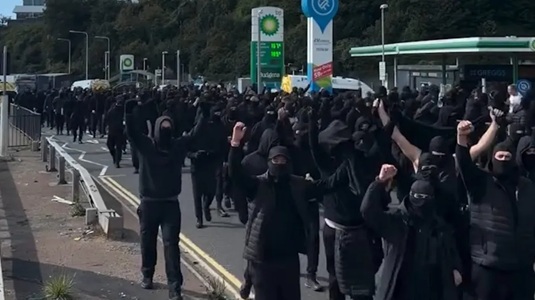
Part of Andy Burnham's appeal is his affected comfort with soft left politics. The opening fortnight of his premiership, the Downing Street speech, the care speech, the first address in the Commons, this is supposed to be the difference his leadership is making. And yet there is the same attacks on trans people. The same demonisation of asylum seekers, and fruitless boasting about the fall in Channel crossings. And this weekend we saw another one: political paralysis before a far right blockade/"protest" in Dover. The weakness of the government's response is so pitiful, you could be forgiven for thinking that Starmer wasn't turfed out a couple of months ago. Speaking in the Commons this afternoon, policing minister Sarah Jones "condemned" - and we should use that term advisedly - "intimidating and thuggish behaviour", lines lifted from Sunday night's Downing Street statement. There's "no excuse" for racists on the streets but, but ... "None of this is to minimise the valid concerns that law-abiding people have when they see vile criminal gangs exploiting the nation's generosity." Under questioning from Suella Braverman, she acknowledged that local people were "scared and angry" but not of far right squaddists running riot, but about small boats. This was completely different to the attitudes of fascist trouble-makers, she said, strongly implying that residents are fine to feel this way. In short, less a capitulation and more a regurgitation of Morgan McSweeney's drivel, the strategy that drove Starmer's premiership onto the rocks.

History tells us that expecting Labour to challenge the politics that has led to this shameful episode is too much. Even if the parliamentary party was overflowing with principled anti-racists, challenging the common sense Burnham's predecessor bedded down in British politics is too much like hard work. Refusing to scapegoat refugees, and pointing out how Britain's social problems are more deep rooted, more complex, and are ultimately located in systemic inequality and, therefore, class relationships is to invite the hounds of hell to the door. But even insipid liberal arguments of the "refugees welcome here" and "who's going to look after our pensioners?"-type are no-noes where this government is concerned. We're still in the moment of blokey politics, and Burnham is just about at the limits of showing a caring sensibility - doing so for outgroups, such as refugees, trans people, Palestinians, puts you beyond the pale of establishment politics. But more than that, Labour needs its scapegoats too. Bigging up undesirables and demonstrating one's efficacy by publicly doing them over is arguably the oldest strategy in politics. The incentive structure isn't there, and Labour rarely has the wherewithal to change the game anyway.

And this is where it will cause them problems. Far right thugs aren't about to change their politics if Burnham starts whistling an anti-fascist tune. Nor will the underlying dynamic change much if the police take more of an interest. 16 years of intermittent and inconsistent harassment by the authorities of Stephen Yaxley-Lennon and his fascist street rabble hasn't done much to put them back in their box. But the perception of Burnham's lack of seriousness, of marrying every "condemnation" of the far right with legitimate concerns-ings will disperse the very fragile recovery Labour's base is undergoing. Just as it did for Starmer. And, because Labour is refusing to confront the far right politically, others will do. There is a long tradition of physical force anti-fascism in this country and, as widely acknowledged, it can take the credit for ensuring the far right were effectively suppressed in the 1980s and 1990s. We're not talking about No Nazis Here lollipops or anti-racist picnics in the park, but full bore violent confrontation. In the absence of anything else, and because the mainstream are actively feeding far right support, don't be surprised if this calls into being its counter. Just as fascist mobilisations in the 1930s and 1970s did. Is this what it will take to stop right wing extremism in its tracks, that elements of the left will reply with thuggish and intimidating behaviour of its own? That looks ever more likely as the mainstream keeps giving the far right a free pass.

Friday, 22 May 2026

The Road to Wigan Keir

Well done Andy Burnham for resolving the question of whether the Greens should stand in Makerfield. He's spent the entirety of this week providing very good reasons for not supporting his candidacy.

It began even before Labour's NEC greenlit his challenge. No sooner had Caroline Lucas counselled the Greens to stand aside because of Burnham's position on electoral reform, he came out as an opponent on proportional representation. "Fairer votes" means the disproportional wonders of AV Plus. Which, with uncharacteristic haste, the government is about to restore for mayoral contests ... just in time for a Manchester mayoral by-election, should one be needed. Then Monday came around. Having said very warm things about the EU and admitting he'd like to see Britain back in eventually, he 180'd and said we shouldn't undo Brexit. Getting two u-turns in for the price of one, Burnham committed himself to Rachel Reeves's fiscal rules. Very different from the Andy Burnham of last September, who dared utter sacriligeous words about the holy wisdom of the bond markets.

He was just getting started. A couple of months ago, Angela Rayner gave a speech that criticised Shabana Mahmood's cruel immigration policies as "un-British" - an intervention Burnham apparently endorsed. This week, he's now a supporter of this doomed attempt to out-flank Reform on the right, and went further at his by-election/leadership campaign launch by demanding net migration be driven even lower. And to round things off, in double quick time Burnham has gone from being a defender of trans rights to accepting the establishment attack on trans people. In other words, everything that was wrong about Labour a week ago are now his policy positions. The only difference that exists between him and the Prime Minister is over who should be in Number 10. From the soft left, it's been a short, sharp road to Wigan Keir.

I suppose some tendentious rationales can be concocted for these about-turns. It's a Reform-leaning seat, so it's time to deploy the Blue Labour strategy that's proven a stunning success everywhere else. There's extra press scrutiny, so time to stifle the leftish vibes given off by "Manchesterism" so one can emote fiscal orthodoxy and fealty to Treasury shibboleths. Reform's problematic plumber might go in for cheap point scoring come any hustings, so socially liberal approaches to immigration and trans people has to be ditched. Or you could see it as Burnham adapting himself to the Labour selectorate. Plenty of MPs bear a grudge from his refusal to go along with their anti-Corbyn wrecking, and further back for breaking and critiquing the Blairist orthodoxy on health. And these days, the Labour membership are much more middle class and managerial than at any other time and are, by and large, habituated to life in a rudderless political husk. Either way, Burnham's pitch is the traditional Labourist marriage of perceived expediency and political cowardice.

This does raise serious questions about what Burnham's Labour is going to look like. At first contact with re-entry into national politics, the great hope of the soft left has capitulated across the board. The criticisms that allowed him to cultivate a prince-across-the-water persona as Keir Starmer stumbled from one catastrophe to another have evaporated. He looks as clueless and as spineless as the man he would replace. If Labour don't change tack, if Burnham carries on like this assuming he wins the by-election and subsequent leadership election, the crisis afflicting the party is sure to persist. Except, without taking stock and changing direction, the new leader will guide the party into its final, terminal phase.

Title Credit

Image Credit

Monday, 4 May 2026

Wallowing in the Gutter

"Today we announce a new policy." These were the words Zia Yusuf used to introduce Reform's intention to set up networks of "detention centres" for deporting tens of thousands of people at a time. Their precious promise? To ensure none are situated in constituencies with Reform MPs or local authorities run by the party. They will, by and large, be placed where there are Green councils or Green MPs. In doing so, Yusuf was able to win the attention wars for the morning of Bank Holiday Monday in the most repugnant way possible.

There is a mass market for political thuggery, but that market doesn't extend beyond the 15-20% of the electorate that are the party's base. And it might give its softer "I'm not racist, but ..." some pause ... before they vote for Reform anyway. It does, however, limit their appeal beyond this. Strategically speaking, ahead of a set of local elections that look poor for the Tories and cataclysmic for Labour, it might be read as a call to turn out their supporters. A bit of racism, plus a poke in the eye for clueless middle class do-gooders that don't live with the consequences of mass migration. This is the vibe Reform are trying to ride. The problem they could encounter here is boosting the support for the Greens, which already has had some success with the "it's us or Reform" framing. Of course, Reform know this too. They've reasoned that in places not like Gorton and Denton, left wing politics and defending migration is much less palatable than themselves, and will put disaffected centre-leaning voters off from lending them their support. A strategy Reform thinks could cement divisions on the broader left they can capitalise on. We will see.

Reform are also teeing up for another summer of shouting loudly about immigration. Improving conditions in the Channel means more small boat crossings, and with it another round of tabloid hysteria. Months of right wing efforts at re-stoking the 2024 summer riots lie ahead. Unfortunately for Reform, and for everybody else, the cost-of-living crisis is to spike as the American/Israeli stand off with Iran remains unresolved. This, not Labour "getting tough" on immigration, is why immigration has fallen down priority list. And because the Gulf isn't about to sort itself out, and is looking more fraught at the time of writing, it's not likely another round of scaremongering is going to work as a distraction from a crisis cooked up between Washington and Tel Aviv. And that's a problem for Reform, because they have nothing that can address this crisis and, as Keir Starmer mentions every time he's near a TV camera, Farage wanted the UK to back the US-Israeli war on Iran in the first place.

Reform has plumbed new depths for British politics. A reminder to Labour's clever, clever strategists that it can never out-right wing an extreme right wing party on race and immigration. But, like the Tories before them with their awful Rwanda deportation plan, Labour have stirred the pot by scapegoating refugees and refusing to challenge the lies put out by the press, cultivating an inchoate, atomised, reactionary mob who find embers of collectivity and connection through spite and by punching downward. Who'd have thought jabbing an endless river of toxins into politics might have resulted in something entirely malignant that, in turn, threatens to consume them. They made this politics possible, and I might have said serves them right. If the results of their poison didn't threaten us all.

Image Credit

Monday, 23 March 2026

Angela Rayner's Alternative

As everyone knows, last week it was Angela Rayner's turn to upset Labour's apple cart. And it was all going so well. Her speech has been extensively reported and commented on, and there's not much that needs adding. Rayner's positioning for the inevitable leadership putsch following the locals! She's venting the frustrations of the grassroots! She's angling for a cabinet return once HMRC have pronounced on her tax affairs! She's reminding us that she exists! All of these positions were argued out in sundry outlets, and all of them are true.

As for the content of her speech to Mainstream, there's not much the average Labour member, or MP for that matter, would find disagreeable. Among Rayner's remarks was a worry that the party and the movement was facing a terminal crisis, "... we cannot go through the motions in the face of decline. We are running out of time." She's right. The traditionally myopic parliamentary party has not failed to notice the surging Greens and how Labour regularly trails them in surveys by two pollsters, but this just reaffirms the hostility canvassers are getting on punters' doorsteps, the diminishing band of volunteers up for this, the rapid emptying out of constituency meetings, and the feeble performance in council by-elections. What she doesn't mention, naturally, is her own role in overseeing the process that has hollowed out the party and pruned its roots.

Still, there was something quite significant that she said. Arguing against the ever-rightward push on immigration, she said that Shabana Mahmood's policies were "un-British" because of their unfairness that amounted to moving the goalposts. They were "not just bad policy but a breach of trust". Rayner could have gone a step further on from liberal moralism and noted how they were bad politics as well, but perhaps that would have been too much of an open challenge at this stage. Nevertheless, everyone got the message.

Including other Labour MPs. One nameless interlocutor said "The public support for what Shabana is doing is enormous, it’s probably the most popular thing the government is doing." Except it's not. Labour have thoroughly imbibed the politics of cruelty while driving immigration figures down. And the thanks they get for this? None whatsoever. Nothing Labour can do, nothing in Mahmood's programme of grinding refugees into the dirt can win over the "very real concerns" brigade of Reform voters. But what it can do, and is doing, is alienating further Labour's support on the left and in the centre. You know, the latter being where elections are won - at least according to the gospel of St Tony. Rayner, thanks to coming up through the trade union movement, understands better than cabinet yuppies that this doesn't play with the class she came from. Social conservatism is actually about defending and bettering the life chances of working class people, something one of Blue Labour's paragons affects to understand, but mysteriously, somehow, always provides an excuse for a very middle class racism, delivered at a remove by the boot of the state. Something too many Labour minister relish the chance doing, as long as they can pin the blame for this on "it's what the voters want".

However, word is abroad in Westminster circles that Mahmood is far from happy with these criticisms, and has said she'll quit if her attack on refugees and immigrants is diluted by Starmer. The latter's shifting mood is, apparently, not only because of Rayner's intervention but the realisation that the party might need those left and centrist voters after all.

In truth, given the US/Israeli attack on Iran and the inevitable consequences of retaliation and escalations - oil, gas, and fertiliser shortages, galloping energy prices, this all seems like a ridiculous sideshow. It's telling that having taken place more than a week after the beginning of the war, Rayner's speech did not reflect on it nor its impact in any meaningful way. And here is Rayner's problem. Yes, she is savvier than most of her (former) cabinet colleagues. Yes, she has a better understanding of the shape and sociology of Labour's support. But, apart from less overt racism, what is she offering apart from alternative vibes? Remember, Rayner was happy to ditch the left when it was politic to do so. She sat back as the Labour right gutted the party of its actual, living links to working class people, and even kept quiet when they systematically barred her allies in Manchester and the North West from selection. Rayner is a snappy, charming speaker and a charismatic figure, but politicians whose actions have contributed to a crisis rarely prove to be the ones capable of solving it.

Image Credit

Monday, 17 November 2025

From Reform-Lite to Reform-Plus

Do you remember the lies Keir Starmer told to secure Labour's leadership? Under pledge six, 'Defend immigrants' rights', among other things he committed himself to "An immigration system based on compassion and dignity". A little over five years later, the government he leads has promised to confiscate the jewellery of refugees that arrive on these shores. And so, when Shabana Mahmood got up at the dispatch box on Monday, we knew the home secretary was going to perform a theatre of cruelty.

Mahmood's measures, that were splashed across the Sunday press, are well known by now. On top of stealing people's keepsakes, a refugee will only be allowed to settle permanently after 20 years, with periodic checks on their status. I.e. If the country they fled is deemed safe, they will be expected to return. There will be an increase in (capped) "legal" refugee routes that, confusingly, are dubbed 'work' and 'study'. Which sounds more appropriate to conventional migration than people fleeing war and persecution. Also in are "return hubs" for people who have their applications rejected, legislation will be brought forward to narrowly define "family" to get around the European Convention's article on refugees having a right to family life, and recourse to public funds will be further restricted.

Why? The government have spun a tissue of lies. The home secretary says this country is a des res while playing into the right wing narrative that Britain is a soft touch. As the figures show, in Western Europe the UK is fifth behind Italy, France, Spain, and Germany for applications - coincidentally the other four big, rich countries in our part of the world. Still, this exercise in depravity was never about the truth or actually taking right wing arguments on. Labour are quite happy to cultivate their own scapegoats. That this is likely to create new opportunities for bosses who would exploit illegal working is not a problem either. Just as Suella Braverman dreamed of chartered jets taking plane loads of refugees to Rwanda, so Mahmood, Starmer, and their creatures think ICE-style raids and busts make for great PR.

How has it been taken? In the Commons debate following the statement, Karen Bradley asked about putting refugees into life-long debt as a means of securing their cooperation. Mahmood's reply was "I'll think about it." Recent recruit to the Nigel Farage personality cult, Danny "Freddy" Kruger welcomed the initiatives and invited her to follow him into Reform. Also happy is Elon Musk's fully purchased fascist, Stephen Yaxley-Lennon, who took to social media to congratulate "patriots" for "smashing the Overton Window." Also a fan is far right grifter and failed UKIP candidate, Carl Benjamin, who thanked Labour for "introducing the infrastructure for mass deportations" that a future Reform government would use.

At any point up until it took office, Labour would have attacked these proposals had the Tories advanced them. Though, their congenital cowardice would have opined about "costs" and "impracticalities", just as they did with the foul Rwanda scheme. And had Reform offered it up, this would have been dubbed evidence of their extremism. Yet it's Labour, an ostensible centre left government doing these things. Why then? Going full bore on asylum, leapfrogging both the Tories and Reform is supposed to signal this government's seriousness and determination. The performative cruelty of picking refugees' pockets will appeal to the layers of Reform support motivated by spite, and get off on spectacles of punching down. The upset among liberal opinion and Labour backbenchers is something Morgan McSweeney and his strategy bros will be cheering. Such opposition shows that Number 10 are a million miles from wishy-washy politics, or the compassion Starmer once spoke cynically of. And it puts the right on the spot. The Tories have said they would support, not that they're relevant. But what of Reform? Kruger's joshing aside, Farage said he supported the government's language but was "undecided" at this stage because the ECHR remains. Instantly, Labour's shift from Reform-lite to Reform-plus has left Farage dithering in the dust. Another reason glasses will be clinked in Downing Street tonight. They think they've pulled off a political coup.

They have done nothing of the sort. Starmer, Mahmood, and McSweeney are testing to destruction the idea that stealing the far right's clothes will win them far right votes. They are about to be disappointed. But what it will certainly do is alienate further Labour's fast declining reservoir of support. If the strategy is now 'it's us or Farage', to stand a chance Labour has to consolidate its support. Instead, this is another moment in its dispersal. Pitching from gaming First-Past-the-Post to holding seats by mobilising voters can only work if you haven't repeatedly stated in the language of policy how much you hate them and disregard their views and interests. Given the damage this Labour leadership has done to the party's coalition, it's difficult to see how it can come back from this new abysmal low.

Image Credit

Tuesday, 28 October 2025

Racism and the Right

Racist party in racism shocker. Reform MP Sarah Pochin has been forced to apologise after saying "it drives me mad when I see adverts full of black people, full of Asian people, full of anything other than white." Her non-apology partially withdrew her remarks, saying she wanted to say something about how unrepresentative adverts are. As far as the rest of mainstream politics was concerned, this was a straightforward racist outburst. Wes Streeting didn't mince his words, seeing as Labour have belatedly discovered that opposing racist arguments is a good thing. The Liberal Democrats have moved a Commons motion of censure against Pochin too. But more interesting were the remarks from Chris Philp, the shadow home secretary. Asked to respond, he said "It’s not language I would have used ... but we should acknowledge the public do have legitimate concerns about large-scale immigration and discussing that is certainly not racist." That Pochin was not talking about immigration suggests, at best, that Philp has a blind spot on racism.

It's hard not to conclude that the right are embracing racism in ways we haven't seen for years. The last Tory government certainly pursued racist policies. From Theresa May's hostile environment and victimisation of Windrush citizens, Rishi Sunak's Rwanda scheme, and the rubbish peddled by Suella Braverman, they sailed close to the wind of mainstream conventions but purposely had an element of plausible deniability. We aren't targeting black and brown people, our beef is with legal and illegal immigrants and asylum seekers. We have to control our borders, Britain is only a small island, and this have nothing to do with race. These pretences have evaporated. The repugnant Robert Jenrick can complain about not seeing any white faces during a trip to Handsworth. Nigel Farage can unveil plans for deporting everyone with indefinite leave to remain, while having a convicted racist hatemonger address his conference. The Tories have tried outbidding Reform, with the "rising star" Katie Lam calling for more deportations to make the country more "culturally coherent", which Kemi Badenoch has said is broadly in line with party policy. And then the Pochin/Philp nonsense.

There are a couple of popular theories circulating around online political chatter. The first is about Twitter, or what it has become. Under Elon Musk, it is an open sewer, a welcome home for neo-Nazis, Holocaust denial and antisemitism, anti-Muslim and anti-black racism. Musk has created a safe space where the far right are not just tolerated, they're coddled. The algorithm boosts their posts, and several times Musk has publicly intervened to promise that Grok, the AI chatbot he's forcing down users' throats, backs up and supports racist views of the world. Meanwhile, links to external sites have been downgraded, and the reach of left wing and even centrist views are algorithmically dampened. The theory goes that the right, and much of the political establishment for that matter, have remained on the site and treat it as they always have: as a window on the world. Because the far right have been normalised on the platform, political and media elites assume this is reflective of real life. With Reform topping the polls and immigration surging as a priority issue, these serve as secondary confirmations of this belief. Hence the overboard coverage and discourse here about the assassination of Charlie Kirk, and the importation of many a trope and trick from Trumpland. Twitter brain makes them think overt racism is popular, that it has cut through.

The second is a consequence of the aforementioned immigration policies pushed by the Tories. The relentless scapegoating and dog whistling around refugees only has one place to go, and that's outright racism. Cut the crap and go for plain speaking. The racist rioters last year knew what they were about, and follow up remarks from the Tories showed they understood too. With Reform stealing the Conservative base from under the party's feet, going ever more extreme is the only way of holding the central components of their coalition together. This was aided and abetted by Labour too. Keir Starmer's critique of the Rwanda scheme was about cost and practicality. Nowhere did he or his front bench challenge the politics. Over this year, they've tried to look credible and failed utterly on small boat crossings while ratcheting up immigration controls. And we had the utterly shameful spectacle of Labour ministers refusing to criticise this summer's far right-organised protests against asylum seekers, saying they were sympathetic to their "genuine concerns". And they wonder why the Greens are surging. The consequence of this? Laying the ground work for open racism to flourish.

Both points have something to recommend them, and neither excludes the other. But I think they speak to something fundamental - a deep crisis in ruling class politics that goes beyond the decline of the Tories and the evaporation of Labour in office. Gramsci's celebrated discussions of hegemony were more than a question of securing popular consent for class rule. It was inseparable from providing leadership, of a tiny class and its allies generalising their particular interest as the universal interest, their class-bound outlook as the proper, commonsensical outlook. Their rule as the natural state of things. Generally this sits in the background, and only comes to the fore at moments of crisis. The post-war consensus, the compact between labour and capital to ensure the latter's continuation was refracted through Labourism and one nation Conservatism and helped pacify the radical mood following the war. The class battles of the 1970s and the ruling class "solution" of Thatcherism was another. Though not at the same level, New Labour emitted sub-intellectual hogwash about the third way that gestured toward political leadership, as did the Tories of the coalition years with their Big Society hand waving, and after them May with her talk about the burning injustices, and Boris Johnson with the mashing together of Brexit and "levelling up". When Liz Truss induced a crisis in public finances, it was simply introduced as a measure that would straightforwardly favour the wealthiest. Sunak abandoned this, but retreated from offering leadership as he tried keeping his government on an even keel. And Labour? As Starmer has retreated from his leadership pledges, he's also drawn back from those aspects of his platform that might have laid the foundations of a new hegemony. The devolution agenda, green energy, expansive workers' rights, all have been toned down. And what do we have instead? Breakfast clubs, AI boosterism, arms for a genocide, and blandly technocratic statements about economic growth.

This is a problem, because their system is beset by trouble. The old way of governing is in crisis, it is not delivering the goods, and their traditional political agents find their legitimacy collapsing. Labour is an ideas-free zone, and their effort to rest their appeal on "delivery", as if voting is a simple question of customer satisfaction, is doomed. There is no sign from within that they're capable of providing the leadership this moment if crisis requires, either for their own electoral wellbeing, for sustaining class relations, nor providing initiatives for gaining popular consent for the persistence of this state of affairs. They're relying on social inertia to keep things going.

The same applies to the right. Strip Reform of its racist programme and what does it offer? Is there any sense of giving Britons their sense of self-respect? Of rebuilding a country of community and belonging? Of a policy agenda that might restore the country to the land of nostalgic fancy? No. Theirs would be a straightforward rule of oligarchical interests just like Trump's America. A hellhole of roving deportation gangs, crude and racist public discourse, shuttered cultural institutions, and a hobbled politics. The Tory programme, at this stage, is identical. It too is stripped back, the bones of the class relations they uphold visible through paper thin skin. Because the starting point of right wing politics is dishonesty, of presenting the elite interest as the general interest, central to these politics across time and space has been division, of preying on existing divisions or generating them where they haven't previously existed. The latter does require some political nous to identify and articulate new out-groups, which is what the press is for in this country. But the right are now so bereft of talent, so clapped out and lazy, that they turn to the basest forms of divide and rule transmitted and received from the past. Again, Trump is the model and the possible future. A racist administration largely unconcerned with popular concerns as they trough on state coffers, lock up Americans, and erode democratic norms and mechanisms of accountability, such as they exist. And for what? there's no sense of historic mission, just a grab-what-you-can while they can before multiple crises get so bad that they either cannot get away with this any longer, or what they're doing becomes impossible. This is where the recrudescence of racism on the right comes from, a class project butting up against its limits without any obvious way forward. Faced with the end, this has encouraged the opposite of thinking, the opposite of leadership. All that's left is an opportunity for one more round of looting, and collective stupefaction. The right's re-embrace of racism is a morbid symptom, and one that cannot abate.

Image Credit

Sunday, 5 October 2025

Kemi Badenoch's Attention Seeking

Do you remember the Conservative Party? For much of this year, they hung around like a half-remembered memory. It's difficult to recall when they were the centre of political life, and I write that as someone who wrote a book and has expended hundreds of thousands of words about them. Are we living in a Britain after the Tories? It certainly feels like it. The current crop of polls has them hovering around the 16-17% mark, and they are entirely marginal to a discourse geared around the Labour/Reform face off. It seems even the Liberal Democrats and Greens are attracting more coverage and comment these days. More than any other party, this is the world the Tories have shaped. And they're absent from it.

When the Tories were dumped out of office last year, there were two strategic directions available to them. The first, which was an outside shot, was learning from their experience of trying to be a right wing "populist" party, how this positioning alienated the broader constituency they depended on, and that this committed them to promises they could not deliver. Such as the Rwanda scheme and their war against the boats. The solution? Reinvent themselves as a moderate centre right outfit that eschews the politics of division and begin constructing an appealing project that might get a hearing outside its shrinking heartland of reactionary pensioners. What with the composition of the parliamentary party and the membership being as it is, such a transformation would be as difficult as it is painful, but the party's long-term viability depended on it.

And so the Tories chose the easier path. To those for whom politics is a tussle between ideologies and vibes, this appeared as an illogical retreat into their "comfort zone" where the party can feel safe. As per its 1997 drubbing. In fact, from the standpoint of the party's two leaders this did make sense. Having suffered an earth shattering defeat, consolidating one's base by turning further to the right is a reasonable, if mistaken, response. Once the base is firmed up they could then sally forth and contest Labour for votes. This was reflected in Kemi Badenoch's oft-stated timetable for her leadership: spend a couple of years getting the philosophy right before making policy. But there is a problem. A Nigel Farage-sized problem.

Before Farage decided to re-enter British politics, Reform were barely of any consequence. But since he has become a lightning rod of disaffection, being able to prey on right wing voters for whom the uselessness of the Conservatives was amply demonstrated over five years, and the layer of Reform-curious Labour support repelled by the cruelty and incompetence of Keir Starmer's "grown-ups" and are game for giving someone else a go. Wall-to-wall media coverage hasn't hurt Farage either, with his political pronouncements burying the Russia links, not declaring earnings, and questions over who purchased his home. As such, Reform's rise has severely disrupted Conservative regroupment and making consolidation difficult, if not impossible. Matters are not helped by the fact that neither Badenoch, nor Robert Jenrick, the man who would be king, are up to the task. As they have been eclipsed in the polls, media attention, including coverage provided by what Tim Bale helpfully calls 'the party in the media', has moved on. Unaccustomed to playing second fiddle in British politics, to be relegated to third party status in the attention economy is a reduced circumstance the Tories have never endured before. How can they make waves again?

They have decided that a mixture of stunts and policy extremism can catch the media's eye. Though obviously a self-serving effort to try and secure the leadership for himself, Jenrick's ridiculous rail ticket vigilantism earned the Tories at least one item on Newsnight, but dismissal from everyone else. It demonstrated an unpopulist touch, as most rail passengers despise the money grubbing of train operators, and coming across as a plummy accented tube station Blakey could only invite ridicule. And then as small bands of fascists, egged on by the press and Reform, tried desperately to stir up a repeat of last summer's riots, Jenrick joined the protest in Epping outside the Bell Hotel, which was hosting refugees. I doubt many of the racists there knew, or for that matter cared, that this arch opportunist was rallying against a policy that he developed and implemented. Still, the media were there and it reminded the Tory press that their traditional party still existed and was trying to dance to their tunes.

Jenrick has his own approach to attention-seeking, and Badenoch has hers. With attendance well down on last year's party conference and adrift in the polls, how can she capture the headlines and turn heads? The first part of her gambit was pledging to abolish the climate change act, thereby aligning her party with fossil fuel profit margins. This will do nothing to appeal outside of the Tory core, meaning dozens of Lib Dem MPs across southern England's new yellow wall can sleep a touch more soundly. It is something Tory and Reform supporters have an opinion about, but climate change denial is not the reason why Reform supporters support Reform.

Not fussed with those opinions? Badenoch has others. The Sunday press splashed with her promise to deport 150,000 people every year. Challenged by Laura Kuenssberg, the Tory leader disassembled into stamping her foot and exclaiming "they should not be here", "send them back to where they came from", and making clumsy elisions between refugees and criminality. This pitch to the Reform faithful would include an ICE-style "removals force", which Badenoch describes as a "successful approach". As Donald Trump's goon squad, lest we forget that ICE goes out of its way to terrorise mixed ethnicity working class communities, and will scoop up anyone it doesn't like the look of. Badenoch is too stupid and too reckless to realise that their racial profiling means that members of her own family are theoretically at risk of the state-sponsored thuggery she would unleash on others.

This means getting rid of legal blockages that may hamper such work. On Saturday, Badenoch also confirmed she would withdraw the country from the European Convention on Human Rights. This would also mean leaving the convention on human trafficking, something the Tories might at least want to pay lip service too. The plan is a system where making asylum claims is virtually impossible, and legal oversight and accountability pared back. Effectively a design for one, two, many Windrush scandals. And something the Tories would welcome as a metric for how tough they are. How this would impact on the Good Friday Agreement and the post-Brexit settlement with the EU doesn't impinge on their thinking. As per the Boris Johnson way of doing things, these are problems for another time.

What else might Badenoch have up her sleeves this week? Flat taxes? The abolition of inheritance tax? Banning trade unions? Her problem is that for that tiny minority of the electorate that get switched on by the cruelty of mass deportations, the Tories can be - and already are - outbid by Reform. In addition to platforming someone jailed for saying refugees should burn, Farage has said he would abolish Indefinite Leave to Remain and promise to deport 750,000 people. Do Tory strategists, such as they are, think diet versions of Reform's full fat offerings will satisfy their appetites? This can only lead to one of two conclusions. That they are as clueless as they appear, are resigned to never winning back the 249 seats lost to parties to their left, and that they cannot orientate themselves in a political landscape where their privileged position has gone. Or, that to survive, they're making themselves into a party not a million miles away from Reform so they look like a viable coalition partner. You decide.

Unfortunately, the decomposition of the Tories continues to toxify politics. Along with Labour, Badenoch is using the small media opening she has to reinforce racist and anti-immigration politics. Their rhetoric is the background to increased racist attacks, the justification of more state violence, and an authoritarian charge to the gutter that only Reform can win. While some in the party think it would be nice for the Tories to continue all of them would be okay with Farage in Number 10 because, ultimately, the class interests both of them serve are largely identical. A Reform government would buttress corporate power with the brutality and attacks on democracy we've seen wherever their ilk get into office. The Tories, even as a spent ginger group on the margins of politics would be fine with this. The rest of us cannot afford to be as sanguine.

Image Credit

Tuesday, 30 September 2025

Keir Starmer's Declaration of War

"If you say or imply that people cannot be English or British because of the colour of their skin, that mixed-heritage families owe you an explanation... If you say that they should now be deported, then mark my words - we will fight you with everything we have". After a summer of more or less excusing fascist-organised protests against refugees, Keir Starmer's Labour conference speech has demonstrated a rediscovery of anti-racist principles. He attacked Nigel Farage, not always by name, for spivving about the United States and making money from talking the country down. He asked his audience if they could recall a time when Reform said anything positive about or praised British achievements? This was before reeling off examples of everyday people contributing to their community, laying to rest the much misused broken Britain rhetoric. Defences of multiculturalism were applauded. Attacks on Farage's plan to deport our neighbours raised cheers. Hope got a look-in, happy vibes, and the promise of a super soaraway future. Change ... with the promise of something better.

Most of what's left of the Labour Party would have lapped up Starmer's speech. It was a morale booster that offered a rare thing as Labourism goes: political clarity. He set out what Labour is against, which is the division Reform thrives upon. And for good measure, the "extremes ... of the left" were lumped in with them too. Farage was labelled directly and unambiguously as Labour's "enemy". There was also the concession that calling people racist was not enough. In his usual, wooden-topped way Starmer argued that economic growth, the "pound in the pocket" was the best antidote to the far right. That's why it's Labour's top priority. As such, he issued a rallying cry of sorts, a message directed at his own narrow divided base among the professional/managerial caste, and one that might placate the disgruntled who have had their heads turned by Andy Burnham.

Number 10 will be pleased with the response they've drawn from Farage. He has accused Starmer of "descending into the gutter" and, playing the poor little right-winger card, said "this language will incite and encourage the radical Left, I’m thinking of Antifa and other organisations like that. It directly threatens the safety of our elected officials and our campaigners." The worst Reform representatives and activists have had to put up with are people replying to their bullshit in kind. What are you supposed to do in the kitchen if it gets too hot, Nigel?

The obvious problem with Starmer's tough new rhetoric is that's all it is. His speech talks about the concerns working class people have about immigration, and how one woman showed him photos of her at her Indian neighbour's wedding before complaining about the young men from overseas who sat on her wall and spat in the street. There's a world of difference between such concerns that and the rubbish Farage is peddling, he said. But what is his own government doing? Straight out of the playbook that saw Priti Patel/Suella Braverman cynically front up anti-immigration politics, but avoiding their over-the-top incendiary rhetoric, the new home secretary Shabana Mahmood has extended the qualification period for indefinite leave to remain, and wants its confirmation contingent on undertaking voluntary work. This straight away casts migrants as problem people who have to be forced through a punitive civilising process before they're accepted by this country. And who, exactly, benefits from this framing? Certainly not a Labour Party that claims to be "against division". If Starmer and Mahmood were really serious about stopping the boats instead of cultivating their own scapegoats, the safe routes for refugees would have been expanded by now, and an asylum processing centre in Calais be up and running.

Then there is "delivery". Starmer rightly slammed the complacency of the Tories and their 14 years of failure. But lest we forget, while they are responsible for the choices they made, every policy decision was filtered through a class war frame. I.e. How can this divide people up? How can this create new folk devils? How can this keep people from lifting their eyes to the horizon? After the stock markets cratered, the Tory/Liberal Democrat coalition used the moment to turn a crisis of capital into a crisis of public finances. Their aim was to offload the bail out costs onto labour, thereby undoing further the post-war settlement and strengthening business at our expense. During and after the Covid crisis, their politics was a management of expectations, a collective effort to close off aspirations raised by the huge expansion of state capacity during the pandemic's acute phase. Now Labour are masters of the state, their approach to governing and governance isn't much different. Though for them, it's the hauntology of Corbynism that must be dispelled. Starmer and Reeves want to manage the class politics, and therefore capping the expectations of the hoi polloi is of paramount concern. Hence thimblefuls of gruels are heralded as lavish banquets.

In practice, if Starmer wants to leverage his record in government in his offensive against Reform, his achievements are like so many imaginary battalions pushed around a map. Breakfast clubs and GDP stats versus the lived experience of the cost of living crisis, and a situation-fitting narrative of grievance and scapegoating cranked up by a media-saturated charlatan. All of a sudden Starmer's war declaration looks more like The Mouse that Roared. Though unlike that old flick this ending tends toward tragedy, not farce.

Image Credit

Monday, 21 July 2025

Circling the Drain

It's difficult to appreciate how, just three years ago, the Conservative Party was the pivot around which British politics turned. These days, it's an uninteresting side show followed by a diminishing band of aficionados and weird people. Kemi Badenoch has proved herself incapable of kicking the football, let alone powering one into the back of Labour's open goals, and everywhere the party is floundering, completely disoriented by getting dumped out of office and watching Reform become the primary opposition to Keir Starmer's government.

As we head into the summer recess, a couple of things remind us of their decrepitude. The Graun's man in Wales, Will Hayward writes about the party's looming extinction. 10% of their vote passed away between 2019 and 2024 with a further 40% due to grow angel wings before 2029, as per everywhere else in Britain young people are not replacing the base like-for-like. Going in for the Nigel Farage cosplay is not helping them, nor are efforts at trying to create new points of resentment over Welsh Labour's basic income pilots. No one is interested, and that means next year they could be wiped completely from the Senedd.

But all is not lost. There was a spasm of excitement on Thursday about a speech Danny Kruger delivered to a deserted House of Commons. He argued for a restoration of Christianity in politics. In an intervention the polyester populist Robert Jenrick described as "magnificent", Kruger expressed concern that Christianity had been ejected from our shared cultural space by two other religions. One was Islam, and the other ... was "woke". He said,
It is a combination of ancient paganism, Christian heresies, and the cult of modernism, all mashed up into a deeply mistaken and deeply dangerous ideology of power that is hostile to the essential objects of our affections and our loyalties: families, communities, and nations ... [it] must simply be destroyed, at least as a public doctrine ... It must be banished from public life — from schools and universities, and from businesses and public services."
Yes, Kruger wants to mobilise Christian values against a sensibility that finds exploitation, prejudice, and poverty abhorrent, and in its weakest version asks that we treat each other with respect. A Tory effort in this direction is likely to have as much effect turning around their party's fortunes as Badenoch's performances at Prime Minister's Questions.

What it does underline is the predicament the Tories are in. Everyone knows about their crisis of political reproduction and how their ageing voter base condemns them to dwindling relevance. This point is no longer a fringe belief confined to this corner of the internet, but is the political common sense in Westminster and mainstream political comment. Except, evidence suggests, the Tories and their press. Without any understanding of their predicament, and hemmed in by a strategy that cannot concede anything that could raise political expectations, their reflex is to double down on their core premises to try and consolidate themselves following a shattering defeat. It's what they did between 1997 and 2005, which gave them a foundation for the faux liberal Toryism that came next. And arguably, Boris Johnson followed a similar strategy when he became leader. Hard on Brexit, tough on immigration, showed his opponents the door and the British public lapped it up.

Except this time, it is not working. Doing Farage impersonations is pointless while the real deal is cruising the country, gliding from one soft ball interview to another. It's also a waste of time when the things the Tories are concentrating on, immigration, war on woke, are issues that, from the standpoint of the people they're addressing, they've demonstrably failed on. As Starmer nver misses a chance to remind the hapless Badenoch, the Tories put rocket boosters under net immigration. They're just not credible, which is something neither she nor the heir presumptive can do a thing about. Except publicly, desperately endorsing more and more extreme politics, which Farage is savvy enough to keep his distance from. And without the levers of power, the Tories cannot demonstrate how much they mean it this time.

Here we are then. The activities of the Tories are no longer the doings of an organisation in charge of its destiny. They are reflexes, a scramble of unthought reactions as this once mighty party circles the drain.

Image Credit

Monday, 12 May 2025

More Anti-Immigration Cynicism

Reflecting on the last five years of Tory immigration policy, Keir Starmer said "the damage this has done to our country is incalculable." Immigration has turned Britain into "an island of strangers". "Enforcement will be tougher than ever and migration numbers will fall" with the target of shrinking new arrivals by 100,000/year come 2029. That means care sector vacancies going unfilled, and because Labour hates universities, institutions face a tax on every overseas student the recruit. This performative toughness has won some support outwith the party. Germany's far right AfD have praised Starmer's position. The right here, however, are performatively unimpressed.

While she fights for relevance, Kemi Badenoch said "this is nowhere near the scale that we need". Writing on Conservative Home, Ted Grainger was more downbeat, opining that the Tories had their chance - especially following Brexit - but blew it. Nigel Farage attacked Starmer for "tinkering around the edges" and said Labour were "panicked" by Reform's rise. An observation that is obviously true. Meanwhile, Starmer continues to upset his base in the media with centrist opinion right royally angry about yet another betrayal of the liberal hero image they invented for him.

We know this strategy isn't going to work. Getting into a bidding war with the Tories and Reform on immigration is a mug's game. Getting Starmer to announce the policy in The Sun, and having Yvette Cooper appear on GB News and refusing to challenge the racist questions put to her won't change the equation at all. For the core pf the racist right, only pulling down the shutters will do for a start. And those for whom it is one issue among many, evidence shows Labour would be better off playing to its historic strengths. But, as we know, this government doesn't want to stand up to the few on behalf of the many because it might raise expectations and generate further clamour for challenging established power and wealth.

Let's try a thought experiment. Knowing that similar efforts everywhere on the continent has ended in ruination for the centre left, taking them at their word why are Starmer and friends asking us to believe they will avoid that fate? It seems they are relying on the politics of demonstration. Contrary to Starmer's disgusting rhetoric about "open borders experiments", the big drivers of immigration since 2021 have been the 150,000 who've settled here from Hong Kong. Since Russia's invasion of Ukraine, over 200,000 refugees have settled here too. Both helped immigration figures spike during the last couple of years and now, very obviously, numbers are going to come down again without any government intervention. They can only migrate here the once. Just like the £22bn black hole fantasy and other data points, this will be spun as the great success of Starmer's "toughness". Therefore, when the Tories and Reform attack Labour they will have the falling migrant numbers ready to whip out to refute their arguments. Genius! It won't convince the hardcore, but Starmer hopes it will assure the Reform adjacent and neutralise the issue, giving Labour political space to showcase their record. Like cutting the NHS, taking money off the disabled, arming a genocide, etc. etc.

The attack on immigration underlines the political vapidity and moral emptiness of Starmerism. If the strategy is expecting that, when push comes to shove in 2029, progressive voters line up behind Labour to prevent the right from getting in, carrying on like this is a sure fire way to replicate the disaster of the American presidential election and saddle us with Farage in Number 10. These are the stakes and, damningly, Labour doesn't give a hoot.

Image Credit

Sunday, 11 May 2025

Reform's Anti-Asylum Council Wheeze

After sweeping all before it last week, there has been some thinking aloud about what Reform plan to do with its two mayoralties, 10 councils, and 676 new councillors. What Zia Yusuf, the moneybags businessman Nigel Farage has subcontracted the dictatorial running of the party to, has said is that their local authorities are going to lodge legal actions to prevent the dispersal of asylum seekers to hostels. "We have some of the best lawyers in the country working for free to resist this awful Government", he boasted.

The "reply" from centrist supporters of Keir Starmer has been insufferably smug. This so-called parody account sums up their social media outpourings to a tee: local authorities don't have the power to stop government resettlement efforts, and therefore Reform are going to be on the hook for wasting council money on pointless and doomed legal challenges. This is a demonstration of stupidity and ideology getting in the way of the serious business of delivering local services, helping ensure they lose support when the public wise up to their antics. The fools!

Unfortunately, the foolishness sits entirely with the centrists. Yusuf and Farage know legal challenges stand next to no chance. They're not embarking on this campaign because they don't know the limits of local government. It's a wheeze to build the party and keep Reform in the news. Every time a challenge is dismissed, they get to posture as the common sense little guy battling the liberal elites on behalf of hard-pressed Britons. It's a recipe for generating more headlines in the right wing press, getting the rest of the media to dance to their tune, and forcing Labour to follow their lead - because the government are uninterested in challenging anti-immigration and anti-asylum prejudices - and embedding Reform as the only real challenge to the status quo come the next election.

Yes, there will be grumbles along the way in Reform's new local government base. It won't be long before the diktats from the centre clash with what Reform-run councils and local authority party groupings want to do. There will be rows about Yusuf's power, and the usual suspensions, expulsions, resignations, and denunciations. Authoritarian politics breeds dissension. But this won't affect Reform's standing. Those who voted for them in the local elections were not convinced by their pledges on potholes and Special Education Need pupils. They're also aware councils don't have much power nor appear to respond well to residents' needs, regardless of the party who runs it. Farage and friends know this, even if super clever centrists do not. For Reform's campaign is an effort by a party serious about winning power in 2029. Something that cannot be said about the choices Labour has made in government.

Image Credit

Tuesday, 6 May 2025

Scapegoating Badenoch

No one reading this will be shedding tears over the Tories' poor election performance, nor Kemi Badenoch's forlorn efforts at putting on a brave face. It was inevitable questions would be asked about her leadership, and on Monday the Westminster rumour mill went into overdrive. According to The Indy, unnamed (of course) MPs are doing the rounds organising huddles about how to get shot of their leader. "We cannot continue as we are and she is just not up to the task", moaned one of them.

Their beef is about Reform. There are complaints that Badenoch hasn't taken the threat from the extreme right seriously, ignoring efforts at setting up an anti-Farage attack unit and resistant to developing a strategy for dealing with them. Her lieutenants are clueless, and according to one of our anonymous interlocutors, she lacks charisma. The pollsters estimate she has a year to turn the ship around, but for impatient Tories yesterday isn't soon enough.

Never has a parliamentary party been more out of its depth in comparison to the impasse facing it. The Tories are confronted with what might be their final, terminal crisis and after years of denial, the rise of Reform has shocked some into panicked action. But what to do? In October, the parliamentary party decided that they wanted an out-and-out right winger and that's what they got. Badenoch has not set out any detailed plans, but she's on board with the natalist, nativist obsessions of the online right. The Tory membership liked the cut of her anti-immigrant and anti-trans jib which, you might think, would leave the Tories well positioned to stymie the desertions to their right. The always-awful Robert Jenrick is no different, even if his right-wingery comes from cynicism rather than conviction. And yet the disintegration continues apace.

What the boot Badenoch brigade have got to explain to their withering membership and declining support is how removing her would make the job of seeing off Reform any easier. The only political advantages Jenrick has over Badenoch, apart from being of a gender and skin tone more congenial to the dyed-in-wool racist core of Farage's coalition, is he might be better at Prime Minister's Questions. But that will not shift the dial. Time and again, surveys of Reform supporters show a deep antipathy toward the Tories and what, for them, was a failure to keep their promises on immigration and asylum. The problem they now have, out of office, is an inability to demonstrate their seriousness and efficacy on this and much else. Faced with a much more formidable communicator in the Reform leader, it's hard to see either the character-free voids that are Badenoch and Jenrick successfully wrestling the limelight away from Farage.

Where does this leave the Tories? It's long been my contention that the Tories can escape their doom loop by building a new coalition of voters, but that this is not an easy project because it means dumping the hard right rhetoric and with it the near entirety of their parliamentary party and a chunk of their existing base. As they can never win a bidding war with Farage, unless Boris Johnson was somehow tempted back, a more moderate conservatism that actually conserves instead of destroys is key to clawing back their heartlands lost to the Liberal Democrats, and challenging Labour to rewin the seats they lost by thin margins. This is the prospectus offered by no would-be successor to Badenoch, and even the so-called "centrists" like James Cleverly are chained to the same politics - as his run at the leadership and vocal support for the Rwanda scheme amply demonstrated. The Tories then are seemingly in an impossible position. Unable to diagnose the problem of their declining voter coalition and by blaming Badenoch, as per the politics they know very well they're dodging the complexity and going for the scapegoat.

Image Credit

Tuesday, 22 April 2025

The Lure of the Racist Self-Own

Having accomplished an unprecedented hollowing-out of support during a general election, Labour remain committed to testing the resilience of its electoral coalition. Among the latest in a long line of tawdry announcements is news Yvette Cooper will publicise the nationality of foreign criminals. The plan involves drawing up league tables of nationalities by crime, which has become possible after wonkish twiddling with how Home Office stats are generated. But why? A "source" says the government wants the public to be better informed, but also to show how much tougher Labour is on foreign criminals than the Tories were, boasting how the government are deporting more than Robert Jenrick did while providing more information about them. And right on cue, up popped Jenrick to say this data should have been available long before now. Falling into the very trap set by the cunning masterminds behind the party's strategic direction.

The politics are, on the surface, pretty straightforward. Because in Starmerland the working class are coded as Reform-supporting racists, pandering to scapegoats will turn the heads of this largely imaginary constituency. You can picture it on the nation's mobile phones. The BBC News alert pops up with Cooper's initiative, and the couple of million looking to vote for Nigel Farage at the upcoming council elections will look at it, curse the Tories' softness, and head to the polls with Labour voting intentions in their hearts. But, of course, this is not going to happen. Reform, you might recall, is a difficulty for Labour but an existential dread for the Tories, making this in strategic terms a fool's errand. Why chase after voters breaking to the right of the Tories on cultural issues instead of shoring up one's own fraying base, or making an offer that might appeal to the apparently "economically progressive" side of the artefactual Labour-Reform switcher?

There is no political mileage for Labour in pandering to the racist mischief thr right stirs up about foreign criminals. So what's the attraction? There is a joy a certain kind of middle class politician has in bureaucratically squishing little people, and especially so if one expects plaudits. Who cares about foreign criminals? They are the perfect out group, a scapegoat tailor made for scapegoating. And Labour needs its scapegoats. But there's more! Anything that is adjacent to cracking down on immigration and immigrants, according to the Tory play book is the route to political success. That Labour have imbibed this as their political common sense is illustrative of how far Keir Starmer's leadership has moved to the right. And then we have the obscene displacement activity of massaging the organs of the repressive state. Because this is a Labour government that doesn't want to do too much that might encourage people to expect more from politics, it's much easier to give the impression of being very busy. And the comparatively risk-free way of demonstrating activity without upsetting the apple cart is to lean heavily into the politics of immigration. And in so doing, the government are contributing to the huge effort made by the media and Labour's political opponents in keeping that as one of the country's top three issues.

And yet, the stupidity is their entering a race they can never win. Galaxy brain Morgan McSweeney is implying that if deportations are ramped up, work and student visas curbed, and foreign criminals seen to be getting their just desserts, then the issue will be neutralised. But it won't be. Labour supporters who are concerned about immigration are more motivated by other issues, and if they're leaning toward Reform it's in a manner akin to those who flirted with the BNP 15-20 years ago. I.e. mostly as the nuclear option among the protest vote buttons. And those that prioritise immigration do so on culturalist and outright racist grounds, and are never going to be impressed by nationality league tables of sex offenders and shoplifters. Except as ammunition for racist scapegoating, which Labour knows is likely to happen as a result of this policy. The headlines of the gutter press write themselves.

Racism as a tool of divide and rule is just as attractive to this crop of Labour ministers as it was to the Tories. And in the mean time, the base - one it can ill-afford to lose with the post-election collapse in its polling - will carry on unwinding and finding a welcome in the Liberal Democrats, the Greens, and where they're available, independent leftists.

Image Credit

Wednesday, 29 January 2025

Living Her Best Life

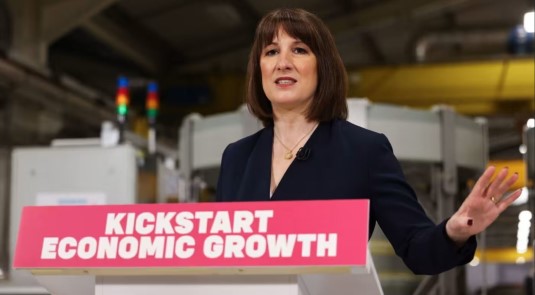
Rachel Reeves hasn't had a good time lately. From the left, she's been (correctly) pilloried for putting the screws on pensioners. The right are upset about her increases to employers' National Insurance contributions, and were making hay when gilt yields reached danger levels ... before they receded again. But the economic growth figures are anaemic and unemployment is moving in the wrong direction, so while she was never in any danger (she and Keir Starmer stand and fall together, at the moment), Reeves needed to turn the page. Which is where her big speech on economic growth came in.

On Wednesday Reeves made an avalanche of infrastructure announcements. Heathrow's long-awaited third runway, the Oxford/Cambridge silicon corridor, the redevelopment of Old Trafford, reservoirs, airports, train lines, houses, new towns, a tunnel!. There were changes to planning rules that are meant to speed things up, which include "investment zones" that bypass some regulations (as per the Tory freeport idea, which has been retained by Labour and is now as much their idea), yes as the default position for new homes in the vicinity of railway stations, changing pension rules for allowing funds to make productive investments, and a more can-do attitude for infrastructural development outside the South East. Reeves was living the best life of every managerialist politician: the privilege of announcing dozens of megaprojects and basking in the resultant glow.

In all, the speech was a confident performance. On businesses concerned about NICs, Reeves was asked if there was going to be any wriggle room here. She said no, but added her October statement was a once-in-a-generation event. Stability was back in the public finances, and it was there in the economy too. Business can take it as read that, notwithstanding some disaster, they won't be charged for further contributions while she resides in Number 11. It was a theme Kemi Badenoch picked up on in Prime Minister's Questions as well, but going harder on the £5bn "cost" of Labour's employment rights agenda. Reeves and Starmer sang from the same hymn sheet when asked separately about it, but they might have gone further and said this estimated figure doesn't simply disappear from business balance sheets. It's extra confidence and extra money in workers' pockets, which will feed through into growth via their improved spending power.

The combined effect of these projects are bound to put figures on GDP. The IMF's growth forecast, which has uprated the economic outlook for Britain, specifically says this is the case. But there are some issues. Having observed Donald Trump's bravado, there were some Trumpesque flirtations - though Reeves didn't quite say make Britain great again. Government is a knight on a white charger, hacking away and doomer attitudes, nimbyism, and unnecessary regulation that has held the country back for decades. A pseudo-populist construction of a serious party, on behalf of working people, doing battle with an unnamed, sclerotic and complacent elite. But that was not all. Having paid lip service to net zero in the context of the third runway announcement, and new developments at Doncaster and East Midlands airports, she specifically declared bats and newts persona non grata in the new planning regime. So much for Karel ÄŒapek's warning about going to war with the newts. And so, despite saying many times there is no contradiction between the environment and economic growth, Reeves's habit of showing herself up struck yet again.

There is an additional serious problem. On top of this, the government has already set a target of 1.5m new build houses by the end of this parliament. If you tour around Derby, for instance, it's a hive of building activity and a microcosm of what Reeves wants to see. Two housing estates have started, five or six huge blocks of new flats are due over the next few years, more offices and new homes around the railway station, a hotel and leisure complex to replace the derelict Assembly Rooms, and new university buildings due to start on the outskirts of the city centre. Great stuff, you might say. But where are the workers and the engineers going to come from to meet Labour's plans? We know Liz Kendall wants to expel as many people as possible from health and disability-related social security and getting them into work, but they're not going to fill the shortfall in construction. As PBC Today observed last summer, construction workers fell by 14% between 2019 and 2024 and there would need to be an extra 250,000 workers, more or less doubling the workforce, in the next five years to meet the government's ambitions. Training can only make an impact toward the end of the target date, so this means immigration - something Starmer has stupidly caved to the right on and will face some degree of punishment seeing as he's pledged to get the number of new arrivals down. A political problem needlessly of their own making.

Ultimately, as far as British capital is concerned, despite the chuntering over taxes on unearned income the common affairs of the bourgeoisie are happy with what Reeves had to say. The CBI have endorsed it. The big finance houses, foreign investors, and domestic property development are on board. The FT gave it a warm write up. The promise of guaranteed state money and the later productivity boost improved infrastructure is forecast to bring offers a bonanza of profit-making opportunities. Reeves doesn't have to worry about the press whispers about her position. She's safe because she's inviting all and sundry to partake of the public trough, which leaves to the Tories and Reform the most unrepresentative and backward-looking sections of capital. For now.

Image Credit

Thursday, 16 January 2025

The Tories' Terrible Truth

Apologies for trying the patience of everyone reading, but this is another post about Kemi Badenoch. Some might have called her Thursday speech a relaunch, but for the Tory leader this was a further opportunity to set out her stall. And how does she wish to be known? As a "truth teller".

This self-designated title has a long history in politics, and it's always the right who lay claim to its mantle. Nigel Farage has built a career from "telling the truth" about the European Union, immigration, and the liberal elite. To his mind and those of his followers, he's cut through the obfuscation and crap and says it how it is, regardless of who gets offended and whinges about "you can't say that!". Boris Johnson was also a skilled practitioner of this form of politics. And all extreme right parties and demagogic figures use the same ploy - Trump, the AfD, the Le Pen family, Bolsonaro, Viktor Orban. A consistent pattern of behaviour.

Badenoch's truth-telling, however, alighted upon the failings of her party. She said politicians needed to accept and acknowledge mistakes, of which the Conservatives have made a fair few. She criticised the rush to leave the EU without having a plan for afterwards in place (you might recall the Japanese state did more contingency planning for Brexit than the UK did). She said setting the net zero targets without any idea of how to achieve them was another. And her party promised to cut immigration, but the numbers kept going up was probably the most serious of all. For Badenoch, this was symptomatic of a politics of wanting to be popular, of saying things the electorate wanted to hear.

The Tory leader didn't get the memo that admitting mistakes usually requires an apology, but that was too much to ask for. Instead, Badenoch promised there won't be any empty promises from her. With her Tories, the voters are going to have to face the facts. And we know what these are going to be: she's spent 2025's first fortnight exploiting sexual abuse and making explicitly racist political points about them.

Is there a grain of truth to her explanation about why the Tories have failed? Yes. The problem her party has is its strategic addiction to the politics of negativity, of undermining the efficacy of the state if not dismantling it and offering nothing but the demonisation of minorities for its support to rail against. With Brexit exhausted as an issue, the last five years of Tory party strategy can fruitfully be interpreted as the search for new glue to stick a coalition of voters together with. Hence, for example, why Rishi Sunak was set on burning down the house to get his Rwanda deal done. The problem with this is a party cannot wind its base up indefinitely. During their 14 years in government, the Tories were able to atomise British society further, create new points of distrust and division and pull the trick of presenting themselves as the only force capable of mending the insecurities they deepened. Yet if a party promises to do something about it and then doesn't, a slab of its support will sheer away.

This is what has happened to the Tory base. Its most racist and backward sections, those most excited by the rhetoric of division, have found a new home in Reform. Unlike the Tories, Farage has not been tested by office. He's established credibility on these issues through his long campaign against the European Union and, latterly, immigration. Married to his garrulous manner, he's become the beneficiary of the Tories' beggar-thy-neighbour policy pitches since 2019 - especially so after Johnson was forced from the scene and Farage re-entered the fray last summer.

And here's where Badenoch's problems are. Chasing after the right, on paper, makes sense for the Tories. They need to put their base back together again before they can contest Labour in a general election. But in practice, because the party's stock is so low with right wing voters, it doesn't matter how far to the right they go it looks like they're trying to catch up with Reform. They're seen to be doing it because they think they have to, not because they believe. What we saw with Robert Jenrick's conversion to the extreme right during the leadership election now applies to te Conservatives as a whole. Their posturing is tarred with the brush of inauthenticity, which makes Badenoch's gamble to try and unite the right under her leadership one unlikely to pay off. Indeed, if the polls are any indication the hole the Tories are in is getting deeper.

Yet there is nowhere else for Badenoch to go. She was elected on a right wing platform, nearly all of her party are committed to the rightist strategy of renewal, but that is inadvertently feeding the Reform beast. Every pulse of the Tory id is screaming that this is definitely going to work, that this path not only makes them feel good, it will make them come good too. But it won't. This is the hard truth about Badenoch's positioning and the party's orientation, and it's one you can guarantee she'll never mention at her next relaunch.

Image Credit

Wednesday, 11 December 2024

The Futility of Chasing the Right

In another disaster class at Prime Minister's Questions, Kemi Badenoch attacked Keir Starmer for not prioritising immigration as one of his pledges unveiled at the government's relaunch last week. Talk about stepping on a rake. The Prime Minister relished the chance to attack the Tories "open borders experiment", following the revision of 2023's immigration figures up to 906,000. As far as Labour strategists are concerned, every time Badenoch mentions the I-word it's gifting Starmer opportunities to own an issue that is traditionally the preserve of the right. The more she bangs on about it, the more Labour will remind voters of "porous borders", record number of arrivals, and promises that the Conservatives failed time and again.

This is not smart politics.

In Anushka Asthana's book about Morgan McSweeney, Labour's chief strategist, she sketches out the thinking behind the strategy. First is the assumption, ironically shared with the Leader of the Opposition, that the Tories lost because they didn't keep their promises about immigration. McSweeney also blames this for the retreat of the centre left cross Europe and why the extreme right are on the march. Where the centre left does well, with Denmark's Social Democrats as his poster child, it's where there are tough entry requirements on the borders and immigration is falling. Reducing the numbers and delivering on the rest of Starmer's modernisation effort will win the re-election, so it goes.

This is the path to disaster. While it is understandable that the Tories should shift right to consolidate their vote after a severe trauma, it makes no sense whatsoever for Labour to do so. They have Reform to thank for disproportionately stealing votes from the Tories and letting dozens of Labour and Liberal Democrat challenges come through the middle, but McSweeney's job now should be about keeping hold of the coalition the party assembled and deepening it. For instance, as this polling by Focaldata demonstrates, there is a big overlap between Conservative and Reform support. Labour and Reform support? It's marginal. To put that in numbers' terms, polling by Compass found that 48% of Labour's voters in July would consider supporting the Greens or Lib Dems next time. The figure for Reform or the Tories was just 23%. Before the election YouGov polling found immigration was the top issue for Reform and Tory voters, but was joint seventh - with education - for Labour voters. And, there are big age gradients when it comes to who finds immigration troubling. No prizes for guessing who the most concerned are.

It doesn't matter how much Labour bangs on about immigration. They can form their anti-immigration caucuses, mock the Tories for being "too liberal", boast about suspending asylum claims from Syria now that Assad has fallen, and put up billboards around the Midlands and the north about how deportations have increased and migrant flows have come down, it won't make a blind bit of difference in winning over reactionary right wing voters. For one, lots are not Labour people in the demographic, sociological sense. And second, it would do Labour well to remember it never had a political monopoly on the working class. Ever since the advent of mass suffrage, it has been entirely normal for significant layers of the working class to support the Tories. Never a majority and perhaps not even a plurality - despite the smoke and mirrors surrounding Boris Johnson's victory - but proletarian conservatism has always existed, has always been hostile to Labourism, and will never support the party that was set up to represent their collective interests. Fast forward to 2024 and these layers still exist. They tend to be older, maler and whiter than average, and they are more likely to be attracted to Reform than the Tories. But that, ultimately, is a problem for Badenoch and her hapless shadow cabinet - not Labour.

There is nothing wrong with trying to win over voters who support right wing parties, but there are ways of doing it. I would suggest banging on about immigration and scapegoating the right's latest folk devils is unwise because it demobilises and disperses Labour's existing coalition. Stopping winter fuel payments is not the only reason why Starmer's ratings have tanked and Labour have plunged to polling scores not seen since the divisions over Brexit in the summer of 2019. Again, consolidating Labour's vote now is the path to victory in 2028-29. The thin election result was a consequence of not doing this from opposition. Refusing to in government is suicidal.

Image Credit