Showing posts with label Royalty. Show all posts

Thursday, 19 February 2026

On Andrew's Arrest

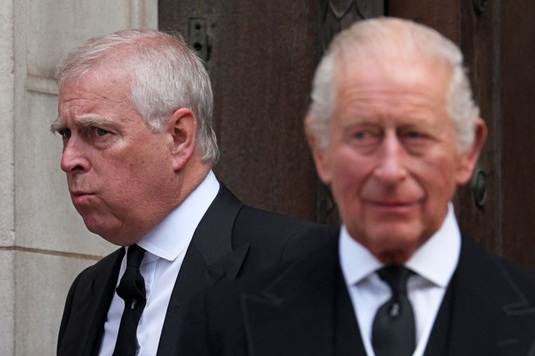
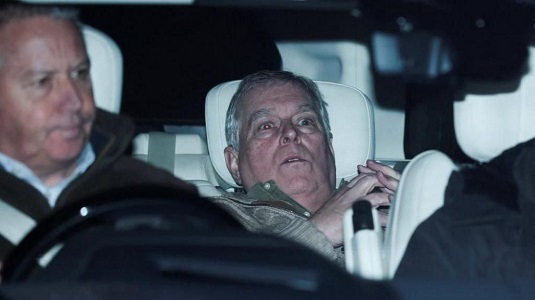
The former Prince Andrew arrested on his birthday? It's certainly one he won't forget in a hurry. His being taken into police custody and questioned all day over misconduct in public office allegations at least offers a suggestion that powerful people can be held to account for their activities. In this case, it regards correspondence in the Esptein files that purport to show Mountbatten-Windsor passing on documents to the world's most notorious paedophile. Allegations very similar to those levelled at the disgraced Peter Mandelson.

Obviously, as there's now an investigation with the possibility of charges, this corner of the internet won't be making further comment about the substance of this case. But the politics? That's a different matter. The establishment have spent the last couple of years disentangling itself from Mountbatten-Windsor. On several occasions, Keir Starmer has gone on the record to say he should submit himself to questioning. The press, naturally, have taken a prurient interest in the sex abuse allegations against him, diminishing his already poor standing further in the public's eyes. And the King has moved with some haste to put clear distance between the playboy prince and the family firm.

Where our most gracious sovereign is concerned, dealing with Andrew efficiently and ruthlessly was the only option available to him. For too long, Andrew enjoyed the late Queen's favour, and that preferment undoubtedly shielded him from proper accountability. The police didn't want to go there, knowing that the upset caused might have discomfited the increasingly frail Elizabeth II to expire. And with obvious ramifications for any senior officer in charge of such a probe. Instead, it was the audience with Liz Truss that saw her off. But for the King, this is a headache. Despite his strong statement on the matter. If the investigation strays into who in the Palace knew what and when, there is a possibility of major embarrassment. And if the Queen is directly implicated, which even the dogs in the street know she would be, this has ramifications for the legitimacy of the monarchy itself. Which has taken a few knocks of late.

With politics dropping to bits before our eyes, Starmer's ratings in the toilet, and a widespread impression given by the government itself that it can't affect basic levels of competence, the corrosion of the British state's major legitimating institution is very bad news for the establishment. And this is only the beginning of what will be an excruciating spectacle.

Image Credit

Sunday, 2 November 2025

Exiling Andrew

How was your week? It probably wasn't as bad as Andrew Mountbatten-Windsor's. Gone are his titles and honorifics, his position in the royal family, the imprimatur of the British establishment, and his 30-room grace-and-favour "lodge". He remains, for now, in the line of succession but the purge of Andrew is every bit as efficient as the deletion of problem DJs and celebrities of yesteryear from the BBC archive. All that remains is his vice-admiralty of the Royal Navy, and its days are numbered. According to the Sunday papers, a half-million pay off, an annual stipend from the King, and accommodation out of the public eye on the Sandringham estate is the shape of his exile. As crushing this is for him, there wouldn't be many people who would sniff at these spoils of disgrace.

It was oft-noted while the Queen was alive that she was ruthless in preserving the family firm, but this goes beyond her treatment of Diana, Sarah Ferguson, and the well-publicised fallings outs and failed reconciliations with Prince Harry. Andrew, somewhat protected by his mother's most-favoured-son status is not so indulged by big brother. His sacking and disowning is almost on par with the expulsion of Edward VIII/the Duke of Windsor 90 years ago, though hopefully Andrew won't further embarrass his family by cosying up to fascists.

There has been unanimity between the King and the leaders of his most loyal political parties during Andrew's filleting. For Keir Starmer, being seen to back tough measures against Andrew will, he hopes, bury memories of Peter Mandelson and his unfortunate Jeffrey Epstein connections. And for Kemi Badenoch, the Tories still have to pretend their political standing matches their constitutional relevance. More importantly, they are one because Andrew's relationship to Epstein and the harrowing allegations levied by Virginia Giuffre was a blot on an institution already on the skids, and further embarrassments were likely. There have been lurid stories about Andrew's sexual escapades while working as an overseas trade envoy, dodgy business transactions, and unhelpful questions over his murky income arrangements. And there is the drip, drip of further revelations. Like uncomfortable emails, and more secrets ready to spill from the Epstein files.

The King was not prepared to tough any of this out, and so for the family's greater legitimacy much water needed putting between the royal household and Andrew. The thoroughness of the break is demonstrative of Charles III's seriousness of purpose. Getting pictured with an alleged sex offender at family gatherings or on the palace balcony would tarnish by association, and raise questions about how much the King and golden boy Prince William knew, and when. Likewise, for the mainstream parties, with their reputation and political roles in abject crisis, there was no question of them not rallying around the crown and endorsing the King's tough measures.

What does this unwelcome episode for our sovereign tell us? That, unlike his Prime Minister and Leader of the Opposition, he is aware of the monarchy's precarity and has a firm grasp on public opinion. Certainly more so than dear m'ma. But this is an institution in retreat. Defending it by offloading a liability is quite easy, if personally painful. The challenge is winning over new support and securing the future. An altogether much harder task.

Image Credit

Saturday, 10 August 2024

Deferring to the King

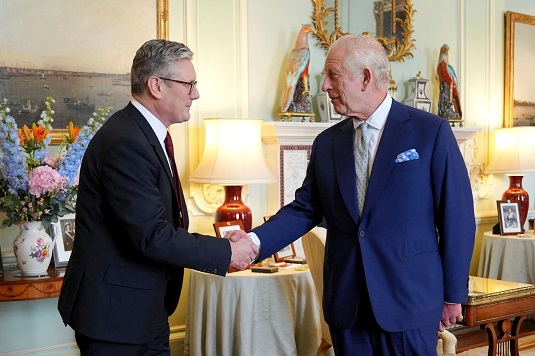
Interesting. While Keir Starmer wastes an opportunity to benefit politically from the defeat of fascist mob violence, the King himself has stepped in to say some soothing words. The palace released details of phone calls between the King, the Prime Minister, and the country's top cops. It's all quite innocuous. The police and emergency services are praised for their efforts to "restore peace". The release goes on to say "It remains his majesty’s hope that shared values of mutual respect and understanding will continue to strengthen and unite the nation." Okay, so far so standard. And then there's this.
The king shared how he had been greatly encouraged by the many examples of community spirit that had countered the aggression and criminality from a few with the compassion and resilience of the many ...
Could this be read as an expression of solidarity with anti-fascist forces that turned out, especially on Wednesday when the planned far right attacks on asylum and immigration services didn't happen but a huge counter-mobilisation effort did? It's difficult to read it any other way. Which raises an interesting question. Labour would benefit from directly associating itself with "the street" because the overwhelming majority of the public were against the riots, and yet Starmer has ceded this territory to the King.

There are two things going on here. Starmer personally, and Labour politically are favourably disposed towards the monarchy. His Tonyness can claim the credit for saving the institution and helping it modernise its media operation. These days with popular support in decline, it falls to Labour to shore it up. After all, if Starmer's project is the modernisation of the state and the restoration of its authority, that includes the monarchy. Having the King flatter popular anti-fascism places the state rhetorically on the side of multiculturalism, keeping it in line with public opinion and the growing popular consciousness. It's also consistent with Labour's handling of the riots. Politically, the furthest Starmer has gone is call the fascist rioters "far right", but has treated it as a technical law and order issue. I.e. His is an "above politics" affair. Having the King endorse anti-fascism is an attempt to elevate it and multiculturalism as a matter beyond party politics. I.e. racism is depoliticised as a matter of individual behaviour and personal morality. No need to ask further questions.

And yet a perfect circle is an impossibility in bourgeois politics. While there is an opportunity to consolidate Labour's meagre base, especially now the Greens and the extra-Labour left have started making inroads, it's evident that Starmer and the Labour leadership would rather retain the "flexibility" to position themselves to the right when required. So no criticisms of right wingers for what they've done stoking the riots. That is apart from the beyond-the-pale Tommy Robinson. Certainly no action to curb the right wing press is forthcoming, nor any cross words about the disgusting positioning of some Tory leadership contenders. Labour is fully signed up to the "genuine concerns" consensus and has no interest in tackling the background to the riots, because scapegoating might suit its interests too. Which are, when right wing Labour is in charge, forever chasing right wing votes while its left flank is dropping to bits.

Image Credit

Friday, 8 September 2023

The Stagnant Monarchy

It's been a year, Gawd rest her soul. Though there hasn't been the outpouring of sycophancy you might expect on this first anniversary from official channels. Still, one can always rely on the Telegraph to publish something suitably cringing, and Camilla Tominey is just the woman for the job. There is almost nothing in her maudlin piece to write about. Her Maj has left a gaping hole in everyone's life, the constancy of her presence no longer there to offer reassurance in an uncertain world, and the example of her commitment to duty - so at odds with modern life - died with her. This is a case of projection to be sure. Tominey's entire career has revolved around writing unbidden prettifying copy for the Windsor firm, but a set of sentiments shared by the sensibilities of Telegraph readers.

I said almost nothing. There is an absence in her lament of the absence; the King. He and Camilla get a mention, but only about how the House of Windsor "feels a little diminished". One might pick up a scinittla of anxiety in these words. While most of her fellow Tories were toasting the jubilee last year and regarded the monarchy was as safe as houses, we get the sense that Tominey suspects reinforced autoclaved aerated concrete is present. Consider the year in royalty. The coronation passed without a hitch, even if Penny Mordaunt inadvertently stole the show. The ongoing trouble with Prince Harry doesn't seem to have rebounded unfavourably on the monarchy. There have been no major scandals or controversies that have splashed all over the papers, though some were a bit annoyed when the King was wheeled out to anoint Sunak's Brexit compromise. And there was the rare moment of amusement when he met the post-crash Liz Truss with a "dear-oh-dear". The monarchy is steady as she goes, it seems.

And it's this that tugs at Tominey. The institution relies on a mix of passive acceptance and tolerance, as demonstrated by the lack of popular take up of the coronation celebrations. But when establishment politics have been badly shaken in recent years, and the incumbents and next likely government commands zero enthusiasm too, renewing the state and the monarchy doesn't have any mass buy-in. If the constitutional monarchy is to survive, something more than business as usual is required. While the Queen was alive she could inspire a degree of deference. The worry is, a year in, that Charles doesn't and never will. Which is fine, if it wasn't the case that ratings are down and trouble is brewing in the future. When the whole system needs an overhaul to put the relationship between state and monarch, and the people they preside over on sturdier legs, from whence will it come?

Image Credit

Wednesday, 7 June 2023

Prince Harry in Court

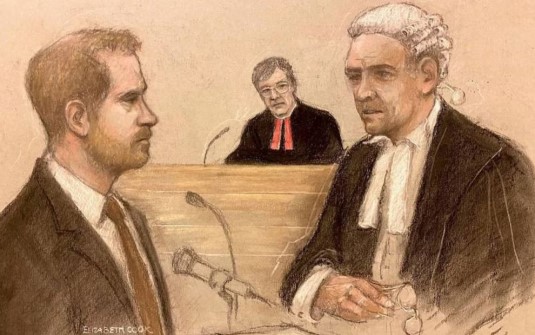
Prince Harry was in the witness box again for the second day of his litigation against Mirror Group newspapers. Having refused to settle over phone hacking claims like many other celebrities have done, he is there ostensibly to stand up for privacy and take one of the more notorious media organisations to the cleaners. He alleges journalists working for Mirror Group newspapers had, over a period of years, obtained voice messages illegally and used them to run a slew of exclusives about his private life. 33 such articles are at the heart of the case. They deny it and say their stories were obtained from passers-by, friends, acquaintances, etc. A line that might have credibility had they and other papers not spent tens of millions paying off disgruntled parties who had accused them of doing the same.

There are a couple of things of interest beyond the salacious details avidly consumed by royal-watchers. The first is the point oft made before Harry was due in court: the fact he's the first senior royal in the witness box in 130 years. Previously appearing was the then Prince of Wales and future Edward VII, or "Bertie" as he was affectionately known, and questioned in a slander case involving an illegal game of baccarat. The difference between then and now is he was called as a witness and compelled to attend. Harry, along with several other litigants, initiated this action.

It's this that makes matters highly irregular. The royals are not just supposed to be above the pettiness of the press, but at a far remove from it and commonplace affairs. At the pinnacle of the state, the constitutional monarchy is supposed to embody it. In a weird sor of way, they are us. And that means neutrality where day-to-day matters are concerned. In the present set up, the monarchy is an anti-democratic check on unruly aspirations incoming governments may have, and a guarantor the means of violence would be employed to serve the status quo in the unlikely event of a revolutionary upheaval. But all this is obscured by protocol, bowing and scraping, and the enthusiastic support of the official left for this state of affairs. One of the reasons why the Palace have taken such umbrage at the comings and goings of Harry and Meghan is their refusal to be bound by the straitjacket of expectation and the hypocritical rubbish demanded of them. The cutting off, so ostentatiously demonstrated at the Coronation, is necessary to close the window Harry has opened onto Palace intrigue and familial relations and repair the distance. By attacking Mirror Group through the courts, however justified Harry's action is, his behaviour is just another episode of his violating constitutional neutrality. He humanises the institution, and doing so makes it appear historical, frail, and possibly impermanent.

This isn't the only reason why we'll hear nothing from royalty during the case. Except the usual run of puff stories and good news with which we're invited to play the game of compare and contrast. The silence and being seen not to comment is their way of keeping the papers onside. The King can remember well how he and his family were damaged by the press campaign in the 1990s, that is before their knight on a white charger galloped in and helped save their bacon. No comment, not even letting an off-the-record "Palace source" hold forth on the case, helps keep the papers respectful and cooperative. Because with the royals looking at a long-term decline not dissimilar to other props of the establishment, they need continual good press if their efforts to re-legitimise the institution and secure its future until the end of the century are to bear fruit.

Image Credit

Monday, 27 February 2023

The Triumph Before the Tragedy

Rishi Sunak is probably the most politically flat-footed Prime Minister since ... Liz Truss. But not everything has to be 4D chess. Simple crudity can and does work. In selling his Northern Ireland Brexit deal, there were two very clumsy, clod-hopping moves that made Gordon Brown look the picture of subtlety. We had Sunak's address in the Commons this evening. Showing an uncharacteristic appreciation of his backbenchers and their peccadilloes, he sold his deal with the EU as an exercise in cutting red tape. The successful conclusion of the negotiations, he said, deleted 1,700 pages of EU law. That sounds good to them, and looks good if you want to style out the rest of this calamitous Tory government as something of a "reformer" who doused hundreds and hundreds of regulations in petrol.

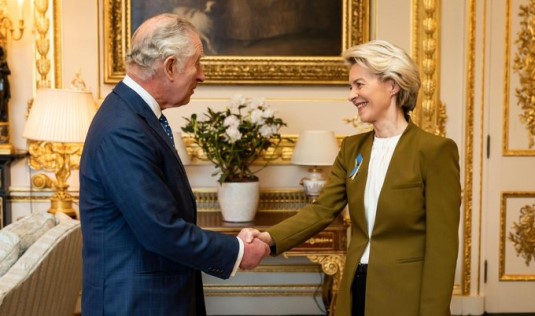
The second was a bit too much on the nose, even for Sunak. We noted yesterday the aborted weekend meeting between the King and EU president Ursula von der Leyen, and how Brexiteers and the DUP cried themselves a river over it. Associating the King with the deal was an obvious attempt at emotional blackmail against two political tendencies who define themselves in relation to the Crown. It was therefore not enough for the tea and tiffin to actually go ahead this Monday afternoon. To almost dare them to vote against the deal it has now been christened the 'Windsor Framework'.

What a clunker of a strategy, but it seems to have worked. Most of the Brexity voices have made emollient noises, with the ERG promising to look carefully at the text of the deal. Even the DUP aren't united in intransigence. Boris Johnson, who kept the running sore of the Northern Ireland Protocol open purely for political posturing purposes has kept a low profile and chose to stay away from the Commons. He's decided not to lead an assault on the deal. With Labour and the Liberal Democrats, and perhaps the SNP all backing the Prime Minister, the Tory right, who've been flexing of late might not choose this as their hill to stand on either. Sunak, therefore, has the first genuine triumph of his premiership. And one that, ultimately, will do nothing to save his government.

Friday, 23 December 2022

The Sun's Anxious Apology

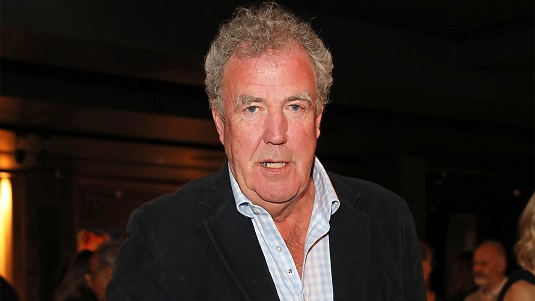
For its part in the latest round of scurrilous attacks on Meghan Markle, The Sun has apologised. You will recall that Jeremy Clarkson, their pet stick of curly-haired tedium, launched an attack on the Duchess of Sussex from the pages of the Sunday edition last weekend. He wrote how he was "dreaming of the day when she is made to parade naked through the streets of every town in Britain while crowds chant, 'Shame!' and throw lumps of excrement at her". It doesn't take much to unravel the vitriol he and fellow middle-aged-to-elderly columnists reserve for her. Meghan condenses everything they hate about this country and its younger people in particular. Their diversity, their tolerance, their socially liberal commonsense. In their right wing imaginations, Meghan's marrying into the royal family is a breach too far in this most sacred and white of institutions. As such, no matter the level of utterly disgusting press she receives, as outlined in that Netflix documentary, it's men like Clarkson who are really the wounded ones.

After a day of social media heat, Clarkson issued his faux apology on Monday. Claiming he had "put his foot in it", he was "horrified" that his toe curling rant had "gone down badly with a great many people". In other words, he wasn't sorry at all. Except for the fact he'd been called out, and made to feel his main television gig - hosting Who Wants to be a Millionaire? - was a little bit less secure. ITV is, according to the Daily Mail, a woke TV channel after all.

The Sun apology is along the same lines. While arguing Clarkson's views are his own, the paper recognises that "with free expression comes responsibility" and that "we at The Sun regret the publication of this article and we are sincerely sorry". Again, note no apology for the injured party. They've also scrubbed the article from their archive, which is probably as much contrition Meghan will ever receive. But this being The Sun, it couldn't simply say sorry. It had to pontificate about its good causes, such as its campaign against domestic abuse. Just don't talk about how the paper helped hound a mentally ill woman to death, has backed the government's criminal treatment of asylum seekers, spoke up for the Met as its officers cracked skulls at the Sarah Everard vigil, are right now are at the forefront of attacks on Mick Lynch and the RMT, egging on Rishi Sunak's war on striking workers, and earlier this year literally willed young people to go die in a field.

It normally takes months of court time and enormous legal bills to elicit a Sun apology, so this is unusual. 60 MPs, organised by Tory MP Caroline Nokes, wrote an open letter condemning the piece. But as the names were the usual suspects, it's not likely this had a bearing on the apology. Nor the fact Clarkson's own daughter joined in the condemnation. Rather, it comes down to the vulnerable position the paper is in. The Sun, like all Murdoch-owned rags, stopped publicly reporting its circulation figures in March 2020, just as the pandemic hit. Then it was 1.2m copies sold daily, and a million on Sundays. As per all newspapers, it was in long-term decline and is now likely to be behind the Mail, hovering at a daily (and decreasing) circulation of 800k. Its force mainly lies in framing news stories and selecting the issues of the day (which is lapped up and echoed by the BBC), and their (legacy) influence over politicians. It is a declining power in the land.

And yet, looked at another way The Sun couldn't be in ruder health. Its website has about 30 million views a month, constantly vying with the Mail for the top spot. But here in lies the problem. For both papers, their readers are there for the games, competitions, celebrity and human interest stories. They don't hurriedly rush to their Sun app in the morning for the latest ravings of Trevor Kavanagh, or whatever poison Victoria Newton has dripped into the day's editorial. Having found a business model that can make money, it comes at the price of a depletion of its political gravity. Also, because its dependence on internet traffic grows by the day "the brand" becomes increasingly sensitive to online push-pull factors, just like any other company. And so if one of its star columnists creates a stink, the fear is audiences will steer clear of the pong. And advertisers are easily spooked, who ultimately the business depends on. In other words, the perceived threat of user and marketing boycotts finds The Sun in a position of vulnerability, and they have to act swiftly if on the wrong end of a controversy.

All of a sudden, its persistent fretting over the "woke mob" and "cancelling" makes sense. In the attention economy, politicised audiences can leverage the power of the network in ways old school editorial offices cannot. It's simultaneously a realisation their institutional heft is degrading, and an anxiety that very soon none of it will be left. Jeremy Clarkson's carefully planned and cynically calibrated "outburst" at Meghan, with the full approval and connivance of The Sun's editor might well have had one unforeseen but welcome consequence: that the day of this demise has been hastened.

Image Credit

Sunday, 18 September 2022

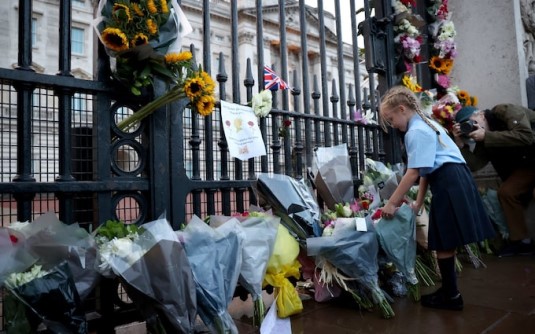
The Queue

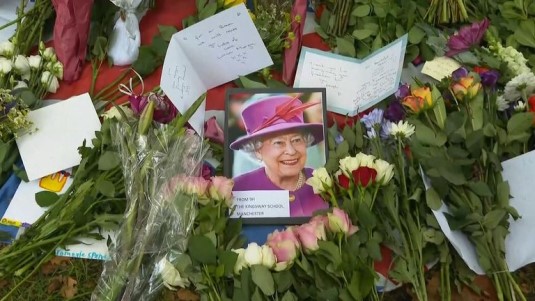
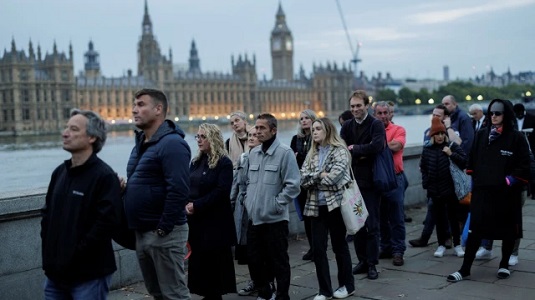
We may never see its like again. Snaking its way from Bermondsey to Westminster Hall, The Queue formed up over five miles. At its peak waiting times lasted for 14 hours, an exercise in patience and devotion hundreds of thousands of the Queen's loyal subjects greeted with sombre enthusiasm. The Queen was, apparently, with them during her long life and in death it's right and proper those she reigned over recognise her service by, uncomplainingly, standing in line for hours on end.

The Queue affirms what we already know: that millions are enthusiastic about royalty, and are drawn irresistibly to monarchical spectaculars like pilgrims to shrines, and understanding this doesn't rely on much abstraction or high theory - often it's a case of listening to people talking about their personal relationships with royalty.

As noted here many times, celebrity is at once near and distant, a juxtaposition of the familiar and the unknown. After the Church, monarchies were the first institutions to build these concrete-but-abstract relationships, and The Queue embodies this tension. In life, no British monarch has met as many of their subjects, with some estimating figures of around 15 million people. For many of those, they have a piece of the Queen that is uniquely theirs. Metres away and insensible to the flows of humanity gushing by her coffin, in death The Queue reaffirms and renews this individuated fealty. Listening to the stories, meeting the Queen when one was a school girl, the Queen as a stable background presence, the Queen as an inspiration during military service, the Queen as a symbol of a simpler past, and the Queen as a projection of what is good about our national community, The Queue is less a clearing house and more a chorus of intention, a hymn to an essentialised unity bringing together us Brits and everyone who wishes us well.

The Queue draws out the motivations for being there, arranging them in one direction and with one overriding goal - a multitude gladly shuffling along to subsume their singularity into a collective of one: a supra, semi-mystical sovereign body of duty, national community, and kindness. In the absence of other strong sources of collective knowing and feeling, the monarchy and the nation are almost the natural repository for such longing. It's therefore not surprising that the diminution of the individual before the awe many say they felt as they walked by the coffin has provoked a strange egalitarianism, albeit a negative one in which inferiority is internalised and recognised in others and affirmed by participating in this spectacular procession. The backlash against VIP queue jumpers is because they violate the spirit and disrupt the doxa these hours' long devotionals are sustaining.

Politically speaking, The Queue is a triumph. Not for Liz Truss or any political party. The Queen was above party politics, after all. But it shows that not only does the British state retain legitimacy for plenty of people, perhaps even more want it to have legitimacy. Their desire is for a higher power that will make sure everything is alright, a reassuring presence that ensures continuity and an everyday sense of security, peace, and fairness. Far from being imperilled, if the ruling class and their political satraps play their cards right their power and privilege is as secure as it ever was. The usual Tory V Labour knockabout will resume after the funeral, but the core, anti-democratic institutions of state are fine. And if they're doing okay, if the hereditary principle still has mass purchase, a challenge to the lynchpin of their power - capital, property, and the wage relation - remains a far away prospect.

Image Credit

Thursday, 15 September 2022

Working Towards the Crown

Beeps on Morrison's checkouts turned down to show respect. Flights from Heathrow cancelled to show respect. Food banks shuttered to show respect. Cancer diagnosis and treatment services closed to show respect. A handful from a burgeoning catalogue of misguided, bizarre, and in some cases dangerous decisions taken to mark the passing of the dear departed.

What we've seen over the last week are examples of "working towards". This sort of thing happens around powerful people all the time, an attempt by minions at a remove from the sovereign personage to anticipate and meet their wishes. If their efforts are appreciated, that might be rewarded with promotion, favour, or they simply get to remain in a zone of non-punishment and avoiding being made an example of. At the risk of earning the ire of someone somewhere with a Hitler comparison, it is well known that he maintained a distance from his subordinates, which basically invited his lackeys to compete among themselves to catch the Fuhrer's favour. And, as the ultimate seat of authority and power in the Third Reich, the top Nazis did so with alacrity - which saw many of them convicted of war crimes charges at the Nuremberg Trials.

The Queen and the royals, however, are not dictators. They might be petty tyrants in their own households where courtiers and palace flunkies play the game of second guessing the royal wish, but ordinary folk gushing about the time they witnessed the Queen drive past or met her at the opening of a refurbished town hall aren't so motivated. There are no rewards for standing in the mother of all queues, apart from meeting the internal desires driving their ritualised devotion. Indeed, obsequiousness is its own reward for devoted, loyal subjects.

The reasons for enthusiasm for the royalty are at once complex and easily grasped, but what motivated the likes of Center Parcs, before the inevitable u-turn, to announce it was turfing out its guests for 24 hours as a mark of respect? Judging by the ludicrous nature of the proposition, this obviously came right from the top of the company because the plan wasn't killed until the backlash bit. Junior, public-facing layers of the firm would not have made such a stupid suggestion. They did roll back saying guests would be allowed to stay, but they would not be allowed outside. Truly a case study in a marketing meltdown to be studied in business classes for years to come. But again, why act so dumb in the first place?

It comes back to the aforementioned zone of non-punishment. In implicitly coercive situations, there are also powerful incentives to remain just so. At the risk of indulging a little rational choice, showing initiative runs the risk of failure and humiliation. Better to stay quietly competent, unnoticed, and going with the flow. And most of the time, it works a treat. Millions of people get through their careers dwelling entirely within its terms, and the more familiar one is with the setting the easier melting into the background becomes. But this is not available in competitive and/or uncertain environments. Businesses compete for market share, and it is received wisdom that PR faux pas costs customers. In politics, saying the wrong thing might invite press condemnation and the voters' wrath. Better be safe than sorry.

This is exacerbated even further when something abruptly changes and no one knows quite what to do. In these anomic situations, playing it safe might be the riskiest activity of all. Our Center Parcs friends, for instance, assumed that most people are either monarchists or have affection/respect for the institution and the late Queen in particular, wanted to be seen to be in tune with popular grief, and wanted to avoid attracting adverse coverage that could cost sales and profits. By making a series of seemingly rational calculations, turfing people out of their chalets to show respect for the Queen was the worst possible decision and has made them a national laughing stock. Matters get more serious when we're talking about food banks and medical services. Are food banks worried bands of enraged monarchists are going to demand their closure for helping feed the poor? That donations would dry up? Similarly for GP and hospital appointments, are practice and NHS managers afraid the press are going to splash on woke doctors and nurses who saw to their patients during the Queen's funeral service? That Tory ministers would find this another excuse to restrict funding? (Well, actually ...). In each situation, they were caught on the hop. They did not know what to do, and so the conservative strategy, of going along with official encouragement to observe the mourning, they abbreviated all common sense because common sense did not seem appropriate.

No one has to pull a lever to bring about perverse outcomes when the perception of pressure and sanction does the job more effectively. It's another occasion of where attempting to act rationally leads to irrational outcomes and invites the pain that was trying to be avoided. These are all examples of where working towards the Crown meant acting against the people. How appropriate.

Image Credit

Sunday, 11 September 2022

Royalism and Labourism

The Labour Party officially greeted news of the Queen's demise as the constitutionalist outfit it is. Keir Starmer said nice words about the recently departed, and his Twitter feed given a sombre make over as a mark of respect. None of this is surprising. Rare have been the moments when the party has found itself troubled by republicanism. But what was a bit more of a shock for some comrades was the pulling of strike action. Commenting, General Secretary Mick Lynch said "RMT joins the whole nation in paying its respects to Queen Elizabeth. The planned railway strike action on 15 and 17 September is suspended." Similarly, the CWU called off postal strikes for this weekend. You might expect tributes to the monarchy from the Labour leadership, but demobilisation by two of the most militant unions in the land? How to explain?

The immediate reasons aren't too difficult to fathom: it's a question of PR and optics. Had strike action gone ahead, the hounds of hell would have got unleashed by the press with leading trade unionists subject to the bin emptying treatment and possibly getting set up for assaults by over enthusiastic royalists. Further, RMT action on the rail might have disrupted the transportation of the Queen's body from Balmoral to London. And there's the issue of the establishment using her death as a wedge between the strike leadership and more politically conservative workers going along with action. Then there are wider concerns. During the Summer, the RMT won the public relations war against the government. They've come to the conclusion this could be jeopardised if they are seen to be "disrespectful". The downside is it interferes with the momentum and tempo of the struggle, effectively introducing a cooling off period that might impact negatively on subsequent rounds of strikes. With republican sentiment a minority position even in the labour movement, our union leaderships had to weigh up the pros and cons and, unfortunately, I think they've made the right call in this instance. Class struggle, after all, doesn't mean putting your foot on the accelerator come what may.

As some observed on social media, the death of the Queen has found the British left more British than left. Or, at the very least, its mainstream mass institutions. And they have a point, but this is a challenge to be confronted and not a moment for Dave Spart posturing. If strike action is called off because mass fealty to the royal family might be offended, we have to understand not just how monarchism is produced and reproduced, but also how it is rarely challenged within the labour movement. I'd suggest there are two historically interrelated points to this, one of which has somewhat withered on the vine. One is the push for respectability, and the other is the labour movement's integration into mainstream society.

The contradictory and self-destructive history of Labourism is well known. The earliest trade unionism in this country was less characterised by revolutionary aspirations, and more by taking our (capitalist) society for granted but securing a recognised place and a "fair share" for workers within it. In the 19th century, as the labour movement grew it understood that this could be secured by industrial action and negotiations with political elites. The original alignment between unions and the old Liberal Party was based on the view of their being more amenable to offering concessions. The Labour Party came about when most trade union leaderships became convinced, thanks to long experience, that it was not and therefore required a party of its own. When the new party took the field and began playing the constitutional game, the dominant right wing tendency of Labourist politics shifted. From subordinating industrial struggle to not upsetting cosy relationships with Liberal MPs, it became one of making sure disputes and strikes played second fiddle to the Labour Party's political needs. And this was always defined in terms of not upsetting public opinion, which itself is an imagined assemblage of establishment/press/middle class opinion. What justifies this is the belief, seldom realised in practice, that Labour governments are the only means of achieving progressive ends and meeting the aspirations of workers available. It's not much of a leap from this to believing that industrial struggle and strikes are unnecessary and, for some, completely wrong.

This preoccupation leads to a politics of respect, which is not earned by establishing and defending the interests of a constituency, status group, or class, but through the practice of supplication and capitulation to established power. If Labourism is premised on sharing out the proceeds, it never questions how these are produced in the first place. Rather than a structural feature, exploitation is a moral outrage that can be tackled through legislation or organising "partnerships" with good employers. Likewise, the state is a capitalist state, but government and legislation shows we can abolish unfairness by the law and inequality through economic policy and public spending. If the focus on wages and conditions is the bread and butter of trade unionism, an economistically-defined welfarism and fairness is the province of Labourist politics. Issues of high politics are awkward because, unless they impinge on the province proper to Labourism, they aren't really much of a concern. Or rather, to establish the goals of Labourist politics respect demands its accommodation with the status quo. An understanding that is less resisted and more embraced as generations of Labour politicians and not a few general secretaries have availed themselves to the trappings of preferment - titles, gongs, sinecures in the Lords. Becoming respectable then sanctifies Labourism, its party, and its movement with official recognition and an acknowledged place at the table.

This is the politics of royalism in the labour movement, and one that reached its height in the post-war period. The partial integration of trade unions into governance was the highest honour British capitalism could bestow, and many a union reciprocated and became disciplinary agencies of (some might say over) the working class. But it's not just a top down affair. It afforded a sense of dignity and place in the national story. Far from having no country, Britain was a workers' country too and it was great because of their efforts. Millions of workers knew their position and value in a status hierarchy atop which sat the Queen. And, as distant as she was, Elizabeth II was their Queen, her party political neutrality a reflection of the state's class neutrality Labourism wanted to and forced itself to believe.

With the post-war period long passed, since 1979 the material wellspring of the labour movement's respectable, royalist politics has diminished. It was destroyed by Thatcher's brutal deindustrialisation (compare with Harold Wilson's). This liquidated the foundation of industrial unionism, and her authoritarian ruling class politics ejected trade unions from any role in governance. The chains of office were swapped for the chains of repressive legislation. Thereby the glue that held working class monarchism together came unstuck, renderings its foundations shaky and vulnerable to slippage. The second consequence of the Thatcher years was the multiplication of individuated governance. I.e. Neoliberalism. Through institutional design, backed by blanket messaging and socialisation the isolated but entrepreneurial individual became the de facto human condition, and the only subject institutions would respond to. If you don't engage on these terms, public agencies would either ignore you or sanction you. The atomised individual was the axis of creativity and hard work, the locus of choice and responsibility. With the neoliberal subject thrown onto its own resources, it stands to reason the highest authority is the self. I.e. You live and die by your choices, and only you - not a benevolent other - can make them. This can be experienced as insecurity, and help explain why millions cling to symbols of nationhood. Or it can count toward explaining irreverence and the crisis of legitimacy institutions of state are experiencing, including the monarchy.

Without the same relationships sustaining royalism in the labour movement, it now relies on the economics/politics split practised by the unions and the economism/high politics division in the Labour Party. Political education does not take place, so constitutional issues are left a free for all. But there still remains some incentives that support the monarchical given. Right wing trade unionism and its investment in how things are. And most of Labourism, ranging from the soft left to the right for whom republicanism is at odds with respectability and avoiding wedge issues that might get in the way of building a winning voter coalition. Plenty on the left capitulate to this, including self-described Trotskyist organisations, for whom high politics are distractions from the proper struggle against cuts and job losses. And there is a legacy of the postwar period, which casts a long shadow over trade union officialdom.

This means labour movement royalism is quite thin. And it's under pressure. Not just from neoliberal cultures emphasising hard graft and individual accomplishment, but from the experience of class itself. As recounted plenty of times, the contours of class have changed, as have the "rewards" of wage labour. With millions locked out of property acquisition, career prospects non-existence, precarity standard, and little space for freedom and dignity at work, the irreverence unwittingly stoked by Thatcher is building, and building, and building. It exploded once with the Jeremy Corbyn moment. It is sustaining the movements of our time, such as Black Lives Matter and Don't Pay UK. It's now feeding into mass mobilisation in workplaces, and it's going to carry on until the polarisation of politics ends in either a decisive victory for our people, or some new compromise that allows British capitalism to carry on, albeit with a new settlement.

Ultimately, royalism's persistence is a failure of our politics because the left as a whole does not take its politics seriously. Republicanism raises the question of how we are ruled, we absolutely have to talk about it, and the issue cannot be ducked by a workers' movement that wants to win, and win permanently.

Friday, 9 September 2022

The Precarious Monarchy

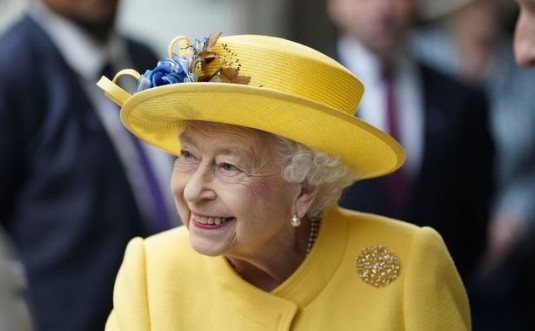
The statements from Liz Truss and Keir Starmer about the Queen's death sum up establishment feeling about her. For the new Prime Minister, "Queen Elizabeth II was the rock on which modern Britain was built." For the Leader of the Opposition, "Above the clashes of politics, she stood not for what the nation fought over, but what it agreed upon. As Britain changed rapidly around her, this dedication became the still point of our turning world." Variations on a theme. The Queen was constant and forever, and her end was unimaginable because very few people now living were adults when she ascended the throne. For both party leaders, their statements were well pitched because their sentiments are shared by millions of people.

Two days' worth of coverage bears this out as journos hang around Buckingham Palace doing their vox pops. For most, she was distant but close. The Queen enjoyed a luxurious life removed from the lives of those who looked up to her, but that she stared out of the television screens, newspapers, and the occasional photo portrait hanging on the wall meant her presence was felt. And even though the Queen abided by saying and doing nothing apart from the endless round of official engagements, all the while the palace commanded the most sophisticated spinners - aided by the popular media's fawning deference - to weave a narrative of duty, conscientiousness, and loyalty about her person. Even The Crown, the Netflix drama deemed scandalous by self-appointed Royal guardians, reinforces the message. And these impressions stuck even more over the last year. We've watched the Queen become more frail as she carried on her responsibilities even after the passing of Philip. For millions of people, this is what service and dedication looks like.

Which then presents something of an anomaly. Go back 18 months, and there is arguably less state-mandated disruption than was the case following the Duke of Edinburgh's passing. There's certainly more absurdity, with everything from catalogue shops, gay porn websites, and McDonald's self-service counters paying tribute to the Queen. Think They Live, but with every screen and paper carrying Elizabeth II's image. But there are also more avenues of escape. In April 2021 the BBC cleared everything and cancelled programming. In September 2022, BBC1 and ITV1 are wall-to-wall official mourning but everything else is running almost normally. Yours truly was able to enjoy Haddaway, Take That, and Kim Wilde on the Top of the Pops 1993 reruns as scheduled. This is in marked difference to the response to the death of Princess Diana 25 years ago. Granted, her death was sudden and unexpected, but all five terrestrial channels were stuffed full of Diana coverage and tributes for over a fortnight. There was no streaming, and the internet at this point covered fewer than nine per cent of households. There was no escape via the usual means of escapism.

From the state's point of view, the death of the reigning monarch is a bigger deal. Effectively, its official corporate personality and person changes over night and with it the official pomp and apparatuses of spectacle have to be tweaked. Seldom used constitutional gears grind into action, and well rehearsed rituals get underway. But in 2022 it comes with a dollop of uncertainty. Perhaps one of the reasons why broadcast media are more restrained than 18 months ago is because of the backlash it provoked. Complaints to the BBC over the cancellation of programming was a rude reminder to the establishment that there are a lot of people out there who don't share any enthusiasm for the Royals as people and the monarchy as an institution - even it shocks them even more because the indifferent are never reflected in the coverage. Perhaps somewhere, someone has learned imposing grief is not a good idea when popular trust in state institutions is low. That said, the mass cancellation of football matches, festivals, and Southwark recycling centre's open day aren't going to help.

But the other consideration is the growing republican or, to be more precise, anti-monarchical sentiment - something that became even more evident during the Platinum jubilee celebrations. Polling puts republican views at an all-time high. Still miles behind monarchical support, but with an institution accustomed to thinking about its stability in terms of decades and centuries the trend should give royalists some pause. Because the relations that secured the monarchy in the post-war period have corroded, with many communities giving way to privatised individuation, a more atomised population requires more direct messaging to try and induce desired behaviours. Hence the enforced mourning and the multiplication of the Queen's image and the rote repeat of hard work, service, faith, duty. Because it clearly works as millions back the monarchy the solution to winning over the doubters and the haters is double down and ideologically bludgeon its real and imagined opponents.

For the last eight years, official politics has been on a roller coaster. Certainties and eternal truths were found to be nothing of the sort. Because Charles III takes up the throne without the same support or affection enjoyed by his mother, that adds to the worry that change could descend quickly here and, as if taken by a thief in the night, the institution's legitimacy vanishes in the blink of an eye. The passing of the Queen marks something. Not the end of a second glorious Elizabethan age, but the entering of a new period: one in which no amount official days of mourning can hide that with her gone, it has to meet the uncertainties ahead without its most stalwart and respected advocate.

Image Credit

Thursday, 2 June 2022

The Complacency of Tory Royalism

"Republicans don't understand why the Queen is so popular!" so wrote Conservative Home regular, Andrew Gimson, this morning. As someone who spends more time than is healthy pondering the Tory mindset, I'm always interested in how they perceive their opponents. In this case, Britain's growing republican movement.

Gimson begins his piece gushing over the Queen (it is a Tory website, after all) and congratulating the millions who'll be joining the Jubilee celebrations over this weekend. He goes on to say:
And the republicans will not understand what is going on. They draw the wrong conclusion from this spectacle of a monarch triumphant and beloved, which they suppose means that British voters are somehow less free than those who live in a republic such as France, Germany or the United States.
A peculiar criticism because it depends on which republicans you ask. They come in as broad a range of flavours as the monarchists do. But whether they're a communist, on Labour's soft left, or are firmly centrist with the commitment to market economics to match, all would agree that freedom in Britain, since the war, has always been comparable to European republics (and constitutional monarchies) and the United States despite the monarchy, not because of it. Indeed, for the first 27 years of the Queen's reign, British society became more equal, not less. It's almost as if, save formal duties and rarely used constitutional reserve powers, the monarchy does not play a commanding role in the state. While these powers should not exist, their existence doesn't mean liberal democracy in this country is qualitatively different to any other. Gimson's argument here is a red herring, and one plucked out of the air.

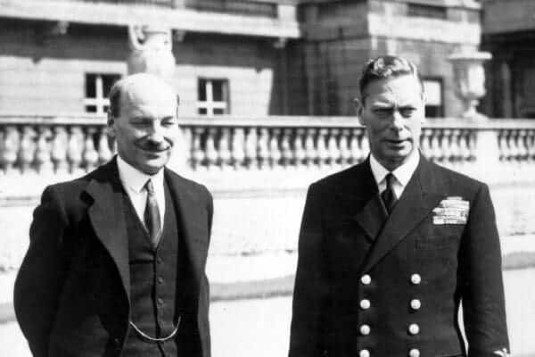
He goes on to talk about Clement Attlee, who explained why Britain hadn't fallen under the sway of authoritarian politicians to the monarchy's existence. It soaks up the fervour that might feed a Hitler or a Mussolini, you see (it's rude to note Italy was a constitutional monarchy during the days of Il Duce). Attlee died in 1967 and didn't see what came after, but since 1979 the tendency to equality that began with his government has been whittled away by successive Prime Ministers of both parties and who were never above deploying state thuggery to achieve their political aims. They have practically dissolved the compact established by Attlee, and have continuously gnawed at the rule of law. Inequality has ballooned, millions are now dependent on hand outs from their local food banks, and the Queen and the monarchy have not prevented any of this from happening. Not that they could if they were so minded, but the point remains. Because politicians haven't goose stepped into Downing Street doesn't mean a very British extremism isn't the settled political common sense. Only the comfortable and the wilfully ignorant can pretend otherwise.

Anyway, returning to Gimson's piece he argues there's little difference between constitutional monarchies and republics. Which most republicans would accept. But, again, what we apparently don't understand is that the Queen is "above politics". Which automatically makes her more virtuous than any politician in the eyes of the public. There's no egotistical quest for power there. He's right. YouGov has it that 82% of adults think the Queen has done a good job, and many more prefer a monarch to an elected head of state. None of this is news to republicans seeing how it's a minority pursuit. There would be nothing easier than going with the monarchist flow, as politicians of all parties prefer to do.

Can republicans understand this? Of course they can for precisely the reasons Gimson and other royalists set out. For some, particularly the comfortable but fundamentally insecure, symbols of continuity and stability are important in a world they're increasingly ill-at-ease in. For many millions the monarchy is an imaginary presence that has provided a reassuring backdrop to their lives. And yes, all the nonsense about duty and commitment secretes support for the Queen. She's an antidote to the fly-by-night no-one-sticks-with-anything common sense the socially conservative rail against. The Queen is a blank, and monarchists impose on her the qualities they believe they themselves uphold. It's her social distance that allows Elizabeth II to appear real and human to them. And this serves a wider constitutional purpose. Her party political neutrality is the formal guarantor of the neutrality of the state, and exercises a powerful pull on the imaginations of Labourists and reforming technocrats alike. To reverse Marx's famous dictum, one can lay hold of the ready-made state machinery: the Queen is proof of that.

Rather than carry on his polemic, Gimson breaks off there. His points boil down to republicans think the monarchy are tyrants (they don't), and the Queen is popular, so republicanism is wrong. Hardly rhetorical slam dunks against the republican case, but he felt satisfied enough to pad out the rest of the article with the boilerplate potted biography readers of Con Home must be bored to tears with by now. Republican sympathisers are thin on the ground at that particular outlet and so one half-arsed piece would pass unnoticed among the site's standard fare of the unintentionally informative and the proudly ignorant. But it also demonstrates a complacency among the Conservatives and their supporters. Because parliamentary might equals right, they don't have to explain their actions and prefer making up justifications for indefensible actions. And this is when they're behind in the polls and look set to lose two crucial by-elections. The support for the monarchy and the esteem the Queen is held in are stratospheres higher, therefore making the case against republicanism seems so unnecessary. As custodians of the state, the Tories have got better things to do.

The problem for Gimson and friends is the Queen is 96 and a lot of the institution's legitimacy concentrates in her cult of the non-personality. The monarchy's popular support could shift very quickly, especially when Boris Johnson is busily cultivating a crisis of state legitimacy and the royals themselves, with their handling of Harry and Meghan's partial break with the family and Prince Andrew, are digging up the tracks of their gravy train. Perhaps they know it too, and their complacency is them freezing before a change too terrible to contemplate.

Image Credit

Wednesday, 1 June 2022

Keir Starmer's Monarchy Fetish

Flummery is never an attractive feature in a politician, least of all one leading the Labour Party. But Keir Starmer is a Sir, so genuflecting to and giving the Queen a toadying tribute is to be expected. Like over half of Britons, my interest in the Jubilee is nil: I'll be working through it like millions of others. For shameless politicians, it's a chance to burnish one's patriotic creds. Something would have been amiss if the obsequiously loyal Leader of the Opposition hadn't said a few words.

Starmer's piece doesn't require much commentary. There are no party political points here. It could have been written by Boris Johnson, or pretty much any mainstream politician of the last 50 years. But Starmer's chosen venue for this unthreatening and banal piece, The Telegraph, suggests he's still fixed on buttering up the right wing press. Or at the very least wants to show their readers that he represents no threat to them whatsoever. On that point, I'm sure readers would agree. But is there anything else?

There are a couple of brief points I want to make. If there is a "Starmerism", it's characterised less by its protagonist's ideas (or the lack thereof) than an attitude: authoritarian statism. If you insist on locating this in the broad church of Labour ideas, it's incipient in Fabian doctrine. There's not much separating the idea that politics is, properly speaking, a matter for elections and the rest of the time it's a specialist, technocratic activity versus enlightened (and mostly self-appointed) representatives of the people who know best and for whom accountability and democracy get in the way. This is how Starmer has treated his party since becoming leader, and there isn't any reason to believe he wouldn't carry this into office with him. But Starmer's habit, his statecraft-in-waiting, is mostly coincident with Fabianism. Early on Starmer decided that climbing the greasy pole was what he wanted to do, and as shown in excruciating detail by Oliver Eagleton in his The Starmer Project, it's been characterised by sucking up to, preserving, and extending the authority of the state.

In this context, Starmer's pean to the Queen and monarchy is consistent with the entirety of his career. Since becoming Labour leader, his criticisms of the Tories on Covid were and are tepid, alternating between tailing them (and therefore tacitly supporting the greatest public health catastrophe in over a century) and following the public. I.e. Only calling for something when the polls and the focus groups were very definitely in favour. And so we see the worship of authority continue here. Heaping praise heaped on the Queen for being the head of a stable institution. Her "constant presence" acting as an anchor in a turbulent world, like all strong institutions should. What Starmer is doing is annexing the monarchy to his overall project of restoring faith and reverence in authority which he hopes to be the ultimate recipient of.

But there's another interesting aspect of Starmer's piece on the monarchy often evoked by establishment scribblers and politicians but rarely commented on: the Queen's efficacy. Here, Starmer talks about how the Queen "has guided us through turbulent times". Has she? "She has shown us that integrity, hard work and selflessness are the antidote to pessimism." Really? "Just as the Queen has led us through the past 70 years, all that she has taught us – about duty, tolerance, humility and responsibility – will continue to guide us into this next era." Pardon? There's even a subtle-ish nod to the royalist axiom that constitutional monarchy has kept the terrorism of political extremism at bay. These are symptoms of fetishising the monarchy. Not in the conventional sense of worship or adulation, thought plenty of that is gruesomely on show, but more in the Marxist sense: of objects (commodities, though in this case, an apparatus of state) acting as if it's endowed with agency and a life of its own.

The Queen and her institution does have room for manoeuvre, but this is tightly circumscribed by the constitution and its substantive (though not formal) subordination to parliament. We know the Queen has protected her family overtly, such as Prince Andrew's pay offs to Virginia Giuffre, and more discreetly lobbying for tax and other arrangements to shield her wealth. She has acted at governments' behests as an overblown diplomat, but as a quite limited, stultified character has remained within the parameters pre-ordained for her. Which is, effectively, to wear the state's baubles and provide it with a vener of mystical and ancient legitimacy. Therefore the Queen has done none of the things Starmer claims for her. There's been no "guidance". No lessons or teachings. And as someone whose long life has been flitting between palaces dripping in luxury, it's obscene to ascribe "humility" to her. But Starmer, as a would-be Prime Minister is utterly uninterested in upsetting the apple cart, and therefore has to fetishise the Queen. Constitutionally, the monarchy is sclerotic. It simply is and abides. And for this, the Windsors are handsomely rewarded. But no establishment politician can utter these words. One has to ascribe actions and achievements to where there are none, especially if a party leader is bent on maintaining the status quo.

Back in 1997, Tony Blair arguably saved the monarchy after their flat-footed blank reaction to the death of Princess Diana. A quarter of a century on, should this most peculiar and indefensible of set ups find itself facing crisis it can rely on Labour's shining knight to ride to its rescue.

Saturday, 1 January 2022

Arise Sir Tony

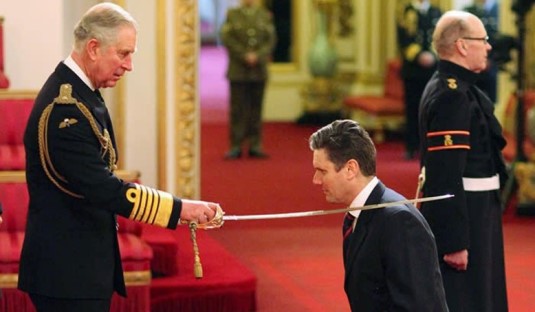
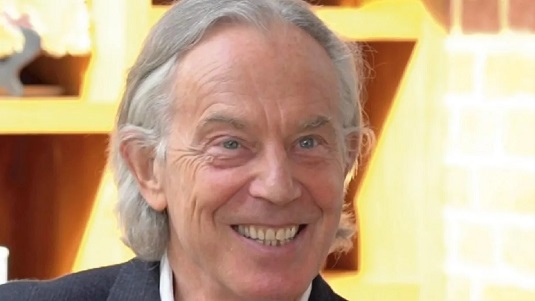
What unites New Labour throwbacks and a section of the left? Their excitable response to Tony Blair news. And wasn't there some news last night. The Queen has bestowed upon His Blairness a knighthood, but not just any knighthood: a Knight Companion of the Most Noble Order of the Garter is the highest honour a British sovereign can bestow, and Blair joins virtually all his prime ministerial predecessors save Harold Macmillan and Alec Douglas-Home as a recipient of the honorific. Naturally, he's thrilled to bits as are his acolytes and epigoni. Those who believe he should be in irons at the Hague, less so.

There is a concerted establishment effort to launder Blair and absolve him of his pivotal role in the Iraq War. As he likes to say, he's proud of the fact he helped topple a repulsive dictator. One, we should remember, the Anglo-American alliance were very happy to support until Saddam Hussein slipped his leash. But the question is what is a reasonable blood price for regime change? Not only are there the hundreds of thousands killed directly by military assault and a decade's worth of sanctions, but we also have the warlordism and the rise (and fall) of ISIS. A bleak catalogue of appalling devastation and death that, in all likelihood, would not have happened if Blair hadn't provided George W Bush the political cover his Middle Eastern adventure needed. But it's okay, those affected by his actions seldom if ever come into his orbit. He doesn't have to sit across a dinner table from an Iraqi, whose family's bodies laid for months in the rubble of their home. One unforeseen political consequence was how Blair's decision has limited subsequent governments' room for manoeuvre. The invasion of Libya happened, bombs were dropped in Syria, the RAF are active, if largely unreported, participants in Saudi Arabia's war in Yemen, but undoubtedly there would have been less jaw jaw and more war war were it not for the disaster visited on Iraq and the exposure of the lies that justified it. For providing such a drag on Britain's ability to make war, it's a wonder the establishment are patting him on the head.

But, lest we forget, there was more to Blair than a war of dubious legality and humanitarian provenance. While no one seriously thought his 1997 government was going to imperil capital and unleash the Marxist hounds of hell, his 10 years in power bedded down rather than unpicked the Thatcherite settlement. Only Labour politicians are daft enough to treat neoliberal macroeconomics as articles of faith, but time and again government intervention in the economy was ruled out. Except for when the state was selling off what bits of the public infrastructure the Tories didn't get round to, or creating new market opportunities (mainly outsourcing) in public services and the NHS. On this score, John Major drew up the blueprints and Blair's governments took over and made their own. The Private Finance Initiative, faux competition between state-run services, expanding neoliberal governance, all provided capital with guaranteed public sums and the residual class consciousness befitting a period of class peace. Profits were up, employment was up, public amenities got a lick of paint, and pleasingly the collective power of the working class declined over the Blair and Brown period. For a party of the trade unions, they did everything they could - and then some - to prevent the re-emergence of a collective or collectivist consciousness. A point underlined by the Iraq War protests, which were overwhelmingly pacifistic and found their protest vote outlet in ... the Liberal Democrats.

Apart from services rendered to capital and tradition, there is a very personal reason why the Queen might decorate Blair in this way. On 31st August, 1997, Princess Diana met her untimely end in a Parisian tunnel. That morning a hesitant and borderline choked Tony Blair dubbed her the 'People's Princess' - an oxymoron if there ever was one - but a tribute that certainly caught the mood. Who was out of step with public feeling was the Windsor firm. As Diana was an arm's length exile from court, the stuffy institution paralysed by protocol and inflexibility did not have the wherewithal to respond to the outpouring of popular grief. Indeed, The Sun launched a campaign to get the Queen to fly the flag atop Buckingham Palace at half mast. The visible distance and refusal to respond might easily have spilled over into a terminal crisis for the monarchy. Remember, it had been plagued by scandal, leaks, and its legitimacy was under some pressure. But, to put no finer point on it, Blair saw it his duty to intervene to support it. He urged the Queen to appear in public while the machinery of government swung into action. There was inescapable wall-to-wall coverage, public events and normal TV and radio programming cancelled, and the emotional fervour it fanned originally settled on the perceived need to protect Diana's boys, before expanding to the rest of the front rank royals. Within a year the kind of press the Windsors had early in the decade was a memory.

Blair knew his hip, vague brand of modernising changey-progressivism, which counted for little when it came down to it, potentially sat uneasily with Britain's own hide bound and creaking peculiar institution. Embarking on his own programme of constitutional reform with the devolution referenda, he chose to embrace the monarchy, give it good PR and a soupçon of humility, and align it - the thousand year old symbol of national continuity - with his flash-in-the-plan project for a "young country". Whether Blair received political blessings at the time for his obsequious efforts is a matter of debate, though it doesn't seem to have done his ratings any harm. However, while he helped the monarchy get a nip and a tuck, its long-term popular legitimacy appears to be eroding again - if the mass indifference that greeted Prince Philip's funeral is anything to go by.

This is now and that was then. Blair bought the Queen valuable time, time enough for a toned down Prince Charles and a thoroughly modern Prince William to embed themselves in popular consciousness. Just don't talk about the rebellious royals or, cough cough, Prince Andrew. By royal decree, Blair has his just reward in time to see how, in the long run, his efforts at saving the monarchy are unravelling.

Image Credit

Monday, 12 April 2021

The Waning of Official Ideology

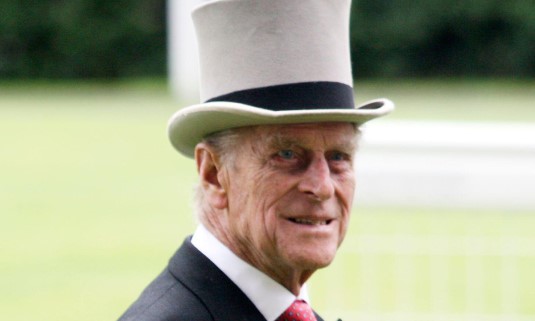
We all like revelations, but my joining millions of others in the great television turn off on the evening of Prince Philip's death probably does not qualify. Terrestrial TV, with the exception of Channel Four, was nothing but a blizzard of propagandistic Persil, of suds and foam on a rapid spin cycle laundering away the Duke's awful reputation. In the simpering tones only Nicholas Witchell can muster, we heard about Phil's keen love for nature, and from a retinue of former toadies about how his frequent racisms and "gaffes" were ice-breaking efforts at humour, of eliciting conversation from poor sods forced to paste on the smiles and play the grateful subject. Indeed, so persitent has this myth become in the short retelling that Boris Johnson saw it fit to repeat some of them in his own Commons eulogy.

This kind of nonsense coming from the state didn't require much forecasting. The declaration of eight days of morning, the injunction BBC presenters are to wear black for the period, Tory efforts to memorialise the Prince with a new royal yacht, the suspension of government business, and the clearing of the parliamentary decks for hours upon hours of tributes. Naturally, all sides of the house - 132 MPs were down to deliver their eulogies - united in a toe curling display of flummery. The Speaker Lindsay Hoyle set the scraping tone, calling the dear departed the "Father of the Nation". Keir Starmer paid his regards to this "source of stability", and Theresa May (remember her?) alighted upon his example of service. Responsibility for the most deliciously idiotic comment fell to Harriet Harman (it had to be a Labour MP), who suggested this pinnacle of the class system was "profoundly countercultural".

Jacob Rees-Mogg outlines the ruling class common sense best by repeating the same paragraph over and over again with a slow building cadence of religious histrionics. The Prince's example was "about service to an institution embodied in an individual who represents the nation." Rees-Mogg talks about the oath before God, the unbreakable sacrament of service, and how the royal couple's vows in the presence of the almighty conferred their relationship with the nation with divine blessings. Just don't talk about the rumours of the 30 affairs that have filled the French press since the weekend. Returning to Mogg's invocations, they're redolent of the ancient sovereignties of the absolute monarchs. Hence the passing of Philip is a diminution of the UK state's official personhood, and only the pageantry of ritual and its impingement on the convenience of its citizenry can the event become the event, a moment where the mortality of the royal person is the foil for the (aspirant) immortality of the institutions that made Philip possible.

What was unexpected, at least to the media managers and opinion formers, the politicians, and the Palace itself was this "event" greeting a vast ocean of apathy and indifference. The live feeds on YouTube of the Commons tributes numbered between just 200-350 watchers, a good chunk of whom will be journos looking for a bit of copy before the printers roll. Meanwhile, the BBC received 100,000 complaints and were forced to pull its online form following a decision from on high. The possibility of a Diana-esque period of popular mourning was anticipated by the powers-that-be, and to their minds it's black armband day out here in real world land. But no.

And so the tributes, the pull-out souvenirs, the schedule cancellations and the speechifying will only succeed in affirming the state for a small number of (mostly powerful) people. Indeed, had the government gone all-in with the full pomp of a state funeral this might have catalysed resentment and opposition, especially when the 127,000 Covid dead are barely acknowledged. We're lucky then that among the Duke's final wishes were instructions for a somewhat modest service not even the Prime Minister will be attending.

The official mourning does say something though the distance between them and us, which is curious considering the political mastery the Tories have demonstrated on the issues of the day. There does seem genuine surprise among ruling circles at the lack of appropriate mass respect, even from the (nominally) reliable forces of social conservatism Tory politics falls back on. Does this matter? The state can do without willing supplicants and scraping subjects as long as indifference doesn't pass over into opposition and the abomination of activism, but it's enough to give the more intelligent bourgeois operators pause. Despite the Deeply Solemn Moment, the shit daily flung at the Windsors' own heretics and renegades, and the thumping Tory majority, explicit fealty to the formal discourses of state is worryingly weak. And how this might be repaired neither the Tories nor the rest of the establishment have a single clue, except hoping that going through the motions enough times, especially when the Queen passes away, will be just good enough.

Image Credit

Monday, 8 March 2021

An Inconvenient Rebellion

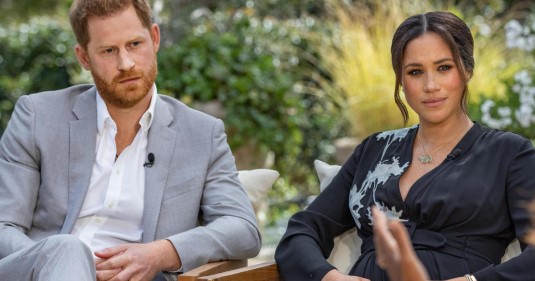
If you're looking for the hottest of takes about that interview, Ash Sarkar has more than delivered. On the comparisons between Harry/Meghan and Diana, on fleeing The Firm and finding a replacement, and the contrasting characters of the oligarchies in the UK and the United States you'll seldom find a better piece. Marxists don't normally do the Royals, and so it's a refreshing alternative to the lickspittle content, the fawning over the Queen, and the faux outrage from Piers Morgan and his ilk.

What the Oprah Winfrey interview has shown is how nothing has fundamentally changed since Diana's day. In happier times having William, Kate, and Harry roving around and continuing her patrician good works was excellent PR for the Royals. A youthful rebranding in which the young royals spoke (semi-) candidly about mental health, and made soft noises about climate change and racial prejudice was just the tonic. An update of a venerable institution for the 21st century. But Meghan and Harry's revelations about the bullying, the silencing, the lack of support, the policing of their movements by palace flunkies and, of course, the claim a senior royal made tut-tutting noises about their son's skin colour goes to show the royal makeover was woke wash. Under the hood thrummed the same old racism and ruthless regard for nothing but the continuance of the institution in the reverent style it had grown accustomed.

On the rare occasions this place has pronounced on royal affairs, we've visited the successful rebrand and, latterly, a certain indifference concerning their comings and goings. Indeed, to understand the popular perceptions of the royals and particularly the antipathy Harry and Meghan attract is partly located in their being royals of second rank. The institution as a whole, of course, is venerated because its eternal character offers a point of fixity in a vastly changed world, undoubtedly helped by the very long reign and very long life of the Queen herself. She did her bit during the war, oversaw the end of empire, post-war "socialism", the crises of the 70s, the dog-eat-dog of the 80s, and the irreverance of the 90s. Her time has seen off all challenges, from infidelity, divorce, untimely deaths, to fallings outs and the persistent stench of sexual abuse. There she is, stoically cutting ribbons and clutching her handbag. The nation's repository of good, old fashioned British values: duty, persistence, honour, sacrifice. The reason for her popularity, particularly among older people, is because they believe she instantiates all that is best about them.

How about the others? Charles's life in the public eye has foolishly courted controversy, not least over his opinions on architecture and, if you remember them, memos to ministers. Yet, despite not sharing Mummy's popularity he retains her sense of duty. Something William has also embraced and reinvented, and so the first and second in line to the throne command a certain respect. However, outside of the core spine of the royals the rest of the family are viewed differently. Margaret was seen as an old soak of little consequence. Anne a dutiful and workmanlike second rank royal who earns her crust. Andrew, well, and Edward, a soft-hearted luvvie not cut out for a martial life in the military or for much else. Harry for his part courted outrage as a young man as the press pursued his partiality to wine, women, and song, let off when he tagged along with his brother and sister-in-law on high profile public engagements and did his bit for former servicemen and women, most notably with the Invictus Games. But then Hollywood came into his life in the shape of Meghan Markle, a mixed race woman with a previous life and an unscrupulous father happy to grift by association. As a commoner, an American, and a woman of colour, she was received by our repugnant press as a grasper and a gold digger, and therefore another mouth at the taxpayers' trough. As a second order royal with no line of succession to the throne beyond a series of unlikely accidents, this undoubtedly emboldened the press to harrass and treat them like any other celebrity. And, it seems, The Firm were happy with this arrangement. If Harry and Meghan are tabloid fodder, the core of the royalty are left alone - so no deep dive stories about William's infidelity to queer the pitch, or scrutiny of Charles's idiot opinions, or damage-by-association courtesy of Andrew's associations with Jeffrey Epstein.

What The Firm didn't plan for was Harry and Meghan's rebellion. As royals, they were economically dependent on carrying on as royals. And so when they announced their "retirement" as royals the palace moved with its customary ruthlessness to expunge them. No support, no allowance, no nothing. However, as Ash Sarkar rightly argues, they had options and could leverage their connections for a new life in America where British media scrutiny is less intense. as far as the core of mass royalism is concerned, running off and dishing the dirt just confirms what the press have said about them all along: they were unworthy royals. They weren't prepared to do the honourable thing and stick by their duty. They were flaky and wanted an easy life, just like how many older royalists view the young in general. The racism, the inhuman treatment, the claims of suicidal thoughts and mental health problems - convenient lies to justify their selfishness and lack of fortitude. Their departure nevertheless leaves The Firm with a problem as far as media management goes. Apart from periodic stories about the ex-royal couple, will the carnivorous press respect the first order pillar of royalty as we enter into the period we might euphemistically refer to as the "handover"? Given Charles's comparative lack of standing, re-establishing the Queen's hard won reverence was always going to be difficult, and becomes much harder if his peccadilloes are once again fodder for content-hungry editors. This, ultimately, is the significance of the estrangement of Harry and Meghan: the royals now have to do without their shit catchers.

It is tempting to treat the royals as an unexciting, glitzy soap opera. But we must remember The Firm are a core institution of the British state. While not meritorious, the family are emblematic of their being something special and/or other worldly of those constituting the British ruling class. An ancient institution, it is also the repository of the essential, timeless quality of the nation, and constitutionally is the guarantor against democracy if it gets, well, too democratic. If the Harry and Meghan saga makes its position harder to manage and altogether more vulnerable, then the interviews and its fallout is all to the good.

Image Credit
Friday, 18 May 2018

The Royal Wedding and Indifference

It's nice that a young couple have met, fallen in love, and are due to formalise their commitment to one another. For them, their family and their friends it will (hopefully) be a wonderful day, something they'll live to fondly remember. And as it's wall-to-wall telly and press, you might have heard something about it. Ah yes, the royal wedding, the taxpayer funded jamboree of bowing and scraping we are officially celebrating this weekend. Yes, I'm sure it comes as no surprise to find that this wee corner of the internet finds the spectacle not just cringe-inducing, but thanks to Windsor Council's cleansing of the streets of the homeless, and the money thrown at it while we "can't afford" to safely clad tower blocks, the absurd pomp of Prince Harry and Meghan Markle's wedding will be as tawdry as it is tacky.

That's not how millions of people will see it. For a great many, Royal occasions offer something uncomplicated and pure. The monarch and her progeny did not seek their station in life, it was thrust upon them by accidents of birth. The institution embodies duty and service in which the Queen is a repository, an empty vessel if you will, into which hopes, meaning and narratives are poured. For those ill at ease with what Britain has become, the sheer longevity of the monarchy gives them something unchanging to hang on to. Less a tug of the forelock and more of a grip, this is ably assisted by the eternity of the Queen herself. But not just the Queen, the royal family has something for everyone. In the retired Prince Philip and, to a lesser extent, Charles, we find two fossils who embody the backward-looking anxieties of the nation. The Queen's consort with his hilarious racist quips, and the heir with his meddling in matters political - they're just telling it as it is, innit? Just like all the loudmouths out there, albeit in plummier, more refined tones. And with the younger Royals, we see modern Britain poking through. "Wills" and Kate are inoffensive and pleasant and considering their backgrounds, feudal-old money and nouveau riche, come across as surprisingly normal and relatable. Likewise, Harry has grown to occupy the same wholesome, do-gooding space after a shaky start (booze, partying, Third Reich cosplay). And with Meghan, we start to see the family's first rank resemble multicultural Britain - a woman who is divorced, is foreign, and horrifyingly for the Daily Mail brigade, mixed race.

No doubt things have changed for the Windsors, and for the better. Irony of ironies, the troublesome princess who did the institution a favour by dying in a Parisian tunnel 20-odd years ago went one step further. How Diana settled into her role as the once-future queen by being touchy-feely and hanging out with the slighted and blighted of the earth ended up providing the template for how to be the British sovereign for the 21st century - roles the Cambridges and Harry have avidly taken to, at least if you swallow everything broadcast and written about them. And so the institution appears stronger now than it has been for last 30 years.

Yet there might be something interesting a-stirring. And this is the widespread indifference, occasionally acknowledged by establishment outlets, to the wedding. How to explain? Yes, Harry isn't ever going to become King. Despite the big deal that is being made, in terms of Royal events this is distinctly second order. Matters aren't helped by the FA Cup Final, but also for the indifferent it is very easy to escape the hype around the wedding - easier than Wills 'n' Kate, the jubilees, the Queen Mother's funeral, and the suffocating, maudlin miasma that hung over Britain in the aftermath of Diana's demise.

Indifference is a latent menace in their heralded celebrity/PR strategy. The Royals have always been celebrities, have always got spoken about in the gossip columns, but unlike their parents the press have proven much more hands off with the princes. Harry's occasional misadventures were an irregular fixture, but neither of them sustained full scale character assassination as per other members of the family firm. The problem is how long can this carry on, especially if anyone in our couple of, well, power couples indulge an indiscretion or end up in a scrape. Ideally, for the institution's survival, they have to keep their noses super clean, especially when Charles inherits the throne and starts putting people's backs up. Diana-like beatification has to attend to the princes and their families in contrast to a monarch who, according to watchers, is set upon a larger political role. And why should we be surprised? He was born to rule, after all. The difficulty here for what comes after is if, under Charles, they take the inoffensive path and only make headlines for opening the Invictus Games, etc. Without gossip swirling about then, in the medium to long-term their standing could suffer from a lack of interest. I mean, just look at the tedium of the stories about Meghan's family, the will-he/won't-he speculation about whether Dad would give her away, and so on. Even the most avid royalist would find this mind dribbling banality insulting. Likewise, new royal babies or two, the first day of nursery and school are not the stuff by which a mass public warms to their future King. The young royals run the risk of popping up in the popular consciousness as shiny, expensive baubles and little else. On the one hand this might not matter, monarchic succession isn't democratic, but the institution needs popular support to continue, otherwise more people might start asking what's the point.

Put away your fantasies involving Madame Guillotine and storming Buckingham Palace. The danger for the British monarchy is its coming to an end with a shrug.