Showing posts with label TV. Show all posts

Monday, 19 October 2026

Undercover in Reform

If there were doubts about Reform's political character, ITV's undercover documentary has put them to bed. In encounter after encounter, its reporters were witnesses to unprompted, off-the-cuff racism. But we're not talking about the casual dropping of slurs. Instead, a parade of councillors and party officials outlined their elaborate, violent fantasies. Of ripping people from their homes and shoving them in concentration camps, of personally carrying out public executions, of terrorising minorities and enjoying the experience of discharging imagined race war responsibilities. The expose went beyond how Reform cadre break taboos in private. Rather, what we got was fascist bloodlust, a desire by the men featured to commit mass murder because, for their own pathetic reasons, it makes them feel good.

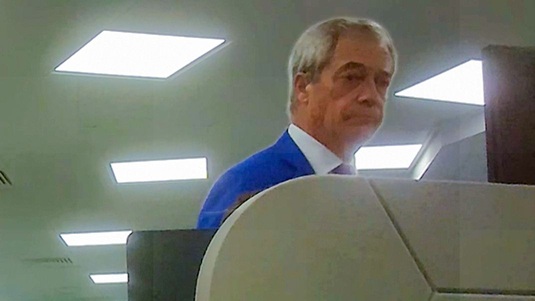
Damning for Nigel Farage and his satraps was not their endorsement of these views. He would never be so crude. But the fact that, despite pledging to "professionalise" the party on many occasions, Reform is an organisation where these sorts of views were tolerated on a don't ask, don't tell basis. Farage himself was willing to overlook the racist attack made on David Lammy by Chris Parry, the then candidate for the mayoralty of Hampshire and the Solent - presumably because he was a rear admiral. But overall, time and again, unapologetic fascists were shown to have sailed through the "vetting", tips were given by party officials on how to circumvent it, and there was more than one case of those dumb enough not to hide racist social media posts being invited to apply again for a local election vacancy. Farage's pledges to clean up his outfit are a sham.

What does Farage gain from attracting these sorts of people to his organisation? Because he knows these are among his core constituency. Reform supporters wouldn't be that upset by the vote-splitting threat posed by Rupert Lowe's Restore if it were otherwise. What Farage gets is a quid pro quo. They do the hard yards of organising the party, of recruiting candidates and sorting out election campaigns, and ultimately putting up the yes men - and they're nearly all men - who'll do Farage's bidding in the council and mayoral chambers, who'll vote the right way in Holyrood and at the Senedd, and will nod through his enabling bill to eviscerate British democracy if they make it to Number 10. And in return, as Farage and his cronies engorge themselves on the not inconsiderable resources of the state, they'll more or less live out their fascist fantasies. Such is the unsaid pact at the core of Reform - something baldly stated in the video, and understood by both parties to the arrangement.

Unfortunately for Farage and Reform, a future where this could be enacted is becoming increasingly far fetched. The schoolboy racism revelations, which have circulated around Westminster for at least a decade, the dodgy finances and possible criminal wrongdoing, the political setbacks, and a Tory party that has, the establishment have decided, made up lost ground, have worn down Reform's fortunes. And Restore are, again, a menacing presence. Their interventions having arguably cost Reform five council by-election victories in October so far. The polling returns have fallen and while they, for the moment, have settled at around a fifth of the electorate at the time of writing, the possibility of Reform reaching much beyond an increasingly boxed-off core has receded. There is, unfortunately, a market for the poison Farage is peddling, but it is out of step with the mainstream majority. And, as such, it remains a base capable of sustaining a few dozen far right grifters, and for feeding and amplifying fascist street movements. But is that enough for a Farage who, for a short time, felt power was within his reach? Probably not.

Image Credit

Saturday, 19 October 2024

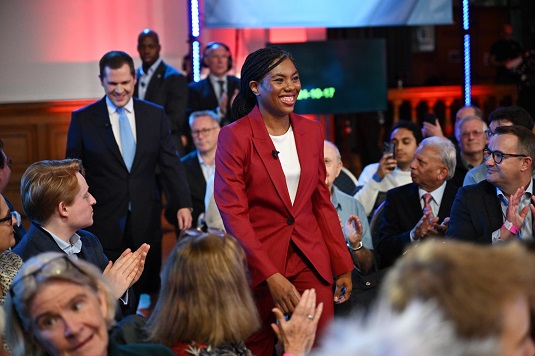
Badenoch's to Lose

I suppose some words should be expended on the Tory leadership contest as the marathon powers into the final straight. Already an uninteresting contest, the shortlisting of Kemi Badenoch and Robert Jenrick for the members' ballot has proven to be the political equivalent of the sleep of the dead. Jenrick says something right wing, Badenoch says something right wing. It's not exactly appealing to the punters. Compare this to the media interest that Labour leadership elections attract. Even the last one, in which Keir Starmer emerged as the early favourite commanded much more speculation and coverage. Remember, this was at the dawn of what the entirety of British politics punditry thought was a decade of Tory dominance. In the scheme of things there couldn't be anything less pressing.

That's by the by. Never let it be said the Conservatives are incapable of learning. Aware of the evident damage and bad feeling the last round of public debates did the party, this time the apparat has thrown every obstacle in the way of a TV clash going ahead. The Telegraph reported that the Tories had set several conditions on it taking place on the BBC. They demanded that the Question Time special's audience be made up entirely of party members, and that they should pay a £10 admission fee to "make sure they turn up". It is well known that studio audiences for public broadcast attract no charge in this country. Furthermore, where Question Time is concerned the production team do try and fill out a politically balanced audience based on voting intention, and the BBC were not going to compromise on this. This was to Jenrick's chagrin. Miles behind Badenoch, he can only gain from a head-to-head. He said he would be "delighted" to debate Badenoch at the BBC. For her part, she said she would abide by the party board's ruling. The cheese is hard for some.

Yet one public debate did take place. On Thursday, GB News broadcast a two-hour long programme. To call it a debate would be a misnomer. Both had an hour each to set out their stall and take questions. There were to be no repeats of the clashes that brought a little colour to proceedings two years ago. The Conservative Home headline said it all: "Two hours of our lives that we’re never getting back". Jenrick opted to go first and spent half his speech banging on about immigration and how we need to leave the European Convention. He set fire to the Tories' record in office, and accused "foreign courts" of letting terrorists into Britain. It's obvious what Jenrick is trying to do. He's hoping muscular posturing will cause the right wing party members - the overwhelming majority - to give him a second look. The problem is that Jenrick's a dweeb. Despite quitting the government over the issue, that looked less like a principled stand and more a contrivance to give his run at the Tory leadership some credibility. But it's fallen flat. Apart from a charisma bypass, he's just not credible on these issues with the membership. They remember his past life as a Dave-era A-lister who was gifted his Newark seat in 2014, and as someone who loyally campaigned for remain in the EU referendum. Then there is the small matter of his being the immigration minister up until last December. That he did his damnedest to make new arrivals feel unwelcome and defended protests outside hotels hosting refugees (well before the riots) counts for nothing. For the Tory membership, he's a briefcase just saying and doing what he thinks will work. Being well inured to dishonest politics, they know a cynic when they see one.

The same can't be said for Badenoch. Introduced to public prominence at the last leadership contest, apart from the culture war cliches she did then have something interesting to say about scrapping the Treasury and spending being a direct competence of the Prime Minister's office. Unfortunately, in the two years since she has become more acquainted with the way the state structures class relations and how central the Treasury-Bank-of-England-City nexus is to the whole set up. Not that the Tory membership care about this. For someone who apparently hates the culture wars, she has fought them with alacrity. As Women's and Equalities minister she has assuredly used the position to oppose a better deal for women, and has come out with clangers about maternity pay, the minimum wage, and carers. And there was the small matter of demonstrating sympathy with far right street thuggery. For the membership though, as a Brexiteer and as a politician who's never been backward about being forward she's the real deal. So during her speech for GB News, she didn't have to flex with attacks on the ECHR and other such performative nonsense. The membership feels Badenoch is one of them, and she is. By way of demonstration, at the end of the GB News "debate" Christopher Hope asked for a show of hands about who the Tory audience would be backing. Let's say the result for Jenrick suggests he can look forward to a Liz Kendall-style outcome.

And so it's Badenoch's to lose. It's difficult to see how she can snatch defeat from the jaws of victory, short of an earnest conversion to Corbynism or was found to have previously been in secret defection talks with Labour (why not?). If there is one smidgen of hope for camp Jenrick, the latest poll on what the public thinks puts him ahead of Badenoch. Yes, a massive 14% versus her 13%. Combined, that is less than the 31% who indicated 'none of the above'. I suppose the Tories ought to be thankful for the unseemly power struggles and amateur dramatics that have marked Labour first few months in office. Because if Starmer had had a smoother start and avoided the stupid own goals, this poll would be even worse and the Tories even more of a marked irrelevance where most people are concerned.

Image Credit

Wednesday, 28 August 2024

The Two Souls of Labourism

This 40-year old edition of Panorama has dome the rounds on social media these last couple of days. Filmed during an abatement of the faction fighting in the early 1980s and before the purge of the Militant Tendency got properly underway, it's good for a potted history of Labourism and how it has always been a fusion of opposites. Starmerism, like Blairism, is not a break from these traditions but is rooted in and a culmination of strands that go back to the beginnings of Labourism as a political current and school of thought.

Tuesday, 4 June 2024

Who Won the ITV Leaders' Debate?

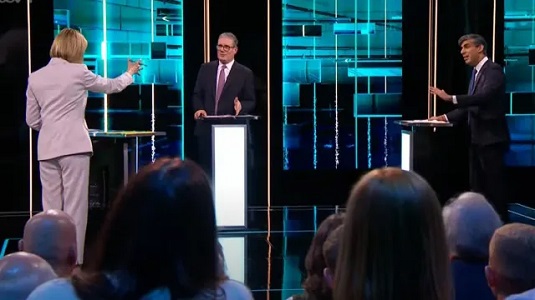
Can the news get any worse for the Conservatives? Before ITV's Leaders' Debate, Survation dropped its first big MRP of this campaign. Field work took place between the day the election was called, and it puts voter intention on 43% Labour and 24% for the Tories. By the standards of recent polling by sundry firms, not too catastrophic. Until you look at the seat-by-seat projections. Labour surges to 487 seats with the Tories trailing on 71. And remember, polling was done before Nigel Farage announced his comeback. Those Tory numbers could get even worse.

For Rishi Sunak, the situation could not be more desperate. He needed a good night facing off against Keir Starmer in the hope of salvaging a viable core post-election. But as this and other MRPs show, Sunak himself can't not pay to ignore his formerly super safe constituency, which is set on becoming a marginal. Sunak then needed to be less the Prime Minister's Questions point scorer, and certainly not repeat his arrogant tones of a couple of years back during the televised Tory leadership debates. He needed to strike the statesman pose, which was certainly going to be the ground on which Starmer pitched his tent.

And as for the Labour leader, this is his election to lose. And that has been the case since Liz Truss entered Number 10. Yet even he and his team know that disgust with the Tories are driving polling numbers, they want to turn that into an enthusiasm for Starmer that has long been lacking. For most people, up until now he has been a grey blur so for many this would be their first serious look at how Starmer comes across. What he had to do was make sure he didn't lose his cool, fluff his lines, and come over worse than the Prime Minister. How did they do?

It was pretty appalling all told. To be fair to Starmer and Sunak, this wasn't entirely their fault. Keeping the head-to-head to just over an hour and cramming in as many questions as possible meant they were limited to 45 second answers. Completely ridiculous. Like much political commentary, this did nothing to enlighten or, as we used to say in the old organisation, "raise the level". ITV had engineered the debate to produce quick time sound bites. It didn't put either leader in much difficulty because none of the questions stretched them. As such, I doubt anyone would have come away with a changed mind.

The substance of "discussion" was pretty meagre. Sunak did like to talk over Starmer a lot and had more chair's actions aimed at him, but then the format did suit what he was selling. Telling viewers to forget about the last 14 years, we needed to have our eyes fixed on the future. According to the Prime Minister, the economy is doing well, NHS waiting lists are coming down, small boats in the channel are falling. He's protecting households from the costs of the green transition by basically doing bugger all about it, and he's thrown more money at the military. But this was very secondary to his main message. Labour can't be trusted with national security, Labour will flood our streets with asylum seekers, Labour will have a deputy PM that doesn't like nuclear weapons, Labour's going to increase energy bills and force people to buy heat pumps and electric vehicles. But most of all, the one thing Sunak would not shut up about was Labour's alleged plan to hike taxes by £2,000/year. Someone was paying attention during the face-to-faces between Boris Johnson and Jeremy Corbyn: repeat one thing again and again and again so it lodges in the mind. In fact, one thing that did surprise is that Sunak didn't go lower. Given he's running a core vote only campaign, I'm surprised he didn't make more of his "quadruple pension lock" - the guarantee that pensioners will not pay tax on their state pension. Because Labour aren't backing his scheme, he ventured that Starmer favoured a "retirement tax". But he only proffered this once, which would be more effective with his desired audience than dodgy claims about a phantom tax bill.

Starmer for his part didn't go in for aloof serious vibes. He went for the Tory record. Showing two can play Sunak's game, the words "Liz Truss" paired with "trashed the economy" were uttered almost as much. Initially it seemed he was knocked off balance by the £2k tax gambit, and only revisited it to rubbish it half-way through the show. Of the two, he certainly offered more. He talked about GB energy, plans to build 1.5 million homes, more teachers, action on NHS waiting lists. He promised leadership on Israel Palestine, saying it would be his "solemn duty" to make a resolution a reality. He didn't say much on the economy even in the dedicated economy question, but his response to the climate question linked it to economic growth and opportunity - which differed from Sunak's rendering it as a cost and an obstacle. Basically, Starmer didn't need to bring much to the table beyond his memorised content of the pledge card, and so didn't.

Audience participation was much more muted than the polarised election of 2019, but both men got cheers and applause. Though Sunak distinguished himself by receiving jeers and mocking laughter over his national insurance scheme. Something Starmer can undoubtedly look forward to when he does the next round of these four/five years down the line.

Going back to what both men were trying to achieve with this, I think both will be pretty pleased. Sunak got his attack lines out and was able to peddle his fear-mongering. He wasn't skewered on the Tories' record, thanks both to the format and his relentless conjuring of the anti-Labour terrors. Starmer wasn't ruffled either. He wasn't provoked, and when Sunak hit below the belt rather than booting back Starmer quickly tried to refute his nonsense. In all then, a score draw. But Sunak needed to smash it and have Starmer deflate like a souffle, not making any headway here means certain catastrophic defeat on 4th July.

Image Credit

Monday, 8 April 2024

Friday, 2 February 2024

Leigh Bowery on The Clothes Show

For no reason whatsoever, here's Leigh Bowery doing his thing.

Monday, 1 January 2024

The Opposite of Necessary

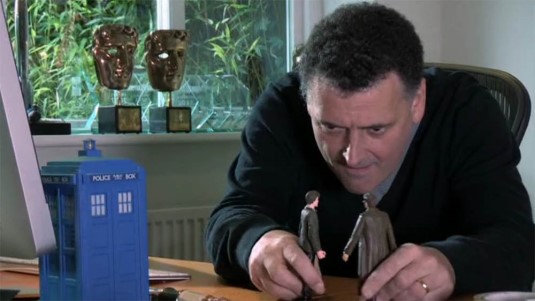
Doctor Who and Sherlock's Steven Moffat has declared his wish: to make a British version of The West Wing. He says "it's necessary". This is because Moffat has a theory about why politics is crap:
We’ve got a problem — we think that being cynical is sophisticated, but that’s how adolescents think. Our cynicism about our politics has resulted in cynical politicians. If you tell a child they’re bad, they become bad. If you tell politicians they’re a bunch of egotistical maniacs, then where is the value in trying to be anything else?
Good grief.

The West Wing, for those who've never watched it or have repressed the memory, was a centrist fantasy about how US politics works. Set in the White House following President Bartlet and his lackeys, it spoke to every middle manager in middle America as the team had to handle competing pressures and interest groups, keep an eye on the polling, but making sure that everyone does the right thing. This is the essential core of the show for Moffat: its celebration of selfless public service. If we had more of that, then our politics would be better.

You don't need Holmes to realise there is a market for this. The people who listen to the George Osborne and Ed Balls podcast and watch the 2012 Olympics opening ceremony on the day every year. Moffat will have met the moneyed people, the celebrity people, the sensible people in his circuits around the entertainment establishment. Everywhere he goes there is the desire for "stability" and "proper" politics. This, on paper, is what Keir Starmer offers. And he himself always emphasises how keen Labour is "to serve". The problem is that even a portion of his natural base aren't convinced. Indeed, thinking about politics in 2023 it seems Starmer and his Tory opponents have concluded that you don't need to persuade the punters any more.

If Moffat is able to realise this project, it can only ever be naff. British politics right now is is not just naked, but is proudly parading itself in the buff. Its obscenities put off far more than it attracts and therefore unlikely to be commercially. It is sure to run cringe, earnest story lines that aren't believable. They run against the grain of the real. SW1 will love it, especially if it's called The Village. But that won't be enough to sustain it beyond a single season.

Bourgeois politics needs its fairy stories. On that Moffat is right. But there is no guarantee it can generate enough of them with the power to convince.

Image Credit

Tuesday, 26 September 2023

Laura Kuenssberg's State of Chaos

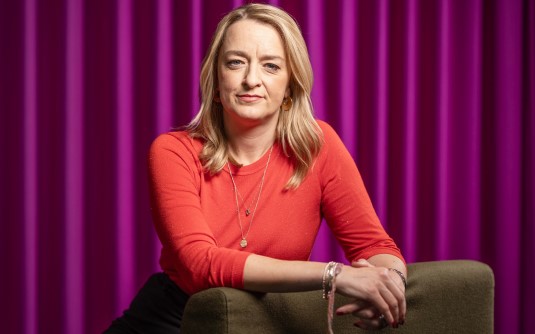
State of Chaos by the BBC's former politics editor was undoubtedly well-watched by everyone at Westminster. It promised to plunge deep into the mess of Brexit and its fallings outs to make sense of the near anarchy that characterised mainstream politics between 2016 and 2022. Promising insider access and never-before-seen interviews with movers, shakers, and bit-part players, did Laura Kuenssberg succeed?

No. Back in March last year, Patrick Howse wrote a blistering critique of her time at the helm. It wasn't that Kuenssberg was bad at her job, it's that her job was not what it should have been. I.e. reporting the news and holding politicians to account. Instead she acted as a relay. Kuenssberg has a nose for political gossip and ingratiated herself with Number 10 insiders, faithfully acting as a conduit for their framing of news stories. Boris Johnson's operation didn't need to establish a rapid rebuttal unit because Kuenssberg could be counted on to repeat whatever nonsense was texted her from the inside. Even if, as was the price for her closeness to Dominic Cummings, this meant regurgitating a complete pack of lies.

State of Chaos was true to Kuenssberg's signature style. There was never any hard questions asked of her interviewees. They were given plenty of space to explain themselves, which has its place. But in a documentary about how politics in this country went into meltdown? Considering how some of her talking heads played important roles in the dramas and behind-the-scenes shenanigans, simply allowing them to spin their own responses without question was a dereliction of political journalism.

I suppose it was to be expected. But this wasn't the only fatal flaw. Replicating standard practice of mainstream political comment and most academic politics coverage, State of Chaos caressed the surface of politics. There was no appreciation of why the Leave campaign won, why the British civil service famously did less contingency planning for Brexit than Japan, the character of the forces politicians pandered to, nor how the Tories were so successful in 2019. There was plenty of she-said he-said minutiae, confessions of plotting, and aspersions cast on the characters of ex-Prime Ministers. But why Theresa May framed Brexit in the hardest possible way when the referendum was won by a slight margin, why Boris Johnson bullishly bulldozed Brexit through all opposition, and why - in the last episode - Liz Truss crashed the economy were all questions that were never asked. What were the interests involved? What drove the crisis? Anyone wanting answers should look elsewhere.

But even more damning was the great unsaid. The so-called state of chaos of the documentary's title was as much a crisis of the Labour Party. Billed as an account of the shambles politics as a whole became, Labour and Jeremy Corbyn merited the briefest of mentions. There was no curiosity about how Labour managed to out-perform expectations in 2017, thereby accelerating Tory crisis. Why and how this was reversed two years later, nothing. It might as well have been natural forces or the politics gnomes at work. Nor were the severe divisions that paralysed the party paid any mind. You can't say this wasn't newsworthy or irrelevant. After all, the BBC's politics output and the "reporting" of Kuenssberg herself devoted to Labour between 2015 and 2019 amplified every lie to undermine its leadership, and helped deliver the party back safely into establishment hands. Its absence was an editorial oversight and nothing more, I'm sure.

State of Chaos failed as a portrayal of the recent political crisis, ignored a huge part of what happened, and reduced everything to the argy-bargy of dysfunctional personal relationships. In short, the "months and months" in the making turned out to be worse than a waste of time. It was a disgrace.

Image Credit

Monday, 8 May 2023

Eurovision 2023 Preview

The coronation had its celebratory concert, but that will get blown out of the water by Eurovision this weekend. And what a show we have in store with some cracking performances from some cracking artists. As this blog is a stickler for custom and practice, here is the annual eye on a handful of picks worth noting.


Mae Muller's I Wrote a Song gets top billing here because a) patriotism is compulsory in Eurovision, even for left wingers, b) Mae is a comrade, and c) the UK is in with a shout of winning, actually. Undoubtedly we would have won last year if it wasn't for the "special circumstances" in Ukraine, and it appears the powers-that-be at the BBC have had a penny dropping moment. Marry a decent artist to a contemporary-sounding(ish) song with nods to the signature Eurovision styles, like practically every other competing country in Eurovision does, and the UK entry will do well. Mae is up against stome stiff competition, but it does stand up well in the field. Can the UK pull it off this year? Some other have a thing or two to say about it.

Eurovision didn't earn its reputation as the greatest show on earth without a touch of ridiculum, and this year Austria have dished up a slice of the absurd.


Teya & Salena's Edgar is a song about being possessed by the ghost of Edgar Allen Poe in case you missed it.

Every year there's a no hoper that tickles my tastes, and here's my pick for the best. Belgium's entry will get the gender cops mad.


Gustaph's Because of You pushes all the buttons. Voguing (which, I hope, will be in the stage show), an early 90s house echo, and a guarantee to upset reactionaries across Europe. Sign me up.

But who is the contest really between? There are two tunes that have garnered most interest. We have Armenia's offering:


Not to my taste, but Brunette's Future Lover is doing the YouTube numbers. And as voting is a numbers game, those willing to take a punt could do worse than lay a few sovereigns on this effort.

The closest contender does have a mean pedigree behind it. The country I speak of is Eurovision superpower Sweden, and here is their entry:


A name familiar to Eurovision stans, Loreen first took the crown a decade ago with her light trance belter Euphoria. Now back with a bit more attitude, an interesting stage game, and a more vocally intensive tune, Tattoo is best placed to and probably will edge Armenia out on the night. But this is Eurovision and its voting system is notoriously brutal. Perhaps the fickle publics are going to choose someone else entirely?

Who is your pick for Eurovision this year?

Thursday, 16 March 2023

Forgetting Forde

We've talked about the lies of Starmerism before, and it's fair to say dishonesty is as much a feature of the Labour leadership as its state modernisation project. But one thing that strikes me about it is the chutzpah. Keir Starmer and other shadow cabinet members can repeat the most blatant untruths about what happened during Jeremy Corbyn's leadership to the point of rewriting history. And they can do this because, as the government-in-waiting, they know the lobby hacks have to keep them sweet if they want the inside track after the election. They also know a lot of the British media establishment are on side, and would veto anything too critical anyway.

Which brings us back to the Forde Report. Commissioned by Starmer himself after the biggest unauthorised release of documents in British political history, it's true to say the Labour leader's lackeys have shown more interest in determining the leak's source than their scandalous contents. And the same is true of the media's attitude too. It was a non-event, and was treated like a local newspaper reporting a change to supermarket opening hours. When Martin Forde KC finally reported in July last year, not only did the occasion go unremarked again, the Labour leadership chose to bury it. Because it did not fit their narrative.

What happened next? As part of the Al-Jazeera Labour Files series, they spoke to Forde himself. In the report below, Forde said he has not received any communication from the party since it was published. There was only one media inquiry, which was quickly nixed. There was some interest from the BBC though - it and Panorama's John Ware got shirty over the characterisation of that episode as "misleading". Did they think a senior barrister didn't know anything about libel law?

Enough preamble from me, just watch.


Tuesday, 14 March 2023

Five Lineker Takeaways

And so the BBC caved, offering Gary Linker his Match of the Day gig back and has promised to review its guidelines on impartiality. It also acknowledged they haven't always been consistently applied in the past. Are there any takeways from this affair?

1. The BBC is sensitive to criticisms that point out the cosy relationship between senior management, the chair, and the Tory party itself. The round robin letter written by rent-a-gob Tory MPs and Lords only drew more attention to the connections, and backfired. As such the hypocrisy, nay generosity afforded right wing celebrities and political commentators versus the BBC's overreaction to criticism of the government was thrown into sharp relief.

2. It is a defeat for the Tories. And they know it, hence why we have dim bulbs like the honourable member for the Vale of Glamorgan complaining that the BBC let itself get "pushed around by a privileged and overpaid elite". Alan Cairns presumably had no problem with the pressure his handsomely remunerated colleagues crudely brought to bear. It reminds them that the country is moving away from them, and their time at the top is coming to a close. They're also unused to such a concerted outburst of opposition from the liberal/centrist establishment, and are concerned that their victory in this culture war skirmish has put them on the backfoot.

3. They needn't be worried. Lineker's criticism of the Tories' Illegal Migration Bill has segued the focus away from refugees to a free speech/BBC impartiality issue. Even when Labour eventually followed public opinion, it was to talk about the hash the BBC made of the issue. Keir Starmer criticised the BBC's Chair, calling Richard Sharp's position "increasingly untenable" but accidentally on purpose forgot what got Lineker into hot water in the first place. This "win" for the "liberal left" has not challenged how refugees are framed in the British media, nor are Labour interested in challenging it. They want refugees to remain a "problem" for their own reasons.

4. While it was right for the left to stand with Lineker despite the less than obliging comments he made about Jeremy Corbyn in the past, we have to think about our own impact on the course of events. It was primarily left wingers, unbidden and uncoordinated, that kicked up a fuss on social media and helped frame subsequent media coverage of the sacking. Remember, while Twitter is not the British public is it the place where media elites, politics watchers, and politicians ike to congregate. What happens on Twitter, therefore, does not stay on Twitter. If an issue excites and persists, it will get reflected in broadcast and press output. Obviously, more is owed to the adverse coverage and the complete collapse of BBC football programming, but the left deserves its due.

5. There would never be any reciprocation though. For the left to force such a climbdown by itself, it has to command greater social weight. Perhaps we're not that far off.

Image Credit

Sunday, 6 November 2022

First Contact: An Alien Encounter

What kind of moment would the confirmation of extra-terrestrial intelligence be? This was the premise of an (ostensibly) intriguing First Contact: An Alien Encounter the BBC aired this week. Unfortunately, as a work of scientific speculation it failed to live up to the exciting proposition because it committed the cardinal sin. The show was boring.

First Contact begins with one of the Voyager probes picking up a narrow band signal, which is a sure sign of an artificial origin. The scenario then plays out over 12 days as the source is revealed to be a 200km-long object approaching the solar system. Oh dear. Grainy images are obtained of 'The Artefact' and it appears artificial in character. Spectroscopy readings shows metals, but the craft is seemingly tumbling in space and out of control. The boffins get to work on tracing its fight path and settle on a star system some 500 light years away, implying the craft had been in transit for over 100,000 years. No wonder it's not taking any messages. NASA direct the new James Webb Space Telescope at the system and finds evidence of a shredded planet, but with traces of manufactured materials showing up in the analysis. Meanwhile, the Artefact sails past the Earth and away. First contact is over.

The story could have been told in a 10 minute YouTube video if I'm honest. But the main purpose was to show off the science, and was therefore seemingly aimed more at a general audience. SETI's infamous Wow signal from 1977 gets its umpteenth showcase. It too was a narrow band signal and was much stronger than the background noise, and it (apparently) moved with the stars - as you would expect anything inbound to - but that was it. The best candidate for contact so far, but it has never repeated. Nor has it been satisfactorily explained by earth-bound or natural celestial phenomena. The question mark remains and may never be resolved. We're also told about how difficult it would be to communicate with aliens anyway, given how different our environments, biologies, and psychologies are likely to be. Just look at our miserable efforts at trying to establish a dialogue with whales(!). And we had to have a wee segment on ʻOumuamua, the first identified extra-solar object that passed by these parts in 2017. What the show skipped over were claims, such as those coming from Harvard's Avi Loeb, suggesting it could be an artificial object.

Surprisingly, while First Contact was humdrum and not a good way to fill 85 minutes it did at least get the sociology right. As noted a while ago, chances are news of an alien civilisation would perturb the froth of social media for a day or two and fade from view. Because this premise is a close brush with some derelict spaceship things are likely to be different. People lighting candles, American shock jocks forecasting armageddon, little kids hoping the aliens would be friendly, talking heads arguing the toss. Social media getting rammed with little green men memes was definitely on the money. And then we have people rioting because they suspected governments were concealing knowledge was a bit of a stretch. Then again, who could have foreseen anti-mask/anti-vax protests as a global pandemic ripped through the population?

When all is said and done, it's difficult to see who this programme was made for. Anyone slightly interested in the topic would be caning the YouTube videos already, and the casual channel surfer wouldn't have found something compelling enough to stick with. Science programming does get a lot of flack, and rightly so given how plodding and simplistic the output tends to be. I can't imagine anyone young watching this and feeling inspired enough to pick up a telescope, which surely is the criteria by which any flight of speculative fancy should be judged.

Image Credit

Monday, 25 July 2022

Truss's to Lose

Francis Maude is worried. The grandee is concerned that the Tory party is falling apart over the leadership contest and casting itself into the gutter. On the last point, his lordship evidently hasn't paid attention since July 2019. Speaking to the BBC this evening, he said:
One is obviously going to win the leadership, but if the behaviour of the teams and their language has been uncontrolled, and it has damaged the party’s standing or the way people see the party, then it could end up being a Pyrrhic victory.
It's true. I've never seen such a juvenile briefing and counter briefing from the candidates' teams. The irrepressible Nadine Dorries did Liz Truss a solid by contrasting Rish! Sunak's nice shoes and even nicer suits to Truss's five quid earrings from Claire's Accessories. Ouch. Similarly, beef has been traded over their respective schooling, after Truss was found to have massaged the facts about her alma mater.

The truth is Sunak's in big trouble. The favourite among the MPs, the margin between him and Truss is only growing - if we take YouGov's latest poll of members for good coin. In the sort of panic characteristic of the politically flat footed, his supposedly sensible Toryism is now junked and he's taken on even more right wing positions. Sunak has confirmed the privatisation of Channel Four, sticking with the Rwanda transportation scheme, tearing out anything smelling of China's influence in the UK, and going round describing his philosophy as "commonsense Thatcherism".

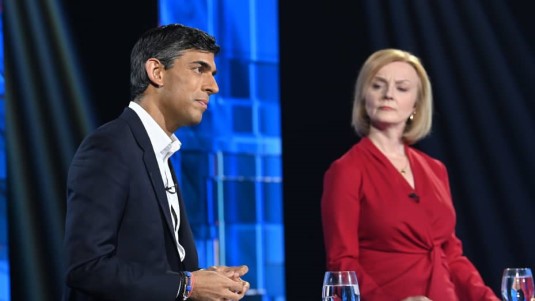
It's unlikely tonight's debate on the BBC did Sunak many favours either. Poor old Maude must have been at home despairing at the spectacle on his screen. Broadcasting from the holiest of holies (i.e. Stoke-on-Trent), it was testier than the previous outing with barbs routinely exchanged between the candidates. I will grant them this, there is a genuine difference between them. Sunak wants to keep his National Insurance rise and go for the higher moral ground of fiscal conservatism, whereas Truss wants to cancel it and get day-to-day borrowing to pay for it. For Sunak this imperils the "sound money" philosophy and stokes inflationary pressures, for Truss keeping the tax rises takes money out of people's pockets and makes recession more likely. To the average Tory member, abstractions like deficits and public sector borrowing count for nothing against increasing energy, petrol, and food prices. Truss understands this. For all her limitations, what she has picked up from Johnson is an approach where the economics should be driven by the politics - something Sunak has forgotten. And this is the main reason why she leads.

The BBC did their best to help both candidates. The inclusion of Chris Mason and Faisal Islam as politics and economics editors respectively gave the policy discussion more form when it might have become a simple slug fest, and the host Sophie Raworth provided some nice soft questions about fashion (recalling the Dorries attack), how people at home can tackle the climate crisis, and asked the candidates to speak words of friendly advice to each other. What an unparalleled bargain the TV licence is. Still, moments after the debate ended it was a hoot to hear Truss's camp saying "Rish! Sunak has tonight proven he is not fit for office ... His aggressive mansplaining and shouty private school behaviour is desperate, unbecoming and is a gift to Labour."

This doesn't mean Truss is fit either, but the anonymous briefer makes a good point. Sunak is both a smoother and more confident performer than the Foreign Secretary, and has clearly decided all-in means talking over Truss, interrupting her, and trying to edge her out of the debate with boorish, almost Johnsonian debating tricks. It looks bad, but obviously Sunak and co. think this might make Truss look weak and unable to defend her corner. Not good for her when she's made great play about standing up to Putin. Alas, a snap poll from Opinium of Conservative supporters had her down as the winner by 47% to Sunak's 38%. We've just had one Prime Minister brought down by arrogance. Members might be less than keen to invest in a candidate with the same character trait.

For Truss the first week of proper campaigning has got off to a good start. She has the initiative, and Sunak is forced to try anything to regain it. If tonight's entertainment is anything to go by, this contest is Truss's to lose.

Image Credit

Monday, 18 July 2022

In Praise of the Tory TV Debates

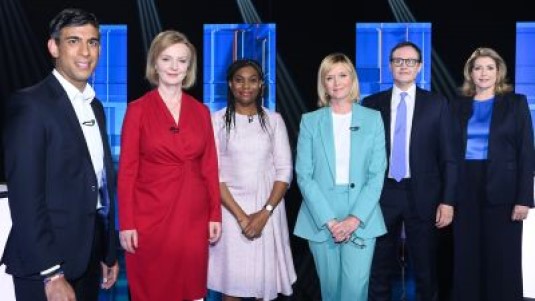
There has been a lot of chatter about the Tory leadership debates. With two in the bag, Liz Truss and Rish! Sunak pulled out of the third due to be hosted by Sky News on Monday evening. I was disappointed, and not because my freakish tastes extend to sterile point scoring between different shades of Toryism. But because the leadership contests were good, actually. Let me explain.

The contests proved three things. The first was how empty the party is of ideas. Harking back to Channel Four's debate, having bolted out the gates promising tax cuts of one description or another there was little evidence of original thinking. Penny Mordaunt showed hints of new directions, but mostly her platform is Johnsonism without its Johnson. Kemi Badenoch made the most radical proposal in her desire to subject the Treasury to direct political control (something Labour should advocate, by the way) but the interest ended there. We got permutations of war on woke, anti-green posturing, hawkish warmongering and nothing else. Collectively they demonstrated a party knackered after 12 years and without much of a clue where to go next, let alone overcome its own crisis of political reproduction.

Second, no amount of friendly write ups in the Tory press hailing these "exceptional candidates" can hide the fact they are anything but. As "outsiders" Tom Tugendhat and Badenoch failed to inspire insurgent energy. They weren't charismatic, nor were their respective "I was in the army you know" and "I'll tell you things you don't want to hear" postures any good for capturing thw imagination of the immediate selectorate - the MPs. As for Mordaunt, her performance was so-so and she had a hard time shutting down her shifty behaviour over trans issues. From saying trans women are women to being against self ID, all she's done is hole her ship beneath the water line and made herself look dishonest and opportunist. As for Sunak and Truss, the former chancellor had nothing in the tank except for more of the same, and the foreign secretary tried to out-Thatcher Thatcher with her tax cuts. All of them showed themselves up to be lightweights with no answers to the serious problems the country faces.

Lastly, the occasional tipping of Sunday night's debate into character assassination and the trashing of the last 12 years of government were why the plug was pulled on the Sky show. Labour "insiders" have been all over the press saying how they can't believe their luck. And while gloating is an unedifying business, an attack on Sunak from Truss and vice versa carries more weight then swipes from Keir Starmer and the shadow ministers. Not only is this good fodder for the opposition, it raises the question about whether the party can unite behind the new PM come September. This wasn't a problem for Johnson or, even further back, Dave's victory over David Davis, but then again there hasn't been a Tory contest where the gloves have come off quite like this in public.

Contrary to other lefties moaning about the contest taking up prime time TV, they have helped encourage Tory division, shown up the dishonesty and feebleness of their character, and demonstrated that they have no answers. And this has set the tone for print and broadcast media coverage. The only thing wrong with the TV debates? There wasn't enough of them.

Image Credit

Sunday, 17 July 2022

Who Won the ITV Tory Leadership Debate?

Having already had one televised debate, there wasn't much hope tonight's blue-on-blue action would add much to the discourse. But happily, it did poison the well and provide opposition parties with more zingers for the next general election.

It's interesting. Some candidates are aware that once the contest is over the Tory party have to appear unified behind their new Prime Minister. This is the case with Penny Mordaunt and Tom Tugendhat and (mostly) Rish! Sunak, whereas Kemi Badenoch and Liz Truss are happy to go all in without regard to party discipline or how they might manage a parliamentary party if they win. For instance, the three draw the line of the last three years of failure at Boris Johnson's faults. Nothing else is wrong, we just need to begin again (a "clean start", you might say) and go from there. Truss and Badenoch have no truck with these considerations. For Truss, her target was Sunak's National Insurance rise and record generally. In the back and forth between the candidates on economics, a much more confident Truss attacked the former chancellor for the highest tax burden for 70 years, and on the question of Bank of England independence Truss got a dig in about two years of economic stagnation with Sunak at the Treasury. On character, Truss said she didn't resign during the ministerial rebellion that brought Johnson down because it would have been a dereliction of duty, or some such rubbish. The clear implication that ambition mattered more than integrity for Sunak. And not to be outdone, in her tailored question Badenoch accused Sunak of not taking Covid loan fraud seriously. He waffled an answer about loan repayments, but the damage was done. Those Labour billboards were writing themselves.

Sunak did hit back with a few barbs of his own. Replying to Truss's accusation he was driving the economy into recession, he argued her spending plans, which involve a big corporation tax cut, were "socialism". Going after Mordaunt for suggesting that the Tories shouldn't be so precious about the debt, he said that borrowing for day-to-day spending was something so "dangerous" that even Jeremy Corbyn didn't go there. And on the questions they could ask other candidates, he recalled Truss's previous life as a Liberal Democrat and a remain campaigner and asked which one she regretted the most. Bitchy.

It was not without interesting moments about more substantive issues. Asked about the five per cent proposed rise in public sector pay and the prospect of strike action against a real terms cut, Mordaunt dodged the question with a "now's the time not to discuss detail". Tugendhat said it should be left to independent public pay bodies to determine. Truss said the government had to negotiate with the unions but remain firm lest it sparks a wage-price spiral. Profit-price spirals are seemingly fine. Tugendhat came back in with strikes and the break down in industrial relations as an issue of trust. Action wouldn't happen if unions felt the negotiators were on their side. Badenoch also (surprisingly) found a conciliatory note, saying unions "deserved respect", but prefaced this with a claim years of economic stagnation meant government couldn't afford decent public sector pay. Not that flat growth has harmed profits, mind. Truth telling can only go so far.

Tonight's debate was a tussle between Sunak and Truss, with the other candidates playing walk-on parts. Tugendhat was the one to dial it in, obviously aware that he's out in the next round of voting. Badenoch got her "I was a minimum wage kid flipping burgers" line in, and promised to tell the truth. One truth that was probably best left unsaid was her swipe at Tugendhat for not serving on the the front lines of government. He was quick to snap back about actual front lines.

According to quick polling by Opinium, 24% thought Sunak came out top. Tugendhat and Mordaunt were runners up on 19% and 17% respectively, with Truss and Badenoch scoring 15% and 12%. In truth, in as much as these things matter, Sunak again looked like he knew what he was talking about. Truss was much improved on her last outing. She was more spiky, whereas what was previously described as "Mordmentum" appears to have deserted the former favourite. According to ConHome's (unrepresentative) poll of its audience, Badenoch is now favourite among the membership. She wins in every permutation of run off, whereas Truss wins three and loses one, and Sunak is evens on two wins, two losses. Which leaves open the possibility of the MPs denying members the contest they want, or the members give the MPs the leader they don't want. The last time this happened was when Iain Duncan Smith took the helm, and you might recall the problems that caused. The result is pregant with division.

Who won the ITV debate? It's tempting to provide the same cliched answer from Friday, but judging from the bad tempers and assaults on the leading candidates' records, it's possible, just possible that tonight's loser is the Conservative Party itself.

Image Credit

Sunday, 8 May 2022

Eurovision 2022 Preview

It's long been the official position of this blog that the Eurovision Song Contest is experiencing its golden age. Year after year, belter after belter, I am hard pressed to remember a duff installment this last decade. Because there hasn't been one. And the good news is the Eurovision joy continues because we've been treated to another great year. So good in fact that even the UK have entered a decent tune. Which is where we shall begin.


It's almost impossible to believe. After decades of pleading with the BBC to a) get someone contemporary and b) press some song writing talent into service, they've actually gone and done it. Sam Ryder is a social media phenomenon and penned this pleasant ditty with proper composers who've worked with Ed Sheeran and BTS. And you know what, there's a good chance the UK won't get panned this year. Indeed, word on the Eurovision streets is top five. Wow.

But the UK are up against tough competition. Like Ukraine's entry.


The Kalush Orchestra have to be this year's favourites for obvious reasons, but it is an excellent entry. Ukraine have long mastered the East-meets-West blend that Eurovision audiences go gaga for, and marrying rap to something traditional-sounding works really well here. I'd be surprised if it doesn't win. But among its exceptional challengers is Sweden's effort.


Cornelia Jakobs's Hold Me Closer is simply incredible. I didn't think much of it on the first playthrough but returning to it a few days later and it bullseyed the emotional register it needed to strike. Probably the best tune this year and a worthy winner should Sweden, yet again, take the crown.

There's time for a couple more. Let's head to Malta.


Controversy time! Emma Muscat's entirely pleasant I Am What I Am wasn't the song she won the Maltese national heats with. This was her tune. Apparently, the song was switched after "negative feedback" on social media. To be honest, her new tune is much better even if it's a cliche. Inclusivity vibes married to gospel backing and uplifting lyrics - what's more Eurovision than that?

And lastly, to the land of Uncle Enver!


Just amazingly bonkers, and another strong contender for the top spot.

This is just scartching the surface of this year's contest. If you want to speed run the songs, here's the official preview reel. As always, the heats run this Tuesday and Thursday with the grand final next Saturday.

Tuesday, 5 April 2022

Privatising Channel 4

Reflecting on the government's consultation over the mooted privatisation of Channel 4, Armando Iannucci wrote "90% of submissions ... said it was a bad idea. But still they go ahead. Why do they want to make the UK’s great TV industry worse? Why? It makes no business, economic or even patriotic sense." Tory celebrity Kirstie Allsopp called it a "load of twaddle", and adding for good measure "Any Tory MP who votes for this is a traitor to their party & country." Blimey. Others have chimed in with more thoughtful pieces attacking the stupidity of Nadine Dorries's decision. James Ball in the New Statesman typifies this, laying out the position C4 occupies in the British media ecosystem and the role it has supporting tens of thousands of private sector jobs - the ones, the Tories used to tell us, we ought to properly value.

It's a hoot seeing the chickens coming home to roost for enthusiastic Conservative backers and liberals who, when the time came, preferred authoritarian Toryism to a mild dose of social democracy. But it goes without saying that the privatisation of C4 should be opposed for all the straightforward reasons described, despite being a thoroughly neoliberal institution and bulk purveyor of trash television. And there are good socialist reasons too. Here's why.

For one, the Tories are always casting around for ways to shift the balance of wealth further towards the wealthy. With the Covid gravy train parked up in sidings ready for scrappage, C4 is easy pickings for the next transfer of public wealth into private hands. Dorries promises proceeds from the sale would shower a creative dividend on TV production, but she's more interested in the dividends a privatised channel would funnel to institutional investors and media firms: key Tory allies and props. The columnists of the right wing press might be hesitant about the sell off, but their proprietors will prove less sanguine when the share issue comes. And with C4 out the way, yet more ground is laid for the creeping privatisation of the real prize: the BBC.

Then we have the Tory disdain for the arts and creative industries generally. In the Conservative Party's imagination, C4 is a bastion of the liberal elite and its programming is partly responsible for licentiousness and the irreverence British people, particularly younger people, show their social betters. In its own way, C4 has been a vehicle for ground breaking programming that has driven forward the socially liberal agenda and undermined traditional values. Now in the 21st century, there is the woke agenda to do battle with, and let's see how C4 works as a vehicle for this pernicious ideology once there are cadres of share holders to answer to.

Lastly, there's good old fashioned authoritarianism. Dorries is notoriously thin-skinned and the popular opinion among the Tories is that C4 News is particularly left wing and anti-them. As the Tory raison d'etre is the preservation of class relations above all else, ths means keeping an eye out for anything that might present a challenge to their hegemony, or offer some sort of cultural resource for opposing their rule and the legitimacy of the system itself. C4 is hardly an organisation infested with Bolshevist sympathisers, but its news gathering operation significantly departs from the tame gruel served up by the BBC and ITV (ironically, also supplied by ITN). Showing up the messy complexity of the social world, including the consequences of Tory policy, and occasionally allowing marginalised voices their own space to speak is potentially dangerous. Even if the channel is commercially successful. The Tories hope the market will direct C4 into becoming another Channel 5, thereby removing another "oppositional" institution and making politics even easier for them.

Image Credit

Wednesday, 28 July 2021

The Military-Directed Entertainment Complex

In Althusser's celebrated essay on ideology, he talks about how the ideological state apparatuses have their own repressive aspects (violence and discipline in the family and at school, sanctions and shunning in religious organisations), and how the apparatuses of repression secreted ideology. This is something we know well in this country, with the biggest and most critically acclaimed shows of recent years most likely to be cop shows. And it's barely different in the rest of Europe. But for those interested in analysing the production and consumption of shows of this kind, the default assumption is the show's creators and showrunners are (usually) working toward the values and myths repressive institutions surround themselves with. Few if anyone thinks the British military manipulate the Pride of Britain awards, for example. They're independent but ideologically conformist.

It turns out this is not the case in the United States. In this excellent video, Owen Jones speaks with Matthew Alford about his work on military interference in film and television production. He estimates that between 1911 and 2017 the military had a had in the direction of some 800 movies. Throw in TV and add the FBI, CIA, and other state security agencies and we're talking about 10,000 scripts. As Matthew argues, this might sound like tinfoil hattery but it isn't - his work has uncovered the documentation to find household favourites like the Marvel Cinematic Universe, the Terminator franchise (from the fourth film on), have been significantly interfered with in exchange for "advice" and "support" from the Pentagon and other agencies. I'm sure none of this would come as a surprise to folks here, but it's well worth hearing Matthew's argument for yourself.


Wednesday, 21 July 2021

Dominic Cummings's Indecent Exposure

If you're reading this, there's a very good chance you watched Laura Kuenssberg's interview with Dominic Cummings. If you haven't, it's worth watching. The chaos inside Number 10 from the start of Boris Johnson's premiership to now is well known, if not well documented. But the vignettes of cluelessness and seat-of-the-pants winging it, while neither surprise nor shocker, help flesh out what life is like behind the famous black door. Naturally, Cummings had a lot to say, like last time, and much of it was damning. As someone fond of porkie pies himself, the precautionary principle would recommend a sceptical eye be cast over his claims. But we're talking about Boris Johnson here, so everything said about lack of preparedness, a callous disregard for the lives of others, herd immunity as the default Covid strategy (borne out at the moment), etc. have enough truthiness about them. And besides, Cummings was cocksure that a public inquiry with evidence given under oath will bear out his claims. He thinks too much of himself to say something now that would show him up later.

Cummings clarified the circumstances around his celebrated trip to Barnard Castle, how he came to be in Downing Street, and the power struggles between his faction of apparatchiks and the Carrie Johnson squad, who he relished referring to as a purposely infantilised "Prime Minister's girlfriend". But what really came across was less the detail of the Cummings exposure, but the manner of his statements. Every utterance dripped in arrogance, knowing cadences, and cynicism. Despite having a chummy relationship with Cummings, as well as the Prime Minister, Laura Kuenssberg clearly found the tone discomfiting. Talking about his role in brokering a failed Tory leadership deal between Johnson and Michael Gove in the aftermath of the Brexit referendum, she was aghast that he, someone who wasn't elected should be playing such a crucial role in establishment politics. Her astonishment ramped up again when Cummings discussed the circumstances of his hiring just prior to Johnson's coronation. He said the future Prime Minister asked him to work in Downing Street. Cummings revealed his conditions: seeing Brexit through to its conclusion, serious investment, and doing something about civil service reform. That he had the temerity to seek assurances from Johnson before working for him was as if a blasphemy had been uttered in Kuenssberg's presence. Who were you to dictate terms to an elected politician was her exasperated response.

There was plenty more. Asked about the infamous £350m/week for the NHS splashed on the side of that bus, and the disingenuous spin put out about Turkey's accession to the European Union, he could not suppress a wry grin and a cheeky twinkle. He tried defending them as good faith interventions, but Kuenssberg's persistent line of questioning was surplus to requirements - anyone could see he was lying his head off, and was proud of duping the millions who took Leave's arguments at face value. Kuenssberg affected an appalled tone, as if this was the first time she had encountered cynicism in politics. Which, we know for a fact, it isn't. But what offended her most was Cummings's confessions of plotting. With the royal we, he talked about selecting the Tory candidate most amenable to his ends (Johnson), and within days of a famous victory was talking about getting shot. "Who are you to decide who stays and who goes Dominic Cummings?" intoned Kuenssberg on several occasions. Thankfully, on this occasion, she did not shy away from asking the most interesting question - who is this "we" Cummings was talking about? And he fessed up: a network of Vote Leave elites and interested others numbering no more than three dozen. This was almost too much for the BBC's chief political correspondent to bear. Here we had spelled out in black and white terms the reality of British politics, how its prime movers are mixes of elected and unelected players, the latter consisting of the propertied, the rich, and the well-connected. Cummings pulled down the pants of British parliamentary democracy and revealed the ugly truth in its naked obscenity. And all before the watershed.

Latter day adherents of the National Viewers' and Listeners' Association were up in arms. Lisa Nandy condemned Cummings's performance as "incredibly narcissistic" and was outraged that someone appointed and unelected might try and bend government in the direction of their agenda. "How did Boris Johnson come to appoint a man of this moral character?" she asked. It's a good job the congenial hosts of Good Morning Britain didn't ask the shadow foreign secretary how Labour could readmit unelected officials who'd done so much to undermine the elected party leadership in the lead up to 2017. I also suppose Nandy has a poor grasp at what goes on in the constituency offices of Labour MPs, where unelected employees regularly bitch and plot against local councillors and sometimes, whisper it, sometimes talk about removing the elected member - their boss. Cummings is a toerag and no mistaking, but there was plenty of ammunition here Nandy might have used to to make some anti-Tory points, but given the opportunity to highlight Johnson's reckless Covid strategy she walloped the ball firmly into her own net. If past comments about letting the bodies pile high and repeated instances of lying isn't enough to move people, drawing attention to the PM's moral fibre was just about the weakest option in front of her. You can't say it enough: every hour is amateur hour on the shadow front bench.

As for Cummings himself, he'll no doubt be gratified. Kuenssberg will be chuffed with her "shocking" and much-discussed expose, but he emerges with his reputation enhanced. Lauded as a magus of the dark arts, unconcerned by petty things like public opinion and parties, Cummings is the distillation of bourgeois disdain with bourgeois democracy. But beneath the swagger and disrespect for the rules of the political game, what are we left with? A technocrat with a hard science fetish, a tough-talking apparatchik no different in substance to the likes of Andrew Adonis. His kind can thrive because both front benches are bereft of ideas, and trapped by their respective forms of decadence. This means we probably haven't seen the back of Cummings, and unless establishment politics is challenged by a new surge of politicisation along the lines of what happened in 2015, our leaderships will throw up one, two, many Cummings clones in the years to come.

Image Credit

Sunday, 16 May 2021

Eurovision Preview 2021

I've waited three years for this. Can you believe it? Boycotting Eurovision in 2019 and then having matters cancelled by the pandemic last year, it seems a long time since this here blog showcased the tunes due on everyone's favourite sing song extravaganza. And how's the field looking this year? Not too bad, actually. Not sure if there are any stone cold Eurovision classics among the roster but why don't you decided for yourself?

To placate the Eurovision gammons, let's begin with the UK entry.


You know what? James Newman's 2021 entry is much better than the dreary dross he punted forward last year. Upbeat, jaunty, contemporary with the kind of hook that plays well in the 10 second Spotify preview, I'm not going to say it will do well. But it is a respectable affair.

With duty to the country done, what else grabs? In terms of pure catchiness, there is Efendi from Azerbaijan. See what you think:


Normally I can't abide this sort of stuff, but there's something about how this song fits together. Naturally, it nods towards what would have been Efendi's entry last year. Same style, same energy, but is much better. This will go down well and is a contender for the crown.

How about something a little more conventional and Western? Here's Cyprus's Elena Tsagrinou.


If it isn't Lady Gaga's oeuvre wrapped around Rita Ora's Anywhere. El Diablo has the characteristics of a Eurovision crowd pleaser. The only issue I have with it is the song is unnecessarily cut short by the timing rules the contest imposes on entrants. A shame as you're left with the feeling it's only four fifths there. Not to worry, this is sure to get more than the ritual 12 points from Greece.

Every year has to have a comedy entry, which typically range from clever satire to try hard. This year, Germany's Jendrik try their hand at this dubious sub-genre.


Hmm, okay. I Don't Feel Hate is certainly zany, man, but the tune deserves props for trying something different. The last time Germany did with their mockney Lily Allen alike with Lena in 2010, they struck big. Will they again?

Honourable mentions have to be covered too. If there are any fans of crossover black metal/nu metal reading this, Finland has a treat for you in the shape of Dark Side by Blind Channel. In 2021 it's Norway's turn to sing about angels, so here's TIX with Fallen Angel. And though Italy are tipped to win this year by the bookies (why?), Malta's Destiny and their tune Je Me Casse has most view on YouTube. What do you think?

But what's the top tune in your pop picker's preferences? Why, it's Lithuania's The Roop with Discoteque. Enjoy!


Eurovision lands next Saturday, but don't forget the heats on Tuesday and Thursday on BBC Four at 8pm.