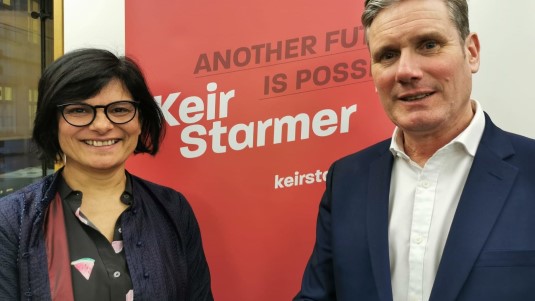
There is a light that never goes out, so sang Morrissey. Unfortunately, there are some that never properly switch on. A case in point is Labour's new shadow housing spox, Thangam Debbonaire. As renting and the rights of tenants is a hot button issue, especially now covid-19 means the return of huge unemployment figures and a dent in incomes for millions more, it would be nice to know Labour is on the side of a core component of its voter coalition. Sadly, where clarity is needed and our people could do with knowing the party is on its side we find equivocation and timidity. Speaking at a Fabian event on Thursday, Thangham said cancelling rent payments is "un-Labour" and "really regressive". What could she possibly mean? Responding to criticisms of Labour's current position, which grants renters two years to make good any arrears, she said "there are people who are still in work, still able to pay their rent. And if you just cancelled rent, they would also benefit and they don’t need to." In other words, it's fair for the poorest to continue struggling with the deleterious impacts this has on mental health and family life in case someone else gets a few extra bob. She even cites herself as one of these people who doesn't deserve rent forgiveness, which is interesting seeing how her London flat is paid for, um, under the MP's expenses scheme. Now, there are practicalities to consider if rent payments were cancelled for some time. The state could, for example, pick up the tab if we're really worried about landlords themselves getting put out into the streets. But whichever way you dice it, this policy isn't is regressive. Being the forgiving sort, this elementary misunderstanding of what regressive means could be put down to the milieu in which Thangam circulates. There is an overlapping cohort of Labour MPs and centrist opinion who thinks conditionality is progressive and universalism is reactionary and unfair. I'd humbly submit these people have never had to jump through the hoops social security payments demand. Work capability assessments as the hallmark of a civilised society, anyone? In this occasion, there's no overlooking this idiocy. You see, Thangam has form. Far from being "un-Labour", rent strikes were constitutive of the party itself. Perhaps Thangam would like to step into a TARDIS to lecture these malcontents, or better yet get to know some history about the party she affects to represent? Unfortunately, it doesn't end there. In an exchange with Ash Sarkar, Thangam tried to get her expelled from the party - before she had even joined - because "being a communist" means she had to be a member of the Communist Party. And being told once to 'get in the sea' on Twitter circa the time that popular insult was everywhere, she openly and publicly declared this was a death threat. Cynical? Thick? Ignorant? You decide. Yesterday, a couple of worthies noted Keir Starmer had built a more competent team around him. The significant gaps in Thangam's understanding will see that assumption tested to destruction over the coming months, this can't be heaped at her feet. She's responsible for the gaps in her understanding of the party but she isn't a free agent. Her position on housing policy is the leader's position on housing policy. The question then isn't really why Thangam isn't much cop, but why Labour's position isn't. And the answer is, I'm afraid, Keir Starmer's reasonable reasonableness strategy. He is determined to play politics by the rules in the belief this will net him better press coverage than previous Labour leaders and, obviously, boost his chances at election. Not upsetting the landlord strata defuses an anticipated angle of attack from the likes of the Mail, etc, thereby making it easier to win over Tory voters. That the shadow cabinet contains landlords of its own is entirely coincidental. Needless to say, this is troubling for the same reasons why Labour couldn't simply carry on facing two ways over Brexit. Labour is dependent on the new working class of immaterial labour. It is disproportionately younger, precarious, locked out of property acquisition and at the sharp end of our systems' myriad inequalities. Corbynism's accomplishment, despite its failings, was to re-orientate Labour toward this rising class and make the party respond to their concerns. However, in the absence of other collective organisations integrating new supporters and voters into the party and the wider labour movement their adherence is uncertain and conditional. And this conditionality, surprise surprise, comes in the form of not doing their interests over. Now, a cynic might look at the super majorities Labour has in the big cities and think we can trade blocks of a few thousand here and there for some nice middle England seats, but it doesn't work like that. A partial demobilisation in the cities of this vote also means partial demobilisations everywhere else. There are renters in the medium sized cities and towns, and immaterial workers in the constituencies Labour has to win back. In other words, triangulation of Blairite vintage is not on the cards. It's impossible. The question is does Labour's leadership realise this? Paul Mason was a handy ally for Keir to have during the leadership contest, and the hire of Claire Ainsley of The New Working Class fame suggests there's an awareness at the top that the party has to at least nod in the direction of travel established under Jeremy Corbyn. Unfortunately, having dim bulbs anywhere near a crucial brief like housing doesn't speak of the leadership's seriousness and it's this that could cost the party dearly. Image Credit
Where does the Conservative Party go after Covid-19, assuming there is an after? Leaving aside current difficulties, for the dyed-in-wool conservative the mood the crisis has accelerated is not conducive to their ideological hobby horses. Yes, a left-led Labour Party was sent packing before Christmas but apart from Brexit and whatever fantasies they poured into it, Boris Johnson's government hardly bellows with a Thatcherite roar. The manifesto said very little beyond getting Brexit done, conferring on the Prime Minister considerable leeway. And this range of action saw him dump Sajid Javid, the avowed disciple of Ayn Rand, and bring in Rishi Sunak as the face for a pronounced turn to big spending. Worse, the Coronavirus outbreak has encouraged unimaginable state overstretch, from the typical Tory point of view. The restrictions on comings and goings are bad enough, but a (modest) uprating of benefits? Temporary bans on evictions? The part-nationalisation of the country's pay roll? Bad, bad, bad. All the austerity messages of a decade worth of cuts now as useful as a soiled face mask. Where do the Tories and conservative politics go from here now their assumptions have been blown up? This was the topic of this afternoon's IPPR seminar with Nick Timothy, Theresa May's former right hand man, and Tim Bale, noted pol prof and academic authority on the Tories. Hosted by Carys Roberts, the session was about exploring some of the arguments in Timothy's new book, Remaking One Nation: The Future of Conservatism. Appearing just before the outbreak, obviously there was nothing in it about preparing the party for a pandemic but, in his opening remarks, the arguments made still apply. And these arguments? This is a polemic against what he refers to as 'extreme liberalism' on the right, left and centre of politics and makes the case for a 'communitarian correction'. What does this mean? Timothy assured the audience he was not against liberalism. Indeed, it is the essential tradition legitimating strong institutions, a free press, elections, protection of minorities against the majority, market economics and its link to personal freedom, justice, security, and the recognition of each other and ourselves as citizens. Essential liberalism therefore is not a philosophical programme as such but more a way of doing things, a habit of convention and mind facilitating a diversity of political and policy choices. A pluralistic society does mean Interests and values are in tension, and choices made by one can conflict with the interests of another. Hence maintaining balance is difficult, and becomes impossible if liberalism gives way to extreme liberalism. What is this? It comes in a number of flavours. Among the governing classes 'elite liberalism' means the marketisation of services and the state, light touch regulation in economic matters except for labour markets, and all the various accoutrements the left would associate with neoliberalism. In addition to this consensus, there is an ultra liberalism of the right which emphasises market fundamentalism, and that of the left which we see expressed in cultural liberalism and identity politics. Ostensibly opposing one another they are actually in a symbiotic relationship which leaves economic dislocation and social atomisation in their wake. Timothy's argument is we need to break with this and advocates a communitarian politics in its stead. This would be big on solidarity, community, reformed capitalism, and mutual obligations while rejecting selfishness and individualism. Nor does this need grafting on to our communities. During the present crisis we have seen big community responses and, if anything, government policy has largely tailed spontaneous efforts at social distancing. Readers will recall, for instance, how the Tories were initially against banning public gatherings and closing schools and it was largely the simple refusal of millions to put themselves at risk that forced the government's hand. The problem is as we pass back to something resembling 'the before', the circumstances for the old way of doing things have passed. Those hoping for more years of austerity are likely to be disappointed for two reasons. An industrial strategy is necessary to get Britain back on its feet, and second personality-wise Boris Johnson simply isn't an austerity politician. Timothy likened him to Harold Macmillan, someone who used to burn through chancellors who disagreed with him but was concerned above all with maintaining full employment. Furthermore, the electoral logic of voter coalition building makes going back electorally painful. While Labour now commands the votes of the young, of most minority ethnicities and the public sector the new Tory voters rule out a rinse and repeat of the last decade. The party needs to find another way of keeping its coalition together, and a communitarian turn could do just that, especially when Brexit as a mobilising issue will not have the same potency in four years' time. Taking questions, the first was how did ultra liberalism win in the Tories over one nation politics? Timothy replied there was always a right wing section of the party, albeit a minority, who were uncomfortable with the middle's enthusiasm for the post-war consensus. And then they won the party leadership Thatcher they began dismantling the post-war order, a change he thought was "necessary". But her governments conspicuously failed to avoid the consequences of deindustrialisation. After Thatcher left office the party subsequently became more Thatcherite and, under John Major, moved to market-based models for public services. Now the Tories have won a swathe of seats on places that bore the brunt in the 1980s, Timothy has a sense these new MPs are casting around for new ideas to keep hold of these seats. On this, Tim Bale disagreed. He said the parliamentary party and the party-in-the-country remained very Thatcherite and committed to economic liberalism. As such, these grumbles leak and trouble the media. They are worried the present measures and what comes next could wind back the last 10 years. Others of a fiscally conservative bent have concerns over funding, and fret splashing money about relinquishes the deficit stick they used to beat Labour with (readers might recall how the deficit and debt became a synonym for economic competence under Dave and Osborne). Asked if they could come out on top, Bale said Johnson had made significant changes before the crisis which ensured the traditional champion of financial prudence - the Treasury - had been significantly sidelined. Replacing Sajid Javid with Rishi Sunak and integrating the functions of Number 11 and Number 10 centralised more authority in the Prime Minister's hands. Timothy agreed, as traditionally in Whitehall the Treasury is imperial and dominates all. Its priority is always prudence, and its oversight of the spending of other departments leads to second guessing them on policy. Recalling his time in the Home Office, he said spending commitments are subject to vetting and they tried to control it. Therefore any economic rebalancing or industrial strategy requires curbing the Treasury and jettisoning its orthodoxy, which is contained in The Green Book. Early on in the talk, Timothy mentioned a communitarian turn could be taken by the left or the right, so who is most likely to take it and reap the benefit? Here, Bale thought Labour possesses a distinct advantage as social democracy is premised on collective solutions, and given their embrace of a particular form of individualism it poses the Tories real difficulties. Furthermore, there is a danger a conservative cultural communitarianism might go down the nostalgia route which only appeals to a few. It was enough to win an election under the specific circumstances of 2019 but does not offer the party a long-term solution. A communitarian economics would also be hard for the party's MPs and membership to swallow. More localism, something plenty of Tories have paid lip service to, means the actual decentralisation of powers. And that ultimately means control over localised taxation and what to levy it on. Likewise, Timothy said for those suspicious of the state need to realise services cannot be done on the cheap - a professionally provided service cannot be replaced by enthusiastic amateurs, as was the assumption underpinning Big Society thinking. For Timothy the Tories have to get serious about difficult decisions, and nothing exemplifies this better than social care - as he found out. Care quality is generally questionable and it's leaving people to die without dignity while possibly losing their homes too. Therefore, only a number of funding options are open. He felt asking people of working age was out of the question as they wrestle with stagnant wages and galloping property prices. This leaves estates, and sooner or later they will have to be taxed properly. Bale thought social care presented the Tories a huge opportunity, with political rewards for knitting health and social care together. It would also put Labour on the back foot - though why considering the integration of the two has been a policy objective in the last three manifestos was a point left unexplored. On the election of Keir Starmer, does this change things? Would a Tory move in a communitarian, one nation-ish direction bring the two parties closer together? Assessing the problems Labour have - a concentrated urban and university town vote, the Scotland wipe out, retreats in Wales and now in England, for Timothy the difficulty is how to bridge these diverse groups and win over the swing voters necessary to form a government. It seems Labour's early days strategy is to frame issues where they feel the party is strong: on socio-economic issues and avoid the identity questions that did for the party. The Tories have the opposite issue: they have to keep identity politics alive and avoid economic issues, but Timothy didn't think this would have much in the way of legs - banging on about human rights because Keir Starmer was a human rights lawyer isn't going to help when the questions of the age are economic. For Bale, what is going to matter in the coming years is competence and looking at work done on government performance, there is a tendency for bad but early events to adversely effect electoral performance than more recent crises. Hence what the Tories do now is crucial for their future prospects. If Starmer is able to pin problems on the government, which is presently receiving favourable coverage, that will be a big problem. Tories could be tempted to overshoot on cultural questions if the economy debate isn't going well. Wrapping up, Timothy was asked about what three things he would do to reform capitalism. He would overhaul the way taxes are raised, look at ways of addressing pay such as empowering shareholders to determine executive pay, uprating the minimum wage, and allowing "guilds" to develop for occupations in the middle who would then negotiate sectoral salaries. Something to act like a trade union that isn't a trade union then. And lastly he would change corporate governance, which is better than micromanagement by the government. Such governance would reflect the involvement of workers, and address consumer rights and the locality footprint of the business. Nick Timothy is interesting as far as Tory thinkers are concerned because, similar to the red Tory fad of a decade or so ago, he sees the path to continued good fortune lead out from neoliberal orthodoxies and back to one nation grounds of social peace and ontological security. A position, funnily enough, I share. Both are right to emphasise the drag the party and the political composition of its MPs has on adapting itself in this direction, but if this is Johnson's chosen destination his election-winning authority coupled with the political shock of the coronavirus crisis and the miserable state of Britain's economy might see him succeed where Brexit and hubris ensured Theresa May failed. Yet this is politics. Strategies are about maximising your room for manoeuvre and structuring the possibilities of success. Presently, it's looking like the government's handling of the crisis is slipping out of their hands as they oversee a premature return to work and, undoubtedly, a second spike in infections. And this is on top of its problem with younger voters and, particularly, how the Tories are the biggest barrier to generating future consistent Tory voters: the process of property acquisition has broken down and the compromises they've made to keep their present coalition together ensures they're unable to address this. The Tories can affect a communitarian turn, but events could damage them and the shifting composition of work and concentration of property means their voters are not being replaced in sufficient numbers. It is very difficult to see how the Tories can permanently overcome this predicament. Image Credit
Not the plot, nor his grasp on the crisis which has been woeful from the beginning. I'm talking his grip on public opinion. Since emerging back into view his performance has proven pretty lacklustre as the mounting contradictions and incompetencies of his government catch up with him. Take last night's address as a case in point. A muddled slogan, a pledge to keep the virus under control and ... calling for a generalised return to work for construction and manufacturing. Matters were no better in the Commons this afternoon. Questioned by Keir Starmer all he could do was bluster and chunter as it was revealed the rules governing the return to work hadn't been released yet. Compounding Johnson's woes are the - right - refusals of the governments of Northern Ireland, Wales and Scotland to follow his plan, and the absurdity of some of the new rules too. You can arrange to meet a family member as long as the appropriate distance is adhered to, but only one at a time. With the wheels coming off, is Johnson finally in danger of being seen less Churchill, and more over the hill? Is this the beginning of the end? I made the mistake of nearly writing Johnson off before. That was in a period of acute crisis in his party operating in a hung parliament. Now he has a huge majority and is soaring in the polls, although this has more to do with sections of the voters rallying around the government as the sole means of organising the nationwide struggle with coronavirus. Therefore, while it is obvious to the great bulk of people reading these words think Johnson is making a hash of it, is this the case for ordinary punter land? For the centrists gripped by Keir's Commons outings it's obvious quoting numbers and dates at Johnson, for whom detail is delegated to minions, are so much gotchas. But if the never-ending political crisis of last Autumn taught us anything, with larger audiences, constitutional outrages galore and some of the most awful performances ever turned in by a Prime Minister Johnson's incompetence was confirmed only among those who already thought Johnson was incompetent. For those who switched to the Tories in December, it merely confirmed his seriousness of intent. Alas, this situation requires adroitness and skill. One cannot simply barrel through and call the opposition disloyal or motivated by petty point scoring, though that hasn't stopped some Tory outriders. What is going to do for Johnson are not the mixed up figures and stumbling delivery, but the direct experience of voters themselves. Among cohorts of workers getting sent back to work on Wednesday is that layer of older manufacturing workers who voted Brexit, and lent the Tories their votes to get it done. Giving the government the benefit of the doubt is easy when other people are in harm's way, but grows more difficult when you and your family are expected to risk yourselves. And as the infection rate goes up as per the easing of lockdowns everywhere else, so will the jitters, the worries, and the discontent. Likewise, as others start losing their jobs because they refuse to return to work, this will have knock on effects not to the Tories' advantage. Even the ludicrous switch from Stay at Home to Stay Alert, with its lists of absurd dos and don'ts is problematic because it impinges on the everyday and introduces confusion into what was an irksome but easily understood set up. When even Philip Schofield is articulating the worries of his daytime audiences and saying "if this was in a farce in the telly no government would arse it up that much", the government have got to watch themselves. But it appears not. Almost, you might say, as if they have other concerns at the forefront of their approach. This then is the moment of maximum danger for Johnson, and is make or break time for the remainder of their government. The leeway gifted him by the situation is not infinitely wide, and while he has escaped political penalty for the accumulating count of largely unnecessary and preventable deaths, easing restrictions amidst a muddle of new rules and sending millions back to work where a new spike in infections awaits means his Covid-19 honeymoon is likely to get cut short. A pity, an entirely avoidable pity that many lives will be too. There is then no hiding for Johnson this time. This reckless and unforgivable decision is entirely his. Image Credit
When the historians come to scrutinise the early 21st century and the UK government's response to Covid-19, they will find fewer succinct summations of the muddle we've gone through than Boris Johnson's own pre-recorded statement. Watch it for yourself:
Where to begin? As we're getting more details when Johnson makes a statement in the Commons and has a Q & A with the public Monday evening, we now know for certain what all the papers have trailed days in advance. The loosening of the lockdown proceed with the right to unlimited outdoor exercise, the chance to play sports in public spaces with members of your household, and the freedom to jump in your car and visit those beauty spots without Derbyshire plod jumping out of the bushes. That's fine and sensible. However, what isn't are Johnson's plan to send some of us back to work. We know the government want to do away with furlough and are concerned, thanks to their low opinion of the hoi polloi, for the consequences the extended absence from work for millions of people will have on labour discipline. Forget the PowerPoint presentation, the meaning of R, and switching up the slogan from Stay at Home to Stay Alert, this was the centrepiece of this evening's announcement. And it is concerning. Presently, coronavirus infections run at about 4,000 confirmed new cases a day. The real figure will be much higher. The people catching it are those in harm's way - the NHS and care workers, key infrastructure workers, supermarket workers and, in turn, their households and others they come into contact during the course of their work. The government, however, want to see a phased return to work with the same message that you should work from home if you can, and go into work if you must all the while avoiding public transport (cycling and walking is singled out as the favoured method, as if everyone lives a stone's throw from their workplace like we're living in the 19th century) and abiding by social distancing measures at work. The problem here is 'must'. Why must some people return to work if they're not classified as a key worker? Why should they risk their health to earn the boss a few bob when then can stay safe at home? Why indeed. Hospital use is declining, though how much of this is thanks to the blunt advice some, even acute cases, would be better off staying away, and so is the grim tally of daily deaths. And yet the virus is very much abroad. New Zealand we ain't. It doesn't take mastery of spatial epidemiology to suppose having more workplaces open is going to bump up the rate of contagion. The biopolitical management of this crisis has, from the outset, been a matter of class politics. Already it's women and minority ethnicities bearing the brunt because they disproportionately happen to be overrepresented in the care sector. Expanding the return to work to manufacturing will see more low paid workers, again largely women, largely minority ethnicities and nationalities, put at risk. Meanwhile the managers and bosses screaming about the flatlining order book will carry on working from home, as will the majority of the Tory white collar base, small businesses, and its massed cohorts of the retired. They can cheer on, they can literally clap on the efforts of others while they remain safe from infection. A happy coincidence then that protections remain in place for those most likely to vote Conservative next time. Since Johnson recovered from his own brush with the bug, he has talked about saving lives before all else. Indeed, his talk tonight is caveated with an emphasis on following the data. And to be fair to him, among the malcontents and psychopaths he has elevated to position his is a more moderate voice. Safety first is the impression he wants to convey. This is all very well, but what matters is deeds, not words. Allowing more places to open, giving some bosses the green light to force their workers back into work now will drive infections up, will cause more suffering, and will lead to more unnecessary deaths.
It must have been Gordon Brown before he bottled an election in Autumn 2007. What, pray tell, am I talking about? The last time a Labour leader got a favourable front page from the Daily Telegraph. Except, that is, for Friday's frontage. "We owe it to the VE Day generation to protect them from coronavirus in care homes" went the splash, with a nice article inside in which Keir Starmer expands on his points. How awfully nice of the Telegraph to be so accommodating. And I'm sure Team Keir are quite happy with themselves too, considering the paper is an arm of the Conservative Party and a putative policy-making one at that. A pat on the back then for good work done then? Well, not quite. Labour politicians shouldn't look a gift horse in the mouth. If a right wing rag offers space in their paper, it would be a mistake not to write something. If a regular column in The Sun was okay for Ken Livingstone in the early 90s, until Labour and the left has a mass circulation media of its own I don't see any problem writing for audiences ordinarily cut off from left wing politics. However, and this is a big however, one should be wary of their motives. Does have a Labour politician publish something with them confer legitimacy and bring in new readers? Are they wanting a comment piece from Labour in the interests of debate, or to fill up a few column inches on a slow day? In Keir's particular case, obviously not. Here was are in one of the seminal events of this century with news gushing from every downpipe and Labour's leader is getting a splash about VE Day on its 75th anniversary. What's the Telegraph's game? They know indulging Keir now presents zero threat to their party and their Prime Minister. The polls are barely shifting thanks to the crisis, and while Keir's personal ratings are very good Boris Johnson's are better. Magnanimity? Hardly. Keir would not have been afforded this courtesy had he taken more of a critical stance versus the government. Instead, what it says is polite opinion is intensely relaxed with the person of the Labour leader. The monstering may still come, especially if he doesn't dump the Corbyn-lite programme he was elected on, but to paraphrase what Margaret Thatcher said of Mikhail Gorbachev; this is someone with whom we can do business. For Keir, his willingness to engage demonstrates to them his reasonable reasonableness. Part of his calculation is acceptance by the Tory press separates him off from the Corbyn years, and detoxifies the party by extension to that layer of voters who pay attention to such things. This is especially important as well considering his remain credentials and the role he played in Labour's Brexit fudge. There's logic to this, I suppose. It's harder to demonise someone if they're feted as a legitimate establishment figure. But here's the problem. A favourable front page from the Telegraph is something of a coup, and a feat the Labour leadership might fancy repeating. And so cultivating good coverage cannot happen without more parts of the party programme getting downplayed. Without muting criticisms or offering an alternative leadership. The game and the rules of it as interpreted by the Tory editorial offices are simply accepted without question, and Keir jumps through any and all hoops placed in front of him. Just as the power of the press is in terminal decline he affirms their pre-eminence and right to arbitrate on what is ruled in and what it ruled out. Effectively, he's consenting to the disciplining of the party by an external force that would rather see Labour crash and burn. Does this concern Keir? I very much doubt it. Opposition during the coronavirus quarantine was never going to be an easy business. Instead of walking that tightrope, however, Keir is tenuously dangling from it and what we're getting is the worst of all worlds. Tailing the government and congratulating ministers on their fine work when it's nothing of the sort, and then only making criticisms long after NHS workers and Piers bloody Morgan have spent weeks banging on about them is something alright, but it's not opposition. Perhaps I'm being too hard on Kier. He's been in the job for five weeks and, with time, the hares and rabbits of dogged criticism and political opposition will be pulled from the hat. Yet in politics as with life, new politicians and by extension, new leaders start as they mean to go on. The supine media strategy and row backs on policy are suggestive of triangulation mark two, a taking for granted of Labour's new base while chasing so-called swing voters. And while we cannot say what opportunities may present the party between now and the eventual general election four years hence, missing open goals now because of a rigid adherence to the media's rules doesn't fill one with a sense of confidence. Image Credit
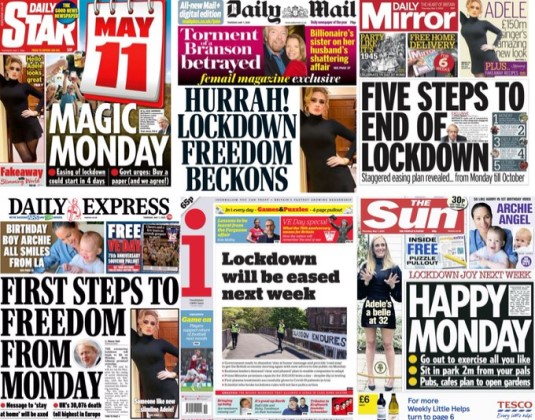
If the government had paid attention to the NHS pandemic exercise of four years ago, took the initial outbreak of Coronavirus in China more seriously, ordered more personal protection kit when the opportunity was there, and hadn't dragged its feet over implementing the lockdown the number of Covid-19 fatalities would be far fewer than the official tally of over 30,000 people. No amount of tone policing by the likes of Matt Hancock, or "constructively" pussyfooting around the government's dreadful performance changes this inescapable fact. There are people now dead who should be living, and there are people who are going to die whose deaths wouldn't have happened if the Tories had acted sooner. After Boris Johnson's own brush with Coronavirus, last week he addressed the Downing Street assembled to say he was holding firm on the lockdown. Being more cautious now and not ending our relatively light touch quarantining measures early, notwithstanding the best efforts of over-zealous coppers and an army of curtain-twitchers, help contain the virus and will mean fewer problems when restrictions are eventually relaxed. Behold, a Tory Prime Minister speaking sense and doing the right thing. Chalk it up, mark it in the diary, put the bloody flags out. But within a week of calming the jitters, we see a certain talking back of the quarantine. Last weekend, The Sun scooped on Johnson naming 26th May as the day to start easing things. On Monday, Rishi Sunak acknowledged the desire of the Tories to hound people back to work by cutting furlough payments down from 80% to 60% of wages up to £2,500/month. Then we had the news the government were paring back on its stay home messaging, with hints some changes to the lockdown will be made after the Bank Holiday weekend. Reckless idiocy from a Tory party that was negligent from the outset? Well, not quite. The Sun can pretend we're promised "happy monday", with its affectionate nod to the happening yoof of 30 years ago, but quarantine is barely shifting. People might be "allowed" to leave the house more than once a day, drive from A to B provided social distancing is practised and perhaps, just perhaps, be allowed to have picnics in peace without the fuzz going in mob-handed. Nevertheless, what concerns are the arguments being spoken into the Prime Minister's ear by those who have it. Namely the Telegraph and its stable of, well, the unstable. On Tuesday, the paper ran seven comment pieces calling for an end to quarantine. Our good friend Iain Duncan Smith said it was time to unlock the lockdown and trust to people's common sense. Simon Dolan, an accountancy millionaire worth a very precise £142m is crowdfunding a legal challenge to the government's measures. Ridiculous as well as stingy, the Telegraph were kind enough to provide the column inches for him to speak his brains. The stubbornly mediocre Ross Clark found an angle to have a go at the traditional Tory bête noire with his 'Our hysterical teachers' unions refuse to put pupils over Coronavirus.' Perhaps he'd take a different view if he had to be crammed into a stuffy classroom full of coughing and sneezing kids. And then Steve Baker, the self-styled shop steward of Brexit, is allowed to get into a lather about the "dystopian, tyrannical lockdown." Oh, and it was the Telegraph who broke that story about Prof Neal Ferguson breaking his own recommend quarantine rules for a tête-à-tête with his sometimes companion, a story the paper had sat on for weeks until it could be used at the moment most opportune - in this case trying to distract attention from the death toll setting its new, grim milestone. What gives? Our gaggle of silly geese are articulating, what polls show time after time, the impatience of a distinct minority. Not just folk-in-general who find the curbs frustrating and want to go line dancing or something, but of businesses great and small. For sundry captains of industry, it's not just lost income in the main (though a significant factor for some), but an instinctive, barely articulated terror of workers earning their money away from the beady eyes of their cadres of managerial overseers or, in the case of those on furlough, not doing anything at all. They fear workers might return with senses of uppity entitlement, knowing how dependent their bosses are on them to keep the cogs of commerce going. And they fret workers could start demanding things like adequate social distancing, changed work patterns and more time off, and not be as willing to accept the petty authoritarianism of the office, the warehouse, the factory, the shopfloor. The worry is the longer the lock down carries on, the harder it will be to reinforce labour discipline in the future. Coronavirus has meant, in the main, the largely quiescent and atomised workforce who largely went home in March might return as, well, something different. For the small business person the situation is more acute. The government are doling out loans and made available payments of £25k, but the suspension of normality points to uncertainty in the future. When restrictions are lifted so a semblance of the old is achieved, how long will it be before the hairdresser, the cafe owner, the HR consultant, the plumber, sees demand for their services climb back to their previous level? Who knows if they ever will again? With a sharp economic contraction and mass job losses, plus millions more feeling the furlough pinch and others realising they've managed without their daily indulgences, the longer the lockdown persists the more terrifying the future gets. What the Telegraph writers are advocating looks completely psychotic if you know the first thing about what not to do during an outbreak of infectious disease, but you can understand why some might find these points of view appealing. The Telegraph then is responding to this sentiment and articulating it, reminding the government that for them and the interests they hold dear there are things more dangerous than Covid-19. As Russell Lynch, the economics editor put it in a particularly execrable piece, "the cost of saving lives in this lockdown is too high." Yes, even when it's the printing presses keeping everything afloat. What to do? Well, how about opposing this idiocy for starters? Nicola Sturgeon has - rightly - ruled out an early return to work and lifting of restrictions, and so has set her face against it. Which is entirely correct when you look at the numbers dying and the numbers of infected. And Labour? I'm sorry to say its response is proving pitiful. There are plenty of criticisms to be made of Keir Starmer's forensically forensic approach, but to - in practically his first act as leader - demand the government produce a plan for easing the lockdown at about the time deaths were peaking was incredibly stupid. No one was calling for it, but what Keir has done is add his voice to the lunatic right. He's helped encourage their preoccupations by mainstreaming their concerns, and for what? Even from the crude perspective of vote grubbing, there is support to be gained from sticking up for the lockdown and being seen to be concerned with saving lives. Poll after poll shows most are worried about an early lifting of the rules, so if we give credence to the argument that we lost in December because we didn't listen to the voters, perhaps now might be a good time? You do not equivocate with people's lives. The government claims to be guided by the science, but you don't need SAGE briefings to see how deaths and infection rates are far too high to consider anything other than the most modest easing of the rules. New Zealand might be heading back to normality, but that's because they moved early and ruthlessly to stamp Covid-19 out. Germany are lifting restrictions, but again more preparedness was in evidence - but it looks too soon, now they're seeing an uptick in infections. And the United States are minded to swap quarantines and curfews for handwashing and face masks, but they're led by a babbling vacancy and are saddled with a notoriously sociopathic employer class. We're nowhere near the first two countries, and it would be a tragedy, a sick joke if Trump is held up as any sort of model. The leader of the opposition cannot be relied on either, so it's down to the left and the labour movement to make the case for a sensible politics with different priorities. Keep the lockdown. Make sure people are paid properly. Save lives.
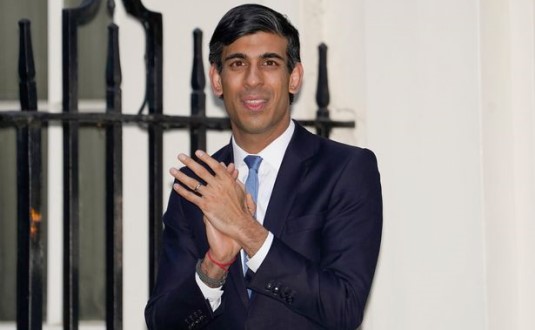
And so we read Rishi Sunak is actively considering cutting furlough payments to staff. Instead of covering 80% of the wage bill up to £2,500/month one option in front of the chancellor is reducing it to 60%. After pledging there was to be no sudden cut off to the scheme, thereby giving business a soupçon of certainty in these most uncertain times, this utterly ridiculous idea ramps up the anxiety for millions already hard pressed by having a fifth of their income disappear. Surely there's more to it than this, surely our touchy-feely consensus-happy Tories couldn't be so crass? Speaking on ITV last night, Sunak said the government would not continue spending as much on the furloughing scheme "without changes" to it. "We've got to ease people back to work in a measured way", which is sort of difficult for as long as a potentially deadly virus stalks the land. But if we've learned anything about the Tories over the last 10 years, things like facts and premature deaths tend not to unduly bother the Tories. According to the Evening Standard, reducing payments is a "leading option" so people become gradually worse off by design. To what end? To encourage people to look for new jobs. Incredible. Despite Boris Johnson ruling out renewed cuts, the fact this dog's dinner is a frontrunner is the Tories flashing their ideological teeth. Remember, for whole swathes of establishment opinion unemployment is not caused by, well, a lack of jobs. Rather it's a case of welfare entitlements being too generous. Without a shred of evidence, it is assumed social security pushes up the value of labour. I.e. the existence of a pitiful floor of £58/week for 18-24s and £73/week for the over 25s means the jobless are put off taking low paid work because life is peachy drawing them benefits. The fact the number of unemployed, even in the supposed good times, always outnumber available vacancies shows this up for the utter bollocks it is. But you can see the logic of this assumption playing out in the coming attack on the furlough scheme. Workers sat at home doing nothing, drawing 80% of their salary without having to work, living off unearned money is fine and dandy for the owners of capital but definitely isn't for those of proletarian stock. It has an effect of distorting the labour market, of preventing the normal churn of job change and leaving those vacancies in the fields unfilled. It's as if Sunak is trying to drive down living standards of furloughed workers to force a rapid restructure of the labour market. The furloughing scheme was set up with two purposes in mind. To prevent the transmission of Covid-19, obviously, and preserve capitalist relations of production. In other words preserve the power relationships and structures of authority the so-called free economy depends on. This is why Sunak followed the French furlough scheme as opposed to an emergency basic income (itself not without difficulties): the state is stumping up the readies, but is doled out through employers thereby preserving the wage relation: the relationship absolutely central to capitalism and its class system. But what about the debt the state is chalking up? We can't afford the scheme indefinitely, can we? Actually, we can. To all intents and purposes the government have stopped borrowing on the markets and is now being funded directly by the Bank of England courtesy of printed money. Because the government owns the Bank, it can determine the length of debt repayment, the rate, and whether it should be "repaid" at all. Why this won't result in PPE-equipped members of the public heading to the supermarket with wheelbarrows of cash is because the global economy is deflating. Thanks to stagnant wages, the legacies of austerity, and the massive hit to ordinary people's spending power there is a lack of money circulating around the real economy. Therefore their reluctance to carry on as they are isn't about fearing inflation. The problem the Tories have is their "tough choices", which were in fact easy choices considering it wasn't Tory voters old and new who tended to shoulder the burden, are shown up by their actions now to have been completely unnecessary. The worry is the public might notice and not swallow their nonsense about paying down the debt, or won't accept their excuses about why the NHS can't be funded properly, or homeless people taken off the streets. In other words, their measures are a far cry from neutral, managerial responses to an unprecedented crisis: they are playing (class) politics. The Tory preparedness to terrify and immiserate people, wrapped up in cod philosophies and supposed economic orthodoxies condense the class instincts of their party. Ultimately, the reason why the Tories win and win again is because when they have the upper hand they happily use the full power of the state and their media to not just attack the opposition, but disorganise the grounds for it. While workers are atomised at home scaring them with more hardship is likely to dampen opposition to a hastily-organised and fudged return to work. After all, the country can afford only so much support. This then is why they want to cut furlough payments down further. Not because of any public spending crisis, but because it makes their strategy for lifting the lockdown sooner smoother as well as "encouraging" a desire for a return to work. It's political manipulation, and it will cost lives.
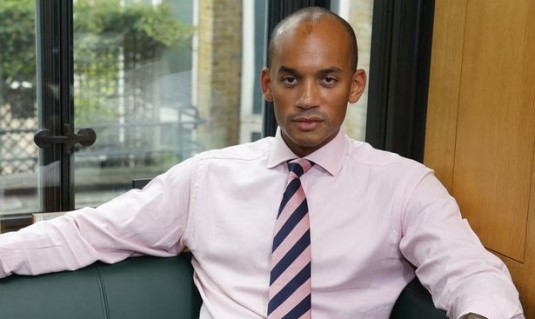
About a fifth of the UK workforce is in receipt of furlough payments. Unemployment figures for March and April are yet to be released, but by the middle of last month Universal Credit applications had surged by 1.4 million. Then there are millions of hidden unemployed, such as young people who don't qualify for social security. Many more face the prospect of furloughing and taking a significant hit to their incomes, and others the awful prospect of their job evaporating completely. As matters look increasingly grim and those on the right start sharpening their knives, cheer yourself up a bit by rejoicing in the good fortune of a lucky few. Take our old friend Chuka Umunna, for example. Since leaving parliament, he's ... done quite well for himself. According to reports, Chuka doesn't have one job. He has four. Readers will remember he found time in his busy schedule to chair a couple of meetings a month for the centrist think tank, Progressive UK. A nice non-job if you can get it. Added to his portfolio of work is Director of Digital Identity Net UK, a company that provides a one-stop shop signing in service to multiple internet outlets. Because, you know, signing in to Twitter and Facebook without clicking the remember me box is such a chore. According to the corporate blurb, "The Company is led by a team of highly accomplished individuals who have built businesses in Digital Identity, Payments, Banking, Technology and Government." Why is Chuka involved then? He's also got a gig as a Forbe's columnist writing on "leadership", and vaguely serves as a "strategic advisor" to sundry outfits on "business critical issues." Readers might recall Chuka was a junior lawyer for the best part of the 00s (this sretch of his life is now rebranded as a "a corporate employment law solicitor in the City and central London") before latching on to the soft left platform Compass as his means of bagging a safe Labour seat. Inexplicably a recipient of much hype off the back of a couple of so-so Question Time appearances, he was recognised and elevated under Ed Miliband just as he traded the politics of Compass in for the Blairist continuity of Progress. Following a failed leadership bid in 2015 and perennial cultivator of a new centrist party, you'll remember the happy day he and his scabrous cohort left Labour. Then followed the wry amusement when their desperate project was dashed by political realities and he traded up to the Liberal Democrats - with a very brief moment of leading "The Alternative", or half of the CUK MPs who fell out with the other half. Chuka's passage into corporate shindiggery reminds one of George Osborne move from MP for Tatton to a one-man workforce, including his assumption of the editorship of the Evening Standard without any journalistic experience. His case is instructive because it offers a template for Chuka's trajectory. Osborne was not so much purchased for his talents as for his contact book. During his six years as chancellor and 11 years as Dave's right hand man, Osborne got to know who the key players in Conservative politics are - especially the shadowy business networks whose political inputs are kept out of the limelight. He learned how the state works, and filled his contact list with oligarchs and billionaires. Given how unseemly close the Tories under Dave grew to China, he knows quite a few of the top bureaucrats in Beijing too. Chuka is small fry compared to this. Life as a Opposition spokesperson, backbencher, leader of a micro party, and celebrity recruit to the LibDems hardly confers as much social capital. But it allows for the accumulation of enough to make a decent grift possible. When Forbes, Digital Identity Net, or whatever company buys Chuka in they're buying his legend, his ability to provide access to some elite decision makers and business interests - especially those in the so-called remain movement. They buy his knowledge of how the system works, and perhaps that little bit of media magic Chuka was able to command for a short while. They're investing their economic capital in his social and cultural capital, and he in return is recuperating the time spent in cultivating these networks in ways conducive to a healthy bank balance. From the point of view of the mainstream, politics is not a struggle but the judicious building of strategically useful relationships. Chuka's rapid rise to the front rank of British politics and his slow sink into irrelevance, while maintaining his profile commends him to companies who think they'll profit from having a celebrated hire. And, sadly, it says everything about the rotten nature of politics and the decrepitude of British business that no marks are awarded this way and it is seen to work. That means we won't be hearing the last of Chuka and his ever-increasing pile of jobs. Image Credit
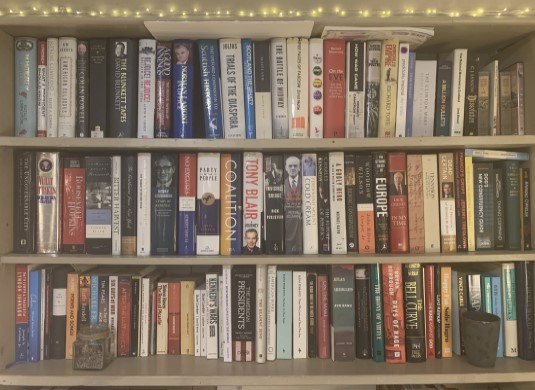
The ongoing derangement of British politics is the gift that keeps giving, if by gift you mean a spiralling whirlpool of lies and doublethink. Today the stinking eddies washed up a new battlefront in the social media culture war: a bookcase. Not just any bookcase, but one of a reputed 20 belonging to Sarah Vine and Michael Gove. If eyes are windows to the soul, bookshelves speak of the thoughts bouncing around their owner's cranium. In this spirit, a few stand out titles convulsed Twitter for an afternoon. The War Path by David Irving, Holocaust denier extraordinaire (though dating from before his path to racist notoriety), Ayn Rand's Atlas Shrugged, and that classic of pseudo science piffle, The Bell Curve by Richard Herrnstein and Charles Murray. As a number of comrades have pointed out, these matter in the context of Gove's Islamophobia, a government with a miserable record on racism, and the interminable anti-semitism wars. I agree with these comrades. There's nothing wrong having dodgeoir books. I've also got Atlas Shrugged, a few books by Tories (some of whom were, shock horror, entertaining), and Mein Kampf, a book not so much demonstrative of evil's banality but the tedium of it. A good book mix suggests a critical, inquiring mind and what you see on the Vine/Gove shelf is symptomatic of a closed universe. For all the defences trotted out by the hacks, these are shelves full of tat confirming their owners' prejudices. Tony Blair's A Journey is as left wing as it gets: there's practically nothing on socialist politics, let alone social history. Nothing about the masses, a great deal about the classes. Bits and pieces about the Second World War, plenty of books about the establishment politics of the United States, a smattering of undemanding novels and a book on gin. Even worse is the over-preponderance of biographies. Don't get me wrong, there's nothing up with political biographies per se. All are self-serving and axe-grinding to a degree, but they're good for bringing out the minutiae of the social lives and social circles of our social superiors. They clarify the thought processes and pressures on a politician's decision-making, providing an inside track to controversies not available as they unfolded. But when they're substitutes for other works on politics? Houston, we have a problem. It's not just that the lives of interest to the Vine/Gove house are nearly all elite and span a spectrum from the centre to the right (the sole proper leftwinger to grace the shelves, Sir Stafford Cripps, was quintessentially posh), it betrays a particular understanding of politics too. For the pair of them as consummate social climbers, their passage into the media and then the elite was eased by sucking up to the right people at the right moment, accumulating favours and political capital to ease the path of their advancement. From their point of view, the social world isn't a struggle: it's about making judicious strategic choices. Politics then is just another social activity, albeit the back and forth of elite players buttressed by institutional power and economic interests whose presence are just accepted to the point of not being thought about. It's all part of the feel for the game. Tomes of political science, theory, and sociology are therefore irrelevant. If advancement is the goal you need to understand how to play politics, not understand how it came to be. The overrepresentation of the biography on this bookshelf is more than hero worship. Rather they are etiquette manuals. Strategy guides. How to overcome the difficulties politics throws up, how to balance competing factions, ride popular waves, put down rebellions, when to ignore and when to acknowledge discontent. These are books for people who care about and want to profit from the dynamics of the small p politics of big P Politics. When she tweeted a picture of her bookcase, Sarah Vine knew three of the books featured would press all the right social media buttons and provide a bit of distraction from her government's mishandling of the crisis. Who on the right doesn't enjoy trolling the left? However, what she inadvertently let slip was the state of mind and the inspiration of a coming power couple. She knows their game, and she's happy to be brazen about it.