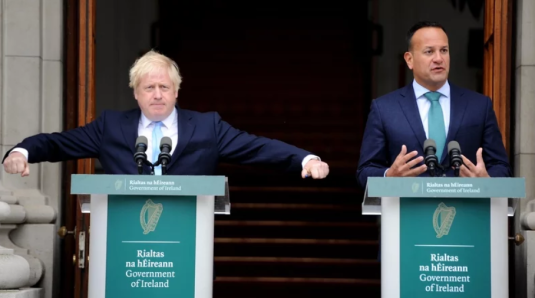
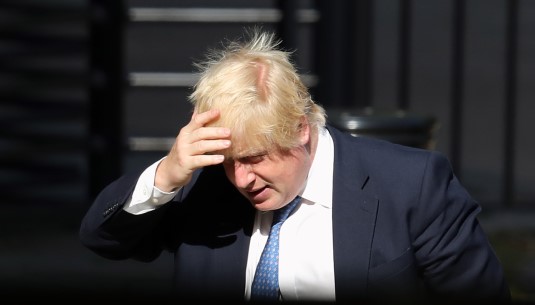
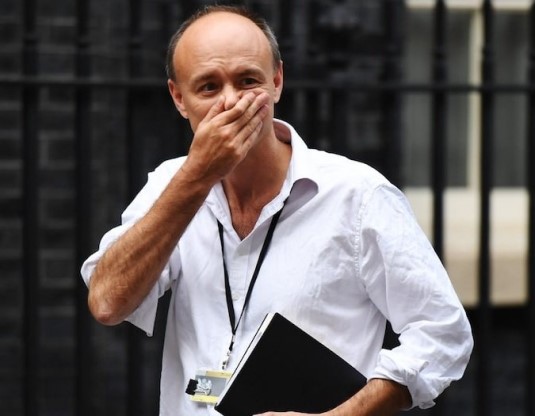
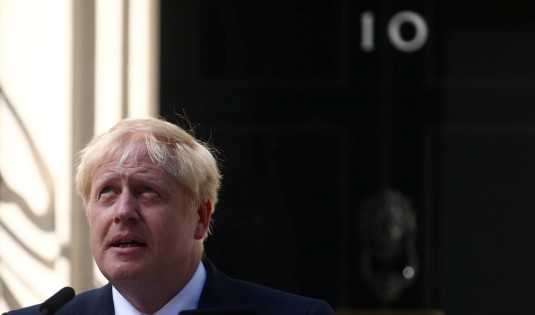
By now, it's become almost customary to write about Boris Johnson using words like 'shambles', 'disastrous', 'incompetence' and phrases that convey a sense of permanent and deepening crisis. Not wanting to follow the press pack as they herd around these tasty morsels, one cannot help be struck by how bad the government's final day before prorogation was. We know from the beginning Johnson set the bar pretty low, but he keeps on confounding us by sinking further into the mire. Following what was probably the worst week any government of my lifetime has suffered, Johnson bombed at his press conference with the Irish Taoiseach, Leo Varadkar, and he bombed twice in the Commons last night - one for his utterly doomed attempt at dissolving parliament and securing a general election, and the other concerning the release of text messages, WhatsApp messages and the like from Dominic Cummings and the Downing Street back office operation. Neither the press conference and the Commons shenanigans are not without political significance. Yes, there was weird body language enough to power a thousand memes, but Johnson's comments that a no deal Brexit was bad and would represent a "failure of statecraft" certainly got my ears standing up. Testing the waters of a climb down ahead of a hasty, last minute bargain with the EU? Well, it didn't sit well with Nigel Farage, who days earlier was lavishing the Prime Minister with praise and boasting about a Brexit Party/Tory pact that would secure them a majority of triple digits. More interesting, however, is the shape of a putative deal condensing out of the Johnson hot air. And ... it looks a lot like Theresa May's deal. As forecast on day one of his premiership, the realities of his position would compel him to reach to the ready-made deal cooked up by May and the one, lest we forget, he resigned from the cabinet over. Except his preference appears to be the proposal May quickly abandoned; of solving the problem of the Irish border should the backstop come in to play by moving the custom posts into the Irish Sea. In effect, Northern Ireland remains in the EU's economic jurisdiction while the UK mainland is (self) excluded. If this is going to be Johnson's deal, if this pig's ear is what he brings back to the Commons when it reconvenes then expect to see fireworks on the right of the party, with well-known Brexiteers jumping ship from cabinet and one or two resigning the whip and signing on with the Brexit Party. If there is any justice ... Moving onto the evening's double defeat, the motion from Dominic Grieve that called on Downing Street to publish all communications regarding prorogation and documents on no-deal planning, the heirs to the notorious Operation Yellowhammer leaks, went through 311 votes to 302. Yes, some of the so-called Tory rebels the Liberal Democrats are desperate to strike an electoral pact with preferred to vote with the government. As the deadline for publishing is tomorrow, seeing what the government does next is going to be interesting. Expect a few days of headlines about the rather frank language, to put it euphemistically, Dominic Cummings uses to describe Tory colleagues. Their cynicism exposed, the clueless Johnson desperately grasping for advice, and their plan to lie to the Queen over the reasons for prorogation is sure to be great theatre. Grab the popcorn and the chocolatey treats, it's going to be entertaining. Yet there is something that doesn't sit right about this. Yes, it's another thing for the Johnson government to panic over. And if they hadn't been so reckless and stupid perhaps this withering friendly fire would never have left the barrel. Leaving aside the no deal preparations which are fair game, surely politicians have the right to seek advice and have private, strategic discussions away from the media glare with their lackeys and spads. I'm mindful of this because now Grieve has established that this, in principle, can happen, what is to prevent the Commons from tying up and hamstringing the decision-making processes of a future Corbyn-led Labour government? How, for example, might the new left wing Treasury team work out strategies for overcoming opposition of senior civil servants as the government moves to take on the overweening power of the City if, in less than a month, communications can be commandeered by a simple majority vote and published for all to see? It sounds like a recipe for paralysis and timid government that never tries to change anything. It would behove the leader's office to think about the consequences of this, how it can be used against us, and what can be done to evade similar traps. And so, as parliament shuffles off for five weeks its final day simultaneously reveals the even stickier position of the Prime Minister, and a device that might give Labour a headache. A blast from the past and a warning for the future, the last day was a preview of calamities and challenges to come. Image Credit
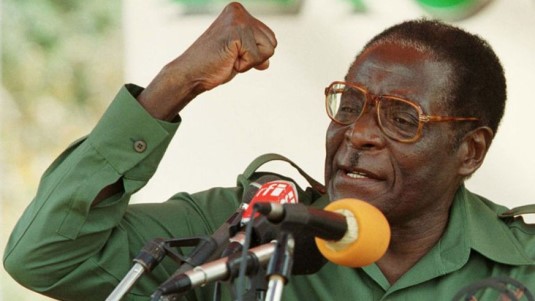
A guest post from David Osland Last weekend, The Sunday Times opinion pages carried an article arguing that comparisons between Boris Johnson and Hitler constituted ‘hysteria, hyperbole and mass bed-wetting’. This weekend, the Sunday Times opinion pages carried an article arguing in all apparent seriousness that Jeremy Corbyn in office would seek to channel Robert Mugabe. Double standards from the Murdoch press will hardly surprise anyone on the left. Some of us remember the routine attacks on the Labour Party from the very same publications back in the 1980s, known in the slang of the day as ‘monsterings’. But at a time when an unelected Tory prime minister has just suspended parliament, and the salami-slice erosion of democracy in Britain is self-evidently emanating from the right, the gravity of the charges demands more than tenuous linkage on the back of a couple of anecdotes from any given journo’s student days. The recently-deceased Zimbabwean dictator may not have been in the same league as his German predecessor, of course. But the brutality of Mugabe’s crimes are beyond dispute. Thousands of men, women and children — perhaps tens of thousands of them, because nobody knows for sure — were slaughtered in the Gukurahundi massacres of the 1980s, a bloody purge of political opponents who largely belonged to Ndebele ethnic group. Operation Murambatsvina, in the following decade meant that around 700,000 shanty town dwellers and informal workers were bulldozed out of the country’s cities, often in the literal sense. To the best of my knowledge — and I’ve known him for nearly three decades — Corbyn really is the mild-mannered bloke of widespread caricature, guilty of no offence more heinous than occasionally overrunning his allotted speaking time at Stop the War Coalition meetings. Everyone will have their own opinion of his politics, and nobody is forced to agree with them. I’m a supporter; you might not be. But it would surely take an unusually credulous undergraduate to fail to distinguish between a democratic socialist and an African nationalist whose bloodthirsty propensities were well known even when he took the helm of newly-independent Rhodesia. Mr Murdoch’s stable of publications is not the power in the land it once was. But even so, it is sad to see The Sunday Times descend to the level of a slightly-more middlebrow Sunday Sport. When newspapers that pretend to credibility come up with content that reads like a mirror image of some of the less intellectually-challenging alt-left websites, the boundaries of robust polemic or even reasoned debate are surely overstepped. This is dumbed-down right wing propaganda, aimed at telling whoever is listening that a Labour government is the road to serfdom, and possibly far, far worse. The contention is every bit as fallacious as when first advanced, a damn sight more intelligently, after World War Two. Since he became leader in 2015, Jeremy Corbyn has routinely been compared to every major dictator of the twentieth and twenty-first century, with Robespierre occasionally thrown in for good measure. Unsurprisingly, those tiresome souls levelling accusations of elective affinity with Pol Pot or Enver Hoxha have never once shown where his policies have ever overstepped the ideological boundaries of traditional Labour left parliamentary socialism. Indeed, in his defence of civil liberties — which includes opposition to such draconian New Labour bêtises such as ID cards, stop and search without suspicion and 90-day detention without trial — Corbyn can fairly be upheld as one of the few inheritors of the radical liberal mantle. The Sunday Times knows all of this, of course. But once commentators have lost sight of the difference between the Labour Party and the ZANU-PF, they’ve lost the plot. Image Credit
Writing about Boris Johnson's record-breaking run of five defeats last Wednesday, it was nigh on impossible to believe his week could possibly get worse. Let's take this opportunity to pick over the ruin and humiliation, then. In addition to the defeats, which included the general election he's desperate to have, he lost one MP to the LibDems before sacking 21 of his fellow Tories, saw his filibuster of the Benn Bill fall apart in the Lords, had his cabinet papers released to the courts, the departure of his own brother because he couldn't stand what was happening, the resgination of Caroline Spelman, the threat he would go to prison if he did not follow the Article 50 extension instruction by October 19th, the resignation of Amber Rudd, and last of all Sajid Javid making the unconvincing case on this morning's Andrew Marr that the PM would never extend Article 50 while saying he would obey the law. Absolutely excruciating. It took Theresa May almost a year to hit the buffers. It's taken Johnson six weeks. Despite "leaks" from the Downing Street bunker boasting of tactical setbacks to a strategic plan very much on-track, here's no obviously easy way out. Nigel Farage's offer of an electoral pact with the Tories is only something that can be cashed in after 31st October, and even then it could presage more splits in the parliamentary ranks. After tomorrow's session in the Commons prorogation comes into effect, ironically limiting Johnson's room for manoeuvre. The plan therefore is to try and call another election, which is sure to fail. The only alternatives are for Johnson to call a vote of no confidence in his own government, which is unlikely to be allowed on procedural grounds given recent precedent. Deary me. A cornered beast is at its most dangerous, but what else can Johnson and the Tories do? Toughing it out ahead of the inevitable climb down at the EU summit in mid-October appears the most likely course. The PM will use the next few weeks to call his opponents every name under the sun and then some, and get his press allies to unleash the hounds of hell. The traitor/surrender rhetoric will ramp up and perhaps we'll see a stunt or provocation to try and goad the opposition into an election. None of which will work. The only other option is the kamikaze one that has acquired some traction among parts of politics Twitter. i.e. Resigning and letting Jeremy Corbyn step into the vacuum. The reasoning goes that paralysed by the Corbynphobia of the LibDems, the ex-Tories and continuity Change UK Corbyn will have no choice but to call an election in which Johnson can spearhead a Brexit insurgency, backed by the arrangements Nigel Farage repeatedly offers (to the point of desperation, it has to be said). The problem with this wheeze is despite the repeated baiting of Corbyn and emphasis on never backing Labour in government, it's difficult to see how the LibDems and other noted reluctants, like Plaid Cymru are ever going to say no to a general election or second referendum legislation. Especially with the possibility of the former passing with electoral reform amendments. In other words, a caretaker government wouldn't necessarily implode in the same way Johnson's six weeks in office have done. The second is Johnson's infamous vanity. He knows well there's only one thing the unhinged Tory base fear above else, and that's Jeremy Corbyn in Number 10. The idea he would voluntary cede control of the government to a man the right have relentlessly demonised for the last four years is poppycock. It's one thing for Johnson to get bested by him in the Commons and perhaps even defeated by a left-led Labour Party in a general election, quite another to virtually invite him to form an administration. This is the price they're unwilling to pay for their no deal fantasy, and Johnson isn't about to destroy his chances among them in exchange for a no deal Brexit. However, Johnson does have other pressing concerns. His purge of the self-described Tory decents has caused a deal of disquiet on the government benches. Enough of his MPs are attached to the constitutional proprietaries of the Commons, and are worried about what his wrecking ball approach to matters might unleash. It's bad enough the Associations have seen all the awfuls who decamped to UKIP half a decade ago return, backed by a new influx of hardened leavers and thinly-disguised Brexit Party supporters. But to top if off with a formal arrangement with Farage's mob is more than too much. Therefore Johnson has to tread carefully lest there are more embarrassing resignations to come. Now this might be a cause for jubilation in the Dominic Cummings galaxy brain, but not from the standpoint of building a general election-winning coalition. Theresa May's own 2017 voter coalition was able to pull the bulk of (old) voters together for whom Brexit was ideological catnip, but her anti-Corbynism and rhetorical one nationism also kept on board the bulk of the right-leaning soft Tory supporters. Indeed, in vote terms the LibDems went backwards. Fast forward 27 months and Johnson's strategy is to build an election winning machine on the basis of Leave voters only. The problem with this is it means abandoning a swathe of marginals in Scotland, the South West and East, and London to the SNP, LibDems and Labour in the hope the Tories are going to take more old industrial seats, repeating the trick May managed when she scooped up the likes of Stoke South and Mansfield. The problem, which May learned to her cost, is the Labour leave vote is less motivated by Brexit than it is other issues. The idea Johnson has the kind of appeal that can reach into these places where May could not is risible. More significant for Johnson is what the bloc of ex-Tories in the Commons now do. According to the Express, among others, up to a dozen of the purged are considering running as independent Tories. And would you Adam and Eve it, Jo Swinson is straight in there with a pact to stand LibDem candidates down in those seats. We'll leave the logic of a self-described remain party standing aside for pro-Brexit Tories for now, but what is does point to - especially if more abandon the sinking Johnson ship - is the possibility of a realignment on the right. For all her hypocrisy and opportunism, Swinson realises something the hapless Tim Farron was blind to and Uncle Vince only dimly grasped: that there are better pastures to be found for their politics on the right side of the fence. There is a real chance of affecting a historic split on the right between the populists and racists Johnson is courting, and a more moderate, Cameroon-style new centre right party with the LibDems at its core, or perhaps as its actual form, but with refugees from the Tories and from Labour on board. Embracing the anti-no deal moderate Tories, even if it means sacrificing your LGBT activists, is the game you're in if your eventual ambition is to displace the Tories as a sensible party of government. More expelled Tories mean more resources for Swinson, and more of a headache for Johnson. After Johnson's week from hell then we find him out of options and out of sorts; a record holder for all the wrong reasons, and a strategy that has paid dividends for his opponents. It can't get much worse than this for the Prime Minister. But we've all thought that before.
Around about this time 25 years ago I started listening to The Evening Session on Radio 1, which began a deviation into indie, alternative and metal that lasted quite some time. Here is one of the, yes, guitar-based tunes I hold responsible for sucking me in.
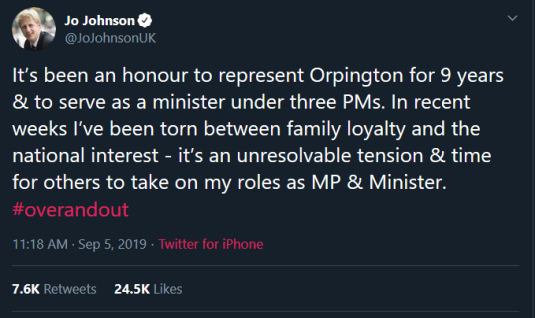
Boris Johnson's position is very bad. But last night, as the Prime Minister nursed his pounding head after four defeats and the collapse of his position perhaps there was a crumb of consolation reflecting on how it couldn't possibly get worse. Dear reader, it got worse. Does anything say "you're finished" more than your own brother resigning from your government and announcing his retirement from politics when the next election arrives because he can't stomach your policies? We certainly have Johnson the younger to thank for giving Labour a handy slogan for the constituency campaign in Uxbridge and South Ruslip. But when you consider the manner of the resignation, it's got to sting. Yes, sure, there was no way it could be spun positively for the PM, but it could have been handled better. JJ might have hung on until the election and announced then he was leaving politics, but instead by immediately giving up on he has inflicted even more damage on him. It's almost as if he didn't wish the no deal Brexit project nonsense well. Speaking personally, I should be grateful for JJ's tenure as Universities Minister. His enthusiastic championing of the market in Higher Education has ensured universities redirect resources from teaching and research to chase targets according to arbitrary and suspect metrics that supposedly measure institutional performance. His particular baby, the extension of the Teaching Excellence Framework on a subject-by-subject basis means more managers (hello!), more form filling and spread sheet scrying, and less time supporting students. When he first stepped down last year in protest against Theresa May's handling of Brexit, it seemed likely this scheme would fade away like a bad idea, only for it to come roaring back once re-appointed when big bro entered Downing Street. And now will it go again? If it is scrapped, it's too late for universities who, collectively, have squandered tens of millions responding to the pilot of this exercise. Apart from my personal interest, will Johnson's resignation resonate out there in realworldland? Possibly. Between 2010 and 2015, it was not uncommon to come across people on the doorstep for whom the Miliband brothers' psychodrama had cut through. Perhaps these punters were never going to vote Labour, but among voters of the blue rinsed type it did seem to bother them unduly. Therefore some are bound to suffer discombobulation, which could matter in a close fought election likely to be more of a turnout game than even 2017. Apart from losing a brother, the day didn't get much better for Johnson. His disastrous press conference and walkabout in Wakefield, a spectacle the normally supine Norman Smith described as "A very uncertain and rambling performance" was far from his finest hour. And the government have given up (some might say surrendered) their attempt to filibuster the Benn Bill in the Lords, with a view to having a second crack at getting an election through the Commons on Monday. As nothing has really changed since Johnson gambled on the opposition saving his bacon, they should continue to say no. No deal should be off the table and an extension of Article 50 secured before the vote to dissolve parliament goes through. And rather than letting it through via the Fixed Term Parliaments Act, it would be much better if the government are forced to go down the route of a motion that can be amended with all sorts of goodies attached. Like, perhaps, votes for 16 and 17 year olds. The only real quiver Johnson has in his bow, and one we're already tired of hearing, is the claim his opponents want to prolong the Brexit process indefinitely. He knows from his focus groups that most of the public want Brexit done and dusted (news flash to the hoodwinked, it certainly won't be if we crash out without a deal), and that impression of movement, dynamism, coiffured optimism compared to the sclerosis of others will be an electoral draw for the Tory/Brexit Party/right-leaning Leave base. This means Labour cannot be seen to be mucking about either. As per party policy, we head into the general election pledging to hold a second referendum as a means of ending Brexit uncertainty once and for all. And those options should be remain versus May's deal. Yes, her deal is bad. And yes, Labour would have negotiated a far better one, but it can at least be avoided by a comprehensive trade agreement seeking to preserve as much as we have now as possible versus the fever dream fantasies of the ERG, the disaster capitalists, and the tax dodging industry. And there you have it, a referendum of what could become a soft Brexit vs no Brexit. Yes, it would rumble on afterwards for years as the hard right will scream betrayal, but with the main issue finally sorted for most voters we can move onto political ground in which the big challenges start getting tackled, challenges and problems the Tories have prevented us from dealing with thanks to the crisis in their party. The departure of Jo Johnson underlines how precarious the Johnson leadership is, how damaged it is by recent shenanigans, and how Labour now possesses a greater say over events than the Prime Minister. Patience and sensible strategy can utterly wreck the Tories and deliver us a left-led Labour government. We'd better not fuck it up.
There is one way I'd like to see Boris Johnson go down in the history books: as the UK's shortest-serving Prime Minister. And you know what? It could happen. Surveying the wreckage from the Commons' votes of the last two days, Johnson is in a position arguably worse than any Theresa May found herself in. Hold on a minute, some might say, how can you even think this when the Tories are returning handsome leads in the polls and Johnson is getting much better approval numbers than Jeremy Corbyn? I can say it thanks to how he's boxed himself in. Since appointing Dominic Cummings as his Chief of Staff, going from the chatter among professional Westminster watchers you'd be forgiven for thinking a Nosferatu of diabolic brilliance had got hired. He was the brains behind Vote Leave after all, the strategic genius who linked the EU to a range of simmering frustrations and ontological anxieties. Not so clever clever when you remember this is the game UKIP and Nigel Farage played for the best part of two decades, and whose pitches he lifted from their Arron Banks-bankrolled Leave.EU front. Nevertheless, because the lobby hacks are pack animals and of singular mind, the legend of Cummings filtered into their stilted collective consciousness and got reproduced as if gospel. And yet, and yet. Cummings and Johnson are of the school that browbeating and bulldozing, shouting and shafting equals political leadership. And we can see where that gets them. Pushing an entirely contrived official optimism and shuttering parliament, backed up by threats might excite the editorial offices and the no deal brigade, but not if you're trying to hold a fractious party together in the face of divisive votes. And so, as we all know, Johnson humiliatingly suffered defeat in his first Commons vote, this afternoon his second, and tonight his third and fourth - the first time ever a new Prime Minister has been voted down in their first two parliamentary outings. let alone three and four. Already, Johnson has his place in the history books. And the fall out was the removal of the whip from 22 Tory MPs, affecting the worst split in the Tories since the foundation of the modern Conservative Party in 1836. The damage has rumbled through the party all afternoon, with the 1922 Committee hearing widespread displeasure against the expulsions and a letter going to Johnson from the so-called One Nation group demanding the reinstatement of the expellees as candidates at the next election. Barely six weeks into his premiership and the bad blood is coursing feverishly through the Tory body politic. Perhaps it wouldn't have been this bad if Johnson's approach been less capricious. Definitely not if had he not enthusiastically embraced no deal and "borrowed" Jeremy Hunt's Brexit positioning, but when you're willing to gamble other people's fates for personal glory you can't complain when the bets don't fall your way. Which is exactly what has happened. For Johnson and Cummings had wagered they could burn their bridges with the remain-inclined Tories and cow the rest with macho displays of ruthless blue Stalinism, because the old would get flushed out during a general election. An election wouldn't be plain sailing, but promising to get Brexit done - and a no deal Brexit at that - would neutralise the Brexit Party and, presumably, take seats off Labour in the north (ah yes, the myth of the conservative "northern" working class refuses to die). The opposition, meanwhile, would be split. They didn't even consider the possibility Labour would not back their move to a general election, and so their hubris brings nemesis cantering in on its heels. Thanks to the Benn bill passing tonight, Johnson's tabling of a 15th October election under the Fixed Term Parliaments Act was a dud long before the motion paper went to the printers and he received his fourth defeat out of four. It's a miscalculation so spectacular that some even think it's actually some galactic brainiac strategy. Johnson then is in a trap of his own making. He only gets his election if he follows parliament's instruction and applies to extend Article 50, which would be a crushing embarrassment as well as the coup de grace on his premiership and the Tory party presently constituted. And as he's not going to do that, the chance of an election under what he and Cummings see as the most favourable circumstances the Tories are ever likely to get evaporate. Where now for Johnson? Where indeed. If the mega filibuster in the Lords fails and he refuses to be directed by legislation, then we're in the major constitutional crisis territory. It will involve the courts and perhaps even reach the point where the Queen is compelled to sack him. Which would be fun. Or, as is more likely, he'll try and resist its direction until parliament returns and it all kicks off then. In the event of the bill getting talked out, then nothing happens. He'll make repeated scenes about having his hands tied over conference season and try and set up his people versus parliament shtick, but the election won't happen before the next EU summit on 17th October. Either we then proceed to no deal with Johnson thoroughly owning it and scuppering the Tories over the medium to long-term much quicker than would otherwise be the case, or we get him refusing to implement the no deal legislation and, again, the possible activation of the Queen. In the mean time, it's not enough for us to sit and wait for constitutional Twister to play out. The barracking and protesting, the campaigning and canvassing must carry on unabated. Action mobilises, and when the election storm finally does break, which it will at a time of Labour's and not Tories' choosing, there will be a large street army primed, ready to face whatever the Tories throw at us, and determined to be the end of Boris Johnson.
Where has the weekend of bullying and bluster got Boris Johnson? Saying Tory MPs who vote against the government in the Commons tomorrow will be deselected has, at least at the time of writing, firmed up the Tory refuseniks. Imagine, a Prime Minister who models himself on Winston Churchill drumming his actual grandson out of the party. Not great optics for the history books our vainglorious leader hope to dominate. And now we have the threat of a snap election pencilled in for 14th October if, as Johnson put it outside Downing Street this evening, parliament knocks the legs away from the government's Brexit negotiation strategy. He emphatically said he doesn't want an election, but among his waffle and piffle were laid out rhetorical devices designed to get him off the hook if he calls for one. High stakes and risky moves then, but how likely will fortune favour the knave? Johnson and Tony Blair (yes, him again) have reckoned now is the best chance for the Tories - which is why Johnson is keen to flash around his keenly not-keen posturing, and Blair is warning against supporting one in the Commons. Clearly, while the polls are moving away from the four-party result of the EU elections it is far from complete. On average the Tories are in the mid-30s with Labour languishing in the mid 20s, and the LibDems between 15-20% and the Brexit Party on 10-15%. With a split opposition, First Past the Post would, depending on how the votes fall, allow the Tories to get a thumping majority. The 1980s are a reminder of the stark consequences of what happens when opposition is divided, and 2017 a moment when the Tories were nudged into permanent crisis thanks to anti-Tory sentiment solidifying behind Labour. Johnson is gambling this won't happen again. Stuff like the summer's big blowouts and incessant sniping from the right inside Labour has catalysed an anti-Tory and anti-Corbyn constituency that will put pay to the hopes of one of these forces - and, Johnson reasons, it won't be the Conservatives. Once the huge machinery of the Labour Party moves which, in and of itself, is an electoral factor because of its sheer size and reach into every street, workplace, and friendship group in the land we shall have to see, but this is largely invisible from Johnson's and Cummings's standpoints. Nevertheless, while Labour might be fighting a two-front war, so is Johnson. Flush from their EU election victory, Nigel Farage has gone so far as to declare terms to the Tories. Having now aligned the Brexit Party explicitly with no deal, he has said it would only stand its candidates down if Johnson adopts this as his preferred objective. While Johnson is quite prepared to countenance no deal to keep his wretched party together, he knows polling consistently finds majorities against no deal as well as the small matter of the damage it can do to the country, and more importantly the Tories in the medium to long-term. If he does persist with the fiction he's negotiating hard for a deal, which is the line he fed into tonight's speech, BXP will stand but he'll be hoping for a repeat of 2015 where UKIP's four million votes disproportionately hit Labour's hopes in the marginals. However, what Johnson can't rely on whereas Dave could and did is the Tory centre-leaning EU-friendly voters: the LibDems scooped them up in the Brecon by-election and are zeroing in on them. Not two fronts for Johnson then, but three - and thanks to his stupid no deal rhetoric he's already raised the white flag on one of them and is practically inviting his opponents in. So much for the Tory position, but Labour's? As Blair was giving his speech earlier warning against an election, I lazily dismissed him as being always wrong. As the day has worn on, I've reluctantly conceded he may have a point. Obviously, Labour wants an election to get shot of the Tories: no more no deal idiotics and theatrics, and no more cruelty and stupidity would be a fine thing, but a general election in all circumstances? To get an election, Johnson simply cannot call one. His option is, as per the Fixed Term Parliaments Act, a vote in the Commons with a two-thirds majority - which is the route Theresa May used to secure hers. Or, as Stephen Bush rightly notes, a government motion requiring a conventional majority using a form of words in which the Fixed Term is bracketed and bypassed works just as well. Either would pass as Jeremy Corbyn would whip for a vote, but this does require some strategic thinking before we go there. Electoral politics is more than just mobilising for victory, a strong gambit must aim at simultaneously disadvantaging and disorganising one's opponents. Something Blair also understood during his time in office. However Johnson goes about calling an election, he needs Labour's support, and Labour should be prepared to offer some red lines of its own. A line such as, for example, safeguarding the national interest by extending Article 50 and proposing a longer election date so the issues underpinning this important and fateful election can be fully thrashed out. Reasonable requests, yes, but existential crisis time for the Tories if conceded. The "elephant trap" Blair has identified can be turned against those who set it if Labour plays its hand skilfully. In the mean time, the events of the last week remind us politics is not a spectator sport. One of the reasons Johnson and Cummings have doubled down on the heavy handedness is because their ruse comes from the same place of weakness that bedevilled May after she lost their majority. Whereas she tried placating the European Research Group and the hard right, Johnson is trying to bulldoze his critics and irreconcilables. While his shenanigans play out in Number 10, in the whip's office, on the WhatsApp groups and in the theatre of the editorial office and briefings to favoured hacks, we can be ready for whenever the storm breaks. There is a huge, angry, and deeply politicised movement out there raring to go. It cannot win an election by itself, but Johnson would be a fool to underestimate how a mass of active and motivated people can thwart his schemes. Image Credit
Why write about the government's shenanigans and anti-democratic moves when you can have James Meadway talk about it for you? In the latest installment of Politics Theory Other, James speaks to Alex about the proroguing of parliament and the other gambits the government have up their sleeves to get their (no deal) Brexit done. Certainly a timely episode what with the weekend's protests, and Michael Gove's indication that Johnson will ignore legislation passed in the Commons.
As ever, please consider supporting the podcast here.
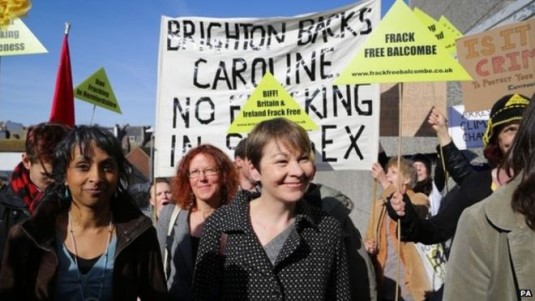
August is supposed to be a quiet month, but the politics kept on happening. What missives from here concentrated the clicks and the eyeballs? 1. The Demise of Caroline Lucas 2. The Liberal Democrats' Worst Nightmare 3. On Corbynphobia 4. The Curious Case of Tom Watson 5. Stanning for Corbyn, and Other Twitter Tribes Yes, the jiggery-pokery over a caretaker government and finding a way to challenge Boris Johnson effectively on Brexit dominated proceeds. The Greens' sole MP and best known figure attracted derision for her centrist fantasy cabinet of white women, but had made up for it by month's end with her positive response to Labour's plan to stop no deal. Nevertheless, a question mark remains hovering over her politics. The LibDems also go a well-deserved gunking for overreaching and putting their, or more specifically Jo Swinson's, Corbynphobia before preventing no deal. And as Tom Watson was just days before playing remain footsy with anyone and everyone, the post on this got the numbers too. And last of all was a 4,000 word essay on identity in the Twitter age and the toxic pathologies this entails. Two are going in the second chance saloon today. This looking at cancelled culture via some of Mark Fisher's concerns did well, but not well enough. And this on the Brexit negotiations might tickle your fancy. I suggest Blair affected a split in finance capital during his time in office. Obviously, this is something worth exploring more in the book as well as thinking about in future posts. September then. It's looking packed with parliamentary shenanigans, party conference season, more protests, and a ratcheting up of things to fever pitch. If you carry on swinging by, I'm sure there will be more articles and super hot takes to read. Image Credit