Wednesday, 6 February 2019

A Special Place in Hell

Unwise his comments may be from the standpoint of diplomatic protocol, it's difficult to disagree with Donald Tusk. There should be a special place for Brexiteers who lied, peddled racist politics, and hitched themselves to the Leave bandwagon for entirely selfish reasons. Space must also be reserved on the damnation list for the former Prime Minister for failing to order any contingency planning in case Leave won the referendum. And when we think about the current occupant of the highest office? Oh boy.

Of course, the Brexiteers love it when any European politician or bureaucrat goes off on one about Brexit. They take up the comments and spin themselves and plucky old Britain as hard done to by the nasty foreigner in the hope it plays well with what they consider to be "the country". The always absurd Andrea Leadsom demanded an apology from Tusk, and Jacob Rees-Mogg tweeted some bollocks about St Thomas Aquinas. This will be followed by outraged editorials (my money's on the Express to produce the most frothing), and a few pub bores and kippers are bound to get themselves in a lather about it all. Meanwhile most people are going to look on with bemusement and wondering when this whole Brexit mess is going to get sorted.

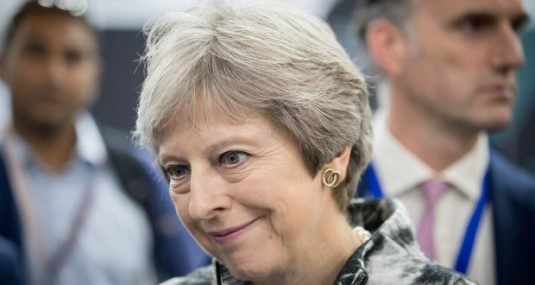
Someone else who benefits from Tusk's cuss is Theresa May. Never the most consistent of Prime Ministers, she lived up to her reputation of being somewhat elastic with her word during her speech to Northern Ireland businesses on Tuesday. Now, bear in mind what has happened in politics of late. May's deal went down to a historic defeat. Faced with the Scylla of caving in to the Brexiteers on the hard right, and the Charybdis of a sensible customs-union based Brexit that already commands the majority of the Commons, as ever May put her party interest first and whipped her troops into supporting a new negotiating stance that re-opens the Irish backstop. Keen Brexit watchers will recall that the backstop was entirely her own invention in the first place, but such is politics. And so May is going in to bat for putting a time limit on the insurance policy in case her government proves incapable of striking a trade deal with the EU. Except she's not. She has assured Northern Ireland business that the UK isn't leaving the EU without some permutation of a backstop to prevent the return of the hard border. Eh? In her own words:


There is no suggestion that we are not going to ensure that in the future there is provision for this – it has been called an insurance policy, the backstop – that ensures that if the future relationship is not in place by the end of the implementation period, there will be arrangements in place to ensure that we deliver no hard border.

This isn't what she signed on to when May renewed her alliance with the ERG. For them, moaning about the inviolability of the UK is just cover because they feel compelled to hide their true intentions. Offered concessions at the Brexit Select Committee around a legal guarantee that Britain would not be bound in perpetuity to the backstop agreement should it be triggered, Andrea Jenkyns and John Whittingdale rejected it out of hand. No deal remains their objective, and there's nothing Brussels can do to persuade them to come to an arrangement. If this is resolved, this wing of the ERG will find some other reason to oppose a deal.

Given May's equivocation over the compact they thought was signed and sealed, they're getting a taste of what Michel Barnier has put up with these last couple of years. And yet the gnashing and the whingeing has curiously absented itself. Are they biting their lips out of deference to May going to Brussels for negotiations? Maybe. Then again, maybe not. Last week, it was continuity remain locked in a bitter dispute. This week's it's the Brexiteers' turn. As Alex Wickham reports, Tory party unity over the so-called Malthouse Compromise has frayed already. Central is the claim that a scheduled trip to Northern Ireland organised by the Alternative Arrangements Working Group (the outfit tasked to come up with a solution to the border issue) saw leading Brexiteers pull out because they were due to meet with civil servants, business and local politicians who would tell them what no deal means. It's interesting how power can never stomach its truth. They felt they were being stitched up, and so cancelled their flight yesterday afternoon. More interestingly for connoisseurs of Tory in-fighting, this is symptomatic of an internal ERG split on what concessions would be acceptable. Some, as per Jenkyns and Whittingdale are demanding the removal of a backstop entirely as a condition of their support because, you know, the risk of a return to violence and misery is a price worth paying for the ERG's tax haven fantasies. Others accept it but are on the time-limited wagon. What a shame. Or, as one Tory noted, "It is ironic that something supposed to overcome division within the Conservative Party has caused further division". Quite.

Don't know about you, but I can't get enough of the Tory party volatility. At the rate things are going, Theresa May could go into her meeting on Thursday with Jean-Claude Juncker promising to negotiate out the backstop, and reveal to the world how she's signed up to a full UK-wide customs union Brexit with a year-long extension to Article 50. To be honest, I doubt May fully knows what she's doing from one day to the next. But it doesn't matter for her. The shilly-shallying and the games playing, the scuttling backwards and forwards to Dublin and Brussels does achieve one thing: it keeps winding the clock down to when enough Tory and Labour MPs feel compelled to support her deal. We know her game, she knows her game, and she knows we know and we know she knows, but none of this is stopping the zombie-like resurrection of her deal and her steering of the country to the brink.

Tuesday, 5 February 2019

Review - The Thatcherite Offensive

Tentatively writing off to the SWP a long, long time ago asking for more information about their organisation they sent me back a letter, a copy of Socialist Worker, Lindsey German's short pamphlet on the revolutionary party and Paul Foot's Why You Should Be a Socialist. What struck me about the latter was the cogency and simplicity of his potted class struggle history of the post-war period. His treatment of the Thatcher governments were especially clear: what we had was a pre-meditated class offensive against the working class and its institutions, and one that mobilised all the resources of the state to smash the miners and clamp down on organised labour in general.

Alexander Gallas's The Thatcherite Offensive: A Neo-Poulantzasian Analysis is the long overdue scholarly elaboration of Foot's narrative. Drawing on documentary sources he makes the case that the Thatcherites had a plan for remoulding society, central to which was the striking of a new balance between capital and labour in capitals's favour. As such the offensive is periodised into broad sections of advance and consolidation before petering out and then the inauguration of a different class settlement under New Labour.

Drawing on the seminal work of Nicos Poulantzas on the state, there are a number of useful concepts Gallas employs. Firstly, discussing the 'power bloc' when referring to the ruling class. This is useful because, by its nature, a bloc is contingent; a semi-coherent assemblage of elite alliances, networks and connections roughly pulling in the same direction. It is therefore composed of personnel from political parties, capitalists and senior business staff, heads of state institutions, the top of the legal profession, notables from the arts and celebrity, and so on. A Marxist, or a Neo-Poulantzasian appreciation of class has to pay attention to how the bloc organises, its tensions and contradictions, its movements and its crises. The second key conceptual distinction applies to bourgeois politics at large: between class politics and economic order politics. Of course, this is an analytical separation because, in practice, they have a tendency to intertwine. But in Gallas's hands, it's about the orientation of policy and political strategy. We'll see how this works out shortly.

Beginning with the post-war period, Gallas draws attention to the fundamental instability and weakness of Britain's institutions. Compared with say West Germany whose structured capitalism, ironically, had a bit to with the institution building of its British occupiers after the war, corporatism in Britain was half-hearted, unsettled, and never properly locked capital and labour into stable tripartite relationships. Class struggle was central here but moved through a number of ad hoc institutional arrangements, and often erupted into open warfare - particularly in the 1970s. However, what quickly became obvious was that none of the frameworks established were able to manage class politics, nor was the power bloc nor the labour movement strong enough to decisively defeat the other. Each were capable of offensives, and likewise each could defend themselves.

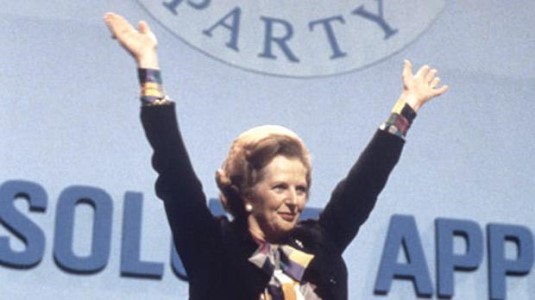
Matters came to a head with the defeat of the Tories by the miners twice. After her election as party leader in 1975, Thatcher's priority was the breaking and taming of the labour movement. She immediately set up four secret Tory working groups. One of these, the Authority of Government Group addressed emergencies that posed government authority a threat, such as another miners' strike. While it was populated by conciliators (characteristic of the ancien regime) and hardliners alike, it recommended continuously updated contingency plans, coal stockpiles, PR strategies aimed at undermining public support for any strike, and even redesigning power stations to make them harder to picket It also warned against all-out confrontation and picking and choosing battles. More interesting, and revealing, was the Nationalised Industries Policy Group set up under Nicholas Ridley. His remit was the management and privatisation of these businesses, and Ridley's conclusions recommended a clear strategy for confronting and undermining union power. Like the Carrington group it advocated conciliatory positions for tactical reasons while not deviating from the overall plan Also crucial was some of the language Thatcher later deployed. Rather than setting out their objectives in the clear language of class (no bourgeois or petit bourgeois could ever be so vulgar), it opted for "non-class" markers of division. Folks familiar with the Dave era distinction between the strivers vs the skivers will know what I'm talking about. Keith Joseph's group, which was published at the 1977 Tory conference, made the case for "economic liberalism" but was clear it required a repressive approach to industrial relations: freedom for capital was only possible if labour lay in chains. And the Stepping Stones report written by the businessmen John Hoskyns and Norman Strauss, but commissioned by Thatcher and Joseph, argued for a fundamental shift in Britain's political economy that would favour future Conservative election victories. This systematic approach, however, was contingent upon defeating the unions.

For Gallas, this shows the intellectual energies of the Tories in opposition were consumed by plotting strategies to redress the capital/labour relationship. With the Grunwicks dispute and the Winter of Discontent, the Tories trialled their anti-union rhetoric. Then, as now, certain editorial offices abided by the party line and, unfortunately, they were able to intersect with a wider mass of voters who were put out by the latter strikes, given it was public sector unions who were taking action and therefore public services were affected. Given Labour went to the polls when it did, it's difficult to see how the 1979 election wasn't anything other than a foregone conclusion.

Nevertheless, despite the preparations for confrontation Gallas argued the first Thatcher term was more about economic order politics. Monetarism and control of the money supply was loudly trumpeted, and laissez-faire entered the mainstream political lexicon. Meanwhile more resources were poured into building up the police and anti-union legislation introduced, though at this time concessions were made to public sector unions to avoid big confrontations. The top rate of tax was reduced from 83% to 60% while VAT was almost doubled from 8% to 15%, and exchange controls and bank lending restrictions were lifted. Tough commercial-oriented expectations were imposed on nationalised industries and interest rates were put up, increasing the pound's value but rendering Britain's exports uncompetitive. This induced a collapse in manufacturing and mass unemployment, which nevertheless afforded the Tories some ideological hay making around the supposed inefficiency of state-owned industry. This was also the term the Tories started gradually unveiling what Gallas refers to as their 'two-nation strategy'. Rather than building a hegemonic bloc in which popular consent is won among the mass of the population, Gramsci-style, the Tories were interested in dividing up their potential opponents and winning a section of them over. The sell off of council houses was explicitly thought in these terms. Owner occupiers have property, which might subsequently condition their outlook, and the issuing of mortgages to pay for them has a disciplining effect. People are less likely to strike if it risks losing the roof over their heads. Later, privatisation of the utilities and the issuing of shares were conceived in similar terms. The Tories weren't interested in winning everyone over, but their popular capitalism was designed to creating a layer of beneficiaries who did well out of their government - or aspired to.

We know well what came next. Thatcher won the 1983 general election off the back of a popular war and a chronically split opposition. Immediately preparations were stepped up for a confrontation with the miners and, well, we know what happened next. This set the tone for other important disputes during the remainder of the decade. The violence of the state and the repressive legislation of her anti-union laws were used in tandem to destroy the print unions at Wapping, and break the collective strength of sea crews at P&O Ferries. However, while the latter two disputes proceeded with Tory connivance they were nowhere near as hands-on as Thatcher was with the miners. As the decade wore on and labour reeling from a strategic defeat, more conciliatory voices in the Tories started being heard. These included the likes of Michael Heseltine who favoured an abandonment of laissez-faire and a rebooted industrial activism. Nevertheless privatisations went through ("if you see Sid, tell him ...") and reforms to schools and the NHS imposed internal markets, ostensibly to drive up standards, in practice to pioneer private sector service delivery for public services funded by the taxpayer - something Blair and Brown were later to take up with alacrity. However, Thatcher fell as her poll tax fuelled mass opposition and despite winning the 1992 general election, the Major government was ill-equipped to manage the new class order their party has inaugurated. They lay the groundwork for capital's further penetration of the state apparatus with PFI and outsourcing, but the main preoccupation for the Tories - Europe - was for Gallas ultimately a dispute about managing class struggle. Full integration into the European Community and then the EU meant a recasting of the dynamics of capital and labour more in line with the (slowly neoliberalising) corporatism of European nations, and enhanced rights for the trade unions. At least that's what sundry Tories feared.

It was the failure of their economic order politics, the Exchange Rate Mechanism debacle, that finished the Tories off within six months of winning their election. Nevertheless when they were booted out, for the first two years New Labour offered nothing beyond continuity. While they stuck to Tory spending plans, it began its programme of "modernisation" with referenda to introduce devolved authorities. The repressive extractive strategy of the Tories continued (Blair boasted of still having the most restrictive Labour laws in the Western world) with the maintenance of their shackles on trade unions, but offered minor concessions in the realm of individual and not collective rights at work, as well as the minimum wage, protection from unfair dismissal after a year in the job, and limited freedom to organise in the workplace. Nevertheless, for Gallas this constituted a one nation hegemonic project. Rather than trying to set different sections of the population against one another the by-word for New Labour was inclusion, and we say a battery of strategies to give everyone a stake in the "young country". Gallas stresses the widening participation in the labour market agenda and how coercion was used along with retraining and education to maximise "opportunities" and get people off unemployment benefit. You could also point to efforts at official anti-racism and multi-culturalism, promoting women, and the legislation aimed at normalising same-sex relationships. It was still neoliberalism, it accepted the settlement Thatcher struck in the 1980s, but what it was was a species of neoliberalism but with a recalibrated approach to class politics. One, I would argue, Dave in the 00s turned away from as he capitalised on the consequences of the crash - itself a consequence of decades of deregulation, looting of the public purse, and market madness.

The Thatcherite Offensive is an essential work not just for Thatcher obsessives, but for anyone who wants to understand how politics works. It also includes a nerdy but necessary review of contemporary Marxist debates over what Thatcherism represented, including what our friend Stuart Hall had to say. Gallas also addresses the critiques of Poulantzas's work, including the role of non-class related inequalities in state strategies. From my standpoint, as someone shortly to start writing a book on the Tories and has spent more time than is healthy commenting on and thinking about them it was gratifying to find a writer whose basic approach isn't a million miles from my own. What is also useful is Gallas's stress on contingency. Thatcherism was planned, but it didn't always go according to plan and, indeed, was vulnerable and could have been defeated. A useful caveat for anyone writing, thinking, and participating in the grand sweep of huge social movements and the class struggles to come.

Monday, 4 February 2019

Sunday, 3 February 2019

A New Centrist Party is Still a Stupid Idea

The tide flows in and out, the sun rises in the east and sets in the west, and discontented Labour MPs keep promising they're going to split off and launch a new party "soon". According to Toby Helm, one of The Observer's's biggest cheerleaders for this miserable Blairist project, discontent over Brexit and Jeremy Corbyn's foreign policy positioning are bringing them close to quitting. But hold on a moment, thanks to the benefit of having a memory aren't these always the reasons? So why now, what's new, how have things changed?

Continuing the fine tradition of the diminishing number of MPs said to be champing at the bit for a new party, Toby's exclusive puts the latest tally at six, which is down six on the proto-party talks alleged to have taken place last summer, and the 30-40, and 80-100 before then. Who are our dramatis personae on this occasion? There's Angela Smith, the MP who has curiously chosen the private ownership of water has her hill to die on. We have our mate Chris Leslie, or as I prefer him, vacuity in a suit. And, on this occasion, Luciana Berger's name is roped in. Hers has proven a career noteworthy in two respects - she's more famous for quitting the shadow role for mental health than anything she did with it, and her murky selection in 2010 thanks to knowing the right people over and above any discernible talent. Who could be the "three others" on the verge of quitting? Mike Gapes has recently been straining to get in the news, so one shouldn't rule him out. With gravitas like this on their side, how could they not succeed?

Well, they are going to fail and hard if they ever have the guts to follow through their tiresome threats. When these stories started circulating in the summer after the last general election, the conditions against a new party then still apply. There is zero name recognition for the people involved except perhaps, ho ho, Tony Blair. Apart from money, they have no leader, no activists, no profile with the wider public, and not even a pool of voters - despite their best efforts at trying to win one. Though, to be honest, whatever this gaggle of has beens and never weres decide to do they're doomed anyway. There's more of a chance of Donald Trump showing some humility than any of these getting adopted again by their constituency party as Labour candidates.

Why go through this tedious, rinse-and-repeat ritual of announcing their intentions? Just as matters have come to a head for Theresa May, so Brexit is forcing the petty scheming of the Blairists to a conclusion. This last week has shown there is no way to get their beloved (and undesirable) second referendum through the Commons. For all their disingenuous arguments like "how can more democracy be undemocratic?" (an point, we'll note, they never accept when it applies to the left's efforts at democratising the Labour Party), and the huge amount of money spent and unrivalled media access, they've succeeded in persuading absolutely none of their colleagues that a rerun is a good 'un. They've finally hit the brick wall of reality, and they think a new party - or at least the talk of one - will help scrape them off.

The other consideration is the infighting within continuity remain itself. From before the referendum until now it's been a top down, elite affair with the interests of British capital front and centre. Only someone who is a member of these exalted circles and moves exclusively within them could think putting forward Alastair Campbell as one of its main spox is a good idea. However, as Buzzfeed reported last month the campaign is falling prey to the centrifugal pressures rending at it. One faction want it to continue as an umbrella organisation determined to avoid Brexit, and they're at odds with the others for whom anti-Corbynism is the chief consideration. And in turn both are variously ill-disposed to the prima donna moving and shaking by Chuka Umunna who has long harboured his own vanity project. In other words, without really doing anything they've knackered themselves out.

What's left for them to do? Continuity remain was a hiding to nothing, and there is zero chance of them making a comeback in Labour. They had the opportunity to re-examine their politics and think about what they mean in the context of Labour offering a genuinely transformative programme, but for them to put the party first was asking too much. Besides, that's something to be expected of the little people but not mighty Westminster titans like themselves. They've mouthed off so many times without putting on the trousers, and because they have zero name recognition and no experience of organising bar ordering what to have for lunch, any new party would be a miserable, half-hearted and dismal effort. A fitting finis to their careers, don't you think?

Saturday, 2 February 2019

John McDonnell in Stoke

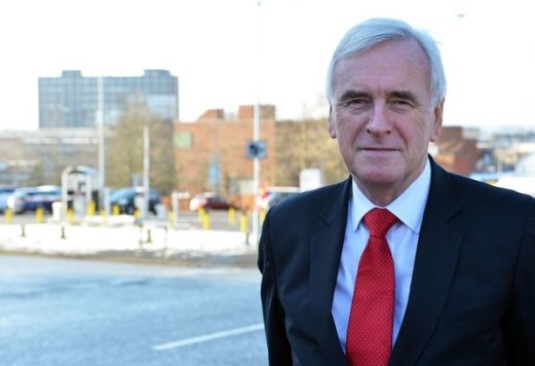
As part of John McDonnell's tour under the theme of Transform Your Town, he and the shadow treasury team came to Stoke to listen to what we think our local problems and priorities are, as well as talk about Labour's plan for Britain and what strategies we thought were useful for tackling the city's problems. About a hundred people squeezed in to the Hope Centre in Hanley for a series of talks and workshops on our programme for the city and the country.

After Annalise Dodds kicked off proceedings, John pulled together some key stats about Stoke-on-Trent. The weekly wage in Stoke South constituency, which was originally going to host the event, currently stands at £478, as compared to the UK average of £550 and London's £650. 5.5% are registered unemployed, 10,435 people are in the process of being moved on to Universal Credit, 764 people have to cope with the bedroom tax, and 17,938 pensioners benefit from the protections afforded by the triple lock - a measure Labour is committed to keep. In the city as a whole, 30.4% children live in households in poverty and last year, Stoke's fifteen food banks gave out 111,946 supplies. Additionally, 13.8% of city households are classed as living in fuel poverty, and the City Council's spending power has fallen by 27.5%. Public services have similarly suffered. There are 129 unqualified teachers in Stoke's classrooms while 3,465 schoolchildren sit in classes of 30 or over. Staffordshire Police have lost 556 officers while robberies are up 27% and violent crime has increased seven per cent. 19% of patients in the Stoke Clinical Commissioning Group area have to wait more than a week to see a nurse or a GP, and overall public spending stands at £8,969/head - compared to £10,323 for London.

Gareth Snell, our MP for Stoke Central, came next. He said that behind the numbers is a Tory attempt to tear at the social fabric that was built up by previous Labour governments and local authorities. Nationally the Tories take money from deprived communities, and locally the Tory-led council have cut services to the most vulnerable - homelessness services, and drugs and alcohol recovery - to fund their priorities. And yet, despite Stoke's problems, the city is rich in social capital. Despite the Tories undermining of city infrastructure and making a bad situation worse, communities have kept together and look out for each other, and beginning with Labour taking back control of the council in May both are a good basis from which to transform the city.

Mark McDonald, Labour's prospective parliamentary candidate for Stoke South said that since he'd moved to the city, he was struck by the pride people had in the place and its heritage. But it was being neglected by its council. He noted the old Woolworth's in Longton and many other abandoned buildings in the town - an indictment of a city council (ironically) determined to coral all investment into the city centre. Encountering a young family at a local food bank, he talked about how the child's eyes lit up when he saw two shopping bags of food. We have to change things, which is why we need a new radical economic plan. Therefore he was proud of Jeremy Corbyn's and John McDonnell's work on this. The 2017 general election saw Labour's manifesto dominate the media and it shook the country up. The next would build on it.

Lastly, local activist Becky Sergeant talked about the disengaged young people she met at work as a FE lecturer. They were alienated because sources of aspiration, inspiration and hope were lacking. Because of Stoke's industrial heritage, the old culture of it suiting local employers for young people not to do well at school has hung over. For example, of the 382 schools considered underperforming in terms of GCSE results, five of them are in Stoke-on-Trent. To turn this situation around, a culture of education needs a belief in something better. This means a campaign to bring schools back into local authority control, focus education by listening to communities and local businesses, and lastly listening to teachers - they're the professionals who know best. And this will provide a firmer foundation for a better economy.

We then moved into our groups to discuss some of the problems confronting the city. Our table came up with something of a grim list - the obvious increase in homelessness in Stoke (and, sadly, our first (and hopefully only) death this winter), cuts to youth services, bedroom tax and universal credit, debt, the expansion of cashpoint charging, cuts to policing, internal transport - particularly the dysfunctioning bus service across North Staffordshire, and cuts to early years. In the feedback we had to pick one to talk to, so we chose youth services and young people. The kinds of problems we're seeing: despondency, a growing gang culture, these are part of a legacy of Tory/independent failure over closing youth services and redirecting funds into building a new Hilton Hotel and vanity projects. The Tory solution is to demolish the post-apocalyptic (literally) East-West shopping precinct and bus station and build a central youth facility there. An idiot move that not only replicates the huge YMCA complex a stone's throw away, but is a recipe for a battleground for the emergent rival gangs. Such is the political calibre of the city's Tory councillors.

Other tables fed their challenges in too. These included addressing poor health, air quality and life expectancy, opportunities and graduate retention, the spread and geographic patterning of food banks, valuing all work and not fetishising received wisdom on "social mobility", underemployment, and addressing the mental health crisis.

Presiding over the afternoon session, Lyn Brown introduced John on Labour's plan for Britain. On each of the tables, there were flyers branded John McDonnell: Strong Principles, Sound Economics. And this is definitely what we got. John's discussion opened with the plan for a National Investment Bank. This involves keeping the Royal Bank of Scotland in public ownership as the NIB's basis, and its responsibility would be overcoming the bias against the regions by working with networks of regional banks. It would be governed by a strategic investment board to guide productive investment, and overcome the tendency of existing productive industry of investing profits not back into innovation, but property and land speculation.

Significantly, John was at pains to say Labour's programme wasn't a revisiting of nationalisations of the past. This was structural reform, and that means democratising services. The public ownership of water, energy, rail and the Royal Mail would mean experts, workers and consumers coming together. To embed democratisation further, the programme foresees a doubling of the cooperative sector (a target he thought was too modest) as a means of empowering workers and building long-term thinking into the economy. Co-ops, after all, tend to be less mercenary and short-termist than private business, particularly in the notoriously short-sighted culture of British capital. He also talked up the creation of a Ministry of Labour and the introduction of sectoral collective bargaining as a lever for redistributing wealth.

Additionally, Labour was committed to a proper national living wage at £10/hour. Greater protections for private tenants and more social housing, with half of the million new homes to be built by a Labour government being council housing. There was a reiteration of the pledge to introduce free childcare for 2-4 year olds, and an industrial strategy that would look to grow high value production. This is inseparable from ambitious targets to draw 60% of energy from low carbon or renewable sources by 2030, and and immediate pledge to grown Research and Design to three per cent of GDP. This combined with sectoral industrial strategies, the creation of an ecosystem of policies supportive of business, the embedding of the National Education Service, and strategic use of government procurement would contribute to reversing off shoring.

While this is exciting from the narrow standpoint of technocratic managerialism, this is very much a political programme. Each of the underpinning principles - economic justice, equality and diversity, and environmental sustainability throw down a gauntlet challenging existing vested interests, clusters of power, and piles of unearned wealth. For John, this represented a transformative programme that offers hope and a better future. In a number of ways, the damage the Tories have done has wound the clock back to pre-1945 levels of destitution and social dislocation. Summing up, he concluded that getting this programme through isn't a matter of electing Labour MPs and letting them get on with it - nodding towards efforts and democratising the party, he said that when we next get into government we all go into government.

Ruth Smeeth as the MP for Stoke North put some local context to the plan, noting the situation the Tories have foisted on the city completely unacceptable. Last summer, the Holiday Hunger programme served 16,500 meals to schoolchildren. Regarding a luncheon club she helped set up, 176 people in her constituency turned up when she and volunteers were expecting "about 25". Money and economics in Stoke North means 31% of kids living in poverty, and foodbank use going up 46% since the introduction of universal credit. Efforts aimed at rolling this back begins with the return of a Labour council this May, she concluded.

Unfortunately, I couldn't stay for the workshop session but overall this was much better than the usual talk/Q&A. With political education a perennial problem in all Labour parties, a focussed crowd sourcing of ideas like this in the framework of national policy (clearly explained!) made for an extremely useful event.

Friday, 1 February 2019

Local Council By-Elections January 2019

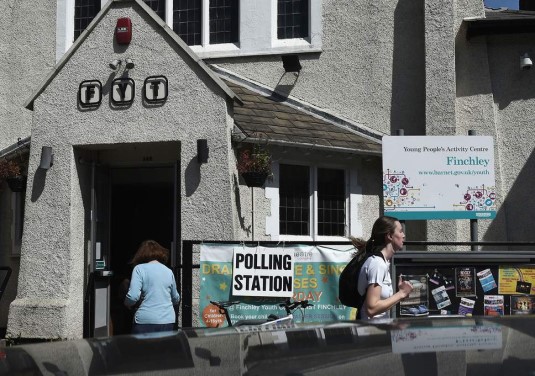
This month saw 7,650 votes cast over four local authority (tier one and tier two) contests. All percentages are rounded to the nearest single decimal place. No council seats changed hands. For comparison with December's results, see here.

Party
Number of Candidates
Total Vote
%
+/- 
Dec
+/- Jan 18
Average/
Contest
+/-
Seats
Conservative
            3
 2,791
    36.5%
+12.9%
   -13.1%
    930
     0
Labour
            3
  316
     4.1%
 -26.1%
   -23.5%
    105
     0
LibDem
            2
 1,251
    16.4%
  -2.1%
    -2.1%
    626
     0
UKIP
            3
   315
     4.1%
 +1.1%
    +3.2%
    105
     0
Green
            1
   107
     1.4%
 - 3.7%
    -2.0%
    107
     0
SNP
            0


     0
PC**
            0


     0
Ind***
            7
 2,870
    37.5%
+27.2%
   +34.2%
    410
     0
Other****
            1
     0
     0.0%
  -3.1%
    +0.0%
      0
     0

* There were no by-elections in Scotland
** There were no by-elections in Wales
*** There was one Independent clash this month
**** Others this month consisted of the SDP (0 votes)

January is usually the worst month for by-elections. No one wants to go campaigning in the cold, and people can't be arsed after Christmas. What this usually translates into are, um, anomalous results. In all the years I've been covering by-elections, this one truly has broken the laws of political physics.

Look, the low number of contests explain the weirdness, so don't go reading anything into them. Don't go reading anything into them. I mean, c'mon, when was the last time the Independents topped the poll? Labour got under five per cent? UKIP beating the Greens? Also, I was very pleased to see the SDP capitalise on the coup of recruiting Patrick O'Flynn from UKIP by polling the grand total of zero votes in the City of London by-election. Probably the best result ever.

Thankfully more or less normal service returns in February, so these abominable results can get buried in a lead-lined box and forgotten.


10th January
East Sussex CC, Bexhill East Ind hold
Rother DC, Bexhill St Mark's Ind hold

31st January
City of London, Billingsgate Ind hold
Surrey CC, Warlingham Con hold

Five Most Popular Posts in January

Cor blimey guv'nor, 2019 is a month old and already it feels like it's been going on forever. Alas, until Brexit day comes that's how it's going to be. Okay, let's put this aside and consider something else at a more sedate pace - the five most popular posts of the last 31 days.

1. Aaron Bastani Vs Smug Centrism
2. Anti-Corbynism and Brexit
3. John Mann's Red Wash
4. Never Let a Crisis Got to Waste
5. Heidi Allen's Poverty Porn Tour

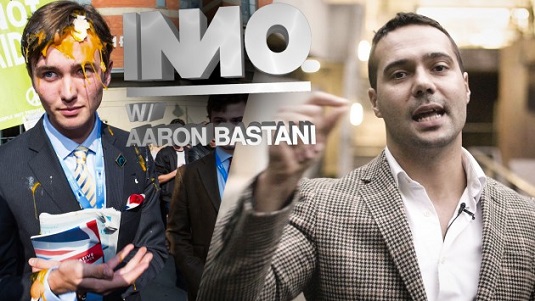
The ongoing crisis in establishment politics dominates, as you might expect. It's not just Brexit, it's how the whole scene is unravelling and spooling off in all directions. And so the attempted collective take down of Novara Media co-founder, Aaron Bastani, features as the month's most-read intervention. A not so curious case of jealousy and fear, I'm afraid to say. Anti-Corbynism and Brexit revisits the scene of the bourgeois character of the continuity remain campaign and how one cannot bodyswerve the inescapable fact that just as anti-Corbynism is a crucial current in establishment politics, we find this repeated and replicated in pro-EU positioning. Going to the other extreme we took a look at John Mann's capitulation to Theresa May's Brexit deal, a position he has since doubled down on. It's probably fair to say whether the deal stands or falls is largely in his hands, at least where Labour is concerned. Readers then found the politics surrounding the abuse of Anna Soubry congenial, followed by the public hand-wringing of Heidi Allen over the policies she has consistently supported and voted for in the Commons.

I've got two posts knocking about the second chance saloon today. The first is my blink-and-you'll-miss-it missive from last night on the market in higher education. And second up is a bit more chin strokey. Yes, Venezuela is commanding a lot of attention right now as Western powers have moved into a position of stoking civil war in that unhappy country, but standing square in their corner are among the worst people, including the newly-installed president of Brazil, Jair Bolsonaro. Now, I don't know a great deal about Venezuela but I do know more about what's happening in Latin America's largest and most populist country, and in this post we see Bolsonaro's project is primarily about resetting class relationships to make the country even safer and permissive to international capital.

No doubt next month's going to be a busy one again, but here I'll be scribbling about it all.