Dear Change UK, A year has flown since you came into my life. You were a mould-breaking gun slinger of centrism, fresh as a daisy and pregnant with mucho newness and changeable changeness. And I was, and still am, a no-mark politics nerd blogging from the back streets of Stoke-on-Trent. As your star ascended, you didn't cast a glance in my direction. And when your brilliance faded, affecting nothing but indifference among those minded to vote in the EU elections, I still kept the faith. You never amounted to much, but I was a loyal fan and you provided good fodder for half a dozen blog posts. For that, accept this love note as a demonstration of my gratitude. Unlike those who use today, the anniversary of your foundation to rub salt into the wounds of your demise, or josh about on Twitter with phrases like "Chuka who?" and allusions to funny tinges, I want to celebrate you in the best way by recalling your accomplishments. For while you might feel bitter about the hostile environs you were born into, and how once sympathetic journalists no longer return your calls, you have made three important contributions to British politics. The first is no political party can spontaneously come into being. You, dear Change UK, were ill-served by your parentage. Your founding MPs didn't know the first thing about organising, having either had their seats engineered for them by old fixers who had done the requisite moving and a shaking for them, or spent so long on the back benches marking time, drawing salaries, and leaving their constituency parties to seed - until the tidal wave of Corbynism rolled in and put them on notice. Nor were you helped by defections from the Tories, all three of whom, Sarah Wollaston, Heidi Allen, and Anna Soubry, were similarly assisted by the party apparat earlier in their careers. Because they had everything done for them, from their point of view politics was a heavily mediatised world. Building support for parties were neither the fulcrum of articulating or representing interests, but an exercise in smart marketing - just like jolly old Macron, across the Channel. Build it and they will come, but this ain't no Field of Dreams. And thanks to their absence of basic organising nous, you had to suffer the indignity of two name changes, an ultra-bland logoafterthe original was rejected by the Electoral Commission, and your being forced into a broken party model. Sadly for your fate, you were hobbled from birth. The second lesson, much to your disadvantage, was the absence of a political space for you. Your founders misread the polls that consistently returned huge majorities of voters who self-defined as inhabiting the centre without interrogating what this means. A sign of millions upon millions hankering after a centrist hero, or those same millions don't know (nor care) what professional politicians understand by 'the centre', and so interpret it according to their common sense? There are plenty of slightly racist Tory voters who think their politics are in the centre, simply because they might also agree with nationalising the privatised utilities. Or because low level bigotry is, to them, commonsensical. If that wasn't bad enough, you were launched while another self-defined and properly-established centre party was a going concern, and who managed to gobble up the lion's share of remain votes during your first - and only - electoral outing. Who knew being accepted as the authentic third party in British politics, and the one most closely associated with pro-EU arguments would prove an insurmountable obstacle to a half-formed party whose best known members were strangers outside the thin layer of Westminster watchers? What you were to prove was the impossibility of a centrism independent of the fringes of the two main parties, and the Liberal Democrats. And thanks to your example, the idea another bunch of MPs might try and emulate your singular example is poppycock and deserves taking seriously by precisely no one. And last of all, your best achievement, and one I am raising a toast to you for, is your conveyance of some of the worst Labour MPs of the 2017-19 parliament out of politics. Whether they lied about the party, repeatedly scabbed on collective efforts, briefed against the membership to the press, made stupid and self-serving arguments, or later became a laughing stock, it is an unalloyed good that none of these people sit in parliament any longer. It's almost as if they created you and treated you cruelly, and you wreaked upon them vengeance by terminating their careers. One hopes, in time, the Tory party will prove as effective in immolating the Commons careers of its own MPs. There we have it. Change UK. The Independent Group. The Independent Group for Change. You made my heart sing during an otherwise dark year in politics, and it pains me to know history will forever counter-pose your farce to the old SDP's tragedy, a cautionary tale of knowing what not to do. Yet for me, and a peculiar band of leftists, you did more than render a service and off some terrible MPs. We feel genuine adoration, one that has shades of pity, but adoration nonetheless. You scorned our affections but we will never spurn the admiration we have for you. And so tonight I light a candle, knowing it will be a very long time before we see your like again and that just perhaps, those who plotted your emergence but were too cowardly to join the ride have learned some lessons. Especially about the fragility of MPs without a proper party to support them, and how no one is bigger than the collective. Yours with tenderness, Phil
If you've stayed away from politics Twitter these last few days, I envy you. But it might also mean you've missed the excitement, if that's the right word, about the latest Dominic Cummings appointment. For his "celebrated" advert inviting (self-defined) iconoclasts, visionaries, and weirdos to apply for top positions in the government has, unsurprisingly, yielded up a eugenicist. Andrew Sabisky has, among other things, said black people have low IQs and has advocated "enforced contraception" to prevent the emergence of a permanent "underclass". Sounds like a right charmer. Or just the sort of random racist you encounter during a light skim of a Guido Fawkes comments box. What then is it about Sabisky that Cummings finds so beguiling? They're obviously like-minded. One of the subterranean strands of conspiracy thinking is the idea scientific and education establishments exclude certain ideas and approaches because they're professionally and politically inconvenient. A bastardised TS Kuhn or a hobbled Foucault might offer this an intellectually respectable gloss, given the linkages (and in the latter's case) the fusion between power and knowledge, but what this operation also does is confer on excluded knowledges a glamorous, subversive quality. Anti-vaxxers, chemtrail enthusiasts, occultists, homeopathists, all pretend to some sort of secret knowledge that has been persecuted and repressed by the authorities, rather than their rejection for being complete bullshit. And so the same applies to eugenics. In Cummings's war on expertise and professionalism, the fact science and education are against it is enough to commend any old "edgy" hokum to him. And consider the figure of Sabisky himself. In this 2016 profile, we find a tedious dullard who has latched onto a few bits and bobs from eugenics that confirms his prejudices. And someone who fancies himself a galaxy-level master brain because he reckons he can predict politics. Give it up, mate. It's a probabilistic game. I wonder if his predictive powers extended to his departure? Just a bad apple then, one of Cummings's eccentricities attracting the ear and the ire of the media and politics chatter because it was a prominent appointment? Well, no. Sticking up for Sabisky's appointment on the spurious grounds of free speech was Toby Young. Readers will recall he has an interest to declare on matters eugenic. And also in recent days, we've had the patron saint of atheism, Richard Dawkins, stick up for the crank assumptions underpinning eugenics. We can expect, like clockwork, the scribblers in The Spectator and Brendan O'Neill to come out in Sabisky's defence, another innocent victim of the evils of wokeism. Meanwhile, the pearl clutching decents look aghast at the horrors they've enabled. Because the Tories won a huge majority, this has two consequences for their self-perception. A sense of invulnerability, which means Boris Johnson can more or less act as he pleases. The second is a boost in confidence for every two-bit racist and promulgator of right wing bullshit. In the case of eugenics, it's curious how we're it's coming out (again) in the wake of the Windrush scandal and last week's deportations to Jamaica. The unthinkable is already happening to wide indifference, so why not let the more objectionable right wing ideas flourish as well, up to and including a say over the running of the government? In its broad sense, eugenics is the science (sic) of human improvement and therefore all social sciences and managerial discourses are eugenic. Labour, for instance, with its long Fabian tradition and Margaret Thatcher's free market crusade were projects about improving human beings physically, mentally, culturally, of reshaping people around a set of moral precepts determined a priori by folks like The Webbs or Sir Keith Joseph - pick your elite according to political preference. Evidently, as Britain's most successful political party the Tories are interested in any and all biopolitical tools for managing populations. Thatcher didn't break up the huge workplaces of the nationalised industries simply because they were "uneconomical", after all. However, this eugenics was characterised by their focus on social engineering, not the quackery of racial segregation and selective breeding. It's understandable the 'weak' eugenics of population management appeals to the Tories, especially as many of their leading figures are anticipating a period of hegemony. But why does the biologism keep cropping up? It's embedded in the conceit, the stories they tell themselves to explain their advantage and privilege. If you're from an old moneyed family, how can they have kept their prosperity down the centuries if it wasn't for their being more cunning, crafty, industrious, and cleverer than the common herd? And if you're possessed of humble origins, but ascend the ladder of success it says something about your preternatural abilities that allowed you to rise above. It's interesting that Sabisky and Toby Young, both of whom are mediocrities from privileged backgrounds, should find these arguments beguiling. Eugenics in its broad and narrow terms finds ready support in the Tory firmament because it reflects back to them their distorted assumptions about the world. They are its rightful rulers, and provides one way of looking at how everything works from above. Therefore, it might be the case not all Tories are eugenicists. But eugenics is an essential and inescapable component of Toryism.
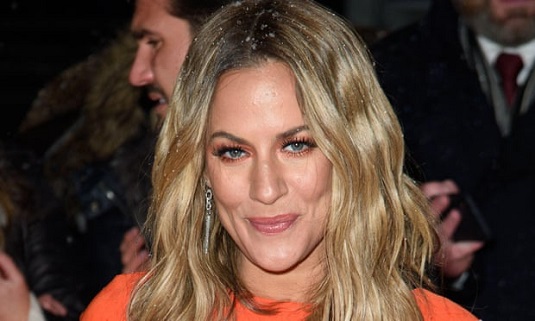
To read about the circumstances surrounding the sad passing of Love Island's Caroline Flack is to learn it was entirely avoidable. Flack was dropped by ITV from the show and its spin off, After Sun once the story emerged that she had been involved in and charged with assaulting her partner. She was banned from any contact with him prior to the trial next month, despite his opposition to the CPS decision to proceed. By any token, Flack was a troubled woman who needed help and support. But instead, she suffered the usual gossip, character assassination, and vilification from the gutter snipes of the tabloid sewer. Take The Sun as a particularly egregious example. As a number of people on Twitter have pointed out, Rupert's minions have spent their Saturday afternoons busily deleting what they've written about her. These deletions include a story from Friday reporting how a "jokey" Caroline Flack-themed Valentine's card had gone on sale. Imagine if you were her, getting trolled day after day by the country's best selling newspaper and one of its biggest celebrity news sites. It wouldn't do your mental health much good either. And then you have the disgusting hypocrisy of self-identified friends. Consider Dan Wootton, who's spent his afternoon tweeting out his horror at what has happened to Flack. Quick to blame ITV for their shabby treatment of her, quick to tweet about how she had lost everything, and quick to retweet support from Boy George blaming this on "others" who enjoy their pound of flesh, and the Brexit Party's David Bull who's pinning it on social media. Wootton has protested his "complete loyalty" to Flack and talked about their "regular contact", but this isn't any old Sun hack. He's a columnist and the paper's executive editor. Or to put it another way, this vile shit of a human being was making her troubles worse by giving stories the go ahead that only could only have contributed to her misery. And if you want the measure of the man, just scroll down his Twitter feed. Literally the last thing he put out before tweeting a broken heart emoji was something by Julia Hartley-Brewer mocking Jameela Jamil's experience of mental illness. I expect this won't trouble his conscience too much. He comes from a press culture that saw nothing wrong with hacking the phone of a murdered teenager, after all. But creatures like Wootton and the content he decides on preceded him, and will no doubt post-date him now his buddies are secure in Number 10. Moving into the impersonal, as we noted on the occasion Peaches Geldof passed away prematurely, celebrity is individually and collectively experienced. The media creates a simulated collapse of social distance where it is possible to have a relationship of sorts with a pantheon of celebrities. Complete strangers appear close and distant simultaneously, and with the coming of social media this effect is both amplified and shortened further. Not only do celebrities now enjoy a means of communicating directly with fans, they are also forced to endure "feedback" - some of it adulatory, a lot of it abusive. And especially so if celebrities are women, are of colour, are disabled, or are lesbians or gay men. And none of this takes place in a vacuum. You don't need tabloid press coverage to be an arsehole online, but when stories are dredged up about foibles and failings, relationships and affairs, selfishness and revenge porn at the behest of these papers, and then get the first dabs on the stories, decide the edit and the consistency with which they are reported on/revisited, and so a monster is fed. Their coverage sets the tone and determines the contours of the feedback a celebrity is likely to receive. Writing in the 1840s, Fred Engels noted how substandard housing, poor food and sanitation, overcrowded districts, and dangerous working conditions contributed to the premature deaths of thousands. The builder responsible for the housing, the authorities responsible for the built environment, the shopkeepers and bakers responsible for adulterated food and worse, and the employers whose wages barely covered the necessaries while forcing people to work in the shadow of permanent injury or death, these were not accidents of fate. It was in their gift to do something about an infrastructure that conspired to send workers to early graves, and yet they didn't. As Engels puts it, if these authorities and business people "knows that these thousands of victims must perish, and yet permits these conditions to remain, its deed is murder just as surely as the deed of the single individual ...". This is the situation we're in when it comes to our mental health crisis. Leaving aside the wider issues of the relationship between it and social media, in the narrow case of celebrity, the opinion formers - the gossip columnists, paps, and editors who shape showbiz coverage - know they are constantly heaping on the stress and misery, making public what should stay private, and helping drive people to drink, drugs, and despair. And, on occasion, someone takes their life. Like Caroline Flack and two previous Love Island contestants, Sophie Gradon and Mike Thalassitis. When this happens the media sometimes shakes off its convenient short-sightedness and accepts culpability - as we saw following the axing of Jeremy Kyle. But mostly it's brushed away with the sort of touching tribute they would never have printed while the person in question was still alive. Celebrity coverage therefore is structurally harmful, and yet it carries on as it does, grinding out the money and conferring profile to commentators and editors who determine its comings and goings. When tragedy strikes repeatedly, we can only conclude social murder is still very much with us - updated and thriving in a set of media practices utterly toxic to the mental health of its subjects. And like their 19th century forebears, those in charge don't give a damn about the people they destroy. Image Credit
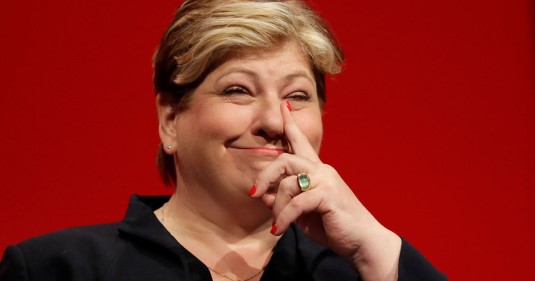
"Our leadership debate isn’t going to be as interesting, passionate or fun without Emily Thornberry. She brought so much to this debate. She’s a true fighter, a tough opponent, and a good friend", so says Lisa Nandy. I suppose she has to be nice or, to put it in the wonkish vernacular of Keir Starmer "model the behaviour" we'd like to see in the party. Yeah, Emily is a good laugh. She can be charming and sounds like a jolly companion for an evening of gin tasting, but I don't see why we have to fool ourselves. Emily's leadership bid was completely pointless and possibly, from her point of view, damaging. Falling short of the required CLP nominations threshold by two, she took to Twitter to thank her supporters, her team, and made the standard warm unity noises. The only clue it gives for her motivations is a desire to "widen the debate." But widen it to what purpose exactly? Back in 2010 and 2015 there was a clear rationale in this direction for letting Diane Abbott and Jeremy Corbyn onto the ballot paper. In 2019, you could make a similar argument for accepting Ian Murray onto the ballot paper, despite the craven, obsolete politics. The "debate" isn't a fun exercise in interesting discussions but about the vision and strategy required to take Labour back into government. What did Emily bring? According to her website, she's been a campaigner and an effective performer in the Commons, which meant she was the right sort of person to lead Labour's comeback. This is certainly true - of the field she was by far the most experienced parliamentarian. And she is good at the despatch box, if Westminster theatre is your thing. Yet none of this tells us where she stood. Looking at her answers to questions, we get bits and bobs on campaign technology, on anti-semitism, on experiences and resources, and the most perfunctory of analyses on why Labour lost the general election (it was because we offered too many policies). That answer might suit the dwindling Progress groupies, but kinda overlooks the mainreasons. Perhaps there was an element of avoiding a mea culpa here as, during the election campaign and long before, she was quite happy to carry on making the case for a second referendum and is partly responsible for the switch Boris Johnson exploited with alacrity. On the one occasion Emily did venture into offering a political position during this contest, it was a disaster. Speaking at the Bristol hustings earlier this month, she was all for seizing empty properties from landlords to help resolve the housing crisis. Good stuff. But alongside this she has her frankly horrible social housing scheme whereby young people wanting a council property would be put into a lottery to get one, but then be kicked out when they reached the age of 30. "More radical than Jeremy Corbyn", indeed. When it comes down to it, the lack of a pitch - which the otherthreecandidates have - failed completely to differentiate her from the crowd. Relying just on character or the opinion that "I'd be rather good at being leader" isn't going to impress anyone thinking about how Labour can retool and win back lost ground. Sad to say, as much as a laugh Emily is, conveying the message that the main thing wrong with Corbynism was its being led by Jeremy Corbyn as opposed to Emily Thornberry was a hiding to nothing. For this reason, there was nothing to gain from "widening the debate" and allowing her the opportunity to rob Liz Kendall of her record for the lowest vote in a Labour leadership election. Has her leadership bid improved her chances for a big job in the next shadow cabinet? Very low. If Keir gets it, then I can see her shuffled into a less showy, more minor role. He will want to appoint some MPs keen on returning to front line action after their self-imposed exile toward the rear of the opposition benches. And, unfortunately for her, Emily proved herself to be a loose cannon - something I can't imagine the frontrunner wanting to deal with as he's busy establishing himself in the public eye. As for Rebecca Long-Bailey, despite the threats by the usual moaners, she is likely to have a greater pool of people to pick from than Jeremy did as some, especially on the soft left (and no doubt encouraged by her appointing Lisa to something). Again, the indiscipline and hard remainism counts against Emily here and therefore I'd expect RLB won't be too keen either. You see, here is her big mistake. If the motive for making a leadership bid was the acquisition of a new, or maintenance of her senior position afterwards, you've got to show you bring something to the table. With her baggage, and her poor showing at the nomination stage all Emily has accomplished is a demonstration of her dispensability. No following, no weight, sadly she might just have done the next stage of her career in. Image Credit
... and many other things. The Labour leadership election, the state of trade unionism, his new book, and who his favourite sitting Tory MP is. Well worth a watch.
Who doesn't love some blue-on-blue action? Having been deprived of the Tory party tearing lumps out of itself since before the general election, there were at least some laughs to be had this morning as a cluster of careers met a deserving end. Andrea Leadsom, whose rise has long baffled Tory watchers, has gone back to the obscurity that becomes her. Esther McVey, she of the tedious Tory "working class" shtick was likewise offed. No longer will we hear the sonorous majesty of Geoffrey Cox bellow forth from the front bench either. Theresa Villiers is gone and Nicky Morgan, who sold out her remainy principles and anti-Johnsonism for a couple of months company with the culture brief has now curled up into a foam of ermine. What terrible, crying shames. All told, two sackings were politically important. The removal of Sajid Javid, one time Boris Johnson rival holds the distinction of being the only former chancellor never to have delivered a budget. And the sacking of Julian Smith from the Northern Ireland office. Let's get Javid over and done with, as his departure is the most eye-catching. Speaking to the cameras this afternoon, he said demands Boris Johnson made of him - the sacking his special advisors - were too much for any self-respecting minister to bear. This follows on the heels of a row in the Autumn when Dominic Cummings sacked a previous Saj spad without informing him. Ever since rumours of slanging matches between the pear have been picked up by many a lobby hack. Let's not kid ourselves here, far from a blow to Johnson's reputation this departure actually turned out quite nicely. It's not like he woke up this morning intending to get rid of Javid. If that was the case he'd have simply sacked him, instead of constructing an elaborate ruse to manoeuvre him into resignation. As a fanatic who treats Ayn Rand's work with reverence instead of toilet roll, from the point of view of parliamentary cohesion it's best to have a true believer in free market fundamentalism in the tent pissing out than the other way round. Plus Javid overseeing a boost in public spending, not least the eye-watering price tag for HS2, provides Johnson with right cover against the neoliberal true believers who get sweaty over breaks with their esoteric dogma. Understandably given their recent animosity, having a new set of spads spying on the chancellor and reporting back to Cummings was intolerable. But with Javid gone and the totally unconvincing Rishi Sunak installed in his place, Number 10 and 11 Downing Street now speak as one. At least until we encounter the unlikely circumstance of Sunak evolving into a vertebrate. And that univocity is looking like an economic strategy big on boondoggle projects and a few scraps aimed at rebalancing the regions. However, until Johnson stops the Tory attacks on local government and transferring funds from poor authorities to rich councils in the south, he's going to have a hard time passing off commitments to the north as anything other than spin. But unless the government start ploughing investment into the UK's infrastructure, the rougher the fall out from Johnson's flavour of Brexit is going to be. With an economy totally flatlining he can't pretend matters are fundamentally sound forever. Ah, Brexit. This brings us to the second item of significance - the booting of Julian Smith. As holders of the Northern Ireland brief goes, he was much better regarded than all his Tory predecessors. In just over 200 days, he was able to break the deadlock and get power sharing restored, and foster good relations with the Republic. Why did he come unstuck? According to the BBC's Northern Ireland reporter he dared challenge the blond ambition in cabinet, and agreed to an open accounting of the recent past. Something the Tories are not overly keen on, thanks to the history of the security services being up to their elbows in blood. Smith was also too remainy for Johnson's liking, and as we head into the next round of Brexit negotiations he didn't want someone who might appear to be too close to the Republic and, therefore, sympathetic to the EU's position sat round the cabinet table contradicting his self-serving bullshit. And there's an opportunity here too. Following Sinn Fein's stunning showing in the Irish elections at the weekend and thanks to their being identified with the IRA in the popular British imagination, replacing Smith with Brandon Lewis - someone more pliable to Johnson's bidding - was a must. If the Tories can be seen pushing back at Sinn Fein to the point of reneging on commitments already made, this will play well both among the red-faced faithful and so-called patriotic voters. This negotiating pitch would provide a helpful poll boost when Brussels is framed as colluding with former terrorists by Johnson's ever-helpful press friends. With an empty manifesto to deliver, there's plenty of vapours for nationalistic shit stirring. And it could cut across any initial poll bounce Labour's new leader could ordinarily expect. We can then see the naked Johnson body now taking on governmental flesh, An overly centralised government in which Cummings ranges across all things, a brittle authoritarianism brooking not even mild opposition within the cabinet, and laying of the ground work in Northern Ireland for point scoring pettifogging. This brings in to sharp relief the big disappointment with Tory infighting and sackings. It doesn't matter who fights or, for that matter, who emerges victorious. Because a Tory wins, and with a general election years down the line with a by no means certain outcome, it's the likes of you and me who stand to lose. Image Credit
Comrade Keir Starmer? Some folks have been advocating for him on the basis of past Trottery, and not least the good works his campaign have heavily promoted from before his time as Director of Public Prosecutions. Peculiarly, his plans to hand out 10 year sentences to people done for fiddling social security isn't so highlighted. Realising he can't live off past glories forever, or "borrowing" material from Rebecca Long-Bailey's campaign, Keir's campaign have released 10 pledges of their own. What do we have? Increasing income tax for the top five per cent and a clamp down on avoidance. Abolish universal credit, defend universalism and the NHS, and abolish fees and keep with the life long learning programme. The Green New Deal and tough action on air quality. The introduction of a Prevention of Military Intervention Act(?) and a review of arms sales. Common ownership (qu'est-ce que c'est?) and no to outsourcing. Defence of free movement for EU citizens, a compassionate immigration system and a call to close Yarl's Wood and similar. Repeal the Trade Union Act. Abolish the House of Lords, a properly federal system with devolved powers, and localised investment banks. A pledge on equalities. And lastly, a united party, a mass membership, and forensic opposition to the Tories. I know some comrades have cast a critical eye over the pledges, locating this as a (cynical) attempt to shore up support among leftist members who are unsure about RLB and like the cut of Keir's jib. And yes, his proposals are less specific than her positioning and give him plenty of wriggle room later on. Nevertheless, this is much better than Lisa Nandy's offering, and at least he doesn't have to lie about his opponents. Anyway, I'm sure we'll return to these over the coming weeks and, if he wins, the next four-five years. What is interesting is, despite Keir being a centrist-friendly candidate, how a little bit of leftism has brought actual centrists out in a rash. For James Bull, this is pale pink Corbynism destined to lose. For David Aaronovitch, abolishing universal credit and tuition fees "are plain dumb" and will bring Labour difficulties on the doorstep. And for the ever-bloodthirsty John Rentoul, Keir's military pledge is "spineless". Considering a left programme twice got more votes than the centrist efforts of 2005, 2010, and 2015, you might think this elementary fact would give them pause. This needs situating in relation to the slow rewrite of the election result by the Labour right and their chummy hacks. Instead of a ruinous intersection of Labour's pitch to remainism and the monstering of Jeremy Corbyn, an unforgivable slandering of a good man they had no small part in, the real reason for Labour's loss was its being too left. What the electorate really wanted was a distillation of purist Blairism. Yes, because that is exactly why millions of former Labour voters supported Boris Johnson's Tories with its promise of "change", and why canvassing team after canvassing team returned with tales of enthusiasm for "public sector reform", increasing the retirement age, and keeping hospital car parking charges. This is so self-evidently stupid. With increasing polarisation along the lines of property (or lack thereof), growing private debt, blocked career aspirations, a different experience of being working class, and the small matter of global heating, a centrist prospectus that offers nothing but backward-looking nostalgia is so pathetically inadequate to the moment that even the Tories aren't touching it with a barge pole. That and the small matter Labour's new base won't vote for it, nor would it win back the former Labour leavers who find wonky, technocratic politics repellent. Say what you like about Keir Starmer, he at least seems to understand this basic fact of contemporary electoral politics. The other aspect of this is less a reaction to Keir's pledges, but the opposition of assorted Blairist riff-raff to the idea Labour should do something different, like community organising, building the party as a movement and, as per Richard Burgon's suggestion, setting up a free paper. They just don't get it. But then again, it's not surprising. These people got their moneyed positions thanks to a previous generation's factional manoeuvring in the party. They not only lack the first clue about organising, as Change UK reminded us, they just assume everything clicks together. Having glided into their seats via the helpful efforts of others, from their point of view politics isn't about organising and struggle. It's a matter of marketing. Hence why we get idiocies like we want to win power, not spend time protesting. Or that organising communities is a waste of time. News flash. While it might be the case Labourism has, from inception, been quite accepting of its role as the B Team of politics and has preferred to pretend there is no relationship between its roots in the organised working class and the kinds of things it should do in office, those days are long over. Or they have to be over if Labour is to ever have a sniff of power again. When the party is locked out of politics, which demographic imbalances, Tory institutional advantage, and the coming gerrymandering will do their best to cement, the only thing the party can do is organise. Only by linking up with community groups, listening to what's happening in areas we need to win, campaigning on the concerns that matter, produce our own media work-arounds of the anti-Labour monopoly, contest the political terms of our predicament and, unusually for Labour, offer political leadership on the key issues of the day instead of capitulating to Johnson and his mates in the editorial offices, this is the only way Labour will get anywhere. The prospectus offered by the likes of the ludicrous Ian Murray is, well, the utter failure the Labour right have manufactured in Scotland. Now that's what I call an inspiring vision. Before the last election, we heard a lot about how know political party has a God-given right to exist. In their hostility to Keir's pitch, let alone RLB's campaign, what we see is the kamikaze willingness of Labour's idiot tendency and the party's false friends to test this - and us - to destruction. Image Credit
Currently reading around the Nairn-Anderson thesis for the Tory book, and came across a bit of a gem. For readers not familiar with the thesis, it stems from a series of articles written by Perry Anderson and Tom Nairn in the 1960s and 70s about British exceptionalism. i.e. Why is it the UK has not just retained the trappings of a feudal order with its monarchy, landed aristocrats, and the pomp and circumstance while virtually all other modern states are republics, but how it came to be the industrial interest represented by a manufacturing bourgeoisie neither dominate the state nor guide its economic policy while the rentier/finance interests clustered around the City of London do. The consequence of this was a failure of capitalist modernisation, the underperformance of British industry, and a tendency of the state to fragment along national lines - first Ireland, then Northern Ireland and Scotland. The thesis will be discussed in more depth in the book (spoiler, you can't consider the history of the Tories separately from the state it, more than any other party, has shaped) but there was one aside from Anderson I thought was worth elaborating on. The peculiar class structure of 19th century British capitalism also had specific consequences for the development of the working class. Instead of conceiving its history in terms of a dynamic and antagonistic relationship to capital, Anderson argues that the dominance of the aristocratic/mercantile interest means we should conceptualise British workers in terms of a sector within a semi-feudal set of relations. That is instead of being excluded from the system and therefore having to organise a movement capable of prosecuting its independent class interests against the bourgeoisie, as per most of Western Europe, the proletarian interest was corporatised. In practice, this meant the British labour movement at its most radical contested overt manifestations of feudal remnants but always adopted an ameliorative standpoint vis a vis capital. Hence why Labour has never been an explicitly socialist party, took a long time to achieve its (formal) political independence, and revolutionary politics and Marxism (of whatever flavour) has always been a minority interest. Knowing one's place lends itself easily to the duality we see in Labourism to this day, particularly on the Labour right. I am thinking about how, historically, Labourist politics look for minor improvements here and there while setting itself up as an aristocracy that claims special insight into as well as being custodians of the will of "our people". And hand in hand with this goes an enthusiastic tailing of the Tories on foreign policy matters. From the development of the bomb, to colonialist counter-insurgency, to the invasion of Iraq and repeat interventions in the Middle East Labourism has historically surrendered the terms and reference points to bourgeois real politik, conventionally defined. To put it more bluntly, the power interest of capital comes first regardless of which party is in office - hence why Jeremy Corbyn was so objectionable, because he broke with a bipartisanship coded into the supine loyalties of the Labour right. The second aspect is how this corporate consciousness informs (older) working class identity and opinion formation. One aspect some folks get wrong when it comes to Tory leaders is the belief being posh is a turn off. It's not, character is a more complex issue. The anti-aristocratic character Anderson identifies in working class politics is less an antipathy to aristocratic Tories. After all, Boris Johnson, Jacob Rees-Mogg and Dave never pretended to be anything else. Rather, it becomes a weapon against our own side. What many can't abide are those who either come from a privileged background or are from proletarian stock who, while ostensibly on their side, are perceived to lord it over them politically (see the second referendum), claim to know what's best for them, or affect a transformation that sticks in the craw as phony and/or distant (the infamous Emily Thornberry incident). And so actual aristos can ride to power on the back of outrage against imagined aristos - a directed anger that affirms one's subordinate position via kicking against those who refuse to conform to it. This isn't a catch-all theory by any means, but it helpfully highlights the deference that runs deep in popular consciousness, its historical roots, and enables a number of insights into the peculiarities of British Labourism.
Up to 50 MPs are planning on quitting the party if Rebecca Long-Bailey wins the leadership election, so writes Rachel Wearmouth over at HuffPo. According to ever-anonymous "party insiders", this bloc of 35-50 (depending on who you ask) would either sit as independents or resign immediately and force by-elections. In an uncharacteristic display of honesty, Neil Coyle revised down the figure and said about a dozen were plotting away. And why? Because continuity Corbynism would be a "recipe for disaster". Let's unpack this. One of the whingers who put the figure at 50 MPs is obviously bullshitting. When you look at the complexion of the parliamentary party, the mood - if anything - is characterised by an absence of factionalism. The division between remain ultras and Brexiteers has vanished, though largely thanks to the near wipe out of the latter - despite their best efforts. And while demarcations exist between the Socialist Campaign group, the soft left, and the self-described (and identifying) "moderates", those embittered and twisted by anti-Corbyn hatred number, well, about 12 to 15 MPs. Furthermore, these irreconcilables are somewhat marginalised in the parliamentary party. They might be spoiling for a purge-tastic revenge on the left and will be looking for any excuse to launch one (hello EHRC report), but given the torrid five years we've just been through the desire for a witch-hunt is the preserve of the few, not the many. Why are they moaning then? After all, at various points in the past we had been assured that the policies weren't the problem, Corbyn was. Or the variant of domestically the party's on the same page, the difference instead is over foreign policy and defence. Well, RLB's platform is where most of the party is. So much so, Keir Starmer and Lisa Nand are helping themselves to select morsels. And yet she hasn't made any noises about withdrawing from NATO, abolishing the secret services, or handing over the launch codes to the Kremlin. Perhaps they were lying all along about the domestic policy consensus and believe the counter-productive policies of 20 years ago are just the ticket, despite getting roundly rejected in 2010 and 2015. Or, as is more likely, they can't stomach serving in a party where their eminences goes unrecognised and they have to submit to mandatory reselection. And perhaps they're not pleased by RLB's pledge to deal with their shenanigans "ruthlessly" should they carry on their scorched earth nonsense. Whatever the cause of their beef, there's no reason to try and treat with them because, as Wes Streeting(!) observes in the same HuffPo piece, the Change UK failure demonstrates there's no viable future outside of Labour for a centrist split. It's much worse than that four our would-be splitters, I'm afraid. As Chuka Umunna and Anna Soubry found after abandoning their parties, the lobby hacks just weren't as interested in listening any more. If your relationship to the media is built on being a reliable leak-happy "insider", making yourself a rent-a-quote outsider is like signing the redundancy papers. If Margaret Hodge, Neil Coyle, Liz Kendall and whoever go on their merry way they can look forward to a very quiet five years on the back benches without even the excitement of knife edge Commons votes temporarily puffing up their importance. And what is more, they do not represent anything but themselves. Remember how pitifully their anointed one did? Seeing them depart Labour's ranks contains nothing but upsides for a RLB-led Labour Party. A pity then that for the reasons just mentioned few if any will resign themselves to anonymity and sadly, no focus-grouped visits to Nando's. Do things change if one of the other candidates wins? Yes, in the sense they won't be petulantly dropping resignation hints every five minutes. But no because they will find other reasons to rag on Lisa or Keir, and make themselves the big I am. In the first, it will be Lisa's principled defence of the Palestinians and her chairing of Labour Friends of Palestine and the Middle East. And for the latter, it will be his keeping key Corbynist policies and having some figures from the last five years stay in the shadow cabinet. When the situation requires an anonymous quote, the sectarian right will only be too happy to stump up the goods. Unity with these people then will only be achieved at the expense of jettisoning Labour's entire platform, becoming a pale pink imitation of the Tories, and looking forward to permanent electoral defeat. And the price of keeping them in the tent is the prospect of interminable factional warfare, the sapping of members' morale, and making Labour look an unserious laughing stock. If RLB wins she should immediately move against them, and if there's anything about Lisa or Keir, they would do so too.
Was going to blog tonight but just not feeling it. Happens sometimes! Instead, after the jolly nonsense of this evening's The Masked Singer on ITV, I thought the moment called for some music instead of silence. And by music, this little ditty certainly won't be everyone's cup of tea, but it has something that makes it stand out from the industrial/EBM crowd.