We've encountered Matt Bolton's critique, and I use that term advisedly, of Corbynism before. In the market place of ideas his niche is a self-described Marxist take on Corbyn and his works. Funnily enough, this is just the kind of Marxism Matt's mates in Progress find congenial - which should tell you something about the direction of his politics. Anyway, Matt has been at it again in the New Statesman with Frederick Pitts, and so here we go a second time. After a rough couple of days re: Labour and anti-semitism, the last thing we needed were further examples. But we got them. We saw a round robin open letter organised by a member of the We Support Jeremy Corbyn Facebook group that, groans, argued Corbyn is being targeted by a secretive "special interest group". And then it emerged Christine Shawcroft had opposed the expulsion of Alan Hull, a prospective council candidate who had posted a "Holohoax" article onto Facebook. She claims she was unaware of this, which is fair enough, but to not notice he was getting done for allegations of anti-semitism and not think "hmmm, this warrants a further look" is unconscionable. She was right to resign as the chair of the disputes panel, but she should step down from the NEC altogether. Here then we have two instances of "left" anti-semitism. One that can be put down to ignorance of anti-semitic tropes, which is symptomatic of the unpolished and unsophisticated politics you'd expect to see when hundreds of thousands of "new people" enter the political process. And the other related to the internal culture not of the Labour Party, but of the groupthink of a section of the anti-war/anti-imperialist far left and hard left. Add to that a perception that Corbyn and his leadership are constantly under siege, which they are, you can understand why (without for a moment excusing it) how in these contexts anti-semitism isn't taken seriously and are dismissed as factional attacks. In their argument, Matt and Frederick take it a step further. We've noted before the tendency of conspiracy thinking to be a gateway to full blown anti-semitism, yet they argue this conspiratorial politics more or less marks Jeremy Corbyn's outlook. They suggest, without any evidence it has to be said, that Corbyn talks about society being under the hoof of the "1%" who stitch up and rig the game at the expense of the 99%. Their version of Corbyn argues that the removal of these people would allow for socialism to emerge and usher in a world of freedom and plenty. In Corbyn's politics, the job is to find the guilty parties and remove them. This, of course, is utter rubbish. If this is the calibre of their coming book on Corbynism I'd recommend giving it a miss. Yes, Labour has occasionally indulged populist rhetoric (it even did under The Master from time to time) but his politics are not. Corbyn's politics are fundamentally Bennite and remain within the envelope of Labourism. What does that mean? A number of things: a commitment to a "mixed economy" (i.e. an expanded state sector side by side with a market economy dominated by private enterprise), a Keynesian approach to investment in industry by the state, and an enhanced role for trade unions. Like Benn before him, Corbyn believes there is a role for limited economic democracy via cooperatives, employee stakes in firms, and alternative forms of ownership, as well as more democracy and accountability within the public sector. You can find all this in Labour's 2017 manifesto and the debates around it since. Also like Benn before him, Corbyn believes these reforms can be achieved by securing a Labour majority in Parliament via a general election, but must be augmented by the party becoming a massive movement of millions. This is to keep the Labour government honest and offer an extra-parliamentary lever against the opposition such an administration would face from bosses and other civil society actors. In practice it means a kinder, gentler capitalism, and would open up opportunities for a politics aiming to go beyond capitalism itself. And whether you agree with this or not, it is much more complicated than the goodies vs baddies caricature offered by Matt and Frederick. Are our comrades arguing in good faith, then? I do wonder. For instance:
The inordinate focus on the crimes of Israel within the British left – far outweighing the attention given to the chemical slaughter currently inflicted by Bashar al-Assad for example – results from the portrayal of Israel as the evil “1 per cent” of the global community, a state whose very existence is the source of all suffering in the Middle East, if not the world.
What drivel. There are plenty of criticisms of Israel on the British left, ranging from the centre left who focus their critique on the right of Israeli politics and selected human rights abuses, to a more fundamental critique of Israel as a colonial project and, therefore, an institutionally racist one. Even here you find divisions over whether the Israeli state has a right to exist or not. And then there are other layers of analysis positioning Israel in the global system of power politics, and its role as a client of the West generally and America in particular. You pays your money and you makes your choice. Nowhere, however, do we come across any analysis claiming Israel is part of the "evil 1 per cent". In fact no one on the left continuum ranging from Progress to the SWP, from Labour First to the most degenerate Stalinoids operates with an analysis this superficial. All are rooted in an analysis of Israeli politics, and as we move out from the mainstream to radical arguments, an embedding in a critique of political economy and the international system. Sometimes this can manifest itself in crude anti-imperialism and an overstatement of Israel's power, but it's not conspiracy theorising. Matt and Frederick have to set up these straw men for the grand reveal: that a conspiratorial approach has nothing in common with a Marxist analysis. Consider me thunderstruck. They turn to the work of Moishe Postone, who died in February, to argue that the object of the critique of capitalism should be capitalist social relations themselves. Postone has his virtues, but you can only suppose this is an original argument if you know no Marx at all. What is the body of work Marx left behind if not an unravelling of the impersonal dynamics of capitalism, a modelling and critique of its fundamental dynamics, and an appreciation of how the commodity form conditions, well, everything? Marx was also very clear that persons and personifications in his work condensed the social relations they typified and, in his writings on politics, represented - though with varying analytical power. Where Matt and Frederick are right is rooting conspiracy theorising in fetishistic thinking. The commodity circuit, the operation of capitalism as an impersonal, amoral, unconscious and directionless beast presents the world to us, its inhabitants, as personifications. It can appear as if the system is rigged by a shadowy cabal, and the complex shifting (and shafting) attending capitalism is their doings, but it isn't. What hampers our comrades' theoretical position, quite apart from a tenuous relationship with the facts, is a refusal to properly situate their argument. There's their wafer thin case for classifying Corbynism as a type of conspiracy thinking and therefore a species of reification, which implicitly means it's illegitimate, but they fail to note the conspiratorial themes they ascribe to Jeremy Corbyn (remember, they're critiquing his thought, not his support) are common place, if not banal features of bourgeois politics. Consider the Labour right and its refusal to explain Corbynism beyond the machinations of sundry Trots and troublemakers - no evidence of an appreciation of the social relations at work there. And the Tories - bad GDP figures are about liberal chunterers talking the economy down, industrial unrest the result of unspecified militant troublemakers, the relative decline of Britain the fault of Brussels' bureaucrats. On and on it goes. With their greater reach, influence, and embeddedness in the institutions of government and media, why do they see it fit to ignore the mainstream if conspiracy thinking is so powerful and terrifying? I digress. By forgetting to situate their analysis in the context of wider bourgeois politics Matt and Frederick egregiously abuse the thrust and spirit of Marx and Postone. Their empty critique of Corbyn's positions allows them to construct not just a distorted view of his politics, but a false one. In other words, they have either maliciously, or as a result of their unthinking ignorance of their subject matter, created another phantom, another personification whose appearance obscures its essence. Call it what you like - a hatchet job, a cynical hit, whatever you do it's a rum business when self-described Marxists use Marxist categories to mystify the social world instead of rendering it intelligible and knowable. Matt has form for this. His original piece, 'The Terrifying Hubris of Corbynism' (now mysteriously disappeared from the internets by Matt himself) was of similar character. In an analysis peppered with unused, decorative Marxist categories, he argued Corbynism wasn't an authentic left movement because it lacked x, y, z characteristics. It wasn't as ideologically coherent as the Militant Tendency, for example. This approach, needless to say, ain't a Marxist approach. Instead of taking social relations, the movement of hundreds of thousands of people into the Labour Party, their trajectory, and their common characteristics as a means of explaining Corbynism, Matt imposes his characterisation and, yup, distorts it. Good for getting noticed, not so good if you want to know the social world for the express purpose of changing it. Yes, Corbynism does have its problems. As a movement it is uneven and parts of it are prone to conspiracy thinking and, therefore, anti-semitism - almost as if the two are an outer shell of an immature radicalism. But the way these problems can be dealt with is not just through a programme of education, as helpful as that would be, but by understanding our movement ourselves. In this endeavour Matt and Frederick's intervention is singularly useless. A nice fairy tale to help their establishment promoters and friends sleep at night, but nothing else.
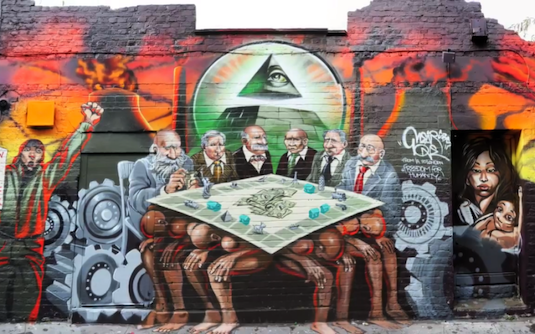
A picture says a thousand words, so take a look at this one and tell me what you see. Did you espy the anti-semitic themes? And how did you arrive at this conclusion - did the caricaturing give the game away? And how long did you take - a fraction of a second? Or are you like leading Stop the War activist Yvonne Ridley who, in the Facebook thread below the now infamous image, couldn't see anything wrong with it? Unfortunately anti-semitism has yet again resurfaced and as everyone reading this knows, this time it's Jeremy Corbyn who's in the firing line for failing to notice the image above, which he commented on, was racist. In the world of social media there is a tendency to shoot from the hip without looking properly at what or who you're commenting on/sharing. It's happened to me enough times when posts shared on Facebook have been construed as supporting the Tories because of the titles (as such I was expecting some earache for Friday's effort). And I'm happy to accept that Jeremy's explanation that he wasn't paying attention. After all, over the course of his career he has put his name to eight Early Day Motions attacking anti-semitism, and under his leadership Labour has adopted a line far harsher on anti-semitism than any of his predecessors. And still, this happened. While the Labour Party does not have an anti-semitism problem distinct from the anti-semitism problem of society as a whole, unfortunately a section of the left does, particularly those that have historically prioritised anti-war and Palestine solidarity activity. We're not talking conscious Jew hate a la neo-Nazis and assorted fash riff-raff, though some on the fringes of anti-war work order their conspiracy theorising with a side of anti-semitism, but rather a certain carelessness which, persistent and unchecked, amounts to anti-semitic behaviour. Cast your eyes over the Socialist Workers Party, for example. Previously the key organising force of Stop the War, Respect, and 'official' anti-fascism as per Unite Against Fascism, when it came to matters anti-war they tended to put a plus wherever the British establishment put a minus. They weren't hard "defencists" (i.e. calling for the defeat of one's own military and victory to whoever they are fighting), but in practice this meant tolerating far right Serbs on the small marches against the war in Kosovo, ditto with Islamic fundamentalists in the anti-war movement and, in the case of notorious anti-semite Gilad Atzmon, not just rubbing shoulders with but actively sponsoring his events. The SWP has a history of turning a blind eye to such characters. Sometimes this was for expediency's sake, such as not wanting to threaten the "united front" of whatever bandwagon they're riding at that moment. For others it's because they are of some use. Atzmon was so promoted because a now disgraced former leading member was really into jazz. The SWP have diminished influence these days, but their attitude to problem people is typical. For them, overlooking the foibles of allies could be justified in terms of their lust for the big time, which was always one more demo, strike, and paper sale away. For others not so invested in sect building, making episodic common cause with people who shouldn't be touched with a barge pole was simply a fact of life of doing left-wing politics: you work with what you've got. Up until the sudden change of fortunes occasioned by the 2015 Labour leadership contest, self-described leftists were a small and dwindling bunch. The likes of Jackie Walker and Tony Greenstein, both of whom are prophylactics for socialist politics, were tolerated because there wasn't exactly a massive pool of activists to draw upon. And it had been this way for a long time, so turning a blind eye was in many cases a condition of getting things done. Which also meant "left" anti-semitism wasn't taken seriously - a culture of sensitivity was absent. Nevertheless there were some on the left who refused to go along with this. Among the remnants of self-described Leninism, the Socialist Party tended to prefer focusing on bread and butter issues and promoting its still born initiatives that were always a step toward a new workers' party. It worked with others when occasion demanded, but never fell into the crude 'my enemy's enemy' anti-imperialism of the SWP and friends. The Alliance for Workers' Liberty, in a number of ways the SWP's mirror image, regularly polemicised against the rest of the far left for not taking anti-semitism seriously, and often accused them of an at times unconscious, at times semi-deliberate anti-semitism for focusing so much on Israel and refusing to recognise the national rights of the Jewish people who live there. And Andy Newman via the legendary Socialist Unity blog regularly battled against anti-semitism in the anti-war/anti-imperialism movement, arguing that not only is it appalling in and of itself, it hands ammunition to Israel's supporters. How easy it is to dismiss criticism of Netanyahu et al's latest crimes if those same opponents can be associated with anti-semitic positions and propaganda. That and the small matter of it inevitably biting the left in the behind in due course. Like now. In context, Jeremy's remarks could be read as symptomatic of this culture of carelessness. But let's not beat the left up too much. Simultaneously the groups and activists above, including the SWP, have a better record than virtually anyone else in the labour movement of taking on outright peddlers of Jew hatred. As Michael Segalov reminds us, writing in September 2016 during another anti-semitism controversy, it was the far left and a few hardy souls from the mainstream of the labour movement who were confronting neo-Nazis on our streets. As he rightly notes, those who take anti-semitism not as a problem to be addressed but as a stick to beat Corbyn and Corbynism with were never to be seen, and barely concern themselves with the threats the far right pose Jewish communities. It's almost as if they're acting entirely in bad faith. What should be done then? The party is now institutionally anti-anti-semitic, but there remains a persistent and stubborn layer of members who either believe there is no issue, don't think it's worth talking about, or is entirely a weapon used against the leadership by the usual suspects. Clearly, there is much political education to be done. I don't mean every branch and CLP hosting its own diversity training or whatever, but rather a left declaration of war against anti-semitism specifically and the kind of thinking - conspiracy thinking - that incubates it and, in turn, finds a ready audience among large sections of Corbyn's online support. As a rule, the so-called alt-left media sites are dismal failures in this regard and, indeed, stoke the fires of click bait conspiranoia. This has to be opposed by materialist analysis, of understanding the world as it is so we can make the world what we want it to be. This takes a concerted effort at building an intellectual culture that encourages comrades to think critically for themselves, and treat with extreme prejudice any and all explanations that place social ills, however they're defined, at the feet of secret cabals working away in the shadows. Then, perhaps, the culture of carelessness can be overcome and "left" anti-semitism goes back to being what it should be: an oxymoron.
"A vindictive response from the leadership" opines Angela Smith. "This is a terrible Stalinist purge!" says Peter Hain. Anyone would think it's the 1930s and the NKVD are dragging old Bolsheviks from their beds. But no, it's 2018 and just another round of bellyaching, this time greeting the sacking of Owen Smith. How do we know this is the usual griping instead of a principled defence led by Labour politicians speaking their mind? You apply the Chris Williamson measure. As comrades know, Chris Williamson was "let go" from his shadow fire role in January this year for ranging rather too freely from his brief. The occasion of his departure were comments about doubling Council Tax for the very wealthiest while freezing it for everyone else. Back on the, um, back benches, he now has freedom to roam. A Corbynist outrider, if you will. Readers might recall at the time your Streetings, Gapes and Coopers likening his sacking to the blackest episodes of Soviet history. Jeremy's Westminster office the Lubyanka, and Chris the poor innocent dragged in for judgement on the basis of a frame up. Oh, you don't remember this happening? That's right, because it didn't. Our fearless defenders of principle couldn't give a monkey's. In fact, I'm sure some had a right good chuckle when, at about around the same time of Chris's departure, a smattering of core group hostile met up with a recently late Labour member of the House for his anniversary "liberation dinner" (their title, not mine). You can go back a little further to the time before Jeremy, to when Ed Miliband was at the helm. Back in October 2013 he sacked Diane Abbott for going off message. It has to be said that the Blairites and the Brownites weren't effusive in their criticisms then, either. It is convention in Westminster that while parties are more or less open, and members and elected representatives can (within limits) say and do what they want, that is not so with cabinet and shadow cabinet positions. As the leading body of political parties, it is convention in British politics that they operate on the basis of collective responsibility. The position of the government/opposition is arrived at through discussion in cabinet meetings, and it's then everyone's job to go and stick by it. If they don't like it, the minister/shadow minister can resign. If they go off piste, sacking is well understood and accepted as the appropriate response. Recent years have experienced significant deviations from this ideal type. In Margaret Thatcher's time, the cabinet was less a decision-making body and more a sounding board for her. This was a situation that bred sycophancy and not what the political scientists would call "good government". Authoritarianism of a cuddlier kind prevailed under His Blairness with so-called "sofa government". Blair would invite a minister in for a chat, often he'd tell the underling how it's going to be and voila, a new policy gets announced at cabinet with a minimum of discussion, let alone dissent. Things took a slightly unusual turn under Dave when the Tories were in coalition with the Liberal Democrats, but the novelty confined itself to being a government of two parties. When it came to the key issues - taking an axe to public services, cutting social security for the vulnerable, putting the brakes on Britain's economic recovery, they were more disciplined and cohesive than most single party governments. In the present we see an interesting movement. The cabinet under Theresa May looked set on replicating the Thatcher approach to government. Then the election happened, and all of a sudden May was an authoritarian without authority. Now we see cabinet government again in the sense of collective government, but with all of the key players doing their own thing. A chaotic affair to be sure in which unity is maintained by the awkward balance of power in the parliamentary party as a whole - no faction has the power or the numbers to dominate totally, and so May carries on as the eternal stop gap. The reverse has happened in the Labour Party. In an attempt to make a virtue out of necessity, Jeremy Corbyn had to suspend collective responsibility upon his assumption of the party's leadership. Of course, those hostile to his leadership used their positions to make hay, and then to try and force him out. Another leadership contest and a general election later, the right have been forced from key positions on the NEC and the party apparatus. Corbyn is unassailable and is determined, Trotsky-style, to render his revolution permanent. That leeway of two-and-a-half years ago, of a concession offered to and abused by a recalcitrant PLP, has long been withdrawn. I don't dislike Owen, but his leadership challenge was a weird affair, alternating between Corbynism-without-Corbyn, Walter Mitty moments, and nob gags. His call for a referendum on whatever dog's Brexit May serves up is an argument not without merit, but was the worst kind of megaphone diplomacy. If he wanted that debate there was ample space in shadow cabinet to argue for it. Owen is not a stupid man, he does know this. But, unfortunately, I fear his brief spot in the limelight has gone to his head and he's come to fancy himself a red giant in the Corbyn Labour firmament. Unfortunately for Owen's career, no one's bigger than the transformation of Labour into a party fit for the 21st century. And there we have it. The so-called traditional party of government, the one that lives and breathes parliamentary tradition is falling to bits and in so doing routinely violates one of its most treasured conventions. Meanwhile the rise of Corbynism, a left wing Labour Party that has broken all the rules finds itself condemned for upholding collective responsibility. If you didn't know the cut and thrust of politics better, you'd think it's a funny old world.
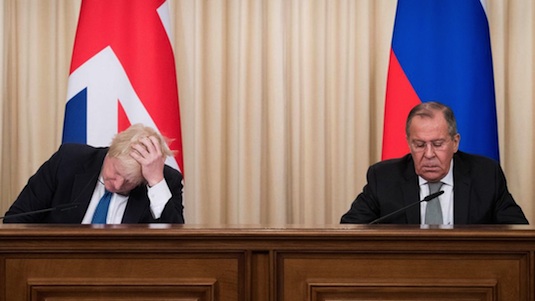
Ian Austin. Now there's a Labour MP no one will ever remember in a hurry. Nor does he deserve to be recalled by future political historians, save as a 21st century exemplar of a place seeker and non-entity. Oh, and for helping out Boris Johnson. Yes, helping. As readers know the foreign secretary got himself a few headlines this evening for repeating the line fed to him by Austin, that this year's World Cup in Russia will prove comparable to the 1936 Nazi Olympics. The government have subsequently confirmed that Johnson was speaking in an official capacity and on their behalf. Needless to say this is grotesquely offensive. Is Putin looking to use the World Cup to show Russia off and, crucially, do a good PR job for his government? Yes. Does he have a record for doing so? Yes - see the 2014 Winter Olympics in Sochi. On the other hand, inviting comparisons of Putin's gangsterism with the 20th century's most notorious and disgusting regime is stupid, not least because of the scale of the crimes separating them, but for the small matter of Operation Barbarossa, Nazi Germany's invasion of the USSR. Around 26 million Soviet citizens perished in the largest and bloodiest conflict the world has ever seen, and this remains within living memory. When Johnson says Britain has "no quarrel" with the Russian people, likening their government - as corrupt, brutal, decaying, and criminal it is - to the Nazis is a funny way of showing it. So too is the Tory response to the poisoning of Sergei and Yulia Skripal. Talking tough is one thing, but being all mouth and no trousers is quite another. We've had the tit-for-tat expulsion of diplomats from the missions in London and Moscow, and the rhetoric. But, here's the funny thing, despite the best efforts of the Tories, their friends in the press and their enablers on the Labour benches, they find themselves catching up with Jeremy Corbyn both in terms of the formal identification of the nerve agent used, and importing America's Magnitsky Act and cracking down on the use of London by Russian officialdom to wash its dirty money. For a party with financial links aplenty to Russian oligarchs, pro and anti-Putin, this is not a painless matter. And yet, if they were so minded, there's even more the Tories can do. According to Foreign Direct Investment figures for Russia in 2015, the UK has some leverage. While only accounting for 2.9% of FDI, the crown dependencies of the British Virgin Islands and Bermuda have 3.8% and 4.3% shares respectively. Add in the semi-detached Bahamas at 6.9%, the UK "family" of investors were, three years ago, responsible for almost a fifth of all inward investment into Russia. Who knows how much more was channelled through Ireland (7.7%) and Luxembourg (11.5%)? Seems business isn't that put off by Putin's adventures in Ukraine and the annexation of Crimea. If the government was serious about pressure instead of grandstanding for favourable editorials, FDI is a lever it could threaten to pull. But it doesn't. The Tories haven't even mentioned it. And that in itself raises a whole load of other questions.
Splish, splosh, there goes the sound of Cambridge Analytica executives tripping over and "accidentally" dropping hard drives and servers into the bath. The Observer/Channel 4 News/New York Times expose has been variously billed as shocking and earth shattering. It's certainly welcome and everyone who cares about politics should take the time to read The Observer splash and watch the reports. But it's either a measure of my cynicism or having been in politics for too long that none of it surprised me. The micro targeting of voters by segmenting huge data sets is nothing new. It is, after all, the way Facebook makes its money. Neither does Cambridge Analytica's confession, on tape, that they entrap political figures and muckrake have one reaching for the smelling salts. It's par the course where bourgeois politics are concerned. So why the big deal? Generally speaking politicians do not understand social media, let alone how its political economy works, the wider questions arising from private ownership of personal and intimate data about the users of these networks, and how it can be manipulated to meet certain ends. Nor is there much of an appetite to learn, which suits social media giants - and those who ponce off their networks, like Cambridge Analytica - down to the ground. Facebook and Google are the most important social media giants and their business models depend on advertising, which in turn demands the retention and manipulation of the data they hold about their users. Your Facebook presence, for example, is a place where you show off photos of your kids, what you had for dinner, the songs you happened to hear while passing through the shopping centre on the way home from work, and other fripperies. You react to things other people post into your feed, like missives from a certain blog, news articles, opinions and so on. Each and every action is recorded by Facebook and collated in its unimaginably vast database. With such huge data sets, Facebook uses algorithms to sift and sort the profiles into demographics and segments of demographics and uses this data to sell advertising space. So, for instance, because I have an interest in politics and plug posts from here on war and suchlike from time-to-time, the segmenting algorithm had me down as the sort of gentleman likely to be receptive to stockists of WWII Wehrmacht memorabilia. They provide the infrastructure, you stump up the content. They convert this to data and make money from it, a pattern of exploitation reflective of changes in capitalism generally. On the surface, Cambridge Analytica's pitch to election campaigns is no different from what Facebook offers all its advertisers: ensuring the right messages appear on the screens of the right people at the right time. However, Cambridge Analytica went a step further. According to the allegations made by Christopher Wylie, the hip young gunslinger responsible for building the firm's data mining tools, Cambridge Analytica obtained 50 million Facebook profiles under false pretenses - ostensibly for an academic study. They were able to segment this data as they saw fit, and start disseminating their own messages on Facebook directly. This drew the attention of Facebook itself and ... they did nothing. Indeed, Facebook workers were embedded with Cambridge Analytica in the lead up to and during the 2016 US presidential campaign. A cavalier attitude to an unimaginably large data breach, you can see why the blessed Mark Zuckerberg now faces awkward questions. What makes matters stickier for Cambridge Analytica is their admission, again on camera, that their efforts targeting black propaganda against Hillary Clinton as an "independent" Political Action Committee was coordinated with the Trump campaign proper - for whom they also provided services. That violates US campaigning law. Therefore are we dealing with a data science firm or an enterprise steeped in criminality? That's one for the cops and the legislators to work out, though there is one measure by which Cambridge Analytica resembles other firms in the social media ecosystem: a propensity to disregard the rules (and sometimes the law) and resort to very old, tried and tested methods. In his look at platform capitalism, Nick Srnicek discusses how the mega profits of social media can only be fully realised by cornering markets. Gone are the fictions of market economies as finely balanced equilibria between competitive but roughly commensurable actors (in terms of size) to a capitalism in which the market is merely a by-word for monopoly. To achieve this position, the struggle to become a platform through which economies can flow (like Google and Facebook) sees peaceful competition displaced by sharp elbow tactics. Looking at the shenanigans of Uber, we see legal threats and action, the stealing of data, damage of rivals' property, negative social media campaigns, evasion of the law, and so on. The potential of monopoly mega profits encourages behaviour bordering on petty gangsterism. Cambridge Analytica do not break with the corporate practices and culture of their brethren: their dirty tricks are their logical extension. It might be the case we see a month or so of liberal hand wringing about the dark arts polluting our politics. The firm itself might even get broken up. Already, Chief Executive Alexander Nix has been shown the door while the rest of them try coming up with a way of saving themselves. But ultimately, if they disappear someone else will pick up the slack. Who knows, perhaps a dormant shell company of Cambridge Analytica will acquire the assets, the staff, and the supposedly deleted data sets and begin again. If there are markets for social media psyops, a service provider is bound to emerge sooner or later. That said, I don't think there's a need to go about wearing a rain cloud. The delivery of dark, dirty politics of which Cambridge Analytica specialised are not automatically efficacious. In the first place, the purveyors of these campaigns and the people who hire them (no prizes for guessing the Tories are on the list of clients) have a very deeply cynical view of the political process. For them, voters are a herd to be prodded and nudged in certain directions. A manipulation of media messaging here, the dissemination of a campaign attack there and the sheep will lap it up. It's one of the reasons why the mainstream media matters so much to elite, establishment politics: they assume punters believe each dot and comma of their paper. Second, the political message they specialise in is relentlessly negative. Images put out by Cambridge Analytica during the Kenyan presidential election emphasise the horrors al-Shabaab would wreak, and the threats to national security posed by Raila Odinga and his centre left National Super Alliance coalition. Very similar to social media fodder that circulated in the USA and, dare we say it, Britain during the general election. Increasingly the right, worldwide, have nothing to offer but fear. This can only work some of the time. When electorates are socially isolated and atomised, this kind of messaging is more powerful and can have just enough effects at the margins to swing a state here or a seat there and win an election. This politics of manipulation start breaking down when significant numbers of the electorate start moving. Compare the Conservative social media campaigns of 2015 and 2017. Three years might be an eternity in politics, but I remember well the praise the Tories received for their intelligent spending on Facebook. They used micro targeting techniques in the key marginals and blasted messages (and physical literature) at the people their segmentation said were amenable to what they had to say. Then in June last year it was rinse and repeat time, and they fell flat. Some of it could be laid at the feet of the worst campaign ever, which was wooden and less flash than Dave's, but the targeting didn't work. Why? Because the electorate were different. The Tories may have won more votes, but large sections of Labour's vote were politically active. Levering the party's massive organisational capacity to have millions of face-to-face conversations, and aided by the cascading mobilisation of self-organised networks online, the politics of cynicism and fear were swamped and swarmed around by millions of people entering the political stage on their own terms. The amplifying effects of atomism the Tories and, ultimately, Cambridge Analytica-style campaigns rely upon were largely nullified. Undoubtedly they will try again whenever the next election is, and likewise Labour's mass networks will respond in kind. The forces of the left then have got something the right, at least in Britain, lacks: and that's numbers. The left elsewhere can learn from the Corbyn experience, of how popular participation in politics has the power to render the efforts of Cambridge Analytica and their ilk, as well as political fear mongering generally, utterly obsolete. This is the answer to the problem they pose, by confronting their efforts at manipulation with an unapologetic politics of mass mobilisation.
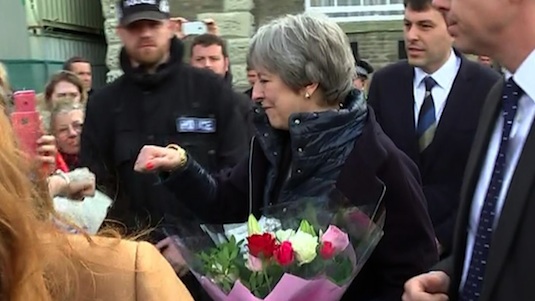
1. Was Russia set on murdering Sergei Skripal? I don't know. You don't know. Even Theresa May doesn't know, not that it stopped her from apportioning blame. As she belatedly acknowledged, there are two possible explanations for what happened: an action officially sanctioned by the state, or a poisoning using nerve agent stocks looted from chemical warfare labs as the Soviet Union crumbled and vast chunks of military infrastructure were abandoned. Yes, but it could be even more complex than these two scenarios suggest. Anyone bothering to follow Russian politics for more than five minutes will tell you that as a mafia state there are many rivalries and enemies criss-crossing it. Putin is certainly the creature of this state, but that doesn't mean the state is the creature of Putin. Not every assassination of a journalist, which happens with disturbing regularity, is ordered by him. Not every attempted hit against exiles residing in London and elsewhere is undertaken with his nod. Among the coterie seeking his favour and promotion, there is an element of "working toward the fuhrer" guiding their actions. 2. This isn't to exculpate Putin and his rotten gang, but simply a statement of how things are. An irony of authoritarian government is how chaotic they tend to be. Even under Stalin, when the USSR was the exemplar and epitome of the totalitarian state, the terror his regime visited upon millions had a dynamic of its own, of ambitious office holders and state employees using the febrile atmosphere of the purges to settle scores, bump someone out of a flat they fancy, disappearing a co-worker so their job could be given to a mate, securing your own position from ambitious underlings or covetous outsiders, or taking out one's immediate superiors to get that promotion. A river of blood and misery separates Stalin from the current occupant of the Kremlin, but we see a similar pattern of behaviour in and around the state and its agencies. 3. Memory is a useful thing to have in politics. In the first place is the acknowledged plundering of Soviet military secrets as research labs and weapons facilities right across its vast territory were abandoned. Who is responsible for this, apart from the people who did the looting? In an effort to appear reasonable in the absence of evidence, May was open to this possibility - at least rhetorically - but moved to quickly shut it down by issuing her ludicrous ultimatum to Putin to prove (by the stroke of midnight) that criminal or other rogue elements were responsible for deploying the nerve agent. Failure to do so would render him responsible. If his or elements of his regime aren't responsible, how do they prove a negative? How could any state? The absence of evidence never constitutes evidence. Saying otherwise is conspiracy theorising, and is not an argument a supposedly serious government of a supposedly serious power should be making. But we're not dealing with a serious party or a serious Prime Minister, because ... 4. Politics, politics, politics. Moments of national crisis, especially on matters of external threat, are always an opportunity to grand stand and play politics, which is exactly what Theresa May has done. Getting up and categorically pinning the attack on Putin is an attempt to reset the political story of her premiership. A Falklands moment for May is not only good optics that could restore her strong and stable/bloody difficult woman reputation, it's electorally popular. After all, her numbers peaked when, early in the general election campaign, she attacked Brussels for "meddling" in British politics. Leading the charge against Putin allows for a similar dynamic to come into play. She becomes the focal point of defiance against a hostile action, and one that everyone in politics will subsequently cede authority to. Expect on this occasion it did not turn out like this. 5. When Jeremy Corbyn rose in the House to condemn the attack, and raised the awkward issue of the penetration of the Tory party by Russian money, not all of which was given by involuntary exiles and opponents of Vladimir Putin, he was absolutely right to do so. If the party in government charged with opposing Moscow and its various shady works is simultaneously in receipt of donations coming in at just under a million quid from Russian exiles as well as figures close to Putin, elementary security demands questions be raised about these relationships. What checks have been done on the sources of this cash? What was talked about when Boris Johnson played tennis with a Putin crony? (Ditto Gavin Williamson. The Tory party having accepted £30k from the very same individual for dinner with the defence secretary, this is one Russian he won't tell to "go away and shut up".) Don't the public have a right to know more about these cash-for-access shindigs? And, we have to ask, why is it Russian oligarchs, whether pro or anti-Putin, are happy to funnel their money to the Tories? What's in it for them? 6. Corbyn has been attacked for playing politics, not least by fools sitting on the Labour benches. But the real games' playing was by the Prime Minister. It emerged over the last couple of days that she withheld access to the highest level of intelligence from Corbyn. The politics of this is so obvious even my cat gets it. After their recent campaign of insinuation and lies, informing the press that Corbyn was kept out the loop not-so-subtly reinforces their argument that he is a threat to national security, that he just cannot be trusted with the most sensitive stuff. Additionally, it allows the Tories to frame the situation to their advantage. Remember, Dave shared intelligence with Ed Miliband in the lead up to the Commons vote on bombing Syria and Labour refused to play along. Giving Corbyn all the facts allows him to contest their interpretation on a level playing field while, at the moment, they can claim, or insinuate, their "tough" stance is informed by the bigger picture. Keeping it under wraps also helps maintain the reputation of the secret services. Declassified materials often show a good deal of intelligence is no better than unsubstantiated rumour and tittle-tattle, and no doubt would have been questioned by the Labour leader. Ultra secrecy suits the politics of the Tories and protects the reputation of a service yet to recover from the Iraq debacle. 7. Are fist bumps and posing with babies an appropriate prime ministerial response to a chemical weapons attack? 8. Turns out Corbyn has friends on the right. As the press have predictably piled in to the attack - institutions Tim Bale rightly characterises as the "Conservative Party in the media" in his history of the Tories from Thatcher to Dave - it's interesting that a unanimity of opinion is lacking. Take The Spectator for instance, or Peter Hitchens rushing, not for the first time, to defend Corbyn's position against the mainstream right. One or two straws, maybe, but Hitchens is a star columnist in one of the right's biggest titles and The Speccie is generally reflective of what remains of Conservative intellectual opinion. Both know that hasty judgement now stores up penitence for later. With the media reach of the right crumbling away and mass scepticism toward anything whiffing even slightly of military action, they know the political cost if British evidence of Putin's culpability falls short of that demanded by international law. 9. If only certain sections of the Parliamentary Labour Party were as questioning and sceptical. It was disappointing to see some of the names on the EDM backing the Prime Minister, but others were the usual pathetic bunch of malcontents. When the time comes, one hopes their constituency parties press the deselect button with the alacrity these honourable members have previously shown in Commons votes to bomb people. Their EDM was and is a transparently factional stunt. One, because they didn't like Corbyn reminding them and the country that politics is about irreconcilable interests. Two, they foolishly believe taking a hard stand on international issues endears them to Tory leaning voters (it doesn't) and the Tory press (two time). And three, they are saying to anyone paying attention that they trust May more than the leader of their party. As such are participants in her efforts to salvage her reputation, whether they see it that way or not. 10. Politics, like history, is full of irony. For all of May's posing, for all the ego massaging she received from Labour MPs, it is the case Jeremy Corbyn's position on Russia is tougher. Going down the international law route, working toward stronger international controls and enforcement of bans on chemical and biological weapons, and - what the Tories have hitherto resisted - a crack down on Russian money laundered through London and the crumbs eagerly scooped up by the Conservative Party in political donations, all these are more powerful and more forceful responses to Kremlin gangsterism.
Unfortunately, just as one of this year's big ructions convulses Westminster I find my writing powers have gone on holiday. As readers will have noted 2018 isn't proving to be as prolific as recent years, so bear with us. I'm not dead and neither is this place, though infrequent forays are likely to reign here for the next few weeks. That may mean a break from writing, but not from my music taste. Which is the real reason why you come here. Far be it of me to disappoint, here's a ditty that has gone down a storm with the yoof.
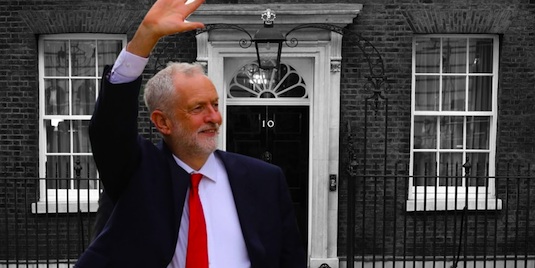
Guest post from Dave Renton On Saturday, I was at an anti-fascist conference in London. The comrades there were young, excited, with a range of views from Labour loyalists to anarchists. I heard a discussion begin which I've not heard anywhere else. If Labour comes in, I suggested, expect the far-right to organise; Corbyn is their hate figure. Yes, a comrade from Greece accepted, they hate him. But if the left is in government, we can't stand down our forces. She's right. After two and a half years of Corbynism, we can start to predict with some certainty what a Labour government will be like: + To a greater extent than any previous Labour government it will be open to policies suggested by the social movements. From blacklisting to autism, Labour figures have pledged to take on board our campaigns. But being "open to", is not the same as actually using the state. It can mean a range of things, from in the best cases introducing legislation, to in a middling case providing public, spoken support (in the style of those Labour cabinet ministers of the 1970s who would stood on innumerable picket lines, but declined every opportunity to actually legislate for beleaguered workers), to signalling goodwill but not doing anything more than signalling. Politics will not stop at the moment Labour is elected. In office, Labour will have a limited amount of parliamentary time, a limited amount of goodwill and it will have to choose - while also being subject to lobbying against action from the unions, the Labour right, the press and increasingly (as the government goes on) from capital. + Repeatedly, a Corbyn Labour government will give opportunities for people to put pressure on it. Corbyn will welcome that dynamic. But, it also likely, that he will require the pressure to come through the Labour Party (the recent campaign against the HDV in Haringey may turn out to be a good example; it was a mass movement, but the "mass" aspect was mediated through the Labour Party. The old Labour councillors lost control when hundreds of people streamed along to Labour selection meetings and voted against them). Expect under Labour repeated polls of the membership, and conference votes which put demands on the leadership. Corbyn and McDonnell, to their credit, want to be subject to demands and know that reforms will only be introduced under pressure. + When Labour starts to choose which parts of its programme to introduce, the key force in the Labour Party will be the trade unions, or more precisely UNITE, which already has the casting votes on the NEC, controls Corbyn's office, and will soon control the key position of General Secretary in the Labour Party. UNITE's politics are Milibandish: the union swung to supporting Corbyn late in 2015. In practice, therefore, there is already a veto of Labour policy on nuclear weapons, nuclear power and immigration. Indeed, this is part of a general problem under which Corbyn, in order to build up a team, has been compelled to draw on the existing Left and has acquired our weaknesses (e.g. over Syria). He takes up our best and our worst and he is shaped by them both. UNITE is by far the most important part of this. If you think Corbyn's government will be unilateralist, you aren't listening closely enough to him. Before he was leader of the Labour party, Corbyn was the closest figure we had in parliament to a supporter of free movement. As leader, he has given multiple speeches insisting that free movement will end and blaming (in line with the policy of the UNITE leadership) migrants for lowering wages. A Corbyn government will reluctantly, agonisingly and with as much kindness as the leadership can supply go along with the positions he has argued for ever since he became Labour - i.e. a slow reduction in migration to the UK. His position in the Labour Party, and his dependence on UNITE, will prevent Corbyn as PM from doing anything better. + We all have an idea of how Labour governs from the left: i.e. the party adopts policies, *persuades* voters of their need, and then relies on popular approval to act as a counterweight to the pressure from the right. This will not happen under Labour - policies will not be communicated in advance. The public will not be prepared for left-wing government. In the last two years there have only been two periods where the leadership articulated coherent policies - during the initial phase of his 2015 leadership campaign - and again, after the negotiation of the manifesto, during the election campaign. What is Labour's policy on student loans? What is Labour's policy on the EU? Is it still Labour policy, as Corbyn argued in 2015, that there should be right to buy for private tenants? It's impossible to know because on each of these policies, Labour figures have made a flurry of proposals. The priority has been positioning, not policy. Ideas have been raised, dropped, exchanged for others. I am not being critical - Labour has been under enormous pressure, Corbyn has been vastly better than any under Labour leader would be. All I am saying is that no-one will know in advance of a Labour government what Labour's priorities really are; Labour will not have a programme for the first 100 days. Now, positioning is not trivial - it may enable Labour to introduce radical policies quickly in response to emergency situations - but in the absence of prepared policies the likelihood is that for most of its period in office Labour will feel significantly more like "politics as usual" than most of my friends expect. + Finally, Labour will face a new and unfamiliar form of political pressure - hostility not merely from the press, the Labour right, within Parliament, but also (and for the first time) from the international markets. I expect that Labour will enjoy a longer honeymoon than any government since 1945 (being seen to have been sensible on Brexit will buy Labour an opportunity space, and many kinds of capital would do very well under a McDonnellite expansion of our national infrastructure). But at some time, and with increasing force as Labour gets in - expect opposition to potential policies such as confiscation of unused land to build council houses. The longer Labour is in and the more Corbyn tried to do, the harder government will be. None of these are arguments against Corbynism, rather they are ways of saying that even if Corbyn doesn't feel much like the Syriza government of which the comrade warned us: it will still be a project of reform, i.e. negotiated change, and there will be more defeats than victories. If there are victories, they will come about because the movements have needs which last longer than any Labour government. And because people (whether in Labour or outside) see beyond the leadership and continue to press and put demands on it. Even the best of Labour leaderships will need people outside, putting demands on them.
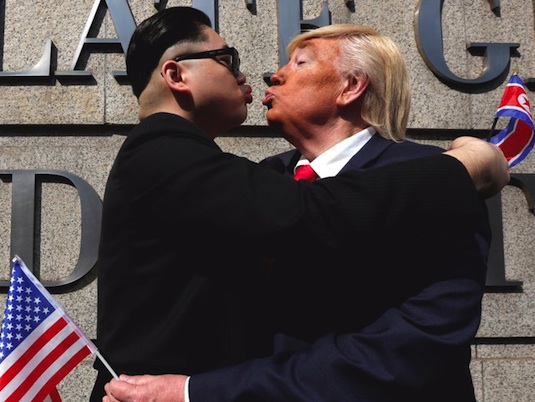
Can the worst of enemies become the best of friends? We might find out, given the news Kim Jong-un and Donald Trump are set to have a face-to-face meeting. "I may leave fast or we may sit down and make the greatest deal for the world", declares Trump. Yet, bizarrely, reading past the tragicomic threats routinely made by the North Korean monarchy and the incomprehension establishment commentators approach the Kimist regime and the chaoscracy headed by Trump, the chances of a deal might be good. On Kim's side, as argued here repeatedly, North Korea is not "mad". Kim is caricatured as some kind of Bond villain with the sinister global designs and weapons to match, but these lazy takes cover for the failure to analyse the North Korean regime, make sense of its internal dynamics, tendencies and power struggles, as well as the preoccupations of its leaders, its position in the international system, and the drivers of the regime's militarism. It is eminently knowable and can be understood in such terms. There are two main concerns Kim has: the keeping of power and its preservation in the long-term. These objectives were shared by pops and grandpapa, and is the main filter through which the regime's actions should be perceived. Take the nuclear programme and missile programme. An attempt to conquer the world? Or the means of deterring an attack from a cabal of the most advanced and powerful nations in possession of a record of attacking and invading countries without access to such weaponry? For decades, the North has maintained their own cold war frontier against bigger and more sophisticated militaries not by mutually assured destruction, but making certain any war would be prohibitively expensive. Whether it's artillery pieces pointing at Seoul and threatening to obliterate it before American and South Korean air power can take them out, to the extensively booby-trapped border, to over a million personnel on active service at any given time, to nuclear weapons and the means of delivering them, a war would be catastrophic with a huge price due the victors payable in blood. Since Soviet aid was withdrawn in the 1970s, being forced to rely on itself to maintain the stand off has led to a lop sided development of the economy and a huge diversion of resources into unproductive assets. Infrastructure and consumption has suffered - to the point of not irregular food shortages and famine - and only intense repression maintained by an overblown police state has kept a lid on tensions. Yet Kim isn't stupid. China provides a model of a dynamic state-led capitalism, massive growth figures and breakneck development alongside the retention of the party and, now Xi has got his way, one-man leadership for life. This is what the regime aspires to, and going down this road means freeing up scarce resources currently pouring into the army. Nukes and rockets, while initially expensive, over the long-term render obsolete the need for a huge military. Just as Deng Xiaoping struck deals with the People's Liberation Army that allowed them to become a privileged economic actor, so Kim the younger has tried taking a similar approach. Following this, the overriding objective of North Korean foreign policy is neutralising the militarised frontier. Not that Kim wants to relive the early days of the Korean war, but because taking them out of the equation removes the requirement for the weapons' programme. Therefore it is seeking an accommodation with the US and would like to draw it into a non-aggression treaty. In this it is entirely unremarkable. Much of Trotsky's output in the 1930s was his persistent criticisms of the Soviet Union and its willingness to sell workers' struggles down the river on condition Stalin's regime be left alone with its special shops for the favoured and the gulags for the unpeople. As the broken machinery of state planning in North Korea can't keep the regime afloat indefinitely, especially as new sanctions start biting, including China's capping of petrol exports, it's clear something has to give before the hairline cracks in the regime's foundations become something more serious. How about Trump, what does he and the US gain from brushing aside the Bush and Obama-era approach and coming to a deal with Kim? There is personal vanity, of course. Defusing the tensions on the Korean peninsula would be a masterstroke of diplomacy and assure Trump goes into the history books as something other than a joke. It wrong foots the Washington foreign policy establishment and enhances his credibility over whatever Beltway insider the Democrats decide to run against him in 2020. Also, because a deal is possible. Trump may be profoundly unintelligent and ignorant, but he knows deal making. He has the sort of low cunning to be able to read the position of opponents vis a vis his and act accordingly. What he sees in Kim is someone not too dissimilar to himself, but is playing a poor hand well. And he knows how desperate they are to come to some kind of arrangement - the threats the regime is famed for compute as cries for help to Trump, but he's savvy enough to realise they're playing the same sort of unconventional game that brought him to the White House. Additionally, the issue just isn't that intractable. As complexity goes it's nothing like Syria, Israel and Palestine, or Northern Ireland before the Good Friday Agreement. A little bit of give, perhaps the phased removal of troops and easing up of sanctions, costs America very little assuming the North reciprocates and they agree to means for each side to monitor the other. Second, there is a real will in the South for better relations. The President, Moon Jae-in, is a popular centre left leader associated with a new "sunshine policy" with regard to the North, and one of his objectives is a formal peace treaty that brings the official state of war to an end. He has certainly drawn criticisms from the right but, as elsewhere, the Democratic Party's key voters tend to be younger and are less amenable to the anti-Kim buttons frequently pushed by conservative opponents. Conservative voters are never going to vote for him regardless, and as his right wing predecessor got sent down for 30 years and another former president is in the dock on serious corruption charges, Moon can afford to sideline the right as so much bleating. Therefore Trump has a willing partner with connections and a good relationship with the regime. Lastly, there are realpolitik aspects to consider. Detente with the North opens a possible front against China. Relations between China and North Korea grew more strained over the course of 2017, even to the point of the regime declaring Russia its BFF. Cooperating with UN sanctions helps China's reputation as a responsible actor on the international stage, but ultimately they are a weapon to try and bring the North to heel. Beijing prefers having the North as a buffer against the US-dominated South, and is trying to use economic pressure to render them a quiescent if occasionally noisy client. For Trump a US-North Korea deal weakens Kim's dependence on its big neighbour, and could drive a wedge between them in much the same way Nixon used clever diplomacy to widen the rift following the Sino-Soviet split. With a firm if unstable ally suddenly became less reliable, then China might not prove to be as assertive elsewhere - such as prosecuting its claims in the South China Sea. It also gives Washington a lever for inflicting economic damage in the event of Trump's trailed trade war. North Korea might not amount to much with regard to the Chinese economy as a whole, but shrinking trade with them will impact negatively on a region not quite as dynamic as other parts of the country. Whatever the case and whatever the motives, the prospect of a permanent settlement is suddenly possible. One that serves the interests of an appalling regime, the designs of the world's biggest superpower, and the vanity of the White House's most awful occupant certainly. But there is also a chance of burying permanently the prospect of an ugly, mass casualty conflict with worrying geopolitical implications. An imperial peace is still a peace, and can only open a new period with new tensions and contradictions, not to mention new opportunities for political change.