Saturday, 30 March 2024

Quarter One By-Election Results 2024

This quarter 76,034 votes were cast in 48 local authority contests. All percentages are rounded to the nearest single decimal place. 19 council seats changed hands. For comparison you can view Quarter four 2023's results here.

  Party
Number of Candidates
Total Vote
%
+/- 
Q4
+/- Q1 2023
Average
+/-
Seats
Conservative
         38
20,674
   27.2%
 +3.0
    +1.0
   544
    -3
Labour
         43
18,359
   24.1%
  -0.8
     -4.8
   427
    -1
Lib Dem
         38
20,313
   26.7%
 +2.3
    +8.4
   535
   +5
Green
         30
 6,402
    8.4%
  -3.4
     -0.3
   213
   +2
SNP*
          3
 2,425
    3.2%
 +1.8
     -1.7
   808
    -1
PC**
          4
   828
    1.1%
 +0.9
     -0.4
   207
    -1
Ind***
         34
 6,047
    8.0%
 +0.0
     -1.3
   178
    -1
Other****
         14
   986
    1.3%
  -4.0
     -0.9
    70
     0


* There were four by-elections in Scotland
** There were nine by-elections in Wales
*** There were seven Independent clashes
**** Others consisted of Democratic Liberation (49), Eco Federation (25), Gwlad (2), Independent Green Voice (133), Liberal (118), Putting Crewe First (128), Reform (54, 50, 237), Scottish Family Party (50), TUSC (53), UKIP (38, 27), Women's Equality Party (22)

Looking at the quarterly summary and ... it doesn't seem that bad for the Conservatives. They come away with the popular vote and only dropped three councillors. Labour came in behind the Liberal Democrats and come out the poorer. And the aforementioned Lib Dems are toasting five new councillors while the Greens can add a couple more to their tally. And, once again, there's no sign of voters' interests in Reform. Which is unlike UKIP of a decade ago, which did have a local authority following and was capable of winning the occasional by-election.

There is something that should cause the Conservatives some pause. Their vote may have held up, but for the first time ever Labour have fielded more candidates in all three months of a quarter. Set against the backdrop of the problems besetting the party, is their long term decline starting to finally hinder their ability to run in elections?

Friday, 29 March 2024

Local Council By-Elections March 2024

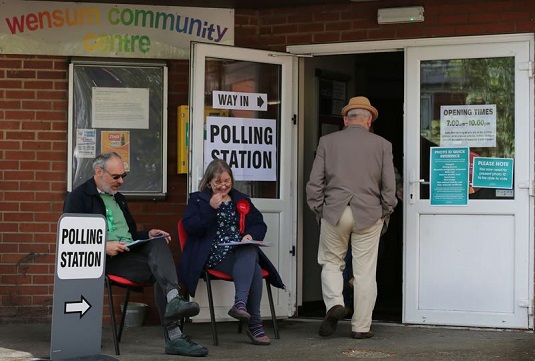
This month saw 17,319 votes cast in 13 local authority contests. All percentages are rounded to the nearest single decimal place. Five council seats changed hands. For comparison with January's results, see here.

Party
Number of Candidates
Total Vote
%
+/- Feb
+/- Mar 23
Avge/
Contest
+/-
Seats
Conservative
           9
 2,950
    17.0%
  -14.0
      -6.5
   328
    -3
Labour
          12
 3,850
    22.2%
  +1.0
      -2.4
   321
   +1
Lib Dem
           8
 3,650
    21.1%
   -7.8
      -0.3
   456
   +2
Green
           7
 2,180
    12.6%
  +5.6
     +3.4
   311
   +1
SNP*
           1
 1,015
     5.9%
  +4.6
      -0.2
  1,015
     0
PC**
           2
  205
     1.2%
   -0.7
      -1.0
   103
    -1
Ind***
          12
 3,307
    19.1%
 +11.8
     +7.9
   276
     0
Other****
           3
  162
     0.9%
  -0.5
      -0.6
    54
     0


* There were two by-elections in Scotland
** There were four by-elections in Wales
*** There were four Independent clashes
**** Others this month consisted of Gwlad (2), Independent Green Voice (133), UKIP (27)

If one was tempted to read too much into local authority by-elections, it would be reasonable to conclude the Tories are in a bit of trouble. Because of the varying conditions in different localities a lot of unique factors come into play, so the piles of votes at the end of each monthly round don't mean much. That's why I'm sure no Conservative supporter will be disheartened to learn they couldn't find enough candidates to stand in four of the 13 by-elections, or that their vote tally came fourth for the first time ever.

Set in context, if this set of results suggest anything it's that the Tories' decrepitude is playing itself out at local level, there's little enthusiasm for Labour, the Liberal Democrats are the opposition of choice - but people will punt for Greens and Independents when they're locally rooted and have a campaigning profile behind them. Political science isn't rocket science.

As with March, April usually slows down before the by-election extravaganza of May. And 2024 is no exception with just 10 to look forward to.

6th March
Carmarthenshire, Elli, Ind hold

7th March
Bridgend, Aberkenfig, Lab gain from PC
Glasgow, Hillhead, Grn gain from Lab
Mid Devon, Upper Yeo Valley & Tawe, LDem gain from Con

14th March
Lancaster, Castle, Grn hold
Wiltshire, Cricklade & Latton, LDem hold

21st March
Cambridgeshire, Yaxley & Farcet, LDem gain from Con
Flintshire, Brynford & Halkyn, Lab gain from Con
Knowsley, Whitefield, Ind hold
North Kesteven, Heckington Rural, Con hold

28th March
Neath Port Talbot, Neath East, Lab hold
Orkney, Stromness & South Isles, Ind hold
Somerset, Somerton , LDem hold

Image Credit

Thursday, 28 March 2024

Becky Chambers Vs the Assholes

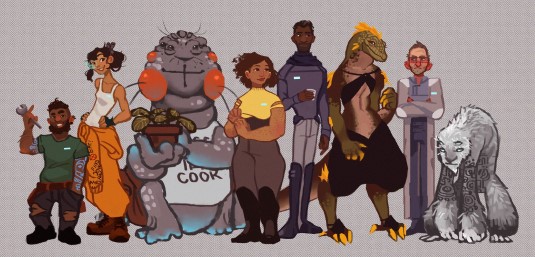
As one much-hyped science fiction series is doing well at the moment, it's time to look at another. Since the publication of The Long Way to a Small Angry Planet by Becky Chambers was published in 2014, her Wayfarer series has attracted its share of admirers and brickbats. There are those who praise the character-oriented focus of the novels over what the usual SF plot devices, and there are critics who criticise it for the lack of originality, the absence of big ideas, and its heavily emphasised good vibes. When the critical reception is divided like this, it's safe to say that the difference is less a case of quality and more one of taste.

Chambers's story is that of the starship Wayfarer. Its mission: to take whatever contracts are available and bore new wormholes in the fabric of spacetime. Its crew: a multi-species melange of misfittery. Ashby, the terminally broke owner of the operation, is offered a megabucks contract to sink a hole in dangerous space run by the war-like Toremi to Galactic Common territory, the Star Trek Federation-esque ... federation. Handily, he's just hired Rosemary, a clerk who can help him navigate the choppy anomalies of interstellar bureaucracy. Because we like cliches in SF, she's running away from a secret past. Also on the ship we have Sissix, a permanently randy Barney-the-friendly-dinosaur alien, Corbin the grumpy algae farmer, Kizzy the motormouth technician, the other technician Jenks (who's in love with Lovey, the Wayfarer's sentient AI), Dr Chef - the medic-cum-chef who is one of the few survivors of a dwindling species, and Ohan. He's a Sianat symbiont pair in which the humanoid(ish) species is deliberately infected by a virus that allows them - and them alone - to navigate the "sublayer" between two points in real space.

Spoilers below.

The adventures of this crew are nothing ground breaking and we're hardly skirting Dangerous Visions territory. Each character has their time in the narrative's sun, dealing with some aspect of their life, their culture, and/or identity-related problems. Apart from the one character who dies, this is low peril to the point of being cosy. And I suppose this was the point. A lot of contemporaneous space opera was about big wars or big reveals. There is none of that in Small Angry Planet, except on the micro level of building and nurturing crew solidarity. Even the isolated awkward character - Corbin - becomes fully part of the group's lovey-dovey culture after Sissix saves him from the unfair discrimination meted out by an officious race of alien lobsters. This makes for just about the most gentle read I've ever encountered in years of reading SF. Every character relationship is a side-story of its own, an opportunity to break down misconceptions, embrace diversity, and find delight in difference. If you want to get a bit Negrian about it, the free play of singularity allows for a more cohesive multitude. Or, to tone down the high falutin', Chambers offers a celebration of liberal identity politics. And ten years on from publication, that is controversial enough for some.

This might be garlic to certain readers of a conservative disposition, but they shouldn't worry too much. The identity politics are resolutely liberal and consistent with assumptions about the way of the world they are comfortable with. But it's not that the so-called Galactic Common is nothing of the sort, being a capitalist society based on markets, waged labour, contract, and state regulation. Nor how the Wayfarer is a small business in which Ashby is the owner and everyone else is an employee - despite its erasure by Chambers's detailed portraits of her creations as a super inclusive spacefaring family. The only compulsion that intrudes on their day-to-day comes from the requirement for paperwork.

What aligns the book firmly with liberalism comes from Chambers's treatment of character-defining adversity. What Rosemary is running from is a wealthy family, but not on account of anything she has done. Her father, despite being one of the wealthiest men on Mars chose to sell illegal weapons to two sides of an especially vicious civil war. What an asshole. The Wayfarer is boarded by Akarakian pirates, an avian-based set of aliens. Ashby is roughed up and they make off with a lot of kit after Rosemary negotiates their release. They confess they attacked because they're desperately poor, (on account of their world having previously been invaded and colonised by another species) but they could have just asked for help instead of robbing them. Assholes. Corbin falls foul of anti-clone laws, and is beaten up by his jailers in detention. Because they're assholes. And then there is the climax of the book. They reach the titular angry planet and we encounter the Toremi for the first time. This race, constantly at war with itself, charges around a circuit of the galactic core shooting up themselves and others because, culturally, they're incredibly dogmatic. Clans are arranged along lines of thought and dissent within is met with death, and from without it's permanent warfare. The GC hope that by allying with one of the clans it will gain access to the resources of the interior. However, at a meeting between the Toremi and GC officials, an individual dissenting Toum takes a dislike to the crew and just as they're about the begin their wormhole punching procedure his ship fires on The Wayfarer, effectively killing Lovey in the process. What an asshole.

This is the flip side to the kumbaya affinity of the crew. They get on because they're not assholes. The threat to their little piece of multi-species heaven is the assholery of others. There is always room for redemption, as we see with Corbin's gratitude to Sissix for saving him, and later when he forcibly cures Ohan of his navigator virus. Structural oppression wouldn't exist if we took a leaf out of Bill and Ted's book and we were all excellent to each other. But ultimately some people are just plain mean and that's it. Chambers is on the terrain of liberal identity politics because what matters above everything is individual character and the behaviours it engenders. A position conservative readers of her work could get on board with, if they can get beyond the play of alien and human difference.

When it comes down to it, Small Angry Planet is a saccharine read that's undemanding, engaging, and heart warming. If it wasn't for the swearing and the lashings of (implied, inter-species) sex it could easily pass as a YA novel suitable for young teens. Though chances are plenty enough of that age bracket have read it anyway. And why not? The book swims with the current of the ever-increasingly dominant social liberalism, but ultimately it's undemanding because it is entirely conformist.

Image Credit

Sunday, 24 March 2024

Pleading with the Core Vote

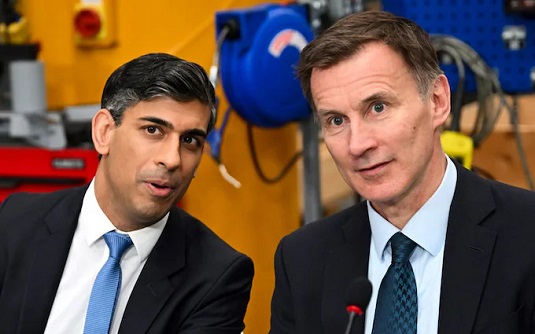
Perhaps it's the pedant in me, but I'm a firm believer in accurately portraying what people say and do. That includes those who never extend the same courtesy to others. Like leading Tories, for example. When reports circulated suggesting that Jeremy Hunt, he who apparently saved Britain from Liz Truss's foolishness, had gone on the record to say a £100,000/year salary was "not much", the antennae perked up. Surely Hunt, number two in the government and a deft ducker-and-diver as evidenced from his time as health minister wouldn't say what most Tory politicians talk about when no one's eavesdropping?

Writing on Twitter, he said "I spoke to a lady from Godalming about eligibility for the government's childcare offer which is not available if one parent is earning over £100k. That is an issue I would really like to sort out after the next election as I am aware that it is not [a] huge salary in our area if you have a mortgage to pay." On Laura Kuenssberg this Sunday morning, it was pointed out the average salary in his Surrey constituency wasn't even half of that. And all he could say was mortgage payments and the cost of living means that even those pulling down six figures "feel under pressure".

In an age where feelings normally don't care about your facts, he's right. Surrey average house prices sit at just over £630k. Servicing a mortgage on that typically costs over £3,000/month. Which is a fair whack when the take home pay for a £100,000 salary is around £5460/month. Out of the remainder our family has to pay car running costs, perhaps childcare, and all the other expenses that come with being affluent in an affluent county. The context of his comments, of considering raising the threshold for help with childcare costs, does speak to a concern that exists among the best paid. Or, to put it another way, a layer of people who would normally support the Conservatives are feeling the pinch.

Hunt has got to know that his "won't anyone think of the six figure earners?" rhetoric is going to make the Tories look even more out of touch. Despite the "good news" of faster-than-forecast inflation falls, rising real wages have got a way to go before they make up for the price hikes of the last couple of years. And so any affecting of concern for the well heeled implies an uncomfortable question: how does Hunt expect those on a lot less manage? And his answer, apart from talking up tax cuts, is ... nothing.

As has been apparent for some time, the Tories have given up. The question isn't whether they're going to lose the next election, it's about the margin of Labour's victory. And now poll after poll is flattering the so-called Reform party, despite its quite modest performance, the spectre of the sort of disintegration that raised its head during the Tories worst ever performance in a national election - the EU elections five years ago - is back. Party strategy has to be committed to securing the core vote. Hence over the last six months the obsessions with immigration and tax. It's why Rishi Sunak is prepared to routinely humiliate himself by pretending Palestinian solidarity protests are the extremist threat to the British state, and pledging to all and sundry that the planes to Rwanda will take off no matter the cost. He's doing what he thinks it will take to save his party, traditionally the most trusted repository of bourgeois political interests, from cataclysm.

And this explains why Hunt is doing what he's doing. Talking about extending the helping hand of the welfare state to top earners isn't going to win over new voters, because it's not supposed to. He's hoping a few more crumbs on top of the National Insurance cuts, which disproportionately favoured those on large incomes, will be enough to arrest the movement of a few hundreds of thousands of votes in what should be safe seats. All so that there might be a viable parliamentary party left after the election.

This is the horizon of Tory ambition now. It says everything about the depth of their crisis that they must bribe those parts of the electorate they should have in the bag.

Image Credit

Wednesday, 20 March 2024

Midlands Conference in Critical Thought, 5th-6th April 2024

Remember this abstract on Keir Starmer and the resistance his government is likely to face? The lovely people organising the Midlands Conference in Critical Thought have accepted my paper, and that will be taking place on Saturday between 4pm and 5.30pm as part of the Cultural Resistance in a Time of Economic Stagnation panel.

Rather than getting a fix up of blog posts from this place, I will be using the Hardt and Negri stuff on immaterial labour that's all over these parts, and something new by applying Maurizio Lazzarato and his contributions around machinic enslavement to make sense of Starmerist modernisation, its gaps, and where it can come undone. And all in 20 minutes. I might not even get time to plug the book!

The conference, hosted by the Centre for Policy, Citizenship, and Society and the Department of Social and Political Sciences at Nottingham Trent University is free to attend. But the organisers ask interested people to register here. It is a multi-panelled event with a very large programme, so I recommend signing up so you can see what else is on offer. I also hope to blog about some of the papers in due course.

Hope to see some of you early next month!

Tuesday, 19 March 2024

The Last Starship from Earth

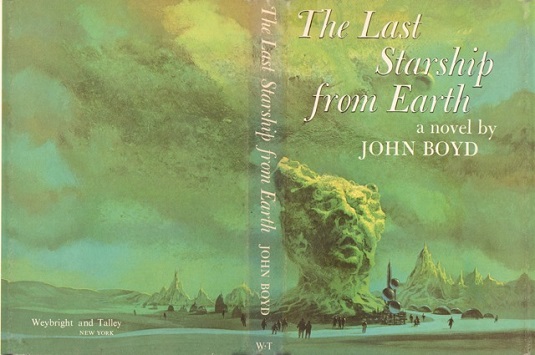
The skiffy turn means encountering the strange, the weird, and the completely bonkers. There's also a chance of turning up something good that time has buried under layers of obscurity. John Boyd's The Last Starship from Earth is not one of those books. Quite the opposite; it is truly terrible. According to everyone's go-to reference site for snippets of trivia, The Last Starship from Earth was praised by Robert A Heinlein as belonging on "the same shelf with Nineteen Eighty-Four and Brave New World. A thumb's up that says more about Heinlein than anything I could write.

Owing something to the hierarchy worked out by Auguste Comte, as Sociology was the last and the greatest of the sciences Boyd imagines a totalitarian society divided up into a series of departments, at the top of which sits the sociologists. Psychology and mathematics are used to determine marriage and parenthood, and order is enforced by the deterrent of sending ne'er-do-wells to the planet Hell - a frozen and desolate wasteland. The main character, Haldane IV of a line of mathematicians, falls for Helix of the creative, artistic class. Their courtship in one of tedious disquisitions about the separation of the sciences and the humanities, tempered by uncovering forbidden information that one of society's patron saints was as much a poet as he was a maths head. They begin an affair and are shopped by a classmate. There commences a lengthy sequence where Haldane has to convince a jury of a mathematician, a psychologist, a priest, and a sociologist that he's ripe for rehabilitation as a starship engine man. They see through him and off to Hell he's packed. Except, jeepers, the world is as lush and verdant as Earth and the convicts there are thriving. To maintain the illusion it's nothing but icy wastes, they've convinced the prison transports to only show up when it's winter.

Last Starship gives up about 30 pages from the end. Having banged on about Haldane's mathematical genius, a plot is hatched where he can use his facility for algebra and mental arithmetic to construct a time machine, travel back to Earth, convince Jesus not to spearhead an assault on Rome and change history so the tyranny of sociology never comes to pass. Of the characters left on Hell, which includes his beloved Helix, they seem to think dabbling with the timeline won't affect them because they're on another planet. Okay. The book closes with Haldane, now immortal and having lived for 2,000 years, hanging around a southern Californian university ogling young women. It worked. The new history, wait for it, is ours.

I don't mind absurd plotting as long as it's done well and allows for the suspension of disbelief. Here, the story is just stupid. Not only is it stupid, but it's written in a smug, self-satisfied way. Boyd tries an at-a-remove critique of mainstream American social science of the 1960s. Or, reflected through an SF lens, Isaac Asimov's psychohistory and its certitude in the omnipotence of statistics. But the info dumps are badly done, the dialogue is stilted, and I've seen more character on the shadow front bench. If that wasn't awful enough, its attempted dabbles in racial politics have severely aged. The sexual politics are likewise abysmal. For two thirds of the book, Haldane cannot decide if Helix is unabashedly in love with him or is tugging on his heart strings to entrap and ruin him. On the very first page we see him gawping at how she swings her hips from side to side, and Boyd tries to be ha ha funny by suggesting Haldane is as interested in the mathematics of a derrière in motion as having a straight up perv. This undercurrent of furtive sexual interest runs all the way through, and adds to Last Starship's unreadability. But what has ensured I'll never touch anything by Boyd again is the awful gee whizz shucks wiseacring afflicting the characters. And to think, according to the august SF Encyclopedia, that Boyd was considered an important new wave SF precursor by some. On the contrary, this is both prurient and pretentious. The only good thing going for it is that Boyd could only keep up the torture for 180 pages, but there are supposed to be two sequels.

Coming away from this book, I can only pity those new to SF who got it on publication and were forever put off. If this is anything to go by, Boyd and his works deserve their obscurity.

Sunday, 17 March 2024

The Pitiful Penny-for-Leader Plot

If you've been following The Times reporting on the crisis in the Conservative Party, it has decided that this week was the week when everything changed. Despite the Tories being convinced tax cutting can only win votes, Jeremy Hunt's budget has done nothing to reverse their abysmal polling figures. Lee Anderson's abandonment of the party that afforded him a pseudo-celebrity status has convinced the paper that Rishi Sunak can no longer hold this most motley of crews together. And the delay followed by the special pleading excuses over Tory donor Frank Hester racist attack on Diane Abbott was pathetically half-hearted as they were seen to be desperate for more of his money. Evidently, it won't be long before the Murdoch stable declare for Keir Starmer.

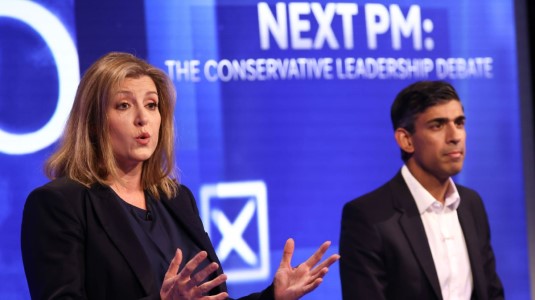
But also according to a variety of outlets, moves for ditching Sunak ahead of the general election are multiplying. The easily dismissed nonsense about a Boris Johnson return has done the rounds again, but so has the outline of another plot that was mooted a few months ago: get rid of the Prime Minister, and coronate Penny Mordaunt in his place. Might this be a go-er? It goes like this. "Allies" of Suella Braverman have talked to "friends" of Mordaunt about getting her to stand as a stalking horse. Sunak would be deposed, and she would lead the party into the next election. But isn't she the wokest of the woke as far as they're concerned? Their reasoning is she polls much better than any other Tory and would ensure the result at the ballot box would be a rout, not a massacre. Then after she has discharged her responsibility, a right winger would swoop in, turn the party's fortunes around because what the public are gagging for is more racism and more culture war, and the Tories will win again in five years after Starmer disappoints.

It says everything about our low effort press that this bollocks is given credence. There is no way Sunak will lose a no confidence vote, for starters. Tory backbench criticisms, even when they're hyped fall flat more often than not. Rebellions barely make double figures. And every time the anti-woke racist right have a public outing, they show themselves completely estranged from what's happening in the country. If every vote against their own government is an occasion for their humiliation their chances of toppling Sunak are nil. But what of their putative alliance with Mordaunt and her supporters? She might be many things, but a fool she is not. How credible is a secret scheme where the plotters boast from sundry front pages that they want to support Mordaunt so she can take the fall, leaving their faction unblemished and Persil-white for the assumed Tory revival? The sheer absurdity of screaming aloud their Machiavellian subterfuge appears not to have warned our credulous hacks that the story hasn't got any legs.

Here's what has happened. Some on the right of the party have been chuntering about what a hash Sunak is making to briefcase Tories who think likewise. Someone texted the contents of this tearoom bellyaching to a journalist and here we are. More headlines than one knows what to do with.

Yet the story speaks to essential truths. The Tories are doomed and Sunak is digging the grave deeper, and everyone in the party knows this. Likewise, Mordaunt would make for a harder opponent for Labour, especially as she has occasional flashes of charisma compared to the colourless mediocrity on the opposition benches. And she could stymie the collapse and the party not be reduced to an impotent, right wing rump. Except she has no wish to captain a sinking ship, nor be remembered as the first Prime Minister to lose their seat at a general election. And so they're stuck with Sunak, and with October now supposedly the date for the general election there's going to be many more stories like this before the Tories are put out of their misery.

Image Credit

Wednesday, 13 March 2024

The Political Uses of Racism

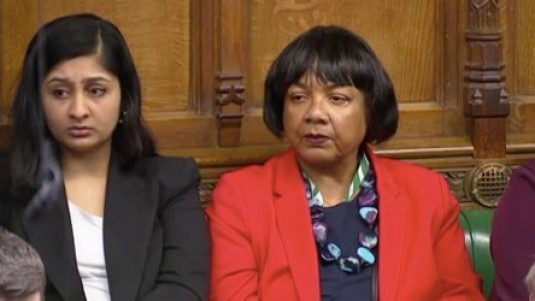
Another day, another awful day in the Commons. Having disgraced himself and his office during the SNP's opposition day to spare Keir Starmer's blushes, as those reading this know cringingly loyal Hoyle has done it again. Following the widely publicised remarks of Frank Hester, the moneybags filler of Tory coffers (and who, completely by coincidence, profited nicely from Covid procurement and other government contracts), Rishi Sunak tied himself in knots during Prime Minister's Questions. Hester's comments, in which he said Diane Abbott makes him want to hate all black women and that she should "be shot", was "wrong and racist" according to Sunak. But that the Tories wouldn't be returning the money because he has made a proper apology and that's that. Starmer rightly attacked the Tories, as did the SNP's Stephen Flynn and several other MPs for giving Hester a free pass. However, the one voice we didn't hear from was Diane Abbott herself. Despite indicating her desire to speak on at least 46 occasions during questions.

Having lately broken procedure to "defend MPs", during this tumultuous PMQs Hoyle was the very picture of propriety. At least according to the feeble defence proffered by his office. Abbott was neither on the order paper, which has to be prioritised, and the session only has so many minutes on the clock, and so couldn't be called. The Speaker was chapter and verse by the book, and he's bound by convention to discharge proceedings by those rules. Except this doesn't wash for two reasons. When a member is the subject of a controversy, it is customary to call them. For example, if a white woman MP was the object of similar comments would Hoyle have denied her the right to speak or let sundry men speak on her behalf instead? I very much doubt it. And second, if the order paper is so precious why was Ed Davey called to ask a question when he wasn't on it?

There's no need to don a tin foil hat to explain his decision-making. Because past behaviour is the best guide to present and future behaviour, Hoyle again abused his position to defend Starmer's leadership. This is not because of straightforward partisanship. Hoyle would never allow such crudities to intrude on the "neutrality" of his judgement. He committed a procedural violation in the service of his unstated constitutional role: upholding the authority of the state. As per the SNP's motion, Hoyle did not call Abbott to speak because she wouldn't just attack the Tories over their appalling and unjustifiable defence of their position, but raise the racist attacks she has sustained from her own side. Above all, what was said in in the Forde report about anti-black racism in generally and what was directed at her personally by employees of the Labour Party. A point she reiterates in her post-PMQs Independent piece. Hoyle wants to oversee a smooth transition from the chaos of the Tories to Starmer's briefcase government, and if he can help this by seeing off divisions or preventing racist blemishes from adhering to the incoming administration, he will.

But this episode on Starmer's side reminds us of what racism is in bourgeois politics. For the labour movement, racism is an evil. Among other things it justifies exploitation and is employed by bosses and right wingers to divide and rule. It is immediately, viscerally a class issue. But in the rarefied halls of Westminster, racism is a weapon to be wielded for one's own ends. And that was typified in Starmer's attacks on Sunak. In four years he and his allies have gone from using accusing their opponents on the left of racism for factional ends, to ignoring it when their own side was on the hook, to gleefully exploiting it when sundry Tories openly tout their racist wares. Starmer and friends might occasionally find the expression of racism distasteful and bad manners, but they're not interested in addressing it let alone getting to grips with its roots. Because it is and will always be a handy stick for bashing political opponents with, whether on the Conservative benches - as per Wednesday's PMQs - or (ostensibly) on their side. Labour has to hold the space open for scapegoats of its own too, just in case.

Which brings us back again to the old-fashioned but no less true insight that politics is not about ideas, but interests. And in mainstream politics that applies to the fielding of or batting away accusations of racism, as it does to everything else.

Monday, 11 March 2024

The Demise of Lee Anderson

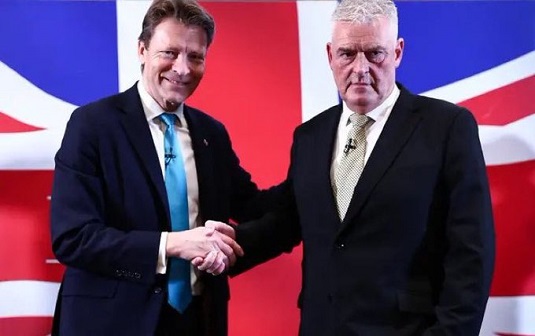
You can't say Lee Anderson looked terribly thrilled as he announced his defection to Reform at a press conference on Monday morning. "All I want is my country back", he whinnied like a broken legged horse. But instead of taking a shot gun to him, his new backers are hoping another foray into grievance politics will boost the "party" into the big time. After all there are rumours that nine other Tory MPs are in defection talks. Of course there are.

Of Anderson, we can confidently say we're on the final page of the chapbook of his career. His performance at the press conference was begrudging and uncomfortable. There was zero enthusiasm, no personality, nor a frisson of charisma. The surliness in friendly interviews that have won him a handful of fans among the far right looked like barely syllabic chuntering in front of the TV cameras. Richard Tice gave every impression he was out taking his pet prole for walkies. The one thing that did provoke actual words was the question asking him whether he would call a by-election. After all, previous floor crossers to Nigel Farage's vehicle - namely Douglas Carswell and Mark Reckless - had the decency and the political courage to call one each when they took up UKIP membership. And Anderson himself has signed an unsuccessful EDM making by-elections compulsory in the event of defections. This time however, he wanted to save time and expense because there's "going to be an election in May." True, soaraway tax give aways in the budget were made to butter up the electorate for a contest soon, but Rishi Sunak would have to call it this Friday if he wants the traditional second-week-in-May slot. Alas, there is a more prosaic explanation for our hero's reticence: Anderson is scared of losing his seat.

In the event of a by-election, Reform would do well to look to Rochdale. They might hope for a Galloway-style result, but in all likelihood Anderson's would share the fate of Simon Danczuk's. For one, the political dynamic is heading away from the radical right. It is a tide that is ebbing, not rolling in. Then there is no Anderson groundswell in Ashfield. He got in because he was the Conservative Party candidate on the back of the 2019 election's Brexit referendum rerun. He might severely erode the Tory vote, but like in so many other Tory seats, a win for Labour is the likeliest outcome, with a strong challenge from the local independents. Anderson knows this as well, and no amount of pretending that red wall seats voted Tory in 2019 because they're bigots will alter this arithmetic. Likewise come the general election, the seat will be between Labour and the independents. Anderson might save his deposit, but he'll have to get used to subsisting on his GB News presenter's salary. Until they have no use for him any more and he spends the next few years earning peanuts from the pantomime circuit of Britain First rallies.

Over the last couple of years, we've had occasion to discuss the rise of Anderson. His move from the right wing of Ashfield Labour Party to the right wing of the Tories was one of the smoothest defections in politics. And that's because the unsubtle racism of Anderson's person is an unwelcome reminder that Labourism's broad church has room for the small-minded and the backward in its congregation, the inescapable complement to an awful history it's rather proud of.

By ditching the Tories for Reform, Anderson has sealed his own demise and it won't be long before he becomes nothing more than an unpleasant memory. Unfortunately, the same cannot be said for those who would come after him. They are there, encouraged and promoted within the bowels of the Labour Party, and when well remunerated if episodic opportunities arise in time, there will be one, two, many Lee Andersons more than happy to walk a mile in his scabby shoes.