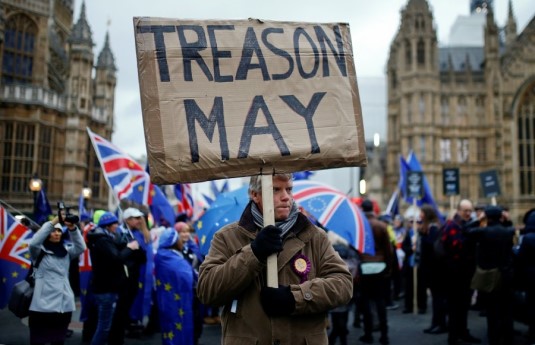
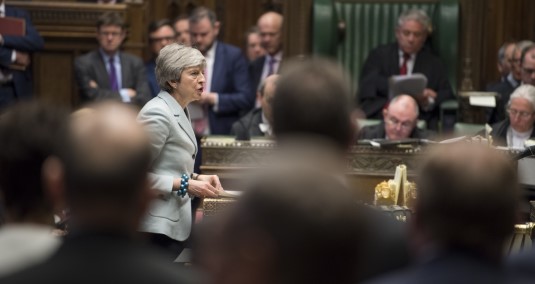
Brexit's not going well, is it? The right wing press give voice to the tortures of the Tory backbenches. Imagine their pain, feel their agony. They achieved their heart's desire, a vote affirming their dream of leaving the European Union. And for the best part of two years, their Prime Minister has strung them along. At the height of her powers in 2016 she declared for a hard Brexit, and the Brexit hardcore squealed with glee. And immediately after the election, Theresa May gave her parliamentary party all the assurances that nothing had changed. Brexit was about "controlling our borders", kicking the European Court of Justice out of UK law, dark blue passports, back off Brussels, and signing new trade deals. These fantasies all appeared within reach and, well, May kiboshed them. Not only does her deal cede a great deal of leverage to the European Union should the UK fall into the backstop arrangements, parliament has repeatedly reminded the ERG that their favoured scenario isn't going to happen. Unless we tip out of the EU this Friday without a deal. After all, accidents do happen. In short, this process May has been repeatedly humiliated by her party, their media, by parliament, and by the EU itself. Yet for all the blows she's taken, she was able to dole out a few jabs of shame in the ERG's direction. They've been made to look like mugs, and they know it. Some have felt chastened and come back to "mummy" - like Shrewsbury's Daniel Kawczynski, and others hold their no deal fetish in a death grip and refusing to deal with realities. Good. May the next Tory leader come from this unrepresentative rump of hard right chumpery. Unrepresentative, yes, but not without a following. There are still a few hundred thousand people who read the Express, the press home of no deal since The Mail went woke. This disgusting rag has tried to keep the pecker of its falling circulation up with the viagra of more racism, more hysteria. If this was aimed at young men Prevent would be all over it like a rash. What it is doing is stirring up not just hate, but betrayal myths, stoking the utterly stupid and reckless notion that everyone apart from Mogg and his mates, UKIP, Farage, and Tommeh are stabbing the nation in the back. Where have we heard that before? Assuming the EU grants the UK an extension which, at the time of writing, looks like it will be up to a year, the process is primed with opportunities to peddle a humiliation narrative. If we're looking at March 2020, the UK is set to be "supervised" at three monthly intervals to check how the process of coming up with a deal acceptable to Westminster. For the likes of the Express, this is fine for basket cases like Greece but definitely not us because, well, Britain. Under May's deal, assuming the impossible for a moment and that it comes back, we have no say over the custom's relationship in the backstop, and so another occasion for humiliation. Because the UK, in the backstop (or for that matter, no deal) would have to negotiate a trade deal from a position of weakness, more humiliation. And if we do arrive at a deal but we overrun the transition period because we can't arrive at a trade deal with the EU, the UK has to pay the EU £1bn/month to stay in that relationship until a new arrangement is arrived at. Even more humiliation. I imagine the concept of national humiliation doesn't mean much for most readers. Except perhaps when your chosen home nation fails badly at the footy, or the UK does miserably at Eurovision. But for others it does, particularly those the Express has had a hand in cultivating and radicalising over the years. Brexit, shorn of its mystical trappings, is the withdrawal of the UK state from a common, cross-national system of regulations and legal obligations. Fed by false and distorted stories by the press, they fall on fertile ground because their experience of life chimes with a fantasy narrative of a world going to hell in a handcart. As Wolfgang Streeck observes, as capitalism seizes up and the world appears more uncertain, more frightening the more some people will reach for trusted anchors that short cut the complexity of the social. this is ideology as a crutch, a coping mechanism. In some countries that is religion, and in others it is nationalism. In the UK, it is Englishness specifically that is the anchor point of hard right Brexit nationalism. To be English is almost like being an ethnicity - it's possible to be Black British or Asian British and even be for Brexit, like a number of sitting Tory MPs, but they can never be English because English is exclusionary. It's something belonging to white people and white people alone. And what does Englishness mean? Reformulated as an identity, it's much easier to grasp than multi-culty Britishness. It's masculine and loud, proud and brash, imperial and royalist, meat eating and beer swilling, an England that isn't all those foreign influences. An essential spark of national continuity running like a white and read cross stitch from the pure bred English past to a land under siege today gives us our line of purest descent. It wasn't for nothing that the EDL was both English and articulated itself as a defence. England and Englishness then is a foundation, a principle of coding the world in the whitest and blackest of terms. As we saw while analysing Trump's support that, contrary to popular belief, were disproportionately well-off and economically secure. The assumption politicians, journos and not a few political and social scientists of equating being poor with economic insecurity and therefore open to far right populist nonsense forgets that those who have property and/or a fixed income, like pensioners, are going to be fearful of losing it. Hence why privileged and propertied layers in any population are more likely to support the party protecting those interests than those who don't. ABC politics. Leave very cannily spoke to these layers, the bedrock of Brexit, by talking up all the markers of insecurity and threat - waves of refugees, migrant workers signing on, money that would be better spent on the NHS, and did so by working a not insignificant proportion of them up into a fever pitch. In so doing, the dire warnings made by remain were masochistically incorporated and transformed into a virtue for leaving. In a world gone soft, the damage of Brexit, especially a no deal Brexit, is something to be embraced to shake things up and give the rising generation a taste of the school of hard knocks. Such adversity would then bring out the best of British (English) by allowing our national character's essential qualities come to the fore and refound a new identity on hard work and sacrifice. These conceits held be people who won't have to do any of the sacrificing or hard work, help explain the near fanaticism and the potency of the potential for national humiliation. Seeing England weakened and begging from scraps from the EU angers on two counts - the shabby treatment of us by the EU (again, long stoked by the right wing press), and the supine and traitorous character of our MPs. Foreigners are going to foreign, but capitulation to this state of affairs is too much. They are colluding in national humiliation, making us a global laughing stock (what happened to Britons never will be slaves?) and frustrating the path to national salvation. If this were just a bunch of harmless idiots, it could be dismissed. Unfortunately, there are links between betrayal mythologies and murder. We saw it with Jo Cox's murder, and we've found these arguments and tropes - including quotes from British columnists and British papers - in the miserable manifestos of spree killers. The danger the far right poses in the UK is not a mass movement of extra parliamentary thuggishness and street fighting, but of the radicalised-but-atomised carrying out acts of individual terror. As the Tory party falters in the polls, it is virtually guaranteed to make a sharp turn to the right after May. Such a move would surely seal their electoral doom but the temptation will be to embrace the discourses of humiliation and betrayal. The consequences of which would be an acceleration of the main-streaming of these beliefs, normalising and naturalising them, and increasing the chances of violent and terroristic consequences.
Brexit doesn't have to suck the life out of everything else. Well, not when there's a brief interregnum in proceedings anyway. And besides, Hellfire - a beloved slice of early 90s nostalgia - is suddenly on point with its narrative of taking wing against a robotic tyrant and its works. Code the evil Super Mech as either Theresa May or the Brussels machinery, Hellfire is a game whose ideological coding can suit everyone! Okay, clumsy segue aside there's absolutely no special reason for a reflection on Hellfire to appear now or at any time, except as writing for writing's sake. Shall we get to it? For those unfamiliar with the 16-bit console wars of almost 30 years ago (sniff), the MegaDrive had its Super Nintendo rival licked on shooters. With the odd notable exception, Sega's machine was overflowing with space-based shooting action. You could put it down to a paucity of original thinking, just as nearly every other game released on Nintendo's eight bit system was a platform game. Or it might have something to do with the more mature audience the MegaDrive/Genesis allegedly catered for. Whatever. During the period just prior to the coming of Final Fight and Street Fighter II the shoot 'em up ruled the arcades, and as the MegaDrive was retailed on the basis of its arcade quality jiggery pokery it made sense for so many games of this kind to make the trip over. Even if the games were quite obscure and barely did any business outside of Japan. Hellfire was one such game. Hitting the arcades in 1989 it made no impact beyond hardcore blaster fans, and didn't attract the attentions of European software houses who would happily convert almost anything and everything to the home micros. I mean, even something as obscure as Atomic Robo Kid got the Commodore 64 treatment. Still, as a Toaplan-developed game it was bound to get a port to Japanese systems, which meant the PC Engine CD and the humble MegaDrive. Quite why Hellfire was selected by Sega of America and Sega Europe to make it out of Japan when so many others didn't is a mystery. Perhaps the rave reviews it got on import, especially by Mean Machines and C&VG, helped. While then, as now, only a minority of the gaming public followed the doings of review outlets, getting acclaim spread awareness among hardcore gaming crowds. And of this Hellfire duly benefited, regularly feted alongside Gynoug as perhaps the best MegaDrive shooter. What's so special? Looking at the screenshots doesn't suggest much. While crisp and functional, the graphics were hardly displays of technical virtuosity like the aforementioned Gynoug, nor up to the standards of Thunderforce IV or Ranger X, which came later. And the plotting of the game was the same as every horizontal shooter from Gradius to your bevies of bullet hells. Formations of enemies swarm onto the screen to be shot down quicker than nuanced discussion of Labour's anti-semitism crisis, and mid-level and end of level is occasioned by some boss entity of varying difficulty. So far, so standard. And yes, there is a suitably rockin' soundtrack to help you along. Where then is Hellfire's secret, the omega point of its praise? This was gameplay divinity divided. You had the gimmick - not the titular Hellfire bomb that launched a beam of unadulterated screaming energy at your foes - but something more valuable. Directional shot. Hitting the B button changed your direction from front to behind, and from there to above and below simultaneously, and thence from all four corners of your ship. A very simple mechanic and one demanding rapid toggling at times, but an obviously useful one other 16-bit shooters tended to avoid. But a mechanic doesn't maketh a game. What does is gameplay. What establishes Hellfire as so beguiling is not just ease of play, but how it sucks you in. The game starts off easy enough with a few simple enemy patterns and an opportunity to get used to using the directional fire. Both the level's bosses also require you take them on by firing up their nooks and crannies. But from the second level on, the difficulty, like all good games, raises a pitch until the end level which, in any other game, would be regarded as a boss rush with sizeable super hard enemies. Yet Hellfire is difficult for the right reasons. There are no unfair deaths, your mistakes are your own. But what does punish is the immediate stripping of your power ups upon reincarnation - not good, but not impossible to claw your way back up to the power league. Hellfire then was well 'ard, and was the sort of challenge hardened gamers craved on the MegaDrive. I remember picking it up on official release when £34.99 was a lot of money, and never beating it. It was only years later after disinterring the MegaDrive and embarking on a chequered career as a sometime retro game collector did I finally manage it without cheating. You see, what got me through the game was something that only comes with age - patience. Taking things slowly, learning from the hundreds of game overs, but not trying to rush through tight corners and tricky situations is the key to completion. That and not getting too many speed power ups (to be fair, that was a lesson I'd learned as a spotty teenager). Hellfire works and continues to stand up as a solid game precisely because it eschewed the showy stuff that might horribly date it. This is uncomplicated challenge, no frills and no messing - just you, a ship, laser beams and an armada of robot and biomechanical villainy to blow to bits. What better distraction is there when the mind craves simplicity?
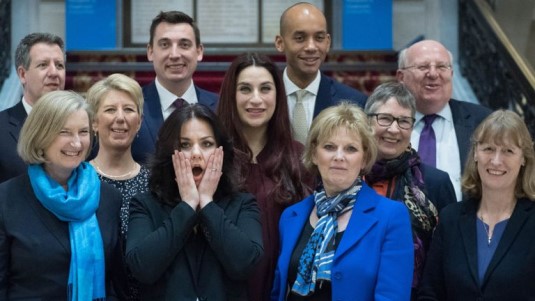
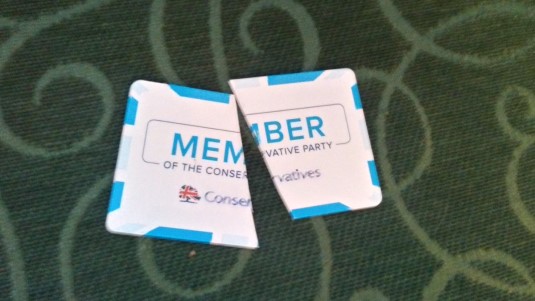
What links the difficulties Dominic Grieve had with his Conservative Association, CHUKa's application to become a proper political party, and the resignation of Nick Boles? It might not be anything. Conversely, it could be everything. You don't need me to tell you mainstream politics is in crisis. Or let me rephrase that, bourgeois politics is in a state of panic. Liberalism as a movement of elites has collapsed, though running continuity remain and retaining access to the media means the illusion hasn't quite broken for them yet. As we have seen, the Labour right have done a good job of marginalising themselves in their scorched earth retreat before the left. And the Tories? Ah, the Tories. They're screwed. In the mountain of analysis about the 2017 general election, it was Labour's polling figures that got the lion's share of discussion. But it is also worth remembering that under Theresa May, the Conservatives got their best popular vote result since 1992, surpassing even the efforts of His Blairness in 1997, and is roughly on a par with what Thatcher got in 1979 and 1987. What happened then, upon which Thatcher relied on during her time, was a split opposition (though some interesting revisionism has recently emerged). May was not so blessed as the bulk of the opposition vote coalesced behind Labour. However, to see the Tories do this well would make a nonsense of any argument they're in long-term decline, surely? Well, no. As argued previously, what the Tories did was pile up votes from declining sections of the voting population. Declining because they are disproportionately older voters, or hail from constituencies that are in their twilight years - such as unionism (in the sectarian sense) in Scotland. This wouldn't ordinarily matter because as older voters pass on they're replaced by younger cohorts. Alas, not any more. Tories and their supporters are starting to realise this, as this delicious tweet from "Shippers" indicates, as well as this (clueless) edited collection. The bad news for them are the breakdown of the conservatising effects of old age, chiefly because Tory policy is not allowing young people to acquire property. And so younger people who, according to various values surveys are socially liberal and economically (neo)liberal, find Corbyn's Labour more congenial to their interests. Wouldn't it be ironic if, in the long-term, Corbyn's policies create the basis for a renewed Toryism decades from now? But this has to be placed in context. The circumstances the Tories find themselves in now is after 60 years of decline in terms of an evaporating organisation, a declining depth and breadth of the Tory voter coalition, the formation of and success (for a while) of UKIP, a viable electoral competitor to the right, and cultural purchase. Like the tendency to global warming, the trend isn't linear. Balmy summers bump along with horrid winters, but the line of direction is clear. The left should be thankful that in Theresa May we have a Prime Minister shaking the Tory party apart with an accelerationist's zeal. If somehow it holds together after May, it is likely the next leader is going to come from the right, and that increases the possibility of their being beholden to the delusions of the Hague/IDS/Howard wilderness years. That is bang on about Europe, promise tax cuts, and demonise refugees and migrant workers - the kind of approach that didn't cut the mustard 15 years ago, and certainly would not now because they're speaking to the hobby horses of a contracting base and not reaching out or offering anything to anyone else. However, in politics what decomposes one day might recompose the next. Consider all those awful leftists Labour threw off under Kinnock and Blair. They disappeared from the scene for a bit only to come roaring back when the window of opportunity opened. By losing three Tories to CHUKa, Nick Boles to independence, and a routine of threats circulating through the hard right press, the Facebook fora and Twitter feeds making centrist(ish) Tories nervous, might the progressive loss of their pro-EU liberal-leaning right so much a casting of seeds that could grow into something new? It's a possibility. As UKIP goes fash, and the Tories go UKIP where are the centrist Tories and their voters going to go? Stick with the party and weather the storms in their unhinged and unrepresentative associations? That's all very well, but what about the voters broadly aligned with this strand of opinion? Are they going to keep ticking the box on automatic pilot? This is where CHUKa might have a future. By-election evidence over the last couple of years has found so-called centre parties - the Liberal Democrats and the recent remain-ultra positioning of the Greens - tend to do better picking up Conservative seats than Labour ones. And as John Major correctly observed on Andrew Marr a week ago, there will always be a space for a centre right party in British politics but that doesn't mean it has to be the Conservative Party. A socially liberal party that opposes itself to old-style conservatism, married to a watered down programme of Corbynism or, if you like, May's one nationism/blue Milibandism (without the racism) could in the medium to long-term pull off the trick. Especially if the Tory party proper continues to flounder in a fetid, bigoted puddle. There are problems getting a new centre right party going though. First is opportunity. The UK might be contesting European elections, and CHUKa have announced they plan on standing. They could pick up a few seats as the debate is bound to be polarised around leave/remain. Who knows, if it's looking good perhaps Chuka or Chris Leslie might place themselves atop a list and ensure some continued half life in the media should a general election arrive and sweep them out of the Commons. That is assuming the elections go ahead. Second is, forgive the pun, momentum. A successful European election campaign would be a good time for any remaining Labour MPs to jump ship, and as the Tories spend the summer swirling about the plug hole, a move to the right could see one, two, well up to a dozen former Cameroons come aboard. Success breeds success, so they say. However, their biggest problem is message. As "something new" and with media hype behind them, they might find a segment of the electorate willing to listen to their wider offering - but if all they have is moaning about the referendum and their "radical programme" as it stands, they're going nowhere. They can have their market liberalism, but if they don't pledge to tackle insecurity, climate change, and resolve to so something about the rising generation's crisis of property they're not going to exploit the Tories' difficulties. Is this a new party of the centre right possible? We're not talking about an over night thing here. First-past-the-post is a formidable, if not prohibitive obstacle for any party starting out. Though not impossible. Labour managed to supplant the Liberals over decades, and it was about 15 years before UKIP became a real threat to the Tory right flank. We like to flatter ourselves into thinking things move faster these days, but for a new centre right party, like CHUKa, to supplant the Tories means prising their coalition apart while annexing the existing withered centre and scooping up Blair-inflected flotsam and jetsam from the Labour right. And that takes time, patience, luck and real political skill - the last of which is in short supply as far as Team CHUKa are presently concerned.
Another round up of new(ish) left wing blogs you say? Why not? If they keep popping up, I'm gonna plug them. Here's what made it into the in tray since February. 1. Jewish Dissident 2. Labour Hub (Twitter) 3. Peach Tree, Pear Tree (Twitter) 4. The Little Leftie (Twitter) 5. Universal Credit Sufferer (Twitter) If you know of any new(ish) blogs, podcasts or YouTube channels that haven't featured before then drop me a line via the comments, email, Facebook, or Twitter. Please note I'm looking for blogs that have started within the last 12 months or thereabouts. The new blog round up appears when I have enough new additions to justify a post!
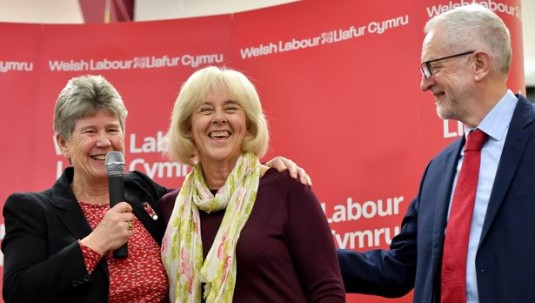
Have the good electors of Newport West sent British politics a message? This is what personages with far more esteem than I have scratched their heads about over the last couple of days. And the unsatisfying answer is ... it doesn't tell us anything we didn't already know. The result, which saw Labour's Ruth Jones retain the seat on a reduced turn out was always the certain outcome. But that hasn't stopped some, such as Sir John Curtice - patron saint of pollsters, from stirring the tea leaves and suggesting the polarisation seen since the 2017 election is coming to an end. Is he right? There are a few things worth noting. By-elections, like European elections, local council elections, and Welsh Assembly elections are second order elections. In other words, contests that don't matter much for the bulk of people because general elections matter more. And they have a point. The writ of central government can run roughshod over every other representative body. Wales might be run by Labour and Scotland by the SNP, but their powers are limited and can be overruled by government. The rows during the Conservative/Liberal Democrat years over funding, and more recently the arguments between Nicola Sturgeon and Theresa May over Brexit are cases in point. Because these elections are perceived not to matter as much, they can be useful barometers for localised or passing issues. By-elections tend to be "flatter" than general elections. i.e. The support for the main parties falls as voters, perceiving now would be a good time to make a protest and register their dissatisfaction, are more likely to vote for third, fourth, or fifth etc. parties. For example, this tends to be the case in local council by-elections as well as parliamentary by-elections. As John Curtice observed on yesterday's Politics Live, the combined vote for the two main parties was 71% - well down on the 82% of the 2017 general election. Lewisham East last year saw the Tory/Labour combined vote at 64%. Stoke Central in 2017, 61%. But Copeland, held on the same day as Stoke's saw a combination of 81%. In other words, very little can be read off from how flat an election is. A further point worth adding is turn out from Labour loyal voters tends to be depressed in second order elections more so than Conservative voters, and those motivated by smaller parties. Why? Older people are more likely to vote, as study after study has shown, they tend to be concerned more about and follow the local issues that come into play for localised elections, and they are disproportionately Tory voters. Therefore nearly every by-election confers an advantage on the Conservative campaign that Labour has to make up for. It's therefore premature to speculate as to whether Newport West is heralding the end of polarisation when the dynamics of the election were different to a general election. Remember, Labour's own local election results were pretty poor in 2017 - one month before the party served up the biggest electoral upset since 1945. What matters is the politics of a general election, and the next one - like the last one - will be a pretty stark choice between two parties with very different programmes of government. That was not as clear in 2015, and was even less so in 2010 and 2005. The dynamics of polarisation have not gone away. Given the spread of votes away from Labour and the Tories in Newport West, can we glean anything? As John Curtice observed pro-referendum parties managed a combined 17% of the vote. And right there is your problem, combined. This is arrived at by totting up Plaid Cymru, the Greens and Liberal Democrats - each of which has a base independent of its EU positioning. One of the pretenders to the centre party crown, 'Renew', managed 3.7 per cent. Not bad for a first outing of a new party, but not great considering the salience of the issue it champions. However, division like this between the pro-referendum camp is not going to translate into success in the tougher battle of a general election and is super vulnerable to Labour. As we know, a confirmatory referendum is a position Jeremy Corbyn and Keir Starmer are negotiating in talks with the Prime Minister. Bad news for UKIP too and anyone deluded enough to think no deal = electoral success for the Tories. With wall-to-wall coverage of Brexit, with the right wing press screaming blue murder (and getting close to advocating it), UKIP managed eight-and-a-half per cent. Meanwhile the rebranded, reincarnated and pro-Brexit SDP managed less than one per cent, as did pro-Brexit fash candidates for For Britain and the Democrats and Veterans. Not quite the ground swell of angry leave voters we were expecting, especially in a seat that voted leave in the referendum. How to explain? UKIP certainly isn't what it used to be and is now virtually a legacy party drawing oxygen from the folk memory of Nigel Farage. Now he's interested in his new party for the lead up to the putative European elections, the days are numbered for the kippers. Though it will be interesting to see how the Brexit Party does as many UKIP voters won't be aware of his departure. Seeing the two cancel each other out while taking votes from the Tories will sure be fun. In sum, the by-election shows Labour and the Tories are still the main choice and the political situation outside of them is chaotic and fractious. What else is new?
Would you take Theresa May in good faith? Fool me once, shame on you, fool me twice shame on me and all that. Yet there hasn't been a peace time Tory Prime Minister in a predicament quite as bad as hers. Pivot to no deal? The party is as good as dead to anyone under the age of 50. Secure a deal with a customs union attached? Major ructions, to the point of MPs defecting to Nigel Farage's bandwagon (or worse, UKIP) or resigning the whip and joining the benches opposite. No wonder May clung to her deal like a Winchester in the hands of Charlton Heston. It was always unlikely to get through the Commons, but it was the best chance she had of holding her party together. May's career is sat in the anteroom of expiration, but given her party-centred approach to Brexit what could she gain from holding out the hand of conciliation to Jeremy Corbyn? By all appearances and reactions, not a lot. MPs have spent two days calling her every name under the sun. IDS fulminating with a mouthful of feathers should be the only way this odious oaf is portrayed by television. But also check out the state of the twittering and twattering about 'Marxism'. You'd be forgiven for thinking May's diabolism had conjured forth Stalin's shade and beckoned him to gulag the government benches. Yet for all the froth and noise, nothing has happened. No MP has followed Nick Boles across the floor. Instead it appears another day of negotiations - dubbed "detailed and productive" by Downing Street - have come to pass without so much as a ministerial resignation. One assumes the position being put by Jeremy in these meetings began with that voted down in last week's initial round of indicative votes. i.e. Customs union + single market access + "dynamic alignment" with EU rules. The presence of Keir Starmer at today's talks is a cause for cautious optimism for those still holding out for a second referendum. Nevertheless, given May's stubbornness and rigidity it would be naive for to expect her, despite the desperate straits, to go for this. At a push she might countenance Ken Clarke's all-UK customs union approach (thereby depriving her successor of globe trotting PR opportunities). Taking the pain of a possible split now might limit the generations-long damage the Tories are risking, reasoning that any doable deal is better than no deal as far as future prospects are concerned. However, hoping May would sign up for a referendum is surely phony pony territory. Corbyn has to negotiate the class politics of this too. As argued previously, for the bulk of the coalition of 2017 Labour voters Brexit/remain does not possess the same gluey properties as Brexit/leave does for Tory voters. Seeing Jeremy Corbyn deliver Brexit with Theresa May isn't good optics, as the politicos say. This has the potential to hive off some voters, but by the same token Tinge 'n' CHUK are well positioned to attract pro-European Tory voters too. Squaring the circle of Labour's conference policy which is simultaneously pro-Brexit and pro-remain (via the second referendum) requires some adroit negotiating. Separating out the two parts of Labour's position might be one way it is done: a vote for whatever Brexit deal emerges, followed by a vote for a confirmatory referendum follow-up. Presumably May would consent to whip the Tories for the first which, with Labour votes, would get over the line. But would not for the referendum vote, leading to it falling. Cynical? Yes. But does it meet Labour's positioning? Yes. If May is not acting in good faith, then the discussions that have rippled around social media decrying her invitation to talks as a trap are worth paying attention to. If May's game is stringing Labour along to then cancel negotiations and attacking them for betraying Brexit or some such, who will lap that up? Last Friday she goaded Labour into voting against Brexit on what would have been Brexit day. The result was zero effect in real world politics. This would bring us back to the impasse and, perhaps, a final go at getting the thrice-thrashed deal through with no deal looming, or the possibility of a long delay and the convening of a set of European elections the Tories are desperate to avoid. It seems May's hope is a deal that Labour can support and take a hit for, knowing members and voters are disproportionately remain, will also drag them down with the Tories. This would make it more difficult for Labour to win a majority and make it more likely Corbynism gets strangled by the mess of minority government compromises. Unfortunately, if the party doesn't step through the mess carefully, May's parting legacy to British politics could be the thwarting of the left's ambitions.
Banter and Brexit aren't two things that often go together, but wouldn't it be one of life's great ironies if Theresa May's negotiated Brexit with Jeremy Corbyn and Labour ends up with the Nick Boles Norway option that preserves freedom of movement? Speaking of which, here's the latest Politics Theory Other episode. In this one Alex interviews Bridget Anderson on the case against borders, what is and isn't a migrant, and much else besides. As ever the conversation is through-provoking and interesting. Give it a listen! And, as always, if you've got a few quid to spare please help support new left media.
Thinking about politics in general, a useful distinction is made in Alexander Gallas's analysis of Thatcherism by identifying economic order politics and class politics. This analytical separation is useful for thinking about the different orientations of different governments at different times, and in Gallas's hands he is able to consider the accents and emphases of the preparation, war of movement, and consolidation of the Thatcherite project. This has some use in thinking about the Commons vote on Monday evening. Earlier the Speaker selected four options for the indicative votes. These were a Brexit deal based on a customs union (Ken Clarke's option), customs union + single market access + freedom of movement (the Nick Boles option), a confirmatory referendum (Peter Kyle's option), and revoking Article 50 (in the event of no deal - sponsored by Joanna Cherry). Labour's preference, which was defeated last week, did not make the Speaker's cut. However, unlike Theresa May both Labour and the SNP have shown some flexibility. Labour whipped for the first three alternatives to May's deal, while the SNP - who remain opposed to Brexit and are backing the Cherry motion - reluctantly backed Boles's "Norway option". In the end, did any of it matter? Clarke's custom union lost 273-276, Boles 261-282, second referendum 280-292, and revoke 191-292. Tighter margins for three of the options than anything May has so far managed but not good enough. If May was to soften her stance and go down the Clarke or Boles route, then we might be get there. Alas, her whip won't be having a word in Boles's shell-like again. Attacking his party for an inability to compromise he resigned the whip on the spot - something the Commons hasn't seen for some years. If you are of the view that Brexit should be delivered, but no deal and May's deal are completely unacceptable - up to and including the option of a second referendum to stop them - and a general election isn't available, then your options are pretty much limited to the least worst sort, as outlined in the options put to the Commons. In the name of straight talking, honest politics, from the standpoint of economic management all these Brexits put the UK at a disadvantage compared with what it enjoys now as an EU member, but Clarke's option and Boles's Norway are not as damaging. It's not the Year Zero nonsense beloved of the hard Brexiteers, and maintains as much continuity with present arrangements as possible. Lesser evil literally means less evil, after all. Labour's priority of a jobs first Brexit is best delivered in this scenario, provided it is interpreted in a dented shield kind of way and not some fantastical land-of-milk-and-honey idiocy. This is the best way to protect livelihoods and look after the interests of our people. What about the class politics? In this Labour have played a blinder on two counts. A customs union Brexit goes some way to keeping the PLP together as a coherent voting bloc. Boles and Clarke are species of Brexit, and can be sold as such to the wider public - only the ERG, UKIP, Farage and Kate Hoey are likely to object, and the minutiae is the province of a comparative minority. Crucially, it keeps the majority of Labour leavers on side. Meanwhile, though whipping for a confirmatory referendum increased the chances of Labour's hard remain crew following the customs union line on a quid pro quo basis, this wasn't necessarily the case for Labour leaver MPs. But it does do is helps keep onside those voters who went for Labour in 2017 in part thanks to its softer Brexit stance. There might not ever be a majority for another referendum, as Clarke pointed out in his point of order following the vote, but Labour at least can show it tried. What does this amount to? Labour's bloc is likely emerging intact from this tedious business. It's perhaps worth noting the SNP made a similar calculation, wanting to avoid the exposure of being unreasoning remain ultras when they can contribute to an opportunity of significantly softening Brexit. The second, more interesting dimension to class politics is if you do it well, you disorganise your opponents in the process. The reason May has clung so desperately to her deal while offering zero concessions and pretending as if the referendum wasn't a close run thing is because she has her own class politics to worry about. Any kind of customs union-based Brexit is anathema to the hard Brexiteers, not least because it undermines their sectional interests and blows up their decadent time wasting fantasies. On the other hand, for all the soft soaping of a hard exit we know it's going to be damaging, and it's the Tories who will pay the political price. Polling is showing an increased fracturing of their voter coalition and their long-term decline is sure to accelerate. Even if they keep it together and avoid a split, there's no new force on the political horizon they can intersect with that can conceivably award them a majority now, never mind after the incompetent shit show of their Brexit. May now has three options now once her deal fails again. Soften her stance, and risk a split. Go for no deal with all the damage that would cause, or perhaps the only option that could unify her party - a general election. But at this stage the chances of enough Tories voting to dissolve this parliament, and potentially their careers, is something she cannot count on. Watching this all play out on television and social media is painful, but nowhere near the agonies the fates have bestowed on the Tory party.
Wow, what a month. Brexit didn't happen, and the Tories are on the verge of a historic schism. All that said, what were the most popular posts in March? 1. Labour's Crisis of Recomposition 2. Labour's Crisis of Decomposition 3. The Far Right, the Left, and Anti-Semitism 4. Institutional Anti-Semitism and Factional Struggle 5. Chuka Umunna's Honest Politics Brexit is rending the Tory apart, but still people's appetites for commentary on the Labour Party and its doings and surrounds encompass the rankings. Perhaps there other reasons why people don't write as much about the Tory party. Still, it's a big step up from last month where everything to do with the carcass of liberalism and centrism pulled in the numbers. What then should get a second look from you folks? I'm going for two. March also saw this blog pass the 3,000 post milestone, so here's the commemorative piece. If you're new(ish) to the blog there's stuff listed there consisting of the highlights, if such a term could ever be applied to this outpourings of this place, from the last three years. And while I'm on a nostalgic tip, there was another anniversary too: 10 years on Twitter dot com. If you're interested in an overview of how it has changed, then this is for you.