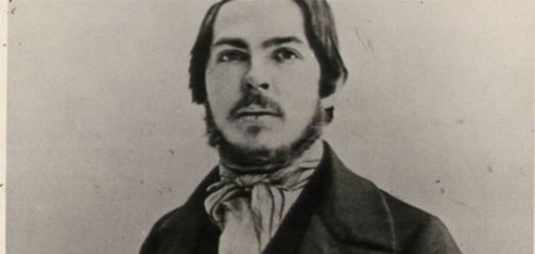
Writing in another time about disputes between official communism vs its mercurial Maoist dissenters, the Italian Marxist philosopher and philologist Sebastiano Timpanaro wrote "Materialism ... means respect for the truth, refusal to substitute moralistic pseudo-explanations of disagreements and political conflicts for political and social explanations" (On Materialism 1975, p.26). Timpanaro would surely have found the dominant explanations for Brexit, for Corbynism, and for what's happening to establishment politics across the Western world typical of the moralism he condemned. Timpanaro is also something of an obscure figure in Marxism these days. And that is a bit of a shame, but it probably has something to do with the direction the Marxist tradition has travelled. You see, Engels and a defence of Engels figures prominently in his work. Unfortunately, Marxism in the academy and in wider left culture have a tendency to regard Engels as a bit of a bad 'un, as someone who ended up forcing the material world into a stultifying philosophy of nature. The sins of mechanism, of a clunky, vulgar materialism was the negative legacy he bequeathed the political and theoretical tradition he co-founded. So the story goes. Nevertheless, all Marxists would agree that only by being resolutely materialist can we understand the social world. We are in the change business and so we have to have an idea about the wheres, whats and whys. Unfortunately, the disuse into which Engels has fallen is a symptom of a flight from a properly materialist approach and partly explains why Marxism became old hat in the 1990s. When you're having a hard time getting to grips with things, and the pomo new kids appeared to make a better fist of it, you can understand why. Writing in the aftermath of the French May events and the surge of struggle in Italy at the end of the 1960s, Timpanaro argued that too much of Marxism, like bourgeois thought, had become caught up in epistemology as opposed to ontology. Or, to render it in plainer English, it was now more concerned with how we know things vs being/existence in the world (see Althusser and his theory of theoretical practice, for instance). In his essay 'Considerations on Materialism', Timpanaro argues that philosophical struggle within bourgeois culture is between two families of idealism (idealism, ultimately, being the assumption the world is driven and determined by thought or figures of thought - religion, conspiracy theory, Hegel's philosophy of history are all examples). The first, which Timpanaro refers to as 'empirio-criticist', or the reduction of knowledge to pure experience, is better known to us as pragmatism and is the dominant form of bourgeois thought. We can see it today in the fetishisation of "what works", of so-called evidence-based policy making in which politics is reduced to a managerial exercise, of the beneficiaries of neoliberalism disputing the existence of neoliberalism with a straight face are all examples. Subordinate to and sometimes opposed to it is historicist and humanist idealism. This emphasises the otherworldly or the transcendent capacities of human beings to overcome their surroundings, and we find it in the celebration of entrepreneurs, the great men of history, the nauseating ideologies of meritocracy, and much else besides. Despite the uses to which idealism is put, it appears to have a positive, creative quality: both varieties emphasise agency, of the preternatural powers of the subject, of the thinking mind, to do things. I can choose to be a rippling Adonis if I put my mind to it. I can affect the course of history by debating and convincing people of the rightness of my arguments, I can make the right choices and work hard to become the sort of capitalist politicians kowtow to, and so on. In different ways that are fundamentally the same, the pragmatic and the spiritual maintain the view that qualities of thought are independent of and can transcend the social and the natural world. "I think therefore I am" as Descartes put it; the subject defines what is possible, we float freely and unencumbered, our identities are an intrinsic property of ourselves, and we confront the world as an object external to our subjectivity, but in a relation in which we are primary. Hence why questions of epistemology are central to idealist thinking. Epistemology can be read as an extension of Cartesian concerns (if not conceits). By way of contrast, materialism turns this on its head. As Timpanaro puts it:
Cognitively ... the materialist maintains that experience cannot be reduced either to a production of reality by a subject ... or a reciprocal implication of subject and object. We cannot, in other words, deny or evade the element of passivity in experience: the external situation which we do not create but which impresses itself on us. Nor can we in any way absorb the external datum by making it a more more negative moment in the activity of the subject, or by making both the subject and the object mere moments, distinguishable only in abstraction, of a single affective reality constituted by experience (p.34)
Therefore the relation of materialism to idealism is hostile and necessarily polemical. Because idealism reduces philosophy and theory to matters of epistemology, it acts as an obstacle to truly knowing the world because it denies passivity. This "passivity", for Timpanaro, refers to the irreducible character of the material. Humans, for example, emerged at a certain point in time thanks to evolutionary processes independent of us and that we have only recently become conscious of. Human societies for the majority of our history have waxed and waned with the rhythms of climate, natural abundance and scarcity, and occasionally disasters. In each of these, societies were ultimately passive. The rains don't come, you are forced to move on. The rains do come and enough food is produced to remain for a decent length of time. The earth shakes, volcanoes erupt, and the seas swamp the land, sweeping whole societies into the archaeological record. The world, its movements and events simply present themselves, and the people and cultures affected either adapted, migrated elsewhere, or died. The refusal to acknowledge passivity then is to deny the manifold ways in which nature impinges on, conditions and configures the social. It is to set up a dualism, an opposition and ontological separation of the natural world from the human world when in fact both exist in the same material world. For Timpanaro this is why Engels is important because he understood Marxist materialism to be fundamentally monist. However, this has seen Engels cast as some kind of mechanical materialist because of his insistence that social and natural phenomena cohabit the same ontological plain. Because Engels was interested in nature, as evinced by his later Dialectics of Nature, and on its primacy there is a tendency to interpret passivity literally, and understand conditioning and determination in very strict, cause/effect terms. As far as Timpanaro was concerned, because the natural world was/is Darwinist did not mean the social world was the same - though Engels and Marx both understood how the realities of class struggle in capitalist societies might appear that way. Nevertheless, over the years commentators have tried to drive a wedge where no division existed between the two. Marx understood that despite the primacy of the material, our relationship was always mediated by labour. Our experience of living and reproducing ourselves as biological beings is always conditioned by what we have to do to do just that, whether we are a hunter/gatherer band in an area rich in vegetation and game, have to work to earn a wage to pay our way, or poke around the irradiated ruins for unopened crisp packets in post-apocalyptic Sheffield. Somehow, despite writing an unfinished fragment entitled 'The Part Played by Labour in the Transition from Ape to Man', in which Engels hypothesised that the growth of our brains, our evolution as a species was a consequence of our labouring to meet and overcome the challenges thrown at us by the natural environment, and in Anti-Duhring defining freedom in terms of the consciousness of necessity (passivity), these positions are supposed to be at odds with Marx. Instead, as Timpanaro rightly observes, what they demonstrate is a consistency of approach between the two. Philosophical debates are all very well, but why is this important? Why should we care? Timpanaro argues passivity is politically crucial. Approaches fetishising epistemology and therefore privileging activity and agency denigrates the material world and pretends anything is possible all of the time. Marxist materialism is fundamentally opposed to this. Activists informed by Marxism try and merge theory with practice, of analysing and understanding the material world to inform our activity in that self-same world in order to overcome it. How do we get from here to there without understanding the shape and dynamics of our societies, of who has a stake in pushing capitalism to its limits and beyond and those whose interests are anchored in the status quo? In short, we don't. Indeed, reasserting monist, Marxist materialism has acquired some political urgency. Capitalism is in crisis, the legitimacy of its ruling class is eroding, politics is polarising, and the character of struggle changing. It's not that nobody is tracking these developments and putting Marxism to work: plenty are. The difficulty is this remains the property of a small minority. Political education, or more properly the inculcation of politicised critical thinking has to compete with conspiracy theory, Fabianism, old labourism, new labourism, liberalism, dogmatism and all the rest. This isn't to substitute Engelsian monism for a pessimistic moan-ism, but acknowledging the passivity of our own position so we can think about and work toward overcoming it.
I've become appreciative of the good works Novara Media are doing. But they do need an injection of cash to not just keep the operation going, but to expand it. A left wing media shouldn't be happy just reporting things, but strive to explain what's happening and seek to drive the political agenda itself. This is the ambition Novara are trying to live up to, and they're asking would-be subscribers to give up an hour's wage or salary per month to help fund them. Whatever you can give will be gratefully received. Here's their appeal video. Please visit the donation page and give them a hand.
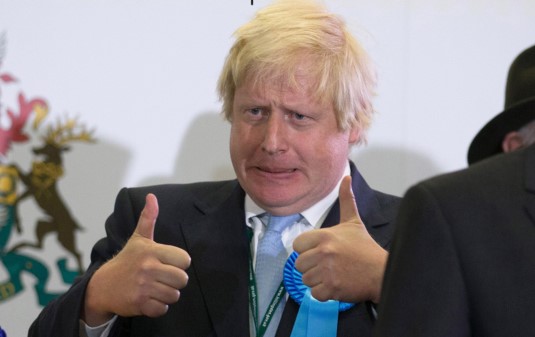
As claims making goes, accusing Theresa May of "wrapping a suicide vest around the British constitution and handing the detonator to Michel Barnier" is strong stuff. Then again, in a political economy of, um, politics in which there is a lot happening, you have to do something really attention seeking to command the spotlight for more than five minutes. Even if you're a favoured Westminster personality accustomed to bathing in the media glow. Well, putting his criticism of May's Brexit plan in such crass terms ensured Boris Johnson got the headlines he wanted. What is more interesting is the reaction, which we haven't hitherto seen when he's indulged similar stunts in the past. Tom Tugendhat responded with a description of the scene of an actual suicide bombing while he was on tour in Afghanistan, saying "some need to grow up". More vituperative were Alan Duncan's words: "For Boris to say that the PM’s view is like that of a suicide bomber is too much. This marks one of the most disgusting moments in modern British politics. I’m sorry, but this is the political end of Boris Johnson. If it isn’t now, I will make sure it is later. #neverfittogovern". The Tories have received frequent criticisms here for putting their short-term interests before all else, including the class interests their party articulates and enforces. Is this a case of Johnson jeopardising his medium and long-term leadership prospects for a few talking points on Andrew Marr? It is worth remembering the Tories are a thoroughly decadent outfit. This isn't a moral condemnation, though immorality clings to them like a reeking miasma. It's an observation. As Marx wrote in the Manifesto, the state is a committee for managing the common affairs of the bourgeoisie. This is because as a class, business is internally fractured by their competition with one another for markets. Yet they retain interests in common, such as the maintenance of the wage relation, ensuring the value of labour doesn't get too high, an educated, healthy and subservient workforce, and so on. The state's business is ultimately the management of populations so the social arrangements of which it is part do not face an existential challenge and this does, typically, involve compromises with rising strata to try and incorporate and accommodate as many of their interests and aspirations as possible. The Conservative Party for its part, despite its reputation as the natural party of business actually isn't, if you take business and interpret it in neutral, technical terms of economic development and employment. This is secondary to the role proper of the Tories: the prosecution of class struggle on behalf of the class interests it champions. Now, because business is internally divided there is never a straight correspondence between the collective interests of the class as a whole and the policies of their party. Not least become some bourgeois interests have, historically, also found a home in the other parties. Yes, including Labour. This means Tory positions constantly shift and change as alignments and alliances are made and unmade in the drawing rooms, the secret members' clubs, the boardrooms, the garden parties and dinner gatherings, the association meetings and industry-wide lobbies, and the hundreds of other places where they talk and plot. This means at times one or two sections of capital get the upper hand and we see the party push interests that are sectional instead of serving the general good. Thatcherism is just one example of sectional triumphalism we can take from the party's history, but one that is pertinent to the situation the Tories find themselves in today. Elected as the old post-war consensus collapsed into crisis, in her view the preservation and future prosperity of Britain depended on attacking the organised working class, and imposing labour discipline on a group of upstarts asking for a good hiding. Her chosen method was to privatise or close down as much state owned industry as possible to disorganise and weaken the wider labour movement, while preparing for a set piece confrontation with the miners. In addition to the hardship and misery this caused, it would also - and did - mean letting whole sections of industry go the wall. That is thousands of businesses and a whole section of capital, which is indeed what happened. Manufacturing collapsed, and they found their traditional party turned a tin ear to their concerns. What enabled this to happen was the removal of patrician, 'one nation' Tories from key positions and, as the Thatcher years wore on, their total side-lining and replacement by pugnacious, self-identifying 'self-made' Tories. These were petit bourgeois Tories made good, a nouveau rich unencumbered by ties with the big manufacturing concerns of the post-war years. The old bourgeois types couldn't carry the sort of reaction from above the Thatcher governments presented because they were compromised by formal and informal webs of allegiances, chumminess and business interests. In effect, small, "enterprising" capital did what big capital was unable and unwilling to do. An instance of Trotsky's theory of permanent revolution with petit bourgeois characteristics, you might say. The result? A successful campaign against the labour movement, but an elite coalition lop sided toward other sections of capital - finance (the city), landlords, and (immaterial) labour intensive sectors like hospitality, retail etc. The only manufacturing capital the Tories remained totally on board with was aerospace and arms. This imbalance wasn't so bad as long as the Tories had a mass base feeding into the party, but its decline became sharp under Thatcher and has dwindled ever since. This was crucial because it provided ballast vis a vis the pull of imbalanced elites at the top. Then came 1997. Nothing could have won that election for the Tories, not even a Labour leader gracing the Cenotaph wearing a donkey jacket. Yet while New Labour proved that Thatcherism was hegemonic when it came to it shared first preference for markets, for regulating labour markets, and privileging finance over making stuff, Blair did render the cause of socialism a valuable service. Yes, you read that right. In as far as he theorised the New Labour project, Blair lamented the splitting of the forces of radicalism, i.e. Labour and the old Liberal Party, at the beginning of the 20th century. New Labour was the inheritor of this, in his view, and he desired it to become the favoured party of government - hence the continual placating of capital and disdain for labour all throughout his (and Gordon Brown's) tenure. Bad news then for labour movement recovery, but bad for the Tories too because it deepened the fracturing of British capital. That is while in their weakened state some capital - the most backward and socially useless sections as it happened - stuck with them, the bulk threw their lot in with Blairism. That is until the crash came along. Gordon Brown saved their system, and they demonstrated their gratitude by abandoning him for Dave's shiny, socially liberal Toryism. Nevertheless the damage was done, Blair had driven a wedge into the organic relationship between that party and its class. The relationship of the latter to the former became more mercenary, conditional, detached and disengaged. And with disastrous consequences. During the Dave years the shrivelling of the Tories at the top and the bottom started catching up with it. For all Osborne's talk of the long-term economic plan, Dave's liberal Toryism amounted to a doubling down on the Thatcherite settlement in the hope that somehow the hidden hand would become a magic hand and allow the country to bounce back from its 2008 cardiac arrest. In practice we saw more privatisation, a naked assault on the poorest, more tax cuts for the rich, mushrooming foodbank use, more homelessness, a deeply dysfunctional property market and an inauguration of a permanent, highly casualised, low paid, and precarious work force as a significant constituency of workers. Truly a shameful record, even by Tory standards. This was the outcome of the Tories ties to finance as well as the most backward sections of British capital - Osborne's budgets ensured there were plenty of opportunities for profiteering, plenty of opportunities to employ cheap, disorganised labour. This imbalance at the top was matched by imbalance below - the bleeding of the associations left them largely in the hands of the right, which wasn't interrupted by the loss of thousands of activists to UKIP in the wake of the same-sex marriage controversy. In effect, the party input, the elite input and, of course, the press input steered Dave well away from where most of his people were, manifesting in incredibly short-termist policies and, notoriously, the concession of the European Union referendum. It was the diminution of a whole class approach that led Dave down the alley of privileging short-term party interests, the partial disarticulation of the Tories meant the country became a gambling chip in a series of increasingly reckless bets. As Theresa May was fond of saying in the 2017 general election, nothing has changed. Despite her (initial) one nation rhetoric she has proved as equally decadent and useless. Brexit has exacerbated the Tories' difficulties, but even the correspondence Dave retained with finance and labour intensive business has deserted May. While some sections of capital look on with alienated horror at the madness engulfing their party, others are desperately trying to reverse or water down Brexit. Some are concerned with saving their own skins and looking at moving operations oversea. Some are even accommodating themselves to a Corbyn government. In the Tories proper, continuity remain has a very tenuous grasp through the meagre numbers remain MPs can muster. Finance and their backward bedfellows are now aligned with the hard right European Research Group - the prospect of a low waged, anti-union tax haven off the shore of the world's largest economy appeals to them. Yet even these whose interests so recently mastered the Tories correspond to a rump of about 50 or 60 MPs. The alienation of UK capital-in-general, the dying membership, the shock loss of their majority, and the splintering of the parliamentary party around the petty ambitions of this or that cabinet minister and backbencher, this compounds the dealignment of the Tories from their ruling class roots. Instead, with May we see a weird form of Bonapartism in her party. Rather than contending factions cancelling each other out and the administration in the middle rising to power from a position of strength, May's authority - such as it is - derives from the fact none of the competing factions want her job. Not even Boris Johnson. Well, right now at least. This means each are more or less free floating, buffeted by inner party intrigues and the occasional blast from the Tory party editorial offices in the media. It also condemns the Brexit negotiations to their being driven by the perceived needs of party management. Boris Johnson, like May, like Dave, is an embodiment of Tory crisis. But, from his point of view, his strategy of saying outrageous things and being racist does have the virtue of realigning the party's class compass. To win he needs to gobble up the ERG vote, who are disproportionately represented in but are by no means a majority of members, re-absorb the UKIP vote that, in his view, May's Chequers compromise gave away. His Brexit is one in which the sectional interests Dave championed are hegemonic. Unfortunately for Johnson, what's left of the membership are not behind him - only 35% according to the recent Conservative Home members' poll. His emerging strategy also has a real snag. Just as Blair reasoned that Labour could move to the right because its traditional voters have nowhere to go, Johnson is assuming that once his feet are under the Downing Street table some point after Brexit is done that his voter coalition will stick together. There is a possibility, albeit an outside one that centre leaning Tories could decamp to form their own party, and with them could go the layer of occasional, liberal-leaning Tory voters who find his faux bonhomie and racism less than congenial. Especially if the LibDems get their act together and start to realise there's greater profits to be had from targeting the Tories. In other words, by adopting a deliberately reactionary politics because it suits his ambitions he's ceding ground all over the place, gifting space to the other parties to try and tie capital into episodic alliances of convenience. And this is assuming Johnson would be able to get on the leadership ballot paper in the first place. It's difficult to see how the Tories can extricate themselves from this mess, as it's a crisis like no other it has faced in its long history. To survive and thrive as a going concern, it needs to re-establish its relationship with capital as a whole, draw deep from that one nation well and give significant numbers of voters a stake in the wealth of the nation, and become a more inclusive, moderate and socially liberal outfit. This requires much more than a lick of paint and requires demands work and, yes, struggle. The odd purge wouldn't go amiss either. When you look around the Tory benches, can you see anyone who's up to this task?
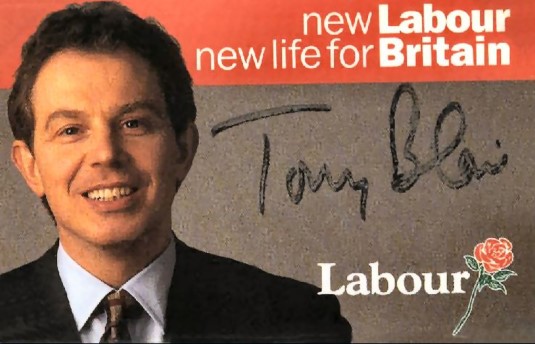
The world is a complicated place, so pity those who do not possess the tools to understand it. That Tony Blair for instance is one of many from the politics of yesteryear having a hard time adjusting to our polarised times. As you've probably heard, in conversation with Nick Robinson he cast doubt on whether moderates (sic) could ever win back the Labour Party from the left. With politics dominated by Jeremy Corbyn's Labour and (he assumes) a Boris Johnson Tory party, he said "I just don't believe people will find that, in the country as a whole, an acceptable choice. Something will fill that vacuum." This is because most people are "socially liberal" and believe in a "a strong private enterprise sector alongside a state that is capable of helping people". If Tony paid a bit more attention to politics, he might discover Labour has scooped up the lion share of the socially liberals while those who are wedded to his wonky rendering of pro-business, share-holding and home-owning constituencies, they are gathered about the Tories. Silly Tony. Nevertheless, he does ask an interesting question. Can the Labour right make a comeback? To answer that question we need to briefly look upon Labour Party history. It's true enough that Corbynism represents a break with the past because never in the party's history has the left been so dominant. In the intervals when pacifist leftism and Keynesian revanchism led the party, the right still held the whip hand in the trade union movement and the party apparat. By way of contrast, the left now has the leadership, the membership, the unions, and is slowly working its way through the machinery of party administration. Blairism at its imperial height had the PLP and council groups, the bureaucracy, and had a very unsure grip on the unions (who tended to accept Blair because he looked like an election winner) and the membership (ditto). They don't like to admit it, but a set of contingent circumstances allowed Blairism to arise. The most germane of which were the factional battles of the 1980s that saw the right win and the Labour left reduced to a rump, the decline of the labour movement as a weighty force in wider society, and the overturning of the post-war settlement. All three compounded, resonated with and drew into alignment certain milieux, certain union general secretaries, and certain occupational groupings. The long and short of it was the severe weakening of the left and the labour movement under the impact of Thatcher's attacks, particularly the defeat of the miners and later on the Wapping dispute, which profoundly disoriented and stunned militant trade unionists, driving many out of politics altogether. Yet the defeat wasn't just felt by the left, it accelerated the decline of the labour movement - a consequence we've yet to recover from. This meant as unions of the right, left and centre merged, diminished and faded so their influence in the Labour party fell. The pathways from the the shop floor and union office closed down, and as lay officials and MPs weren't coming forward in as greater number the sorts of links with union bureaucracies that were once crucial to the running of the party were not getting incorporated into the apparatus of rule underpinning the party leadership. Likewise, as the unions declined so Kinnock and later Blair went out of their way to recruit nice, shiny middle class people. This was about putting distance between Labour and its horny handed son of toil image as much as recruiting a new base for their so-called modernisation project. Sure, the middle class had been part of the party from the beginning but the decline of the labour movement allowed it to become even more dominant. One of the most obvious consequences was the party's moving from a canter to a gallop to the right in the 1990s. Without a political base in the communities heavily hit by Thatcherism, politics for this coterie - Blair included - was less about articulating the interests of wage earners and more about adapting to the political landscape divined by the front pages of the mass market tabloids. Therefore "what works", a mantra beloved of the Labour right, is never a pragmatic consideration: it is always an abrogation, a fetishisation of their inability or unwillingness to provide political leadership. They accommodated Thatcherism and once in office they deepened the reach of the market and capital further, because it was the easy thing to do. Blairism then would not have been possible without the defeats of the 1980s. However, the same alignment of forces of which it is a product cannot come around again. As we have seen, the current wave of radicalism is largely confined to the party. Sure, there are lots of things going on below the radar and public debate has shifted so feminism, alternative economics, socialism and, gasp, even communism have re-entered the mainstream. Then again, so has racism, misogyny, xenophobia and fascism. But the unions have not enjoyed an up tick of rank-and-file activity nor a flood of new recruits. Indeed, contrary to how the Labour left thought its path to winning was the long, hard slog of gradual movement building on a constituency-by-constituency basis, the 2015 leadership victory was as sudden as it was unexpected. It appeared to bypass developments in the unions, though trade unionists were an important component of the Corbyn voter coalition. This was demonstrated in the failed Corbyn coup, which collapsed because the parliamentary party only organised among themselves and didn't bother to even try and get union leaders on side. To have stood a chance of succeeding, they needed to be in the plotters' pockets. That said, drawing them into Blairist PLP intrigues wasn't possible either. Weakened as they were, under Blair's governments unions in general began taking a turn to the left. This was a response to the arrogant and high-handed manner with with New Labour approached unions, more or less openly regarding them as embarrassing relatives, and because of repeated attacks on workers' living standards, particularly around privatisation and cuts to public services. So when the mood of workers who actively engaged in their unions shifted, so did the political colouration of their leaderships. Therefore not only were they ill-disposed toward MPs who wouldn't give them time of day otherwise, it would have been career suicide for any union general secretary to back them. The unions then are not a route back for the Labour right. Neither is running to the press, which is only weakening the right further while strengthening and emboldening the left. Four CLPs have no confidenced their sitting MPs, how many more? It seems then there are three plausible scenarios in which the Labour right can make a comeback. The first would be a sudden move away from polarised politics. No, the formation of a new "centrist" party won't break up the left coalition, but what would would be an egregious betrayal of one of Labour's key lines. Imagine Jeremy Corbyn coming out for NHS charging, the increasing of tuition fees, or getting chummy with Benjamin Netanyahu. Not going to happen precisely because getting Labour to attack its class base means disposing the meat and gravy of what Corbynism as a movement is. It's like expecting the Tories to champion the cause of the workers against business. Therefore any strategy dependent on a deus ex machina demobilising the membership and causing hundreds of thousands of them to flee the party isn't going to happen - despite the best efforts at scorched earth by some Labour parliamentarians. The second is if anything happens to Jeremy Corbyn at this stage of the movement's development. If he was to retire or fall under a bus (I mean, the PLP have thrown him under one enough times), Tom Watson takes over in his constitutional capacity as party deputy. His power certainly wasn't what it used to be, particularly in the old WestMids region, but there is no doubt he would use his position to try and dial back Corbynism. If you think you've seen infighting these last three years, it could easily get much uglier. The hope for the Labour right would be Watson using the position to undertake mass purges, slinging out left Labour MPs, and sacking dozens of party staff. But he would not have the unions nor the membership nor the NEC in his corner, making a bloody task next to impossible, unless somehow fortune smiles on him. The third avenue for the right is the one the left were saddled with for 30-odd years: patient political struggle. This means less shenanigans and more debating, more recruiting. Unfortunately for the right, they have no arguments. Blair doesn't offer a critique of Corbyn's Labour, more sound bites about it. Neither do our Chuka Umunnas, Mike Gapess, Ian Austins, and Jess Phillipss. They say Labour is this, that, and the other without making a case nor seeking to persuade their opponents. Fine, they don't know how to and are too busy being very important people, but their wing of the party continues to be all at sea. How many of them, how many would-be careerists can honestly look down the barrel of a possible 30 years of struggle without any guarantee it would come good for them in the end? What ideas and principles can they cling to in the coming years of sparsely attended fringe meetings and a studied disinterest in what they have to say by the membership and, indeed, anyone else? To use the management language of Blairism, what is their "offer" to a left-moving Labour Party, their strategy for taking back the country, and their solutions to address long-running. complex environmental, economic and social problems? Predicting politics is a fraught activity, but one that isn't entirely impossible or fruitless. The old certainties are gone, for sure, but it's very difficult to see how a rebooted Blairism or a New New Labour politics can make a comeback any time soon.
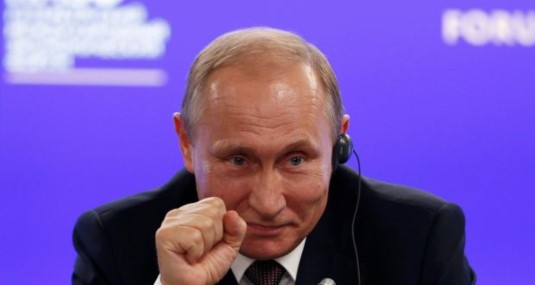
One of the very first things I learned about radical politics (thank you Class War!) is that your enemy's enemy isn't necessarily your friend. This always comes to mind when Russia is in the news because, in a pathetic echo of the Cold War official CPGB apologias of the old Soviet Union, we find people happy to go to great lengths to prettify or explain away the activities of the Russian state. The naming of two Russian suspects for the poisoning of the Skripals is one of those occasions. Cast your minds back to March-April time. As Sergei and Yulia Skripal lay ill in hospital, this was seized on with alacrity by a Tory government getting blown from pillar to post by its own internal difficulties. They declared to the world that the Russians were responsible when this could not have existed beyond conjecture. How do we know when we're not privy to the intelligence? Well, we've seen how the scanning of the CCTV and tracking the movements of the alleged perpetrators, and their identification has taken months to assemble. Were such information at the security services' fingertips to begin with, it would have got released pretty sharpish to make themselves - and the government - look good. However, May began with the assumption that it had to be Russia (you don't need to be a Cluedo champion to surmise the victim, motive and method point at the FSB), and they went all out on it for political reasons. Not least because it provided an opportunity to show Jeremy Corbyn up as weak on security issues. Sadly for them, because of the stance he took - and much to the grumbling of Labour's backbenches - the story quickly became entangled with the innumerable and complex ties between Russian money, the City, and the coffers of the Conservative Party. Always beware the law of unintended consequences. Nevertheless, being distrustful of the Tories, the security services, and the convenience of alleged Russian terror doesn't mean the Russian government is blameless. The left should not simply put a plus wherever the Tories and the spooks put a minus. In all probability, this wasn't a hit ordered by Vladimir Putin. All authoritarian regimes are, paradoxically, chaotic. Even the two most extreme examples from the last century, Stalin's USSR and Hitler's Germany were marred by fractious and sometimes murderous conflicts within the ruling parties. In such chaos, a lot of organisational movement was possible because individuals and groups of people 'work toward the leader'. That is undertaking activities, often on their own initiative, designed to curry favour with the higher ups. The commissar who, at gun point, requisitioned more grain than the quota demanded. The SS corporal who set about murdering villagers and burning their homes to catch a superior's eye, it is more than possible the Skripal hit was cooked up in the bowels of the FSB to earn someone a promotion and a salary bump. Nevertheless, as Putin came up through the KGB and this is his system, whether he issued the order or not he ultimately is responsible - if this likely scenario turns out to be the truth. Sadly there are sections of the left, and I use that term advisedly, who aren't interested in analysis, weighing up evidence or considering probabilities. Consider ex-diplomat Craig Murray, for example. He has acquired undue prominence in left wing circles for peddling conspiracy theories, which in itself is an indictment of the level of sophistication and political confidence of out movement. In this case, Murray has declared shenanigans for two reasons. One are the photos of the two suspects apparently standing in the same place at the same time, at least according to the CCTV time stamp. As Brian Whitaker points out, this can easily be explain by ... both men passing through two separate gates simultaneously. And, being the helpful sort, Brian provides photos of these short passages. Still, not being interested in fact Moscow is now parroting the same line too. Prior to this, Murray had claimed there was something fishy about the photos of the two suspects when it turned out to be a diminution of quality thanks to the Graun's own scans. Mountains and molehills, etc. And then there is his obsession with where the Skripals are located and why they're not appearing in public - it would appear he's not familiar with the idea of witness protection. These alone should demonstrate why no one on the left should give him credence and why he should be regarded as a crank. Just because the British state is duplicitous and rotten doesn't make Putin and his works automatically virtuous. Russia is a state like any other, and one that uses its not inconsiderable lobby in Britain to deepen the distrust millions of people have in the security services following Iraq and other debacles. By accident, idiocy, or intent Murray has placed himself in that lobby, along with George Galloway, Alex Salmond and now Tommy Sheridan. I don't know about you, but the world is a messy, complex place and one which the left should try and maintain a critical distance from to try and understand it to, you know, change it. The likes of Murray do worse than hinder, they make our work more difficult. In short, these are friends the left could do without.
John Rentoul (yes, him again) reckons the left's clean sweep of the NEC elections are bad news for Jeremy Corbyn. By the same token, had Momentum's slate crumpled before the galvanising effort run by Progress and Labour First I suppose this would have been a triumph for Team J Corbz. Anyway, the thesis - if it can be dignified with that title - is these NEC results mean we've passed peak Corbyn because the turnout was down and the Momentum slate won by a narrower margin. He goes on to argue that once mandatory reselection goes through at conference, there are no further wins to fire up the Corbynist base and from here on in the party will get consumed by reselection battles. Our John concedes he might be clutching straws, and for once I agree with him. He is. There are three good reasons why it's not likel we've hit peak Corbynism yet. Working with John's assumption that Corbyn supporters are motivated by Labour Party internal struggles, there's still plenty to be done. Being totally Westminster-centric, I can see why he might think mandatory reselection is job done, but it ain't. There's the small matter of reforming the deputy leader position. It is more than obvious Tom Watson has lost the confidence of the membership, and his would-be support shrinks by the day as the Labour right freely diminish their own base. There is certainly a mood to see his sinecure replaced by an alternative, gender-balanced arrangement. Of course, Tom would be perfectly entitled to stand for election again if he wished. But John's assumption is wrong. Corbynism is motivated by a desire to change the world. Changing the party is a necessary accompaniment, and one large numbers of people have become interested in because of the obstructive and high-handed behaviour of sundry MPs and their cheerleaders. There wouldn't have been anywhere near as much of an appetite had the "opposition" accepted the left's leadership and not tried to derail it at every possible turn. It's also worth noting the thirst to change things isn't a fanciful whimsy, a plea for things to be nice. It's rooted in the experience of precarious living, of being denied the chance to own a home, a secure job, an adequate salary, regular hours, a pension pot, or in many cases a job at all. And that's without touching on the threats represented by climate change, the experiences of sexism and racism vis a vis the estabishment's double standards, and the perceived injustice of the super wealthy accelerating away from the rest of us. To put it another way, the structural violence and inequalities that mobilised Corbynism are still there and will continue to power the movement for as long as it responds to it, gives it expression, articulates its interests. This argument isn't something I've pulled out of my hat. Gaze with wonder upon this thing of beauty. As previously mentioned more times than I care to remember, British politics has polarised with the changing class structure presenting as an age cohort effect that coheres around the two main parties. Labour is responding to the experience of a rising class, to millions of people the old establishment politics never bothered addressing, never mind championing. The Tories can find consolation in the huge numbers of over 65s that support them and as long as they have a greater chance of turning out, the generational class effect is dampened. But the problem is older people have the tendency to die off, the trend of younger people voting is on an upward trajectory, and most worryingly for our Tory friends their class war policies have broken the conservatising effects of growing older. By preventing millions of younger people from getting on the housing ladder and enjoying the living standards their parents enjoyed, so their support for Labour is unlikely to diminish over time. The Tory party is literally dying, and they are the authors of their own demise. No one is suggesting this is going to be plain sailing. But happily for Labour, as this inexorably works its way through the body politic and provided the party remains wedded to Corbynism, we are far from reaching the peak the likes of John Rentoul are wishing for.
The left took all nine seats in the 2018 NEC elections, and 38 out of 42 positions on the National Policy Forum. However, some cannot accept defeat with good grace. Particularly as Pete Willsman, he of the recorded NEC comments fame, got in ahead of the "independent" candidature of Eddie Izzard - though with significantly fewer votes than the other comrades who retained Momentum's endorsement. As matters Labour Party are somewhat febrile, can you tell what happened next? Ah yes, as night follows day there came the claims Labour is institutionally racist. This is an absurdity that doesn't stand up to scrutiny. There are pockets of anti-semitism, certainly. Out of a mass membership of 550,000 we're bound to attract some people with unpleasant views. A party is only as good as the society that hosts it, after all. Yet consider this, is chucking out members for making anti-Jewish comments evidence for institutional anti-semitism? Would such a party find its complaints process crammed with hundreds of cases? Would an anti-semitic party sit down with establishment Jewish organisations, outfits who've already made their hostility to its left wing political turn pretty clear, to try and tackle anti-semitism? Is it a sign of extensive anti-semitism that the party has investigated the issue, produced a report with recommendations and saw them adopted by conference last year? And was Jeremy Corbyn cleverly misdirecting critics of his leadership when, well before 2015, he sponsored EDM after EDM condemning anti-semitism even though there was no political expediency in doing so? You have to be seriously misinformed or just plain dishonest to ignore this to make out Labour is some sort of anti-semitic cesspit. None of this negates the stupidity of Pete Willsman. As a long-time activist and veteran of faction fighting, we should expect more. He has, however, apologised and accepted the necessity for some training around anti-semitism. Rightly so. If, after all, an apology to the Chief Whip is good enough to let Margaret Hodge off further disciplinary measures for her grotesque slander then saying sorry to the general secretary should be fine and dandy too. Gooses and ganders and all that. Though no way should Pete run on the Momentum slate next time - the left can and must do better than this. But let's accept the premise of the Labour right for the moment. If Willsman is an anti-semite, there's a wee issue. When it comes to postal ballots, be they Labour ones or votes for "proper" elections, everyone who's had anything to do with electoral politics will tell you a large majority get filled out and sent back straight away. In the case of the NEC ballot, the contest opened on 26th July and the Willsman recording did the rounds on the 30th. Are we expected to believe the votes Willsman polled were an endorsement of anti-semitism before the fact? Please, don't insult our intelligence. True, rumours of his comments had done the rounds but they were hardly mass currency. To pretend they were is like expecting left wing members to have preternatural powers of detection, to possess a spidey sense or second sight alert to every whisper, every rumour that does the rounds. Staying with the Labour right premise, if Labour was riddled with anti-semitism, wouldn't an openly "anti-semitic" candidate be expected to do better rather than significantly worse than his running mates? Come on, it's poppycock. We know this, you know this. And what makes the whole thing even worse is those running with the attacks on Labour's supposed anti-semitism know it as well. For those segments of the Labour right who do this, it's less a case of political vacuity and more one of moral bankruptcy. The truth, which they still haven't faced up to, is one in which their politics has been soundly rejected. Their preference to leave the fundamentals of the old Thatcherite consensus intact is a woefully inappropriate "left" response to the fall out of the 2008 crash. Of course, if these people were properly rooted in constituencies Labour was founded to represent, if they knew how to struggle politically then they'd be aware of this and perhaps articulate their politics accordingly. Indeed, if we saw a genuine clash of ideas in the Labour Party that would be a good thing, not least because it would be an antidote to its shoddy, ramshackle and oft non-existent efforts at political education. But they don't and they won't. Instead we have the insults, the smears, the lies. Not because the right don't know any better, but because they can't be any better.
Or, how Sky News abused their power and monstered a member of the public. This is a guest post from Paul. For reasons that will become obvious I have not used full names, and the comrade at the centre of this is referred to as N. I’m not usually a writer of blogs, in fact if you asked me I’d probably struggle explaining the conventions of a blog. Sometimes though, things happen that cause so much disruption and has such a profound effect upon your world that you have to document it somehow. Hopefully by the end of this you’ll see why I’ve chosen a blog. Apologies in advance if it isn’t of the quality you usually read as I try and put our experience into words. The incident happened fourteen days ago. I understand that its relevance is diminishing even as I type this but it is still timely for us. I’d have liked to have written something before now but the impact and chain of events that has since occurred has precluded me from doing so. We are still awaiting further correspondence but we are in a calmer place (for now). I also hope that in writing this it helps me order my thoughts and feelings as it’s been a very difficult time. I suppose the motivation for doing this is to get our experiences out there in the hope that that it may prevent others falling foul of the same. In an ideal world I’d like it to be part of a body of evidence that safeguards against such events happening again, or at least makes explicit guidance that is out there for others that find themselves in a similar predicament. On Tuesday 14th August our world was turned upside down due to seven seconds, one word and the agenda of Sky News. On that day my family and I went to hear Jeremy Corbyn speak at Stoke City’s Football Ground. Little did we know what impact an event during that day would have on us. As a teacher in the middle of the holidays I was able to attend, and I took our boys with me as we’d decided it would be a good experience for them (my wife, N, and an interested colleague from her work was going to meet us there). My boys and I arrived there early as I’d received a message that due to the response they’d had to sort a larger venue and may need help setting the room out. As it turned out the help wasn’t required but this meant that we were near the front of the queue. When N arrived she joined the queue (she was easily spotted as she has bright red hair) I sent one of the lads to see her. Being typically British she didn’t want to be perceived as jumping the queue so told me she’d see us in there. We got in, got good seats and waited for my wife and her friend. Whilst we were waiting I bumped into the legend that is Nello, we had a good chat and being a good friend of his, arranged to give him a lift home after the event. When N finally entered I became concerned as she looked pale, anxious and visibly shaken. As the event was about to start we weren’t able to discuss what had happened in any great detail but she anxiously explained that she and her friend had been approached by a Sky News Reporter in the queue and was asked questions. She told me that she thought the questions would be of the generic ‘Why are you here?’ ‘Why do you support Jeremy?’ type. I listened agog though when she told me that the questions had been quite pointed regarding Anti-Semitism, and that she’d also felt quite intimidated by the tone and delivery. She told me that during the questioning she’d mistakenly said that Jeremy had won the Nobel Peace Prize and that the reporter had jumped straight on this and questioned her, she had looked to her friend to check and clarify this, realised her mistake and corrected herself saying she knew that he had received a peace prize that year. My wife said that the reporter’s response to her comment and the change in his demeanour set alarm bells ringing. She discussed this with her friend and then went back to the reporter, she explained that she didn’t want the clip using (she still had her works lanyard on as well and used this as another reason as to why she didn’t want her clip to be used). The reporter said ‘Sure that’s fine’ but N wasn’t very reassured by his response so she approached a member of the event organisers and told her what had happened and asked if she could clarify that the clip wouldn’t be used. The organiser said that it should be okay but she’d catch up with the reporter when she could and ensure that this was the case. Despite this, we were pleased with the event. All speakers spoke extremely well, N was incredibly impressed with the ideas that were discussed and even our lads were kept interested by the whole experience. As a teacher myself I was really interested and impressed with what Jeremy was speaking about regarding the founding principles of the proposed National Education Service and will look forward to see how this will develop. After the event N left with my youngest to drop her friend back to her car and I waited with my eldest to take Nello home. Nello always has a group of fans and well-wishers around him, so I waited awhile and was able to speak to and exchange details with some of the people that was still around. Good old Nello! One of the phone numbers in particular would end up being a great help with what would later ensue. Later that evening when we were all at home, N let me know that she’d caught up with the organiser she had spoken to earlier but had unfortunately been told that the member of staff wasn't able to catch up with the reporter. The mood in the house became one of anxiousness as we discussed what had happened and realised we’d have to put Sky News on. In hindsight whilst it may have been a little naïve to speak to the Sky reporter in the first instance N was savvy enough to trust her gut instinct and know that the reporter would use the clip. We put Sky News on at 19:15 and didn’t have long to wait to have our worries materialised because at 19:20 there she was. Throughout life many events stay engrained within our memories. Unfortunately, seeing the effect the initial clip had upon N will never leave me. We watched sickened as N’s misrepresented image was displayed in close-up upon our TV screen. Even now (despite being a teacher of fourteen years) I find it difficult to put into words the emotions I felt as N saw herself on screen, as she then broke down and staggered through our now claustrophobic living room to the back door to get some air. I don’t think that feeling of hopelessness will ever leave me. What could I say to her? How could I say everything would be okay knowing that this clip was part of a piece that would be rolled out every thirty minutes on Sky News. We sat there numb and helpless, our laughter was hollow and short lived when to break the silence I told her ‘At least you look good!’. It wasn’t long though before the phone calls from family and friends started to happen as she was recognised from the clip. Following a sleepless night, the next morning was horrendous. I don’t know how she did it but N managed to get out of bed, dug deep and found the strength to go into work despite being up most of the night and being physically sick in the morning. Still numb and unbelieving of our situation, I set out trying to find out what we could do to stop the nightmare scenario that had unfurled in front of us. I knew I shouldn’t have looked but I did, Twitter was awash with insults and snide comments about the Cult of Corbyn and by the looks of it N was the poster girl. The trolls were having a field day berating members of the Labour Party and using the clip of N to do so. I won’t comment on the content of some of the tweets as N will read this blog but I’m sure you can imagine how horrendous some of them were. It felt like the situation was escalating uncontrollably and this wasn’t helping me or our predicament. I quickly found that there was no ‘One Stop Shop’ for such situations. Here I was, in a scenario that was completely alien to me. I knew I had to do something but where to start? What should I do first? Lack of sleep, growing anxiety and feelings of isolation had stopped me thinking straight. Then I remembered that I had exchanged phone numbers with one of the speakers the night before. I gave him a call. The person I rang was Mark McDonald. Mark is the newly-chosen PPC for Stoke South Labour Party who’d spoken passionately and eloquently at the event. He was obviously very busy yet he listened patiently and made time for me. He calmly asked me questions about what had happened, advised me of some of the options we had but told me that I should look at getting the clip taken off air in the first instance. His manner and advice helped me cut through the feelings of confusion and helplessness and I was able to create a to-do list. The first step was to find the email of the correct person to complain to at Sky News. This was no mean feat. You won’t be surprised to find that it is far easier to report a potential news item to Sky or a set-top malfunction than it is to complain about the content of a piece that they have broadcast. After much browsing and frantic searching I found an email address. The next issue was what phrasing and terminology we needed to include in the email to accurately convey our complaint. This was found a little easier by looking at the Ipso and Ofcom site which had guides to help. The email of complaint focused on the issues of misrepresentation and the fact that N had revoked permission for the clip that was used. During this time I’d been speaking to N who despite having understanding and supportive friends at work was struggling and had broken down multiple times that day. We’d discussed the content of the email and despite it bouncing back we’d got it through to another and received a reply telling us that the broadcasting of the clip would be suspended whilst an investigation occurred. A couple of hours later I noticed that the Sun had tweeted a link to their website which was running the Sky clips of the ‘Cult of Corbyn’. I sent an email to Sky News asking how the clip could be used if Sky had pulled the clip. I received an email back explaining that they had no control of the other News platforms but would contact them and ask. By this stage we were almost overwhelmed by events but the news of the clip being taken off Sky platforms had given us a little breathing space and we were able to complete the complaint to Ofcom which we were also able to send off. During this time we were still fielding calls from family and friends, N was in a temporarily better place though and to help stem the calls and messages she decided, and was able, to put an excellent update on Facebook that was heartfelt, articulate and explained what had happened. As the replies and messages of support came through it felt like we had turned a corner. We had received lovely messages from across our spectrum of family, friends and colleagues. She also received a heartfelt message of support from our local MP Gareth Snell and also from local councillors in the area (she had even received a lovely message from our local Conservative councillor, who we know). Some of our friends were so outraged they took to Twitter and tried to get her story out there ‘I’d also been trying to get the truth of the situation out on Twitter and tweeting people but wasn’t really getting anywhere’. The irony wasn’t lost on us that whilst it was social media that had affectedly me so negatively that morning it was now social media that was helping N feel more upbeat and supported. Unfortunately this upbeat moment was short-lived. On the Thursday we received an email back from Sky News saying that they disagreed with the point that N had been misrepresented and that ‘the exchange as broadcast accurately reflected your initial belief that Mr Corbyn had won the Nobel Peace Prize’. Regarding the permission aspect of the complaint they put it down to a communication issue as ‘it seems that there may have been a breakdown in communications with our reporter’ and that her concern regarding her lanyard had been taken into account and her ID badge wasn’t shown. What they did say however was ‘While we do not agree with your assessment of the way your contribution was featured we do not want to be the cause of any additional distress. As previously advised we have removed your contribution from our platforms and will mark it in our library as not for future use.’ Now I’m certainly not an expert in law surrounding broadcast media but to me the email we received looked to shout down our issue of misrepresentation and sought to create enough ambiguity between N and the reporter’s interaction that we wouldn’t pursue it any further. Whether the pulling of the clip and not using it further was them showing concern for N’s mental health or was to stop us taking it any further I don’t know. My initial thoughts were we were being expertly ‘fobbed off’ but at that stage and in the emotional tumble dryer we were in I was just happy that they weren’t using it any more. I read the email to N in the morning when we received it. In the afternoon, she phoned me back and was in an emotional state, she has never suffered from anxiety or panic attacks but that day she’d had a couple of moments where she’d become anxious and had experienced heart palpitations. On the Friday things seemed to be calming down, it seemed the news machine was rolling on and the trolls were moving with it. Due to the phone calls and messages of support N was feeling a little better about it all. We’d been invited to a friend’s wedding away in Chesterfield and whilst we’d debated whether we were still going to go or not we decided that getting away from the house for a little while would be good for us. As it turned out it was the best decision we could have made, especially due to what happened next. The wedding was excellent, we’d dropped the boys off at my parents’ in Nottingham and had booked a hotel room close to the venue. Catching up with friends, having a drink and a dance was just the tonic, after enduring what we’d gone through seeing my wife smile again, enjoying herself and light up the room filled me with hope that perhaps we might actually get through it. Later that evening I received a text from a friend who informed me that The Last Leg had played N’s clip on their show. I couldn’t believe it and just felt numb, luckily N’s phone had died and I was able to keep it from her whilst she enjoyed the rest of the night. I didn’t know how I was going to tell her in the morning, not only was this going to devastate her but to add insult to injury she was a big fan of Adam Hills and the show. The only positive I could take from this horrendous predicament was that if we’d been at home she’d have been watching the programme on TV. I dreaded telling her in the morning, we’d had a great night and this morning she was smiling, I knew I had to though as her phone was now charged and I just knew she would have messages. I’m struggling to put into words the thoughts and emotions we had to endure that morning, but hearing my partner say ‘I just wanna go away somewhere and die.’ seriously affected me. I had to plead with her to come to breakfast with me as she didn’t want to leave the room. I thought we’d been through the worst of it but here it was. Looking back I think the events of that morning changed something inside of me, the last four days had had us swinging back and forth like a pendulum between fight and flight with a constant dose of overthinking thrown in for good measure. I think seeing my fun loving, beautiful and caring wife reduced to this fragile, broken shell of a woman hardened me. I had a moment of clarity, there was no way financially or emotionally we could legally challenge Sky over what they had done, we were the little people, if they were willing to edit and broadcast her without permission what chance would we have against such lawyers? I had to make sure my wife was going to be okay but at the same time knew we couldn’t let this beat us I had to try and at least get her story out there, I couldn’t wait weeks for a small apology that didn’t mean anything and changed nothing. Bizarrely whilst I hadn’t seen it I was buoyed by the amount of negative comments The Last Leg was receiving from folk that were upset at the attack on Jeremy Corbyn. Twitter folk were fighting back, already there was a tonic to the ‘Cult of Corbyn’ despite the situation I smiled when I saw the #Cultofgivingashit. In the hotel, I started writing the email on my phone that we’d use to complain about the Channel Four clip. After I’d written the main bulk of it I realised that I had the basis of our story. The penny dropped, previously I was trying to get her story out there within the characters of a tweet. I realised that I’d have use Twitter in a smarter way. I direct messaged some of the larger Twitter accounts who I followed and who had followed me back, followers who might be interested in helping. I also tried to contact some of the independent media who might be interested in getting involved. Then I remembered Andrew Tiernan. Andrew Tiernan is an actor/director/writer and all round top man who aside from performing some excellent roles, had also written and directed some quality films. In UK18 (a really dark and powerful dystopian film) he directs The Artist Taxi Driver Mark McGowen and Jason Williamson in a horrifying Orwellian nightmare of a film (tough but well worth a watch). N and I are massive Chunky Mark fans and watch him often on Twitter, I thought if anyone could get her truth out there Mark would be our best shot. I didn’t know if it’d do anything but perhaps Andrew could put us in contact with Mark, it was at least worth a try. I direct messaged Andrew using part of the email I’d started for Channel Four and wrote a breakdown of what had happened and pressed send. On the drive back to pick up the boys I messaged Mark McDonald and told him about The Last Leg and what had been happening, he was excellent, offered us his support and asked if we wanted to meet up for a coffee. We arranged to meet up the following day. Whilst in Nottingham I received a message back from Andrew Tiernan. He'd not only passed on the details of what had happened but was really supportive. I couldn’t believe it! A little later Chunky Mark messaged me back and was really sympathetic and said he’d do what he could. The turn of events just seemed to be getting more surreal by the hour. On the one hand I was feeling hopeful and started to believe that maybe we’d get the truth out there on the other I was still deeply concerned and worried about N. When we got home we started fighting back, Chunky Mark had messaged me asking me to let him know what we wanted to put out there so I started on that. N was adamant that if The Last Leg knew the full story they wouldn’t have shown the clip, she’d tracked down the agent of Adam Hills and was emailing them. For a while we were united and focussed on standing up for ourselves it wasn’t long though before the flight/fight pendulum started swinging and the house started to seem small and claustrophobic again. Mid-afternoon N became quiet, she’d become anxious again and was the pacing the room, my heart sank when she asked me to go with her to the supermarket to buy hair dye. The harsh reality of how it had affected her kicked in again and our world came crashing down. I’d gotten so carried away with our fight back that I’d nearly missed her becoming quiet and pensive. Telling me she needed to dye her hair brought sobriety back and gave me a massive insight into just how all this had affected her. I feel the need to elaborate here. N is a larger than life character who is excellent with people. In the sixteen years I’ve had the honour of knowing her she’s been involved in working in the community and in particular working with the elderly. Interacting with people is her forte and seeing her work her magic with her clients is a joy to behold. In her line of work she often arrives when a family is in crisis whereupon she bursts upon the scene as part of a close knit team that signposts, advises and assists families in getting the support that they need. Her outgoing confident nature, her knowledge, experience and the support of her team coupled with her bright red hair and Scottish accent creates a Mary Poppinsesque whirlwind that really makes a difference to the families she assists and advises. She tells me often that with many of her clients she’s known as That Nice Scottish Lady with the Red Hair. As we walked around the supermarket looking for hair dye I watched her try and avoid eye contact with the other shoppers; it was devastating to see and as we paid at the checkout it felt like we were losing more than her Bright Red Hair. The Outgoing Lady with the Red Hair had now become the introverted lady with the brown hair. That evening I finished putting everything into a short account that I sent to Chunky Mark. The rest of Saturday evening was subdued and very strained. Sunday we’d finished the email of complaint to Channel Four luckily this was a lot easier to do than it had been for Sky. We’d also received a message from Chunky Mark letting us know he’d read the account and that he’d look to getting it out there. Due to the atmosphere in the house we decided to stay off social media for the rest of the weekend and spend more time with our boys. I’m glad we did as the next two days became very hectic. Monday and Tuesday emotionally was bedlam. N was feeling anxious thinking about work, the palpitations returned so she’d booked an emergency appointment at the doctors. Mid-morning Chunky Mark had tweeted the account we had sent him with the simple instruction ‘Read this from @Aldousmarx’. It didn’t take long before the retweets and the messages of support started flooding in. I couldn’t believe how fantastically warm and supportive some of the messages were. In less than fifteen minutes the retweets had reached over a hundred and if anything was accelerating rapidly. I replied to Chunky Mark and made that my pinned tweet. It wasn’t long before that tweet was being retweeted and all the other tweets that I’d tried to get out there were suddenly now being retweeted. My phone was going berserk, messages of support were flooding in, the direct messages I’d sent out previously were being answered. Links to the reporter and The Last Leg were being made and folk were tweeting messages of disgust to both. People were sharing their own negative experiences at the hands of the media. People were not only saying that we should pursue court action but some said they’d be happy to contribute if we wanted to crowd fund. The independent media had started messaging me for further details. It felt like our story had struck a chord that was resonating with others. Retweets had reached over a thousand and were still going strong. I was feeling giddy by the responses of support and the options that I felt were becoming open to us. We were the little people but our story had connected with the many and had empowered me I couldn’t wait to speak to N about the response. The elation I felt though was short lived as the pendulum swung immediately back to flight. I’d spoken briefly to N that day but wanted to wait to tell her the good news, she’s on Twitter herself so knew that we’d gotten the story out there. I’d asked her if she wanted me to attend the doctor’s with her but she said it was fine. When she came in I saw straight away that things weren’t right, she put a brave face on when she told me that she’d joked with the doctor that she had a story that he might not have heard everyday. The doctor had booked an ECG for the Wednesday as he was concerned following an examination and what she’d told him about her symptoms. All thoughts of any fight back disappeared there and then. My phone was still going berserk and retweets were approaching two thousand. With this news about N’s health I started to get paranoid. The story was out there and getting bigger, perhaps too big. We decided together to come off social media until at least after the ECG on Wednesday, my phone was still going crazy with the retweets and messages so I just turned it off. Before I did though I’d noticed that Adam Hills had put an apology out on Twitter, I showed it to N before switching off the phone. Whilst it was a small win, at that moment in time with N in the condition she was it felt like a hollow victory. That sort of brings us up to the present. For the sake of N’s health and anxiety we stayed off social media for a few days, her ECG came back fine and little by little we’ve started to put it behind us. In today’s society of multi and social media however the old adage ‘Today’s newspaper is tomorrow’s chip wrapper’ doesn’t ring true. Still out there on the internet, and in particular the Sun’s website is a seven second clip from Sky News that has been framed and packaged in such a way that it paints N as a gullible member of the ‘Cult of Corbyn’ whose ‘faith is absolute’ and who believes he has actually won the Nobel Peace Prize, not just the two he’s actually been awarded. It’s been a fortnight since the original event and whilst healing is still taking place there will always be a scar. So what about the villain of this piece? Over the last few days N and I have been able to reflect upon the actions of the reporter at length. Had there really been an innocent breakdown in communication that caused a misunderstanding between him and her? Had he had to bow to an almighty editor who’d ignored his protestations when he’d flagged up the permission issue, or had it been, as N had glimpsed in his reaction to her mistake, a case of seizing his opportunity to score big and it was too good to be missed? What was the real truth, was it the outcome of a lengthy court case where the side with the most expensive lawyer had the better chance of defining it? Should we blame the player or should we blame the game? I suppose it would help us to move on or take further action if we were able to paint the reporter as a bad person, an unscrupulous hack with no conscience making money off other people’s misery, but as both N and I know through our work that people aren’t like that and can’t be placed into such easily definable binary oppositions. Over the last couple of days N and I (she does have a name honest!) have discussed how we could conclude and move on from our situation. In a bizarre twist of events we stumbled upon a solution from the strangest of places. While thinking about further action I looked at the reporter’s Twitter feed. And here was the final twist of irony. He had, just as I had on my account, a pinned tweet that linked to something that was wholly important to him. The link went to an article he’d written about the passing of his granddad. It was excellent. I read it with tears in my eyes. Here was an article from a passionate, articulate and eloquent journalist who was writing from the heart, punching up and explaining a situation which was alien to him, where he and his family had felt helpless, angry and without real guidance. The piece resonated with me on so many levels as it described exactly the emotions we’d just been and were still working through. Another similarity that shone out is that both his and our situation transcends left and right politics. Both sides lose out in this debate. In our case the gladiatorial ‘tit for tat’ culture damages both sides with the little people being the expendable casualties thrown in front of the machine. The irony of it all that the reporter who had placed N in this position had written such a piece wasn’t wasted upon me, after a day or two I read it to N who listened reluctantly at first (and with good reason) but when I had finished she was also emotional. She agreed it was excellent and had encapsulated issues she’d had to deal with on an almost daily basis through her work. She announced that she’d happily be part of any venture that saw a solution to the issues he had highlighted and that it was a prime example of what good journalism could be. She also agreed how his situation drew so many comparisons with ours and that maybe we should document or blog the roller coaster of a ride we’d endured if it helped others. So there we have it, my first ever blog documenting what can only be described as an horrendously emotional intense two weeks. If you’ve got this far thank you for reading. I’m not sure what happens from here on in as we await responses from Ofcom and Channel Four, but what I do know is that in an ideal world we shouldn’t have to second guess the agenda or be guarded when approached by the media. I know that in an ideal world a caring, outgoing woman wouldn’t have to dye her hair and be scared to leave the house due to a clip that she hadn’t given permission to use. I know we don’t live in an ideal world but if we did this blog and the blog it links to would be taken seriously by the powers that be and used to elicit positive change. N and I would like to thank everyone who has sent messages warm wishes of support, it really has helped us through this difficult time. It’s going to take a little while yet to get over all of this; but to finish on a positive she has recently hinted that she might be dying her hair red again soon.
What a month, What another fraught, scabby, fractious month. Do the happenings in politics find themselves reflected in the most read posts for the month? Let's see: 1. On the Campaign Against Corbyn 2. No One is Above the Party 3. Labour Democracy Roadshow in Stoke 4. Projecting Paranoia 5. Frank Field: An Anti-Eulogy In other words, the interminable factional battles of the Labour Party managed to do the business again. Believe me, I would much rather write about something else. There are plenty of problems in the world, the Tories are locked into permanent crisis and we need to get our head around the new configurations of class and what it means for politics (among other things), but when the Corbyn project, a politics that is the settled will of a 550,000-strong party and endorsed by 13 million votes is undermined, picked at and scabbed on by people who are supposed to be on our side it is impossible to brush that under the carpet. What does this mean for next month's output? At the moment, it's looking like more of the same. As for the post sat around waiting in the second chance saloon, why not give my review of The Power by Naomi Alderman a whirl. As dystopias go, it's worth realising we don't live in the worst of all possible worlds.