Friday, 11 December 2020

If Remain Had Won

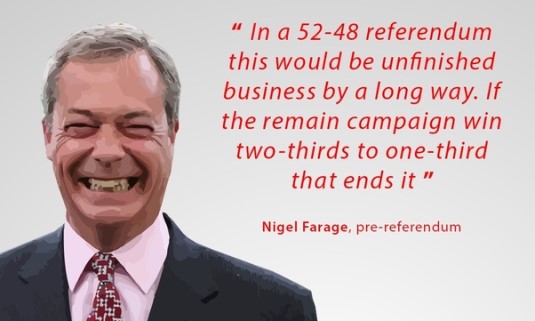
On the morning of Friday 24th June, Prime Minister David Cameron emerged from Downing Street looking tired. Tired, but relieved. In the early hours of the morning, Nigel Farage had conceded Leave had lost and attacked the government and the media for leveraging their institutional weight to secure a vote for Remain. It was tight, 52% for Remain and 48% for Leave, but a win was a win. The great gambler had promised a referendum on EU membership to pacify his right wing and see off the threat of UKIP who, just a year before, had polled four million votes. As he blinked into the cameras from the podium, he said the EU issue that had divided British politics for so long was settled and he looked forward to carry on governing in the national interest thanks to the mandate afforded him by the British people.

Cameron was the toast of the town as far as the liberal press were concerned. There were some voices raised about the recklessness of risking something as important as the UK's economic wellbeing for a prize so paltry, but this was largely ignored as centrist columnist and Labour backbencher spoke up to congratulate him for seeing us through the referendum. For the time being, the Tory right and their UKIP outriders were quiet and stunned into silence. The attention, however, swiftly moved to the Labour Party. While welcoming the outcome of the referendum, Jeremy Corbyn was roundly attacked by his backbenchers for offering "lacklustre leadership" and refusing to campaign alongside the Prime Minister to keep Britain in. Rumours of a move to depose the Labour leader did the rounds, and then went into action. On the following Monday, shadow minister after shadow minister lined up to resign, with some timing their departures to meet the hourly headlines on BBC News and Sky News. And then, that evening, Margaret Hodge tabled a motion of no confidence in Corbyn at the PLP's weekly meeting. It easily carried by 172 votes to 40, but the embattled Labour leader said this had no constitutional legitimacy and he would carry on after 60% of members had put their trust in him. Unfortunately for Labour, the crisis continued which, eventually, saw the little known South Wales MP and DWP shadow Owen Smith emerge as a challenger. As the party turned in on itself, Cameron's star rose even higher and Tory party polling received a renewed boost as he affected a statesmanlike gait vs the unseemly rabble across the Commons.

It wasn't long before matters started slipping for the Tories. In the first weekend after the referendum, a small crowd of Leave supporters held a rally in Trafalgar Square protesting the referendum con job. This weekly occurrence, not always in the same location, received little coverage and got scraps of notice in the press, but following the shock victory of Donald Trump in November's US Presidential election they became increasingly emboldened. Nigel Farage, forgetting earlier remarks where he promised to stand down as UKIP's leader began addressing the weekly rallies. They grew and, as the glow faded from the Prime Minister's referendum victory, he started looking increasingly vulnerable to backbench rebellion. The complaints about government spending and "dirty tricks" Farage raised on referendum night started coming back. The Daily Express ran lurid tales of public sector employers expecting their staff to vote remain, while acres' worth of articles complained about how the government flouted its own rules on campaigning spend. It wasn't long before the legitimacy of the referendum result was questioned - first by UKIP, but then increasingly by Tory backbenchers out of sorts in the renewed Kingdom of Dave.

For the moment, there were few opportunities for putative rebels to flex their muscles. When the Commons resumed in the Autumn following Jeremy Corbyn's second emphatic leadership victory, legislation due for introduction into the House was, for a rebellion-minded Tory malcontent, uncontentious. Likewise the obvious successors to Dave were very much bound close to him. George Osborne carried on in Number 11, and Theresa May remained at the Home Office where she'd been since 2010. A new addition to the cabinet was Boris Johnson, rewarded with the Foreign Secretary post for playing a leading role in the remain campaign, a position consistent with his pro-EU journalistic outpourings in recent years. The right inside and outside of the party might have been getting restless, but so far Cameron was shielded and the slow roll out of manifesto promises, such as a new (and punitive) Youth Allowance scheme designed to replace the dole for 18-21 year olds, the £10bn "war on waste" (a new programme of public sector cuts as opposed to an initiative aimed at curbing Britain's growing refuse problem), and extending the Free School programme further gave internal Tory opposition few opportunities to make strides.

And then, trouble. In December Jamie Reed, the Labour MP for Copeland announced he was resigning his seat. This was followed in early January by Stoke Central's MP, Tristram Hunt. Both were well-known critics of Corbyn, but had decided to pursue careers outside of Parliament instead. The contest in Stoke immediately captured the attention of the London-based media. As the city had an inglorious recent track record of returning far right councillors and, during the referendum, had voted by a large margin to Leave (Stoke Central itself was 62%/38%), this seemed like ripe territory for a UKIP challenge at the subsequent by-election. Having been burned so many times by failures at the polls, Farage was reluctant to stand but after some dithering was confirmed as the party's candidate in the by-election. For six weeks the media circus descended on Stoke-on-Trent. Activists from across the country poured in to help Labour's Gareth Snell retain the seat, and the campaign was very close. As the early hours of 24th February came in, first the awful news Labour had lost Copeland to the Tories, but then the shattering chaser. Mobilising the constituency's Leave discontent, Labour's vote held up but a collapse in Conservative support saw Farage squeeze home with a 800 vote majority. The scenario Cameron dreaded the most had come to pass: he would now face occasional questions in the Commons from the UKIP leader.

This plunged Labour into further crisis, with claims about Corbyn's incompetence doing the rounds and crisis talks over whether the party was doomed in its former working class heartlands. Even some leftwingers took to print to raise doubts about Corbyn's suitability. However, the momentum was with UKIP and while Labour looked inwards it was on the right where the effects of the by-election triumph were most felt. On entering the Commons Farage was welcomed by a rally of several thousand elderly leavers, and a march the following weekend saw 20,000 take to the capital's streets. Not a big demonstration by the standards of the left, it commanded disproportionate media attention with senior BBC and ITV journalists dipping in and out of the crowd. And then when the excitable "people's army" descended on Hyde Park to hear the words of Nigel Farage MP, they were driven to ribbons of ecstasy as he denounced the fraud perpetuated on the British people and raised a new rallying cry. The first referendum was deeply flawed, unfair, and distorted by the liberal elites who set it: it was time for an unsullied People's Referendum. Matters were not helped when, it emerged weeks later, Farage had been having regular meetings with the European Research Group faction of backbench MPs, and had even spoken at one of their gatherings. The press could smell trouble brewing and captivated by the splash Farage had made in the Commons, attention switched away from Labour's difficulties. Matters came to ahead over Osborne's Budget speech. Having learned from his second omnishambles budget of the previous year, he tried keeping matters on an even keel. Strong GDP data helped by renewed investment, following a brief pause while business awaited the referendum's outcome, meant increased tax receipts and so, Osborne argued, more room to raise the basic tax threshold even higher. However, when earlier drafts of his chancellor's speech leaked it was revealed this was initially going to be dubbed the Remain Dividend. The fact Osborne never used the phrase didn't matter. He was harangued by The Mail and The Express for lording it over the leavers, and (anonymous) Tory MPs made sure the press were well briefed about their outrage. It looked like the Tories were going to tear themselves apart.

As it happened, the next big shock struck at the very heart of the Tory programme. On 14th June fire crews were called to a fire at Grenfell Tower, which quickly burned out of all control. The blaze killed 72 residents and made hundreds more homeless. It quickly transpired the local Conservative council had cut corners on the external cladding and it did not meet fire safety requirements - all for the sake of a saving of a few thousand pounds. Immediately, Labour's internal distractions fell away and Jeremy Corbyn connected the tragedy to Cameron's and Osborne's austerity measures. Within days Corbyn was out meeting the families and speaking with the community, whereas the chancellor completely went to ground while Cameron was on an overseas trip. Caught flat footed, it eventually fell to Boris Johnson, as former London mayor, to do the official walkabout - though even he failed to meet with the families. This appalling spectacle, rightly perceived as callous and uncaring, hit the Tories hard. Already suffering thanks to UKIP's sustained 15-20% in the polls, for the first time under Corbyn Labour moved into the lead. Sensing an opportunity to embarrass the government into backtracking on cuts, Corbyn launched a nationwide tour with Grenfell community representatives. The PLP were not too happy, but by all accounts the programme of events were a success, with large crowds turning up to hear him put the anti-austerity message. Keen not to miss a bandwagon, Farage and UKIP discovered they were an anti-austerity party and said for too long the posh liberal Tory elite had balanced the books on the backs of the poor. Squeezed from two directions, Cameron was in a difficult place.

Another unhappy circumstance of the Remain victory was the fact subsequent EU meetings attended by Cameron were subject to the keenest, and some might say hysterical press scrutiny. The "renegotiations" he had undertaken prior to calling the referendum turned out to be cosmetic changes. The right wing press gleefully seized on EU migration figures, and beggar-thy-neighbour stories about EU citizens claiming benefits and "health tourism", which continued to aggravate the steadily diminishing newspaper audiences. Every time the EU agreed something which Cameron simply accepted, this was more proof of Britain's betrayal by its leaders. And when Cameron had to report on matters European in the Commons invariably the Speaker John Bercow would impishly allow Farage to ask a question.

By early 2018, Cameron had had enough. The feeling of being trapped by his backbenchers, of wincing at the UKIP thorn in his side and now, facing an energised and confident Corbyn in the Commons, was by no means guaranteed to "win" each week at Prime Minister's Questions. Following what was to be Osborne's final budget, which begrudgingly released funds for the safe recladding of Britain's public housing tower blocks, he announced the timetable of his departure as per the promise he made prior to 2015. Suggesting the Conservative Party had some hard choices ahead, he fired the starting gun on the contest so the party had the summer to debate and regroup. In the first round, the expected big beasts in the form of Johnson and May declared their intentions, but as always a few no-hopers wanting a bit of recognition stuck their names in. Sajid Javid, Dominic Raab, and Andrea Leadsom tipped their hands from the right, while the relatively unknown Rory Stewart pitched in from the party's centre. Interestingly, Osborne didn't contest - divining correctly someone who is virtually the ancien regime wouldn't stand a chance. Michael Gove, exiled to the backbenchers since heading up the Leave campaign, also put himself forward and established himself as the most credible Leave adjacent voice - and the potential leader most able to see off UKIP. For her part, May won plaudits for talking about social justice and rediscovering a Tory sense of responsibility to those at society's sharpest end. To hear one nation rhetoric not entirely dissimilar to the arguments made by Ed Miliband a few years previously turned heads and captured a great deal of broadcast and liberal press coverage. Johnson, for his part, must have been left wondering if stumping for Remain was the right career move. Popular in the party for his jovial bon homie, unfortunately for him there was little to offer. He claimed to be an election winner who could take on the left, but on matters of policy he was either vague or sounded like he was copying May. And he promised to stand up to Brussels, but given his role in the referendum Gove had greater credibility on this score.

In the end, Johnson was squeezed out by the rounds of voting and Gove and May went to the membership. The election was a strange affair, with May successfully avoiding public face-to-face debates with Gove. This allowed her to set out her stall as a reluctant remainer who treasured the sovereignty of the UK, but on balance believed staying in the EU was the right thing - but that the government should take tougher stances versus Brussels and seek to reopen negotiations on the terms of membership. Gove was able to easily outflank this from the right, and hinted on more than once occasion that perhaps UKIP and the second referendum campaign had a point. However, on matters of wider policy Gove praised Cameron and Osborne and stated in no uncertain terms he would more or less offer the same. May on the other hand seemed to take the threat from Labour seriously, who were leading in the polls despite an outbreak of infighting over the Shrewsbury poisonings and the long-running disputes over antisemitism. As such, of the 100,000 Tory members who returned their ballots on an 80% turnout they narrowly, and comedically, went for May over Gove by 52% to 48%. The significance of the ratio was not lost on anyone.

May enjoyed a brief honeymoon, and shored up Tory fortunes in the polls by winning back floating support from UKIP and Labour. However, she was conscious of her slim inherited majority and the tight margin of her victory. Her speeches intoned on the one nation theme, which seemed to suggest she was determined to put pay to the party squabbling over Europe once and for all. But inevitably, when faced with the other heads of government at Commission meetings she was not seen to be pushing right wing peccadilloes enough. Her promises to act tough came to nought, because there was nothing to act tough about. No bail outs for southern EU states, no Turkey accession, no new agreements necessary for the transfer of more powers. She started to find even the zone of non-punishment was punishing, and when she did try to contrive rows on the approval of the EU budget the press, Farage, and increasingly her backbenchers took her to task. In time, the infighting returned and the poll recovery was slipping. If she was mulling over an early election, by the time of the Spring budget - delivered by the newly promoted Philip Hammond - there was little he said or promised that would make a contest much of a go-er. And so when the EU elections swung by, the Tories fell to third place. The Leave movement found its feet again and returned UKIP as the largest party, with Labour coming a close second. It was unclear if the government would last the distance until May 2020.

Except May 2020 did not happen. Wounded by the awful losses in the EU elections, though not quite as bad as those sustained by John Major in 1994, throughout the Summer and Autumn Leave took to the streets in increasing numbers, culminating in a 100,000-strong march through London that October. The idea the government cheated in 2016 increasingly took on the form of a conspiracy theory, drawing together the liberal elite, collusion between Brussels and "shadowy financiers" (usually, but not exclusively George Soros and the Rothschilds), and evil teachers/lecturers filling younger generations' heads with internationalist rubbish. As the temperature rose because May elected to ignore the movement, some took to camping outside Parliament with sound systems, UKIP banners, and garish Union Jack suits. Questions were raised in the house following the public abuse of Tory remainer MP Anna Soubry while she tried entering the parliamentary estate. On the left, despite May's promises there was little evidence of helping out the poor in Hammond's statements. Osborne's deficit targets are long discarded, but it seems the precarious state of her party and wishing not to give any recalcitrant backbencher an excuse to jump ship and join Farage, as per Douglas Carswell and Mark Reckless in 2014, stayed any reform mindedness she may have had. As a result, when the din from Labour internal warfare died down, as it did for short lulls, there was polling evidence the party was seen more in tune with the sentiments of the British people.

And then Coronavirus happened and up ended politics. May's initial response was widely praised. She entered lockdown when the scientists recommended it, although there were loud complaints about the cancellation of Cheltenham and football fixtures, but the initial three-month quarantine period ensured UK deaths stayed below the hardest hit countries in the EU, like Spain, Italy, and France. But once lockdown was over and everything opened up again, stories came to light of PPE procurement scandals - stories that have not gone away. Farage, before jumping on an anti-face mask bandwagon, temporarily made hay over "careful Britain" handing over cash to states in southern Europe who had not taken the pandemic "seriously". Meanwhile, the furlough scheme offered by Hammond was very obviously influenced by the pressure Labour were applying, but then the chancellor showed a stubborn resistance to extending it and making sure its coverage was as comprehensive as it should have been.

Under the impact of a national crisis, any government's polling figures are going to go up. And May's duly did, reaching a high of eight points in mid-April. But since they've been falling. Labour have regained ground thanks to those losing out and angry at the mismanagement they see, and UKIP are regularly at around 20% as it adds Covid-scepticism and a toddler-like tantrum over tier restrictions and the second lockdown to its populist repertoire.

With all elections postponed until May 2021, by which time most people will have received a vaccination, it looks like May's Tories are in for a very difficult time. In 2016 David Cameron opened a wound to scratch an itch, and the politics flowing from that event have festered. And no amount of telling Leave they lost, the people had spoken and so they should get over it works. Britain is polarised, albeit with the right seemingly helplessly split. Can Labour take advantage and put Jeremy Corbyn into Number 10 next May? It's highly likely - unless May goes to the country promising a second in/out referendum. That might see off UKIP and cohere a block of voters behind the Tories, but poll after poll shows the public are fed up of hearing about Europe. But if making such a rash promise means preventing themselves from getting wiped out, Theresa May will certainly do it.

Thursday, 10 December 2020

Playing the Brexit End Game

Ah, you've got to love evasions and symptomatic silences. Reflecting on Wednesday's trip to Brussels, Boris Johnson said "we'll have a solution that's much more like an Australian relationship to the EU than a Canadian relationship with the EU. That doesn't mean it's a bad thing ...". A refusal to call no deal no deal, and then putting a brave face on matters is now the new Tory line. Okay. Whether this is theatre before a very Johnson climbdown (like last time) or not a bluff, both speak of utter failure. This moment is the culmination of a process 41 years old, of a disastrous dismantling of the country's social fabric to butress the power and line the pockets of the miserable minority interest the Tories stand for. Twice the Tories have purposely trashed the economy and wrecked living standards for this most frivolous of ends, and now they stand on the threshold of doing it a third time.

The question is how do the two main parties manage the politics. Because British politics is perverse, Johnson is in a good place to spin his lackadaisical and unserious trade negotiations as something positive. Or, at the very least, not damaging. The "Australian relationship" bullshit is going to fly because the media feeding the Tory base will do their stenographic best to convey the right message. The border down the Irish Sea agreed by Johnson over the body of his one-and-indivisible UK posturing didn't upset the Brexiteers, though we shouldn't be shocked given the mindset, so why would the end of this complete waste of time be any different? There are two ways Johnson can keep the ship steady amid the shoppy seas crashing against our independent coastal state.

The first, whether it's climbdown time on Sunday or full speed to the cliff edge, is the preservation of his authority. If he keeps control, spins it the right way, and isn't seen to be craven in surrender or clueless in "victory", the price paid is going to be negligible. This is a Prime Minister, you will recall, who has survived 62,000 Covid deaths without copping responsibility for his criminal negligence. More slippery than bananas on ice, not only can he lever his institutional advantage to deflect blame, problems at the ports and import delays can always get pinned on an EU determined to "punish" the UK for its instransigence. Herein lies the second aspect of Tory strategy going into the new year. Johnson is in trouble if the consequences of Brexit, deal or no, impacts directly on and is seen to hit the core Tory constituency. Food prices rises are one thing, as per Tesco's warning, but the real biggie is medical supplies and, crucially, the Pfizer vaccine manufactured in Belgium. Military airlifts are the order of the day, we've been assured (more theatre!), but if this impacts the roll out then the usual spin might not be enough.

I say might because in this moment of crisis it falls to the Leader of the Opposition to articulate discontent. The question is, will Keir Starmer do it? He's pulled his punches thus far on Coronavirus, and the shadow cabinet divides over the decision to vote for Johnson's deal (assuming he has one) are hardly best kept secrets. Saying the Brexit debate is now closed is one thing, but having the adroitness to exploit the crisis of the Tories' making is his great great unknown. You don't have to be the Oracle of Delphi to imagine Keir rising to the dispatch box to make this, again, all about Tory incompetence and nothing else. Despite no deal being the express objective of the European Research Group and sundry unattached Tories, all of whom are on the Johnson wagon and have been flattered and courted by his clownish countenance. The Labour leader has to step up and challenge the politics. Droning on about how this Brexit outcome is damaging to Britain is easy and pointless, that's the usual Project Fear stuff. The trick is demonstrating concretely how Johnsons is making life worse for those who voted Tory this time last year. Their message thrives when the consequences of their actions means making life worse for "other people". It's Keir's job to set out how what happens next will make them pick up the tab for their government's recklessness and cynicism. If he fails, just like the Covid-19 bodycount, Johnson and the Tories will get away with it.

Image Credit

Wednesday, 9 December 2020

The Tory Sovereignty Fetish

"The thing the European Union just doesn't understand", intones any Tory asked about the state of trade negotiations, "is that Britain is now an independent coastal nation in charge of its laws, borders, and waters." Snoring boring, but this is the pat excuse of choice when Boris Johnson and his ghastly coterie are asked awkward questions about the Brexit talks. The implication being Brussels wants to treat the high and mighty Blighty like a semi-detatched vassal state doomed to take the rules emanating from the Commission if access to the European single market is to be retained. Getting all patriotic is good theatre to warm the gammon up, but preposterous posturing to anyone half paying attention to the Brexit deal saga.

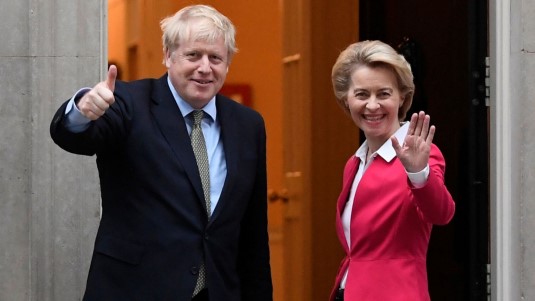
As the Prime Minister bumbled and mussed his hair through an evening of face-to-face negotiations with Commission President Ursula von der Leyen this Weds evening, it is worth returning to this sovereignty trope, which is waved about like an overripe rabbit's foot. This isn't to say its rightwing uses haven't been deployed skilfully in the recent past. Readers shall recall the brute efficacy "Take Back Control" had during the EU referendum campaign, and how the argument over sovereignty tapped into and provoked a reaction among large numbers of people who felt powerless over their lives, estranged from the changes no one put in any manifesto, and were looking for a means of asserting themselves against an amorphous them. Be it anti-immigration poison put out by Arron "Magic Pockets" Banks's Leave.EU, or the small n, small s national socialism of the NHS Brexit bus, the Leave campaign cleverly fashioned something as abstract as state sovereignty into everyday language and common sense experience. Definitely something Labour's pitiful sloganisers could do with studying and learning from.

But why do the Tories fetishise it? Aren't they anti- the state, or at the very least about minimising the state? You know, the Thatcherite guff about states not being privy to perfect information which predestines intervention in the economy to be disastrous, and that it should be pared back to barest essentials. Such as the apparatus for locking people up and making war on others. The answer to that is ... one should learn not to take Tory principles too seriously. They don't, after all. Sovereignty, however, is different. This is not an airy-fairy principle scrawled from the quill of Edmund Burke and repeated by ostensible thinkers like the late Roger Scruton, but a coagulation of the Tory experience of the last 40 years, taken up, obscured and rendered seemingly rarefied by what passes for conservative philosophy. Marxism isn't the only social theory to formulate concepts on the basis of practice.

Let's stop beating about the bush. The mainstay of Thatcherism and its successors, right through to the professed one nationism of Theresa May and Johnson is authoritarian politics. The striking of a new class settlement through the punishment beating of the labour movement in the 1980s was because Thatcher tooled up the state. With no authority higher than itself, organised workers were brought to heel and war was declared on professions, local government, education, and the civil service. Everywhere their authority was undermined or scrapped and subject to direct central supervision. Under Major this continued, but the process of destroying the expertise-driven autonomy of parts of the state found the slack taken up by a mix of markets, "independent" regulators and inspectorates, backed up at all times by the central authority of the executive. Rather than scrap this, New Labour deepened it further by instituting a new ecosystem of regulators ultimately accountable to the state. The Tory/LibDem coalition undoing much of it and creating more top-heavy, over centralised relationships. The "bonfire of the quangos" only multiplied state bureaucracy elsewhere. Why did the Tories go down this route? Because this was an extension of class war. First batter resistance into submission. Second, set up forms of governance that promote competition between agencies and, therefore, workers. And third provide commercial opportunities for those companies nice enough to sprinkle a few pounds into party coffers.

This remains the case with the Tory handling of the Coronavirus crisis, which has produced a seeming incoherence from the standpoint of public health but not as far as the preservation of class relations are concerned. The state was the saviour, underwrote the economy (well, not all of it), enforced the lockdowns and is now pushing the vaccines out the door. But there was one potential check on the state, on sovereignty, on stopping the Tories from doing whatever they wanted to do, and that was the European Union. It is little coincidence the vast bulk of Brexity Conservative MPs are dyed-in-wool Thatcherites, because the EU presented itself as a barrier, a repository of alternative authority that conditioned the state's room for manoeuvre. Therefore if one's vision for the future is a deregulated clearing house for hot and dirty money, and is part of a faction (and fraction) who stands to substantially profit from pivoting the British economy in this direction, tearing up EU membership and going for the lightest possible trade deal obviously suits such interests, and is entirely consistent with the custom and practice of Thatcherism. In other words, the assertion of sovereignty is a very fancy way of announcing the assertion of class interests.

Our old friend Louis Althusser, once he recovered from his self-described "theoreticist deviation" characterised philosophy as the class struggle in theory. Like much else, the Tory fetish of sovereignty affirms the acuity of this keenest of insights. They don't stick to this otherwise mundane political concept because of its beauty or clarity, though some might find the distortions and contortions it pulls in the writings of establishment political thinkers beguiling. They feel it in their bones because, effectively, sovereignty is the flattering reflection their class-ridden, authoritarian politics projects into philosophy and provides a convenient shorthand for obscuring what they're really all about.

Image Credit

Monday, 7 December 2020

Schizoanalysis Versus Capitalism

Apologies for neglecting my bloggerly duties. Your humble scribe has scribbled away at a 5,000 word paper on Starmerism these last few evenings. Yes, I've become one of those boring academics moaning about doing their research in their free time. Until normal broadcasting resumes tomorrow, a jazzy interlude is thankfully available by way of the video below. Long-time readers know I have an interest in Deleuze and Guattari as digested and filtered by the politics of Italian post-Marxism, and watching this struck me as an excellent introductory - but don't read dumbed down - explainer useful for getting past their interesting vocabulary and style of argument. Thumbs up to Plastic Pills, as plugged yesterday, for this great activists' entrée. Give it a watch and if you like what you see, please support his work.

Sunday, 6 December 2020

New Left Media December 2020

A cornucopia of new media projects to report on, you say? Colour me spoiled. These are the new efforts to have passed across my orbit around the internet this last month. Please visit to show your appreciation!

1.Claim the Future (Twitter) (YouTube channel)

2. FEMINIST GIANT (Twitter) (Newsletter/blog)

3.The Meteor (Twitter) (Manchester Independent Media Co-op)

4.No Holding Back (Twitter) (Podcast and multimedia)

5.Plastic Pills (Twitter) (Podcast and YouTube channel)

6.Ponderful (Twitter) (YouTube Channel)

7.Socialist Telly (Twitter) (Internet TV)

8.Truth Defence (Twitter) (Facebook) (Blog)

9.Twink Revolution (Twitter) (Facebook) (Multimedia)

If you know of any new(ish) blogs, podcasts, channels, Facebook pages or whatever that haven't featured before then drop me a line via the comments, email, Facebook, or Twitter. Please note I'm looking for new media to have started within the last 12 months or thereabouts. The round up appears hereabouts when there are enough new entrants to justify a post!

Saturday, 5 December 2020

Jamie xx - Gosh

Another night of non-writerly action on the blog, whatever can we do? How about placing this fine tune here for your consideration. Another one missing out on the top 100 of the 2010s but a great ditty anyway. Enjoy!

Thursday, 3 December 2020

What is Rentier Capitalism?

Fancy peering into the decrepitude of British capitalism? This is the subject of the new book from Brett Christophers, and lucky for us (and me, who's having a night off writing) he spoke to Alex about rent-seeking, financialisation, and how it is responsible for the stark inequalities thrown up by the system. Give it a listen!


As always, please check out the Politics Theory Other archive and help build new left media by putting pounds in Alex's coffers.

Image Credit

Wednesday, 2 December 2020

The Whys and Wherefores of Keith

Where would the internet be without people who have too much time on their hands? Probably a better tempered place, truth be told. This blog wouldn't exist for one. And neither would this meditation on why the left likes to call Keir Starmer Keith (or, to flaunt one's subcultural capital, Kieth). I'm at a loss to explain why The Social Review decided to go with an overlong disquisition on a daft nickname, but as this blog has a reputation for indulging political ephemera something would be amiss if even a short comment wasn't passed.

The article itself? Well. Our author Morgan Jones asks a few of his mates about the name Keith, decides it's chronically unfashionable and middle-aged. A bit try-hard shading into a mid-life crisis of divorce mobiles and fake Tinder profiles. Twitter-traveling leftists deploying the monicker are therefore suggesting there's something fake and forced about the Labour leader. What a shocking suggestion. Surely Keir didn't have fibs in his heart when he promised nice Corbynish things with added unity? The point isn't laboured, or for that matter much considered. Instead, moving through Morgan's text messages and FaceTime chats, a rummage through obscure ONS stats usually the preserve of pub quiz masters and Daily Mail features writers, we are not presented any explanation for this vile, bullying behaviour. Not even the obvious answer: it annoys some people.

In my opinion, one cannot wind up the self-important pricks on the party's right wing enough. And this is what, forgive me, "Keithism" is about. Yes, it's an in-term with meta-signification picked up and noted by the cognoscenti, but it's not some bullshit Twitter tribe warpaint. It's hardly essential. The 2020 Twitter left already has a collective identity founded on common experience: two hard fought general elections and five years of open warfare with people who should, yes, go off and join the Tories. It's a joke to needle the pomposity of those with little to be pompous about.

Now the Labour right have re-won some of their former power, the hypocrisies long-time members have heard for decades (unite behind the leader, shut up and don't embarrass the party, don't criticise hardworking councillors/MPs in public) are echoing around CLP Zoom calls as if 2015-2019 didn't happen, and more than a few are hoping to reset the old chummery and the repugnant cultures of deference. These people, who a Twitter wag described to me as "temporarily embarrassed right-wing Labour MPs", joined politics to be big I ams. And as we know, regardless of the size of the pond someone will always strive to be the biggest fish. They stand to gain the most from another round of suspensions and expulsions, and lose out if the leadership's ineptitude over shenanigans prevents it from happening. Still, their best hope for advancement is clinging to the leadership's coattails and making their lips sore from kissing as many behinds as possible (funny how these sorts of people never get a seat, despite services rendered).

Deary me, this is proving as ponderous as Morgan's screed. Time to wrap it up. Keith is just a name used to take the piss out of Keir Starmer. It has the happy byproduct of annoying the above, the very worst people in the labour movement who've jumped on his bandwagon. And because it does wind them up, the left are not about to stop doing it. More than this, Keith, Kieth, Keef, Keith Stalin, and the rest are good in and of themselves. The Labour Party needs a heavy dose of irreverence, especially now it's led by an empty suit with an authoritarian mindset who takes his job to be representing the state interest over and above that of working people. If Keithism helps that along, fine. And if it doesn't, also fine.

Image Credit

Tuesday, 1 December 2020

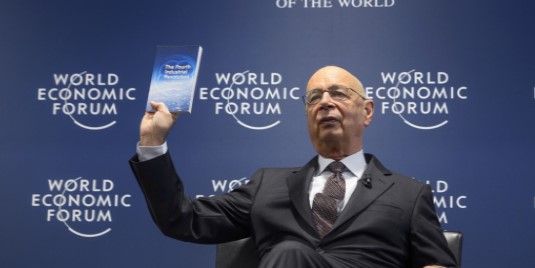
Klaus Schwab's The Fourth Industrial Revolution

Opening his book, Klaus Schwab writes "Of the many drivers and fascinating challenges we face today, the most intense and important is how to understand and shape the new technology revolution which entails nothing less than a transformation of humankind. We are at the beginning of a revolution that is fundamentally changing the way we live, work, and related to on another. In its scae, scope, and complexity, what I consider to be the fourth industrial revolution is inlike anything humankind has experienced before." (p.1) Puffy writing to provide zest for a work of futurism, or the stuff of a monstrous conspiracy bent on building a new class of microchipped worker drones? Sorry to be boring about this, but what Schwab is writing about is no more sinister than Bill Gates's The Road Ahead. Some sections of the capitalist class and their in-house wonks like to muse about the future. Deal with it.

What then is this "fourth wave" exciting the bourgeois imagination, and stoking the fires of conspiranoia? They are the new wave of automotive and robotic technologies, the ways of doing things enabled by artificial intelligence and machine learning, the new communicative possibilities opened by the proliferation of social media and, crucially, the potential productivity gains marrying all these together have and (subtext) the boost to profits this entails. The drivers of the new wave of innovation share digitisation in common, but are clustered in three interrelated areas of new technologies: the physical, such as self-driving vehicles, 3D printing, and the emergence (and application) of new materials like graphene and carbon nanotubes; the digital (internet of things, crypto-currencies, on-demand supply and retail); and the biological (gene sequencing, editing, and therapy, precision medicines, organic 3D printing, synthetic biology, neurotechnologies). The only thing holding back these developments, Schwab breathlessly writes, is the (paradoxically) conservative character of innovation cultures. He singles out the tying of innovation to academic career incentives, and the competition among tech firms to poach staff from labs, a zero sum game that closes off the win-win possibility for collaboration. To tackle this he suggests more public/private partnerships under the direction of state led research programmes - something, interestingly, the recently departed Dominic Cummings was quite enthusiastic about.

However, unlike the utopian tone struck by most futurists Schwab notes the disruptive character of these technologies. On the one hand, communicative technologies and 3D printing contain empowering possibilities. The downside for capitalism is deflation. New waves of automation are bound to eat into wage scales, but simultaneously drives the costs of goods down, making consumption cheaper and, at least in theory, less resource intensive and sustainable. Furthermore, Schwab notes productivity, understood here as the rate of economic growth, has shrunk over the last 50 years. Taking the United States as the most developed of developed nations, between 1947 and 1983 annual growth averaged at 2.8%. 2000-07 it had fallen to 2.6%, and between 2007 and 2014 1.3%. If the fourth wave is here, it's not making itself felt according to the traditional measures. Even worse, the impacts of fourth wave technologies is not creating jobs in sufficient numbers to replace those lost/rendered obsolete. With 47% of US jobs at risk of automation, in 2016 only 0.5% of Americans were employed in jobs that did not exist in 2000. Globally, new technologies allow for developed countries to reshore work with new automative processes, but work does not necessarily mean job recreation on a massive scale - this also means the closure of one developmental path taken by countries of the global south, the consequence of which could be economic depression as a key driver of migration patterns. If anything, the fourth wave is a job killer.

The fourth wave also presents states a challenge. The growth and importance of networks for capital accumulation are simultaneously strands of social relationships that can instantiate new communities of interest and generate rival (or dispersed) centres of power. The pace of change also presents democratic checks and scrutiny a challenge - how might a parliament legislate and regulate with development proceeding at rapid velocities? Schwab suggests 'agile' government could meet this challenge, which involves new compacts between the state, business, and our friend 'civil society' to generate dispersed governance. It sounds like Schwab read Hardt and Negri's description of the dispersed state in Empire but rather than finding something repulsive, instead he discovered a model. However, dispersed management can sit quite well with a more authoritarian state.

There's a bit more in the book about the dangers of the network, particularly fake news and the visibilising of disconnects between publics and the politicians (and others) who mske decisions on their behalf. Schwab also forecasts new inequalities of an ontological character between those adapting to the new way of the world and those who might resist them, exacerbated by existing generational divides. How to avoid the downsides? As you might expect from the head of the World Economic Forum, the suggestions are woolly and only realy suitable for management seminars on, um, the fourth industrial revolution. We must avoid "compartmentalised thinking" and think collaboration and ecosystem! Okay. Second, more positive thinking is needed, including the elaboration of a new set of ethics to guide development in the new age. And lastly, the world has to restructure its economies to make the most of the benefits the fourth wave bring, but rather than IMF-style "structural adjustments" this should be a dialogic, democratic process - something, interestingly enough, conspiracy theoroid commentary on Schwab's work tends to neglect.

Does this sound like an exciting book to you? Probably not. Especially when similar material has been covered in a more satisfying and sophisticated manner by leftist authors. Schwab's book, of course, isn't meant to be a treatise: it was written as a quick bourgie guide to the 21st century for busy executives on the go, and so perhaps might be forgiven a little bit for being economic with the structural actualité. The truth of the matter is while all these technologies are being developed, there is little profitable use (yet) for them. What's the point in splashing out on fancy software or new automative systems with significant upfront costs during an economic depression in which millions of people are out of work? Labour, and relatively cheap labour is in plentiful supply right across the developed nations. Shutting them out of employment without an appreciable bump in profits above the average profit rate, and with the outlay means the "revolution" at work is delayed and is rolled out around the edges. For instance, the homeworking enabled by Zoom, Teams, and the like doesn't change much, despite the boosterism of the hypesters.

Yet a revolution delayed is not necessarily a revolution thwarted. As Ernest Mandel notes in Late Capitalism, previous waves of technological innovation that deliver surplus profits, at least initially before a new equilibria around a reset average rate of profit, can take decades to unfold before stagnation sets in. We have economic stagnation already, the introduction of new technologies has led to new monopolies (hello Facebook, Amazon), but as yet no system-wide surge in productivity - something Coronavirus and its consequences are likely to retard further as the incentives aren't present or rewarding enough for properly teching up. Perhaps this is something Schwab addresses in his most recent book on the, ahem, Great Reset after the pandemic. Meanwhile, our job isn't a passive one. Technologies are not neutral, they are always stamped by the societies that make them. As capitalist dynamics are pregnant with authoritarian and liberatory possibilities, so its technologies tend to be so too. We have to push public understanding about cutting edge developments, intervene vigorously in debates about the uses (and abuses) of science, and make the case that the full exploration and flowering of these potentials are only possible in a society in which human beings are valued and free. Perhaps the fourth industrial revolution needs the company of a revolution of an allied, but different character for the good life it offers to be fully realised.

Image Credit

Five Most Popular Posts in November

Another month, another bumper month of politics nonsense and other stuff. But who, what did the business as far as the viewing public of this here blog were concerned? Let's have a look.

1. Saying the Quiet Part Out Loud
2. Losing Long-Time Labour Members
3. Why I've Left the Labour Party
4. What is the Great Reset?
5. Jeremy Corbyn's Ridiculous Suspension

The best indicator of future behaviour is past behaviour, and the wisdom of this insight meant a plethora of Labour posts about Labour stuff would attract the numbers. The five-week long crisis instigated at Keir Starmer's behest by the suspension of Jeremy Corbyn rumbles on and on, causing unnecessary damage to the party and sparking off further rounds of bilious warfare. I'm sure you don't need me to say any more about this for the moment as the four posts in the top five on this very topic speak about it at length. Check them out if you haven't gone there yet! As for the odd one out, my quick survey of the ludicrous Great Reset conspiracy attracted a fair bit of attention. But, unfortunately, not quite as much as the "leftist" peddler of this poisonous, mind-numbing nonsense. Still, if one has to follow 46,000 people to amass an audience opportunities for making a name otherwise must be scant.

Which post should have done better last month? I'm afraid more critical Keir studies are in order. This piece on the Labour leader's strategy of keeping mum about the tens of thousands of dead people locates it at the heart of his political project. Keir Starmer isn't in parliament to represent the people, he's there to stick up for the state. Everything else, including his "effective opposition" of abstaining makes sense if you read his actions through this dreary, authoritarian frame.

Image Credit