This month saw 28,494 votes cast over 12 local authority (tier one and tier two) contests. All percentages are rounded to the nearest single decimal place. Just two council seats changed hands in total. For comparison with November's results, see here.
Party
Number of Candidates
Total Vote
%
+/- Nov
+/- Dec17
Average/ Contest
+/- Seats
Conservative
12
6,732
23.6%
-13.5%
-2.5%
561
0
Labour
10
8,614
30.2%
-4.2%
-10.9%
861
-1
LibDem
10
5,262
18.5%
-1.8%
-1.1%
526
-2
UKIP
5
265
0.9%
-0.3%
+0.0%
53
0
Green
7
1,463
5.1%
+1.7%
+1.3%
209
0
SNP
2
2,342
8.2%
+8.2%
+8.2%
1,171
+1
PC**
0
0
Ind***
5
2,926
10.3%
+8.1%
+1.8%
585
+1
Other****
3
890
3.1%
+1.4%
+3.1%
297
+1
* There were two by-elections in Scotland
** No by-elections in Wales this month
*** There was one independent clash
**** Others this month consisted of Scottish Libertarian (8), Ashfield Independents (856), Democrats and Veterans (26)
And so 2018's by-elections draw to a close with a set of results that say absolutely nothing about the national picture. With only 12 contests to shout about (who wants to campaign when mince pies are better?), the healthy popular vote edge Labour has over the Tories means very little. Humph. Likewise, the fall in the Conservative vote has more to do with the geographic spread of challenges than a red insurgency. Double humph.
All in all, an unremarkable month. The LibDems continue to do well in terms of vote share, though we know from 2017 that good local results are no salve against falling badly at a general election. UKIP are nowhere and are likely to continue to be - even with Brexit nonsense set to come to a climax in 2019 their fash flirtation makes their revival as a mainstream anti-manistream party most unlikely. And happily for the Greens, they finish the year well.
Predictions will be held over to the year-end round up of results. Preview: who knows what's going to happen?
6th December
Highland UA, Wester Ross, Strathpeffer & Lochalsh SNP gain from LDem
Leicester UA, Walgrave Lab hold
Oxford BC, Overcote LDem hold
Surrey CC, The Byfleets Ind gain from Con
12th December
Ashfield DC, Sutton Junction & Harlow Wood Oth gain from Lab
13th December
Dumfries and Galloway UA, Dee and Glenkens Con hold
Haringey LB, West Green Lab hold
Harlow DC, Toddbrook Lab hold
Middlesbrough UA, Brambles & Thorntree Lab hold
20th December
Charnwood BC, Antsey Con gain from LDem
Cumbria CC, Kenty Estuary LDem hold
South Lakeland DC, Arnside & Milnthorpe LDem hold
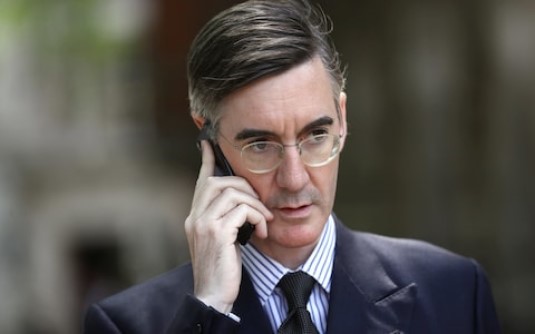
And so government is planning for a Threads Brexit after all, the sort that will see imports held up, medicines vanish from hospital pharmacies and 3,500 troops on the street to "assist" the authorities. As Theresa May is accused of deliberately running the clock down to get her Brexit deal through, Amber Rudd is doing her heir apparent best to assure the world that no deal's not going to happen, while the likes of disgraced serving minister Liam Fox, Jeremy Hunt and Penny Mordaunt are saying it's no biggie. No, it isn't if you've got a cash pile of unearned wealth to fall back on. Meanwhile amid the chaos, the latest twists and turns of one Jacob Rees-Mogg almost escaped wide notice. Blink and you'd have missed it because it led the headlines for all of five minutes. Mogg got up in the Commons yesterday to announce how he now had confidence in the Prime Minister because the Conservative Party had demonstrated its confidence. See the toadying for yourself. It's all a far cry from the gnashing of teeth and brandishing of resignation letters of just a fortnight ago. What are we looking at, then. Is it a capitulation of the Mogg-led European Research Group and the dank fantasies of hard Brexit to real politik, or is something altogether craftier afoot? Let's consider the options. In what you might call the 'long June' since May lost her majority 18 months ago, she allowed herself to be publicly pushed around by the Moggites. The election said no to her hard Brexit approach, but the backbenchers were determined not to let the historic opportunity to slip. The ERG called the tune and May danced her merry jig long before the shapes she threw at this year's conference. And then, finally at Chequers she unveiled an approach to the negotiations with the EU that were not to her tormentors' liking. However, on this occasion she didn't cave, even when Boris Johnson and David Davis decamped to the backbenches to spend more time with their leadership ambitions. Whether she belatedly realised the ERG couldn't touch her, thanks to the inverted Bonapartism atop the Tory party, or was only stringing them along for the sake of an easier life is immaterial. The leopard print heel was now on the other foot and a humiliating kicking was duly administered. The confidence vote they spent a couple of months agitating for finally came to pass, and it must have been a cathartic 24 hours for the very dregs of the Tory party. 117 MPs in the end gave May's leadership the thumbs down, and the ERG were done. They can if they wish vote down the deal but they were shown not to be strong enough to be the threat to May they thought they were. Is Mogg's capitulation simply a recognition of their hopeless position and that their rebellion now is little more than for rebellion's sake? Don't be daft. Remember what the Tory party's chief job is. It doesn't exist to be the "best managers" of British capitalism measured in terms of GDP growth, employment figures, trade deficits and the rest. Those are secondary considerations. It is above all a party of class war, of bourgeois power. Its mission is the preservation of the balance of power between capital and labour, up to and including using the power of the state to enforce it. Traditionally the different factions of the Tory party have mapped onto fractions of business interests, though in recent years the situation has grown complex as the ruling class itself effectively fractured, the relationship between party and class has grown strained, and some party factions have more or less grown estranged from their base. One faction who hasn't is, guess who? Our friends the ERG. Mogg with his hedge fund interests typify the cluster of capital aligned with the ERG. Socially useless, speculative, short-termist, even from the perspective of British capitalism they are the wing who should be kept as far away from the committee for the management of the common affairs of the bourgeoisie as possible. Their immediate class interests are always in tension with the interests of the class as a whole. The pathetic vision of Brexit they've tried peddling to the public, which basically amounts to a heavily deregulated offshore tax haven entirely coincidentally is a picture of the kind of arrangement ERG-aligned capital would find most congenial. Even the disaster of a no deal Brexit maps nicely into this universe. The shock of an abrupt ejection from the EU would chuck millions of jobs onto the fire, the pound would plummet, imports and exports severely disrupted and the UK takes a permanent hit to an economy already at sub-par levels of performance. Disaster. Or opportunity, depending on where you're standing. Heavily exposed British businesses become ripe for take over, and the Tory government - assuming there's no election - are "forced" to rip up labour protections, regulations, and sell off remaining state-owned assets to restore "confidence". And all this before a weakened Britain signs up to a Trump trade deal with the United States. Eventually matters are bound to stabilise and growth will return, but the political economy of the UK is utterly changed - and it's the speculators and disaster capitalists of Mogg and the ERG faction who stand to make a killing. Why May? Despite trying to no confidence her, the ERG's best bet is to go along with her for the next month, vote down her deal but stand against the inevitable no confidence votes. Whether it's the doomed attempt the SNP and Liberal Democrats are foolishly agitating for, Labour's own narrow no confidence motion targetting the Prime Minister, or the one certain to pop along after losing her withdrawal agreement vote. If May stays in office, and assuming she doesn't resign, that is the path to no deal. Few if any of the ERG are unhinged enough to go against their sectional class interests and usher in a Jeremy Corbyn-led government in normal times, never mind when their demented prize is close to hand. The political collapse of Jacob Rees-Mogg is a ruse. It's anything but a surrender. Changing circumstances demand changing tactics, but the end game is the same: a disastrous Brexit for which we are going to pay the price while they and their friends help themselves to the loot.
The parliamentary choreography was clumsy, but we got there in the end. Mid afternoon Twitter was all aflutter with the news that Jeremy Corbyn was going to table a no confidence vote, something he'd been under pressure to table since Theresa May pulled her vote. Corbyn's threat, for that is what it was, promised a no confidence vote in the Prime Minister if she didn't name a date for the vote on her deal. Suitably spooked she conceded as such and it appeared as if the Labour leader wasn't going to announce his motion. Cue the usual moaners and screechers doing their usual moaning and screeching. The Labour press release was let loose into the social media badlands and then, stone the crows, JCorbz got up to the despatch box and said the following.
That this House has no confidence in the Prime Minister due to her failure to allow the House of Commons to have a meaningful vote straight away on the withdrawal agreement and framework for the future relationship between the UK and the EU, and that will be tabled immediately Mr Speaker.
Inelegant yes, but thankfully most people don't follow the ins and outs of parliamentary footwork. What Labour people care about, as well as supporters of the nationalist parties, Greens and, at least for the moment, the Liberal Democrats is the toppling of May is a commitment to barring EU workers from travelling and settling here. And what the UK receives in exchange are fewer trading options ans the ruinous de-integration of four decades of economic development. The global Britain the Brexit fantasists promised is nothing but a miserable, mean-spirited prospectus in practice. What then of Corbyn's motion? It's not a real vote of no confidence because if passed it won't carry the constitutional force of a vote against the government. In that case, the path to a general election is opened. But nonetheless it's not a waste of effort, as the SNP are this evening disingenuously suggesting. The DUP aren't likely to vote against the government, and neither are the 117 rebellious MPs, at least this side of the withdrawal agreement vote. But against May is a different kettle of fish. Are Tory MPs who made a show of parading their no confidence letters in front of the cameras about to go back on this? All it takes is a handful of abstentions and May is effectively toast. Unfortunately, the likelihood of this being heard before parliament packs its bags for a fortnight is next to zero because of the government's control of the Commons' business. Nevertheless it puts pressure on the Tories and helps stir the division in the party further. It needn't have turned out this way but May, just like her predecessor has not pursued the "national interest" (however chimerical that phrase is) in the shaping of Brexit. At each and every stage, from when she stood like an all-conquering titan and declared herself for a hard Brexit to her pathetic kowtowing to the idiots and malcontents on the backbenches, the range of interests that have exercised her the most were, initially, the short-termism of Tory party management and, since she's blown that, the stumbling on of her zombie premiership. Brexit is at an impasse because May's definition of the project, if it can be dignified with such a term, is incompatible with and can't be squared with these demands. The slate needs wiping clean, and Labour is the only one that can do it.
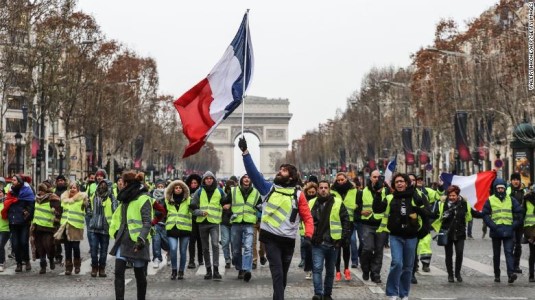
Far be it for someone so humble to offer advice to the exalted Emmanuel Macron, but faced with a revolt in which one's haughty, arrogant style of leadership is one factor in the galaxy of grievances, perhaps appearing on television behind a gold table in a room shiny with this most wretched of metals to assure the populace that you're "listening" wasn't the best idea. Nor was the related announcement that his "concessions" would be funded by public spending cuts elsewhere. And to think a good chunk of professional politicians in this country really rate this deeply mediocre man. Macron is yesterday's man, and has from the outset of his presidency shown British politics its past, not its future. But what to make of the Gilets Jaunes movement that has grown up in revolt under his watch? We've seen the violence, the vandalism, and the reports of racist and homophobic attacks. Apart from being what they're against, what are the Gilets Jaunes for? Matters aren't helped by this unofficial list of demands doing the rounds. Some of it, from a left wing point of view, is entirely supportable. Others wouldn't be out of place in a Le Pen speech. What is this movement, then. Should the left be intervening and moulding it, or is it a case of our French counterparts crossing their arms and forswearing it as an abomination? Well, that ship has sailed. The Gilets Jaunes won't pass the political hygiene tests set for it by sundry centrists here, but as Gabriel points out the left are involved and taking part in increasing numbers. However, because the movement doesn't fit certain people's pre-ordained categories we have seen attempts to politically excommunicate it from the terrain of politics altogether. For instance, this foolishness from Buzzfeed argues the Gilets Jaunes are a "beast born entirely from Facebook". Apparently, tweeks to the company's algorithms designed to de-prioritise fake news and allow material from "trusted local sources" a higher ranking in one's newsfeeds has privileged local news, allowing the movement to emerge online from the ground up and appearing as if from nowhere from the metropolitan point of view. This isn't anything new as protest movements have utilised the internet for as long as the internet has been around, but to claim it's a Facebook phenomenon is absurd. Does the author not know anything about France? An adjacent explanation is that the movement is a creature of the Kremlin. Of course it is. If in doubt, always blame the Russians. Because the movement was sparked off by protests against a fuel tax, which would coincidentally diminish the money coming in to Putin's petrochemical kleptocracy, the former could only be an effect of the machinations of the latter. No other explanation makes sense. It's also anti-Macron, just like Putin! The Gilets Jaunes hold the French mainstream media in contempt, just like Putin! And it communicates memes based on fake news, just like ... You get the picture. It's almost as if there is a large, influential section of elite opinion who refuse to believe there is anything wrong with the world and prefer the delusion of Russki conspiracy or the overweening power of social media to confronting their own obsolescence. The truth, sociologically and politically speaking, is the yellow vests are not an exotic movement and follows the well understood path of mobilisation of social movements. To follow the approach defended and tweaked in the old PhD thesis, these can be boiled down to structural conduciveness, strain, growth and spread of generalised belief, precipitating factors, the mobilisation of resources for action, and the role of the authorities - the operation of social control. Translated from the jargon of 1960s functionalist sociology, what this means in this instance are the contradictions and tensions of French society have incubated a series of grievances over a long period. Strain in this instance is located in the centralisation of the French state, the consequent economic centralisation, poor public transport by road, flat-lining living standards, and the political and cultural disinterest those at the centre have in provincial and small town France. Into this situation successive government have tossed austerity grenades exacerbating the situation further. For his part, Macron isn't responsible for the strains. But as widely predicted by everyone with an eye on political reality, he was never going to do anything to resolve them and would, as per his predecessors, exacerbate them. And so he has. His short, dismal turn at the top has hardly been the Jupiterian triumph he imagined. He provoked mass strike action by cutting public sector pensions, affected a distant, high-handed style of leadership, and then arrogantly introduced his fuel tax, knowing full well it would do little to curb carbon emissions - people have to drive to get around, regardless. This was the grievance, the straw that did for the proverbial camel and ignited the simmering anger around the country. Facebook and social media played its role by enabling the the rapid facilitation of connections between like-minded people and the sharing of key ideas. This would have happened without it being there because, well, French history, but in this instance online networks acted as an information cyclotron that accelerated messaging and experiences, condensing into local, semi-permanent actions at speed. The characteristic indifference of Macron to local protests and blockades afforded a clear field for the emergent movement to get its message across further, and the actions of the authorities - standoffish last Saturday, hands on this - have catalysed the movement further. Mass arrests have done nothing to dampen it down. So much for a broad brush strokes analysis of the Gilets Jaunes' mobilisation, but what of the movement's character. Unfortunately, some have looked upon it and determined it to be the French equivalent of gammon at riot, or a bunch of fascists, the occasional presence of FN voters on local mobilisations, and the aforementioned confused, anti-globalist programme listing the movement's unofficial demands. Others are discombobulated by what you might call the extreme Deleuzism of sections of the movement. It was widely reported that the dozen or so people put forward to "represent" the Gilets Jaunes in negotiation with the authorities had to pull out after death threats apparently from within the movement. The argument goes as soon as you set up representatives, it quickly evolves into another authority structure that bears down, limits, and excludes. Yet it's less the case tens of thousand hi vis protesters have cuddled up with Anti-Oedipus and A Thousand Plateaus, and more an expression of their lived experience. As people on the periphery, a sense of being ignored and taken for granted by politicians from the left and right, and seeing other institutions of civil society limited in their struggles against whoever is in government feeds a visceral fuck 'em attitude. They have no skin in the game because the game doesn't recognise them, so why not blow it up? An entirely understandable response then. However, apart from the anti-representation dynamic the confused and contradictory ideas on show, including the participation of the far right and the far left, is typical of a movement in formation. It might be news to the wiseacres who populate political science and journalism, but movements do not pop into existence fully formed. When something takes off it moves and evolves depending on the social stuff it draws in, and the extent to which its leading figures have control over the movement. Analysis that has moved beyond impressionism and offence at the defacement of the Arc de Triomphe shows it has pulled in workers, farmers, the petit bourgeois. Apart from geography, in the initial phase of mobilisation age was a common factor. i.e. It presented as a movement of older people, but the increasing participation of the young, especially the school and college kids who've come out in support, is a positive sign that this won't evolve into an adjunct of Le Penism. Also potentially encouraging is the movement calls into question the social basis of modern France. In other words, from the outset, despite its confusion it is explicitly political. Again, no guarantee of a progressive outcome but this is the terrain where the left have a worked out critique and programme. Unfortunately, so do the far right. One thing can be sure, if the left and leftists didn't intervene in the movement and try and steer it, the forces of nationalism and fascism would. What then are the stakes? Gabriel's piece argues that we should see the Gilets Jaunes as a movement and moment of political recomposition in France, and of the left particularly. In the space of less than a decade the Socialist Party, once a natural party of government, has gone the fate of social democracy elsewhere in Europe. Meanwhile, the Communist Party has continued its long march to ever-diminishing returns, and various projects of the left have broken through and faded away - the workerist Trotskyism of Lutte Ouvriere, the New Anti-Capitalist Party, Jean-Luc Mélenchon and the soaking up of the centre left vote by Macron's En Marche in the parliamentary elections. There is also the anti-globalist movement, itself tinged with a bit of French exceptionalism, that has cast a shadow over protest and environmentalist politics for 20 years, and the anti-austerity mobilisations of the last few years that - rightly - did for the Socialists. The Gilets Jaunes are drawing hundreds of thousands of people hitherto excluded the mainstream and throwing them into the maelstrom of the street, and in so doing the process of recomposition. It is a process analogous to what is happening in Britain and the United States, though there it is primarily expressing itself through constitutional means, the French are doing so in their own inimitable style. Any leftist advocating abstentionism then is a flaccid sack of sentient water that is neither use nor ornament. Our job here in Britain is to keep studying the movement, learn from it, and be alive to the possibility that an accumulation of similar grudges could lead to similar explosions here. With our febrile and dysfunctional politics, that might just happen.
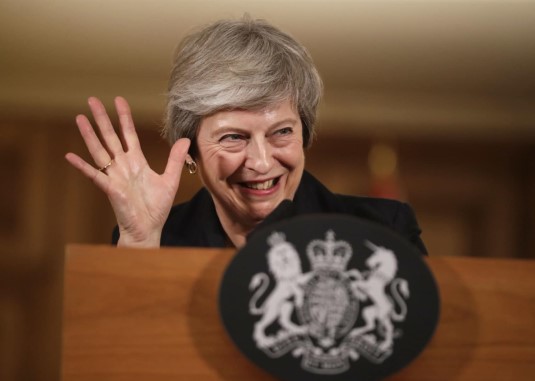
She won her no confidence vote, but 200 votes in favour with 117 against is pretty bad. While Theresa May didn't want the contest, it provided an opportunity for her to crush the demented europhobic wing of her party. "Drive a stake through the heart of the ERG" was some of the visceral language bandied about by the Prime Minister's bullish allies. Far from doing so, 117 no confidence votes are much higher than either the core group hostile of Moggite malcontents, or the numbers who are added to their famous WhatsApp group. As Mogg himself pointed out in the result's immediate aftermath, 140 Tory MPs are on the payroll. Assuming all of them voted loyally in the 1922 Committee's secret ballot, May can rely on fewer than half of her backbenchers. No prizes for guessing that the situation in the wider party is even grimmer. Will May carry on? Ordinarily, no. With no support outside of parliament and under siege within it, the situation for her is as precarious as it was before pulling the vote on the withdrawal agreement. As anyone writing on politics can't resist repeating, nothing has changed. But because all we have seen is a temporary disturbance in the status quo, Macawber May returns with a vengeance. Tomorrow she nips off to see the European Council for further clarification on the deal, a meeting which is bound to be a complete waste of time because all will be quoted back at her are the very words she must know back to front by now. Still, some Tory expectations are so low that this would have been just enough to win them over. Also, May announced at this afternoon's 1922 Committee that she wouldn't lead the Tories into another general election. Assuming we take her at face value (and you'd be pretty daft to do so these days), this gives her opponents space to stockpile support and resources ahead of the inevitable leadership contest. It shouldn't shock anyone if we somehow learn that Boris Johnson voted to support May, given that it suits him nicely for he to remain in post to soak up the punishment and the difficulties so he can later swoop in. And if that's the case for Johnson, the quarter century of Tory MPs who think they have what it takes to become leader are likely to have followed their cynical instincts too. May then has seen off the immediate crisis to attend to the permanent crisis of the Tory party. She is no closer to winning a vote on her withdrawal, and whatever piece of paper she comes back from Brussels with won't change any minds. The only hope of salvaging something from this mess is forcing an election via a no confidence vote, the chances of which succeeding are better now than it was yesterday when the master tacticians of PLP melts, SNP, LibDems, Plaid and Caroline Lucas banded together to call for one. Yet even now, how many of them 117 would vote to bring down their government? Brexit may have driven them mad, its proximity flooding their synapses with deranged lust for their pathetic fantasy, but they are still Conservative politicians and their instincts recoil at the very thought of Jeremy Corbyn in Number 10. Nevertheless, the time is nearing where one cannot be put off for long and if the DUP are not satisfied with the assurances May comes back with, then is the time to strike.
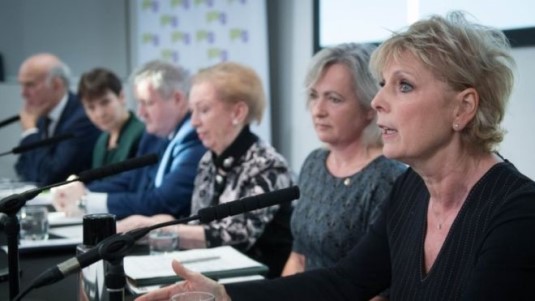
Why do First World War generals carry a reputation for incompetence? Because they would launch offensive after offensive against well-entrenched positions without regard to tactics, uselessly and criminally throwing away the lives of tens of thousands of young men. The stakes aren't as high, but I'm reminded of their example when surveying the strategic geniuses of the Parliamentary Labour Party. Had things gone according to the government's timetable, after Theresa May has lost her vote on the withdrawal agreement today she would have faced a no confidence vote. There was some consideration whether this was going to be a normal vote or one aimed at May personally. It wouldn't have had any constitutional force, but made her position next to impossible. Why did Labour consider this? Because the front bench hold to the peculiar notion that if you're going to put something to the vote, you do what it takes to win it. The DUP are not May's biggest fan after doing the dirty on them on the status of Northern Ireland in the backstop. Nor are the scorned but impotent European Research Group of gurning Brexiteers, who've sat on the sidelines waiting for the number of no confidence letters to tick over the magic 48. Would they accept the opportunity to turf May out of office? Some of them probably would. But at the price of bringing the Tories down and opening the road to Jeremy Corbyn? Not. A. Chance. Now the Prime Minister has pulled her vote, what game are this bunch of clowns paying at? Almost a who's who of Owen Smith's celebrated leadership campaign (including the great man himself), we have some of the very worst MPs to sit on the Labour benches are calling for a no confidence vote. Are they simply thick? Alas, even they are no strangers to the low skulduggery of our exalted parliamentary democracy. Their little press conference this afternoon with the SNP, Plaid Cymru, the LibDems, and Caroline Lucas that called upon Labour to table a no confidence vote was stuffed full of ulterior motives. All of these people know it can't hope to win, so there are a couple of things going on. First and foremost is an attempt to shift Labour away from its general election first position. The thinking goes if a no confidence fails, then the hopes of an election are dashed with it - leading Labour to formally adopt a second referendum position. The attendant dangers of doing so have lessened slightly in my view, but the same discredited gang are ready to swoop in and front up the remain case (assuming remain would even be an option). And if they're at the helm, they would lose. But, of course, it suits the nationalist parties and the Liberal Democrats to posture around a no confidence vote. They can point to Corbz and attack him for not being radical enough, for saving May's bacon when her repeated self-owns have her hanging on the ropes. For LibDems desperate to get back into the game, they think it gives them a lever with leftish remainers - once again demonstrating they don't have a single clue about what they need to do. For the SNP and Plaid, they too think there are electoral rewards from being more remainy - keeping Labour down in Scotland remains Nicola Sturgeon's permanent immediate political priority, and for PC supplanting Labour in Wales remains their strategic task. What then of Labour's malcontents? How is their position advantaged? Again, it's part of the wedge strategy. Noting the ten-a-penny polls that show how remain/second vote friendly Labour members and Labour supporters are, here Corbyn can be shown up for not opposing the Tories sufficiently and manoeuvring to avoid the so-called People's Vote. Meanwhile they can try and abrogate for themselves the title of "proper" opposition and champions of members' views on the subject. Undoubtedly some of the names on Ian Murray's letter are useful idiots, and others are reduced to the level of putting a minus wherever the party leadership puts a plus, but never underestimate the Labour right's capacity for cynicism. It's how they were able to control the party for so long.
Seldom do I feel sorry for Michael Gove. In fact, his state of wellbeing isn't something that should trouble any right thinking person. But to spend part of your morning defending Theresa May and swearing that the "meaningful vote" on her Brexit withdrawal deal was definitely happening on Tuesday ... it's almost as if she set him up knowing she was going to smack his face with a great big egg. It's remarkable really. After spending an eternity of exclaiming my way of the highway, the PM pulled the vote and has promised to go back to Brussels to beg for further "reassurances" on the Irish backstop. To add to the lulz, Ireland's Leo Varadkar said that this wasn't up for renegotiation without reopening the whole agreement - words echoed by Donald Tusk who has called for an emergency meeting. What a mess. May knows there aren't about to be any last minute concessions or changes to the deal. But by ditching a vote she knows her rump Tory party were bound to lose and rescheduling it to the never-never, she can play brinkmanship without the catastrophe of seeing her deal voted down in the first place. As Paul Mason observes, holding it in late January - which appears to be the consensus among Westminster watchers for the moment - might make soft rebels on the Tory benches and the odd Labour MP sweaty enough to reluctantly back the deal. Another month of the falling pound, delayed investment and business whingeing will surely do the trick for some. Yet this won't matter appreciably. The polarisation out in the country is unlikely to shift, especially after May's egregious and ungracious dumping on parliamentary democracy. Whether you're leave or remain, left or right, she has shown herself up as a dishonest chancer and a bottler. Nevertheless, in addition to the brinkmanship May has bought more time for another round of negotiations with the Tory party. Speaking on Andrew Marr on Sunday, Boris Johnson - The Economist's Idiot of the Year - did throw May something of a life line. The usual bluster and Brexit fantasyland nonsense got spun. Likewise, when can you tell Boris Johnson is lying? When he publicly affects concerns for others, as he did so when he said he would feel personally responsible if anyone lost their job because of Brexit. But yes, the lifeline. In the sole point of interest during an otherwise wasted 20 minutes, he said his only real problem with May's deal was the Irish backstop. If this could be fixed, he more or less said he'd be prepared to back the deal. Shifting the Ireland position ain't going to happen for as long as May is in power, but the "reassurances" May is seeking might help Johnson evolve toward a position where he "reluctantly" backs her deal. Why? The majority of the Commons are against the deal, and Tory Brexiteers have made enough noises. But say you're in the I-want-to-lead-the-Tories game, who are the biggest bloc of MPs? The Woke Soubz remainers? Pah. The Moggites? They can't even muster a no confidence party. The wider fraternity of Brexit ultras? Nope. The biggest chunk of Tory MPs are, believe it or not, the May loyalists. Johnson has proved himself the most opportunistic, unprincipled and amoral Tory to grease his way around the backbenches for some decades. If moving to support May's deal gets him closer to Number 10 he will do it. However, the news the UK can unilaterally revoke Article 50 couldn't have come at a worse time for the government. All of a sudden the remain-minded factions on the Labour benches know a halt to Brexit is, constitutionally speaking, within reach. It doesn't matter that May has ruled out revoking it. After all, what are her promises worth these days? A delay followed by more spanners in the works come January makes its revocation more likely, at least so goes the reasoning. But it also affords Labour's position more weight. If your route to a general election involves not antagonising Labour leavers and keeping remain on board (though the EU vote plays a different role among Labour's voter coalition), then vigorously attacking May's pathetic deal, saying you're going to renegotiate it around your priorities - the central plank of which is a permanent customs union instead of a backstop - and then offer a vote on the final deal is the best way of knitting Labour together for the purposes of winning an election. This becomes all the more credible now Article 50 can be deactivated. There we have it, another day in Brexitland. The peculiar place where the rules of politics are reversed, and the extraordinary becomes the ordinary. The long grass beckoned and that's where May has thrown her deal. It buys her time, but for what? It reduces May to a Macawber-like character, sat in Number 10 hoping something will turn up. Perhaps Boris Johnson will save her, perhaps the mood of the country will change magically and swing behind the deal. Whatever happens, May's fate and May's Brexit is in the hands of others. Far from taking back control, chaos and uncertainty reigns, and no one has the foggiest about what happens next.
In the then infamous but now largely forgotten behind-the-scenes documentary Vice filmed in the Leader of the Opposition's office, I remember Jeremy Corbyn getting annoyed at something Jonathan Freedland had written in The Graun. Why is something of a mystery, because as media commentators go he is more beige than bilge, and were it not for his parking space at the paper's offices few would pay him any mind. Unfortunately, his recent missive does deserve an answer because his remarks coincide with the opinions of a large number of Labour supporters. First things first, Labour's position on Brexit isn't ambiguous. Just as it was in the 2017 General Election manifesto, the party accepts the referendum vote and is looking to shape Brexit according to its priorities. These involve the protection of jobs and rights at work, a mitigation of economic damage, and preservation of environmental regulation. Labour's plan involves a customs union with the EU and a trade deal that brings the UK as close to the single market as possible. In other words, as sensible a Brexit as can be. And because it is sensible, it entails rejecting Theresa May's deal - not least because it curbs any future government's plans for state-led industrial activism, and does not allow for either party's withdrawal without the consent of the other. Now, I realise that Labour's position isn't as detailed as the 585 pages of withdrawal documentation drawn up by civil servants, but then Labour haven't done the negotiating. Freedland is mistaking the absence of detail appealing to the technocratic mindset as an absence of a political position. In case we need to remind ourselves, the Tories wouldn't be on the brink of a terminal crisis if Labour had cleaved to those calling for a second vote or, worse, abandoned Brexit altogether. Labour's position - a customs deal plus a trade deal on top - has far from united the Tories against it, which was always the danger had the advice of your Alistair Campbells and your Tony Blairs been heeded. The Moggites had their offshore tax haven vision, if this dismal prospectus could ever be described as such. Others fancy a straight forward no deal that would crash the country but no doubt provide rich pickings for some disaster capitalist or another. After spectacularly losing her majority, May wasn't really that fussed about what flavour of Brexit there was provided there was some level of continuity and, of course, she got the opportunity to shut down immigration. And who knows what exactly the Cameroons wanted. Amber Rudd is in today's Times talking up the virtues of a Norway-style model just as Norway are saying they will to block it suggest they're all over the place. For Freedland, Labour's position is fence-sitting. Were one of his Blairite heroes in charge, it would be canny politics. When May loses the vote on Tuesday, which is about the only certainty politics has right now, Labour are going to table a no-confidence vote en route to a general election. With the DUP pledging to defend the government against such a move, Labour are planning a personal no confidence vote in May. It doesn't have any constitutional force, but the DUP could back it and the Tories who've already sent their letters to Graham Brady are put on the spot by this move. If May loses it's difficult to see her ploughing on. Not that this matters to Freedland, for whom the general election is an unnecessary distraction and thinks only a second referendum on the deal is possible. Be careful what you wish for, especially when the Tories are the ones who determine the question. Instead, a new election allows for a refresh, of articulating new arguments and positions on the table. Labour would, rightly, put down an Article 50 extension, ask for the opportunity to negotiate a better deal and, at the end of it, (I hope) look to have it sanctified by an additional vote. The EU might not be in the mood to renegotiate, but I prefer to listen to what those a bit more experienced have to say than either pay cheque pundits or the author of the Harry Potter series. An election is a risk. Labour might not win a majority, though an arrangement with the SNP on matters pertaining to Brexit would certainly be possible. But this is much less of a risk than letting the Tories carry on, or running a referendum with the same remain people in charge who lost the campaign last time and have learned nothing in the interim. Freedland's page filler is ultimately typical of this trend. He, and they, don't know the way forward, they don't like what the world has become (a feature shared with others they affect to detest), and gear their politics entirely around turning the clock back - regardless of the damage they could cause to democratic politics. A second referendum is a bad idea, and one that cannot be ruled out, but it's more sensible and useful to try and shift the balance of Westminster politics first.