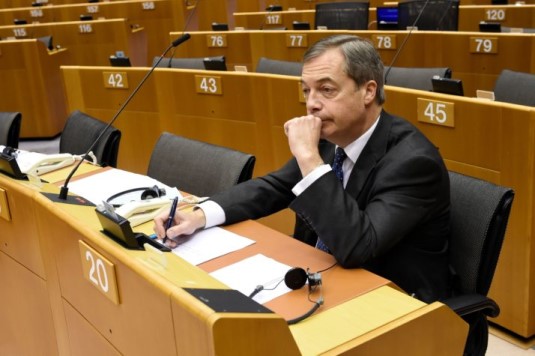
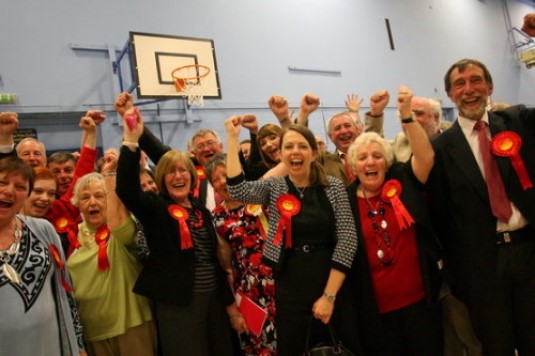
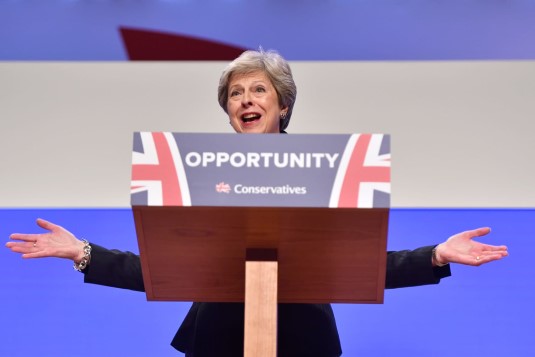
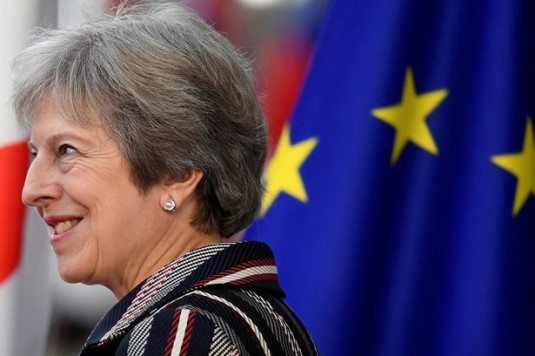
With Nigel Farage’s resignation, the stake has finally been driven through the blackened, wizened heart of the United Kingdom Independence Party. The head remains to be cut off and the rest cast into the flames, but for all intents and purposes the party is dead – just as the chances of a revival are coming into play again. The rise and fall of UKIP is a tale of bigotry, careerism, opportunism and incompetence. And above all its short history condenses on a smaller and accelerated scale the essential ingredients of the long-term decline and crisis of the Conservatives.
Let's recap. For our purposes, there have, if you like, been two waves of UKIP. The first was in 2004 when the unlamented Robert Kilroy-Silk capitalised on a few anti-Arab racist articles he had written for the Express (then, as now, the Mail's desperate, try-hard mini-me) by joining UKIP and creating a media buzz around the party for the first time. And the second marked the party's move into the mainstream off UKIP's capitalisation of the difficulties the Tories had over getting equal marriage through the Commons. Long time readers and politics watchers will remember this was a central plank of Dave's social liberal strategy, caused great upset among the blue rinsed bigots in the associations and encouraged experienced (and irreplaceable) activists to defect to UKIP. The purple party, smelling the opportunity for new recruits, dumped its previous formal commitment to libertarian values and came out in defence of "tradition" - a process that involved Farage pretty much dumping the kippers' youth section. Still, it was a price worth paying. UKIP surged from nowhere to coming within a whisker of taking a seat from the LibDems at the March 2013 Eastleigh by-election and catapulted them into the big time. Farage became a household name, he was never off the telly, and at every by-election between early 2013 and the 2015 general election the kippers consolidated their position as the go-to protest vote, regardless of who held the seat. They were able to bag a couple of Tory MPs - Douglas Carswell and Mark Reckless - who both resigned their Tory membership and forced by-elections they subsequently won on a kipper ticket. And, famously, it was the growth in support that frightened Dave into conceding a referendum on EU membership. We know what happened next.
From the outset, even when UKIP was on the rise it had two big problems. It was a highly unstable political formation full of racists and Walter Mitty chancers, and it was born in decline. This might seem a bizarre claim considering there was a point when membership and votes surged, but not when you consider the human stuff from which the party was fashioned. On plenty of occasions we've talked about the Tory party's declining voter coalition, composed mostly of older voters (particularly retirees) and people in occupations that are on the way out. This wouldn't be a problem per se if these groups were replaced by other voters as they aged, but the conservatising effects of age are breaking down and Tory values are at odds with the culturally dominant social liberalism of younger voters. The rising generation therefore are not necessarily leftists, but they're not going to vote Tory either.
UKIP's take off was part of a reactionary backlash against Dave's efforts to push the Tories through a superficial make over. Therefore not only did the party capture older and mainly (white) male activists, they did so on the basis of backward politics completely out of step with the mainstream. Stability could only be bought at the expense of the Tories, despite the stupid commentator hype that claimed UKIP posed Labour an existential crisis. In other words, from the off UKIP was plagued by a crisis of long-term viability. And so as long as Europe remained an issue for its band of obsessives, for as long as the tabloids did the cheer leading for UKIP's immigration policy, and for as long as the kippers were able to present themselves as a bunch of white imperial Britain nostalgics, they could corner a section of the electoral market.
Well, the referendum came, and the result ostensibly carried UKIP's raison d'etre away with it. Labour delivered them a a body blow in Stoke-on-Trent Central, but the writing was on the wall after May moved quickly to position herself as the custodian and guarantor of hard Brexit. Her authoritarian, anti-immigration project won back the bulk of those who had defected under Dave in terms of polling and at the 2017 general election. In these straitened circumstances and with Farage retiring to spend more time finessing his bank balance, there were two ways of keeping the ship afloat. There was the Paul Nuttall strategy of positioning UKIP as the keepers of the Brexit flame, or of lurching even further to the right. Nuttall was partly correct in his diagnosis, but believed the kipper interest was best served going after disaffected Labour voters. Doh! As we have seen, there has been a little bit of slippage away from the Tories toward the purples since May unveiled her Brexit deal. The other, piloted by the faintly ridiculous Gerard Batten, is to flirt with the fash and double down on Islamophobia and cartoon conservatism. This is hardly the path back to the big time, but as the 00s showed there was a small but persistent voter population prepared to give the BNP their votes on such a basis. The problem for Batten is this soft fash turn is toxic to most voters, including not a few Tories. And, of course, it has proved enough to spark Farage's resignation.
As you might expect, various folks have gone to town on Farage’s announcement. He said the employment of Stephen Yaxley-Lennon as an advisor to Batten was the final straw. The overt racism of this pathetic petit-bourgeois thug was too much to stomach, he claimed. Well Nige, it’s a good job there is this thing called memory because, along with Theresa May, there are few politicians active in British politics who’ve done more to stir up antipathy toward immigration generally and Muslims in particular than your precious self. Where Yaxley-Lennon prefers the intimidating power of the beered up crowd, Farage exploited fear and encouraged hostility off the back of multiple media appearances and racist billboard posters. No, it’s less the political message of Yaxley-Lennon’s street movement Farage wants to distance himself from and more its crudity and violent revelry. While UKIP’s leader and best known figure, his outsider poise remained just about within the boundaries of official political debate. Establishment anti-establishmentism opens lucrative doors, like the very well paid berth at LBC for example. As far as Farage is concerned, UKIP was a vehicle that transported him, for a time, into the front rank of British politics. He did very well out of it, but now the EDL association and overt racism is, well, embarrassing. When the MEP salary and expenses disappears he's much more marketable without the baggage of pissed up footy hooligans getting dragged from studio to studio.
UKIP lived by Farage, and has died by his hand. There are a few death rattles and spasms of rigor left in the kipper corpse and, for now, Farage is happy to draw his salary and rant from the warmth of his studio. But while UKIP is dead, Farage is not, and the possibility he could affect a return some point down the line cannot be ruled out.
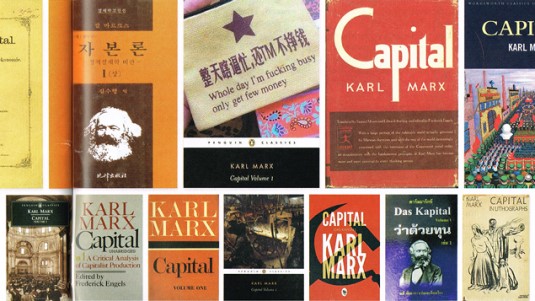
A lot of bollocks has been written about Karl Marx's masterwerk, not least about its alleged difficulties and forbidding reputation. At over a thousand pages in length and on a topic as seemingly arid as the Sahara during a dry spell, Capital's popular reception and perception is in about the same area as War and Peace and Ulysses: a fantastic accomplishment, but more a monument than anything else. This couldn't be further from the truth. Marx may have published the first edition of this book in 1867, but rare are the works of social theory that read fresh and alive after 150 years in circulation.
It has taken me a long time to read Capital. I had a bash at it during my first summer holidays as an undergrad, but got waylaid by Lenin's Selected Works in One Volume. Still, it furnished me with a basic understanding of the labour theory of value, and that made immediate sense to me as a low paid worker for a rob dog "family owned" northern supermarket. And then in the early 00s I had another bash, this time taking very comprehensive and detailed notes. This took me up to chapter eight - Constant and Variable Capital - until distracted by other things again. And there the bookmark remained for 15 years until taking it up again and finishing it over the course of the last month.
One reason it took so long wasn't just the length and the attendant time sink, but because of the literature surrounding it. Having read loads of stuff and commentary on Marx's arguments and on Capital, the various debates had a way of mystifying the book as opposed to opening it up and encouraging others to read it. Althusser, for example, co-wrote Reading Capital arguing that there was a master key to materialist social theory in there but only by wading through his own dense arguments and digressions on Theory, science vs ideology, and what not could we hope to retrieve it. You had the idiots from what was the Revolutionary Communist Party (the boring provocateurs now trading under the Koch Bros-funded Spiked Online, among other guises) arguing that Capital could only be understood in the original German. Even old Lenin was far from helpful when he polemically declared against the official Marxism of the Second International that reading and understanding Hegel's Logic was a precondition for getting to grips with the book. As far as I'm concerned, giving Capital the bible code treatment is not an aid to understanding and is counter productive from the point of view of propagating Marx's ideas.
For readers contemplating the effort, it's worth ignoring the flim-flam and piling straight in. Stylistically, Capital is an excellent read. Unlike Tolstoy's infamous novel, there's no equivalent of a minor Russian princeling popping up several hundred pages after his first introduction. Marx goes through his argument methodically and painstakingly. In places, perhaps he belabours his points too much. But then again, given the level of abstraction and the complex and contradictory ways capital and capitalism works who can blame him? Clarity of exposition is a skill too many latter day thinkers and philosophers have happily abandoned. Sure, sometimes you have to stop and think through the discussion - particularly so with the first part on the commodity (the one Althusser used to get sweaty about), but it's hardly Science of Logic territory. Remember, Capital wasn't written for stuffy academics to build careers out of. Marx's analysis was geared toward a popular readership and, particularly, the very workers at the heart of the book's argument. The only issue I have with the presentation (mine is the 1976 Penguin Classics edition) is the inclusion of The Results of the Immediate Process of Production in the appendix. This is a scrappy collection of drafts and fragments that condenses many of Marx's earlier points about exploitation, the value of labour, the "surplus population" and so on. It's good for the Marxology but going straight into it from reading the book detracts from the coherence and narrative pace.
Writing a review of Capital is a difficult task because there are so many aspects to it. Volume One is, effectively, our The Origin of the Species. The basics are there: the definition and circulation of commodities, the source of profit, class exploitation, the determination of wages, why unemployment is inevitable, the origins of capitalism, the inescapable fact of class struggle. Capital is our way in, it gives us the basics to which we must supply the subsequent detail, such as how exploitation remains with us but is changing. Times have changed but the method remains relevant and the concepts are sound because capitalism in the 21st century is still capitalism.
While reading, I did so with an eye to some of the subsequent debates and trends in Marxism and social theory generally. These included the relationship between the degradation of wage labour and health (including mental health), Althusser's argument that there was an 'epistemological break' between the early, Hegel-influenced Marx and his mature work (unconvincing), whether there is discontinuity between Marx's treatment of machines in The Grundrisse and Capital (no), and Richard Brenner's contention that capitalism originated in the English countryside and not the towns as Marx supposed is challenged by, um, Marx's account that capitalism emerged from the destruction of the English peasantry and the replacement of serfdom by waged labour in the countryside (part eight).
Capital is long, and there are another two volumes to shout about as well. But don't let that put you off. It deserves to be read, demands to be read. Sitting down and patiently making your way through is at odds with our attention economy and the millions of videos, GIFs, tweets, and so much digital babble demanding time. But doing so is rewarding, leaves you wanting to read more, and an appreciation why, despite its age, Marx's Capital remains the utterly indispensable work.
And so the Speaker is allowing a motion of contempt to be debated on the floor of the House of Commons. For those not au fait with what's happening, the government have been bound by Parliament to publish any legal advice received about Brexit and, hey ho, Theresa May and co are refusing to so. To try and head it off Attorney General Geoffrey Cox took to the despatch box earlier to lift the lid on some of the more embarrassing implications of May's backstop deal - one of which being the inability of the UK to withdraw from it without the EU's mutual consent, and that entering it was a "calculated risk". So much for sovereignty. So much for "taking back control". Nevertheless, it wasn't enough and, rightly, it looks like the government will lose the motion and find themselves before the standards committee. And then what?
We know how we got to this point, but how do others - particularly members of the establishment - view the chaotic path to our increasingly chaotic Brexit? One of the more interesting and readable offerings comes from the right. Fall Out by "Shippers" has come in for effusive praise, suggesting it's a good place to look for anyone trying to make sense of what's going on, and who is this lesser mortal to quibble the wisdom of the great and the good of political punditry? In this case the hype is deserved. "Shippers" reporting opens up the window on the country's Tory elite in all its gossipy, bitchy, vainglorious, um, glory.
Like its predecessor, this isn't a sociological work. In fact, this time round he doesn't even drop in a caveat about his method. It's a straight up account of the ins and outs of establishment politics from the moment Theresa May came to power, all the way through her period of imperial pomp, the debacle of the election, her calamitous handling of the Grenfell Tower disaster and the early, discouraging signs of the Brexit negotiations. It's an excruciating story that we're still living, and the big spoiler is we're stuck with the consequences these incompetents have laid out for us.
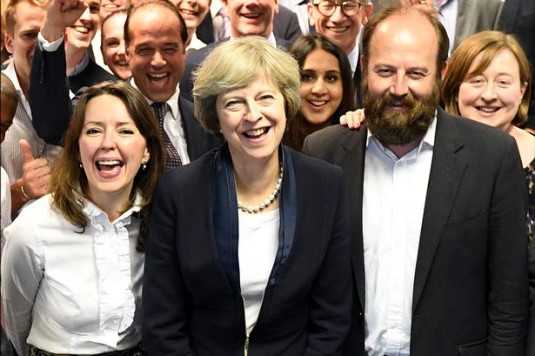
Fall Out excels in its sketching of the regime Theresa May foisted on the Tory party, and then the revenge the party took after her failed election bid by effectively visiting on her a regime of permanent instability of its own. As the main protagonist, and arguably her own worst antagonist, "Shippers" portrays a politician criminally and cruelly out of her depth and beholden to her two - now thankfully departed - advisers, Fiona Hill and Nick Timothy. The impression is oft-given that not only were "the chiefs", as they were styled, part of a triumvirate with May at the centre but effectively her brains. Timothy was more the ideas/philosophy man, and Hill the one selling the image and wrestling with the press, May is cast little more than an empty vessel. On many occasions we are regaled with tales of bad behaviour, arrogant behaviour, screaming matches, attacks on serving ministers, whispered briefings. Hill and Timothy were living their best lives, if those lives were sixth form impersonations of Malcolm Tucker. And when the election didn't turn out as expected, the cabinet quickly made it clear May would not be allowed to carry on if her crutches were allowed to stay to support her.
Speaking of elections, also interesting is "Shippers" take on why the Tories lost. It wasn't because of Jeremy Corbyn (the book goes out of its way to paint the Labour campaign and the folks around Corbyn as a shambles) nor was it really the awfulness of strong and stable, or even the dementia tax disaster. What stung was supposed to be the Tories strong suit: security. After the atrocity at the Manchester Arena, there was a belief among Tory circles it would play to their strengths and accentuate Labour's weakness. After all, Corbyn had rubbed shoulders with unsavoury characters like representatives of Hezbollah and Hamas while the Tories were the party of Britain's martial defence par excellence. But very quickly Labour muscled in by highlighting the decade's worth of police cuts under May's time in the Home Office, which continued to hit home even while May tried making capital after the London spree killings. This is what did for her more than anything else, and is still an issue the Tories have refused to rectify since.
Naturally, with Hill and Timothy out of the picture May, according to "Shippers", is less the toy of her arrogant bag carriers and more a creature of the civil service. With the chaos of the election result, we are told the late Jeremy Heywood more or less assumed the running of the government while the Tories squabbled about continuing with her, weighing up their own chances for leadership, apportioning blame, doing footsie with the DUP, and getting over their shock. From this point on May is less the author of her own fate, regardless of how debatable that designation was in the first place, and more the prime ministerial flotsam and jetsam of those around her. She doubled down on the hard Brexit rhetoric she indulged in her pomp, while all the time laying the ground for the weird soft for Northern Ireland/hard for the rest back stop deal we're lumbered with now.
The unparalleled access to leading members of the Tory party is the chief strength of "Shippers" account, but it's also the biggest weakness too. As per the previous tome, details on what was going on in Labour were much scantier and coloured by his obvious antipathy to Corbynism. His sources are few and far between, occasionally getting a comment from former Jezza presser Matt Zarb-Cousin or some anonymous-but-hostile full-timer at the Southside offices - comrades wanting the inside view from the Corbyn camp should read Steve Howell's Game Changer. Similarly, as you might expect the perspective from the SNP is largely missing and the Liberal Democrats, well, who cares anyway?
The other issue is, yes, the sociology. The screw up of Brexit, the mess of the general election, and the tedious, incompetent, complacent posturing can't all be laid at the door of the dramatis personae of "Shippers" duology. Political crisis moves through the actions of those caught up in it. The fact the activities of the few dozen Tories the book homes in on matters cannot be separated from what parties are and what politics is: the condensation and struggles of classes and class interests. Shippers then provides a way in, a microphysics of the shiftings and movements of the Tory elite, but properly understanding why their party is in an advanced state of decay and how it has brought the UK to the brink of its most profound crisis in 70 years demands we go beyond the interplay of he said, she said.
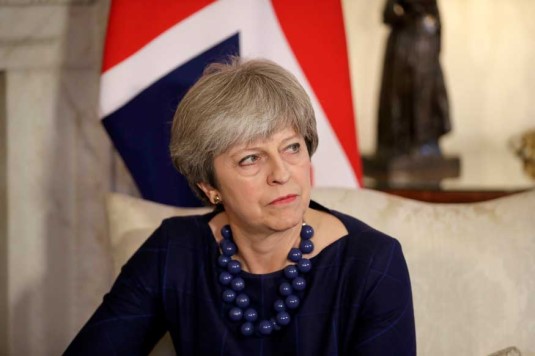
To lose one minister is unfortunate. To lose 18 is, well, something else. The departure of Sam Gyimah marks another unremarkable moment in the crumbling of Theresa May's government. I say unremarkable, because there are plenty of other things going on. According to The Telegraph, Penny Mordaunt has "let it be known" that she "has not backed the deal yet, but had said she will support the Prime Minister." Oh my days. Meanwhile, May carries on up the Khyber seemingly oblivious to her government visibly and ostentatiously decaying in office.
Gyimah's widely-publicised resignation condenses the nervous breakdown the establishment are having. Taking the Galileo satellite navigation system as his jumping off point, he noted that much of the technology and investment was UK-supplied. But with Brexit squatting on the horizon, the UK will lose privileged access to the project and be relegated to third country use. Galileo serves as a microcosm of Brexit. Four decades of investment, collaboration, and economic integration across borders, a section of the establishment - whether remain or leave - appear surprised that Brexit is going to reverse some of this. However, faced with a hit to their power and prestige they are paralysed, preferring either a ridiculous three-way referendum or going along with May's deal because it's the only game in town, and allows for more complex issues to get teed into the long grass.
Nevertheless, May can shrug off Gyimah's resignation because there are more pressing concerns. As Laura Kuenssberg rightly observes, support for May's deal is, if anything, shrinking. May is also facing a constitutional crisis as Parliament is set to demand the full release of the documents detailing the legalities of Brexit. Because the government have already ignored one vote there is a possibility of Labour bringing contempt of Parliament claims against them - a headache May could do without. And if that wasn't enough, we know her premiership could finally collapse entirely when the deal is lost in less than a fortnight's time. If you think you've seen political uncertainty and are fed up with it, expect an unwelcome early Christmas gift.
What Brexit has made possible is an acceleration of the slow burn destruction of the Tories, and its demise moves from future possibility to imminent potential. So I was very pleased to read about the latest wheeze from Conservative central office. Accompanied by a nice website, CCHQ are delivering thousands of postcards to its depleted associations. These party-funded and branded post cards are to be mailed to recalcitrant MPs and pressure them into backing the deal. Most opposition MPs would view the receipt of such post cards as helpful contact information, before filing them down the back of the sofa. Most deliciously it puts Tory deal backers in a head on collision with rebellion-minded Tory MPs, while doing is best to destroy relations between the party and its Brexity activist base. Just as Dave sacrificed UK interests for the narrow electoral purposes of denying UKIP one or two Westminster seats, for May her party is so much an offering to get through a crappy deal she has designated in the state's best interest. I suppose there's some poetic justice in that.
This month saw 46,377 votes cast over 22 local authority (tier one and tier two) contests. All percentages are rounded to the nearest single decimal place. Just two council seats changed hands in total. For comparison with October's results, see here.
Party | Number of Candidates | Total Vote | % | +/-
Oct
| +/- Nov 17 | Average/
Contest | +/-
Seats |
Conservative | 22 | 17,189 | 37.1% | +4.2% | +0.6% | 781 | -1 |
Labour | 22 | 15,975 | 34.4% | +6.6% | +10.2% | 726 | +1 |
LibDem | 22 | 9,410 | 20.3% | +0.0% | -4.7% | 423 | +1 |
UKIP | 5 | 572 | 1.2% | -1.9% | -0.6% | 114 | 0 |
Green | 14 | 1,572 | 3.4% | -1.8% | -0.9% | 112 | 0 |
SNP | 0 |
| | | | | 0 |
PC** | 0 | | | | | | 0 |
Ind*** | 5 | 1,030
| 2.2% |
-4.2% | +0.6% | 206 | 0 |
Other**** | 5 | 809 | 1.7% | +1.1%
| +1.3% | 162 | -1 |
* There were no by-elections in Scotland
** There were no by-election in Wales
*** There were no Independent clashes
**** This month's Others consisted of Harlow Alliance Party (99, 63) NFPP (223), Women's Equality Party (79), Stratford First (345)
As by-election tallies go, this has to be the most boring for some time. Only two seats exchanged hands, but seeing as one of the beneficiaries was Labour there won't be any complaints from me. Though it is something of a first. I don't think there has been another occasion where the main three parties of the England/Wales party system have managed to contest all seats. The Tories, as we know, nearly always manage to stand everywhere despite have an organisation that's dropping to bits. By contrast, Labour and the LibDems are, party member-wise, in rude health and now have the numbers on paper to stand everywhere. Will we see more of this next month?
Nothing more to add, really. Tories topped out the popular vote thanks to differential turn outs for council by-elections and the LibDems look like they're topping out with a fifth of support. Is Santa going to bring us a more interesting December, by-election wise?
1st November
Kirklees MB, Denby Dale Lab gain from Con
Newham LB, Boleyn Lab hold
South Gloucestershire UA, Dodington LDem hold
8th November
Ealing LB, Dormers Wells Lab
Harlow DC, Bush Fair Lab hold
Harlow DC, Netteswell Lab hold
Torridge DC, Holsworth Con hold
15th November
Bassetlaw DC, East Retford West Lab hold
Kent CC, Canterbury North Con hold
Oxford CC, Grove and Wantage LDem hold
Stroud DC, Dursley Lab hold
22nd November
Enfield LB, Bush Hill Park Con hold
Westminster LB, Lancaster Gate Con hold
Windsor and Maidenhead UA, Dachet Con hold
Wirral MB, Upton Lab hold
29th November
Bromley LB, Kelsey & Eden Park Con hold
Buckinghamshire CC, Aylesbury North West LDem hold
Northampton BC, Delapre & Briar Hill Lab hold
Oldham MB, Failsworth East Lab hold
Oxfordshire CC, Wheatley LDem hold
Warwickshire CC, Stratford North LDem gain from Oth
Welwyn and Hatfield BC, West Welwyn Con hold
New month, old posts. What happened to be the most popular reads in November?
1. Is the Conservative Party about to Die?
2. Thoughts on the Tory Crisis
3. Was New Labour Neoliberal?
4. Has Jeremy Corbyn Saved the Labour Party?
5. Labour's Tax Bombshell
Given the uncertainty governing British politics, it's fitting last month's selection of posts feature so many questions. As all commentary now is critical Brexit studies, it couldn't possibly be any other way. As long argued here the Conservative Party are in long-term decline, and Brexit has accelerated this process to the point where its destruction cannot be discounted. Happy days. However, the appetite for what's happening to the Labour Party has hardly abated. We had a rubbish pamphlet from Glen O'Hara whose argument that Blair wasn't neoliberal because poor people were better off under his 10 years in government got a comprehensive rubbishing. And a couple of reflections on the current state of Corbynism, including the tactical utility of keeping Hammond's tax cut for people on £45k-£50k.
December is where the action is going to be at. During the last 12 years of off/on comment here, political crises have come and gone, but we know there is one coming when Theresa May's ludicrous deal will fail to clear the house. Hold on to your hats!
And do we have a moment for a post deserving of a second chance? How about this one on what the DUP's game is.
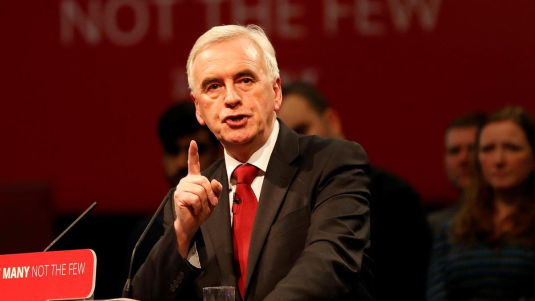
John McDonnell's remarks aren't official Labour Party policy, but let's run with them. We know Theresa May's Brexit deal won't pass muster in the Commons, regardless of TV debates and threatening backbenchers with imminent doom. What happens next?
We are seeing a convergence between the reality wing of the Tories and leading Labour lights around a Plan B. This deal is a proper soft Brexit, an arrangement based loosely around Norway's relationship with the EU, and was previously an option available earlier in negotiations (but dismissed by May in her monomaniacal obsession with immigration). Given the cavalier way with which the PM had approached negotiations, this is looking like the only sane alternative that can be pulled together in short order - EU declarations of May's deal being the final deal notwithstanding. But how to handle the politics?
I think now it's time for Labour's constructive ambiguity to end. The party's call for a general election is fine, but we need to be clear about why. As we stare down the barrel of an entirely unnecessary national emergency, Labour should set out its stall. The party should be agitating for an Article 50 extension. This might upset the Brexiteers, but they're less than satisfied with May's position anyway and are inclined to accept that more time is needed to come up with a better deal. Though, of course, Norway with added extras is hardly the stuff of which nationalist delusions of an "independent Britain" are made, but it might be acceptable to the bulk of Labour leavers. Secondly, we need to be open that Norway plus is the only flavour of Brexit that meets Keir Stamer's six tests. This is politically acceptable to most remainers, moderate leavers, and has the virtue of uniting most of Labour, bringing on board the SNP and LibDems, exacerbates the internal splits in the Tories, and puts the Irish border issue to bed permanently. It allows for the possibility of Labour to hegemonise Brexit away from the little Englander fantasies of the right. And finally, Labour should say that it is prepared to put its negotiated deal to the public vote. No messing about or nonsense, it would be a simple take it or leave it - Labour's Brexit or no Brexit.
Yes, a general election isn't likely, but a map of what happens next can start winning people over to a clear way out of the mess. However, as John notes in his remarks, what happens if there isn't a general election? "Our policy is if we can’t get a general election, then the other option which we’ve kept on the table is a people’s vote", he said. As noted before, getting one through the Commons would be difficult but stands more of a chance than May's deal has. And provided it's an either or proposition, May's deal vs no Brexit, it avoids issues with ambiguity and legitimacy a three option referendum would have - and one ludicrously argued for by people who should know better.
Again, this doesn't happen in a vacuum. This is politics, not technics. As argued previously, Labour coming out against Brexit and being seen to thwart the "people's will" would have gifted the Tories a great opportunity to firm up their vote and provide them an in with Labour leavers. "You don't like us", might go the call, "but we're the ones delivering your referendum vote". With many leavers openly broadcasting their dislike for May's deal, and going so far as to say staying in the EU is better than this, they are articulating a sense of getting cheated and, crucially, prising at the cracks in the leaver bloc. That pain, that responsibility is uniquely the Tories precisely because Labour steered clear of opposing Brexit. And so Labour's room for manoeuvre has widened. If a second vote comes before the Commons, Labour's support for it will not cost anywhere near as much damage as it would have done six months, two months, even a month ago.
The second issue is what happens to the leave voters. Yes, some of them will be extremely angry and the possibility of resuscitating UKIP or something worse can't be ruled out. Labour's business, among other things, is not to make life more difficult for itself. Yet here too, I think May's deal has taken the sting out of possible opposition. This constituency, particularly the older, right-leaning Brexiteers, are tending toward Brexit fatigue and are just as likely - if not more so - to register their disappointment with Brexit's outcome by staying at home and not giving any party time of day than sign up with a rebooted BNP. Again, the hard right balloon has been allowed to deflate because the Tories were afforded space to wrexit Brexit on their own terms.
Neither path to a second referendum is without risk, though the rewards are greater if Labour is seen to take leadership on Brexit than where the party is merely responding to events. Nevertheless, in either case the situation Labour had to manage has changed. If you like, the zone of Brexit non-punishment has expanded. The constructive ambiguity it maintained, often in the face of terrific pressure, is approaching the end of its useful life. We need not be hemmed in by it any more, and the second vote can be a live, viable option.
What was Theresa May's game? Running scared of head-to-head TV debates during the general election, and coming off second in the debates-by-proxy that did happen, why issue a live debate challenge to Jeremy Corbyn? Well, it turns out this isn't happening because Number 10 has reeled the kite in and sent out a blanket denial. Oh well.
From the standpoint of the Tories, however, such a debate isn't as kamikaze as it initially appears. There are two good reasons that present themselves. The first, which gained traction in media comment throughout the day is the belief May could and would win such a debate. On the points of detail of all 585 pages of her dreadful deal, there are few beyond the civil servants who negotiated it and the wonks who've pored over it who know the details as well as her. Dominic Raab was the Brexit secretary, but we know he wasn't really the Brexit secretary. May is in a strong position to highlight paragraph 18 of Annex E to make it appear as if the Labour leader hasn't done his homework. Another punch the PM might have hurled Jez's way is Brexit fatigue, as noted yesterday. Millions are fed up with Brexit and May is going to spend the next few weeks presenting herself as the Prime Minister who wants to shut it down, and JCorbz as the politician wanting to prolong it for party political reasons.
Naturally, Labour responded enthusiastically to May's offer. Unlike Prime Minister's Questions where May has a degree of control over its simulacrum of debate, any host worth their salt would have steered the discussion as they see fit. Some of it will be on May's terms. Some of it on Corbyn's, and Labour was banking that would be an opening to talk about wider political issues. Austerity, obviously, and what this means for hospitals, education, policing, etc. Brave is a PM who wants to go toe-to-toe with Labour on the cusp of another winter beds' crisis. Which is probably one contributing factor behind the challenge's hasty withdrawal.
Nevertheless, while this is an opportunity lost May's cold feet could mean Labour dodged a particularly nasty bullet. She's got nothing to lose. Thanks to her weakness and the awfulness of Brexit, her leadership position is as unassailable as it is untenable, and so it trundles on. However, if May was clever - and one should never underestimate a Tory's capacity for low cunning - getting Corbyn on a public platform in front of a live TV audience to agree with May and unambiguously rule out a second referendum might put a dent into Labour's support. This is the Scottish strategy - the Tories were toxic in Scotland and so during the referendum campaign they hugged Scottish Labour so close that the stench rubbed off and, well, we know what happened next. By sharing Brexit, by shifting some of the responsibility for the farcical negotiations and its ridiculous outcome onto the shoulders of Labour, May would have had the chance to spread the pain and hobble Corbyn in the same way the Tories are hobbled.
Chances of a TV debate now happening are about the same as May's deal has of getting through the Commons, yet the Tories may come to regret abandoning their gambit. Going one-on-one is a tricky business, but not just for May and co. It presents a considerable risk to Labour too.