I have something brewing on Russia and the liberal imagination, but it's a Friday night so the heavy lifting falls on Michael Walker and his latest video for Novara
.
Friday, 18 March 2022

Thursday, 17 March 2022
Against P&O's Union Busting
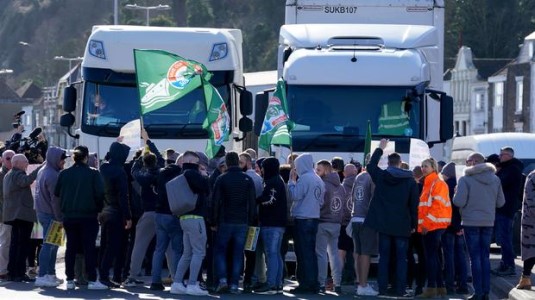
It's rubbish. In the early days of the Covid crisis, P&O warned they were in dire straits and, then, "had no choice" to cut workers' pay. This was despite the company troughing on furlough payments and, awkwardly, having transferred out £270m in dividends to its UAE-based parent company, DP World. And if P&O are in trouble because Brexit or Covid or whatever, how is it rival firms operating from the same ports, such as Denmark's DFDS, are doing well? The problem isn't the workers, it's incompetent management and rapacious owners. P&O's employees are entitled to take the bosses' excuses with a pinch of salt.
In firing hundreds without notice, P&O are in complete violation of the law. But thanks to decades of governments alternating between conservative and conservative-lite these protections are barely worth the paper they're written on. In the case of collective redundancy of more than 100 employees, under statute a boss must undertake a 45-day consultation with the workforce and its representatives. This has not been done, so can the book be thrown at them? No. The workforce now have the right to take P&O to an employment tribunal for unfair dismissal where the company can be forced to cough up, at a maximum, a year's salary. Additionally, because they have flouted the law on consultation employees can each be awarded up to 90 days' pay. The only part of the law P&O have stuck to is their notifying the transport secretary Grant Shapps, which they did last night. It's obvious that the company has calculated any loss they'll make from tribunal actions brought by former workers can be offset by savings from replacing them wholesale. What's a cost amounting to no more than a few tens of millions versus a lower wage bill in the long run? It's pure profit-seeking from an underhanded and cynical management, and they know the pitiful legal remedies open to workers benefits them. Labour law is capitalist law, after all.
But it appears the company might have miscalculated. Both unions representing seafaring staff, the RMT and Nautilus, advised staff to stay aboard their vessels, leading to scenes of masked security guards being used to handcuff and remove workers while bussing scab labour in. Other ships sealed themselves up to prevent P&O's hired thugs from boarding, while ports have seen protests and roadblocks in response - with more to come on Friday. Politically speaking, there's a rare moment of unanimity in favour of the workers. Speaking on Humberside local radio, Keir Starmer condemned P&O in language not customary to him. Nicola Sturgeon has done likewise. I suppose their support might have been expected, but Tories too? Wheeled out in Shapps's stead in the Commons earlier, his bag carrier Robert Courts criticised the firm's behaviour as "completely unacceptable." Natalie Elphicke for Dover, not known as a friend of workers' rights, said "I don’t accept their argument they need to do this to safeguard the future of the ferry." And just before tea time, Downing Street issued a press release saying "We do not agree with the practice of fire and rehire and would be dismayed if this is the outcome they were seeking to achieve." I mean, the Tories could show how much they disagree with it by outlawing it.
With services suspended in some places for up to 10 days, unanimous political backing, and the prospect of shortages in Northern Ireland, it's difficult to see how P&O's position can stand - especially as public sympathy for the workers is likely to be high as well. Perhaps the management thought with eyes focused east and the Tories in power, they'd be able to get away with it. But P&O have found some support - from The Telegraph. Matthew Lynn, author of the cringingly-titled Death Force series of thrillers, criticises the company for its "crassness", but reserves his ire from the workers themselves and, of course, the RMT. We should be grateful for a rare outbreak of honesty in the Telegraph's pages as he notes this is less about cost and more about breaking the union. Bringing in new workers offers the company more flexibility, he claims. Presumably, the current shift patterns of one or two weeks on board followed by one or two weeks off are unreasonable when scab labour can spend more time at sea and less time recuperating on land. Not that Lynn appears to have any knowledge about terms, conditions, or industrial relations at P&O. But his article shows he does know about the RMT and the London Underground, and those militant lefties in the Universities and Colleges Union striking too. The PCS and Unite are at it as well, and another new 1970s looms. Concluding, he suggests "quite a few commuters" will be cheering P&O on if they defeat the RMT. Witness the class spite of the typical hard right hack, happy for seafarers to lose their jobs because, in his head, it would own the hated London Underground staff.
At present, however,the centre of gravity on this issue is far from the would-be union busters in P&O HQ and their press cheerleaders, and with hundreds of workers who've been stripped of their livelihoods and made to suffer the indignity of firing by pre-recorded message. The unions are doing the right thing to have recommended occupations and protests at ports. With the Tories seemingly blindsided too, effective street and workplace action combined with public support could not only force P&O to retreat, but begin unravelling the whole edifice of anti-trade union, anti-worker legislation.
Image Credit
Wednesday, 16 March 2022
Keir Starmer's Bad Luck
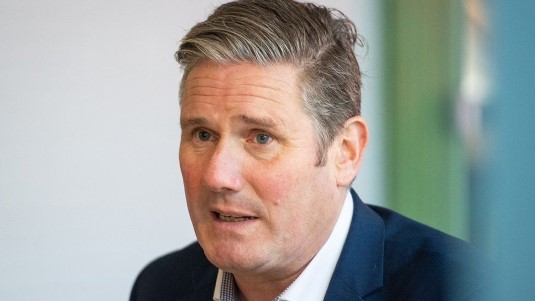
Superstition in politics is definitely a thing. Politicians, as a rule, have little clue about what politics is beyond advancing their careers, compromising to get policies through, scoring points and getting elected. It's a dynamic, shifting game for them, and one in which chance plays a leading role. Without an analysis to guide them, some fall prey to talismans and omens. Wearing the lucky outfit on election day, signs and portents of imminent good fortune or doom, the occurrence of coincidences, they are the politics equivalent a horoscope. But the nonsense of the tearoom culture does have consequences. If one gets a reputation for good or bad luck, like Boris Johnson and Starmer respectively, that can colour perceptions of how they're doing, which in turn impacts on the whispers reaching the lobby hacks' ears and the kind of coverage they receive.
Luck or lack of luck is a function of political opportunities and how they are utilised, they are not mysterious properties of unknowable fates. At Westminster, luck is unevenly distributed because the parties do not share a level playing field. The Tories enjoy the support of the press who, while in decline, frame the news agenda followed by broadcast media. And because they comprise the government, they get more air time than their Labour opponents. Johnson is a lucky politician, but it's a luck enabled by decades of soft press coverage and hostility to the alternatives. He has, mostly, played a strong hand well. Compare this to Jeremy Corbyn's tenure as Labour leader. He was unfortunate to lead without a significant hinterland in the parliamentary party, and to suffer ceaseless daily attacks by the same people who built Johnson up. Yet, despite this, Corbyn made his own luck. The barrage was constant, but on occasion he was able to sally forth and redefine the terms of politics by punting the unsayable and seemingly unsellable. He even managed this in the dying days of his leadership when Covid first made its presence felt. Here we had someone his enemies tried boxing in repeatedly, yet despite that was able to determine the direction of politics and set the weather.
By contrast, Starmer has been much more fortunate. The press environment has been benign for him. They helpfully buried the exposure of scabbing by party officials, and never trouble him about his calamitous mismanagement of the party and its finances, nor the gaping void where a political agenda should be. True, Starmer has had to operate during crises where people are more interested in what the government are doing than what the opposition are saying but the Labour leader hasn't even tried. He might have defined himself as a critic of Tory tardiness over Covid and, like his predecessor, made the case for and applied pressure to introduce new schemes or cover for gaps in government support. He did no such thing, falling in behind the Tories and offering them loyalty with the odd carping criticisms. Where he did make demands of the government, it was from a position of pre-existing widespread public support. And we're seeing the same over Putin's war. The people making the weather over Tory relationships to the Kremlin are the papers, with Starmer relatively mum - presumably in the name of a new union sacrée foisted on politics by Ukraine.
Consider the party's plans before Putin's tanks rolled in. Starmer had resolved to say nothing in the lead up to the local elections that might encourage people to vote Labour. And with public enthusiasm for taking refugees running at high levels, he completely failed to capitalise on that and make the Tories look mean-spirited - seemingly because Great Leader Keir doesn't want to be seen bowing to popular pressure. The minions who go scurrying off to fire text messages at their favourite columnists are making excuses for their boss. Starmer isn't unlucky, he's positively comatose. He has no idea about political leadership and what needs to be done, nor seemingly do those he listens to. It irritates the Labour right to repeat back to them the "any other leader" mantra they had fun with between 2015 and 2019, but in this case virtually any other Labour MP, regardless of their politics, would be doing a better job generating their own luck. When all is said and done, Starmer isn't unlucky. He's just incompetent.
Image Credit
Tuesday, 15 March 2022
Paul Mason Vs Anti-Humanism
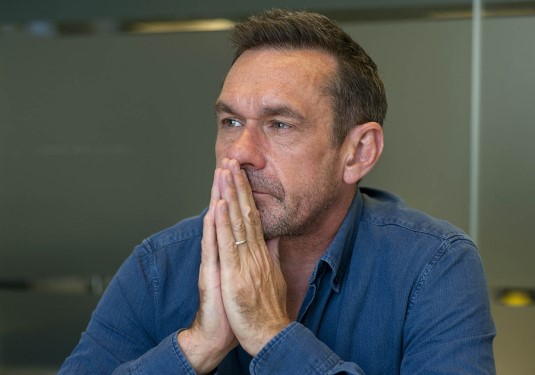
Excuse me, what? He continues,
"Once you can accept that ‘humanity is a social construct’ and that ‘history is a process without a subject’, you can look at the 1,500 dead civilians in Mariupol and categorise them as ‘neo-nazis’". Now there's a spicy take if there ever was one.
Having knocked around the left for a while, I haven't got a clue what he's writing about. Trotskyism and Trotskyists, still the dominant trend on the revolutionary left in this country, are hardly known for incorporating recent developments in philosophy and social theory into what passes for their Marxism. For these people even Gramsci is largely beyond the pale. Stalinism cares even less, locked in its own cycle of anti-imperialist/imperialist goodies and baddies. Where Foucault and Althusser have made a splash in activist circles are very much outside these traditions, with the former finding a welcome reception among anarchists. I'm not au fait with that scene, but as a rule anarchism doesn't go out of its way to excuse tyrants and rival states.
What's his beef? Responding to criticism, Paul says his attack on anti-humanism is elaborated in his Clear Bright Future. I haven't read his book, but on the basis of this and previous comments about postmodernism it appears his definition of anti-humanism differs from its usage in theoretical debates. To cut a long story short, anti-humanism does not mean anti-human. Paul's scary framing of 'history is a process without a subject' is nonsensical. All it means is the starting point for analysis, in Marxism for instance, is class and social relations. Take Marx's Capital as an example. Marx begins with the commodity, and from there considers exchange, capital, surplus value, the division of labour, and so on. We don't start off from human beings endowed by providence with certain attributes, but from how the system we collectively produce moves. This is the point Althusser elaborated in For Marx and Reading Capital, and is so obvious that it should be uncontroversial. Indeed, it is where the bulk of contemporary radical social theory and philosophy now rests, though it tends to badge itself post-humanist as a way of indicating how these debates have been settled and superseded.
What informs Paul's violent rejection of the term is his collapse of anti-humanism into anti-human, as if taking an accurate view of how social processes work erases the special, precious quality of what it is to be human. This is complete bunkum. Anti-humanist theory is rooted in socialist, feminist, anti-racist and queer challenges to how philosophy has condensed, prettified, and abstracted the experience of dominant elites and rendered them in theoretical terms. Their theory constructs a man out of abstract properties that happen to align with bourgeois values, outlooks, and ontology. They might have been radical and revolutionary in the 18th century, but by the late 19th century they obscured and distorted perceptions of the world. The human of anti-humanism is entirely different. It is a creature of history, not of philosophical schematics. Its conception of justice is derived from millennia of being on the receiving end of exploitation, its legitimacy derived from the theoretical working out of the excluded and othered. Its pain is real, concrete suffering. Anti-humanism is the eruption of the wretched of the earth into philosophy, what Althusser rightly stylised as the class struggle in theory. There is nothing more familiar, more human than the anti-human. We are many, they are few, and unsurprisingly they find our theory, our attempts to sketch out an understanding of the world both challenging and frightening.
Celebrated historian EP Thompson made exactly the same arguments against Althusser in his 1978 polemical essay, The Poverty of Theory, as Paul does today. According to Thompson, anti-humanism opened the door to totalitarian thinking, implying there are direct links between the deliberations of the Althusserian school and the Khmer Rouge's killing fields. Replying directly in the 1981 edition of Issues in Marxist Philosophy, Andrew Collier turned Thompson's absurdity on its head. The Cambodian genocide was directed at people who did not fit the Khmer Rouge's ideal of 'socialist man'. Hence the cities were emptied and the populace was forced into the fields to learn the virtues of hard work, of correcting, rebuilding and reshaping 'man' through the "improving" qualities of labour. If millions died, that's too bad. If this doesn't sound like a descendent of humanist ideas, I don't know what does. In Cambodia, there was nothing more anti-human than Pol Pot's image of the human. It's also an irony that Thompson's monumental The Making of the English Working Class is at cross purposes to the philosophical standpoint he ventured to defend. In its pages we find brought to life the daily lives and the struggles of our ancestors, and it's all the more believable and relatable because he treats them as historically constituted beings. Thompson was spontaneously, unconsciously anti-humanist and his work is all the better for it.
Fast forward to Ukraine today. The Stalinists and their fellow travellers hail Putin partly because Ukrainians don't live up to the standards of decent human beings. They're Nazis, they're anti-communist, they're corrupt, they want to jump into bed with NATO. The Putinist propaganda they regurgitate is determined to render the victims of state terror less than human, as acceptable victims, as a people who were asking for it. Their anti-humanitarianism ultimately rests on humanist claims. But at the same time, this is not the motivation behind the invasion but the logic used to justify it.
Professing one's commitment to philosophical humanism is no guarantee of rightness or, as we have seen, political rectitude. It distorts and weakens theory, and makes it less useful for understanding the world and thinking about what we need to do. I'll always have a lot of time for Paul Mason, but his embrace of what is a fundamental weakness means his politics are forever hobbled - until he engages with what anti-humanism actually is.
Image Credit
Monday, 14 March 2022
The Main Enemy is at Home
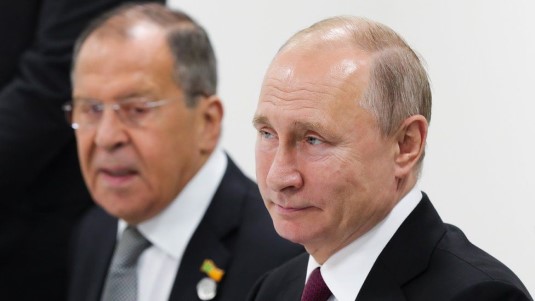
People like Chris Williamson, for instance. His descent from a good, respected MP into "leftist", and I use that term advisedly, contrarian is a lesson for the ages. His advice to Ukrainians is to end the war by affirming neutrality and allowing self-determination for the Donbas region. As Williamson is a teetotaller I have no idea what's he's been drinking, but whatever it is has made him blind to an obvious territory grab. Joining him in the gutter is George Galloway's so-called Workers' Party of Britain. Taking time out from posting transphobia and puff pieces about the Ottawa truckers' protests against Covid precuations, they've republished Ranjeet Brar, of Britain's foremost Stalinist dynasty, for whom the war in Ukraine is Russia's crusade against fascism. Not as good as his spin on Russian occupation. To think all Ukraine needed was Papa Putin's tanks to roll in and the black earth would yield bountiful quantities of milk and honey. Our dozy friends at the Communist Party of Britain have chipped in their two penneth, celebrating the refounding of communism in Ukraine at the point of Russian bayonets.
Putting a minus wherever the British establishment places a plus is several things, but not the Marxism they pay lip service to. If we go back to another Vladimir, in his famous 1916 pamphlet Imperialism, the Highest Stage of Capitalism*, Lenin argued the world had been divided by the great powers into colonial territories and spheres of influence. The outbreak of the First World War was thanks to the inescapable tensions this produced. All it needed was a flaming touch paper. Russia then was one player, having secured its own colonial empire as one contiguous territory - a gigantic prison-house of nations, as Lenin put it. Fast forward 100 years and the pink and purple bits of the atlas are gone, but the tensions remain. The American-led Western alliance with its Middle Eastern and East Asian clients and allies is the world's predominant constellation of military forces, albeit one giving way to Chinese soft power in sub-Saharan Africa and humbled by Islamist insurgency in Afghanistan. Contrary to the decline of the West rubbish pushed by war on woke-types, NATO has expanded its influence and remit by taking in former Warsaw Pact and Soviet Republic countries and going to war in the Balkans, Libya, Syria, as well as Afghanistan in the last 30 years. Tensions within NATO over Iraq ensured the alliance took a formally non-combatant role in the conflict and subequent civil war.
Meanwhile, following the break up of the USSR, the brute privatisations of the 1990s and the looting of state-owned industry by the first round of post-Soviet oligarchs left Russia and its institutions in a decrepit condition. But while the country was starved of investment, untold billions of Roubles fled abroad to find profitable homes in the City of London and its associated baubles - property, football clubs, newspapers. Latterly the Russian economy got back on its feet as an exporter of energy, metals, and foodstuffs while its ties to global finance via oligarch money brought about a new gilded age for the Moscow elite. Here in lies the roots of the renewal of authoritarianism in Russia - a tiny elite protecting its ill-gotten loot with a corrupt and brutal state apparatus. And as this was in a process of formation during the chaotic Yeltsin years, the new state started flexing its imperial muscles. Russian power was humiliated in the first Chechen war, but succeeded under Putin after a slow but remorseless grind - one that also stamped mercilessly on the independence aspirations of nearby Degastan. In 2008 Russia invaded Georgia to underline the separation of South Ossetia and Abkhazia, and we know what happened in Ukraine in 2014 - the pro-Western revolution was a pretext for dismembering the country to Putin's advantage. Russia's movement against internal insurgencies and neighbouring states is not, in the first instance, a response to NATO moves but from the dynamo of Russian capital itself, one that aspires to a network of dependent states to satisfy its commercial and financial capital backed by the might of the state. The very picture of an imperialist power, to apply Lenin's arguments.
In a war between imperial powers, Lenin's advice is very clear. It's not a case of plague on both your houses and studied neutrality, but one of mobilising labour movements against a ruling class demanding we sacrifice body and soul for their profit margins. But when it's an imperial power versus a revolting colonial possession or a formally independent semi-colony (i.e. non-imperialist state), the matter changes. In his famous 1930s discussion of a hypothetical war between 'democratic' Britain and a 'fascist' Brazil, Trotsky suggested that, despite its political character, a victory for Brazil in these conditions would be a boon to national liberation movements everywhere and a huge blow to the then chief prop of the pecking order. If anything, the situation in Ukraine is even more clear cut. The country's dalliances with the West are entirely understandable, given the predatory behaviour of its large neighbour. To preserve their independence and expand their room for manoeuvre, small states have always curried favour with the bigger powers and played them off against one another. Indeed, they have to if their own home-grown capitals aren't going to be completely subsumed by and subject to foreign capital. Ukraine has had to play this game for the three decades of its independent existence, and now it is being invaded by an imperial power only a fool or a Putin apologist would deny the country's right to resist, as well as source support and weapons from whatever source.
In other words, in Lenin's terms when a semi-colonial country is attacked by an imperial power, in this case an attempt by Russia to wrest Ukraine from a slide into the West's sphere of influence by forcefully incorporating it into its own, our sympathies and support goes to the victims of aggression and where possible, our practical support to its labour movement and radical militias. What we don't do is play a stupid guilt by association game, whereby Ukraine's efforts to secure its position by courting the West invalidates its right to self determination. The meaning of 'the main enemy is at home', one of Lenin's most famous slogans, does not mean prettifying, supporting, and amplifying the propaganda of our ruling class's bourgeois rivals. For example, Putin's supporters here make much of Moscow's rhetoric against the neo-Nazi Azov regiment and the efforts to "denazify" Ukraine, but say nothing about the Wagner Group, a far right mercenary outfit closely intertwined with Russian intelligence. Nor the Chechens vomited up from Grozny, some of whom are drawn from the fascist Sparta batallion. I don't know what Putin's leftist friends are trying to achieve, but it's certainly not mass influence among the labour movement.
Our enemy's enemy isn't necessarily our friend. Our job, as always, is about opposing the ruling class. And handily, Putin's invasion offers us an opportunity. While supporting Ukranian resistance and rendering help to refugees, the crooked links between the Tories and Moscow are under public scrutiny like never before. This is where our own fire should be concentrated because it's where we can make a meaningful change, and because it's the right thing to do. Parroting Putin's propaganda can never be this.
Image Credit
Saturday, 12 March 2022
Note on Everyday Digital Internationalism
This short guest post from @catherinebuca sees her teasing at one thread about how online communities among the young strengthens networked social liberalism, and why it irks authoritarians and would-be warlords everywhere.
Been thinking a bit around this lately. Younger generations have far less appetite for war in part because international interconnectedness via social media platforms buffers against the Othering that is required to manufacture mass consent for conflict.
Last month (before the invasion) a gaming community I'm part of was up in arms when EA weren't going to release a piece of downloadable content in Russia because of Putin's stance on LGBTQI+ issues. Russian fans set out in-depth and convincing reasons why this wouldn't hurt the Russian state and instead hurt only ordinary people who, in the case of this fan base, are largely LGBTQI+ supportive. It inspired an outpouring of solidarity amongst players around the world, and as a result Electronic Arts reversed their stance and went ahead with the release.
Platforms and online communities help erase - or at least make less solid - national boundaries and feelings of difference. When people share interests, it's those interests that inspire a sense of belonging and familiarity, and which country or culture someone is from is often unimportant to the point of it often not being known by participants in these spaces.
Severing those links makes sense if you're trying to reinforce nationalistic boundaries and set people apart from one another, creating antagonisms where they had previously been ameliorated.
Banning things like Instagram is done for the usual obvious reasons: economically punishing international (often American) companies, stopping information getting out/in, etc. But it also threatens that no-border solidarity inherent to online communities.
The problem for Putin - and other leaders - is that it's too late. Young people's social worlds are organised through nationless online engagement, where other groupings and identifications are more important. The idea of national loyalty is muddied and confused and no longer adheres to the more stable, traditional pre-social media identification. People still rally around their nationalities, and there's a lot of silly 'my food is better, your pronunciations are daft' stuff, but when it comes to sincere expressions of belonging, our shared interests trump what we see as artificial and arbitrary national divisions that are for the benefit of power.
That's a long-winded way of saying part of why I think this war feels different is because online social interconnectedness is a far greater force than it has been in previous inter-state conflicts, and it's going to be a problem for leaders from now on. We can also (and should try to) expand this to (partly) understand why this same effect isn't apparent to the same extent for Yemenis or others suffering under constant bombardment.
Not all populations have the same access to social platforms, not all have become part of the wider borderless, nationless online social commons. And because of this they are not as co-present. Younger people are still more solidaristic perhaps than they otherwise would have been though, because this has effects beyond the individuals they interact with.
These are rough and indistinct thoughts on the subject. It's basically just to say while there are lots of awful things about the platforms, more broadly they've complicated (in a good way) national identifications, which is having (and will continue to have) a significant impact on the ways consent for war and other types of conflict are manufactured, and ultimately support for an unrestricted internet should be one of our primary concerns.
Obviously, blind support for the companies that own these platforms isn't what we should be championing. Control of these platforms should be in the hands of the users (as per democratic ownership or whatever method you prefer).
Friday, 11 March 2022
Thompson Twins - Doctor! Doctor!
Here's a musical place holder for your Friday evening's entertainment.
Wednesday, 9 March 2022
The Politics of Refugee Visa Refusal
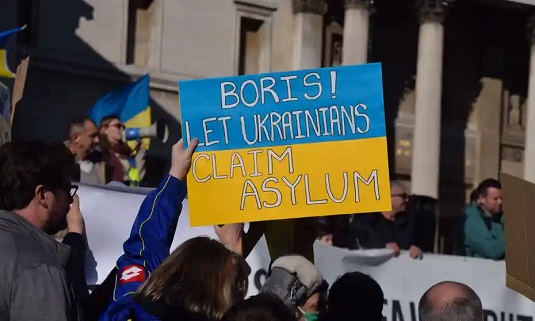
For Johnson, as with all things, party management comes first. With PartyGate in abeyance thanks to the Met's intervention, it is going to come back regardless of what happens in Ukraine and he needs as many backbenchers on side if he's to survive the fallout. And those Tory MPs don't share the public's enthusiasm for a humanitarian gesture. The reliably awful Daniel Kawcsynski, for instance, argues offering refugees sanctuary "is immoral". They should stay in countries near to Ukraine so they can readily travel back once the war is over. This view is by no means a minority one, and echoes a line we've heard many time from front benchers: Britain meets its obligations by giving generously to countries housing large refugee populations. Johnson isn't about to challenge a commonsense he himself supports if it means putting MPs' noses out of joint, so he won't.
It's not just about keeping the parliamentary party sweet. As far as the Tories are concerned, Ukrainians are the wrong type of refugee. A lot has been made recently of the unsubtle racism of the press and establishment about how war "isn't supposed to happen" in Europe, but we've seen the Tories willing to take in something like 106,000 people who've left Hong Kong. Compare this with their lack of enthusiasm to help Afghans fleeing the Taliban and we get nearer to the nub of the issue. It's about class. In the Tory imaginary, the Hong Kong'ers are entrepreneurial and more likely to have assets to their name. They speak fluent English and, politically, those making the journey are going to be right wing and anti-communist. A small but useful future constituency for the party that has offered them refuge. Ukrainians, like Afghans, do not. Most are women, working class, and likely to be travelling with dependents. Immigration minister Kevin Foster's suggestion that Ukrainians should apply to be fruit pickers betrayed the class frame the Tories are applying to this issue. The "strains" they will place on underfunded public services is not the reason, what is is a perceived vulnerability on their right flank. Farage is on his anti-green grift for the moment, but could quickly pivot to refugees if he thinks the political profits are there.
Does that explain everything? Again, no. While the Tories have tied themselves in knots over it, Labour hasn't covered itself in glory either. Yvette Cooper has been on the news, doing her overrated best to turn the visa issue into a matter of process. The problem, Cooper says, isn't the Tory refusal to waive visas, but that the visa office in Brussels should extend its opening hours. It's almost as if the shadow home secretary has form for this sort of thing. Again, looking at the polling and taking those lectures about being on the side of the public at face value, why have Labour joined with the Tories in an effort to ignore the popular mood?
It's a matter of what Johnson and Keir Starmer share: an authoritarian politics. Each has a different base. For Johnson, authoritarianism is the necessary flipside of his populism and is entirely crucial to the Tory project generally. For Starmer, as a manager accustomed to managerial habits the Fabian tradition with its emphasis on elite-led policy making and the Labour right's interminable preoccupation with protecting its factional advantages resolves itself in a politics concerned with rebuilding reverence in state institutions and, above all, the leader. Both leaderships have an interest in refusing public demands, simply because a concession on Ukrainian refugees green lights the idea both can be shifted by popular opinion. Consider PartyGate again, for example. Tory MPs haven't no-confidenced the Prime Minister (yet) because doing so under mass pressure sets a dangerous precedent. Starmer resisted hitching himself to the bandwagon for as long as he could get away with, subtly suggesting he would expect a quid pro quo from Tories alert to this sort of thing should he be subject to similar strain.
This is brittle politics. It shows how shallow both their projects are because they know they cannot be defended on their merits. Instead they have to affect a distance from the public mood every bit as wide as Putin's ludicrous table, even if accepting more refugees results in short term popularity. Opinion is fickle and can turn, so keeping to the status quo suits them fine: politics is narrowed to the point where both can police and define the terms of discourse, something the Tories normally rely on the press to do while Starmer has actively pursued this through his own party. It seems strange that denying public opinion is a sign of weakness, but what it shows is how, underneath all the blustering and posturing, mainstream politics in this country fears for itself.
Image Credit
Tuesday, 8 March 2022
Lives on the Left: Jennie Lee
This International Women's Day, we can do worse than celebrate the oft-overlooked work of women in the labour movement. To mark the occasion here's the first of a two-part episode on Jennie Lee from the excellent (and seemingly defunct) history podcast, Lives on the Left.
Monday, 7 March 2022
Nigel Farage's Anti-Green Grift
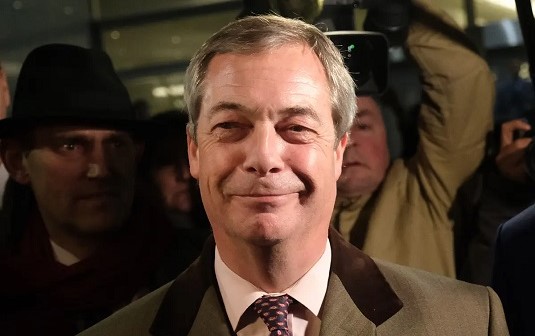
Farage thinks he has an answer. Writing in the weekend's Mail on Sunday, Farage has launched a new "campaign" under the heading "The Net Zero zealots are the same elitists who sneered at Brexit and don’t have to worry about paying their gas bills". No need for an in-depth analysis here: you can see what the game is from the off. Those soaring energy prices - nothing to do with oil and gas profiteering or recent events, it's them Islington-dwelling liberals again.
Farage writes that net zero is "net stupid". It will cost the country £1tn, according to unsubstantiated figures he attributes to former Tory chancellor Philip Hammond. Instead of importing energy Britain needs to sink those shale gas wells and get fracking. What better way for bringing down those gas bills? But this isn't just about helping protect our purses and wallets. Proceeds should be poured into a Norway-style sovereign wealth fund "for future generations". But it doesn't stop there for our Nige: new pits should be opened to fire a renewed steel industry, and it's lunacy for oil fields in the North Sea to lie undeveloped. For Britain to be truly independent, and not reliant on the whims of foreign despotisms, we must develop our own independent energy policy from our own resources.
The problem with Farage's critique of net zero and other green policies adopted by this government is that, like his attacks on the European Union of recent vintage, some of them are substantially correct. It is madness to ship manufactured goods from half-way around the world from countries with lower environmental standards. And he is right that a fair whack of sustainable energy subsidies end up in capacious, private pockets. It's outrageous the taxpayer is getting hammered on VAT for fuel to pay for the green stuff, he says. And what's the point anyway - Britain is responsible for one per cent of global emissions whie China chugs along with over a thousand coal plants to its name. We need a referendum!
There are a few things Farage misses out accidentally on purpose. Like his point about importing stuff from the four corners of the globe, but how Britain is not responsible for those emissions. There's the dismissal of climate concerns - nice to show he has zero concern for the sort of world his four children will be left with after he's gone. And as an avowed friend of capital, he appears incredibly close minded to the advantages of becoming a market leader in a world that can only ever grow more reliant on sustainable energy generation. And we should expect these gaps in his argument, because Farage's argument is not coming from an honest place. He doesn't even care about a referendum on net zero, just as long as he gets to hawk his mug around the press and the TV studios again.
We don't need convoluted arguments linking Farage to Putin and Russian energy interests to explain his anti-green turn. Remember, Brexit was not made in Moscow. Rather, Farage, like many of his arms length co-thinkers on the Tory benches, were incubated in the belly of the City, which was variously divided about its future vis a vis the UK's relationship to the EU. Surely it's no coincidence that various points of Farage's City career has seen him work with funds and firms close to primary resource extraction - a sector not known for taking environmental concerns seriously. Therefore Farage is habituated to relegating green issues to nought, a point reinforced by the sole occasion he voted for the Green Party in the 1989 European elections - because they were the only eurosceptics standing.
The problem is not that Farage will get his referendum, but the consequences of his high profile grifting. If he is able to capture media attention in the same way as last time, a new fissure could open up by mobilising the same forces that resulted in Brexit. Another round of division and rancour, the deepening of political alienation between generations, and a spin off industry of anti-global warming and climate change denialists with bigger audiences. This creates its own political pressures, one the Tories might adapt to if Farage's bandwagon enjoys any traction, and that could set back the country's slow ecological modernisation back even further. But in the end, Farage will have his profile again while those susceptible to his message won't be around to reap the harvest.
Subscribe to:
Posts (Atom)