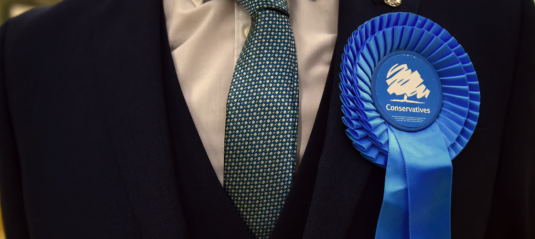
Overall, 69,839 votes were cast over 44 local authority (tier one and tier two) contests. All percentages are rounded to the nearest single decimal place. For comparison you can view Quarter Two's results here.
Party | Number of Candidates | Total Vote | % | +/-
Q2
| +/- Q3 2018 | Average | +/-
Seats |
Conservative | 41 | 21,460 | 30.7% | +5.0% | -3.7% | 523 | -5 |
Labour | 39 | 13,579 | 19.4% | -8.0% | -11.3% | 348 | -2 |
LibDem | 39 | 22,314 | 32.0% | +12.6% | +14.8% | 572 | +8 |
UKIP | 7 | 447 | 0.6% | -3.4% | -0.6% | 64 | 0 |
Green | 21 | 2,423 | 3.5% | -3.0% | -1.1% | 115 | 0 |
SNP* | 2 | 2,784 | 4.0% | -0.3% | +2.0% | 1,392 | 0 |
PC** | 3 | 742 | 1.1% | -1.3%
| +0.1% | 247 | +1 |
Ind*** | 21 | 3,240 | 4.6% | -4.7% | -2.1% | 154 | -3 |
Other**** | 16 | 2,850 | 4.1% | -1.1% | +1.8% | 178 | +1 |
* There were two by-elections in Scotland
** There were three by-elections in Wales
*** There were five Independent clashes
**** Others this quarter consisted of Brexit Party (111, 152, 153, 193), Communist Party of Britain (18), For Britain (166), Herefordshire It's Our County (304), Yorkshire Party (349), and the Women's Equality Party (90), Radcliffe First (824), and Scottish Libertarian (12), Putting Cumbria First (23), Liberal Party (293), End Austerity (138), Justice Party (5, 9).
It's one thing for the Liberal Democrats to top the poll in a month, but to manage it for a quarter? Credit where credit's due, a top performance from them. Though with how long is this going to persist for? I might suggest normal service will resume in the last quarter and one of the big two will resume numero uno. Yet what is "normal service" these days? Brexit's distorting everything, and the smart money is on an Autumn general election. Who knows what weirdies and nasties that may unleash, and then there's the resolution to this stage of Brexit too. Would no deal strap a Saturn 5 to the LibDem's chances? Is an extension about to power the Brexit Party to new heights?
Chances are we'll know by the next time I pause to write up the quarter's results.
Image Credit
This month saw 29,563 votes cast over 19 local authority (tier one and tier two) contests. All percentages are rounded to the nearest single decimal place. Six council seats changed hands. For comparison with August's results, see here.
Party | Number of Candidates | Total Vote | % | +/-
Aug
| +/- Aug 18 | Avge/
Contest | +/-
Seats |
Conservative | 19 | 9,961 | 33.7% | +4.0% | +0.3% | 524 | 0 |
Labour | 16 | 7,914 | 26.8% | +10.8% | -3.8% | 495 | +1 |
LibDem | 18 | 8,000 | 27.1% | -6.6% | +12.6% | 444 | +2 |
UKIP | 0 | | | | | | 0 |
Green | 12 | 1,170 | 4.0% | -0.2% | -3.6% | 98 | 0 |
SNP | 1 | 1,202 | 4.1% | -4.5% | -1.4% | 1,202 | 0 |
PC** | 0 | | |
| | | 0 |
Ind*** | 4 | 655 | 2.2% |
+0.4% | -3.1% | 165 | -3 |
Other**** | 6 | 661 | 2.2% | -3.2% | +0.1% | 110 | 0 |
* There was one by-election in Scotland
** There were no by-elections in Wales
*** No Independent clashes this month
**** Others this month consisted of Putting Cumbria First (23), Brexit Party (193), Liberal Party (293), End Austerity (138), Justice Party (5, 9),
A very interesting month, which just happened to contain my favourite by-election phrase; "Lab gain from Con." There were two obvious things that catch in the eye. The first is the complete absence of UKIP. Perhaps my memory isn't what it used to be, but I don't recall a month in the last seven years of covering by-elections when they didn't (or couldn't) stand a candidate. No Brexit Party either, which meant effectively the Tories had the right wing field to themselves. And though they won the popular vote (not that it matters a great deal), they were hardly storming ahead the divided opposition.
Yes, the divided opposition. Back in June, the forecast went that the LibDem surge would slip back in time as the by-elections cause by multiple MEP wins in their areas would work through, and the excitement of the EU elections passes. Well, thanks to the multiple Brexit shenanigans and Jo Swinson's hard remain posturing (is she for a second referendum? Is she for revoking Article 50?), they are leaps and bounds ahead of where they were this time last year, and completely unrecognisable versus the shell of a party that stumbled from election to election in 2017. And yet, while they have topped Labour again in the by-election stakes the tendency is one of backsliding.
Also, for the multiple nth time, we should remember that older voters are always more likely to vote than younger cohorts of people, and this is doubly and triply so in second order elections and council by-elections in particular. The LibDem surge we have seen can be put down to two factors. Either older voters are breaking for them in a big way, and it's certainly true softer Cameroon-y pro-EU Tories are giving the yellows a punt in increasing numbers, or LibDem supporters feel especially motivated to go out and vote while the supporters of the other parties aren't particularly fussed. Whichever it is, there is supposed to be a general election soon and when it comes we might have answers to this question.
5th September
Coventry MBC, Wainbody, Con hold
Eden DC, Penrith South, Con gain from Ind
Kingston-Upon-Hull UA, St Andrews & Dockland, Lab hold
12th September
Rushmoor BC, St Marks, LDem hold
Rutland UA, Ryhall & Casterton, Con gain from Ind
Shropshire UA, Bishop’s Castle, LDem hold
South Northamptonshire DC, Middleton Cheney, LDem gain from Con
Wellingborough BC, Finedon, Con hold
19th September
Canterbury BC, Chestfield, Con hold
Hammersmith and Fulham BC,& Fulham Broadway, Lab hold
Liverpool MBC, Old Swan, Lab hold
North Lanarkshire UA, Thorniewood, Lab hold
Somerset West and Taunton DC, Vivary, LDem gain from Con
Wiltshire UA, Ethandune, Con hold
26th September
Crawley BC, Tilgate, Con hold
Ipswich BC, Alexandra, Lab hold
Luton UA, Icknield, Lab gain from Con
Rochford DC, Sweyne Park & Grange, Con gain from Ind
West Sussex CC, Three Bridges, Con hold
There has never been anything decent about the Conservative Party. Since their formation, they've done what they believe is necessary to push the interests of their corner of the ruling class. Consequences, in every instance, be damned. And they were damned, as long as someone else picked up the tab. Yet whatever the Tories have overseen or done, be it war abroad or class war at home a certain decorum was maintained. Thatcher was, more or less, a stickler for parliamentary conventions while the Met smashed their way into Yorkshire miners' homes. John Major and Dave rarely if ever deviated from polite modes of address, while their policies sundered community ties and plunged hundreds of thousands of families into destitution. It didn't matter how awful the decision, how many victims it created and, in the case of the Tory cuts programme, the number of bodies piled up, convention was observed. The clubbiness of the Commons was maintained, on the whole.
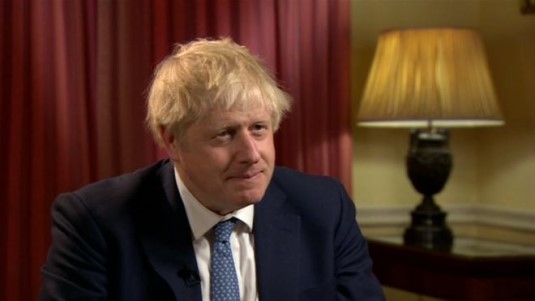
And then we have Boris Johnson. Dave may have proven intemperate and May an authoritarian, albeit an incompetent one, but the parliamentary illusio is truly punctured by Johnson's terrible and purposely inflammatory responses at the despatch box. His dismissal of Paula Sherriff's complaint against his contrived surrender-mongery and enlistment of Jo Cox for a flash of rubbish Commons oratory was crass and irresponsible. He knows full well peddling this pathetic rhetoric can rile up his base and put boosters under two-bit extremists, racists, and neo-Nazi fantasists, but he also knows that despite the murder of a MP there are no repercussions or consequences for those pushing it. After all, Leave won. And those who made the arguments, identified the scapegoats, and mobilised discontent and division for entirely miserable ends went on to bigger and better things. What does it matter that people's lives are being put at risk? It's not his neck, their necks, after all.
On the narrow point of parliamentary convention and its complete flouting, why now and how now? And, more interestingly, why does the defiance of convention not carry the costs they were assumed to have? It's not as if the country hasn't been up in arms before, and sharply polarised politics haven't stalked the land. Clearly, something has shifted. MPs used to resign from high office if they were literally caught with their pants down. Now resignations are nigh on impossible, and it's almost inconceivable Johnson would ever consider his position regardless of his wrongdoing. How?
In his 2008 collection, From Marxism to Post-Marxism?, Goran Therborn argues the cultural tendencies associated with the ascendency of capital (vis a vis labour) in the 1970s, 80s, and 90s were simultaneously corrosive of the authority structures that had fostered and incubated them. Widespread cultures of deference to politicians, monarchs, older people, clergy, celebrities, experts, bosses and union leaders, as a general rule were undermined. Mammon was the goal, and it came via a neoliberalisation of the soul. The atomised, self-activating, indebted and responsible individual is the ultimate source of authority about all things. Irreverence then was the chief legacy of the youth rebellions of the 1960s, but was quickly hitched to consumer cultures and conservative rhetoric as Thatcher and Reagan waged war on classes and institutions in the way of the unhampered freedom of capital.
The strategic nous of Thatcher and co. lay in appealing to this irreverence. After her, albeit on a lower level, Blair did the same. There was Dave's austerity populism, and Farage's Brexit populism. Each case, each type chipped away at the legitimacy and convention of the institutions keeping Britain's limited democracy ticking over, culminating in a Prime Minister and his shadowy sidekick seemingly bent on blowing the whole lot up. Their act works, because Johnson is the political instantiation of this irreverence. His cracked support don't care, because he epitomises their contempt, and his trampling of norms, threats to break the law, and kamikaze commitment to Brexit fits with how they like to think their relation to the world. They hate its tolerance, the growth of progressive social values, the binning of old backward norms, and most of all the decentering of the first self-centred generation. i.e. the notion the spotlight is no longer on them. Johnson's calculation, as long argued here, is by playing up to them he thinks he can keep his decomposing party in office, that it would be enough to win an election. It almost worked for Theresa May, so why not Johnson?
Therefore, the bull in a china shop performance is exposing the conventions of office and parliament as exactly that. What point is a gentlemen's agreement when neither party to it are gentlemen? The pitch of irreverence is such Johnson knows he's not likely to suffer too much politically for thumbing his nose at precedent, and might even curry favour among the massed ranks of Brexit. Nevertheless, as a strategy it has backfired terribly so far, almost (almost!) radicalising centrist Labour MPs in their outrage against him, raising the costs for Labour rebels and "ex" Tories to back any repainted May deal he comes back to the Commons with. And now he's suffered his seventh Commons defeat in a row over a recess for Tory party conference. And yet he sticks to it, because Johnson reasons it plays well to the dead core of his support and reaches over to the Brexit Party. The people vs parliament is what he craves, and how he thinks the Tories can win the next election. And if that means the effective death of parliamentary custom and practice, so be it.
Image Credit
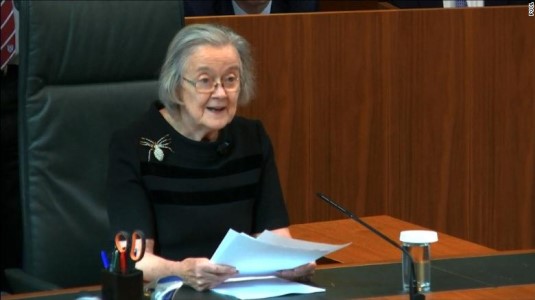
Another day, another disaster for Boris Johnson. In ordinary times, the decision by the Supreme Court that determined his prorogation of parliament was unlawful and, in effect, he lied to the Queen would be career ending. The lectern should be pitched in Downing Street and Johnson is there, crying crocodile tears down the world's cameras. Alas, this is not to be. Downing Street has "leaked" its displeasure to Laura Kuenssberg, saying "We think the Supreme Court is wrong and has made a serious mistake in extending its reach to these political matters." And this is the line most of the right have taken. Despair is stalking the land tonight alright, but this time it's team leave who are left to grieve.
You didn't need much in the way of legal training to note the government's case before the Supreme Court was tissue thin, and the position led by Lord Pannick on behalf of centrist celebrity much more convincing. All the government could muster was a plea this was none of the court's business, whereas the remainers arranged documentary evidence of the Prime Minister's intentions and cited precedent to bolster their case. Watching proceedings on Thursday, the clincher for me was the bringing up of the Unison tribunal fees case. Readers will recall the coalition government of the Tories and LibDems (yes, remember, the LibDems) hiked up fees for employment tribunals. Ostensibly to deter bogus claims and tackle the culture of ambulance chasing, the real reason was to strengthen bullying bosses and tilt the balance of power in the workplace even more in their favour. The Supreme Court found it unlawful on the grounds it went against the spirit of justice by restricting the availability of legal redress. As such, while there were no rules preventing Johnson from proroguing parliament, he was hoping to restrict his accountability to parliament as well as frustrate its normal operation ahead of the Brexit deadline. As such he acted against the spirit of a system in which parliament sits supreme. And the court agreed.
Does this mean the sky has fallen in, like government supporters and Brexiteers claim? Well, only if your present and future schemes are unconstitutional and depend on manoeuvres dodgoir. If you were ever serious about "taking back control" and affirming the superiority of parliament vis a vis the EU, then our leavers should be cheering that the Prime Minister's accountability to it has now entered the corpus of the UK's ludicrous uncodified constitution. So no, the protestations this is undemocratic and places a dead hand on British politics are complete bollocks. If liberal democracy is your bag, then you need bars against arbitrary powers and their exercise. It is also worth noting the court's judgement does not check the power to make laws. There is nothing stopping Johnson from tabling legislation enhancing the powers of the Royal Prerogative, apart from the hilarious disappearance of his majority.
The obvious wider question is if your project for government is transformative, whether the Supreme Court could be used by disgruntled employers and other groups against a programme of the sort unveiled at Labour Party conference this week. And yes, of course it could. If we've learned anything from Labour's own struggle with itself and how the media have systematically defamed and traduced the party and its objectives, every little thing, every avenue to sap our energy and thwart our attempts at remaking the country and redressing the balance of class forces will be leveraged and used repeatedly. You can see it now - cases against Corbynism's disposal of private school property, forcing big pharma to relinquish monopolies on medicine, and the rest. And our strategy in response? It has to be twin track. Observing the constitutional way of doing things, including the proper drafting of legislation that leaves no ambiguities or conflicts with existent and unrepealed legislation. No more half-arsed laws. And the second? Mobilising our movement.
Despite its pretences, while no one is above the law the law itself is the product of contradictory social relationships. The lawyers and solicitors who work in it, and the judges presiding over it neither are nor separate from the rest of society. As privileged and, sometimes, literally bewigged members of the ruling class the law is there for the protection of their property and, obviously, their interests. And we have seen plenty of judgements handed down and precedent set confirming this over the centuries. But, as per the Conservative Party, the existence of the bourgeois interest does not necessarily mean a unanimity around what constitutes that interest. If the state is a general committee for attending to the ruling class's common affairs, the apparatus of the courts is another means for securing it - even if it means one sectional interest of the ruling class loses out. Today's judgement was political whichever way you diced it, and the 11 Justices - of different political persuasions and undoubtedly opinions on the vexed question of Brexit - made a decision they thought was best not just in law, but for the relationship between the courts and conventional politics. And, coincidentally, congenial to the social layer most supportive of the rule of (bourgeois) law: the liberal elite. Only a naïf would suggest these were of no consequence.
Judges are not immune or insensitive to wider politics. As we transform Labour into an actual party/movement as opposed to just being one on paper, we have to mobilise around our policy areas, raise the temperature, make our cases in the workplaces and communities, online and offline, of helping generate an irresistible head of steam for change. If, for example, the country is decidedly cheesed off with big pharma, rip off prescription charges, and how they've exploited the guaranteed market the NHS has provided them for decades, the less likely the law is going to find for them in cases disputing the legality of whatever Labour is compelling them to do. Because, ultimately, the legal profession wants to stay relevant, wants public support, and wants to sustain whatever legitimacy it has in the eyes of the public. A canny Labour government would recognise this, and leverage its support in the country to neutralise mischief, legal or otherwise, before it properly gets going. A reminder then is mobilisation outside of parliament isn't decorative: it is vital and integral to our plan.
Image Credit