Sunday, 15 April 2018

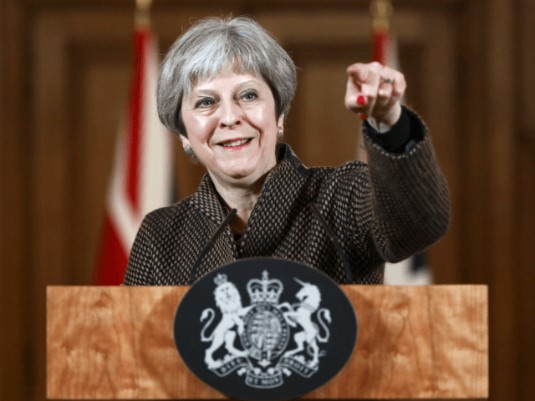
Theresa May's Theatrical War

War and politics go hand in hand, which is something Theresa May certainly understands even if sundry Labour backbenchers do not. Reminding us of this was a rumour reported on by BBC Washington correspondent, Jon Sopel. He suggests that while the US led the bombing of selected targets in and around Damascus, it was actually the French and the British who were egging on an immediate response. The suggestion being that May wanted it done sooner rather than later to avoid the decision going before Parliament and risking the fate of her predecessor. This is a scandalous state of affairs if true, but one that is entirely plausible given May's unenviable track record of dodging scrutiny and having little time for the democratic niceties of Parliament. Can this be explained solely in terms of her personality quirks and leadership style? No.

Ironically, May probably would have won a vote in the Commons. Unlike the muddled Syria motion Dave brought before Parliament in 2013, the objective of missile strikes were very limited: an ostensible diminution of Assad's capacity to wage chemical warfare in the future and to demonstrate to the world that such atrocities merit a punishment beating. There are people on the government benches who are opposed to military action, but are more than matched by the 30 to 50 Labour MPs convinced strikes are appropriate (some of whom are so gung-ho it's hard to envisage circumstances where they wouldn't back a military action). May therefore didn't want to risk it. Her premiership is characterised by a play-it-safe attitude, whether before the election, during her farcical campaign, and in the shambles after - if your authority is shot only a limited room for manoeuvre remains. Dave was damaged by losing his Syria vote, but thanks to the coalition he lived to fight another day. Had May lost this vote, under the circumstances, the consequences could have proven different: she might have been out of her job.

Second, while in one respect timing isn't crucial, timing is crucial. Eh? Despite some of the idiot musings to have poured forth onto the airwaves and status updates in recent days, the bombings were not about halting a humanitarian emergency, nor was there any suggestion further chemical attacks were imminent. In May's case, it was about avoiding Parliament certainly, but had she delayed and waited for the inspectors to make their assessments, this is time where her control of the narrative could have slipped away. According to Survation, 54% believe there should have been a Parliamentary vote on military action and only a fifth endorse the bombing. That could only go up as more critical voices get more air time, and opponents of war start mobilising the numbers and wresting the conversation away from her and the Tory editorial offices. Once a few dozen CLPs had made their opinions known, some of those Labour MPs she would have had to rely on to get a vote through might not have proven so reliable after all.

Third, a short, sharp, quick intervention is a way of laying to rest the howling phantoms of Afghanistan and Iraq. Allowing Trump to gloat about the success of the strikes, of emphasising the precision character of the attacks (according to regime sources, there were only three injuries resulting from them), of curtailing public debate and speculation, May is rehabilitating the illusion of a costless war, or simulated war. Pressing buttons and causing explosions, of a rain of bombs carrying away military targets and weapons infrastructure but never civilians, this is how war in the 21st century should be - trust us and war can become painless, especially when the Russians are phoned up in advance so their personnel (and those of the regime) can get out of Dodge. It is ultimately a performative, theatrical war that gives off the impression of "doing something" to salve one's conscience and that of an imagined public when, in fact, it might be doing nothing or, worse, touching off a wider conflagration.

Will May succeed in rehabilitating this idea of war? Unlikely. Nevertheless her action alongside Trump and Macron has serious consequences. She has abrogated Parliamentary convention and returned war making to the office of the Prime Minister. She has flouted the UN Charter, and by attacking when she did May circumvented due process - the weapons inspectors hadn't even begun their investigation when the missiles flew. In so doing she has let every big power know they can flout international law with impunity, and as a consequence is helping make the world a more uncertain, if not dangerous place.

Thursday, 12 April 2018

Jeremy Corbyn and the Anti-War Rightwingers

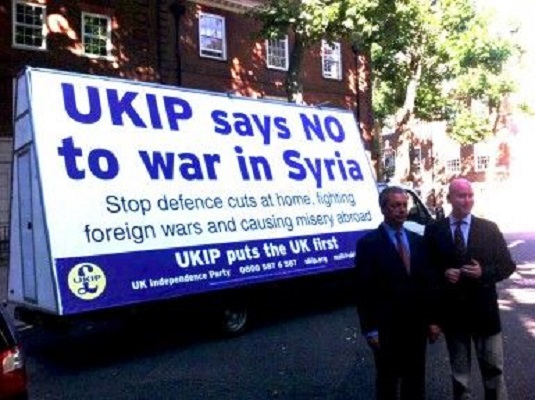
Politics sometimes makes for uncomfortable and uninvited bedfellows. Take poor old Jeremy Corbyn for instance. Since the left took over the Labour Party, we've been plagued with stories about cranks, weirds and racists taking out membership and getting spun by the media, sundry centrists and the Tories as some how indicative and typical of our party's transformation. The never-ending difficulty of "left wing" anti-semitism is a prominent case in point. Another strange group of people, who wouldn't ordinarily be seen within a million miles of supporting Corbyn's Labour are groups of right wingers. Among them you can count Peter Hitchens and sundry back bench Tories, Nigel Farage, and Arron Banks. They, like Corbyn, are opposed to military action against the Assad regime following an apparent chemical attack on Saturday. What's going on here? How can it be this bunch of anti-working class shysters find themselves on the same side as Labour's leader and the majority of left wing opinion? Are we seeing a convergence on matters of foreign policy?

Of course not.

Let's consider Jeremy Corbyn's positions on foreign affairs. He is variously characterised (if not caricatured) as someone who puts a minus wherever the government of the day, regardless of colouration, puts a plus. Kosovo, Afghanistan, Iraq, Libya, Syria, in each case Corbyn has not just voted against bombings and war, he has via his associations with Stop the War actively campaigned against them. The official politics of StW aren't the best in my view, but this is not the horizon that limits Corbyn's positions. Clearly influenced by Lenin's approach to imperialism and the neo-Gramscian view of international relations, he understands there is a pecking order in the world with the United States at the top, and its allies/vassals each occupying a subordinate perch. With Marxists, he understands this is the key prop of a fundamentally unjust social order, and yet he differs with the Marxist position in two crucial aspects.

In the first place, Corbyn's internationalism isn't about defeatism, the idea that wars waged by big power states abroad can be turned into revolutionary openings at home. Instead he holds to a left wing but marginalised view well within established conventions: what you might call strong multilateralism. This favours strengthening international law under the aegis of the United Nations and, crucially, ensuring all states are equal before it. In practice this means the UN would acquire the trappings of a supranational state whose law, and therefore sovereignty would come above the others. The second string to Corbyn's bow is his pacifism: the simple but straightforward view that war is almost always wrong. Therefore Labour's position on Syria remains one of a negotiated solution followed by institution building, just as it would be for virtually any other live conflict or flashpoint. Naturally, Marxists armed with their theories of imperialism, of core and periphery nations, or the emergence of a decentered 'Empire' of diffuse and multiplying sovereignty would regard this as muddled and utopian. Perhaps it is, but the fusion of a Marxist understanding of global political economy and power politics, combined with pacifism and a stress on international law makes up Corbyn's strong multilateralism. It is what it is.

This is opposed to the dominant approach in the foreign policy establishments of the Western powers, and the armchair warriors of pundit planet: liberal interventionism. It pays lip service to the salience of international law and the UN - when it suits - but calls for military action, either by a coalition of nations or by the US as guarantor of the international order, on the grounds of egregious human rights abuses and/or violations of democratic norms. Consider, again, responses to Syria and Venezuela, for example. Note, this is how liberal interventionism presents itself. In practice, it is more often than not a justification for the playing out of power political moves. The build up to Iraq, of course, saw this hypocrisy displayed to full effect. For all the homilies about human rights, democracy and so on the occupying powers set up a corrupt, sectarian state whose stupid oppression later facilitated the rapid take over of huge chunks of its territory by a few thousand Islamists. Their rhetoric of freedom was belied by their looting of Iraq's oil industry and ensuring reconstruction contracts, coincidentally enough, went primarily to American and British companies.

All very well, but what has this got to do with our "pacifistic" right wingers? There are two strands here, one I'm certain patrician(ish) Tories like Hitchens share: the well worn Tory scepticism of grand schemes. Interventionism in its Blair/Cameron guise thinks you can build democracies by dropping bombs on people, of using munitions to blast the slate clean and starting over with an off-the-shelf constitution and a timetable for parliamentary elections. Critiquing liberal interventionism might be informed by democratic assumptions, or colonialist ones (they're not "ready" for democracy). Overlapping with this is the self-styled "realist" approach to foreign affairs. That is what matters in the world are Britain's interests, not principles or commitments to supra-national outfits like the EU and the UN. As far as Hitchens, Banks and Farage are concerned they are not convinced that Britain's interests are served by getting more tangled in the Syrian civil war, nor by ratcheting up the tension with Russia. For them, with Brexit looming, Britain's interests (which is synonymous with their interpretation of its commercial and big power interests) should be focused on trade deals and renewing its "romantic" ties with the Commonwealth in a 21st century retread of Lord Beaverbrook's desire to transform the ex-empire into a free trade area. They are not opposed to the unilateral exertion of Britain's military power, they have merely set their face against it in this instance.

What we are seeing then is not a convergence of views, but a momentary coincidence of them. Whatever you think of Corbyn's position, his is based on addressing the injustice and global imbalances of the international order by introducing strong regulation via the UN. This is anathema to the "anti-war" right for whom all that matters are British interests, however they define them. To pretend that they share the same position is intellectually vacuous posturing - a position, one might say, specifically contrived to avoid having to engage with the substance of Corbyn's critique of international relations, let alone its more consistent embodiment of liberal, internationalist and social democratic values.

Monday, 9 April 2018

The Grim Reality of Making Peace in Syria

There is a sickness at the heart of British politics. As readers know, there was an apparent mass casualty chemical weapons attack on Douma in Syria - another grim episode in a civil war showing few signs of petering out any time soon. Surely most political people spared a thought for the victims, before thinking about what to do next. According to Boris Johnson, reports of the attack should be investigated and on the basis of said investigation the perpetrators be held to account. Labour's statement says exactly the same thing, sans the ritual denunciation of Russia but holds out for concrete steps to be taken to restart peace talks. That seems quite sensible to me, but that's only if you're, you know, interested in finding a way out of this appalling conflict. Unfortunately, not everyone is of the same view.

Take the always ridiculous Sajid Javid, for example. He sees dying children, he sees Labour's press release, and he says it "could have been written by the Kremlin". Likewise, the media have taken the same tack - this HuffPo article chimes in, claiming Labour's position - which is the same as the government's position has been "widely condemned". The proof of the breadth of this condemnation was, um, Javid's tweet. It's almost as if "get Jeremy" has become the overriding cause of British politics, and no matter what the issue is it has to be spun to blame Corbyn. I bet even Johnson's congratulating the anti-immigrant and, yes, anti-semitic Viktor Orban, the re-elected Prime Minister of Hungary, is somehow Corbyn's fault. Absurd normally, but in Syria's case, to reduce a vile atrocity in a brutal civil war to Westminster knockabout is despicable.

Nevertheless, while not for one moment conceding ground to Tories and Labour's own B52 Bevanites, it's not difficult to understand the frustrations many people have about Syria. The country is a charnal house on the doorstep of Europe, periodically commanding the news with grisly war crimes and constantly, consistently supplying endless stories of misery that don't capture headlines and attention, but is nevertheless there. Every now and then up pops someone to remind us that not intervening in wars is not without costs, as if they're the only ones to have had this epiphany. Of course, Britain is not not involved already in Syria. Special forces are in the field, the UK set about bombing IS targets in Syria and Iraq with alacrity, and British drone attacks have been made against regime targets. There are also the arms it has sent to various opponents of Assad, not all of whom are secularists, let alone democracy-loving liberals. And it has not used its good offices to rein in Erdogan's Turkey, for whom the Syrian civil war is an opportunity to continue its filthy war against the Kurds. What then is the balance sheet of Britain's intervention so far? Has it made peace more likely, or exacerbated the conflict?

But let's take the interventionist objection head on. Yes, not engaging in full-on intervention has its costs. We see it everyday in the news reports. Yet what is the alternative? Had the West intervened Libya-style before the Russians got involved, Assad would not likely have lasted five minutes. But the long occupations of Afghanistan and Iraq cast their shadows over Western military action. And besides, had America, Britain and France bombed the regime into a richly deserved grave, the Islamist militias - including the black reaction of Islamic State would have benefited. Rather than having eastern parts of Syria under its control, it could have encompassed much more - including Damascus. Getting them out of Mosul and Raqqa wasn't an easy task, and having to deal with them in this scenario would have cost greater quantities of blood and treasure.

That was then, but now "punishing" the Assad regime means going up against its backers in Moscow who, for domestic political reasons, cannot be seen to back down. War with Russia is unlikely, but not impossible. The potential is there for a wider conflagration and the prospect of even more destruction and death. Though it is worth noting how despite repeated atrocities covered for by Russia, the British government remains strangely reticent about pursuing sanctions that would really bite the Putin government hard. Russia may be a vast country, have a large population, and a powerful military backed by nuclear weapons, but in economic terms it is roughly the size of Italy. That the Tories hardly countenance the damage this could cause and therefore the pressure it would exert, especially in conjunction with others, and their recent skirting around sanctions with regards to the Skripal affair, this begs the necessity for some very serious questions.

There is an alternative to squaring up against Russia or doing nothing. It's difficult, it would probably see some pretty loathsome people go unpunished, and will in all likelihood keep a murderous dictator in power. And that is the suggestion made at the end of Labour's press release, that instead of throwing our hands up or indulging sweaty 1980s Cold War fantasies the West starts thinking about what it can do to promote a peaceful, negotiated end. Not a temporary ceasefire here or there, but one recognising the realities of the conflict on the ground and the significant bar against escalated Western intervention. Like I said, it might taste like ashes in the mouth, but in the absence of any viable alternative course of action, what else can be done?

Sunday, 8 April 2018

The Centre Party Delusion

When your idea is universally pooh-poohed, chances are it isn't a very good one. Such is the announcement of the imminent (still) birth of yet another centrist party, vying for the mantle of mild social democracy while being for "entrepreneurship" and "immigration controls". Sounds pretty much like the Labour Party under Ed Miliband, and we all know how that turned out.

In theory. at least according to the venerable Andrew Rawnsley, he opines that there is what you might call an "objective" constituency for such a party. Polls show high numbers of 'don't knows' when asked to pick between Theresa May and Jeremy Corbyn. Apparently, 45% of people think there needs to be a new centre party, and some 56% believe existing parties don't represent them. Rather than auguring the dawn for a rejuvenated centre, these can mean all kinds of things. After seeing the collapse of the Liberal Democrats over the course of the coalition government, it is quite possible large numbers of people *did* see the need for a new centre party (this figure is from 2015) once the existing one became a busted flush. That doesn't suppose they would be prepared to support it. Likewise, poll after poll shows that the majority of the electorate define themselves as being in the political centre. Not because they identify with Labour melts and Tory wets but, sadly, not a great many people are au fait with the difference between left and right and so identifying yourself as centre is non-committal and sensible without letting on your ignorance. Face it, if you were uninterested in politics would you take the time to understand the gradations of difference between left and right?

And then we have the issue of representation itself. There are large numbers of people who believe there isn't a party for them because none 100% agree with them, and/or do not talk about the things they believe are important. Here is why the pull of Nigel Farage and Jeremy Corbyn has proven so powerful, because they articulate outlooks that were/are excluded from the political mainstream. Thinking about exclusion now, in 2018, Corbynism has pulled in large numbers hitherto outside the mainstream politics game, while the collapse of UKIP into the inconsequential has taken one party identity away from millions of voters. Yes, they might find succour with the Tories, but that doesn't mean they identify with them. As Paula Surridge points out, it's the "authoritarian" voters (particularly those who are left wing, economically speaking) who are under-represented. Think they're game for a touchy-feely/immigration-bad/free-market-good "centre" party?

When you're in Westminster, or at the top of the business/third sector tree like our network of guilded centrists with £50m to burn, it can appear as if the only politics that matters is what happens in the chamber, the committee room, the lobby, the editorial offices, the broadcast studios and the think tanks. Indeed, this is why the post-Brexit coup against Jeremy Corbyn failed - because the PLP majority bought into the illusion that only they mattered, while his base was in the wider party: the membership and the trade unions. From this point of view, having sympathetic MPs, journos and think tankers on side, a policy platform, full-time "researchers" and cash in the kitty, this simulacrum of a party can appear a real goer to its wealthy backers.

What they don't understand, what most in and around politics fail to understand is that politics is a social phenomena, it'd about relationships and interests. Parties are machines, but they cannot simply be called into existence as per one's accountant conjuring up a shell company when taxes are due. Parties become successful because they articulate demands that chime with the experiences of large numbers of people, and they don't do it just the once, it has to be repeated day in, day out. The Conservatives and Labour are the top political dogs in Britain because of their roots in the most salient relationships in which a society like our depends: the wage relationship, and what they have to say speaks in a variety of ways to the collective experiences of millions. When Labour and Social Democratic parties "forget" where they're from, they begin actively disorganising the class base they organised in the first place, and more often than not fall apart. PASOK, Scottish Labour, the French Socialist Party, the Dutch Labour Party, the SPD - how many more dead and dying parties will it take before self-described centre lefts notice how common actions have common consequences?

Talk of new centre parties are among Westminster's most frequently indulged fantasies, because self-described centrists have nowhere to go and no strategy to get them out of their hole. The LibDems are barely viable, May panders to her cracked hard right, and now members expect more of MPs and expect them to be accountable, life inside Labour is chafing. If only centrists could have the politics they deserve! In the unlikely event of a new outfit attracting big names, it will be shortly before the next general election and will launch with the express purpose of grabbing enough votes from Labour to prevent it from forming a government. Fancy the sound of such a scenario? I pity you. If this is where your bewilderment toward and hate of the resurgent left is taking you, why not do the honourable thing.

Saturday, 7 April 2018

Jaydee - Plastic Dreams

Put on them dancing shoes.

Skripal Skulduggery

Whether it's true or not, popular opinion has it that the alternate meaning of 'crisis' in Chinese is opportunity. This should be at the forefront of our minds as we cast a critical eye over the Skripal poisoning affair, for what we have seen happen these last couple of weeks less a conspiracy (though sometimes mainstream politics can appear as if it is) and more a case study in the sort of opportunism the Conservative Party and its leading figures revel in.

You might recall the howls of outrage that greeted Labour's response to Theresa May's statement in the Commons. As she condemned Russia for state-sponsored (attempted) assassination, Jeremy Corbyn tried lowering the temperature by suggesting, quite sensibly, that we should wait for the evidence and not jump to conclusions. Yes, how outrageous it is to suggest the government should comply with legal norms before pointing the finger. So unconventional in fact a number of Labour backbenchers let the world know they were prepared to believe what the Prime Minister was saying - it takes a strange mindset to believe the Tories play politics on all things apart from international relations and national security. Of course, it could be that May was and is in receipt of intelligence pointing to suspects linked with or part of Putin's mafia state, but we don't know. And neither does the Leader of the Opposition because the Tories denied him access to the same information on spurious security grounds. It was part of a piece. By refusing to give May a blank cheque the government, particularly the fatuous fool Boris Johnson and their media, spun Jeremy's sensible positioning as weakness. Because it was Russia, wait-and-see was distorted and contorted until it could be presented as reticence, reinforced by the lingering trace of recent Cold War slurs, and the government's decision to withhold evidence dog whistled the tune of disloyalty the Tories have long tried implicating Jeremy with.

This is not the first time - far from the first time - the Tories have spun a "security issue" this way. On the occasion of the London Bridge attack shortly before last year's general election, and despite the immediate suspension of campaigning in respect of the victims, Theresa May responded with a highly political speech. As well as offering a counter-terrorism strategy not worth a hill of beans, she argued Britain was "too tolerant". We needed to be tougher and, implicitly, more authoritarian. In the context of narrowing polls and a campaign opposing the "strong and stable" Prime Minister to the "weak" alternative, this was an intervention deliberately calibrated to reap votes. It failed.

Consider then the right wing rhetoric attending the coverage of the Skripal case. As a nerve agent, Novichok could only possibly be deployed by a state entity. And to reinforce the impression, it was dubbed "military grade", strongly implying this meant an extra layer of deadly compared to the common or garden Novichok you can buy over the counter with your Strepsils at the local Tesco. Not many people know a great deal about nerve agents either, though down the years we've heard tell of how these weapons can easily kill if they come in contact with the skin. Naturally, the tin foil hat brigade have accepted this interpretation of what Novichok is and have seized on the apparent recovery of the Skripals as evidence of a put up job by the government. As Dan Kazseta makes clear however, nerve agents don't quite live up to their fearsome reputation. Provided they're not ingested, in some cases merely washing the exposed area with soap and water can prevent serious harm. You can therefore forgive the conspiracy theorists for their ignorance (conspiranoids are going to conspiranoid), but not the government who have talked up the seriousness of the agent to ramp up the fear and cultivate some political gain - incidentally enabling our conspiracist friends. And there was, of course, Johnson's usual bluster and lies. His comments on German television - that Porton Down had categorically proven the nerve agent was Russian - was spectacularly contradicted by the chief executive of the facility itself. Once again, a truth was "finessed" for an express political purposes.

Is Russia responsible? I don't know. It seems plausible enough given its past history of skulduggery, espionage and assassination, but factoring in the fractured character of the state itself it could also possibly be someone acting autonomously from the government, or a third actor who was able to acquire Novichok. Getting hold of such stuff, particularly in the decade after the USSR fell would not have proven too difficult for determined criminals, weapons dealers and the like. Whatever the case, the government's willingness to exploit this sorry affair for a few polls and Westminster points not only reflects poorly on what is an already desperately incompetent crew, their investment in their official narrative makes the truth much harder to come out.

Wednesday, 4 April 2018

Against Anti-Semitism, for Jeremy Corbyn

A statement put out by Red Labour from yesterday, and a model motion for Constituency Labour Parties on the the struggle against anti-semitism and reaffirming support for Jeremy Corbyn.


As Red Labour we are very serious in our commitment to eliminate antisemitism and all forms of racism from our society - highlighted again today by the disgusting "Punish a Muslim Day" being shared on social media.

We are equally serious about our commitment to organising and campaigning for a Labour victory in a forthcoming General Election, so that the lifelong anti-racist Jeremy Corbyn can become our Prime Minister and implement a democratic socialist manifesto that is so desperately needed by so many across our country.

These two commitments are intrinsically interconnected.

The sight of Labour MP's sharing articles from extreme right-wing blogger Guido Fawkes - someone with a track record in propagating racism - combined with an attempt to divide the Jewish community into "good" and "bad" Jews, is deeply offensive, and not a little antisemitic itself, as anyone with an understanding of Jewish history could tell you.

We would love to believe the Labour MP's concerned did so with the aim of combating antisemitism. We would strongly suggest to them that their Twitter posts in the last 24 hours have done that aim great harm, and have done nothing to promote an understanding of a diverse and pluralist Jewish community.

We say to them - accept your mistakes, and your use of the antisemitic trope of "good" and "bad" Jews - remove your tweets, and apologize.

Below is a motion for your CLPs that RL supports:

"This CLP notes the recent media furore surrounding accusations of antisemitism in the Labour Party.

Lies and misinformation are the stuff of life to the Tory party and have to be expected. It is with deep regret that this CLP notes the actions of a small but vocal minority of Labour Party MPs, and their role in feeding this right-wing attack on our leader and Party in the middle of the local election campaign. We call upon them to desist immediately.

This CLP also notes that antisemitism is a real problem in our society, and like all other forms of racism, must be combated unrelentingly – including through a determined programme of widespread political education. One of the unique dangers of modern forms of antisemitism is the way it sometimes masquerades as "progressive" politics, something we recognise.

This CLP affirms its support for Jeremy Corbyn, and welcomes both his and new General Secretary Jennie Formby's statements that the Chakrabarti report into disciplinary processes will be implemented, in full, as a priority – such processes must follow the principles of natural justice and be completed within a timely manner.

This CLP also welcomes the announcement of antisemitism awareness training for Party members, for without the political tools to challenge racism in our communities, the fight is much harder.

This CLP mandates the CLP Secretary to write to the Leader’s office to express our support and solidarity for Jeremy Corbyn, and to pledge ourselves to his side in the fight against intolerance in whatever shape it may take."

Monday, 2 April 2018

When Domestic Violence is a Political Football

Unfortunately, there are some pretty loathsome people who sit on Labour's benches in Parliament. And the spread in the Mail on Sunday this last weekend reminds us of this. According to details leaked by a participant of the women's Parliamentary Labour Party, the meeting discussed allegations of very serious domestic violence about one of their colleagues. His behaviour has, apparently, been reported to the respective regional office by third parties and, according to the report, Jess Phillips in her capacity as WPLP chair is writing to the whip's office and the leader's office to demand action. That none has so far been forthcoming is, of course, talked up in the piece to deliberately hurt the party.

Nevertheless, there is a problem and one that our leaker could not be ignorant of. For the avoidance of any doubt, if these allegations are proven the MP should be banged up and slung out of the party. However, by all accounts his former partner - the survivor of the alleged abuse - does not wish to press charges, nor make a complaint to the party.

Long time readers will remember the Comrade Delta case. This was where a Socialist Workers Party activist alleged that a senior member of the organisation subjected her to repeated serious sexual assaults. But rather than report it to the police, the case instead went to the SWP's disputes panel (coincidentally staffed by people who'd known and worked with their leading, brilliant comrade for many years). And would you believe it they found him innocent of all charges. Quite apart from how it was stitched up, the SWP didn't and does not have the capacity to deal with survivors of sexual violence - indeed, the line of questioning the complainant faced were something out of Life on Mars, focusing on whether she had been drinking and her relationship history. Totally bang out of order. Additionally, by assuming the responsibility for the investigation and judgement, their "process" could have made leading SWP cadre the subject of obstruction of justice charges had the survivor changed her mind and later gone to the police.

Therefore, anyone calling on Labour to "do something" are, at best, unclear about where the party's competencies lie and, at worst, are looking to use one woman's trauma as a political football. If the survivor concerned goes to the police, then suspension will be automatic pending the outcome of the case. If she does not and complains to the party while providing evidence of what happened, even then the party is not competent to handle allegations of this character and the same issue that hung over, still hangs over the SWP becomes an issue here. Undoubtedly, and rightfully, it would recommend police action given the legal sensitivities and her status as someone in need of specialist support. And if she prefers to do neither, which is her choice, then there is nothing the party can do about it. Letters can be written, people might give off-the-record briefings to whichever journalist whose ear they like to bend, but nothing can happen. Even with the best will in the world; the party's hands are tied.

There are, however, lessons to be learned about this awful episode. Given that everyone at the WPLP would know the impossible position the party is in, then why was it even an agenda item to be discussed in a semi-public meeting in front of dozens of attendees anyway? That in itself is a gross breach of the survivor's right to anonymity and goes against the natural justice the alleged perpetrator is entitled to. What was known to a few people is now an open secret among the PLP and the lobby hacks, which is utterly disgraceful and unforgivable. And as for the leaker or leakers, I hope they are found out. For turning a crime into a Mail on Sunday exclusive is tawdry and vile, and that it was done for factional reasons makes that person utterly contemptible and an enemy of the party and the labour movement. They deserve to have the book thrown at them and be stripped of the party whip, and their name forever blackened as a by-word for the most gutless, offensive and downright disgusting opportunism.

Sunday, 1 April 2018

The Cloying Desperation of the Tory Press

Like many people, I'm a member of some Facebook groups. These include the recently famous We Support Jeremy Corbyn, a gathering of some 69,000 users and the subject of a double Sunday Times and BBC News splash. Riddle me this. Because some people have posted on there comments ranging from the unconscious to the overtly anti-semitic, and despite their being challenged for doing so, does that make me an anti-Jewish racist as well? As it happens, I'm also a member of another group going by the name of British Politics. It's something of a cesspit, as well as a magnet for white supremacists, racists and Islamophobes. Does that mean I hate Muslims? And then many years ago, my mates and I used to regularly frequent a pub that was the known haunt of local BNP activists (this was before their suited-not-booted makeover under Nick Griffin). Does that mean I'm fash?

We can all play this stupid, silly guilt-by-association game, and deploying it to attack Jeremy Corbyn is a cloyingly desperate move. If this was such a massive big deal in the public interest, which is what the hacks would claim (among whom is the celebrated "Shippers"), then why have Murdoch's scribbling little helpers sat on it until it could be deployed for maximum effect? You don't need to be the brain of Britain to realise this is a deliberate political ploy designed to talk up Labour's anti-semitism issues and drive the news agenda for at least another day.

Tim Bale in his The Conservative Party: From Thatcher to Cameron makes a useful three-fold characterisation of the Tory party. There is the parliamentary party which, unsurprisingly, comprises the party in Parliament. I.e. The MPs (the action and shenanigans here are the main focus of his history). Then we have the party-in-the-country, or the thinning ranks of the voluntary party. Here are the activists, the members, and anyone daft enough to have ever paid a sub to drink in their local Association bar. And then we have his most important innovation: the party-in-the-media. Here, the small ecology of editorial offices and right wing commentators are considered as much a part of the Tory party as the 1922 Committee. Formally separate, certainly, but thanks to the influence it holds over leading party cadres, it is an organic constituent of it. Therefore expecting the right wing press to give Labour a fair hearing over anything is like supposing the Conservative Party proper ceases politicking for its, well, politics. It behoves the left, especially those tipping toward the centre, to come to grips with what the right wing press is. It is not a conspiracy nor a few bad apples, it's a structural relationship that has persisted over a long period of time, and one marked by special access, off the record briefings, and underpinned by private ownership of the press. This demands we have a media strategy to deal with it, and the nous to acknowledge that on no account should the Labour Party ever consider kowtowing to them.

There is something more than party politics going on here as well. Day after day the power of social media grows and the press are locked in long-term decline without the means to arrest, let alone reverse their crumbling influence. Talking up the dark side of social media, particularly the companies who have eaten into the advertising market at their expense add a few more dirges to the cacophonous mood music that it's all sinister and represents a threat - even if it means trashing the once-fine reputation of your paper. For example, from an aggregate of groups weighing in at 400,000 members (minus a few tens of thousands for overlapping subscriptions, etc.), The Times front page could only rustle up three dodgy examples - after a "two month investigation". That said, there are likely to be more. Why? Because anyone can post in a group. Take all the Corbyn-supporting groups that exist out there. How many posts and comments do you suppose that involves per day? We're talking thousands upon thousands. Search hard enough and you might even find a couple who think Dan Hodges is a great writer, for example.

"Dodgy" Facebook groups are a foil to attack Corbyn in defence of their party and class interests, but raising the pitch on social media abuse and goings-ons is designed to cater for their immediate commercial concerns. We all know how much value was wiped from Facebook in the wake of the Cambridge Analytica allegations, which suits the press fine. The more toxic Facebook is, the more likely companies will want to shower their advertising spend on them. Though it is ironic how the comments on articles for The Mail and friends are much worse than anything you'd find in a Corbyn supporting group. For example, even The Times's own Facebook page is, as Dan Hancox puts it, "a shitshow of anti-semitism, Holocaust denial and grim whataboutery". Are they going to do anything about it?

None of this is to minimise what we have to do in Labour. Our party does, after all, operate in the sewer of bourgeois politics and can't help but imbibe the effluent of its surroundings from time to time. But the Tory party, whether in its the formal guise of the present government or the network in command of Britain's most influential opinion-forming machines, when they resort to such desperate measures, you know we have them on the run.

Five Most Popular Posts in March


What were the most read posts in the month of March? It be these:

1. A Terrible Stalinist Purge
2. Corbynism and Anti-Semitism
3. 10 Points on Russia and British Politics
4. The Tories and Betrayal
5. Boris Johnson and Russia

Given the obsession the media has had with the Labour Party this week, you could be forgiven for thinking there were no other news items hitting the agenda. And yet, objectively speaking, it was a tough one for the government saved only by the fog of war the press and, yes, the BBC threw over proceedings. The attempted murder of the Skripals saw Corbyn cast a spotlight over the gilded links uniting the Tories and Russia money, be it from pro and anti-Putin oligarchs. Then the Observer/C4 News splash on Cambridge Analytica went ahead and exposed the way right wing parties, for they were almost exclusively the clientele of this firm, manipulate social media to swing elections. Unsurprisingly there are relationships here between them and the Tories as well.

However, it was the Labour new stories that dominated this blog: the interminable struggles with anti-semitism, and the sacking of Owen Smith. There worth your time so read them if you haven't already.

Two that have fallen through the cracks. Hmmm. My picks are my reply to Matt Bolton's superficial but popular, among the establishment commentariat at least, take on Corbynism, and what I'm up to on matters research.