Something nice and cheesy for the post-Eurovision come down.
Tuesday, 17 May 2022

Monday, 16 May 2022
How Loyalism is Hastening Unification
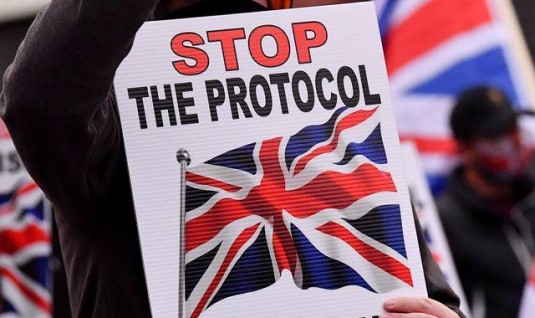
We have been here before. It offers a convenient excuse for the DUP to grandstand, and affords the Tories much the same opportunity. We have Liz Truss, for example, talking loudly about dumping the protocol and sponsoring legislation to undo it. The problem, as they see it, is the European Union are proving too zealous in its enforcement. You see, when Boris Johnson tore up Theresa May's Brexit deal ... only to reintroduce it, no one was meant to take it seriously. Despite saying there would be a border down the Irish Sea "over my dead body" after already signing up to this arrangement, for Johnson erecting a customs barrier was a stop gap, a ruse to make the seemingly intractable Brexit problems disappear for a future Johnson to deal with. The Tories never accepted the protocol they formulated, negotiated, and fought an election on in good faith, so it's jolly unsporting that the EU do. This is the rub.
The victory of Sinn Fein and the crisis of unionism means Johnson has to take it seriously now, simply because it's putting the union under intolerable strain - and Johnson doesn't want to be the Prime Minister known for overseeing the UK's break up. But these real reasons for wanting to wind back the protocol can't be stated publicly by any government minister, so instead we get waffle about standing up for the Good Friday Agreement(!) and the imposition of intolerable barriers to trade, barriers Johnson denied would be necessary if the electorate backed him and his Brexit deal.
What Johnson got through with bombast in 2019, he now pushes with charm. In his lengthy essay for the Belfast Telegraph, the government's intervention to restore power sharing imposes settlements on issues that have divided the Stormont parties - the languages package, which the DUP have vehemently opposed, safe access to abortion (ditto), and an end to blanket amnesties for past deeds. But his remarks on the protocol itself is coded with Delphic tones about a community feeling ill-at-ease with its place. Its "aspirations and identity are threatened by the protocol." He's right, up to a point.
Last year, loyalist mobs took to the streets to protest the economic disruption caused by the Johnson protocol. As Northern Ireland was in the EU custom's area, goods entering it from the rest of the UK had to jump through expensive bureaucratic hoops to square the Brexit circle of ensuring no hard land border reappeared in contravention of Good Friday. The political parties of unionism were on the chopping block too, because they campaigned for Brexit and pushed the same lies as Vote Leave and the Prime Minister during the referendum. The disruption, such as the supermarket shortages, were as much the responsibility of official loyalism as they were the Tories. But a year on and things have changed. Embarrassingly, the north is now economically outperforming the rest of the UK. Manufacturing jobs are growing four times as fast, food is eight per cent cheaper, and while trade with the UK has shrank thanks to the red tape Johnson imposed it has grown with the Republic and the rest of the EU. In a development that could be seen coming a mile off, economic integration across the border has deepened to the general benefit.
And this is a problem for unionism. Its traditional material base among the loyalist community were the marginal benefits it offered around housing, access to jobs, and wages versus the nationalist minority. Its tie to the UK, as per the Scottish base of unionism originally lay in empire and after the war, the industrial compact between labour, capital, and the state. Once deindustrialisation got under way, its foundations began sublimating. All that was tangible were the cultural divides, but because their root was shrivelling the trappings of unionism, its Orange Order bigotry and anti-Catholic zealotry found its grip slipping. It's still slipping. Hence the 50-year rise of the Alliance Party, which grew out of and mainly appeals to unionist communities for whom the old sectarian divisions are past embarrassments. This was the case before Brexit, and now loyalism is in a race against time. The people of the north, republican and unionist alike, are beneficiaries of closer economic ties to the Republic and EU. There is an economic rationale for leaving the protocol unchanged. To protect itself and its political standing, the DUP have gone on strike to make the people of the province poorer - a position of political pain that might stymie the TUV's support, but is guaranteed to lose more to the Alliance and, horror of horrors, Sinn Fein.
The DUP can carry on with their sulk, and Johnson can fiddle with the protocol some more, but the behaviour of both are bringing forward the day when a majority shakes off the six county statelet and unifies with the republic. If the hard Tory Brexit has a silver lining, this is it.
Image Credit
Sunday, 15 May 2022
The Tory Politics of the Civil Service Cull
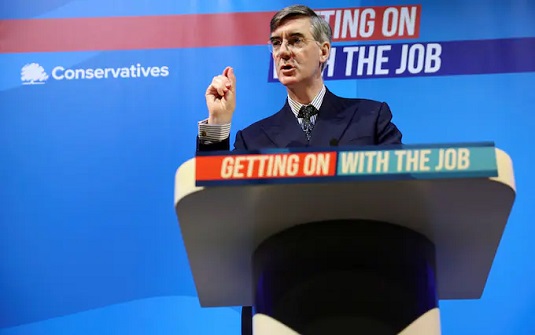
Why are the Tories keen to do this? Rees-Mogg said the highest calling of a politician is to reduce the taxpayers' burden by ensuring money is spent wisely and efficiently. This, as we know, is premised on a political fiction - the UK state isn't dependent on the tax returns Rees-Mogg's hedge fund does so much to dodge, but that's by-the-by. However, as rationales go this argument is a pretty thin one. It might have stood up in the Thatcher years, and even during the deficit panic the Tories cultivated after the stock market crash, but in 2022 when the government have let billions slide in fraud and, it turns out, helped bung "taxpayers' money" to the failing Tory press? It leaves their we're-careful-with-your-money shtick wide open to attack. This dawned on the Tories as the day wore on, and by lunch time we'd gone from "efficiency" to "saving money to tackle the cost of living crisis". If in doubt, pull on the divide-and-rule lever.
Like most things Tory, the consequences for themselves haven't been thought through. If we are to take their levelling up rhetoric seriously and not with a pinch of salt, then Rees-Mogg's plans don't match up with what Michael Gove and, for that matter, Johnson are supposed to be working on. Central to their rebalancing strategy is moving civil service jobs out of Whitehall and distributing them around the country. In a back-handed acknowledgement of Keynesian multipliers, these jobs would redirect wage and salary spend away from the capital, rejuvenate battered local economies, and provide graduate opportunities outside London and the big cities. Cutting 20% of the civil service workforce somewhat undermines this ambition. But then what does Rees-Mogg, the beneficiary of a lifetime of indolence, know about practicalities? And there are the political consequences too. One can't imagine there are too many Tory-voting civil servants left, but attacking such a huge workforce with its families and dependents isn't smart electoral politics when the ageing Tory base are shrinking and swaying, and the parliamentary party are in a restive mood.
How to go about explaining this self-destructive policy stance? Just because, from our perspective, this appears to be an unforced error doesn't mean Tories see it in the same way. For Rees-Mogg, there are two considerations for pushing this. It raises his own profile as an "effective" minister among the party rank-and-file. If he's able to deliver the cuts, and after all it's much easier to destroy than build something, his future chances of the party leadership or a guarantee of senior posts after Johnson has gone are greater. Second, there's the comfort zone of substitutionist activity. As Brexit has netted no tangible benefits while blighting exports and living standards, rather than have to deal with the mess he campaigned for his pivoting to mass sackings is easier and consistent with his world view. For his pains, or rather the pains of tens of thousands of people due to lose their livelihoods, he'll bask in Tory praise for "tackling waste" which reinforces the first consideration. And no doubt spun as a front in their dreadful war on woke nonsense, it might help cohere some of the more backward sections of their base - but it's sure to put many more off.
This, however, is not enough when it comes to getting to the bottom of Rees-Mogg's cuts obsession and it cannot be separated from a longer-term Tory project aimed at reducing, for want of a better phrase, the state's social capacities. The Tory/LibDem coalition carried through a "classical" programme of austerity by slicing services to the bone and further consolidating neoliberal governance, but since the outbreak of Covid the Tories have shifted gear to something else: the dampening down of demands on government and state to try and shrink the popular political imaginary. What does this mean?
The consequences of Corbynism and the pandemic shifted the boundaries of politics - Corbynism broke decisively with the penny-pinching market fundamentalism of the Dave/Osborne years, and the Tories were forced to adapt to it. Theresa May's one nation rhetoric didn't form in a vacuum. Johnson co-opted this when he ousted May and, again rhetorically, married it to his Get Brexit Done programme to win over those Labour-leaning leave voters who weren't keen on Corbyn, and on Labour's second referendum pledge even less. Thus levelling up was born in the context of raised expectations. Then the pandemic hit and, in what you might describe as a smash and grab, after defeating Labour they adopted Corbyn's pandemic plan. All of a sudden the state had underwritten the wages of millions of people and were keeping business on life support. Since that very moment, the Tories have worked not just to depoliticise their responsibility for the horrors of the crisis, but slam shut the Overton window opened by the post-referendum and pandemic moments.
The Tories went about this by reimposing conditionalities on social security as soon as they were able. Homelessness, which was solved at a stroke, was allowed to return. Furlough was pared back, and significant holes in business support persisted throughout the moments of acute crisis. They stubbornly resisted extending the scope of free school meals during school holidays, progressively eased Covid precautions according to their political, not clinical, timetable. Have not stumped up anywhere near the promised funds for regenerating the English regions, and done nothing to ease the cost of living crisis - apart from a council tax rebate and compulsory loan that won't cover half of the fuel bill rises. The cumulative effect of all this, and an increasingly dominant trend in Tory statecraft, is of active abstentionism and abrogation of governmental responsibility. Rishi Sunak's refusal to do anything to address the crisis, typified by his absurd "computer says no" argument is consistent with their don't-expect-us-to-do-anything-about-it. And this is where Rees-Mogg's civil service plan fits in. It is a prospectus for degrading the state, and so if it can't do anything simple, like processing passport applications, enforcing food and environmental standards, or can't guarantee the receipt of social security support on time, the thinking is the public are more likely to blame state inefficiency than Tory malfeasance for its decrepitude and not expect future governments to do anything. Which, for the Tories, minimises the scope of political responsibility and accountability, and allows for more showboating, frivolous initiatives, and policy that reinforces the interests the party articulates and promotes.
During his rounds of interviews, Rees-Mogg argued his war on the civil service was not a return to austerity. This is certainly a factually accurate statement, and one the left and labour movement should take on board. It's worse than that.
Image Credit
Saturday, 14 May 2022
Celebrating 4,000 Posts
To mark this ridiculous occasion, which was never entertained when I began blogging 15 years ago, in reverse order here are most-read 100 posts since 8th March, 2019:
100. The Whys and Wherefores of Keith (December 2020)
99. How the Tories Smashed Stoke Labour (January 2020)
98. If Remain Had Won (December 2020)
97. The Tories Are Winning the Necropolitics (September 2020)
96. Retirement at 75? It's About Class, Stupid (August 2019)
95. Cancelling Tom Watson (September 2019)
94. On Hammering the Left (June 2020)
93. On Tory Incompetence and Stupidity (October 2020)
92. The Green Threat to Labour (February 2021)
91. Why is Labour Ignoring the Teaching Unions? (January 2021)
90. Marxists for Liberalism (September 2019)
89. Why Farage Snubbed Galloway (May 2019)
88. Facing Up to the CHUK Up (July 2019)
87. Trump and the Tory Imaginary (June 2019)
86. Ten Points on Trump's Attempted Coup (January 2021)
85. On Tim Roache's Resignation (April 2020)
84. Adios (March 2019)
83. Thinking and Chewing Gum (April 2019)
82. Covid is Killing Britons Faster than WWII (January 2021)
81. The BBC's Anti-Corbyn Hit Job (July 2019)
80. Keir Starmer's Pathetic Witch Hunt (July 2021)
79. The Uses of Captain Tom (February 2021)
78. Remembering Simon Speck (April 2019)
77. Starmerism and Fabianism (January 2021)
76. Why Isn't Keir Starmer 20 Points Ahead? (January 2021)
75. Dear Lisa Nandy (February 2020)
74. Keir-azy For You: Why Starmer Leads (January 2020)
73. Dear Jo Swinson (October 2019)
72. The Labour Politics of Backing the Brexit Deal (December 2020)
71. What is John McDonnell Playing At? (October 2019)
70. The Zoomers and Class Politics (August 2020)
69. How to Screw Up a Leadership Election (January 2020)
68. The Right Wing Defence of Starmerism (February 2021)
67. Boris Johnson and Thatcherism (February 2021)
66. Communism as Public Luxury (June 2019)
65. Opposition as Colourless Managerialism (August 2020)
64. Chuka Umunna and the Liberal Democrats (June 2019)
63. The Silences of John Harris (January 2020)
62. Margaret Hodge's Attack on Unite (June 2021)
61. The End of Theresa May (May 2019)
60. A Note on Ruthlessness (January 2021)
59. Veering to the Right (September 2019)
58. Esther McVey and the Working Class (May 2019)
57. The Long-Term Decline of the Tories (August 2019)
56. Caroline Flack and Social Murder (February 2020)
55. On Jeremy Corbyn's Defence Fund (July 2020)
54. The Moral Turpitude of Cllr Ally Simcock (August 2020)
53. Why I've Left the Labour Party (November 2020)
52. The Curious Case of Tom Watson (August 2019)
51. Stoke's Racist Lord Mayor (June 2020)
50. Losing Long-Time Labour Members (November 2020)
49. The BBC's Anti-Labour Bias (November 2019)
48. The Demonology of Jeremy Corbyn (December 2019)
47. Stanning for Corbyn and Other Twitter Tribes (August 2019)
46. John McDonnell: Be Nice to Keir (August 2020)
45. Labour and the New Working Class (January 2020)
44. How May Could Have Won (May 2019)
43. The Liberal Democrats' Worst Nightmare (August 2019)
42. Is This the End for Boris Johnson? (September 2019)
41. The Left and Keir Starmer (April 2020)
40. Obligation and Class Consciousness (July 2020)
39. Brexit and the ERG (March 2019)
38. Corbynism and the Second Referendum (June 2019)
37. On Corbynphobia (August 2019)
36. What is the Great Reset? (November 2020)
35. Defending Decayed Democracy (April 2019)
34. Boris Johnson and 21st Century Class Politics (December 2019)
33. Why Labour Isn't Serious About Winning (March 2021)
32. The Problem With Old People (November 2019)
31. Saying the Quiet Part Out Loud (November 2020)
30. Whither the One Per Centrists? (April 2019)
29. The Class Politics of the Indicative Votes (April 2019)
28. On Labour's Poll Collapse (February 2021)
27. A Cultural Sociology of Mass Stupidity (September 2020)
26. Is Politics Melting Down? (May 2019)
25. The Miserable Collapse of Jess Philips (January 2020)
24. Finance Capital and the Conservative Party (September 2019)
23. Is a New Conservative Party Possible? (April 2019)
22. Critiquing the Anti-Lockdown Left (December 2021)
21. The Newport West By-Election (April 2019)
20. Ian Lavery Should Not Stand (December 2019)
19. Sympathy for Gavin Williamson (May 2019)
18. Why Labour Went Backwards in Stoke (May 2019)
17. Why Do the Tories Hate the Arts? (October 2020)
16. Priti Patel, the Tories, and the Death Penalty (December 2020)
15. Theresa May and the Death of the Tory Party (March 2019)
14. The Weakness of Starmerism (July 2020)
13. The Demise of Caroline Lucas (August 2019)
12. The Tory Food Parcel Scam (January 2021)
11. Keir Starmer's Falkirk Moment (April 2020)
10. Why Do the Tories Want to Cut Furlough Payments? (May 2020)
9. Against the New Corbyn Coup (July 2019)
8. After Jo Swinson (December 2019)
7. One Abysmal Year of Keir (April 2021)
6. Labour's Crisis of Decomposition (March 2019)
5. The Problems With Jess Phillips (January 2020)
4. The Genius of Dominic Cummings (October 2019)
3. Obsolete Politics and the Socialist Party Split (June 2019)
2. On Lefties for Farage (April 2019)
1. The Working Class Politics of Brexit (December 2019)
What would you know, it's not a Jeremy Corbyn fest! Politically, I think the list fairly reflects the struggles and clashes of the last three years: Brexit, Covid, Starmerism, Boris Johnson's Tories. It's all there, along with a smattering of theory pieces, explainers, and character assassinations from a solidly pro-labour movement, pro-working class perspective. But this is not about being a celebratory ego fest. This blog has always been a collective effort, and so to those who occasionally "lend" me their content via freely taken podcasts, videos, music, and guest posts - many thanks!
Whatever next? More of the same, alas! Readers might have noticed a decreasing frequency of posts of late, and so perhaps I'll take things a little easier and read more books, play more games, and do more writing for elsewhere. It all depends on motivation, time, head space, and other demands. But right now, I'd like to thank all readers, the regular and the infrequent alike for giving me the motivation to keep plugging away. Here's to the next thousand!
Friday, 13 May 2022
Stitching Up Wakefield
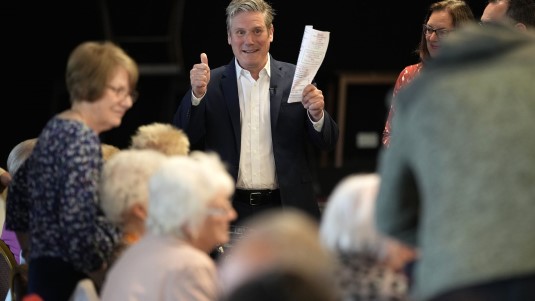
This is very much part of a pattern. In Hartlepool the candidate was imposed, and Labour lost. Even in no-hope North Shropshire, you might recall the leadership intervened to make sure a left winger was nowhere near the candidacy. And the same rule applies in Wakefield. Whether Starmer indicated a preference or let his right wing minions steer the candidacy, neither want another leftist in parliament. Starmer doesn't because it's another pain in the arse, and the Labour right apparatchiks because making sure the left's candidate cannot reach the nominations threshold at the next leadership election is their raison d'etre. Remember, as their behaviour since 2015 reminds us, they're more interested in securing power in the party than beating the Tories and winning elections.
This time, the leadership are reasonably confident they can get away with stitching up the seat without any trouble. Totting up the popular vote from last week's local council elections in Wakefield, across the constituency's six wards Labour won 12,082 votes versus 8,025 for the Conservatives - a vote difference greater than the majority the Tories won in 2019. Thanks to the weakness of the government across the so-called red wall, Labour has reason to be bullish about its chances. But bullish is different to complacent, and the way the leadership have approached the selection suggests they think it's a shoe-in. They might be right to think so. The Tories are floundering, and the incumbent is about to get banged up for serious sexual offences committed against a teenage boy. The political mood is anti-Tory, even if it isn't pro-Labour and Starmer's party is the best placed for angry voters to give Boris Johnson a kicking.
The problem is by-elections can get blown off course by local issues. This is a must-win for Keir Starmer. If he stumbles and Labour doesn't take the seat, it's curtains. Fixed penalty notice or not. Therefore introducing an element of uncertainty by giving key local notables a reason not to cooperate isn't the smartest of politics. Also, having fooled themselves into thinking the 2019 result was all because of Jeremy Corbyn, they forget it was equally a protest against the arrogance of the "grown ups" who believed voters in places like Wakefield got Brexit wrong and wanted to reverse their vote. Recalling memories of distant, metropolitan second referendum types, trampling all over the local Labour Party could catch the public mood and votes that might have gone to Labour get picked up by other parties instead. The Liberal Democrats and Greens weren't anywhere in the district council elections, but they could become a repository of discontent. Given the stakes, I simply would not have done anything that makes a crucial by-election gain less likely.
It's a warning to us as well. Starmer treats Labour as if he's still a top administrator managing a state bureaucracy. He has no regard for the rules or the views of those who make up the membership, and that suits the right just fine as they pursue their petty vendettas through the party machinery. But that also means if Starmer becomes Prime Minister we can expect to see the exact same high-handed and authoritarian approach to government. Hardly an inspiring alternative to nearly a decade-and-a-half of Tory misery.
Image Credit
Wednesday, 11 May 2022
Labour's Electoral Discomfort
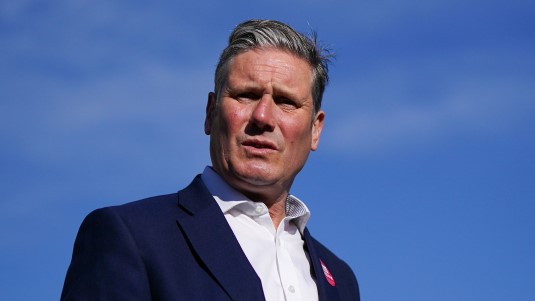
Over at Prospect, Stephen Fisher has crunched the numbers. While plenty of people have pointed out Labour hasn't made much progress compared to 2018, the last time these seats were fought under Jeremy Corbyn, that Thursday's results almost put them on a par with four years ago suggests support lost at the general election might be returning. Indeed, Labour was up six points in "Leaveland" versus three points in remain-voting constituencies. Stephen goes on to suggest that the below-the-counter electoral pact between Labour and the Liberal Democrats would actually strengthen Labour's chances in its former strongholds, what with the anti-Tory vote not getting splintered. For example, doing some quick sums from the Newcastle-under-Lyme Borough Council elections for contests in the constituency boundaries, Gareth Snell found that Labour polled 9,500 votes - a thousand more than the Conservatives while the LibDems managed 1,500. This despite the Tories winning new seats on the council at Labour's expense.
Therefore, the Tories are in a worse position than their apparent consolidation suggests. Except, happily, the news for the Tories is even grimmer than that. As we know, older people are more likely to vote and older people disproportionately favour the Tories. Therefore, as council elections are second order elections this age bias in voting becomes even more attenuated. Last Thursday was said to favour Labour because it was fighting more defences than any other party, but the demographic profile of the average local government election voter leans more toward the Tories and, indeed, helps explain why last year's results were so bad. A shift toward Labour among this constituency spells bad news for the Tories regardless of whether the seats are Labour or Tory leaning. Even worse, in the circumstances of a general election when turn out is up and more working age people go to vote - who in the last decade have had a clear preference for Labour - assuming things stay as they are, the Tories could be in for an even worse pummelling.
But that's the red wall. One cannot get away from the fact that the Liberal Democrats were the runaway winner in England, with the Greens in a very respectable second place in terms of seats won. Why are these parties picking up seats across the south? Why are they proving more potent than Labour in the so-called Blue Wall? Firstly, what it isn't is "Long Corbyn". No one except for those who have an interest pretending otherwise can maintain Labour is unchanged under Starmer. We've gone from a radical, transformative politics to an authoritarian mess in which progressive positions are the exception rather than the norm. And yet Starmer's Labour aren't performing like a viable proposition across the south. Why? Reflecting on his party's drubbing, Damian Green writes that Tory culture war obsessions are turning off swathes of Conservative voters, such as those comfortable with the social liberalism of the coalition government or found Theresa May's (rhetorical) social justice pledges attractive. Johnson isn't interested in conserving anything and he's given the green light to his subordinates to bulldoze their way key British institutions, like broadcasting. And so this electorate rebels by turning to the smaller parties.
Why aren't Labour capitalising on this growing anti-Tory mood in the shires? While the leadership has cosplayed authenticity and patriotism to win back property-holding pensioners in the north, Starmer's straight up refusal to support the right thing unless it's electorally expedient has been noticed. Labour did not make a concerted attack on the government's privatisation of Channel Four. Labour chose to emphasise the cost of transporting refugees to Rwanda rather than taking a values position. He did not jump on the 'one rule for them' bandwagin until the focus groups said it was a good idea, and when it comes to other aspects of what you might loosely term liberal Britain, Starmer is nowhere seen to be defending it. In other words, despite sticking up for the status quo by promising nothing Starmer is as inconsequential to this layer of voters as they have been in his electoral strategy. How this differs from Tony Blair who affected enough liberal hero concerns to be seen as a champion self-defined "progressive" or modern one nation centre right voters could believe in. At least before 1997. The LibDems, now realising there are gains to be made from concentrating their fire on the Tories, are the natural protest repository for this substantial layer of soft Conservative support. It doesn't matter what the actual detail of LibDem policy is, they're known for liking nice causes and a little bit of constitutional radicalism. They want a better, kinder politics, so vote for them instead. It's to the Greens' benefit that they too are carving a similar space out for themselves, but with added environmentalism.
But this is only part of Labour's woes in the south. While the old and retired turned out disproportionately for these elections, so did the comparatively smaller politically-engaged working age population. And it's a concern that these, by and large, kept their distance from Labour in the south. It's almost as if they reached for whatever tool was at hand to bash the Tories about with, and in many cases decided the LibDems and Greens were better placed to do it. Nor is it difficult to fathom why. Despite Labour enjoying polling leads among working age people, it has done nothing to maintain this advantage. It goes out of its way to present itself as socially conservative, just as those values are shrivelling up and dying off. It makes a virtue of not highlighting anything that responds to their interests, such as deaing with the housing crisis, crap wages, lack of opportunities, and so leaves the field wide open for others. Political science ain't rocket science. For obvious historical reasons this layer, particularly the younger workers, aren't going to find the LibDem pitch too attractive apart from their not being the Tories, but the Greens are different. Their raison d'etre is the climate crisis, which the other parties only pay lip service to. You don't need me to tell you why this matters more the younger one is, and so from the off they enjoy an association with tackling an existential crisis that can only get worse. Second, while the Greens oscillate between the centre and the radical left, formally speaking its values impeccably line up with that of the rising generation. And for those who look a bit further, its policy platform is more robust in addressing the interests of working class people than Labour's. Is it any wonder they were the go to in parts of the south instead of the party supposedly rooted in the labour movement?
This matters. Contrary to the impression Labour's vote is unified in the "recovering" red wall, the Greens in particular pose it some real difficulties. If Starmer carries on as he does, and he will, what we've seen in the south we could see elsewhere. Local elections come up, and Labour is blunted by a bleed to the Greens and LibDems. If any lessons have been learned from the UKIP surge, it's that protest votes can firm up into general election votes, or offer a gateway to the Tories. Contrary to the dim bulb analysis clung to by the Labour leadership, the red wall is a demographically complex place. Among other things, because Starmer is offering our class nothing, particularly the young, then it's quite likely that enough of this vote could be peeled away by the Greens and LibDems in the Tory-held seats Labour needs to win back. In other words, the Tories aren't the only ones suffering southern discomfiture. The local election results could show Labour a future where challenging the Tories is hopelessly split because of the political cowardice of its leadership.
Monday, 9 May 2022
Keir Starmer's BeerGate Gamble
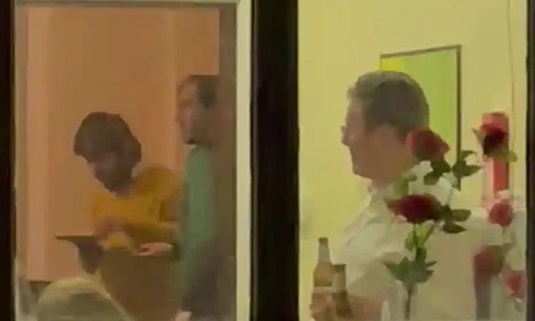
During his brief statement, Starmer positioned himself according to his usual contrivance: as a public servant honour bound by the principles of duty, probity, and integrity. Not just to put a clear distance between himself and the amoral vacuum of Downing Street, but because he undoubtedly believes it. There is perhaps profit in writing a short political profile that symptomatically sifts through Starmer's statements and speeches in which his silences and phraseology are reconstructed to form an internal narrative of honourable behaviour, despite lying to the members about his politics, returning Labour back to banana republic levels of petty authoritarianism, and reneging on a deal struck with Jeremy Corbyn to secure his readmittance to the parliamentary party. Alas, such an exercise has to wait.
But from the point of view of presentation aiming to get the average punter on side, Starmer did a good job of presenting his putative resignation as a matter of honour. A pledge Angela Rayner has signed up to if she's fined by Durham plod as well. It takes the heat off Labour, freeing Starmer and the front bench up to continue harrying Johnson from their moral high horse, and puts the Prime Minister on the spot. Just as it was always going to when the Daily Mail, other right wing outlets, and sundry Tory MPs joined in the crowing and demanding action be taken by the police. And regardless of the politics of onlookers, the hope is his willingness to put his career on the chopping block would win grudging respect across the political spectrum - which is good if your politics is primarily about rebuilding the legitimacy of state institutions, which Starmer's is.
It's not likely Starmer will cop a fine. Not just because of the details of the supposed breach, but also the huge pressure the Durham force are now under. Having been bounced by the Tories into reopening the case file on Starmer's beer and curry, being out on notice that the careers of two powerful politicians are now in their hands makes for a hot potato. This suggests fines aren't very likely. Going in Starmer and Rayner's favour is the reluctance the force has shown dishing out fines. They only issued 1,090 Covid notices between March 2020 and February this year. This is also the same police who did nothing about Dominic Cummings and his own restriction-breaking road trips. And so what might look like a high risk strategy for Starmer really isn't. The pain for Durham police is too awkward and inconvenient if fines are issued, therefore common sense suggests an institutional preference for the quiet life would eventually win out.
What about the politics? This is less certain. It's obvious Starmer's position is untenable if he's given a fine vis a vis his attacks on Johnson, and even if he wasn't inclined to pre-announce his resignation there are plenty on the right of the party, less than overwhelmed by Thursday's stellar performance at the ballot box, happy to enforce a premature retirement. It's unlikely to shift public opinion either. Those with their minds made up about Johnson's rule breaking will stay made up. Very few people are going to change their views by Starmer's example. But where it does matter is in the tete tete of Westminster shenanigans. There are Tory MPs discomfited by their grotesquerie of a Prime Minister and his utter disregard for parliamentary convention. According to their own twisted senses of honour, Starmer's move is audacious and principled. The unfavourable comparison between the Tory leader and Labour's demonstrates to them that decency is possible in politics, with the consequence of firming up their likelihoods of putting a no confidence letter into the 1922 Committee, or inducing a couple of others to follow Christian Wakeford across the floor. It also raises the morality stakes for Tory ministers. The opposition leader's pledge is now something the government can always be bashed with by its critics, and in Westminster where the avoidance of political pain is a chief concern, Starmer has gone some way of restoring the force of parliamentary convention.
Image Credit
Sunday, 8 May 2022
Eurovision 2022 Preview

It's almost impossible to believe. After decades of pleading with the BBC to a) get someone contemporary and b) press some song writing talent into service, they've actually gone and done it. Sam Ryder is a social media phenomenon and penned this pleasant ditty with proper composers who've worked with Ed Sheeran and BTS. And you know what, there's a good chance the UK won't get panned this year. Indeed, word on the Eurovision streets is top five. Wow.
But the UK are up against tough competition. Like Ukraine's entry.
The Kalush Orchestra have to be this year's favourites for obvious reasons, but it is an excellent entry. Ukraine have long mastered the East-meets-West blend that Eurovision audiences go gaga for, and marrying rap to something traditional-sounding works really well here. I'd be surprised if it doesn't win. But among its exceptional challengers is Sweden's effort.
Cornelia Jakobs's Hold Me Closer is simply incredible. I didn't think much of it on the first playthrough but returning to it a few days later and it bullseyed the emotional register it needed to strike. Probably the best tune this year and a worthy winner should Sweden, yet again, take the crown.
There's time for a couple more. Let's head to Malta.
Controversy time! Emma Muscat's entirely pleasant I Am What I Am wasn't the song she won the Maltese national heats with. This was her tune. Apparently, the song was switched after "negative feedback" on social media. To be honest, her new tune is much better even if it's a cliche. Inclusivity vibes married to gospel backing and uplifting lyrics - what's more Eurovision than that?
And lastly, to the land of Uncle Enver!
Just amazingly bonkers, and another strong contender for the top spot.
This is just scartching the surface of this year's contest. If you want to speed run the songs, here's the official preview reel. As always, the heats run this Tuesday and Thursday with the grand final next Saturday.
New Left Media May 2022

1.sublation magazine (Twitter) (Facebook) (Magazine/Media Project)
2.The Week in Work (Twitter) (Blog)
3.Uncommon Sense (Podcast)
4.Wonk Watch (Twitter) (Blog)
If you know of any new(ish) blogs, podcasts, channels, Facebook pages or whatever that haven't featured before then drop me a line via the comments, email, Facebook, or Twitter. Please note I'm looking for new media that has started within the last 12 months. The round up appears hereabouts when there are enough new entrants to justify a post!
Saturday, 7 May 2022
Covid Update

Sinn Fein's victory in the Northern Ireland Assembly elections.
Why the Liberal Democrats and the Greens benefited from disaffection with the Tories in England and Labour didn't.
How did left-of-Labour electoral challenges do? (For instance, the Lutfur Rahman/Aspire triumph in Tower Hamlets)
And ... will "beergate" force a premature end to calamity Keir's undistinguished leadership?
I'd like to write about all these things, but time is not on my side. Covid and time permitting, we'll see what we can talk about this coming week.
Subscribe to:
Posts (Atom)