Showing posts with label Managerialism. Show all posts

Friday, 2 January 2026

What is the "Stakeholder State"?

Paul Ovenden is someone we did not need to hear from again. He could have spent his time over Christmas reflecting on what cost him his job. But what disgraced former special advisor could resist the chance of redress in the pages of The Times? And at what has his spleen been vented at? The double whammy of cluelessness and cruelty that characterises the government he served? Don't be silly. The new bête noire is something called the "stakeholder state".

Picture the scene. A government is elected and wants to do things, but at every juncture they're besieged by lobbyists and campaigners. Some are from outside the state. But what is new is that within the institutions itself, even within a "neutral" civil service purposed to carry through the wishes of their political masters, there are networks of interest groups supporting and pushing issues they're exercised about. Particularly egregious are the quangos, those arms-length agencies of state that work to water down executive decisions they do not like. And where are the British people while this is going on? Nowhere. Voters don't get a look in. They're not the real stakeholders; a bloated establishment is. What they say goes, and for those inside government the weight of this machinery quickens a state-of-siege sensibility.

A couple of things about this. The stakeholder state stuff isn’t specific to Ovenden, or this government. Anyone familiar with politics memoirs will see shades of his complaints in former politicians' frustrations. It's also the inverse of the pluralist theory of politics. In the Marketplace of Ideas, different groups tussle for influence and policy. That is entirely what politics is, and parties have to build coalitions out of this to win and hold office. It's one of the first perspectives sixth form/FE students learn when studying politics. In other words, all he's stating is a banality.

The second point is this dovetails with every right wing, tin foil hat argument about the character of the state. Ovenden rightly says "It isn’t a grand conspiracy. There aren’t secret meetings or handshakes. Rather, it is a morbid symptom of a state that has got bigger and bigger while simultaneously and systematically emasculating itself." But the effect is the same. Nigel Farage's insincere whingeing about the liberal elite finds confirmation in these arguments. Liz Truss's ranting about the deep state and how it derailed her premiership is there, between Ovenden's lines. Michael Gove and Dominic Cummings's objections to "the blob" are echoed in the article's words.

What Ovenden doesn't talk about is how this form of the state came about. And, the truth of the matter is, this is what it has become after nearly 50 years of rebalancing labour and capital in the latter's favour. It was our old friend Margaret Thatcher who not only smashed and shackled the labour movement, but reconfigured the state away from a rough pyramid of clustered bureaucratic institutions to a looser collection of semi-autonomous bodies whose horizontal relationships were mediated by government-mandated markets. Business logic only works if there is competition. Meanwhile, the pre-existing expertise that existed within them was undermined and/or scrapped, and market thinking was granted the status of common sense. What happened to education, for example, in which local democracy, professional autonomy and independence, and the curriculum was done away with or reconfigured by government diktat typifies what Thatcher, the John Major government, and New Labour did to the state. But it wasn't just about creating new opportunities with a guaranteed return for (internationally uncompetitive) British capital. It was an issue of governance. In his memoir, John Major wrote with a sense of accomplishment about how shifting institutions to metric chasing and enforcing competition between departments to meet them improved the "customer experience". From a governance point of view, central government could just leave them to chase their tails. A case of winding them up and letting them go, while the relevant minister could spend their time on more interesting things outside of their brief.

Likewise, during the Thatcher years it became evident that government and governance could be outsourced. We're not talking just about the privatisations, but how the state became content to leave sectors to the province of "independent" regulators and watchdogs. This constellation became increasingly complex as charities and campaigning organisations engaged with and became embedded in a bewildering array of fields and sub-fields concerned with this or that aspect of social life. From here lobby outfits multiplied, to seemingly absurd outcomes where parts of the state lobby parts of the state. But crucially, what Thatcher enshrined and has been consolidated ever since is that government is the absolute sovereign, both as arbiter and the one point of the state that can unilaterally restructure everything else. Yet this appears to be a formality for those inside the system. Occasionally the Tories declare war on the quangos, but this same constellation structure with the executive at the centre persists. For anyone with a sense of history, its endurance as such might suggest an element of fit between contemporary politics and economics. It was all, after all, designed to be by the same sort of state functionaries now decrying it.

Ovenden finishes his article by saying it doesn't have to be like this. That is true. He talks about the power of government to change things and respond to democratic aspirations. And yet, this government, in case anyone needs reminding, has declared Palestinian solidarity protestors terrorists, wants to abolish jury trial for most court cases, is moving to shut down VPNs, and has legislated to officially scapegoat refugees and trans people. These were not in Labour's manifesto. It is true that Thatcher's restructuring of the state was minimising the democratic checks on capital, but - as it always has been - the main threat to liberty and democracy stems from the centre. Obviously, Ovenden cannot and will refuse to see it because he personifies this outlook.

Image Credit

Tuesday, 25 November 2025

Labour's Continued Attacks on Liberty

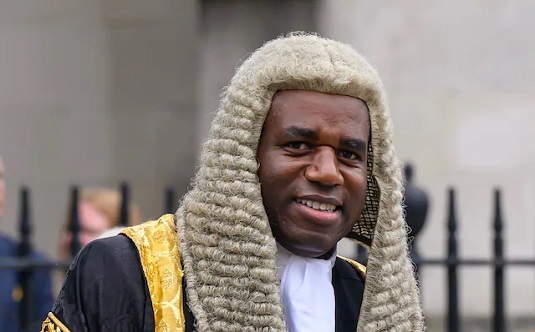
Here is a story that won't stick in the headlines for more than a day. David Lammy has unveiled plans to curtail the right to jury trial for anything but the "most serious" offences.The Times reports the automatic right to appeal will also be scrapped by the government. The plans will involve a new tier of courts presided over by judge-only trials, and will cover offences with penalties of up to five years in prison and/or especially complex cases, like those involving fraud. Relying, as ever, on managerial justifications for a political decisions, drawing on a report by our old friend Sir Brian Leveson, his recommendations were that upending of the right to jury trials would bring much-needed efficiency to proceedings. There is a huge case backlog and that is set to grow further by the end of this parliament, so getting through cases quicker will stop the system seizing up. Leveson and Labour are one: doing nothing is not an option.

Evidently, neither is restoring the levels of resource to the courts that was worn away by the Tories. Hypocritically, Kemi Badenoch memory holed her party's record as she criticised the proposals to scrap juries. Ordinary people have a role to play, she mused. Suella Braverman (remember her?) called this a "serious assault on our liberty" and "an end to our world class justice system". This is the very same former Attorney General who attempted to disregard the jury-led acquittal of four Black Lives Matter protestors accused of dumping Edward Colston's statue into Bristol harbour. Despite this, unfortunately Badenoch and Braverman's charges are examples of the worst people you know making good and correct points. Though if Badenoch takes Keir Starmer to task about this at Prime Minister's Questions, he'll have the list of Tory failings ready around court waiting times, levels of defunding, and so on. It's all very predictable.

That said, I'm not buying what the government are selling. Lammy is saying the backlog has to be reduced, and so the process needs speeding up.That's as far as it goes. Are we to suppose it's a matter of coincidence that this comes after Labour have backed state-mandated curbs of the right to protest and clampdowns on our liberties? Such as the disgraceful designation of Palestine Action as a terrorist group, more police powers to prevent protests, including stopping what they deem "repeat protests", and Labour's support for disproportionately long sentences for "disruptive" protestors - particularly those from the environmental movement. Combine that with Labour's attack on asylum, including the legal remedies open to those forced through their inhumane-by-design process, and ICE-style deportations units, Labour are happily - gleefully - building up the infrastructure an authoritarian regime would find useful. It's a good job a right wing extremist party isn't topping the polls and stands no chance of winning the next election.

Image Credit

Wednesday, 29 January 2025

Living Her Best Life

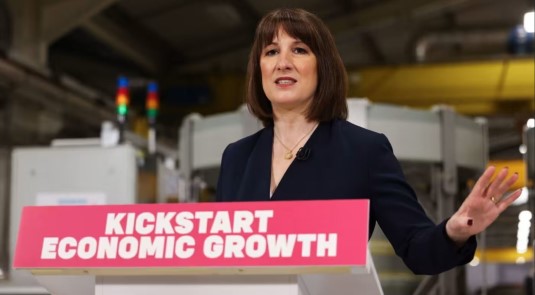
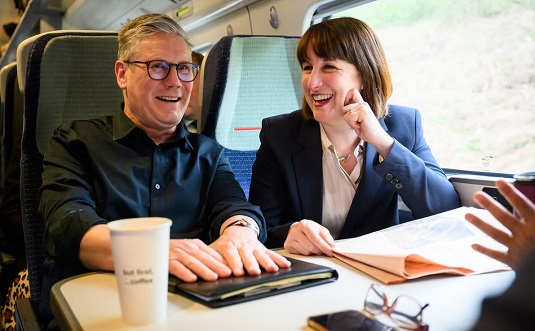
Rachel Reeves hasn't had a good time lately. From the left, she's been (correctly) pilloried for putting the screws on pensioners. The right are upset about her increases to employers' National Insurance contributions, and were making hay when gilt yields reached danger levels ... before they receded again. But the economic growth figures are anaemic and unemployment is moving in the wrong direction, so while she was never in any danger (she and Keir Starmer stand and fall together, at the moment), Reeves needed to turn the page. Which is where her big speech on economic growth came in.

On Wednesday Reeves made an avalanche of infrastructure announcements. Heathrow's long-awaited third runway, the Oxford/Cambridge silicon corridor, the redevelopment of Old Trafford, reservoirs, airports, train lines, houses, new towns, a tunnel!. There were changes to planning rules that are meant to speed things up, which include "investment zones" that bypass some regulations (as per the Tory freeport idea, which has been retained by Labour and is now as much their idea), yes as the default position for new homes in the vicinity of railway stations, changing pension rules for allowing funds to make productive investments, and a more can-do attitude for infrastructural development outside the South East. Reeves was living the best life of every managerialist politician: the privilege of announcing dozens of megaprojects and basking in the resultant glow.

In all, the speech was a confident performance. On businesses concerned about NICs, Reeves was asked if there was going to be any wriggle room here. She said no, but added her October statement was a once-in-a-generation event. Stability was back in the public finances, and it was there in the economy too. Business can take it as read that, notwithstanding some disaster, they won't be charged for further contributions while she resides in Number 11. It was a theme Kemi Badenoch picked up on in Prime Minister's Questions as well, but going harder on the £5bn "cost" of Labour's employment rights agenda. Reeves and Starmer sang from the same hymn sheet when asked separately about it, but they might have gone further and said this estimated figure doesn't simply disappear from business balance sheets. It's extra confidence and extra money in workers' pockets, which will feed through into growth via their improved spending power.

The combined effect of these projects are bound to put figures on GDP. The IMF's growth forecast, which has uprated the economic outlook for Britain, specifically says this is the case. But there are some issues. Having observed Donald Trump's bravado, there were some Trumpesque flirtations - though Reeves didn't quite say make Britain great again. Government is a knight on a white charger, hacking away and doomer attitudes, nimbyism, and unnecessary regulation that has held the country back for decades. A pseudo-populist construction of a serious party, on behalf of working people, doing battle with an unnamed, sclerotic and complacent elite. But that was not all. Having paid lip service to net zero in the context of the third runway announcement, and new developments at Doncaster and East Midlands airports, she specifically declared bats and newts persona non grata in the new planning regime. So much for Karel Čapek's warning about going to war with the newts. And so, despite saying many times there is no contradiction between the environment and economic growth, Reeves's habit of showing herself up struck yet again.

There is an additional serious problem. On top of this, the government has already set a target of 1.5m new build houses by the end of this parliament. If you tour around Derby, for instance, it's a hive of building activity and a microcosm of what Reeves wants to see. Two housing estates have started, five or six huge blocks of new flats are due over the next few years, more offices and new homes around the railway station, a hotel and leisure complex to replace the derelict Assembly Rooms, and new university buildings due to start on the outskirts of the city centre. Great stuff, you might say. But where are the workers and the engineers going to come from to meet Labour's plans? We know Liz Kendall wants to expel as many people as possible from health and disability-related social security and getting them into work, but they're not going to fill the shortfall in construction. As PBC Today observed last summer, construction workers fell by 14% between 2019 and 2024 and there would need to be an extra 250,000 workers, more or less doubling the workforce, in the next five years to meet the government's ambitions. Training can only make an impact toward the end of the target date, so this means immigration - something Starmer has stupidly caved to the right on and will face some degree of punishment seeing as he's pledged to get the number of new arrivals down. A political problem needlessly of their own making.

Ultimately, as far as British capital is concerned, despite the chuntering over taxes on unearned income the common affairs of the bourgeoisie are happy with what Reeves had to say. The CBI have endorsed it. The big finance houses, foreign investors, and domestic property development are on board. The FT gave it a warm write up. The promise of guaranteed state money and the later productivity boost improved infrastructure is forecast to bring offers a bonanza of profit-making opportunities. Reeves doesn't have to worry about the press whispers about her position. She's safe because she's inviting all and sundry to partake of the public trough, which leaves to the Tories and Reform the most unrepresentative and backward-looking sections of capital. For now.

Image Credit

Sunday, 5 January 2025

Keir Starmer: A Lucky Leader?

As the snow blankets the country, Keir Starmer has been buried under an avalanche of advice. This is normal for any leading politician at this time of the year as political journos and commentators struggle to churn something out over the idle period. This time they have not had to look far for something to alight upon, as the latest unhinged criticisms of the government from Elon Musk attesst. How should Starmer try and deal with them?

In case you've been under a rock, Musk has accused Starmer of the "rape of Britain" and said Jess Phillips should be in prison for refusing a further inquiry into grooming gangs, or what Musk calls "rape genocide". For context, this is the kind of bullshit peddled by assorted fascists and neo-Nazis as an adjunct to their great replacement "theory"; that white women are being raped and having mixed race children to hasten the take over of the Western nations by black and brown people. Hence why grooming and rape gangs were okay when his friend Jeffrey Epstein organised them. Musk has undoubtedly been radicalised as he's become conscious of his political interests as a billionaire, and is banging on about this because he wants to push UK politics further to the right and visit naked class politics upon the country. As if we haven't already had a bellyful of this destructive rubbish.

Labour are on a sticky wicket. The situation demands a straightforward riposte and, because Starmer is opposed to "sticking plaster politics", retaliation in the form of enforcing the provisions of the Online Safety Act against hate speech. But this is complicated by Musk's being a powerful figure in the incoming Trump administration, and so any response would be overdetermined by Labour's customary obsequiousness to the United States, regardless of who is in office. And if that wasn't bad enough, Labour - and especially this leadership - are loathe to take billionaires on anyway.

As someone not at all fond of Wes Streeting, his comments on Laura Kuenssberg this Sunday morning walked the tightrope the government has set itself. He said the attack on Phillips was a "disgraceful smear". She and Starmer had done more to lock up rapists and "scumbags" than most people, and social media platforms should work toward online safety. He also said that the voices the government should be listening to are those of the survivors of sexual assault themselves. A text book response from the Blairite book of rebuttal. Appear to take a hard line by dismissing the argument, defend the record of one's colleagues, and proferr a course of action that steers away from more confrontation with someone Streeting, Starmer, et al would much prefer to cultivate. An effective rebuttal? I'll leave that up to readers to judge.

Writing prior to this weekend's farrago in The Lead, Zoe Grunewald argues that Labour should stick to the priorities and not get blown off course by criticism, be it from the Tories, disgruntled landowners and the like. Wisely, she suggests taking on the right on grounds of Labour's choosing instead of attempting to outdo them on immigration. It appears Starmer is in part agreement. According to Alex Wickham, there will be no new year address as such on Monday. He's going to plough on while ignoring the "gossip" and, presumably, the "distractions" of the daily headline generators. This studied aloofness didn't serve the government well over freebies or the removal of winter fuel payments, but as all the "difficult" (i.e. poor) choices are supposedly out the way Starmer can focus on the managerialism and, perhaps, recapture something of the appearance of his first week in office.

Smashing the delivery button so government churns out tractor production figures runs the risk of leaving the field to Labour's opponents, but right now that is not too bad an option. With Musk now calling for Farage's removal from Reform's leadership, the divisions among Team Trump over there are finding an echo over here. Despite toadying to Musk across the Sunday politics shows, he dared disagree with his would-be sugardaddy over the release of Tommy Robinson. Farage wants "respectable" distance between Yaxley-Lennon and his thuggery because there's only room for one senior personality on the extreme right, and undisciplined street violence is impossible to wield if one's chosen route to office is electoralism. This exacerbates divisions in Reform itself, which saw Lee Anderson of all people heckled at Reform's East Midlands conference for refusing to back Yaxley-Lennon and his thugs. Meanwhile, the Tories are nowhere with Kemi Badenoch pathetically repeating Musk's calls for inquiries into child sexual abuse, and Robert Jenrick has disgraced himself further with another racist diatribe that, at an earlier period, would have been on the receiving end of a prosecution.

Just as Boris Johnson was lucky in 2019 because of the divisions between his opponents, it's possible Musk's influence could destabilise the opposition on the right and make things easier for Labour than they might otherwise be.

Image Credit

Wednesday, 20 November 2024

Revolt of the Rural Rich

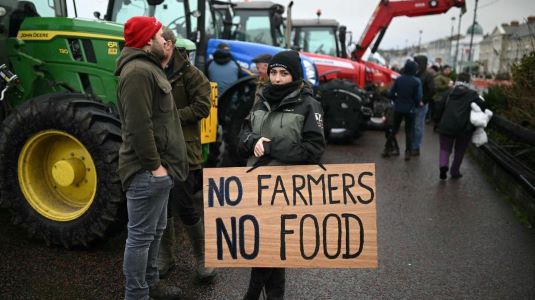
There's been a lot of rubbish written in the right wing press about the budget and the changes made to farmers' inheritance liabilities. Taking to their tractors for a demonstration in London on Monday, there were joined by self-confessed tax dodger Jeremy Clarkson and, among other things, drove one of their machines through a police barrier. Needless to say, Just Stop Oil activists have been handed hefty sentences for less. On the substance of the changes, the National Farmers' Union and its wealthier patrons are acting like the sky's about to fall in. Whereas other analyses, not just those proffered by the government, are in agreement that only a small minority of farmers will be required to cough up under the new rules. This, predominantly, is a revolt of the rural rich.

Thinking back over the future of the Tories last year, I argued that with a Commons wipe out we were bound to see extra-parliamentary movements of the right mobilise against the new Labour government around real and imagined grievances. This happened far quicker than anyone expected in the summer, but it had been glowing and flaring in the embers of the dying Tory government. There were, for instance, the anti-ultra low emission zone protests and the attendant "direct action" of vandalising and ripping up enforcement cameras in London. And we don't have to look too far back in the past to recall the blockade of refineries in 2000 and the Countryside Alliance march a couple of years later. Ostensibly against the ban on hunting with hounds this was a coat peg for a cagoule full of anti-townie grievances. Not all of which were unwarranted.

The coverage of the "plight" of wealthy land owners reminds us whose mouthpiece the media is, but it's a warning. It's easy to mock the likes of Clarkson and James Dyson, for whom their investments in agricultural land is to save their well heeled offspring from a tax bill when their clogs are popped, but what Labour and the left have to be wary of is the capacity of capital to mobilise a wider constituency. Rachel Reeves's taxes on unearned income has already driven the right to apoplexy because she has dared touch the lynchpin of their class power. But this is enough to stir up petit bourgeois layers as well, even though they're not caught by the inheritance tax take nor likely to ever be. For them it's a statement of intent, a declaration that the government might come for their more modest incomes next - in much the same way pledges to raise income tax on the highest earners sends jitters through the next layer down. It plays into their fears, and despite promising to be the most pro-business government ever, there are sections of capital, big and small, that are instinctively worried about a Labour government because of its class basis.

Therefore, as wealthy landowners mobilise their well of concerns - tax, subsidies, minimum prices, DEFRA regulations and inspections, townie arrogance - it's like casting seed onto particularly fertile soil when Labour are in office. Contrast this with how the Tories shafted farmers without any blowback from the right wing press, or self-appointed celebrity friends of farmers, nor much action from the NFU itself beyond strongly worded lobbying.

Labour and the labour movement aren't necessarily helpless, but they are if the ground is ceded to the rural rich. Already, the government have decided to push managerial over political messaging when it comes to controversial issues, a decision that renders it vulnerable in the medium to long-term. But there are advantages to be accrued from driving a wedge, which the inheritance tax changes are, between the majority of farmers and the layer of wealthy land owners. One would be the disincentive of the tax dodging rich to pile up agricultural holdings and encouraging sales, sending the ever increasing value of land into reverse and freeing up more for farming at the expense of land banking. The unionisation of agricultural workers, of which several drives are ongoing, is another, of making the presence of organised labour felt in the countryside - particularly among migrant workers who are often at the sharp end of the most exploitative contracts and employer abuses, could also work against the political influence the rural rich enjoy in their manors.

The art of politics is not just about winning, but demobilising one's opponents and preventing them from taking a lead on issues under your control. The handling of the so-called farmers' protest suggests that the ruthlessness the Labour leadership has shown its internal opponents is conspicuously lacking where those outwith its ranks are concerned. But with only a thin layer of votes to fall back on, if they want to be in for at least a decade to fulfil Keir Starmer's "missions" they're going to have to take this more seriously.

Image Credit

Sunday, 17 November 2024

Hacking the State

Writing in the Sunday Times, Kemi Badenoch has set out her vision of what government would look like if she becomes Prime Minister. The principles, which she calls "reprogramming the state" could be more accurately described as hacking it. Into smaller and smaller pieces.

In her argument, Badenoch does not attack the people who work for the state. Her target is bureaucratic process. Drawing on her time as business secretary, she says the inability to pay out compensation to the victims of the sub postmasters Horizons debacle in a timely fashion was symptomatic of the problems afflicting the state. Every decision has to be backed by x number of reviews, y gaggles of consultations, and z quantities of impact assessments. Attempts to abbreviate the process would find ministerial decisions subject to court challenge and, therefore, more delay. The risk averse culture afflicting the civil service, she concludes, is not a case of the mindset of staff but their experience of having to satisfy all the reporting requirements. These, Badenoch acknowledges, might have grown out of sensible concerns for accountability and transparency but in practice they only lengthen administrative processes and make them more opaque. The more laws that are passed, the more the state grows, the more the prospect of litigation enlarges, and with it the risk averse culture. A perfect doom loop.

If this is her problem ("I made this diagnosis the central plank of my campaign to become leader"), the solution is reprogramming the state. Government must stop rewarding managerialism among ministers, and every level of the state needs looking at afresh - but "box ticking" and "judicial review" must be avoided if the problem is to go away. In all likelihood improving "accountability", Badenoch style, will be the subject of suggestions churned out by the Tufton Street think tank complex. As well as the churn from Elon Musk's anticipated evisceration of the federal state in the US.

There are a few things of interest here. Or rather, interesting absences. If this is the culture of the state and it's so irksome, the Tories had 14 years to change it so why didn't they? Was it a symptom of talking conservative but governing left? Well, no. There were plenty of changes to governance over that period of time, and all of them embedded the Thatcherite settlement further. I.e. The counter revolution that started under her and was consolidated in the Major and the New Labour years, which saw bits of the state sold off, or forced into debt relationships with private finance, or forced to "compete" in internally constituted "markets" with one another. This was consolidated under the Tory/Liberal Democrat coalition. To put it another way, the proliferation of performance indicators, targets, "market intelligence", and the requisite legal expertise to go alongside them increased the amount of administrative work required. Neoliberalism is the bureaucrat's friend. But this was in the context in which the coalition government slashed at the state. Form filling multiplied as form fillers were laid off. More work was demanded from a shrinking workforce, and so the system was prone to seizing up. This is the first "inefficiency" Badenoch "forgot" to mention in her article.

The paradigm of this consolidation of neoliberal governance was the vandalism committed against the NHS during the first term of the Tories' long stint in office. Effectively, Andrew Lansley abolished the NHS as was and replaced it with a market, underwritten by state money, in which NHS organisations and "any willing provider" competed for contracts handed out by the hundreds of fund-holding Clinical Commissioning Groups. This meant huge sums diverted from health care to the maintenance of a wasteful and needless internal market, and rampant profiteering as private health concerns won contracts and subcontracted them to NHS organisations, creaming off layers of profit in the process. This was supposed to run autonomously of government and, formally, responsibility for the NHS no longer lay with the health secretary. As it happened, increasingly CCGs and NHS trusts found ways around the market and established cooperative relationships contrary to the designs of the legislation. With the immediate first wave of Covid out the way, the Tories belatedly discovered this and returned sweeping powers to the health secretary - then Matt Hancock - with unprecedented range to intervene and micromanage. The kind of model Badenoch seems to be hinting at. I.e. Ministerial direction unchecked by established procedures and remits to enhance accountability. And how has the NHS looked since this innovation was introduced? Yet another slice of pertinent recent experience from government the leader of the opposition chose not to dwell upon.

Lastly, completely by coincidence her "reprogramming" of the state is consistent with Tory efforts to wind down its capacity to do things. It bears comparison that Badenoch's view is a reskinned version of Jacob Rees-Mogg's planned civil service cull. In short, the state has not failed because of a magic theory of bureaucracy. It has virtually collapsed because under the Tories this was the policy objective. It has been starved of resources, saddled with extra responsibilities, and forced into a governance strait jacket that could only produce sub-optimal outcomes. And Badenoch's answer is to make this crisis of capacity the desired goal of the next Tory government. Her big idea is the regurgitated pap of the recent past, a programme and an agenda that saw the Tories crash to their heaviest ever defeat.

Image Credit

Tuesday, 22 October 2024

How the Tories Might Win Again

I read Rachel Cunliffe's review of two books about the general election with interest. The article's title, 'How Labour won - and how they could lose in 2029' is an obvious attractor to someone who spends too much time thinking about the Tories. Unfortunately, there was little here beyond the banal observation that Labour's majority is historically thin.

As long time readers know, I've been banging on about the long-term decline of the Tories for a while. They are not reproducing their electoral coalition, and this process hasn't stopped just because they've suffered a cataclysmic defeat. What is sure to compound the Tories' problems is the inability or unwillingness of their leadership contenders to acknowledge them. But in politics nothing is neat. When a party, a movement, or a politician is ascending the path to winning is rarely smooth. There are setbacks, reverses, and temporary troughs. Decline is no different. False dawns break that promise revival, there are flashes of strength show up here and there, portents and omens of good fortune are seized upon. There is no linear descent. The spiral downward is mistaken for forward motion. A couple of exhibits from the recent past: the huge vote won by Theresa May in 2017, and the absolute maxing out of this approach under Boris Johnson in 2019. Neither of which changed the Tories' declinist course, as argued here at the time.

This means that the fact of decline does not rule the Tories out of contention for 28/29. What makes an election win difficult is the politics. It's doubtful many Liberal Democrat or Labour voters will ever again tick the Tory box in the polling booth. People have memories, after all. And as Cunliffe notes in her piece, only 30% of Reform voters would have supported the Tories had Nigel Farage's "party" not stood, with 26% abstaining. But a very narrow Tory victory is conceivable for a few reasons.

For one, there is a marked tendency for governments to lose support. The Tory performances in 2017 and 2019 were anomalous because of Brexit, Corbynism, soft polarisation, and the successful reinvention of the Tories under new leaders. In five years' time, Keir Starmer will probably remain Labour's leader with all the baggage of incumbency that entails. Secondly, apart from against the Labour left the Labour right don't have a theory of political struggle. Rather than challenge established prejudices or offer political leadership, their default mode is to tail the (media confected) public opinion and hope a record of delivery will convince enough punters to give them another try. A managerial conception of politics that leaves a lot of hostages to fortune because initiative is ceded to their opponents. Say what you like about Kemi Badenoch (there's no use pretending any more), she undoubtedly will exploit the hypocrisy of Starmer's "Mr Rules" briefcase technocracy and might win a few converts. Last of all is a fraying of Labour's vote. This is not structural in the way Tory decline is but is a consequence of Starmer's politics and Morgan McSweeney's galaxy brain strategising. By demobilising and decomposing the Labour vote, it is being scattered to the four winds. This was evident before the election, can be seen in the result itself, and has continued apace afterwards. This leaves the government vulnerable.

It's not difficult therefore to see how the Tories could find a route back. Not because they're popular - Kemi-mania is most unlikely. But because Labour has hitched its project to key performance indicators that won't matter to most people unless they experience a shift for the better in prices, wages, housing, and public services. Discontent is less likely to drift to the Tories, but head in the direction of the Liberal Democrats, the Greens, and the left (if it can get its act together). If Badenoch's rightist platform stems the bleed to Reform and attracts some back, there is an outside chance the Tories could become the largest party simply because their opponents' votes are spread even thinner. Whether they could form a government is another matter.

Labour could avoid this fate, but it has done the "grown up" thing and bent its knee to capital. The Tories are not in with a shout of winning again because they have a clever strategy that can arrest the declining coalition. Its fate is entirely in the hands of the Labour leadership. By dispersing the party's base, Starmer is offering the Tories a sporting chance.

Image Credit

Tuesday, 24 September 2024

Anything but a Banger

Keir Starmer gave a conference speech typical of him. There were the nods to "service". There was the (unfounded) election triumphalism because we "changed our party". There were gestures to better things in the future, tempered by acknowledging the hard road ahead. Working people, "country first, party second", the boilerplate Starmerism was present virtually unchanged from last year's speech. In fact, the stand out moment - and what it will be remembered for - was his demand for the return of the sausages. An unexpected moment of levity in a scripted address that was anything but a banger.

What was striking about his speech was as if the last week didn't happen. This would no doubt concern Andrew Marr, who argued that Starmer should have apologised for the wardrobes of gifted clobber, the free tickets, and the takings ups of hospitality enjoyed by the leadership. There was no concession that anything was amiss, nor was there likely to be. Starmer has long nursed a penchant for the spoils of office. To his mind he believes he deserves it, and he's not going to say sorry for something he isn't sorry for. Never apologise, never explain is the first rule of right wing Labour politics. Jittery journos like Marr can carry on jittering because, they believe, the public don't care. A silly assumption, because they do.

A vague plan for Britain got a second airing, which via the framing of building a "decisive state" singled out Starmerism's two enemies. The first was the phantasmic Labour left, which was repeatedly dismissed and traduced by comparing his changed Labour to the "comfort zone" of irrelevance. The heckler who took him to task over his continued support for Israel was contemptuously dismissed with a "This guy has obviously got a pass from the 2019 conference." What japes to laugh off complicity in a genocide. Despite the evisceration of Labour's left by fair means and foul, Corbynism is a shade that weighs on their brain like a nightmare. If the "magic grandpa" has cast a spell, it's one over the Labour right's imaginary.

The other enemy was "populism". Corbyn was lumped in with Boris Johnson and Nigel Farage, who were denounced - albeit not by name - as peddlers of "easy solutions" and unrealistic promises. Contrasting his managerialist project with pie-in-the-sky politics, "we know where that leads" he said. He almost verged on the passionate in attacking the far right, though this was limited to "racist thugs" and praising the communities that came together to rebuild after the riots. He's still lagging behind the King on this one, and refusing to take on the Tories, the Farageists, and the right wing talking heads who've encouraged and excused it.

Starmer announced one new policy: guaranteed accommodation for former armed forces personnel, so none will end up sleeping on the streets. He also outlined the ambition of extending this to care leavers and victims of abuse. And if you're not one of Starmer's worthy homeless? Let's just say the silence was symptomatic. But there was a weird moment when Starmer waxed lyrical about everyone having the right to access the arts, music, and pursue their creative passions. He gave the impression of working himself up to an announcement about guaranteeing children's access to artistic subjects and venues, many of which are either on the brink or have gone under. But it never went anywhere, except for an anecdote about Starmer's first trip abroad with the Croydon Youth Orchestra.

In all, the court media loved it. The New Statesman said this speech showed "the real Keir Starmer". If it did, then we can conclude the Prime Minister has more waffle than Birds Eye, is tone deaf to public grumblings about freebie gate, and despite what was supposed to be an electoral triumph is haunted by his predecessor still. It wasn't a bad speech by Starmer's standards, but it wasn't the one he needed to give. If the customary post-conference polling bounce doesn't materialise, it's not difficult to see why.

Image Credit

Thursday, 31 August 2023

Keir Starmer's Divided Base

This week we learn 70 economists have sent Keir Starmer a letter decrying Labour's future spending plans. This comes after Rachel Reeves telling The Telegraph last weekend that there won't be any wealth taxes and mansion taxes, nor movements on top rates of income tax and capital gains. When pressed on how she expects to fund public services and all the other things Labour wants to do, her stock answer is economic growth. But as Josh Ryan-Collins rightly argues, these hopes are forlorn if Labour is to meet Starmer's mission of the strongest sustained growth in the G7. This is because the country's tax structure incentivises asset hoarding and investments that don't contribute to rising employment and "good" growth. What's more, not only is this plan out-of-step with what's happening in the United States, which Reeves affects to admire, but is miles away from what the economics establishment are saying. He notes, "The OECD, IMF, Institute for Fiscal Studies and Financial Times have all come out in favour of higher taxes on property and wealth in recent times as a means to support public investment and growth and reduce inequality."

Starmer will undoubtedly ignore this missive. After all, his shadow chancellor is also an expert and her background in Bank of England/Treasury orthodoxy dovetails with the priorities of the press and the oligarchs the Labour leadership have spent all summer courting. But this is storing up very big problems for Labour on the other side of the election.

As argued here many times before, Starmer's acceptance of Tory framing across all the important policy areas as defined by the right wing press neutralises hysterical attacks from them now, but isn't giving people anything to vote for. At this rate Labour are on course to win the next general election simply because they're not the Tories, not thanks to any positive policy agenda. And when in office he proceeds to govern the country along these same lines, albeit with a bit of tinkering here and there, viable electoral alternatives are primed and ready to go. As will be the inevitable, right wing petty bourgeois street movements in the absence of a credible Tory opposition.

There is another problem. Starmerism's immediate base is within the state machinery, and outside of that it is the professional managerial class. Again, there is nothing particularly startling or innovative about this. From its beginning, the Labour Party was an alliance between the organised working class and the middle class. For the last 120 years, the ancestors of Starmer's base have voted Labour, joined Labour, campaigned for Labour, and have intellectually and politically dominated Labour. During the Corbyn years, while many of what Dan Evans calls the downwardly mobile professional managerial class (i.e. graduates without graduate jobs) also attached themselves to Labour, not all of this strata flounced out for adventures with Change UK and the second referendum campaign. Corbynism appealed not just because its programme meant better pay and properly funded public services, it held out the promise of properly utilising their talents and skills to rebuild a Britain worth living in.

And here's where Starmer's difficulties lie. His biggest supporters are to be found in the professional managerial class, but that enthusiasm is by no means universal. Indeed, Labour appear more concerned with antagonising those in the public sector on behalf of imaginary voters. The shadow health secretary enjoys attacking the medical professions while Starmer himself talks vaguely about reform with no spending commitments. Not what senior NHS administrators want to hear either. In higher education with its academics, managers, and the next generation of professionals, we've seen the scrapping of pledges made. For local government, schools and FE, the civil service, even the police, there are no commitments to fix the messes the Tories have created. No movement on pay, and no vision of national renewal in which the professional managerial class could positively locate themselves. All Starmer wants to be seen offering is more of the tiresome, soul-sapping same. And that's before we mention how many of them have taken strike action over the last year and aren't about to abandon the picket lines just because Labour are in office.

What this means is, again, most of this strata will vote Labour when the election comes round. But it will be without enthusiasm in the absence of offering them something more than top down restructuring that ties them up with more bureaucracy while funnelling more state money into corporate coffers. As I said, Starmer will likely ignore the concerns of the economists, but what they're articulating is a deep unease across his natural base. If he continues alienating those who should be in his pocket, any government he leads will hit the buffers very quickly.

Image Credit

Wednesday, 30 August 2023

ULEZ and its Discontents

Tuesday saw the rolling out of the Ultra Low Emission Zone to all the boroughs of Greater London. Inherited from Boris Johnson and, once upon a time, encouraged by Grant Shapps before deciding being against ULEZ was good for Tory prospects, it's fair to say Sadiq Khan has fully embraced the policy. He toured the breakfast show studios talking up the improvements to London's air quality, and how it was saving lives. The scheme, which came into force at midnight, is operating with no grace period. Those entering the ULEZ without emissions compliant vehicles and a £12.50 daily pass can look forward to immediate fines of £180. Estimating that around 90% of cars in the outer boroughs already sit below the threshold, a scrappage scheme is available in which grants of up to £2,000 can be claimed towards a new car.

Leaving aside the character of the policy and its implementation, there was one interesting aspect to BBC regional news coverage of the roll out. It continually emphasised the "strong opposition" to it. One on the spot report highlighted anti-ULEZ graffiti, while another mentioned how a camera had been vandalised with white paint. Naturally, right wing media have chosen to talk this up. A couple of hundred (if that) marching on Downing Street with a No 2 ULEZ coffin and claiming toxic air "is a lie" was prominently featured on the Telegraph's website. It says "some parts of London [are] seeing every one of their Ulez cameras vandalised on the day of the expansion". The Sun likewise reports that "dozens of cameras" were vandalised, and claims some drivers had taped up their number plates to evade detection. Farage is banging on about this "tax on working people", and LBC went on the Underground and - to no one's surprise - found air down there was poor quality. Then we had the road blockages by anti-ULEZ protestors last week which, funnily enough, did not merit a scintilla of condemnation from the outlets who treat every Just Stop Oil action as if the Paris Commune was marching on Versailles. And no doubt hoping some of that anti-ULEZ love will improve his chances at the next election, The Mail reports how Iain Duncan Smith is backing efforts to destroy Transport for London's shiny new cameras. You read that correctly. The party of law and order is encouraging criminal damage.

Some of the arguments opposition to ULEZ field miss the mark. It's a nefarious scheme for Khan to raise more money for woke projects, which falls apart considering how thousands have already applied for the scrappage scheme and the mayor's office are encouraging people to do this to avoid the tickets and the fines. Or it's open season on the motorist to force the hellscape of 15 minute cities onto us and take away the freedom to drive wherever you please. Very quickly, the arguments abandon the sensible grounds of affordability and its being a regressive tax and jump headlong into the completely conspiratorial. This is because ULEZ, like pretty much all policies with universal scope strikes terror into the hearts of a particular constituency: the petit bourgeoisie.

In Dan Evans's recent discussion about his book on the same, he talks about how the petit bourgeoisie are the most excitable and dangerous of classes. As sole traders, or owners of small or medium sized businesses their status feels as if it rests entirely on their shoulders. If they take a day off sick, that's a day without income. Holiday pay does not exist. And they are at the mercies of forces much larger than them. The movement of a large retailer into their district can wipe them out. New government regulations means added costs, which can wipe them out. Employees getting together into a union and pressing for higher wages or taking industrial action can wipe them out. Disruption of the every day, from the weather to public services not working properly to third party strikes can wipe them out. Being one's own boss is life affirming and validates one's individuality, even though the reality of the situation more often than not finds this pluckiest of underdogs treading water and hoping a wave doesn't come along that drowns them.

A couple of important political consequences flow from occupying this location. Self-reliance is dependent on making the right choices, which means as far as they are concerned there is no higher authority than themselves. Not so much I think therefore I am, more I think therefore it must be true. This explains the over-preponderance of the petit bourgeois in anti-vax/Covid denial movements and other collective outbursts of the seemingly irrational. The second is that the angst undergirding their position predisposes them to a politics of certainty, which explains a tendency to cultural nostalgia and disproportionate enthusiasm for right wing authoritarian politics. One cannot understand why this class went for Leave over Remain in the EU referendum without understanding this point, and how they have consistently been more attracted to the Tories than Labour. Even when the latter have differed not at all on authoritarian statism.

Looking at mobilisations of the petit bourgeoisie in the 21st century, there is a certain commonality to them. Whether it was the petrol protests in 2000 or the Countryside Alliance demonstrations a year later, the Fathers 4 Justice stunts, and latterly the cocktail of Covid conspiracism, 15 minute cities, and now ULEZ what they all have in common is the perception the state, or rather a busybody and overly managerial section of the state is getting in the way, professing to know better than them, and is stopping them from doing as they please. ULEZ, as the flagship policy of a technocratic and robot-sounding Labour mayoralty was always bound to antagonise a layer of them. Particularly those whose opposition to Sadiq Khan has more than a racist tinge, and have happily drunk from the toxic brew of Islamophobia that is swilling around the London Tory party. With encouragement from leading Tories, and indeed anti-ULEZ (predictably) now forming a key plank of government strategy since retaining Johnson's old seat, if anything opposition to it will grow with more daft demonstrations and attacks on TfL cameras. It is seen and felt as an irksome burden, and is treated as such.

There's a warning here for Labour. Keir Starmer in office will be a red rag to the petit bourgeois bull. The arrogant we-know-best vibes given off by the shadow front bench, the deeply inauthentic media appearances, a politics of authoritarian modernisation that aims at perfecting the state, and the prospect of more regulation as local authorities are empowered offer plenty of real and imagined grievances for petit bourgeois oppositionism to take up. Which is all the more likely given how the Tories will be down for the count and unlikely to make a comeback any time soon. Considering how the Labour right would rather turn to administrative means and dirty tricks than rely on political argument, petit bourgeois provocations are likely to elicit even more authoritarian responses. And who knows where they might go in reply?

Image Credit

Sunday, 27 August 2023

Preparing to Waste an Historic Opportunity

Is the next Labour government going to do nice things? A lot of social media users took the latest Jon Elledge piece as offering a big yes to that question. Which goes to prove even "media savvy" folks just read the headline without clicking through. The argument offered is much more subtle, a case of never judging an article by the tweet. Supposing Keir Starmer wins a decent majority at the next election, Labour can do pretty much what it wants. The impasse that we're at now, where Rishi Sunak can't do anything because of the fracturing among the Tory majority, has meant we've forgot what effective government can do and how it can determine the course of political debate.

Booting up the old memory banks recalls two things. It wasn't that long ago the Coalition government presided over things in this country, and though it was a lash up between the Tories and the Liberal Democrats it operated as an effective government. If you happen to define efficacy in terms of getting its legislative programme through over and above the content of what went on the statute books. They operated as a stable majority government that didn't suffer an especially large number of defeats. And indeed some might recall how that government did set the terms of political debate, with opposition and the media all singing from the same austerity hymn sheet. I think that's still pretty fresh.

The second recollection dredged up from the depths is what was said about Labour governments of the recent past who find themselves in this position. There was a view, an illusion propagated by Labour activists and ordinary Labour-supporting punters that Tony Blair was just saying right wing things so he could get into office. Once he was there he'd reveal his social democratic soul and undo the damage inflicted during the previous 17 years. Despite becoming master of all that he surveyed, what we got was around-the-edges tinkering. And having learned nothing, we saw it again as Gordon Brown limbered up to the premiership. "He was held back by Blair" went the fantasy. When he's in Number 10 we'll see some proper Labour policies. To be fair to Brown, he did nothing to invite these projections - especially when New Labour was as much his creation as Blair's and Peter Mandelson's. But he did get to nationalise some things.

Since winning the Labour leadership, Keir Starmer has repeatedly and in full public view shredded the pledges he stood on. Suitability for political office is best demonstrated by refusing to stand for anything, don't you know. And as if to underline the point, this weekend in the Sunday Telegraph Rachel Reeves announced there won't be any new taxes on the rich. That means no increase on the top rate of income tax, no capital gains tax, no mansion tax nor any specific wealth tax. Starmer is leaving nothing to chance. Like his predecessors, he can't be accused of making big promises nor of raising expectations.

Jon does concede that Labour might not use the space afforded them by the defeat of the Tories. And where his argument is useful is reminding his readers that Labour's voters are different to the Conservatives' reactionary base, and therefore these defeated constituencies can be ignored. Which is true, except Starmer's behaviour acts as though they are part of the coalition he wants to build. Whereas Jon looks forward to the bangers-on about Brexit, war on woke, etc. getting short shrift it's far more likely Starmer will carry on cleaving to this foul politics because it's the Daily Mail and friends going on about them. And this surrender to their framing is easy because it wouldn't disrupt his project. What you might call his authoritarian modernisation is chiefly concerned with restoring the authority of the state and its institutions, patching up the country's beleaguered political economy, and rescuing British capitalism from the verge of a legitimation crisis where the Tories have left it. Doing so will shift politics onto a more managerial terrain but leave all the fundamentals intact.

The problem this leaves Starmer with is despite raising no expectations and, indeed, having spent his leadership dashing them, his choice not to do anything to address persistent inequalities or glaring problems will be perceived as exactly that. No matter how many times he and Reeves repeat the "there is no money" line, it's not going to wash. And that's going to cause all kinds of problems that could well strike at the party's base itself.

Image Credit

Sunday, 25 June 2023

Hegel's Political Uses

Reading Shlomo Avineri's Hegel's Theory of the Modern State was a shaming experience. Not having read Hegel nor ever likely to do so, I've got by with the famous contempt the Althusserian and Deleuzian traditions have for him. For Althusser, you might recall, it was the residues of essences and humanism Hegel left in Marx's work that he had beef with. For Deleuze, it was more explicitly political. Hegel was the pre-eminent philosopher of and apologist for the state. Its representative character, which was a virtue for Hegel, justified discrimination and oppression and squeezed human beings into arbitrary categories. The state was an instrument of class, and an irreducibly stunting, violent organisation. Life itself was in rebellion against it as the state worked to channel all that was positive and pregnant with potential into blind alleys or, worse, modes and codes of oppression. While true, these takes warded me off from seeing what Hegel himself had to say. And, which won't be a surprise to anyone more familiar with his work, Hegel was a much more complex and nuanced thinker than is often given credit.

Avineri's study set out to restate Hegel's political theory in his own words, and the result is something much more satisfying and interesting than the prophet of totalitarianism (Karl Popper) and mystical authoritarianism (Bertrand Russell). Nor, Avineri argues, are the interpretations that place Hegel as a radical young man and a conservative old man who apologised for and identified reason with the Prussian state. Again, the story is much more complex and these caricatures are given short shrift - backed by the weight of textual evidence, contextual evidence, and an appreciation of how Hegel was mistranslated into English in the past. With Avineri, we find a thinker who had the same concerns throughout his career, and offered a novel political philosophy that cannot be pigeonholed and boiled down to liberalism or conservatism.

As is generally accepted, for Hegel history was a process, a becoming of reason and freedom from the dark pasts of ignorance, superstition, and despotism. It had a shape and a direction, but was nevertheless open. In Hegel's philosophy this process was a necessity, but a necessity does not mean a guarantee. It's a necessity for me to consume food, but whether I can find some is an open question. It's a necessity that a company turns a profit, but that can be thwarted for all kinds of reasons. For this reason, history was open-ended. Second, despite the mystical-sounding language (spirit, the absolute, the universal), reason was an accomplishment, it was the consequence of our collective effort to make the world intelligible and re-order it according to our intentions. This was practice-oriented, or practical reason, and the job of philosophy is to describe what is. For Avineri, Hegel's famous statement that "what is rational is actual and what is actual is rational" is not a conservative endorsement of the world, but the world's amenability to analysis and sense-making. It's an injunction to not just describe appearances but get beneath them and find the hidden rationales and connections that keep the world going. As he put it,
Philosophy, Hegel reiterates time and again, deals with the world, with rationality, and it should not stop ... at external appearances, nor should it be deterred by conformist accommodation with the powers that be. But it does have rationality as its object, and this means that if something exists, there must ultimately be a reason for its existence, and this reason, hidden and elusive as it may be, must be brought out into the open. (Hegel's Theory of the Modern State, 1972, p.125)
Ultimately, the state is the highest expression and instantiation of reason. But how? As we have seen, freedom and reason come about through interacting with the world - or through mediations. Becoming conscious of freedom is a question of developing the will. At its most brute and base, we deal with what is immediately in front of us as is. This is, or was, the lot of peasants and those living in ancient (and oriental) despotisms. Everything appeared as if a natural law and was accepted as a fact if life. We then move to the second mediation, the process of reflection. We reflect and act, make choices, and develop a subjective morality that guides our actions. The third stage is the fusion of the two into an ethical life, where we are subject to, accept, and act on universal systems of ethics. This ethical life, for Hegel, can be sub-divided further: here we act in three contexts. There is the family, which is "natural" and immediate. I.e. We act to meet our families' needs without qualm or negotiation. It's altruistic behaviour toward a particular group of people. Then we have civil society, which is basically the economy. We participate here out of necessity. Whether as bourgeois or as labourers, we sell what we have to get what we need. This is the arena of securing the means of life, and as such it resembles an interconnected, interdependent web of relations where everyone, by pursuing their self-interest, more or less collectively meet the needs of the whole. It is particularistic and egoistic, but is universal - it's the way of the world. And then we have the state, which for Hegel stands above self-interest. It is the institution of the whole, the expression of ethical universality, the community, and our everyday cooperation/altruism. It's where we become conscious of being part of something bigger than our selves, our families, and our particular interests. We relate to one another as citizens bound by solidarity. The state then is the necessary counterweight to civil society. The market tends toward atomism and social disaggregation, unless regulated, while the state is the guarantor that holds everything together. The state, for Hegel, is not the expression of the general will. Rather the universal consciousness, the general will, is the outcome of the state's existence. And why is Hegel particularly concerned with the modern state? Because it offers the best means for us to become free and to exercise our faculties as we see fit. The state with reason at its heart is the state with the freest of peoples.

Corresponding to this three-fold structure are the classes of Hegel's system. The peasantry are fundamentally conservative because, effectively, they are outside history. They carry on tilling the land and raising animals pretty much as they always have done. The work never changes, nor do the social relations that constitute and bind their existence. Hegel also locates the aristocracy here too. Like the peasant they have no interest beyond what is and can live their lives insulated from the market and the state. Their consciousness is constituted and enclosed by "natural relations": the immediate and the trusted. This business class are more advanced because through its settling of self-interest, it is predisposed toward freedom but also the order that enables their choices - hence a respect for stability and the law, both of which are preconditions for regular exchange and the acquisition and accumulation of property. Lastly, there is the civil service class. Like the bourgeois, they participate in civil society but are guided not by particularism but by the universal interest. I.e. Society's interest as a whole. For Hegel, to bring out the universalist character of the civil servant they have to be liberated from direct labour, but are appointed to their position as administrators of the state by merit measured against universal criteria. They are, therefore, best placed to manage the state - the institution that exists beyond particularism.

This is not a recipe for meritocratic authoritarianism. At least on paper. Through classes' interactions in civil society (and strata within those classes), their interests coalesce into estates, which work to pressure the state and, in turn, the state works to incorporate and reflect those interests. These are crucial for political integration and, crucially, pluralism in any given system. Estates work as mediators that bridge the gap between the particular individualisms of civil society and the collective character of the state. It was also for this reason why Hegel was sceptical of universal suffrage. Again, not because of anti-democratic reasons but because it's premised on the abstract rights of the abstract individual. It imports into the state the corrosive logics of civil society. That is the pursuit of self-interest is fair enough to make a living from but not for fostering the universal purposes of political life and therefore the state. Instead, better one should participate in politics through the mediation of the estate. Democracy, elections, etc. should be tied to corporate entities who would have so many guaranteed seats in the legislature. Avineri observes that most liberal democracies have not developed in that direction, and instead the interest aggregator role has been taken up by the modern political party. Either way, the state also had a role in regulating the estates to maintain their health by ensuring their openness to new entrants, and that no one estate predominates over the others. A culture of interdependence reflecting its actuality has to be embedded as a means of guarding against any attempts to dominate.

Hegel was aware of the gaps in his system. He argued that "need" was always more than something physical. There were intellectual, spiritual, and social needs too. He also believed that the market was the best means devised for meeting them. Hence the passion for commodities and their production was self-sustaining and infinite. He also noted the activities of certain producers that marketed their goods to try and shape needs to their advantage. But owning something was more important that gratifying a need - it was a means of earning recognition. This has a basic day-to-day function in that, for example, an employer and employee recognise one another because each possesses property the other needs. But more than that, property is an embodiment of the will. What we buy and what we own says something about the choices we make, and that cannot but be recognised by others. It's a means of asserting our individuality and character, which is only possible in a social context well versed in the idiom of property functioning thus. For this reason, Hegel was opposed to communism because the means by which we recognise each other disappears. Second, poverty and want, which he acknowledged was inherent to modern political economy, not only deprived the poor of the means of life but, by denying them property, they are denied personality and humanity. The solution, for Hegel, was a guarantee of some property (rather than redistributing it) to give them a stake in society. The extent to which pauperisation existed in any given society offered a normative measure by which it could be judged. However, while the poor were outside of his estates system, there is no reason why they should combine together and establish a position in competition with the other estates. For Hegel, not only would this integrate the poor into the system but confer legitimacy upon their plight. But because of the inevitability of poverty, he knew this was a problem that could never properly be solved.

The second gap in his philosophy is glaring, and that is the absence of the workers. Hegel's recognition of the working class was not confined to his discussion of the poor. In early work unpublished in his life time, he noted that while property was social, who it was related to and owned by was arbitrary. And its acquisition was always mediated by labour. Property was key to recognition, but so was labour. Everyone has to labour, we relate to each other and recognise each other as labourers, and the brute reality of this truth was the wellspring of the universality and acceptance of property's status. In other words, the property was the appearance. Labour, the essence. What labour produces is actualised need and actualised intention, and is the mediation through which the objective and the subjective are synthesised. But labour does much more than make things. Labour is always social because it produces for needs outside of the individual labourer. It always presupposes a labouring other. But from that individual standpoint, production in totality looks and is experienced as something abstract. The process of labour appears separate from need, and is viscerally experienced as such because what is produced is for exchange and not for the labourer. This has a couple of consequences. Social labour, as something abstract, becomes an alien power organised by and subject to its own rhythms. Second, because labour is undertaken in exchange for the universal equivalent - money - and because the whole process is blind, labour descends from a means of recognition to a means of dependence in relation to the products of labour. Their labour is needed for as long as their products are needed, and if the whims of fashion take a particular turn livelihoods dependent on that department of production are destroyed. The labourer's life therefore is fundamentally precarious. Nevertheless, despite Hegel's keen insights into capitalism and alienation, there is no acknowledged space for the workers in his system. His dissection of one aspect of production does not follow through into the recognition of opposing interests between employee and employer. What takes precedence is not the substance but the appearance of the relation, where it appears the two are exchanging equivalents and therefore pursuing their own self-interests in a manner no different to buying and selling in a shop. And Hegel's deference to its appearance was probably more than an oversight. Had he enquired further with the same degree of analytical clarity as his discussion of alienation, the elaborate ties of his philosophical system would easily have come undone.

Despite its obvious flaws, Hegel's philosophy was a clear advance over conservatism (rooted in the peasantry and aristocracy) and liberalism (the outlook of the merchant). Offering a novel analysis of society which incorporated, with modifications, Adam Smith's political economy, Hegel provided a justification for modernity and modernisation. As Avineri - and many other commentators - have observed, he was impressed with Napoleon because his march across Europe dispensed with petty states and jury-rigged dynasties. They were replaced by modern states that were variously democratic (or not at all), but did conform to the separation between civil society and the state, the law was codified and objectified, based on sound principles of evidence and legal independence, began to work as universal institutions, and were staffed by a professionalised and "objective" civil service. They were not perfect but were beginnings. With these states in the ascendant following the Napoleonic wars, in his academic appointments Hegel used his influence and standing to not just encourage these processes, but defend them as well. He was particularly fearful of the nascent stirrings of nationalism in Germany and how the unification of the country on that basis would have been a step backward because it owed its appeal to emotion, feeling and, as far as his scheme was concerned, particularism. Following Hegel's Berlin appointment and his transformation into supposed defender of the Prussian state, Avineri argues his support for repression was contingent on what was being repressed. And this was consistent with his opposition to elements within Prussia who wanted to turn the clock back, and reactionary new movements welling up from below. Indeed, Hegel's last published work - his reflections on the English Reform Bill - was partly suppressed by the Prussian state because he argued the problems in England, which were not too dissimilar to those at home, required social and political reform to bring the state in line with the more modern continental states (though, in reality, England definitely was not backward). Therefore Hegel was never a conservative. His philosophy justified the modernising impulses of his day, and where they were actualised he defended them against ideas and movements that would undo them.

Why bother with Hegel today? Hasn't his philosophy been subsumed by Marxism? In a world riven by interests, reason is eclipsed by politics. Indeed, Hegel's system forecast the possibility of such an eventuality. If the state retreats too much from civil society, self-interest elbows its way out of the sphere of social activity proper to it. It begins encroaching on the "lower" spheres of social life, increasingly subjecting intimate and familial relations to the logics of contract, And the state itself becomes transformed into an agency of particularistic interests. Its objectivity and universality, while paid lip service to, becomes more partial, more enmeshed in the competitions and struggles of civil society. This perspective explains a lot more than conservative and liberal diagnoses of our present malaise can manage. Hegel doesn't come with the overt political implications of Marx, and probably helps explain why two "respectable" traditions in sociology - the Durkheimian perspective and its functionalist descendents, and the "critical theory" of Jurgen Habermas's theory of communicative action owe a lot more to the former than the latter. Despite Habermas hailing from the Frankfurt School, his career has arguably worked backwards from Marx to Hegel.

I think Hegel is worth a candle though, for precisely the reason why Deleuze and Guattari abhorred him. What struck me about Avineri's careful selection of quotes was how accurately Hegel distilled the collective outlook of state administrators while this strata was practically microscopic. This might not seem a big deal, but Hegel's accomplishment lies in systematising and rendering explicit a world view that had barely been born when he was writing. We're talking about managerialism, technocracy, "sensible" adults-in-the-room statecraft. He captured the administrative imaginary that has since become absolutely indispensable to bourgeois politics. The ideal-typical bureaucracy that so exercised Max Weber a century after Hegel is all there in his philosophical system. The distinctions between the privatised worlds of the family, the self-interested character of civil society, and the universal objectivity of the state is very much the social reality of the last, of being perched up high and glancing at the great morass unfolding below. For Hegel, the state integrates by finding and assimilating the universal within the particular. In practice, that means state personnel knowing what motivates and is in the interest of different sectors of society and, crucially, knowing that better than those sectors themselves. In a British context, with the undesirables of Jeremy Corbyn, Boris Johnson, and Nicola Sturgeon removed from the scene the so-called professionals are back in the politics driving seat, and their view of the world absolutely drips with this elite conceit. Rishi Sunak's briefcase Toryism has it that interest rate rises and below inflation pay awards are in the ultimate interests of the electorate. Keir Starmer and Rachel Reeves agree, albeit they come from the Fabian tradition, which carries more than an unconscious trace of Hegelian universalism. This, of course, isn't to say these three politicians know their Hegel. But to understand their mindset, their theory of change, their "ethics", and their attitudes toward the rest of society, as a diagram of how they think Hegel's philosophy illuminates them and the imaginary of their kind better than any other tool we have.

Wednesday, 8 March 2023

Cultivating Labour's Scapegoats

No one wants people to cross the Channel in dinghies and small boats. Except perhaps the Tories, because they think it plays to their strengths. No one should have to resort risking life and limb and brave the busiest shipping lane in the world in the flimsiest of craft. As a minimum, there should be an asylum processing centre in Calais and a multiplication of safe routes to the UK. None of this we'll-give-Lebanon-a-pittance-to-support-Syrian-refugees nonsense, which is just a Tory body swerve to evade our treaty obligations. That people actually want to come to this rainy grey island is something worth celebrating.

Turning to Prime Minister's Questions this Wednesday, given Rishi Sunak's song and dance about his Illegal Migration Bill Keir Starmer used all his five questions to rubbish the Tories' record on asylum. He was in his element. The government had made promises about getting numbers down, applications processed, and people deported. Another symptom of state dilapidation and failure. But these were, as with so much of Starmer's critique, process criticisms. It fell to SNP Commons leader Stephen Flynn to attack the Tories on the Kafkaesque immorality of their proposed laws.

Starmer's attack on Sunak's record was foreshadowed in Labour's social media blitz on Monday. Memeable content like this shared by Stephen Kinnock stresses the record numbers of crossings and the money it's costing to put people up in hotels. Who needs Jonathan Gullis and the so-called "Patriotic Alternative" when the Labour Party is lamenting the expenditure of miniscule sums? None of this is a bolt from the blue. Throughout Covid, throughout the Johnson years, and even now with the Tories on their knees, Keir Starmer-flavoured Labourism fights shy of challenging the political consensus. More authoritarianism, good. Businesses fleecing the public sector, also good. Treating refugees as unpeople that need deterring from coming to Britain, yes, Starmer is on board with that too.

Why? "Racism" as an explanation isn't really satisfying. They can turn it off and on if occasion demands. Neither is chasing the "social conservatives" in the seats Labour lost in 2019. By default, Labour is currently the recipient of a powerful electoral coalition of anti-Tory sentiment it has done little to cohere or win. I suppose the argument that going on cost while refusing to contest the sewer politics of the Tories might be explained as shoring up support among tabloid-reading pensioners worried their place in the Post Office queue will be usurped by Iranians. I can imagine the shadcab away days nodding away at the PowerPoints making these points. Labour has "earned permission" from these voters to "get a hearing", and conceding their "real concerns" means the party is on its way to "sealing the deal". Yes, but entirely unnecessary. The cost of living crisis is doing more for Labour's vote than anything else.

We therefore have to consider the consequences of Starmer's refusal to venture into moral criticisms. Taking on the arguments politically instead of as a manager and a bureaucrat means telling people with unfounded prejudices and racist attitudes that they're wrong. Which is something the Labour right are never willing to do, unless the public are opposed to a war or, as per more recently, want the nationalisation of water and energy. Offering political leadership is hard. It's much easier to surf the wave of reactionary public opinion than challenge it, because the press are on side. And second, bringing morality into politics hamstrings future action. Treating refugees like human beings now hampers Labour's room for manoeuvre later. Especially when the very right wing Yvette Cooper will be responsible for asylum after the next election.

And there's another thing. Right wing politics has to have its scapegoats. This was as true of the New Labour years as any Conservative government before it and since. Young people, Muslims, benefits cheats, and refugees each took their turn in the Blair years to star as monster-of-the-week. We can see from the emerging Starmerist politics that young people are going to again be in Labour's sights with the proposed son-of-ASBOs schemes. And, naturally, keeping refugees in play as a political football might prove just as useful to Starmer's authoritarian politics as it has done for Sunak's authoritarian politics. In other words, any moral or political criticism the Labour leader makes of the Tories, if he should - my word - defend refugees from the calumny heaped on them, Starmer would draw some of the strength from attempts his government makes to peddle these poisonous politics. And so he doesn't. Choosing to play the establishment politics game incentivises against it.

This is how it's going to be between now and the next election. The Tories will grand stand, and all Starmer and Cooper will do is quote back at them the falling number of deportations. What a grim, ghastly spectacle we have to look forward to.

Image Credit

Monday, 6 March 2023

A Bureaucrat First and Foremost

We saw the other day their ham-fisted efforts at trying to make political capital from Keir Starmer's appointment of Sue Gray as his new Chief of Staff. The Tory little helpers over at Guido splashed on Jacob Rees-Mogg referring to Gray as a "friend of the socialists" in the Commons, and others have gone with how her son, Liam Conlon, chairs the Labour Irish organisation. Devastating attacks, I'm sure you'll agree. But is this affair the usual Westminster pantomime, or is it something worth paying attention to?

As noted on Friday, Gray is absolutely ideal for the Starmerist project. When he was Director of Public Prosecutions, he diligently acquitted his role and served the Coalition government well. As Oliver Eagleton painstakingly outlined in The Starmer Project, he didn't even have to be told by the Tories what to do. He leant into their objectives as an "enterprising" civil servant - the very sort Michael Gove wanted to encourage. During the 2011 London riots, on his initiative Starmer ran the courts around the clock to lock people up. It was Starmer who voluntarily committed the DPP to pursuing the maximum penalties possible against social security "cheats". And it was Starmer who took the DPP global, offering all kinds of unsavoury regimes and authoritarian governments the kitemark of British probity for their justice systems. Since becoming the Labour leader, he's treated the party just like a state bureaucracy, even to the point of getting the management consultants in to advise on electoral strategy, branding, and internal party organisation.

Starmer noted in his car crash LBC interview, Gray was someone he'd tete tete with at receptions and the like before he became an honourable member. He was impressed by her work and professional-mindedness. In the Cabinet Office, where the work was especially sensitive and often politically embarrassing, Starmer appreciated her discretion and, crucially, ability to walk the delicate tight rope of managing the tensions while ensuring the smooth running of the executive. It's the kind of skill set a bureaucratic imaginary can appreciate. And for Starmer's core support, which is the small but politically influential layers of the senior civil service, academia, broadcast media, other senior public servants (police, prison governors), and politicians themselves, the move to recruit Gray is as welcome as it was audacious. The vibes are perfect. Gray is one of them, Starmer is one of them, and her appointment is confirming that Starmer means business. And business here means, for want of a better phrase, the take over of the state by the state. Hence his politics is an exercise in modernisation. So much for Labour as a moral crusade.

But for "Mr Rules", there was obvious discomfiture when it came to answering elementary questions about Gray's appointment. Here the Tories have a point, even if they've shown scant respect for conventions and codes in the recent past. The rules are clear in that someone in Gray's position has to report communication with opposition politicians to the relevant minister. If Gray had done this with Starmer's approach, then that would be out and about in the columns, talking points, and social media threads already. Starmer also knows the rules and knows there was an "oversight". And so on this, as distasteful as it is, the Tories have him bang to rights. Starmer's reaction is what happens when someone gets found out: a disassembling and, as per Monday morning's LBC broadcast, the refusal to answer Nick Ferrari's reasonable question about when Starmer and Gray first spoke about the Chief of Staff job. Repeating "there's nothing improper here" didn't sound particularly convincing. Like all senior bureaucrats who know best, Starmer feels the rules don't apply to him and he has a certain dispensation. But, unlike Boris Johnson, he isn't daft enough to try the innocent face routine. Awkward evasion, which has worked before, works to move the subject on. As well as an assumption that most aren't watching, don't care for this political theatre, and have more pressing concerns.

Here is Starmer's problem. He has a habit of being economical with the truth, to put it mildly. He's far from alone in this where the upper reaches of the Labour Party are concerned, but there's only so much the media and, by extension, the public will swallow. His grey man with a grey personality routine, the being boring shtick can only carry him so far. And this dishonesty is a massive problem when a core objective of the modernisation project is the restoration of trust in state institutions. The duplicity with which he's treated the left, his seeming amnesia as de facto head of the second referendum campaign, and the evasions over Gray's appointment don't matter much now, but over time they will be added to. Every time he's dishonest, he's giving the Tories and their press more and more chisels to chip at the edifice he's trying to construct. My advice would be to stop doing stuff corrosive of political culture and democratic norms if he wants to avoid these difficulties in the future, but Starmer won't. He is a bureaucrat first and foremost.