Showing posts with label The Internets. Show all posts

Monday, 15 June 2026

Authoritarian Babyism

If you're lucky to be under the age of 16, congratulations! You will still be allowed to access this site from April next year. But if you want to watch more or less identical content on YouTube or TikTok, or the Prime Minister announcing decisions about your future, tough. If you're 16 or 17, you can join the army, pay tax, and (soon) vote, but hanging out with your favourite cool politics people on Bluesky after half eight at night is verboten. Once again, the government are proving that stupidity is the flip side of authoritarianism.

Keir Starmer admits that his mooted social media ban is doomed to fail. It won't prevent teenagers from accessing their favourite platforms, but it will stop some of the harms some of the time. Meanwhile in Australia, which is the Labour right's favourite model for how politics should be done, 60% of young people affected by their identical ban have found workarounds through VPNs or hanging out in quiet or obsolete corners of the internet beyond the ken of the IT police.

What damns Starmer's stunt in its own terms is that it goes against the evidence presented by the government's survey. The data says that social media can make young people anxious and more worried about what other people think about them, but across the 10-21 age range much higher numbers are given for the statements 'social media makes me feel included' and 'social media helps me feel connected to other people'. In the government's consultation exercise, 72% of young people themselves said they were worried they would miss out if restrictions were introduced. Ian Russell of the Molly Russell Foundation, set up after his daughter took her life after long exposure to algorithmically-pushed self-harming content, rightly said that a blanket ban is a cop out because it avoids forcing social media outfits to comply with British laws. Which, as we've seen with the government's attitude to far right and loyalist violence and their use of Twitter and Facebook to organise, looks very much like a pattern of behaviour rather than a coincidence.

Since Starmer came to office, it's incredible to think he's fronted a government even more authoritarian than the frequent outrages Boris Johnson committed against constitutionalism, the right to assembly, and freedom of speech. This ban is just another big man flex, thinking it will curry favour with parents for whom the internet and social media is a constant worry. Despite many of them growing up in the Wild West years of MSN and Yahoo Messenger, the first flush of internet dating, photo sharing, and ubiquitous pornography. And just like the Democrats' enthusiasm for banishing TikTok from the phones of US teenagers, social media is the primary means by which young people now get their news. Curtailing their access to their trusted news sources makes the management of information flows easier for government spinners. The perceived political benefits are not excluded from their equations.

But also, it speaks to another concerning turn. It is normal for teenagers to push against limits, break the rules, and occasionally thumb their nose at the law. By his own admission, Starmer said he "enjoyed a good time while at university" when asked about drug-related indiscretions. This state mandated coddling, at a time when crime in Britain has fallen off a cliff and, arguably, young people as so-called digital natives have never been so connected to each other through webs of weak ties, is utterly unnecessary. Starmer and Labour are cracking down on the freedoms of young people, and not the far right, nor white supremacist billionaires, precisely because no oligarchical interests will be harmed in doing so.


Monday, 10 November 2025

Why Won't Labour Take on Elon Musk?

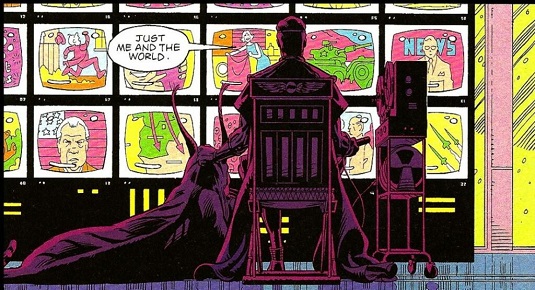
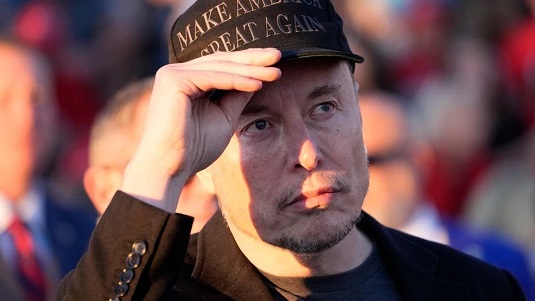
On how many occasions has Elon Musk used Twitter to declare war on Keir Starmer's government? How often has he stoked racism, intervened in British politics, called for civil war, and - not unsubtly - agitated for Labour's overthrow? At this point, enough times to warrant official action and sanctions against his cesspit of a platform you would think. But of the government, there's nary a response. Despite Speaker Lindsay Hoyle urging MPs to delete their accounts because of Musk's repeated failure to tackle abuse and law breaking. Instead, we have a government whose departments, as well as its MPs, continuing to use "X" as if all is fine, thereby feeding its petty hate machine.

Last week, further evidence, as if it was needed, was published by Sky News to highlight the platform's toxicity. Via a content analysis of posts channelled to nine fake accounts set up for the experiment, they found Musk's drivel, and right wing posts generally, elevated by the algorithm. Even when said accounts were crafted as left wing and non-political. Despite these left accounts only following leftist posters, half the material shovelled on to their feeds were from right wingers. For rightist accounts, only 14% of political content came from the left. Non-political/neutral feeds had a two-thirds/one-third split in content, with the right taking the lion's share. They also found prominent left wing posters had nowhere near as much reach as popular right wingers. It's a good piece of work that puts numbers to the algorithmic distortion Musk has built into the system since taking it over.

Yet it's tumbleweed from the government, even though Musk's behaviour constitutes overt interference in British politics that is corrosive of Labour's position. Why aren't they doing anything about it, leaving it to Ed Davey to push back and accrue political capital from doing so? Is it another manifestation of the Labour right's congenital cowardice when challenging racist and extreme right wing politics? Partly. Undoubtedly the politics-free vacuum that is Morgan McSweeney has sucked in advice about not going to war with the press, and especially the right wing press. They will hound you without cease. Inhabiting the zone of non-punishment is what a sensible government should do, whereas attacking editorial lines or, heaven forefend, legislating against ownership concentration in the media is asking for trouble. This courtesy, founded on fear, is extended to social media firms.

There's more to it than that, though. The US right take a keen interest in Britain, and complaints from Trump's team - aided and abetted by fifth columnists of Tories, Farage, and Telegraph hacks - have successfully mounted a serious assault on the BBC. Pushing back against Musk, despite his falling out with the tangerine tyrant, would upset the delicate management of Trump that Starmer has committed his government to. They understand the "special relationship" is all one-way, but cannot do without it. The second more broadly is Labour's relationship to American tech bro capital. They want them to invest heavily in UK state infrastructure because the consequences of doing so helps depoliticise politics to the advantage of Starmer and friends. Embedding such technologies across the state sector also gives that section of capital a reliable partner in Labour on this side of the Atlantic, and - most importantly to the ministers involved - it lets them put "headed up large-scale AI implementation" on their CVs, and from their post-politics opportunities as tech execs, consultants, advisors, etc begin opening up. Nick Clegg's seven-year stint at Facebook is the model, during which he enjoyed a £2.7m annual salary, a £14.8m sum from cashing in his Meta shares, and another £16m of stock he's held on to.

With the chances of netting a similar prize by letting LLM oligarchs run riot with Britain's public services, Labour's curious refusal to enforce the law, criticise Musk, or even take their social media business elsewhere makes a lot more sense than everyday pragmatism. Especially when it's now obvious that the party could reap some much-needed political credibility from doing so.

Image Credit

Wednesday, 22 October 2025

The Second Green Surge

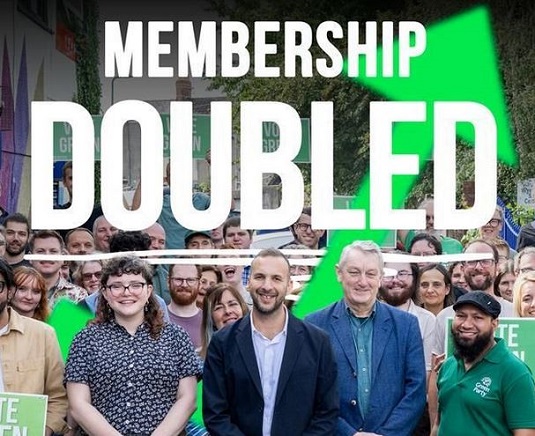
Congratulations to the Greens. Doubling the size of the party in two months to 140,000+ members and leaving the Tories in the dust is no mean feat. Especially with politics being as it is, with right wing talking points crowding other views out of the mainstream and Nigel Farage parading around as the establishment-sanctioned anti-establishment alternative. Yes, the Green Party in on an upward trajectory as long forecasted around these parts, but what's driving it?

Since the election of Zack Polanski, no one can fault the Green Party for making the most of him. Polanski is doing a good job of making the most of his fresh face status. His "eco-populism", which emphasises the us vs them populism characteristic of Corbynism at its most successful has leant itself to spiky social media posts and a refusal to play the usual media game. Polanski promised he would be a Farage-like figure, albeit from the left, and he's making a good fist of it. His social media shorts have gone viral, he's earned praise from Alastair Campbell(!) for his easy style and the slogan "make hope normal again", and following a short campaign he was granted a slot on Laura Kuenssberg after he was "overlooked" during party conference season. Less noted but also important is Polanski's new podcast, Bold Politics. Featuring interviews with well known left and radical figures, such as Grace Blakeley, Owen Jones, and Gary Stevenson, this has drawn in a layer who spend less time on your Twitters and Blueskys and more cycling around the politics podcast circuit.

We make our own history, but not under circumstances of our choosing. Polanski and the Greens are fortunate that there are two more things in their favour. Which, interestingly enough, almost repeat what happened a decade ago. Though this time as triumph, rather than tragedy or farce. Obviously, enthusiasm for the Greens is a blowback against the reactionary cul de sac Labour has parked mainstream politics in. In their cynical and reckless fashion, Keir Starmer and galaxy-brained Morgan McSweeney have charged to the right in an effort to dampen any progressive expectations their support might have following 14 wasted years of Tory government. Being racist and posturing hard on immigration is ideal: the lure for Labour is the same as it was for the Tories. Create scapegoats, stir up panics against them, and reap the benefits from clamping down hard. The overall balance of forces in the country remain unchanged, but the government gets to look effective. For Labour, to McSweeney's mind this tees up the support for Reform, but in the absence of any positive sell in 2029 the choice is between Starmer and Farage. That's right, this Labour government would rather risk opening the door to a government of the extreme right than abandoning its present course and tipping toward the centre left.

The Green surge of 2025 is then a larger echo of the Green surge of 2015. Millions of people are sick of this politics. No one voted Labour last year to chip away at social security, starve public services, give NHS data to private corporations, rip up the green belt, arm a genocide, outbid the racists on immigration, demonise trans people, or slavishly kowtow to billionaires at home and abroad. The Greens are well placed to intersect with this discontent, because Polanski is just about the only politician talking about these issues. Had history pivoted the other way and Adrian Ramsey and Ellie Chowns won the leadership, would they have made the most of this? It's doubtful.

I said just about the only politician, because the others who might have capitalised on this are Jeremy Corbyn and Zarah Sultana. Arguably, as Your Party is going through its founding process and there not being much to join might have counted against their appeal. But undoubtedly, last month's fireworks have put plenty of would-be recruits off. Just the idea that the new party could fudge it on landlords, and could fudge it on trans people, the opaque moves and secrecy, and now the lack of faith in its leading figures because of all this rubbish, why not head to a party that has name recognition, a support base, a ready-made structure that is very democratic, and a seeming absence of the back biting and media leaking some are intent on importing into Your Party from Labour and the trade union movement? The Greens are taking off, in part, because the main player in the new party has dithered and delayed, and then the project was almost tossed into the skip. Politics waits for no one. If there's an opportunity, someone will move on it. Zack Polanski has, and this is why the Greens are surging and Your Party will have to play second fiddle to them. For good or for ill.

Sunday, 21 September 2025

New Left Media September 2025

It's been a while since this blog was blessed with a round-up of new(ish) left media projects, so here's such a gathering.

1. Bold Politics with Zack Polanski (YouTube Channel) (Bluesky)

2. Calmer Future (Blog) (Bluesky)

3. Life of the Party (Podcast)

4. Mainstream (Website)

5. That Blog You Like ... (Blog) (Bluesky)

If you know of any new(ish) blogs, podcasts, channels, Facebook pages, resources, spin offs from existing projects, campaign websites or whatever that haven't featured before then drop me a line via the comments, email, Bluesky, Facebook, or Twitter. Please note I'm looking for new media that has started within the last 12 months, give or take. The round up appears hereabouts when there are enough new entrants to justify a post!

Wednesday, 13 November 2024

Why the Migration to Bluesky Matters

Is this the end? Since the result of the US presidential elections, people leaving Twitter has reached a torrent and those signing up to Bluesky has exploded. 611m active users vs 15m shows the newcomer has a way to go before Elon Musk's plaything is eclipsed, but for many people - the very active users who are the core holding Twitter together - their defection has a disproportionate disaggregating effect. Not unlike those so-called "hero voters", the defectors from the Tories to Labour, that got Morgan McSweeney and friends excited. And if all the interesting content creators are migrating, their following will take wing too.

It couldn't have happened to a nicer billionaire. When Musk took Twitter over, its descent into dysfunctionality was rapid as he ripped out the staff and the infrastructure that made it a viable platform for big business advertisers. Instead, Musk substituted them for the peppercorn income of opt-in subscriptions and AI photo enhancement adverts. A year later, it was clear which direction the site under his stewardship was heading, and now what was previously Twitter's dark underbelly is the side it always shows to the sun.

Some have argued that as far as Musk was concerned, the site has served its purpose. He levered it to hand himself a plum position directing the oligarchical shakedown of the United States, but to argue that this was why he acquired Twitter in the first place affords him too much credit. He tried pulling out of the purchase, and was only able to carry through with it after getting Gulf oil interests and sundry banks on board. One might assume they would like a return on their investment. You could say they have with the most openly ecocidal president ever elected due to take office, but the point is none of this was pre-ordained or part of a master game plan. Like all billionaires and their toys, Musk found a way to get Twitter to serve his class interests, and that's how it will be until forever, or to the time when the site winks out.

No one can be blamed for not wanting a part of this. Even more so seeing as the new terms of service means that in two days' time, all messages posted to Twitter will be tossed into the data-hungry maw of Grok - Musk's AI/fancy plagiarism effort. It looks like I'll be spending a bit more time at the new place. This has, of course, invited some whingeing and moaning about the abandonment of Twitter. Dan Hodges, who if I recall correctly, was the first British politics commentator to marry performative 'just asking questions' stupidity with deep cynicism on the site, chides "the left" on leaving a platform it deemed influential on the outcome of the US election. And then we have Nick Tyrone who reckons the left is ceding Twitter to the right, thereby setting up the conditions for further defeats.

This is to not understand how Twitter is, or rather was, used. For Britain, like for many countries, its appeal was never generalised in relative terms as per Facebook but grew up catering for already connected communities of interest. It was, and for the moment remains essential infrastructure for how politics is done, for communicating lines to take, information exchange, and the breaking of news stories. With the Graun's announcement that it's downgrading its presence, that's the first sign this ecosystem is under pressure. As it and others begin their drift from Twitter to Bluesky, these channels of networked communication will have to spread across and keep a foot on both platforms. In other words, Musk's devastation of Twitter and the corresponding reaction has meant he's made a direct competitor for his site viable and one that can only become increasingly essential to pay attention to as British politics sets more of its shop up there. The "staying and fighting" perspective is therefore obsolete. This is not like the left and the Labour Party, it's a shift in the digital architecture of how politics is done. If you want to carry on getting attention in the attention economy, staying on Twitter only won't cut the mustard from this moment on.

Image Credit

Wednesday, 6 December 2023

hbomberguy on Plagiarism

To my knowledge, I've been plagiarised twice. Once was during teaching 20-odd years ago. I gave a student written feedback on their cultural studies essay and laster found nearly all of it had been lifted and placed in their text. The second was a bit more recent. According to a confidant of said plagiarist, when they went for their big politics reporting job - the one that has established them as a fixture in mainstream analysis and comment - they impressed their interviewers with detailed knowledge of a then big news story. Detail they had incorporated into their presentation without attributing the source. I.e. Me.

Plagiarism is bad. But it is rife. Not only in politics, but especially so online and in the world of YouTube content creation. In this video, good egg hbomberguy has provided a four hour take down of noted plagiarists on the platform. It's long, entertaining, and sadly necessary.


Tuesday, 19 September 2023

X-tinguishing Twitter

As you probably know, the world's most stupid rich man is threatening to destroy his website again. In conversation with Benjamin Netanyahu, he said "We're moving to having a small monthly payment for use of the system." Therefore today has been a very good day for X/Twitter's rivals, Bluesky and Threads. Proving yet again that Musk's fortune is owed more to preternatural luck and timing than acumen and ability, this will destroy the site. Kill it stone dead. X-tinction, you might say.

The principles of social media are not hard to fathom. The platform provides the architecture and its users the content. Money is made in several ways, but where Twitter was concerned it was via paid advertising - mostly with promoted tweets and sponsored trending topics. Other platforms mine their users' data to determine their preferences, and sell targeted advertising space on that basis. Being the biggest brain the business world has ever seen, when Musk swooped on Twitter he very quickly kneecapped its business model and, as a result, more than half of its advertising revenue vanished. Who knew that allowing anyone to be verified as anything for $11/month would destroy brand trust, and see the platform trade pounds for pennies? Musk also decided to butcher the work force, threatening the dysfunctional collapse of the system and getting stuck into several embarrassing public spats with former employees. Then earlier this year and under the guise of free speech, every account that had previously been banned for hateful content and the like was reinstated. Never perfect in the first place, under Musk X/Twitter has become an open sewer, a paddling pool for Nazis, racists, misogynists, and every kind of right winger you can imagine.

And now, the threat of charging for using the platform. Looking at the dozens of polls that have circulated since the announcement, the place would become an instant ghost town with the only ones left being Musk fans and fascists. It's the freakish picture-in-the-attic made flesh. So stupid would such a move be that, despite Musk's lack of impulse control, part of me refuses to believe it will happen. It's worth recalling his purchase of Twitter was backed by banks and Sheikdom oil money. He did not pony up the $44bn himself. Presumably, these investors didn't fork out because they wanted to shut the website down for x, y, z conspiracy reasons. They would like a return on their capital, and I doubt what they signed on for was Musk's retrovision of transforming a microblogging website into a banking and (crypto) currency hub inferior to the other outlets. If they go along with this, then they deserve to have their capital burned.

Despite the well-worn criticisms of Twitter, seeing it disappear up Musk's backside would be a travesty. Not only has it become essential infrastructure for politics, the media, and culture more generally, it is simultaneously a manifestation of the general intellect and a living historical document. Trying to reconstruct accounts of early 21st century politics without it, for instance, would be next to impossible. It is the medium for so many subcultures and, indeed, mainstream cultures. Shuttering it behind a paywall would be an egregious act of cultural vandalism. It would take a long time for any alternative to replace it, nor would any replacement ever be the same given how the exodus Musk has provoked is balkanising across different platforms that don't have the same functionality. Social media only works when one market is cornered by one platform. Whatever comes next will be less effective.

Nevertheless, a lot of people have been preparing for the day when Musk turns Twitter off for good. I'm no different, so just in case the end comes you can find me at Bluesky here and Threads here.

Sunday, 7 May 2023

New Left Media May 2023

It's been a while since the new media project bag has bulged with so many new entries. And here they are.

1. Class Divide (Podcast) (Twitter)

2. Locating Legacies (Podcast) (Twitter)

3. Lost Futures: A Mark Fisher Podcast (Podcast)

4. Prominent Corrections (Podcast) (Twitter)

5. Seize the Press (Magazine) (Twitter)

6. Transvox (Podcast)

7. Working Voices UK (YouTube channel) Twitter

If you know of any new(ish) blogs, podcasts, channels, Facebook pages, resources, spin offs of existing projects, campaign websites or whatever that haven't featured before then drop me a line via the comments, email, Facebook, or Twitter. Please note I'm looking for new media that has started within the last 12 months. The round up appears hereabouts when there are enough new entrants to justify a post!

Thursday, 20 April 2023

Should Novara Interview Matthew Goodwin?

Should left media provide its opponents a platform? This has been a feature of the discourse lately as Novara Media prepares to interview the always-awful (innumerate) Matthew Goodwin about his latest book. You've probably heard about it. In his Values, Voice and Virtue, he makes the dubious case that a new left wing elite control Britain's cultural institutions. Never mind how the right control the government, the press, the means of production, and casts a domineering relationship over all else - including the "liberal elite"- it's them damned lefties we need to be worrying about. If only. As with right wing reflections on society generally, there's a rational kernel wrapped in layers of bullshit-reeking crud, and it dovetails with other conspiratorial rantings about shadowy elites brainwashing the susceptible. There's nothing original in Goodwin's argument. A very adjacent take got an airing in a little-read book by Ed West a few years ago, and is a watered down version of the antisemitic "Cultural Marxism" conspiracy theory. One favoured these days by the Telegraph and Suella "I can't be antisemitic - I'm married to a Jewish guy!" Braverman.

Unfortunately, as is customary for rightwingers, by claiming his arguments were cancelled by the liberal media Goodwin's book has got the sort of heavy promotion by the press that money can't buy. A lot of people are going to read it. A lot of people have read it. But how should the left respond? Novara's decision to interview him has provoked criticisms and denunciations from some comrades. There's the reasoned - if you must cover this work, why not get left commentators/experts on to pull the thesis to shreds? And there's the intemperate - Aaron Bastani et al are grifters and are undoing the work of no platform campaigns of recent years. The argument goes that by platforming someone like Goodwin, he's somehow being "normalised" as a commentator, and Novara are slipping into the neoliberal market place of ideas format that does nothing to aid understanding and, effectively, promotes Goodwin's ideas as something worthwhile to engage with. However, this does not stop with Goodwin. In recent years Novara have copped it in the neck for having on John McTernan and Paul Mason, so the debate is not just about providing arch reactionaries a platform, but the kinds of people the left should or should not extend its space to.

I understand where this comes from. Living in a society where, contra Goodwin, the right wing gatekeeps, the liberal media - whether press or broadcast - is subordinate and largely supine, and left voices, let alone left media, are few and far between, it's reasonable to argue our bandwith is too narrow to carry the politics of people who spew their rubbish from every broadcast mast, satellite, and fibre optic connection. But it depends what one's left media is project is about. When we say 'left media', we're implying a plurality. Different bits of different media do different things. This place, for example, is as basic as you can get. It's simply an outlet for my commentary on politics and, very occasionally, other ephemera. When I'm too tired/can't be arsed or I've spotted enough new initiatives, the blog features work from other left media projects to give them a (very modest) boost. This is something I've always done and will continue doing. And that's fine, that's this blog's niche. Similarly, consider the evergreen Politics Theory Other. What Alex offers is a platform for discussing key issues with left wing experts on certain topics, and/or a showcasing of their recent work. No one else does this, and Alex has done an excellent job bringing out interesting and radical work that might otherwise have got stuck in the seminar room or in a seldom-read book. Lastly, consider a paper from one of the 57 varieties. For Trots and Tankies alike, the paper (or website) is a scaffold for their party-building projects. Everything is subordinate to that aim, and because often the papers are thin and their circulation thinner everything is given over to pushing their politics and pretending they're a squillion times more significant than they really are. Again, that's absolutely fine. Propaganda groups are going to produce propaganda if that's what you want to do.

This is not Novara's aim. From day one, its ambition has been to provide an alternative, left wing news media organisation. And, unlike the best traditions of the British left, it's proving quite successful. Audience for its content, and we're talking relatively long form video here, not TikToks and sassy memes, often tops over 100,000 views. In podcasting, Novara is battling and besting the centrist and conservative big boys in all the charts that matter. And its programming has grown to a nightly offering, suggesting more than just left wing activists and demobilised Corbynites are tuning in. Chances are Novara will carry on expanding. I look forward to the day where it can go toe-to-toe with BBC and ITV news and current affairs programming, and its written output circulates as well as the broadsheets' own very important columnists. That is to say Novara is in sight of becoming what it was always meant to be: a counterweight to the unserious, childish, and manipulative rubbish that has long positioned and poisoned this country's politics.

Whereas most left outlets reach out to the converted and usually catches the curious by chance, building an alternative to the establishment's press and broadcast institutions means thinking about how to reach beyond the small and perfectly formed audiences the left are accustomed to. Which brings us back to the upcoming Goodwin episode. If, say, Michael Walker had a panel of Novara regulars on or left wing authorities on anti-fascism, class, and racism, his position would get utterly eviscerated in front of an audience of 10,000 viewers. Challenging Goodwin's bollocks to his face, pulling out the non-sequiturs, dishonesties, and similarities to Cultural Marxism would get many more because, obviously, it would be entertaining to see him get handed his arse. The point is not to convince Goodwin of the errors of his ways, but to demonstrate the absurdity of his argument to those interested in but not fully aware of how false it is, where it could lead, and who wouldn't bother tuning in to earnest but obscure lefties chewing through Goodwin's book. Some of the audience attracted to the Goodwin spectacle will inevitably stick around for other Novara programming, and find their views challenged and become regular consumers of left media. By expanding its audience, all left media projects might get a lift. Just as how, many years ago, right wing papers realised they could make money from working up a left-liberal outrage machine.

But what about the normalising argument? I'm sorry to say the idea the left rule this country undemocratically and from the shadows is already normalised. It has currency in DailyMailTelegraphTimesExpressSun land with its racist overtones and, sadly, among the red and blackpilled misogynists who follow the crock of Andrew Tate and other horrors. Taking on the ideas current in this disaffected layer can, over time and repeated exposure, deprogramme and persuade. As ContraPoints has ably demonstrated in her work.

Ultimately, it comes down to what you think left media should be about. If you want to build an alternative to the mainstream with news bureaus, specialist correspondents, and mass audiences to match, then it does mean meeting the audience you want to reach and shape as you find them now. More often than not, it means going out on a limb and breaking with propagandist traditions of pushing a narrow range of views and concerns. Having sold many a deadly dull Trotskyist newspaper to reluctant punters, people are only ever going to be attracted to left media if it offers something attractive. This is the only way to building the counterweight to the mainstream we all want to see. And if you don't agree with Novara's efforts or strategy at winning over new viewers, then don't support them and try building something else. Eventually, the audience might come to you. But that 'eventually' is going to be a very, very long time.

Friday, 23 December 2022

The Sun's Anxious Apology

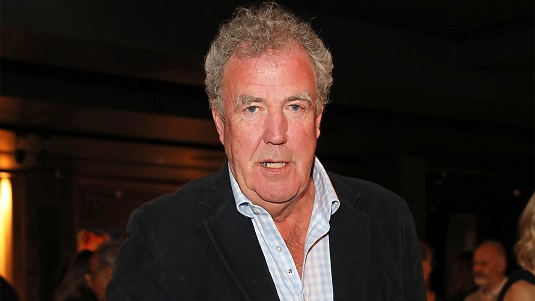
For its part in the latest round of scurrilous attacks on Meghan Markle, The Sun has apologised. You will recall that Jeremy Clarkson, their pet stick of curly-haired tedium, launched an attack on the Duchess of Sussex from the pages of the Sunday edition last weekend. He wrote how he was "dreaming of the day when she is made to parade naked through the streets of every town in Britain while crowds chant, 'Shame!' and throw lumps of excrement at her". It doesn't take much to unravel the vitriol he and fellow middle-aged-to-elderly columnists reserve for her. Meghan condenses everything they hate about this country and its younger people in particular. Their diversity, their tolerance, their socially liberal commonsense. In their right wing imaginations, Meghan's marrying into the royal family is a breach too far in this most sacred and white of institutions. As such, no matter the level of utterly disgusting press she receives, as outlined in that Netflix documentary, it's men like Clarkson who are really the wounded ones.

After a day of social media heat, Clarkson issued his faux apology on Monday. Claiming he had "put his foot in it", he was "horrified" that his toe curling rant had "gone down badly with a great many people". In other words, he wasn't sorry at all. Except for the fact he'd been called out, and made to feel his main television gig - hosting Who Wants to be a Millionaire? - was a little bit less secure. ITV is, according to the Daily Mail, a woke TV channel after all.

The Sun apology is along the same lines. While arguing Clarkson's views are his own, the paper recognises that "with free expression comes responsibility" and that "we at The Sun regret the publication of this article and we are sincerely sorry". Again, note no apology for the injured party. They've also scrubbed the article from their archive, which is probably as much contrition Meghan will ever receive. But this being The Sun, it couldn't simply say sorry. It had to pontificate about its good causes, such as its campaign against domestic abuse. Just don't talk about how the paper helped hound a mentally ill woman to death, has backed the government's criminal treatment of asylum seekers, spoke up for the Met as its officers cracked skulls at the Sarah Everard vigil, are right now are at the forefront of attacks on Mick Lynch and the RMT, egging on Rishi Sunak's war on striking workers, and earlier this year literally willed young people to go die in a field.

It normally takes months of court time and enormous legal bills to elicit a Sun apology, so this is unusual. 60 MPs, organised by Tory MP Caroline Nokes, wrote an open letter condemning the piece. But as the names were the usual suspects, it's not likely this had a bearing on the apology. Nor the fact Clarkson's own daughter joined in the condemnation. Rather, it comes down to the vulnerable position the paper is in. The Sun, like all Murdoch-owned rags, stopped publicly reporting its circulation figures in March 2020, just as the pandemic hit. Then it was 1.2m copies sold daily, and a million on Sundays. As per all newspapers, it was in long-term decline and is now likely to be behind the Mail, hovering at a daily (and decreasing) circulation of 800k. Its force mainly lies in framing news stories and selecting the issues of the day (which is lapped up and echoed by the BBC), and their (legacy) influence over politicians. It is a declining power in the land.

And yet, looked at another way The Sun couldn't be in ruder health. Its website has about 30 million views a month, constantly vying with the Mail for the top spot. But here in lies the problem. For both papers, their readers are there for the games, competitions, celebrity and human interest stories. They don't hurriedly rush to their Sun app in the morning for the latest ravings of Trevor Kavanagh, or whatever poison Victoria Newton has dripped into the day's editorial. Having found a business model that can make money, it comes at the price of a depletion of its political gravity. Also, because its dependence on internet traffic grows by the day "the brand" becomes increasingly sensitive to online push-pull factors, just like any other company. And so if one of its star columnists creates a stink, the fear is audiences will steer clear of the pong. And advertisers are easily spooked, who ultimately the business depends on. In other words, the perceived threat of user and marketing boycotts finds The Sun in a position of vulnerability, and they have to act swiftly if on the wrong end of a controversy.

All of a sudden, its persistent fretting over the "woke mob" and "cancelling" makes sense. In the attention economy, politicised audiences can leverage the power of the network in ways old school editorial offices cannot. It's simultaneously a realisation their institutional heft is degrading, and an anxiety that very soon none of it will be left. Jeremy Clarkson's carefully planned and cynically calibrated "outburst" at Meghan, with the full approval and connivance of The Sun's editor might well have had one unforeseen but welcome consequence: that the day of this demise has been hastened.

Image Credit

Thursday, 22 December 2022

Sweary Centrism

Consider sweary centrism. Some people have built a media career out of it, others not inconsiderable social media followings. But why? Commenting in the after glow of recent Twitter beef, Owen Jones writes that it "stems from a desire to be seen as radical, but without having the political opinions to back that up." Using colourful language to make up for the lack of substance is a fair enough premise to start from.

To use the parlance, the years 2015 to 2019 saw plenty of self-defined radicals show their arses. With the rise of Jeremy Corbyn and the upending of everything they understood about politics, the veneer of progressivism fell away as reality defied their expectations and they scrambled for excuses to oppose the left wing upsurge. But without any cogent argument to explain why they had turned against previously adopted values and aspirations, their collective discourse slipped down the personality/character assassination route. As such, absent anything but vibes, the insult and the swear word were substituted for political argument. It wasn't as though it began as forthright and frank polemic. There was no transitional period. One moment countenance of moderation, the next straight up abuse. It was sound and fury signifying nothing, except their frustrations with the collapse of their world view.

But we have to place our courageously cursing crusaders in another context: that of the attention economy. Those who find a niche and keep plugging at it can build a following, a hefty Patreon, and tot up the writing and broadcasting gigs. And to keep their corner of the market squared, they need to bang out the sweary content to entertain and to ensure some upstart doesn't come along and do a better job. This partly explains the endless proliferation of compound swears. Cockwomble, asshat, shitgibbon, you've heard the lingo and if you haven't cringed, you're part of the problem. This has sprouted an accursed ecosystem of social media users competing to lodge their own witty coinages in the popular consciousness, which the stars of this godforsaken firmament freely dip into to feed their shtick, whether it's "commentary" or "comedy", its edge.

Unfortunately, some of this has to do with the legacy of The Thick of It. Mainstream politics has always been a sweary business behind the scenes, but the satire expressed by Malcolm Tucker and friends was assimilated and embraced as a positive by insiders and the self-fancied politics cognoscenti. The culture of sweary centrism draws on this, calling on the show's absurdity and naffness as a marker of their in-group. It, along with an accompanying fetishising of ruthlessness and the dark arts work as markers of authenticity. Signs of them "getting it", of knowing what politics is really about. It also shows that no matter how "stinging" and fruity their descriptions of the Tories and their works are, they are telegraphing their acceptance of the rules of the game.

In other words, it doesn't matter if they carpet the Tories with clusters of F-bombs and C-incendiaries. The damage they can only ever do is superficial, because there's nothing there. Which fits centrist politics and its desire to preserve what is very well.

Image Credit

Sunday, 18 December 2022

An AI's Defence of Socialism

ChatGPT is the chatbot of the moment. Getting praise from across the tech spectrum for its conversational abilities, its article and essay writing abilities are starting to get newsrooms and academia nervous. Why employ staff writers when an AI can churn out fire-brigade-called-to-house stories? Why bother cramming for an assignment when the chatbot can write your essay for you? Having had a play with its essay writing function the work churned out isn't bad. Appropriate referencing and stylistic flair are not there yet, but surely it's only a matter of time before I can ask an AI to write a book in my style about whatever topic. Or that a computer could pen Marx's never completed volumes four, five, and six of Capital. That would be interesting.

I've generated three essays. Here's the first - a (sort of) rejoinder to CapX's defence of capitalism. You can play around with ChatGPT here.

Socialism is a political and economic ideology that aims to establish a more equal and fair society by redistributing wealth and resources more evenly among its members. It advocates for the collective ownership and control of the means of production, rather than their private ownership by individuals or corporations.

There are several reasons to defend socialism. First and foremost, it addresses the issue of economic inequality. In capitalist societies, wealth is highly concentrated in the hands of a few individuals and corporations, while the majority of people struggle to make ends meet. This unequal distribution of wealth leads to numerous social and economic problems, such as poverty, lack of access to education and healthcare, and political disenfranchisement. Socialism aims to reduce these problems by redistributing wealth and resources more evenly among all members of society, ensuring that everyone has access to the necessities of life.

Another reason to defend socialism is that it promotes economic security and stability. Under capitalism, economic booms and busts are a regular occurrence, with workers often bearing the brunt of the instability. Socialism, on the other hand, seeks to smooth out these ups and downs by emphasizing planning and cooperation over competition. This can lead to more stable and predictable economic conditions, which benefits both workers and businesses.

Socialism also promotes social cohesion and community. In capitalist societies, people are often isolated and individualistic, as they are primarily motivated by their own self-interest. Socialism, however, emphasizes the importance of community and collective well-being. This can lead to a more cohesive and supportive society, where people are more likely to help one another and work together for the common good.

Finally, socialism can be seen as a more democratic and participatory economic system. Under capitalism, the ownership and control of the means of production is concentrated in the hands of a few individuals and corporations, who wield a disproportionate amount of power and influence. Socialism, on the other hand, seeks to democratize the economy by giving workers and communities a greater say in how resources are allocated and used. This can lead to a more democratic and participatory society, where ordinary people have a greater voice in the decisions that affect their lives.

In conclusion, socialism is a political and economic ideology that offers a number of benefits over capitalism. It promotes greater economic equality, stability, social cohesion, and democracy, and is therefore a viable and worthwhile alternative to capitalism.

Image Credit

Saturday, 17 December 2022

Revolutionary Deflation

Some things are just irritating. In the 15 years or so I spent around the far left, what always got my goat was revolutionary inflation. The practice common among all the groups to talk up the impact of their interventions. For instance, the 2006 NHS demo against hospital bed losses saw Stoke Socialist Party boost attendance from around 2,500 to 5,000 in the subsequent edition of The Socialist. If you've been in a Trotskyist group, you know exactly what I'm talking about. Inflated membership figures, inflated attendees at party events, inflated paper sales and, most egregious of all, an inflated sense of influence and self-importance. It annoyed because it substituted wishful thinking for accurate assessment, of consensual illusion for analysis. Little wonder that folks didn't understand why their activities weren't getting wider purchase, and why activists tended to stick around only for short periods. It was the tinder box for burnout.

On the internet-travelling left, there's a similar phenomenon: revolutionary deflation. Instead of inflating the strength of the left and its works, this goes in the opposite direction and talks down the standing and appeal of its opponents. And nowhere do we see this more clearly than on the occasion of parliamentary by-elections. You might have missed the most recent one in Stretford and Urmston, which took place on Thursday. With Kate Green leaving the Commons to carry bags for Andy Burnham, Trafford council leader Andrew Western easily dispatched the Tories in a safe Labour seat. With little room to add to the party's vote, Labour nevertheless put on nine points and came within stretching distance of 70%. The Tories were a distant second, and the Greens an even more remote third - with the overhyped Reform doing as dismally as they always do. A sign that Labour's on course to win the next election? In all likelihood, yes.

This is where revolutionary deflation comes in. Rather than admitting to themselves that, electorally speaking, Starmer is now doing well in the polls some comrades argue that the by-elections are flattering him. And their proof? The turnouts. On Thursday, turnout was well down (by 43 points) on the general election. The story was similar but not as pronounced in Chester. A strong result for Labour, except the turnout was 30 points down. Proof, as if it was needed, that Starmer is an albatross around Labour's neck and his chances of getting in Number 10 are lower than supposed.

It would be a stretch to say Starmer is popular. For most people, he's background scenery. They're only interested in what he has to say when there's a big crisis, such as his announcement on the energy price freeze this summer. Other than that, he's neither offending nor gaining plaudits from the punters at large. And while Starmer has his moments in the clanking and shanking of Westminster knockabout versus Rishi Sunak, his acquisition of poll leads have largely been a passive exercise. Labour's doing well because the Tories are in the mire, and their chances of extracting themselves are close to zero.

If the general consensus is meh, with polling alternately showing slight leads or slight deficits in the best Prime Minister scores, does the deflationist argument stand up? Not really. If low by-election turnouts during Starmer's time are indications of his lack of popularity, then surely it was the case for Jeremy Corbyn. In his last two English by-elections of 2019, turnouts were 30 points and 36 points down on the previous election. Even during the lead up to 1997, by-elections saw some shocking numbers. Barnsley East in 1996 was 39 points down. Hemsworth, also in 1996 - and which saw Jon Trickett returned to the Commons for the first time - was 36 points in deficit. Ditto for Islwyn the year before, and a 35-pointer from Dudley the year before that. Whether you liked Tony Blair and John Smith or not, they were at that time as popular as mainstream politicians can be. Perhaps we might consider other factors are in play.

In mainstream political science, a distinction is made between first and second order elections. The latter in this country consist of by-elections, local authority elections (and by-elections), mayoral elections, the EU elections (as was), and perhaps still (just about) elections to Holyrood and the Senedd, and the London Assembly. When (if) Labour implement Gordon Brown's constitutional proposals, the Council of the Nations and the Regions, which is slated to replace the Lords, will also fit in this category. They are "second order" because it's only the general election that matters. It determines who the government of the day is. Everyone understands this, and so there tends to be higher turnouts for first order than second order elections. And this isn't just true of the UK and its Westminster system, but of all liberal democracies. By-elections "don't count", so we see two kinds of behaviour. Voters are more likely to stray from their preferred party (where they have one) to deliver a protest vote, and/or are more disposed to staying at home because the stakes are low. So turnout is lower, regardless of whether the Labour leader at the time was on the right or the left of the party.

There's a second problem with the deflationist argument. Those who vote in second order by-elections are the politically motivated and interested, and older people. Voting data has shown for decades the latter are more likely to vote than younger people in general elections, and this tendency becomes even more exacerbated in second order contests. Because older people are also more likely to vote Conservative, this also gives the Tories an edge. Therefore, when Labour wins by-elections and does so by increased margins, it suggests the party is making inroads into that Tory vote. This appears borne out by polling. Labour still trails the Tories among the over 65s, but not by the yawning chasms of the years previously. Therefore, Starmer and his supporters are justified in feeling buoyed by Labour's recent by-election performances. Despite the low turnouts.

Where does this leave the deflationist argument? Nowhere. It's revealed as nothing but an illusion, if not a wilful delusion. It gets in the way of analysing things as they are. Not because writing about the strength of Labour's support is jolly japes, but because getting a handle on Starmer's support as it is is crucial for campaigns that might wring concessions out of his government in the future. It's this view to action that must guide our thinking. Therefore, these suggestions need bearing in mind when approaching by-elections. Unless something other than changing the world is your primary concern.

Image Credit

Sunday, 13 November 2022

Murdering Twitter

The brilliance of billionaires is not something I've ever held with. Their backstories are usually one of generously-provided start up capital, usually from the bank of well-to-do mum and dad, luck and timing mistaken for business acumen, and more often than not big state contracts and plenty of fictitious capital. This week, for example, we've seen the aptly-named Sam Bankman-Fried's crypto currency-derived billions simply vanish - a whole lot of money that, it turned out, didn't really exist. Similarly, the same can be said for Elon Musk. Reputed to be worth over $200bn, he still had to scrape together IOUs from banks, the Gulf's absolutist sheikdoms and various odds and sods, including Bankman-Fried, to finance his $44bn purchase of Twitter. And what has Musk done with his new plaything? He's completely trashed the platform's commercial value, and made himself look like an utter fool.

Unlike Meta and Google who have a strong business model based around the harvesting of data and using this to sell advertising, since its inception Twitter has proven much more difficult to monetise. If one's Twitter feed is cluttered with too many adverts, the platform's utility declines. And given the proliferation of apps through which Twitter can be viewed, it's a lot more difficult to bring in the commercial megabucks its peers enjoy. In 2020-21 it achieved an all-time revenue high of $5bn, but still posted a net loss of $221m. Reversing this appears to be Musk's priority to the exclusion of all else, and so within a week of his taking over he fired practically all the executive team and made approximately half of Twitter's staff redundant - leaving the company open to legal action outside the United States for violating local redundancy laws. Contrary to his cool techbro image, Musk also ordered the remaining staff back to the offices, a demand that has gone down as well as the fail whale did with old-time Twitter users. And Musk decided to "innovate". Claiming the mantle of man of the people, Musk said he was now charging verified accounts - the famous blue ticks - $8/month for the privilege of the badge. It has proved to be a disaster.

The arrival of the blue tick of verification did, at least for some Twitter users, signify a two-tier system. It awarded status to those upon whom it was conferred. However, the advantage of the system was that it verified the user. If, for example, the blue ticked Downing Street account tweeted something then it was official, not some impersonator. By introducing verification by payment, Musk at a stroke removed the only mark of trust the platform offered. For example, a blue ticked feed purporting to be Eli Lily and Company, a US pharmaceutical giant, announced it was making its insulin products free. That wiped $20bn off the firm's stock market value. Lockheed Martin was also stung by a similar prank, announcing sales to Saudi Arabia, Israel, and the United States would be suspended pending human rights abuse investigations. Their share price dropped 5.5%. It's a wonder these firms haven't launched action against Musk for damages done around trade mark infringement. Whatever, it will certainly put off further corporate engagement with Twitter as they try and protect their brand image. And the effect it will have on advertising can only make a bad situation worse.

How to explain this colossal idiocy? It demonstrates Musk's gargantuan arrogance and belief in his own Midas touch. There are no 11 dimensional reasons why he's trashed its primary revenue stream. He's not doing a solid for the Saudis and Qataris who part-financed his purchase. He's not wrecking the site because of secret deals done with other social media platforms. It's entirely a wrong decision driven by hubris and not having anyone around him who'll say no. In short, he is to Twitter what Liz Truss was for the UK economy and the Conservative Party. After 48 hours, the paid for blue tick scheme was abandoned but that's unlikely to reverse the damage to Musk's reputation. It makes you wonder how well SpaceX would manage if it wasn't propped up by US Space Force and NASA cash.

Unfortunately, while Musk will survive his humiliation to make another spectacle of himself the future of Twitter itself is less certain. Having already loaded the company with a billion dollars worth of debt, the public failure of his revenue generating scheme and sharp decline in advertisers could well bankrupt the company. And this would be an outrage. Twitter has all kinds of problems, but like other platforms it has become essential infrastructure. It is next to impossible to follow politics in this country without Twitter. It's where stories are broken, analyses are shared, and politicians get a measure of daily accountability. It's space where it is still possible to report on news the mainstream refuse to pick up and can be kept alive. Serendipitous connections are forged with every moment, and unlike other algorithm-heavy sections of the internet there's still a good chance of finding something random and interesting. More importantly, despite efforts by sundry dictatorships Twitter is the main method of getting reports and video out of closed societies and get the information quickly disseminated. There is no other place like it, and despite its regular descent into bad faith, ad hominem, and ridiculous wars over petty slights, politics and democracy would be the poorer for it.

Musk's antics reiterate the need for removing social media from private hands. Communication is the lifeblood of the common, and only common ownership will do.

Thursday, 25 August 2022

General Strikes

Since being involved in politics, I don't think there's ever been a time when the Trades Union Congress has commanded much attention. But this was the situation for a brief time on Tuesday. Its Twitter account declared there was a big announcement coming at 10.30 that evening, and duly from several corners of the internet-travelling left we saw speculation that it was about to call a general strike. The hour of decision struck and ... it was a campaign for a £15/hour minimum wage. A lot of people were disappointed, quite understandably. But how realistic is a general strike call from the TUC, and the prospect of one taking place?

There are three things that have given this legs. Asked by a clueless reporter about whether British workers should hold a general strike, in an interview early on in the rail workers' dispute Mick Lynch said it was a matter for the TUC but the RMT would support one if they called it. In British political culture, it's the done thing for leading trade unionists to be apologetic about strikes and are expected to damp things down. For the best known general secretary in the country to gesture toward wider action breaks with the received industrial consensus, similar to how Jeremy Corbyn broke political wisdom in 2015. Second, because the RMT have had wide publicity, are commanding popular support in the polls, and other groups of workers are either striking (including wildcat action in Amazon), balloting, or threatening to take action, the horizon of the entire labour movement is lifting. Most of the strikes are defensive as bosses look to chop wages and lay staff off, but some notable successes - such as Unite winning big at British Airways, and victory in the long-running bin dispute with Coventry City Council - have had a catalysing effect. The cost of living crisis is also stiffening resolve, as is the continued ineptitude of the Tory party and its leadership candidates' refusal to be drawn on how to tackle energy bills. There's a combination of having one's back against the wall and a growing awareness that collective action can address the problem - because there's no other way.

And then we have social media. This is more than the enthusiasm for Mick Lynch/Eddie Dempsey viral content, but from many thousands of people a desire for a general strike. After two pretty awful years of ruthless attacks by and rearguard skirmishes against the Labour right, the seemingly sudden eruption of strike action has had a galvanising effect. What was previously closed off now seems immediately possible. A focus on a narrow, conventional politics has become immeasurably broadened to the point where Keir Starmer and his equivocations are irrelevant. But as with all things social media, they come with a note of caution. For as long as Twitter has become a thing, so have the warnings about its being an echo chamber. The confluence of the like minded with identarian politics creates recursive universes with their own dynamics and perceptual filters. It's not that the "outside" doesn't impinge, but what does tend to predominate is a preference - and not always a conscious one - for mistaking the intentional community for the wider community. If something has gravity on Twitter, it necessarily reflects attitudes out there. The consequence is often an underestimation of difficulties and an overestimation of opportunity. Acceleration wins over deceleration and patience.

The general strike call is of this character. Wouldn't it be wonderful to see the ruling class quake as the labour movement unleashes its collective power by going out all at once? Yes. Having the last 40 years of retreat wiped out at a stroke is heart stopping stuff. But should isn't could. Consider the extraordinary efforts that have gone into the RMT's action. Activists have had to work hard over decades to ensure militant trade union consciousness is the default setting among its members. The same is true of all the other workers balloting and entering into dispute. Even wildcat actions have years of simmering resentment and activity underpinning spontaneous walk outs. The process of building workers' confidence to win a ballot and strike takes time, and while that process doesn't have a set length and can be longer or shorter, depending on circumstances, it cannot be short circuited.

What of the practicalities of a general strike itself? Returning to the TUC, as an aggregate of the trade union movement as a whole, at best it is a condenser of the general attitude among all affiliated unions. Or, to be more accurate, of the full time apparatuses that run them. And at its worse, the TUC only goes as far as the most conservative bureaucracies allow. And this is because a general strike immediately puts into question who rules. The 1926 General Strike starkly showed how Britain is run by workers (albeit not for workers), but that the TUC general council had no interest in keeping the strike going until dual power was widespread. With the consciousness of trade union leaders structurally at odds with that of the workers, they were able to demobilise before the moment of decision was reached. Famously, the miners were left on their own until starved back to work - a defeat they did not fully recover from until the early 1970s. As recent experience in the Labour Party shows, it's difficult to win if those with significant institutional power have no interest in winning. On the continent, where general strikes are a more regular occurrence, they tend to be strictly time limited - usually only for a day - and are linked to very specific, economistic campaigns and demands. Trade union apparatuses use them as a means of cooling workers off. They are held to try and limit, not expand class consciousness.

To be sure, a one day general strike in this country given the weakness of the labour movement would be a major step forward. But what would it be for, and how to ensure it wouldn't be a damp squib? People won't go on strike against the Tories, and in 1926 the call was obeyed as the TUC called the other unions out in support of the miners. If it's small and barely observed, that only exposes the weakness of the labour movement and would embolden its enemies. It's a recipe for despair and demobilisation, and would severely limit the appetite for further action - as any student of the defeats of the 1980s would tell you. Therefore, despite what several thousand likes and retweets, and a whole day as a trending topic might suggest, the preparation for and the consequences of a general strike is never a light minded affair. It is not the industrial equivalent of calling a demonstration and having good numbers turn up with placards and banners to listen to speakers. It's the heaviest weapon our movement has, and as such takes a lot of time to move and prepare.

The moment is far from ripe for a general strike, but not for industrial action per se. The task for the left now is to push for action wherever we have influence - workers should not be paying for the inflation crisis. We should be building solidarity with striking workers, bridging work forces, and the Enough is Enough campaign offers a way of doing this. And building public support for action, especially the prospect of coordinated action. Right now, getting one's hopes up and calling for a general strike must be tempered by the necessity for the strikes we have now to succeed. If our movement wins, everyone wins. And if they lose, we all lose, and a general strike will remain a fantasy for a good while longer.

Image Credit

Tuesday, 26 April 2022

Elon Musk and Wasteful Spending

Is there room for another contribution on Elon Musk's takeover of Twitter? Of course there is. The reaction could be seen coming from a mile off. Some people vaguely identifying with the left have said they're off, departing for the greener pastures of Discord and Tumblr. And the right are hailing him as a billionaire messiah set on junking the platform's cancel culture. In truth, Twitter's going to remain pretty much the same. Donald Trump might be let back on for Musk's amusement, and we can look forward to additional features added such as an edit button and whatever else its new proprietor fancies, but the essentials won't change. Unless Musk has spent $44bn just to smash the platform into the wall. Its future as an open-ended network is not likely to change, nor will its status as the establishment's favourite social media tool. The terms and conditions aren't going to get ripped up either. Twitter still operates in dozens of legal contexts, and has to be seen to be doing something about hate speech lest the company gets bogged down by multiple charges in multiple jurisdictions. That means the right wingers full of praise for Daddy Elon are going to be disappointed when it does not become the libertarian free-for-all they've set their blackened hearts upon.

The move to buy Twitter, which came hot on the heels of his acquiring a 9.2% stake in the business at the beginning of the month, is pretty much what we might expect from Musk. Since becoming the world's richest man while, apparently, sofa surfing up and down the Californian coast, Musk has demonstrated that obscene riches offer no protection against buffoonery. It's actually appropriate that he, more so than the "serious" Jeff Bezos, is the global face of the capitalist class. The wealth that is concentrating in the infinitesimally small number of billionaires is, in conventional terms, more than enough to solve hunger and homelessness, fund Covid vaccinations for the global south, and drive an agricultural revolution in sub-Saharan Africa. I'm sure you can think of many other problems. Why then does Musk, with his $260bn fortune and the rest of his parasite class refuse to do anything about it? Are they especially cruel and hard hearted?

Maybe, maybe not. Marx noted that capitalists are personifications of capital. That doesn't mean they are walking piles of money but are the condensation of an exploitative social relation. Why, for example, is Musk very happy to bang the free speech drum - except for his own workforce? To ask the question is to answer it. But Musk personifies more than his automotive interest and the "classical" extraction of surplus value Tesla operates. A great deal of his interests are tied up in "unconventional" projects, such as the Tesla Semi - an electrically powered truck far less economical than existing diesel-powered machines. There's the Hyperloop, which he conned Las Vegas into letting him build beneath their city. This vision of the future consists of a single lane tunnel one can drive a car around. There's no service tunnel, and the number of the cars on the "track" at any one time are few and far between. A mass transit system with neither the mass nor the transit - a far cry from the 1,124mph pods they're supposed to accommodate.

Other boondoggles include wanting to build a roller coaster in one of his factories, a Bond villain-style lair in an extinct volcano, and a viable space tourism business for his super rich cronies. Amidst the nonsense are projects that might have genuine future use, such as the investments in battery technology, the starlink satellites, and the space infrastructure efforts, even if they're justified in terms of his Mars city fantasies. The point is that, despite some diamonds in the rough, what characterises a lot of Musk's interests is wasteful spending. In his recent sofa-surfer interview he said he didn't live a showy billionaire lifestyle, except for his private plane to get him around. The creation of useless infrastructure beneath Sin City, the carbon emissions from the hundreds of SpaceX launches - including launching a Roadster into orbit around the sun, suggests he has a certain blind spot when it comes to his super wealthy footprint.

But wasteful spending is useful spending from the standpoint of capital. It works as a certain form of trickle down by keeping people in jobs to service their desires. See, for example, the debates around the permanent arms economy during the Cold War and the extent to which this spending settled labour markets and provided multiplier effects for ancillary industries. But more importantly, it's not in capital's interest for it to be invested in stopping world hunger, for example. Doing so would put a floor under global living standards, which in turn would strengthen the hand of labour the world over. That wouldn't appear to make much of a difference to Musk and his high end tech interests, but the flip side of battery and electric vehicle production is resource extraction. Which depends on mining, often by low waged workers in the global south, and workers forced into dangerous and cramped conditions by the threat of economic necessity. At a stroke, the guarantee of safe food, drinking water, and accommodation would up the price of their labour power. Very much not in Musk's interests. But it doesn't have to be direct. Any sort of welfare programme that adds to the collective economic clout of the wage earning class upsets the balance of power between it and capital. It's why people like Musk do nothing to alleviate the lot of the impoverished. Why philanthropists like MacKenzie Scott gives to charity as opposed to organisations building collective capacity and political consciousness, and why here in the UK our billionaire chancellor dispenses loans instead of energy price relief. Wasteful spending buttresses ruling class power. Useful spending undermines it.

Which brings us back to the personality of Musk himself. As the wasteful spender par excellence, his tomfoolery matches his "function". Slapping down tens of billions for a social media platform whose results will never match its valuation typifies his class at this time. With galloping inequality, a raging pandemic, an energy crisis, and the climate change threat demanding resources and answers, the masters of this planet will trash this planet and its people for the most frivolous ends. It's not because they're evil, it's because it's in their interests. And this is going to carry on until we put a stop to them.

Image Credit

Monday, 4 April 2022

Propaganda and Ukraine

Truth, they say, is the first casualty of war. Every engagement, every attack, each piece of footage, versions of situation maps, and reports from the battlefield are occasions for propaganda. Everything can be spun and is indeed spun to boost and traduce the respective sides of the conflict. And this is even truer with the Russian invasion of Ukraine. This most televised and scrutinised war in human history has saturated social media. Disinformation and fake news are difficult to tell from the real thing, and both kinds are manipulated and pushed. To avoid naive accounts of war, whether trusting or cynical, this has to be kept in mind. Especially when the most disgusting crimes are reported.

Crimes like those to have befallen Bucha, a satellite town of Kyiv. The Ukrainian government claims to have uncovered the bodies of 280 civilians. Not all of these were people caught in crossfire. Corpses were found with their hands tied and bullet holes in the back of their heads. There are also reports of partially burned bodies left at the side of the road, and evidence is being documented for the International Criminal Court with a view to bring prosecutions. Despite dozens of residents speaking to the press about the killings they witnessed, the increasingly ridiculous Sergei Lavrov branded evidence of war crimes a "fake attack."

With a whirlwind of propaganda blowing through the media, how to tell the truth from a lie? As it happens, it's not too difficult. An application of common sense or Occam's Razor helps. Which is more likely to be true? Did the forces of Putin's regime, as the occupying army, do it? Or did the Ukrainians "dress" the wrecked town with executed and mutilated bodies? To ask the question is to answer it. There is also context. As acres of footage of burnt out and wrecked residential districts have shown, the Russian military has shown no compunction about flattening civilian buildings. Unless you believe the Ukrainians did it themselves just to make the invading power look bad.

And there is the rhetoric coming from Russian media about Putin's aims and objectives in Ukraine. What was once a "special military operation" is now assuming the proportions of a war of annihilation. From RIA Novosti, a state-owned-and-run news outlet, we have 'What Russia Should Do About Ukraine'. Ostensibly a comment piece, it reads like something out of the Great Patriotic War reconditioned for the 21st century. It says Ukrainians are "passive Nazis" and "Nazi enablers" and deserve "just punishment", as well as "ideological suppression" involving "harsh censorship". It also calls for the ceding of Ukrainian sovereignty to Russia for "denazification" and "deukrainification", and be occupied like a defeated enemy state. It goes on that the idea of Ukraine is de facto anti-Russian, and that everyone who has supported "the Nazis" must "experience war and terror". There you have it, straight from the horse's mouth.

As previously noted, the fact NATO has a clear interest in Ukraine defeating Russia, or at the very least investing them so Russia's military bleeds white and is humbled by a power many times weaker than them does not overdetermine the situation. Ukraine is not the West's dupe. Wherever there are wars and revolutions, the US and its allies will intervene to shape them in a direction conducive to their interests. Sometimes they're successful, sometimes not. In the case of Ukraine, rhetorical support backed by weapons supplies and cash gifts does not mean Ukrainians have no right to resist, or that they should lay down their arms as some idiots on the left are arguing. Bombed out blocks of flats are not blows against US and UK imperialism, and to pretend otherwise is to peddle Moscow's line.

Therefore, taken in the round, the substance of distinguishing between the types of propaganda aren't really that difficult. One serves the aim of subduing Ukraine and transforming it into a vassal state, with dark hints of further mass killings and repression. And the other is of a people fighting for their very existence. These are the filters that matter.

Image Credit

Tuesday, 22 March 2022

Nazanin Zaghari-Ratcliffe and the Racist Imaginary

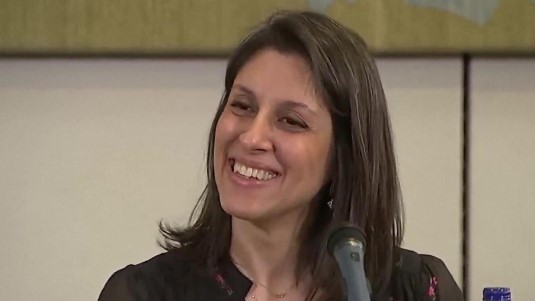
One of our contemporary grotesques consequences is how social media incentivises people to broadcast what would once only have been muttered in living rooms, slumped in front of the evening news. Take Nazanin Zaghari-Ratcliffe as a case in point. Having spent six years in and out of Iranian jail, having had release dangled in front of her eyes and withdrawn again, and the prosecutors possessing an endless capacity for finding new crimes to charge her with, at her press conference on Monday she refused to thank Liz Truss had a few choice words for the government. "I have seen five foreign secretaries change over the course of six years. How many foreign secretaries does it take for someone to come home? ... We all know ... how I came home. It should have happened exactly six years ago." If I can fault her in anything, these criticisms were too measured.

Zaghari-Ratcliffe is a victim of British politics. Of the long-standing weapons deal debt to Iran, which has captured most of the case's coverage, and of a certain Boris Johnson and his own disastrous tenure as foreign secretary - a role conspicuously overlooked in the reporting. Readers might recall the occasion when Johnson appeared in front of the foreign affairs select committee and suggested Zaghari-Ratcliffe was in Tehran to teach journalism - an entirely false statement that was used as a pretext for banging her up for longer. An utterly appalling gaffe that should have finished Johnson's career there and then. One hopes Zaghari-Ratcliffe makes more of this when she's recuperated some.

Therefore, the Tories are entirely on the hook for this. For their pig-headed refusal to settle the debt and because they put into office the man whose notorious laziness meant his briefing notes went unread and an innocent woman was robbed her of six years of life. Yet the underbelly of Twitter did not see things that way. Under hashtags like SendHerBack and UngratefulCow, racist and sexist bile poured like a torrent from the keyboards and screens of the most reactionary sections of internet-enabled Britain. Among the swill was a Tory London AM, GB News, and the "provocative" Jeremy Vine. This prompted Jeremy Hunt, ever-keen to rebrand himself as the (mythological) good Tory, to jump in to say "we" (as in the government) owes her an explanation. True, but he'd never cut the mustard as far as these people are concerned.

What are the dynamics cohering the Nazanin haters? Just a case of racists being racist because they're racist? Yes, but that doesn't explain anything. Why has this triggered the racists? The opportunism of the media spotlight? Yes, but no. In the racist imaginary, there are good minorities and bad minorities. The good are those who are uncomplaining and keep their mouths shut when on the ends of racist behaviour. They're the ones who moan about immigration and might, sometimes, concede that the BNP had a point. If they are seen, they definitely should not be heard. And the bad? The people who aren't going to stay silent, and who will stand up against racism and not apologise for who they are. Zaghari-Ratcliffe falls into a subset of the latter, the "bad immigrant" category. She's not doffing her cap, she's not throwing laurels of praise around the Tories, nor is she meekly performing gratitude for her British citizenship and her freedom - she's bloody angry at the wasted years, but for our racists it's them who are the wronged party. As so much racism depends on discourses of imagined injury, she's an unworthy recipient of taxpayer largesse. Doesn't she realise they're the wounded ones? Shouldn't she show contrition and appreciation for their sacrifices?

Also making Zaghari-Ratcliffe an object of hate is the imminent anti-Toryism of her campaign. They're responsible for the debacle of negotiations that took place, as well as Johnson's comments that increased her misery. But as far as the racist imaginary is concerned, it's another woke plot/attempt to undo Brexit/doing Britain down, or rather it's overcoded and overdetermined by their perceived kulturkampf. The threat growing social liberalism assumes in their imagination varies on a continuum from re-education camps where inmates are force fed woke ideology with the daily bread ration to accepting more people of colour on their TV screens, but again it is one of wounding, albeit this time directed at a hazy but deeply felt sense of national spirit or soul. What is one woman's pain from the evil side of the liberal/conservative divide compared to the trauma of a nation under threat?

Bigots and fash-adjacent culture warriors are caught in a closed universe in which the outside only makes a distorted sense impression. On the whole, there's no point trying to persuade such people - they're too far gone. And that makes the refusal to pander to their pretended grievances all the more important. Undoubtedly Zaghari-Ratcliffe will speak out against the ruin the Tories have visited on her life, and when she does it's our job to help stick up for her.

Image Credit

Saturday, 12 March 2022

Note on Everyday Digital Internationalism

Are younger generations more pacifistic than older people? Commonsense, as well as evidence would say yes. As discussed plenty of times on this blog, the turn away from social and political conservatism by young people isn't a consequence of "being young" and full of idealism. It's part caused by right wingers of all stripes repeatedly pushing policies that harm their interests, a culture where struggles against inequalities and prejudice have made enormous advances in the last 50 years, and the decades-long reorientation of work around immaterial labour. These processes were underway before the internet became an party of everyday life, but have in significant ways reinforced them.

This short guest post from @catherinebuca sees her teasing at one thread about how online communities among the young strengthens networked social liberalism, and why it irks authoritarians and would-be warlords everywhere.


Been thinking a bit around this lately. Younger generations have far less appetite for war in part because international interconnectedness via social media platforms buffers against the Othering that is required to manufacture mass consent for conflict.

Last month (before the invasion) a gaming community I'm part of was up in arms when EA weren't going to release a piece of downloadable content in Russia because of Putin's stance on LGBTQI+ issues. Russian fans set out in-depth and convincing reasons why this wouldn't hurt the Russian state and instead hurt only ordinary people who, in the case of this fan base, are largely LGBTQI+ supportive. It inspired an outpouring of solidarity amongst players around the world, and as a result Electronic Arts reversed their stance and went ahead with the release.

Platforms and online communities help erase - or at least make less solid - national boundaries and feelings of difference. When people share interests, it's those interests that inspire a sense of belonging and familiarity, and which country or culture someone is from is often unimportant to the point of it often not being known by participants in these spaces.

Severing those links makes sense if you're trying to reinforce nationalistic boundaries and set people apart from one another, creating antagonisms where they had previously been ameliorated.

Banning things like Instagram is done for the usual obvious reasons: economically punishing international (often American) companies, stopping information getting out/in, etc. But it also threatens that no-border solidarity inherent to online communities.

The problem for Putin - and other leaders - is that it's too late. Young people's social worlds are organised through nationless online engagement, where other groupings and identifications are more important. The idea of national loyalty is muddied and confused and no longer adheres to the more stable, traditional pre-social media identification. People still rally around their nationalities, and there's a lot of silly 'my food is better, your pronunciations are daft' stuff, but when it comes to sincere expressions of belonging, our shared interests trump what we see as artificial and arbitrary national divisions that are for the benefit of power.

That's a long-winded way of saying part of why I think this war feels different is because online social interconnectedness is a far greater force than it has been in previous inter-state conflicts, and it's going to be a problem for leaders from now on. We can also (and should try to) expand this to (partly) understand why this same effect isn't apparent to the same extent for Yemenis or others suffering under constant bombardment.

Not all populations have the same access to social platforms, not all have become part of the wider borderless, nationless online social commons. And because of this they are not as co-present. Younger people are still more solidaristic perhaps than they otherwise would have been though, because this has effects beyond the individuals they interact with.

These are rough and indistinct thoughts on the subject. It's basically just to say while there are lots of awful things about the platforms, more broadly they've complicated (in a good way) national identifications, which is having (and will continue to have) a significant impact on the ways consent for war and other types of conflict are manufactured, and ultimately support for an unrestricted internet should be one of our primary concerns.

Obviously, blind support for the companies that own these platforms isn't what we should be championing. Control of these platforms should be in the hands of the users (as per democratic ownership or whatever method you prefer).