Friday, 21 August 2026

Tuesday, 18 August 2026
The New Road to Serfdom
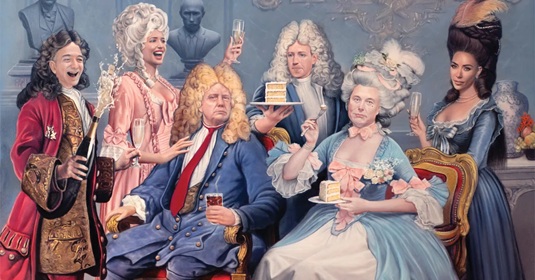
What are the dynamics driving this? This is question Jodi Dean has concerned herself with in Capital’s Grave: Neofeudalism and the Class Struggle. Just like the casual overuse of fascism, I normally bristle at applying feudalism to an examination of capitalist class dynamics. Hyperbole is the enemy of clarity, after all. But here Dean makes a compelling case for taking neofeudalisation as a trajectory in and possible outcome of contemporary class struggles. It's not a done deal but the tendencies are there.
Consider the classical picture of feudalism commonly understood in Marxist thinking and scholarship. Peasants are directly exploited by a class of landlords, typically by having to pay over taxes in money or produce, or undertaking some compulsory form of labour in their liege lord’s service. This expropriation is direct and personal. There’s no hiding of surplus labour behind the wage relation. They do enough to reproduce themselves and their household, and the landlord makes a claim on labour that, from their point of view, is unnecessary. The peasants pay up or render their services, or they get a visit from the land lord’s retinue of goons. Dean's argument is that the service economy and its particular forms of labour, what she calls 'communicative capitalism', offers a way beyond capital and capitalism, but by way of regressing back to class relations redolent of feudal social formations. As she puts it, "Italian theorists in the 1960s used the term social factory to describe the relationship between capital and labour in the postwar era. Today we inhabit a social manor. Society isn't oriented toward the production of workers and commodities. It's now an order of personalised service, privilege, hierarchy, and fealty." (p.16).
For Dean, there are two ways in which capitalist class dynamics are undermining themselves. First has been the shift in accumulation that has accompanied the neoliberal turn since the 1980s. This now depends more on rents than the "classical" model of surplus extraction and reinvestment in production. The second is the greater stress on coercion. The idea of peaceful mute compulsion characteristic of Max Weber's accounts of capitalism and some Marxist renderings overlooks the role violence has always played in sustaining capitalism's class relations, and for Dean these are coming more to the fore. Debt, social security conditionalities, police violence, polarising politics, and increasing state authoritarianism in the core sites of accumulation are the flip side of the deployment of violence against the peripheries. Trump's militarism personifies this perfectly. And we see this congealing in the class relations of communicative capitalism. In an extended discussion of Uber, the logic of neofeudalism is laid bare. A driver downloads the app, is connected to customers through it and Uber takes their cut when the fare is paid. However, what happens when the app is the market? Dean discusses how Uber used the vast pools of venture capital it attracted to undercut existing public transport, particularly in the US, to drive out competition and make Uber the only option. A parallel of the very aggressive expansion strategies of Starbucks in the 1990s. With the market cornered fares can be increased and terms dictated to the drivers around working hour expectations, personal ratings, car maintenance, and a reduction in the driver's share. Here, workers aren't dependent on a market for their income. They pay a company for access to that market and are subject to its whims, and without a ready alternative for selling their labour power. "The demolition of urban transport is crucial to its accumulation strategy: it doesn't compete by improving; it destroys other options for riders and drivers. Its fee increases and manipulation of its algorithm to reward drivers who are always on and punish drivers who don't make certain quota further contribute to "supply" by forcing drivers to work more for less. This isn't capitalist exploitation; it's neofeudal exploitation." (p.43).
Having been in a running polemic with Antonio Negri up until his death about the character of contemporary class relationships, Dean reverses one of his key arguments. For Negri and the Italian autonomists more generally, the social has been completely subsumed by capitalism. That is commodification and exploitation have penetrated all areas of social life and, as a consequence, all struggles impact on class relations. There is an irreducible class dimension to everything. For Dean, this simplifies the realities of class relations somewhat. To grasp capitalism now, we need to revive Marx's notion of the formal subsumption of labour to capital. This is where, in a fundamental sense, some arrangements for exploiting labour power exist "outside" of the system. Throughout its history capitalism has been able to make use of other forms of exploitation, such as slavery, indentured labour, and feudal relations outside of the metropolitan core to fuel accumulation. This sort of unevenness, for Dean, is strengthening. The tough borders rhetoric of Western governments, for instance, is patchy at keeping out so-called undesirables, but does racialise the division of labour in these countries, which allows for forms of unfree labour to proliferate. The aforementioned Uber example is another. It's not about innovating, rather its the destruction of a market and substituting it for a command relationship for the benefit of one firm. Musk's transformation of Twitter into X, the so-called "everything app" is a similar effort at monopolising internet communication. Ditto for Facebook. And the deployment of LLMs is trying to do the very same with social competencies. Capitalism is a global social formation that operates many different kinds of class relationships and is continually pushing at creating more exploitative dependencies beyond wage labour.
For Dean, another tendency toward neofeudalism involves sovereignty. Drawing on the work of Perry Anderson and Ellen Meiksins Wood, a chief characteristic of feudalism is the parcelling of sovereignty. Feudalism relied on hierarchies of vassalage and service. The local landlord might be a vassal of a powerful family who, in turn, are enmeshed in webs of alliances and are, theoretically, subordinate to the monarch. These threaten a return as the primary sovereignty under capitalism, that of the state, is undermined by world markets, mobile capital, and the outsized influence global oligarchs exercise over governments. Crucially for Dean, popular sovereignty is also being destroyed through the thinning of social security and collapsing state capacities, with the result being instability and precarity for increasing numbers of people. Another aspect of this shrinkage is the eclipsing of the rule of law as an impersonal entity and the growth of the rule of contract, citing examples from the US where employees are expected to accept arbitrage as a condition of employment. And also drawing attention to international arbitration courts set up and designed to defend private property and exerting the rights of capital against exercises of state sovereignty - when it does not accord with their interests. Governments can be sued for nationalising enterprises, restricting market access, or infringing on property rights. Lastly, the decades-long reorientation of labour markets away from "productive" to service work is a further symptom of neofeudalisation. The proliferation of David Graeber's bullshit jobs are mostly jobs dedicated to servicing the employer in some way. The dominance of task working and the excessive bleeding of work time into free time are exactly what one would expect of this process, with "performance" measured by the fulfillment of obligations set down in contracts, expectations around going above and beyond stated duties, and sanctions/punishments for not meeting them. Sarah Wyn-Williams's memoir of working in a senior role at Facebook/Meta typifies the experiences of millions of workers in high profile and, ostensibly, high-powered positions. Despite being the director of public policy with global reach, she details how Mark Zuckerberg and Sheryl Sandberg treated her and those around them as personal assistants who'd pick up their laundry, sort out childcare, arrange parties, and be always-on regardless of the time of day. Wyn-Williams talks about having to finish work for her bosses while in labour and going into the maternity ward. Far from immaterial labour offering new vistas of freedom, as per Hardt and Negri, this opens a new road to serfdom.
Yet this is not a counsel for pessimism. As a good Marxist, Dean knows emergent (and existing) forms of class domination are pregnant with their opposite. While labour is restructured around servicing the oligarchy, the fundamental insight of the autonomists - that for capitalism and its class relationships to continue, ever greater layers of workers have to be drawn into the work of its social reproduction - is correct. Longer living creates health and adult care pressures. Mental health, disabilities, and neurodivergence generates more adaptability pressures on public services, institutions, and whether they like it or not, employers. These cannot be satisfied by straightforward commodification and marketisation, generating potentially explosive contradictions. Dean writes,
Precisely because care and reproduction can't be fully technologised, precisely because technological development results in an ever-larger sector of servants, precisely because caring for people comes up against real limits with respect to "efficiency", ... a society of servants cannot be a capitalist society. Services require that we think in terms of their use value, not their exchange value." (p.115)Care workers are therefore at the sharpest end of the class struggle and is its strategic fulcrum. This is the bulk of the working class now, and our class politics have to shift accordingly. At the centre of this is a new vision of communism, and one that rides the dynamic of care. Focusing on reindustrialisation is a nostalgic politics, the production of services - universal basic services - on the other hand is appropriate to our level of development and the contemporary structuring of our class. The neofeudal is not inevitable, but represents an attempt at channelling and frustrating the radical potentials of reproductive labour, a labour that is socially necessary from capital's point of view, in ways that strengthen the class relationships underpinning it. And in so doing, the ruling class becomes less capitalist and more aristocratic. The truth of this dynamic comes from the mouth of the billionaires and their satraps. Their increasingly crude efforts and fomenting division, pushing for "welfare reform" and dismantling what remains of social security, the self-serving offensives against "suicidal empathy", the denigration of femininity because of its long association with care and compassion, all are ideological expressions of material interests at odds with the wellbeing of humanity as a whole. This is how they do class struggle.
Dean's intervention makes a welcome contribution to understanding the forms and stakes of contemporary class struggle, and offers a far superior analytical lens for considering the behaviour of billionaires, oafish presidents, and the politics of extreme right wing parties than the usual liberal rubbish about senility and thick voters. If there are two criticisms I have, it's her overly dismissive attitude toward the radical potentials of immaterial labour and its situation in social competencies. Especially as her argument rests on the potentials of care as a material force in our societies. What is care if it in not already rooted in the social practices of immaterial labour? And while she does employ Lacan to think about the rise of identity politics in its disaggregating and atomising consequences, she does not think about the growth and spread of social liberalism as the de facto common sense of rising generations of workers. There is a strong relationship! The second is her idealisation of the vehicle for prosecuting our class interests - the communist party. While she talks about the collectivity and care arising from solidarity that the party brings (outlined in more depth in Comrade, her previous book about comradeship in the context of a communist party), the organisation she's a member of - the Party of Socialism and Liberation - doesn't exactly fit the political moment, what with its apologetics for North Korea and the unlamented regime of Bashar al-Assad. Nor the inglorious tendency of self-defined communist and/or revolutionary parties, regardless of their positions-takings, to become confessional sects at best, and abusive cults at worst. While the party remains the only institution capable of organising our class interests, it needs to reflect the diversity of the class it organises, and that includes diversity of opinion and not giving anti-US despots a free pass. Nevertheless, Dean has explained the destination of the oligarchic tendency in ruling class politics, the processes underpinning it, and the strategic space we must occupy to throw it into reverse. A useful roadmap for understanding where we are and the direction we're moving in.
Image Credit
Friday, 14 August 2026
What Was the Point?

A Count Binface victory would have been funny, and driven a stake through Reform from which it would never recover. But this was never a serious proposition. On a reduced turnout of 44%, which is down on the general election but is roughly the kind of reduction one normally expects from a parliamentary by-election, Farage was able to poll 63.3% of the vote. An increase of just over a 1,000 ballots in raw vote terms on 2024, but proportionally a 17-point gain. Most politicians would be happy with that, but Reform's most enthusiastic supporters would have hoped for an even more emphatic win. Especially up against unorganised opposition and a cadre of joke candidates. Also interesting was the shrinkage of the right bloc in Clacton, as noted by Luke Tryl. It's almost as if their kind of politics are in long-term decline, or something. Count Binface also made history, ensuring immortality in the footnotes of political science journals. Not only was his 26.9% the highest ever polled by a spoof candidate in a UK parliamentary by-election, he's the first to hold on to his deposit.
On reacting to his win, Farage said the result "spoke for itself" and was open about not wanting to be pictured alongside his opponents. And then, because there's never not an opportunity to inject grievance politics, a Reform spox said Farage stayed away from the count after police had warned that there was a credible threat of disruption. Something Essex Police have denied.
What now? In the immortal words of Theresa May, nothing has changed. The standards investigation into Christopher Harborne's £5m "gift" restarts, which is likely to result in a suspension and another by-election in the Autumn. If Farage is going to quit politics for the quiet, lucrative life of right wing celebrity, this will be the moment. And the political atmosphere Reform now operate in is not as congenial. The Times-led investigations into the party's funding have severely dented Farage, and are subject to money laundering investigations by the police. Easy mode is no longer available to Farage and friends. They also have to adjust to life under Andy Burnham's premiership. Most polls are now posting modest Labour leads, and the government are gingerly talking about the good things they have done in office. The cost-of-living announcements over the last few weeks, while marginal in the scheme of things, do show a direction of travel to former Labour voters that they approve. On this, Reform has absolutely nothing to say and are out of sorts. This is compounded by Farage himself enjoying the most negative personal ratings of any party leader, and looking ever more shiftier in his efforts at dodging accountability. In all, the Clacton by-election was a waste of time and leaves Reform and Farage in a worse position.
Image Credit
Saturday, 1 August 2026
Five Most Popular Posts in July
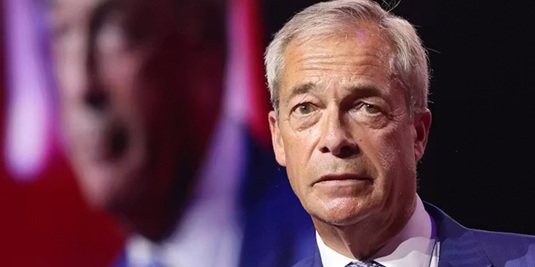
1. The Desperation of Nigel Farage
2. From Brexit to Frexit?
3. Andy Burnham in Downing Street
4. The Political Uses of Ann Widdecombe
5. The No-Hopers Vs Andy Burnham
The difficulties Reform are experiencing came out top of the pops. And as July progressed, the situation got worse. More allegations of law breaking, and a completely cack-handed coping strategy for dealing with them. It's too early to say whether Reform are a busted flush, but they're starting to look that way. And once these investigations reach their conclusions Nigel Farage is going to have a very serious problem. Something plenty reading this will look forward to watching. Also doing well was Andy Burnham - on the occasion of his entry into Number 10, and on the grumbles and complaints about him in the PLP about their new leader. It's cry me a river time for the bellyachers, I'm sorry to say. And wedged between these two are the political uses made of the grim murder of Ann Widdecombe. Yes, there's the obvious victimology Reform have tried narrating and capitalising on. But this piece looks at how her death has been used to buttress the illusio, the oft-unthought ideological assumptions underpinning establishment politics.
The dearth of posting about otherwise significant political events is a consequence, I'm sorry to say, of burn out and a lack of energy to spend most evenings churning out the goodies like I used to. I'm happily reading plenty of interesting things and probably following more political coverage than previously, so the old brain is ticking over. I'm also finding it difficult to articulate how, despite my posts being otherwise down on Burnham, I think there are useful and progressive openings despite the strong continuity in his government. Perhaps in August I might find the words to flesh that out.
Image Credit
Subscribe to:
Posts (Atom)