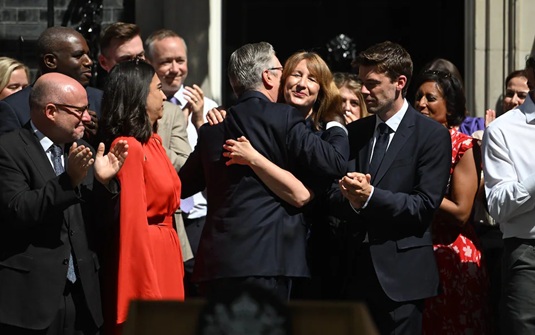
Yet some people are unhappy. Some of them being those people whose services Burnham dispensed with upon entering Downing Street. Starmer got his best press in years as all the tabloids splashed with his relaxed "leaving drinks" at a North London boozer. Putting a brave face on failure, in other words. Others wasted no time briefing their media mates that they're upset and will exact a blood price for being robbed of their ministerial birth rights. Out of the gate first was the recently defenestrated Darren Jones, who criticised Burnham's energy VAT cut as coming from his digital ID card plan ... which was unfunded anyway. What was supposed to be a gotcha moment made Jones look spiteful. And incompetent, seeing as he revealed the project he was managing was but a wing and a prayer.
It's worth noting that there was little to no bellyaching of this character when Starmer made Cabinet an almost entirely right wing affair, purposely carving out those who then had Burnham sympathies. A move that, scant weeks later, caused our former Prime Minister a ripple of embarrassment. Nor is the discontent of the disgruntled likely to make much head way in the medium term. None of them are particularly appealing, have heavily relied on others to do the factionalising for them, and of those among them who engineered Starmer's rise did so not through cunning or manoeuvre but by bare-faced lying.
And why would they want to rock the boat anyway? 379 MPs (95%) of the PLP nominated Burnham as their candidate. Whether motivated by values/policy, career aspirations, or a desire to keep their seat, that's not much for out-of-favour people to work with. Second, we might have had a comms reset. There are new and returning faces around the cabinet table, but politically what Burnham has done has taken Labour back to where the government was before Angela Rayner resigned and Starmer carried out his right wing reshuffle. Yes, he's appointed a couple of Campaign Group MPs to very junior roles, but this is hardly making Leon Trotsky the head of the red army. This is also a government that's just handed the execrable Ian Austin a job. What then is there to be miserable about? Are they upset at the continuity on foreign policy? The continuity on bashing immigration? The continuity of blaming young people for the lack of jobs? I doubt it. The only difference between them and Burnham's team are bruised, overweening egoism, a Blairite fetish for ID cards, and woefully underdeveloped media skills.
This isn't to say opposition won't start emerging in the PLP as disappointment/disillusionment sets in. But what with the policy and agenda and personnel decisions announced so far, a big announcement on sorting out adult/elderly care due this week, a summer tour of Jeremy Corbyn-style public rallies, a welcome and overdue spotlight on Reform's murky finances, and MPs heading off on their holibobs, there's no one around for the out-of-sorts right to listen. And no differences worth stoking a row about. And thanks to their leading positions in the ancien regime, when dissent becomes fashionable again who are going to look at the likes of Steve Reed, Rachel Reeves, and David Lammy and say "Yes! These guys are the answer!"
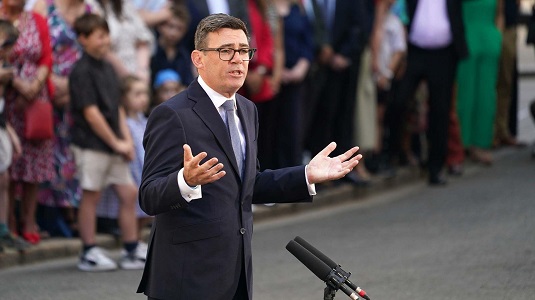
The cabinet appointments were more a mixed affair. Seeing sackings handed out to Rachel Reeves, David Lammy, Liz Kendall, Darren Jones and "resignations" from others, like Steve Reed, were encouraging signs. Unfortunately, that's where the fun ended. Burnham defied the Fleet Street sages who were forecasting Shabana Mahmood in Number 11, and - rabbit number two - out popped John Healey instead. There are several ways the appointment can be interpreted. Unlike Keir Starmer's last reshuffle, that saw all the powerful offices of state filled by empty suits from Blairite central casting, Burnham's cabinet is poised to be more ecumenical in its political colouration. Healey is well-respected across the PLP, so for the operation it's a good "non-factional" pick. Lots of Labour love the military, and his standing wasn't harmed when he resigned as defence secretary over budgetary allocations. The question is what does this mean for the politics? On the one hand, the "surprise" might be suggestive of Burnham wanting a chancellor firmly subordinate to Downing Street. Which is a definite if one is serious about restructuring British capitalism. But on the other, it can suggest continuity. Healey is no stranger to the Treasury and did five years there under Tony Blair. Treasury brain is a thing in British politics, and one that reproduces its institutional pre-eminence in state institutions. Anyone thinking like this is a safe pair of hands as far as the common sense of British commercial and financial capital is concerned.
More continuity is found in keeping Pat McFadden at the DWP and, most disappointingly, Mahmood gets to stay on at the Home Office. Not what you would call a clean break. Making Ed Miliband foreign secretary gives him a big job that's unlikely to get the unhinged right wing press going. Indeed, this move might convince them it was their pressure that kept him out of the Treasury and ejected from from his energy brief. But it opens that up for someone keen to make a splash. At the time of writing, Wes Streeting hasn't been given a job yet. Yvette Cooper has been shuffled over to health, and room has been cleared for a somewhat triumphant return of Louise Haigh, who was punished under the ancien regime for being too independent and settling the Tory-stoked rail dispute relatively promptly. Taking the reins of the Cabinet Office means she will play a central role in Burnham's oft-floated devolution, including the relocation of some of the operation to the promised Number 10 North. Angela Rayner is back in housing, Jonathan Reynolds is at business, and Lucy Powell - this last year Burnham's representative at the top of the party - is in education. Hard lines again to Bridget Phillipson.
Hoping for the best but prepared for the worst is the mindset of many current and former Labour Party people this evening as the appointments news dribbles in. As Burnham said after winning Makerfield, this is his party's one chance to make everything right. Retaining some key Starmer-era figures in position, and a new chancellor famous for wanting more cash for the military points to the status quo that did the last government in. But, commenting earlier, former Blair aide John McTernan rightly argued that what matters are the first actions the new government takes. Starmer had a disastrous start, all of it self-inflicted. On Tuesday Burnham will set out his immediate decisions, and those will point to what kind of government we're getting. They will affirm whether or not the pre-emptive pessimism a lot of people are feeling is warranted.
Image Credit
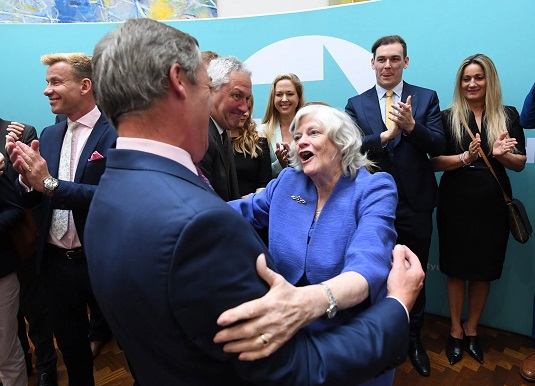
The murder of Ann Widdecombe which, accordingly to the police, now looks like a targeted killing has become an unseemly Reform jamboree because it plays into the victimhood dynamic they continually set up. A photo opp of leading Reform figures laying wreathes, plenty of buddy-buddy photos of Farage and Richard Tice with Widdecombe flooding Reform-affiliated social media, Farage moaning about the lack of security afforded him even though he declined a state-funded package offered him this year, and his claims to receive "300 threats" a month. Widdecombe was useful in life to the Reform cause as an able media performer who played well with a layer of Tory-Reform voters, and she continues to have crude uses in her demise.
Understandably, how Reform have exploited her death has attracted most attention and criticism. But far less focus has resolved on how politics generally have used Widdecombe's passing. You will have seen the tributes. Every leading politician has given the same one. "I disagreed with her politics", they say, before offering some humanising anecdote, or tribute to her energy, or her formidability, or how, once you got to know her, she was actually quite nice and kind. That all these things might be true are beside the point. Their endless repetition constitutes the received wisdom, the illusio of politics. To put it another way, Widdecombe was being treated as if her views were of no consequence, that her opinions were weightless. This is politics as if it's a dinner party, where everyone chips in with a point and position, and are so much colour that might have made for a memorable evening.
But politics does have weight. It does have consequences. Widdecombe's voting record as an MP out her on the wrong side of every single argument over the 23 years of her parliamentary career. As a social security minister and later as prisons minister, she oversaw attacks on the most vulnerable people and, famously, defended the handcuffing of pregnant prisoners giving birth. As a key Reform spokesperson, this ever-so-kind woman spent her dotage building a political party that exploits and tacitly encourages racist violence, and would threaten the limited democracy we have in this country if they form or become part of the next government. But mentioning all this is the height of rudeness, because politics presents as a public service where politicians are motivated by the noblest of intentions. Where they differ is how best to serve their constituents. It cannot be acknowledged for what it really is - the more or less transparent struggle of interests. The illusio must be maintained, even if the only people who really buy into it these days are the politicians themselves.
Image Credit
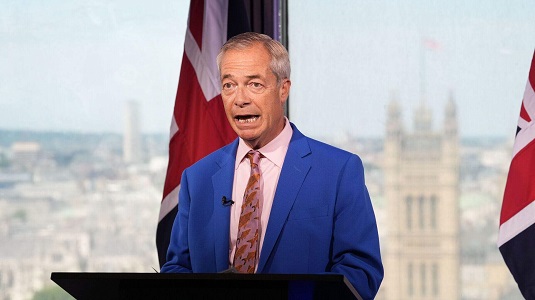
The Des
A masterful gambit this is not. For one, the formal investigation into his troughing does not go away. Assuming Farage is returned to the Commons it simply picks up where it left off. The possibility of a recall petition and a second Clacton by-election some time in the Autumn cannot be discounted. The second was Farage assumed all the other parties would play ball, relishing the chance of having a crack at him in his stronghold to feed his David vs Goliath posturing. Which has already backfired. The Tories, Labour, and the Liberal Democrats aren't going to dignify Farage's by-election stunt with a candidate. If there is any sense, nor should the Greens. Also out is Rupert Lowe's Restore Britain, who say they're holding fire for the proper by-election-to-come following the standards investigation. Therefore, the Reform leader is going to look silly railing against the establishment from the victor's podium, flanked by Count Binface, the Monster Raving Loony Party, and whoever else fancies pouring their deposit down a drain.
Without much of a contest, the media interest is unlikely to make much of the by-election. Undoubtedly, Farage was hoping Clacton would generate Makerfield levels of publicity and allow him to dominate the summer's politics coverage, wresting the spotlight away from Andy Burnham. Instead, other parties choosing not to participate makes the by-election look like a pointless waste of time. The punters of Clacton will be wondering why this farce is even happening, and a few might be turned off from the Reform leader because of this frivolous waste of money. While simultaneously reminding them that the stakes of this contest is he right to take free gifts and cash money. How man-of-the-people of him.
Farage's gambit smacks of desperation. Having been an adroit and skillful operator for so long, in his hubris he might think nemesis is never going to come for him. Hoping that no one cares about his capacious pockets nor the crude political favours he's done in return for cash, such as bigging up crypto, and prominently featuring JCB machinery on local election literature, how the £5m story refuses to go away and keeps getting murkier has left him at a complete loss of what to do. Lying about it, dismissing it, being brazen about it, none have worked as allegations pile on allegations. Farage must rue the day when he decided not to apologise for failing to declare Christopher Harborne's gift and tried to fight it. A case, perhaps, of his being high on his own supply and thinking nothing can touch him nor the solid layer of Reform support that has proven resilient versus everything else thrown at him. This is a moment of maximum peril for Farage and his political chances, made more delicious by how it's entirely self-inflicted.
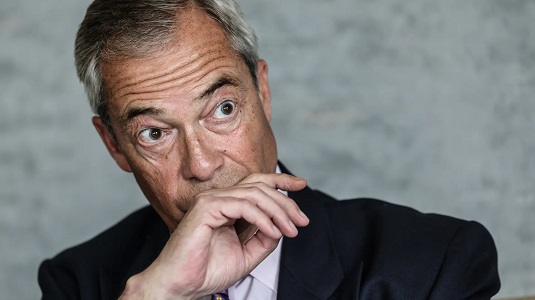
It's been a bad week for the Reform leader. We learned he'd pocketed £270k fronting a gold bullion dealer, and that he has acquired a £4m property portfolio. He also got testy being pressed on his £5m gift from Christopher Harborne, the Thailand-based crypto billionaire and Russian oil profiteer. From BBC Breakfast's Sally Nugent, to TalkTV's Julia Hartley-Brewer, and LBC's Nick Ferrari, he came across as exasperated, petulant, and annoyed that he should get questioned on this topic. This comes after a poor campaign in Makerfield, where Farage went to ground to avoid those giving answers. These difficulties and his uncharacteristic avoidance of the media spotlight have led some to ask the unthinkable: is Farage long for this political world?
Undoubtedly, it's a question Farage will be asking himself. He will apparently be taking a long break this summer, which will be good news for Andy Burnham and gives his government plenty of opportunities to set the political agenda. But might Farage throw in the towel? It must be tempting. According to former Farage lackey Ben Habib, Farage stood in the election because Harborne ponied up the cash. His frequent issues with not declaring earnings is a sign of a politician on the make, and while not the wealthiest MP he did report the largest income from outside interests - the eight or nine second jobs he's taken since his election as the very occasional representative for Clacton. For Farage, he's got to know that life would be easier and his earning power not dimmed too much if he walked away.
Consider the parliamentary standards investigation. Given precedent, he won't walk away with a slapped wrist. Indeed, a Commons suspension and a recall petition are the likely consequences of the Harborne affair. Undoubtedly exacerbated by the multiple occasions he's failed to declare earnings, including today's Times splash. Unless all the other parties could get behind a squeaky clean anti-corruption but non-political figure, like finance guru Martin Lewis, Farage would surely win the by-election. But would he want to fight a campaign when it's his money grubbing that's the reason for and the focus of the contest? Does Farage want to risk the awkward viral videos of having random Clacton'ers berating him, or having a strip torn off him on a previous Reform voter's doorstep?
The second issue is his political future. Braving the by-election means more years of scrutiny and accountability. It's possible, thanks to past behaviour, that there are going to be future non-declarations, and perhaps more Commons investigations. But supposing those storms are weathered, everything goes wrong because Burnham turns out to be no different to Keir Starmer and Farage finds himself in Number 10. Not only would this be the gravest disaster in British political history, it would be an opportunity for him and his lieutenants to engorge themselves. However, Farage is a greedy man, not a stupid man. Does he want a future where yes, he can fill his boots, but afterwards face possible pursuit by whoever might succeed him. Would Farage rather spend his infirm old age relaxing on sun loungers, or fending off investigations, legal challenges, criminal probes, imprisonment? Hence why the Reform leader's Frexit can't be entirely discounted.
Image Credit
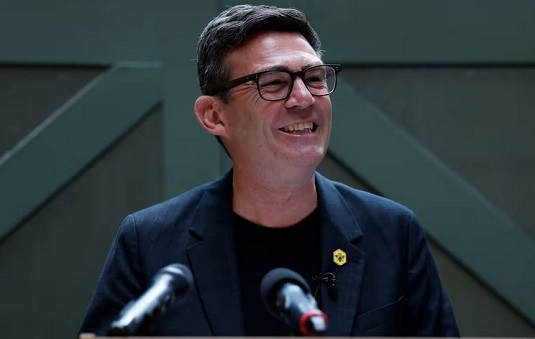
And here we are again. Andy Burnham's speech at the People's Museum was very good. No more pregnant pauses between short sentences for sound bites, no more dead-eyed staring at the camera, no prevarication. From a delivery point of view, Burnham spoke like most people, and came across plainly, coherently and, at times, passionately. Labour MPs versed in the Blair-era school of public speaking would do well to study this speech. Though putting on a Manchester accent might be too much.
What matters most is the content. And as far as making the right signals went, the boxes were duly ticked. Devolution, which was trailed in the pre-speech period, got a strong push. Whitehall obstructionism will vanish as decision-making about economic strategy and education and skills priorities are to be pushed out to the regions. The centrepiece is Number 10 North, a relocation of significant government powers to Manchester. And, for the first time since Harold Wilson, Burnham will not be residing in Downing Street. What didn't get a prior shout out was his commitment to the biggest council house building programme ever. There was "public control" of utilities, and changes to business rates so smaller businesses, above all hospitality wins out. Public procurement will also require mandatory social value tests, so the majority of goods and services purchased by state institutions are sourced from within this country. The Preston model writ large, in other words. In all the talk was good, but does Burnham have the game to match it?
Burnham's "public control" formulation has attracted criticism. The Manchester model rests heavily on the Bee Network, where bus companies remain private and for-profit but operate under a regulated regime. They provide good coverage and regular service, and in exchange they have guaranteed markets supported by the public subsidy of the fare cap. This is what Burnham seems intent on introducing for the utilities. Here there is some Labourist pedigree. In his The Future of Socialism, the classic statement of post-war Labourism, Tony Crosland argued there was no need to make further inroads into private ownership because, effectively, the state had capital on a tight leash. The system worked for them, so why change it? Manchesterism is Croslandism, albeit with localist characteristics. The problem is, as Mathew Lawrence writes in his recent policy piece on the productive state, private capital in foundational parts of the economy run on different cycles of investment and return than state capital. Which makes them inefficient where end users are concerned, and therefore should be nationalised. So while Burnham's Croslandism might work for the relatively small scale of Manchester's bus network, expecting the same for much larger and complex utilities infrastructure might be wishful thinking.
The reluctance to nationalise is not hard to fathom. It's for the same reason that this government and its New Labour predecessor were far from keen - it's the message it sends to capital. Burnham, presumably, would like the inward investment to carry on coming. But far from the animal spirits of capitalist myth, in actuality it's cagey, brittle, and terrified that changes in the overall regime of accumulation will see it underperform or leave it out of pocket. Less Scrappy Doo, more Scooby Doo. Public control sounds good to Labourist audiences, while the refusal to nationalise shows Burnhamism isn't about to make substantive modification to class relations. Also why he continues to stress fealty to the fiscal rules. This is not socialism, it's a typical social democratic compromise with capital.
Second, the Greens criticised Burnham for not mentioning the climate. Which is an omission, given the weather we've just had. By way of a reply, you could say it was there between the lines in the stiff about building resilience and making Britain energy independent. But that is not good enough. Outside of Reform, the Tories, and Facebook oddballs, the vast majority of the public are on board on climate change and understand the need for the green transition. Talking about it openly puts the right at a massive disadvantage, and could consolidate parts of Labour's coalition that Starmer's leadership have frittered away.
The biggest question about this speech is will Burnham actually deliver it? Certainly, he sounds more sincere, and he knows how to fire up those with bits of Labourism left in their souls. But we've had one Labour leader who lied through their teeth as they made their pledges, and then over the years tipped each one into the wheelie bin. Burnham offers a vision, a road map to a reformed state, a better functioning economy, more opportunities and, unusually for a contemporary politician, a kinder future too. If Burnham delivers this plan he will have saved Labour's bacon and can look forward to winning the next election. If he abandons it for whatever reason and defaults back to where we are now, then he, his party, and his brand of politics are done.
Image Credit
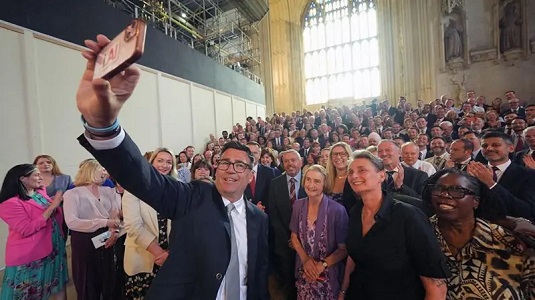
As Burnham rightly noted following the Makerfield result, the window he and his party have to make a favourable impression is short. Before announcing anything, we're very much in the vibe zone that precedes the concrete announcements due after he's gone and seen the King. And those vibes are mixed. As we saw, during the by-election Burnham did his very best Keir Starmer impression. And since, news that his old friend James Purnell is moving into Downing Street as his Chief of Staff suggests an office run from the right. As is the persistent rumour that David Miliband (remember him?) will be invited back as foreign secretary. For those hoping for a soft left administration, the rumours concerning the other Miliband have gone unscotched, there's the committent to moving more of Whitehall out to the regions, and Burnham has retained his pledge to donate 15% of his salary to worthy causes. This time in his constituency.
Evidently, even with these in play the weight of previous pronouncements and appointments are pointing to continuity with the trajectory Starmer and his helpers were taking the party on. Not good. There is a social democratic, socially liberal majority in this country, and that is only getting larger as business-as-usual fails to deliver. If Labour doesn't respond to it, that support won't give a Burnham premiership a second look as it goes off to vote for the Greens or prefers the despondency of abstention. And we know who benefits from that.
To begin putting Labour's coalition back together there are some things the new PM can do very quickly to avoid the ghastly, unforced idiocies Starmer's government inflicted on themselves. These would reassure Labour's current and potential future coalition that the party is on their side.
1. Go green. Obviously, appoint Ed Miliband to Number 11. That alone would win back a layer of former Labour support. It also assures many more that the green transition and tackling inequality is at the core of the new government's economic strategy. There are two other parts to this. The first is decoupling energy prices from gas. The best way to counter the rubbish Reform, Tories, and the press push about net zero is for punters to feel the benefits of renewables in their pockets. Second, take up the People' Emergency Briefing call for a Covid-style televised government briefing. The urgency after a week of extreme heat is there, Labour have a very good story to tell about the green transition, and straight away it seizes the politics agenda from a right set on spending the summer stoking more racist riots.
2. Sack Shabana Mahmood. In recent days she has announced new safe routes for refugees as, apparently, a concession to the PLP. Meanwhile, the rest of her Reform-lite proposals remain intact. A great deal pain for those at its sharp end, with no electoral dividend in exchange. Her rules should be scrapped.
3. A government can't stay on the front foot forever, but it has significant advantages where it comes to setting the news agenda. At the beginning of every week Burnham should have a live, televised press conference announcing a particular policy or reporting on some achievement. The complaint is often made that the decent policies Labour have implemented are symptomatic of bad comms. I think the political reason is more about not wanting to raise aspirations and avoiding media flak. As this is Labour's final drink in the last chance saloon, something more decisive is required.
4. Speaking of the media, ensuring that Ofcom impartiality rules are enforced on broadcast journalism. No more editorialising by BBC journalists. No more free passes for GB News. And while they're at it, no more turning of the cheek to Elon Musk. Take all government departments off Twitter.
Do these herald a socialist dawn? No, don't be ridiculous. These are, however, the sort of quick wins Labour should take to begin the reconsolidation of the support the outgoing leadership have spent six years jettisoning. They are a start, would build back the hinterland Labour in the country needs if it's going to undertake the necessary structural reforms, and rob the right of their political initiative. If what we get is sort of in this ballpark, then Burnham's premiership might last. If not, you don't need me to spell out the consequences.
Image Credit
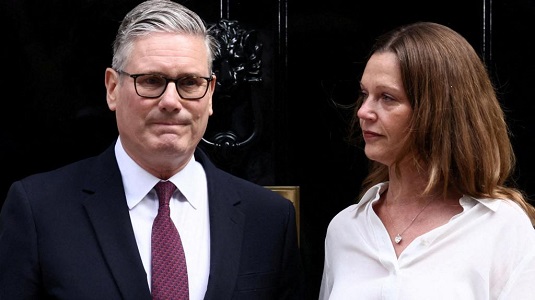
It's funny how tributes to Starmer studiously avoid all mention of these things. That offered by George Eaton typifies the trend. This Labour government is "surprisingly left wing" but is never "identified as such", framing the failure of Starmer as a matter of comms. As if left wing politics is about tractor production figures, and not challenging class power and expanding the realm of human freedom. Something that even post-war Labourism in its finest hours did. For every watered-down gain in workplace rights can be opposed by Starmer's chilling and dangerous clampdowns on collective liberties and personal autonomy. A legacy to be repudiated and undone to be sure.
Authoritarianism is just one thing Starmer will be remembered for. The other is his dishonesty. Boris Johnson was left holding Keir's beer has he brazenly lied throughout his time as leader. It began when Starmer unveiled the policy pledges that won him Labour's leadership, and then spent the next few years disowning every single one. No one, not even a Tory leader has so gracelessly abandoned the platform that got them into office. The signs were there early on, and some were sharp enough to draw the right conclusions. The two obvious ones were his refusal to come clean about his main donors during the leadership campaign who, quelle surprise, turned out to be wealthy businessmen. And his first foray into criticising the Tories over their Covid crisis management showed whose side Starmer was on. Weak, pathetic, and arguably peddled in bad faith, it was a studied effort in refraining from upsetting the apple cart. These proved to be the touchstones how Starmer would conduct himself in high office. Thanks to a combination of meticulous journalism and arrogant boasting, we have a good idea of the extent to which the people behind Starmer defamed and harassed critics, and manipulated outcomes with the full support and connivance of British politics journalism.
There is one aspect of politics Starmer did prove rather good at. That was the neutralisation and dispersal of Labour's solid bloc of left wing votes. It's no word of exaggeration that large sections of official politics lost their minds after Jeremy Corbyn's better-than-forecast performance in 2017, and even after 2019, 10-and-a-quarter million votes for a left programme were far too many. Starmer's tenure can be read as a ceaseless effort to take the coalition assembled by Corbyn and unpick it. Every abandonment of Starmer's socialist-sounding pledges, every betrayal, funnelled the official politics of opposition into narrower and narrower channels. With each one came despondency, of a layer here, a layer there falling away. The big break, of course, was Starmer's unqualified support for Israel's genocide against the Palestinian people. From opposition he cheered it on, and large chunks of Muslim and progressive opinion decisively broke with Labour. This culminated in a miserably thin manifesto, dubbed Change, that promised anything but, and Labour got the result it got. Fewer votes than Corbyn's Labour at its most damaged and self-sabotaging, and as with all governments the only way was down. Helped by Starmer going after pensioners' winter fuel payments from the off, making summer speeches about more pain to come, and then vigorously defending his right to the perks of office. Labour's coalition continued flaking, and now thanks to Starmer's arrogance and straightforward commitment to the authoritarian class politics of capital, the party for the first time faces a viable challenger to its left.
Those are the reasons why Starmer has folded. He lost the confidence of his colleagues because his ruination of Labour's vote means many members of the PLP were set on being one-term wonders. Who could have known that a strategy for dispersing your party's support would ... disperse your party's support? If Starmer is lucky, he'll only be remembered as the most dishonest and authoritarian PM in British political history. Because if the damage done cannot be repaired by his successor(s), Starmer's entry in the history books will be as the man who killed Labour.
Image Credit
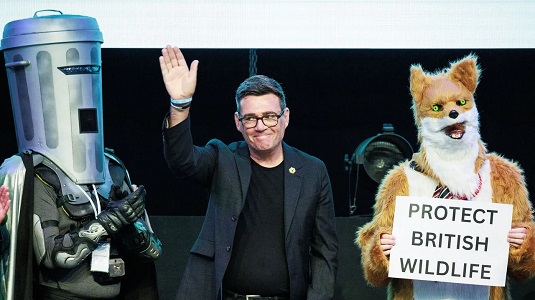
Extraordinary results require extraordinary circumstances. That was the real story of Makerfield. The local and regional party understood this was less about the label and more about the name. Andy for Us said all the posters. Keir Starmer stayed away, but he was very much present as a ghastly shade to be exorcised. The Burnham campaign were the plucky insurgents versus a clueless, careless Westminster. "Are you voting for Andy?" was the scripted canvassing question Labour supporters took to the doorstep, putting distance between him, his personality and standing, and the embarrassments of government. Burnham's political weight isn't thanks to his charisma, which he has in bucket loads compared with the voids around the cabinet's table, but his record. Once again demonstrating that political science isn't rocket science, ensuring the little things are seen to be done and are felt to be done is the root of Burnham's popularity. Riding subsidised, reliable buses into the city centre one can see the new wealth flowing into Manchester. The optics of 21st century Labourism are cranes dotting the skyline, the continued vibrancy of the city as a leisure destination and cultural capital, and getting the homeless off the streets and into accommodation. In reality, Burnham's much touted Manchesterism is a vibe consisting of localist Croslandism, a property boom, and frequently declared intentions to help the most vulnerable. But for enough Mancunians this is enough. Being seen to be successful and cultivating an impression that Andy is on their side won Burnham the seat.
To be fair to Makerfield's new honourable member, Burnham's two victory speeches, at the count and Friday's rally, show an understanding of the hows and whys of his win. His message about Makerfield being typical of London's neglect of the north is consistent with past positions. Most famously his populist and popular show downs with Boris Johnson on Covid restrictions. But the real rub is the emphasis he placed, in both speeches, on this by-election victory being his - and Labour's - last chance. Surely, Burnham must be aware that rowing back from his soft left persona in the opening weeks of the campaign is pregnant with the potential of political ruin, as a slippage in his approval rating attests. Burnham talks a good game with frequent verbal broadsides against trickle down economics and 40 years of Thatcherite abandonment. But will his actions match the impressions he's spent the last five weeks encouraging?
That depends on which Andy Burnham turns up on Number 10's doorstep, or puts a showing in should Starmer and/or others insist on a summer-long leadership contest. If Burnham is to thrive, if Labour is to survive, it means - incredibly - taking its cue from Lisa Nandy. "The era of centrist governments are over", she apparently declared at the Makerfield count. She's right. Labour's salvation lies in understanding its voter base, its coalition, and acting accordingly. Labour must marginalise its right wing, who are supplicants to the tech and finance oligarchies. And the party must learn how to think again. Makerfield spoke on behalf of this country's social democratic majority. They know "their" government can't work miracles, they're not expecting loaves and fishes, but they do expect to have a sense that it has their backs. That Labour politicians care about the people who put them there. They expect Labour to work toward building a better life for everyone, not just for a few MPs and advisors at the top of the party tree, and the rich people who pay for them. This is the instruction the electorate have issued to Andy Burnham. He, and the party, would do well to heed it. Otherwise ruin awaits.
Image Credit
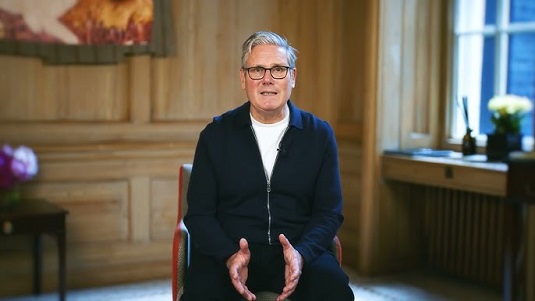
Keir Starmer admits that his mooted social media ban is doomed to fail. It won't prevent teenagers from accessing their favourite platforms, but it will stop some of the harms some of the time. Meanwhile in Australia, which is the Labour right's favourite model for how politics should be done, 60% of young people affected by their identical ban have found workarounds through VPNs or hanging out in quiet or obsolete corners of the internet beyond the ken of the IT police.
What damns Starmer's stunt in its own terms is that it goes against the evidence presented by the government's survey. The data says that social media can make young people anxious and more worried about what other people think about them, but across the 10-21 age range much higher numbers are given for the statements 'social media makes me feel included' and 'social media helps me feel connected to other people'. In the government's consultation exercise, 72% of young people themselves said they were worried they would miss out if restrictions were introduced. Ian Russell of the Molly Russell Foundation, set up after his daughter took her life after long exposure to algorithmically-pushed self-harming content, rightly said that a blanket ban is a cop out because it avoids forcing social media outfits to comply with British laws. Which, as we've seen with the government's attitude to far right and loyalist violence and their use of Twitter and Facebook to organise, looks very much like a pattern of behaviour rather than a coincidence.
Since Starmer came to office, it's incredible to think he's fronted a government even more authoritarian than the frequent outrages Boris Johnson committed against constitutionalism, the right to assembly, and freedom of speech. This ban is just another big man flex, thinking it will curry favour with parents for whom the internet and social media is a constant worry. Despite many of them growing up in the Wild West years of MSN and Yahoo Messenger, the first flush of internet dating, photo sharing, and ubiquitous pornography. And just like the Democrats' enthusiasm for banishing TikTok from the phones of US teenagers, social media is the primary means by which young people now get their news. Curtailing their access to their trusted news sources makes the management of information flows easier for government spinners. The perceived political benefits are not excluded from their equations.
But also, it speaks to another concerning turn. It is normal for teenagers to push against limits, break the rules, and occasionally thumb their nose at the law. By his own admission, Starmer said he "enjoyed a good time while at university" when asked about drug-related indiscretions. This state mandated coddling, at a time when crime in Britain has fallen off a cliff and, arguably, young people as so-called digital natives have never been so connected to each other through webs of weak ties, is utterly unnecessary. Starmer and Labour are cracking down on the freedoms of young people, and not the far right, nor white supremacist billionaires, precisely because no oligarchical interests will be harmed in doing so.
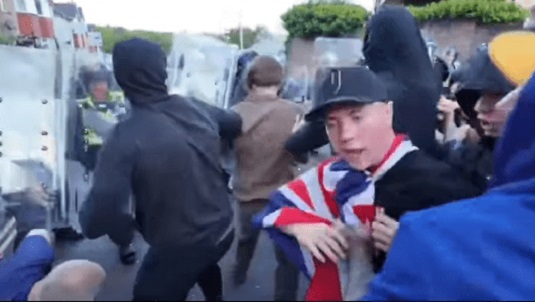
Yet the political objective was achieved. Having spent the last two years stirring the pot, the far right have had their first summer riot. Another step toward how things used to be, when the National Front routinely took to the streets in the 1960s and 70s. But the second phase of this right riot has proven more successful then any of them could have dreamed. Paper after paper, news outlet after news outlet, have surged across and trampled on the cordon sanitaire and hurled the bricks and wheelie bins of far right talking points into mainstream public discourse. For example, Sky News asked if the police are indeed "anti-white", forcing the gibberish about two-tier policing onto television screens. They were joined in this by The Mail, a "debate" on Good Morning Britain, and The Sun "just asking questions". On top of this Chris Mason, the BBC's chief politics gossip-monger ran cover for Farage as he was criticised by the other party leaders in the Commons one Wednesday. Aha! said Mason, they were being political about Henry Nowack's death too! You've got to ask it's only a matter of time before the great replacement theory gets an airing, all in the interests of debate.What happened in Southampton gave right wing papers and their little helpers in broadcast journalism an excuse to treat far right rubbish, which they themselves know not to be true, as if it was based in fact and was a valid viewpoint. This is where their riot has proven particularly successful.
Characteristically, mainstream politics have been useless in its collective response. Keir Starmer and Ed Davey tried to look statesmanlike, while telling Farage off for not respecting the stated wishes of Nowack's father not to use his son's murder for the politics of division. Instead, if they had anything about them, they should be making clear that his speech instigated Tuesday night's unrest, as Farage knew it would, and make plain that Reform is but the electoralist expression of violent street thuggery. But even when the King responded better than Labour did ti the 2024 riots, anyone hoping for better will be waiting for a long time. Something underlined earlier on Thursday as Starmer was moaned about Elon Musk dialling up the race hate in this country. If only the Prime Minister with his huge majority were in a position to do something about malign foreign actors working to destabilise British politics. At the moment where the violent consequence of Farage's tub-thumping could see politics move decisively against him, there is an absence where the far right challenges to Britain's limited democracy could be met.
Image Credit
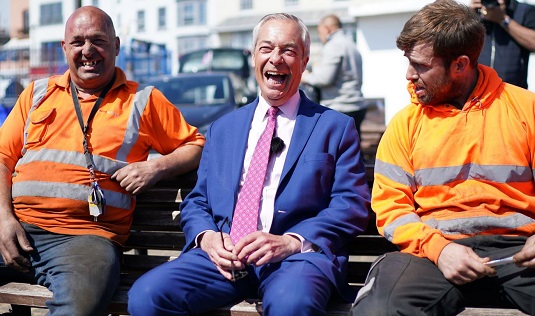
The truth is there has always been a strong right wing bloc among working class people. We're not talking about those patronised by Blue Labourism, but dyed-in-wool anti-Labour voters. This is the section of the class that loyally turned out to vote Conservative, amounting to about a third of the work force. That part of the class where I come from. And this also had a political expression in the labour movement. Informally as, for want of anything else, backers of strike-averse right wing Labourism, and formally as the Conservative Trade Unionists. In the 1970s they were a real outfit that commanded the allegiance of tens of thousands of members. Yes, it's hard to believe now, but the Tories had the sort of trade union clout left groups, with the exception of the official Communist Party, could only dream of. The historic appeal of conservatism to working class people is not much of a mystery, and it is worth noting that the Tories made real efforts from the late 19th century onwards to win over "working men" and were particularly successful in the 1930s, following the granting of universal suffrage, in organising rural workers. Working class conservatism runs deep.
What the Times poll simply shows is a switch. The Tories have destroyed themselves by torching their means of mass political reproduction, and so the right wing sections of the labour movement who might have supported them in the past have shifted allegiances to Reform. An assumption borne out by the figures. Just 14% of 2024 trade unionist Labour voters have switched to Reform, the rest coming from those who either supported Nigel Farage at the time, or predominantly voted Tory.
A case of shrugging the shoulders then? Of course not. As we have seen generally, Labour have paved the way for Reform by trying to out-do them from the right on immigration and asylum, affirming thir talking points and not contesting the politics. And, sorry to say, by and large trade unions matter very little in the day-to-day life of most of their members. Ballot papers, a seldom-read magazine, and that's about all most members see of their unions - a point reinforced by the abysmal turnouts for internal elections. On the one hand, the so-called political wing of the labour movement has cackhandedly encouraged Reform support, while its industrial organisation does not, with some exceptions, do much to discourage it.
Reform might be growing their presence in the trade union movement, but it is a passive reflection of their strengthening support in society more generally, and unlike the old CTU is not organised beyond a handful of pockets. It's well within the power of trade unions to reverse this support and stop them from making further inroads. And, fortunately, Reform itself is probably their greatest ally. In February, Richard Tice was boasting how Reform would just undo the new workplace rights Labour introduced in April, but also would tear up workers' protections. Maximum hours, safety at work, paid breaks, holidays, parental leave, fire at will, scrapping the minimum wage, Reform are promising the sort of bosses' agenda that the Tories dreamed of implementing. So proud are Reform that they call it their "Great Repeal Bill". Explaining what a Reform government means for working class people is the start of it, but that has to come from within the unions, from it being taken up by workplace reps and officials. A charge sheet filed on the union website or nestled in its magazine won't do the trick. Anti-Faragist moves will only be effective if a union is relevant to its members, that if their organisation feels like their organisation, that its moral leadership counts for more than the appeal of Reform's racist scapegoating.
Image Credit
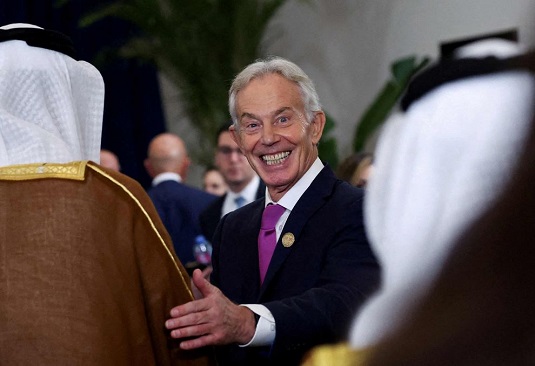
Blair was right about one thing, and that's the absence of strategic direction at the heart of this government. A point so obvious that even my cat knows it. But apart from that, the 5,700-word screed is interesting for one reason: for unapologetically laying out the empty world view of the ruling class. Something that "this shows Blair has moved to the right" takes fall far short of. In the piece, Blair says that welfare needs cutting (of course he does), military spending boosting, net zero ditching, state intervention and regulation pared back, and more government funds made available for AI development. On world affairs, he says Britain needs to carry on sucking up to the United States. And does so with an argument identical to that pushed by Peter Mandelson during Donald Trump's Greenland bullying at the beginning of the year.
Central to Blair's argument is that rudderlessness comes from a lack of policy. That is what drives the politics. But politics, which is always a clash of interests, counts persuasion among its properties. While lecturing others about doing politics properly, this is entirely absent from the essay. What the state should be doing, the backing of AI, and continued subservience to the US under Trump are treated as self-evident truths. They certainly are to Blair, because having trousered tens of millions since leaving office his personal, private interests are now entirely aligned with the class interests of the super rich, whose ranks he long aspired to join.
There are two forms of ruling class politics that dominate the powers-that-be. The technocratic managerialism personified by and incompetently manifested by Starmer and his cabinet of right wingers is what "sensible" and "grown up" politics is. Living in the real world means never changing the fundamentals, keeping the present class settlement as is - even though it's breaking down - and fiddling around the edges and selling that as "change". The alternative is just letting it all hang out in the open. The establishment's euphemism for this is populist right wing politics, but it's just the rule of oligarchic capital transacting in full view of everyone. The endless enrichment of the already rich is its programme, and the scapegoating and culture war rubbish are its politics of distraction. Neither, you'll note, come anywhere near to Gramsci's view that ruling hegemony requires intellectual, political, and moral leadership. Both rest on what was established by Thatcher and Reagan, and consolidated by their successors. One perspective says this is the way of the world, while the other almost goads everyone outside the private jet class to do something about them. There is no effort to persuade, let alone mask the realities of class rule.
Blair's essay manages to bridge both camps, making a technocratic case for big power bullying, the oligarchical interest, and what needs to be done to consolidate both. Not in terms of winning an eroding popular consent for this state of affairs, but simply letting ruling class interests run riot. AI for perfecting new forms of exploitation, more markets to keep the balance titled for capital over labour, and the bombs and guns to continue enforcing their grip on global affairs. Blair used to say class politics was old hat, but here he is proffering a manifesto for open class warfare. One comfort zone that he's always been more than happy to inhabit.
Image Credit
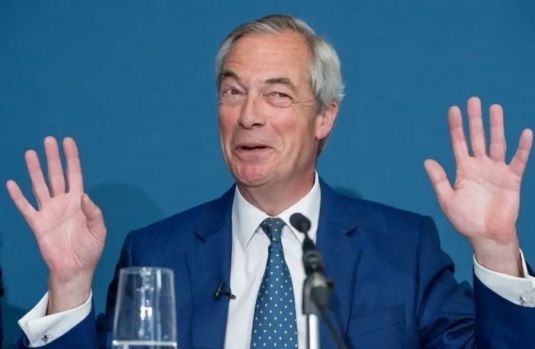
This is not the first time Farage has stood accused of receiving funds for political favours. Indeed, what characterises his relationship to money is its brazen transactional character and consistent repetition. A foretaste of the do-as-I-say-not-as-I-do relationship to the law we would expect during the nightmare scenario of a Reform government. But what are the political uses of such corruption, seeing as it's a common feature of the extreme right, here and abroad?
As already hinted, there is the shock and awe element, of being seen to be political teflon. I can imagine some canvassers hitting the doors in Makerfield and getting depressed that Farage's £5m kickback has not booted Reform's chances out of contention. As per Trump and what we've seen in the United States, allegations of corruption from political opponents go nowhere because, in many cases, they're rightfully perceived as being little different. Additionally, this can be threaded into narratives - spontaneously elaborated in the Facebook groups and retailed by GB News - that Farage is getting singled out and targeted for telling the "truth" about this country. The right in this country, whether in its Tory or more extreme forms, will not waste an opportunity to play the victim.
More important is the message Farage's corruption is sending to his class. Accepting money from here, there, everywhere signals that Reform is open for and to business. Farage himself, like Boris Johnson before him, covets cash and this ensures a congruence between his politics, the interests of the most reactionary elements of the ruling class in this country, and the globalised oligarchs. A bonfire of regulations, the dismantling of Labour's new, meagre protections on workers' and renters' rights, and the final destruction of the NHS as a free-at-the-point-of-use system fit nicely with those ruling class views that think we have it easy and need putting back in our box.
Yet this is not without risks. Farage is carrying on as if certain elite interests can shield him from consequences indefinitely, but this is not so. There's the obvious problem of investigations into rule-breaking. The £5m bung, for instance, puts Farage at risk of a Commons suspension and potential by-election in Clacton. One might be tempted to think he could walk it, but this is where the politics of corruption could bite back. While true not many Reform-minded people care about the provenance of his income and what he does to ensure similar gift giving continues into the future, but there are people outside the Farage fandom that do care a great deal. Brazen corruption could negatively catalyse and mobilise opposition to him and Reform which, considering their levels of support, could be hard to fend off. Imagine, for example, if the rest of the political establishment dredged up an independent anti-corruption candidate akin to Martin Bell's successful challenge to Neil Hamilton in Tatton during the 1997 general election. Could Farage see off Martin Lewis?
Risky or not. corruption is baked into extreme right wing politics. Farage can no more resist cash offers than he can the politics of scapegoating. The cash flow is the guarantee that Reform will stay in oligarchical pockets, and the closer we get to the next general election the more those taps will gush.
Image Credit
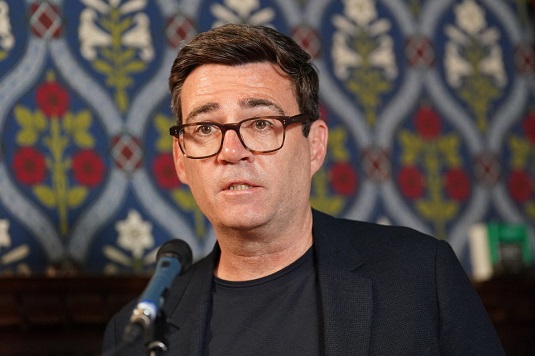
It began even before Labour's NEC greenlit his challenge. No sooner had Caroline Lucas counselled the Greens to stand aside because of Burnham's position on electoral reform, he came out as an opponent on proportional representation. "Fairer votes" means the disproportional wonders of AV Plus. Which, with uncharacteristic haste, the government is about to restore for mayoral contests ... just in time for a Manchester mayoral by-election, should one be needed. Then Monday came around. Having said very warm things about the EU and admitting he'd like to see Britain back in eventually, he 180'd and said we shouldn't undo Brexit. Getting two u-turns in for the price of one, Burnham committed himself to Rachel Reeves's fiscal rules. Very different from the Andy Burnham of last September, who dared utter sacriligeous words about the holy wisdom of the bond markets.
He was just getting started. A couple of months ago, Angela Rayner gave a speech that criticised Shabana Mahmood's cruel immigration policies as "un-British" - an intervention Burnham apparently endorsed. This week, he's now a supporter of this doomed attempt to out-flank Reform on the right, and went further at his by-election/leadership campaign launch by demanding net migration be driven even lower. And to round things off, in double quick time Burnham has gone from being a defender of trans rights to accepting the establishment attack on trans people. In other words, everything that was wrong about Labour a week ago are now his policy positions. The only difference that exists between him and the Prime Minister is over who should be in Number 10. From the soft left, it's been a short, sharp road to Wigan Keir.
I suppose some tendentious rationales can be concocted for these about-turns. It's a Reform-leaning seat, so it's time to deploy the Blue Labour strategy that's proven a stunning success everywhere else. There's extra press scrutiny, so time to stifle the leftish vibes given off by "Manchesterism" so one can emote fiscal orthodoxy and fealty to Treasury shibboleths. Reform's problematic plumber might go in for cheap point scoring come any hustings, so socially liberal approaches to immigration and trans people has to be ditched. Or you could see it as Burnham adapting himself to the Labour selectorate. Plenty of MPs bear a grudge from his refusal to go along with their anti-Corbyn wrecking, and further back for breaking and critiquing the Blairist orthodoxy on health. And these days, the Labour membership are much more middle class and managerial than at any other time and are, by and large, habituated to life in a rudderless political husk. Either way, Burnham's pitch is the traditional Labourist marriage of perceived expediency and political cowardice.
This does raise serious questions about what Burnham's Labour is going to look like. At first contact with re-entry into national politics, the great hope of the soft left has capitulated across the board. The criticisms that allowed him to cultivate a prince-across-the-water persona as Keir Starmer stumbled from one catastrophe to another have evaporated. He looks as clueless and as spineless as the man he would replace. If Labour don't change tack, if Burnham carries on like this assuming he wins the by-election and subsequent leadership election, the crisis afflicting the party is sure to persist. Except, without taking stock and changing direction, the new leader will guide the party into its final, terminal phase.
Title Credit
Image Credit
Come and hear me speak in Birmingham this Wednesday!
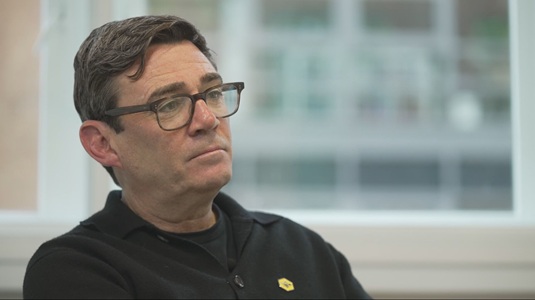
Then tonight, Josh Simons, hitherto famous for overseeing dodgy doings while he was director of Labour Together, announced he was vacating his Makerfield seat in Manchester so Burnham could have a run. Burnham has confirmed he will seek the permission of Labour's NEC to be the candidate. And, interestingly, the chatter from Downing Street is that Starmer is not minded to block his candidacy. Things are about to get very interesting. And by 'very interesting', we means it's doubtful he'll remain in Number 10 by the end of summer.
Can Burnham can take Makerfield? The seat has been Labour's since it was formed in 1983, and Simons does have a decent majority of 5,400. But things were far from peachy at the local elections. Here, Reform ran away with victory, scoring almost 50% of the vote while Labour collapsed to 24% and the Greens scraped 11%. Although it was a different political time, Burnham did storm the mayoralty in 2024 with 63%. And the areas around Wigan, where Makerfield is situated, was particularly strong. As argued previously, there's a good chance the locals have flattered Reform. And Burnham has several other advantages: strong name recognition, a good local record for a Labour mayor, and a bit of an anti-Starmer cache. Punters there will know they're effectively voting for the next Prime Minister, which could boost him. Burnham is not guaranteed to win, but notwithstanding the local election numbers, there are more anti-right wing voters in the constituency to be mobilised. He's got to be the favourite to win it, assuming the NEC sides with him.
Which brings us back to Streeting. That Angela Rayner was cleared of wrongdoing by HMRC took some wind out of Streeting's sails on Thursday morning, but he is not a stupid man. He can read the same polls as the rest of us and how unlikely he would win a leadership election against virtually anyone, including Starmer himself. Perhaps he'll put in if Burnham successfully returns to remind the selectorate that he exists, but he's still young for a politician and, under a different leader, has the chance to reinvent himself as a convert to soft left Labourism. Especially if Burnham is serious about his promises to move Labour more in this direction. A case of his being down, but by no means out.
Image Credit
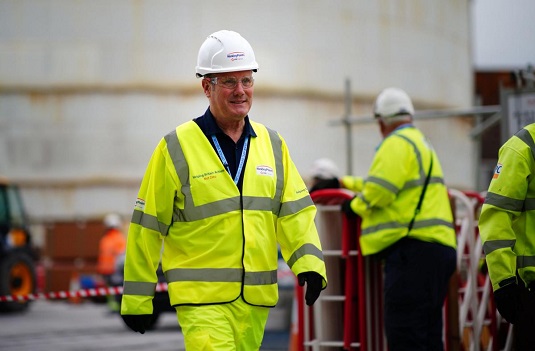
What are the complaints of our former ministers? This morning, Miatta Fahnbulleh resigned from her minister of religion post, saying that the government had not acted with "vision, pace, and ambition", nor that Labour had governed in a way that was "clear about our values and strong in our convictions." She went on to say that the public's verdict on Starmer's leadership was unmistakable: he had to go. There wasn't much of a critique in Fahnbulleh's letter, except she drew attention to the winter fuel debacle and the shameful attack on disabled people as "mistakes".
Our second resigner was safeguarding minister Jess Phillips. Her letter was pretty damning and attacked the plodding complacency of this government. She talked about how groomed children can be blocked from making naked images of themselves and that this technology could already be rolled out, were it not for Number 10's indifference. Phillips added that Labour governments are "precious" and "I'm not sure we are grasping this rare opportunity with the gusto that's needed." That's why Starmer has to give way. Fun fact, to my knowledge Phillips is the only MP who has her photo on official Commons correspondence.
She was followed approximately an hour later by Alex Davies-Jones. She said results in Wales and the rest of the UK were "catastrophic". No disagreements there. But she is impatient. "Now is the time for bold radical action", she declares. I guess Davies-Jones is not too familiar with Labourism's history. Labour needs to be seize opportunities after 14 years out of power, and "I implore you to act in the country's interest and set out a timetable for your departure."
Last was Wes Streeting ally, Zubir Ahmed. In a display of attempted gravitas rarely seen among Labour MPs, he writes "... as I raise my gaze above the daily work of ministerial life, it is clear to see that whatever the magnitude of individual achievements and progress, they are now being dwarfed and undermined by a lack of values-driven leadership at the centre." He provides flavoursome anecdotes from Scottish doorsteps, and condemns the "noise" from government that "became the midwife" of another SNP government. And to round it off, Ahmed revives the old country-before-party mantra and hurls it back in Starmer's face.
How handy, how coincidental that these "uncoordinated" letters covered all corners of Great Britain. But they are all weak sauce politically speaking. But one letter, coming from the pen of the only soft left figure here, ventured a political criticism. The others are all about distractions and not enough deliverism. For the centre and the right of the PLP fundamentally agree with Starmer that the problem is less one of political direction and more a case of not getting there fast enough. Which indicates they haven't learned any lessons at all, and their urgency stems from the imaginary KPIs they have flashing in their heads. One has to ensure the CV is suitably burnished before 2029 returns them to something like normal life.
It's now widely reported that Streeting will be meeting Starmer on Wednesday morning ahead of the King's speech. But for what purpose? He might have the required 81 MPs needed to trigger a contest, but seeing as a substantial body of PLP opinion are against having one, would Streeting run the risk of alienating swathes of people who might otherwise be favourably disposed toward his candidacy? We'll find out tomorrow afternoon following the announcement of the legislative programme. Though, Ed Miliband is reportedly now prepared to run if Streeting forces a contest, which would be amusing and a sure fire way of seeing the darling of for-profit health interests off.
Image Credit
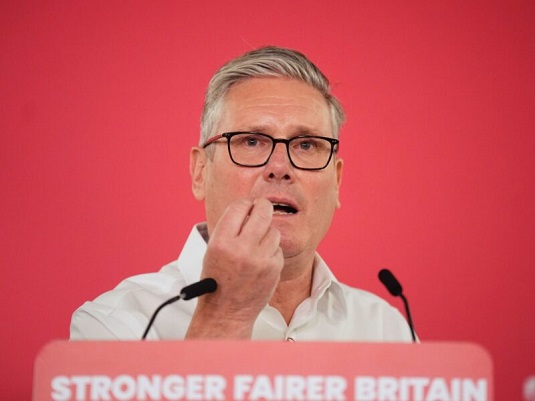
No, of course he wasn't. His talk may have been a touch more spirited than other recent set pieces. He wasn't wearing a tie, after all. But there was nothing new here. Having watched more of these than most people, it was a classic of the Starmer genre. A few genuflections to his humble origins, and a re-announcement of policies already coming down the pipe. Scunthorpe steel works is going to get nationalised, subject to a "public interest test", and that will be in the King's speech on Wednesday. Nodding to John Major speeches of 30 years vintage, Starmer said his government would put "Britain at the heart of Europe". A bit of rhetorical red meat for unrepentant remainers, but in practice this is merely the return of Erasmus plus a mobility/work scheme for young people. And third there are to be more apprenticeships and guaranteed jobs so youngsters can start building their futures. He said he understood the frustrations of people who've experienced nothing but shocks and price hikes since 2008, he talked about keeping Britain out of active involvement in the war on Iran, how bad Brexit has been, and he made disparaging remarks about Nigel Farage. And that was it. Nothing to address the problems he outlined. No change in direction. And for all his fulminations against a broken status quo, this stall was retailing more of the same.
Yet, it appeared to see off the immediate danger of a challenge. West pulled back from casting herself as a stalking horse and instead would busy herself gathering names so that a new leader can be in post by September. A gambit, by itself, unlikely to succeed. Meanwhile, speaking at the CWU's conference Angela Rayner said we can't go on like this, and lamented the opportunity lost when Starmer blocked Andy Burnham from standing in Gorton and Denton. The afternoon has been a drip, drip of unimpressed Labour MPs making their views known. Joining Chris Curtis and Josh Simons, who'd already broken cover before the speech, were Blackpool's Lorraine Beavers and Newcastle's Catherine McKinnell, and then on Monday evening four junior ministers packed it in: Tom Rutland has resigned his environmental brief, Wes Streeting's bag carrier Joe Morris is gone, the Cabinet Office's Naushabah Khan said the party "needs a change on direction", and David Lammy aide Melanie Ward said the public's verdict last week "was clear". Additionally, Shabana Mahmood's coffer bringer Sally Jameson has called on Starmer to go. As of the very moment of writing, 75 MPs want a new leader.
The issue is whether this is what MPs in general want. It was notable that remnants of the Campaign Group were trying to talk West down from her challenge because they want time to get Burnham back into the Commons. A Streeting premiership is to be avoided at all costs. But also, no one in the cabinet at the moment is willing to go out on a limb. Presumably because their favoured successor is ill=prepared, or because the general mood among the PLP is against a contest, they're all being terribly loyal and sticking on-message. It's worth noting that most who've expressed their views and want Starmer gone are a mix of the usuals and MPs early in their careers.
Part of the paralysis is thanks to the limited range of possible successors. The Streeting vs Burnham/Raynor tale has narrowed minds as it has narrowed options, so there's little to no thought about skipping a generation. Al Carns is occasionally mentioned, but this has more to do with Labour's love for military machismo than whatever his other qualities might be. There are a range of capable others who are unlikely to get a look-in. Off the top of my head, Louise Haigh, Rosena Allin-Khan, and Sarah Owen possess soft left politics, have variously fallen foul of Morgan McSweeney's boys' club, are fresh faces where the public are concerned, and are considerably more dynamic than Starmer and the other "big beasts". The PLP might be short on talent, but there are some who are consistently overlooked.
Whatever the eventual leadership contest looks like, we're in the awkward position that Starmer is finished as far as the country is concerned. He spent the last six years disassembling Labour's coalition of voters and he and his allies appear genuinely shocked that they won't now pay fealty to his party. However, for reasons of convenience, cowardice, and careerism, the bulk of the PLP are reluctant to move on right now. And that could mean we're lumbered with the Prime Minister for a while longer yet.
Edit Obviously, the two minutes this post was up has tipped the scales. According to the BBC's Chris Mason, Shabana Mahmood and others have urged Starmer to lay out a timetable for his resignation. The lesson? On an active news day, never, never post commentary about it until the lead in to the 10 o'clock news is over.
Image Credit
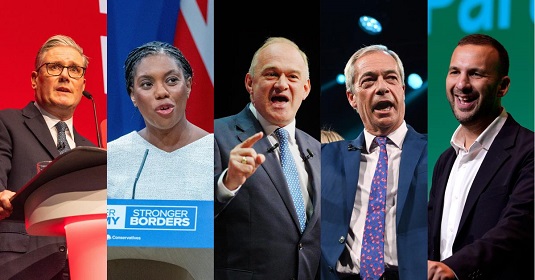
Starting with Labour, Keir Starmer set the bar pretty low in 2025. Labour lost 187 councillors in the context of a projected vote share of 20% - the lowest since the party emerged as an electoral force 120-odd years ago. Readers with memories might also recall Labour's 2021 election outing, where projected share stood at 29%, with 327 councillors and Labour's control of eight councils lost. It has since come out in sundry memoirs and insider accounts that Starmer seriously considered resigning because he thought this result was so bad. Unfortunately for him, Labour are now on course to do much worse than this.
In historical context, in relatively recent times Tony Blair saw Labour lose 1,150 councillors in the 1999 locals. A point when he was at the height of his powers. For even-handedness's sake, he also oversaw Labour's best ever local election performance. In 1995, the party scooped up 1,807 councillors on a projected vote of 47%. But back to the gloom. Labour's worst performance was half a century ago. In 1976, Jim Callaghan notched up a catastrophic loss of 1,309 seats. Surely Starmer will surpass that with ease and enter the record books. But the worst ever performance at a local election by a governing party is a honour that, right now, belongs to John Major. While Blair was celebrating his crushing council triumph in 1995, Major registered a collapse of 2,018 seats, a loss of almost half of all that year's Tory defences with a projected 25% vote share. If you look at the aggregate monthly votes of council by-elections since last August, Labour has only polled above 20% on one occasion - far shorter than the number that brought the Conservatives calamity.
The story in Scotland is less worse. Again, long time readers might remember Starmer ousting Richard Leonard from the branch office so the impeccably right wing Anas Sarwar could be installed in his place. In 2021, that paid dividends as support for the Scottish party slid further to 21.6% for the constituency and 17.9% in the list sections, giving Labour 22 MSPs. Recent polls from Norstat and Moreincommon suggest further slippage, but with their likely getting supplanted by Reform. Again, the previous floor presents itself as an impossibly high ceiling.
Wales is where the true disaster is brewing. October's Caerphilly catastrophe spelled out the doom that's coming: the end of Labour's domination of Welsh politics. So feeble has it become that former Labour supporters in their tens of thousands are sure to switch mainly to Plaid Cymru to keep Reform out. Bear in mind Labour's previous 'worst ever' outing in the Senedd's short history was 2007 when it could muster 32.2% and 26% of ballots cast, this year such a result is beyond Welsh Labour's wildest dreams. Moreincommon polling suggests a popular vote around half the previous nadir, and with a seat haul to match. A century of political dominance is forecast to be wiped out. Losing Wales alone should cost Starmer his job.
No matter the floor, Starmer's Labour is poised to drop through them. But what of the challenger parties? Last year, Reform triumphed, winning 10 councils, 677 councillors, and a projected vote share of 30%. Which is much better than UKIP's popular vote high point, which saw them register a projected 22% in 2013. Crunching the numbers based on current polling, a net gain of 1,401 seats seems about where most pollsters are pegging the Reform advance. Likewise, between 400-500 gains for the Greens is on the cards with a lion share of gains in the London boroughs, and winning between three to five of the capital's councils.
Triumphs in the waiting? For Reform, does a four-digit councillor gain suggest its forward march to Westminster domination has been resumed? As Peter Kellner, the former YouGov polling specialist touches on, it depends on the sort of percentage Reform are able to capture. A seat tally that simply reflects their current standing in the polls would be good news for the party, but doesn't suggest they're advancing. In my view, Kellner does not go far enough. He and most pollsters and commentators ahead of these elections aren't taking differential turnout into consideration.
All of these elections are second order elections. Political scientists have long made the distinction between first and second order elections in that for most voters, first order elections - i.e. general elections - are the ones that really matter because they lead to government formation and policies that affect their lives. For example, the 2024 general election saw a pitiful turnout of 59.7%. But in Scotland, all Holyrood elections, bar the 2021 poll, have lagged below this. The same is true for all the elections so far to the Senedd, and ditto by and large for local council elections. Rare is the parliamentary by-election that matches, let alone exceeds that constituency's previous general election turnout. Whether Scotland bucks this trend for the second election running is something we'll soon find out, but it's likely that the Welsh and English elections won't.
This matters because fewer voters turn up for second order elections. It's well known that the older one is, the more likely they are to (habitually) vote. This is true of the general election. Pensioners and older working age cohorts vote in greater numbers than younger cohorts for a variety of reasons, that we won't go into here. This differential, however, is exacerbated for second order elections. Older people are less likely to vote than they would be in a general election, but the abstention rate for younger cohorts is even greater. This matters because, as pollsters show and as this blog has talked about plenty of times, there's a strong relationship between age and voting preferences. One which, in recent years, older people disproportionately vote for the parties of the right (Conservatives, Reform) and working age people the left (Labour, Greens). Therefore, this structuring of British political opinion means the Tories and Reform have a distinct advantage in second order elections over Labour and the Greens. They can better rely on their support to vote.
This needs factoring into projections. For instance, in 2025 when Reform polled a projected 30% this more or less matched their polling average at that time. But taking differential turnout into consideration, their popular vote tally should have been higher. Similarly, Labour captured a poor 20%, but that was a figure suppressed by the age cohorts who actually turned up. If there was no age-related disproportionality, Reform would have done worse and Labour better.
Why does this matter? Because taking differential turnout into consideration offers a better read on the trajectories of parties. If Reform do win their projected 1,400 gains on 26% of the result, differential turnout suggests their real support in the general-election voting population is lower that that figure suggests. Likewise, if the Greens manage net gains of 450 seats on a projected 16%, because they have taken to the field in an election landscape where their reliance on younger voters is a disadvantage, their real levels of support are likely to be higher. Therefore, to conclude that Reform has real momentum, their vote has to be significantly above their forecasts. Ditto, to say the Greens are on the cycle path to nowhere, the party's vote has to be significantly lower. The same also applies to Labour and the Tories, the SNP and Plaid Cymru. But not the Liberal Democrats, who don't have any meaningful variations in support across the age ranges.
There is one possible objection to this view. Political science also acknowledges that because second order elections "don't matter", people who vote in them are more likely to register a protest. For instance, the 14.5% the Greens scored in the 1989 European Parliament elections didn't translate into an advance in 1992. The Brexit Party winning the same set of elections in 2019 did not convert into seats in that Winter's election. However, there are two things that suggest this skewing of voting intention has blurred. The first will be these results themselves. Labour in Wales, for instance, has withstood past protests against the direction of the Britain-wide party in and out of office. The coming wipe out speaks less of a protest and more a fundamental break in trust. And the second is the erosion of the two-party duopoly, as evidenced in the 2024 election. What we're now seeing is the further development of that trend, in seeming defiance of Duverger's Law and his view that majoritarian electoral systems cluster support around two contending parties, usually of the right and the left. What happens on Thursday is likely to continue this process.
Inevitably, the seats won and lost will command the headlines. That's what matters in electoral politics. But for those wanting to get a deeper sense of public opinion drift, of who is being overhyped or underpriced, it will all be there in the projected vote shares.
Image Credit