Showing posts with label Latin America. Show all posts

Saturday, 3 January 2026

Trump's Venezuelan Oil Piracy

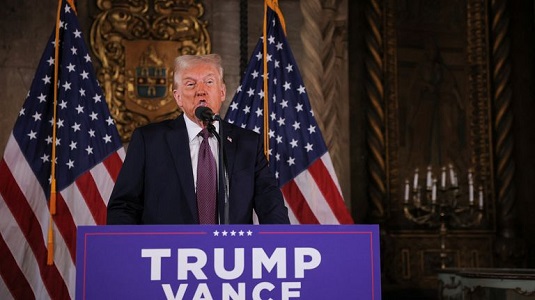
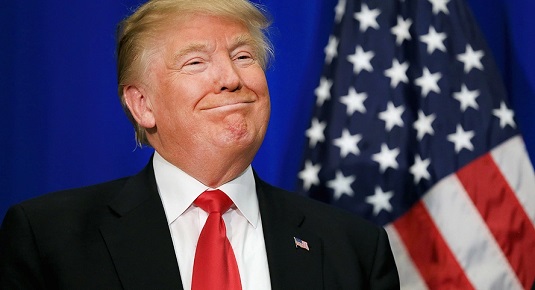
Donald Trump knows how to surprise. The bombing of Venezuela and the kidnapping of Nicolás Maduro and Cilia Flores was audacious. As a spectacle for the media, something the president has an intuitive grasp of, and the brazen contempt for international law. The US reminds us, again, that "the rules", special relationships and trusted allies, and the United Nations are so much flim-flam.

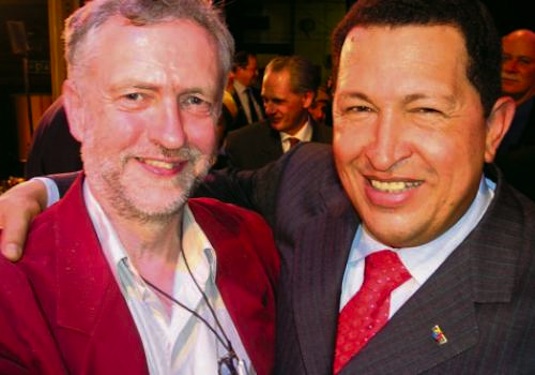
Maduro, like Hugo Chavez before him, has always been objectionable to sections of the US ruling class and their foreign policy establishment. Venezuelan socialism was always overstated, but that's beside the point. The US has been denied tribute since US oil firms were effectively turfed out in 2007 - unless they submitted to giving Petroleos de Venezuela, the state-owned national oil company, a controlling share of their operation. Exactly what Trump is insisting TikTok does as the price of doing business in "his" market. The "official" reason for Maduro and Flores's arrests and the bombing of Caracas - drug trafficking - is but a pretext, regardless of the evidence of Maduro presiding over a narco state. As this piece from November by a liberal think tank argues, regime change under American sponsorship is unlikely to stop the flow of drugs. Those of us with memories will recall that when Latin America was awash with right wing, Washington-backed caudillos they weren't much of a bulwark against the rush of cocaine to the north. Where would Trump's parties in the 1980s and 90s have been without it?

None of this needs second-guessing or hard thinking about shady motives. In Trump's press conference on Saturday morning, he said that "we", as in the US, will be selling Venezuelan oil. That "we" are going to make a lot of money, and that the US running the country won't cost anything because the cash to pay for any occupation, restructuring, and US oil interests "going in" will be met from the wealth pumped from the ground. He expects some kind of reparations as well for the "damage" Venezuela has caused the United States, and for good measure, he issued casual threats in the dircction of Cuba and Colombia.

What sundry liberals and centrists either side of the Atlantic are seeing is the US as it routinely behaved toward developing states throughout the post-war period. Trump forgoes the lip service and usual hypocrisies that attend military incursions because he's blunt about US interests, and because he knows no one is going to challenge him. The European states, which fancy themselves America's peers, have either prevaricated and avoided making a comment or fallen into line. Trump knows that when he says jump, the Europeans will do themselves a mischief trying to out-leap one another. And this is part of a pattern. The brute deployment of US firepower reflects the openness with which Trump enriches himself and the oligarchs around him. A government by and for billionaires, they don't try dressing up as anything else. And this is paralleled here too. Our own government cares little for democracy or ideas. If it collectively cares about anything, it's the future advancement of its senior members after politics. The Tories and Reform offer nothing else either, apart from more racism - which even here Labour has tried outflanking them on.

Trump's international piracy is, obviously, something he and his lackeys were agreed on. But it typifies a wider trend across the West: the assertion of authoritarianism and, with that, the open and unquestioned dictatorship of capital.

Image Credit

Tuesday, 7 January 2025

Donald Trump's Expansionist Threats

Having seen Elon Musk cause transatlantic agonies in Britain, Donald Trump had to make a bigger international splash. At a news conference on Tuesday morning, the president-elect reiterated his intention to buy Greenland from Denmark, take back the Panama canal (and use economic and military means to get his way), and threaten Canada about a border he described as "an artificially drawn line". For good measure, he also said he wanted to change the name of the Gulf of Mexico to the Gulf of America and he expected NATO members to increase their military spending to five per cent of GDP.

To justify these imperial ambitions he has said on several occasions, most recently on Christmas day, that expansion at Denmark's and Panama's expense is essential for "national security". China, apparently, has too much of a presence at the strategically vital waterway into the Pacific and, according to Trump, US shipping has to pay an unfair premium to travel through its gates. A demonstrably false assertion. On Greenland, Trump has shown an interest since someone, in 2019, showed him a world map and he couldn't work out why it wasn't part of the United States already. And there's the small matter of extensive mineral resources US mining interests wouldn't mind getting their hands on.

For such an overweening ego, Trump's rambling "interventions" owe something to an incontinent id. To suggest Trump has ulterior motives apart from whatever spark has lit the dim corners of his limited mind affords him too much credit, but that isn't to say those around him haven't. Offering territorial expansion would play well to the base, which has recently been riled up by a dispute between Musk and MAGA over work visas and immigration. A secondary consequence might be a repeat of what we've seen domestically from other billionaires, businesses, and institutions in pre-emptively bending the knee. For example, Jeff Bezos instructing The Washington Post not to endorse anyone at the election, and Mark Zuckerberg's scrapping of "biased" fact checkers in favour of "free speech" on Instagram and Facebook. Perhaps Panama, Denmark, and Canada will pre-emptively offer concessions to sate Trump's greedy eyes.

There's further method to Trump's madness. The reason why the likes of Musk are on board the Trump train is because their politics are determined by an experiment in naked class rule. This means scrapping as many checks and balances on capital they can get away with, winding down the federal government, which includes residual social security and health entitlements, and squeezing central funding to states' budgets. Needless to say, those who mistakenly thought Trump was protecting their meagre welfare cheques are about to find out what they voted for. What's left is going to be shaken down so more federal money pours into billionaire coffers, and they'll doubly benefit from tax cuts too (though these are now another MAGA bone of contention). What Javier Milei is doing to Argentina, and what Liz Truss tried doing here is the prize, and that is a further shift in the balance between capital and labour. Though given the state of US politics, this is a move on from the dominance of capital to its unquestionable authoritarian rule. The United States economy is to become even more a billionaire's playground, with the world's largest and most advanced military there to intimidate the rest of the globe into falling in line.

This is the project, at least where Trump's elite backers are concerned. But winding the Donald up and letting him waddle into controversy is a good way of generating interference, of continually creating spectacles while the real business of looting the state and securing an even more subservient class settlement proceeds relatively unnoticed.

It's impossible to say whether this project will be successful. Everyone has a breaking point, and not even Trump can rub the faces of his mass support in it indefinitely. The MAGA row over immigration might preface far more serious disputes to come if the incoming government and, especially, Musk's Department of Government Efficiency throws millions of federal employees out of work and ratchets up the difficulties for poorer Americans and those just getting by. That's the problem with projects aiming to implement naked class rule. Existing forms of political consent break down and the truth of a society becomes apparent to everyone. And history shows those situations tend not to end well for those who've brought them into being.

Image Credit

Sunday, 7 January 2024

A History of Settler Colonialism

A comprehensive overview from Sai Englert on the history of settler colonialism. In discussion with Alex, this instalment of the always-excellent Politics Theory Other looks at North America, South Africa, Brazil, and Algeria, the processes that drive different settler projects, and how Israel sits in this continuity of infamy.

If you can please help support Alex's work here

Monday, 31 October 2022

Ending the Bolsonaro Disaster

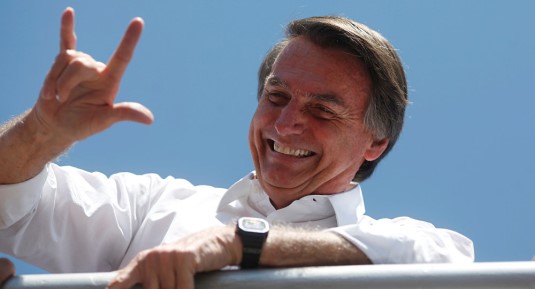
The end of the Bolsonaro experiment has come into view. A malignant blight on the Brazilian body politic, he stuffed the state apparatus with military and ex-military figures, which partially paid off with police deploying to prevent Lula supporters from making their way to the polls on Sunday. An environmental vandal who escalated the deforestation of the Amazon, making the climate crisis worse and green lighting the brutalisation of indigenous peoples. And, following the play book of right wingers from Trump to Orban, coarsened public discourse with the most disgusting scapegoating, boorish commentary, and attacks on anyone who had the temerity to criticise his criminal enterprise. Another thing he shares with the fascist regimes he's frequently compared to.

Since Bolsonaro came to office, he scrapped the anti-corruption unit behind Operation Car Wash. This revealed the looting of billions of dollars from public coffers by officials at all levels of the state, with a clustering of activity around the Brazilian state oil giant, Petrobras. Bolsonaro said the agency was no longer needed because his state was "free of corruption". He also doled out billions to Congress like a sweet bowl to trick-or-treat'ers to buy allegiances, and just like this country Covid procurement was a means of funnelling more cash into the bulging pockets of Bolsonaro supporters. Corruption in state contracts became routinised to the point of being a cost of doing business. And most appalling of all was the criminal negligence with which Bolsonaro handled the pandemic, with things getting so bad that the police accused him of spreading disinformation. He systematically undermined coordination between national, regional, and local state responses, attacked official social media campaigns, and peddled quackery as solutions to the Covid crisis. It was no accident it disproportionately hit working class people and racialised minorities - those most unlikely to support his grotesque government.

Bolsonaro would not have won office without the backing of key layers of the Brazilian bourgeoisie. At the outset, he was very clear about whose interests his administration would be serving and, of all the guff he promised his gullible mass voter base, this was one pledge he faithfully delivered. Inequality, already extreme by Latin American standards, widened under Bolsonaro's watch. It's so bad that even he was forced to act, with a 50% bump in welfare payments conveniently landing just prior to the election. This was after cutting spending on social security for the previous 18 months. He also raised the retirement age, and in another quid pro quo for his wealthy backers, set about attacking the labour movement.

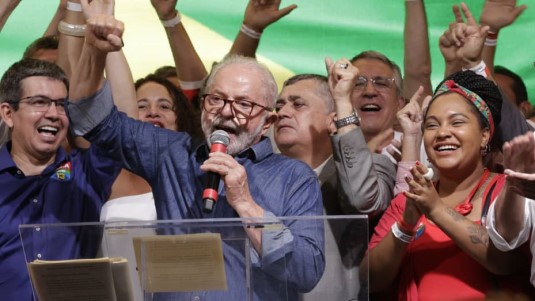
His defeat at the hands of Lula and the Workers' Party is a stunning achievement in the face of Bolsonaro's efforts at undermining confidence in the election process, police interference with voting in PT strongholds, and a refusal by the electoral court's top judge to extend voting following reports of widespread voter suppression. All of the incumbent's advantages couldn't save him. And, much to Bolsonaro's chagrin, his allies in Congress and in industry have mostly spoken about the need to respect the result. No Capitol-style insurrection is to be tolerated, a point underlined by Joe Biden in his communique quickly recognising Lula's victory - a signal to the coup-minded that they don't have Uncle Sam's permission.

Despite striking a mighty blow for the left, the reason why many centrists are happy about Lula's victory - his popular frontist strategy - could easily become the incoming administration's Achilles Heel. There's nothing wrong with dragging bourgeois layers in one's political train if front and centre is a programme for empowering our class and elevating our movement. In such circumstances, they've accepted your terms. But it's quite another to tack right and effectively give them a veto over the politics. Lula having right winger Geraldo Alckmin, the former governor of Sao Paulo and Lula's presidential opponent in 2006, as his running mate typifies this. Unveiling the alliance at the beginning of the month, the rhetoric on abortion rights and police corruption/violence was significantly toned down. Significant stress has been placed on Bolsonaro's attacks on institutional legitimacy, with Lula co-opting arguments about business confidence and the need to calm the markets. And riffing off this, several trade unions have designed a corporatist plan similar to post-war West European tripartism - a recipe, one might argue, for disciplining rather than empowering labour.

Also worrying is the surge in Bolsonaro's support over the course of the campaign. In September, Lula routinely enjoyed double digit leads. Which one might expect when his opponent is a disaster zone. Yet despite the record, and the incredible scandals - such as paedophilia allegations against Bolsonaro, which were sparked by his own comments, the margin of victory was far narrower than many were forecasting in the Summer. The unpalatable truth is there was something about Bolsonaro that appealed beyond the core constituencies of fascists and right wing populists traditionally enjoy. Obviously, Lula must show no quarter in clearing out Bolsonaro's people from the state, but the more difficult task is fashioning a programme that brings millions more into the PT camp without watering down existing commitments, nor making the working class pay for cleaning up the damage of the Bolsonaro years. One that is easier said than done, but has to be accomplished if Lula wants to be in power, not merely in office.

Image Credit

Thursday, 22 August 2019

The Wrong Amazon is Burning

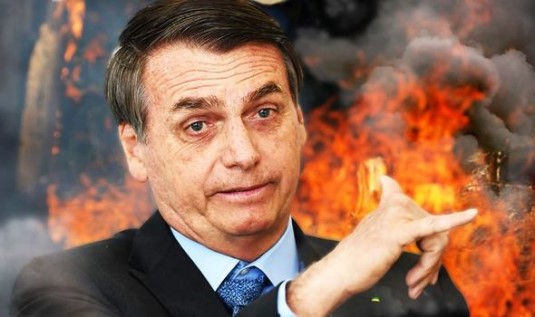
There isn't much more depressing than watching the Amazon burn. And is there anything more infuriating than watching Jair Bolsonaro trolling the world about it? The crooked, clownish creep has argued NGOs are torching the jungle because he cut their funding, and feeding off the blowback he's moved in to false contrition. Brazil doesn't have the resources to fight the fires he claims, and that's that. The sun rises in the morning, and rain forests are getting reduced to ash. Such is the order of things and he can't do anything about it.

It's tempting to blame Bolsonaro for all that is rotten in Brazil, as if this uniquely evil/stupid individual turns everything to shit with his touch. Tempting, but far too simplistic. Like his many analogues elsewhere - Trump, Duterte, Orban, Netanyahu to name several - Bolsonaro and friends will, if there's any justice, get their time in the dock. Yet they cannot be separated from the power bloc who put them there and the political project they're determined to wage. In Brazil's case, it's not to bring fascism back: Bolsonaro's election is an opportunity for capital and state cadres to reinforce authoritarian rule, tilting power decisively toward business and its satraps, and creating a new Wild West where the writ of profit is the bottom line and the only law is the law of value. And so the culture of impunity Bolsonaro promised at his inauguration so the police can roll up their sleeves and get on with eradicating crime without rules or accountability before the law is the setting for every other constituency who backed him. It's open season on LGBTQ+ people and indigenous people. For corruption and dodgy deals. And for logging companies, land owners, and small scale farmers to clear forest for short-term profits - and long-term consequences for the rest of us. And in case you forgot Bolsonaro was elected on a clear class prospectus, privatising state assets, throwing regulations into the Amazon bonfire, and attacking workers' pensions are as central to his coalition as climate change denial.

Taking out Bolsonaro as I've seen some muse aloud about in recent days wouldn't change the situation one jot. The vice president, Hamilton Mourão is just as authoritarian as the president, and has similar semi-fascist, semi-conspiracist politics. Though, in one of those grim ironies of which history is often fond, he is now also the most senior ethnically indigenous politician in the country. And the power bloc itself, an allied assembly of agricultural capital, finance, the metropolitan middle class, small business not only has deep roots within Brazil but is simultaneous allied to and a dependable friend of global capital. Who invests in the logging companies? What role does Western capital have in mineral right exploration of cleared forests? And considering Bolsonaro's determination to rip up the thin gains of the Workers' Party years, how much do our banks, our hedge funds, and our pension funds project to gain from swooping in and turning a quick bunk from Brazil's privatisation programme? Quite a bit one would suggest, seeing as the soft coup that turfed the Workers' Party out of office and gave the hard right their run to power got the seal of approval from liberal hero and all-round nice guy, Barack Obama.

Nevertheless, this is where there is a political opening. Seeing the flames eating the jungle is thoroughly dispiriting and underlines the ten-a-penny apocalyptic and catastrophist forecasts for the future. It's over there, so what can we do over here? The outrage and anger elicited is simultaneously stymied and amplified by our powerlessness and impotence, but far from a fatal acceptance there is, in fact, plenty to be done. Protests and actions against institutional investors with Brazilian interests in their portfolios can throw a spanner into Bolsonaro's works, and no doubt this is something Extinction Rebellion and environmentalist NGOs are thinking about. More importantly, we're at one of those crossroads moments where the left have a realistic chance of taking power both in the UK and the United States. As green industry and climate justice is central to both programmes, the left is in a position of harnessing this anger not just to put pressure on the culprits but to ride it into office. And if it's serious about holding power, the City and finance capital have to be taken on - and part and parcel of this would be curbing the role "our" capital is playing in the destruction of the Amazon, and forcing the pace of climate change.

In other words, you can have continued degradation and the barbarism of starvation and global heating with capitalism, or a sustainable, better future with socialism. With every day that passes, the way ahead gets ever more stark.

NB Cheers to @AliceAvizandum for providing the title.

Image credit

Wednesday, 2 January 2019

Bolsonaro and Authoritarian Populism

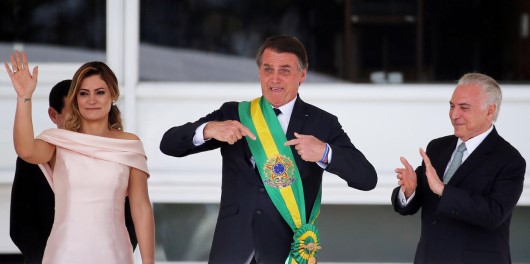
The New Year came and went, and now sat in the Presidential Palace in Brasilia we find Jair Bolsonaro. Misogynist, racist and, some might say, fascist. His convincing victory in Autumn's presidential election is a disaster for Brazil and for the whole world. Bolsonaro is sure to inspire others of his ilk (and not a few "mainstream" politicians willing to do anything for power's sake), while his disavowal of climate change and desire to let the loggers loose in the Amazon is going to have consequences for the rest of us, regardless of where we live. Known then for incendiary rhetoric, was there anything in his inaugural presidential address that suggested anything new?

No. As the Graun reports, Bolsonaro declared his election a "liberation from socialism, inverted values, the bloated state and political correctness", advocating a pushing of Judeo-Christian values and an education system that turns out work ready people, not "political militants". As they noted at CBS, he doubled down on the anti-socialist rhetoric, stating "Our flag will never be red ... Our flag will only be red if blood is needed to keep it green and yellow." A statement of intent or racy rhetoric to fire up his supporters?

There were conciliatory words in sharp relief to the usual fire and brimstone. “We have a unique opportunity before us to reconstruct our country and rescue the hope of our compatriots,” "We're going to unite the people", and "My vow is to strengthen Brazil's democracy." Promises of national unity and purpose, of extending a filial hand to all the people and bringing them together, it's something even you-know-who wasn't averse to. But in terms of substantive policy, what Bolsonaro is defining as his priorities are interesting - and worrying. The first is the creation of a "culture of impunity", allowing the police to effectively operate without legal checks as they become accountable to a body outside of the judicial process. He knows what this means, but doesn't particularly care. What value do the lives of criminals have, regardless of how they're defined, if you're fighting crime? Bolsonaro has already calculated that this isn't likely to cost him his support - unfortunately the wretched example of Rodrigo Duterte's government-sponsored murders has shown little electoral blowback nor much in the way of international opprobrium or consequences for the Philippines. Though, perversely, Bolsonaro is planning to bring the law into line with what happens already. In various parts of Brazil the police have carte blanche to do as they please already, and some are existing players in the drug trade. All-out war won't stamp crime out, but will allow corrupt units and stations to eliminate and take over the competition. Once the blood letting is done we have a managed and, theoretically, more peaceful "illegal" market.

Bolsonaro is going to need the police on side. As we saw previously, Bolsonaro was successful because the mainstream liberal and centre right parties threw their lot in with his candidacy. Never forget that they did so not under threat of socialist revolution or an upsurge in workers' struggle, but because they preferred a ranting, would-be dictator to a mainstream social democratic president. Nevertheless key to cementing bourgeois interests to Bolsonaro's coalition was adapting himself to the neoliberal priorities of the ruling class. This means cutting back on regulations, privatising state-owned assets and the "reform" (i.e. cuts to) the pensions system. It is the case the workers' movement was, to a degree, demobilised when the Workers' Party was in office, but if the old military governments ended up bringing a militant opposition into existence the possibility of Bolsonaro doing the same can't be discounted. Especially as there already exists a de facto coalition of resistance encompassing indigenous groups, feminist movements, LGBTQ groups, leftists and trade unionists. If your programme for government consists of throwing masses of people out of work so your new friends can loot state property, and hobbling pensions to lower their obligations to employees, you're going to need the police for the confrontations to come. I would expect who is and isn't classified as a criminal starts getting fuzzier as these battles are touched off.

Unfortunately for Bolsonaro, and like Trump (who, incidentally, sent him congratulations in the usual way) he does not have arbitrary power and the Brazilian constitution provides for a number of checks on the executive. The president can issue executive orders, which he has already done on the management of indigenous reserves. However, while it does come into force immediately, under the Brazilian constitution such orders can be amended or rescinded by either House of Congress - they are provisional for 60 or 120 days when they require approval. While thought of as emergency measures constitutionally speaking, all presidents of Brazil have routinely used them since the new constitution was enacted in 1988. This means there is plenty of potential for Bolsonaro to get bogged down in disputes with Congress, just like someone else we know. This is compounded by his Social Liberal Party having only 52 Deputies in the lower house (out of 513) and four senators out of 81 in the upper house. Bolsonaro has already declared that he won't be forming a formal coalition between the PSL and others, but rather approach matters on an issue-by-issue basis - certainly a recipe for protracted wrangling and horse trading. However, again there is the weight of tradition to factor in - self-described liberal and centre parties have tended to back the incumbent in a House of Deputies whose normal state is fractured and split between many parties. No US-style "Resistance" here. As leading figures in these outfits sold their professed love for democracy down the Amazon, the position of Bolsonaro's programme sadly looks better in real life than it does on paper.

Yet, despite the brutality and stupidity we're sure to see over the coming years, what we're seeing - albeit at a very early stage - is something less than fascism. It's authoritarian populism with violent, Brazilian characteristics, and our guide is Margaret Thatcher not Hitler or Mussolini. Bolsonaro is embarking on a class project to subsume the whole of Brazilian society under the law of value by widening the purview of the market into, well, whatever he can get away with. The impunity law shows he is prepared to use repression, up to and including the extension of extra-judicial killings the Brazilian cops are notorious for. Meanwhile, his ranting about "gender ideology" and talking up religious inspiration (coincidentally, Bolsonaro's middle name translates as "messiah"), we have a latter day equivalent of Thatcher's preoccupation with Victorian values. Like everywhere when authoritarian populism takes root, its leader articulates an establishment-friendly anti-establishment poise, an identification of enemies - usually minorities, social movements, and their institutions - and a broken programme of obsolete values. The intended results are uniform, even if the means differ from country to country: freedom of capital for the few, and cowed, chastened discipline for the many. Bolsonaro is in a strong position, but the seeing off of a military dictatorship by mass struggle resides well within living memory. He might just find that things don't go all his way.

Monday, 29 October 2018

Fascism Comes to Brazil

Fascism, the grey beards observed, is the price the working class pays when it fails to make a revolution. In the early 21st century, matters are a touch more febrile. The gibbering menagerie of ranting rabble-rousers, tinpot authoritarians and outright fascists are visited upon us when the centre left and social democracy cannot deliver even the barest reforms and political empowerment for its base. As Brazil's awful presidential election result shows, the bar for a fascist insurgency has been lowered and with terrible consequences for us all. Not to worry though. The markets are happy.

The record of the PT in power leaves a lot to be desired. Their performance was patchy, the movement that powered them to office in 2002 was demobilised and warned not to rock the boat too much to embarrass their ministers, while those self-same politicians were, with alacrity, going native and grubbing it up in the stinking corruption Brazil's political institution are mired in. But this disaster is not solely and entirely the fault of the compromises the Workers' Party made with capital. In the first round of the elections the challenges of the bourgeois parties collapsed, mostly because their vote - liberal, neoliberal, conservative - rallied behind and threw their lot in with Bolsonaro. Not forgetting the antipathy legions of well heeled Brazilians feel toward the uppity workers and their party, on matters of economic dislocation and uncertainty Bolsonaro's candidature offered a means of restoring order and giving those identified with an unwelcome way of the world - gay people, women, ethnic minorities and indigenous peoples - a good hiding.

Though if anyone's expecting the new president to take on crime, they're all set to be disappointed. A big show of cleaning matters up will be made, a few sacrificial lambs for the baying petit bourgeois are inevitable. But as with other authoritarian states, crime is baked in. Drugs, prostitution, smuggling, the state at regional and local levels will make use of the dictatorial turn and monopolise criminal enterprise in their own hands. The core support will buy the illusion and sleep more soundly, while cops become the pimps and pushers and political oppositionists will suffer the full force of the inevitable "anti-corruption" drive.

Understanding the likes of Bolsonaro and his movement is the necessary spadework to build a strategy that can defeat fascism there and here. Singly unhelpful then is the growing clamour to blame the recrudescence of the far right on hateful speech and bad-tempered political discourse. This piece from Simon Jenkins is pretty typical. Unregulated speech bypassing established institutions (like the press, funnily enough) is the driver of extremism, they argue. Fake news is polarising the electorate and opening the gates to one, two, many Bolsonaros.

Utter poppycock. Giving platforms to the far right is stupid for all kinds of reasons, and especially deserving of scorn are media outlets who parrot and amplify far right talking points and arguments off their own bat. But this rhetoric, the vacuous and pitiful rubbish peddled by Bolsonaro for instance, gets a following because it resonates with the circumstances and interests of millions of people. Blaming social media is easy and lazy when the key to political change can always be traced back to political economy and the sharpening conflicts occurring there. No wonder Western liberals are resistant: they can't even recognise a social process when it's making them obsolete. And how shocking it is to find many of their Brazilian number have jumped aboard Bolsonaro's bandwagon.

The defence of democratic institutions is vital always and everywhere, which means it's too important to be left to professional pundits paid to misrecognise the tragedies unfolding in front of their eyes. Unlike the United States where the institutions and antipathy by a large section of the ruling class have, to a degree, limited Trump, it's unlikely the constitutional trappings of Brazilian democracy will hold Bolsonaro back. He has promised blood, and woe betide anyone who think he's just posturing. Therefore resistance to and fightback against Bolsonarist fascism is inevitable from below, from the feminist movements and trade unions, the leftist parties, organisations of LGBTQ+ and ethnic minority activists. It's their very existence that's on the line, and they carry the hope of Brazil and the world on their shoulders. They are deserving more than liberal condescension and crocodile tears, they need our sympathy, our support, and our unconditional solidarity.

Tuesday, 9 October 2018

Ten Points about Brazilian Politics

Some quick thoughts about what's happening in Brazil.

1. Polling 46% is extremely rare for a hard right populist outfit, and tends to be the exception rather than the rule. Not even the Nazis managed this feat in their crooked March 1933 election. The question then is whether support for this kind of politics is about to enter a new dangerous phase, or is something proper to Brazil that doesn't travel beyond its borders.

2. The Brazilian economy has had a trying time. Like most major countries Brazil took a hit over the course of the crash but it bounded back very strongly. GDP was in negative territory only for the last three quarters of 2009 and by the second quarter of 2010 it already managed to climb above its pre-crisis peak. However, in 2014 economic activity collapsed and unemployment doubled from just under seven per cent to just shy of 13% by 2017. While the recession was sharp, growth - albeit more anaemic - has resumed and unemployment is falling more slowly.

3. The Brazilian economy's rapid expansion in the 00s was not of the same order as India and China's, despite often being bracketed with them. At an average GDP growth rate of 3.3%, it compares favourably with the decades immediately before and after, but is feeble vis Brazil's own post-war boom that saw average growth rates in the 1950s, 60s, and 70s of 7%, 6% and 9% respectively. Nevertheless, there was a real erosion of poverty with the incomes of the poorest increasing at a rate faster than the rest of the population.

4. This latter period of growth was overseen by the Workers' Party, which grew up in opposition to Brazil's military dictatorship. Unfortunately, like social democratic and official socialist parties elsewhere its economic programme was thoroughly neoliberal. Free capital flows, operational independence of the central bank, and prudent public expenditure. Where have we heard this story before? Accompanying the first term in office was public sector pension reform and putting up indirect taxes, hitting modest incomes the hardest. However, like Britain deepening the neoliberal infrastructure went along with some investment in public services and social security. In the PT's second period office we saw a lurch to a more hands-on industrial strategy with funds put into state-led programmes of housing, road and rail building, port expansion and electrification while, again, leaving markets supreme. This, if you like, was Brazil's 'Milibandist' phase. Then, latterly, with the third term and as recession started biting there was a retrenchment of neoliberalism - profit taking brought deindustrialisation, and state-led development was curtailed.

5. The 2014 crisis destroyed the PT's reputation for economic competence. But it was more than just the fact of crisis itself. Like all the other recent disastrous experiences social democratic and labour parties have had in presiding over the neoliberalisation of their economies, such as France's Socialists and The Netherlands, the pursuit of market fundamentalist policies always results in the same: the political immiseration of the constituent base of workers' parties. In the PT's case, what was a movement of opposition became part of the apparatus of governance. The anti-establishment became the new establishment, and the PT actively worked to demobilise its support as financialisation and privatisation did the rest. Unfortunately, like the old establishment too many sections of the PT became inured to the perks of position, which in Brazil means egregious corruption. A case of looking from pig to man, and from man to pig ...

6. Never let a good crisis go to waste, and since the PT's Dilma Rousseff was turned out of office in the 'constitutional' coup in 2016, the presidency was taken up by Michel Temer of the Brazilian Democratic Movement. Policy-wise it was the same old same old - cut public spending, curb workers' rights, attack pensions, and go on a privatisation spree of the infrastructure built up during the PT government.

7. According to our old muckers Deleuze and Guattari, capitalism is characterised by smooth and striated spaces. What this means is, in the first instance, social flows are unfixed, rapid, disembedded, decoded. In the second social relationships are pinned down, structured, manipulated, repressed. To simplify them, corresponding to the former are the dynamic movements of the economy, the latter the stabilisation of class relationships by the state. The move from neoliberalism to developmental neoliberalism and back again are simultaneously shifts in the politics of class management. Economic growth followed by an industrial strategy sucked in more labour, subjecting them to the striated space of the work place. But downturn and "freeing" the economy evacuated millions of people from employment and subjected them to the smooth space of dislocation: the radical uncertainty of joblessness and a collapse in incomes.

8. The relative absence of the solidarities the PT grew up out of, the association of the PT with corruption and economic incompetence, and their consequent implosion in the first round of the presidential elections leaves the scene convulsed by crisis but without a credible pro-worker alternative capable of filling the void.

9. Any political conjuncture marked by uncertainty begets a yearning for fixity, a striated space of ontological security and knowing one's place. And all too often it assumes authoritarian forms - as we've seen enough in Europe. Jair Bolsonaro is little different from the demagogues that have rode to popular attention elsewhere. His programme - reasserting fragile masculinity in face of the growing political strength of women, attacking gay people and non-straight sexualities, attacking ethnic minorities and indigenous peoples, singing the praises of the old junta, threatening bloody violence - appeal to petit bourgeois people, the millions lumpenised by recession, the posh constituencies who found the PT's "inclusivity" too much to bear, the land owners worried the PT could always come for their property, and significant sections of the bourgeoisie whose interests are bound up with seeing neoliberalism through. Here we have a toxic coalition of the usual material who comprise fascist formations, exacerbated by social dislocation and significant numbers of bourgeois party voters (centrist and conservative) falling in behind Bolsonaro as an anyone-but-the-PT candidate and a promise to "restore order". Even if that order means curtailments of democracy and a return of state-sanctioned torture.

10. Brazil is the eye of a perfect storm for a far right breakthrough. The sorts of difficulties contributing to Bolsonaro's rise are not unique to Brazil, but how they have fallen together are. We've seen centre left collapses in Europe but these have mostly been well after the crisis point of the economic crash. In Brazil, growth might be back but unemployment is still incredibly large - a particularly fortuitous moment for an ambitious rabble rouser like Bolsonaro. But what Brazil has that we haven't seen elsewhere, except in the US and Hungary, is a collapsing of traditional bourgeois politics into the far right train. Despite serving their interests faithfully in 13 years of government, significant sections of business - an alliance of mostly landed interests and those tied up with finance and the internationalisation of capital - would rather see a violent and threatening authoritarian in power than the mildest of social democratic governments. That underlines the political bankruptcy of the Brazilian ruing class, but comes as a warning to the rest of us. If they can, the rich and powerful elites of Western nations could more than live with such a political settlement.

Wednesday, 8 August 2018

The State and Socialist Strategy

No time for a blog tonight, so here's my old mucker Ed Rooksby talking about different kinds of reformism, the experience of Chile and Syriza in Greece, and what role - if any - governmental power can play in the transition from a capitalist to a socialist society. It just so happens Ed is currently writing a book on this very topic as well.

The interview is from Alex Doherty at Politics Theory Other. Don't forget to follow the show on Twitter, check out the Patreon page and throw them a like of Facebook.

Thursday, 3 August 2017

Taking Sides on Venezuela


When there is a crisis overseas, you can tell a great deal about someone by how they react to it. In this case I'd like to draw attention to sundry calls on Jeremy Corbyn to condemn what is happening in Venezuela. Ever keen to pressure a leader they remain unreconciled to, Angela Smith and Graham Jones, ostensibly in their roles as members and chair of the all-party parliamentary group on Venezuela, have added their voice to the gnashing of Tory MPs and hostile editorials. Why they are on this APPG after showing scant interest in Latin American affairs during their careers is something I'll leave the reader to ponder.

We know from the recent attacks on Jeremy Corbyn that the Tories, their press, and their helpers in the PLP have determined the best way to turn back the tide is to call his integrity into question. See, for example, how Venezuela concern trolling and its attempts to associate repression with Jeremy is taken further by The Sun's claim the Labour leader faces "fresh questions" over his ties to the Nicolas Maduro regime. What are these ties, exactly? We don't know because they do not elaborate, almost as if the truth doesn't matter. When they have run out of political attacks, insinuation and smear is all that remains. It just so happens Labour's statement is very clear, but that won't do. Some will not be satisfied until Jeremy renounces his previous support for Hugo Chavez and performs the kind of public repentance none of his critics would be prepared to do themselves - or even ask of any other politician.

That isn't to say what is happening in Venezuela isn't worrying, it obviously is. What we see is a pre-civil war situation in which the government and opposition are locked in a death spiral of struggle. Trying to understand what is happening means putting into the bin hyperbolic claims of Maduro's "dictatorship" and coming to terms with what is happening as it unfolds - a project hypocritical Tories and our nominally Labour MPs are utterly uninterested in.

A good starting point would be familiarising oneself with large quantity of current affairs writing available in English, both from the pro-opposition and pro-Maduro camps. As with all analysis, it's a good idea to situate recent political developments in the context of history which, in Venezuela in the post-war period was a history of coups and authoritarian government, and only restricted intervals of liberal democracy. It means understanding what happened to the Venezuelan economy over the same time frame and asking who benefited from its decades-long oil boom. We would need to look at the relationship between the present crisis and the onset of runaway inflation in 2014, the class character of the antagonists, and the role the interference of the United States has played in events. We must also avoid the sort of myth-making leftist accounts of revolutions and civil wars are fond, of playing the epigone Maduro to the saviour Chavez. Matters were better and circumstances different before Chavez's premature death, and while he enjoyed popular support and legitimacy this was in the context of a stronger economy and weaker opposition.

The precipitating factor for the current crisis was the 18 month-long collapse in oil prices, that saw the price fall from a high of $115/barrel to $35. All oil-dependent economies took a big hit, Venezuela included. However, the country's difficulties don't all result from this external shock: the economy had tipped into recession some six months prior. According to the Centre for Economic and Policy Research, inflation was turbo charged by the government's decision to tighten access to foreign exchange. As the dollar is a stable global reserve currency unlikely to be depreciated by inflationary pressures, the government inadvertently touched off a stampede for dollars which, in turn, caused inflation to spiral. The oil crisis further sapped government revenue, and so the money presses were set into motion, which only spurred inflation further. The problem is possible solutions, such an easing of currency exchange rules, are rejected by the government. As a result there have been widespread shortages, a return to arbitrage and barter, and a well-publicised scarcity of loo roll.

The opposition have made hay with this. They took to the streets in 2013 after Maduro narrowly won the presidential election, and have forced regular street confrontations with government forces ever since. They never accepted the legitimacy of Chavismo, even when the economy was booming and their bank accounts fattened on the proceeds, and when hundreds of thousands of private sector jobs were created. The Democratic Unity Roundtable (MUD) is the catch-all anti-Chavista party comprising parties tied to the old elite - conservatives, liberals, and the centre left. Interestingly also signed up is Bandera Roja, a farcical Maoist ex-guerrilla outfit for whom Chavez and his United Socialist Party were/are "social-fascists". As an umbrella and with little policy to unite them, the MUD is entirely an anti-government force. It has nothing to say about the economic crisis except things are bad mmmkay, and would have trouble coming up with a policy platform that could address it - which is why they don't bother. A case of taking out Maduro first and worrying about the rest later is their organising principle. Still, in 2015 they capitalised on the situation and won 112 seats out of 167 in the National Assembly elections, and have managed to leverage their super majority to try and paralyse the government. Maduro for his part acknowledged his defeat, but then announced the setting up of an alternative "communal" parliament ostensibly to draw together representatives from the grass roots communal movement. Think of it as an attempt to formalise a situation of dual power, of bourgeois democracy vs soviet-style workers' councils. The problem for Maduro was its being a transparently self-serving move and the fact the communal movement is nowhere near as numerous or powerful as the soviet movement was in the Russian revolution. The fact it has only met once at Maduro's behest underlined its sham character and inability to circumvent the assembly.

This didn't stop government attempts to squash the assembly. In March, the Supreme Tribunal of Justice, the formally separate judicial body akin to the US supreme court (but also stuffed with Maduro supporters) stripped the National Assembly of its powers and assumed its legislative functions. And then, two days later, went back and reinstated its powers. The Assembly retaliated and began moving against the judges. To head this off, in early May Maduro decreed the convention of a constituent assembly with far reaching powers, including those to rewrite Venezuela's constitution, modify term limits for the president and, entirely coincidentally, the power to dismiss parliament. The election of assembly members was sorted by electoral districts and with reserved positions for occupations and other interest groups, like trade unions and indigenous peoples. This method also meant the MUD parties would have had a difficult time winning significant representation to it, and therefore boycotted the election. This undoubtedly helped keep the turnout low (the figure itself is disputed) and helps put questions of legitimacy over the whole process in the view of establishment international observers. That however is not the only reason. Reports suggest government workers and employees in the state-owned enterprises were pressured to vote on pain of disciplinary measures or dismissal.

Herein lies the problem with what Venezuela's 'socialism in the 21st century' has become. The MUD-led opposition is wide but remains largely passive. The street battles seen on our TV screens are mostly small groups of activists from the wealthier neighbourhoods of Caracas. They are representative of the elite interests arrayed against the government, but are not and have a very difficult time articulating the anger and frustration of the people at large. It's one thing to get huge numbers for A-to-B marches, but difficult to mobilise for active, militant confrontation. Despite the deepening sense of crisis and falling of living standards, significant numbers of poor Venezuelans prefer to leave over finding salvation in the opposition's arms. And this presents a significant problem for Maduro and the PSUV too. In 2002 Chavez was saved by the intervention of millions against the CIA-backed coup to remove him. Come 2017 those masses are missing. This says a lot about the drip, drip draining of legitimacy away from Maduro. Constitutional shenanigans explain some of it, but there is the deadening effect of his attempts to sort the economy out. As we have seen in Europe, governments turning against their constituents' interests is bad for both. The Chavismo programme of nationalisation has rolled back, experiments with special economic zones modelled on China's experience, worker participation has been halted and in some cases, reversed, privileging debt payment over reinvestment, and, of course, feeding inflation by printing money rather than changing foreign currency policy have reduced swathes of their base to spectators. Were the mass enthusiastic and felt Maduro was their president leading their government, the opposition wouldn't even be in contention. But they don't and they are not actively defending the presidency - the crisis has left many fatigued, and the attitude the government has towards its people is almost Fabian in its outlook: the masses should vote and leave the building of Chavismo to the state. If socialism is something that is done to you or for you, don't be shocked if most people feel detached and alienated from the project.

Unfortunately the two likely outcomes do not look good. The MUD might talk a good democracy and profess care for human rights, but the moment they come to power such niceties would evaporate. The remnants of progressive policies are for rescinding and a neoliberal programme of privatisation and marketisation prepped as per Brazil and Argentina, and the only law respected being those governing property. Respect for free speech and assembly would be smashed under a crackdown on Chavez and Maduro supporters. The kinds of powers the Venezuelan government are using now are nothing compared to Latin American traditions of counterrevolutionary violence. Today's street protesters would be the witch-hunters, torturers and executioners of tomorrow. If this happens I have a suspicion the people hand-wringing and using Venezuela for point scoring in the advanced countries would quickly file the country down the memory hole along with the other unpleasant regimes they don't give a monkey's about. Surely then we should stick up for Maduro's government as the imperfect guarantors of what exists? The problem overhanging an uncritical defence is the appalling history of self-described socialist governments restricting and abolishing democratic freedoms, often in the name of emergencies (real and imagined) and then becoming something that is the very antithesis of human liberation. Democracy in a leftist movement and therefore a leftist government isn't a nice add-on for after the time the nasty capitalists have been done away with. It is necessary for the continued health and self-organisation of our class in the process of making a revolution. Chavismo is in danger because it has never allowed the masses to organise themselves, and appeals in this direction may be too late after all that has happened. And so a Maduro government is preferable to the opposition in much the same way, to pursue an idiot Newsnight question, Tony Blair was preferable to the Tories. But that doesn't mean we should be satisfied with, let alone apologise for Maduro's creeping authoritarianism. If people are concerned they should find out what the critical-Chavista movement are saying and finding out about their own attempts to carry forward the revolution. It's with them our sympathies should ultimately lie.

It denigrates the seriousness of the Venezeulan crisis to bring the question back to Jeremy Corbyn and what he should and shouldn't say. The Labour statement is a good starting place and once he returns from his hols he should adopt a critical standpoint. This isn't to appease the press but to emphasise that socialism involves a deeper, more thoroughgoing democratisation of social life. After all, the indispensibility of the latter to the former is the last thing our establishment would like to hear.

Saturday, 26 November 2016

Farewell Fidel

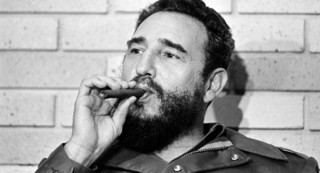
As the world wakes up to the passing of the world's best known revolutionary, coal mountains' worth of electronic comment are already pontificating and positioning. Fidel Castro was a goodie because hospitals. Fidel Castro was a baddie because gay repression. Talking points designed not to encourage talking, and think pieces conceived to shut down thinking. Their contributions hymns to Castro's censorious regime, of its declaration against free flowing opinion. Nevertheless, his was a figure that made the we were born into, and as it passes into the pages of history it is fitting that he too should shuffle off this mortal coil.

Many on the left have a soft spot for Cuba and Castro. He was the best known survivor of communism's heroic period, of an underdog ragtag movement that took on the full might of the US-backed Batista dictatorship and won. For the peoples of Latin America during the Cold War, Castro's regime was a fuck you to the greatest military power the world has ever known - and just 90 miles off its coast. He was and is a potent symbol of revolutionary resistance and tenacity. The victory of the July 26th Movement and the survival of the Cuban state over nearly 60 years goes to show there are alternatives to the Western consensus - and that points stands without having to prettify the regime's repressive character and big it up with the education and health stats.

As James notes, there will be those who try and portray Castro's authoritarianism as entirely reactive, that the original sin lies with the United States and its repeated attempts at undermining and overthrowing the J26 Movement almost from the get go. While true, these material circumstances cannot be waved away either. For one, five years prior to the overthrow of the Batista dictatorship the United States instigated a coup in Guatemala. This was then a liberal democracy that had between 1944 and 1954 returned two presidents you would class as Christian Democrats. They presided over governments that were largely middle-of-the-road, politically speaking. Except in 1952 Jacobo Árbenz undertook land reform, which confiscated uncultivated land and handed it to the peasantry. For Eisenhower, this constituted communism and initiated a terrorist campaign that ended in Árbenz's resignation. Thereafter followed a period of instability, characterised by coups and civil wars. Later again in 1973, the US used the democratic freedoms in Chile to undermine and destroy a liberal democracy that had produced the wrong outcome. With a history of interference behind the United States relationship with the countries to its south, which included the Bay of Pigs invasion, assassination attempts, coastal raids on militia outposts, sabotage and not forgetting the economic blockade, authoritarianism appeared to have much to commend it.

Cuban authoritarianism does have a dynamic of its own though, and these were embedded in the characteristics of the struggle led by Castro. His was not a popular uprising in the conventional sense but a guerilla struggle. Che Guevara's Guerilla Warfare distilled the essence of the J26 Movement as a hyper vanguard of committed communist fighters. The group was the nucleus and repository of the lessons of history, and it would be the active agent that would draw the peasantry behind it. Not dissimilar to Mao's approach to revolution. Here, in Cuba, the masses were conceived of as having a spectator role. The opposition to Batista in the cities, the workers' organisations and the Communist Party (which, bizarrely, supported the dictatorship) were marginal to the revolution rolling in off the countryside. The overthrow was accomplished by military struggle, and the command and control model appropriate to that remained. The absorption of the city-dwelling communists, the transformation of the unions into apparatuses of the state, the clamping down on the media were certainly conditioned by the exigencies of a revolutionary changes, but not determined by them. Effectively, a military movement became a military government, and the trappings of a Stalinist state acquired while consolidating the hold on power was an extension of these governing principles to all aspects of society. One cannot distinguish between the command economy and the state that sat atop it, they were and remain mutually interdependent.

Castro has officially been out of power since 2008. Since then, what you might call the Chinese turn has gathered speed. Rapprochement with the US has got underway, though there's every chance progress could be rolled back under Donald Trump. But necessity demands that the regime continues to open up Cuba's economy and, from its point of view, the more difficult task of relaxing authoritarian rule without the whole thing collapsing a la Eastern Europe. There's also the tricky job of ensuring present elites avoiding having to account for the crimes committed since 1959 too. Regardless of what happens, Castro's position in history is secure. He was a revolutionary hero who inspired millions. Cuba threw off American domination and forged its own path, creating health care and education systems among the best in the world. Castro was also a ruthless autocrat whose achievements cannot be separated from the violence and brutality that underpinned his rule.

Monday, 4 April 2016

Politics and the Panama Papers

After expending a long day compiling and pouring over spreadsheets, I wasn't expecting two terabytes worth of them would bring a smile to my face. Yet that happened last night when the massive leak from Mossack Fonseca of Panama City flashed across the world's media. In a society like ours where everyday folk can't move for video cameras and tracking devices, it's welcome when those at the top feel the heat of, for want of a better phrase, surveillance from below. As the data hasn't been dumped online for all and sundry to skim through, there will be more than a few scandals buried in the numbers and tedious legalese. Already, we've seen a few. Iceland's Sigmundur Gunnlaugsson has refused to resign after he and his wife were spotted dodgy-dealing. Papa Putin's inner circle are caught up, though he claims it's a conspiracy to destabilise Russia in the run up to parliamentary elections. If you say so, Vladdio. It must be those same dark forces who have it in for the likes of Jackie Chan and Lionel Messi, as well as David Cameron's late Dad. Not that Dave's going to talk about that. Inheriting millions that have given tax inspectors the body swerve is a "private matter", we're told.

Mossack Fonseca have opted for the "within the rules" defence beloved of many MPs caught troughing on expenses seven (seven!) years ago. But, oh dear, what have we got here, clients under sanction and several front companies for pretty unsavoury regimes, including our beloved friends and comrades in the Workers Party of Korea. All above reproach, which is why several tax authorities in the wealthiest countries have announced investigations.

The leak is a significant political event, apart from seeing ruling circles the world over gripped by panic. The first, linking Dave to pots of money with questions of legitimacy hanging over them is yet another headache this useless government could be doing without as they flounder over the budget debacle, their lack of willingness to do anything to assist the beleaguered steel industry, and indeed their connivance in its decline. The problem for the Tories is they run the risk of not just of re-acquiring the nasty party tag, but being perceived for what they rightly are: a narrow (and narrowing) clique who are increasingly dysfunctional from the standpoint of British business. Their strength lies in appealing to enough people and convincing them their way is the best way, that they too will gain from the pain (which is always felt by other people anyway). Whether the Labour Party will benefit from the Conservatives' desire to skinny dip in toxic sludge remains to be seen, but their rudderless flailing and questions over the Panama papers, which are bound to embarrass other Tories and businesses with Tory links, is storing up huge political problems for them down the road.

As the tangled web of dodgoir transactions are followed and the global circuits of illicit cash mapped, this feeds into political problems everywhere. Even broken antennae have picked up the fact that mainstream politics is in trouble. Anti-politics and naive cynicism is the de facto attitude at large, there is distrust of (representative) political institutions, and a soft polarisation of electorates under way in many countries. I say 'soft' because the organised expression of that polarisation, Jeremy Corbyn and UKIP here, Bernie Sanders and Donald Trump over there, is diffuse and largely atomised. Hundreds of thousands are inspired by the new (old) leftism of Jez and Bernie, but a great deal of that support is passive and gestural. Pay three quid, register as a Democrat. Politics remains a spectator sport deserving the barest amount of participation. And what's true of the left is true of those newly-drawn into politics by the populist right. The so-called people's army depends on disgruntled voters fed up with the way of the world and has pulled only but a hardy few into activity. Likewise Trump. His rallies might be scary and bizarre viewed from afar, especially when violence flairs, but what do most of The Donald's supporters do after he's breezed through town? They go back to their everyday lives letting their inchoate anger fester and wait for a messiah to fix it for them.

What repeated scandals involving elites do is crank up the frustration and the cynicism, and make the answers provided by the new lefts and new rights appear straightforward, no-nonsense, and appealing. With clear rallying points, what is amorphous today could well become organised tomorrow, and when that happens soft threatens to pass over into hard polarisation, and all the consequences that may flow from that.

Wednesday, 17 December 2014

Cuba after the Blockade

Sun, sand and socialism is how Cuba's usually billed in leftist circles. And wherever you look, among groups formally opposed to Stalinist regimes, Trots and Progress-types alike suspend their critical faculties and indulge their soft spot for this most persistent thorn in America's side. Doing some violence to the historical record, nonetheless Cuba wears its romantic revolutionary image well. Overthrowing a US-friendly dictator, seeing off a CIA-backed invasion and numerous dirty tricks, and stubbornly refusing to go under as Eastern Europe collapsed. Despite the difficulties of the 'special period', Cuba has managed to maintain an education system and health service considered among the finest in the world, and teams of Cuban medics roam the world like a less flashy version of David Miliband's International Rescue Committee. Big up the Guevarism and its ecosocialist turn, and there's not much left not to like.

The reality is somewhat different. While nowhere near as bad as the truly foul regimes sitting in Riyadh and Pyongyang, Cuba is an authoritarian government in which democratic rights are tightly circumscribed. That isn't to say it is without mass support - no regime can survive 50-odd years on repression alone. The neighbourhood committees and other organs of representation that do exist evince greater levels of popular civic participation than practically any Western nation you care to mention. You see, for bureaucratically planned economies to work inputs at work and community level are required. But the question remains, how much are the characteristics of Cuban "socialism" distortions induced and exaggerated by the blockade? We may well shortly find out.

Though Obama's announcement that the US and Cuba are set to normalise relations is entirely welcome, it's too early to write the blockade off yet. After all, the gift for unpicking that lies with Congress. Instead there will be a resumption of normal diplomatic ties, and the building of a proper working relationship on issues of mutual interest. There will also be an easing of travel restrictions, and the re-establishing of some relatively minor economic measures. The blockade proper stays in place for the moment.

So where has the change come from? At first glance, nothing appears to have changed from the Cuban side. Raul Castro's breakthrough is a mere continuation of Cuba's immediate foreign policy aim of the last 50 years. But the times they are a changin'. Under Castro's moves to emulate China's market Stalinism, the so-called 'New Cuban Economy initiatives aims to expand the scope of privately owned business and make the country appear to foreign direct investment as something other than an exotic tourist location. Here the Cuban diaspora in Florida is a potential source of capital. Remittances relatives can send from the US to Cuba are set to rise from $500 every three months to $2,000, helping stimulate small business generation. There is also a desperate need to diversify the Cuban economy away from the vagaries of tourism and the staple of sugar production, and that requires large quantities of capital too. In terms of the so-called high, or value-added sectors Cuba potentially has what it takes to be a very significant player in pharmaceuticals and biotech, but unimpeded access to global markets is something lacking. Then there is the question of the efficacy of Castro's Chinese turn. Wages remain stubbornly low, meaning that nascent markets for domestic consumption are anaemic and fighting over scraps - a trickle of Miami capital for small business is not about to remedy that situation. Nor will the recent collapse in the price of oil. Though this wasn't an issue impinging on the behind-the-scenes conversations between Cuba and the US prior to today's announcement, it means the favourable oil deals it has with Venezuela will come under pressure. As its economy takes the hit from tumbling prices, solidarity or no the Bolivarian revolution cannot afford to prop up Cuba. What Cuba needs, and fast, is foreign capital. And it is this that the US can provide.

But what's in it for them? Cuba is hardly an undiscovered continent of future prosperity for US capital. Or is it? One shouldn't overlook individual motives here, and for an Obama White House with eyes fixed on the legacy solving Cuba is a relatively easy, painless, and cost-free foreign policy win. At least when you put it next to something as intractable as the Middle East. Some Miami diehards might be upset with it, but again taken in the round US Hispanic voters are more likely to view this Democrat policy change positively. Jeb Bush or whoever takes up the poisoned chalice of the Republican nomination will not curry favour by setting their face against it. Then there are Latin American geopolitics. With centre left leaders in place across South America and an increasing self-confidence thanks to growth and, particularly, Brazil's potential as a regional rival the US has to make nice or risk being excluded from what state department planners arrogantly assumed was its backyard. If US capital is to take advantage of those emerging markets, it needs to throw off its Cold War mindset. Making up with Cuba does its soft power some good.

And then there is oil. The Cuban government have estimated some 20 billion barrels are located in offshore deposits. The US Geological Survey say it's less than half (some nine billion) but there also exists 21 trillion cubic feet of gas, and thanks to the blockade not one US-owned oil concern can go anywhere near it. There has been exploration deals with Russian firms but nothing considered commercially viable has been found yet. Despite the oil price collapse even if black gold is struck, oil production would still be a useful shot in the Cuban economy's arm. And it would be very nice for US oil profits too. If sanctions can be lifted a series of deals can be struck that not only opens up a new, lucrative reserve but puts it partly under the USA's strategic control.

Speaking earlier, Obama was right to say the blockade was effectively a relic from a previous era. It is in both countries interests that diplomatic and economic relations are entirely normalised. But also, it's an opportunity for the Cuban people too. As authoritarian they may be, nevertheless the envelope of political freedoms in China and Vietnam have expanded since their experiments with "market socialism" began. With it has come a whole host of social problems and new inequalities as well. It is to be hoped that as the window of the Florida Keys opens the Cuban people will draw deep on their traditions of self-reliance and forge a different, freer, more equal path.

Image credit

Thursday, 19 June 2014

Uruguay 2, England 1

They're coming home, they're coming home, they're coming, England's coming home.

What a shambles. Let's remember a happier time.

Sunday, 22 September 2013

Solidarity with Victor Crespo

While we play silly buggers with union links and Westminster watching, it is worth remembering that many of our comrades elsewhere risk their lives to defend working people. This from LabourStart's Eric Lee via Howie's Corner. I urge readers to take a moment to send a message of support.

Last Friday, armed men attempted to force their way into the home of Victor Crespo (pictured), the general secretary of a trade union in Honduras. They threatened Crespo's life -- and only fled the scene once neighbors were alerted.

The International Transport Workers Federation believes that the attack is related to Victor's leadership of port workers who have been demanding the right to bargain collectively with their new employers in Puerto Cortes.

Fearing for Victor's life, the ITF has taken steps to guarantee his safety, and he's been moved to a safe location.

They have launched a global campaign to demand that the Honduran president intervene and get proper protection for him.

Please take a moment to send a message supporting this demand - click here.

In yesterday's mass mailing, we asked you to support the latest two IUF campaigns on Colombia and Honduras. For about two hours yesterday, the IUF website was offline and many of you were unable to gain access. It's back online and you have another chance to support these campaigns:

* Colombia
* Honduras

The latter campaign has gotten the attention of the Rainforest Alliance, which has responded to thousands of you with their side of the story.

And the IUF has responded to their statement quite forcefully here.

It includes this powerful passage: "The IUF believes that strong, independent unions are the best 'monitors' of working conditions. External audits can only provide a snapshot at best of working conditions; a union would be there every day representing workers, bargaining for improvements in pay and conditions and making sure labour legislation and international standards are applied."

The struggle continues.

Monday, 17 June 2013

The Tortilla Curtain

T Coraghessan Boyle's The Tortilla Curtain is by no means a new book. But 18 years after publication it remains as fresh and relevant as it was when it rolled off the presses. In many ways, it is a quintessential anti-American novel. Not because it propounds the sorts of views that would make a megachurch-goer offer up prayers for its misguided author, or cause the casual reader to hunger for the flesh of babies. It does something far more subversive than that. It takes hold of the American Dream, turns it inside out and exposes it for the fraud it is. Be warned, this review contains mild spoilers.

The narrative follows two sets of couples. The comfortably smug Californian liberals Delaney and Kyra Mossbacher; and Cándido and his pregnant teenaged bride, América. The latter illegally crossed the frontier, lured into the Golden State by the promise of running water, a nice apartment and half-decent wages. Their worlds collide when, after an unsuccessful morning at the local labour exchange, Cándido is knocked over and injured by Delaney. As a good, well-meaning sort he stops the car to seek him out at the side of the highway. Cándido is hurt but is mindful of getting swept up by la migra if he goes to hospital. And Delaney is worried about a lawsuit. 20 dollars - the contents of Delaney's wallet - are handed over and they return to their separate worlds. Delaney to his posh soon-to-be-gated community, and Cándido to his rudimentary camp in Topanga Canyon.

From here on in, the story of Cándido and América becomes unbelievably grim. Failure, robbery, illness, rape, madness, poverty, tragedy, exploitation - this is the lot for our Mexican protagonists. But at the same time, while you feel their despair and voyeuristically peer into their destitute lives, there is a sense of authenticity about them. Despite the problems, the setbacks, the misery, they are compelled to cling on to survive. Despite the pitiful pay, day after day they climb out their canyon hideaway to scrape a living polishing Buddha statuettes, clearing scrub land and, ironically, building the fences and walls designed to keep undesirable illegals out of the well-moneyed neighbourhoods. Time and again the racial slurs of the lazy spic, the wetback, the welfare wallers find themselves on the tongues of the novel's pampered and privileged. The miserable travails Boyle puts his Mexican characters through actually speak more to the protestant values of graft and hard work that underpin America's national mythology.

From the standpoint of Cándido and América, the men and women who cruise around the Californian highways in their Japanese-built air conditioned cars epitomise the American Dream. But seen through the eyes of Delaney and Kyra, it's a dream-turned-sour. For a couple that have a great house and well-paid jobs there's an utter emptiness to their lives. Delaney is a wildlife writer who churns out a regular column celebrating and bemoaning the local environment (a persistent theme is the encroachment of nature and their attempts to keep it out - especially when their two pet dogs end up as a gourmet dish for a hyena). He emphatically is not the breadwinner and there's all kinds of masculine crisis and emasculation playing out in his character - the long hikes, the hunt for the hyena, the gradual slipping away of his liberalism when confronted with the perceived threat of local Mexicans. Kyra works in real estate and makes huge commissions on the palatial desert abodes she sells to the white flight diaspora out from LA. But hers is also an existence shot through with neuroses, albeit one expressed in acquisitive desire and the pursuit of the meaningless professional desire to be the best at what she does.

The tipping point for our all-American neurotics is the growing, imagined menaced represented by the Mexicans. For Delaney, his car's altercation with Cándido puts him firmly on the path to reaction. His interior monologue frets over whether he jumped out in front of the car on purpose. And slowly the worm of bigotry gnaws at his rotten liberalism. At first he objects to the installation of a gate and a guard designed to keep Mexicans criminals out, but his run in with another illegal while out hiking, seeing them at the barely-tolerated labour exchange, and learning that the same man from his walk (who, as the reader will find out, is a deeply unpleasant nasty piece of work) had scrawled obscene graffiti over a property Kyra felt "was hers" pushes him from someone who reluctantly accepts the gate, and later a white stucco wall around the whole housing development; to a man obsessively trying to prove it was his Mexican (Cándido) who has been the root of all his troubles. The closing pages see Delaney, deranged and fevered by the prejudice he formally rejects, head out into the rain with a gun to hunt Cándido down. The climax, like much the rest of the book, piles tragedy upon tragedy but right at the end, almost with the very last line, a scintilla of hope is held out.

If for the Mexican protagonists the American Dream is an empty one, for Kyra and Delaney it is a dream squandered. The have everything, and yet it robs them of American virtues. Their soft, pampered and undeserved lives replete with what the internet mockingly refers to as 'first world problems' is a far cry from the thrifty get-up-and-go of Cándido and América. Perhaps most damningly, for all their liberalism they lapse into the sort of anti-immigrant prejudice even your average UKIP'er would balk at. And, perhaps the most important point of all, and where the novel makes its 'anti-American' bite is how they are determined to close off the privileges and opportunities they've enjoyed to the hispanic population living at the margins of their society. Just as Marx once observed that when one nation oppresses another, it will never be free; so their hysterical fear of illegals and desire to keep privilege locked in to people just like themselves sees them box themselves up in semi-fortified communities.

Land of the free and home of the brave. Boyle shows it is not.