Showing posts with label Zombies. Show all posts

Thursday, 10 April 2025

Communing with Dead Voters

If you wait by the river long enough, goes the proverb, the bodies of your enemies will float by. Likewise for the left in this country. Sitting and watching politics journalism means points made years ago will find themselves laundered for mainstream consumption. And with the noticing underway - the realisation that Keir Starmer and co aren't much cop - the sub-genre of repackaged observations and arguments is picking up.

There were two such examples from the last couple of days. In her mail out to subscribers, The I's Katy Balls reported on growing disquiet among Labour MPs about the party's strategy. One (anonymous, of course) insider said "If we’re doing Reform-lite policies, we shouldn’t be losing to Reform.” Balls observes that the government might, therefore, need to shore up its left flank with policies that, shock, left wing voters might like.

And then in The Economist we have Duncan Robinson laying into the delusions that have captured the Labour and Conservative Party leaderships. Starmerism and the Tories are beholden to a zombie politics in which their favourite voter is ... dead. This constituency, which haunts the imaginations of Morgan McSweeney, commits the government to the nonsenses of Brexit and the rejection of anything amounting to a sensible accommodation with the EU. He writes, "If, like everyone else in British politics, one is looking for right-leaning, Leave-voting non-graduates with particularly authoritarian views to attend a focus group, then the best place to find them is the morgue."

Long-time readers of this blog might be experiencing dejavu. Labour's right wing turn is unsustainable? You don't say. Right wing authoritarian politics is in long-term decline, and with it the parties dependent on these constituencies? Where have we heard that before? The basic, almost banal position of this corner of the internet is in the first instance the Conservatives, and Reform are subject to the aforementioned declinist pressures. Their base in wider society is ageing and dying, and not getting replaced like-for-like. For the moment, their support turns out disproportionately but any advantage the right holds here is time limited. It's therefore foolish in the extreme for a party like Labour, which still holds leads among working age people despite the collapse of the polling position, to hitch their wagon to a bunch of gee-gees ready for the knackers yard.

So we have an identification of a problem facing bourgeois politics, but what's missing from Balls's and Robinson's account is the explanation. It might seem puzzling that Kemi Badenoch's hapless leadership is abandoning efforts at winning back thw swathe of Tory seats lost to the Liberal Democrats for the sake of a handful of constituencies they conceded to Reform. However, the Tories - not unreasonably - believe Nigel Farage is the existential threat. To stand any chance of winning again, the Conservatives have to monopolise hardcore right wing voters. At least where the thinking of leading Tories are concerned. Only when the base is secure and the interlopers seen off can they think about taking back ground from the Lib Dems. The people Badenoch and friends have to attract might be dead, but their shades continue to animate the right wing media, which is still viewed as the voice of Tory England. Though these institutions are shedding readers to the Grim Reaper daily, their editorials are so much ouija spelling out what the Tories have to do.

And Labour? Being "responsible", the "grown up" thing is to put much political distance between their management of British capitalism, and the aspirations of the party's base. Fiscal rules, attacks on the disabled, pretending to be Brexit true-believers, the expired, ex-voters of 2019 vintage are convenient ghosts summoned from the spirit realm to haunt the excuses for inaction and cruelty. But the Labour leadership are deeply cynical mediums and lack the credulity of a Derek Acorah. Their conjuring is a fraud to alibi a politics of managing expectations. The promise of doing very little and continuing attacks on the most vulnerable and the scapegoats favoured by the Tories dampens demands on them to do progressive things, while also reassuring the ruling class that Starmerism means safety where the stability of class relations are concerned. This means the last thing the government want is to reject the dead in favour of the living, because securing Labour's future as an election winning machine that can bury the Tories and see off Reform will only happen if they strive to be capital's master, not its handmaiden. And I'm sure you don't need me to tell you how unlikely that is.

Saturday, 14 December 2024

28 Years Later

I've long nursed a low-key obsession with 28 Days Later, its sequel, and the brutal universe it introduced us to. On Wednesday, Sony dropped its antidote to the festive mood: the first trailer for 28 Years Later. To be sure, this is one of the best made promos for anything produced this century. I'll never think of The Teletubbies in the same way again.

Thursday, 13 October 2022

Zombie Government

At one point during the summer, it looked like Liz Truss might have posed a threat to Labour. This was before Keir Starmer's thinking had caught up with the public's and committed the party to an energy price freeze. For a moment, given that the Tories possess an unerring instinct for power and a propensity to say anything to stay in office, Truss could have made good on the maverick(ish) persona she sometimes affected during the contest and outbid Labour by freezing prices and nationalising the energy firms. That window has long since slammed shut, and it was the Prime Minister who did the closing. How did we get here?

Truss's collapse - what else can we call it - is astonishing and unprecedented because it is entirely self-inflicted. When Boris Johnson took on the remainers in his party three years ago, the prospect of damaging splits were chaos enough. The fact his own brother resigned in disgust at his constitution bending, bullying antics said it all. But there was a sound logic to Johnson's scheme. Having won the Tory leadership contest because he would move heaven and earth to get Brexit done, he knew the majority of MPs and members were on side, and he could rely on the largesse of the capitalist class beyond the usual suspects to see off Jeremy Corbyn. Johnson trashed his party to save his party. He packed the leave vote into the Tory train while the forces of remain were left squabbling in the sidings, and the election went entirely to plan.

Truss on the other hand massively miscalculated. Rather than embrace the political opportunities in front of her, she successfully boxed herself into the worst position possible. The first indication was her cabinet picks. The Parliamentary Conservative Party is not overburdened with talent, but those with experience of government largely stayed on the backbenches as supporters and lickspittles won Truss's favour. Effectively, the antis had no skin in the game making future rebellions more likely. This was a mistake to be sure, but not an insurmountable error - so long as Truss's governments kept playing its cards right.

The second bad call was her energy price freeze. Deciding to protect energy company profits was far from politically adept, but even then her position was salvageable. She might have missed the populist impulse to sock it to suppliers, but the two-year freeze provided some certainty - even if it meant everyone would be paying more. And the fates cut Truss some slack. Provided no one looked too closely at the detail, the rest of the parliamentary party could have gone along with it. They would have remained behind in the polls, but future recovery remained a possibility. Again, provided nothing else went wrong.

The fatal moment was Truss's budget. She did not go for naked Toryism because her and Kwasi Kwarteng are incompetent or blinded by ideology. It was an audacious effort at feathering the nests of their key allies in the City at everyone else's expense. This included large swathes of the capitalist class, and their base among homeowners and pensioners. Stoking inflation and raising interest rates to supposedly stimulate economic growth didn't wash with them, nor anybody else for that matter. Truss must have thought the traditionally reliable guard dogs of Tory support would have lapped it up, but it being 2022 and not 2012 they did not. Rolling back on the 45p tax rate and carrying on as if everything was okay have compounded Truss's woes.

The first week back at Westminster has made matters worse. Stopping Jacob Rees-Mogg from running a Winter energy saving campaign. Home Secretary Suella Braverman scuppered a trade deal with India, while she has been cut out of the upcoming relaxation of immigration rules. Prime Minister's Questions found Truss at her most wooden, but U-turns were extracted on scrapping no fault eviction reform and public spending cuts. By all accounts her appearance at Wednesday evening's 1922 Committee meeting was a disaster. It's one thing to treat the public with contempt by trotting out the same tired sound bites, but quite another to try the same scam on the cognoscenti. Throughout Thursday, the calls in the press for Kwarteng's head have got louder as he announced there would be no reversals on the mini-budget until the actual event on 31st October. And if that wasn't bad enough, the Bank of England's Andrew Bailey is effectively pursuing his own economic policy, such is the dysfunction of this government.

The Truss government is dead in the water. Never before has a government collapsed as quickly and as completely, nor is there any obvious way out. Rish! Sunak is a non-starter, being too divisive. Johnson is away making money (not declared properly, of course), Penny Mordaunt would be torpedoing her own future, and Michael Gove is despised by just about everyone. Short of an election and the Tories suffering the hard reset of annihilation, the most likely outcome is for Truss to keep on shambling on without direction and only slow witted instinct to rely on. It's an overused metaphor, but we are in the month of Halloween. Truss has managed to raise a zombie government.

Image Credit

Monday, 13 January 2020

Doctor Who and the Climate Change Zombies

Who doesn't like their politics delivered with the subtlety of an articulated lorry gatecrashing your front room? Such was the situation with Sunday night's Doctor Who episode, Orphan 55. In typical Who fashion, the Doctor dropped into a seemingly idyllic scenario hiding a murky underbelly that bursts into the open. Here, the Doctor and friends attend the all-inclusive Tranquillity Spa for a bit of much needed r'n'r. I mean, did you see the two-parter? But very quickly, as they say here in Stoke, things go downbank.

Beginning with Ryan contracting a military-grade virus from a vending machine, the Doctor smells a rat. Why would one be lying in wait in a holiday retreat? Following an emergency alarm it is revealed that paradise is situated in a hostile hellscape. This planet is knowns as Orphan 55, 'orphan' being a designation of formerly habitable planets trashed by their native species and left to rack and ruin while the elite retreat behind high walls or, in this case, blast off into space. Therefore its stunning vistas and sub-tropical sunshine are effects of an advanced VR projection on to walls surrounding the resort and the locals, yes, the locals are kept at bay by means of a force field. And a good job too because they're big, pasty, have huge teeth and a taste for human flesh. Very Who. The native species, known as the Dregs, overwhelm the defences, eat the guests and puts the Doctor and team to flight. Needless to say, everything comes good in the end. A family is reunited in time for a horrible death but our intrepid chrononauts make it safely through to next week's episode.

So, yes. This one had a little bit of politics. While running around in the caverns beneath the spa, the Doctor, Ryan and Yaz happen across a Siberian railway station sign. Surely not? Further investigation turns up more ephemera of a dead earth, and a quick mind meld with a sleeping Dreg reveals them to be our descendants. Yikes. Once safely back on the TARDIS the Doctor gives her gang a lecture about how the future isn't fixed and what they experienced was just one possible timeline among many, but it requires everyone to do something now to prevent this less than optimal outcome. So heavily done it would get the gammon tendency in the country scribbling letters to Points of View, if it still existed.

Anti-capitalist green lefty claptrap? Well, no. Despite the references early on to elites getting away and the remainder left to fend for themselves, the Doctor's message is apolitical greenery dressed up as a hard edged rant. A socialist critique of planetary ruination is a bit too much to expect, but Russell T Davies era Who proved quite adept and assimilating a sly anti-bourgeois sensibility into proceedings. This was too on the nose and too "everyone's to blame". Though that will be too much for some. And yet there is a slightly more subtle level in play.

Much more interesting than the preachy tone are the zombies, for that is what the Dregs really are. With a bit of a nod to HG Wells's The Time Machine, they look sort of dead with their skull-like features and pale complexion, and they entirely fit the conventions of the neoliberal undead. Or, to be more precise, the bourgeois nightmare of resurrected flesh eaters. The anxiety of class rule is such that, never mind how harshly or paternalistically chummy you treat the multitudinous hordes, they can turn an engorge themselves on the body of your property at any moment. Singly they're pretty dumb and easily outwitted, but as a hungry mass they can swarm and strip your assets to the bone. The Dregs fit the part quite well. Consider even the derogatory name, for instance. They dwell outside the resorts walls, free to go where you can never see them and get up to who knows what. And in time they learn your vulnerabilities, finding ways round the best and most sophisticated defences. Once they're in, your goose is cooked. They cannot be stopped and even your laser beams bounce harmlessly off. Yet true to the narcissistic projection of their class, it is the shuffling cadres of Dregs who are to blame for this situation. Never mind that the bourgeoisie created them when they turned Earth into a cinder with runaway climate change and nuclear war, their ridiculous spa is revealed a way of reclaiming the planet they abandoned to the lower orders. In this case, using profiting off holiday makers to fund a terraforming effort. They broke a world and called it an orphan and, having forced the huddled proletarian masses to become monstrous to adapt, they want to take the globe back and leave the Dregs on the scrap heap. Remind you of anything?

The climate change warning then was for us, the everyday folk of Sunday evening television. But the meditation on zombies was just perhaps a more subtle warning to them, the vanishingly tiny boss class perched atop their piles of unearned cash, a preview of what might await them if they carry on as they are.

Image Credit

Sunday, 2 June 2019

Everyday Survivalism in Days Gone

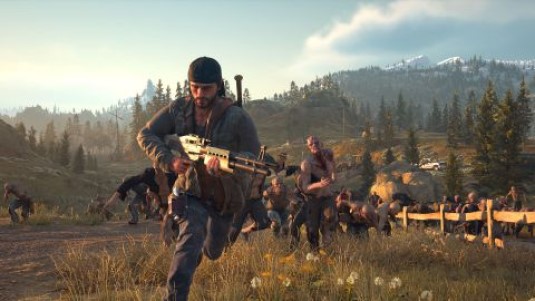
What happens when the living dead prove more culturally virulent than an outbreak of zombie flu? You get a long-running TV franchise, many an imitator, films and, of course, video games. And so it came to pass that Sony's latest flagship release for the PlayStation 4, Days Gone is an open world zombie survival affair. You just can't get away from the damn things.

For the uninitiated, Days Gone casts you as Deacon St John, a drifter and former biker eking a living out of the virus-blasted backwoods of Oregon with his partner-in-crime, Boozer. The game is set two years after disease swept the world killing billions of people, including almost all children, and turning a good chunk of the survivors into Freaks - mindless and hyper-aggressive, um, zombies. They are alive, but like the infected from 28 Days Later have no vestiges of humanity left. What passes for remaining civilisation huddles around fortified encampments and hoping the huge hoards Freaks tend to congregate in pass their communities by. Yep, it sounds like virtually every other zombie apocalypse scenario.

There are a few innovations Days Gone brings to the table. The game, which obviously has a great deal of attention lavished upon it, is one of the best-looking titles you're ever likely to play. The wooded vistas and mountain passes, the dynamic weather, the fact wild animals and Freaks appear to have existences of their own (Freaks do follow certain behavioural routines if you watch them without being detected). If you fancy yourself the apocalypse's answer to David Attenborough, knock yourself out. Also, as you scoot about the countryside on your bike you have to make sure you take care of it. Like your nag in Red Dead Redemption II, the bike has to be kept fed and groomed, but luckily there's plenty of petrol and scrap metal scattered about to achieve this. Practically every truck wreck, untold dozens of which lie abandoned, has some gas. But easily the most exciting part of the game is taking on the hordes of Freaks. We're not talking 15 or 20 of them, but dozens upon dozens.

Okay, game mechanic-wise, none in and of themselves break new ground. The creation of an immersive environment has been around since the first primitive text adventures, of developing an ethic of care toward a digital entity as well worn as the tamagotchi, and the threat of getting swamped goes back to your Robotrons, Gauntlets, and Smash TVs. Why then Days Gone's appeal? Why does this sort of thing appear attractive and gets the punters buying it?

In her 2013 book, Coming Up Short: Working-Class Adulthood in an Age of Uncertainty, Jennifer Silva argues that capitalist society is harsh and unsparing. Interviewing groups of young workers, she finds an embedded sense of self-reliance and a rejection of dependence on social groups and institutions. Hardship isn't something to complain about or seek help to deal with, but are trials to overcome. Success then isn't necessarily conceived in the usual trappings of fame or wealth, but survival. This ability to cope, this resilience is a source of pride and self-worth. Here, only individual effort is morally significant and from this flows a scepticism toward collectivism and solidarity, because resting upon them infringes one's moral value. This suggests fantasies of the Days Gone type hook into an already-existing experiencing of the world, and reproduces in-game key touchstones of a particular form of neoliberal subjectivity; what you might call everyday survivalism.

Deacon as a biker is, like so many video game characters, the acme of declassed but petit bourgeois individualism. He comes and goes as he pleases, lives off the wreckage of civilisation, and makes his money scavenging or turning in bounties (ear "clippings" of dead freaks and deceased outlaws). Yes, the persistence of cash proves the old adage that it's easier to imagine the end of the world than the end of capitalism. And this is very much a masculine individuality. Deacon's backstory contains a tour of Afghanistan and then years in the rough and tumble of the west coast biker scene/underworld. He dishes out violence aplenty, albeit without the amorality of something like the GTA series, and there's the usual, gruff mano-o-mano confrontations with other notable male protagonists. Why can't blokes in (American) video game land get along without wafting their willies about like most men manage to do in everyday life?

As such, much of the game is taken up by Deacon doing fetch quests and other jobs for a number of camps. Rescuing someone here, clearing out a camp of marauders there, the odd assassination, collection of polystyrene cups (yes, really), and whatever else folk do after the collapse of civilisation is the meat and gravy of the game. Life is brutal and nasty, and you've got to look to your own resources, ingenuity and skill to get on. So far, so survivalist. Underlining it further is the common trope of the zombie genre. It's never really the walking dead, the infected, or the Freaks that are the real danger. Hell is, well, other people. The pockets of civilisation left aren't exactly shining beacons of human solidarity in a hostile new world. One camp practices slavery, another is run by a conspiranoid don't-tread-on-me-style wingnut, and the best is the one you end up spending most of the game affiliated with, run by a patriarchal but dismally unambitious former biker from back in Deacon's day. What can be more terrifying than stagnation?

Trouble comes from two communities in particular. The first are the Rippers, a psychotic cult who shave their heads and self-mutilate to look like the Freaks. They envy their lack of reason and all that is human, and often catch unwary travellers to feed to passing hordes. Charming. And yes, they're irredeemably violent and just so happen to have placed a price on you and Boozer's heads. As you can imagine, it all comes to a violent conclusion eventually. The second is Deschutes County Militia, a militaristic community under the iron rule of Colonel Garrett. Their purpose seems benign - take the fight to the Freaks by developing weapons to wipe them out, as well as collecting journals and books to assist rebuilding in the future. But after too many twists and turns, Garrett goes off the deep end and determines the biggest threat to recovery are ... all other human communities. More violence and explosions.

In all cases, while Deacon is dependent on communities for supplies and upgrades to his bike, the relationship is strictly transactional. Except when they become a problem to overcome, as per other zombie media. It is humans with their cruelties and petty jealousies, outside a chosen few, who present and represent threat. You know where you stand with a Freak, but the twitchy guard and the green kid with something to prove? Communities, collectives are your biggest obstacles.

The ballad of Deacon St John is the sound track to 21st century life. The reason why zombie games are popular, why surviving the end of all things appeals is because, as preposterous as it sounds, such games are relatable. The experience of actual disasters and adversity, which are more exercises in human cooperation and compassion than the law of the jungle, are immediately coded here as suspect, illegitimate, and the bearers of the same old crap. To sell the genre, zombie endism is squeezed through the sausage machine, and what comes out are near identical links of misanthropy. And it in turn feeds back into the survivalist mentality, preparing more ground for further cultural product of this character and buttressing the cognitive supports of a world that cares not. As with all good science fiction, Days Gone is less a vision of the future and more a reflection of our present.

Monday, 2 January 2017

Living Dead Liberalism

The liberal establishment is a thing. It exists and it has power, influence. But it is not in charge. Liberalism has its privileged place in our media output. It is the primary outlook of academia. It casts a wide net across our politics, claiming one party officially but finding adherents in whole and in part on the government and opposition benches, not to mention large numbers of the politically active and civic-minded. It's shared by senior people across the civil service, is de rigueur among celebrity, and is the common sense of millions of people. Yet its philosophy is at odds with the assumptions guiding the government, including our most illiberal Prime Minister. It plays second fiddle to the investment and divestment decisions that really rule the life chances of millions, and where liberal principles come into conflict with the exercising of economic and political power, there is no contest.

In short, liberalism - and here, I mean it in the sense of a movement, a trend in society encompassing prominent individuals and institutions, as well as ideas - is dominant. Or, rather, a dominant. As elites go, their power and influence is nothing compared to conservative elites. It's this status, as a dominated apparatus of discourses that confers liberalism progressive social creds, not least because it has on plenty of occasions defined itself against powerful conservative governments. And it always finds friends who aren't liberals happy to make common cause - a so-called progressive alliance being just one of its manifestations. And so liberalism has a seductive allure. As a philosophy of individualism, it chimes easily (superficially) with Labourist and socialist concerns with inequality. Liberalism, at its consistent best, is opposed to discrimination. It is philosophically antithetical to bigotry and prejudice, though that hasn't stopped liberalism being used as a means to discriminate against minorities deemed to be illiberal. Therefore liberalism presents both as is and what should be, as the common sense of the (self-certified) enlightened and the state of grace to which everyone should aspire. Who, after all, could possibly disagree and not accept the rights of the individual, that people should go about their business unmolested, that folks should not get held back because of their gender, ethnicity, and sexuality? Isn't there, after all, a progressive consensus held by the majority and backed by the state?

This last year, liberalism in Britain received four body blows that fundamentally undermined its sense of place in the world and has rendered it spent and decadent as a force that paid lip service to progressive social change. In each of these cases, the world asserted itself as something at odds with the accepted liberal way of things. With the EU referendum vote, liberals discovered that those outside their accepted terms of reference did not see the world in the same way. That people voting to Leave weren't swayed by the huge apparatus of liberalism arrayed behind the Remain case, that the statsplaining and Eddie Izzard appearances didn't do the trick. This was partly because Leave tapped into anti-political establishment populism, of which liberalism is a (subordinate) part, and because liberalism was utterly incapable of providing answers to Leave attack lines. Small wonder immigration proved so potent as liberalism for the last 30 years has either copied "tough" rhetoric, or championed free movement without addressing the lies written and broadcast about jobs, housing, and strains on public services. Leave made hay with the anxieties and insecurities ever-present in advanced, de-industrialising societies and drew deep on decades of their being married to racism and scapegoating. In short, liberalism treated the referendum as a battle of ideas and not what it really was: a clash of interests.

An identical dynamic was at play in the US presidential elections. Donald Trump is an utter moron, so how could anyone vote for him? He had no experience of political office, is obviously unsuited, is a racist degenerate with nothing but contempt for disabled people and sees women as objects to be groped. And this is before you get into the finer points of policy, such as the repeal of Obamacare and a free-for-all for America's most polluting companies. His election, despite receiving almost three million votes fewer than Hillary Clinton, scrambled liberalism's networked brains much more than Brexit because of the characteristics that would have sunk anyone else. They cannot conceive how someone so anti-liberal to the the point of offence managed to pile up the votes where he needed to. Part of which is their fascination with American politics (something shared by British conservatism) and the illusions they had in Clinton as a great liberal hero, and part, again, an inability to analyse the social relationships and dynamics that determine the course of elections.

Third, there is the rise of Jeremy Corbyn and the transformation of the Labour Party from the B-team of British capitalism into something else. As I've argued previously, understanding what was going on meant looking at the character of the new people coming into the Labour Party. Yes, there were a lot of "usual suspect" lefties. As Alex Nunns points out in his excellent account of the Corbynism's emergence, networks of established activists flocked into the party. But Corbyn's challenge activated a wider, coming strata of working people for whom networks are part of their everyday, in and out of work, but more on that another time. However, the nine-tenths beneath the surface were invisible to liberalism. For them, the Labour Party - and therefore a viable leader - has to remain within (their) bounds of political respectability, differ from the sitting government by degree and not by kind play the Parliamentary game, and be able to win votes from the Conservatives. Because the majority of the membership rejected this view, liberalism was at a loss to explain what happened. It was a matter of lefty self-indulgence, Trot entryism, or a middle class takeover. Nothing to do with wider changes in British society, and certainly sod all to do with the campaign of destablisation liberalism aided and abetted in and outside the party. And so, for now, Labour is closed as a vehicle for liberalism's ambitions.

And lastly, there is the shift in social media. Gone from being the relatively quiet and charming plaything of Graun commentators and hangers on, in successive years it's been flooded by waves of hyper-partisan and seemingly unreasonable people. In 2013, it was fresh kippers. 2014 came the cybernats. 2015 the Corbynistas. And 2016 racists and Nazis trading under the alt-right tag, and fanatical brexiteers. For the leading lights of British liberalism, particularly those in politics and the media, death threats and rape threats have surged, utter nonsense and "fake news" is bandied about like the revealed truth, conspiracy thinking has mainstreamed, and the line between naivete/bampottery/trolling has grown so thin it's impossible to pin some people down. That this was the year places like Breitbart and The Canary captured widespread attention is no accident: they rode the wave. For the liberal mindset, the chaotic jumble of social media at once confounds and reinforces its prejudices. It confounds because like Brexit, Trump, and Corbyn, how can anyone believe this shit? And it confirms because, ultimately, it comes down to a lack of education, of not being reasoned or informed enough to construct and understand the liberal outlook, of failing to grasp the things that matter.

At the dawn of 2017, liberalism finds itself confused. The world isn't what it was, it's bewildering, normless, chaotic. Nothing makes sense, the counter-intuitive rules. Liberalism is lost and cannot even think about a way forward, let alone plot a course. In effect, it moves, it shambles around, but there is no coherence, no answers, no intelligence. It has gone the way of the living dead, and can only throw out a decomposing imitation of life. Living dead liberalism manifests in two zombified forms. The first is liberal virtue signalling. You know the sort. The kind that fights shy of the world. It prefers not having to deal with it, and so shuts reality out by blocking or ignoring, or pretending they're Dumbledore's Army or some such childish shit. Even worse is that variant of zombie liberalism that doubles down on all the elitist faults ascribed to it. Calling people thick because they voted Trump? No problem. Brexiteers are all stupid morons who don't know what's good for them? Let's have it. Coming up with colourful ways to call people names make well remunerated journalists with big platforms feel better, but what does it do apart from signify one's impeccable (and super-intelligent) creds? Nothing. This form of liberalism accomplishes its retreat from the world and becomes the rhetoric of shrill but frightened narcissists.

The other type of undead liberalism says it's vital and alive, but is anything but. So-called muscular liberalism has poured a gallon of paint onto its red lines and is prepared to fight relentlessly, tweet-by-tweet, rebuttal-by-rebuttal, by-election by by-election against the rubbish pushed by the right. Challenging opponents' commonsense and redefining politics is, well, what progressive politics is supposed to do. And, to be fair, I'd much rather have liberals mindlessly tap polemic into their laptops and mail it in than posture uselessly to other liberals. But ultimately, what's the end game? Defeating the right in their Tory, kipper, and alt-fash guises requires boots-on-the-ground politics, a vehicle for transforming lives and implementing policy. Labour is no longer the vehicle for liberal aspiration, the liberalish Cameroons are marginalised in the Tories, the SNP are too ghastly, and so all that is left are the LibDems. While their real support is probably underestimated by nationwide polling, nine MPs and 70,000 members can hardly strike out for liberalism, especially as they remain compromised by their previous association. And so liberal writers will write, liberal campaigners will campaign, and the world will not be better or worse for it. Liberalism can rage all it likes, but as a movement with political power it is diminished.

And so liberalism offers no way forward. It is paralysed because as an elite movement, it is structurally incapable of seeing the world from anywhere but its position near the top of the pile. Yet, the irony is, liberalism should be strong. The spontaneous outlook of growing numbers of young people in most developed countries is more liberal than preceding generations. It should be the liberal moment, and yet liberalism cannot relate. Its fixation on the language games of posture and polemic, and its basic philosophic resistance to viewing the world in terms other than individuals struggling for recognition and position means it cannot orient itself to a rising generation blighted by precarity, debt, low pay, housing shortages. To start probing this world of interest means abandoning liberalism, but when so many are comfortably self-satisfied with it, not least the feted leading lights and their zombified comment cabaret, what incentive have they in building something alive?

Monday, 30 May 2016

Altered Beast for the MegaDrive/Genesis

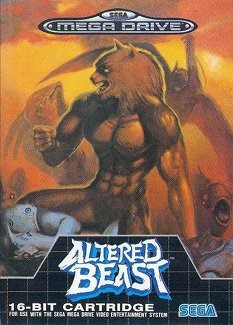
"Wise from your gwave!" An entire generation of gamers were introduced to Sega's 16-bit wonder machine with those very words. Grab your pack-in copy of Altered Beast, slam it in the slot, hit start and straight away your spanking new console was making like Jonathan Ross. Bwilliant. For folks of a certain age, no introduction is necessary for this game. It's fondly remembered and hated in equal measure because of its ubiquity and simple beat 'em up gameplay. And if you didn't have a MegaDrive, it was hard to escape as it was one of those rare games that got converted to every machine going. Even Nintendo got a version (at least in Japan).

Altered Beast debuted in the arcades in 1988 using Sega's System 16 board, which was then noted for its state-of-the-art scaling effects. While the game made limited use of this hardware, it proved a hit with enough players to guarantee it an after life as a home conversion. For those unfamiliar with the game, you are cast as a centurion resurrected to rescue Zeus's daughter, Athena from the evil clutches of Neff (as a powerful deity in her own right, quite why she needs rescuing is never explained). There follows five levels of beastie bashing and zombie slaying. Perhaps an early attract was how the undead exploded into chunks of flesh after getting a battering. Nice. As you move along you acquire power ups from killing a blue Cerberus, transforming your character into an ever-more buff killing machine. When three are scooped up you change into a beastie of your own - two different kinds of fireball-toting werewolf, a flying dragon with electrical attacks, a were-bear who can turn opponents into stone, and a were-tiger with a singularly rubbish energy ball that dances up and down the screen. For his part, Neff throws legions of ghouls and monsters your way, as well as depositing the end of each level with a compulsory boss fight.

And that's all there is to it. A simple thump-a-thon with a Greek mythology theme and interesting power up mechanic appealed to the punters, so how could the home conversions go so horribly wrong? But they did. Commodore's Amiga, the most advanced micro of the time, had this abomination served up. Sega's own conversion to the Master System was pretty awful too. And yet, perversely this worked to Sega's advantage. Altered Beast on the MegaDrive is by far the closest of all the conversions produced for the 8- and 16-bit markets, and plays well too. It's nowhere near as difficult as the arcade parent, and is a nut so soft even the most cack-handed of gamers could crack it with enough practice. Such low difficulty helped generate demand for a new gaming experience - one could not dine out on Altered Beast for long. Importantly, it set a new standard for video games by being almost arcade perfect. For whatever reason, this was much harder to achieve on the likes of the Amiga and Atari ST and so, side-by-side, the MegaDrive version blew them out of the water - even though pound for pound it wasn't as advanced as Commodore's machine in a number of areas. It was a teaser as well, the gaming equivalent of flirty fishing. Well not mind-blowing by the standards of the date, the whole package was carried off with enough aplomb - big sprites, smooth scrolling, parallax, clear speech (which was seldom achieved in later MegaDrive games, bizarrely) to hint at the potential snuggled up in the system's hardware.

Altered Beast's big problem, however, was its strength. As a simplistic title video game evolution very quickly outpaced it. Within a year of its release it looked tired and a wee bit drab. It became the butt of console mags, with buyer's guide scores ranging from the average to the distinctly dire. Small wonder Sega eventually dropped it for the much more impressive Sonic the Hedgehog - a title that remains a peak achievement of 16-bit programming and game design. Yet it served its purpose. Altered Beast accelerated the take up of the (then) new generation of consoles, cleaving and converting Nintendo adherents in North America and throwing down an insurmountable challenge to the home computer formats in Western Europe. It was the shape of things to come and helped establish the 'arcade experience' as the key hegemonic game playing value where late 80s/early 90s gaming was concerned. So if you ever pick upon a review, whether from the time or more recently that heaps criticism on Altered Beast, just pity the fools: it had a profound, if understated impact on gaming.

Thursday, 5 February 2015

Theorising the Mortality of Advanced Societies

Yesterday we talked about a specific example of catastrophe. Today I want to discuss something else, so open the Book of Revelations and settle down to some heavy doom: we're talking what Mark Carrigan calls the sociology of civilisational collapse. For Mark, what is absent from political discourse and social commentary is a sense of our collective mortality. We are imbued with a sense of our biological finitude (despite the best efforts of some), but "officially" society expects to live forever. Governments and institutions plan for decades in advance. Even the quaint habit of sinking time capsules into the foundations of buildings betray a sense that someone will be around to open them in centuries to come.

Sociological readings of apocalyptic scenarios abound (here's me on zombies. And again), but as Mark notes popular cultural texts, and even less sociology, deal with the descent into decay itself. Books/films/TV like The Stand and Outbreak see the evisceration of humanity by plague. In the former it's what plays out after that matters whereas the latter has Uncle Sam's lab-coated finest saving the day. In The Terminator series human societies disappear under CGI mushroom clouds. Breakdown scenarios, of society sliding into formlessness are around, such as the original Mad Max and the upcoming Walking Dead spin-off set during the emergence of our brain eatin', flesh rottin' friends, but all too often social dislocation and disintegration is identified with outright criminality and lawlessness. It's always the return of the Hobbesian repressed, of the nasty and the brutish.

What Mark contends then is "if some general philosophical propositions (the epistemology of civilizational collapse) could be explored through an analysis of fictional representations (the representation of civilizational collapse) to shed more light on the character of social processes (the sociology of civilizational collapse)?"

There are a huge load of questions that must preface a venture into speculative sociology, however. What, for instance, constitutes a civilisational collapse? Nazi Germany on the one hand was the collapse of civilisation considered in Enlightenment terms, and yet there were plenty of social continuities with what went before and after. Did the demise of the Soviet Union constitute a collapse, despite (especially) the continuity of elites between the old system and the restoration of capitalism? Wherever individual freedom is tightly circumscribed at present and in the future, is an excess of authoritarian collectivism, be it concentrated in the state as per 1984 or dispersed as per The Borg congruent with collapse? Or does a civilisational collapse require the physical liquidation of social relations via the deaths of large numbers of people? Even then, that in itself is no guarantee. Consider the awful 2012 for instance: billions die but civilisation persists thanks to mega arks stuffed full of the super rich and their hangers on. Or how, in societies that have suffered catastrophe, such as the collapse of the state in Somalia, the Rwandan genocide, the Russian and Chinese civil wars, the collapse of institutional order doesn't necessarily mean the collapse of social order.

Therefore theorising about collapse has to take into consideration is the durability of social relations. At certain levels of abstraction, sociology assumes the durability of social relationships because they have proven to be just that. There is social change, but the - on paper - precariously balanced division of labour with its innumerable interdependencies has not just survived, but has thrived economic shocks and world wars, and has spread itself across the globe. The social substance is elastic and tough, I'd wager, because on the one hand capitalist societies are constituted in their production and reproduction by irreducibly antagonistic relationships, and on the other human beings cannot be anything but social, meaning-making beings in the Goffman mode who, in turn, constitute/reproduce social structures as per Giddens and Bourdieu. It's also worth noting that crisis tendencies are organic to capitalism, that each of its myriad points of tension are pregnant with destruction and creation, of enculturation and barbarism. In other words, while there are precedents from history of civilisations coming and going, none have attained the level of social complexity and productive prowess as our own. Fundamentally speaking, the Romans, the Mayans, the Hittites, and the Babylonians were static societies. The advanced capitalist, industrial societies of today are dynamic and fluidic. They have momentum that might carry them through a huge disaster, or allow them to adapt to real and imagined threats posed by climate change, pandemics, artificial intelligence, and so on.

Where then has this exercise got us? Declinism, disorder, and threat are dialectically inseparable from their opposite. We are a society that lives among its ruins while throwing up the new. It's nigh-on impossible to isolate trends toward a collapse when, at anyone time, they stretch in all directions and are constantly rewritten, overwritten, strengthened/weakened/abolished/renewed. Existential threats present themselves not as portents of doom but profit-making opportunities as cultural leitmotifs to be exploited, and technical challenges to be met.

None of this is to say that a sociology of civilisational collapse is a waste of time. Why should the forecasting of social trends be left to science fiction, conspiracy-types, and apocalypse junkies? Yet our thinking must always be prefaced with the durability of relations, the fact they always carry the seeds of crisis within them, and the irreducibly social character of human beings as a species.

Wednesday, 26 June 2013

Osborne's Zombified Spending Review

When his pallid figure rose to address the House just after lunch time, there was no sign of the urbane, erotic charm characteristic of the intelligent, blood-sucking undead. Instead, what we got was a cadaverous chancellor devoid of all thought, save that of the decaying dogma that animates his being. This spending review, this budget by another name marked a moment in this government's zombified shuffle toward ever greater political decrepitude.

This government is:

* Dysfunctional because there was nothing in there that would heat up the economy now. Instead, all of the measures - particularly those aimed at the public sector and those subsisting on social security - will continue to strip demand from the economy. So incoherent are the reasons for doing so it's difficult to see what their motive is beyond outright ideological distaste for this group of working people.

* Decadent because this is a government so stupid it believes its own spin. When our chinless wonders sit around the cabinet table for a backslapping session, they really do believe they've created squillions of private sector jobs. Never mind about a quarter of them are merely rebadged public sector workers transferred over to a private service provider, with more to come. Never mind that record numbers of the jobs created since 2010 are part-time, low waged and extremely precarious. This is a government caught by its own reflection. It obsessively admires its skillful cosmetic touches - a bit of blusher here, a dab of foundation there - while refusing to acknowledge the basic hideousness that lies beneath.

* Complacent because it sees no urgency to a situation of its own making. They don't care about unemployment or underemployment, nor the disproportionate hit taken by our poorest and most vulnerable, nor the half million Britons forced to get by with the support of soup kitchens food banks. That's why the measures announced that would boost the economy, such as large-scale infrastructure spending lie in the future beyond 2015.

* Clueless because, in the round, the totality of today's announcements make absolutely no rational sense from the standpoint of capital.

It remains a fair observation to call this bunch a government by millionaires. But so incompetent, so zombified are they that it's stretching it to even describe them as a government for millionaires.

Sunday, 24 March 2013

How to Tame a Zombie

New zombie show In the Flesh (BBC Three, Sundays, 10pm) is an interesting take on a well-trodden genre. Taking place in a contemporary setting, cadavers have crawled out their graves and, with a nod toward the spoof Return of the Living Dead, roam Britain to satisfy their hunger for brains. UKIP folk can chillax, then. But, in an interesting twist, science rides to the rescue. Zombies desire the contents of your cranium because they have lost the ability to reproduce a certain set of brain cells necessary to keep them animated. Scientists are able to synthesis these cells and apply them as a vaccine. Administering it pacifies zombies, allowing their original memories and personalities to resurface while their hunger for the old grey matter abates. And it stops them from decomposing too. Now re-dubbed sufferers of Partially Deceased Syndrome, zombies are then encouraged to return to their families and re-integrate back into society.

In the Flesh follows Kieran Walker (Luke Newberry - pictured), a melancholy teenaged ex-zombie haunted by flashbacks. Nevertheless, he has successfully responded to treatment and, rehabilitated, returns home to his family. Unfortunately for Kieran, the village of Roarton happens to be the epicentre of the Human Volunteer Force. The HVF is an officially-disbanded militia that fought and helped put down the zombie uprising outside of the major cities. It retains its weapons and is violently opposed to returning 'rotters' (very English) to their communities. Hence Kieran's parents have to hide him from public view. He has to also avoid being seduced by the Red Army Faction-style Undead Liberation Army, their addictive and psychotic episode-inducing drug, Blue, and the small matter his sister, Jem (Harriet Cains), is a luminary in the local HVF chapter.

Yes, I know. Tamed zombies are very far fetched (and the idea of the living dead isn't?), but the show is darker and more compelling than the premise suggests. Writer Dominic Mitchell originally conceived a series tracking Care in the Community patients as they struggle to reintegrate themselves into the community. As worthy such a project would be, zombies sell better.

Nevertheless, while integration of difference into our communities remains a topic of considerable import, it has some very interesting things to say about our political culture and, unwittingly, the London-centric metropolis and liberal elitism.

One of the key scenes from last week's episode was a public meeting hosted by the HVF leader and vicar, Oddie (Kenneth Cranham). Its speaker was the hapless minister sent out to tour the provinces to explain, unconvincingly, the zombie resettlement plan. He fumbles over his words, sticks to the script, refuses to respond to hostile, angry questioning; and scarpers as soon as the opportunity avails itself. For someone who's been thinking and writing about populism and anti-politics lately, this is a near perfect allegory of the sentiments feeding it. The government man is hopeless and uncaring. He is afraid of the mob but does not listen to, let alone address their concerns. Instead the government have slapped a politically correct label on a problem and without consultation or consent is imposing its desire on decent, salt-of-the-earth people. They are out-of-touch, because they did not (and do not) face the same struggle to survive and therefore cannot understand the true nature of the integration policy they're pursuing. Does any of this sound familiar?

The flip side of this populist reading is one the viewer is party to. Because we follow Kieran and his experiences, we know he's not a ticking time bomb. He takes his meds, sits down to dinner with his parents, and stares a lot into the distance. In effect our greater knowledge of the lead's biography and motives invites us into knowing that the HVF - the mob - are wrong. These simple northern people with their big guns, sense of entitlement and anti-government position aren't well-armed mavericks; they're bigots. And so while the populist position of the HVF is set up the narrative guides us into accepting the establishment's argument that they really do know best.

What In the Flesh manages to do is capture the emerging divisions in British political culture. One can map on to its exploration of these tensions those around town vs country, north vs south, London vs the rest, mainstream politics vs populism, abstract knowledge vs common sense, the establishment vs the people.

But none of this answers the really interesting question. How can injecting the drugs work when zombies have no circulatory system?

Tuesday, 13 November 2012

Zombie Regeneration

Zombies are not good for much. They're stupid, psychotic, and cannot be domesticated. Did I mention they smell really bad too?

But they are a profitable foil for the film and video game business. And, according to this innovative regen idea from Detroit, zombies could be an answer to that city's urban blight epidemic.


Saturday, 6 November 2010

Zombies and Ideology

The latest iteration of the zombie zeitgeist, The Walking Dead premiered on British TV last night. Based on the comic books of the same name, it has all the originality of a Westlife album and deals in tropes so tired they ought be interred in a nearby retirement home. But despite that, the pilot episode - 'Days Gone Bye' - works very well.

Sheriff's Deputy Rick Grimes (Andrew Lincoln, or Egg from
This Life) is wounded in a shoot out and wakes up in a hospital bed. In scenes reminiscent of 28 Days Later and Day of the Triffids he gets his bearings and staggers through a deserted but battle scarred hospital. Rick comes across a half-eaten nurse, walls daubed with blood, and a locked door bulging with trapped undead. He gropes his way down a murky stairwell into the corpse-strewn grounds. It is a quiet desolate scene punctuated only by the buzzing of feeding flies. There are unmistakable signs of battle but vehicles, military equipment and battlefield positions are all intact. It's not long before Rick is confronted with the full gravity of what's happened. Pausing to pick up a bike on his way home he notices a badly mangled decomposing corpse ... and it notices him.

And so the scene is set for a gripping and gritty pilot episode. The production values are very high and the characters are very believable.
Walking is the first zombie serial for TV, but if it maintains this standard it need be the only one.

Assuming the first season is deemed a success by notoriously fickle television executives I expect some elements of the comic book won't cross over to the small screen. Sex and violence is one thing, but torture, rape and paedophilia are quite another. But I expect the plot - which is little more than a spin on the classical 'group of survivors find a hold out, gets overrun, finds a hold out, gets overrun' template - will survive without many changes.

But what is it about shambling bags of bones bent on eating your brain that commands widespread cultural attention and popularity? Why now? Why zombies? I have a couple of sketchy ideas.

In one sense the rise of zombie culture condenses a number of ambivalences and anxieties haunting the 'bourgeois condition'. As I've
argued before, Charlie Brooker's Dead Set could be read as a revenge-of-the-working-class allegory (despite his injunction that the mini-series is "not a chin-stroking exercise"). And the same is true of wider zombie culture as manufactured by various media interests. Despite burying the Soviet Union and having things their own way for 30 years (at least in Britain and the US), the end of history has proven to be a period as uncertain as any other. Far from ushering in a von Hayekian utopia, capitalism has been rocked to its foundations by a financial crisis few of its apologists saw coming. Keynes has been dug up and reanimated to get things going again, but at the same time the spectre of Marx has been disturbed and has taken to haunting their imaginations. On the one hand there's the geopolitical challenge represented by the Chinese (communists!). And on the other the declining salience of mainstream political parties, the retrenchment of irreverence, and the uncertainty around the character popular opposition to the cuts will eventually assume make the dangerous classes ... well ... dangerous again.

Zombies as a horror staple are the result of some unfathomable biological or supernatural crisis that cannot be reversed. They are mindless. They are faceless. They are ugly. And they want to invade your home and feast on your flesh. If this does not work as an allegory for bourgeois attitudes to and fears of the working class, I don't know what does.

But this in itself cannot explain why zombies are so
zeitgeisty. It might go some way to help explain how effortlessly the media's creative minds churn out undead product, but does not account for how this continually finds an eager market. I would suggest this has something to do with consumer capitalism. Since Romero's classic Dawn of the Dead, the point has been repeated to banality that zombies are a satire of a society that encourages people to find their souls in consumption. This, in my opinion, is no longer the case. Neoliberalism has assiduously cultivated an individualism that is not stupefied by the aura of the commodity. Instead contemporary capitalist culture offers choices, which in turn demands an active individual subjectivity capable of making them. Hence consumption is less a matter of finding one's self in objects and more objects being a means of marking and displaying personality and identity. This is not dumb mass culture as Adorno and the Frankfurt School would have it, but massified bourgeois culture: of the penetration of the social fabric by the common sense, outlook, and individuating practices of the ruling class.

What's this got to do with zombies?

1) Neoliberalism and bourgeois culture places the individual (the self) at the centre of the universe. From this perspective the bulk of society appear as an immense collection of herd-like Others engaged in an array of apparently meaningless and mundane activities. You and your immediate circle are the individuals. The rest are a homogenous mass.

2) Sometimes so many choices can be tiring.

Zombie product can appeal to both these coordinates of neoliberal individualism. Zombiescapes of
The Walking Dead, Zombieland, World War Z are very simple. It's an escapist world where choice is taken away. There is no ambiguity - all zombies want to nibble on your innards. None of them will pretend friendship or seduce you by guile. It's a black and white world of life and death. Your fellow survivors might be dodgy characters, but you won't wake up in the night to find them chewing your leg.

But at the same time zombies offer an opportunity for asserting superiority, mastery, contempt, and
individuality against the mass. Zombies are slow and stupid. Humans are quick and intelligent. Zombies are limited by their reach. Humans can use all manner of weapons. Provided they are not swarming in great numbers, humans run rings around them - lopping off a limb here, beheading another there, removing their teeth, chaining them up, what fun can be had! And all without a troubled conscience too.

In other words zombie settings offer a simple fantasy where one can assert the self - sometimes heroically - against the world. You have to beat the undead hordes. Unlike the ever-popular vampires, one cannot join them. Zombies tune into ruling class anxieties and a popular longing for recognition and simplicity. And as long as capitalism blindly lurches from crisis to crisis in the mindless pursuit of profits, so the popularity of the zombie will endure.

Sunday, 15 November 2009

Dr Who and the Waters of Mars

Thankfully, Dr Who and the Waters of Mars was not a disappointment. I mean, not even David Tennant's irritating overacting wrecked the episode.

Of course, the story's total poppycock. Set in a red tinted quarry in deepest darkest Wales, the first Mars colony (Bowie Base) taps into alien water that takes over people's bodies and turns them into zombies. Albeit zombies with a case of badly chapped lips. After a bit of chasing, a lot of water (who'd have thunk water could be sinister?) and some hairy moments, we are forced to ponder the fatalism of history. It turns out the base leader, Captain Adelaide Brooke (Lindsay Duncan), has a granddaughter who will invent light speed and open the galaxy for human colonisation. But here's the catch. In the timeline, Brooke and her crew die in a nuclear explosion that also destroys 'The Flood', and it is her death that inspires her granddaughter to pursue her career.

Aware of this the Doctor avoids intervening and is all set to leave them to die. But in a change of heart he brings back the TARDIS and whisks the survivors back to Earth just before the auto-destruct erm, destructs.

Then we're hit with the philosophy. The Doctor, with a glimmer of megalomania in his eye more or less proclaims himself God, realising that he can control the laws of time rather than being shaped by them. The "you die today" declarations he made earlier to Brooke are now blithely dismissed. He feels exhilarated that he's snatched a historical figure from her fate, after saying he'd only chosen "little people" of no consequence before. But he soon comes to his senses after Brooke returns to her house and shoots herself, ensuring only the details of the timeline and not their consequences are changed.

And that's it really. If you fancy a spot of ideology critique you could say that despite itself
The Waters of Mars reconfirms the 'great man' theory of history. Brooke herself may attack the Doctor at the end for arbitrarily deciding who is important and who is of little consequence, but still her suicide ensures the timeline plays out as it should (of course, you could say the Doctor himself is the very exemplar of such a great man, outside of history and yet possessing a greater knowledge of it than those who inhabit it, but I digress).

Wanky cultural readings aside, this episode was actually good and made up for the abomination that was
Dr Who and the Planet of the Dead. But whether the Christmas Special delivers the jollies remains to be seen. But whatever the case, no doubt this blog will cast an eye in its direction.

Monday, 2 February 2009

Pride and Prejudice and Zombies

Hope comrades don't mind me taking a quick time out from super serious class struggle blogging to afflict this on you. I saw it this morning on Crooked Timber, and to say it has tickled me much is a slight understatement. Behold the blurb:
Pride and Prejudice and Zombies features the original text of Jane Austen's beloved novel with all-new scenes of bone-crunching zombie action. As our story opens, a mysterious plague has fallen upon the quiet English village of Meryton—and the dead are returning to life! Feisty heroine Elizabeth Bennet is determined to wipe out the zombie menace, but she's soon distracted by the arrival of the haughty and arrogant Mr. Darcy. What ensues is a delightful comedy of manners with plenty of civilized sparring between the two young lovers—and even more violent sparring on the blood-soaked battlefield as Elizabeth wages war against hordes of flesh-eating undead. Complete with 20 illustrations in the style of C. E. Brock (the original illustrator of Pride and Prejudice), this insanely funny expanded edition will introduce Jane Austen's classic novel to new legions of fans.
You can pre-order Pride and Prejudice and Zombies here.

Whatever next? A werewolf remix of Daniel Deronda? Great Expectations vs the Martians? Sounds bloody brilliant anyway.

Are there any "updated" classics and mash-ups you'd like to see?

Saturday, 1 November 2008

Dead Set

Can you imagine getting cut off from the outside world for up to 90 days with only odious house mates, the cameras and Big Brother's occasional edicts for company? Can you then imagine the deep unease if the alarms, the deliveries and the cameras stopped? Is it a power cut? Have terrorists bombed Elstree Studios? Is there a plague? Have we gone to war? Has Britain been engulfed by a zombie holocaust? Well, in the nightmare scenario to have emerged from the brain of Charlie Brooker, the latter is exactly what's happened. Dead Set imagines a Britain overwhelmed by hordes of the flesh eating undead. And these aren't your slightly comical stiff-with-rigor shuffling zombies either. As Brooker notes in his interview, since 2002 (i.e. since the release of 28 Days Later), zombies have learned to run.

When you're dealing with zombies, you can't help but be derivative. It is now canonical that you kill the living dead by shooting or stabbing them in the head. Also a recurring theme is survivors finding secure sanctuary from the undead, which, in this case, is the Big Brother house. Then you're allowed a brief moment to relax, to enjoy the smug superiority of humanity over the dim-witted zombies, until it all goes horribly wrong and someone leaves a door or gate open, or hatches a foolhardy escape plan from nice secure location to the zombie-infested wilderness. Perhaps humans aren't so smart after all.

I'm not going to outline the plot. If you want more read about it here, or better still, why not watch it? As mini-series go, it's excellent.

Needless to say, you can't really have zombies without a nod to satire, a golden rule of the zombie genre forgotten by the 2004 Dawn of the Dead remake. And Charlie Brooker being Charlie Brooker couldn't resist having a few swipes at the Big Brother format. The zombies gathered at the studio gates, the spectacle of a zombiefied Davina McCall feasting on human flesh, their blank stares into monitors, all of it is pretty straightforward. As Brooker says, "while you could spend your time watching it thinking ”Mmmmm, yes, a satirical point”, most of the time you're going to be thinking ”Help! Here come the zombies!“ It's kind of a scary romp, first and foremost. It's not a chin-stroking exercise."

But I'd like to offer an alternative reading, which, like all readings, is a tenuous exercise, but is still a half-way plausible one. You could argue Dead Set is all about ruling class anxiety. Our masters, who were once so sure of themselves that even their official ideology trumpeted capitalism, red in tooth and claw, are now no longer certain. The economic shockwave came out of nowhere and knocked them all for six. Politicians' ritual invoking of deregulatory voodoo economics has only succeeded in reanimating Keynes, a figure whose body of thought they previously regarded a stinking corpse. Some have been bitten by the Keynesian bug (New Labour above all) and indecently abandoned the previous orthodoxy. Others remain huddled around neoliberalism's coffin, hoping it won't be long before they can break open the casket. All look to the future with a degree of fear and uncertainty.

Dead Set works through this nightmare. Big Brother stands in for the place the ruling class occupies. Like the bourgeoisie, Big Brother contestants and senior production staff expect to be the centre of attention. The public duly votes to evict their least favourite nominee while the real decisions, the real power, the manipulation and the edits are done away from the public gaze. But on eviction night, the occasion when Big Brother publicly celebrates its hubris, nemesis strikes and the studios are overrun by the living dead. They become an abattoir. Zombies are uncontrollable, unreasonable, single minded, and totally thick. The aura of Big Brother, the circus that once kept millions in its thrall, has lost its power. The shabby, smelly masses are now out for blood, their blood. The survivors holed up in the house are able to erect defences against the mass, which successfully holds the gibbering horde at bay for a short while. But they cannot keep the tide back. No matter how clever or ingenious they are, their better organisation is fractured by internal bickering and scheming. It is only a matter of time before the zombies of the working class are feasting on bourgeois flesh.

Dead Set not only taps into the anxiety of getting overrun by the dangerous but simple-minded mass, it shows the bourgeoisie the fear of their superfluity. Zombies are clearly violent. The presence of the living sends them into paroxysms of bloodlust. Safety is only guaranteed if one lives in a gated community. But when the remaining housemates become zombie fodder and everyone is (un)dead, a strange calm descends upon the land. Zombies shuffle around the trappings of bourgeois civilisation, their unblinking eyes wide open in almost innocent wonder at their surroundings. The hierarchy and power of Big Brother is gone and all is left is a new society of sorts, one achieved only by them coming together as a collective and using their numbers to sweep the old order away. Life (of sorts) goes on without the bourgeoisie/Big Brother. There is no more violence and no more suffering. Zombie communism is the order of the day.

Saturday, 29 December 2007

I Am Legend

Any resemblance between this film and the novel of the same name is entirely coincidental. Perhaps the blurb should be clear this is really a remake of 1971's The Omega Man. It means anyone hoping some of the beauty of Richard Matheson's original making its way into this is going to be disappointed. There's not even any vampires! The following does include some spoilers, so be warned.

This isn't to say I Am Legend is a bad film, taken on its own terms. The premise is simple. A new cancer treatment engineered by a Dr Krippin (ho, ho) is going through medical trials with a 100% cure rate. Unfortunately, the viral agent used mutates into a highly infectious pathogen that ends up killing 90% of those infected. It turns out only 1% of the human race is immune, but the other 9% have regressed to hyperactive flesh-eaters that hunt and feast on survivors. Enter Lt. Colonel Robert Neville (Will Smith), who elected to stay behind on Manhattan Island after it was quarantined, to try and find a cure using his own blood as a basis. By day he forages through the city for supplies while the infected sleep, and by night he withdraws to his fortified compound.

The result is a film that romps through its 100 minutes or so. Its not taxing on the brain as, with most big budget Hollywood productions, it allows the CGI and cinematography to create a real spectacle that dazzles rather than provoke deep thoughts. The scenes of Will Smith racing around a deserted and weed-strewn New York are breathtaking, though lacking the menace of the London of 28 Days Later. Generally speaking, the infected lack the horror of the aforementioned film too. Blood-lusting running zombies coming for you are scary, but not bald and grey men churned out of computers. Still, the pace of the film and the appeal of the plot make it entertaining enough, and it is a must for anyone who (like me) find last man on Earth-type scenarios compelling.

I Am Legend has been read as s War on Terror allegory. For instance, this reviewer notes
Western medicine takes a virus (a bad thing) and manipulates it so that it can fight cancer (a worse thing). Sort of like Western military forces arming jihadists (which they regard as a bad thing) so that they'll fight communists (which they regard as a worse thing). And then the built-up virus - the bad thing - mutates into something much worse than cancer, and it turns on its creators. And this starts where? That's right: In New York, which everyone in the movie keeps calling Ground Zero. And some poor schmoe who didn't start the problem has to try and fix it. But even if he comes up with a cure ... they [the infected] are just going to keep coming ... destroying the civilised world and - here's the kicker - either killing everyone they come into contact with or converting them into monsters just like themselves. And the only solution is to shoot them dead - or withdraw behind metal walls, into a fortress-like homeland.
There is something to this argument, but that is not all that can be said. I would suggest I Am Legend says deeply conservative things about gender relations. The originator of the virus, Dr Krippin, is a woman. And just look, when a woman assumes a position of responsibility she happens to bring the human race to the edge of extinction. She obviously didn't know her limits, so it falls to a man to clear up her mess. In the evacuation of Manhattan, it's a faulty scan of his wife that leads to their rescue helicopter taking off late, leading to a mid-air collision and the death of Neville's family. At one point his dog, Sam (later revealed to be short for Samantha), disappears into a dark building full of infected - Will Smith has to rescue her and escapes narrowly with his life. Of all the infected to rampage through the film, who does Will Smith capture for his medical experiments? You guessed it, the only discernible woman from among their anonymous grey mass. When a couple of other survivors turn up (Anna, and a young boy, Ethan), she confesses it was a message from the great patriarch in the sky that brought them to New York and was spurring her on to a survivor's colony in Vermont. And of course, the agency of one man delivers the human race from the grim fate awaiting it. The film has nothing positive to say about women at all: they have to be subject to supervision by men, otherwise harm comes to themselves and/or others.

I Am Legend is a stunning example of 21st century movie making. But as a piece of social commentary, its message is stuck in the 19th.