Saturday, 20 June 2026

Labour after Makerfield

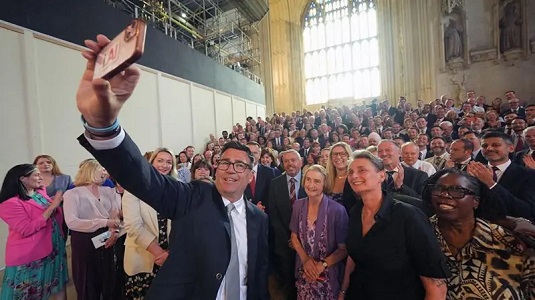
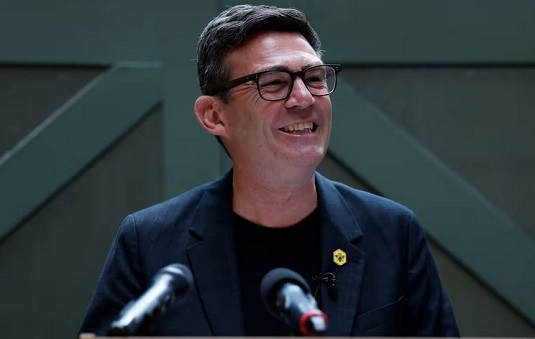
Belated congratulations to Andy Burnham. As Simon rightly observes, Makerfield was an extraordinary by-election result. An increase in the size of the incumbent governing party's majority barely a month after Reform stomped over the constituency and won over 50% in the local elections. An exercise in solidifying a social democratic majority behind a Labour Party that has spent the last six years stymieing Labourist aspirations, pushing against working class interests, and doing its damnedest to disperse it as an electoral bloc. It also defied all expectations that forecast a tight contest, if not a defeat for Burnham. In the end, Labour won an absolute majority on an increased turnout. Most of those who turned up and voted knew what the stakes were and responded by sending back someone down to Parliament pledged to resolve them.

Extraordinary results require extraordinary circumstances. That was the real story of Makerfield. The local and regional party understood this was less about the label and more about the name. Andy for Us said all the posters. Keir Starmer stayed away, but he was very much present as a ghastly shade to be exorcised. The Burnham campaign were the plucky insurgents versus a clueless, careless Westminster. "Are you voting for Andy?" was the scripted canvassing question Labour supporters took to the doorstep, putting distance between him, his personality and standing, and the embarrassments of government. Burnham's political weight isn't thanks to his charisma, which he has in bucket loads compared with the voids around the cabinet's table, but his record. Once again demonstrating that political science isn't rocket science, ensuring the little things are seen to be done and are felt to be done is the root of Burnham's popularity. Riding subsidised, reliable buses into the city centre one can see the new wealth flowing into Manchester. The optics of 21st century Labourism are cranes dotting the skyline, the continued vibrancy of the city as a leisure destination and cultural capital, and getting the homeless off the streets and into accommodation. In reality, Burnham's much touted Manchesterism is a vibe consisting of localist Croslandism, a property boom, and frequently declared intentions to help the most vulnerable. But for enough Mancunians this is enough. Being seen to be successful and cultivating an impression that Andy is on their side won Burnham the seat.

To be fair to Makerfield's new honourable member, Burnham's two victory speeches, at the count and Friday's rally, show an understanding of the hows and whys of his win. His message about Makerfield being typical of London's neglect of the north is consistent with past positions. Most famously his populist and popular show downs with Boris Johnson on Covid restrictions. But the real rub is the emphasis he placed, in both speeches, on this by-election victory being his - and Labour's - last chance. Surely, Burnham must be aware that rowing back from his soft left persona in the opening weeks of the campaign is pregnant with the potential of political ruin, as a slippage in his approval rating attests. Burnham talks a good game with frequent verbal broadsides against trickle down economics and 40 years of Thatcherite abandonment. But will his actions match the impressions he's spent the last five weeks encouraging?

That depends on which Andy Burnham turns up on Number 10's doorstep, or puts a showing in should Starmer and/or others insist on a summer-long leadership contest. If Burnham is to thrive, if Labour is to survive, it means - incredibly - taking its cue from Lisa Nandy. "The era of centrist governments are over", she apparently declared at the Makerfield count. She's right. Labour's salvation lies in understanding its voter base, its coalition, and acting accordingly. Labour must marginalise its right wing, who are supplicants to the tech and finance oligarchies. And the party must learn how to think again. Makerfield spoke on behalf of this country's social democratic majority. They know "their" government can't work miracles, they're not expecting loaves and fishes, but they do expect to have a sense that it has their backs. That Labour politicians care about the people who put them there. They expect Labour to work toward building a better life for everyone, not just for a few MPs and advisors at the top of the party tree, and the rich people who pay for them. This is the instruction the electorate have issued to Andy Burnham. He, and the party, would do well to heed it. Otherwise ruin awaits.


Image Credit

Monday, 15 June 2026

Authoritarian Babyism

If you're lucky to be under the age of 16, congratulations! You will still be allowed to access this site from April next year. But if you want to watch more or less identical content on YouTube or TikTok, or the Prime Minister announcing decisions about your future, tough. If you're 16 or 17, you can join the army, pay tax, and (soon) vote, but hanging out with your favourite cool politics people on Bluesky after half eight at night is verboten. Once again, the government are proving that stupidity is the flip side of authoritarianism.

Keir Starmer admits that his mooted social media ban is doomed to fail. It won't prevent teenagers from accessing their favourite platforms, but it will stop some of the harms some of the time. Meanwhile in Australia, which is the Labour right's favourite model for how politics should be done, 60% of young people affected by their identical ban have found workarounds through VPNs or hanging out in quiet or obsolete corners of the internet beyond the ken of the IT police.

What damns Starmer's stunt in its own terms is that it goes against the evidence presented by the government's survey. The data says that social media can make young people anxious and more worried about what other people think about them, but across the 10-21 age range much higher numbers are given for the statements 'social media makes me feel included' and 'social media helps me feel connected to other people'. In the government's consultation exercise, 72% of young people themselves said they were worried they would miss out if restrictions were introduced. Ian Russell of the Molly Russell Foundation, set up after his daughter took her life after long exposure to algorithmically-pushed self-harming content, rightly said that a blanket ban is a cop out because it avoids forcing social media outfits to comply with British laws. Which, as we've seen with the government's attitude to far right and loyalist violence and their use of Twitter and Facebook to organise, looks very much like a pattern of behaviour rather than a coincidence.

Since Starmer came to office, it's incredible to think he's fronted a government even more authoritarian than the frequent outrages Boris Johnson committed against constitutionalism, the right to assembly, and freedom of speech. This ban is just another big man flex, thinking it will curry favour with parents for whom the internet and social media is a constant worry. Despite many of them growing up in the Wild West years of MSN and Yahoo Messenger, the first flush of internet dating, photo sharing, and ubiquitous pornography. And just like the Democrats' enthusiasm for banishing TikTok from the phones of US teenagers, social media is the primary means by which young people now get their news. Curtailing their access to their trusted news sources makes the management of information flows easier for government spinners. The perceived political benefits are not excluded from their equations.

But also, it speaks to another concerning turn. It is normal for teenagers to push against limits, break the rules, and occasionally thumb their nose at the law. By his own admission, Starmer said he "enjoyed a good time while at university" when asked about drug-related indiscretions. This state mandated coddling, at a time when crime in Britain has fallen off a cliff and, arguably, young people as so-called digital natives have never been so connected to each other through webs of weak ties, is utterly unnecessary. Starmer and Labour are cracking down on the freedoms of young people, and not the far right, nor white supremacist billionaires, precisely because no oligarchical interests will be harmed in doing so.

Wednesday, 10 June 2026

On Cowardice

Another night of rioting, this time culminating in the burning out of African immigrants from a Loyalist area of Belfast. This was called for by Tommy Robinson, amplified by Elon Musk, and backed by Rupert Lowe's Restore. And what is the British government's response? Exactly the same as the Southampton rampage. Hand-wringing, pious words, and a pitiful attempt to shame the far right into behaving decently. Yes, arrests were made and rioters got banged up, and the same will happen to some involved in the Belfast unrest. But the political response is weak. Keir Starmer is treating the rioters like so many criminal damage cases, while the instigators don't just continue to walk free, their call for race war on Britain's streets goes unchallenged.

Why? Once, I was willing to give Starmer and his government the benefit of the doubt. He's a bureaucrat, not a politician. He hasn't got the skills to articulate the politics of where most people are on racist violence. He is afraid of putting off the (mythical) voters Labour has lost to Reform. Yet, still, no robust push back against increasingly audacious fascist provocations. Even as Elon Musk and, effectively, his employee use their social media platforms to organise and mobilise. The government's sleeping at the wheel, under these circumstances, has to be something more than incompetence and complacency. It's stretching credulity to suggest their refusal to act on Twitter is because they think it's a valuable news outlet used by millions of people.

Politics is always a struggle between interests, and this is where the government's paralysis lies. It works at two levels. Starmer will not take action against "X" because doing so would jeopardise the special relationship. I.e. The military and economic dependence of the British state and the British ruling class on the United States, which finds itself variously expressed in Farage's fondness for Trump, Lowe's bootlicking of Musk, the myriad connections that once existed between the Tories and the GOP, and not forgetting Labour's Atlanticism and its cringing love for Clinton, Obama, and The West Wing. Papa Trump must therefore be appeased. Related to this are the flows of techbro investment coming in to the country. The system of tax breaks and guaranteed markets Britain's public services offer their wares are nice opportunities, but from Labour's point of view action against Musk's interests might frighten Silicon Valley off. Especially as its luminaries are billionaire oligarchs and have the arrogant, far right class conscious politics to match. And for leading Labour politicians themselves, as noted before, taking on the interests of big capital is unlikely to do much for one's post-politics career. Especially if they see Nick Clegg and, ahem, Peter Mandelson as their models.

In the end, the mystery of Labour's failure to take the far right on politically isn't a puzzle at all. Their cowardice has material roots. It's the class politics. It's always the class politics.

Friday, 5 June 2026

Thursday, 4 June 2026

Right Riot

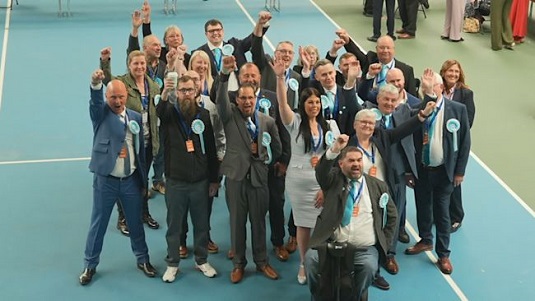
There have been two phases to the riotous assembly Nigel Farage stoked following the investigation into the police handling of Henry Nowack's murder. There was the confrontation in Southampton itself. This was no grassroots anger bubbling over, but a flashpoint that saw the far right across London and southern England mobilise for a fight. All the fascist faces were there - Tommy Robinson, Laurence Fox, Paul Golding, Posey Parker, all dragged their knuckles from their fetid swamps to whip the bovva boys up into a frenzy. And they duly obliged, rampaging through inner city residential streets and attacking the police. No doubt many of them can look forward to a spell in pokey courtesy of the footage shared by their grifting mates.

Yet the political objective was achieved. Having spent the last two years stirring the pot, the far right have had their first summer riot. Another step toward how things used to be, when the National Front routinely took to the streets in the 1960s and 70s. But the second phase of this right riot has proven more successful then any of them could have dreamed. Paper after paper, news outlet after news outlet, have surged across and trampled on the cordon sanitaire and hurled the bricks and wheelie bins of far right talking points into mainstream public discourse. For example, Sky News asked if the police are indeed "anti-white", forcing the gibberish about two-tier policing onto television screens. They were joined in this by The Mail, a "debate" on Good Morning Britain, and The Sun "just asking questions". On top of this Chris Mason, the BBC's chief politics gossip-monger ran cover for Farage as he was criticised by the other party leaders in the Commons one Wednesday. Aha! said Mason, they were being political about Henry Nowack's death too! You've got to ask it's only a matter of time before the great replacement theory gets an airing, all in the interests of debate.What happened in Southampton gave right wing papers and their little helpers in broadcast journalism an excuse to treat far right rubbish, which they themselves know not to be true, as if it was based in fact and was a valid viewpoint. This is where their riot has proven particularly successful.

Characteristically, mainstream politics have been useless in its collective response. Keir Starmer and Ed Davey tried to look statesmanlike, while telling Farage off for not respecting the stated wishes of Nowack's father not to use his son's murder for the politics of division. Instead, if they had anything about them, they should be making clear that his speech instigated Tuesday night's unrest, as Farage knew it would, and make plain that Reform is but the electoralist expression of violent street thuggery. But even when the King responded better than Labour did ti the 2024 riots, anyone hoping for better will be waiting for a long time. Something underlined earlier on Thursday as Starmer was moaned about Elon Musk dialling up the race hate in this country. If only the Prime Minister with his huge majority were in a position to do something about malign foreign actors working to destabilise British politics. At the moment where the violent consequence of Farage's tub-thumping could see politics move decisively against him, there is an absence where the far right challenges to Britain's limited democracy could be met.

Image Credit

Monday, 1 June 2026

Trade Unionists for Farage?

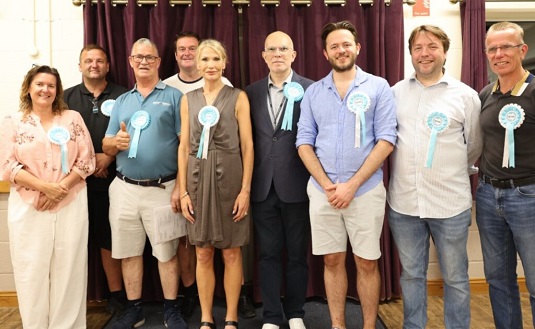
For The Times, JL Partners' poll of the political intentions of trade unionists found that 28% of them are prepared to back Reform, a 20-point increase since the general election. Labour on the other hand have fallen by the same margin to tie with them. Elsewhere in the survey the Greens have increased their support to 12%. Speculating about the why behind these figure on Times Radio, Terry Stiastny thought it has to do with wokery, net zero, and anti-immigration worries. Which is exactly what I would expect someone with no understanding of the history of the labour movement to say.

The truth is there has always been a strong right wing bloc among working class people. We're not talking about those patronised by Blue Labourism, but dyed-in-wool anti-Labour voters. This is the section of the class that loyally turned out to vote Conservative, amounting to about a third of the work force. That part of the class where I come from. And this also had a political expression in the labour movement. Informally as, for want of anything else, backers of strike-averse right wing Labourism, and formally as the Conservative Trade Unionists. In the 1970s they were a real outfit that commanded the allegiance of tens of thousands of members. Yes, it's hard to believe now, but the Tories had the sort of trade union clout left groups, with the exception of the official Communist Party, could only dream of. The historic appeal of conservatism to working class people is not much of a mystery, and it is worth noting that the Tories made real efforts from the late 19th century onwards to win over "working men" and were particularly successful in the 1930s, following the granting of universal suffrage, in organising rural workers. Working class conservatism runs deep.

What the Times poll simply shows is a switch. The Tories have destroyed themselves by torching their means of mass political reproduction, and so the right wing sections of the labour movement who might have supported them in the past have shifted allegiances to Reform. An assumption borne out by the figures. Just 14% of 2024 trade unionist Labour voters have switched to Reform, the rest coming from those who either supported Nigel Farage at the time, or predominantly voted Tory.

A case of shrugging the shoulders then? Of course not. As we have seen generally, Labour have paved the way for Reform by trying to out-do them from the right on immigration and asylum, affirming thir talking points and not contesting the politics. And, sorry to say, by and large trade unions matter very little in the day-to-day life of most of their members. Ballot papers, a seldom-read magazine, and that's about all most members see of their unions - a point reinforced by the abysmal turnouts for internal elections. On the one hand, the so-called political wing of the labour movement has cackhandedly encouraged Reform support, while its industrial organisation does not, with some exceptions, do much to discourage it.

Reform might be growing their presence in the trade union movement, but it is a passive reflection of their strengthening support in society more generally, and unlike the old CTU is not organised beyond a handful of pockets. It's well within the power of trade unions to reverse this support and stop them from making further inroads. And, fortunately, Reform itself is probably their greatest ally. In February, Richard Tice was boasting how Reform would just undo the new workplace rights Labour introduced in April, but also would tear up workers' protections. Maximum hours, safety at work, paid breaks, holidays, parental leave, fire at will, scrapping the minimum wage, Reform are promising the sort of bosses' agenda that the Tories dreamed of implementing. So proud are Reform that they call it their "Great Repeal Bill". Explaining what a Reform government means for working class people is the start of it, but that has to come from within the unions, from it being taken up by workplace reps and officials. A charge sheet filed on the union website or nestled in its magazine won't do the trick. Anti-Faragist moves will only be effective if a union is relevant to its members, that if their organisation feels like their organisation, that its moral leadership counts for more than the appeal of Reform's racist scapegoating.

Image Credit

Five Most Popular Posts in May

What a scorcher! No, not just the month but the traffic on this blog! If you're inclined to believe the very basic Google stats package built into this platform, we had almost a million page views last month. Unfortunately, because this has been the pattern for a while it's not a sign of my breaking through into the big time. More a matter of generative AI repeatedly crawling though the pages looking for new words to chew on. I hope it makes them choke. And so, because the stats package is useless I have little idea of whether I'm addressing an audience that could fit into a seldom-seen phone box, or multitudes. Anyway, onwards!

1. The Road to Wigan Keir
2. Should the Greens Stand in Makerfield?
3. Andy Burnham's Second Coming
4. It's the Differential Turnout, Stupid
5. Labour's Political Paralysis

The evaporation of Andy Burnham's soft leftism as he entered the fray of the Makerfield by-election got the top spot. Though now we see he's decided PR might be a good idea after all, and would go into the next Labour manifesto. And there are also suggestions that he's quite keen on a progressive alliance between parties. His re-entry into national politics has proven itself a tale of vibes and counter-vibes so far. In second was the debate in and around the Greens about whether they should stand a candidate - my argument was that the party should demand something in exchange for either standing aside or running a low key campaign. Third, it was Andy Burnham again on the occasion of his Makerfield announcement. In at four were some suggested rules about interpreting the results of the local elections in England, and in at last was the impasse Labour was in at the beginning of the month - a hapless leader, but no one in the PLP being in a position to remove him.

As a believer in second chances, for the second time the spotlight returns to ... this post's predecessor. Tony Blair has said a few things, and what's interesting about his essay is the no frills assertion of what's best for the ruling class, and damn everyone else.

Looking ahead, right now I have no idea what I'll be talking about. But if past behaviour is any indicator, look back at May's content for what will likely crop up in the month.

Image Credit