Showing posts with label Feminism. Show all posts

Friday, 13 February 2026

What I've Been Reading Recently

It's been some time since we last had one of these, so rather than a mega list here's a more manageable chunk: the books I got through in January.

Chasm City by Alastair Reynolds
Leonard and Hungry Paul by Ronan Hession
The Transparency of Evil by Jean Baudrillard
The Gulf War Did Not Take Place by Jean Baudrillard
The Illusion of the End by Jean Baudrillard
Cold Allies by Patricia Anthony
The Food of the Gods by HG Wells
Baudrillard Live edited by Mike Gane
Young Mungo by Douglas Stuart
Clash by Night by Henry Kuttner and CL Moore
The Man Who Fell to Earth by Walter Tevis
Baudrillard's Challenge by Victoria Grace
The Forge of God by Greg Bear

Once again, Baudrillard is gently simmering on the back burner, so no commentary about these works here. But I will say the book by Victoria Grace is by far the best one-volume treatment our hyperreal hero has received. At least among the not inconsiderable secondary literature I've read. Her target are the feminist debates around subjectivity that dominated proceedings in the 1990s, and makes a cogent and compelling case that Baudrillard offers a way out of the impasse it butted up against. Yes, really. Baudrillard, by way of Haraway, opened a path to a materialist feminism of the 21st century - one that could grasp the specificities and new patterns of power in the postmodern era. Published in the futuristic year of 2000, it's now a very old book, but its relevance lies not only in the feminist case for Baudrillard, and the fact much contemporary feminism did take the Harawayan road. The possibility of a fruitful engagement remains.

As mainstream novels went in January, it's a real case of chalk and cheese. Leonard and Hungry Paul was the sort of book that made me want to hulk out and rip in half. A twee story of friendship between two socially awkward, and implicitly autistic men, it inspired nothing but hostility in me. It would have been a DNF were it not a book group read so I endured ... and then couldn't go because of illness anyway. I don't mind plodding and inconsequential as long as it's done well, but this was an irritant. The very opposite of calming. And now it's been filmed as a TV series. I won't be watching. What a welcome difference Young Mungo made. About the titular Mungo, this is a coming-of-age story about a young, gay working-class Glaswegian. The ever present backdrop is alcoholism, child neglect, violence, abuse, and sectarianism. Life is brutal, and it's as far from a cosy read you can get. Yet it's a novel full of love as well. A shocker it never made the Booker short list.

Up there this month with Young Mungo is The Man Who Fell to Earth, a stunning work of loneliness and despair. What a cheery read! Thomas Newton is on a mission from Mars, and that's to save his people! He uses their advanced technology to make millions so he can build a fleet of ships and ferry what's left of his civilisation to Earth. But nothing is ever straightforward. The preceding sentence does not do this book justice. It's one of the greatest SF novels I've read, and sure to be on the year-end list. A good way for the mainstream literary reader to sample science fiction without the tropy stuff getting in the way. Also very good, but this time super-tropy was Chasm City, a slab of a book typical of British new space opera, but one that is extremely polished and compelling. Chasm City is an exciting mix of generation ship, spy, and hard-boiled SF noir. A recommend if you like that sort of thing.

And the rest, sadly, was quite average. Bear's The Forge of God was over long, and half-way through I couldn't wait to see the Earth destroyed. Clash by Night by golden age power couple, Kuttner and Moore was high seas hi-jinks on Venus. It had a certain sharpness and quality, but by the same token it didn't grab me. Mercifully, it was short. I was expecting good things from The Food of the Gods, Wells's tale of oversized plants, animals, and (eventually) humans, and how Edwardian society dealt with them. Not a patch on his better known stuff. And lastly was Patricia Anthony's future war novel, Cold Allies. Europe is fending of invading Arab armies, driven north by run away climate change. And as the former teeters on the brink of defeat, a set of mysterious aliens show up. Friend? Foe? Sadly, you'll be indifferent to the answer by about a third of the way through.

What have you been reading recently?

Sunday, 7 April 2024

A Note on Political Epistemology

A great time was had at the Midlands Critical Theory conference at Nottingham Trent University these last couple of days. There was one thing I wanted to note in relation to a paper delivered by the comrades of the Critical Political Epistemological Network.

To be honest, that political epistemology has become a recognised sub-discipline served by its own journals, professorial chairs, and postgrad programmes was entirely new to me. Political epistemology's concern is how we speak about truth and knowledge in politics and how this conditions decision-making, questions of legitimacy, who is anointed as experts or authorities to speak in politics, and so on. CPEN is a critical engagement with and rejection of political epistemology's unthought assumptions. Their paper looked at the institutional context of the sub-discipline's formation, noting it grew out of Anglo-American politics departments denuded of radical thought and, as such, does not even place politics in wider social contexts. What is striking about it is its refusal to engage with political theory outside the usual touchstones of liberal and conservative thought, its dismissal of feminism (except in its most liberal forms), and the organised ignorance of Marxism, post-structuralism, critical race theory, critical theory generally, and anything that smacks of sociology. CPEN's argument is the object of political epistemology is worthwhile investigating, but its self-conscious limiting of how to analyse politics and knowledge undermines the enterprise. CPEN proposes to overcome this by struggling to reorientate political epistemology so it draws on and redefines itself in full engagement with what it presently excludes.

This description reminded me of my frequent annoyance with political science. I remember rocking up at my first MRes class 20 years ago after spending many an undergraduate and postgraduate year reading Marxism/critical theory, feminism, postmodernism, and the intersections of all three, and coming away flabbergasted. There was no sign the mountains of scholarship these tectonic movements threw up even existed. What a political party was, what they did, and crucially their relationship to wider society were rudely crammed into methodologically restrictive terms that allowed for easy quantification. It was interested in generating a particular species of social fact, a political epistemology if you will, that avoided asking the most basic questions about party politics: what is power, what is the state, what do parties do, and how do they work as institutional aggregators of interests. Political science offers up a reified and distorted diagram of politics that, in turn, informs how academics, commentators, and (in some cases) politicians think and relate to politics. Its taken-for-grantedness sees itself independent of other social scientific disciplines, especially the dread sociology, and therefore constructs politics as a sphere of activity autonomous from all other spheres of social activity.

Where political science led, political epistemology has followed. But this effort at sealing themselves off from the social is more than a disciplinary strategy for attracting the awards of academic respectability. It's an effect of politics itself presenting as a totally autonomous field of activity. We had a recent reminder that uttering the truth of politics - i.e. the struggle of and for interests - is forbidden. All politicians, regardless of politics, are motivated by public service and/or ideas. There is no necessary correspondence between personnel, values, party positions, and constituencies and to suggest otherwise is crude reductionism, or a retread of the politics of envy. Even the literature most prized by politics serves to ontologise the autonomy of the political. That, by the way, is not manifestos, works of political history or theory (more's the pity), but the biography. They focus on individual motivations, backgrounds, dilemmas, and decisions. They humanise the sanctioned political subject (the politician) and endows them with complexity and messiness. What the weight of biography does is neuter the structural characteristics of politics, reducing it to a site of debate, contestation, and rivalry between reified, ambitious but fundamentally disinterested individuals.

Political epistemology sees itself as autonomous because its big brother discipline, political science, also sees itself as a completely separate from the study of the social world. And this is an echo of how politics denies its social character and pretends itself autonomous of the societies in which it sits. The project of pushing a critical political epistemology is much more than correcting a case of symptomatic disciplinary silence: it's confronting the constitution of politics itself.

Image Credit

Tuesday, 31 January 2023

Care and Capitalist Reproduction

The recent return to Hardt and Negri wasn't a whim. Thinking about the end of neoliberalism as a political economy is relatively easy, seeing as macroeconomic policy in this country and elsewhere is moving away from it. But what about the end of neoliberalism as a mode of governmentality? With the end of cheap commodities and the tight property market, the capitalist carrot is getting increasingly thin. But are there other movements afoot that pose neoliberal governance a challenge? By way of prepping for a project on this, the work done around care and social reproduction by comrades working in the socialist feminist tradition is fruitful because of its reflections on resistance to the commodification of care and building a mutual aid commons, and how capitalism tries to colonise and commodify this opposition to itself. To this end, here's a recording from a couple of years back from the Care Collective, who wrote their  Care Manifesto from the front lines of the struggle against neoliberal governance. Well worth a listen.

Wednesday, 17 November 2021

Revisiting the Cyborg Manifesto

Leafing through notes written 20 years ago about a key work in social theory is a strange experience. Only a few embers of recollection glow in the gloom of distant memory, and one's reading and appreciation of the heavy stuff has become discerning and (perhaps) more sophisticated with the passage of time. What was once difficult is now, comparatively speaking, a cinch. This was in mind when returning to the pages I'd scribbled on Donna Haraway's seminal A Cyborg Manifesto, which booted up for the first time in 1985. What attracted me to the manifesto was its locating itself in the socialist feminist tradition, and its grappling with the question of political subjectivity. I.e. What is/should be the vehicle for realising leftist politics if the old notions of class were obsolete and was joined in the scrapyard by essentialist notions of 'woman'? And the answer was something I didn't properly appreciate at the time.

I'm getting ahead of myself. Haraway's manifesto appeared at a moment of flux and defeat for progressive social movements in the United States. Old Ronnie had been re-elected by a landslide over the hapless Walter Mondale, and the power of Christian fundamentalism (styling itself as 'evangelism') exerted a huge conservatising cultural pull. If this wasn't bad enough, there was a renewed emphasis on the privatised (patriarchal) household just at the moment of its crisis, a roll back of social gains made since the late 1960s - particularly off the back of the AIDS crisis, and the new Cold War saw the US ramp up military spending and hype its so-called 'Star Wars' technology as a means of knocking Soviet missiles out of the sky. It was for many a grim and frightening time. Coincident with this moment was the retreat of feminism, or rather what has since become recognised as its "second wave", as women of colour, lesbians, and working class women came out forcefully (and relatively prominently) against the class and racial biases that often constituted "mainstream" feminist politics. Other bits of feminism were absorbed into the academy, and/or developed its own institutions that (usually) provided an alternative but limited social security net for women. Into this juncture, Haraway brought her own feminist critique of masculine rigidities in science and scientific culture. Her concern was to make sense of these events by thinking through the dissolution of the relatively firm and discrete categories that underpinned inequality and social inclusion/exclusion, what opportunities they open up for a feminist and socialist politics, and how we can overcome the thorny problem of subject/agency.

Social and technological developments had thrown into crisis three crucial cultural boundaries that foregrounded Western thought, and with it scientific practice. These were the distinction between human and animal, that is the recognition that the qualitative difference we presuppose between ourselves and the rest of the animal kingdom is itself a cultural distinction. It isn't something that can be asserted biologically. The second is between organisms and machines, a divide that had grown increasingly problematic with the rise of machines that have agency - such as automated and computerised systems, and latterly algorithms. And lastly the collapse of the physical/non-physical. Traditionally played out in mind-body dualisms, wearable machines, software, actual miniaturisation and the semiotic reduction of machines to floating signifiers ready to be invested with meanings in different combinations. These dissolutions work together to dissolve the knowledges previous structures capital and state power relied on.

Haraway expands on this point by introducing what she refers to as the 'informatics of domination'. Here, the Manifesto sets up a series of oppositions: examples and aspects of "old" forms of domination and their replacement by the brand spanking new. For example, riffing off Baudrillard, the logic of representation is replaced by simulation. Unpacking it a little more, one might contrast power politics in a liberal democracy by parties ostensibly competing by articulating different interests to today whereby parties create their own realities or simulacra of representation, and invite electorates to participate (right wing populism and technocratic centrism are examples of this species). Another is the shift from concerns with physical, embodied hygiene to "stress management". I.e. Anxieties (and instructions) aimed at the physical body moving to the soul itself, a preoccupation with mental health entirely consistent with neoliberal subjectivation and its attendant individuation of inequalities.

These couplets, of which there are a few dozen, mark two important developments for Haraway. Firstly, they're overly artificial. The power enjoyed by social media platforms derived from their control of digital infrastructure is a transparent accomplishment. They outcompeted and, in some cases, out-intimidated their opposition to establish themselves. Their power is visible even if the forms of exploitation on which they thrive are not, and it's highlighted not least by the animosities stirred up by previous, declining powers. This is important for Haraway because if new patterns of domination and power are perceived as synthetic, it allows us to start asking questions about new ways of thinking through and organising the social world. This comes with a bonus too: it shows up past (and persisting) "traditional" power structures that rest on naturalisms, essentialisms, and conventions as equally arbitrary. New forms of domination don't just threaten to crowd out "old" powers, their very existence calls into question the illusios they depend upon. The second is the target of these new powers. The 'informatics of domination' aren't particularly concerned with the whole subject identified with certain whole bodies, but bits of the subject. Power patterns and arranges us according to abstract criteria. There are standard benchmarks and our bits and pieces generate metrics that measures and effectively judges us. In other words, a pre-emption of Deleuze's discussion of dividuals.

Enabling this is a new wave of the industrial revolution. So-called post-industrialism and deindustrialisation has been written about enough on here, but for Haraway this has three important consequences: the deepening of the global division of labour, a reconfiguration of lifestyles around jobs (i.e. jobs/careers do not determine nor generate identities, but conditions them around axes of consumption, identity, and childcare. She also notes, along with other feminists and mainstream economists, a certain feminisation of work. This is in the sense the competencies new forms of work mobilise - affective labour - have traditionally been coded as feminine, and the fact work and jobs are becoming precarious and vulnerable, as per the historic lot of women. Labour therefore passes into what she refers to as 'homeworking', the catch-all term for this phase of proletarianisation in which the stable gives way to the temporary. But a further consequence is how the changing political economy corrodes traditional family structures. Poverty might be increasingly feminised too, but more women have economic independence and more are the head of their households. Haraway is also at pains to stress the feminisation of labour is experienced by men as well who were disproportionately losing their jobs in the old industries and finding job markets growing tighter, the range of occupations conforming to these gendered (feminised) characteristics. Another important feature of homeworking is the embedding of these labour processes into an 'integrated circuit', which works in a double sense: the social relations that ties together the new division of labour, and their subsumption by an expanding sphere of politics. Because the feminisation of labour is, as per the informatics of domination, a synthetic and deliberate effort the existing axes of inequality accompanying its devaluation by and through gendering are newly politicised. Therefore another category passes into obsolescence: the distinction between the public and the private. This leads to an uneven political geography. The individuation of class that accompanies its feminisation finds workers variously atomised and relatively advantaged and disadvantaged.

Synthetic problems require synthetic solutions, and this is where Haraway's notion of the cyborg comes to the fore. It's worth noting that she employs an expanded notion of a cyborg:
From one perspective, a cyborg world is about the final imposition of a grid of control on the planet, about the final abstraction embodied in a Star Wars apocalypse waged in the name of defence and about the final appropriation of women’s bodies in a masculinist orgy of war. From another perspective, a cyborg world might be about lived social and bodily realities in which people are not afraid of their joint kinship with animals and machines, not afraid of permanently partial identities and contradictory standpoints. The political struggle is to see from both perspectives at once because each reveals both dominations and possibilities unimaginable from the other vantage point. (Simians, Cyborgs, and Women 1991, p.154)
A cyborg feminist politics draws deeply on the advances made by black feminism and what later became known as intersectionality. Additionally, the new informatics of domination with its will to dissolution (of the old, at least) creates conditions that invites a cyborgic response. Black feminism's critique, particularly in the work of bell hooks and Angela Davis, argues the essentialisms and focus of prior theorists didn't just downgrade or ignore the experience of black and working class women but were significant barriers to apprehending the reality of oppression and power, and therefore how to go about tackling them. Using this as the jumping off point, Haraway draws on Chela Sandoval's ideas around oppositional consciousness. Simply put, organising doesn't begin with presupposing an identity but looks at the structures that position and hold women in certain locations. A feminist politics then proceeds not from identity but affinity.

This, however, cannot happen spontaneously. Resistance is as much an accomplishment as domination. Its synthetic character grants it the designation of cyborg. For example, Haraway discusses the importance of writing, which is simultaneously the process of finding and articulating voice and signifying the emergent locus of resistance and counter-power. It also means resistance is a creative act too. To be cyborgic it to reject ‘innocence’ (i.e. ignorance of the social) and ‘monotheism’ (i.e. monocausal and totalising explanations), and as it weaves its own meanings and proffers its own analysis of apprehending the world it disrupts and rewrites the categories of received modes of domination while resisting the blandishments and efforts at incorporation by the new.

For example, such a subversion is carried by Haraway's notion of the cyborg. Cultural tropes of 'the cyborg' as a fusion of flesh and machine, exemplified in 70s television by the The Bionic Woman and the Six Million Dollar Man, 80s cinema with The Terminator and Robocop, and into the 1990s with Star Trek antagonists The Borg remains the most popular notion of what a cyborg actually is. But their subversive potential for boundary blurring are immediately shut down in as they are deployed as super heroes upholding (white, imperialist, anti-communist) American values, as robot soldiers, as literal law enforcement, and as mindless automatons. Each case represents a shutting down and a narrow channelling of potentialities. Haraway's cyborg offers a possibility that is altogether more subversive: a living construct allying different social locations, histories, dividuals. The Harawayan cyborg is collective, not singular, networked and networking, a recombinant force appropriate to the challenges of the cybernetic capitalism of the 1980s - and its reboots and updates since. Because cyborg politics are a form of writing that is, in a sense, never written, it's appropriate Haraway's intervention is A and opposed to The Cyborg Manifesto.

Coming back to it again, it did surprise me how much Haraway thought in parallel to contemporaneous poststructuralists. For example, it's my understanding she didn't encounter our friends Deleuze and Guattari until much later, and probably helps explain why her friend and Deleuze (and posthumanist) scholar Rosi Braidotti was drawn initially to her work. The parallels and anticipations are uncanny. Likewise Hardt and Negri, whose application of Deleuzian Marxism to politics, thinking through of the multitude, and the flexible but reactive power of Empire and apparatuses of capture is anticipated by the cyborg and informatics of domination respectively.

A Cyborg Manifesto has inspired its own pulse of writing, not least from Haraway itself. Her latest major work from 2016, the interesting-sounding Staying with the Trouble: Making Kin with the Chthulucene is a meditation on the first distinction made in her manifesto and the need to adopt an interdependent and continuous approach to life on this planet, how our species' actions have affected it, and that only a multi-species perspective can see off the threats pregnant in the 'Chthulucene'. Which include climate change and mass extinctions. The same themes are there, as is the same playful, provocative polemic.

Advances in the social sciences and philosophy are haphazard and non-linear, and abiding by this truism A Cyborg Manifesto remains some of the most advanced - and readable - social theory there is, despite being almost 40 years old. Especially set against a recrudescence of reactive and anti-productive "theory" that seeks to close down possibility, stymie potential, and force human beings back into naturalistic and identarian moulds.

Image Credit

Thursday, 30 September 2021

What I've Been Reading Recently

Six months have passed since I last did one of these. And before that it was six months as well. Ho hum. Here's the handful of titles I've got through since March.

Capital Volume 2 by Karl Marx
Bel-Ami by Guy De Maupassant
Anti-Oedipus by Gilles Deleuze and Felix Guattari
Stigma: The Machinery of Inequality by Imogen Tyler
Orfeo by Richard Powers
Feminism, Interrupted by Lola Olufemi
The Age of Empire by Eric Hobsbawm
A Thousand Plateaus by Gilles Deleuze and Felix Guattari
The Princess Bride by William Goldman
Tangled Up in Blue by Rowenna Davis
Imaginary Relations by Michael Sprinker

I can pin the lack of bookage on the abandonment of the old commuting routine (cheers Covid), but some weighty tomes are responsible for soaking up dozens upon dozens of hours. In his commentary on Marx's second volume, Engels lamented the lack of agitational material in its pages despite its importance and position in the analysis of capital. He wasn't wrong. Marx was a witty and acerbic writer gifted with a talent for phrase making, but most of that doesn't get a look-in here. This isn't to say the second volume is a hard book - it's certainly no harder than the first. But the lack of flourishes do make it something of a joyless experience.

Even weightier were the two volumes of Capitalism and Schizophrenia. I've never encountered two books so hard to pin down. There's just so much in them both I could only ever write about them in fragmentary ways. I found Anti-Oedipus more fun as it fizzes with the delight of two thinkers sparking off one another. They were happy to ride the rocket wherever it ended up. Its critique of psychoanalysis is utterly devastating, and despite the difficulties of the vocabulary (which is largely, but not entirely discarded in the second book) it made for a superb, exhilarating read. Like Virilio, but weightier, and with more explosions. A Thousand Plateaus is undoubtedly an advance, and is probably the heaviest thing I've ever read. Its 596 pages are densely packed and it does not let up, with each page pregnant with potential research projects and further elaboration. ATP is more difficult to talk about than Anti-Oedipus, except to say it's indispensable. Be that as it may, I do have a bone to pick with D+G and legions of their friendly commentators.

In their advice on reading the book, they argue it is composed of a series of plateaus arranged rhizomatically. The reader can dip in at any point, then jump to any point - provided the conclusion is read last. This latter commandment is certainly justified: the concluding section is a super condensed version of the preceding breeze block, but arriving there first and working backwards disrupts the potentiality for new lines of flight that come with encountering the concepts and diagrammatic expressions. However, the utility of a randomised first reading is somewhat overstated. They might have aspired to a philosophical anticipation of Choose Your Own Adventure books, but ATP conforms to the normative expectations of linear reading. I.e. Concepts introduced early on are later developed, while those hinted at and gestured toward get their elaboration in due course. Arguments unfold in an A-to-B fashion, and each chapter (which are substantial enough to be stand alone books) ends with the customary summarising paragraphs. This is just as well because a real commitment to rhizomatic (dis)ordering would have made this supremely challenging read even more of an effort. And I must confess, ATP is not just an exhaustive book, but an exhausting one. I produced 60-odd pages worth of notes from working through it, and often it left me with little energy to put fingers to keys to bash out a piece for this here site. And even then I'm not convinced I'd have got as much out of it if I hadn't spent time reading the secondary literature. The contents of these books are going to take a long time to digest, so expect them to crop up from time to time for as long as this blog lasts.

Recommended reads is Imogen Tyler's book, which I used for a summer student reading group. Frequently a tough read because of the horrors its pages describes, Stigma is a superb critique, update, and supersession of Erving Goffman's famous book of the same name. Also recommended is Lola Olufemi's introduction to contemporary feminism. It will be the core text on my gender and sexuality class in the new year because of its stress on decolonisation, intersectionality, class, and critique of white feminism. And because it's good. And Imaginary Relations deserves a shout out for its considered treatment of Althusser on the development of a materialist theory of aesthetics. Michael Sprinker notes the trouble the specificity of aesthetic practice posed those locating it as practices steeped in ideology. Does acknowledging its peculiar character concede ground to bourgeois conceptions of art, with its nonsense about auras, and the individuated brilliance of great artists? It doesn't have to (indeed, Deleuze and Guattari discuss this (with different vocab, obvs) in What is Philosophy?), and Sprinker argues Althusser's scattered remarks on matters artistic point toward a materialist theory of aesthetics. Indeed, thinking about this well over 30 years later it seems obvious that Bourdieu's work has provided the most compelling framework that fits the bill. Quite what Althusser made of him would be interesting to know.

Bringing this post to its end, one book I've read three times this year is missing from the list. And that is my own Falling Down: The Conservative Party and the Decline of Tory Britain. There's little more I need say about this, except buy it.

What have you been reading?

Image Credit

Thursday, 12 August 2021

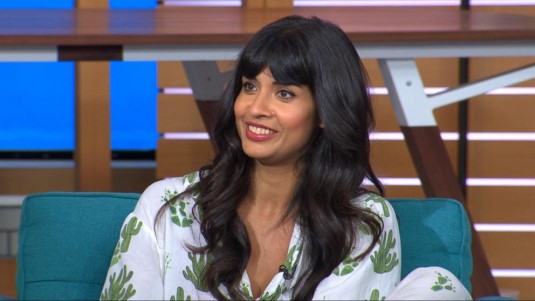
Jameela Jamil: A Defence

No one is born a socialist, we are all made. A banal observation as such things go, but sometimes this is forgotten by self-defined socialists themselves. Twitter (where else?) has provided us with an occasion for remembering this truism. On Thursday evening, Marx briefly trended following the posting of this clip of Jameela Jamil in conversation with Chelsea Handler and Amy Schumer. She said,
However much we hate capitalism, however we may acknowledge the evils of capitalism exist, currently money is freedom for women. And I know this is dirty and wrong and an unsocialist and unmarxist thing to say, but being able to know that if I have an emergency and I don't have to rely on a man, and I can make my own decisions and I as a businesswoman can hire other women and people of colour and people from other backgrounds that don't get hired for jobs, gives me freedom, ultimately.
A distillation of neoliberal feminism? She later clarified in a series of tweets that she doesn't make money for her company but rather funds it as an institution to platform activists, argues that lack of money was why the women who brought her up were trapped in a cycle of abuse, and says she's not au fait with the ins and outs of anti-capitalist etiquette. This hasn't prevented her from being criticised as not caring about women in the developing world, of bloating her bank account from the surplus value produced by others, as well as the girlboss jibes and all the rest of it.

Comrades need to decelerate and reflect about positionality and movement. The first words of her Twitter bio is "feminist-in-progress", openly acknowledging she's on a learning curve - just as we all are. What matters most in the clip is not an incorrect formulation that muddies the points Jameela was trying to make, but the trajectory she is on. If she had started out as a class conscious partisan of Marxism at its most nuanced and revolutionary, then this would be a cause for concern. But this is obviously not the case. Informed by her experience as a young, racialised woman who has become Hollywood successful and subsequently used her prominence to push causes close to her heart, including mental health advocacy and standing up against transphobia, the direction of travel is obviously clear. When someone's line of flight is into the left and poised to move deeper within it, are matters helped by trotting out the revolutionary purity tests? Is this how comrades greet new people casually interested in the labour movement and our kind of politics, but come with the baggage they bring from the outside?

One of the biggest threats to the vitality of the left comes from within the movement itself: the tendency to close up and treat the location of 'leftist' not as a strategic location but an identity in itself. And this is a property of the species of alienation that is common under the prevailing phase of capitalism. It's the sort of pathology that fetishises hardship and struggle as markers of authenticity, and/or a familiarity with the history of class struggle and capital T Theory as markers of personal, revolutionary excellence. And rather than working as something fundamentally open to connecting with others, building solidarity and forging a common socialist project, for too many "leftism" is the basis of animosity, individual recrimination, and demobilisation.

Do leftists have an individual responsibility to recognise the consequences of alienation and try and work against it? Yes, but there is a collective responsibility, of ensuring the popular culture of resistance we're trying to build is a solidaristic one too. Something that is critical not gullible, but doesn't attack people, like Jameela, coming into the left for not being the finished article at the outset.

Wednesday, 4 August 2021

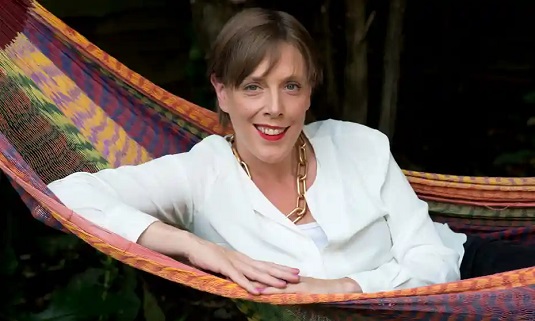
The Appeal of Jess Phillips

How did you spend your Wednesday evening? I spent mine listening to Jess Phillips talking about her new book, Everything You Really Need to Know About Politics: My Life as an MP. Why subject myself to this? Long-time readers know I'm not a fan by any means. I think she's vainglorious and self-promoting, and all too willingly made her name during the Corbyn era by crapping on a mass movement whose victory would have helped the people she affects to support. This got her attention alright, including undying antipathy from a section of current and former Labour members. But what I want to get at is her appeal. It's too much to say she's a popular MP - the average punter hasn't the foggiest who she is, despite benefiting from what in MTV's glory days we would have called heavy play rotation. But she is popular with the press and broadcast journalists, and she is boosted by them a lot. Before taking up residence on Keir Starmer's front bench, when have the media been so indulgent toward a Labour backbencher who didn't enter Westminster with Oxbridge connections nor were carrying particularly novel politics?

At the start of the session host Rosie Boycott hailed Phillips as the "most outspoken politician in Westminster today." But how has she acquired this reputation when she very obviously isn't? The dictionary defines outspoken as "frank in stating one's opinions, especially if they are shocking or controversial." The appalling Lee Anderson fits this criteria, even if it's racist cobblers he's peddling. On Labour's left, Richard Burgon, Jon Trickett, and Zarah Sultana fit the outspoken bill by raising issues the front bench prefer to run away from. But Jess Phillips? How does she make the grade, at least as far as Blairist/centrist/establishment feminist hackery is concerned?

First things first, in the relaxed atmosphere of a friendly interview, if you happened to be an apolitical punter or someone vaguely interested in politics without allegiance, she came across very well. As a general discussion of what MPs do and don't do, it was hardly revelatory but she was able to lift the veil a bit. An introductory tease if you like. Starting off, she began with the 'what is politics' questions, which she said was everything we do and say. Recalling her time on people's doorsteps, meeting people who see it as a "badge of honour" for not putting in an application for social security with the clear implication that those forced onto the likes of Universal Credit are undeserving. She challenges this by saying you've been claiming from the moment you were born. Every service used, every publicly-provided facility was paid for by your neighbourhood. There is a false dichotomy between taxpayers and claimers because everyone puts in and takes out. If we start to see things in this collaborative manner, we can start demystifying politics. It's not legislation and committees, it's about the decisions made that effect everyone.

Asked how old Phillips was when she came to that realisation, she replied her parents were deeply political people so she was very young. Instead of nursery she went to a "women's liberation play group" - a cooperative set up by local feminists. Most of the family's food came from a community-organised co-op as well. She had as socialist an upbringing as it was possible to have, and this bred in her a realisation of interdependence and why other people mattered. And because it was the 1980s, everything was Thatcher's fault. While her parents were out at work, she would watch Prime Minister's Questions with her Nan and talk about politics at dinner. She painted a picture of a happy childhood of CND face painting, the miners' strike (she was three/four years old at the time), "general strikes", but the ire of her parents was aimed at what was happening in parliament.

Her parents didn't push her into getting involved. The first political activity she decided to get involved with was an election campaign in 1992 for a family friend, but neither of her parents were interested in formalised roles. Shortly after rejoining the party in 2010 (she left the party as a student during the Iraq War), she mulled the idea of standing for the local elections. Her Mum said "It wouldn't be hard to shine on Birmingham City Council." But why rejoin Labour? Here there is a bit of a tension in her account. She said she joined in time for the leadership election, but also it was because she'd been asked by the party. Her street had seen a spate of arson attacks with cars getting set alight, and this provoked fear and finger pointing among residents. Phillips decided to do something about it by organising community events, including street parties, to bring people back together and overcome the paranoia. Because Ed Miliband's Labour was looking for people embedded in their community, she was asked to join. So which is it? Was she getting her rejoining mixed with her council selection meeting, which she also said was her first party meeting in 20 years (which meant her last was as an eight or nine-year old). Make of it what you will.

Getting selected for LibDem-held Yardley two-and-a-half years before the 2015 election (I recall her seated at the table for the anointed ones at a West Midlands Labour First dinner not long after her selection), she criticised the costs of running and the command the party had on financial and time commitments as a candidate. This caused her family some hardship as her husband had to come off nights and they lost £10k worth of income, and at that time with no certainty the seat would tip Labour's way. Luckily for her, it did. But she does talk about this in the book because she wants to scotch the idea some have that candidates are paid to campaign, when often it leaves them hugely out of pocket.

Asked about her first day in Westminster, she reiterated the reality of being an MP - that they are effectively small business people and have to do our own HR and sorting out their office without assistance from parliamentary authorities. There was also a bit of orientation from Labour. She recalls Dennis Skinner telling her cohort about the basics of procedure on the Commons floor and how to make a splash, but apart from that new MPs are left to their own devices. It's a role they can define themselves, so Phillips made hers a community-oriented job.

She did relish telling the assembled about the different categories of MPs. One are the chamber beasts who live there all the time, and they're seen by the cameras being across everything. These are about a quarter of MPs and are part of the furniture. Another quarter represent marginals so are embedded in their seats. She thought having a marginal seat makes for better MPs as they are more responsive to constituents and the constituency's nuances. This difference can be seen where MPs choose to locate their staff. Safe seat occupants tend to have more staff in Westminster, and vice versa for marginals. The other sort of MP is the campaigning MP, which is where Phillips located herself. And about 20% don't do as much as they should, and often end up in the cabinet.

A crucial skill MPs have to quickly learn is expectations management. Photo opps with politicians standing in front of new buildings raises expectations, for instance. It gives an impression that delivery is easy: "you asked for it, we delivered it" as she put it. What Phillips tries to do is make local achievements more collective and collaborative, emphasising the "we did this together" over a service relationship. She also tells constituents that she can't guarantee to sort their problems out. But politicians generally can't resist promising and then not ponying up the goods, and this is what makes people hate politicians and politics.

Asked about relationships with Tory politicians and how much Phillips works with others, now she's not a backbencher it's harder to get Tories to do things. What people didn't realise is how different parties work together all the time in committee. She thought 90% of Tory MPs went there to do good, but take a different routes. Sometimes, nominally opposing MPs are on the same route and you can find all MPs rolling their eyes when it comes to Child Support Agency casework, for example. She found it easy to make common cause when the issue is not deeply ideological, and there are opportunities for more of this kind of working now there is a cohort of Tory MPs representing seats with persistent problems their party previously ignored. Somewhat inadvertently, Phillips painted a cosy picture of parliamentary life. In Portcullis house she said we're all sat around tables with journalists and we're all just talking, but that is never seen by the public.

I couldn't see how many were in attendance, but put it like this. Only three questions appeared in the public question and answer box. One asked if the talk was being recorded, and the other two were from me. One was (I thought) soft ball, and the other would require a bit of reflection and self-awareness. I asked why she thought the Tories hadn't dipped below 40% since Johnson was elected party leader, and why she thought she was able to attract a high profile so quickly? In the end, the host ignored the second question and butchered my first. The question about support for the Tories as a political force was reformatted as one about Johnson's popularity - something entirely different. Phillips said people have low expectations in him, so he aims low and no one is ever disappointed. She also added that he's nothing like his public persona. She found him a shy and somewhat scared man who, on the occasions they've met, could not look her in the eye. He is certainly ill-prepared, but his popularity lies in his deliberate pushing of positivity - and people respond to that.

Why Rosie Boycott chose to skew the question is a strange one. Because she didn't have faith in her interviewee being able to provide a political answer to a persistent political problem (just like the question of the Labour base, there's scant intellectual interest by Labourist and Fabian thinkers/wonks about how the Tories have kept it together)? Or by steering it onto "Boris", she'd have an easier time of it with the question reframed around personality politics? Again, make up your own minds.

When all is said and done, are we any close to solving the mystery of Jess Phillips's appeal to a certain strata of media people? Only in the sense that she affects a certain kind of authenticity. Despite her family's left wing pedigree and associations with the radical politics of the 1980s, she is treated by London-based hackery as someone who is based and real because of her accent and refuge work done with Women's Aid. Despite this, she has become popular with the press because she articulates the views and common sense of establishment feminism. For example, helping out a working class woman on the run from an abusive partner? That's fine, that's permissible. But a political programme that would empower them? Absolutely not. Where Phillips has excelled these last few years, via her bad faith attacks on Corbynism and the left, is as defender of their privileged status. And, of course, through appropriate dog whistles and statements shown she's in alignment with their attacks on trans and gender non-conforming people, as well as sex workers. She is both a vessel for their aspirations and a champion of their political outlook. She's one of them, and they will continue to boost her accordingly.

Image Credit

Tuesday, 30 March 2021

Foucault and Disability

I thought this conversation between the guys at Acid Horizon and Shelley Tremain, author of Foucault and the Feminist Philosophy of Disability was really interesting. Definitely worth a listen.


I also recommend checking out their channel if, like me, you have some catching up to do on matters of social theory and philosophy. Acid Horizon also has a Patreon if you want to contribute to their project.

Thursday, 25 March 2021

Male Violence and Police Violence

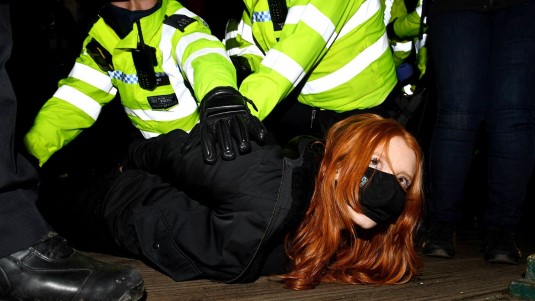
A timely two-part discussion between Alex and the New Republic's Melissa Gira Grant and Novara's Chardine Taylor Stone. In this episode of Politics Theory Other, the conversatiom ranges over the response to the murder of Sarah Everard, the infantilising of women, and the women's struggle and the police. In particular, Melissa takes aim at what she calls 'carceral feminism', a trend that believes the police and criminal justice system can be repurposed for feminist aims. In the second part of the discussion, Chardine reflects on the Sarah Everard vigil, the tensions between the middle class Reclaim These Streets versus Sisters Uncut, and how the establishment-friendly politics of the former can stymie the emerging movement.


As always, please check out the Politics Theory Other archive and help build new left media by supporting the show.

Image Credit

Saturday, 13 March 2021

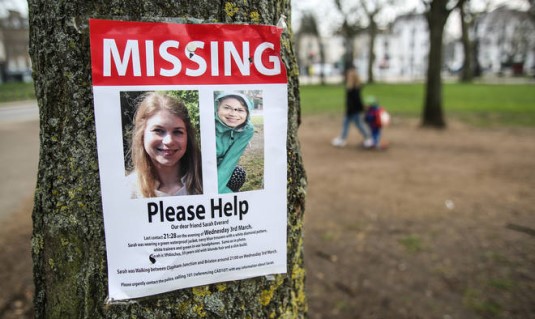
Her Name Was Sarah Everard

Her name was Sarah Everard, a woman who was just going about her business. She wore bright clothing on the night of her disappearance and stuck to well-lit streets. She had taken the well-meaning advice issued to women who find themselves outdoors after dark, and this wasn't enough. Someone - a man - decided to make this irrelevant. He decided to abduct Sarah and end take her life. If anything good is to come from this disgusting crime, let it be a change in the politics of women's safety. And it can start with changing the terms of reference: the politics of male violence. It's not like women fear going out alone at night because a force of nature will assault them. It's time a spotlight was shone on the behaviour of men, because what happened to Sarah was no isolated incident. Violence against women lies on a continuum ranging from commonplace harassment, comments on the street, unwanted and unasked for attention online, physical and mental domestic abuse all the way up to rape and murder. This is not a case of one or two bad men. This spectrum of gendered violence is sustained by the actions and complicity of millions of men. Perhaps even by some reading these words.

Entitlement, predatory behaviour, indifference to women's safety and women's voices, it's interesting and telling how social media reaction, including by some women who should know better, have responded by pretending there isn't a problem. That violence toward women by men is not a structural characteristic of gendered relationships and a lived reality of all women. When encountering this resistance to looking at how so many men subject women to intimidation and violence, you're forced to ask why. Why are many men resistant to taking this seriously, or keen to conscript this to Britain's dreary culture wars? Have they something to hide? Scared of confronting their own culpability and responsibility for making women feel unsafe? Unwilling to accept they benefit from the privileges, however meagre, being a man affords them? Is it a fear of being shown up to be a pathetically fragile human being?

There are another set of questions too. While the chief suspect, who's now been charged, is a serving officer in the Met, we know there is an outstanding indecent exposure case against him. Without pronouncing on his innocence or guilt, he's entitled to a fair trial after all, we need to also talk about the institutionalised sexism of the police. Last year we had the appalling case of coppers taking selfies with the bodies of Bibaa Henry and Nicole Smallman, two murdered women of colour. The pitiful level of rape convictions, which shoud be a source of national shame, fell to an all-time low since tracking began in 2009. Domestic abuse incidents were up nine per cent in 2019-20 on the previous year, while arrests were made in just 34% of cases and referrals from the police to the CPS for charging fell almost by a fifth. And of coppers found to have committed gross misconduct on the job, only 8.4% were dismissed from post. A case of there not being enough female officers? Or a matter of gender imbalances reflecting a male-centred sexist institution?

The culture of the police not only reflects the character of wider society with its abuse and disregard for women, black, asian, and other ethnic minorities, and LGBTQ people, it concentrates it. The police might attract those who want to "help people", or are sucked in by the usual thin blue line nonsense, but it also takes recruits from the last people you'd want in a uniform. Because it is the most visible and highest profile arm of the state as a violent institution, we find it selects the violently-minded, the bigoted, and those not just happy with the inequalities and crap this society throws up but are prepared to put themselves at risk to defend it. Sure, there are nice coppers. I know quite a few who've done time in the force. But they do not disprove the sexist, racist character of the institution they worked in any more than a friendly Tory councillor challenges the idea their party looks after the minority class interest.

Naturally, those on the inside do not see things this way. For serving police, they view their job is a never-ending slog against the dregs of society, or the "evil poor" as the celebrated copper-turned (ex-)blogger NightJack once put it. This is a grim, dirty business but someone has to do it. Therefore, if a suspect gets roughed up a little too much, or a collegue spouts racist, sexist bullshit, or uses their position to harrass or accidentally-on-purpose assault women, it's no harm done. A perk even when faced with the worst of what humanity can throw. Such a culture inculcates a sense of impunity and entitlement, and given the degree of solidarity and occupational identification among coppers so much of it is brushed under the carpet. But it cannot be repressed forever. It struggles to the surface and we see it in the lack of interest in sexual offences cases, domestic violence incidents and, naturally, the dismissive attitude towards complaints against their own.

I feel so sorry for Sarah Everard, but we know she's not going to be the last. Until we deal with men's violence and the social relationships allowing for and encouraging it, and the police are confronted not just over their systematic failings but its core institutionalised sexism and routinised misogyny, no woman is safe.

Sunday, 20 December 2020

Postmodernism: A Defence

Feeling honour bound to defend postmodernism? As if 2020 couldn't get weirder, and yet here we are. In a week where naked men in panda masks ride the New York free way, a signal of possible alien origin from Proxima Centauri is under investigation, and Keir Starmer did some opposition at PMQs, the discourse was enlightened by the sudden trending of one Michel Foucault. The enfant terrible of the French academy and San Francisco bathhouses, it's only taken him 36 years since his premature demise to become a trending topic. The occasion was a throw away line in a lazy, terrible speech by Liz Truss, signalling how the Tories intend to target "wokeness" as their Brexit substitute seeing its days as their ideological firmer-upper de jour are numbered. Foucault got namechecked as a trendy denier of truth/champion of relativism. As night follows day - no schizoid lines of flight here - our dear old friend postmodernism crackled around the circuits of social media, dropping confusion bombs and 280 characters' worth of denunciations. Ho, ho, what an incorrigible trickster our neon nihilist nightmare is. One of the intensities it charged up to the point of attracting the flitting moths of the attention economy was Paul Mason's thread, so why not ride the 90s PoMo vibe a bit further and look at what he has to say.

Paul tells the story (not a metanarrative) about how his entry into politics in the 70s found him among feminist, anti-racist, and LGBTQ activists motivated by the fight for equality, and who took their theoretical bearings from Marxist and Marxisant New Left figures. From this they derived their sense of (in)justice. The point being the comrades active at the time didn't need our fashionable French trendies or anything remotely postmodern to get on and do their politics business. Paul writes "Postmodernism was the slave ideology of neoliberalism; a justification for our atomisation; the denial of objectivity and a profound anti-humanism." This is as much a hatchet job as saying Marx was an economic determinist who forecast absolute immiseration or, worse, was a devout Hegelian with communist verbiage. Postmodernism is much more than a desktop folder kept purposely adjacent to the trash for theory one doesn't like. Indeed, it's debatable whether PoMo is an ism at all - at least where philosophy and the social sciences are concerned.

Taking cues from Jean Francois Lyotard and Fredric Jameson, it's worth thinking about postmodernism as more a feeling and an imaginary than an 'ideology'. Lyotard called his book The Postmodern Condition and Jameson subtitled his Postmodernism with or, the Cultural Logic of Late Capitalism. It is also worth noting hardly anyone ever referred to themselves as a postmodernist. Foucault said he didn't know what postmodernism was, Deleuze didn't like it, Baurdillard and Derrida hated it. Were the thinkers most closely associated with "the postmodern" being tricksy and playing silly language games in foreswearing all responsibility? No. Their philosophy was not relativistic let alone nihilist. It was about uncovering the complexities of a social world accustomed to peddling stories, narratives and, if you will, ideologies, that smothered and denied this basic fact. If others wanted to write popular guides and introductory texts to postmodernism to hit academic publishing quotas while distorting the positions of poststructuralist thinkers, well, that's hardly the fault of our Kristevas and Guattaris.

Time for a brief look at the postmodern according to Lyotard and Jameson. In the Postmodern Condition (which, interestingly, Lyotard dubbed his "worst book") he noted society had moved into "postmodernity" characterised by the mass media, computers, and the post-industrial economy (as opposed to the modernity of factories, mass (uniform) production, and the dominance of industrial (physical) labour), the shift from material to the production of symbolic and linguistic goods, and the reconfiguring of culture into a confusion of overlapping and multiplying language games. The irreverence and horizontalism of the new cleaved into the old, incorporating some and memoryholing the rest. This anarchic spirit includes science too. As he famously wrote of science's relationship to the stories and myths culture tells itself,

Science has always been in conflict with narratives. Judged by the yardstick of science, the majority of them prove to be fables. But to the extent that science does not restrict itself to stating useful regularities and seeks truth, it is obliged to legitimate the rules of its own game. It then produces a discourse of legitimation with respect to its own status, a discourse called philosophy. I will use the term modern to designate any science that legitimates itself with reference to a metadiscourse of this kind making an explicit appeal to some grand narrative, such as the dialectics of Spirit, the hermeneutics of meaning, the emancipation of the rational or working subject or the creation of wealth … Simplifying to the extreme, I define postmodern as incredulity toward metanarratives. (1984, p.xxiv)
.
After years of assaults on experts, the untramelled propagation of capitalist realism, and the rise of rag tag and bobtail conspiracy theories, does nothing affirm the acuity of this statement more than life since the turn of the century? For his part, Jameson makes similar arguments in his Postmodernism, albeit from a Marxist viewpoint as opposed to a fuzzy hinterland bordering the historical materialist corpus. Simply put, Jameson's diagnosis rests on a symptomological survey. Postmodernism is a culture marked by the collapse of representation, whereby the complexity of the social becomes too much to be straitjacketed in dominant political forms and previously established cultural tropes. This is also a culture of spectacle and surfaces, of subsumption and complete commodification. In otherwords, the endpoint of the culture industry diagnosed by Adorno and Horkheimer - underlined by the complete collapse and erasure of the high/low culture distinction. History is cancelled and the present is everything, buried by the twin eruptions of ignorance and history fictions, which gesture toward the "truth" of the past or offer completely simulated histories without a referent. This leads to a culture that is neither stratified nor sorted, but one open to and exercising schizophrenic relationships with itself. Ideas of boundaries are hopelessly obsolete, and the very notion of depth or hidden meanings is naive. And as if underlining the two-dimensionality of the postmodern, much of its movement can only be experienced on the flatness of the screen. For Jameson, this comes with a new emotional register: an emphasis on and privileging of intensity. Any moment is open to flashes of pain, joy, offence, and mourning, sustained by a culture of incessant overstimulation, the public display of feeling, and an injunction to share. This proceeds to the background thrum of machinery and processing power, allowing for new combinations, generation of, and reproducibility of culture, in turn covering and smothering everything with the postmodern sensibility. The postmodern then is glitzy and kitschy, garish and fabulous, unoriginality chasing the new, the eternal return of nostalgia, and an irresistable, unconscious tendency to the unserious and parodic. For Jameson, the postmodern is pastiche.

As a broad brush overview of the culture of the 1970s onwards, it's hard to say this is not the case in the advanced industrial societies. Lyotard and Jameson are not arguing for relativism, but are simply noting it's a facet of everyday life. Therefore science is not impossible, but is perceived as one discourse among many. This, the whole phenomenon of the postmodern condition, is not the responsibility of The History of Sexuality or Anti-Oedipus, or doing the deconstruction do to scientific texts - as the arrogant and ignorant Intellectual Impostures by Bricmont and Sokal suggests - but the outcome of social development. Which brings us to Paul Mason's second gripe with "postmodernism" - its anti-humanism.

Anti-humanism is not the same thing as anti-human. It is rather the philosophical position, and the default commonsense in social science in the 21st century, that human beings - sometimes referred to as bodies - are socially and historically constituted. There are no essences endowing people of particular "types" with pre-social characteristics of the spiritual, biological, or psychological kind, and what human beings (or, to be in more tune with Deleuze, becomings) think, feel, and do have histories and are always, at all times, conditioned by the complex of social relationships bearing down, structuring, and enabling their agency. This is further muddied by the fact what is "human" is, as per Lyotard's and Jameson's remarks, is mediated by technologies and transformed by them. For those Marxists who find this unconscionable and too close to Althusser's notion of history without a subject, think about Marx's position on commodity fetishism: how relations between people appear as relations between things and, ultimately, how one thing - capital - has a horrifying efficacy of its own, compelling billions to act as if it is alive and driving social development. Humanism, on the other hand, is an ideological and essentialist excretion that clings to materialist theory and needs scraping off - not because close readings of Marx and the operations executed via For Marx and Reading Capital are fun times, but because humanism distorts and obscures social analysis. As Andrew Collier pointed out in Socialist Reasoning, the crimes committed by sundry Stalinist regimes were given ideological cover by their victims not matching up to some idealised proletarian, or the standards expected of socialist citizens. We see it in less tyrannical forms on the left too with the privileging of the ideal worker/activist and how those who fall short of the virtues projected onto them, such as working class Tory voters, are somehow not working class, or how raising criticisms makes a comrade a renegade. Humanism so understood is the application of a set of values or positions to groups of human beings prior to the work of analysis and, from the standpoint of generating useful social theory that might guide action, is utterly useless for doing so.

All said and done, the postmodern condition is with us and, if they must be referred to as postmodern theorists, the legacy of trendy French thinkers remains. But this is good. Considered in terms of social theory, was the emphasis on difference and multiplicity such a bad thing? Of course not. Inseparable from the postmodern condition in philosophy and the social sciences was the breakthrough into mainstream debates of voices and experiences hitherto excluded from them: women's voices, postcolonial voices, diasporic voices, LGBTQ voices, disabled/impaired voices. The ground zero for many of these interventions were feminist debates in the 90s, where this reconciling of difference with a politics of liberation was taken much more seriously than the self-appointed guardians of Marxism, who mainly ignored them. And what has been the result of this engagement? The resurgence of an open-ended feminism. It was reconciled because of the foregrouding of experiences. Talking up differences brought out the commonality of women's oppression and, particularly, the systematic inequalities enforced by patriarchal power - hence the feminism of the new wave is relaxed about issues of difference because the movement knows what it is against and what it is for. A similar sort of thing is happening now with the politics of class. The predisposition of the rising class of workers to socially liberal values largely innoculates them against the divide-and-rule identity politics of the right, while a conscious awareness of their collective interests are forging bonds of commonality. Corbynism in this country and new left movements elsewhere, combined with new patterns of becoming show this process is still at its beginning, but one pregnant with imminent potentialities. Why else are socialist and, whisper it, communist politics coming back if not symptoms of an emergent collective consciousness?

Postmodernism, in as much as it is a thing, or a trend in social theory has cleared the way for a new materialism and hosed away metaphysical schemes bound up with and supportive of prevailing patterns of domination, power, and capitalist realism. It might have been difficult to apprehend this at the time, but from the perspective of 2020 with its stark inequalities, pandemics, and looming climate disaster the first returns of postmodernism are now banked and we can get on with understanding the world in all its complexity. Otherwise, how can we hope to change it?

Image Credit
Tuesday, 28 January 2020

The Aesthetics of the Pubis

Sometimes, what is relatively innocuous can signify a great deal. Consider the case of pubic hair, for instance. What decorates - or doesn't - your private parts is very much public property as far as celebrity culture, fashion, the beauty industry, pornography, and the ever watchful eyes of surveillant others are concerned. And, as with most things, not all mons pubis are created equally. For one set of bodies, it means very little. For the other, it is yet another zone of scrutiny and policing despite being hidden under layers of clothing and not on display to all and sundry. Why then does it matter, how is it used to evaluate women's bodies, and what road did Western cultures travel to arrive at a gendering and moralistic aesthetics of the pubis?

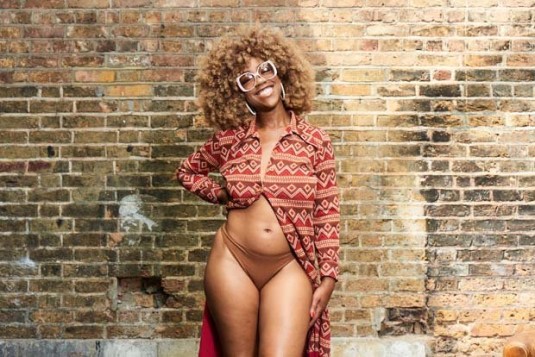
Burning questions Channel 4 tried addressing with its Bring Back the Bush: Where Did Our Pubic Hair Go?. Presented by body positive activist and social media influencer credited with #saggyboobsmatter on Instagram and Twitter, Chidera Eggerue, as someone who's for celebrating the female body in all its diversity she still takes a razor to her nether regions because she also feels the pressure of fitting in. She therefore wanted to challenge herself by bringing her bush back for the first time since her late teens, and open a conversation about desirability and body autonomy.

And autonomy here is key, as women face being cancelled or worse for not conforming to pubic normativity. Women can receive rape threats and the rest for even daring to pose online with hairy legs, so how did women's pubes become a hot button topic? Chidera ventures over to California while observing that a great many young people learn sex education through porn, and with it comes a whole set of expectations about what counts as desirable bodies. Speaking to Lena Paul and Casey Calvert, performers and sometime producers they argue what matters in porn is that absolutely nothing is left to the imagination and therefore keeping it shaved renders all the more explicit what is explicit. However, in more recent years Chidera notes there's been a turn back to the bush. Once a niche category approaching a fetish, Casey suggested established A-list performers started defying convention, which then filtered down and across the industry. Lena, who is one of this wave of enpubed superstars says her bush is very polarising, observing that "it feels like our bodies aren't good enough unless we change them."

While out in Hollywood, Chidera explores this further by sampling mirkins from down the ages. Starting with the late 19th century when even showing a bit of ankle was too much, private parts were, formally, very private. Matters then were, well, matted as this was the age of the big bush. Yet out of sight didn't necessarily mean out of mind. Riffing off his theory of evolution Charles Darwin suggested it was natural for men to be hairy and women hairless, meaning one didn't have to go far to declare women with lots of pubes unnatural, deviant, and immoral. Moving forward to the 1950s and the invention of the bikini comes with the invention of the bikini line. From there evolution moves to the landing strip of the 00s (90s, surely?) and from there where we are today. The more women's flesh comes on public display, the more the hair has to retreat until disappearing altogether.

But what about teh menz? Gathering together a group of late 20s/early 30-somethings for their opinions on matters mons, they ranged from preferring trimmed pubes to not bothered at all to preference for completely shaved - for appearance's sake and for oral sex. One guy chipped in to suggest it was a character thing, if a woman does it it shows they're interested in looking after themselves. In other words, pubic hair is a moral issue.

Chidera was joined on her growing out journey by four other social media micro celebs, all of whom make a living from modelling. Six weeks into the experiment, Krissy Vee said she felt uncomfortable and dirty. Rachel Kaitlyn, who also works as a cage dancer, said she was starting to attract stares. Jessie Bell said she had a run in with "a massive dickhead" after riding his shoulders at a festival was told by him that she should shave. And Jessica Megan said she'd lost a couple of photography jobs because she refused to cave in. Gathering them all together for a photo shoot at the end - later to be featured in an exhibition - Chidera concluded that owning a bush is a step toward normalising it and that it was her way of refusing to let others govern her life.

As an intro into some of the issues around the politics of women's bodies, it was okay. But it was a bit weak sauce. Where it was good was demonstrating the ubiquity of the emphasised feminine body standard and how its most ardent gendarmes are women themselves. The confession booth segment of the show was interesting for getting the perspective of others who, almost to a woman, attribute their hair removal practices to the pressure and commentary of significant people in their life - friends, lovers, family members. The panoptican no longer exists because it has insinuated itself seamlessly into the feminine everyday. Its practice and discursive enforcement is just accepted and barely questioned.

Chidera mentions the flex of male power as having something to do with it, but exploring it as an aspect of the pornographic imaginary alone cuts out a great deal. For one, it only explores men superficially. Indeed, a more interesting documentary could be made about the hysterical males who find agency obsessing over a stray pube here, a bit of stubble there, and what it is about the gender order that easily collapses masculinity into toxicity. Chidera does mention feminism very briefly, but in the past tense of the second wave and doesn't really bring it into her discussion. Secondly, what is completely absent is the political economy of the pubis. As with all aspects of female grooming, patriarchy and markets have gone hand in hand to reify and sexualise women's bodies for profit. The disappearance of pubic hair in porn and its subsequent spread into mainstream culture was neither natural nor inevitable. The beauty industry pushed for it and created a market for its depilatory creams, specialised razors, waxing salons, electric trimmers and all the rest, and successfully integrated these into the beauty regimens of hundreds of millions of women. The pubic place is a public place for commerce too. But alas, this history was airbrushed out like so many blemishes on a Playboy model.

As we began, the relatively innocuous can say a great many things. Bring Back the Bush, unfortunately, did not say enough.

Image Credit

Saturday, 2 November 2019

Acid Corbynism and Acid Communism

Really interesting discussion between Jeremy Gilbert and Alex about, well, the topic you see above these letters. Jem's argument is the counter-culture of the 1960s raised serious questions about individuality and living in a thoroughly commodified society that are still with us. Acid Corbynism then is about radically transforming our impoverished culture in the same way Labour aspires to reconfigure our broken political economy. An engaging and at times inspiring call to arms. Give it a listen!

As always, Politics Theory Other could do you with your help so do please consider supporting via Patreon.

Tuesday, 27 August 2019

ContraPoints on Men and Masculine Crisis

Great video essay on disposable men, invisibility, privilege and existential angst, traps with straps, and the necessity of forging a non-toxic masculinity for the 21st century. A superb piece.

Friday, 5 April 2019

Critiquing "Gender Critical" Feminism

An excellent video from Natalie Wynn, AKA ContraPoints.

Wednesday, 22 August 2018

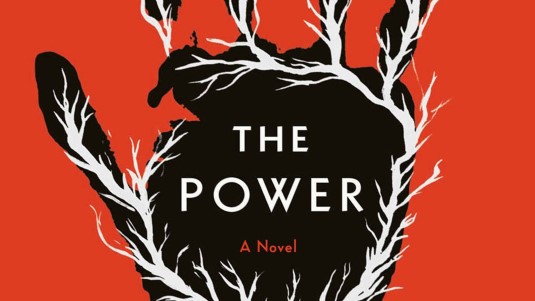
The Power by Naomi Alderman

22 years ago, Thursday mornings almost always meant a hangover. And yet, somehow, I was able to drag my minging carcass to the class room for a two-hour session on Comparative Social Transformations. Don't let the dry title fool you as our lecturer, Alan Sillitoe (no, not the Alan Sillitoe) took us through a bit of classical sociology, the collapse of the post-war consensus, the debates around East-West convergence and Japanisation, post-industrialism, postmodernism (mind blown - at the time), and gender relations. Regarding the latter, I remember something of a debate in which all sections of the class, well, those of us who actually used to speak in tutorials, coming to a rare moment of consensus vs our learned instructor. Discussing the emergence of the sexual division of labour in prehistory and then the subordination of women to men, he asked why and how we thought this had happened. Remembering our Engels and our Firestone, in our incoherent, semi-inebriated fashion various theories about the emergence of private property were offered, but the chief means of effecting this, of how women were made the first oppressed class on which all other class structures were subsequently erected, was strength: the brute fact that men tend to be larger, stronger, and more physically imposing than women. This was how women were reduced to property and chattel, and were kept there. Over time elaborate social codes and customs justified and naturalised these relations of power, but ultimately, in the last instance, male physicality and the threat of violence polices and enforces gendered inequality. The prevalence of domestic violence by men against women, as well as other incidences of sexual and physical violence, controlling behaviour, emotional manipulation and gaslighting, the pimping and trafficking of women, the mutilation of women and girls, and the threats of male violence remain absolutely central here, in the 21st century, to the second class status of women.

What if patriarchal relationships disappeared overnight? Or, instead of the gradual change we have seen over the last century, what happens if men's "advantage" of possessing greater physical strength vanishes and passes to women? This is the premise of Naomi Alderman's The Power in which young women spontaneously develop the eponymous power, an ability to generate electricity to the point of discharging bolts from their hands. This is thanks to the evolutionary development of a web of muscle - the skein - that grows at puberty between the collar bones in the upper chest. It is a power latent in nearly all women - older women can be "activated" by younger women - and is also something men, apart from an infinitesimal minority, do not have. What would be the consequences of such a sudden and decisive upsetting of the social-physical order of men's and women's bodies? Spoilers: nothing good.

Occasioning the change, we follow the action through three key viewpoint characters. There are a couple of others, but these three are the most decisive. We have Allie, a runaway who killed her abuser when her power manifested, Roxy - the daughter of Cockney crime family, and Tunde, a Nigerian kid whose early videos of the emergent phenomenon go viral and out of which he's able to build a media career. Allie washes up at a convent where she secretly starts developing her powers and eventually takes it over, Styling herself as Mother Eve and egged on by her ever-present internal voice, she starts preaching that the power is a sign from God and one in which She is now emphasising the female side of her character. And so she becomes the locus of a new female-centered matriarchal religion. Meanwhile, Roxy uses her power to kill a rival crime boss who murdered her mum before hooking up with Allie and forming an alliance of mutual convenience. Roxy's firm has a sideline in drug synthesising and smuggling, and it's not before long they're producing their own gak that strengthens the power of its users. But for me, Tunde is the most interesting character because it's through him we most clearly see the change in the new gender order. He starts off as the usual cocky, know-it-all boy and before long he's a grizzled globe-trotter, reporting on the world's most testy flashpoints. He gets caught up in demonstrations of newly empowered women, and in terror attacks by militant men's groups. But then, while covering a confrontation between women and the authorities in India, he barely escapes rape at the hands of a woman. And from then on, his ride through the novel gets progressively rougher.

At the beginning, abusers and all those who profit from violence against women get their just desserts. We're on the streets with Saudi women as this most disgusting of patriarchies is humbled and overthrown. East European women, repeatedly raped while being "softened up" for trafficking to the West, acquire their power and are easily able to dispose of their guards. Summary justice and vengeance, unfortunately, gives way to a darker turn. We closely follow this in Bessapara, a new country founded by women in Moldova that quickly gets bogged down in a drawn out war with its north, where remnants of the House of Saud are hiding. Initially Bessapara was founded to explore new ways of living, and so to have the cutting edge of the new face down the reactionary, patriarchal violence of the old was a nice touch. However, the dream quickly descends into a nightmare. After a series of military reversals, which Bessapara's president blames on traitorous men, a number of "emergency measures" come in. These include an internal passport system in which men have to carry papers signed by a nominated woman guardian, the banning of men from driving, from most jobs, and so on. In other words, a mirror image of its Saudi nemesis in which the poles of oppression are reversed. Tunde is on the scene and we tour a countryside in which men are scared of helping him out, of encountering the tortured and sexually abused bodies of young men, of male sacrifice, and later an attack on a refugee camp. If you don't think a rape scene of a man by a woman can't be brutal and disturbing, Alderman will disabuse you of that notion.

One interesting touch as you make your way through the book are sketches of items from archaeological digs. At first they seem relatively innocuous. Some images of a holy mother, a glove with wires designed to project the power, a device for training young girls in its use. All are suggestive of perhaps the power manifesting itself previously and pre-industrial peoples making use of its rare manifestation. And then we come to figurines of a male sex worker and a rock painting of male genital mutilation - a procedure in which the power is used to render a man impotent and only capable of (painful) arousal through the power's application. Accompanying each is a historical commentary and it quickly becomes apparent that the occasion of the power sees the destruction of human civilisation and that our events are being narrated from the perspective of 5,000 years in the future. Our violent history of patriarchy has been supplanted by a different, but equally violent unfolding of matriarchy.

As a thought experiment, The Power is fascinating and compelling. The narrative is pacey and keeps the pages turning, and it's all set of literary immortality. The TV boxed set, I understand, is in the works. It is a novel that is very now as the basis of patriarchy is diminishing, and we're seeing the growth and spread of toxic masculinities as a result. It takes hold of the anxieties and neuroses of frightened, anxious patriarchy and ups the voltage. One way The Power can be read is as an exaggeration and lampooning of these fears. Alternatively, and more persuasively in my view, it does draw attention to the mundane, physical means by which patriarchal violence (whether actual or potential) is exerted. Tunde and his transformation from a confident, naive kid to a young man who actively avoids eye contact with women in the street is brilliantly realised. Here Alderman confronts the reader, particularly her male readers, with the threat many women have and do experience on a daily basis but is largely invisible to them. And I would also suggest The Power is a meditation on 'the event'. Western culture generally, not just left wing politics, believes in the redemptive power of a key moment - the Godly apocalypse, the revolution, the singularity. Organising your belief system around an event can lead to the postponement of contemporary problems until after it has taken place. For instance, it wasn't a long time ago when revolutionary politics, when it did address matters of gender, race and sexuality, tended not to take them seriously and relegated them to the never-never after the glorious day had come and gone. Social change, including progressive social change, is more complex and piecemeal than a moment in which the slate is wiped clean and there is a before and an after. In The Power the sudden imposition of the radical event does not so much change gendered relations but preserves them through reversal, and leads to a doubling down of the same old crap. Alderman's novel is therefore a critique of the event, of the notion that something is going to come along from the outside and wave its little wand to make everything better. The power of The Power is the challenge it issues: that it doesn't have to be like this, and we have it in ourselves to change it.

Tuesday, 29 May 2018

The Unionist Politics of Abortion

Theresa May could never make a likely feminist, as we see with her attitude to abortion in Northern Ireland. In response to pressure from the welcome result of last week's referendum, and facing Labour's calls to extend the law on the mainland to the province, all she can do is mumble that it's a devolved matter. This is nothing more than an excuse for inaction; the North doesn't have a government, power sharing has collapsed and direct rule from Westminster is the order of the day. No, May's "feminism" runs only so far as her DUP friends will let it for they remain implacably opposed to liberalising abortion. And we all know why the Prime Minister wants to keep Arlene Foster and friends sweet.

This, of course, isn't the first time in recent memory the issue of abortion in Northern Ireland was subordinate to the argy bargy of Parliamentary arithmetic. In 2008 a move to extend UK provisions to the north was blocked by ... Harriet Harman. Apparently, women's rights were so much a shibboleth when New Labour wanted to lock suspects up for 42 days without charge, and they needed the DUP's support to get it through the House. Ho hum.

What is more important and interesting is why the DUP cling to the near-ban on abortion. Consider the disposition of the people of Northern Ireland, which is somewhat complex. Drawing on research conducted in 2016, the ESRC-funded ARK project found that 63% of respondents accepted it was a woman's right to choose to have an abortion or not. There are large majorities to allow abortion in cases of foetal abnormality or threat of life to the would-be mother. Notably the agree totals for both were higher among DUP voters than either Sinn Fein or SDLP supporters. However, the same research outlined seven scenarios in which a woman may seek an abortion, ranging from the possibilities above, a pregnancy in the event of rape or incest, (non-lethal) threats to physical and mental health, to just not wanting to have children. ARK found pluralities in favour of abortion in six of the seven cases. The one they didn't was the last with 43% agreeing it should definitely be illegal vs just 17% saying it should definitely be legal. Confusing matters even further, 55% to 33% said women taking abortion pills for not wanting a child should not face criminal charges. 63% also said doctors should not face charges if they performed an abortion, and 70% thought abortion should be a matter of medical regulation not criminal law. What a confusing picture!

Why then do the DUP remain signed up to the ban? Well, the obvious answer is party members agree. It's hardly a stretch to believe that Foster and friends honestly, as much as such a thing exists in unionist circles, subscribes to backward views. And it's just as well, because abortion is inseparable from the DUP's raison d'etre. Originally the insurgent and now the establishment party of unionism, it touts itself as the representative of a "faith community". The party offers a cross-class appeal to a loyalist population defined in, well, loyalist and religious terms by Westminster, the provisions of the Good Friday Agreement and the terms of power sharing (and the statelet's political history since its formation), and has a clear commitment to maintaining the basis of the sectarian division of Northern Ireland. Shock horror, that is what unionism has always defended. Unionism, however, has always depended on a certain othering of the Catholic minority and the rest of Ireland to keep the meagre privileges it enjoys. As the weekend's win for abortion reform marks the latest episode in the long secularisation of the Republic, clinging to the abortion ban reinscribes the difference between north and south in different terms. Once, the other was papism, now it's permissiveness and immorality.

Secondly, bringing the north in line with the UK adds an unwelcome secular element to the mix. Unwelcome because as loyalism vs republicanism has so often been framed as an intractable religious conflict between Protestant and Catholic (which is the view of plenty of establishment ignoramuses), lifting the abortion ban and extending reproductive freedom undermines the religious case for the separation of the communities. Take religion completely out of the question and the divide in Northern Ireland appears as what it always has been: a political one. Thus exposed, what's the point of carrying on? The justification for dividing the population up evaporates and, suddenly, the DUP are left defending the indefensible.

Unionism is in trouble anyway. The balls up the Tories are making of Brexit has seen support for it collapse further and the desire for a united Ireland within the EU skyrocket. Culturally, unionism and the sectarian divide is decreasing in relevance for younger people as the social liberalism from within and elsewhere is doing a welcome job of worrying it away. Just as the Tories are out of ideas, the DUP have no clue how to revive support for crumbling unionism except for setting their face against change. And for as long as they keep voting with the government, Theresa May is very happy to let this continue.