Showing posts with label Wales. Show all posts

Wednesday, 13 May 2026

Touring the Crater

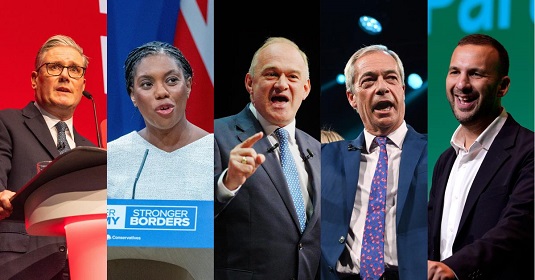
"Friends of Wes" have briefed the press that he's going to resign as health secretary on Thursday and trigger a leadership contest. Who pre-announces their resignation? With that fun and games to look forward to, I offer this piece of old news. On Saturday Alex Doherty interviewed me about last Thursday's election results for Politics Theory Other. Here's what i had to say.

As per usual, if you appreciate Alex's work in producing one of the best politics podcasts around, you can support his work here.


Image Credit
Sunday, 10 May 2026

A Reform Victory is Far From Inevitable

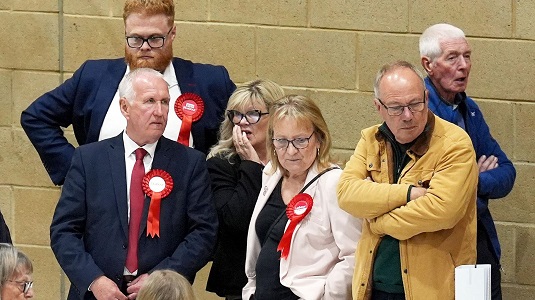
What a catastrophic set of election results for Labour. In Scotland, Anas Sarwar's branch office took a bold step backwards as support fell to 17 seats on 19% of the constituency and 16% of the list vote, breaking through the floor he sat at the 2021 elections. The electorate sealed their verdict on his miserable performance by voting him out of his Cathcart and Pollok seat, but thanks to the list system he'll be back when Holyrood reconvenes. Likewise in Wales, Labour smashed its terribly low expectations with a plunge from 29 seats to just nine, losing two-thirds of its vote and also consigning its leader, the hapless First Minister Eluned Morgan, to the political dustbin.

Labour's devolved government woes overshadowed a disastrous night for the Tories too. They went from 31 seats to 12 in Scotland, and from 16 to 7 in Wales. A fraction under 12% and 11% respectively, they look increasingly like an utterly spent force. Unfortunately, that's because a great deal of unionist energy is now stored in Reform's political batteries. On 34 seats and 29% of the vote, they are the second largest party after Plaid Cymru and will be the opposition, as well as the standard bearer for continuing the union in Wales. In Scotland they are tied with Labour on 17 seats, thanks primarily to the list system. Here it too is the ascendant voice of unionism, making the link between the preservation of the UK state and right wing extremism something the socially liberal SNP are sure to exploit.

Likewise, in England it was a pitiful night for Labour. Keir Starmer achieved its worst result in English local elections since it became a party of government. The low of 1,300 councillors lost by Jim Callaghan in 1976 was surpassed as Labour gave up 1,496 seats. The party relinquished control of 38 councils, and scored a projected vote share of 17%. No wonder more Labour MPs are finally breaking cover and calling on the Prime Minister to go without waiting for the would-be successors to get all their ducks in a row. As forecast by sundry pundits, councils in the north tumbled in Reform's favour, while right on cue a clutch of London councils fell to the Greens, along with two directly-elected mayoralties.

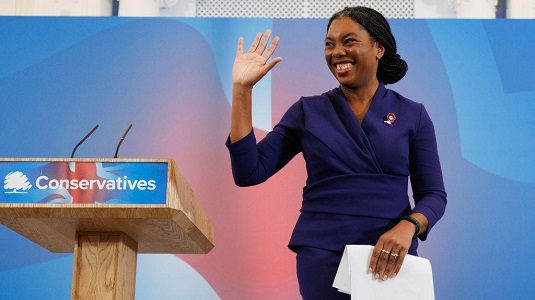
Though you wouldn't know it from Kemi Badenoch's upbeat countenance, the Tories' performance in England almost matched the Scottish and Welsh disasters. 563 fewer councillors will be paying in tithes to their local Conservative group. Still not convinced that this once-mighty party is in long-term decline?

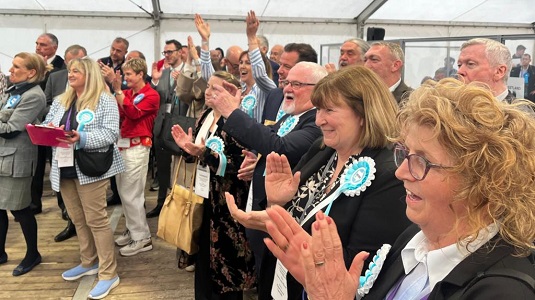
It was, again, Reform's night. A projected 26% of the vote and 1,451 new councillors puts them head and shoulders above the other parties and, thanks to the dysfunctional verities of first-past-the-post, would get them close to an overall majority if this was repeated at a general election. 14 more councils fall under their sway, and undoubtedly deals will be done in other local authorities that will see them govern in coalition with others, such as Tories and/or localist independents. There is no cordon sanitaire in British politics! The Greens inched ahead of Labour and took second place, with a projected 18%, 441 more councillors and five councils - again more or less matching forecast expectations and turning in the party's biggest ever win.

So much for the new state of play, but what about the underlying politics? John Curtice's position, that a decline on last year's vote share would represent a stalling of Reform's chances, regardless of how many councillors they picked up, was borne out on Thursday. Their share is down four points on the 2025 elections. But taking differential turnout into the equation, it's possible these results flatter Reform's level of support if a general election was to be held imminently. Which, of course, is not going to happen.

To restate the argument, polls consistently show that Reform, like the Tories, are demographically dependent on older people for their support. There are several reasons for this. This matters because it is well known older voters and particularly the retired are more likely to fill out their postal ballots or turn up at the polling station than the bulk of working age people. Therefore, the right has an important advantage going into elections. By way of an example, if retired people has stayed at home on EU referendum day a decade ago then Remain would have won. Where second order elections are concerned, most voters believe these "matter less" than general elections. Turnout goes down across the board, but the reduction is disproportionately greater for younger cohorts, strengthening the advantage of the right.

In Reform's case, its 29% in Wales and 15.8%/16.6% tally in Scotland are likely to overstate their real level of support vis a vis a general election. Ditto for England's projected 26%. And yet that figure is roughly in line with what pollsters report from their balanced samples. Does this suggest differential turnout is a mirage? Polls are always models and are, at best, only indicative. They are trumped by votes cast and, arguably, the analysis of those votes. Second, pollsters know this themselves which is why numbers given are caveated by margins of error. Dealing with the effects of differential turnout, I would suggest that the reversion from the right's second order election advantage to the weaker one it enjoys at general elections could reduce the Reform (and the Tory) score by two to three points as other cohorts turn up to vote. Not a massive amount, but one that matters when politics is this close run.

For the same reasons, there is a strong case that in England, perhaps less so in Scotland and Wales thanks to the SNP and Plaid Cymru, the Greens' 18% is an underestimate of where the party actually is. To have scored so highly, outperforming Labour (who suffer a similar disadvantage) and the Tories (who don't) is all the more remarkable considering the Greens' working age/young base is comparatively less likely to show up. A confirmation that Zack Polanski's Green-left populism is the right strategy for the right time.

Obviously, this comes with further caveats. Above all, geographical variation. Reform's 29% in Wales suggests the party is proportionately stronger there than elsewhere. Though looking at it from a right bloc/liberal-left bloc perspective, it's a 41%/58% division, which is wider than the same 43%/51% division for the English local elections (the untidy splits denote independents/others). Seat variation also matters. Bradford, for instance, saw Reform take 23 seats on 26%, but the Greens just seven on 22%. Nevertheless, the direction is clear. We, rightly, hear concerns about the danger from the right, the damage they do, and the atavisms they enable. They could win an election. But the numbers and the political direction shows greater numbers and the greater potential for mobilisation to their left. Reform and the right can be defeated. They are not inevitable.

Image Credit

Tuesday, 5 May 2026

It's the Differential Turnout, Stupid

How should we judge the performance of our political parties in the aftermath of the Scottish Parliamentary, the Welsh Senedd, and English local elections? The leadership hopefuls are circling Keir Starmer, while Nigel Farage has promised something spectacular will befall Reform on Thursday. What counts as disaster? What amounts to triumph?

Starting with Labour, Keir Starmer set the bar pretty low in 2025. Labour lost 187 councillors in the context of a projected vote share of 20% - the lowest since the party emerged as an electoral force 120-odd years ago. Readers with memories might also recall Labour's 2021 election outing, where projected share stood at 29%, with 327 councillors and Labour's control of eight councils lost. It has since come out in sundry memoirs and insider accounts that Starmer seriously considered resigning because he thought this result was so bad. Unfortunately for him, Labour are now on course to do much worse than this.

In historical context, in relatively recent times Tony Blair saw Labour lose 1,150 councillors in the 1999 locals. A point when he was at the height of his powers. For even-handedness's sake, he also oversaw Labour's best ever local election performance. In 1995, the party scooped up 1,807 councillors on a projected vote of 47%. But back to the gloom. Labour's worst performance was half a century ago. In 1976, Jim Callaghan notched up a catastrophic loss of 1,309 seats. Surely Starmer will surpass that with ease and enter the record books. But the worst ever performance at a local election by a governing party is a honour that, right now, belongs to John Major. While Blair was celebrating his crushing council triumph in 1995, Major registered a collapse of 2,018 seats, a loss of almost half of all that year's Tory defences with a projected 25% vote share. If you look at the aggregate monthly votes of council by-elections since last August, Labour has only polled above 20% on one occasion - far shorter than the number that brought the Conservatives calamity.

The story in Scotland is less worse. Again, long time readers might remember Starmer ousting Richard Leonard from the branch office so the impeccably right wing Anas Sarwar could be installed in his place. In 2021, that paid dividends as support for the Scottish party slid further to 21.6% for the constituency and 17.9% in the list sections, giving Labour 22 MSPs. Recent polls from Norstat and Moreincommon suggest further slippage, but with their likely getting supplanted by Reform. Again, the previous floor presents itself as an impossibly high ceiling.

Wales is where the true disaster is brewing. October's Caerphilly catastrophe spelled out the doom that's coming: the end of Labour's domination of Welsh politics. So feeble has it become that former Labour supporters in their tens of thousands are sure to switch mainly to Plaid Cymru to keep Reform out. Bear in mind Labour's previous 'worst ever' outing in the Senedd's short history was 2007 when it could muster 32.2% and 26% of ballots cast, this year such a result is beyond Welsh Labour's wildest dreams. Moreincommon polling suggests a popular vote around half the previous nadir, and with a seat haul to match. A century of political dominance is forecast to be wiped out. Losing Wales alone should cost Starmer his job.

No matter the floor, Starmer's Labour is poised to drop through them. But what of the challenger parties? Last year, Reform triumphed, winning 10 councils, 677 councillors, and a projected vote share of 30%. Which is much better than UKIP's popular vote high point, which saw them register a projected 22% in 2013. Crunching the numbers based on current polling, a net gain of 1,401 seats seems about where most pollsters are pegging the Reform advance. Likewise, between 400-500 gains for the Greens is on the cards with a lion share of gains in the London boroughs, and winning between three to five of the capital's councils.

Triumphs in the waiting? For Reform, does a four-digit councillor gain suggest its forward march to Westminster domination has been resumed? As Peter Kellner, the former YouGov polling specialist touches on, it depends on the sort of percentage Reform are able to capture. A seat tally that simply reflects their current standing in the polls would be good news for the party, but doesn't suggest they're advancing. In my view, Kellner does not go far enough. He and most pollsters and commentators ahead of these elections aren't taking differential turnout into consideration.

All of these elections are second order elections. Political scientists have long made the distinction between first and second order elections in that for most voters, first order elections - i.e. general elections - are the ones that really matter because they lead to government formation and policies that affect their lives. For example, the 2024 general election saw a pitiful turnout of 59.7%. But in Scotland, all Holyrood elections, bar the 2021 poll, have lagged below this. The same is true for all the elections so far to the Senedd, and ditto by and large for local council elections. Rare is the parliamentary by-election that matches, let alone exceeds that constituency's previous general election turnout. Whether Scotland bucks this trend for the second election running is something we'll soon find out, but it's likely that the Welsh and English elections won't.

This matters because fewer voters turn up for second order elections. It's well known that the older one is, the more likely they are to (habitually) vote. This is true of the general election. Pensioners and older working age cohorts vote in greater numbers than younger cohorts for a variety of reasons, that we won't go into here. This differential, however, is exacerbated for second order elections. Older people are less likely to vote than they would be in a general election, but the abstention rate for younger cohorts is even greater. This matters because, as pollsters show and as this blog has talked about plenty of times, there's a strong relationship between age and voting preferences. One which, in recent years, older people disproportionately vote for the parties of the right (Conservatives, Reform) and working age people the left (Labour, Greens). Therefore, this structuring of British political opinion means the Tories and Reform have a distinct advantage in second order elections over Labour and the Greens. They can better rely on their support to vote.

This needs factoring into projections. For instance, in 2025 when Reform polled a projected 30% this more or less matched their polling average at that time. But taking differential turnout into consideration, their popular vote tally should have been higher. Similarly, Labour captured a poor 20%, but that was a figure suppressed by the age cohorts who actually turned up. If there was no age-related disproportionality, Reform would have done worse and Labour better.

Why does this matter? Because taking differential turnout into consideration offers a better read on the trajectories of parties. If Reform do win their projected 1,400 gains on 26% of the result, differential turnout suggests their real support in the general-election voting population is lower that that figure suggests. Likewise, if the Greens manage net gains of 450 seats on a projected 16%, because they have taken to the field in an election landscape where their reliance on younger voters is a disadvantage, their real levels of support are likely to be higher. Therefore, to conclude that Reform has real momentum, their vote has to be significantly above their forecasts. Ditto, to say the Greens are on the cycle path to nowhere, the party's vote has to be significantly lower. The same also applies to Labour and the Tories, the SNP and Plaid Cymru. But not the Liberal Democrats, who don't have any meaningful variations in support across the age ranges.

There is one possible objection to this view. Political science also acknowledges that because second order elections "don't matter", people who vote in them are more likely to register a protest. For instance, the 14.5% the Greens scored in the 1989 European Parliament elections didn't translate into an advance in 1992. The Brexit Party winning the same set of elections in 2019 did not convert into seats in that Winter's election. However, there are two things that suggest this skewing of voting intention has blurred. The first will be these results themselves. Labour in Wales, for instance, has withstood past protests against the direction of the Britain-wide party in and out of office. The coming wipe out speaks less of a protest and more a fundamental break in trust. And the second is the erosion of the two-party duopoly, as evidenced in the 2024 election. What we're now seeing is the further development of that trend, in seeming defiance of Duverger's Law and his view that majoritarian electoral systems cluster support around two contending parties, usually of the right and the left. What happens on Thursday is likely to continue this process.

Inevitably, the seats won and lost will command the headlines. That's what matters in electoral politics. But for those wanting to get a deeper sense of public opinion drift, of who is being overhyped or underpriced, it will all be there in the projected vote shares.

Image Credit

Friday, 24 October 2025

Politics After Caerphilly

Let the opening line in yesterday's post be a warning: never make glib forecasts without gripping the fundamentals. But on this occasion, I'm happy to be wrong. As Adam Bienkov gloats, the media circus camped out in Caerphilly were sure the momentum they had built around Reform's Llyr Powell would gift the party its first Senedd victory. Ho hum. Congratulations are due then to Plaid Cymru for defying their expectations and keeping Nigel Farage's fan club out. Laura Anne Jones, the Tory AM who defected to Reform in the summer will have to sit by her lonesome a while longer.

Plaid won for several reasons. By all accounts, Lindsay Whittle was an excellent candidate. A local man who has stood for the party 14 times, his long record of campaigning as an activist and a councillor stands in sharp contrast to the far right carnival that came to town, and won't likely be seen again until next year's Senedd campaign begins. And also against the faceless suits that Labour typically favours as candidates. Also in Plaid's favour is their never having been tested with office, which is married to a centre left platform few would find objectionable. As the party's leader Rhun ap Iorwerth has ruled out pushing for independence, their offering is not that dissimilar to Labour's of the recent past. Which is handy, given Wales is the most Labour of the UK's constituent nations.

Or rather, was. For the other story of the night was the complete collapse of Labour's position. Since Keir Starmer won the general election, Welsh Labour's has nose dived. The dominance of the party, which endured during the Blair, Brown, Miliband, and Corbyn years is perched on a precipice. Recent polling indicates their precarity, and Caerphilly's loss - an unwavering stronghold for a century - underlines it. The 2026 elections are set on being a repeat of Labour's 2015 Scotland wipe out. Yes, Welsh politics has its own dynamic not entirely beholden to Westminster. The scandal around Vaughan Gething's resignation as First Minister, which involved a £200k donation from a businessman convicted of environmental offences, "coincidental" awarding of government loans to his companies, and fibbing to the Covid inquiry about the deletion of messages have all eroded the party's standing. But this crisis was compounded by the hapless, hopeless farce of Labour in Westminster. Polling suggests that Plaid's vote was overwhelmingly composed of former Labour voters, and there's no reason to believe this decomposition won't carry on eating their support. It couldn't happen to a nicer Labour leadership.

Returning to Reform, despite putting a brave face on it Farage and friends will be disappointed. Their chair, David Bull, boasted about how they went from nothing to 36% in the blink of an eye. Yes, but with the media pack doing their campaigning for them and their agenda dominating politics, they should have lived up to the hype. Which has led to speculation about the role of tactical voting to keep Reform out. In such a close fought contest, it's reasonable to assume this was a factor. But is this something we're going to see more of? By and large, council by-elections are seen not to matter, and here there is seemingly no evidence of this happening so far. This hasn't stopped the FT from speculating that this might save Labour's bacon. Or at least mitigate future losses.

I think this misunderstands the dynamics of protest voting right now. Because Labour are in government and have prioritised making the rich richer, scapegoating refugees and trans people, starving public services of funds, reinforcing the curbs on protest introduced by the Tories, attacking the most vulnerable, and parading their arrogance while doing so, they have unified a vast ball of opposition. If you don't want Farage or Farage-lite policies, why vote for the Labour candidate now there are viable alternatives? Be it Plaid, or the SNP, or the Liberal Democrats, or the Greens, or Your Party when it finally arrives properly. As Labour support has collapsed almost everywhere, banking on tactical voting to keep them in  and Reform out applies to so few areas that, as strategies go, it's worthless. And that's before even attempting to persuade the voters the party has abandoned that they should come back. Tactical voting isn't going to work during the next round of second order elections, which means Starmer will be toast after May. But if by some horrendous miracle he weathers the fall out, for as long as he, right wing Labour, and their politics rule the party, the fate sure to befall them next Spring will keep repeating year after year, devolved government election after council election after parliamentary by-election. By the time 2029 comes Labour's support will have withered on the vine.

Image Credit

Monday, 21 July 2025

Circling the Drain

It's difficult to appreciate how, just three years ago, the Conservative Party was the pivot around which British politics turned. These days, it's an uninteresting side show followed by a diminishing band of aficionados and weird people. Kemi Badenoch has proved herself incapable of kicking the football, let alone powering one into the back of Labour's open goals, and everywhere the party is floundering, completely disoriented by getting dumped out of office and watching Reform become the primary opposition to Keir Starmer's government.

As we head into the summer recess, a couple of things remind us of their decrepitude. The Graun's man in Wales, Will Hayward writes about the party's looming extinction. 10% of their vote passed away between 2019 and 2024 with a further 40% due to grow angel wings before 2029, as per everywhere else in Britain young people are not replacing the base like-for-like. Going in for the Nigel Farage cosplay is not helping them, nor are efforts at trying to create new points of resentment over Welsh Labour's basic income pilots. No one is interested, and that means next year they could be wiped completely from the Senedd.

But all is not lost. There was a spasm of excitement on Thursday about a speech Danny Kruger delivered to a deserted House of Commons. He argued for a restoration of Christianity in politics. In an intervention the polyester populist Robert Jenrick described as "magnificent", Kruger expressed concern that Christianity had been ejected from our shared cultural space by two other religions. One was Islam, and the other ... was "woke". He said,
It is a combination of ancient paganism, Christian heresies, and the cult of modernism, all mashed up into a deeply mistaken and deeply dangerous ideology of power that is hostile to the essential objects of our affections and our loyalties: families, communities, and nations ... [it] must simply be destroyed, at least as a public doctrine ... It must be banished from public life — from schools and universities, and from businesses and public services."
Yes, Kruger wants to mobilise Christian values against a sensibility that finds exploitation, prejudice, and poverty abhorrent, and in its weakest version asks that we treat each other with respect. A Tory effort in this direction is likely to have as much effect turning around their party's fortunes as Badenoch's performances at Prime Minister's Questions.
What it does underline is the predicament the Tories are in. Everyone knows about their crisis of political reproduction and how their ageing voter base condemns them to dwindling relevance. This point is no longer a fringe belief confined to this corner of the internet, but is the political common sense in Westminster and mainstream political comment. Except, evidence suggests, the Tories and their press. Without any understanding of their predicament, and hemmed in by a strategy that cannot concede anything that could raise political expectations, their reflex is to double down on their core premises to try and consolidate themselves following a shattering defeat. It's what they did between 1997 and 2005, which gave them a foundation for the faux liberal Toryism that came next. And arguably, Boris Johnson followed a similar strategy when he became leader. Hard on Brexit, tough on immigration, showed his opponents the door and the British public lapped it up.

Except this time, it is not working. Doing Farage impersonations is pointless while the real deal is cruising the country, gliding from one soft ball interview to another. It's also a waste of time when the things the Tories are concentrating on, immigration, war on woke, are issues that, from the standpoint of the people they're addressing, they've demonstrably failed on. As Starmer nver misses a chance to remind the hapless Badenoch, the Tories put rocket boosters under net immigration. They're just not credible, which is something neither she nor the heir presumptive can do a thing about. Except publicly, desperately endorsing more and more extreme politics, which Farage is savvy enough to keep his distance from. And without the levers of power, the Tories cannot demonstrate how much they mean it this time.

Here we are then. The activities of the Tories are no longer the doings of an organisation in charge of its destiny. They are reflexes, a scramble of unthought reactions as this once mighty party circles the drain.

Image Credit

Saturday, 24 April 2021

Local Council By-Elections April 2021

Another surprise! Four by-elections in Wales! Ambassador, you're really spoiling us. This month saw 3,191 votes votes cast over four local authority contests. All percentages are rounded to the nearest single decimal place. Only one council seat changed hands. For comparison with March's results, see here.

Party
Number of Candidates
Total Vote
%
+/- 
March
+/- March 20
Avge/
Contest
+/-
Seats
Conservative
           3
 1,218
    38.2%
 +13.2
     +2.6
    304
     0
Labour
           4
 1,121
    35.1%
 +15.2
    +19.6
    280
    +1
LibDem
           1
  230
     7.2%
  +1.9
    -24.3
    230
     0
Green
           0


     0
SNP*
           0


     0
PC**
           0


     0
Ind***
           4
   587
    18.4%
 +10.7
     +4.9
    147
    -1
Other****
           2
   35
     1.1%
  +0.7
     -1.0
     18
     0


* There were no by-elections in Scotland
** There were four by-elections in Wales
*** There was one Independent clash
**** Others this month consisted of Propel (19, 16)

The scraps left over before the by-election fest of 6th May, where we can look forwward to well over 300 contests alongside the usual round of local authority elections. What fun! Nothing too much can be said for this month's performance considering the contests were so few and all in Wales, though I will note how peculiar it is to not have any Plaid Cymru representation at all. But still.

House keeping note. As we didn't have much in the way of by-elections last year all year on year comparisons will be with March 2020. At least until when October swings round seeing as Scotland was so kind as to provide us with a comparator last Autumn.

1st April
Monmouthshire UA, St Kingsmark, Con hold

8th April
Torfaen UA, Abersychan and Cwmavon, Lab gain from Ind
Torfaen UA, Cwmyniscoy, Lab hold
Torfaen UA, New Inn, Con hold

Image Credit
Friday, 26 March 2021

Local Council By-Elections March 2021

An unexpected surprise! A clutch of Scottish and Welsh by-elections ahead of May's Super Thursday. This month saw 44,016 votes cast over 15 local authority contests. All percentages are rounded to the nearest single decimal place. Eight council seats changed hands. For comparison with November's results, see here.

Party
Number of Candidates
Total Vote
%
+/- 
Nov
+/- Mar 20
Avge/
Contest
+/-
Seats
Conservative
           13
11,026
    25.0%
   -0.7
    -10.6
    848
     0
Labour
           14
 8,749
    19.9%
  +9.5
     +4.4
    625
    +1
LibDem
           12
 2,350
     5.3%
  -7.3
    -26.2
    196
     0
Green
           10
 2,676
     6.1%
  -1.2
     +2.3
    268
     0
SNP*
           11
14,559
    33.1%
  -8.8
   +33.1
  1,324
    -3
PC**
            4
 1,127
     2.6%
  +2.6
     +2.6
    282
    +1
Ind***
           11
 3.373
     7.7%
  +4.0
     -5.8
    307
    +1
Other****
            6
  156
     0.4%
  +0.0
     -1.7
     26
     0


* There were 11 by-elections in Scotland
** There were four by-elections in Wales
*** There were three Independent clashes this month
**** Others this month consisted of UKIP (31, 15, 29, 33, 26), and the Workers' Party of Britain (22)

An interesting set of by-elections in which the legend of the impervious SNP took a battering, losing four councillors to the Tories and Labour and only winning one back off the latter by way of compensation. While we're talking about Labour, I think the Scottish party are going to be quietly pleased with their performance as the month posted some of their strongest showings in quite some time. The Tories a bit less so as they dropped their gains as an Independent and Labour swooped in and took a couple of seats.

Things were also interesting at the lower end too. The Greens put in a good showing and beat the Liberal Democrats, which was fun to see. Plaid Cymru put a dent in Labour's month by nabbing a seat, and UKIP showed up to demonstrate how eviscerated a force they now are. In Argyll and Bute we witnessed the electoral debut of George "I'm voting Tory Galloway's Workers Party of Britain, probably the ugliest formation to have emerged from the far left in recent years. And they didn't do well at all. Shame.

Is that our lot until May? No, the good news is three by-elections are scheduled for April. Be still my beating heart.

4th March
North Lanarkshire UA, Fortissat, Lab gain from SNP
North Lanarkshire UA, Thorniewood, Lab gain from SNP

11th March
Highland UA, Aird and Loch Ness, Ind gain from Con
Scottish Borders UA, Leaderdale and Melrose, Con gain from SNP
West Lothian UA, Livingston South, SNP hold

18th March
Argyll and Bute UA, Isle of Bute, Ind hold
Argyll and Bute UA, Helensburgh and Lomond South, Con hold
Conwy UA, Eirias, Ind hold
Denbighshire CC, Corwen, PC hold
Glasgow UA, Baillieston, SNP gain from Lab
Glasgow UA, Partick East/Kelvindale, Lab gain from Con
Wrexham UA, Maesydre, PC gain from Lab

25th March
Gwynedd UA, Llanrug, PC hold
Midlothian UA, Midlothian East, SNP hold
Perth and Kinross, Almond and Earn, Con gain from SNP