There isn't much more depressing than watching the Amazon burn. And is there anything more infuriating than watching Jair Bolsonaro trolling the world about it? The crooked, clownish creep has argued NGOs are torching the jungle because he cut their funding, and feeding off the blowback he's moved in to false contrition. Brazil doesn't have the resources to fight the fires he claims, and that's that. The sun rises in the morning, and rain forests are getting reduced to ash. Such is the order of things and he can't do anything about it.
It's tempting to blame Bolsonaro for all that is rotten in Brazil, as if this uniquely evil/stupid individual turns everything to shit with his touch. Tempting, but far too simplistic. Like his many analogues elsewhere - Trump, Duterte, Orban, Netanyahu to name several - Bolsonaro and friends will, if there's any justice, get their time in the dock. Yet they cannot be separated from the power bloc who put them there and the political project they're determined to wage. In Brazil's case, it's not to bring fascism back: Bolsonaro's election is an opportunity for capital and state cadres to reinforce authoritarian rule, tilting power decisively toward business and its satraps, and creating a new Wild West where the writ of profit is the bottom line and the only law is the law of value. And so the culture of impunity Bolsonaro promised at his inauguration so the police can roll up their sleeves and get on with eradicating crime without rules or accountability before the law is the setting for every other constituency who backed him. It's open season on LGBTQ+ people and indigenous people. For corruption and dodgy deals. And for logging companies, land owners, and small scale farmers to clear forest for short-term profits - and long-term consequences for the rest of us. And in case you forgot Bolsonaro was elected on a clear class prospectus, privatising state assets, throwing regulations into the Amazon bonfire, and attacking workers' pensions are as central to his coalition as climate change denial.
Taking out Bolsonaro as I've seen some muse aloud about in recent days wouldn't change the situation one jot. The vice president, Hamilton Mourão is just as authoritarian as the president, and has similar semi-fascist, semi-conspiracist politics. Though, in one of those grim ironies of which history is often fond, he is now also the most senior ethnically indigenous politician in the country. And the power bloc itself, an allied assembly of agricultural capital, finance, the metropolitan middle class, small business not only has deep roots within Brazil but is simultaneous allied to and a dependable friend of global capital. Who invests in the logging companies? What role does Western capital have in mineral right exploration of cleared forests? And considering Bolsonaro's determination to rip up the thin gains of the Workers' Party years, how much do our banks, our hedge funds, and our pension funds project to gain from swooping in and turning a quick bunk from Brazil's privatisation programme? Quite a bit one would suggest, seeing as the soft coup that turfed the Workers' Party out of office and gave the hard right their run to power got the seal of approval from liberal hero and all-round nice guy, Barack Obama.
Nevertheless, this is where there is a political opening. Seeing the flames eating the jungle is thoroughly dispiriting and underlines the ten-a-penny apocalyptic and catastrophist forecasts for the future. It's over there, so what can we do over here? The outrage and anger elicited is simultaneously stymied and amplified by our powerlessness and impotence, but far from a fatal acceptance there is, in fact, plenty to be done. Protests and actions against institutional investors with Brazilian interests in their portfolios can throw a spanner into Bolsonaro's works, and no doubt this is something Extinction Rebellion and environmentalist NGOs are thinking about. More importantly, we're at one of those crossroads moments where the left have a realistic chance of taking power both in the UK and the United States. As green industry and climate justice is central to both programmes, the left is in a position of harnessing this anger not just to put pressure on the culprits but to ride it into office. And if it's serious about holding power, the City and finance capital have to be taken on - and part and parcel of this would be curbing the role "our" capital is playing in the destruction of the Amazon, and forcing the pace of climate change.
In other words, you can have continued degradation and the barbarism of starvation and global heating with capitalism, or a sustainable, better future with socialism. With every day that passes, the way ahead gets ever more stark.
NB Cheers to @AliceAvizandum for providing the title.
Image credit
Have just finished reading Maurizio Lazzarato's The Making of the Indebted Man, a work that packs a helluva punch for such a slim volume. It covers everything: the origins of neoliberalism, the constitutive character of debt to the project, the 2007-8 crisis, social security reform, shifting governance in capitalist societies, a critique of the risk society thesis, and an advancement of a theory of the ubiquity of stupidity. Lazzarato, famed for being the originator of the concept of immaterial labour, is able to accomplish his wide-ranging analysis by drawing on the young Marx, Nietzsche of On The Genealogy of Morality, the late Foucault, and Deleuze and Guattari and remain entirely readable. You should therefore seek it out and read it for yourself.
This is not a review by any means (here's one, and more on Papa Lazz here), but he does throw down a challenge to the work of Hardt and Negri long championed on this blog. First off, debt precedes exchange: in other words, economics is founded on the relationship between creditor and debtor. In neoliberalism, this power relation is naturalised via finance, overshadows everything, and is simultaneously constitutive of the production of subjectivities and economic production (also occurring at the same time and inseparable from one another). What does this mean for how different subject positions condition and connect with one another? The debt relation already enforces a compulsory entrepreneurship of the debtor, reproducing subordination and resistance between the subordinate proletarianised position this (unwittingly, ironically) engenders and the control/command of capital, but what about horizontal relationships? On this, Hardt and Negri are optimistic that the excess of social production haphazardly captured by the employer/employee relation and exploited for surplus value contributes to the "social store" of human capacities - the common - and forges new links, networks, ways of being and becoming, and the immanent potential of more resistance to capital. This can and does go awry as the subject positions and trajectories so generated can become self-contained, immutable identities akin to properties. What are the theoretical implications if we think about debt as constitutive of these processes too? It underpins the peculiar form of estrangement/alienation specific to immaterial labour and therefore supplies a satisfying explanation for it. This also suggests this is a tendency that will spontaneously occur in the absence of political struggle, as per Lenin's observations concerning the spontaneity of trade union consciousness. But does it have more subtle effects corrosive of solidarity too, rendering Negri's optimism null and void or, at best, naive?
These are just jottings, but is something I hope to think about in more depth in a side project working through the issues Mark Fisher alighted on in his (in)famous Vampire's Castle essay. One thing's for certain, I can see more Lazzarato in my future.
Bryan Mosley was a regular face on the telly growing up. Better known to millions as Alf Roberts, the kindly shopkeep from Coronation Street I remember hearing the news that he died of a heart attack just over a month into retirement. A tragedy for his family to be sure especially as he was only 67, but also a reminder to the rest of us that retirement, if we get there, could be briefer than we expect. This brings us to the latest wheeze from Iain Duncan Smith's favourite think tank, the grossly misnamed Centre for Social Justice, about their proposal to raise the retirement age to 75. No need to fret about what to do in retirement or concern yourself with how long its going to last if a sizeable chunk of the population stand little chance of seeing it.
What cod argument do the CSJ offer by way of justifying raising the pension age by eight more years? Crucial to their position is the Old Age Dependency Ratio, the number of over 65s there are per 100 of the working age population, which is defined as between 15 and 64. 2018 is the most recent data point, and has the UK reporting 28.6 over 65s per 100 workers. This is lower than France (31.6), Germany (32.8), Italy (35.2), and Spain (29.2), and is among the lowest in EU terms - it is certainly the lowest of the major powers. As the OADR is increasing over time, the argument goes that as our elderly population are increasing at a faster rate than the working population, this implies a greater chunk of the budget is going to have to be given over to social security for the old at the expense of other things, such as investment in infrastructure, maintaining low taxes, and welfare provision for, say, child benefit or the dole. As a Tory think tank for whom snatching entitlements is catnip, reducing the social security bill is the overriding objection. Therefore increasing the state pension age is a way of keeping the OADR in sustainable limits. But, but, to pay lip service to the social justice in their name IDS would only countenance raising the age if there is the requisite support. Ah yes. Just as disabled people were fraudulently chucked off Employment Support Allowance and social housing tenants were expected to find bedroom tax and council tax monies because "support" was available.
It goes without saying this is the most stupid idea to have come from the Tories since the Dementia Tax debacle. Of course, we must reiterate this isn't policy, it's "thinking aloud". And like most Tory policies ostensibly aimed at helping people, the evidential base for it is poor and the inevitable consequences swept under the rug. For instance, look at the CSJ's wailing about OADR. All it tells you is the ratio of old people to young people, nothing else. It doesn't measure the number of over 65s who, in the parlance, remain "economically active" (a particularly stupid term anyway because the every act of spending cash is economic activity). It doesn't say what proportion of the social security budget goes to meeting the needs of elderly people. It doesn't reveal anything about the extent of public spending, the level of taxation, nor the productivity of the economy underpinning the welfare system. For instance, staying within the terms of mainstream economics why are the recommendation proffered by the CSJ treated as the most obvious one? Instead of forcing people to work for longer, surely it would be more useful to invest and raise productivity, returning greater tax revenues to the exchequer, and consequently having more cash to keep the retirement age as is and perhaps even, gasp, lowering it?
We know why this doesn't occur. It's because the Tories are committed to the cult of work. While it is true many people find a sense of purpose inside work, a great many more find meaning in their activities outside of it. That is outside the immediate power relationship between worker and boss, and so most people have an instrumentalised relation to work: it's something you have to do so you can do the things you want to do. Anything that threatens to loosen the command work has over the majority of our lives is something the Tories instinctively feel threatened by. Just look at their responses to the idea of the basic income, for instance. And anything subordinating more and more of life to the workplace is something that strengthens their position and feels entirely right to them. In other words, and this point needs emphasising time and again, Tory politics is driven less by the (wrong) perception of the technocratic requirements of successfully managing British capitalism. Front and centre, first and always, is the strengthening and perpetuation of bourgeois class relations.
Yet surely, all that said, going into an election with such a policy floating about the Tory ether is electoral bromide, right? Well, yes. You can pretty much write off winning over the bulk of under-60s. And among the current Tory base, which is disproportionately elderly (as well as disproportionately declining) - perhaps not so much. As much of them are retired already or aren't projected to be affected by the phasing in of the proposed change, for them it's another opportunity to inflict the school of hard knocks on the coddled and spoiled generations coming after them. Just as the consequences of Brexit is set on separating the wheat from the chaff, seeing and knowing younger people have to work for longer generates a sense of satisfaction they they're getting a taste of the bitter medicine the post-war generation (think they) knew. This is self-validation through the suffering of others, of making oneself feel good about the world because you've played a part in administering a shock to a proxy for whatever group you feel bitterness toward (uppity women, minority ethnicities, younger people with their phones and youth). Just as the Tories successfully invested in generational wars for electoral profit in the past, the promise of a miserable old age for other people would appeal to the spiteful plenty in their voter coalition.
Covering all the grounds for opposing raising the retirement age to 75 would result in a much longer post, but what it does demonstrate is how out of ideas the Tories are. For all of Johnson's contrived optimism, the Tories turn to the crudest and short-sighted means of reinforcing their class rule. It again underlines the fact that they are beatable, and are seemingly bent on helping us with this task.
Fancy a deep dive into the blogging wars of the pre-Corbyn left? Of course you do. In this episode of Reel Politik, Jack and Geraint pop along to the cemetery and dig up an old adversary: Harry's Place. Long time hangers-ons of the British left will remember the role this blog, now a shadow of what once was, had in drawing together the pro-war "left" before, during and after the Iraq War. They were self-appointed arbiters of political decency (hence the term, 'decents') who fulminated against anyone concerned with stopping the UK government's penchant for wars as well as critics of Israel, and played a mobilising role in putting together the now (largely forgotten) Euston Manifesto. For those of you who weren't around, imagine the meltiest centrism combined with the scurrilousness of Gnasher Jew and you've got a good idea of their positioning and output. Which included publishing people's addresses and trying to get them sacked from their jobs. Charming.
This place never got on their radar back in the day because the focus has never really been foreign policy and Israel, but I did write about HP on a couple of occasions: for the anniversary of the UK Left Network discussion list, and to mark their decade of "service".
Jack and Geraint make a persuasive case that HP was the progenitor of much of the Corbynphobic hysteria we've witnessed issue forth from all quarters these last four years. And there's going to be a part two too! Highly recommended.
As with all podcasts, Reel Politik could do with your support, so please follow it on Twitter here and please consider supporting via Patreon here.
Writing last October, I argued that a chunk of the so-called People's Vote campaign were motivated less by the case for a second referendum and reversing Brexit and more about driving a wedge between Jeremy Corbyn and the (mostly) pro-EU base of Corbynism. And this argument has been conclusively proven over the last few days. Not only have the Liberal Democrats so thoroughly exposed their opportunism and posturing to their newly-won layer of voters, so Chuka Umunna and his former ex-Labour colleagues grouped in whatever the two sides of Change UK are calling themselves today have also shown their opposition to Brexit is subordinate to their (failed) factional aim of deposing Corbyn. Pathetic.
What's the root of this? After all, think about it for a moment. In his open letter to other parties, independents, and "rebel" Tories, Jeremy Corbyn proposed a temporary caretaker government. This wouldn't implement any Labour policy, and be limited to requesting an extension to Article 50 (which the PM can do without a Commons vote) and organising a general election. What. Then. Is. The. Problem? Dismissing idiot suggestions Corbyn's sojourn in Downing Street would end in the Russians parading down The Mall, and the violent overthrow of the capitalist class, their reasons for preferring a no deal Brexit are as self-interested and tawdry as you'd expect.
First off, there is normalisation. As Chris Dillow suggests, having Corbyn in position automatically makes him Prime Ministerial. The great taboo is broken and as the sky won't fall in, his stature grows. It gets people used to the idea of Corbz in the top job, even if he's there for a few weeks and sticks by his word, and that is a weapon Labour must never be allowed to wield.
Again, why? Looking at Labour's 2017 manifesto, while it was a welcome departure from the programmes of preceding decades it didn't portend the liquidation of private property. Nevertheless, it marked a change in political climate by offering a strategy aimed at rebalancing capitalism. Forget the nonsense Osborne used to trot out about public/private, London/the regions, manufacturing/finance, the only balance that truly matters is between labour and capital. If implemented the whip hand employers have enjoyed over employees would be reversed. The looting of public property stopped. The subordination of all to market logics ended. Add to this the Corbynist programme of renationalising the utilities and the rail on the basis of mass participation, and you can grasp the horror this presents capital and its satraps. In order to save and rejuvenate British capitalism, not only is making inroads to prevailing class relations necessary, Labour's institutional blueprint presents a launch pad for the further erosion of bourgeois class power. You don't get to be the longest lived capitalist class in the world without instinctively having a feel for existential threats, even if you can't articulate it in anything but the crudest, red-baiting, Cold War-nostalgic terms.
How is this sense of threat sublimated through the rest of the mainstream body politic? For the Tories, it's obvious. It's a direct attack on their interests (literally so, seeing as most of the parliamentary party have business and rentier interests of their own) and creates a political economy they'd have a hard time adapting to. Hence the likes of Dominic Grieve and Oliver Letwin saying no to a caretaker government. A pro-EU Tory is still a Tory, after all. But others? Considering the sole service Gordon Brown's photocopier rendered to the labour movement is his summation of centrist/liberal thought it's hard to see where these enthusiasts for cutting social security and privatising public assets would have in a world after Corbyn. Because their careers were handed to them on a plate, they lack the wherewithal and the will to make a political argument and organise accordingly - as the muppet show of Change UK attested. To save their wretched niche in the political ecology, opposition to Corbynism comes first, even if it means a no deal Brexit. Saving their own skin and "ideology-free" ideology is a reactionary medium that serves as well as any type of Toryism.
It was always going to be like this. For the bulk of centrism and liberalism, class interests trump all other considerations. It's their narrow, minority concerns determining their Corbynphobia. A no deal Brexit would be a catastrophe for British capitalism and an international humiliation greater than even the Suez crisis, but is a price these frauds are happy to pay because, well, you're going to pay it. To the contrary the Corbynist programme would transform the country and lift the living standards and life chances of millions of people, but it would be at the expense of the Tories and their centrist mini-mes giving up their overweening power and influence. We can't very well have that, can we?
Image Credit
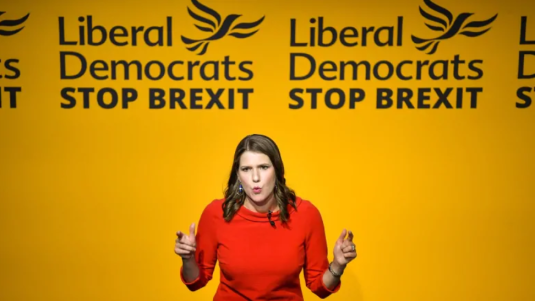
It's not been a good day for the Liberal Democrat leader, Jo Swinson. Still on a high after snatching a seat at the Brecon by-election, chillaxing in the after glow of picking up another recruit from the much-missed Change UK, and making uncomfortable waves for Labour with her Tom Watson chum-in, I expect she arose this morning felling quite chuffed.
And then that utter bastard Jeremy Corbyn went and ruined everything.
In his letter to the leaders of opposition parties, and the smattering of independents and disgruntled Tories, he holds out the hand of friendship. To stop no deal, in the event of a successful no confidence in Boris Johnson's government JCorbz proposes a Labour-led caretaker government that would apply for an Article 50 extension and call a general election in which Labour would campaign on the basis of a second referendum with the option of remaining. Surely the Liberal Democrats, the self-styled party of remain would applaud Labour's move to stop no deal. After all, this disastrous outcome must be avoided at all costs, yes?
Not on your nelly. Throughout the day the LibDems have doubled down on their refusal to back Labour's plan. This is despite a positive reception from Caroline Lucas (partly making up for the weekend's nonsense), a cautious welcome from pro-EU Tories, and pressure from centrist Labour MPs. Awkwardly, even Sarah Wollaston, the newest LibDem MP, has shown a flash of pragmatism. And so watching LibDems, FBPE weirdos, the remnants of Change UK, and Z-list celebrities lose the plot on Twitter this afternoon was the most fun I've had on that blasted platform for many a year. Because for all their bluster, Labour's plan against no deal is the LibDems' worst nightmare.
First off, name me a single LibDem policy that isn't punting for a second referendum. Unless you're a real nerd or the LibDem spox for something or another, you can't name one. Just as Nigel Farage cornered Brexit in the dog days of Theresa May's premiership, the LibDems under Uncle Vince and Jo Swinson believed, not unreasonably, that they could do the same by positioning their party as the remain party. And what do you know, it worked for this year's EU elections. In a second order election given to the venting of frustrations, they took moderate pro-EU voters off the Tories and remainy Labour voters (and not a few members) impatient at its refusal to simply become an outright remain party. In the victory flush, the party calculated they could carry on and repair the damage inflicted on them by their near-death coalition experience years ahead of the most optimistic forecasts of recovery. They didn't pay attention to the pivoting toward a second referendum by Labour's leadership and, well, the small matter of repeatedly trooping the PLP through the voting lobbies against May's deal and no deal. The notion Corbyn is a secret Brexiteer around whom Stalinoid pig iron and tractor fetishists enforced the leader's will with a chain link lash meant there was absolutely no chance he'd seize the initiative back from the LibDems. Hubris and Nemesis, when will they ever learn.
By refusing Labour's offer, Swinson and co. are left with a rump of hard remainers and very little else. And by accepting Corbyn's proposal, their strategy collapses and they lose some of the voters they've recently won over anyway. Sucks to be them, but also sucks to be us if they are prepared to kamikaze and throw away the opportunity of thwarting no deal - the position they've staked everything on. Oh yes, and there is another matter of self-interest the LibDems won't declare that has a bearing on their decision-making. Polling consistently shows the SNP are surging in Scotland thanks to the ongoing Brexit nonsense and the distinctly English nationalist tone pushed by Johnson and friends. We're not talking 2015 tsunami here, but certainly enough to knock back the 2017 Tory, Labour and LibDem recovery. Would Swinson's East Dunbartonshire seat be one of those to fall? Ordinarily, a 6,000-strong majority is a comfortable cushion to have, and she shouldn't have anything to worry about. Ordinarily.
Once again, Corbyn's opponents have grossly underestimated the Labour leader and believed their own hype about their genius and savvy. They've got caught out, and are getting rinsed. We now have a clear road map about what can be done. Will it work? Who can say, but all of a sudden it's Labour who are offering a solution out of the Brexit impasse. The choice is now clear: no deal and all that entails with Boris Johnson, or a deal or no Brexit with Jeremy Corbyn. What's it to be?
Is there anyone more predictable in politics than Tom Watson? As night follows day, wherever the Labour leadership put a plus he places a minus. And where a negative is identified, the Deputy Leader tells us to do the opposite. Whatever the issue and whenever the time, Tom does his best to infuriate the bulk of the party membership, bask in the spotlight, and derail matters as much as possible. No wonder his keen enthusiasm for a second referendum doesn't extend to his own mandate. Yet, of late, while he is instrumental to the tedious, low-level war against the sovereignty of the membership in general and Corbynism in particular, there has been a shift in his behaviour other party watchers and professional Kremlinologists have failed to remark upon.
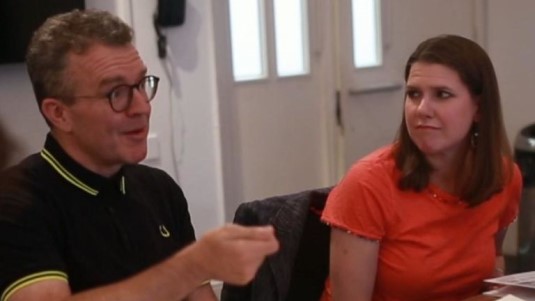
At a heavily trailed event earlier today, Tom shared a platform with Jo Swinson and called for parties to set aside their differences and come together to stop a no deal Brexit. Fair enough. Speaking at For our Future's Sake and Our Future Our Choice, appropriately FFS and OFOC respectively, he said no deal would be a disaster, it lacks democratic legitimacy, and we need a second referendum. For her part, Swinson had some sharp words about tribalism and how the Liberal Democrats would work cooperatively across party lines against no deal. And that's it. What could be more innocuous than a pair of centrist MPs having a nice chat and photo opportunity about an issue they share common ground on?
Let's examine this from a few angles. Firstly, on any Labour/LibDem deal. While it is completely fanciful for all kinds of reasons, there is nothing unprincipled about doing a deal with a minor bourgeois party provided the workers' party is in the driving seat. So apart from fleeting episodes where some Tories think their interests coincide with Labour on a vote-by-vote basis, the kinds of outright scabbery we've seen in Scotland in defence of the status quo is an absolute no. But where the LibDems are concerned, assuming Labour cannot form a government by itself, then it all depends on the specifics of any putative deal. A confidence and supply in exchange for electoral reform or some other policy (do they even have policies that aren't Brexit-related these days?) provided it does not harm prevent Labour's programme is, on paper, do-able. A full fledged coalition? I would err in handing any ministry over to them but, again, it depends on the specifics of a putative coalition agreement. If the LibDems' desire to swan around in ministerial cars trumps their very flexible principles, then okay. And besides, they know as well as anyone that underneath the froth Jeremy Corbyn isn't about to nationalise the commanding heights of the economy. It has its transitional aspects, but it's a stretch to describe the 2017 manifesto as a socialist document.
This said, going out his way to court the LibDems right now isn't the most subtle of messaging. Reading the political body language, Tom knows full well that, despite her mealy mouthed pleas for unity, Swinson has ruled out working with Labour for as long as Jez remains the leader. So much for putting aside politics in the national interest. Tom, however, is happily going along with this. By saying Labour needs to work with the Swinson and friends, he is purposely and shamelessly capitulating to their key demand without any conditionalities of his own. And he's doing this entirely for selfish factional reasons. In all essentials, he is saying Labour must remove its leader to unite with the LibDems without saying Labour must remove its leader to unite with the LibDems. This sort of clever-clever positioning is so transparent, so feeble minded, it's hard to believe Tom was once rated an "operator" and a master of the "dark arts".
And it's here we get to the really interesting bit. Tom might relish his role as a "trouble maker" and self-styled shop steward for Labour MPs gearing up for reselection season, but he does so as a freelance. Seasoned readers will know Tom has long associated with Labour First, and the nexus between it, the WestMids regional office, and the right in Unite. They provided a network of influence that buttressed Tom's power and allowed him to confer patronage on aspirant careerists and back-scratchers. Unfortunately for Labour First, it is a shadow of what it once was. Forced out into open campaigning by the mass character of Corbynism, the destruction of its institutional base in the party apparat and the unions, and its routine defeat in internal party elections has reduced them to a mailing list of the like-minded who occasionally throw a sparsely attended conference and fringe meetings. The regular gatherings that used to take place in the WestMids between the Labour First core MPs seldom occurs these days. Therefore, while Tom could never be described as beholden to the faction that made him he was, to an extent, concerned with and attended to its collective interests. No more it seems. For example, while the remainder of Labour First supporters would agree, and might even cheer on his use of anti-semitism for factional purposes and cosying up to the decrepit and declining remnants of Labour unionism in Scotland, his EU positioning is much more ambiguous, and, from LF's point of view, deeply unhelpful.
Most Labour MPs associated with LF believe Brexit should be delivered and recoil at the idea of a second referendum, let alone the idea of revoking Article 50. For example, Stoke North & Kidsgrove MP Ruth Smeeth abstained on extending Article 50 whereas Labour as whole supported it, and voted against a second referendum, resigning from her front bench role attached to Tom Watson's office to do so. Readers are welcome to debate whether leave voters are going to be swung by their MPs positioning on this (the vote was 72.1% leave in the constituency), but whatever the merits or otherwise a not insignificant number of our parliamentarians are wedded to this approach, and that includes most Labour First MPs. From their perspective, Tom's new found enthusiasm for another referendum and the EU not only undermines their efforts - effectively throwing some of his closest colleagues under a bus - but he too runs the risk of falling beneath the wheels. Unlike very remainy Labour MPs who almost exclusively hail from very remainy seats, Tom's West Bromwich East constituency voted 68.2% to leave.
Has Tom become fully consumed by his own legend as a Very Important Person in the Labour game of factional intrigue, or does his freelancing antics speak to the collapse of his faction, the release from residual concerns for them, and the ongoing decomposition of the Labour right? The truth is it's all of these things, and because of them the criticisms and positions he takes are likely to become more opportunistic and more erratic the longer he stays in post. Why not do yourself and all the party a favour Tom and allow someone else the chance to step up?
By now you will have heard about Caroline Lucas's emergency all-female cabinet in response to the looming no deal Brexit. And the derision has proven to be near universal. From proposing a cross-party alliance among politicians with little in common to the essentialist supposition that women are bound to do a better job of negotiating Brexit because, well, they're women (um, Theresa May?) and to the noted exclusion of black and minority ethnicity women from her fantasy cabinet. An absence compounded by her clarification/apology that all the leading women in British politics happen to be white. So quite how did the very Brexity backbench Yvette Cooper get selected for Caroline's gang over the very remainy actual Shadow Home Secretary Diane Abbott? Readers can speculate about this oversight.
Unfortunately for the Green Party's sole MP, this crass initiative has pretty much trashed her reputation among a left who've happily given her the time of day. Despite the space she has put between the Greens and Corbynism, and going full-on remain since the EU referendum. It's a distance travelled from green radicalism to green liberalism, but why the journey at all? What happened to the searing critic of the Blair government and all-round champion of good causes?
Some, particularly on the left, might point to the original sin of green politics: the analytical primacy of the relationship of our species to the environment. Notwithstanding the diversity within green thought and the integration of leftist positions, most of what you might call mainstream green politics swerves or downgrades the importance of class analysis: as if the logics of capital and the exploitation of labour has little to do with our collective species relationship to the environment. Conceived this way, what matters is the doing of something to prevent unsustainable usage of the Earth's resources and climate change which, historically, in the early years of the Greens resolved into a division between radicalism and pragmatism.
The Green Party in England and Wales (the Scottish Greens are a separate organisation) has undergone significant shifts during its history. Starting out as People, this was a conservative and misanthropic sect steeped in Malthusian population control - compare this to the (West) German Greens who were a party hailing from the new social movements of the 1970s. In the 80s it moved to the left, which is where it has sat ever since with varying degrees of radicalism. Caroline Lucas, for instance, has been arrested at Faslane protesting Trident and at Balcombe in an action against fracking. During the 2015 general election campaign, the Greens - then under Natalie Bennett's leadership - formed a de facto alliance with the SNP and Plaid Cymru and were able to place themselves to Labour's left and poll over a million votes for their efforts. Leftism paid.
And then it didn't pay any more. The emergence of Corbynism has made it impossible for the Greens to operate profitably against Labour's left flank, as the 2017 election underlined. The election of Jonathan Bartley as co-leader, in retrospect, appears a significant moment the party acknowledged the new political reality it operated in. Unlike Caroline Lucas and his co-leader, Sian Berry, who have backgrounds in activism, Bartley worked on John Major's leadership campaign to see off John Redwood in 1995, described himself as late as 2010 as a "floating voter" and had a wonkish career flitting between think tanks and doing odds and sods commentary for the BBC. In other words, he's the first senior Green figure who is entirely the product of Westminster and its environs. And you know what social being does, right? It tends to condition consciousness. Bartley was elected jointly with Lucas in September 2016 after the Greens heavy involvement in the remain campaign, with the latter being one of its most visible advocates during the referendum. Particularly since continuity remain took to the streets Lucas has allowed herself to be positioned as the greenish wing of EU fandom, associating the party more with Brexit than other issues. Meanwhile Labour has stolen their march on a green industrial strategy, opposition to fracking, and support (admittedly guarded) for Extinction Rebellion stunts. Still, the current turn hasn't harmed the Greens' electoral standing. In the EU elections this year the party polled 1.4m votes, its best results since it won 2.3m back in 1989. Likewise when it comes to local elections and by-elections, the Greens have proven more adept at picking up disgruntled centre/floating Tory votes than disgruntled lefties or Blairy refugees from Corbynism. Which means they're fishing in the same pond as the Liberal Democrats.
All of a sudden, the desire for a remain alliance or some such nonsense becomes clearer. Nick Cohen looked like he had egg on his stupid face when the first piece of proper journalism he did for nigh-on 20 years got roundly mocked by Sian Berry on social media, but as someone on the party's left would she necessarily be involved in tete tetes between the offices of Caroline Lucas and Jo Swinson? From the Greens' point of view, it makes sense for them to come to an arrangement with the yellow party thanks to the near identical constituency profile. And also to reach out to politicians in other parties who broadly fit with/might appeal to this sub strata of the electorate, and make them look like the much celebrated "grown-ups in the room". So the two halves of what was Change UK, the SNP and Plaid, certain "soft" Tories like Justine Greening, and remainy Labour members like Emily Thornberry were dutifully namechecked. And Yvette Cooper got included too because she's part of the same milieu, and is a great hope of the centrists - even though her Brexit position is more Brexity than the stance of the supposed closet leaver leading the Labour Party.
Being and consciousness, remember that? When you move in new layers there is a tendency to acquire their habits of thought. The elite circles of continuity remain, the studios, the corridors, tearooms, and parliamentary offices of assorted MPs are rarefied environments where individual politicians and figures appear within the milieu as significant personalities with real world pull. How else to explain the continued crush for the sulky Alastair Campbell? But it is also a dismissive, near preternaturally white environment where the nostrums of social liberal inclusion demand the requisite lip service, but little beyond that. Diane Abbott and other leading women of colour in the Labour Party do not mix in these exalted centrist circles, nor are they onside politically speaking. Therefore when Lucas said her fantasy cabinet was composed of leading women, her mind automatically connected to her narrow parliamentary squad.
Yes, Caroline Lucas's standing has suffered from this episode, less thanks to the implicit racism in her letter but because it demonstrates how far she's travelled from an activist politics to the most vapid parliamentary gesture politics. A sad demise, all told.
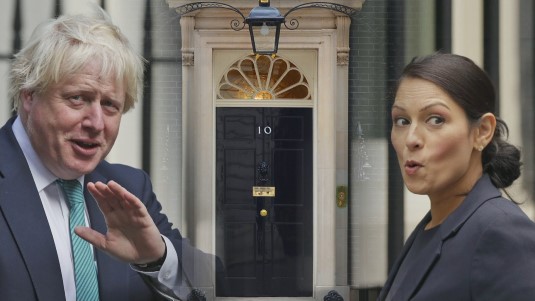
"I want criminals to feel terror" Priti Patel proudly boasted in the interview about her priorities as Home Secretary last week. And over the last couple of days, Boris Johnson announced £85m extra for the Crown Prosecution Service to aid its prosecution of violent offences, a review of sentencing for crimes of that ilk, 10,000 new prison places, and the expansion of stop-and-search powers to all police forces. This comes after pinching Labour's policy to recruit 20,000 extra coppers following years of decline. Okay, so why are we going here? Well, it's all about preparedness for a general election. When you even have BBC Breakfast political correspondents going with this line, there is little point pretending it is anything else. What is also interesting is the notable coincidence of a cluster of stories around the crime theme, almost as if the Tories' grid is being aided and abetted by Aunty. We have over-reporting of assaults on police officers, and a prominent feature on so-called county line drug crime. Though funnily enough, the BBC aren't as keen to cover Diane Abbott's attack on the Tories for presiding over a burgeoning mental health crisis among the police.
Okay. According to the pundit chatter of the last few weeks Johnson's galaxy brain strategist, Dominic Cummings, is renowned for doing the most unpredictable things. And yet his form suggests not. A thought experiment: if you wanted to win the EU referendum for leave, does it take real strategic insight to come up with a play on people's anxieties and fears? Likewise, if your approach is about keeping together the Tory voter coalition which very nearly shattered during the EU elections, wouldn't you go hard on traditional Tory themes?
And so we have Crime Week, a set of overlapping policy announcements designed to hog the silly season headlines. This not-at-all-predictable splurge of positions and money are about seizing some much-needed political initiative on matters other than Brexit. The tough posture on crime and criminals gives the Tory editorial offices something uncontroversial to swallow and regurgitate and, crucially, attempts to wrestle the crime mantle back from Labour. After all, readers might remember Theresa May's attempts to capitalise on the jihadi knife attacks in London just prior to the general election and how it didn't stick thanks to her record of cutting back on coppers and the failure to fund their (admittedly problematic) Prevent strategy properly. The hope is the short sharp smack of punitive punishment combined with a more prisons/more screws/more plod pledge casts these unhappy episodes into the abyss and present Johnson's government as a clean break. It's about perception, the idea something is being done to arrest the knife crime epidemic and random violence. It's not about evidence, efficacy, or what does and doesn't work.
Will it work? After all, criminals are never going to attract sympathy from the rest of the population. And to have someone as hardline and vicious as Patel in post is unlikely to cost the Tories either. At least where one's toughness credentials are the main political currency, and the problems of nuance (and racism) aren't about to trouble the base unduly. Shall we remind ourselves of them? The Tory electoral coalition is disproportionately made up of the retired, of the petit bourgeois, sections of the middle class, and (traditionally) big capital. Furthermore, their ontologies - ways of being and becoming in the world - predispose them toward certain political cues. As explained a number of times, anxiety is constitutive of their existences as classes and strata. The petit bourgeois are always threatened by commercial realities dominated by big business, and jealously guards their property and income generated from the sweat of their brow - hence a general ill-disposal to trade unions, labour and social democratic parties, and socialism. The rightist middle class are typically managers, and their anxieties stem from the churn of change (restructures), career competition, the possibility of redundancy, and those assumed through the acquisition of property. And lastly, pensioners of all classes are subject to something akin to petit bourgeois pressures. Again, property is important but more so are fixed incomes and modest investments, which cannot be supplemented by re-entering the labour market in many cases. Add to this the anxieties attending the experience of old age, including dependence on the health system, and the (privatised) individuation consequent of retiring from work, you have sets of constituencies susceptible to having their fears exploited by anyone promising order, security and authority. Often sublimated into other vectors of uncertainty - Britain's place in the world, foreigners "coming 'ere", the acceptance of ethnic and sexual minorities by their children and grandchildren - these are fretted over and talked up by various politicians for influence and votes. And so it is with crime. The idea of the state as a big stick appeals because it is a forceful imposition of order on to a chaos they feel could overwhelm them.
How can Labour counter this? Pointing out the cynicism of the Tories and how their running down of policing and crime prevention did work to a degree in 2017, and has to be part of the strategic mix. But, ideally, we need to shift the parameters of the debate away from "hard" punishment versus "soft" rehabilitation and frame it more pragmatically in terms of what works, to borrow a favourite Tony Blair phrase. This, of course, is a stance that affirms rehabilitation and reform over the birching of scallywags. But ultimately, a crime and policing policy cannot stand on its own. The second aim, beyond the specific nuts and bolts of criminal justice, is the implementation of a programme that simultaneously makes crime less likely and de-weaponises it as a mobilising issue for the right. Again, part of our job is to demobilise the Tory condition while mobilising ours. The potency of the fear of crime can be reduced by addressing the anxieties that underpin the Tory mass electorate through other means, and is one reason why Labour's present package of measures for small business, skills retraining, and retention of current support for pensioners are all necessary.
Even where the Tories appear strong they are weak. And that is no less true when it comes to crime and policing.