Monday, 24 March 2025
Revisiting Covid and Class Politics
Laura argues that teeing up for future health emergencies is contingent on seeing off their ilk. But it was never widely appreciated why the right, including in this country, produced a policy response the swung wildly from seriousness of purpose to outright hostility toward mitigations. While he was in opposition Keir Starmer never said boo to a goose, and went as far as demanding that the schools be opened and Covid infections be damned. And Boris Johnson himself had to be dragged kicking and screaming into announcing a quarantine, enforcing mitigations, and frequently discarded medical advice in favour of what he thought the politics demanded. Which was as swift a return to the normal, even if it meant letting the bodies pile high. How can sense be made of the catastrophe the Tories oversaw and, even now, remain largely unpunished for bringing upon us?
There were two moments to the Tory response, and both of them were united by the same thing. Regardless of how many succumbed to Covid, what had to be preserved at great cost was the preservation of class relations and ensuring the outcome of the disease did not alter them in any way. This, to my mind, is the most convincing frame for making sense of the gyrations the Tories put us through. From delaying mitigations to the point where most people were deserting workplaces anyway, to lifting them early, to promoting absurd and reckless schemes like Eat Out to Help Out, to ensuring the two subsequent lockdowns and later mask mandates were hardly enforced, to allowing the pandemic response to be driven by anything but "the science".
The first of these moments was, when Johnson finally got round to issuing his stay-at-home rule, making sure the Tories escaped any responsibility for their mishandling of the pandemic. In this they were helped by two unlikely sources. The TUC very quickly pushed for mitigations and a jobs guarantee scheme, which was immediately articulated in parliament by Jeremy Corbyn - who was seeing out the end of his leadership. Meanwhile, the soon-to-be-annointed Starmer gave us a picture of things to come, and not in a good way. The Tories adopted the labour movement's position and effectively underwrote the country's wage bill, increased social security payments, suspended conditionalities, abolished rough sleeping, and made available loans and grants to keep businesses big and small afloat. These emergency measures are what helped the Tories escape the political fall out of not acting sooner. In true Johnson style, they went from lethargy to bull-at-a-gate in moments, and the availability of wage support - which Rishi Sunak craftily tied to employer/employee relations - effectively silenced complaints about mismanagement. Therefore, as Covid ripped through care homes and carried tens of thousands of elderly residents off to premature graves, the impression that the majority of people were supported and safe thanks to timely action ensured the Tories escaped the political consequences of their negligence. It's telling that the only Covid-related difficulties they faced was party gate, which was about Tory hypocrisy and not their handling of the pandemic. In this first instance, the Tories successfully depoliticised an emergency that was anything but apolitical.
The second challenge was managing the political consequences. More than once Johnson tried his imitation Churchill and talked about the nation pulling together as one. But the Covid emergency raised very serious issues for a Tory party determined to run down the capacity of the state. I.e. Suddenly finding untold billions under the Bank of England's magic money tree, arguments around the state not being able to do this or that found themselves riddled with bullets fired by new realities. There was, for a time, a spirit of community and solidarity abroad that was felt by millions, and expressed collectively in thousands of mutual aid groups, neighbourly good deeds, and the doorstep applause ritual for NHS and other frontline workers. On top of that, the mask mandates ran against the grain of the individuating culture the Tories championed. I.e. Mask wearing wasn't primarily about protecting the wearer, but more to do with shielding others from any possible Covid infection they might have. From this standpoint, it was an expression of collective care. Therefore, the danger was that like the disaster of the Second World War, post-pandemic people's political horizons would be raised and the Tories particularly would be out of sorts.
Therefore, no sooner were the lockdowns in force the government continually undermined its own efforts. Johnson kept talking about "freedom day", even while fatalities daily ran into the hundreds. The first thing to come back were benefit conditionalities. Young people were getting scapegoated for spreading infection by not obeying curfews, while these same youngsters were expected to wait on foolhardy diners doing their bit to put the virus about. Bosses were given the discretion following the first lockdown to decide on whether their workers should be in work or not. Schools were opened with zero acknowledgement that infections among pupils could spread to teachers and families at home, causing more unnecessary deaths. Sunak relished the chance to wind down furlough schemes, while ensuring many small businesses - particularly those the Tories didn't favour - missed out on support. There are innumerable instances of the government announcing X, and then contradicting it because the politics of Covid management, in their view, favoured Y. The Tories also allowed several leading backbenchers to fulminate against mask wearing, which helped ensure raised aspirations were but a fleeting moment. And the result, once Johnson had exited the scene and Liz Truss had finished the Tories with her pyrotechnics was the programme of the Sunak government: the continual wearing down of state capacities to better manage political aspiration, while fostering market-based alternatives to public provision for those who could afford it.
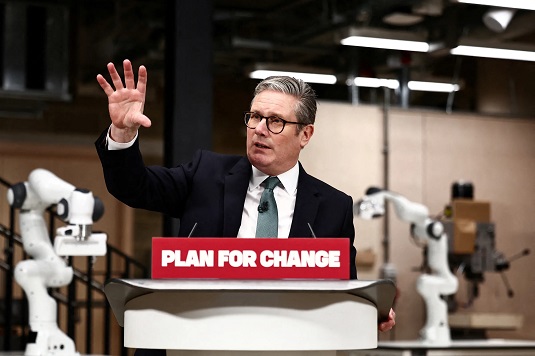
Things might have turned out differently. Had Starmer used his period in opposition during Covid's first wave to carry on where Corbyn left off by offering a mix of constructive suggestions and critique, his leadership could have changed the political weather. But then his project was never about contesting the fundamentals, as the last nine months have amply demonstrated. The cuts to winter fuel, the child benefit cap, attacks on the disabled, civil service reductions, demonstrate a Labour leadership whose statecraft is not much different from their predecessors. This is Covid's legacy - a bipartisan agreement that the state should be limited so as to never raise expectations that things might be done differently.
Image Credit
Sunday, 23 March 2025
Conceiving Commercialised Cannibalism

It's often said that dystopia is the default for science fiction. And some are grimmer and more credibly rendered than others. Agustina Bazterrica's Tender is the Flesh resides in Camp Bleak with a world that is far fetched but discomfortingly believable.
Marcos is struggling to keep his head above water. He works hard to pay the care home bills for his ailing father, and he's consumed by grief after his infant son died and his marriage disintegrated. He has little enthusiasm for his job, which he increasingly experiences with a growing sense of alienation. But this job is quite prestigious. He is the manager of a high class slaughterhouse. And the livestock it processes? Human beings. In this future, all domestic animals and pets have been exterminated as a precaution following an alleged viral outbreak. Rather than adapt to a new vegan reality, the demand for meat sees populations prey on undesirables (immigrants, criminals) until each country develops domestic markets in industrially farmed human flesh. Cannibalism is normalised, and there are strict rules separating people from livestock - punishable by ending up on a service platter as a rare and exotic meat-with-a-name dish. Marcos has sworn off meat since his son's passing, and with his father lost to dementia he spends time in a nearby abandoned zoo with the memories of visiting it as a boy and what life was like before the "Transition". But he undergoes a revelation when a female "head" with sought-after First Generation Pure branding is delivered to him as a gift and starts seeing her as something more than an animal.
Bazterrica's cannibalistic premise is not entirely original. Neal Barrett Jr's Through Darkest America is the obvious inspiration. But while his was a post-apocalyptic cowboy adventure in a society based around herding human livestock, Tender's future is fully industrialised and otherwise no different to our own. And through Marcos, Bazterrica is able to slide her world building into his every day. It's not subtle, but neither does it take the form of egregious info dumps. And so we see the killing and butchery process, how strains are selected, the presentation of meat at social occasions, and the consequences - emptier cities, new euphemisms and hypocrisies, and authoritarian moralities backed by grisly punishments.
Originally published in Argentina in 2017, Tender will forever be timely because it's a treatise on dehumanisation. Most obviously, the livestock are denied their humanity by their separation from people and the laws that govern them. Like Darkest America, sexual relations between people and cattle are strictly forbidden and punishable by death. Breeding is strictly controlled, and there are mountains of paperwork behind every livestock pregnancy. Ownership is also strictly regulated. Human cattle cannot be trained up and deployed as slaves, and doing so is a capital offence. The dehumanisation, however, doesn't end there. A society thus constituted is universally rebarbative. Consumers, typified by Marcos's idle sister Marisa, want their cuts of human meat - she takes pride at presenting an arm at her father's memorial service. Those who cannot afford meat congregate outside slaughterhouses, hoping to pounce on an escapee or stray or, occasionally, will attack a livestock transport. In one such assault toward the novel's end, these people - dubbed Scavengers - raid a truck and butcher its cargo on the spot, up to and including eating them "fresh". We also have the Church of Immolation. Its role is to provide industrial cannibalism spiritual sanction by "donating" volunteers as willing sacrifices. Having taken leave of their senses, when the holy delegations depart they're stunned and thrown to the Scavengers outside. There is a ready cottage industry in hunting, and laboratories conducting Mengele-style experiments on livestock are among the new normal. Marcos views all this with a cynical and occasionally disquieted eye, but the ending - which hits like a bolt gun to the forehead - shows how dehumanised he also is.
The comment on the instrumentalism of capitalism is not far from the surface, but it never becomes clumsy nor does it get in the way of the storytelling. The writing is spot on, the amoral vacuity of all the characters is well rendered, and as a relatively short work it never outstays its welcome. She is able to get across the full horror of this world without much in the way of gratuity. There is less of an ick factor than Upton Sinclair's The Jungle, for instance. Tender is undoubtedly one of the best literary SF novels of this century, and Bazterrica deserves every success this has brought her.
Image Credit
Tuesday, 18 March 2025
Cruelty is the Point

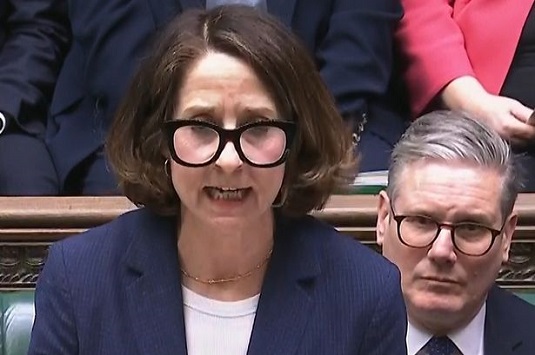
For a couple of weeks we've been treated to a tug-of-war of rival briefings. The Treasury initially said it was going to cut disability benefits to support rearmament measures, followed by another slew of on-the-record announcements that peeling back social security had a "moral case". Then last weekend the press was awash with claims of disquiet in the cabinet over putative cuts, which encompassed soft left and Starmer loyalists alike. It held out the possibility of a rethink ... and then we got Tuesday's announcement of cuts to disability support in the Commons.
Liz Kendall, the DWP secretary, gave a speech that might as well have been written for Iain Duncan Smith during his inglorious tenure. There was no substantive difference at all. Kendall's announcement that the hated Work Capability Assessment would be scrapped and Personal Independence Payments would not be means tested was a sliver of carrot before a battering with a very big stick. There's going to be a rejigging of the PIPs points system, pretty much ensuring only those with the most severe and debilitating impairments will receive state support. Extra Universal Credit payments awarded to those living with disabilities or difficult health conditions are going to find them frozen for four years, while new applicants can look forward to receiving just half of this additional support. If someone is under the age of 22, they will lose eligibility to apply for this health element of UC altogether.
The consequences of these few measures will be catastrophic. About a million people will lose thousands of pounds a year, which would - from Kendall's point of view - lead to the perverse outcome of some giving up employment precisely because the present level of support enable them to keep working. And as for the new points system that will govern PIPs, this is surely a recipe for a skyscraper full of appeals as hundreds of thousands of people are wrongly judged not to be debilitated enough. Which is exactly what happened with the WCA.
For a week, we've heard how no Labour politician entered politics to cut welfare (a woeful and inaccurate representation of those on the Labour right, at least), so why put the boot into the poorest and most vulnerable? On the one hand, they think sticking to Rachel Reeves's strait jacket will win over hard right Reform-curious voters still taking their political cues from Sun editorials. As per Labour's dalliances with racist positioning it won't work. But, for as long as the left refuses to get its act together while the Greens struggle to cut through, electoral punishment isn't immediately in the offing. Only concerted opposition from the unions, rebellion-minded Labour MPs, and the extra-parliamentary movements of the disabled themselves acting in conjunction can force the government to think again.
But we need to be absolutely clear why this is happening. It has nothing to do with a "£5bn saving". If it was there might be some more honesty around framing the issue, rather than the tedious combination of "we're the party of work/benefits are keeping disabled people out of work." No, what we are seeing is a scapegoating operation providing cover for employer failings. For it's not welfare that "traps" claimants, but employer attitudes around availability, flexibility, and reliability of workers with impairments and chronic conditions. Their "rather not" attitude to making reasonable adjustments, or accommodating workers who require a bit more support might force an employer to modify ways of working and, horror of horrors, negotiate with employees over better and inclusive working conditions for all. Blaming benefits, not bosses gets the latter off the hook. And the second comes back to maintaining the social workhouse, the apparatus of bureaucratic loopholes, harassments, and humiliations whose affect is to discipline class relations by making "alternatives" to compulsory work as undesirable and as stigmatising as possible.
Kendall's remodelling of social security is set to punish the ill and the disabled for not being healthy and/or able-bodied. This is a continuation of Conservative cruelty, and that is entirely the point.
Image Credit
Saturday, 15 March 2025
Labour's Enthusiasm for Artificial Intelligence

30,000 jobs are set to disappear with the closure of NHS England and its merging with the Department of Health and Social Care. Echoing the Tories, tens of thousands of civil service jobs are on the chopping block. And this planned massacre of livelihoods were presided over by a grinning Keir Starmer and Wes Streeting and presented to the media as unalloyed goods. This is set to cut down on duplication and save lots of money (£45bn, apparently). But something else is also on the cards: the replacement of jobs by Artificial Intelligence. In his enthusiasm at the prospects of jobless service provision, Starmer gushed that "No person’s time should be spent on a task where digital or AI can do it better, quicker and to the same high quality and standard."
This is the umpteenth speech in which the Labour leadership have espoused their enthusiasm for AI. For Starmer and his project of authoritarian modernisation, the technocratic attractions are obvious. A state that is neither bigger or smaller but works better is enticing, particularly when previous attempts at digitisation have been hit by delays and costly failures. Those long in the tooth will recall efforts at harmonising the NHS's IT systems, and the huge problems rolling out Universal Credit encountered. But the prize is the speeding up of the state's mundane activities, like answering HMRC inquiries and sorting out driving licences quickly. AI is part of Starmerism's answer to the crisis of government legitimacy. If the bureaucracy can be automated and the discharge of its functions be made as rapid as placing and receiving an Amazon order, belief in the efficacy of government and, possibly, the standing of politics could improve - to Labour's benefit. If only people could forget about winter fuel cuts.
Those are the good reasons. What are the real reasons? The PCS response argues that new innovations should be introduced and embedded in cooperation with staff and be used to enhance working conditions and job security. A position likely to have gone in one ear and out the other. This is because AI's promise speaks to the dominant pole of (right wing) Labourism: its relation to "working people" not as working people, but something far more passive and politically innocuous: as consumers. The ultimate aim is impeccably Blairite: the depoliticisation of politics, and the reduction of choice between the parties that offer the best value, best quality services. This alignment with Labourist assumptions is more a coincidence of congruence. As ever, it comes down to interests.
On plenty of occasions, Starmer has staked out his intention to transform the UK into an AI superpower. This does involve infrastructure like building the first reservoir for 30 years, which handily is earmarked for land not far from the planned expansion of data centres in Cambridgeshire. But more importantly, he's leveraging the state as the anchor customer for AI services and innovation. There is nothing particularly innovative about this. In the Blair years outsourcing, Public-Private Partnerships, PFIs, etc. were used to provide guaranteed markets for everything from cleaning companies to construction firms. The aspiration was to tie the interests of those firms to the largesse of New Labour ministers, thereby expanding the party's base among capital's exalted circles. When the crash came and Gordon Brown's government became a busted flush, they were happy to carry on accepting these sorts of contracts while transferring their allegiance to the incoming Conservatives - who continued with the same practice. Streeting's love-ins with far right tech oligarch Peter Thiel, the enthusiasm for using AI in patient-facing interactions, and the endless promises of using the private sector to "help" with the NHS are part of the same piece. This is the mood music designed to entice Silicon Valley and giving them a stake in the British state, while generating a home grown ecology of expertise around innovation and application. Something that could have the happy by-product down the line of sheltering the UK from Trump's tariffs, and making Labour - on paper, the political antipode to their brand of freakish authoritarianism - their preferred political partner this side of the Atlantic.
Everyone wins, right? No. Supposing AI can fulfill the grandiose claims made for it, the British state is being used as a test bed for, to borrow a recent phrase, feeding jobs into the wood chipper. The purpose of generative AI is not to make things more efficient, but to deskill and digitise as many of the properties of immaterial labour that are feasible. I.e. The social competencies that capital accumulation increasingly depends on can, after a fashion, now be separated from workers and therefore tip the balance of forces further away from labour. To all intents and purposes, as per previous waves of automation what the government are promoting is a power grab at capital's behest. If these schemes are successful, the next targets are millions of jobs across private industry for the benefit of shareholders. And Labour ministers who fancy themselves as future consultants on implementing AI "solutions" in large organisations when they're done with politics. Just like the Thatcher years, Britain could pioneer a new class settlement. And just like the 1980s, unless the left and the labour movement gets its act together it will be our class who loses.
Image Credit
Friday, 14 March 2025
The Ultimate Philosophical SF Novel
That makes this a perfect occasion for some quality filler. This one comes from Stephen E Andrews AKA The Outlaw Bookseller, and he's talking about one of his favourite ever novels. Give it a whirl.
Sunday, 9 March 2025
Human Folly in The Wind from Nowhere

His first novel, The Wind from Nowhere, was disowned by JG Ballard during his life time and remains suppressed by his estate. There have been no new printings since the 1970s, despite its being recognised as the first of his thematic quartet of disaster novels. Quite why when it stands up to contemporaneous fare from John Wyndham and John Christopher can only be guessed at. Perhaps the circumstances of its composition irked Ballard. He had to produce this to make enough money so he could write the novel he wanted to write, which was The Drowned World. Did he regard it as necessary hack work to put food on the table? Or could it be that he saw flaws in it that only a meticulous obsession with detail and style would reveal? Whatever the case, The Wind from Nowhere is a debut worth anyone's time.
In the best traditions of show-not-tell, the Earth is wrapped in the envelope of a globe-spanning hurricane. No one knows why except everywhere is affected. The wind tapers off toward the poles, but its strength defies all meteorological projections and keeps getting stronger. Cities are smashed to pieces, free standing structures pulverised, and movement on the surface is virtually impossible. A dank future of survival underground scrapping over diminishing supplies awaits those who survived the wind.
The intertwining plots don't require much elaboration. Characters struggle across the storm-lashed landscape, fall in with a murky private army, and end up holed up in a vast, wind-proof pyramid-cum-Bond-villain-lair. The huge glass walls might be able to stand up to the increasing force pushing against it, but can the same be said for its sandy foundations?
For a first novel, all the Ballardian elements are present. A lot of the action take place in the liminal spaces of modern life - elevator shafts, tunnels, cellars. These back rooms that make everyday life possible quickly become the only spaces for survival. And because this is a Ballard, there are flying chunks of masonry, broken glass, cracking and crumbling concrete, power cables that dance in the wind, and human bodies pummelled, hurled, and dashed against collapsed buildings or whisked off into nothingness. There is some distance between this and the later Ballard of the urban trilogy, and above all Crash, but the familiar flavourings are present.
Also present in embryo is the decentering of the human (of humanism). The subjectivity, the agency of people only exists in relation to one another. As indifferent as the wind is, there's also the uncertainty about its origins. Might it be a Frankenstein's monster, an unintended consequence of modernity as per The Drought or the reversion to barbarism in High-Rise and Super-Cannes? The helplessness in the face of a hostile universe of reinforced by the fate of the glass pyramid and its architect, the partially deranged industrialist Hardoon. Sat behind impossibly thick blocks and having gathered around him a private army, he confounds expectations by refusing to accept the role of a megalomaniac who would rule a post-disaster Britain. His motivations for building the pyramid was to show the primacy of the will over the nature, a defiant middle finger that would easily withstand whatever wind speeds his cyclonic nemesis can throw. It is inevitably a foolish conceit and soon collapses, with our heroes just about surviving and realising that, as the glass falls from the sky, that the wind is abating of its own accord. Another underlining of the self-centred fruitlessness of human agency. The glimmer of hope comes regardless of what we did and didn't do.
Despite Ballard disowning The Wind from Nowhere, it sits in his oeuvre like a hand in a leather driving glove. It remains a superb and accomplished exemplar of the English disaster novel, and one that deserves a reissue.
Friday, 7 March 2025
Wednesday, 5 March 2025
Labour and the Social Workhouse

Is Kemi Badenoch the Prime Minister? I ask because last week prior to Keir Starmer's announcement about increasing military spending, the Leader of the Opposition said it should be part-funded by cuts to social security. And on Wednesday, the BBC was leading with news from "sources" that this is exactly what Rachel Reeves plans to do.
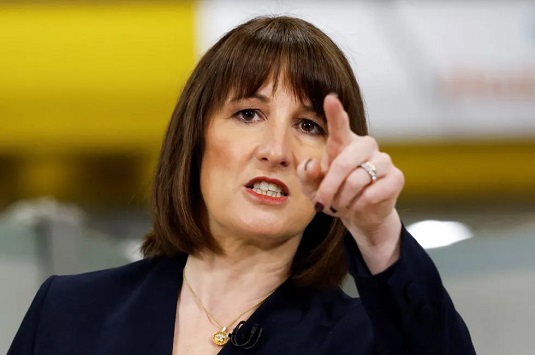
It could be this is more muddying of the water. The government's comms haven't exactly been on point, and "anonymous" downbeat briefings have been made in the past that came to nothing. But in this case, I don't think so. The contempt Reeves has for those subsisting on social security has been known for a decade, since she said Labour doesn't want to represent people who are out of work. Readers will recall that, as Chancellor, Reeves has followed it up with stripping away winter fuel payments and keeping the two child benefit cap. Before Trump came back, there have long been mutterings about doing something about the benefits bill, with disabled people and the long-term sick in the crosshairs.
The way this is being presented is typical of a government drenched in dishonesty. In April last year, 1.5m people reported inconveniences associated with long Covid and a further 381,000 said their day-to-day activities had been limited a lot. A good chunk of whom would be in receipt of sickness benefits. Another gift of Covid and the preceding government's lack of seriousness has been the co-morbidities arising from infection. Susceptibility to auto-immune diseases, cancers, heart disease, respiratory conditions, and more are well known and are exacting a toll from a population that have contracted it many times. These too are adding to the sickness bill. But the most common problems are musculoskeletal conditions to the point of debilitation, and mental illness. We never hear about what's driving these, perhaps because it raises inconvenient questions.
Politicians know some ill and disabled people are unsuitable for work and that the overwhelming majority on sickness and disability benefits are there precisely because of that. Which is why the Tories are past masters at scapegoating them by tarring them with the scrounger/skiver brush. Labour are not so crude, prefer to say the system isn't working for them, and is creating "perverse incentives" to stay away from work. But the effect is the same: the delegitimation of the long-term sick, a denial that their system chews up and spits out broken bodies and damaged minds, and has no further use for them.
The Italian autonomists used to talk about the social factory in which every occupation, including unpaid domestic labour, reproduced the system and were therefore productive of capital. Perhaps we should think about the social workhouse, which is productive of stigma, fear, and forcing unwell people into work. This isn't primarily to make money out of the disabled and the ill, but to reinforce the discipline wage labour depends on. Clamping down on benefits is Labour's way of telling their bourgeois backers that the management of class relations is safe with them.
Image Credit
Tuesday, 4 March 2025
Rumpus on the Right

Following the double-team ambush of Volodymyr Zelenskyy on Saturday, the latest entertainment from the White House include suspending military aid to Ukraine, and JD Vance attacking "random countries" (i.e. Europeans) for not having fought a war for 40 years. The latter, of course, is in poor taste considering personnel from almost every NATO member died needlessly in the occupation of Afghanistan. Fewer countries were in Iraq, but the losses were by no means insignificant. And as for Ukraine, its case against Russia is almost sacrosanct as mainstream politics and public opinion goes. Woe betide anyone who sets their face against this.
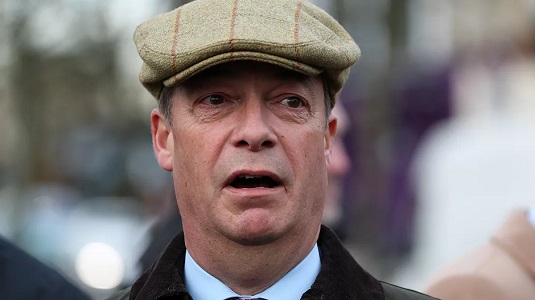
Farage is having a go, mind. Josh has done a good job listing his recent compromising utterances. These include criticising Zelenskyy for being "rude" in the White House, excusing Trump's treatment of the visiting leader, and supporting the pathetic question about his attire lacking "respect". There was also his suggestion Ukraine was a uniquely corrupt country, admitting he was not a "huge fan". Whether Farage is actually in the pocket of the Kremlin or not is a moot point. Like Trump, he acts as though he is.
Might this dent the (resistible) rise of Reform? As Josh rightly notes, like all far right outfits there is an inherent instability to the project. The evidence is there in the waxing and the waning of its continental counterparts (who, unfortunately, are on the up), and the history of UKIP had similar peaks and troughs. Farage knows this better than most given the dozen or so times he quit as the party's leader, which is why he ensured the Brexit Party and now Reform were private companies he was the majority shareholder of. As noisy the internal life of the party might be, he can never be challenged because it's his personal, private property. So if the combination of Trump's colourful behaviour and Labour's adoption of military Keynesianism does chip away at Reform's polling, Farage is safe in his manor.
Safe, but politically vulnerable. Vladimir Putin has become a bruise on Reform Labour wants to, and is, punching. Yet this is an opportunity for someone else too. Typically languishing third in the polls and desperately looking for a way back into contention, this is an opportunity to turn the tables on Reform. After all, it was a Tory Prime Minister who was enthusiastic about sending weapons to Ukraine and was critical in persuading Washington to do likewise. Under the Liz Truss interlude and Rishi Sunak, the arms kept making their way to the front lines and there was no suggestion of letting Kyiv roll over. And like Labour, they have tried to capitalise on the moment. At the weekend, Robert Jenrick put out a release condemning the behaviour of Trump and Vance in the strongest terms. Priti Patel has attacked Farage for equivocating on Russia's invasion. The goal is not just open, it's begging the Tories to score against Reform.
Sadly for them, it's Kemi Badenoch in the striker's position. After mildly criticising the Americans at the weekend, she was today making excuses for Vance's comments. The Tory leader said "I've looked at the comments. I don't think he actually said that. A lot of people are getting carried away." Her weak apology meant that Farage, putting self-preservation first, was able to get out a stronger statement that demonstrated a better understanding of how the politics of Vance's comments would land on the right. Instead of Farage looking vulnerable, it was Badenoch. He used the situation to mount a successful rear guard action. The Tory leader completely blew it.
Yes, Reform and their ilk are volatile parties with Russia-sized weak spots. But when the Tory leader is reluctant to get involved in the rumpus to save her party, probability suggests her time at the helm will be short.
Image Credit
Sunday, 2 March 2025
Cuddling the Russian Bear
Why the break from this and the spurning of traditional allies? Why does Trump want to cuddle the Russian bear? The theatrics of the last month are overkill if it was all a crafty move to get European governments to cough up more on military spending. Ditto if it's just for domestic consumption too. Some Trump voters will be amused, the majority bemused, and for nearly all of them they're secondary considerations to the cost of living crisis - a key reason why they put him back in the White House. Nor are the intelligence reports that compromises Trump in all sorts of ways. As head of the most powerful military and intelligence capability the world has ever seen, in a sharply divided America front page splashes about Russian money and grim-sounding sex tapes would make little difference where Trump's support is concerned.
The more compelling answer lies in divisions within the American establishment about the strategic orientation their state should have in the 21st century. The shifting economic centre of gravity towards East Asia coupled with the long-term demographic decline of Europe's wealthy markets provides a compelling case for orienting away from the Atlantic to the Pacific. Something that Britain has tried doing too. But this is not just about where the new profitable opportunities lie. Under Barack Obama, the US downgraded Russia as a rival and therefore European states as clients as they switched attention to the strategic challenge of China. During the 2007-8 stock market cataclysm, the US was weakened by its indebtedness to Beijing, and while the winds of recession blew through Western economies China only grew more, and kept on growing. Over the last decade, Chinese multinationals have been winning strategic infrastructural contracts across the West and is starting to threaten American technological supremacy. The desperate efforts at trying to ban TikTok and the embarrassment of the tech oligarchs by China's cut price AI application are harbingers of more to come.
This context is most useful for thinking about Trump's foreign policy. As a well-known China hawk, he and his goon squad are executing a turn away from the Biden era's preoccupations (save one) with Europe, Ukraine, and Russia to ultimately face down and box in China. Russia fits this picture for a couple of reasons. Gone are the days of the Sino-Soviet split, China and Russia have grown closer to one another. Beijing has tried exerting a moderating influence on Putin over Ukraine without much success, but that doesn't detract from the common interest they share in resisting the American "international community" of allies, lackeys, and puppets that marked the pre-Trump world. For the White House, its overtures appear to be aimed at prising Russia away from China. It also helps to explain the thinking aloud about readmitting Russia to the G8, and the possibility of joint exploitation of Ukrainian mineral wealth in Russian-occupied zones. The economic and diplomatic reintegration of Putin's gangster state could turn Putin's head and leave Beijing without a major military ally. Secondly, on the subject of minerals the bulk of the vast natural resources of Russia remains in the ground. Bringing Moscow in from the cold not only promises US companies the chance of super-profits from exploiting this wealth, it denies China these strategic resources. A strong friendship between Trump's America and Putin's Russia is not just good for business. It would stymie China and keep the US secure in its position as global hegemon.
Others would prefer to prattle on about Trump's alleged cognitive decline or the doings of the FSB to explain all this. They prefer fairy stories that obscure more than they reveal because anything else compromises the fantasies that have been crafted about the US, its actions, and its prime position in the global order. But Trump's embrace of Russia is not without risks. Another reason why post-war American foreign policy has stressed Transatlanticism is to keep Europe under its thumb. Washington's Marshall Plan, the rebuilding of Western Europe, and the encouragement of the EU created affluent markets for US corporations, while tying the West and later the East to NATO ensured that European states were never strategically at odds with them. Trump deciding to position the US as an unreliable ally has had the desired effect of increasing military spending, but at the price of becoming unmoored from US interests. For as long as Putin or a similar nationalist/military adventurist regime remains in the Kremlin, Ukraine reminds everyone that none of Europe's eastern states are safe. Europe also has the wealth and the military and technical expertise to put together an alliance without Trump that could deter Russia. But the real problem for him is if Europe is shepherded down this road by US vibe, US statements, and US actions (notwithstanding attempts at bridging the divide), then far from isolating Beijing we might find a new alignment of east-west interests without America and without Russia. And that could be a recipe for accelerating the decline of US world dominance.
Trump is playing a high stakes game that many in the State Department and the wider American oligarchy are opposed to because it hurts their immediate interests and weakens them in the long-term. Establishment opposition so far appears thin on the ground, but as their power is at stake they cannot and will not sit back in a bewildered haze forever.
Image Credit