Saturday, 1 March 2025

Local Council By-Elections February 2025

This month saw 41,242 votes cast in eight local authority contests. All percentages are rounded to the nearest single decimal place. 12 council seats changed hands. For comparison with January's results, see here.

Party
Number of Candidates
Total Vote
%
+/- Jan
+/- Feb 25
Avge/
Contest
+/-
Seats
Conservative
          23
 9,896
    24.0%
  +2.7
      -7.0
   430
     0
Labour
          23
 9,998
    24.2%
  +7.1
     +3.0
   435
    -6
Lib Dem
          20
 7,917
    19.2%
   -2.6
      -9.7
   396
    -1
Reform*
          22
 8,020
    19.4%
  +8.9
   +18.5
   365
   +5
Green
          20
 2,887
     7.0%
  +1.3
     +0.0
   144
     0
SNP**
           2
 1,474
     3.6%
   -6.0
     +2.3
   737
   +1
PC***
           0


     0
Ind****
           5
  709
     1.7%
 -11.9
     -5.6
   142
   +1
Other*****
           8
  341
     0.8%
  +0.4
     -0.6
    43
     0


* Reform's comparison results are based on recomputing their tallies from last year's Others
** There were two by-elections in Scotland
*** There were two by-elections in Wales
**** There two Independent clashes
***** Others this month consisted of Alba (63), Christian People's Alliance (14), Heritage (21, 12), Putting Cumbria First (76), Rejoin (68), SDP (69), Sovereignty (18)

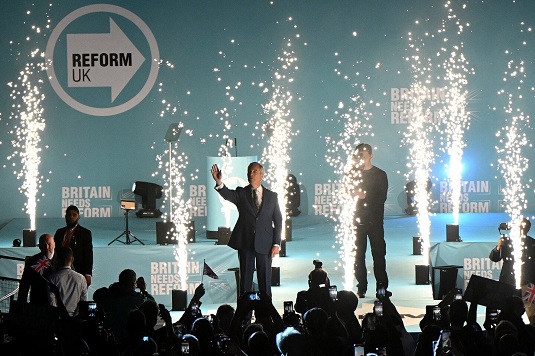
Reform take the by-election crown this month, hoovering up councillors (three courtesy of Labour, two from the Conservatives) and finally achieving a vote share that's closer to their polling figures. You might ask why it took them so long, seeing as the news media continues to be framed by the preoccupation of the right wing press and differential turn outs by age give them and the Tories an advantage over the other parties. Whatever the answer is, the catch up is sudden. This time last year Reform could hardly be bothered fielding by-election candidates and scores below 1% were routine. They have quickly become a force not to be dismissed lightly.

Labour was everyone's punching bag in February. They had better get used to it. We'll see if what's been happening with Donald Trump shifts the dial on national polling. The Tories managed to hold steady, winning and losing in equal measure. February was another strong month for the Liberal Democrats. If this persists, it would be reasonable to assume they have permanently annexed a section of liberalish soft Tory opinion. The upward momentum of the Greens, however, has been halted by Reform's advance and its new role as a repository of protest votes. They gained one and lost one council seat, but annoyingly came within four votes of taking a seat off the Tories in East Suffolk.

Over the course of this year, I'll be running a side project keeping an eye on the Independents and Others. Now Reform are a proper contender and by-elections typically have a range of choice, will Reform become a) a new vehicle for self-styled local heroes to get on their councils who might otherwise have stood as Independents, and therefore depress the number of candidacies from this quarter? And b), is it going to have a similar effect on the candidacies from Others? We'll see.

As for next month, unfortunately it's likely Reform will carry on doing well. I expect the Lib Dems to turn in a creditable performance, and Labour and the Tories get vote shares commensurate with their polling. And for the Greens ... maybe they will surprise us.

6 February
Hyndburn, Baxenden, Con gain from Lab
Medway, Rochester East & Warren Wood, Ref gain from Lab x2
Medway, Gillingham South, Lab hold
Tendring, The Bentleys & Frating, Ref gain from Con
Wokingham, Winnersh, LDem hold

11 February
Pembrokeshire, Haverfordwest Prendergast, Ind gain from Con

13 February
Barnet, Burnt Oak, Lab hold
East Dunbartonshire, Kirkintilloch North & East & Twechar, Lab gain from LDem
New Forest, Bransgore, Burley, Sopley & Ringwood East, Con gain from Grn
Stevenage, Manor, LDem hold
Torfaen, Trevethin & Penygarn, Ref gain from Lab
Warwick, All Saints & Woodloes, Grn gain from Lab

18 February
Brent, Alperton, LDem hold

20 February
Barking & Dagenham, Whalebone, Lab hold
Colchester, Tiptree, Con hold
East Ayrshire, Kilmarnock North, SNP gain from Lab
Hammersmith & Fulham, Hammersmith Broadway, Lab hold
Hammersmith & Fulham, Lillie, Lab hold

27 February
Breckland, Bedingfeld, Ref gain from Con
East Suffolk, Rushmere St Andrews, Con hold
East Suffolk, Woodbridge, LDem hold
Westminster, Vincent Square, Con gain from Lab
Westmorland & Furness, Eamont & Shap, LDem hold

Image Credit

Five Most Popular Posts in February

There might be a crisis in the transatlantic alliance, but nothing, I mean nothing will stop the customary monthly round up of what's hot on this here blog.

1. The Politics of Noticing
2. The Radicalisation of Young Women
3. Blue Labour and the Working Class
4. The Sacking of Andrew Gwynne
5. Revisiting Brexit and Corbynism

Coming out top was a piece on how sections of the left/liberal press and academia are beginning to notice that Keir Starmer isn't necessarily on their side. A crisis in the making for the Prime Minister. This was followed by a crisis of another sort. While commentators were falling over themselves and wringing their hands about the advance of the AfD in Germany, little noticed was the much deeper left wing radicalisation of young women. What's going on? In third was my exasperated piece on Blue Labour, the theory middle class right wingers in the Labour Party keep trying to resurrect to cover for their own prejudices. Not far behind was a look at the arrogant stupidity of Andrew Gwynne and how this brief episode lifts the lid on the mundane culture of Labour parliamentarians. And last was a trip down memory lane on news that there were talks between Dominic Cummings and Jeremy Corbyn's office back in the day. Ah, what simpler times they were.

A couple of other pieces for your consideration. The first is last night's scrawlings reflecting on the profound shock establishment political opinion received after Trump's public bullying of Volodymyr Zelenskyy in the Oval Office on Friday. A far cry from the clubby atmos of Keir Starmer's visit the day before. This one's going to reverberate. The second is February's sole foray into science fiction with a look at Norman Spinrad's The Void Captain's Tale.

What's coming up in March? I've got four or five posts queued in my brain so if nothing appears, it's not for want of material. The resignation of Anneliese Dodds, Trump's affinity to Russia, and a couple of SF commentaries immediately spring to mind. I'm sure the comings and goings of politics will provide unforeseen occasions for content creation too. As ever, if you haven't already don't forget to follow the (very) occasional newsletter, and if you like what I do (and you're not skint), you can help support the blog. Following me on Bluesky, Facebook, and for what it's worth Twitter, are cost-free ways of showing your backing for this corner of the internet.

Image Credit

Friday, 28 February 2025

The End of the American Illusion


With Donald Trump in the White House, the political climate can change with the wind. The grotesque spectacle of the tangerine tyrant and JD Vance berating Volodymyr Zelenskyy in the Oval Office (and him giving as good as he got) has revealed the truth of American power in its naked obscenity. What normally takes place behind closed doors was allowed to hang out. Or, to be more accurate, was contrived to be shown off. And with the huge wave of revulsion sweeping over a broad range of political opinion, swathes of the establishment here and in Europe have finally seen what the USA is: a rapacious, ruthless power. The jitters that Keir Starmer tried settling on Thursday among his base are well and truly back.

Liberal illusions in what the United States is about lie shredded. And the disgust among polite circles at Trump and Vance's behaviour will find a corresponding echo among the public at large here, in Europe, and in the US itself. The basic injustice of Putin's invasion plus the reams of friendly media coverage hitherto enjoyed by the Ukrainian cause will guarantee a popular reaction against Trump. But amid the disgust, I'm reminded of the hypocrisies of those elites who styled themselves as the "resistance" to Trump in his first term. What they found intolerable (abandoning the Paris Agreement, North Korean peace talks, moving the embassy to Jerusalem) were occasions for excusing, minimising, ignoring, and sometimes endorsing similar when it was their turn in power again. And so it is this evening. "The most disgusting thing I've ever seen" is the consensus liberal view, accidentally-on-purpose failing to remember that the previous administration shovelled money and weapons to a regime that livestreamed and boasted about its massacre of tens of thousands of people. Attacking Zelenskyy in front of the world's press was really bad form, as are tasteless social media stunts, but none of that is as damning as aiding and abetting a genocide and lying about it.

Therefore, while for some this might be an eye-opening moment that leads to a deeper understanding of US power and imperialism for some, most will put this episode down to the repugnant personalities of those who run the US. Once they're gone, everything will be alright again. Nothing structural going on, everything else is fine under the hood. Change the drivers and it will be a-okay. Theirs are not illusions discarded, but illusions suspended. Assuming the next set of presidential elections (if they happen) turf out the Trump crew and a new Democrat replaces him, the bulk of establishment opinion will go back to how it was before Trump took office a month ago. But this won't change the facts of US behaviour on the world stage. West Europeans, liberal media elites, and establishment figures are seeing the face the US routinely presents to the nations of the global south. And the truly shocking thing is they're now getting the same treatment.

Thursday, 27 February 2025

Trump/Starmer

Keir Starmer had two objectives when he met Donald Trump on Thursday. To keep intact the so-called special relationship, and therefore the "bridge" this represents between the US and a chastised/hurt Europe. And ensuring Britain does not fall victim to Trump's tariff scheme, which is threatening to fall on European Union exports when the whim takes the White House. The Prime Minister will be very glad to have banked Trump's assurances on these.

But Starmer got much more than that. Yes, the government's increased military spending was noted and appreciated by Trump, and the letter from the King inviting the Donald for an unprecedented second state visit went down very well indeed. No one does flattery quite like the Brits, and so Starmer will come home lugging two big bonuses: the possibility of a trade deal (hello again, chlorinated chicken!), and US backing of the Chagos Island plan. The very same one Kemi Badenoch and Nigel Farage have berated Starmer for because it serves China's interests or something. I look forward to the leader of the opposition rising at the next PMQs and taking credit for the negotiations she was against, until Trump supported them.

Trump also spoke approvingly of the Ukraine mineral deal that has been cooked up in double quick time. Asked by the BBC's Chris Mason about whether the President still thought Volodymyr Zelenskyy was still a dictator, Trump replied dead pan, "Did I say that? I can't believe I would say that". Some would take that as evidence of cognitive decline. Others as someone who enjoys toying with and discombobulating the press pack. Either way, the Ukrainian president is due to visit Washington, and while Trump refused to be drawn on security guarantees he's unlikely to begin digging without the threat of force backing US investments. However, knowing most of the resources he wants to dig up are in the Russian-occupied east, a partnership there with Putin's regime is unlikely to spark off a shooting war once the signatures are on the armistice. Therefore, the security guarantee isn't there in words but it's implied in the scheme the White House are drawing up for Ukraine after the war. In short, Starmer got all he wanted and then some.

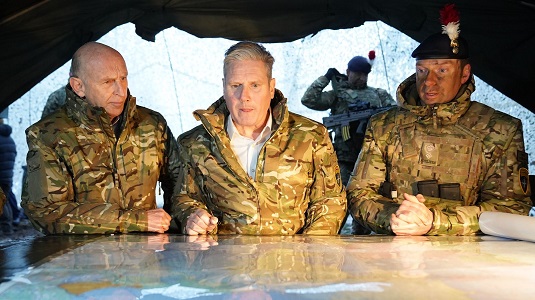
The Prime Minister knows he had to walk a tricky tightrope with Trump. He knows how unpopular he is here (and undoubtedly there will be a large crowd welcoming Trump to London, just like last time), how toxic Tony Blair's relationship with George W Bush was, and would like to avoid similar problems. But while most don't like Trump, public opinion knows that Starmer cannot denounce the president from the roof tops and has to deal with him. The game of diplomacy must be played, and Starmer has so far managed this well. He had to avoid was looking like a supplicant, and for those watching at home this pit fall was side stepped. For now at least, where domestic politics are concerned, Labour is probably going to avoid any negative fall out from this meeting. But it won't always be as easy as this.

Image Credit

Wednesday, 26 February 2025

The Obscenity of Trump Gaza

"This could be so magnificent" says Donald Trump when waxing about the riviera real estate future he's imagining for Gaza. Others might call it the glitzy burial of an obscenity. Hollywood has a long history of glamourising colonial genocide, but this tacky AI-generated slop is something else.

Tuesday, 25 February 2025

The New Realpolitik

Two speeches about changed geopolitical realities. Ahead of his visit to see Donald Trump on Thursday, Keir Starmer has announced an acceleration in the government's plans to raise military spending to 2.5% of GDP by 2027 and 3% after the next election. This will be funded by cuts to the foreign aid budget, reducing it from a "protected" 0.5 to 0.3%. It was a "hard choice" said Starmer, but with uncertainty abounding ("a dangerous new era") and an aggressive Russia on the edges of Europe he maintained there weren't any other options. But there is the happy by-product of this boosting jobs as war industries are expanded.

There was also a speech by Kemi Badenoch, who readers might recall is the leader of the opposition. Trying to pre-empt whatever Starmer was going to announce on Tuesday afternoon, the Tory leader demanded an increase in military spending to 3% of GDP by gutting foreign aid entirely. She also doubled down on a suggestion made by James Cartlidge, the shadow defence minister, on Sunday's Laura Kuenssberg. He floated the idea of cutting more from social security for disabled people specifically to buy bombs and bullets. Badenoch confirmed that further "savings" could be made from the welfare bill, one of many "painful decisions on government spending" she would find morally wrenching in an unfortunate world where she becomes Prime Minister.

She went much further than Starmer did on Britain's place in the world. Badenoch said Britain believes rules are important because it is a trading nation. "... other countries are breaking the rules and we need to get serious about that and not pretend that those things aren't happening ...". Is she saying that the UK should take rule breakers to task for flouting global obligations, or is she suggesting we should be prepared to discard them ourselves? The implication tends toward the latter as she attacked Britain's membership of the European Convention, saying the ECHR should not stop this country from doing what is right for its people. This is "conservative realism". Not the "progressive internationalism" supposedly characterising Labour's approach to world affairs (a demonstrably stupid charge).

"It was so bland, formulaic, and unsurprising that it would have made Chat-GPT blush" went Conservative Home's scathing review. Quite. But Badenoch's address wasn't without politics. Because the Tory leadership are desperate, desperate to court Trump's administration they are in their own pathetic, twee way pantomiming US unilateralism and prostrating themselves as doormats and supplicants. Ironically, the US strategy they're kowtowing to was the stock-in-trade of the Tories themselves for the latter half of the last government. This was sovereignty without limits, or to put it more baldly, power without checks. Having seen off the encumbrances of the labour movement and institutional autonomy within the state during the Thatcher/Major years, and then extricating the country from the very limited checks on executive authority represented by the EU via Brexit, the Tories want to set Britain free from any remaining obligations, including those enforced by treaty, allowing it to pick and choose. For what purpose? To give them maximum flexibility to manage class relations at home in an uncertain world where unexpected, unwelcome upsurges happen.

But this is so very academic considering how Badenoch is exceedingly unlikely to see the next election as leader, let alone be within a shout of capturing Number 10.

Starmer, however, must be eagerly awaiting how this militarist turn lands. Yes, it will go down well with with the Donald on Thursday - especially the move to cut foreign aid (which is equally as stupid as the USAID cuts, considering how much soft power is bound up with the disbursement of funds). But domestically, more military spending might cut the mustard with the Reform-curious reactionary Labour voter. It's Britain standing on its own feet and not being reliant on America any more (therefore being implicitly anti-Trump), while being framed as against Russia - something that Nigel Farage and the other bad boys of Brexit have an ambiguous relationship with. Starmer is pummelling Reform exactly where they have a significant weakness and are in a position to challenge its patriotism, and without Reform having a convincing counter-argument. Starmer, therefore, is well positioned to reap some much needed political capital from the changed circumstances and reverse Labour's mediocre polling position. Badenoch? Not so much.

Image Credit

Monday, 24 February 2025

The Radicalisation of Young Women

"Why does 25% AfD among young men spark a thousand "what is going on with young men?" posts yet Die Linke 34% among young women generates...nothing at all? Yes, young men voting for the radical right is an important phenomenon. But so is young women going rad left *at even higher rates*." So writes Rob Ford, reflecting on the marked gender split among 18-24 year olds at Sunday's general election in Germany. The reasons why few if any have remarked on this trend probably has something to do with politics never taking women that seriously. But what is driving the gender divergence - also seen in this country - that sees younger women bolshevising at the rate of knots?

Three quick and dirty interlinked hypotheses.

1. Maria writes "I’m so looking forward to all the articles on why young women are being ‘pushed into the arms of the far-left’ due to their ‘legitimate concerns’ about things like bodily autonomy, rape culture and the hollowing out of state welfare protections, right?". Yes. Young women are encountering misogyny every day among their peer groups and the swill of social media. The election of the misogynist-in-chief in the USA, the antics of Elon Musk, and the widely publicised rejection of the gender equity lip service paid by American tech companies for a dorkish, inauthentic "masculine energy" reinforces the message that women don't matter. This is the background noise to efforts by the far right to politicise young men as incels and misogynists. While this commands the chin-stroking and concerned frowns, political science and political sociology has overlooked how this is politicising women in the opposite direction. Precisely because the far right politics of gender means stuffing women into a narrow straitjacket that comes in two sizes only: pornified objects and tradwives. Young women's embrace of the radical left is not just a reaction against forcing on them a stultifying subaltern identity. It's a realisation by them that contemporary misogyny is inseparable from the politics of oligarchy. That taking on patriarchal social relations is inseparable from the struggle against capital. They can clearly see who is pushing this drivel and why.

2. For well over a decade, concerns with the "new misogyny" has found a ready explanation in the changes to work and configuration of the labour market. Less attention, however, has been paid to the consequences this has had for women. On paper, immaterial labour - the dominance of 21st century work by the production of knowledge, services, care, social relations affords some advantages to those whose childhood and teen socialisation has stressed the importance of caring for others, having emotional intelligence, and developing a more pro-social as opposed to competitive, atomised individuality. Which largely remains the norm for the upbringing of girls. As noted many times here before, for the new working class of immaterial labourers/socialised workers, social liberalism is the practical everyday consciousness. Workers are required to mobilise their social being, their sociality in the service of their employer to collaborate with others and meet the needs of clients/customers. This is a set of tools capital cannot own, though it won't be for want of trying. Therefore efforts that the right use to mobilise its supporters. I.e. Making scapegoats out of vulnerable minorities is one reason why younger cohorts are repulsed by centrists and the mainstream right. However, survey after survey shows women are less susceptible to racism, anti-immigration politics, and transphobia. Why? Because they are more more likely to have been socialised into empathetic structures of feeling than men, which are continually reinforced by the capacities required by contemporary work cultures. And so women are more likely to feel an affinity between the belittling of minorities and their life experiences of becoming women, and draw the necessary (radical) political conclusions.

3. Younger women are more likely to go to university than men. This is partly because the growth areas in the professions - consistent with the rise of immaterial labour - offer a growing array of gender normative pathways to career success. More people with people skills are needed than ever before. However, as Dan Evans has rightly observed, there are not enough graduate positions to go around with many stuck for years, if not forever in non-graduate jobs after leaving university. The outcome of this is downward social mobility and a radical frustration with the world that, inter alia, provided many a shock troop to Jeremy Corbyn's campaigns. This is still true, whether we're talking about the UK or Germany. Because of the gender imbalance in universities, this crisis of the graduate is going to be disproportionately felt by young women. Their expectations frustrated and ambitions stymied, why not a radical politics that provides convincing explanations for why they are in this predicament? Certainly makes more sense than anything the far right and the mainstream have to say.

Sunday, 23 February 2025

Two Points on the German Election

Two points. One's big. The other's small. But it might become big.

The German exit polls have mirrored those taken during the election. The CDU/CSU are out in front with circa 30% of the vote, the far right AfD on around 20%, the SPD have collapsed to around 16% - its worst result since the 1880s. The Greens are on about 13%, and the late surge for Die Linke puts them between eight and nine per cent. In political terms, Germany has become a "normal country". The centre has caved in (the FDP are on course to lose all their seats), the centre left have taken a battering, and the rise of the extreme right has grabbed the headlines.

There are obvious parallels between what's happened in Germany and what's unfolding here. A centrist coalition of sensible grown ups have presided over years of economic stagnation and lacklustre investment. Coincidentally, farmers' protests over the cancellation of a tax break was one of the nails driven into the SPD-FDP-Green coalition's coffin. The final straw was the provocative proposal of the FDP to take the axe to social security and public spending, which proved to be so popular that again they find themselves without representatives in the Bundestag. Having learned nothing and uninterested in the lessons of history, the SPD and Greens both pursued policies at odds with their popular constituencies and have paid the political price. As such, it was easy for the AfD to pose as the champions of ordinary Germans against a political establishment tone deaf on immigration, the cost of living, and efforts at undermining German identity.

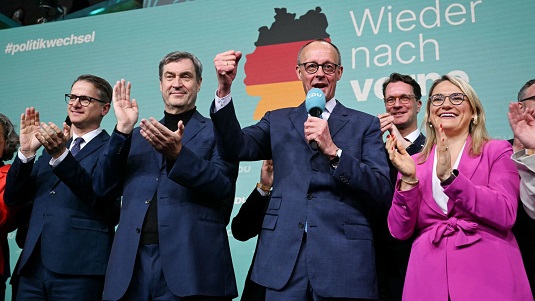
The AfD have been assisted in this by Friedrich Merz, the Union's leader and incoming chancellor. Like the Tories his party have banged on about immigration, legitimating and amplifying an AfD that can easily outflank their positions. Indeed, if Merz has achieved anything long-lasting in toppling a decrepit opponent on his party's second lowest federal vote share, it is to confirm the Christian Democrats as the main right wing party in the west while allowing AfD to monopolise "real concerns" in the east. Merz has already courted notoriety by effectively cooperating with them in the Bundestag vote on a vote about immigration, and undoubtedly further such "accidental" alliances will be forged over the course of the next parliamentary session. As the party appears to have lost a million supporters to the far right, Merz will be hoping his "tough" approach will ensure further AfD-curious Union voters will stick with them, and that the old east/west border will confirm his partitioning of the right and stop them from setting up shop in his heartlands.

No one should not be complacent about the rise of the AfD. A fifth of the popular vote is only going to inspire more extremism and with it more violence against immigrant communities, sexual minorities, women, and political opponents. A Merz-led government doesn't care. Defeating the AfD and driving them out of politics will not come from above.

Which makes the small story of Die Linke's resurgence significant. First, they saw off the Sahra Wagenknecht Alliance, a reactionary split from the Left that embraced Blue Labourism with German characteristics. Going right on culture and left on economics is on-paper smart politics, since the AfD are effectively the FDP plus open racism and overlaps with fascist groups. But then again, none of the far right's supporters have voted AfD because they think free markets and neoliberalism are very good actually. Here, as there, it was a hiding to nothing and Die Linke have squelched them. Quite the turn around since BSW were beating them in the polls a few months ago. Some might put this down to the viral anti-fascist speech of co-leader Heidi Reichinnek, and there is some evidence - thanks to the largest turnout since 1987 - that a mix of this, its socially liberal pro-working class messaging and policies struck with the rising generation. Die Linke were by far and away the most popular party among younger voters.

Obviously, Die Linke are not perfect. The self-removal of the anti-woke, pro-Russia right has undoubtedly helped the party, but divisions remain between those elements who are soft left and want a slice of the government pie and those wanting more radical social change, and criss-crossing this are divisions about Israel and Palestine. Undoubtedly, given the unexpected successes, German media actors and others looking to rebuild the shattered SPD at their expense will try using these divisions to sap the party's energy and drive new supporters away. Because having a mass fascist-adjacent party as the second party in the Bundestag is a trifling concern versus a left wing insurgency. Nevertheless a harbinger of good things to come, one hopes.

Image Credit

Norman Spinrad and Radical Science Fiction

What's in a title? For something like The Void Captain's Tale, Norman Spinrad's 1983 confession of one such, you would be forgiven for expecting space opera fare with little to differentiate it from the post-Star Wars gold rush of star fighters, blasters, and explosions. Albeit with a darker tinge. Void, after all, is not just a synonym for space but for negative absence. Likewise, after learning the main conceit of the book - that interstellar travel of the future is powered by women's orgasms - one might expect the tacky, questionable sexploitation that is the hallmark of low rent science fiction, and of which there was plenty around at the time. Happily, on both counts, these assumptions are wrong.

Spoilers follow.

The titular void captain, Genro Kane Gupta, is looking forward to journeying on the Dragon Zephyr. This will be a routine flight transporting cargo and 10,000 passengers in cold sleep to a far-flung destination. In this future, instantaneous FTL is possible but this can only happen in short hops of three to five light years. The technology, which was salvaged and retro-engineered from a precursor race of sentients referred to as We Who Have Gone Before requires a living component - a pilot. They are inserted as a node into the star drive's circuitry, and they have to be willing. It won't work if someone is forced in against their will. Unfortunately, experimentation has adduced that only a vanishingly tiny population of women are capable of the rigours of piloting and only 200 out of untold billions were in service. At the moment of the jump, the instantaneous translation of the ship from one point in real space to another is experienced by the pilot as a moment of bliss and release whose nearest approximation is sexual ecstasy. Typically, the pilot is left inert and unresponsive and requires at least 24 hours to recover before the next jump. This experience also exacts a physical toll. The career of a pilot is not a long one.

Star flight abides by strict social etiquettes. Genro oversees a very small crew such is the ship's automation, and the captaincy is largely ceremonial. While responsible for the ship, the main duties on a flight are to press the jump button and be active in the shipboard society of awake passengers. The captain is expected to partner with the Honoured Passenger, the ship's social lead who spends their time contriving entertainments, occasions, and fitting out cabins and decks to fit the travellers' moods. It is typical, as the ship's two points of authority, that their relationship is sexual. The purpose of this is not just to entertain, but to overlay and suppress how the interstellar arteries of this far future society are effectively dependent on the (ultimately fatal) sexual labour of a minority of women.

What happens if the facade breaks down? This is the domain of the Void Captain's Tale, and as such should be approached as an SF novel of manners. For the ship to work as per convention, there must be strict separation between them and the pilot, with their only being attended to by the three medical crew in-between jumps. This is broken within the first few pages as, on the shuttle up, Genro has an awkward encounter with Dominique Alia Wu - the assigned pilot. Having already stumbled over the contact taboo, following the first jump Dominique breaks protocol by shrugging off the usual medical ministrations and taking up a place in the officers' restaurant. Not only is this shocking, her plain appearance, workmanlike uniform, and buzz cut hair outrages and offends. Which does not deter Dominique from demanding the privileges she, as an officer, is entitled to. Genro is called in to negotiate a compromise that would please all parties, but in so doing begins nurturing a sexual obsession with her. Partly because she's taboo, but mainly because she speaks to his sense of sexual inadequacy. He wants her precisely because her sexual experience far exceeds his own. Dominique has touched something he can never experience, and he becomes haunted by how no matter how expert his technique or attentive his lovemaking, this will only be a faint shadow of the ecstasy that explodes through her at the moment of the jump.

There starts the unravelling. Genro stops being able to perform his conjugal duties according to expectations, suffering the dysfunctions of impotence and premature excitement in equal measure - forcing a rupture between the captaincy and the Honoured Passenger, who is quick to communicate her displeasure to the other tourists. He steals away for private liaisons with Dominique, which only affirm his feared inadequacies. He appears distracted, he goes for a space walk while the ship is travelling at relativistic speeds, and all this is draining him of authority. And when his affair with Dominique is found out, there is uproar. The man charged with veiling the grim reality of FTL travel not only fails in his task, but by his obsession he has eroticised it. However, worse is to come. In their tete tete, Dominique tries to describe the ineffable experience of the null space that enables the transmission of the ship. She requests that Genro does not input any coordinates prior to the next jump. She argues the technology the star drive is based on was not meant for fast travel but was for the precursor race to transcend and inhabit the next layer of reality she has had glimpses of. Jumping blind would enable her to shed her body and inhabit this realm. The only problem is that should the ship survive, there's no telling where it might re-emerge into reality, there's very little chance of any other female passenger being able to become the next pilot, and at relativistic speeds it would take years to reach the nearest inhabited system. And that's without taking the supplies situation into account. Will Genro run the risk of sacrificing all to free - and satisfy - his lover?

Spinrad's book is what you would expect from something sat at the intersection of the transatlantic new wave. There is the concern with literary sensibility it shares with the British school, and the punkish tear-it-all-down attitude of the Americans. It also bears witness to a distinction Spinrad makes in his 1990 book of SF criticism, Science Fiction in the Real World. Here, he posits "sci-fi" as a specific sub-division of science fiction, which he associates with the space operas of the Golden Age. These are swash-buckling adventures with heroes, villains, space weapons, and clear story arcs in which everything comes good in the end. This, he argues, is the way the mainstream sees science fiction and why they are wary of ever trying it. Science fiction proper, however, is about experimentation, future visions, imagining new ways of being and becoming, and pushing literature's envelope. Good SF should provoke and unsettle, while avoiding the temptations of neat narrative resolution - something that might comfort publishers and readers, but serves to undermine the innovative or revolutionary character of the work. Margaret Atwood's The Handmaid's Tale is singled out as an example, with its academic-sounding epilogue closing down the ambiguity of the ending and the idea the horrors of Gilead persisted for any length of time. The same could be said for Keith Roberts's Pavane, on the end of which is appended an explainer which is very sci-fi, unnecessary, and a touch cringe.

The Void Captain's Tale is a contribution to the revolutionary SF tradition. Its society is post-scarcity and sounds much better than ours, but here it is a foil for critiquing the vanities of bourgeois culture in its high and mass forms. For the former, ritual, manners, and "high art" species of cultural capital paper over the brute realities of economic necessity. For the latter, it's the immediacy of the commodity as one among many purchasing decisions to be made that divorces that separates if from a biography produced under a determinate set of production relations for profit. Dominique is of a minuscule cohort of pilots, but without sexually exploiting their talents Spinrad's interstellar society would crumble. It is a way of thinking through masculine sexual anxiety, and how it might lead to individual behaviours that impact on and endanger the community. And a meditation on radical action, that a politics guided by an understanding of how the world really works is by no means a guarantee of success. This novel confounds and challenges, it plays with and dumps on the space lasers and pervy sex beloved of more conservative-inclined SF authors of the time, and while trashing the tropes tells a compelling story that does not shy away from ambiguous conclusions. A book that, over 40 years on, still deserves a wider readership.

Tuesday, 18 February 2025

Conservatism and the Decline of the West

For the last couple of days, London has hosted Jordan Peterson's ARC jamboree. Standing for the Alliance for Responsible Citizenship, it was touted as and proved to be a conservative wingefest. From moaners peddling the thinly disguised cultural Marxism conspiracy theory to decriers of the imagined progressive authoritarianism, not a single scintilla of original thought was on show. Instead, we got a catwalk show of ignorance, stupidity, and bigotry. Not that this prevents them from getting recycled and amplified by the billionaire owned and aligned media, or responded to by "sensible" governments bent on adapting to them.

It says everything about the wretched state of the Conservative Party that Kemi Badenoch not only spoke, but a long conversation with Peterson himself. To save you the bother of listening, it was the usual gubbins. The evils of multiculturalism, the destruction wrought by immigration, the perils of net zero. Yawn, yawn, yawn. Her actual speech was little different, but tried striking an urgent tone. Western culture is "under threat". She goes on, "This is not a crisis of values. It’s a crisis of confidence that has set in at exactly the same time that we face existential threats on the left." Assuming Badenoch hasn't crossed the floor, I guess she meant "from". She also said everything good comes from the right. But what's destroying the West now is a lack of "self-belief", when the moment requires assertiveness and confidence. Just like our friend Donald Trump who, for the Tory leader, is setting about "fixing" America's problems. We need to "get off our knees" and fight for our values, which inevitably means "tough decisions and bravery".

I think that's quite enough of Badenoch's drivel.

Lurching further right and puckering up to Trump are not the politics that are going to get the Conservatives back into the game. But this is more than just another rhetorical move to win back Reform voters. The declinist sentiment is common among (right wing) bourgeois circles because it speaks of something that is true. The West is declining.

In population terms, Western Europe, North America, and Australasia are in long-term decline. The story is the same in economics, with China, India, and sub-Saharan Africa increasingly becoming the engines of global growth with each passing year. This is well known and remarked upon. Attracting less attention, until recently, is the long-term decline of conservatism and therefore the political pull of an important section of the Western ruling class. The process of value change has long been tracked by political science, which tends to attribute the growth of social liberalism to growing affluence, mass education, and demographic turnover. There comes a point when the disproportionate advantage among older people turns into its reverse. The right can change to adapt to the rising and broadly liberal-left generations, or decline. We're at that moment now, so goes the argument, and the diminishing mass base of the right has unleashed a backlash against the values of the increasing majority of Western populations. This "postmaterialist" argument is partly true - it doesn't tell the whole story. The rise of social liberalism is inseparable from the recomposition of the working class and the restructuring of how strategic sectors of capital exploit our labour power. The problem is that as the "new" primary force of production are our brains, personalities, and sociability, the hold that workplace discipline has over us is also in long-term decline. Hence the panics about working from home and the constant refrain of returning to the office, and the ridiculous amount of boosterism around artificial intelligence.

The right do not openly say what they're about, so like Badenoch they go after stand-ins and substitutes - tropes they've come to recognise as symptoms of their declinist predicament. The Tory leader's railing against how "universities ... poison minds" is a recognition that cultural trends are against her party, and that she'd rather adopt Canute-like obstinance instead of adapting to new circumstances, which previous Tory leaders have managed to do. We see the same with the Trumpist approach to global power politics, with the bearing of American teeth the chosen strategy - among several - to mitigate the effects of decline. But if the extreme right get their way, at best all they succeed in doing is consolidating the power of their class for a little longer before something new has to be tried to arrest the demographic and cultural erosion eating away at them.

And at worst? It's obvious that if Western capitalism is to thrive in the new world of immaterial labour and growing Eastern dominance, it is by investing in its work force, throwing money at renewable energy, advanced biotech, computing, and space technologies, building up the capacity of regional and national governments as industrial activists, and ensuring the proceeds of growth are better distributed across classes and between regions. A renewed social democratic road map, in other words. But it is utopian precisely because none of the capitalist parties in Western polities, including actually-existing labour and social democratic parties are interested. They're happy to manage the decline, whereas the bleed of the extreme right into the mainstream right means their "solutions" can only accelerate the West's decline. What the Tories did to Britain during their 14 years in office made the country poorer, less productive, and weakened in the face of international competition. But the primacy of commercial and financial capital, and of capital over labour was asserted in the face of a new left and new demands placed on the state following a global pandemic - and that's what matters most. Across the sea, we see Trump dismantling the federal state. It might strengthen the American oligarchy domestically for a few years but it's only going to accelerate their decline as the world's economic and military leader over the long-term.

Badenoch talks piffle like the rest of them, but her politics are anchored in a class strategy and a class on a declinist trajectory. It's up to us - the left - to get our collective acts together and help the Tories and their ilk along the happy road to irrelevance.

Image Credit