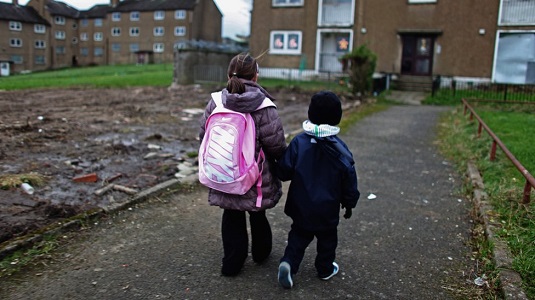
We know authoritarianism is a flex for Starmer's politics, and Labour's choice to unnecessarily keep children in poverty has nothing to do with not being able to "afford" lifting the two-child cap. Politically, Starmer supporters can comfort themselves that this "hard choice" is actually the easy choice where public opinion is concerned. The Labour leadership are aware that despite the opposition coming from the left and the labour movement on this, there is no wider political pressure and certainly none from the media that will cost them in the immediate term. Haters are going to hate is the loyalist view, which helps focus minds away from what MPs were voting for: the maintenance of a cruelty millions of children and working class women are forced to bear.
It's true the suspensions break from Labour's traditional way of dealing with dissent. Neither Tony Blair nor Gordon Brown were as heavy-handed with backbench rebels. A younger Tom Watson might have growled traitor at Labour MPs walking through the opposition lobby, but in a position of strength with an effective majority of 180 Starmer's seems quite the overreaction. Then again, unlike Blair who, in his first term, had a large number of votes to back his claims for a popular mandate Starmer has no such luxury. Getting fewer votes than what was supposed to be Labour's worst performance since 1935, they'll never admit it but as everyone from Reform, the Tories, the Greens, the pol profs, and even those who note political realities without obsessing over the details knows, Labour's huge majority is made of sand. Starmer might be an authoritarian, but choosing to game First Past the Post in cahoots with the Liberal Democrats makes his authoritarianism very brittle indeed. And, in practice, such a politics has the historic tendency of covering for weakness by affecting strength.
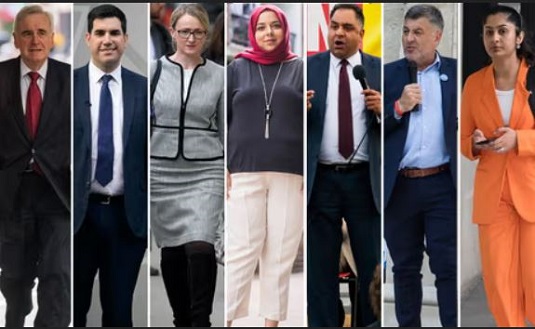
Except conditions have now changed. Were this 20 years ago, unless one was George Galloway with his unerring ability to find his way back into the Commons, this would have meant the end for excluded Labour MPs. But this is now. Because of the results the Greens, Jeremy Corbyn, and the Gaza Independents were achieved, exile from the PLP does not mean the end. There is a constituency for an anti-imperialist, anti-austerity, green, pro-working class politics that is capable of returning MPs. But now with a cadre of eight former Labour MPs sat on the backbenches, it's decision time. In his reflections on his victory, Corbyn argued that his community rootedness enabled him to bat away the kitchen sinks bowled at his seat by Labour. A party cannot simply be declared, it has to be built from the ground up. But now, with seven MPs getting thrown out, tens of thousands of activists ready to go, and a Labour Party whose policy orientation is obvious has left a huge space to its left. That base for a new party Corbyn speaks of in hypotheticals already exists, and is likely to get larger as Starmer dismantles his party's coalition. If the parliamentary leadership ot the socialist/independent left/reborn ILP in embryo doesn't seize the moment, the insurgent Greens and the much, much worse Workers' Party are in with a stab of hegemonising it. What's it to be?
Image Credit