At 10pm on 12th December 2019, Starmer dropped the second referendum like a hot potato. Having used the issue to put him ahead of the pack to be Jeremy Corbyn's successor, the Tory win emphatically closed Brexit down as a political issue. Hence, Starmer talked vaguely about preserving some of the advantages of EU membership in the subsequent leadership contest, but once elected anything about the EU and the second referendum did not leave his lips. Indeed, when Boris Johnson's hard Brexit was put to the Commons for ratification two years ago, Labour whipped in favour of it. Since then, with Brexit demonstrating itself to be a dismal failure - in line with all expectations - it's an issue Starmer would prefer not to go anywhere near. The Tory media have been kind not to have talked about his previous die hard remainism, but to be fair to Starmer he hasn't given away any hints about what Britain's relationship with the EU will be like when he gets into Downing Street. There is no meat for the press to worry at, and the shadow cabinet have maintained a disciplined radio silence.
This can't go on forever. In his clumsy, half-arsed way Rishi Sunak has baited Starmer at Prime Minister's Questions about it, but each time he doesn't rise to it. Indeed, the more Starmer gets asked about this over the next 18 months the more we'll see stock phrases about campaigning for remain but respecting the result. Almost as if second referendum/continuity remainism never happened, or if it did Keir Starmer had nothing to do with it. Ridge is right, then. "Take back control" and occasional dalliances with talk about the "freedoms" of Brexit underlines a single-minded effort to win back the Red Wall'ers, and ensure this cannot be used as a wedge issue against Labour again. The only wedge Starmer is now interested in forcing is between the Tories and everyone else.
This does leave a question mark over the UK's future relationship with the EU. Those who think Starmer still keeps the remainer faith and is going to take us back in short order are deluding themselves. The leave vote won't stop being electorally significant for the lifetime of a Starmer premiership, and he's not going to give the Tories an anti-EU populist shot in the arm as they lick their wounds following the next election. The best EU supporters can look forward to is a rationalisation of the absurdities of the EU trade agreement. Excited people might talk about a membership application, but that's all it would be. Talk.
Unfortunately for Starmer, playing fast and loose with remainism is going to have political consequences. When all is said and done, for the viability of the Labour Party embracing the second referendum position was the least worst option in 2019. However, when he turns out not to be Mr Remain in deep cover, what then? For opposition to a Starmer government, while the spent Tories will be the touch post for right wingery and reaction, the growing constituency of social liberalism and every day leftism is going to find forms of opposition of its own. And some of this will undoubtedly take on a pro-EU/return yesterday flavour. Given what happened in the last set of catastrophic EU elections, it could offer an avenue for the Liberal Democrats and the Greens to establish themselves as serious electoral opponents to Labour. Working age people are more likely to find them attractive than the Tories, and for good reason.
For the moment, all this is to come. With the national mood firmly against the Tories, burying his past involvement with the second referendum campaign isn't going to harm Starmer or Labour any. Once he's been in office for a year or so, the story may well be different.
Image Credit
The first round up of new projects in the new year! Please check them out and, if you're so minded, consider supporting them too!
1. Complaints on a Podcast (Podcast) (Twitter)
2. Empire (Podcast) (Twitter)
3. Labour for a Republic (Website/Blog) (Twitter)
4. Macrodose (Podcast) (Twitter)
If you know of any new(ish) blogs, podcasts, channels, Facebook pages, spin offs of existing projects, campaign websites or whatever that haven't featured before then drop me a line via the comments, email, Facebook, or Twitter. Please note I'm looking for new media that has started within the last 12 months. The round up appears hereabouts when there are enough new entrants to justify a post!
This archive was inspired by that maintained by Anthony Wells on his UK Polling Report website. As a resource, it was indispensable while writing the book. But unfortunately he stopped updating his polling archive in 2020 and has since handed the site over. Sadly that archive, which went back 40-odd years, has now disappeared. For work and geek reasons, I've been tracking polls for a while and so thought it worthwhile to plug a gap by collating and republishing the data, as per council by-election results.
The archive will be updated weekly and presently leaves off Reform UK. This is partly technical (I can't fit them onto my table) and part political. Pollsters flatter them by prompting for the party, but unlike their UKIP forebears they rarely stand in local authority by-elections. For example, of the 71 contests that took place in October-December last year, Reform could only be bothered to stand in one of them. That's two fewer than what's left of UKIP managed. Why should they be given attention? Just because the right wing media are working hard to big them up? I don't think so.
Anyway, the data's there so if polls are your thing fill your boots.
Recapping the ideas most associated with Negri, he argues that class politics as traditionally defined by the left is obsolete. It's not that class doesn't matter, it's that the conceptual apparatus of the centre and far left are not up to scratch. This is based on a privileging of the industrial worker: someone who works primarily with their hands, works for a set number of hours per week under a boss's direction, and this typically occurs in a workplace with hundreds if not thousands of others doing roughly equivalent tasks. This conception of work leads to certain assumptions about workers' consciousness of their work, which include solidarity based on shared characteristics and a spontaneous trade unionist outlook. This idea of how the wage labourer looked dominated labour movement politics from the 1920s up to the early 1980s, and even though workers of this kind are now a minority, at least in the West, left wing assumptions about the working class remain conditioned by this imaginary figure.
For Negri, the industrial worker has given way to the social, or socialised worker. Instead of mobilising the physical body to produce x quantity of goods, and with it surplus labour and surplus value, capital accumulation is increasingly dependent on intellectuality (knowledge) and sociability (service). What is produced is less a tangible thing and something, from an economic standpoint, more abstract: social relationships, care, information, and subjectivities. As such, much of this is directly necessary for the social reproduction of capital itself. For Negri, this marks a transition in capitalism from the exploitation of masses of (individual) bodies to that of the collective output of our social activity. Whereas the industrial workplace provided the tools and sites of production, and the training necessary to set them into motion to produce something, capital is now dependent on our cognitive and social capacities. "Training" for retail jobs, for example, are little more than company orientations around "mission" and procedures, and a reminder to be nice to customers. In so doing, capital here is dependent on a life time of competencies learned by the employee that enables them to do their job. A company can't teach empathy, persuasion, politesse. This is acquired through the social world. Therefore the "tools" of the socialised worker, the "fixed capital" of their immaterial labour is beyond capital. It is part of their brains, their ontology as social beings. Capital can only make use of them through (permutations of) the wage relation. They cannot be owned in the way an assembly line in the employer's property.
Capital has therefore had to evolve new relationships of exploitation to valorise its investments - what Negri, among others, refers to as apparatuses of capture. This can take a variety of forms from the "classical" pattern of surplus extraction, whereby a worker's wage or salary is less than the value of the intangible good produced. For example, entertainment products backed by elaborate intellectual property rights and rental models, and more commonly contracts with the state to produce a defined public service, such as bidding for medical or care services, are variations on this model. Other workers are front end representatives used to sell products - they are crucial for the valorisation process. There are workers engaged in social reproductive work, such as stay-at-home mums and dads, teachers, carers, medical professionals, work that produces not just workers but social subjectivities capital relies on. And then we have the direct capture of social interaction, most associated with social media platforms whereby one's content is mined, stripped down to packets of data and then sold on for targeted advertising. It's also no coincidence for Negri that the age of capture is simultaneously the age of financialisation, and therefore debt, and of rent.
As capital no longer has as much a handle on the forces of production and has to rely on capture, education and the moulding of institutions assumes greater importance. Not because they brainwash those who pass through them, as per crude renderings of ideological state apparatus theory or advocates of false consciousness. But because of the forms of behaviour they respond to, inculcated over lifetimes of authority relationships, carrot and stick discipline. In Britain, for example, state institutions were specifically designed to respond to and encourage consumer-type behaviour, which did more to generate conformist behaviours than the collective output of the right wing press at its height. In his The Order of Things, Michel Foucault talked about the invention of 'man' as the subject of Western thought, and how it was coming to an end. Its replacement was a world of shopkeepers, of self-activating entrepreneurs leveraging the social, cultural, and economic capital to enrich themselves. In the context of Negri's argument, the neoliberal mould is the mode of being most consistent with capital-as-capture.
The class at the receiving end of these new patterns of exploitation are the multitude. As Michael Hardt explains, this was his and Negri's attempt to capture everyone who capital exploits. This ranges from the "classical" worker to real and bogus self-employment, social security dependents, to stay-at-home partners and pensioners - basically everyone who isn't a capitalist. And often, they are subject to overlapping forms of capitalist exploitation. A mid-career marketing worker might, for example, have their knowledge exploited by their employer, their salary assailed by landlords and creditors, and their online movements captured, divided, and sold on. Everyone is subject to these forms of exploitation to greater or less degrees, and because what is exploited are the properties of what Marx would have called our species being, our sociability, despite the differences among the multitude (what Negri refers to as singularities) there are spontaneous affinities with potentials for solidarity. Our society, our social production and competencies are what we hold in common. And it's this exploitation of the social commons that capitalism increasingly depends on.
This is where the metropolis emerges as strategically important. The majority of humanity now resides in or are dependent on urban centres. They are crucial for exploitation because this is where most social production takes place. It is the residence of the common. It is the place of value creation and capture, of exploitation and the struggle over exploitation. The coming and becoming of the metropolis is also an irreversible process. Capital cannot undo it, it has no choice but to cope and try and shape the concentration of the common to its own ends. The city then embodies all the contradictions and geographies of global capital, with the partition and stratification of space, of attempts to appear alluring to capital and visitors, and models its physical infrastructure around revenue generation (exploitation), enclosure of the social commons, and exclusions. The metropolis for Negri is to the multitude what the factory was to the industrial worker.
The metropolis, however, is not a bounded entity hemmed in by the green belt. The home is crucially important. The connectivity of our devices ensures we are metropolitan, even if home is in the middle of nowhere. The home, which was previously a relatively enclosed site of social production is now embedded in chains of connectivity. The social cooperation necessary for the production and elaboration of the common inevitably means apparatuses of capture are not far behind. Discussing homeworking a few years before the pandemic arrived, Negri suggests the movement of work out of the place of employment is indicative of what one would expect given the centrality of the metropolis to the multitude, and therefore to surplus extraction. What is found at the home is the self-motivated employee. The disciplinary checks of the Fordist workplace gave way to modulations of control. And the tendency here is, especially if the work is precarious and low paid, toward an intensification of exploitation.
Where does this leave resistance? For Negri, capitalist exploitation - its apparatuses of capture - have evolved in the face of resistance. The move to capture is purposely designed to appear natural and, in many ways, as unobtrusive as possible. How many people using Facebook are aware of how it makes money from their travels around the platform? But ultimately, exploitation undermines the social production it depends on. Using people's intellectual and social capacities is a wearing experience, often resulting in dialling it in, burnout, and mental illness. The urban explosion and waves of colonisation of the metropolis by capital sees the increasing penetration of communities by rent, and with its tendency to go up there's always the danger of pricing people out of metropolitan sites of social production. How Airbnb has moved into and ended up destroying communities previously at the centre of tourist traps is a case in point. Resistance then is a matter of throwing off these forms of capture and deepening the connections between the singularities of the multitude. This is what class struggle looks like now. It's our objective to let the properties of cognitive labour mature, for the common not to just be the site of social production but for it to become a political subject conscious of its affinities and constitutive character. Because, historically, the dominance of the immaterial labour and the socialised worker represents an opportunity. In the history of capitalism, capital has never been so dependent on its subaltern class. The multitude doesn't only have the bodies, but it has the intellectual power to organise production. Capital is growing inessential to the production process, and capture demonstrates its trajectory toward parasitism. Therefore, for the multitude to liberate itself and the common it needs to develop its own intellectual weaponry for analysing the state of play, it has to build its own means of communication outside bourgeois media and social media platforms, and requires its own political organisations. These should also be multiple - not a single political party - and become centres of constituent power and class consciousness.
One kind of struggle Negri raises is the abstract strike, but this depends on the answers to two questions. Can labour still disrupt the process of valorisation? And with capital mining so many aspects of the common, how can its independence of action be asserted? The withdrawal of labour retains its capacity to disrupt, as the recent nurses' and rail workers' strikes demonstrate. But under cognitive capitalism they also need to build outwards and involve service users. I.e. The wider basis of this particular section of social production. The second involves building autonomy from consumption. The strike here involves building mutual aid, cooperative, and not-for-profit production with its own independent economy of desire. As Negri puts it, this twin approach puts us on the path to the emancipation of labour and, crucially, the emancipation from labour.
Again, in his interview to mark 20 years since the publication of Empire, Hardt argued that what he and Negri did in the six works they've written together is condense the ideas and thinking of other militants engaged in struggle. From Factory to the Metropolis is very much the same. Here, Negri has restated the reconfiguration of class, the new patterns of exploitation, but crucially the new powers and potentials the dependency capital has for the struggle. The importance of the common, the affinities of the common, and a politics that looks at extending the common is reflected in the array of struggles, sometimes apparently disconnected, that beset capitalism in its cognitive phase. But as, effectively a translator of struggle into theoretical and philosophical terms Negri merely reports. The demands he's put forward in the past, such as around the basic income, are consistent with a perspective that wants to maximise the autonomy of the common to its breaking point with capital. But where more practical, concrete steps are concerned, there is no road map to revolution here. The way forward can only be determined by the multitude as it struggles, learns, and researches its process of becoming, of recognising itself as a potential hemmed in by capital, but one that can make itself free.
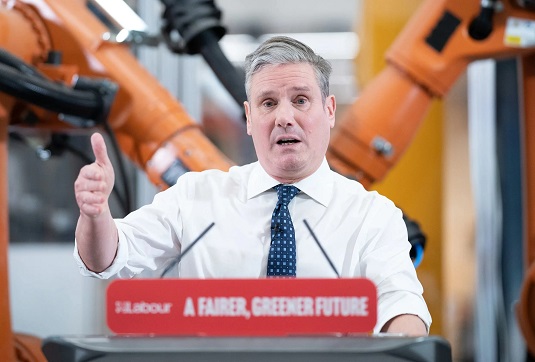
Compared with the slim offerings doled out by Rishi Sunak, Starmer's was a more weighty speech with sets of commitments linked to aspirations. Or, because of his addiction to management-speak, "missions". He again reiterated the package he unveiled before Christmas with Gordon Brown, and so there was nothing new on show. His main target was the Westminster system and the short-termism it fosters, and this is exacerbated by the overly centralised character of the state. With so much power concentrated in the executive only certain issues get the attention they deserve, which means when something comes along like a pandemic or yet another NHS Winter crisis, government goes straight into reactive mode - what Starmer calls sticking plaster politics. This approach leads to uncertainty and expensive, last-minute fixes. To meet the challenges besetting the country, a new approach is needed - which is where the 'Taking Back Control' Bill will make a difference.
For seasoned Starmer watchers, framing Britain's problems as technical problems would come as no surprise. His approach to politics, even to his own party, is informed by being the head honcho of a large organisation where employees had to snap to attention. This has led to some howlers, such as getting restructuring specialists in to tell him how to win elections, or attempting to sack Angela Rayner as Deputy Leader. His project, and part of the aim of this speech, is to make Britain a land fit for managers. This is modernisation.
Overall, Andrew Fisher's critique of Starmer's speech is right. The main aim was to send messages to elite opinion formers, and if you think the path to Downing Street runs through fiscally tight Tory voters the headlines generated, that there won't be big spending under an incoming Labour government, is a win. But at the same time, it doesn't matter how ostensibly decentralising and empowering "taking back control" is, if the money isn't there for pay - studiously side-stepped - then public services are ony going to rot further. But the other thing Starmer chose to mention, in ways that would please Blairite fossils, is the close relationship between government and business he wants to build. A new round of public-private "partnerships"? Perhaps. The indicators are there that Starmer favours some sort of tripartite structure similar to continental corporatism and the many abortive attempts to fix one here during the postwar period, but why keep banging on about partnerships with business? Is it just about telling the media that capitalist realism isn't going anywhere under his government?
Take the green new deal, or whatever Starmer's calling it these days. On one level, as Mick points out, levering in private capital to meet renewable generation objectives recalls the old PFI trick of hiding state capital spend off the books only for them to reappear years later rebadged as debts attached to the particular project. See hospitals, schools, childcare facilities, walk-in centres, and community centres for plenty of stories about how this ends up costing the public purse more in the long run. But there's more to it than this. New Labour were able to create so many PFI and PPP opportunities that, in effect, a section of capital had become dependent and retained a direct material interest in keeping the party that oversaw so many contracts in office. And likewise, to reciprocate they duly provided golden parachutes to senior Labour ministers when retirement came knocking. Doing the same on green energy crowds in capital when it comes to renewable investments, but with the consequence of ensuring this section of capital, which can only grow in importance as the century wears on, has a natural home in the Labour Party in the same way fossil fuels have with the Tories. From this will flow future business endorsements, donations, and eventual sinecures. Even though doing so is more expensive than simply investing in renewable generation and infrastructure with state money. Starmer's warm words for business is less about offering reassurances to a sceptical audience, but an invitation that under his administration, despite the ostensible break with overt market fundamentalism, they can fill their boots as before.
Starmer is offering something more than the Tories, and something better as well. But we're only talking about degrees, here. The end of cheap commodities, the ageing society and care crisis, climate catastrophe, and the challenge of automation require a policy agenda and an imagination ambitious and resilient enough to meet these problems. Whatever else was on offer in Starmer's speech, this wasn't.

No, it did not. Nearly all of it was pure piffle. Lots of stuff about "change", about having positive mindsets (did the speech writer read Matthew Goodwin's awful article?), of the importance of innovation. There were words about reinvigorating high streets, tackling anti-social behaviour, and strengthening education (maths!). Add in a dashing of family-focused policies and how the NHS is important to him - though he still refuses to be drawn on whether he uses it or has private health cover. Changing the country for the better requires hard work but, drawing a line under his disastrous predecessors, he pledged to be honest about the difficulties and that "I won’t offer you false hope or quick fixes, but meaningful, lasting change." Who could he possibly be talking about?
It was classic vacuity from Sunak, but wait! There were some concrete promises in there. Five to be exact. He promised to halve inflation inside a year, grow the economy, get national debt falling again, reduce NHS waiting lists, and tackle small boat crossings in the Channel. Pretty small beer stuff. Inflation, for example, has been forecast to fall whether Sunak goes full Keynesian or spends the next year playing tiddly winks. What matters here, which none of the establishment journos are picking up, is even if it does halve that is more price increases on what they are today. They will not drift back to what they were this time last year. Therefore the cost of living crisis won't be going away, and judging by the content of the speech there is nothing, nothing here suggesting Sunak plans to do anything about it. Likewise growing the economy and reducing debt, left to their own devices one will grow and another will shrink in due course. Though it's worth noting in real terms the latter is shrinking already: inflation, and particularly inflation spikes reduce the value of debt. So if the OBR's inflation forecast is correct, it follows that Sunak doesn't have to do anything to shrink it. Call me cynical, but these are very easy "wins" that don't require much in the way of effort.
How about hospital queues? Again, leave it long enough and the scenes of carnage and lines of ambulances at A&Es will reduce in time. As we move into the Spring, the flu will die down and Covid might recede (before the next inevitable wave of infections anyway). Imagine going into the May local elections and Sunak trumpeting about how the NHS is through the worst and that having to wait hours for an ambulance is so many percentage points down on its January peak. See, maths skills do come in handy. Again, this basically entails Sunak doing nothing. And lastly, one of the "people's priorities" is, apparently, stopping asylum seekers from reaching these shores from France. A Tory party priority, certainly, but not really anyone else's. Still, it fires up the base and gives them a wedge issue as they try and claw back some of that toxic Brexit populism. Which is exactly why Sunak reappointed Suella Braverman as Home Secretary. Getting the necessary legislation through the Commons shouldn't be much of a problem. There are definitely no Tory rebels on this issue. But if those boats keep coming, and they will, Sunak has set the Tories up for more pain and might offer an opening to the otherwise irrelevant Reform UK.
In all, this speech sounded like it was something to fill a hole in the calendar, to assure people that Sunak was still there despite ducking out of sight when there's trouble. But surely no one, not even the most loyal brief case Tory could be inspired by this slog of sound bite and slipperiness. Indeed, Sunak himself said the government will deliver on its promises ... or it won't. Convincing stuff. Without treading yet again on the Prime Minister's political strategy, paring down his programme to a dismal set of promises is consistent with his class politics of doing nothing. Except for that to work, it does require leading Tories to at least look the part and act concerned. Judging by this New Year address, it appears Sunak can't even be arsed to do that.
Image Credit
This is the culmination of the Tories' laissez-faire approach to public health. Since the removal of all Covid precautions, they have acted as if Covid did not exist. According to the ONS, the result in 2022 has been between 300 and 350 deaths a month with Covid on the certificate. Excess deaths are about a fifth above the five year average (excluding 2020). On hospitalisations, admissions have remained above average since the pandemic broke in March/April 2020. The Tories have left the NHS to run hot, not allowing staff breathers and recovery time between waves. The crisis has become the new normal.
Covid matters for several reasons. There are still risks of serious illness, especially for the elderly and the clinically vulnerable. This means hospitalisations and greater incidences of long Covid. The second problem is the long-term consequences of Covid. The disease is now well known, and it can - whether someone contracting it is ill or has a symptomless infection - erode the immune system, the body's ability to eliminate potentially harmful cell mutations, and increase the risks of strokes and cardiac arrest. Multiple reinfection leaves us prey to experiencing other illnesses more acutely. Such as the flu wave that is also putting thousands in hospital. What the long-term consequences this will have on the developing bodies of children is unknown. Instead, what messaging there has been is little better than vibes, suggesting infection gives us residual immunity and protection, as if Covid is a flu strain or a bout of measles. Instead of pretending everything is okay, the public health message should be clear about the risks of infection. It should recommend masks in crowded public places, especially enclosed spaces, for everyone - not just those who are ill. N95 masks should have been publicly procured and made freely available. The government could have rolled out its last vaccination booster programme to the under 50s. It could have undertaken a programme of air filtration fittings and UV light disinfection in public buildings. Instead, they did nothing.
The Covid crisis came on top of another crisis in the NHS. Since the Tories took office 13 years ago, hospital beds have fallen, and adult social care cut to the bone just as the ageing population were making greater demands of it. Successive governments deliberately let health spending lag behind demand, ensuring there was no slack in the system and making it look like the NHS was fundamentally broken. This was exacerbated by their further marketisation of the NHS, and an apparent enthusiasm to "take on" the medical professions. Nurses and ambulance workers are in the firing line now, but before them it was junior doctors and the British Medical Association.
What is the Tories game, then? Evidently, the Prime Minister and his lackeys don't care about patients and burned out NHS staff otherwise they'd have done something about it. There are two intertwined strategies at play. The first, which goes back to the Coalition years, is the effort at effectively depoliticising politics. This takes the shape of defunding multiple public institutions as well as the NHS, run it down to a level of decrepitude, and thereby reduce the state's capacity to do anything. This lowers people's expectations so they become cynical and sceptical about whether things can get any better, and the Tories - presenting this as inevitable and natural - escape (they hope) responsibility, or at least allows them to frame politics in terms of reduced expectations.
The second is the residualisation of the NHS. When people talk about the privatisation of the NHS, what is often meant is the introduction of charges and the removal of the free-at-the-point-of-use principle. The Tories would only ever do this around the edges, because they know how politically toxic treatment-by-payment would be for them. Especially for a party overly dependent on a shrinking, elderly voter base. But they are also keen on getting more private capital into the NHS. We saw how Covid procurement was a free-for-all for Tory donors (as well as, directly, some Tories). They would like nothing better than a guaranteed market, underwritten by state money. An arrangement that the pharmaceutical giants have enjoyed since the NHS's foundation. However, they want to run the NHS down to the point where those with means opt out and go for private medicine, strengthening markets there as well as generating new opportunities for medical insurance. Which they and their donors can also do well from. And it appears Labour's shadow health secretary is not that ill-disposed to some aspects of this.
The crisis in the NHS has been engineered through over a decade of neglect, and exacerbated by a pandemic the Tories took political advantage of. The government will have to be forced to intervene, be it by a bigger turnout for the next round of strikes, mass demonstrations, Tory MP post bags brimming over with complaints, and jittery backbenchers applying pressure on the (still weak) Sunak administration. The Prime Minister and the Health Secretary aren't going to do anything simply because something "must" be done. As far as they're concerned, the misery and suffering is their programme running according to plan.
Image Credit
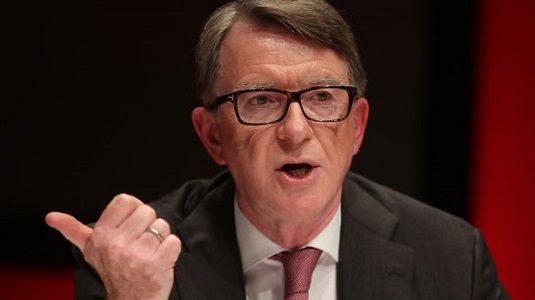
Writing in The Sunday Times, he's ventured a Delphic critique of Keir Starmer's softly-softly strategy. Ostensibly it's a swipe at the left, who are impatient about the lack of radical policies and inspiring vision (leftists, reading The Times, really?). One should not rush into building a New Jerusalem he counsels, especially when people's priorities are "everyday healthcare, schooling, policing and the safety of their neighbourhoods." Note what's missing: standard of living and poor wages. But for Mandelson, most of all Labour should avoid stoking expectations and especially when it has a commanding poll lead, because making a big offer runs the risk of putting people off.
Or does it? According to Peter Mandelson, in the very next sentence he says radical policies need not be off-putting, and that a limited programme isn't necessarily an election winner. Okay. The trick lies not in offering a balance between the two, but offering "boldness" in areas that taps into public support. This doesn't mean tax and spend, it means taking on "vested interests standing in the way of change." Who might he have in mind? Housing is a huge issue, and matters around building new homes, establishing rights for renters, and implementing standards for lets is popular, and requires the taking on of a vested interest to make the lives of millions of people better. You mean like that? Of course not. For Mandelson, being popular means attacking workers - suggesting workers should trade in workplace autonomy for the golden chains of higher pay. Sounds not unlike the useless and long-forgotten shares-for-rights scheme overseen by George Osborne.
Another example of the right radicalism concerns the NHS. The idiocies of his protege Wes Streeting, particularly the desire to "take on" the health professions, is just the electoral tonic Labour needs. This is on top of investing more money in social care, but overall the party needs to be "honest" with voters. Because it's not just about offering a programme that can win an election, but having something in place that can form the basis of a government. I guess Mandelson has forgot that a manifesto, the very thing a party goes into an election with, is a programme for government.
Examples of the "wrong" sort of radicalism, outlined with all the saccharine sweetness of a smiling assassin, are House of Lords reform and tackling climate change. Which happen to be agendas Starmer has chosen to highlight, and are respectively the brain children of Gordon Brown and Ed Miliband respectively. Mandelson asks how many are likely to vote Labour because it wants to abolish the House of Lords? Methinks The Rt Hon. the Lord Mandelson has an interest to declare. The answer, of course, is very few. But since when was New Labour beholden to public opinion, especially when it came to invading Middle Eastern countries? Climate change is a much more serious issue for Mandelson, but it's not a vote winner. Perhaps he'd like to avail himself of YouGov's trackers, among other things before future demonstrations of arrogant ignorance.
What's this about, then? Despite the media going much easier on Starmer than his predecessor, and having put as much distance between himself and the 2019 manifesto while remaining inside the envelope of Labourism, there are still establishment jitters over the Labour leader. Partly, it will be forever thus. The Labour Party as an institute of state is structurally more suspect than the Tories because it remains tied to organised labour, and commands the support of most working age people. The potential for the party to be "unreliable", as it was between 2015 and 2019, does keep some establishment figures up at night. Including not a few ennobled from its own benches, including Mandelson. Second, if Starmer does win and carries out his watered down Green New Deal and constitutional reform programme, some noses will be put out of joint. Worse, it could whet the appetite for more change. And we can't well have that.
Mandelson's intervention is trying to pull Labour into a non-threatening political space. That is, a space that treats establishment interests as sacrosanct and therefore unmolested. But his article is incoherent because, despite himself, he knows Labour have to offer something substantive to win and then diffuse any potential crises of legitimacy - crises the Tories only seem too happy to stoke right now. In trying to face both directions, Mandelson shows up the tensions among his class when even the most mild, most timid reforms are on the table.
Image Credit
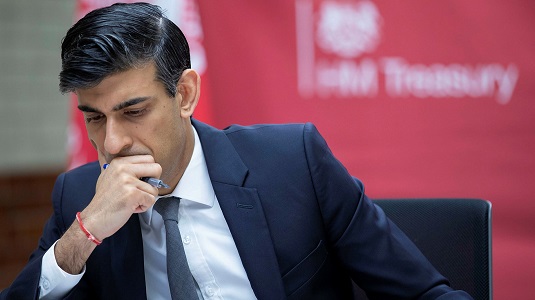
He starts off empathising with his audience. He understands how thoroughly fed up people with the country's slide into economic and social decrepitude. But to turn things around, the first piece of advice is telling Sun readers that the Tories need to take a stand against pay rises. This is framed as "unrealistic" and something pushed by "unions" as opposed to workers themselves. This is clever, clever politics because as inflation falls along with interest rates (which aren't coming down any time soon), the Prime Minister will be able to say to the country that the worst is behind us and Keir Starmer can't be trusted to run with the recovery. Genius. This might catch with some of the paper's readers, especially if they're retired and are at a remove from the workplace, but it certainly won't with the under 50s.
Goodwin's second recommendation seemingly sits awkwardly with the first: win back working class punters. He suggests they've done a runner from the Tory party not because it's balancing the books of their self-inflicted crisis on their backs, but because they're paying too much tax and the borders are seemingly open to all-comers. Playing the racist blame game, as per wastrel backbenchers and the editorial offices of every right wing paper is what will win them round. Of course, here Goodwin is reheating his discredited and long-refuted argument that working class people are racist and are gagging for right wing populist politics. He might have trouble interpreting simple bits of data, but as a political "scientist" he knows actual working age voters went for Labour over the Tories even in 2019, and that "the workers" he talks about are retired people. This is important when it comes to interpreting voting behaviour, but less so when reinforcing Tory talking points.
And where do we go for the final recommendation? What Sunak needs to do is channel his own inner Boris Johnson. Goodwin says people don't want to hear about Britain's problems. Instead we need a cheerleader in Number 10, someone relentlessly optimistic about the country. Yes, The Sun has paid money to someone who's advice is that the Prime Minister ignores the NHS meltdown and pretend everything is hunky dory. Concluding, he writes that if Sunak "does all these things he might not only find the people thank him for it but might even be tempted to crack out the champagne."
What risible drivel. But it conforms to a couple of patterns in Goodwin's work. First is his right wing freelancing. For someone who has moaned about woke universities when the media commissions come calling, nowhere has he ever openly declared himself a supporter of the Conservative Party. This basic courtesy is side stepped every time he puts on his polprof persona to give his writing the faux authority of expertise. Second, whether it was Revolt on the Right, the book that made him, or his frequent forays into punditry his argument has always tailed establishment common sense. His junk argument about UKIP uniquely appealing to working class voters merely reinforced a decade of Westminster anxiety that was panicky about and fascinated with how the far right did well in some traditional Labour-voting areas. Without once realising 'Labour area' does not mean 'everyone here votes Labour'. And this Sun piece is no different. In what reality is Sunak not hammering striking workers, pushing culture war bollocks, and carrying on as if the country is not beset with difficulties? The Tories are well ahead of Goodwin's resolutions. All he's done is regurgitate Sunak's strategy for our rapidly failing currant bun. He's not actually said anything new.
It's also an approach that is exacerbating the crisis of Tory political reproduction. The Tories need to win younger voters over because their mass constituency, with propertied pensioners at its heart, has locked generations out of property ownership. Becoming conservative requires the means, and it's the Conservatives who are frustrating the acquisition of means. And so the constituency is in decline. If this wasn't bad enough, the Tories' beggar-thy-neighbour politics is at cross purposes with the common sense of the rising generations of workers. And last, just look out of the window. The Tories' are attacking every public service, have declared war on all workers, are victimising every minority they think they can get away with, and are going backwards on climate change. No party can salt the ground so thoroughly and expect themselves to reap the green shoots of political recovery in short order.
The problem the Tories have isn't just for the next election, but for all elections. Where will their future support come from? The memories of their governments since 2010 won't fade, nor are they likely to be forgotten when current Tory voters pass their property down to their children. This is the more interesting question to consider, but one the likes of Goodwin will never face up to. Not just because his limited imagination isn't up to it, but because it means acknowledging that conservatism presently constituted, with its easy bigotries and divisive politics, is not long for the eternal sleep of the grave. Preferring to fight shy of his party's likely fate, all Goodwin has confirmed to the Tories that they've got the right spade and they should carry on digging.
Image Credit

1. The Sun's Anxious Apology
2. The Tory Railway Pay Offer Stunt
3. Wes Streeting Vs the NHS
4. Keir Starmer and State Modernisation
5. Sweary Centrism
The decision of The Sun to apologise for that Jeremy Clarkson column was interesting, not least because it spoke to the vulnerability of the paper in the digital age - one in which its influence, like that party it has done so much to support, is in long-term decline. Not far behind it was my coverage of the first government-sanctioned proposal put to the rail workers by the train companies. And, of course, it was completely unacceptable. There was barely any movement on the causes of the dispute, and this is entirely deliberate. By conceding nothing Number 10 were hoping the optics of Mick Lynch and the RMT saying no would reflect badly on them, and improve the Tories' standing. If polling this last week is anything to go by, it hasn't and the public hold the Tories responsible for the current round of disputes more than the workers. We'll see if this causes Rishi Sunak and co. to have a rethink. Wes Streeting's enthusiasm for telling the world that an incoming Labour government would use private hospital capacity to get waiting lists down came in third. Sold as hard-headed pragmatism, he fails to mention they'd do little to reduce the queue for treatment. Nor has he apparently considered how private doctors and nurses are also NHS doctors and nurses. From whence will the staff pool come from? A badly thought out policy that is more about telling the powers that be that Labour will cater to their interests above all else. Staying with Labour, Gordon Brown unveiled some significant proposals for constitutional reform which Keir Starmer is committed to implementing, following the usual watering down via "consultation". And lastly we considered why centrists, whose politics are the most anaemic of the establishment flavours available, are so foul mouthed? TL;DR answer: lack of substance, attention economy competition, political culture.
Who's sipping pina coladas by the pool this New Year, looking for a second chance to hook in an audience? For the first time ever, shall we go for a group of three? Our barflies are The Right's Walking Wounded, a consideration of conservative identity politics via the work of Wendy Brown. Flanking them are The Tory Dependence on Fossil Fuels. I.e. What role does oil and gas play in the condensation and articulation of bourgeois interests at the core of the party's ruling class coalition? And lastly, I've slotted in The Rights and Wrongs of 2022. Some vainglorious trumpet tooting about why I write such good blog posts.
Looking ahead to January and 2023 in total, I'm hoping (like I always do) to find more time for writing and commentary, whether it's on here or elsewhere. It's not like there's nothing to write about! If you've made it to the bottom of this page, chances are you'e a regular reader so many thanks for sticking with the blog this year. If you haven't already, don't forget to follow the free weekly newsletter, and if you like what I do (and you're not skint), you can help support the blog too! Following me on Twitter and Facebook are cost-free ways of showing your backing for this corner of the internet.
Image Credit