Sunday, 17 April 2022

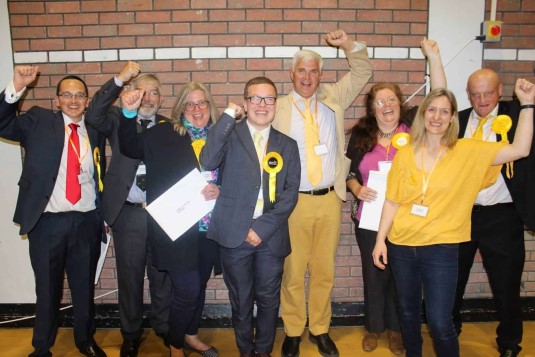
Local Council By-Elections April 2022

This month saw 18,458 votes cast over 13 local authority contests. All percentages are rounded to the nearest single decimal place. Overall, seven council seats changed hands. For comparison with March's results, see here.

Party
Number of Candidates
Total Vote
%
+/- 
Mar
+/- Apr 21
Avge/
Contest
+/-
Seats
Conservative
          13
 5,299
    28.7%
  -7.5
      -9.5
    408
    -4
Labour
          10
 4,828
    26.2%
 +11.1
      -8.9
    483
     0
LibDem
           8
 4,729
    25.6%
 -13.8
    +18.4
    591
   +4
Green
           6
 2,454
    13.3%
 +9.2
    +13.3
    409
   +2
SNP*
           0


     0
PC**
           0


     0 
Ind***
           5
 1,018
     5.5%
  +0.8
     -12.9
    204
    -2
Other****
           2
  130
     0.7%
  -1.4
      -0.4
     65
     0


* There were no by-elections in Scotland
** There were no by-elections in Wales
*** There was one Independent clash
**** Others this month consists of the Liberal Party (84) and TUSC (46).

April is traditionally a quiet month as by-elections are held over for local election day. By my reckoning there are 52 such contests to look forward to on 5th May, hence why we're doing the results round up now - there are no more contests to be had. A short month, but a not great one for the Conservatives as they head into the locals four councillors down and only a gain from Labour in the High Peak to console them (Labour took one back from them, extending the party's run without a net loss to a whopping three months). Again, the Liberal Democrats and the Greens gain from the Tories' expense - fitting the analysis pushed here many times about where they should be putting their resources.

In all, not much can be taken from these results. Though it's worth noting the Tory performance, in vote terms, is quite low as revealed by their vote average per contest. A sign that the cost of living crisis and everything else is biting into their local government support? We'll see next month when the main event rolls in.

7th April
Dorset: Lyme and Charmouth, Grn gain from Con
East Riding of Yorkshire: South Hunsley, LDem gain from Con
High Peak: Cote Heath, Con gain from Lab
Horsham: Storrington and Washington, Grn gain from Con
Liverpool: Everton, Lab hold
Liverpool: Warbreck, Lab hold
Mid Devon: Cullompton South, LDem gain from Ind
Telford and Wrekin: Brookside, Lab hold
Wolverhampton: East Park, Lab hold

14th April
Durham: West Auckland, Lab gain from Con
Maldon: Heybridge West, LDem gain from Ind
Surrey Heath: Bisley and West End, LDem gain from Con
Tewkesbury: Brockworth East, Ind hold

Image Credit

Friday, 15 April 2022

The Grotesque Rwanda Deal

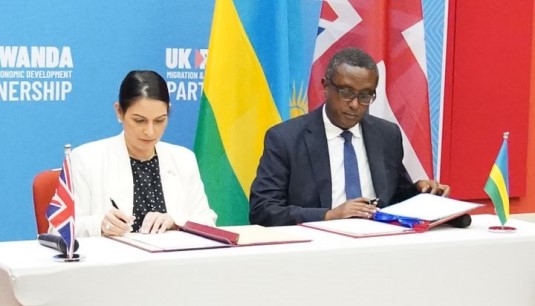
News that the Tories struck a deal with Rwanda to export asylum seekers there could not have been better timed. Priti Patel gets to play to her self-perceived strengths as a no-nonsense scourge of refugees, and Boris Johnson's "difficulties" recede into the background. And it has worked, for the moment. The coverage and the anger it has provoked is pretty much what the Tories were hoping for, though the prep work necessary to get the deal done suggests its conclusion directly after the first rule breaking fine for Johnson was coincidence rather than cunning.

The details of the agreement are grotesque. The key reasons why refugees want to come to Britain isn't because the economy is firing on all cylinders and people across the globe want a piece of the action, it's because English is the global language, there are established communities and, in some cases, family ready to welcome incomers from the most common origin countries - Afghanistan, Iraq, Eritrea, Iran, Sudan, etc. And believe it or not, despite the alacrity with which the UK has pursued wars in Africa and the Middle East, and how "our" capital remains a major extractive force in the global south, this country has a good reputation. It's safe, it's stable, there are democratic freedoms and the rule of law, and its cultural exports do an effective job of maintaining its good standing. Patel and the horrors who dreamed up the scheme know this, and their cynical thinking is geared around ending this pull factor and washing the UK's hands of its international obligations.

And it's perverse as well. Rwanda itself is not a safe country, something the UK itself acknowledged when the government recently criticised it for human rights abuses. Then there's memory, or lack of it. Building detention centres in an African nation recalls the imperial tradition of the concentration camp - the British invention that was founded on African soil during the Boer War, and used systematically against the Kenyan insurgency in the early 1950s. And there's the utter absurdity of it. An asylum seeker from Rwanda could and will be sent to Rwanda for processing.

Disgracefully, the official "opposition" fell at the first hurdle. Keir Starmer went after Johnson on money. "It's going to cost billions and billions" he wailed, before adding his customary "get a grip". This shows, once again, the abject cowardice of the Labour front bench, of refusing to challenge as the Tories set about framing an issue to their advantage. Despite polling showing that a plurality of the public oppose the scheme, the data demonstrates the most enthusiastic support for exporting refugees are among retirees. What a surprise. But rather than actually show some political leadership, Starmer is trying to skirt around the immorality of the issue by appealing to their wallets. It's a yellow bellied display that won't even work. Socially conservative voters aren't against public spending per se. They're quite happy to see money lavished on certain things, like the military, the police, and being beastly to asylum seekers. Sending people thousands of miles away from these shores satisfies their desire for punching down and and lets them sleep at night, knowing their fragile image of Britain is slightly less imperilled by the arrival of a few thousand brown people. How much Labour members' money is Starmer paying his advisors, again?

But what this also shows is Tory strategy ahead of the next general election. Having failed miserably to deliver on his modernisation promises, the only possible electoral opening for Johnson is to try and soldier on with the voter coalition that put him in office. Patel's Rwanda scheme is the centre piece of more war on woke rubbish, more promises of clamping down on undesirables, and following the war in Ukraine, a splurge on the military is in order to ward off Russian aggression. It will keep the right wing press on side and help the Tories define the issues that matter during the election. In short, an entirely regressive prospectus, but one that, despite calamity Keir, probably won't be enough to get him over the line again. The cost of living and PartyGate are exacting their toll, and even among loyal Tory voters the unease is setting in. It's just appalling that tens of thousands of refugees are going to be put through the ringer for Johnson's electoral stunt.

Image Credit

Thursday, 14 April 2022

Immaterial Labour and its Discontents

Returning to the French presidential election and venturing an explanation how younger layers could vote for fascist candidates in large numbers - in defiance of the theory of immaterial labour long peddled here and its relationship to the growing dominance of socially liberal values - some corrections are in order.

First of all, the numbers did align with electoral results in the UK, Germany, the US and most other Western liberal democracies. France was not an outlier. In the under 35s, Jean-Luc Melanchon for the left won. He was just shy of 35% in the 18-24s, with Macron sitting on 25% and Le Pen 18%. In the 25-34s, the left just edged it with 31% versus Le Pen's 26% and Macron's 22%. Unfortunately, among the older working age population Le Pen won with 29% in the 35-49 and 50-64 age groups. Macron was 22% and 25% respectively, and Melanchon 20% in each. It was the retirees who saved Macron's bacon with 41% of the vote, and his far right and left rivals plodding along at 16% and 11%.

This means the YouGov poll cited previously was junk. 34% among the 18-24s for Éric Zemmour? Either it was a typo or a particularly heavy session at Paris HQ. In the end his attempt to out-right Le Pen mustered around seven per cent for the age group. Combining the fash vote with Valérie Pécresse of the centre right Soyons Libres and their total was well short of Melanchon. Eggs on the faces of team YouGov, and yet more empirical proof of the relationship between immaterial labour and, for want of a better phrase, 'progressive' voting behaviour.

Yet the thorny issue remains of the final round. According to the FT, about half of Melanchon voters will move from supporting him to staying at home. Over a quarter will put the nose pegs on and support Macron, while just under a fifth are going for the Front National. The liberal pearl clutchers here in England look on aghast, but there is no mystery as to why socially liberal young people under the boot of Macron's hapless, authoritarian rule might punt for Le Pen. For one, he appears hesitant to offer left wing voters anything. If one cannot be arsed to to win people over, then what right do you have to their votes? Second, Macron has presided over his own cost of living crisis while scapegoating young unemployed people for his failures, and has done next to nothing to address the climate crisis. His record damns him. And third, as appalling as Le Pen is, she does appear to offer solutions (of a sort) to bread and butter issues. However, it is the drop out rate, as an expression of a collective attitude, that is more significant for trying to understand the political preferences of young people and immaterial labour generally.

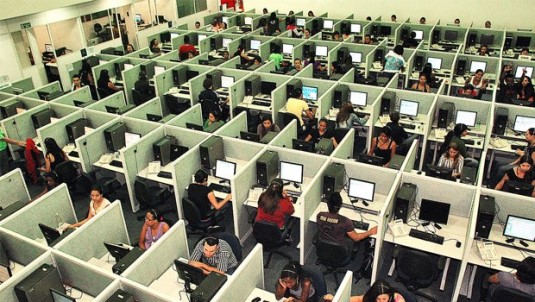
First, a few words on the elision between the young and immaterial labour. As explained many times before, the move to immaterial labour marks a structural transformation of work in advanced capitalist economies. While this has always been a crucial aspect of capitalism, and particularly with regard to the reproduction of labour power in the home - historically the province of women, after the Second World War it took on an increasingly formalised, public aspect. As public services and the state expanded, millions of workers were drawn into work that did not directly produce surplus value but whose role was the administration, maintenance, and reproduction of capitalist relations of production. The expansion of the civil service and local government, the growth of state education and health sectors not only provided safety nets, but also a substantial apparatus of economic planning and role socialisation. The production of relationships was simultaneously the production of people. With the onset of deindustrialisation from the 1960s onwards, the coming of mass consumer cultures, and the privatisations of the 1980s and 90s, and the IT and telecommunications revolutions, immaterial labour was increasingly commodified and harnessed for profit. Retail dominated cities where factories used to pollute the skies, the office replaced the workshop as the culturally hegemonic workplace, and social and intellectual aptitudes are what the person specs of job vacancies demand. Brains and sociality are the key forces of production.

This was not the result of capital's grand plan, or a 'great reset' before it became a thing. The growing dominance of immaterial labour was born of necessity, to manage growing populations while protecting class relations. Of post-war affluence and mass consumption, of the privatisation of social life and leisure, of shifting assumptions about the good life, and the flood of capital into meeting these lifestyle demands - all to the point where the British economy is in no small measure comprised of people selling overpriced coffees to one another. The expansion of immaterial labour was enabled by the economic boom, and then took up a dynamic of its own. Cultural mores changed, the 'new' social movements of women's liberation, anti-racism, LGBTQ rights, and environmentalism grew in breadth and depth, and helped foster a new common sense of tolerance and acceptance. And each passing generation have become progressively more embedded in socially liberal attitudes. Immaterial labour demands not cold intellects but emotional intelligence, empathy, and social competence. It demands cooperation in which the 'product' is a service at its most caring, hands-on end, or information and data at its most abstract. The objects of both are social dynamics, social interactions, relationships.

The two main consequences of this is as immaterial labour expands, socially liberal socialisation grows. Lefty teachers are not responsible. Therefore, what we commonly see in value surveys is what the theory would predict: the younger someone is, the more likely they are to have a career spent entirely in jobs characterised by immaterial labour, and conversely are going to share socially liberal values more than older generations of workers. Second, even if right wing governments didn't hold down living standards - particularly of younger workers - their positions in the culture wars would likely alienate young people, and conservative stratagems of playing divide and rule along lines of race, nationality, sexual orientation, and class falls increasingly flat among them.

But they are attacking the young. Nothing on rising prices. Nothing for housing. Nothing to tackle underemployment and precarity. Nothing on petrol. Nothing on the environment. And the Tories are putting up taxes, and slapping increased interest payments on student loans. Even without the spread of social liberalism, younger people have few reasons to vote Tory and plenty of them to carry a life-long antipathy. Something that later property ownership, higher salaries, and job security for those lucky enough to get there is unlikely to erode in short order. After all, it took decades of home ownership before working class retirees were prepared to switch away from Labour.

The future's looking good for centre left, green, liberal, and radical politics then? Yes, but only if they actively court this ever-growing constituency. The expansion of immaterial labour, particularly after the 1980s, took place in the context of labour movement defeat and its subsequent weakness. Therefore their relation to the established centre left is not, for the most part, embedded in a residual collectivist loyalty. Any identification is slight, precarious, and conditional. And it doesn't require an abstract schema to show this is the case: recent history will suffice. During the New Labour years, Blair and Brown's lack of concern with the rising working class saw younger layers disproportionately attracted to the Liberal Democrats. They offered policies that spoke to their concerns, and were able to affect a centre left pose in the run up to the 2010 elections. When they betrayed this new base by going into government with the Tories and spectacularly reneged on their tuition fee pledge, this support evaporated. Not even tilting to a hard remain position could win them back in anywhere near the same numbers. We have the experience of Scotland, where Labour's case for remaining in the union was framed almost entirely in right wing, establishment-friendly terms. They showed what should be their natural constituency how it was quite prepared to trample over their aspirations and hopes for a better future. And so immaterial labour switched en masse to the SNP, leaving little but a residue behind. Over on the continent, grave yards are full of centre left parties destroyed by similar levels of hubris. At night the tomb stones echo to the screams of careers that never were, their phantasms still ignorant of why they were snuffed out.

What political experience teaches us is if a party crosses their interests, they don't stick it out because they have nowhere to go - as per the supposedly timeless advice of Peter Mandelson. They will cast around for an alternative vehicle, something that Keir Starmer would do well to heed. Or in the case of France a not insignificant amount will vote for FN purely because they have more to say, and arguably offer, on the cost of living. Or they will simply vote with their feet and stay at home. Immaterial labour does not feel obliged to support the least worst among several options and, rightly, expects a quid pro quo in return for its votes. If Macron wants to be sure about the second round, he has to reach out to Melanchon supporters with something that would speak to their interests. Perhaps, just perhaps, it might win over some younger FN voters on that basis too. Similarly, Labour here needs to do the same: its faith, flag, and family rubbish and dependence on the Tories being awful is not the prospectus for winning an election outright. If Macron and Starmer refuse to listen, these voters will stay at home and the advantages Le Pen enjoys among older layers of workers, and the pensioner bedrock Johnson has will play to their respective advantages.

In other words, discontent in mainstream politics will express itself in (seemingly) radical forms if there are parties available to channel it, but if not nihilism awaits with its inky black emptiness. Immaterial labour can be the saviour of progressive politics. But if our teeming millions are ignored, crossed, or denied, it will be its ruin.

Image Credit

Tuesday, 12 April 2022

How Johnson Can Be Forced to Quit

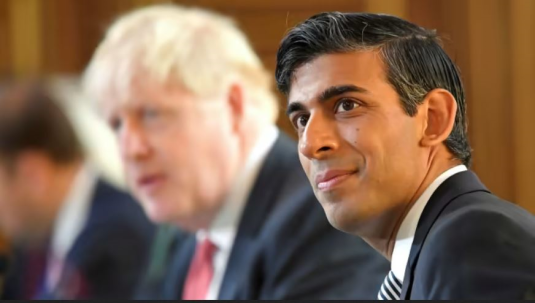
Boris Johnson's risky gambit of kicking PartyGate into the long grass has run out of time. Announced Tuesday afternoon, the Prime Minister, Carrie Johnson, and Rishi Sunak are among the 30 today issued with fixed penalty notices for attending Downing Street parties when Covid restrictions were in force. The law makers were the law breakers, to use a trite formulation. But what happens next?

What should happen next is the resignation of Johnson and Sunak in short order. The proprieties of establishment politics demand no less, but as we've seen many times this is anything not a usual government that plays by the usual rules. Playing Mr Contrition to the cameras earlier, Johnson got his story out, peddling the same old line of his attending a 10 minute gathering in between meetings. A line that doesn't stand up to scrutiny because we know he was at multiple social functions in Downing Street, in its garden, and at a private party in the flat upstairs. Points that will be reconfirmed by Sue Gray's report if it ever sees the light of day. Nevertheless, his response given "in the spirit of openness and humility" points to one thing: his decision to soldier on. Can he?

Yes. Johnson's record in office has shown that if he can put a crisis off from reaching a decision at the point of greatest friction, he can barrel through it. Heading off the Gray report by calling in the Met was a high risk move, but it bought him time. He knew getting the Met involved would end in fines and being seen to break the law, but this would be some way off from the moment the heat was on him. Something might come up in the mean time and focus attention elsewhere. Johnson therefore must be thanking his lucky stars that Putin decided to invade Ukraine and plunge Europe into its greatest crisis since the Berlin airlift. The Tories now have a plausible excuse for keeping him: he's risen to the occasion in weapons promised, rhetoric, and pulled off a PR triumph by traipsing around Kyiv with Volodymyr Zelenskyy. The wisdom of the social media crowd has pointed out how this country has form for replacing Prime Ministers in war time, including during the Second World War, but this doesn't matter for the Tories. We're in crisis mode and he's the man for the moment. Just forget the small matter that the UK isn't actually at war.

Johnson can also take heart from the fact the Tories are a bunch of cowards and didn't strike while the iron was hot. Right now, both government and opposition are determined not to appear swayed by public opinion as a means of redrawing the parameters of political possibility to their respective advantages. This is instinctively buried in the political unconscious of Tory MPs particularly. They knew giving Johnson the heave ho while the public's blood was up would store trouble for the future. And now it isn't and with the polls stabilising, the knives will stay in their sheaths. Then there is the question of timing. Easter recess means no opportunities for publicised pile ons by MPs, and the chance of a surprise attack from the back benches, of conspiracies hatched over subsidised lunches on the terrace coming to fruition will have receded by the time the Commons reconvenes.

We're stuck with him then. That is except for one curve ball scenario. After a bruising couple of weeks for Rishi Sunak, word has done the rounds among the press pack that he considered resigning in the wake of spousal nondomming, forgetful green carding, and murky tax efficiency-ing. With the sun kissed beaches of California and an easy life swanning from one Silicon Valley soiree to another there for the taking, as alternatives to the Westminster meat grinder goes there are worse. Having been caught out lying and getting fined by the police is one thing for Johnson, but for Sunak it's yet another nail in the coffin of his Number 10 ambitions. If he was to resign over this matter however, that would be interesting. It's difficult to see how Johnson can cling on, with or without his "openness and humility". Curtains for the Chancellor would surely make his nominal boss's decision to tough it out untenable. I doubt Sunak will do the decent thing, but stranger things have happened in British politics.

Image Credit

Monday, 11 April 2022

Dissecting the French Election

Taking more time off tonight, so leaving matters to the heavy lifting of the Novara comrades.

Sunday, 10 April 2022

The Warning from France

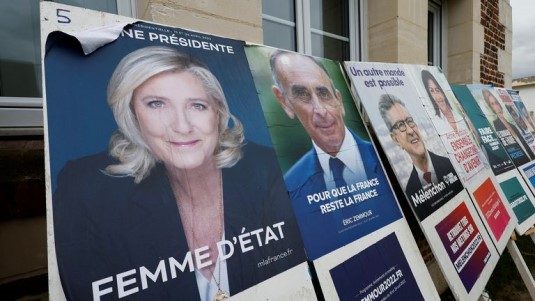
According to the exit polls from the first round of the French presidential election, Emmanuel Macron has come out top with around 28-29% of the vote. Marine Le Pen is on 23%-24% and the left's candidate Jean-Luc Melanchon stuck at the 20-21% mark. Like 2017 we're looking forward to a face off between the authoritarian centre and the authoritarian, populist, and "post-fascist" right. Opinion polling for the second round is uncomfortably close, with Ipsos MORI forecasting 54% to 46% in Macron's favour, while another has it almost level pegging at 51% to 49%. Even if Macron squeaks back in, this is disastrous. And the responsibility lies squarely on his shoulders.

We await more crunching and the outcomes of the count, but there is something very concerning about the numbers supporting Le Pen. When it comes to the voting habits of working age people and the young, they're at cross purposes with nearly everywhere else in Europe. According to YouGov numbers, the younger one is the greater the propensity to vote for Le Pen. They suggest the over 55s would support Macron 55%-45%. This is the only age cohort that shows a majority for the centrist candidate over the far right. Moving down the age ranges, it's 51%-49% for Le Pen in the 45s-54s, 53%-47% in the 25s-44s, and the 18s to 24s? 56%-44%. Is it really the case the younger one is, the more fascist-adjacent they are?

This data poses the theory often pushed here a challenge. That is the structural transformations of the character of work in advanced capitalist societies are seeing it configured around immaterial labour: the replacement of material production increasingly by service provision, knowledge, and care. The consequences of this are new patterns of exploitation, new precarities, and a multiplication of identity politics. But it also propagates a new common sense: social liberalism. Less an ideology and more a diffuse common sense, it is a decisive shift in popular attitudes and values that reflects the greater stress on sociality demanded by capital of labour power in the 21st century. Everyday spontaneous anti-racism, anti-sexism, anti-LGBTQ bigotry, and low-level internationalism are rooted in tolerance and the ability to get along. This stands in marked contrast to older layers, and particularly the retired, whose social conservatism (which is not unrelated to their relationship to property) sits awkwardly at odds with the attitudes of their children and grandchildren. Therefore, assuming values are the primary driver of voter behaviour, social conservatives vote right for conservatives. And social liberals vote liberal or left. Hence in the United States, the young being the dynamo of the Bernie Sanders campaign. Here in the UK, their powering of Corbynism and, if the polls are to be believed, disproportionate backing for Keir Starmer's Labour. And in Germany, the good showing for the Free Democrats and the Greens in the last election. Why then is France the outlier?

In 2017, Melanchon was the lead candidate among 18-24s, while Le Pen came second. But according to YouGov's numbers the leader among the young going into this election was the even-more-racist Nigel Farage equivalent, Éric Zemmour. This might have been cancelled out by the late surge for the left in recent days, but combined with Le Pen's support we're looking at 49% of France's most socially liberal generation willing to support a far right candidate. How can this be?

It's the interests, stupid.

When Macron was elected in 2017, his "liberal" administration was all set to repeat the mistakes of his predecessors in the Socialist Party. Who, incidentally, have gone from holding the presidency five years ago to winning a projected two per cent today. For his pains, Macron has presided over France's persistent youth unemployment problem. Even with a plan to massage the figures by giving youngsters €500/month for completing a series of training courses, it jumped from 14.8.% to 16.4% between January and April this year. He has also tightened the conditionalities on unemployment support, disproportionately impacting the young, and, like here, the cost of living is outstripping wage rises. Similarly, while not at UK-levels house price inflation is rising faster than pay, and Macron pushed through pension reforms that will lead to lower incomes for workers in retirement. Other factors include high-handed, authoritarian government, a retrenchment of the over-centralised French state at the expense of the regions, and poor public road infrastructure have played their parts. Many of France's problems precede Macron, but has hasn't done much about them.

And there is the disastrous re-election campaign. Macron thought now would be a good time to affect elite disinterestedness. He announced his campaign late, refused to debate other candidates, and has kept away from meeting the public. Contrast this with Le Pen who's not only done her woman-of-the-people shtick, but has made cost-of-living issues the centrepiece of her campaign. For many people of working age and particularly the young, the final round choice will be between a candidate offering more of the same and another talking about jobs, wages, housing, and prices. People prepared to support Le Pen over Macron, including Melanchon supporters, are making a rational choice calculation. She might be authoritarian, racist, and wants to go out her way to bash Muslims. But then, for all his Blair-lite impostures about social justice and "radicalism", Macron appears to be little different. Political science isn't rocket science. If politicians speak to popular interests, they will attract support from across the spectrum. Especially when up against a cloth-eared incumbent.

France therefore is a warning. Macron is going to have a great deal of difficulty converting younger voters in the second round because of his record. It's not enough to expect voters to follow Melanchon's advice and not transfer their support to Le Pen, he's got to offer something by making the left a comprehensive offer. It might work and keep him in office. But it's a reminder for us too. Values broadly align with politics, but when a formally socially liberal government reneges on its values and puts capital before labour, voters who, on paper, should be their supporters will gravitate to parties and candidates who offer them something. As France is demonstrating, arguing Le Pen is beyond the pail is very definitely not enough - especially while you're kicking those whose votes you want in the teeth.

Image Credit

Saturday, 9 April 2022

The Assassination of Rishi Sunak

Up until this last fortnight, Rishi Sunak had led a charmed political life. Gifted one of the safest Tory seats in the country, chose the right side of Brexit (at least where the Tory faithful were concerned), and without leaving a trace he was elevated to the Treasury and then, sorry Dominic Raab, the real office of the deputy Prime Minister: the Chancellor of the Exchequer. He made his name turning on the public spending taps, ensuring he went from complete unknown to the most popular politician in the country inside a month. His media friendly demeanour and soft focused press coverage ensured his legend built up, managing to escape sanction for Covid idiocies and then imposing National Insurance rises on everyone in receipt of a pay packet. Nice smooth ride you have there. It would be a pity if you ran out of road.

As fast as his name was made, he's gone from Dishy Rishi to something altogether more fishy in double quick time. The initial breach in the dam was standard hubristic politics. The Spring Statement offered practically nothing. With inflation outstripping wages, energy bills going through the proverbial, and the NI rise due Sunak ostentatiously put his hands up and said he could do nothing. Given the folk memories of recent years when government found cash to prop up the banks, or shovel money into the pockets of Tories and Tory cronies under the guise of Covid procurement (and while writing billions off as "unrecoverable"), the "there's no magic money tree" trick is old hat and can't dazzle the punters any more.

And then we had this week. Akshata Murty, the billionaire heir and Sunak's significant other saw the spotlight fall on her tax status. Turns out she paid £30k/year for nondom status and avoid millions in taxes, despite residing permanently in the UK with her husband and children. After a torturous day or two of camp Sunak and leading Tories saying family were off-limits for matters of public scrutiny. Actually no, as the Ministerial Code requires ministers to supply details of potential conflicts of interests involving themselves, spouses, and family members. Something Sunak failed to do. Therefore Murty's subsequently changing her tax status to make the story go away has doors and bolting horses all over it.

And there's more. Thanks to digging done by The Indy and Sky News, we learn that he has held a Green Card for a decade. Sunak has served over six years as a MP, a minister for three, and the Chancellor for 18 months while supposedly being a permanent resident of the United States - a matter that, were he not filthy stinking rich, would get normal people into hot water with the US authorities. Nor is it a good look on these shores, implying the Chancellor was holding it in reserve should new opportunities arise in, say, California where he likes to spend a lot of time. If this wasn't enough, Sunak is listed as a beneficiary of trusts registered in tax havens, and the Sunday Telegraph have splashed his involvement in blind trusts on its front page. Murky finances from the nation's chief accountant? Say it ain't so.

The politics of this are appalling for Sunak, and unless his political career spends the next two years on a boil wash his chances of leading the Tory party are about as good as mine. Overt hypocrisy and getting found out is profoundly damaging, as Boris Johnson found out to his cost earlier this year. To have the Chancellor pretend the cupboard is bare and so taxes have to go up, while his housefold has benefited from "tax efficiency" should destroy him. But this is the contemporary Tory party and the old rules of politics no longer apply. But why is this happening, and why are the details about Sunak apparently leaking from his own side? It's time to ask the 'who benefits?' question.

The first is his rival for the Tory crown, Liz Truss. Popular among the Tory ranks she's still not as widely known among the public as much as she'd like, and annoyingly for her it's defence secretary Ben Wallace who's had "the good war" re: Putin's invasion of Ukraine. Taking Sunak down a peg at least simplifies the situation, though the chances of her doing one of her opportunist photo opps, this time with a pile of tax returns, is probably out of the question. But by all accounts, the agents of Sunak's destruction appear to be too well informed to be her allies. Which leaves Downing Street.

Listening to the lobby hacks and the journos in the know, one of the reasons why Johnson's much-hyped levelling up efforts remain so much vapourware is because of Sunak's intransigence. Which is to be expected when the residents of Number 11 are as aligned to the interests of the City. Johnson hasn't overruled him because he can ill-afford a big row at the centre of government while PartyGate lurks in the long grass, and the Chancellor had strong support among the parliamentary party. These revelations, which not only show Sunak up for being tone deaf but also possessing a complete lack of sense, have destroyed this standing and making him what Johnson hoped he would be when the appointment was made: utterly dependent on him for his political fortunes. As such, all those little acts of rebellion, the coy signals he was in the running to replace Johnson are no longer possible. This, and the fact he's the new shit magnet definitively shifts negative coverage away from the Prime Minister and goes a distance to restoring his authority. Just what he needs if he cops a fine from the Met and he's fighting for his political life again.

These are good popcorn moments for labour movement people watching the drama from the outside. But rather than this affair being a squabble among elites, how Sunak's career has been ambushed and his survival is in the balance is because, in significant ways, the efforts the left made in the Corbyn period and after have shifted some aspects of politics in our direction. Even now, the Tories still can't have things all their own way.

Image Credit

Friday, 8 April 2022

System F - Solstice

Having to take a break from the blogging for the moment, but I should be back tomorrow with a contribution to the Rishi Sunak discourse. Until then, let's fill the dead air with top choonage.

Tuesday, 5 April 2022

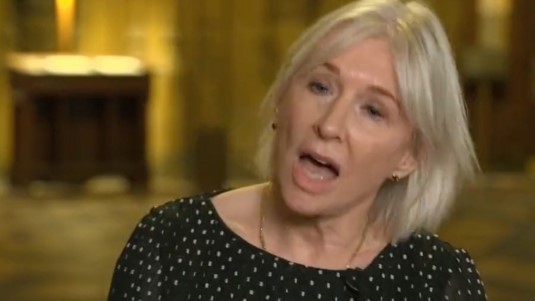
Privatising Channel 4

Reflecting on the government's consultation over the mooted privatisation of Channel 4, Armando Iannucci wrote "90% of submissions ... said it was a bad idea. But still they go ahead. Why do they want to make the UK’s great TV industry worse? Why? It makes no business, economic or even patriotic sense." Tory celebrity Kirstie Allsopp called it a "load of twaddle", and adding for good measure "Any Tory MP who votes for this is a traitor to their party & country." Blimey. Others have chimed in with more thoughtful pieces attacking the stupidity of Nadine Dorries's decision. James Ball in the New Statesman typifies this, laying out the position C4 occupies in the British media ecosystem and the role it has supporting tens of thousands of private sector jobs - the ones, the Tories used to tell us, we ought to properly value.

It's a hoot seeing the chickens coming home to roost for enthusiastic Conservative backers and liberals who, when the time came, preferred authoritarian Toryism to a mild dose of social democracy. But it goes without saying that the privatisation of C4 should be opposed for all the straightforward reasons described, despite being a thoroughly neoliberal institution and bulk purveyor of trash television. And there are good socialist reasons too. Here's why.

For one, the Tories are always casting around for ways to shift the balance of wealth further towards the wealthy. With the Covid gravy train parked up in sidings ready for scrappage, C4 is easy pickings for the next transfer of public wealth into private hands. Dorries promises proceeds from the sale would shower a creative dividend on TV production, but she's more interested in the dividends a privatised channel would funnel to institutional investors and media firms: key Tory allies and props. The columnists of the right wing press might be hesitant about the sell off, but their proprietors will prove less sanguine when the share issue comes. And with C4 out the way, yet more ground is laid for the creeping privatisation of the real prize: the BBC.

Then we have the Tory disdain for the arts and creative industries generally. In the Conservative Party's imagination, C4 is a bastion of the liberal elite and its programming is partly responsible for licentiousness and the irreverence British people, particularly younger people, show their social betters. In its own way, C4 has been a vehicle for ground breaking programming that has driven forward the socially liberal agenda and undermined traditional values. Now in the 21st century, there is the woke agenda to do battle with, and let's see how C4 works as a vehicle for this pernicious ideology once there are cadres of share holders to answer to.

Lastly, there's good old fashioned authoritarianism. Dorries is notoriously thin-skinned and the popular opinion among the Tories is that C4 News is particularly left wing and anti-them. As the Tory raison d'etre is the preservation of class relations above all else, ths means keeping an eye out for anything that might present a challenge to their hegemony, or offer some sort of cultural resource for opposing their rule and the legitimacy of the system itself. C4 is hardly an organisation infested with Bolshevist sympathisers, but its news gathering operation significantly departs from the tame gruel served up by the BBC and ITV (ironically, also supplied by ITN). Showing up the messy complexity of the social world, including the consequences of Tory policy, and occasionally allowing marginalised voices their own space to speak is potentially dangerous. Even if the channel is commercially successful. The Tories hope the market will direct C4 into becoming another Channel 5, thereby removing another "oppositional" institution and making politics even easier for them.

Image Credit

Monday, 4 April 2022

Propaganda and Ukraine

Truth, they say, is the first casualty of war. Every engagement, every attack, each piece of footage, versions of situation maps, and reports from the battlefield are occasions for propaganda. Everything can be spun and is indeed spun to boost and traduce the respective sides of the conflict. And this is even truer with the Russian invasion of Ukraine. This most televised and scrutinised war in human history has saturated social media. Disinformation and fake news are difficult to tell from the real thing, and both kinds are manipulated and pushed. To avoid naive accounts of war, whether trusting or cynical, this has to be kept in mind. Especially when the most disgusting crimes are reported.

Crimes like those to have befallen Bucha, a satellite town of Kyiv. The Ukrainian government claims to have uncovered the bodies of 280 civilians. Not all of these were people caught in crossfire. Corpses were found with their hands tied and bullet holes in the back of their heads. There are also reports of partially burned bodies left at the side of the road, and evidence is being documented for the International Criminal Court with a view to bring prosecutions. Despite dozens of residents speaking to the press about the killings they witnessed, the increasingly ridiculous Sergei Lavrov branded evidence of war crimes a "fake attack."

With a whirlwind of propaganda blowing through the media, how to tell the truth from a lie? As it happens, it's not too difficult. An application of common sense or Occam's Razor helps. Which is more likely to be true? Did the forces of Putin's regime, as the occupying army, do it? Or did the Ukrainians "dress" the wrecked town with executed and mutilated bodies? To ask the question is to answer it. There is also context. As acres of footage of burnt out and wrecked residential districts have shown, the Russian military has shown no compunction about flattening civilian buildings. Unless you believe the Ukrainians did it themselves just to make the invading power look bad.

And there is the rhetoric coming from Russian media about Putin's aims and objectives in Ukraine. What was once a "special military operation" is now assuming the proportions of a war of annihilation. From RIA Novosti, a state-owned-and-run news outlet, we have 'What Russia Should Do About Ukraine'. Ostensibly a comment piece, it reads like something out of the Great Patriotic War reconditioned for the 21st century. It says Ukrainians are "passive Nazis" and "Nazi enablers" and deserve "just punishment", as well as "ideological suppression" involving "harsh censorship". It also calls for the ceding of Ukrainian sovereignty to Russia for "denazification" and "deukrainification", and be occupied like a defeated enemy state. It goes on that the idea of Ukraine is de facto anti-Russian, and that everyone who has supported "the Nazis" must "experience war and terror". There you have it, straight from the horse's mouth.

As previously noted, the fact NATO has a clear interest in Ukraine defeating Russia, or at the very least investing them so Russia's military bleeds white and is humbled by a power many times weaker than them does not overdetermine the situation. Ukraine is not the West's dupe. Wherever there are wars and revolutions, the US and its allies will intervene to shape them in a direction conducive to their interests. Sometimes they're successful, sometimes not. In the case of Ukraine, rhetorical support backed by weapons supplies and cash gifts does not mean Ukrainians have no right to resist, or that they should lay down their arms as some idiots on the left are arguing. Bombed out blocks of flats are not blows against US and UK imperialism, and to pretend otherwise is to peddle Moscow's line.

Therefore, taken in the round, the substance of distinguishing between the types of propaganda aren't really that difficult. One serves the aim of subduing Ukraine and transforming it into a vassal state, with dark hints of further mass killings and repression. And the other is of a people fighting for their very existence. These are the filters that matter.

Image Credit