No words, just tune.
Friday, 9 July 2021

Thursday, 8 July 2021
Make or Break Time
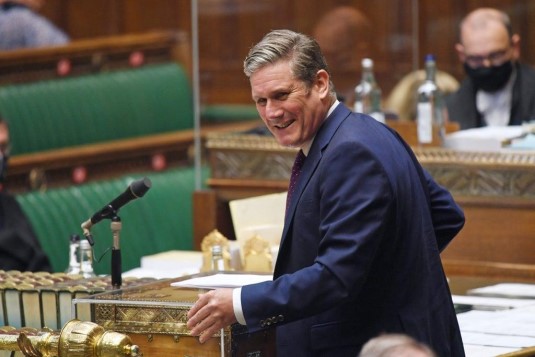
On the cusp of the fourth wave, the sad and unpalatable truth is the Labour leader is partly culpable for the dangerous situation we find ourselves in. The warning signs were there from the off, with Keir treading carefully around the government's tardy efforts and treating it like a management exercise as opposed to a political challenge. And from there things haven't picked up much. As his defenders have argued, he didn't have much choice to go softly-softly at the beginning of his leadership. With life abruptly, unexpectedly thrown into abeyance and people clinging to government against an unknown enemy, a mood of national unity was in the air. The Tories were posting ridiculous poll leads, and the public at large weren't tuned in to what politicians other than the government were saying. Had Keir gone hard on the Tories, so goes the argument, he would have looked like he was scoring points as people were succumbing by the thousands. The Tories knew this and took advantage.
Timing is everything in politics. Unfortunately, Keir wasn't watching the clock. Stressing measured opposition was probably the right move initially. What wasn't was interpreting 'constructive' as 'keeping shtum'. In the dying days of his tenure, Jeremy Corbyn tempered his criticisms with suggestions and demands. Despite trailing in the polls by a wide margin and a dead man walking in conventional political terms, the government adopted these policies in part or in whole. As the party of working people with a direct link to the front line against the pandemic, when he took over he could have carried on where his predecessor left off. Keir had an opportunity to speak up for those who were up against it. But he didn't. When criticisms did issue from the Labour leader's lips, they were spreadsheet criticisms. They didn't take the Tories to task for slow action, nor the scandal in the care homes which was well known as it was happening, nor the outright corruption of PPE procurement. The politics weren't contested, there was no alternative plan, nor a vision about how life might be after the pandemic had receded. Instead, Keir Starmer insisted on road maps out of lockdowns and an "expectation" that children be back at school come September. He couldn't even muster a criticism of Eat Out to Help Out.
But as long as the polls were steadily but perceptibly moving in Labour's direction, there was no pressure on the leadership to change course. The plan, as much as one existed, wasn't to contest anything and let the Tories own their mistakes. Points of intervention were necessary to demonstrate Labour was on the side of public opinion, but there was no effort to show leadership. And so in the autumn after scientists started sounding the infections alarm, it was only then Keir came out for a short lock down to stymie transmission, which the Tories reluctantly followed through with. Likewise, when holiday hunger came to public prominence Labour only got on board after Marcus Rashford put in the hard yards. As for the incoherencies of the Tory tier system, Keir absented himself and it fell to others to offer opposition and leadership. As such, saying very little about the management of the crisis left Labour in a vulnerable position. Because the Tories defined it, they determined what failure and success was. And so when the polls began to swing back towards the Tories, coincident with but not entirely reducible to the suspension of Jeremy Corbyn, Labour had little to fall back on. Keir refused to make the link between Tory recklessness and deaths, ceding the ground to the cultivated Tory view infection was a matter of rotten luck. Worse, because he hadn't bothered articulating a political critique, an alternative plan, and a way out when he did attack Johnson it came across as carping and hindsightism - so reported the party's red wall focus groups.
And so the scene was set for our present malaise. Johnson took the credit for the vaccines and their rollout, and with little to say and politically foolish right wing opportunism, the poll numbers kept tumbling. While the Tories enjoyed a so-called vaccine bounce, it did not explain why Keir's numbers were heading south. What did was a refusal to oppose and an active effort at demobilising Labour's existing coalition of voters. And so his authority bled away. The goodwill built up in the first half of his leadership went with it.
Ordinarily, and especially under the terms politics has conducted itself these last 40 years, Keir Starmer would be finished. 323 votes from the good people of Batley and Spen was all that stood between him and the end of his leadership. But he has got lucky. Unlike Gordon Brown and Theresa May, who were finished long before they left office, the fates present Keir with an opportunity. What might save him and revive Labour's fortunes is how he handles life after 19th July. Attacking the government for lifting restrictions, plans to charge for tests, the mounting numbers of hospitalisations, the stats for persistent long Covid, images of crammed public transport, and cases of retail bosses mandating mask removal for customer-facing workers, every single instance is a Tory failure and a demand Labour goes on the attack. A recent poll suggests the public back the removal of remaining restrictions on the 19th, this hides the complexity of anxietes and worries simmering beneath the surface and it could rapidly change as Covid cases surge. The moment requires Keir Starmer ventures out of his wonkish, managerial comfort zone into political leadership.
Already, Wednesday's PMQs has established at least a willingness to move on it among the opinion forming elite and politics watchers, which has duly been relayed by the main media outlets. But this is his last, best hope. He can turn around his year of inaction on Covid by sticking up for those at the sharp end, save his leadership, and put Labour back on track for 2023/24. There are never any guarantees in politics, but persistent criticism informed by the everyday difficulties of trying to navigate the health crisis safely will, in all likelihood, be rewarded. If he fluffs it and doesn't keep hammering the Tories on this, then others will. Keir has seen what has happened when he plays politics by the rules set by the Tories. He is in a position where a pushback can change them to their disadvantage. It's make or break time.
Image Credit
Tuesday, 6 July 2021
Labour's Double Standards
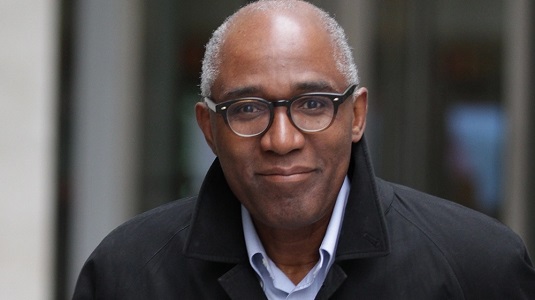
It seems the Labour leadership have learned something about party management. In the wake of the EHRC's egregiously flawed report into antisemitism in the party, Peter Mandelson criticised its key recommendation for handling complaints about racism: the setting up of an independent panel. He argued the party's National Executive Committee should oversee the complaints process. Why the hostility? Without getting too much into the party's history, the labour movement has well-founded reasons for being sceptical of outside authorities setting the terms of its organisation and imposing rules on it. The anti-trade union laws of the 1980s and 1990s are recent examples, but there are plenty of others. As all wings of the labour movement have developed as institutions, they have jealously nurtured and guarded their emergent sovereignty. This has suited the Labour right down to the ground. As long as they're in charge and the taboo for running to the courts is in place there is no power, save out organising them, that can stay their hand.
In her piece on the implementation of the EHRC recommendations, Ailbhe Rea argues that while the new measures are designed specifically for deaing with antisemitism complaints, it would be unsustainable for this to be reserved for cases of this character and not sexism, Islamophobia, anti-black racism, anti-gay and anti-trans issues. As she rightly observes, its roll out will find the likes of Rosie Duffield in a difficult position, as well as MPs and councillors who think nothing of pushing anti-traveller leaflets through people's doors. And it brings the forever delayed Forde Report into play, and ultimately Keir Starmer's competence in deciding to pay staff members off rather than fight a legal action the party would, in all likelihood, have won.
You can see why Mandelson was concerned. An independent complaints process as mandated by the EHRC theoretically checks the power of the dominant faction to abuse it for their ends. Burdens of proof and complaints are presently considered against the immediate interests of the leadership and the apparat. If they are inconvenient, as per the Phillips case they are dismissed or kicked into the long grass. Weight of evidence counts for nothing against the weight of connections and political allegiances. Perhaps this has dawned on the leadership have and are looking at ways of wriggling out of their obligations to the EHRC (notably, no reports of the last NEC meeting mention the scheduled sitdown meeting with them about progress of implementing the complaints process). Or the party is trying to make the most of the time it has left before surrendering external oversight by shoving through unpopular but factionally convenient decisions. Whatever the case, it stinks and simply reinforces the view that rules are for the little people while those with power act with impunity.
Image Credit
Monday, 5 July 2021
Neoliberal Necropolitics
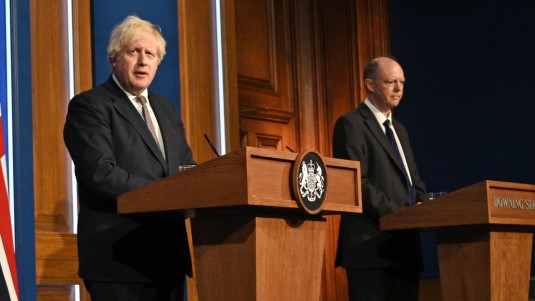
It's easier to tally the few scraps of control that will survive the 19th. I.e. Self-isolation orders for positive tests, and travel bans to red list countries. Everything else is gone: distancing, masks, the elementary precautions for safe living in the age of Covid, these are now matters of manners or "courtesy". That's it, then. We are being doomed to take part in a grand medical experiment for which there is no informed consent. The likely results? More suffering, more death, and vaccine escape. How can anyone in good conscience and not beholden to the interests the Tories congeal and push back these moves? The BBC's health correspondent chances his arm. Nick Triggle argues letting infections rise now is better than in the early autumn because the health service will start coming under pressure from other respitory illnesses, and being outdoors in the summer means infections are depressed anyway. How about an alternative? Like keeping most existing restrictions - which are doing a poor job of containing the Delta variant anyway - and making sure workers and businesses are properly supported in the mean time, which has not been the case from the off. Vaccinate and drive down transmission.
We know the answer to this. The Tories want cities thrumming to the sound of workers marching to their workplaces so the property portfolios of their backers start showing rental income again. They want to dampen expectations about different ways of doing things by ignoring the pandemic and forcing us into the old patterns of life, and they want to make sure the petty authoritarianism of the bosses whip us back into shape following, in their eyes, an 18 month holiday. But how have they got away with their catastrophic handling of this crisis so far, and why, in the immediate term, is the scrapping of the rules going to be met with a shrug and mild grumbling?
It comes down to the necropolitics. As all states are concerned with managing their populations, their sovereignty is exercised over them in the first instance. Ultimately, this is exercised by deciding who among its citizenry lives and who dies. Coined by Achille Mbembe to think through questions of war and state violence, it equally lends itself to responses to emergency situations, like a pandemic. Every state has made decisions about expendable populations and, to borrow the language of nuclear war modelling, "acceptable losses". New Zealand and most East Asian states, for example, decided no deaths were a price worth paying for freedom/the economy/whatever, and the pain of a sharp, stringent lockdown was mitigated by a quick return to normalcy. At the other extreme were the Covid kleptocracies of Donald Trump and Jair Bolsonaro. For them suffering and death meant nothing as long as they could gesture their peculiar alpha male defiance of the disease. A pity it never carried both of them off after contracting it.
The Tories are closer to the latter than the former. Early on, Boris Johnson's first instinct was to recommend handwashing, working from home if possible, but otherwise carry on as normal. In the absence of government direction, but against the backdrop of galloping infections and mounting deaths, workers voted with their feet and the Tories were forced to appropriate the plan put forward by the outgoing leader of the opposition. Their desire for a necropolitical strategy that put GDP and rentier income before public health was thwarted when the public had other ideas. What emerged then was a compromise: a furlough and business support scheme with huge holes, effectively defining the lowest paid - mostly women, mostly minority ethnicities - as an expendable layer of the labour force. This at the time the government were shipping old people out of hospital into care homes and directly causing tens of thousands more deaths. Another acceptable loss. Moving into the summer Johnson talked bullishly about forcing people back into work, and thinking aloud about schemes that would encourage herd immunity by getting people back in shops. The eventual result was the infamous Help Out to Eat Out initiative, which according to the epidemiology was directly responsible for 8-17% of Covid infections by September and set the stage for the brutalities of the winter wave. Dishy Rishi served up a dose of the Covids to tens of thousands because, ultimately, they and the (mostly young) workers who served them were deemed worth risking. Certainly less important than getting the Bank of England to buy more government gilts to support hospitality and write them off later.
Autumn and winter was the same story. The country was late into the second lockdown, which was far less stringent and enforced than the first, and it was only apocalyptic scenes in hospitals in late December and early January that forced the Tories' hand again. These were not the actions of a government who put the defence of the realm first, unless "the realm" is defined by the power politics structuring the Tory imaginary. On this occasion, they were quite prepared to keep on risking the health of teachers and parents by letting children attend school and spread the infection to their families at home. That was until the teaching unions forced them to backtrack. And immediately, the same issues manifested. Not enough support, a lockdown with a wizard's sleeve's worth of openings, more latitude to bosses to reopen workplaces, the lack of seriousness undoubtedly prolonged the third wave and caused needless illness and death.
And now we're in the foothills of a fourth wave driven by a more infectious strain with some resistance to the AstraZeneca jab. How have the Tories managed to avoid political punishment for the disaster, and are set on letting it all rip? The public health management was a joke, but the Tories have handled the necropolitics expertly. Even while Johnson dithered, the accent immediately switched to personal responsibility. The government were prepared to enforce the rules, but we had individual responsibility to obey them. This strategy was reinforced by that trip to Barnard Castle - Cummings was pilloried, failed to show contrition and was protected by the Prime Minister, but the message emphasised the importance of individual conduct. If he was irresponsible, then others still catching it under the circumstances of a relatively stringent lockdown must be likewise. People were being foolhardy, careless, or were downright unlucky. This is the key to the government's success with the necropolitical. We have not seen the last year's levels of state intervention since the war. The economy was kept on life support by political decisions, and government took direct responsibility for the NHS, particularly PPE procurement and vaccine funding. The corruption, the failures, and the forcing of millions into work unnecessarily was their decision and their responsibility. But this has almost entirely been negated thanks to the constant stress on individual behaviour, buoyed by press stories about illegal raves and a myriad of curtain-twitching tales circulating on Facebook. The lack of official opposition has assisted the Tory framing of the necropolitics too, underpinning the indifference and apathy sapping Keir Starmer's leadership.
With nothing to stop the Tories, they're moving to the next phase of their dangerous experiment. The state is ostensibly washing its hands of pandemic governance and leaving it to what Johnson likes to call the good sense of the British people. If you are unfortunate to fall ill now, it's bad luck or you weren't abiding by voluntary measures. The fact everywhere is opening, government support is getting run down, the neoliberal logic central to Tory necropolitics is being allowed to stand on its own two feet, like the good pair of discursive and material bootstraps it is. The heavy paw of the state is out and the invisible hand is our best defence against the invisible enemy. The Tories can, they believe, affect a "not me guv" pose and as tens of thousands succumb they blame it on misfortune or bad decision-making.
Neoliberal necropolitics isn't going to work. It will maim and it will kill, and the Tories might pay a heavy price for their reckless indolence. A guaranteed failure even before given free reign, an entirely deregulated and "free" necropolitics is worth a gamble because the promise of their utopia is so close to hand. This is a world in which they're utterly dominant in British politics and the historic opportunity they have to set the tenor of state power, its episodic Keynesianism and industrial activism, and management of class relations has been shrunk by the Coronavirus distraction. Rigging the country's political economy and the rules of the political game permanently to their advantage is the prize. And if the bodies have to pile high by the thousands, that's a price the Tories are happy for others - us - to pay.
Image Credit
Sunday, 4 July 2021
Sajid Javid's Covid Psychopathy

Enter stage right Sajid Javid. Penning a piece for the Mail on Sunday, he dispenses with the caveats of his calamitous but more cautious predecessor and now regards the postponed "freedom day" of 19th July as sacrosanct. After saying we cannot eliminate Covid, he writes,
We also need to be clear that cases are going to rise significantly. I know many people will be cautious about the easing of restrictions – that’s completely understandable. But no date we choose will ever come without risk, so we have to take a broad and balanced view. We are going to have to learn to accept the existence of Covid and find ways to cope with it – just as we already do with flu.
Here we have it, in black and white, that the government aren't even bothering with the pretence any more. Published on the day the UK reported the second highest number of Covid infections in the world after India, Javid commits the Tories to turning Britain into a petri dish for new variants with a simple "get your jabs". What matters now are the health arguments against restrictions. He cites the terrible rise in domestic violence and the damage done to people's mental well being, a discovery that never bothered him in pre-pandemic times when it was his government's cuts making people's lives a misery and trapping women with abusive partners. Where was the concern then?
If Javid's new found preoccupation with mental health is genuine, how about he addresses the worries out there about returning to "normal life". Has he given any thoughts to workers anxious about employers wanting to cram workers back into poorly ventilated workplaces without distancing and masks? Or those facing the daunting task of a daily commute on buses and trains sure to fill up in short order? Has Javid reflected on the debilitating consequences and costs of long Covid? As of June, some 376,000 people - almost eight per cent of everyone infected - have experienced symptoms lasting a year or more. Letting the virus rip, which is what "learning to live with" actually means is going to bring more misery to tens, if not hundreds of thousands more people. We don't know what efficacy the vaccine has on long Covid, and it seems reasonable to assume it would lessen its impact or impede its development, but with millions still unvaccinated, including virtually all children of school age, Javid is unconcerned about how a debilitating illness might affect their mental health. And this is before considering the great unknowns of Covid: how it might manifest years down the line thanks to unseen damage done to internal organs. Every new infection now is a stroke or dementia risk in future years.
Javid is nothing if not consistent, as he was trotting out pretty much the same line this time last year - before the disease went on to kill a further 80,000 people. He has all the facts at his disposal. He knows the projections and the consequences, and presses ahead regardless. If this was just one minister, it could be put down to foibles. But we know it isn't. There is Boris "let the bodies pile high" Johnson, a fringe movement of anti-lockdown fools shading into Covid denial, and a pretty active sceptic movement on the Tory benches of which Javid is an example. Looking at their arguments it's always dressed up in arguments about individual sovereignty, a faux anti-establishment feint queered by the fact it comes from the ruling section of the establishment. This discourse, this fake ass libertarianism, isn't a simple matter of ideology. It's not Tories simply pursuing the wrong ideas. It's much more involved than that.
Talk of taking back our freedoms congeals a host of Tory assumptions and fears. As noted here plenty of times, the incoherence, stupidity, and short-termism of their practical management of the pandemic is thanks to balancing the competing interests of their voter coalition, the sectional interests comprising it, and the bottom line of keeping the balance of forces firmly tilted toward business. What we find in Javid's determination to undo Covid restrictions is going back to the old ways. The Tories are turning on the spending taps for capital projects and favoured industries, but are even keener to scotch the notion the state is going to help the hoi polloi out. If the state isn't asking anything of you, goes the thinking, then you're not in a position to ask anything of it. Invocations of freedom always big up the independence of the individual from the state so as to delegitimise notions of being dependent on it, a point the Tories and hard right Randists like Javid know too well. In this case of Coronavirus, it's not about wearing masks in public or obeying social distancing rules that irks the government, it's the continuance of the furlough scheme that Rishi Sunak is working feverishly to shut down. And the extra £20 on Universal Credit, a lifeline for millions of people, that's going too. If the public accept the removal of restrictions, which the Tories like to talk about, then it's a comparatively easy task to remove extra support and condemn more to unemployment and destitution. Et voila, a pool of people desperate to work for pittance wages in those areas of the economy currently suffering labour shortages.
It's neat, but Javid's psychopathy proves itself to be another example of Tory overreach. For one, people will notice soaring illness if he persists in doing nothing to mitigate its spread. If the hospitals start filling up with unvaccinated cases or, as is entirely likely, an even more infectious variant emerges with significant vaccine escape the "irreversible" relaxation is going to have to be reversed with all the political damage that entails. And second, the most Covid-cautious section of the populace are older people, the Tories' core support. If large numbers of them start getting ill, despite vaccinations, Javid's insistence on 19th July regardless of the circumstances could shake their hitherto solid block of support. Hubris, that old friend of the Tory party, is waiting in the wings with Javid eagerly beckoning for it to come on stage. And as it emerges into the light, it steps over bodies wracked with more illness, more long-term sickness, and a growing toll of death.
Image credit
New Left Media July 2021

1. Between the Lies Media (Twitter) (Blog)
2. Connected Sociologies (YouTube Channel)
3. Feminist Futures Programme (Twitter) (Multi-Media)
4. Ladies of Letters (Twitter) (Blog)
5. Populist Voice (Twitter) (Podcast)
6. Priced Out Podcast (Twitter) (Podcast)
7. Red Star Radio (Twitter) (Podcast)
8. The Bellows (Twitter) (Magazine)
9. William (Twitter) (Blog)
If you know of any new(ish) blogs, podcasts, channels, Facebook pages or whatever that haven't featured before then drop me a line via the comments, email, Facebook, or Twitter. Please note I'm looking for new media that has started within the last 12 months. The round up appears hereabouts when there are enough new entrants to justify a post!
Saturday, 3 July 2021
Decolonising Social Theory
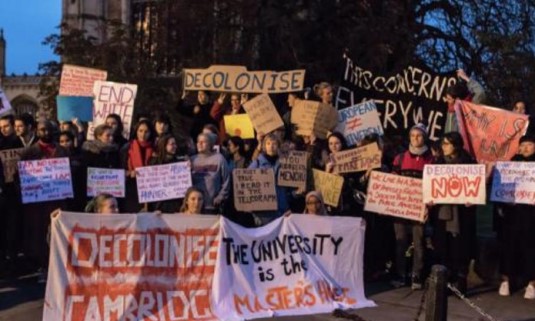
The reception to and depth of the decolonial push varies from university to university. Most commonly programmes are opening out to consider marginalised voices and refitting their reading lists accordingly. As you might expect and as the most reflexive academic disciplines, the social sciences and humanities are in the vanguard of rethinking their relationship, if not complicity with coloniality and imperialism. As part of this ongoing effort, I attended a talk a few weeks ago by Gurminder K Bhambra and John Holmwood about their soon-to-be-published book, Colonialism and Modern Social Theory. It marks a major intervention by going back to classical social theory and its firmly established triumvirate: Marx, Durkheim, and Weber, and performing a decolonial reading of them.
John opened the discussion by noting how practically all sociology programmes feature courses on their work and other contemporaneous thinkers. The questions and problems they raised and the explanations they proffered are everywhere key touchstones read up on, transmitted, and used to structure the undergraduate experience. The problem is the concepts they formulated and the tradition they bequethed treat colonialism as an afterthought and therefore downgrade its centrality to the formation of European and North American modernity. If imperialism and colonialism were afforded their full import, hallowed concepts like the nation state, class, and (Habermasian) ideas of modernity as an "unfinished project" are shown up as partial to the point of offering distorted narratives.
Gurminder agreed. If the canonical thinkers haven't taken colonialism seriously, even though it was embedded in the politics of their day, then what have they done? The result is something more than simple distortion. It has led to fictional theories, hence our received understanding of concepts like development, class, national state, sociological reasononing, and the subject require rethinking.
By way of illustrating the problem, Gurminder turns back to Hobbes and Locke. Their celebrated argument posits nature as harsh and unforgiving, but it's our capacity as human beings that help overcome it. Implicitly, modern society is a yardstick for measuring distance from our species' brutish beginnings. How did colonial ideas feed into this conception? For millions, the relation to nature was enclosed by dispossession, enslavement, and early colonialism. This is a concept that could only be thought through in an imperial heartland by its beneficiaries. Then there is subjectivity and how it is defined inseparably with property. Because many of the societies encountered by explorers and colonial missions were without or indifferent to private property, these people were not subjects in the same sense that the colonisers were. They were less than human, and therefore had no knowledge or experiences worth reflecting on. On class and formally free labour, Marx's argument is posited on formally free labour, but his account does not stress how unfree labour in the colonies and United States developed alongside and was intertwined with the emergence of wage labour in England. And on sociological reasoning, its task isn't so much explaining the "downsides" of modernity but how it reflected colonial realities, and naturalised it by excluding it. Therefore, decolonising theory is an argument for transforming our perspective, of returning to and rebuilding these concepts as if the colonial experience mattered.
Responding to the discussion, Su-ming Khoo said Colonialism and Modern Social Theory was a challenging book and an invitation to a big piece of work. Rethinking and renewing our canon means acknowledging sociology's complicity with and responsibilities for our absences, and think about what it means to adopt this work. Perhaps the way to approach decolonial theory is how it challenges us to address difference that makes a difference to the original canon. This is not a time-wasting exercise for boosting careers and REFability but has practical outomes. It can help reimagine solidarity and bed down reflexivity in our practice.
For her part, Michaela Benson thought the arguments offered a way of engaging with colonialism, and that makes the enterprise uncomfortable and unsettling. The book is a close reading of the canon, and looking at how colonialism is absented and addressed invites us to ask about how do we reproduce this absence in our own work. Beyond teaching, it throws down a gauntlet to sociology. We should read the book in the context of broader public sociology turns, initiatives on how to reshape and open up the sociological imagination and moving toward a broader, decolonised global social theory. The book also buries methodological nationalism and using 'the national' as the privileged frame of analysis by looking at how these commonplaces were constructed in the first place.
Responding to points, John said the book could be read as breathing life into dead white men and making them interesting and significant again. It is a critique of a form of speaking not open to listening, which is traditionally the lot of Eurocentrism. We need a space of self-understanding to look outwards and remove asymmetries. Addressing Marx specifically, he suggests a key reason why Marx's revolutionary hopes for the workers did not come about was thanks to colonialism - though this was a mildly controversial point in subsequent discussion considering how Marx did acknowledge colonialism and imperialism, albeit often in ways inconsistent with his own method.
In all, there was plenty of food for thought here. As was noted in the discussion, recasting social theory by recovering its complicity with colonialism opens opportunities for new solidarities and new politics. Promoting a decolonial perspective means better scholarship, a critique of colonial and neocolonial policy, and can strengthen the push against these interests in academia and beyond. The context for this is important. UK universities are not institutionally innocent as they invest in and collaborate with latter day agents of coloniality. Israel's ongoing land seizures and ethnic cleansing, chummy relationships with US client regimes in the global south, its inputs into feeding Western-centric ideas of "international development", and the links and sponsorship deals with extractive industries and multi-nationals. The immediate task for decolonising theory isn't just a return to the classics but using the first tools unearthed by this project as an auto-critique of the academy.
Image Credit
Friday, 2 July 2021
Politics after Batley and Spen

But it was, and so the failure of the Tories to pick it up is a disappointment for them, if not a shocker. Coming after their unexpected stumble in Chesham and Amersham, the same fortune that smiled on Boris Johnson in Hartlepool appeared to be beaming for Batley and Spen. The LibDem triumph could be shrugged off as a stumble on the forward march to the blue Jerusalem. No serious right wing competitor, check. A Labour candidate who was slotted into place without a proper selection, check. Media momentum on side, check. And the prospect of George Galloway's candidacy tearing chunks from Labour's support, check. Yet the Tories went nowhere. Their vote remained more or less static, indicating a solid block of support, as per elsewhere, but their anticipated enjoyment of an anti-Labour protest vote failed to show. If other seemingly viable options are available, then punters will take them. Hence the counterintuitive observation that Galloway probably spared Labour's blushes does have legs. The Tories were left at the altar by the electorate when enough of them found the silky tones of an outside interloper a more attractive proposition.
Doing the rounds on breakfast TV, the Tory party chair Amanda Milling tried playing down their defeat, arguing it's virtually unheard of a governing party winning by-elections in the middle of their term. We know this is a load of rubbish. Following Survation's constituency poll that put the Tories six points ahead of Labour, with Galloway's so-called Workers' Party also on six per cent, they thought the election was in the bag. They then mounted next to no campaign (Dominic Raab, for instance, found the time to campaign in a council by-election defence in his seat on the day, which the Tories happily lost). The press were briefed that the Tories were happy for Labour and Galloway to duke it out and drag each other into a zero sum game of communalist tit-for-tat. Reports of intimidation and violence against Labour campaigners sat alongside Islamophobic briefings by (unnamed, naturally) party officials. The Tories were banking on the white majority in the seat to find this repugnant and support the party staying out of it. A spectacular miscalculation.
What harmed the Tories was the invisibility of their candidate versus Kim Leadbeater, who by the close of the campaign was not only ubiquitous and energetic, but had effectively branded herself an independent. The second, as Andrew Fisher rightly notes, are events. It was less the spectacle of Matt Hancock's affair and more of him breaking the rules and Johnson initially standing by him. This gave some would-be Tory voters pause. And as the Tories weren't bothering with much of a doorstep campaign, there was no way of responding to the mood. With a second surprise by-election defeat on the trot, can we take this to mean peak Tory has passed? It's too early to say as elsewhere the Tories are still racking up by-election gains at local authority level. For instance, on Thursday night they won four new councillors while dropping one to the LibDems. A case perhaps of contests reflecting changed political realities since 2019 rather than pointing to anything new. The next six months of local by-elections, or an unforeseen parliamentary contest will help shed more light on this.
And Labour? It's fair to say the leadership did everything wrong, and showed they'd learned nothing since Hartlepool and Chesham and Amersham. Kim might have been a personable candidate with bags of energy, but politically speaking she's weak to the point of being homeopathic. So watered down were her responses to Israel/Palestine and pay rises for NHS workers that she'll be right at home in Starmerism, which in its best moments affects to do nice things and at its worst pitches to the right of the Tories. And if Keir Starmer was unwilling to take lessons from elections lost, he's not about to have an epiphany now Labour has won something.
Assuming Labour is serious about winning, what could it take from this? There's plenty, but here's a couple. First, that candidates rooted in their communities can help win elections. Shocking revelation, I know. But as the community organising unit is gone and all eggs are getting put in the basket of CLP "business liaison officers", there isn't much sign the party are about to take this on board. After all, with so many idlng ex-MPs feeling entitled to a seat there's no chance Keir is about to upset their friends in the PLP for local unknowns with no loyalty to the Labour leader and the stupid, self-serving fairy tales they tell themselves. The second? Labour cannot afford to scorch earth its existing electoral coalition as Keir and his coterie have done this last year. Any new Labour leader, any new party leader for that matter, has to reach out to new voters and consolidate the party's base. As chunks of Labour's old cores declined and support bled to the Tories, Jeremy Corbyn's accomplishment was to offset it with new supporters. Galloway's performance and the swing to the Tories are another warning politics is febrile and Labour cannot take its core constituencies for granted. Will the leadership treat this as a teachable moment? I think we can confidently answer no to that one too.
Labour's problem is a political one. It's not really about Keir Starmer's haircut and his grey demeanour. That could be forgiven if he emoted the barest of Labour values, and treated the Tories with half the ruthlessness he's shown his internal opponents. He promised Corbyn-lite with added competence and good showings at Prime Minister's Questions. Instead, we've got a clueless frontman to a project more interested in feathering its own nest than winning elections. The narrow Batley and Spen win means none of this is about to change.
Thursday, 1 July 2021
Two Speeches from the Commons
Today has seen the Commons graced by two excellent speeches. The first from Labour's Dan Carden speaks about his struggles with alcoholism and how it almost cost him his life. The second is from the SNP's Mhairi Black who takes aim at the transphobia running riot in the British media, the government and, disgustingly, among those who consider themselves otherwise tolerant and progressive. Including people classifying themselves as socialists.
It's not often parliamentary speeches are must-see events outside of a crisis.
It's not often parliamentary speeches are must-see events outside of a crisis.
Five Most Popular Posts in June

1. Margaret Hodge's Attack on Unite
2. Defeating Gerard Coyne
3. Keir Starmer's Cowardice: Another Exhibit
4. Evaporating Labour
5. Abdicating Leadership
A whole month of Labour related factional and polemical content. A poisoned well for some, but a good source of views as far as this place goes. It's not for want of trying to branch out with plenty of posts going after the Tories. The truth is the blog is entirely at the mercy of its tiny public, and as Labour remains a strategic site of struggle for working class politics I'm going to keep churning them out. Unfortunately, if you're bored with posts about the party we can look forward to more Keir Starmer-related tribulations in the month to come. Today's Batley and Spen contest isn't going to be great and leadership speculation isn't about to disappear, even if Labour scrapes home.
Which posts are drinking in the second chance saloon? There's another, yes another Labour leadership piece about the dysfunctional consequences it's having, or could have for wider establishment politics. And moving away and venturing into matters philosophy, there's this on deceleration. Any radical politics incapable of slowing down and taking stock is guaranteed to fail.
Image Credit
Subscribe to:
Posts (Atom)