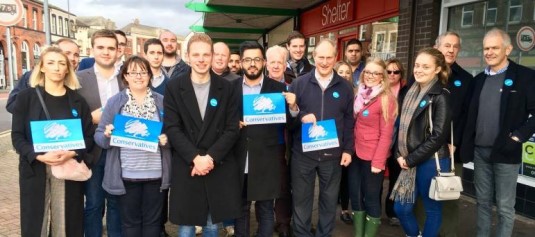
The local elections are well and truly underway in Stoke-on-Trent, and in 2019 these are something of a novelty. For readers who don't follow the ins and outs of Potteries politics (what's wrong with you?), Labour is the challenger party to a council coalition of self-styled "City Independents", a UKIP councillor and your friends and mine, the Conservatives. How then have matters gone since they took control in 2015? It is a truth commonly acknowledged that Stoke's Conservative Party won't win any Mensa prizes, but the fact their politics and governing strategy has steered the Independents these last four years tells you all you need to know about the calibre of the governing coalition's senior partner. With the stepping down of former Council Leader Dave Conway and his replacement by Ann James, it's a case of nothing having changed down the civic. In the original coalition talks to keep Labour out, the Tories were given the deputy leadership - naturally - and it seems the pick of cabinet positions. So of course they went for the portfolios covering economic development, regeneration and heritage, because these are considered the sexy responsibilities in local government, don't often generate bad news, and present plenty of positive coverage media opportunities. For instance, if a pottery goes under - which has recently been the case with the 200 year old Dudson factory - you don't need to say a thing. It's "challenging markets", poor management, or some other excuse. But any new investment into the city can be hailed as a vote in confidence in the council's strategy. Or if there's new building going on, up pops Cllr Dan Jellyman in a hard hat. Let's look at another recent example: Stoke's City of Culture bid. Leaving aside the problems with the City of Culture initiative generally, and control-freakery issues with the city's pitch itself, it was nevertheless universally seen as a Big Good Thing locally. It put Stoke on the map and allowed the city to project itself as something other than the capital of Brexit. or a city well known for a long-running flirtation with the BNP. Yet, where were the City Indies when all this was happening? Deputy Council Leader Abi Brown fronted it all up, purposely excluding Ruth Smeeth and Gareth Snell - Stoke's two Labour MPs - as well as her coalition partners. And, of course, the City Indies were too dim to see the Tories were taking them for mugs, and getting all the good press and the photo ops. Consider further the condemnation by Ofsted of the City Council's inadequate provision of children's services, something the report notes has gone downbank markedly since 2015. Ofsted says there is nothing wrong with the dedication or professionalism of social work staff, but they were not "being supported adequately". Management oversight is poor, there is no prioritisation, and caseloads are too high - all codes for a department less than adequately resourced at a time demands upon it are rising. What defence have the Tories offered? Nothing, their Stoke website literally reports 'nothing found' when searching Children's Services. Of course, they have an element of plausible deniability - because they left all the bad news-generating departments to City Independent cabinet members, they can hold their hands up and plead the "nothing to do with us, guv" line. They are in fact as culpable as their friends - they're the ones sitting round the cabinet table nodding this stuff through and putting kids in danger. To be fair to the Tories, if I was an unscrupulous careerist saddled with a befuddled gaggle of independents whose 2015 manifesto was full of racist dog whistles, plans for a tea set, and a package holiday tour of the Potteries (complete with menu), I'd probably take advantage too. When a rival party offers themselves to you as a meat shield for all the shitty things you want to do, you'd be a fool not to take them up. And Stoke's Tories are no fools. The strategy has, up until now, worked for the Tories. The local rag, The Sentinel, has barely uttered a single critical comment about leading councillors - a far cry from the days prior to 2015 when shafting Labour was de rigueur in the paper's offices. Is this because, on the whole, the Tory-led coalition have a savvier media strategy, or have not put a single foot wrong? It's a mystery, but of one thing I'm sure - I definitely do not think this has anything to do with Abi Brown and Sentinel editor, Martin Tideswell, occasionally sharing chummy selfies with one another at work and at play. The shrewdness of the Tories has paid other political dividends too. They have offloaded a certain amount of historical toxicity. Avoiding all responsibility for the city's woes, they have built up a position that saw them poll very respectably during the Stoke Central by-election (partly aided by their position as the party of Brexit's delivery), and subsequently building on this in the general election across the city's three seats, capturing Stoke South in the process. And as proof of their consolidation, for the first time in decades they have found enough members to stand in all 44 council seats in May's local election. A lesson in how well you can do when you play your advantages right. There is another element to the success of Stoke's Tories, and that's its two-nation approach to local government. Stupid coalition partners and a friendly, uncritical press can only go so far. If you look at their local manifesto, it betrays an understanding that most voters don't really know what councils do. As long as the roads aren't a mess, parking is sorted, new buildings are getting built, shabby town centres are sorted, the bins carry on getting collected as is, and council money doesn't appear to be egregiously wasted, then a great many voters don't really care - hence why turnout for local elections everywhere are always depressed. The Tories are capitalising on this. Their flashy regen strategies, which include using council money to build a Hilton-franchised hotel, and a nearby Stalinesque block of build-to-rent private housing give the impression that the city centre is on the move. Never mind it's precisely because children's services have been left to rot that this is possible, the Tories have made a calculated assessment - as they have done with stripping back SureStart centres, and support for the homeless - that voters will put baubles and bricks before the blighted lives of the city's most vulnerable residents, because they don't have to pay the consequences of their policies. In other words, they are courting one group of voters and attempting to appeal to them while purposely and pointedly ignoring those they consider worthless, up to and including making their lives even harder. There's compassionate conservatism for you. The question is whether the Tories will record another advance at these elections. Well, they have deftly manoeuvred to ensure nothing bad has stuck - we'll see if Labour running hard on the children's services scandal will have an effect. And, as we saw in 2015, Stoke's regular electorate is quite sophisticated and it's unlikely the local Tories will get flak for May's Brexit incompetence. The sad truth is given their savvy, their easy ride in the press, their shiny programme, and the character of the voters who tend to turn out for local elections, they are well placed to increase their councillor tally, particularly at the expense of the self-same idiotic allies who've enabled them.
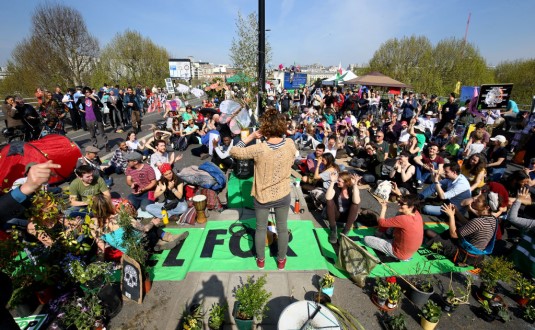
Is there anything more to be said about Extinction Rebellion? Probably not, except it deserves the left's unequivocal solidarity, encouragement and support. There's little more to be added to takes by Richard Seymour and Lewis Bassett. Not that it's going to stop me from having my two penneth worth. 1. Extinction rebellion is both timely and untimely. Timely, because it's very much of the moment. David Attenborough and the BBC are spearheading programming on climate change, species loss, and environmental degradation. The public are prepped for it, and young people particularly are concerned - as the magnificent displays of climate school strike marches make clear. But this week's rolling non-violent direct action is untimely too. It's inconvenient for politicians more concerned with Brexit than environmental emergency, it's inconvenient for the hundred global companies responsible for 71% of emissions, and it's inconvenient for a government utterly uninterested in climate change and whose response to Extinction Rebellion is to issue threats. Extinction Rebellion is an embarrassment to our elite betters. 2. Extinction Rebellion is a symptom of left failure. On the self-described revolutionary left, the Socialist Party typifies this with their declaration that they're doing protest wrong. What we need, of course, is winning over the wider workers' movement to a programme of climate action. Well, the actually-existing labour movement in the UK already has with its green industrial strategy, something you wouldn't think has escaped the SP's notice. Then again, as it's in the process of lecturing its (soon-to-be erstwhile) Irish co-thinkers about how to run successful campaigns from the position of abstract moralising and revolutionary abstentionism, political developments may have passed them by. This does however condense the traditional far left response - formally correct critiques of the efforts of others while standing apart from (if not above) the fray, unless an opportunity to offload some unreadable newspapers presents itself. However, the mainstream workers' movement has been less than hot on green issues too. As we've seen a number of times, as organisations for the defence of and prosecution of workers' interests in the workplace, trade unions are susceptible to sectionalism and competition with other unions. Unfortunately, this often means the perceived need for preserving jobs, and therefore the subs base, comes before all else - as this Dan Carden's attempted defence of Unite's support for fracking makes clear. When the radical and mainstream sections of our movement give off anti-green and anti-environmental vibes, is it any surprise action against climate crisis comes from activist communities outside of it? 3. Extinction Rebellion's strategy of media attention-seeking worked. Clogging up the byways and the highways of the capital in a week Westminster took time off and there was a pause in Brexit always meant the media were going to cast around for something to fixate on. 24 hour rolling coverage duly obliged with extensive reporting on actions and arrests. They also featured some grumbling from the fuzz and politicians about "disruption" and the costs to business, but what the folk at home saw were mostly young people getting carted off in support of a cause in which there is widespread public sympathy. As latter day propaganda of the deed, the creation of spectacle ensured this most urgent and necessary of issues got top billing. 4. For all the moaning about elitist tactics, Extinction Rebellion has lowered the bar for effective participation. One needs time, proximity to the protests, and courage. The emphasis on getting hundreds of people to blockade roads means arresting everyone becomes logistically difficult - four or five coppers are needed to carry off a "floppy" protester, and with a lack of cell capacity in London, arrest usually means getting carted to the nearest station and getting let go again. By going for direct action of this sort, the carceral system is put under strain, police time is wasted, crowd control tactics like kettling and baton charges are completely inappropriate, and it's the forces of the establishment left looking embarrassed and befuddled. Effectively, the paralysis of the authorities, and the pathetic response from the government - just as it was with the climate school strikes - can only encourage a deepening of resolve, especially on the part of new activists, and again underline the fact that the Tories will forever put their class interests before the common interests of all human beings.
I thought this conversation between Alex and Ash Sarkar from Novara Media was nuanced and interesting. You never get in-depth and critical discussions of Brexit on mainstream news programmes; vox pops down some market in the north is usually as far as it goes. As always, please consider supporting Politics Theory Other so Alex can do more and bigger shows.
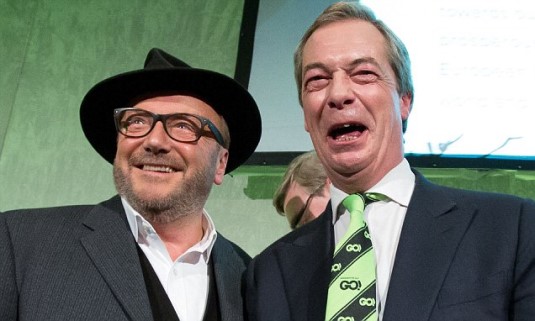
For one time only, George Galloway tells us he's voting for Nigel Farage's Brexit Party. Pushing the oft-heard Brexiteer talking points, we're told parliament has spent the last three years trying to thwart the result of the 2016 referendum. So "we" need to send a message to the "Westminster elite". A rocket up their backsides, if you will, a reminder the angry leave army are not about to have their Brexit taken away from them. But to countenance voting for, urging a vote for, and campaigning for the Brexit Party, isn't that a step too far? Elaborating his position further, Galloway emphasises the political distance between himself and Farage, but because this is an issue of democratic principle, he is prepared to encourage people to vote for the referendum's outcome to be enforced. Making this easier is the fact Labour's list of candidates - affirmed without any members' participation, it must be noted - can count among them enthusiastically pro-EU figures. These include remain favourite, and ski slope campaigner Lord Andrew Adonis. Because Labour's European challenge is dominated by candidates of this political stripe, this then makes voting for the Faragist list okay. It does not make it okay. Left or right, leave or remain, heads everywhere are being lost. A sense of perspective and political purpose is almost entirely absent from politics when reacting and responding to events, so it's time to restate some basics to plot our way through this. Politics is about power, about struggle, and is the medium through which class interests are articulated and prosecuted. This is something the right knows well, despite their disingenuous claims to the contrary. Labour on the other hand is and continues to be the imperfect political vehicle of proletarian interests. That is a rag tag and bobtail alliance of variously organised workers and people who have to sell their ability to work in return for a living. Right now, politics is in the grips of a dynamic of decomposition and recomposition. The powers of old, the Labour right, the meagre forces of authoritarian centrism, and finally the Tories are in historic decline. On the rise are forces incubated by the long decades of the Thatcherite settlement - the negative project of nationalist atavism exemplified by Farage and the Tory right, and the rising class of networked, socialised workers who are in a process of political becoming - they're far from the finished political article. But already their pulse from below is the power behind Corbyn and Corbynism, and Labour is an at times slow, at times rapid struggle of refounding itself. This is the conjuncture that must always be borne in mind when making sense of the twists and turns of Brexit's tortured politics. What then is the immediate priority from the standpoint of working class politics now? Brexit? No. It is the consolidation and expansion of the Labour Party as a force that can annihilate the Tories, and prepare it and our class for the slog of a long spell of government. We approach Brexit then from the point of view of preparations for power. In the first instance then, this prospectus is enhanced by Labour winning the popular vote and most seats in the European elections. It changes the balance in the European parliament and shows the rest of the left across the continent that the left can win while standing as the left. And from the UK's perspective, it sends a very clear message that the reactionary right - which is what the Brexit Party is - can be defeated, and their ascendency isn't some natural, inevitable force. Something as simple as that, of getting a win over Farage transforms the political narrative of this country. It shows Labour can be successful under adverse circumstances, and that the hope for something better does not have to be a pipe dream. A Labour victory can dispel paralysing cynicism and melancholy, it can mobilise and inspire. Galloway draws attention to Labour's candidates to justify his protest. They might not have been my first choice, but you can't have it both ways. You can't write off the wider politics of Labour's challenge because of who's standing while ignoring the people Farage has standing for the greater Brexity good. Their candidate list is yet to be finalised, but those announced so far deserve your contempt, not your vote. There is no hiding from the consequences of a good Brexit Party performance either - a ramping up of divisive and racist rhetoric, a multiplying of hate incidents and crimes, and a further coarsening of British politics. Are you happy for someone else - women, a disabled people, gay men and lesbians, East Europeans and anyone who isn't white - to pay the hate price of a burgeoning populist right? Additionally, apart from giving Farage and his lackeys the benefit of a MEP's salary for however long Brexit goes on for, what is the point? Politicians read polls and watch elections, and Farage coming out top isn't going to focus minds at Westminster any which way. If anything, it would embolden the ERG and perhaps encourage May to stick to their red lines in the hope of scooping this vote up in the future. And, of course, the Brexit Party - like UKIP before it - is a product of the crisis in the Tories, and in the context of our politics Farage's campaign is simultaneously a moment of political recomposition on the right. Galloway is fooling himself if he thinks the Brexit Party are a single issue outfit destined to evaporate when its task is complete. For Farage and his admirers in and outside the Tory party, this project is a stepping stone to replacing or refounding the Tories as a populist right formation. The European election then is a battle, a political battle between the party of a new rising class, and a party of reaction. Brexit is the catalyst, but is largely immaterial to the movements stirring beneath the turbulence. A vote for Farage and the Brexit Party is not a "vote for Brexit", it is a vote for the populist right. For a backward project. For the forces arrayed against the Labour Party and labour movement. A vote for Labour, whether one self-identifies as a lexiteer, a remainer, or none of these labels is a vote for something much better. It's a vote for our coming victory.
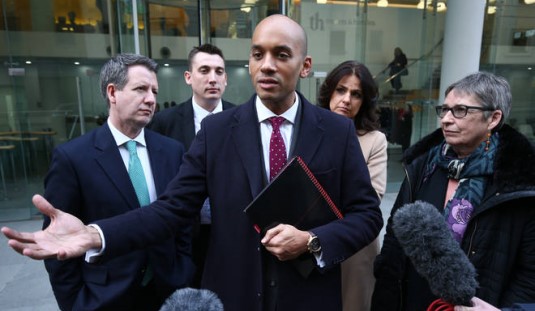
Before fire ripped through Notre Dame Cathedral, the building was in a pretty parlous state. It gave an impression of grandeur and baroque beauty, and attracted the admiration and affection of millions. But behind the scenes, up close, chunks of masonry were disintegrating and dropping off, and water had ingressed into the 19th century repairs, disturbing the integrity of the building. The work that was, until Monday evening, meant to correct this was piecemeal and underfunded, above all reliant on the kindness of strangers. A decayed superstructure serves nicely as a metaphor for the state of liberal democratic politics. In 1964's British Political Parties, the classic study of British politics by Robert McKenzie, the state of the then Conservative Party is surveyed and he finds the party outside of parliament utterly dominated by the MPs and, above all, the leadership. If you were a member of the Tories in the early-mid 1960s, you had the chance to rub shoulders with aristos and the well-to-do on the campaign trail, push leaflets, attend meetings, raise cash for party funds and, well, that was about it. Members had no formal role on policy formation, and party leadership was determined by Kremlin-like manoeuvring in Westminster committee rooms. Fast forward to 2019 and the thinning ranks of Tory members at least have a say in the final ballot of leadership candidates, but the thing about McKenzie's commentary is he wasn't being critical. He thoroughly approved of this situation, his view being the marginalisation of party members was utterly necessary for a healthy liberal democracy. We found this view recycled in the latest lament(£) about how bad politics is from centrist snore, Philip Collins. He suggests the restive and politicised memberships of Labour and the Tories are corrosive of democratic politics. His assumption is classic, unreflective liberal ideology. Society is made up of individuals (and their families) who are the only authentic political unit in a liberal democracy. So understood, citizens can freely associate with other citizens around common interests and concerns. However, for democracy to work the power of these collectives must elicit popular sceptical attitudes and institutional curbs. This is because powerful collectives can distort democracy when they act in concert, undermining the sovereignty of individual citizen's rights and rigging the system for special interests. Thank goodness we have MPs who, as representatives, can exercise their own judgements in order to arrive at decisions that are best for all. The greatest good for the greatest number, and all that utilitarian hoohah. The kinds of collectives liberals (on paper) eschew are business lobbies and interests, outfits punting for NGOs and sections of the state (yes, bits of the state lobby government), trade unions and other campaigning bodies. All these interests are particularistic and sectional, so we need something that balances them out and represents the general interest. The middle ground, if you will, of all these competing concerns. However, as "I'm Phil" Collins is concerned, the parties have ceded the responsibility of drawing together what is common and instead articulates the hobby horses of narrow, sectional interests. For the Tories it's a bunch of cranks determined to crash the British economy for a Brexit fantasy overflowing with milk and honey. For Labour it's legions of Trots and tankies who want to smash capitalism and blow the Treasury on the social security budget. These are parties whose memberships are wedded to ideology, not pragmatism, and are intolerant of those MPs committed to liberal principles and disagree with 1950s Carry On nationalism or 1950s Stalinism. This leaves the centre, where most people are, unrepresented and unspoken for while democracy itself is a zero sum battleground of extremists facing off against one another. This is what happens if members, not voters, are sovereign in a liberal democracy. For anyone else who paid attention to to the state of UK politics before everything blew up, you would find political scientists and, occasionally, politicians and their associated hangers on fretting about the opposite. That people weren't paying enough attention to politics, so turn outs tumbled as each election resolved into one set of suits offering policies and using language differing little from one another. Isn't democracy without meaningful democratic content also a problem? Well, not as far as Collins is concerned. You see, having worked as an investment banker, and various odd jobs at the top of politics, including chief wordsmith for one Tony Blair, the world looks very different. From the point of view of sharing the sofa with His Blairness, there would be all kinds of issues put before our Tone on a day-to-day basis. The farmers might be moaning about foot-and-mouth compensation, Royal Mail lobbying to extend their pensions' holiday for staff, Jamie Oliver making a big deal about the quality of school dinners, and the Association of Chief Police Officers asking for greater detention-without-trial powers. From this point of view, the executive are faced with different groups of people demanding greater or lesser amounts of your time to make a decision. And you do so, and have increasing confidence you can do so because you've won x number of elections running on an all things to all people basis. You're there because the voters have confidence in you. You are the embodiment of the general will of atomised citizens. Is it coincidental Collins finds persuasive a view of politics that chimed with his every day dealing with stakeholders, politicians and the media? No. Is it also coincidental the realities of power relationships, the class-bound character of capitalist political economy, the notion politics is a struggle between interests, and that millions of people are institutionally discriminated against and excluded on the basis of sex and race/ethnicity impinges on his appreciation of liberal democracy not one jot? Also, no. It's as invisible to him as his privilege at and around the top of the politics tree. Small wonder the concerns about post-democracy failed to register. A polity that has the appearance of democratic functioning, but in which authoritarianism was ramped up, civil liberties curtailed, and the limiting of political choice between flavours of capitalist rationality - vociferously policed by a (then) all-powerful press, I suppose those comfortable with such a decayed democracy, those who make a fetish of it, are going to be the self-same people who benefited from it. The bellyaching of the likes of Collins would deserve serious attention if they, I don't know, ate a bit of humble pie and reflected on how a polity empty of politics became a polity bursting at the seams with politics, and their role in making this happen. I'm not about to hold my breath. As we have seen time and again, it's not the health of liberal democracy troubling establishment insiders and outriders like Collins. It's their irrelevance. In 2007 when he left office, some could pretend Blair was the best PM ever if all you listened to were nice posh friends in nice posh dinner parties, and read editorials and eulogies from establishment-loyal hacks. But it's 12 years later, and his name is mud not just among the would-be Chekists in the Labour Party, but among the general public at large. Liberal democracy, its health, and the levels of participation has its rhythms and waves depending on what's happening in the world. Right now, as issues the likes of Collins tried their hardest to depoliticise - costs of living, education policy, social security, jobs and wages, housing - have rudely elbowed themselves back into political contention. And the establishment centre, our social betters who fancy themselves aggregators of the general interest, have nothing to say and, shock horror, few are responding to them in turn. This is one of the reasons the absurd centrist vanity vehicle CHUKa/TInG launched as a party without a party. Who do they speak to and for apart from people like themselves? Far from breaking, the fact the two parties are softly polarised is because there is real polarisation in the country. There is an argument to be made that liberal democracy is working, after a fashion. If Labour was crammed with "socialism fans", the party would not have received its best vote since 1997, nor keeping its electoral coalition together as the Tories collapse, for instance. Instead, and entirely consistent with the arrogance and conceit specific to his class, Collins is mistaking a crisis of influence and power of his coterie for a crisis in democracy itself. It's not that liberal democracy is being replaced. It's them who are.
If you are a Tory supporter, this week's polls make for grim reading. Following Survation - the only pollster whose findings should be taken with more than a pitch of salt - all the rest are posting leads for Labour of between one and nine (nine!) points. Things look especially catastrophic in the latest offering for YouGov on voting intentions in the European elections. As noted in discussing the Newport by-election, second order elections (all elections that aren't a general election, basically) tend to a flatter results profile as different issues and, in some cases, different electoral systems are in play. The common outcome are more potent challenges from fringe parties that depresses the share of the two main parties. With that caveat in mind, YouGov puts Labour on 24%, which is the same achieved by the party back in 2014. The Tories are on 16%(!), with Nigel Farage's Brexit Party on 15%, and UKIP on 14%. The Liberal Democrats, Greens and CHUKa bring up the also-ran rear on eight, eight, and seven per cent respectively. Looking at the right-of-centre vote, you could get high snorting the fumes of decomposition. Nevertheless, there will be Tories taking some comfort from this. Your Boris Johnsons, your Jacob Rees-Moggs and Mark "Killer" Francois are going to feel intensely relaxed about it all. The idea members are going to sit on their hands and, in the privacy of the polling booth, tick the box for Nigel Farage or UKIP won't perturb them. Indeed, for a mindset befuddled by stupid empiricism, YouGov's poll is going to have been received with some delight. It's simple. Add together the Tories' own 16%, Farage's 15%, and UKIP's 14% and you get 45% of the vote! To weld them all together into a formidable electoral juggernaut to see off Labour and all the others, the necessary thing to do is copy Jeremy Corbyn in reverse and take the Conservative Party to the right. And before you can mutter some meaningless Latin, electoral fortunes are renewed and another extended period of government is granted. There is some precedence for this: the 2017 general election. May's programme was hard Brexit plus social authoritarianism plus anti-immigration, and some nice heart-warming words about one nation Toryism and bringing the country together. For her pains, and her campaign was painful, the Tories got their highest number of votes since 1992 and polled on a par with Margaret Thatcher in 1979 and 1987. And May was able to pull it off because she triangulated the Tory position to call back those UKIP voters, helped in no small part by a collapsing kipper organisation that stood down in seats where Tory MPs and candidates were deemed Brexity enough. Just imagine how much better they would have done if it wasn't for the dementia tax debacle, and the robotic strong-and-stable silliness - this is the vision for right wing Toryism. The bad European polling is just a hiccup before a new leader from the right can sort things out. Thankfully, the solution to the Tories' woes aren't so straightforward. By tacking right, May ramped up the fear of a Conservative government which contributed to a soft polarisation of the political parties, a situation Corbyn's Labour was able to capitalise on because it spoke to the interests and concerns of those the Tories had locked out of politics. If a right wing successor tries the same trick, and they will be incentivised to do so because of its proven record of drawing a viable voter coalition together, then it's bound to firm up the Labour vote in England and Wales, and possibly the SNP in Scotland. The second problem a new right wing leader's going to face is the betrayal narrative. From nowhere, Farage's Brexit Party is outdoing UKIP in the polls, the large majority of whom are former Tory voters (how long are we going to have to wait before we hear Farage's vanity vehicle poses Labour a special and unique threat?). Some are going to be lured back to the Tories a la 2017, but having been fooled once by May are they going to trust the Tories again? A significant number are going to be very weary. And the same can be said for those who are about to punt for UKIP too. One cannot assume a Johnson, or a Gove, or a Mordaunt or whoever-led party can count on them again. Want more problems? During the Brexit process the Tory MPs have lived up to their 'stupid party' moniker by chasing every phony pony that canters past. The truth of the matter is there are some UKIP/Brexit Party voters who are going to vote for other parties in a general election instead. Going from memory, about a fifth of kippers came back to Labour in 2017. They might care about Brexit, but they know who forms the government matters more. And worst of all, not all of that 16% projected to stick with the Tories are voters in the bag. Going hard right could cleave into BP/UKIP, but at the price of losing moderate-leaning votes. This is where the ludicrous CHUKa outfit could become a rallying point for a new centre right, socially liberal party. Then again, none of its participants are noted for their keen political sense, so they can't be relied upon to play their cards well. What the Tories reaching to their right would accomplish is something somewhat less than 45% of the vote. It would produce a mass coalition comprised of millions of people, but with added toxicity is guaranteed to reproduce a declining bloc. In a turn out game they could muster enough to push themselves over the line, especially if the opposition is divided, but again a hard right Tory party would likely firm up the opposition. Job done, then? An ugly party with an ageing voter base that isn't reproducing itself, that's good news, right? Yes. A permanently unelectable Tory party is a good thing. However, there is a price to be paid. By turning right, the Tories would reinforce mainstreamed far right ideas, put rocket boosters under the betrayal narrative, and give confidence to every two-bit racist and fash. If Labour gets into government, whether as a minority or not, this would go into overdrive. And who suffers? Those people who, now, are on the receiving end of abuse and violence - LGBT people, Muslims, the disabled. The slow passing of the Tory party is an agonising process, but the worst part is it will lash out, causing unnecessary suffering and damage in death as it has done in life.
Broadsheet litcrits consider Glamorama among the blackest of Bret Easton Ellis's sheep. It's over long, it's repetitive, it goes nowhere, it's needlessly graphic, and dwells too hard on the superficiality of consumer culture like so many novels have done. For a novel heavily and self-consciously laden with mid-late 90s fashionistas, getting panned as unoriginal and derivative upon publication is pain indeed. Yet this is to miss a trick. Glamorama is a novel of its time, like all novels are, and was absolutely tethered to the contemporary zeitgeist. The 'critique of consumerism' argument is as lazy and a superficial a take as the culture Ellis sends up. What species of criticism is this? Of the shopping sucks killjoy-leftydom variety? Or a wearisome conservative worry about materialism (in the conventional, bourgeois sense) displacing real meaning and connection? This is why, read in their context, Ellis's novels are so compelling. They eschew the earnest and the trite, and instead inhabit the spectacle of trinkets, branding and celebrity. Less a panorama of all that glitters and more a, ahem, glamorama. Ellis's (often clueless) characters inhabit a dimension of artifice, of lives consumed by the pursuit of fripperies, the casual encounter, and the endlessly (tediously) novel. In American Psycho yuppie anti-hero Patrick Bateman embodies the psychopathology of consumerist narcissism, the laughs mostly located in his disinterested connoisseurship of stuff. Thanks to Christian Bale's portrayal of Bateman, in one of the best remembered scenes he is anything but disinterested when his business card is trumped in the style and cost stakes by one of his fellow executives. But the novel is full of observations on brands and style, of women's body types, and sharp, sensitive career overviews of Phil Collins, Whitney Houston, and Huey Lewis and the News. Glamorama's Victor Ward (AKA Victor Johnson, a bit-parter in 1987's The Rules of Attraction) is not dissimilar to Bateman. Whereas he has a cunning, semi-detached-but-appreciative relationship to the artifice surrounding him, Ward is totally immersed in this universe with barely a hint of self-understanding. Whereas it was all about the brands for Bateman, for Ward, as an upcoming supermodel, he goes where the celebrities go. The book opens with Ward planning a big club opening, and on the guest list is virtually every hot New York glam scene celeb from the mid 90s - pop and rock , fashion and film, the novel begins as it means to go on. As Ward takes a trip later on to Paris and London celebs keep popping up, including then-in Britpop bands that never really troubled American markets. And over to Paris an impressive roster of French celebs crop up. In fact, apart from a stint on the QE2 mid-novel, celebrities are everywhere Ward goes. Even later on when he becomes embroiled in terror plots to blow up Parisian hotels and cafes, we usually find celebs somewhere picking their ways through the carnage and rubble. Though, it has to be noted, no celebrities are harmed during the course of the narrative. Like American Psycho, the tone grows darker as Glamorama wears on. Here, inconsequential razzmatazz is traded in for relationship breakdown and international terrorism. Ward is pressed into a cell of fellow supermodels and, against his better judgement, becomes complicit in the execution of a number of gratuitously described atrocities, and a party to a handful of murders. Why supermodels? Because celebrity gives them the best cover. As we now know in real life thanks to the exposure of several sexual predators and paedophiles on both sides of the Atlantic, hiding in plain sight is the best way of avoiding suspicion (interestingly, a certain Harvey Weinstein never makes Ellis's tally of the silverscreen notables who flit hither and thither across Glamorama's pages). Ward eventually tries to extricate himself from his predicament, but is hampered by the fact a doppelgänger has assumed his place back home in New York and is making a good fist of turning his scandal-addled life around. Like Patrick Bateman, Victor Ward is an unreliable narrator. Bateman descends into madness and we're led to question whether he's a serial killer at all. Though he does have a cameo in Glamorama, and Ward notes weird stains on Bateman's collar. Ward undergoes a similar breakdown which invites a barrel load of side eye questioning. About a third of the way through a camera crew appears from nowhere as if they've always been in the background. As the intrigue, double-dealing and questions of motive are raised, so other camera crews appear filming other leading characters, talking over film scripts, discussing what's about to happen, and Ward and other characters getting freaked out and reacting when things start happening that aren't in any of the scripts. There's also questions about the terror attacks. The first, in London, is actually part of a film production with dummies, papier-mâché body parts and all the rest of it. After this, they are for real, or at least present themselves as such. People are vaporised, crushed by falling masonry, blown through windows, burned, dismembered, every kind of death is detailed and afflicted on passers-by. The purpose, however, is absent. Is it done for the benefit of one of the film crews, who are always on scene? The whys and wherefores, the cause is always up in the air. Is it to replace Ward with someone less embarrassing as his father, a US senator, contemplates a run at the White House? Do they actually happen at all? In the end, it doesn't matter. A downward spiral of despair and, when the cameras stop rolling, rejection and discard alls upon Ward as everything is lost. His character literally breaks apart with a flash back, a visit to the reformed character Ward's double is carrying off, and a moody contemplation of his future without the life he used to lead. Were the bombings, the murders, the fights, the doppelgänger, and the camera crews eruptions of delusion into a life without a real sense of self, effortlessly passing through a celebrity system lacking any centre apart from the craving of attention? It sounds like Ward's rocky road and miserably uncertain future is a narcissistic projection of someone who is noticed and addicted to getting noticed, even if that means leaving a bloody trail of bodies and atrocities. And yes, the violence. As per American Psycho, when it happens it is gratuitous. Detailed descriptions of the torture and murder of people. Detailed descriptions of people blown apart. Detailed descriptions of the last moments of passengers on a jet blown apart in mid-air. Detailed and pornographic descriptions of sex, oral sex, and MMF sex. Detailed descriptions of interiors, fashions, and the ever-present celebrity cameos. Gratuity and excess is the hallmark of all Ellis's novels - something his mainstream critics don't really pick up. It's ceaseless and relentless, the repetition mimicking our over-stimulating consumer cultures and attention economies. Ellis seizes the pile-on and pushing them to absurd degrees. His characters are vain-but-empty vessels because they are carriers of these logics, a parodic collapse of use and exchange value whose lives are nothing but the means by which the accumulation of a particularly stunted symbolic and social capital is expressed. This is a world of objects, and Ward (like Bateman) is an object of objects. If this sounds a bit Baudrillardian, it is - if the number of learned journal articles using Baudrillard as a way into Ellis's work are anything to go by. By pushing these logics to their ends, Glamorama, like American Psycho, are fruits not of a critical but of a fatal strategy. Agency is surrendered to the (commodity) flows of objects, the characters are buffeted along, and what we are left with is a novel of comic absurdity. It satirises consumerism through its affirmation, of taking vicarious pleasure from rubbing shoulders with luxury brands and exclusive people, not its denial. Therefore to be appreciated, the reader needs to be carried along the same fatal trajectories as Ellis's characters. Like life, the destination is always uncertain and is probably a let down, the journey dark, dangerous and repetitive, but there are always a few laughs and fleeting enjoyments to be had along the way.