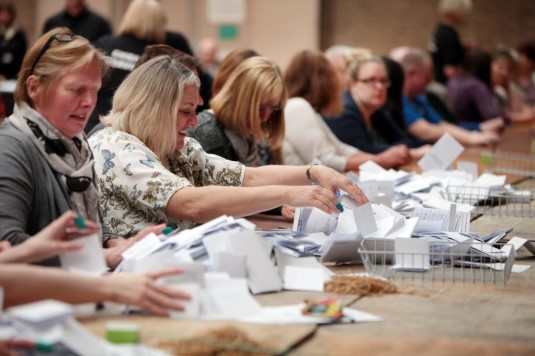
This month saw 31,923 votes cast over 19 local authority (tier one and tier two) contests. All percentages are rounded to the nearest single decimal place. Four council seats changed hands in total. For comparison with August's results, see here.
Party
Number of Candidates
Total Vote
%
+/- Aug
+/- Sept 18
Average/ Contest
+/- Seats
Conservative
19
10,654
33.4%
+0.3%
+6.0%
561
+1
Labour
18
9,769
30.6%
+0.6%
-6.1%
543
-2
LibDem
15
4,644
14.5%
-10.5%
+4.7%
310
0
UKIP
5
274
0.9%
-0.5%
-1.4%
55
0
Green
14
2,441
7.6%
+5.6%
-0.1%
174
0
SNP
1
1,741
5.5%
+5.5%
-1.0%
1,741
0
PC**
0
0
Ind***
10
1,716
5.3%
-3.7%
-1.2%
172
+2
Other****
5
684
2.1%
+2.1%
-0.9%
137
-1
* There was one by-election in Scotland
** There was one by-election in Wales
*** There was on independent clash this month Ind
**** Others this month consisted of Scottish Libertarian (13), Women's Equality Party (47 and 39), Nonsuch Residents (539), Elvis Bus Pass (46) What a month, eh? Not really. Barely any movement in terms of percentages. The Tories pick up two at Labour's expense, while dropping one to the indies who, in turn, grab another from some residents' association or another. The interest for me is at the lower and. UKIP's vote has remained at pathetic levels, despite the poll boost they got in July with the unveiling of the Chequers deal. That seems to suggest it's not filtering down to the local level at all, whereas - by way of contrast - LibDem election performance is not feeding up into the national polls. And the Greens are holding up quite nicely when they should really be squeezed by Labour.
Nothing to add, except we'll be here same time next month to see what the crack is.
6th September
Carlisle DC, Denton Holme Lab hold
Cumbria CC, Denton Holme Lab hold
Fife UA, Inverkeithing & Dalgety Bay Lab Con gain from Lab
Tameside MB, Ashton Waterloo Lab hold
13th September
Cambridge BC, Petersfield Lab hold
Charnwood BC, Birstall Wanlip Con hold
Lambeth LB, Coldharbour Lab hold
Maidstone BC, Headcorn Con hold
New Forest DC, Pennington Con hold
Pembrokeshire UA, Pembroke St Mary North Ind gain from Con
20th September
East Devon DC, Ottery St Mary Rural Ind gain from Oth
Epsom and Ewell DC, Nonsuch Oth hold
Luton UA , Limbury Lab hold
Suffolk Coastal DC, Wenhaston & Westleton Con hold
Winchester BC, Upper Meon Valley Con hold
Wyre Forest DC, Bewdley & Rock Con hold
27th September
Lichfield DC, Stowe Con hold
Nottingham UA, Clifton North Con gain from Lab
Salford MBC, Eccles Lab hold
Jeremy Corbyn's most confident and assured speech so far. Remarkable when you consider how he spent the summer under renewed assault by the irreconcilables and their Tory helpers. The content of the speech? "Serious stuff from Labour this week that may resonate with millions of workers ...". Not some Corbynite hack that, but Tory MP Robert Halfon. If it can turn his head, there's a good chance many millions more will too. Full speech begins at 32.50.
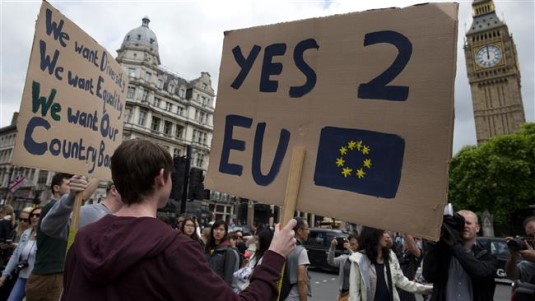
If you're a hard remainer, it's been a good couple of days. Labour's stance on Brexit has tilted a bit more toward a second vote, though without explicitly committing itself to such. And a number of polls are suggesting more are moving toward remain than leave, which is understandable. If the incompetence by which the Tories have gone about negotiating Britain's exit from the EU doesn't give you the jitters, I don't know what will. Yet these are getting clung to like some sort of fetish, as if things are moving in the right direction. No matter how it is caressed and prayed to nothing is going to get the UK out of its Brexit predicament. Certainly shifting Labour's policy and marching on sparsely attended lobbies of party conference won't. Before you even consider the practicalities of the parliamentary timetable, reading the political runes now, in early Autumn 2018, comes up with two very obvious reasons why Brexit is going to happen. 1. The Tories are in power. Labour are not. 2. There isn't going to be a general election that will change this state of affairs. Sorry to be rude, but sometimes political realities are. A general election now would be appalling for the Tories. With their party utterly divided and in a worsening condition, a Brexit general election could, if the opposition plays its cards right, destroy their discipline and tear them apart. Which is why Labour are right to call for one, and also why Theresa May isn't about to concede one. Even if everything goes awry and May comes back without a deal, she would rather do that than hand the keys to Number 10 over to Jeremy Corbyn. Or Boris Johnson, for that matter. There will be no flouncing off into the sunset of the after dinner party circuit as per her predecessor - she will cling on to government for dear life, or until a cabal of her own party calls time. What wouldn't constitute playing our cards right would be a full commitment to a second referendum. Forgive me if I don't put too much store in polling on this (especially YouGov - did you see their Sweden poll?). The issue is if Labour came out for a second referendum, the politics of Brexit enter into a new and potentially dangerous phase. Politically speaking, remain has mobilised - the LibDems have been flooded with new members (sans the corresponding support), their talking points are in the media, and they've taken to the streets. Leave, by way of contrast is overwhelmingly passive and hasn't gone much beyond voting disproportionately for the Tories last year. One of the reasons why they haven't politicised further is because both the main parties accept the overall referendum result. This changes if Labour formally adopts a second referendum: a passive animosity runs the risk of becoming an active antagonism. Here's why this is an issue. Labour's immediate strategic objective is to break up the Tories' electoral condition. This is tough enough because of the soft political polarisation we've seen, which is underpinned by the political economy they have deliberately cultivated. We saw how it started to flake a bit when May first announced her Chequers position, which was spun by the Brexiteers as soft, long, and anything but strong. The result was a sliver of support falling back to UKIP. If Labour come out hard against Brexit, at best it will firm up that support. May and her media helpers are going to parade themselves as the custodians of Brexit and cast Labour as an arrogant party who does not respect a democratic vote, and is in hock to Brussels. The pot the Tories have stirred about Labour being the tool of foreign powers, the mood music of the scurrilous Michael Foot and Jez-was-Warsaw-Pact smears fits their scheme to make Labour out as an anti-British, if not an outright treasonous organisation. Those who pick up on and are amenable to dog whistles of this kind will draw the necessary conclusions when May blames Labour for undermining "our" negotiations. Stab-in-the-back myth mk II, if you like. One in which the nation is being sold out by a left-liberal-EU establishment. In these fraught times, such a pitch could do extremely well. It won't end there, though. There is every danger large numbers of leave voters could be mobilised by UKIP, Farage, or a demagogic Tory. Some comrades and remain supporters shrug their shoulders and say so what? Why should Labour allow the far right to dictate its actions? This is a blinkered way of looking at things. Strictly speaking, from a party point of view we should be in the business of making things easier for ourselves and harder for our enemies, not the other way around. But in this case the price is steep. Another referendum means polarising politics in a more poisonous direction, and one in which Labour has disadvantaged itself by setting aside a popular democratic decision. And do you know who will suffer the most? Post-Brexit we saw a surge in racist incidents as well as a rise in hate crime against disabled people gay and trans people, and domestic violence rates went up too. When reaction moves, its bile overflows the trappings of constitutional politics and lashes out at anyone and everything that doesn't fit, or have we forgotten about what happened to Jo Cox already? Yes, Labour's position is frustrating. Yesterday it was a fudge and today it remains a fudge. This is less the result of tactical genius and one trying to square the circle of the party going this way and that on Brexit. And yet the overall result has proved unsettling to the Tories. Without Labour setting its face against unwinding the referendum, they do not have an external threat and so have no choice but to turn inwards, compounding and multiplying their difficulties. You can understand why folks want Labour to go for the second referendum, but we should not be in the business of throwing Theresa May a lifeline. Nor be cavalier about the cost we're expecting others to soak up. That is why it is a non-starter.
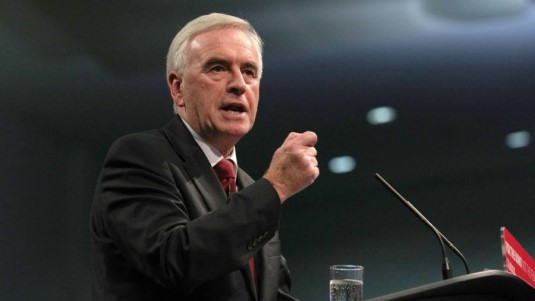
Expropriating the expropriators wasn't a line I was expecting to come out of Labour conference, and it hasn't. Nevertheless John McDonnell's plan to hand workers 10% of the company they work for is entirely welcome. As he's pointed out in the round of interviews done this morning, it would encourage longer term thinking among (big) business, squeeze the imperative to maximise share holder value, give workers an income boost and ensure the state benefits from the productivity and profit gains by capping payments at £500 and returning the surplus to the Treasury. It might upset the FT and give the Tories the night terrors, but it has been universally welcomed across the party - Wes Streeting, for instance, was effusive in his praise. As John has repeatedly pointed out, this is only radical in the context of British politics. Workers on boards, investment banks, key sector nationalisations and workers owning equity are commonplace in Western Europe. Germany remains the model, for instance. However, how does this help along the class struggle and enhance the position of our class beyond an extra 500 nicker in the pocket? Indeed, there is a subset of the left who are opposed to policies that introduce workers ownership and control this side of the socialist dawn because it supposes and encourages an identity of interests where there is none. This implies an impoverished , zero sum and mechanical conception of class struggle whereas, in fact, we should see it as productive. What does this mean? To maintain its survival, the state as a capitalist state is compelled to maintain the class relationships underpinning it. Central to this is making sure there are a body of workers available to be subjected to wage labour, and there are innumerable strategies pursued by large numbers of institutions to make sure this is the case. But workers aren't drones. People who have to sell their labour power in return for a wage or salary aren't born that way, they're made. They - we - are continuously made. Proletarianisation is a process we are subjected to from birth and continues right through all the jobs and careers we do to the point we finally leave the workforce. It is (mostly) top down, and should properly be understood as force. But it is never complete. Proletarianisation always meets resistance, both of the individual and collective kind. It can be petty, like refusing to wear a compulsory lanyard or taking one's time in the loo, and it can be existential - like mobilising for an all-out strike. The point is capital confronts its employees as a tyrant stands above a free people and employs all manner of techniques to ensure compliance and acceptance. Resistance can be futile, but it is always inevitable. Because proletarianisation is a process that begets resistance, its possibility proliferates with every new initiative and strategy that comes along. Of course, not all possibilities become opportunities, but what the McDonnellnomics programme promises are significant because they potentially amplify class struggle. On its own, the 10% stake puts into question capital's sovereignty over economic life by giving workers more of a stake, and where share ownership churns at a much higher rate than employees in and out the door it positions workers as the proper custodians of economic activity. It challenges the legitimacy of capital as an owner and of management as its custodian. Small wonder the CBI aren't happy - they instinctively know its against their class interests. However, it is only a potential. Strengthening workers at the point of production can be incorporated into the system. Capital can live with more worker involvement as, again, Germany and elsewhere testifies. It wasn't that long ago Britain chugged along with powerful trade unions who exercised their collective strength successfully against capital either. Our job is to make sure this is not the finished article but to push for more. Why 10% and not 20%, why not even higher? Likewise taken in conjunction with John's package of announcements, these would no doubt go some way to addressing the deep structural problems of British capitalism. And yes, it will make not a few business people and assorted Tories slick with fear, but in and of themselves they're not enough. A nicer capitalism it would undoubtedly be, but more importantly it gives us new conquests to defend and launch pads for further gains. The right response to Labour's new economic plans isn't to tut, wag your finger and snottily decry it as not real socialism. It's to recognise it as something that is immediately tangible and realisable from our low point in the balance of power between capital and labour. It is to accept it as a set of measures that are productive of more possibilities of class struggle from a more advantageous position. And I'm sure this isn't something lost on John McDonnell himself.
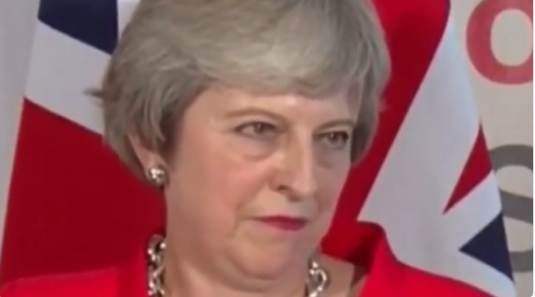
Sooner or later, all political positions come into contact with reality. Some do much better than forecast while others, well, others have a rude awakening. Judging by the expression on Theresa May's face after learning that her Chequers plan hasn't survived contact with what she surely now views as the enemy tells you all you need to know. What now, then? Never the most adroit of politicians, the message coming from her press conference was nothing has changed. Yes, really. Her first instinct was to dig her heels in and pretend Chequers was still a go-er. "They're just playing hardball!" she blathered. "It's their negotiating strategy!" Except it isn't. Since unveiling the Chequers deal Michel Barnier said no. Jean-Claude Juncker said no. She and her ministers have been hopping around the presidential palaces of Europe all summer, and the answer was the same every time, everywhere. Had he been asked, even the man from Del Monte would have said no. You'd have to basically be impervious to human interaction to sit through so many talks and still not get the hint. I mean, you can almost empathise with May's frustrations. Almost. She has gone from walking on water to the political equivalent of getting dragged through a hedge backwards. But the person responsible for making a rod for her own back was, well, herself. In the full flow of her imperial pomp she didn't have to tell the world she was looking forward to a hard Brexit with relish. She didn't have to waste precious negotiating time by calling an unnecessary election, nor destroy her authority and decimate her majority. But she did and Nemesis duly followed Hubris. And rather than cleave to the hard right by placating them, her government could have come up with a plan much sooner and the whole Brexit process might have been a bit smoother these last 18 months. Sure, not many Prime Ministers have as ghastly a time at Number 10 as May, but she's the author of her agonies. The difficulties are uniquely hers. Which, again, is why Labour was absolutely right to not listen to the siren forces arguing for it to come out in favour of a second referendum. It prevents May and the Tories from fomenting their own stab-in-the-back myth, of presenting Labour as in cahoots with Brussels and therefore undermining the UK's negotiating position. They will say it anyway, but minus the ring of truth it will fall flat and not allow the Tories to re-triangulate the hard kippers nor peel off Labour leavers. Where next? May wasn't expecting to be so comprehensively dumped on, and no doubt her spinners are currently thinking hard about how to wring some marginal advantage from it. On the podium she reiterated her "this is the only credible plan in town" shtick and try and play the hard-done-to card. After all, the last time she okayed this card in the early days of the general election campaign her opinion poll ratings peaked. She must hope more of the same could accrue in future, so don't rule out a late walk out from talks yet. The one thing we can rely on is the Tory party's concern with putting favourable editorials above all else. Yet, when all is said and done the basic position of the UK is it wants a deal, and ditto for the EU. And there are only two things that possibly stand a chance of getting through the Commons. The first is watered down Chequers. The ERG and fellow travelling Brexiteers will oppose, but May's got to be banking on enough Labour rebels who, by hook and by crook, would like to turn the clock back. As well as Tory backbenchers who view Jeremy Corbyn as Stalin's second coming. From that standpoint, this really is the only game in town. The other would be a pause of the Article 50 process as May is forced to throw the towel in and British Toryism falls into another round of leadership paralysis. My view is the first scenario is the most likely. May doesn't want to go down in history as the UK's worst Prime Minister (she's up against tough competition), and she wants to cling to power for as long as possible. As long as she's there she provides the Tory factions a focus - she goes and the party could possibly fall apart as its numerous tensions come to a head. And also if she's in, some miracle might come along and she'll be able to salvage something to show her years in Downing Street weren't entirely wasted. A deal or, to be more accurate, a capitulation is still likely then. However, as recent history has shown the interests of the Tories and even the class they represent rarely coincide. A no deal catastrophe could still happen and while May and her party will pay a heavy political price, it won't be them who suffer the real damage. It will be us.
For liberal defenders of its vaunted impartiality and balance, sometimes the BBC makes their job hard. Take Nick Robinson's interview with Theresa May for Panorama on Monday night, for example. Between Sunday morning and the final news bulletin prior to broadcast, it was the lead item on the news, and what got highlighted were the softest of soft questions. One has Robinson and May reclining on the back seat of the PM-mobile. Cheerfully, he observes "people remember the bloody difficult woman, but are now asking where is she?". Yes Nick. On the train to and from work the topic of conversation is seldom anything else. For anyone who watched the interview and the puff footage surrounding it, Frost/Nixon it wasn't. The questions barely challenged Theresa May, and there was little in the way of a follow up. For example, her response to the Irish border plan put forward by the Moggy European Research Group, which sees checks on goods taking place away from the border were simply dismissed with a reiteration of the Chequers position of regulatory alignment. If Robinson was interested in earning his exorbitant salary as opposed to merely drawing it, he should have pressed her. Especially as their "solution" is technically feasible but politically, given its origin in the most backward section of the Tory party, unlikely to fly with the Commons coalition May is going to have to cobble together to see her deal through. Apart from chummy chats with Robinson, we see May in action behind the scenes chairing a meeting of the cabinet, picking up the phone to Jean-Claude Juncker, and relaxing at Chequers watching the telly with government papers on her knee because, of course, even down time has to be work time. But the action shots were, well, boring. Unlike Dave who used such occasions to demonstrate how skilful he was at looking the part, May reminded me of someone kicked upwards to prevent her from messing up the real work done down below. How hollow strong and stable rings now. This was less an interview and more a concerted effort at a portrait, and quite an affectionate one at that - not withstanding snippets of interjections from Rees-Mogg, David Davis and Keir Starmer. The ultimate criterion, however, is politics and in this instance whether we've learned anything new about May's approach to Brexit. And the answer is no ... and yes. In the no column May is pretending Chequers is the only game in town. The red lines - no to European Court of Justice jurisdiction, no to free movement between the UK and EU, no to big subs to Brussels for ever more - are there in principle and no doubt both sides will pay lip service to these positions after the deal is done, though I suspect all will continue in some way while the government insists up is down, day is night, and the Daily Telegraph prints the truth. It is also more evidence that May has hitched her fortunes to the Chequers Deal which, you will remember, is an outcome of the Tory party negotiating with itself as opposed to anything the EU might want. Whatever the eventual deal is she will be very sure to make it appear as close to her unrefined version of Chequers as possible, even if it does mean making significant concessions to get Blairite backbenchers on board "in the national interest". It also demonstrates that May is no longer concerned with the Brexit headbangers on her hard right. She appeased them the once and has had nothing but grief in return. She's finally appreciated that the delicate balance in the Tory party that sees all her opponents balance each other out because her weak position is, perversely, a strong position. And, at the moment, Chequers plus more Norway-style concessions seem the best way to get Brexit through the Commons and salvage something of her career.
Burnout Paradise, which has just seen remastered versions hit the PS4, Xbox One and PC is an important game. Less for the innovations it inaugurates but rather the end of a trend in gaming it exemplifies. Burnout Paradise presents as an utterly brainless race 'em up that has no plot and precious little narrative except for the commentary from the in-game DJ dropping hints and tips. Then again, while out-of-step with the overall trend, story modes in racing game are rare beasts. Do you really need a fictional backdrop to explain why you're driving at speed from A to B? No, so Burnout Paradise dispenses with such nonsense. All you need to know is that the game presents you with an open world rural-urban racing environment and a number of different tasks you have to undertake to upgrade your licence and progress through the game. Burnout Paradise is not only the culmination of its own series of games that began on the original Xbox, but is the heir to arcade racing in general. It takes everything about 'tude-tastic 90s racing and cranks it up to utter absurdity. Contemporaneous with Sony's first Motorstorm title and its own emphasis on destruction and mayhem, it takes the mechanics of the earlier games in its franchise and encourages you to be as destructive as possible. There is something pleasing and, at least for me, never frustrating about flying along Paradise City's highways and smacking head on into a pylon or oncoming traffic. Seeing what mess your car can become is part of the fun. Also, there are no human bodies flying about as per Grand Theft Auto. Even if you're playing on bike mode (available via DLC) your rider immediately disappears if you end up coming a cropper. There's also something in Burnout Paradise for nearly every kind of racer. Events are activated by turning up at the lights at every highlighted junction on the mini-map. You can race conventionally, which typically means racing from where you are to one of a handful of landmarks dotted about the city. And thanks to the open world nature of the game, you are free to take any route. You can do time trials with cars dedicated to particular challenges. There is - my personal favourite - the take down challenge that requires you to smash a number of infinitely spawning opponents off the road. There's a survival mode where a pack of three powerful cars chase and try and wreck you before reaching goal, and there is stunt running. This last one is the trickiest to master as maximising points and meeting the threshold for success means knowing the map well. If you know where the bill boards and big jumps are, you can rack up the multipliers for a mega score and another win on your licence. And after completing a number of challenges the game releases a new car or two into the city. Your job is to run it off the road and then it's available for use. In addition to the main game there are a number of small challenges you're encouraged to meet. Finding all the drive-thru joints (which come as auto repair, paint shops, gas stations and junk yards), smashing all the barriers to short cuts, locating every super jump, and crashing through every Burnout board all add to the longevity of the game and demand thorough exploration. Indeed, and this is where it proves to be rather less brainless than it immediately supposes. For instance, driving around you'll see bill boards everywhere. To smash them you have to think about how to reach them, and this often involves quite tricky jumps or finding routes onto the top of buildings. Some of them are quite fiendish. And there are also a handful of secret areas - a quarry, a dirt track, an island, and an aerodrome that are not visible on the mini-map. Can you find them? Burnout Paradise was an early outing on the 360 and PS3. Its graphical presentation was never going to be up there with Gran Turismo, but they get the job done with eye popping colours and little in the way of screen tear. The sound track is also brilliant. All old licensed stuff, ranging from Alice in Chains to Bach to bespoke, forgettable club-friendly filler, whatever the preference there are tunes to suit. There are a couple of issues with the game. The repetitive character of the tasks is an issue. There's only so many times high-tailing it to the observatory is fun, even with a roster of 75 cars to choose from. More concerning is what Burnout Paradise poses the genre from whence it came. With everything in there, the racing, the violence, the stunts, where can arcade racing now go? It's instructive that Paradise is the last proper Burnout game, and all the recent remaster has done is include the DLC and given it a lick of paint. Criterion have since gone on to make Need for Speed games for Electronic Arts, and while these have an arcadey feel and combine the usual racing with high speed chases, they don't really add anything new. Where then does the genre go, what can it do now? Burnout Paradise is an excellent game most would enjoy, but for all its brilliance what it will perhaps be remembered for is being a glitzy and supremely playable showcase of a genre's end.
Michael Foot was a paid Soviet informant! so reportsThe Times this morning. Any impartial observer of the political scene might have thought the Russian money regularly deposited in Tory party coffersright now would be more newsworthy, but okay. According to their front page splash (to promote interest in Ben MacIntyre's The Spy and the Traitor), the former Labour leader received cash and, apparently, had a 400 page file on him back in Moscow. What's new - Foot successfully sued The Times in 1995 over these allegations - is that the spooks at MI6 concluded he was a security risk and were prepared to warn the Queen that he was a suspected KGB agent in the event of his becoming Prime Minister. What to make of this? As Andrew Neil was a load of crock. And a clear-headed reading of the article shows there's little of substance to the story, and that certainly no new evidence implicating Foot as an agent of Moscow's has come to light. The substance of the claim is famed Soviet defector Oleg Gordievsky fed British intelligence a number of lines about Michael Foot - the publication of which was the subject of the successful libel action - and that MI6 wrote it up, saying he wasn't a "conscious agent" but had disseminated disinformation on the KGB's behalf in return for money. What does this even mean? That Foot was hoodwinked into putting out pro-Moscow propaganda, and still got £34k from his Soviet handlers for his trouble? Come on. If he was an unwitting dupe of murky doings, I'm sure Sergei from Odessa insisting on making substantial payments to him might have raised his suspicions. In truth, it sounds like a right load of rubbish. Because it is. This might come as a shock to some readers, but the intelligence services are not a politically neutral arm of the state. Their job is to defend that state as is, with all its inequalities and privileges, and therefore selects for personnel for whom 'queen and country' is understood in narrow, conservative and often deeply reactionary terms. They also have an interest in talking up threats to justify their existence. In the case of Foot, for instance, obviously this was a man whose politics were far beyond the pale as far as most MI6 personnel were concerned (remember, even Harold Wilson was dangerously communistic for these fools). No doubt they thought he was a bad 'un because he was on the left, but designating him a dupe or useful idiot for the USSR had the happy consequence of generating a file and creating work for an agent or two to keep tabs on him. And they are always alive to make-work opportunities - I know a few anti-fascists who were approached by Special Branch with the offer of "protection" lest their activism against the BNP and EDL made them a target. In other words, Gordievsky's allegations were blown up by the work culture of MI6. And then there is a wider political point as well. All throughout this summer and, well, consistently over the last three years The Times, like the rest of the right wing press, have had Jeremy Corbyn in their sights. Raising a discredited and irrelevant story about a politician who's not been dead for almost a decade keeps certain associations alive in the minds of their readerships. Suggestions like when Corbyn was smeared as an agent for Czechoslovak intelligence, and that there is something anti-British and traitorous about Labour and left wing politics generally. Their game is to delegitimise and damage our movement through the relay of rumour and innuendo to a mass audience. Unfortunately for them, it appeals to the already convinced while reminding the millions politicised by Corbynism that there are no tricks too dirty as far as the establishment is concerned.
What to make of last night's meeting of the European Research Group, that gathering of the most backward and broken of the parliamentary Conservative Party? "It was truly mind blowing" said one of the participants, adding "You felt the ground opening up under your feet. The most amazing thing was that no one even bothered to mime a pretence of regret”. What was "amazing" and liberating was for their muttered tearoom conversations to come out in the open, to cast aside the subterfuge and two-facedness and do something exceedingly rare in full view of one other. They were honest. Unfortunately for Theresa May, the ecstatic reviews were for their plot to remove her as Prime Minister. All 50 of these most Brexity of Brexiteers wanted her political career on a platter, and were no longer afraid of letting the world know about it. Okay, well done chaps. You've had your fun and unburdened your consciences, so what now? Alas, there was no what next from our Mogglodyte friends, no strategy or even unity around what needed to be done and when. It's a bit like our silly Labour right wingers who tell the world what they want Jeremy Corbyn gone, but cannot come to agreement about how to do it. Still, that is a bit unfair to the ERG because they have at least taken the trouble of offering a political alternative to their leader, unlike others I could care to mention. Nevertheless their press push today on the Irish border issue was unlikely to put the sweats on the Prime Minister. I mean, if they wanted to pressure May they needed to have a DUP politician in their line up, not David Trimble who, you might recall, was dumped out of the Commons by the Paisleyites some 13 years ago. Still, what was most interesting about their line up - featuring David Davis, Jacob Rees-Mogg, Theresa Villiers, and Owen Paterson - was the tone of the thing. This was less a conference called by hardliners confident in their ideas, but a motley bunch pleading for a hearing. As Mogg said, anyone with an open mind can see this was a serious contribution to the debate. And looking at it, there is more substance to it than the ERG's usual ravings. It could be a go-er, if the will was there. But the issue is settled as far as May is concerned, and that is for the UK to remain in a customs arrangement with the EU but, sshhhh, we're not allowed to call it that. As we've seen more times than I care to mention, the factional balance in the Tories is on a knife's edge. May's got the job and she's menaced by many a faction and PM wannabe, but no one, no one (least of all an idler like Boris Johnson) wants the keys to Number 10 while Brexit is dumping toxicity all over British politics. Getting shot of May would only catapult someone else into exactly the same unenviable position, so better wait it out and hope things improve. The problem the ERG have, and they know this well, is that none of them could muster enough MPs for the necessary leadership challenge or get one of their number in the final run off with the membership. Their hope is to throw their lot in with Johnson, but he's neither dependable nor guaranteed to get through to the final two. Or, they could threaten to derail the final Brexit vote. It's looking likely that May will come back with an even more watered down version of her Chequers position, and one that rebellion-minded Labour MPs might be moved to nod through. If not this, then stopping her Brexit deal means the government falls and Jeremy Corbyn becomes the favourite to form the next government. Between leaving the EU and allowing in a party they think is about to expropriate the expropriators, don't be too surprised if the majority of our ERG Brexit rebels turn tail and support May. Their tough talk hides their impotence, and eventual surrender. The only question is how long are they going to keep this pantomime going.