Spread this video far and wide:
Also keep an eye on the excellent Air Strike for updates from the picket lines.
Saturday, 27 March 2010

Thursday, 25 March 2010
The New Party and British Proto-Fascism
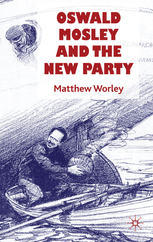
As a party drawing sustenance from all political traditions, the five personality archetypes Matt drew on to illustrate the New Party's history demonstrates the party's fluid and unstable character.
The first of these is the 'disillusioned socialist', exemplified by Herbert Hodge, a London taxi driver. He had been disappointed with Labour's performance and was put off by what he saw as the dogmatism of the Communist Party. He longed for a political movement that was "new and clean, neither capitalist or communist". He stood for the party in Stepney Limehouse in the 1931 election and polled 307 votes (1.4%). Hodge experienced Mosley as distant and insincere, and this disappointment was compounded by the resignation of the leading socialist intellectual, John Strachey. Once militarism became an established feature of the party's youth wing Hodge too departed.
The second was the 'progressive intellectual', exemplified by the then well known (but now largely forgotten) writer and broadcaster, C.E.M. Joad. Joad came from a prosperous background, had got himself expelled from the Fabians for sexual misadventure and was part of Mosley's social circle. When the New Party formed it initially provided Joad a vehicle to exert his influence - Mosley's modernist statism chimed with Joad's Fabianism. But again it was Mosley's drift to fascism and the increasing willingness of the youth group to use violence against its political opponents that cut short Joad's New Party career.
The third type of personality is the 'family friend', illustrated here by James Lees-Milne. Lees-Milne was a distant Mosley relative and like Joad was from a well-heeled background. Unlike Joad he had imbibed the anti-communism common among his class and saw the New Party as a way of keeping the working class in its place. His affinity with the project, however, was always tenuous. He described its general election campaign as a "small and grotesque band of candidates". Like the others he departed when the party's fascist direction became apparent.
Important for the formation of the New Party's youth group was the fourth archetype - the Oxford undergraduate. Here Matt used the example of Peter Howard, a student sport star who captained the England Rugby team while he was associated with Mosley. Touring the country as a party activist Howard was genuinely moved by the poverty he saw and he "began to see myself as a latter day Lenin". As a paid official he was tasked with organising the youth wing - the way his fellow Oxford students stewarded New Party meetings became the blueprint for its later militarisation. By the end of the year he had drifted out because of a love affair, and that his standing in the party had been undermined by staunch anti-communists (ironically his later conservative journalism was associated with that movement).
Lastly there is the 'radical reactionary'. Peter Chanie was cut from this cloth. As an extreme reactionary, he had been variously involved in anti-socialist and patriotic groupings in the 1920s, and volunteered for the Organisation for the Maintenance of Supplies during the General Strike. He immediately started organising stewarding and militarising the youth group and was generally recognised as having a "pernicious influence". Still he imparted an interest in martial sports on the organisation but, somewhat surprisingly, left politics before the founding of the BUF.
Overall the New Party was mostly male, youthful, and drew recruits mainly from the middle and upper class. Many of the initial personnel were from the left, which was unsurprising as Mosley had spent time cultivating influence in the Parliamentary Labour Party. The New Party was marketed explicitly as a home for disgruntled socialists, and those from Labour and CPGB backgrounds who signed on saw the move as a continuation of rather than a rejection of socialism. And when Strachey resigned, much of this milieu drifted back to Labour.
The New Party also had a propensity to attract those whose association with the centre ground of politics was tenuous. Those from Labour backgrounds mostly had a history with the Independent Labour Party (in 1932 the ILP disaffiliated from Labour), were not from the working class and had very little understanding of class politics - their socialism was of the technocratic and ethical variety. This isn't to say working class members were entirely absent, but again there was a tendency of them to have moved into journalism and other non-manual occupations. Also there was personnel from Labour and the Tories who had felt frustrated in trying to reorganise their parties and so gave up to try their hand elsewhere.
Not only were many of the recruits politically marginal, relatively speaking, they were restless, marginal people. Each of the examples above had already led or went onto multiple careers, and many of these careers involved wide-ranging travel.
Lastly, the New Party expressed generational conflict. On a personal level many leading members had complicated and fraught relationships with parents and uncles - not least the Mosleys themselves. This was expressed culturally in the party as a reaction against the sins of the father, such as alcoholism and Victorian morality, and the embrace of political modernism. There was also an element of political patricide in the New Party mix. The front benches and government were, in the main, the same men that had led Britain into the slaughter of 1914-18. The generation that risked life and limb in the trenches found itself stymied by the parliamentary old guard. The New Party's propaganda played on this by projecting a youthful image. Mosley himself cut an athletic figure, which complimented his reputation as a man of action. The party's youthfulness was mixed with the glamour of pseudo-military discipline, and drew in the undergraduates and sports figures. The New Party provided a brief home for those seeking discipline and order, and confrontation.
As the New Party developed over the course of 1931 the left, which had played a prominent role in getting it off the ground, gradually fell away and return to Labour. The socialist element of the New Party was expunged by Mosley after Strachey's departure, allowing it to be increasingly anti-communist in character and further feeding its evolution toward fascism. Later recruits - especially the young - unsurprisingly followed Mosley into the BUF.
In the subsequent discussion, Matt was asked about the near invisibility of women in the New Party's history. He replied that was because women were almost entirely absent. Very few women joined, the youth movement was defined explicitly as male-only and Mosley himself discouraged women from joining. Later on he was to admit this was a mistake and women were admitted to BUF membership (women were organised by Mary Raleigh Richardson, a former leading suffragette).
What is interesting about the New Party is how it is emblematic of a certain form of political formation that is thrown up by British politics from time to time. The New Party then espoused a particular anti-politics in much the same way UKIP, Veritas, BNP, Libertarian Party have done. The difference being today's attacks on politicians is about corruption, whereas the sentiment the New Party fed off was a sense politicians of the day were intellectually deficient and not up to the problems facing modern Britain. Secondly the New Party was extremely unstable - within a year it had gone. UKIP and the BNP are certainly longer lived, but they are unstable as the never ending stream of fallings out, expulsions and resignations attest.
So the New Party may be a historical footnote, but its trajectory and the character of its personnel means its has plenty of lessons for today.
Tuesday, 23 March 2010
Eyewitness Report from Bolton
Below is reproduced a report from a North Staffs Campaign Against Racism and Fascism (NorSCARF) activist who was at the anti-EDL demonstration in Bolton this weekend. His piece focuses on the behaviour of Greater Manchester police. More reports and a substantial debate on anti-EDL strategy can be read at Socialist Unity.
Arrival
I spent the time at the counter-demonstration with a fellow NorSCARF group member who can walk only slowly and cannot stand for long. With the other Unite Against Fascism supporters who had walked from our coach, we were initially held for about 10 minutes immediately outside the square where the demonstration was being held. We could see into the square but I was not aware of anything of note occurring. We were then admitted to the square sometime before 12:00, in a group of less than one hundred.
Unexpected Police Action
I heard no communication from the police as the UAF supporters with us went into the square and either looked around or ambled forward, and everything appeared orderly. Nor did I hear any communication as (within a minute) a five metre or more long line of police formed shoulder to shoulder behind us and started forward, shortly bumping into us and slowly, lightly pushing us. This seemed to occur in an even method along the line, in a way that I presume required specific prior practice.
Though there was plenty of room for us in the square, I heard no one giving instructions to those further in front of us to make faster progress, and so it seemed those of us at the back felt unable to move faster to avoid being pushed. In any event, I was with someone who could not walk quickly. She spoke clearly to the officers immediately behind her about her [physical] limitations, yet they continued to push silently for another half a minute despite her complaints until one officer spoke to the two of us hinting that we might move slightly to the right against the unstaffed makeshift newspaper stall we were passing. Here they left us alone whilst continuing their pressure against the others.
Within a minute of the pushing starting, a man on the left side of our group walked within three metres of a location where several police dogs were being held facing further into the square. One of the dogs, all of which were unmuzzled and on long leads, reared, barking violently at the head of this man, who was then berated by a police officer for going too near.
Though the tempers of a few UAF supporters appeared to be getting frayed, I could see no sign of a combined confrontational response from any of the UAF supporters, and my colleague and I turned to each other and started discussing our inability to see a good reason for what had just happened to us. She appeared as surprised as I was when, within two minutes, we discovered we needed to move somewhere less exposed to try to stay clear of large numbers of people, including police, hurrying around. Presumably though many of these people were moving just to try and stay out of the way, just as we now were.
We soon discovered we needed to move again to do this, as large numbers of our fellows hurried around our new location, trying to keep distance from a body of police who were hurrying towards them. As soon as we could we moved a greater distance to find a calmer part of the square, which proved to be nearer to where the EDL supporters were. The only clear, positive initiative that I saw being taken towards easing the situation at this point was by one person, not in uniform, with a loud-hailer calling for calm.
Overall Situation Becomes Clearer
As the immediate situation calmed, the general situation became clearer to me: the police had a secure enclosure around the entire side of the square where the UAF counter-demonstration was located, and I saw no sign of their control of this enclosure being threatened throughout the afternoon.
Throughout the event, all the police activity I saw that looked to involve scuffles or pushing or chasing battles with - or arrests of - UAF supporters occurred within the enclosure. In contrast I often had views of the boundaries of the enclosure. Everything I saw of police/demonstrator interaction, including those parts of the boundary facing toward the EDL demonstration, was orderly.
Where they seemed to require order to be maintained most, the police seemed able to easily achieve it. Whenever turbulence periodically flared up in the UAF enclosure I always saw large numbers of police in those areas already, with no need for reinforcements.
So to keep a good distance from continuing sporadic turbulence, from about 12:30 onwards I spent my time at one of the boundaries, specifically 10 metres or so back from the barriers facing the EDL, and against the boundary which had been set out with a one metre high barrier along the base of the town hall steps.
From here I had a clear view of senior police officers watching the activity from the steps of the town hall overlooking the UAF supporters. The only time I saw any of these appearing to break a sweat in controlling their forces were some frantic conversations toward the end of the demonstration shortly before officers carried riot shields from within the town hall and started to eject EDL demonstrators from their half of the square. Until then, I only saw them watching events calmly. The EDL clearance was also the first time I had seen the police hurrying reinforcements to an area of the demonstration.
One particular event illustrates further. All the police I saw were wearing high-visibility yellow vests, except for one group dressed completely in dark gray that had been operating in the UAF enclosure. Shortly before 1pm this group withdrew to take a water refreshment break on the town hall steps. During the break officers could be seen discussing and pointing to an area more than 25 metres away.
Just before 1:05 this "low-visibility" group of about 15 officers came down the steps, over the barrier, and lined up below the town hall steps either side of where I and my colleague were. I complied when one asked me to please stand behind my colleague's portable chair, saying in explanation that he might need to move quickly. They were not encountering hostility from nearby UAF supporters at this point. The, without anything new happening to respond to, all the officers peeled off from the barrier to form a file piercing their way through the UAF, heading roughly towards where they had been pointing a few minutes earlier.
A little later, these officers reappeared, rushed back towards one side of us and over the barrier, carrying a placid woman laid supine and unrestrained across several arms as if on a blanket, whose only sign of resistance was to call out "I've done nothing!" There were dozens of UAF supporters in pursuit but the officers made no attempt to extend the engagement with their pursuers. Once the officers had vaulted the barrier the boundary was respected by both sides.
One UAF supporter told me the woman carried over the barrier was a UAF organiser.
Conversation with an Arrested Man
Afterwards on our coach I spoke with a man who had been arrested and released without charge. He said the police used the arrest to question him about the organisation of the event, such as what company had his coach been leased from and who had done the booking. If the police were looking for an opportunity to question UAF supporters from different areas about their local organisation, a large number of disparate and seemingly random arrests was convenient for this.
Police Failure to Use Public Address
The only time I heard the police using a public address system or loud hailer was after the EDL demonstration had dispersed, when they made an announcement asking us to remain in the square for the time being for our own safety. There was never a call for from the police appealing for calm.
Missiles
News reports featured the throwing of missiles. I spent the the afternoon from 12:30 on withing 20 metres of the boundary that faced the EDL and stayed there until they had cleared. I could easily see the EDL and never felt in danger from missiles. All the missiles I saw flying between the opposing sides looked like plastic drinks bottles, empty of nearly so, with demonstrators often attempting to catch them. I saw no signs UAF supporters were making large evasive movements in response.
I saw no sign of anything more dangerous being thrown from the UAF side. However on one occasion, at about 1:45 a few UAF demonstrators approached the nearest uncrowded boundary of the enclosure, repeatedly calling out a request to speak to a police officer because if the nature of the missile that had landed. The police studiously took no interest.
These demonstrators were displaying a large fragment of a broken glass bottle and repeatedly called out but were ignored - despite the nearest officers being five metres away.
Arrival
I spent the time at the counter-demonstration with a fellow NorSCARF group member who can walk only slowly and cannot stand for long. With the other Unite Against Fascism supporters who had walked from our coach, we were initially held for about 10 minutes immediately outside the square where the demonstration was being held. We could see into the square but I was not aware of anything of note occurring. We were then admitted to the square sometime before 12:00, in a group of less than one hundred.
Unexpected Police Action
I heard no communication from the police as the UAF supporters with us went into the square and either looked around or ambled forward, and everything appeared orderly. Nor did I hear any communication as (within a minute) a five metre or more long line of police formed shoulder to shoulder behind us and started forward, shortly bumping into us and slowly, lightly pushing us. This seemed to occur in an even method along the line, in a way that I presume required specific prior practice.
Though there was plenty of room for us in the square, I heard no one giving instructions to those further in front of us to make faster progress, and so it seemed those of us at the back felt unable to move faster to avoid being pushed. In any event, I was with someone who could not walk quickly. She spoke clearly to the officers immediately behind her about her [physical] limitations, yet they continued to push silently for another half a minute despite her complaints until one officer spoke to the two of us hinting that we might move slightly to the right against the unstaffed makeshift newspaper stall we were passing. Here they left us alone whilst continuing their pressure against the others.
Within a minute of the pushing starting, a man on the left side of our group walked within three metres of a location where several police dogs were being held facing further into the square. One of the dogs, all of which were unmuzzled and on long leads, reared, barking violently at the head of this man, who was then berated by a police officer for going too near.
Though the tempers of a few UAF supporters appeared to be getting frayed, I could see no sign of a combined confrontational response from any of the UAF supporters, and my colleague and I turned to each other and started discussing our inability to see a good reason for what had just happened to us. She appeared as surprised as I was when, within two minutes, we discovered we needed to move somewhere less exposed to try to stay clear of large numbers of people, including police, hurrying around. Presumably though many of these people were moving just to try and stay out of the way, just as we now were.
We soon discovered we needed to move again to do this, as large numbers of our fellows hurried around our new location, trying to keep distance from a body of police who were hurrying towards them. As soon as we could we moved a greater distance to find a calmer part of the square, which proved to be nearer to where the EDL supporters were. The only clear, positive initiative that I saw being taken towards easing the situation at this point was by one person, not in uniform, with a loud-hailer calling for calm.
Overall Situation Becomes Clearer
As the immediate situation calmed, the general situation became clearer to me: the police had a secure enclosure around the entire side of the square where the UAF counter-demonstration was located, and I saw no sign of their control of this enclosure being threatened throughout the afternoon.
Throughout the event, all the police activity I saw that looked to involve scuffles or pushing or chasing battles with - or arrests of - UAF supporters occurred within the enclosure. In contrast I often had views of the boundaries of the enclosure. Everything I saw of police/demonstrator interaction, including those parts of the boundary facing toward the EDL demonstration, was orderly.
Where they seemed to require order to be maintained most, the police seemed able to easily achieve it. Whenever turbulence periodically flared up in the UAF enclosure I always saw large numbers of police in those areas already, with no need for reinforcements.
So to keep a good distance from continuing sporadic turbulence, from about 12:30 onwards I spent my time at one of the boundaries, specifically 10 metres or so back from the barriers facing the EDL, and against the boundary which had been set out with a one metre high barrier along the base of the town hall steps.
From here I had a clear view of senior police officers watching the activity from the steps of the town hall overlooking the UAF supporters. The only time I saw any of these appearing to break a sweat in controlling their forces were some frantic conversations toward the end of the demonstration shortly before officers carried riot shields from within the town hall and started to eject EDL demonstrators from their half of the square. Until then, I only saw them watching events calmly. The EDL clearance was also the first time I had seen the police hurrying reinforcements to an area of the demonstration.
One particular event illustrates further. All the police I saw were wearing high-visibility yellow vests, except for one group dressed completely in dark gray that had been operating in the UAF enclosure. Shortly before 1pm this group withdrew to take a water refreshment break on the town hall steps. During the break officers could be seen discussing and pointing to an area more than 25 metres away.
Just before 1:05 this "low-visibility" group of about 15 officers came down the steps, over the barrier, and lined up below the town hall steps either side of where I and my colleague were. I complied when one asked me to please stand behind my colleague's portable chair, saying in explanation that he might need to move quickly. They were not encountering hostility from nearby UAF supporters at this point. The, without anything new happening to respond to, all the officers peeled off from the barrier to form a file piercing their way through the UAF, heading roughly towards where they had been pointing a few minutes earlier.
A little later, these officers reappeared, rushed back towards one side of us and over the barrier, carrying a placid woman laid supine and unrestrained across several arms as if on a blanket, whose only sign of resistance was to call out "I've done nothing!" There were dozens of UAF supporters in pursuit but the officers made no attempt to extend the engagement with their pursuers. Once the officers had vaulted the barrier the boundary was respected by both sides.
One UAF supporter told me the woman carried over the barrier was a UAF organiser.
Conversation with an Arrested Man
Afterwards on our coach I spoke with a man who had been arrested and released without charge. He said the police used the arrest to question him about the organisation of the event, such as what company had his coach been leased from and who had done the booking. If the police were looking for an opportunity to question UAF supporters from different areas about their local organisation, a large number of disparate and seemingly random arrests was convenient for this.
Police Failure to Use Public Address
The only time I heard the police using a public address system or loud hailer was after the EDL demonstration had dispersed, when they made an announcement asking us to remain in the square for the time being for our own safety. There was never a call for from the police appealing for calm.
Missiles
News reports featured the throwing of missiles. I spent the the afternoon from 12:30 on withing 20 metres of the boundary that faced the EDL and stayed there until they had cleared. I could easily see the EDL and never felt in danger from missiles. All the missiles I saw flying between the opposing sides looked like plastic drinks bottles, empty of nearly so, with demonstrators often attempting to catch them. I saw no signs UAF supporters were making large evasive movements in response.
I saw no sign of anything more dangerous being thrown from the UAF side. However on one occasion, at about 1:45 a few UAF demonstrators approached the nearest uncrowded boundary of the enclosure, repeatedly calling out a request to speak to a police officer because if the nature of the missile that had landed. The police studiously took no interest.
These demonstrators were displaying a large fragment of a broken glass bottle and repeatedly called out but were ignored - despite the nearest officers being five metres away.
Monday, 22 March 2010
Two Books on Co-ops

This attitude is mistaken. In a lengthy but excellent four part post, Arthur Bough unearths what the classical Marxists have to say about co-operatives, showing they were far from hostile or indifferent to them. He argues that socialists should be as active in them as they are in the other wings of the labour movement, arguing for their democratisation and extension (where appropriate). Co-ops are not a panacea or substitute for class struggle but they are an important front in the struggle against capital.
This in mind, there are two short books on co-ops I've read recently. The first is Co-ops to the Rescue, edited by Alan Thomas and Jenny Thornley. It is dated (published in 1989) but is an excellent introduction and case study of 'rescue co-ops', where a co-op is formed to take over a failed or failing business. This is particularly relevant in a Stoke context as upcoming cuts are likely to dispense with some of the city council's leisure provision. While it is preferable the council keeps them open, possible co-op solutions are better for workers and service users than outright closure.
In his introduction, Alan Thomas notes the majority of co-ops (then) were common ownership enterprises. Capital is limited to the nominal membership of the co-op and reserves and profits are held in common - a member cannot sell their stake for a profit and withdraw. Unlike capitalist firms management is delegated authority on the part of the membership. They have the final word through the general meeting of members.
Co-ops can find support across the political spectrum for a variety of reasons. The Tories' current enthusiasm for co-ops is nothing new. Under Thatcher the government treated them as any other (small) business and were left to the vagaries of the market to determine whether they would sink or swim. Tories did see co-ops as a way of inculcating market discipline (and therefore conservative values) in workers, but not enough to amend the law to favour co-op formation or provide them some of the tax breaks available to conventional small businesses (common ownership was incompatible with relief on employee profit share schemes).
Whereas the co-op movement has been closely allied with Labour from more or less the beginning (the Co-op Party is affiliated to Labour and currently has 29 MPs sitting as Labour MPs), co-ops have had to compete inside the party with other models of ownership - particularly nationalisation, and in more recent years privatisation (though mutualism is, apparently, due to be at the heart of the next manifesto).
The rescues studied in Co-ops to the Rescue are very different. They involved a construction firm, grocers, a shirt factory, two engineering companies, and English language teachers. Two had folded by the time the book went to press, but as far as I can tell the remaining four are still trading today (websites here and here). The lessons drawn from the six studies are typical of others - they often require policy backing and direction, be that from involved trade unions, local councils/government, and/or the wider co-op movement, long-term support from the same sources, and the inculcation of a high degree of internal commitment. They shouldn't be regarded as a quick fix. Left Labour councils of the 1980s such as Sheffield City Council and the GLC were very keen to see co-ops formed under their watch (and with their backing) quickly succeed. Like any other business they take time to find their feet.
In all, Co-ops to the Rescue is a very good introduction. Unfortunately, the same cannot be said of Serving the People by Greg Rosen - the book that comes with your Co-op Party membership pack. This is less a history of the Co-Op Party and more one of its prominent members. That said you do get a sense of the (not always unproblematic) influence it has had in Labour.
The biggest problem with Serving the People is its unacknowledged ideological bias. It fits firmly in the tradition - if it can be called that - of Blairist 'Third Way' thinking. Capitalist society as is is taken for granted, and co-ops are presented as the passage through the Charybdis of free market fundamentalism and the Scylla of nationalised industry. Except that the position Rosen takes is not equidistant - there is very little critique of private ownership, but a lot of state, left, and trade union bashing.
If for a moment we regard the trade union movement as the voice of working class interests in the workplace, and the co-op movement its expression as consumers, what Rosen consistently does throughout the book is oppose the latter to the former. Co-op Party politicians in the Labour party are forever favourably contrasted with those (nine times out of ten on the left) who are wedded to "producer-dominated politics". For Rosen the unions and the left represented vested and particularistic interests. The Co-op Party and movement on the other hand crystallised a universal interest.
There is certainly a contradiction between these two wings of the labour movement, but to prise them apart and present co-ops as a post-class alternative for progressive politics as Rosen does is to perpetuate the contradiction. Instead, socialists in both wings should be working to bind the two more closely together in an attempt to unify and politicise the working class simultaneously as producer and consumer.
Another key problem is the absence of strategic thinking or any sense of the state of the Co-op Party today (Serving was published in 2007). Yes, it might be near the ceiling of its number of MPs but what about the membership? How is cooperative activism on the ground? Rosen does not address this at all.
Here we have two books from the centre left and right wing of the co-op movement. They are good entrées into co-ops for very different reasons - Co-ops to the Rescue because of the challenges start up co-ops have to face, and Serving the People as a guide to how the powers that be see them.
Justice for Kelly Crabtree
On Friday Kelly ‘Legs’ Crabtree was disgracefully sacked from her job as a machinist at the Underworld factory in Weatherfield. Her crime was to be duped into allowing a future partner in the business to access inside information on the company. She was publicly dismissed by owners Carla Connor and Nick Tilsley (the beneficiary of the inside information) without any regard to employment law or recognised personnel practice. Carla Connor is well-known for her bullying attitude and Dickensian treatment of the staff in her sweatshop. There is no union recognition in the factory and Connor can therefore exploit her workers with impunity.
The local trades council has promised to fight Kelly’s case. Please send messages of support and donations to the fighting fund to –
Justice for Kelly Crabtree,
Weatherfield Trades Council
C/O The Rovers Return
Coronation Street
Weatherfield
Manchester
The local trades council has promised to fight Kelly’s case. Please send messages of support and donations to the fighting fund to –
Justice for Kelly Crabtree,
Weatherfield Trades Council
C/O The Rovers Return
Coronation Street
Weatherfield
Manchester
Saturday, 20 March 2010
Parachute Over the Potteries!
I was tickled to read this piece in the FT this morning. Jim Packard writes
There's the local/parochial angle. When Jane Heggie, office worker for Rob Flello MP, is considered an 'outsider' because she's from *Stoke South* CLP, what hope has a metropolitan like Tristram got? Then there's the class thing. While sitting MP Mark Fisher is not exactly from proletarian stock, being an Old Etonian, Oxbridge graduate and owning an ancestral pile in Oxfordshire, he has always been on the soft left and was often seen out and about in the constituency.
Second, Labour - despite the increasingly crowded market for votes in Stoke Central (presently nine declarations of intent and counting) - is the front runner. Who the 200 members of the CLP select will virtually certainly be returned to parliament after the election. While Tristram is relatively glamourous, metropolitan and tipped for a ministerial career, this is completely out of kilter with the needs of the constituency. The new MP has to be totally focused on the local regeneration process and improve their accessibility, like having a drop-in centre in the middle of town instead of a pokey office above a telly repair shop in the back of beyond. They need to use their position to rejuvenate the CLP - they could, for example, employ a full time party worker and encourage local unions to actively participate in the party. I would also like to see the new MP work with the local co-op movement to see how the latter can assist regeneration. This needs local knowledge. It's not beyond the ken of a parachutist like Tristram to pick this up, but how can they take an active interest if their head is full of ministerial concerns? Most members of Stoke Central are aware of this.
Allow me to offer Tristram and other would-be parachutists this piece of advice. Don't bother applying for Stoke Central. Your connections might see you placed on the shortlist, but ultimately you will lose out to a local. This leaves you two choices. Try and find another seat where you fancy your chances. Or do something radical like returning to your local CLP and doing the old fashioned local activism thing. If you're any good, you might get selected in a couple of elections' time when your MP steps down or carks it.
I’ve now heard that another Blairite figure, the historian Tristram Hunt, could soon be parachuted into Stoke Central in a sop to Mandelson. The business secretary was reportedly disappointed when Hunt lost out to John Cryer, a Unite official, in the Leyton & Wanstead selection battle.My heart bleeds for Mandy. How dare uppity members determine who stands for Labour in their constituency. If this story is true I hope he and Tristram are braced for further disappointment. There is no way Stoke Central will select Tristram Hunt (pictured).
There's the local/parochial angle. When Jane Heggie, office worker for Rob Flello MP, is considered an 'outsider' because she's from *Stoke South* CLP, what hope has a metropolitan like Tristram got? Then there's the class thing. While sitting MP Mark Fisher is not exactly from proletarian stock, being an Old Etonian, Oxbridge graduate and owning an ancestral pile in Oxfordshire, he has always been on the soft left and was often seen out and about in the constituency.
Second, Labour - despite the increasingly crowded market for votes in Stoke Central (presently nine declarations of intent and counting) - is the front runner. Who the 200 members of the CLP select will virtually certainly be returned to parliament after the election. While Tristram is relatively glamourous, metropolitan and tipped for a ministerial career, this is completely out of kilter with the needs of the constituency. The new MP has to be totally focused on the local regeneration process and improve their accessibility, like having a drop-in centre in the middle of town instead of a pokey office above a telly repair shop in the back of beyond. They need to use their position to rejuvenate the CLP - they could, for example, employ a full time party worker and encourage local unions to actively participate in the party. I would also like to see the new MP work with the local co-op movement to see how the latter can assist regeneration. This needs local knowledge. It's not beyond the ken of a parachutist like Tristram to pick this up, but how can they take an active interest if their head is full of ministerial concerns? Most members of Stoke Central are aware of this.
Allow me to offer Tristram and other would-be parachutists this piece of advice. Don't bother applying for Stoke Central. Your connections might see you placed on the shortlist, but ultimately you will lose out to a local. This leaves you two choices. Try and find another seat where you fancy your chances. Or do something radical like returning to your local CLP and doing the old fashioned local activism thing. If you're any good, you might get selected in a couple of elections' time when your MP steps down or carks it.
Blogging in Solidarity with BA Workers
Are you fed up with media propaganda condemning "greedy" BA workers? Are you sickened how management are given a free pass, with next to no comment on their responsibility for poisoning industrial relations at the airline? And what about the Tories opportunistically using this dispute to attack Labour's links with Unite, and the very idea unions should try and influence politics? Has that raised your blood pressure too? You're not alone - it's pissed me off no end. So in a modest contribution against the pro-management onslaught, here's a mini carnival-of-solidarity of bloggers who stand four square with the striking cabin crews.
First mention must go to the excellent Socialist Party-backed BA workers' blog, Air Strike. Taken as a whole the blog is a rolling rebuttal of management and forcefully takes up the strikers' case, carrying analyses of the balance of forces, the shameful role of the government, a a report from the picket line and interviews with striking workers. You will be hard-pressed to find a better blog for coverage, though of course expect it to carry the SP's political imprimatur in the more analytical pieces.
Earlier in the week HarpyMarx republished Seamus Milne's piece that highlighted the absurdity of the Tories' argument. How anyone can believe the government is in Unite's pocket is beyond me. But then the Tories aren't known as the Stupid Party for nothing. Meanwhile MarshaJane has the LRC's press release that supports the workers.
Also Socialist Unity has a Morning Star piece against management bullying, River's Edge relays some solidarity messages, Organized Rage looks at BA's management culture, and lastly, if you're nowhere near a cabin crew picket line, Shiraz tells us what we can do.
Edit: Also The Bad Old Days Will End yesterday asked why have the left been quiet over the strikes? I'm not entirely sure that's the case ...
First mention must go to the excellent Socialist Party-backed BA workers' blog, Air Strike. Taken as a whole the blog is a rolling rebuttal of management and forcefully takes up the strikers' case, carrying analyses of the balance of forces, the shameful role of the government, a a report from the picket line and interviews with striking workers. You will be hard-pressed to find a better blog for coverage, though of course expect it to carry the SP's political imprimatur in the more analytical pieces.
Earlier in the week HarpyMarx republished Seamus Milne's piece that highlighted the absurdity of the Tories' argument. How anyone can believe the government is in Unite's pocket is beyond me. But then the Tories aren't known as the Stupid Party for nothing. Meanwhile MarshaJane has the LRC's press release that supports the workers.
Also Socialist Unity has a Morning Star piece against management bullying, River's Edge relays some solidarity messages, Organized Rage looks at BA's management culture, and lastly, if you're nowhere near a cabin crew picket line, Shiraz tells us what we can do.
Edit: Also The Bad Old Days Will End yesterday asked why have the left been quiet over the strikes? I'm not entirely sure that's the case ...
Thursday, 18 March 2010
Extreme Sports and Sociology

To make sense of why some people go in for skydiving and other extreme sports, psychology and sociology have put forward a number of explanations. The former suggests that the desire to risk life and limb for fun reflects certain personality types. However, sociologists argue that participation is an outcome of learned behaviour - to throw yourself out of a plane is the result of an acquired preference to engage in what Stephen Lyng has called 'edgework'. He defines this as voluntarily taking part in/seeking situations with the potential to transgress daily practices. It draws attention to the positive consequences of risk-taking - the intense feelings of testing one's skills in the face of a directly observable threat (if the ground rushing up to meet you at 200 miles an hour isn't an observable threat, I don't know what is).
For Lyng this is where the thrill of risk-taking resides. As failure to act appropriately has terminal consequences, a sense of agency is heightened, which is something usually denied the overwhelming majority of people in contemporary advanced capitalist societies. And so risk-taking acts as a drug. The more one approaches the edge, the greater the buzz. So greater risks - such as jumping while on drugs or without a secondary parachute, lead to a more intense sense of gratification. Therefore you can reasonably expect this sort of behaviour to be common among extreme sports enthusiasts.
Except that isn't the case at all. James's study of skydivers (of varying levels of experience) found the opposite. The majority not only refused to take unnecessary risks, but frowned on those who did so as irresponsible. They were concerned with staying inside the limits and were foremost concerned with safety consciousness. For example, one participant said one reason he took up skydiving was that it was safer than the bungee jumping he used to do.
So what's going on here? If it's not about risk is there an alternative explanation? On this James finds the work of psychologist Mihaly Csikszentmihalyi particularly interesting. His work is concerned with understanding how people live happy, fulfilled lives. Csikszentmihalyi found that happiness is linked to meeting challenges and stretching their limits. So activities that are ends in themselves - the 'autotelic experiences' of the paper's title - are their own reward (something I also found in my own research on Trotskyist activists).
To accompany this insight, Csikszentmihalyi has developed a concept of 'flow', which is a focus on/desire to engage in autotelic activities to the extent that substitutes don't ever seem to do. Now, whereas Csikszentmihalyi used artists and chess players to develop his theory, for James high risk sports can be understood in this way. He uses flow to define enjoyment as constituted by opportunities for action, actions with clear goals, the offering of immediate feedback, feelings of competence, high concentration, an altered sense of time, an (almost) loss of consciousness and a transformation of a sense of self. In a sense one's embodied experience is almost merged with the exigencies of the situation. James also notes that to continue enjoying the flow, one has to complicate activities (which isn't necessarily the same as taking greater risks). Even jumping out of planes and activating your 'chute at the designated height can get samey after a while. Learning new skills, timing pulls, performing turns etc. help keep the flow going. The training programme and activities endorsed by the British Parachute Association certainly enable this.
It follows from this that enjoyment lies not in the risk itself, but rather the minimisation of danger, of testing skills and exercising self-control. Hence, even though it might seem extreme, this form of flow activity is a good way of relaxing because the outside cannot intrude.
As you might expect, a number of questions came up in the discussion after the presentation. The most interesting one took James up on the disappearance of self-consciousness and how it can be squared with the existence of team extreme sports, such as formation skydiving? He replied that skydivers tend to jump with others they trust, and they rehearse their moves on the ground so it becomes embodied behaviour. He also noted that when skydivers die, the culture tends to focus on the actions/inactions of these unfortunate individuals - be it they didn't check their equipment properly or took too many risks.
So, once again, extreme sports are not about taking risks but minimising them. The popular image of the adrenaline junkie is a stereotypical myth. Those who do take unnecessary risks are frowned upon by actual skydivers as dangers to themselves and others. And like any other autotelic activity skydiving is about escaping the mundane insecurities of the every day, much like spending hours chatting on Facebook, doing needlework, or maintaining a blog.
Monday, 15 March 2010
The Far Left and State Infiltration
This is the Socialist Party's response to Sunday's revelations in The Observer that its early 90s anti-fascist group, Youth against Racism in Europe was infiltrated by the state. According to the piece by 'Officer A' this was done to foil violent extremism, and apparently he had to sleep with a couple of women to achieve this objective. There's more than a dollop of hyperbole in this account - anyone with a passing acquaintance with the work of the SP and its predecessor, Militant, know political violence has never been part of its tradition.
No one from The Observer contacted present or previous representatives of the anti-racist group he refers to, Youth Against Racism in Europe (YRE) for our side of this story.
At the time we were secretary and chair of the YRE, which is a democratic organisation of young people.
Both supporters of the Militant Tendency (now the Socialist Party), we were elected to lead the YRE, which organised mass, peaceful protests against racism and in particular against the far-right thugs of the BNP and their ilk.
YRE began in 1992 with the largest ever European demonstration against racism, with 40,000 young people marching in Brussels.
During our campaigning, YRE often faced violence from the far-right and unfortunately also from the police.
Warned
We also warned of the danger of police and state infiltration of the left, which has now been proved to be correct, not just by this report but, also, in The Defence of the Realm - the Authorised History of M15, by Christopher Andrew, published in 2009.
Democratic and peaceful left wing organisations were infiltrated by the secretive and unaccountable forces of the state.
Ludicrously, the article refers to the undercover officer's "key success" being the discovery that the 1993 demonstration against the BNP's headquarters in Welling, South East London was going to be "far larger than thought".
Racist murders
This demonstration took place after four racist murders, including that of Stephen Lawrence, had taken place within two miles of the BNP Headquarters.
As organisers of the demonstration, we repeatedly told the police that it was going to be very large.
In the end it was 50,000 strong. We argued for the demonstration to be allowed to march peacefully past the BNP HQ. The response of the police, as the film on the Observer's website makes all too clear, was to attempt to stop the demonstration and then carry out an incredibly brutal attack on unarmed and peaceful young people who were carrying out their democratic right to protest against racism.
It is surely not a coincidence that this 'expose' has taken place now, at a time when a new generation of young people are becoming involved in campaigning against racism and the far-right BNP.
Yesterday, in Barking, where Nick Griffin is standing for parliament, Youth Fight for Jobs - an organisation of young people with the backing of trade unions, the YRE and the Socialist Party - marched under the same slogan we adopted in the early 1990s - 'Jobs and Homes not Racism'.
The Observer would do better to report this kind of anti-racist campaigning rather than attempt to smear the movement which successfully marginalised the BNP in the early 1990s.
...Letter to The Observer
Dear Sir
As an activist with Youth Against Racism in Europe and Militant Labour in London in the mid-90s, and now with Militant's successor, the Socialist Party, I remember "Officer A" (your cover story, 14 March) well.
The combination of thinning hair on top and a pony tail at the back would be hard to forget.
What I don't recognise is the picture of our campaigns as secretive and violent. Having myself been bashed about by the police at the big Welling demo against the BNP, and in light of your revelations, I'd say that secrecy and violence was the prerogative of the police.
Officer A called himself Peter and joined Militant from a group at Kingsway College called the Revolutionary Internationalist League.
They were not then "up and coming", never having more than six members.
Public knowledge
We didn't organise in secret, so "Peter" wouldn't have found out anything that wasn't going to be public knowledge.
Police resources might have been more economically expended by buying a copy of Militant every week and turning up at our public meetings.
Was the observational role described by Officer A his full mission? We were at pains to point out that defeating racist and fascist groups is a political task.
It needs patient activity in working class communities, not argy-bargy on the streets. I recall that "Peter" wasn't as convinced of our position as he could have been and tended to favour street fighting.
Provocateur
Perhaps he was sent in partly to act as provocateur?
You say that "Peter" found himself conflicted and in sympathy with campaigns against police brutality.
I remember him as a diffident individual who appeared unhappy in his own skin. Now I know why and the reason for his disappearance in Mid-1997, telling us that he was moving to Greece and donating the meagre contents of his rather grotty flat on the Holloway Road to be sold to raise funds.
Certainly, "Peter" seems to have come out of this the worst, being misused by his police bosses, as his subsequent ill health would show.
One has to have some sympathy for him.
Our campaigns weren't disrupted by "Peter" and didn't end because of police infiltration. They had a successful conclusion, with the BNP unable to openly organise in London for about a decade.
It was only thirteen years of New Labour that managed to boost the BNP again. That's the real scandal, and one that requires the building of a political alternative to racism that will fight for working people, thus undercutting the BNP and its ilk.
With regards
Greg Randall
Below I reproduce the reply from Hannah Sell and Lois Austen, who were leading YRE activists at the time. Second is a letter to The Observer from Greg Randall, who says he remembers the "undercover" officer in question very well. The originals can be found here and here.
This deserves a couple of remarks. This isn't the first occasion former operatives of the intelligence services have come clean about undercover work in the far left, and Militant in particular. I remember a BBC documentary some years ago that revealed how the secret state kept tabs on the old CPGB, Vanessa Redgrave (in her life before she started groveling before royalty) and Militant. In his interview for the programme, Dave Nellist expressed surprise that the spooks had taken an interest. In a way, these comrades should feel flattered that the state thought it was worthwhile doing a clandestine entry job on them. It'll be some time before the ra-ra-revolutionaries of the ultra left receive this sort of attention.
It also raises the question whether there are a few state agents knocking about the far left today. I doubt it - the endemic sectarianism and pig headedness does a far better job of keeping British Trotskyism in check than agents provocateurs could hope to do. That isn't to say the state won't take an interest in future. As Greg notes in his reply, the best antidote to this kind of infiltration is open politics.
...Youth Against Racism in Europe answers disgraceful Observer 'expose'
The disgraceful article in today's Observer (Undercover policeman reveals how he infiltrated UK's violent activists, 14 March 2010) claims to 'expose' how "an officer from a secretive unit of the Metropolitan police" was "working undercover among anti-racist groups in Britain, during which he routinely engaged in violence against members of the public and uniformed police officers to maintain his cover."
Lois Austin, YRE chair 1992-1996; Hannah Sell, YRE secretary 1992-1996
This deserves a couple of remarks. This isn't the first occasion former operatives of the intelligence services have come clean about undercover work in the far left, and Militant in particular. I remember a BBC documentary some years ago that revealed how the secret state kept tabs on the old CPGB, Vanessa Redgrave (in her life before she started groveling before royalty) and Militant. In his interview for the programme, Dave Nellist expressed surprise that the spooks had taken an interest. In a way, these comrades should feel flattered that the state thought it was worthwhile doing a clandestine entry job on them. It'll be some time before the ra-ra-revolutionaries of the ultra left receive this sort of attention.
It also raises the question whether there are a few state agents knocking about the far left today. I doubt it - the endemic sectarianism and pig headedness does a far better job of keeping British Trotskyism in check than agents provocateurs could hope to do. That isn't to say the state won't take an interest in future. As Greg notes in his reply, the best antidote to this kind of infiltration is open politics.
...Youth Against Racism in Europe answers disgraceful Observer 'expose'
The disgraceful article in today's Observer (Undercover policeman reveals how he infiltrated UK's violent activists, 14 March 2010) claims to 'expose' how "an officer from a secretive unit of the Metropolitan police" was "working undercover among anti-racist groups in Britain, during which he routinely engaged in violence against members of the public and uniformed police officers to maintain his cover."
Lois Austin, YRE chair 1992-1996; Hannah Sell, YRE secretary 1992-1996
No one from The Observer contacted present or previous representatives of the anti-racist group he refers to, Youth Against Racism in Europe (YRE) for our side of this story.
At the time we were secretary and chair of the YRE, which is a democratic organisation of young people.
Both supporters of the Militant Tendency (now the Socialist Party), we were elected to lead the YRE, which organised mass, peaceful protests against racism and in particular against the far-right thugs of the BNP and their ilk.
YRE began in 1992 with the largest ever European demonstration against racism, with 40,000 young people marching in Brussels.
During our campaigning, YRE often faced violence from the far-right and unfortunately also from the police.
Warned
We also warned of the danger of police and state infiltration of the left, which has now been proved to be correct, not just by this report but, also, in The Defence of the Realm - the Authorised History of M15, by Christopher Andrew, published in 2009.
Democratic and peaceful left wing organisations were infiltrated by the secretive and unaccountable forces of the state.
Ludicrously, the article refers to the undercover officer's "key success" being the discovery that the 1993 demonstration against the BNP's headquarters in Welling, South East London was going to be "far larger than thought".
Racist murders
This demonstration took place after four racist murders, including that of Stephen Lawrence, had taken place within two miles of the BNP Headquarters.
As organisers of the demonstration, we repeatedly told the police that it was going to be very large.
In the end it was 50,000 strong. We argued for the demonstration to be allowed to march peacefully past the BNP HQ. The response of the police, as the film on the Observer's website makes all too clear, was to attempt to stop the demonstration and then carry out an incredibly brutal attack on unarmed and peaceful young people who were carrying out their democratic right to protest against racism.
It is surely not a coincidence that this 'expose' has taken place now, at a time when a new generation of young people are becoming involved in campaigning against racism and the far-right BNP.
Yesterday, in Barking, where Nick Griffin is standing for parliament, Youth Fight for Jobs - an organisation of young people with the backing of trade unions, the YRE and the Socialist Party - marched under the same slogan we adopted in the early 1990s - 'Jobs and Homes not Racism'.
The Observer would do better to report this kind of anti-racist campaigning rather than attempt to smear the movement which successfully marginalised the BNP in the early 1990s.
...Letter to The Observer
Dear Sir
As an activist with Youth Against Racism in Europe and Militant Labour in London in the mid-90s, and now with Militant's successor, the Socialist Party, I remember "Officer A" (your cover story, 14 March) well.
The combination of thinning hair on top and a pony tail at the back would be hard to forget.
What I don't recognise is the picture of our campaigns as secretive and violent. Having myself been bashed about by the police at the big Welling demo against the BNP, and in light of your revelations, I'd say that secrecy and violence was the prerogative of the police.
Officer A called himself Peter and joined Militant from a group at Kingsway College called the Revolutionary Internationalist League.
They were not then "up and coming", never having more than six members.
Public knowledge
We didn't organise in secret, so "Peter" wouldn't have found out anything that wasn't going to be public knowledge.
Police resources might have been more economically expended by buying a copy of Militant every week and turning up at our public meetings.
Was the observational role described by Officer A his full mission? We were at pains to point out that defeating racist and fascist groups is a political task.
It needs patient activity in working class communities, not argy-bargy on the streets. I recall that "Peter" wasn't as convinced of our position as he could have been and tended to favour street fighting.
Provocateur
Perhaps he was sent in partly to act as provocateur?
You say that "Peter" found himself conflicted and in sympathy with campaigns against police brutality.
I remember him as a diffident individual who appeared unhappy in his own skin. Now I know why and the reason for his disappearance in Mid-1997, telling us that he was moving to Greece and donating the meagre contents of his rather grotty flat on the Holloway Road to be sold to raise funds.
Certainly, "Peter" seems to have come out of this the worst, being misused by his police bosses, as his subsequent ill health would show.
One has to have some sympathy for him.
Our campaigns weren't disrupted by "Peter" and didn't end because of police infiltration. They had a successful conclusion, with the BNP unable to openly organise in London for about a decade.
It was only thirteen years of New Labour that managed to boost the BNP again. That's the real scandal, and one that requires the building of a political alternative to racism that will fight for working people, thus undercutting the BNP and its ilk.
With regards
Greg Randall
Sunday, 14 March 2010
Stoke Central Shenanigans

The splintering of Stoke's working class eventually found expression in its politics. As late as 1997 every single one of 60 council seats were taken by Labour. But since then politics have caught up with economics and that de facto monopoly has been broken. Stoke heads into this year's council election ruled by a coalition of Tories, independents, and LibDems. In addition to Labour's 13 seats and the BNP's eight, there are five groups of independents with 23 councillors between them. The council chamber is also home to the internet-based Libertarian Party's single sitting councillor. In addition there are constantly shifting factional battles and fallings out among the various groups - the latest victim of which being the BNP, who lost their group leader after deputy fuhrer Simon Darby was parachuted into Stoke Central as their parliamentary candidate.
But by far the biggest victim of fratricidal disputes has been Labour. It's been doing a good imitation of the most split-crazy elements of the Trotskyist left these last five years as councillors have walked out and been readmitted, broken away, and defied group discipline. There's been plenty of action outside the chamber too. Labour mayor of the city, Mark Meredith, was deposed after a campaign led and supported by local Labour activists secured a successful referendum on the abolition of the mayoralty. And presently the regional and national party have banned three of the movers behind the campaign from standing for council on a Labour ticket, and have taken several measures against them. So bad have things got that last Saturday's front page of local paper, The Sentinel, carried news that these long-standing members intend to sue the party. On top of this Stoke Central CLP have been boycotting meetings of the city-wide Labour party in solidarity with the three, and held its AGM a few weeks ago in defiance of a ruling by the NEC.
And so the decision of sitting Stoke Central MP Mark Fisher to stand down could not have come at a worse time.
Mark has had a number of medical problems and is currently recovering from surgery that would see him out of action for most of the election period. But there's suggestions from a number of quarters that he's been leant on too. By who and why will reveal itself once the selection battle for his successor heats up. According to Stoke's Pits n Pots blog, the powers that be are poised to draw up an all-woman shortlist for selection. I have heard from alternative sources that there will be an open selection, an 80-20 tilted selection (toward women applicants), and a direct imposition of a candidate. In other words, no one has a clue what's going to happen. But I am encouraged by a few of the (local) names that have thrown their hats into the ring that we won't get some Blairite clone.
It is clear that if Stoke Central suffers a fate similar to Ashfield, the constituency party will be damaged by a slew of resignations and/or activists deciding to campaign elsewhere. The possibility of a current party member trying to do a Blaenau Gwent cannot be discounted, nor can a significant collapse in Labour's 9,770 majority. Unfortunately, because of the fragmentation of Stoke's politics and the decline of Labour it is the BNP and independent fascist, Alby Walker, who are best placed to make significant inroads into that majority.
What a sorry state of affairs.
Update: As I was writing the above it was revealed that Stoke Central CLP has been suspended. This means it cannot hold any formal meetings until the suspension is lifted, which will be after the elections. What this means for the selection process is unclear.
Subscribe to:
Posts (Atom)