Wednesday, 26 December 2007

Most Wanted Eight for 2008

For want of blogging fodder I've fallen onto the 'eight for 2008' bandwagon currently rolling around Tory blogspace. Not only is the list a meme in itself, but it's also de rigeur to protest that you "don't normally do these things". Does that constitute a meme too?

Here's eight things I'd like to see happen in 2008, in no particular order.

1) For a trade union leader/leaders to take the plunge and call a conference for the setting up of a new party.
2) The continuing implosion of the BNP and the scattering of its activists to the four winds.
3) A good set of Greater London Assembly, Mayor, and local election results for the left.
4) The deepening of the revolutionary process in Latin America. For it to move forward in Venezuela, and a defeat of the secessionist right in Bolivia.
5) For a high profile workers struggle to be successful, giving heart to hundreds of thousands beyond its purview and sounding the death knell of neoliberalism.
6) A doubling (or more!) of Socialist Party and CWI membership.
7) Proper comradely relations become the norm for relations between leftist activists.
8) Militant: The Musical takes Broadway by storm.

I won't bother tagging other comrades for the purposes of meme silliness, but I'd like to know your eight for 2008.

Tuesday, 25 December 2007

Acceptable in the 80s

In the absence of anything else decent on TV last night, I was predestined by the iron laws of historical necessity to view Channel Five's Most Shocking Celebrity Moments of The 1980s. I've always been something of a nostalgia freak, so I welcome anything that helps take me back to the fuzzy warmth of childhood memories.

Of the featured skits, Culture Club's debut on Top of the Pops in 1982 is a firm favourite. When I was a wee five year-old I can remember my astonishment when my mum told me Boy George was, well, a boy. At around the same age I found it difficult to believe when she told me John Belushi, of my beloved Blues Brothers, had died "of drugs". How could he be when he was there on the family Betamax, busy snogging Carrie Fisher, singing with Elwood, and getting his ass hunted down by the Illinois law enforcement community? And when I was older, what of poor old Frank Bough? Many a Sunday afternoon was spent round Nana and Grandad's laughing at the salacious gossip in Murdoch's scandal rag, The News of the World.

Most Shocking, like all list programmes, is interesting for a number of reasons aside from the dose of nostalgia they deliver up. The moments selected for rebroadcast and comment conform to a contrived version of the 80s. In this case, Five's version of the 80s is positioned as the moment where (post)modern celebrity emerged. Forget about the titanic social conflicts that exposed the reality of class power in Britain (though Sam Fox crossing the Wapping picket lines in an armoured car got a feature), this above all is the decade of artifice. The real was written out, history was increasingly made under circumstances of the media's choosing. The processes that gradually undermined sexism, racism, homophobia, and changed sexuality in the 80s, of which 'significant' media moments are a symptom, are turned on their head by the narrative assumptions of Most Shocking. Rock Hudson succumbing to AIDS, Larry Blackmon's infamous red codpiece, Madonna's multiple dalliances with sexual controversy undoubtedly helped normalise what was previously considered taboo; but Most Shocking says nothing about how or why the social body was more receptive than had hitherto been the case.

Leaving behind crass media reductionism, another interesting characteristic of programmes of this stripe is their charting of the changing nature of the celebrity aura. Not wanting to overstate the case (gossip columns and muckraking have always been a feature of the press), nevertheless celebrity changed in the 80s. Most Shocking's clips featuring It's a Royal Knockout, Michael Fagan's visit to HM's boudoir, Rob Lowe's sex tape, Boy George's heroin problems, Drew Barrymore's childhood meltdown, and the debacle of Brits '89, all helped lay the foundation for an altered reception of celebrity, one where these would-be immortals are knocked off their pedestals and shown to be flawed human beings like the rest of us, albeit ones who appear on our TV screens and in the papers. Fast forwarding to 2007, to the point where this demystification of the celebrity aura has and continues to play itself out, the perversity of this has become ever more apparent. As celebrities become more normal, the aura of celebrity has had its revenge by becoming even more seductive. While it is true the trappings of fame have always been an object of desire, the avenues to celebrity status have never been as open, while at the same time being a celebrity has never been as precarious. The glossies, the press, gossip websites have conspired to redefine celebrity solely in terms of fame for fame's sake. For example, Pete Doherty's and Amy Winehouse's route into celebrity was via the dialectic of artistic achievement and the public display of their personal lives. Now they have made it, their music is almost incidental to the position they occupy in the public eye. In this sense, all celebrities are completely interchangeable fodder: they have moved from valued to disposable entertainment commodities. But at the same time, living life in the public eye appears to be its own reward: people fall at your feet, designers bombard you with the latest fashions free of charge, and ludicrous sums can be made from idle chats with reporters. It may be life in a goldfish bowl, but it is one that is undoubtedly attractive to millions of atomised people.

It is fitting a programme like Most Shocking covers the fall and interchangeability of celebrity, as there is none more interchangeable than this format itself. Regardless of the theme: best songs, funniest films, sexiest moments; all recycle an endless procession of clips already endlessly recycled on other list programmes. When Most Shocking of the 90s and 00s are screened tonight and tomorrow, will there by any real differences other than the way they decorate the absence and impossibility of originality?

Saturday, 22 December 2007

Saturday Afternoon Do-Nothing Blues

What is a boy to do on a Saturday afternoon? I brought home Marx's A Contribution to the Critique of Political Economy yesterday to tide me over the next week and a half. But you know what? I really don't fancy attacking the famous Preface right now. I'm in a more frivolous state of mind, in anticipation of A and F's vegan curry fund raiser tonight. But that doesn't help me with my do-nothing predicament right now. Nothing is weighing on my mind with burning necessity, so I might as well stick up a few vids I've been meaning to for some time and write some nonsense about them.

Ferry Corsten's It's Time only made itself known to me this year. I do try and keep in with da yoof so Marx knows how it flew beneath my expansive but discerning notice. Oh well, three years late is better than never. I just can't say enough good things about this track, so I'll let it speak for itself.


I also really liked the Scissor Sisters' Kiss You Off. It's a mystery why this didn't break into the top 40. Mind you, hooking up with Elton John and having a track titled Paul McCartney on Ta-Dah wouldn't have done them any good in the credibility stakes. Never mind, here it is.


The final selection is comedic is nature. As most readers will be aware, the fascists of the BNP have had a dire couple of weeks. A major split has taken approximately eight councillors, 50 organisers, and who knows how many branches from Griffin's band of the deranged and the degenerate. One of the central points of contention is the fuhrer's continuing support for former Young BNP organiser, Mark Collett. To call this chap a muppet would do a real disservice to Jim Henson's progeny. Below is Naziboy, a cutting expose of clueless Collett by Russell Brand, in the flush of his pre-fame days. If you haven't watched it already but have time to burn, you could do far worse than take a gander at this, and then parts two and three below.


Thursday, 20 December 2007

Branch Meeting: Christmas Quiz

Keep out the black and stay in the red, you get nothing in this game for two in a bed! That's right quiz fans, its that time of year for the annual Stoke Socialist Party teasingly taxing trivial trial. Half points are awarded for each bit of a two part question. No googling, no phone a friend, keep your hands off your fancy mobile. Ready? Fingers on buzzers, let's play Blockbusters!

1) Who was controversially awarded the Nobel Peace Prize for addressing climate change?

2) What football club was taken over by its fans and run as an internet-based co-op? How much does it cost to have a share?

3) What major historical event marked its 90th anniversary this year?

4) When was the NHS founded? Month and year please!

5) What month and year was Rosa Luxemburg murdered?

6) Who was charged with perjury on 16th December, 2007? What newspaper did he successfully sue?

7) Which bank was bailed out by the government?

8) What month and year was Che Guevara murdered?

9) What dates did the Department of Work and Pensions go on strike this month?

10) What Middle Eastern country declared martial law earlier this year? Who is its president?

11) On what date did the global demonstration against climate change take place?

12) What year was Hugo Chavez elected?

13) Who wrote the book, Problems of Everyday Life?

14) Who was the goal keeper when England won the World Cup in 1966?

15) Who knocked Port Vale out of the second round of the FA Cup? What was the scoreline?

And there's a special Brucie bonus for anyone who can answer me this question:

16) How many left-of-Labour parties are registered with the Electoral Commission?

Out of time fact fiends! The answers will appear in due course in the comment box. Tot up your points and see if you beat me, or our evening's winner (who wasn't me, sob!) It's been nice to see you, to see you, nice!

Wednesday, 19 December 2007

Problems With Porn

Can we speak of a socialist attitude to porn? Going by past discussions on the UK Left Network and its regular eruption into skirmishes millions of words long over in feminist blogspace, you would have to say "not really". The tendency is for debate to quickly boil down into hard and fast positions, with more nuanced contributions pushed aside. You either find porn a blatant display of patriarchy's sexual dominance, that it is degrading to women who take part in it, and damaging to the men who view it; or a libertarian position where, when all is said and done, as long as what takes place is between consenting adults, there's no real harm involved. Women and men should have the right to participate and view it if they wish.

Unfortunately, Addicted to Porn, another late night offering from Channel Four, does very little to move the debate on from these mutually hostile and mutually exclusive camps. In fact, there is no attempt to even set up any kind of debate. The message from this short documentary is unambiguous: porn will either fuck up your life or turn you into a violent criminal.

Addicted to Porn looks at four men. Eldon, the 32-year-old "star" of the show, clearly does have a problem. He spends 34-40 hours a week watching porn and has to work part time because his addiction means he can't hold a full time position down. He finds sex with real women an anti-climax compared with the stuff he sees on film. Eldon feels porn is ruining his life and wants to give it up, but finds it difficult to break with his pattern of behaviour. So he attempts to go without for a week for the benefit of the programme. He describes the conflict in his mind, one moment thinking he should stay away from the material, in another feeling that going to a peep show at a Soho cinema "doesn't really count". He is forced to find things to do to occupy what would have been his porn-time. He undertakes a short course of hypnotherapy, goes on a blind date, and ends with torching his video collection.

Warren's addiction is more severe. He has become obsessed with acting out the hardcore fantasies he's seen on the internet. His previous partner was unwilling to accede to his demands, and left along with their son. Despite destroying his relationship and not having seen his son for six years, his passion for porn remains undimmed. He now has a partner willing to go some of the way, but scours the internet looking for contacts happy to act out his fantasies. Warren's story conveys a real sense of his compulsion. He openly talks about the frustration he has with the addiction, and the stress stemming from the lies and secrecy he uses to cover his porn-fuelled liasons.

Duncan took his to the extreme. It's as if he stepped out of The Bonfire of the Vanities, or a Brett Easton Ellis novel. Born into a wealthy family and having secured a lucrative career in marketing in New York; cocaine, porn, and prostitutes dragged him into a spiral costing him his job, career, his Upper East Side home, family ties, and around $2 million. After losing his job in 1991 he moved to London in an attempt to escape, but it remains with him still. He monitors himself constantly to keep himself from lapsing, which means even avoiding glancing up at the top shelf of a newsagents and putting himself in situation where his prior behaviour could reassert itself.

Finally, and most extreme of all, is the case of Graham Coutts. One may recall his murder of Jane Longhurst in 2003, a crime committed, it was claimed, because of Coutts' addiction to violent pornography, especially that featuring strangulation and asphyxiation. We are left in no doubt that murder was the unavoidable consequence of his taste in porn.

The talking heads who intersperse the programme all sing from the same hymn sheet. David Nutt, a neurologist, argues there is a chemical basis for porn addiction. Whenever we engage in pleasurable activity, the brain's release of dopamine lays down a memory of the circumstances that led to the release. However, "excessive" sexual pleasure, the repeated dopamine releases in conjunction with porn viewing gradually disconnects the demand pathways from the neurological means of managing it. The brain becomes predisposed to this behaviour, thereby forming the basis for an addiction. Once this has taken place, one cannot detox as drug addicts can, because the problem remains locked inside porn addicts' heads. Mary-Anne Layden, a criminological psychotherapist recalled how every sex offender she's ever worked with had some relationship to porn, in its absence in prison, they remain able to call up the imagery they once viewed and elaborate a series of fantasies with this "raw material". For Jeffrey Satinover, the main problem is not with the small number of violent acts that implicate porn, but with the huge number of men who regularly view porn, albeit with mild effects. This can put strains on relationships and inflict the kinds of damage Eldon and Warren have experienced.

The chief failing of Addicted to Porn is not so much its one-sided argument, but the paucity of evidence it has to back it up. The agony aunt, Flic Everett offers some anecdotal examples from her postbag from women distressed by their boyfriends and husbands desires for porn-a-like sex, and we see a brief table top discussion between three women talking through their experiences. But to what extent can these charges be laid at porn's door? Like all sexual preferences, are they not rooted in our formative biographical experiences? Is a man with a taste for violent sex just as likely to carry out his fantasies because of porn, or in spite of porn? Of course, this isn't to suggest porn is separate to formative (sexual) experiences, but it does imply that porn is a dependent variable, an element in the overwhelming majority of sexual biographies that is a consequence of one's peccadilloes rather than a cause of them. In other words, between a "normal" man who views porn and a sex offender who has viewed porn lies a river of specific and separate experiences. For example, Graham Coutts didn't murder Jane Longhurst because he was addicted to violent porn; rather it is more likely the addiction sublimated his murderous desires for a period of time.

I am sceptical toward claims that porn can drive violent sexual behaviour, but the claims the programme makes about addiction and the impacts it can have do seem credible. As recently discussed on Madam Miaow and Splintered Sunrise, one consequence of porn has been to promote total body hair removal on women, and perhaps a little bit of "tidying up" where men are concerned too. But to what extent has this assumed the weight of peer pressure and compelled women to conform to yet another 'feminine body' demand, under pain of malicious gossip and rumour? And does the popularity of porn, and I'm mainly talking about straight/"lesbian" porn aimed at men, affect the way men view women? Is there any truth to the objectification/degradation argument, does it make the overt commodification of sex (proliferation of semi-pornographic lads mags, lap dancing bars, strip joints, prostitution) more socially acceptable?

But what of the positive effects of porn? Does porn demystify sex, and hold open the possibility of more satisfying sexual relations? Can it offer a relatively safe and risk-free avenue for "previewing" experiences one may desire to carry out?

Porn and the reception to porn is complex. For socialists to get a proper understanding of the way it feeds off desires, the effects it has on behaviour, how it reinforces/subverts dominant hegemonic codings of gender and sex, we need to stay way from the pitfalls of moralising and laissez-faire acceptance. Otherwise analysis and debate will get locked into the non-fruitful rehashings of the same tired arguments.

Tuesday, 18 December 2007

Industrial Relations at Keele

I was going to blog about the Keele UCU Emergency General Meeting yesterday, but this press release from the Union Ideas Network sums the issues up more succinctly than I could hope to do. Please circulate.

URGENT: Industrial Relations at Keele

One of the last remaining Industrial Relations departments in the UK is facing the axe. In December 2007, senior management at Keele University announced proposal to close all industrial relations/human resource management programmes as part of a restructuring of the School of Management and Economic Studies resulting in 38 out of 67 staff being sacked, including 10 from the 12 in the Industrial Relations group.

The plan was presented to the University Council on 6th December 2007 by Janet Finch, Keele's Vice-Chancellor and leaked to staff on 7th December. The plan was formulated in complete secrecy and involved just a handful of senior management including two temporary managers, Dr John Green (Chief Co-ordinating Officer) and Claire Appleby (Human Resources Manager) both from Imperial College, London. All this has been done behind the backs of staff and unions. Normal consultation and decision-making processes have been bypassed: Senate and Faculties had no knowledge of senior management plans and have been given no opportunity to debate the proposals. The livelihood of the Vice Chancellor, Janet Finch, is ensured, however, after she taken a 31.7% pay rise last year to bring her annual salary to £212,000.

At an Emergency General Meeting on 17th December, the University and College Union (UCU) at Keele voted to fight the proposals and instigate an immediate ballot for industrial action. Staff at Keele need your support. Details of how you can help will be posted on the UIN website shortly but in the meantime, please sign the solidarity guestbook at: http://uin.org.uk/content/view/262/66/

Sunday, 16 December 2007

Make Me a Muslim

What can be said for another stab at the increasingly tired genre of reality TV by Channel Four? No doubt some overpaid but under-employed producer at C4 Towers thought a programme exploring Islam could breathe new life into the increasingly cadaverous format. And C4, always willing to stake its claim to 'Britain's most dangerous TV channel' went with the idea and commissioned a three-part series.

The premise of Make Me a Muslim is simple: Imam Ajmal Masroor and three advisors, Dawn, Mohammed, and Suliman, guide a group of volunteers as they try to live as Muslims for three weeks. The four contestants focused on in the first show are there for mixed reasons. Phil because he wants to learn about the Muslim point of view; Kerry wants to see the reactions she'd get dressed in traditional garb; Carla so she can establish a connection with the parents of her lapsed-Muslim partner; and Luke who is fed up of the vacuous hedonism of his life. Of course, it is pure coincidence Phil, Kerry, and Luke are a million miles away from Islamic modes of conduct - Phil is a big drinker, has "strong (i.e. mildly xenophobic) views" and loves hardcore porn; Kerry is a glamour model who loves partying; and Luke is a cross-dressing gay hairdresser.

Almost immediately we are treated to our first row. Moments after Friday prayers, Phil and Carla confront Mohammed and demand to know why "his people" want to impose Sharia law on Britain. The aggressive nature of the hectoring and/or the editing didn't allow Mohammed to get a word in edge ways except to say Sharia is a code of conduct applicable to Muslims only. Reflecting on the argument afterwards, Carla mused that "we need to fight for our rights" and feared we were "making big allowances". We're left guessing why and how this is the case.

With the opening over and the characters established, our spiritual advisors went into the contestants' homes to check their Muslim-friendly credentials. Ajmal noted Islam was not about "taking things away", and then did just that by removing porn, skimpy clothing, pork and bacon, and booze. At this point we begin following Luke and Suliman. Clearly, the friction is around Luke being gay, and Suliman thinks the solution to "curing" him is getting him to dress masculine, avoiding close friendships with women, and engaging him in more manly pursuits - such as Cricket. Mohammed is also enlisted to try and find him a wife. Understandably Luke is not comfortable with this and confronts Suliman about it. We are treated to the view beloved of religious homophobes everywhere: this is divine law; LGBT people "choose" their sexual preference; and the old favourite, "God made Adam and Eve, not Adam and Steve". Afterwards Luke acknowledges that he won't be able to meet Suliman half way, whereas Suliman feels hopeful a dose of Quranic teaching will "straighten" him out.

Dawn takes Kerry shopping for Islamic dress, explaining how immodest dressing encourages extroversion, while modesty inculcates a humble disposition. Unlike Kerry, who is used to showing her body to make a living, Dawn, explaining why she covers, said "my body is for my husband. I want him to enjoy me, and no one else to enjoy me, because I love him so much". Modesty of dress was the centre of an earlier flare-up, where Mohammed ridiculously states covering protects women whereas skimpy clothing is invites rape. Quite rightly, Carla takes him to task for this locating the blame with the men who commit it. "It should be the men who are forced to wear blindfolds, women should be able to wear what they want".

All the examples above show the problems with Make Me a Muslim. As a show aimed at promoting an understanding of Islam it completely fails. However, it does fit the formula of reality TV like a glove. Slightly unusual people + unfamiliar situations = arguments galore. With this is mind, it's not surprising the Imams recruited for the show are deeply conservative, as they were sure to rub the contestants up the wrong way. The show does Islam a disservice by presenting strict adherence to Sharia law as the only correct interpretation of the Qu'ran. By extension, this sets up all Muslims as backward and alien to liberal and progressive values. In short, Channel Four's tacky race for ratings has presented a gift to Islamophobes, who will only have their prejudices reinforced rather than challenged.

Thursday, 13 December 2007

Branch Meeting: Venezuela and Socialism

Brother A opened tonight's branch meeting on Venezuela. He began by setting out the global importance of the revolutionary process unfolding there, not least because under Chavez, Venezuela has become the storm centre of radical change in Latin America. In many ways for imperialism, it is a question of the return of the repressed. The collapse of the Soviet Union and its client regimes, the ongoing restoration of capitalism in China, the capitulation of social democratic and labour parties before the free market, and the global triumph of neo-liberalism has allowed capital to become complacent. In its orgy of self-enriching hubris, the bourgeoisie has forgotten about its nemesis. And so one of our chief enemies, US imperialism, is finding itself confronted by a mobilisation openly evoking socialist and Marxist ideas, just when it thought they had finally been buried. The problem for imperialism is if it can happen in Venezuela, if revolutionary ideas can seize hold of the minds of millions in a backlash against neo-liberalism, then there is no reason why the same cannot be the case in the metropolitan centres of imperialism. In this sense, despite being underdeveloped compared to Western Europe, Venezuela can show the working class in the advanced countries its future. For these reasons the CWI's meagre forces will do their utmost to defend the revolutionary process against its internal and external enemies. Its Venezuelan section will discuss and debate with fellow revolutionaries and do whatever it can to push the process forward.

A noted the significant reforms introduced since Chavez came to power in 1998. The investment in healthcare, food provision, education, anti-poverty schemes represent a 170% increase in social spending on the previous government. As a result, poverty rates have tumbled by some 30%. Small wonder Chavez has won more elections and referenda than any other leader of the "free" world, a fact conveniently forgotten by ignorant bourgeois hacks trying to portray him as some sort of dictator. However, losing the constitutional referendum does represent a setback and has re-energised the counter-revolutionary bloc. The results clearly demonstrate how the bedrock of Chavez support is not a constant guaranteed by the historical process. The right's support has more or less reached a plateau, their 'no vote' gaining some 211,000 voters on previous showings. The yes campaign however managed to lose approximately three million votes to abstention. Why?

On the face of it, the constitution did contain some progressive reforms. It would have reduced the working week, lowered the voting age to 16, given securities to that half of the Venezuelan working class locked into informal employment arrangements, the right to adequate housing, and free education. But what reaction skilfully seized upon were the proposals to allow Chavez an indefinite number of runs at the presidency, the power to impose a state of emergency, appoint a theoretically infinite number of vice-presidents to oversee a variety of departments, and a military presence in workers' councils to insinuate a dictatorship is in the process of formation. For a number of workers who'd never contemplate going over to the right, this nevertheless reinforced their suspicions about some of Chavez's top-down actions. For example, when the National Union of Workers (UNT) was formed as a pro-Chavez alternative to the reactionary Confederation of Workers of Venezuela (CTV), it was set up by government appointees. To this day no leadership election has been held, even though it has successfully wrested away the majority of CTV affiliates. The same is true of the United Socialist Party of Venezuela (PSUV). Chavez appointed two committees charged with selecting the organisers who travelled around Venezuela setting up mass meetings, and giving them appropriate political direction. This is on top of the power of decree granted Chavez over certain areas by the National Assembly early this year.

But these taken together are only part of the story. Socialismo Revolucionario (Venezuelan CWI) spoke to a number of abstentionist workers about why they boycotted the referendum. One thought they were merely paper reforms that did very little to address his low income. Another said "how can there be socialism when we still have bureaucrats driving around in fancy cars?" A suggested the real reason for the missing three million votes was a widely perceived lack of progress, that the revolution had only gone so far and must deepen itself to become permanent. The problem with the nationalisations so far undertaken have enraged the right without making serious inroads into its power, and, unfortunately it seems the government is more or less content to leave the commanding heights in private hands. For A, this is a serious mistake. In Nicaragua and Chile progressive governments nationalised chunks of their economies, but did not go far enough. After a campaign of US destabilisation in both, the half-revolutions ended in 'democratic' counterrevolution in the former, and bloody reaction in the latter. To cohere the masses behind the revolutionary process, stronger blows have to be landed against the bourgeoisie and private property.

A argued the tasks for revolutionaries in Venezuela is to use very opportunity to deepen the revolution. They need to intervene in the workers' and PSUV councils and put forward the perspective of building organisations independent of the Chavista bureaucracy, armed with a socialist programme concretising the experience of the working class. A pro-party perspective must also necessarily be internationalist, linking up with the rest of the class in Latin America, and beyond. But the forces of reaction still form a considerable bloc in Venezuelan society. Ultimately it will be the strength and organisation of our class that determines if the right calls time on the revolution, or whether the revolution will sweep them aside.

Opening up to discussion, D noted how the nationalisation programme is following the line of least resistance. 80% of the electricity supply was already in state hands, and other utilities were only privatised a few years prior to their being taken back. These hardly constitute the bedrock of capital's power. Furthermore this programme is in keeping with Chavismo's preference for top-down organisation: the utilities are state capitalist enterprises and not the school for democratic workers' control they could be. H linked this to the leader problem: how do we prevent them from going rogue? N suggested that the deepening of democracy goes hand in hand with the revolutionary process, but also cuts against the top down logic of Chavez's reforms. While criticising their character, we must also not lose sight of the fact that the struggle has unfolded in this particular way because Venezuela's workers are not yet ready to assume the initiative for themselves. Our job is to make sure our class gets itself into this position. D came back in to highlight the dangers of Chavez's reformist strategy; the drip, drip of reforms is giving capital time to regroup. But also, the government's cautiousness must partly be linked to the important role the USA plays in the Venezuelan economy. Not only does it constitute the biggest export market, Venezuela is dependent upon it to refine the oil. So Chavez may be afraid of rocking the boat too much.

Summing up, A felt that he had bent the stick too far in painting a gloomy picture, but nevertheless felt it necessary so we could accurately and soberly see where we are at. Nothing is achieved by pretending all is hunky dory, or by giving Chavez an uncritical gloss. He said our comrades in SR had decided to work inside the PSUV to raise the need for independent working class organisation and win over as many to that view as possible.

Given how combustible the situation is, events have a nasty habit of trampling on projections and perspectives, so none will be made here. But the political volatility, the awakening of the masses remain the reasons to be cheerful, and hopeful that our class can organise itself before the counter-revolution decisively strikes. There is everything to play for and the stakes are extremely high. Failure to advance will lead to capital reasserting control in some form or another. But success could touch off a wildfire that could tear through the consciousness of the global working class, and advance its understanding and confidence in a very short space of time. This is why wherever we are, the struggle in Venezuela belongs to us all. Its fate will help decide whether we do get to see socialism in the 21st century.

Wednesday, 12 December 2007

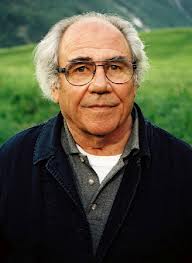
Baudrillard and Simulation

The regular Media, Communications and Culture reading group at Keele met today so we could agonise over a short extract from Jean Baudrillard's Simulacra and Simulation. On the nature of the piece we were all as one; it was difficult, repetitious, and wilfully obscure. But beneath the layers of obfuscation, what is the thesis fighting to get heard?

Basically, Baudrillard is marking the passing of an age, an age where one could meaningfully make the distinction between the real and the unreal, what is fact and what is fiction, and the ability to separate essence from appearance. We have now moved into the age of the hyperreal, of simulation and simulacra. As he puts it:
The real is produced from miniaturised units, from matrices, memory banks and command models - and with these it can be reproduced an indefinite number of times. It no longer has to be rational, since it is no longer measured against some ideal or negative instance. It is nothing more than operational. In fact, since it is no longer enveloped by an imaginary, it is no longer real at all. It is a hyperreal: the product of an irradiating synthesis of combinatory models in a hyperspace without atmosphere.
What does this mean in plain english? We can no longer speak of the real in terms of authenticity, originals, or truth because our reality is completely simulated. To give an example, 'nature' in Britain is a simulacrum: it exists because it is completely artificial. Both in the sense of a 'reality' shaped over many thousands of years by the activities of our species, and as an empty signifier whose referent is constituted by its relationship to other free-floating signs. There is no 'original' nature, that has long since been erased. All there are are self-referential discourses/signs of nature, which attempt to universalise their scope by projecting themselves back in time and constituting a prehistoric nature that is as thoroughly simulated as the one we inhabit today. Baudrillard would argue this constructed and thoroughly mediated artifice nevertheless constitutes our experience of nature, and that experience is no less "authentic" in and of itself, because what is true and what is false doesn't matter, for we inhabit the world of hyperreality.

An example we explored from the text were Baudrillard's bank robbers, to illustrate the inseparability of the simulated and the real. His provocative suggestion is that the authorities would find a self-consciously simulated (i.e. not real) bank robbery more dangerous than the "real" thing. The latter merely transgresses the law of property, which in turn reaffirms the ediface of the criminal justice system. The simulated robbery, however, makes visible the law of simulation; it exposes the absence of a basic reality and the constructed nature of the hyperreal. Baudrillard goes on to note that such an attempt to isolate a simulation, to reveal our contemporary reality principle, is ultimately doomed to fail because they're fully bound up with the inertia of the real. In this example, the authorities will respond as they would to a 'real' bank robbery. The same is true if someone simulated fascism, anti-social behaviour, a profession, and so on: the baggage of the real ensures their generalised acknowledgement as 'real'.

Where does the play of hyperreality leave politics? Once again, everything is unhinged by the simulation. There are no objective political facts that impose themselves upon the interpretation of events. All that is the case are a precession of models (or rather, self-referential systems) whose circulation around a certain topic generate a magnetic field of events. The facts do not constitute the explanation, rather the explanation constitutes the facts. If new facts emerge, they do not assume an independent trajectory but arise within and between different models, they either become absorbed into the stuff that makes up the model through its acceptance or suppression, or, become a point of contestation between different models. What prevents the complete collapse into relativism are the arbitrary injunctions imposed upon facts themselves by the models. It is not possible to fix the truth from outside the model, only within it. As each of us inhabit these models so, from our individual perspectives, the true and the false appears possible for these are the functions of the systems, it nevertheless remains an effect of a simulated world.

The obvious contradiction in all this is if we're bounded by self-referential systems, how is it he has provided an account set outside our simulated universe? Well, as far as he was concerned, he hasn't. Rex Butler in his book, Jean Baudrillard: The Defence of the Real, notes how 'the real' has a dual meaning in Baudrillard: there is the real 'real' (or, 'real' real) that exists beyond the limits of our simulations, and immediately becomes simulated as soon as they come into contact with the hyperreal world; and the circular realities produced by models/self-referential systems. What Baudrillard has done is to provide an account of these circularities by exploring, critiquing, and showing them up to be fictional understandings of the real. Work such as The System of Objects, The Mirror of Production, Symbolic Exchange and Death, Seduction, Forget Foucault, In the Shadow of Silent Majorities, and America all inhabit particular self-referential systems - the ensemble of commodity-signs, Marxism, feminism, sociology, etc. - and attempt to push their logics to show up their limits as simulations. For example, in my previous post on Baudrillard, his discussion of Marxism in The Mirror of Production had him arguing that once Marxism encountered its limits - history before the emergence of capitalism - it effectively becomes an apologia, a radical accomplice of capital by projecting back its naturalist claims into the past, thereby buttressing its contemporary dominance. In other words, for Baudrillard, Marxism ends up depicting capital and capitalism not as historical, but eternal. Upon encountering its limits, Marxism disassembles into something approaching ideology, in so far as ideology is still possible. In the earlier post this understanding was critiqued with reference to subsequent developments within Marxism. The problem is, Baudrillard and his supporters would argue, this makes no difference at all. By asserting an accurate exposition on the historicity of Marxist categories, all I ended up doing was asserting the reality claims of one self-referential system, and therefore had been seduced by the logics of simulation and hyperreality. From this standpoint, the possibility of effectively critiquing Baudrillard lies not in Marxism, feminism, or sociology; but from within the terms he operates, of turning the logic of his thought against himself and the claims he makes.

While on the one hand, you can make the case that his critiques of the limits of self-regulating systems and exposure of the simulated nature of things can act as a radical scepticism toward any kind of belief system that claims to explain everything, on the other there is no escaping the fact his deconstructive project make a series of truth claims about hyperreality, simulacra and simulations, the absence of the real, and so on. His approach constitutes a sort meta-system, where the components of its self-referentiality aren't concepts in the same way labour power, surplus value, commodity fetishism, etc. are for Marxism; rather their place is occupied by the models and systems Baudrillard's critique is parasitic upon. Feminism, psychoanalysis, etc. are both supports of and act as foils. Baudrillard seemed to be aware of this, and realising the difficulty of his position resigned himself to acting out this fatal logic throughout the remainder of his writings, perhaps in the hope that by attacking Baudrillard, critics will come to understand the operation, the ruse of the hyperreal.

Its not difficult to see why Baudrillard has evoked much hostility. His internal critiques of self-referential systems are often deliberately provocative, and what he seems to offer is nothing more than a nihilist void. Small wonder his work is taken as an exemplar of the purest postmodernism, though of course for Baudrillard this is as much a system as any other.

But where does this leave Marxism? As a system constituting its own simulated reality, is a considered response to Baudrillard possible? I would say yes. The starting point should not be how he uses Marxism in the early phases of his project (The System of Objects, The Consumer Society, For a Critique of the Political Economy of the Sign, and The Mirror of Production), but the operation sketched out above: a critique of Baudrillard according to his own terms. Proceeding from this the notion of agency, suppressed/ignored as an epiphenomenon of self-referential logics but nevertheless the ultimate foundation of the whole hyperreal ensemble can be brought into play. From here how agents are the site of contestation between self-referential systems and logics, but also the producers and disseminators of these tensions, contradictions, and antagonisms that ripple through the social fabric, conditioning and developing systems, which in turn condition and develop agents, and so on. Once we have unearthed agency, notions around interest and materiality can be reintroduced, questions can be asked about whether the logic of simulation is politically neutral, or (as Baudrillard did note) follows a similar logic as capitalism's reduction of the diverse range of commodity use values to the universal equivalent, exchange value. Which means having to dig our copies of Capital out again to chase away the nihilistic shadow Baudrillard has cast over contemporary social thought.

Sunday, 9 December 2007

Campaign Against Climate Change Demo

As the rain lashed down from a steely London sky, I wasn't alone yesterday in thinking the latest demonstration against global warming could have done with some climate change of its own. No more than 10,000 assembled at Millbank to put more pressure on Bush and Brown to match their hot air with real action against greenhouse emissions. Called by the Campaign Against Climate Change, the demonstration was mostly young and appeared quite new to politics. The rest were composed of NGOs, sundry environmentalists, religious groups, mainstream parties, eco-anarchists, and the revolutionary left. I came down with brothers F and N of Stoke Socialist Party to sell more of our fine T-shirts and make general propaganda pointing out system change is the only sustainable political answer to the problem of climate change.

The weather clearly depressed turn out, therefore numbers were only slightly up on last year. Unfortunately, the labour movement were far from prominent. Given the LRC's turn to reaching out to movements beyond the Labour party, their banner (and that of any constituency Labour party for that matter) was conspicuously absent. There were a couple of trade union banners but that was all. This is a real shame, because if we are to connect with a new generation of radical young people we have to make sure our movement is there and seen to be offering socialist alternatives to the guilty (green) liberalism on offer from the bulk of the NGOs and religious groups.

I was surprised to see a low turn out from the revolutionary left. The SWP only had 50-60 activists out, which is low considering the numbers it can usually mobilise for London marches. Did the rain put off the comrades, or has the split in Respect damaged them that severely? Speaking of which, it was difficult to tell the two Respects apart. You had to be an inveterate sectarian to be able to tell the difference. The SP only had about 30 comrades working the march and the rest of the revolutionary left had no more than a few dozen between them, and the bulk of that was taken up by Workers' Power's neatly arranged and eye-catching contingent. The CPGB-ML graced us with their presence, though somewhat disappointingly they had left their huge Stalin portrait at home. Also, the Green party deserves some credit for being organised enough to get hundreds of smart-looking placards printed up. However, the irony was not lost on SP comrades to see so many of them unceremoniously dumped about Grosvenor Square at the end of the march.

One thing our intrepid squad of socialist Stokies were not prepared for was the very low political level of the people we encountered. And I'm not talking about the young, raw activists for whom this was one of the first demos they'd been on. All Stoke SP activists are used to doing street stalls and talking to "normal" workers, so we did expect to encounter some more clued up politics, especially on a demo of this character. I spoke to a young SWP'er who tried to recruit me to their version of Respect. When I told her I was a member of the SP, she said I ought to still join anyway because "the Socialist Party doesn't stand in elections". News to me! She seemed genuinely surprised to learn we had five councillors. Okay, it has been oft-noted that SWP'ers generally don't know about the rest of the left, so I'll let that one pass. But what I won't is the disgraceful behaviour of a particularly obnoxious LibDem. We got into an argument about capitalism and the environment, and when I patiently explained to her the liberty she claimed to stand for could not be attained in a class system founded upon the exploitation of labour power, she went mental and started effing and blinding in my face, while her three young children looked on bemused. I must have hit a sore spot, but I gave as good as I got. Toward the end of the march I ended up having a word with a couple of self-defined ecologists. They must have been smoking something as they would not accept that the world's poorest would be hit hardest by climate change, instead they thought we would be affected equally. I would suggest these gentlemen go visit Bangladesh to find out how many millionaires have been displaced by the recent floods. Afterwards, brother F told me he'd been chatting to a bloke who was convinced these demos (mobilisations against climate change occurred in 50 other cities around the world) would immediately force Bush and Brown into taking action against those recklessly emitting carbon. I think someone got up today a very disappointed man. Again, to reiterate, these were not "new people", but activists who appeared to have been around the block a bit.

It wasn't all grim. I got to have a quick chat with a behooded and dripping Derek Wall about his surreal experiences of addressing two Respect conferences, the mooting of a joint blog exploring potential activist uses of academic social movement theory, and the possibility of luring him up Keele way for a meeting. Also it was good to catch up with Wales SP paper-selling legend, DR, (who tried selling a paper to billionaire fat cat, Sir Philip Green who, bizarrely, was also on the march), and other SP comrades who are too numerous to mention.

Ulitmately, the rain put paid to Stoke SP's plans for a dynamic paper/t-shirt-selling intervention, but overall the demo can be considered a cautious success from the standpoint of the organisers, and gives us a good starting point for fusing together environmentalist and socialist politics. A valuable opportunity for this will be on 9th February at the Campaign against Climate Change-sponsored Trade Union Conference at the ULU, Malet street, London.