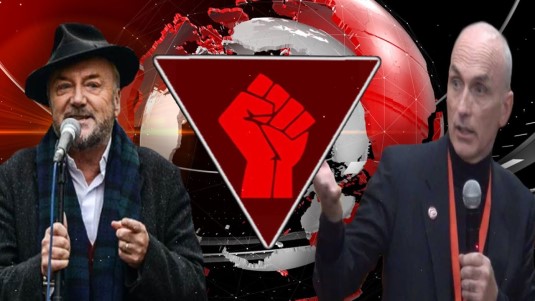
This is interesting for left trainspotters for two good reasons. Firstly, it interrupts the duopoly the Socialist Workers Party and the SP have exercised over left-of-Labour mobilisations since the early 00s. The Socialist Alliance, Respect, the short-lived and ugly-named Socialist Green Unity Coalition, No2EU, and from 2010 TUSC were/are "unity" projects cobbling together already-existing left groups, but revolved either around the SWP and SP as Britain's largest and most visible Trotskyist groups. The Corbynist interlude interrupted their electoral adventures, leaving the field clear to the more "interesting" elements of the far left. With Chris Williamson's departure from Labour and the formation of his group, his alliance with the SP certainly boosts the profile of TUSC, but arguably more significant is Galloway's party. Now claiming 56 branches and 4,000 members, on paper the organisation is larger than the SP and, perhaps, the SWP. At that size, its big fish in a small pond status means it could ignore the rest and do their own thing. Possible given the WPGB core are congenitally anti-Trotskyist, and happily oversaw purges on Scargill's behalf in the SLP before they fell out of favour. But the good relations between Galloway and TUSC's best-known figure might result in a non-aggression pact of some description and potentially foreshadowing a challenge wider than the 131 candidates TUSC rustled up in 2015.
On the Workers' Party itself, projection of significance and dynamism in the age of social media is super easy: what matters are the number of activists a party can mobilise. The cadre of the WPGB are the Communist Party of Great Britain (Marxist-Leninist), a very small Stalinoid Westboro Baptist Church with its leadership based around the progeny of Harpal Brar and fidelity to the revealed truth of Uncle Joe's Collected Works. Quite how an ideologically circumscribed sect whose shibboleths fly in the face of the historical record are going to cohabit with refugees from Corbynism is anyone's guess, but we'll find out in the fullness of time. But this does speak to something, which is the second point of interest: the generalised growth of the left.
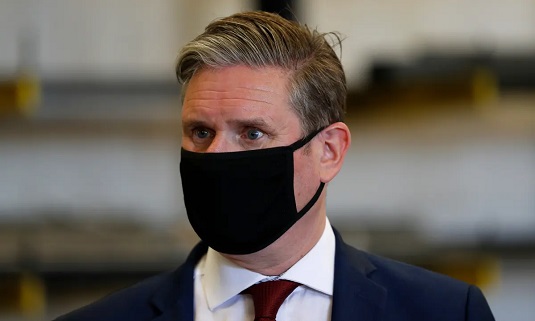
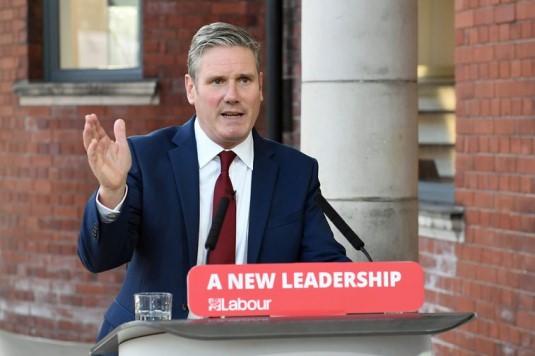
Labour's NEC elections show the party has lost 57,000 members since Keir Starmer assumed the leadership, and the turnout suggests disengagement on the part of others. Most of these are going to be on the left, and a good proportion of them are on the market for some sort of alternative. The heft the WPGB claims isn't necessarily another case of revolutionary inflation: there are real opportunities for the parties of the far left to intersect with and put on a few thousands members each. This doesn't suggest any electoral challenge the WPGB and TUSC decides to mount, with or without one another, is going to do better than the sub one per cent scores such outfits can normally expect, but this isn't the point. For once, "putting down a marker" might actually help grow their organisations.
I say might, because the appeal these organisations have are quite limited. The SP/TUSC for its part fetishises and is trapped within an obsolete class politics, WPGB has Galloway, Stalinism, and his alliance with Scottish Tories, and Chris Williamson just can't stop sailing close to the wind on matters antisemitism. A subset of Jeremy Corbyn supporters might find this compelling, especially those who defined their affiliations in terms of fealty to his person than a political programme or attachment to a wider movement. And those who do wash up, how permanent will their new homes be? I can't imagine many taking kindly to being guilt tripped into the treadmill of paper selling and permanent activism while expecting to show deference to petty apparatchiks and, in Galloway's case, the Glorious Leader.
Until that day comes, there is some danger a far left election challenge might pose Labour. Not existential by any means. Whatever the fantasy, they are not about to become a new left party/workers' party with mass roots or an episodically significant "left UKIP" that might do to Labour what Nigel Farage did to the Tories. But around the edges, a few hundred votes for a candidate here, a couple more for a paper candidate there could make the difference between a Labour gain/hold and a Tory or Liberal Democrat sneaking through the middle. And, if 2024 is going to be a tight election powered by polarisation, every vote and every seat counts. The more Starmerism reveals itself as an authoritarian managerialist project in the Milibandist mode of a "good" capitalism, the more the risk is run as more disgruntled former Labourists jump ship and help build the far left challenge. This far out from the election Labour's leadership can elect to do something about it, but as Keir and co. don't understand Labour's own base I wouldn't put the house on it.
Image Credit