Here's an old review of Göran Therborn's From Marxism to Post-Marxism? (2008) that hasn't appeared here before, and might be usefully read alongside these ruminations on Post-Marxism. Enjoy. When capitalism enters a period of crisis, the spectre of Marx has a tendency to return to haunt the popular imagination. This collection of three essays (originally published in New Left Review) is certainly timely, even though they were written before the present economic crisis. Because of this they already have a dated quality to them, but nevertheless raise a number of interesting questions about Marxist scholarship and the problems of socialist strategy. For the purpose of this review it is probably best to begin with Therborn's middle essay, 'Twentieth-Century Marxism and the Dialectics of Modernity'. This locates Marxism in the context of modernity; and argues it should be conceptualised as its loyal opposition. For Therborn "Marxism simultaneously affirmed the positive, progressive features of capitalism, industrialization, urbanization and mass literacy, of looking to the future instead of the present, and, on the other hand, denounced the exploitation, the human alienation, the commodification and instrumentalization of the social, the false ideology and the imperialism inherent in the modernization process" (pp.66-7). Unsurprisingly but understandably he focuses on an overview of Frankfurt School theorists, starting from Herbert Marcuse, for whom Marxism was the "integrating force" of critical theory to Max Horkheimer, who literally kept his philosophical radicalism under lock and key in the 1950s and 60s. What united the idea of critical theory was an at times explicit, at times repressed Marxism that sustained the link between it and the critique of political economy, regardless of the theoretical gyrations performed by Marcuse, Adorno, Horkheimer et al during their careers. For Therborn this link was broken by the trajectory of Jürgen Habermas, who moved away from the systemic antagonisms that exercised Marxism and critical theory to exploring episodic conflicts and the possibilities for communicative rationality. But Frankfurt was just one strand of what came to be known as Western Marxism. Following Perry Anderson's Considerations on Western Marxism (1976) and Martin Jay's Marxism and Totality (1984) this "tradition" began with the October Revolution and was heavily conditioned by the defeat of the revolutionary waves of the 1920s. It is therefore unsurprising that its overall trajectory was to retreat from politics and labour movements to philosophical and institutional preoccupations. Therborn accepts the heavy influence of 1917, but instead suggests Western Marxism should be read as the radical reception and reverberation of this event rather than of the retreats that came later. As such it came to an effective end when the USSR dissolved in 1991. Nevertheless the key feature of the tradition is the disassociation of theory from practice. The first essay, 'Into the 21st Century: The Parameters of Global Politics' aims to analyse the post-1968 world by attempting to draw a map of global political space. This proceeds along the traditional political axis of left and right, but also the 'cultural', and the geopolitical. This produces an account that charts the relative decline of the US, first in relation to West Germany and Japan, and latterly the European Union and China. Therborn also acknowledges the rise of neoliberal agencies such as the IMF and WTO as global actors, and the new importance of networks of loosely progressive NGOs that give international relations a new dimension of complexity. Therborn also analyses the rise of certain state forms at the expense of others, and addresses the coincident and connected processes of the growing centralization of capital and its ability to range across transnational markets. As far as Therborn is concerned this development of capital has unfolded along lines more or less predicted by Marx. However another trend Marx discerned – the increasingly social character of capitalist production and a sharpening conflict between it and the privatisation of wealth – has gone into reverse. Since the neoliberalisation of global capitalism (Therborn dates it from 1980 onwards), the specific configuration of class relationships that sustained capitalism in the post-war years has broken down. The chief casualty was the industrial working class in the West, but elsewhere agrarian labour has been uprooted, as masses of people are compelled/drawn to the world’s cities. This has meant that along with the diminishing influence of labour movements, capital has also undermined many of the bases of religious influence and patriarchy. This, among others, has resulted in a widespread cultural shift from ‘deferential individualism’ to ‘irreverance’. Another interesting point Therborn makes here is his location of postmodernism as a discourse of the left. It is a product of irreverence fused with important victories of the ‘new social movements’, the acceptance of the welfare state, and the defeat of colonialism. But it is also equally the offspring of labour movement decline, the neoliberal dominance of capital, and the discrediting of a socialist alternative. Simultaneously while the (academic) left were mired in arguments around metanarratives and the possibilities of social critique, an aggressive right wing modernism has recast the globe in its image. Globalisation was heralded as a social Darwinist utopia, and modernisation was equated with breaking up the social wage and destroying existent collectivities in the name of flexible labour markets. Postmodernism was disarmed and helpless in the face of this onslaught. To this state of affairs Therborn opposes a ‘trans-socialism’ - a socialism that retains its anti-capitalist thrust but without a historical agent whose struggles have transcendent capacities. It seeks to encompass workers’, women’s and ethnic collective identities in the context of an anti-exploitative moral discourse, while making the case for the right to pleasure and enjoyment, avoiding the dour asceticism often associated with the Leninist left. In the final section, which surveys radical social theory in the West since the turn of the century, Therborn offers an interpretative framework for analyzing its condition. He suggests understanding Marxism as a triangle of a philosophy of contradictions, historical sociology and a mode of politics. The last was the apex of the triangle in classical Marxism, and its prominent adherents were masters of all its three sides. Subsequent developments have broken this triangle, partly because of the increasing intellectual division of labour, and partly due to the decline/fragmentation of labour movements. This has bequeathed contemporary social theory a varied set of left thinkers, such as Zizek, Jameson, and Wallerstein, but the sundering of the triangular has led to a splintering of radical thought along the lines of ‘Third Way’ post-socialism (Giddens); a new, non-Marxist left (social democracy/NGOs/anarchism); professional Marxology (academia); Post-Marxism (Laclau and Mouffe); a militant Neo-Marxism (Negri and Hardt, Zizek) and resilient lefts (‘official’ communist parties, Trotskyism). Overall Therborn can only see a pessimistic future for Marxism. At the end of the second essay, he writes “the most obvious way forward for social theorising inspired by Marx will be to look at what is currently happening to the venerable couplet of the forces and relations of production on a global scale and their conflictual effects on social relations. Marxism may no longer have any solutions ready to hand, but its critical edge is not necessarily blunted” (p.110). Leaving aside the extent to which Marxism has ever had “solutions ready to hand”, the whole thrust of the book accepts as immutable the disjunction between Marxist theory and practice. Therborn also neglects the fundamentally open Marxist understanding of class, which views it as a relationship. Never before in history have so many working lives been subject to the capriciousness of capital. Rather than being just one struggle among many, for the vast numbers of men, women and children common experience of class relationships can act as the social glue for a whole series of seemingly disconnected subaltern struggles. As long as this state of affairs persists, there will be activists, parties and movements who turn to Marxism to make sense of their circumstances. It is here where the fusion of Marxist theory and practice can and will be found, regardless of academic debates about Marxism’s status.
In the sociology of social movements, many a printer cartridge has run dry discussing the problems of what we call 'frame alignment'. That is the problem by which a movement or, as is more usually the case, a social movement organisation of some kind has to gain wide currency for its world view. What this table from YouGov for the New Statesman shows is just how big that gap between Jeremy's support and the wider Labour-minded electorate is. This is a huge challenge for the party. Of course, Labour as a whole isn't an ideological sect organised around some principles formulated by an all-knowing guru. It is the party of the labour movement and, as such, contains a very broad range of views in it. That's why the party spans the range from John McDonnell to Simon Danczuk. That's why when Labour faces the electorate in the Scottish, London, and local elections next year its programme for each will be significantly short of the full communism that gets Fleet Street in such a tiz. So a dilution there will be. The electorate will never face Jeremy Corbyn naked, as it were. Perceptions nevertheless count. The electorate might like the sound of policies like rail nationalisation and lifelong access to education, but these are not issues that will swing the election. It's the economy or, to be more precise, the sense of self-security that's bound up with it. And Labour can win on this in one of two ways. Either popular confidence completely collapses in the Tories, or that Labour are perceived to have a better plan for Britain's economic security. Things might look a bit dicey in China at the moment, but we shouldn't hold out for another meltdown just in case it doesn't happen. The path to victory is via the latter route. Identifying the problem is the easy bit. Coming up with a solution is not.
A Tory and a LibDem standing on the edge of a cliff. Who do you push off first? The Tory, obvs: business always comes before pleasure. So goes the favourite gag of a former shadcab member. A number of longer-serving Labour activists might appreciate that, but the joke's in danger of being a touch dated. For most of the 00s the Liberal Democrats were almost fashionable. They did very well out of their opposition to the Iraq War, and for the early part of that decade Charles Kennedy (RIP) helped them look good and a little bit leftish. Then came Menzies Campbell's interlude and Nick Clegg, and for a while - especially just prior to the 2010 general election - LibDem yellow looked like it might transmute into electoral gold. As the media fawned, the party's activists were loathed by Tory and Labour members alike. Dirty campaigning, opportunism, and attempts to take credit for the works of others - it's not for nothing S for Snakes is the code we use for them on voter ID. So for many folks in the red team, election night was a punishing disappointment, but every cloud had a LibDem whining as their parliamentary representation plummeted. 30 years of hard campaigning graft, gone. It couldn't have happened to a nicer party. As perversions go, talking about the LibDems now is up there with porking dead pigs. I guess that makes me a filthy deviant. But Tim Farron, the man tasked with leading the LibDems out of the Parliamentary phone box, doesn't half talk some risible nonsense. His party are the "comeback kids" - a name that doesn't really suit until, you know, you've made a comeback. Along with Uncle Vince - remember him? - he reckons an avalanche of Labour MPs will swell the Parliamentary Party as they get fed up with Labour's "unelectable" new leader. Alas, they haven't factored in how any Labour MP crossing the floor to the yellow team had better familiarise themselves with Universal Jobmatch. Still, because Tim has allegedly received phone calls from chummy Labour MPs moaning about Jeremy's election, defections are definitely imminent. He would never fib about such a thing. Speaking of swapping party labels, it's perhaps inopportune of me to mention this defection and rumours of Nick Clegg's departure as well. The pickle for the LibDems is defining what they are for. Before 2010 they were the nice left but not-too-left party that went litter picking and made an urban legend of dodgy graphs. After 2010, they were the Tories' meat shield prepared to go along with some truly repugnant policies. Their only saving grace, as we've found out since, is they stopped the Tories from being even worse. But now, where do they sit? In his first leader's address - effectively a pre-speech - to conference at the weekend, Farron put it thus:
So let me be crystal clear what the Liberal Democrats are for: We are the party that sees the best in people not the worst. We are the party that believes that the role of Government is to help us to be the best that we can be, no matter who we are or what our background….. That’s it. That’s our mission.
Stirring. He went on:
We trust people. That’s why we stand up for the individual against the state. Why we stand up for the minority against the majority. Why we stand up for the outsider against the establishment. Because that is not just what we do, it is who we are!
And what about gruel for the activists, the hope of what might be?
You know, the Dutch. They are so liberal, they’ve got two liberal parties. The one that’s most like us, D66, were the smaller party in a coalition and then in 2006 got stuffed – 2% and 3 MPs, they came 9th! But last year, they topped the polls in the European elections. So revival is in our grasp. Have hope. Have courage. Have belief.
There's official optimism and there's outright delusion. A canny Russian once observed that politics are concentrated economics, and the tale of the LibDems is the story of what has afflicted establishment politics generally. For years Westminster politics has grown distant from the constituencies that gave them form and content. We've had so-called post-democracy where the neoliberalisation of the state entailed a political consensus around marketisation and authoritarianism to the point where elections appeared as so much competition between career minded elites who differed over little. Exacerbating this, when the financial crisis hit in 2008 official politics in Britain underwent liquefaction. The inchoate anger and fear of the threat of depression combined with years of low level antipathy and found expression in the MPs expenses scandal outcry. Support for Labour collapsed and the LibDems rode that wave into the ministries, until they too were broken by their dishonest backtracking on tuition fees. They went down, and up came UKIP. And the SNP. And the Greens. And now Jeremy. Under the impact of the crisis, the position of the LibDems in wider society has melted, to all intents and purposes. UKIP are an outcome of a decomposition and fragmentation of the right. Labour's surge may be symptomatic of a recomposition of the labour movement, albeit one that's coming through the party as opposed to the unions and associations that make up its base. And the Tories, despite their UKIP difficulties, are well-placed to win on the basis of the anxiety and insecurity they're stirring up. The elbow room for the LibDems is tightly circumscribed. Herculean voluntarism can only get themselves so far, because there are so few options. They might think a left turn by Labour leaves an opening, but of necessity Jeremy's management of the PLP means the party is stretching its presence across the political spectrum as opposed to upping sticks and camping out in the lefty backwoods. The second problem for the LibDems is they have a long penance to serve. They can pose as left liberals if they wish, but few are going to believe them. They talked left and governed from the right with the Tories. Whatever will stop them from doing so again? And the final problem is Tim Farron himself. Inexplicably, quite a few people in politics like him. I suppose it says something about them. Tim is not only bland and uninspiring, he presents as deeply insincere too. He might not be a Tory with an EU fetish, which Nick essentially was and is, but oozes the same smarm alright. Tomorrow, as Tim takes to the stage for his leader's keynote we're going to hear all these things over again. Even the mini-revival in local by-election fortunes (the LibDems have outperformed UKIP three months running) might get a reference. Most of it will be hyperbole and hot air, but because voluntarism and grim desperation is all they've got, don't be shocked if the next Focus leaflet through your door is more noxious than their previous efforts.
I remember well my first night at university. Being one of the first to arrive at my halls of residence, yours truly took it upon himself to knock on everyone's door to do the introductions and ask if they fancied going for a drink later. Ten of us duly hit the union and got pretty sozzled, and I ended up finishing in a room shared by twin sisters talking shite over several spliffs with a couple of new mates. Fun times. While a good proportion of readers who've been through the higher education system have had similar experiences to the one described above, our social betters are far more outrageous. I can wince about nights closing with my arms draped around the toilet bowl, or recall snogging young women I should have steered clear of. But never shall I look back at the time one had an intimate entanglement with a dead pig. It's been a right old laugh to be sure, but let's get chin stroky about it. On the source of the story, it's not too difficult to pin down. As Isabel Oakeshott - Lord Ashcroft's co-writer on the (very) unauthorised biography of Dave - admitted on C4 News earlier, it's not difficult to work out who the "Tory MP contemporary at Oxford" source might be, though I look forward to him rebutting similar questions when the limelight swings back his way. Yet, does it really matter. Truth is, if something scurrilous about a left MP was published - like the crap thrown at Jeremy Corbyn this last week, we'd recognise it as shoddy journalism. Which, of course, it is. Why Oakeshott has immolated her career this way is a mystery, but not so Lord Ashcroft's motives. After all, buying a senior cabinet position for £8m and ending up with a crappy kettle monitor's role has got to burn. But really, beyond the comedy, does it matter? Yes, actually, it does. Not because of salaciousness or the entertaining stupidity of one's younger days. On the whole, what's in the past should stay there. The only exception is if private scandal then means public impropriety now. Yet something rings true about the allegation beyond did Dave/didn't Dave. We know young men from well-heeled families have a thing for disgusting initiation rites. Toby Young, wheeling himself out to defend the PM's character earlier, said of Oxford's secret societies:
the venerable, all-male institutions where Oxford's social elite are initiated into Britain's ruling class, [can look forward to] receiving instruction on such arcane rituals as how to "bumper" a yard of port, slice the cork off a champagne bottle with a sword and engage in a range of sexual practices that would make Belle de Jour blush.
These borderline legal and repugnant practices (a yard of port?) have their functions. One's humiliation becomes the basis of experiences shared only by a self-selected elite. To participants and outsiders enraptured by such things - itinerant waifs and social climbers seeking admittance into and the affirmation of the top networks - the feats of endurance and perversion these rites involve confer an aura of exclusivity on the in-group. An outsider never knows quite what they might be required to do, and balking them at the moment of reveal can spell social death and effect one's chances after Oxbridge. Especially in the lucrative city non-jobs many of these young men move into. The second is a form of solidarity. All the in-group know the unsavoury practices each and everyone has gone through to be there. The price of social exclusivity and its post-graduation rewards are purchased with the understanding of potential (future) social suicide. The group have to hang together or, in a manner of speaking, they will hang separately. The outward facing aura and the veiled inward-facing threat underpins a solidarity that can bind a network together for decades. And as we know from the PM's reluctance to ever sack anyone, Dave is very much attached to his friends. The pig stuff gets the shock factor, but it lifts the lid on the sorts of ritualised practices our ruling class use to admit and police its boundaries. If it makes them look ridiculous and debauched as a collective, then perhaps Oakeshott and Ashcroft's muckraking will have served a useful purpose.
And you thought Ed Miliband had it bad. Driven by the press and then echoed by the broadcasters, the media assault on Jeremy Corbyn this week has perhaps been the most scurrilous, smeary, and desperate I have ever seen. In rough chronological order, we've seen denunciations of Jeremy's refusal to sing God Save the Queen, attacks on his dress, and the rubbishing of the "new PMQs". If anything, it's ramped up this weekend. We've had the demonstrably false IRA smear - hardly a surprise to see Harry Cole, known around Westminster as the most dishonest journalist in politics, behind that one. There are revelations about an affair decades ago, attacks for refusing a Rugby World Cup jolly, news that an ancestor operated a brutal workhouse. And just when it couldn't get any worse:
Were I to have the new leader's ear, I'd be raising merry hell about this - even if a coup prospect is fanciful. A letter to the MOD plus a question at the next PMQs inviting condemnation of the comments, and extracting the promise of an investigation would be the appropriate response.
All this, however, demonstrates a problem with a great deal of last week's media coverage: overreach and oversaturation. There's only so much dirt to be dug up about Jeremy, and thanks to the summer-long leadership campaigns most of it has already had an airing. Old speeches, old interviews, old footage has already been trawled through by political opponents and journalists, and it's most unlikely something new's going to turn up. If all the press can do is run them and rerun them, readers could start tuning out and stop buying papers. That's possible - the long-term decline of the press isn't just about the ubiquity of internet news. Poor, regurgitated content is playing its part too. There are two things Labour's new press operation can do in this situation. The first is a strategy I'd definitely not recommend. It can attack the media for its bias and rely on a couple of wobbly media friends - The Mirror, The Graun - and hope the masses of new members and the growing influence of social media can compensate. In other words, retreat into the bunker and hope to outflank the media. The alternative is to use them. Yes, Richard is right, the media are hostile and no amount of spin or watering down policies are going to change that. The trick is then to try and lead the agenda by moving the fight to the grounds of your own choosing. There are three points here. Jeremy's press should always try and cultivate relationships with journos. And that includes those on the dreaded Murdoch titles. Good relations can be cashed in later to occasionally blunt attacks, and perhaps the odd exclusive. Second, the leader's campaign was principled, non-personal, and all about ideas. The trick then is to pick a few issues a month and keep hammering them in speeches, articles, PMQs, whatever for a limited duration before turning to something else. With the media running out of bilious attacks, this gives them fresh meat but shifts them onto the terrain of policy. Of course, the press has it own preferences. If Simon Danczuk says something silly, or rumours abound of more shadcab divisions, they're par the course. But some of the strategy will work some of the time. Third, rebuttal. Nothing should go unanswered. Every lie, every smear, all have to be responded to, refuted. No more 'no comment'. As a general rule, the left has a sophisticated theoretical understanding of the media's political economy and the biases growing out of them. High time we had a strategy to match it.
Jeremy Corbyn crushed all-comers and took Labour's leadership with ease. In short, this is nothing short of historic. 100 years from now academics and labour movement geeks will still be analysing and debating what happened. I already pity our descendants who'll be scouring rusty Twitter servers for contemporary comments on Corbynmania. As someone who appreciates labour saving wherever possible, I reproduce below the report made to Stoke Central CLP by our constituency secretary, Pat Evemy. This was Pat's third leadership conference, having been on hand in 1992 and 2010. Despite having working in Westminster I still get a buzz walking across Westminster Bridge and through Parliament Square, there was quite a crowd outside Queen Elizabeth Conference Centre, and I was showered with leaflets as I made my way though, including one almost unreadable effort from Labour Party Marxists that heaped vitriol on all in the Party, including Jeremy. Socialist Labour first edition was a bit better, with shorter articles, some written by very new party members keen to show their CLP credentials. Entering the conference centre there were a number of young men in suits, ties, and fashionable haircuts striding around looking important. The rest of us resembled any Labour Party meeting, some hovered by the door waiting for their candidates to arrive, while the rest milled around being sociable and keeping out of the way of the young men in suits. Being on my own I was able to find a single seat near the front next to Bonnie Greer, which was a bonus. Some friends were in the front row having won two tickets to special conference in a raffle. The atmosphere was serious and business-like as we settled down to listen to Iain McNichol reassure us the elections were free and fair and remind us that the party is bigger than a single person, even though the leader is an important role. He then went on and welcomed new members and encouraged them to get out and campaign. He was followed by newly-selected London mayoral candidate Sadiq Khan who spoke on the need to win to make the kind of society we want to see. Chair of the NEC Jim Kennedy then moved on to the results announcement. On the third round of voting Tom Watson was elected Deputy Leader woth 50.7% of the vote, with Stella Creasy coming second on 26.4%. Tom then gave a speech on unity, the need to back the new leader, and remaining in touch with the electorate. He also talked about how we are the last line of defence against the Tories, and how Labour needs to be pro-business and pro-worker. After Jim returned to the lectern, voices around me were trying to work out from the deputy results if it was possible that Jeremy had not won on the first round would it be possible for him to be beaten? As we know, he won with 59.5% of the vote with Andy Burnham coming second on 19%. Jeremy's speech started with a long and gracious list of thank yous, and had a sharp dig at press intrusion into the lives of members of his family. He then welcomed new and returning members and gave an overview of the elections and campaigns coming up over the next year. He got the biggest cheer when talking about the London elections and the social cleansing of the capital by the Tories, promising that houses for Londoners would be a priority. He then went onto the Tories' legislative agenda and their policy towards refugees. Ending by reminding us we are now bigger, stronger, and more determined, things can and things will change. Standing in the lobbies afterwards, it was possible to hear the strident voices of the hard left and the sneers of the right, but much less than what you would have heard in the 1980s. Hopefully we are not going back to a time where every party meeting was preceded by pre-meetings to ensure you were on message and prepared to toe the line, or where attacking other parts of the Labour Party were more important than defeating the Tories. Party unity isn't going to be easy, and it doesn't mean haranguing everyone until they agree with you, but listening and respecting others with different views. There is enough in what Jeremy says for everyone to find something they can campaign on. If there is an elected shadow cabinet then MP's will be able to elect a team they can work with. If not, then who Jeremy appoints to shadow chancellor, defence, and foreign secretary are going to be key roles to counter the perceived weaknesses in these areas. As I left Angela Eagle was rumoured to be shadow chancellor, and it would be great to have a woman there as it wasn't a good day for women's representation in politics. If we are to win in 2020 we have a hard road ahead where we are going to need to persuade colleagues, family, friends, and neighbours to vote Labour. The Tories are soon to gerrymander parliamentary boundaries based on the electoral register, not the populations who live there. If we are relying on the young and non-voters to vote Labour then we need to start our voter registration campaign now to ensure we stand a chance of winning. Yet, despite all that, as one non-Labour friend said to me today: at least we now know what you stand for.
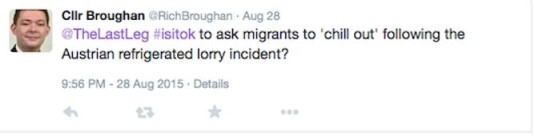
During the Labour leadership campaign, the stand-out features of Team Jeremy was its professionalism and consistency. You knew where Jez stood, love him, loathe him. He presented as - because he is - a man of principle. All through the 80s when it was de riguer to pose left, and into the 90s and 00s where such was a barrier to career advancement and media coverage, Jeremy has stood steadfast to his views. He was a signpost while all about him were weathervanes, as Tony Benn would have put it. Consider then the case of Cllr Alan Dutton, the City Independents' newest recruit from the Labour benches. If you followed the to-ing and fro-ing of labour movement politics in Stoke-on-Trent this summer, you'd know that Alan was a prominent local campaigner for Jeremy Corbyn. If a phone bank was running, he'd be there. If there was a campaign selfie, his mug would be in it. A protest wouldn't be a protest without a Cllr Dutton cameo. This raised a few eyebrows in and out of the Corbyn campaign to say the least. Up until that point in his four year tenure as a councillor, Alan's socialist sympathies were very well hidden. Having sat through many Labour Group meetings as a CLP officer, I don't recall any displays of a lefty conscience as the group debated and decided upon the tens of millions of pounds of cuts forced on the City Council. He was also tight lipped about his socialism on the number of occasions he moaned about Ed Miliband and told anyone who would listen about his personal and political admiration for the Prince Over the Water. What sparked the Damascene body swerve from dull-as-ditchwater David fandom to the loudest and proudest socialist the city has ever seen? As followers of Stoke politics know, Labour got slapped about in this year's local elections and lost overall control of the council. Seizing their opportunity, the City Independents formed a coalition with the Tories and UKIP (thereby breaking their election pledge not to form a coalition with anyone) and hey presto, we have a shambles more or less run by Stoke's diminutive Tory party. The fall-out in Labour saw the local leadership blamed for unpopular decisions taken during the last four years, and calls for Group Leader Mohammed Pervez to step down. A leadership contest was held post-election, which Pervez won easily. His challenger Cllr Ruth Rosenau and the aforementioned Cllr Dutton were dismayed at the result, public in their criticisms, and subsequently broke the group whip and voted for the confirmation of nominal Council Leader Dave Conway when it came before the first full council of the 2015-19 session. They were informed by the Group that disciplinary action would be taken against them, and a six month suspension was handed down to both. In conclusion to her piece about the Labour Group's decision, Ruth wrote that "Alan and I will sit out our time". Alas, as we now know, Alan had other ideas. Yet I cannot but help note the coincidence of breaking party discipline and converting to the reddest of blood-red Corbynism. If you wanted to be cynical about it, chumming up with local Labour lefties he previously had little time for allowed him to plead his case among comrades who'd lend a sympathetic ear, while - hoping - his efforts for Jeremy would be recognised and the disciplinary reversed either from pressure among the huge pile of new recruits or from on high. Either way, by defecting to the City Independents he's abandoned his comrade to a very difficult position. Ruth was too kind to him in the statement she gave to The Sentinel. He's left her in the lurch. Among the self-justifying waffle, he gives the game away with his opening line: "I'm a doer not a sitter, I cannot watch from the sidelines while others take decisions in Stoke-on-Trent." In other words, knowing his hope of a committee or cabinet position down the line was gone, he crossed the floor. But, of course, to somehow square this with the lately-aired socialist values, he wounds, wounds, the local party with this parting shot: "Dave Conway has more socialist values than most in the Labour group, as do the majority of the City Independents." Ouch. Let us remind ourselves that their socialism has involved handing the two powerful regen and economic development portfolios to the Tories. Has delegated negotiations with Tory-run Staffs County Council about a combined authority to the Tories, because Council Leader Conway is more interested in street signage than how the city is governed. A socialism that involves drawing up plans to gut the city's SureStart centres, attack council workers' trade union organisations, and thinks a Staffordshire Hoard-themed tea set is a solution to the city's woes. Among the "socialists" he's elected to sit with, Alan finds an unrepetant ex-BNP councillor, a Lord Mayor who thinks she's royalty, another who goes on and on about the abolition of the NHS and social security, a woman who campaigned on a manifesto calling for the banning of cervical smears, and of course, a councillor with a conviction for possessing the most disgusting child sex abuse imagery. It doesn't end there. If being in the City Indies wasn't bad enough, one of Alan's new colleagues is the charming Cllr Richard Broughan of UKIP. I've never met the man, though judging by his Twitter feed he seems like your typical 'kipper. Blame refugees for everything, moan about Islam, you know the drill. Dull. Boring. Backward. Then his Twitter feed turned this up:
I took the liberty of capping that in case Cllr Broughan gets itchy with the delete button. So, yes. Alan now sits with someone who thinks the deaths of 71 people, including four kids, is a laughing matter. That this void of a human being is part of Stoke's governing coalition shows just how desperately they grasped at power, and what they are prepared to tolerate to remain there. Just prior to the local elections, I had sight of Alan's re-election literature. It was done up in Labour colours but could you find mention of the party on there? Only in the small print. That's because Alan has never really been a member of the Labour Party. For him, it's about the Alan Dutton Party, a party guided by one ism. Not socialism, no. It's opportunism.
Jeremy Corbyn this morning pledged to try and change Prime Minister's Questions. Would he go for the "honest politics, plainly spoken" approach of his leadership campaign, avoiding the name-calling and yah boo sucks, or will he rise to the bait put to him by Dave? As we now know, he started as he's been carrying on for the last 32 years. He began with housing, and asked about what the government would do about the lack of affordable housing and soaring rents. Dave's reply, the first as part of his new strategy to offer substantive responses, waxed about more starter schemes, help to buy, and the need to support aspirations. Meet the new politics, the same as the old politics. Jeremy followed up with a question about how cuts to housing benefits threaten the viability of housing associations, and will cause job losses and worse living conditions for tenants. Dave's reply was that something had to be done about spiraling housing benefits, and the best way of doing that would be sorting out housing associations. Again, a substantive answer short on substance. The next question came on tax credits, and talked about a family who had written in to say that tax credits kept them away from the food bank. Dave's answer was to mutter about minimum wage changes and the raising of the tax threshold. The follow up cited IFS figures, noting that the rise in the minimum wage only compensates for up to 26% of losses through tax credits and other changes - how could this be considered fair? Dave didn't have an answer, but he did have soundbites. We've heard it before - country living within its means, moving from low wages, high tax, and high welfare to the opposite. Lastly, Jeremy used his last two questions for mental health services. Asked about unobtainable beds and people having to be moved miles away from home, Dave replied on his extra NHS spending, and the need to improve GP services and change public attitudes. Well, at least it was more substantive than PMQs have been for many a year. It didn't set the world alight, but as one of many who've tuned in regularly to see Dave harangue and insult in the manner of a crap Malcolm Tucker, and to watch Ed Miliband calmly stroll into trap after trap, it was refreshing to see him having to restrain himself and for the initiative to remain with the Opposition leader. Crowd sourcing questions robs Dave of the ability to ridicule the issues Jeremy chooses to go with, and increases the likelihood the PM will get found out on his lack of substance. On the other hand, if this remains the way Jeremy does things opportunities to trip Dave up are lost. Still, it allows Jeremy and Dave to set out their respective stalls, and perhaps - just perhaps - might contribute to a more rational political culture.
Let's calm down for a minute about Jeremy's EU-scepticism and think about the politics of the moment we find ourselves in. As we saw last night with the Trade Union Bill's vote in the Commons, the Tories are monomaniacal about driving our movement out of the workplace. It doesn't matter that strike and membership levels are rattling around historic lows. They know, they instinctively feel the organisations of working people presents a latent and occasionally potent threat to their political dominance and the interests their party was set up to prosecute. They are also dimly aware that this is a tiger they can't subdue forever - the best they can hope for is to hold it down for as long as possible. Of course, it's quite possible this attempt might spark off a revival of trade unionism - especially in the context of a reviving left. The Tories have grown accustomed to the labour movement being down and like it that way. As if to underline their contempt for the people keeping them in bumper share dividends, nice cars, and plush London properties; Dave has been frank about his aims as he renegotiates Britain's relationship with the EU before the 2017 in/out referendum. Among them is a desire to un-sign the social chapter that guarantees certain minimum standards across Europe's workplaces. Readers may recall that John Major's Tories had opted out and, to his credit, Tony Blair signed Britain up shortly after taking office. Dave wants them gone because they're "too restrictive". And yet Dave could find himself in a bind. He knows that many on the left are committed to the European idea. The relationship between the EU and socialism exists only in the fevered imaginings of Bolshevik-fearing 'kippers and fellow travellers in the Tory party, but nevertheless the idea of nations coming together and pooling sovereignty around shared interests is a compelling one for some. As Yvette Cooper kept reminding us during the leadership election, the EU (and Nato) are expressions of "Labour's internationalism". As such, for an 'in' vote to be delivered in around 18 months time, Dave is banking on tens of thousands of Labour and labour movement people forming the active backbone of the campaign and do the not-too glamorous job of canvassing and leafleting. Just how it was during those happy times in Scotland. He has calculated that our movement's dominant pro-EU tendency can be taken for granted. He can shaft us and we'll happily campaign for that shafting. This is why Jeremy's is he/isn't he about the EU is unsettling Downing Street. We know Jez doesn't hold the EU in high regard. The way it forced Greece into an umpteenth self-defeating austerity deal was an eye-opener for some on the left as naked great power-bullying had a laugh at the EU's high and mighty ideals. But well before then, Jeremy's EU-scepticism was forged in the 1970s trade union opposition to the referendum on the Common Market. It's therefore a view that isn't the sole property of the right. By not offering Dave carte blanche, it is tricky as far as party management is concerned. Yet I think Jeremy is correct to be coy about Labour's wholehearted support for 'in'. He's seen a trap and, quite rightly, should be demanding things in return for Labour's backing - such as the dropping of the social chapter nonsense. As we know, Dave is a weak leader and a tough stance from Jeremy on this could give the PM a major headache. Giving in to Labour causes huge problems with his backbenchers, but will hand him the referendum and another item in the legacy box. This is high risk and a lot of the PLP have already caught the jitters, but I would counsel patience. After all, would you campaign for a deal that worsens the lot of workers? Indeed, as Scotland showed in no uncertain terms, when Labour are perceived to connive with our opponents to worsen the lot of our people, we get a drubbing. I for one would not like to see that repeated across England and Wales, even if it means Britain stays in the EU.
A very interesting interview with the new shadow chancellor. John outlines his vision and explains his much-trailed remarks about the IRA. (H/T @eddietruman)