Monday, 11 September 2023

Seconds Out, Round Two

Here we go again, Covid has decided to pay a visit. My symptoms started off relatively mild - running nose, head ache, trouble sleeping, slightly feverish. The latter wasn't particularly pleasant during the last few days of hot weather. But this morning it went up a gear with new symptoms - extreme fatigue (it's taken two hours to write this!) and vomiting followed by passing out. Do not recommend!

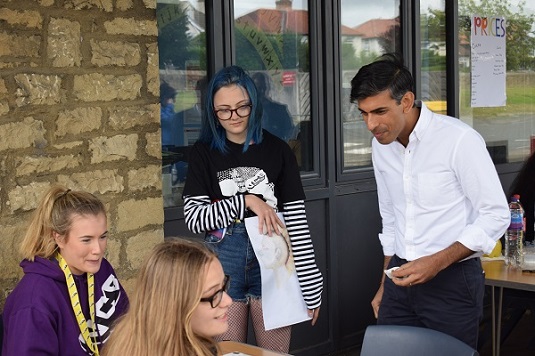
It didn't have to be like this. Covid presented an opportunity for modernising Britain's building stock, with government stepping in to offer grants/funding for fitting air filtration systems, making our infrastructure future pandemic ready and a mitigator of other respiratory illnesses. The government didn't have to switch from a vaccine-only strategy to no strategy whatsoever. Test and trace needn't have been scrapped, and protections for workers with Covid didn't need abandoning. None of this would have stopped the circulation of the new variant, but it would have lessened the rate of infection, spared the infected the inconvenience and worry about whether their symptoms will be seriously debilitating. The Tories should be condemned for this, as should the Labour front bench who carry on as if Covid isn't an ever-present health emergency.

The new variant has forced the government's hand and they are having to abandon the do-nothing strategy, but predictably their proposals are limited and do not meet the scale of the challenge. Sadly, it's not likely the Tories and Labour will ever be held to account for their responses to the pandemic. Boris Johnson and Rishi Sunak may have mismanaged the pandemic and caused tens of thousands of unnecessary deaths and millions of needless infections, but as far as the politics go it's been a master class in disaster management.

Friday, 8 September 2023

The Stagnant Monarchy

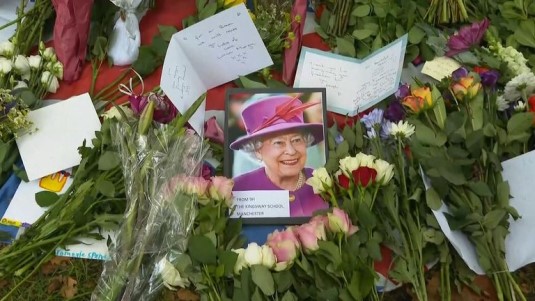
It's been a year, Gawd rest her soul. Though there hasn't been the outpouring of sycophancy you might expect on this first anniversary from official channels. Still, one can always rely on the Telegraph to publish something suitably cringing, and Camilla Tominey is just the woman for the job. There is almost nothing in her maudlin piece to write about. Her Maj has left a gaping hole in everyone's life, the constancy of her presence no longer there to offer reassurance in an uncertain world, and the example of her commitment to duty - so at odds with modern life - died with her. This is a case of projection to be sure. Tominey's entire career has revolved around writing unbidden prettifying copy for the Windsor firm, but a set of sentiments shared by the sensibilities of Telegraph readers.

I said almost nothing. There is an absence in her lament of the absence; the King. He and Camilla get a mention, but only about how the House of Windsor "feels a little diminished". One might pick up a scinittla of anxiety in these words. While most of her fellow Tories were toasting the jubilee last year and regarded the monarchy was as safe as houses, we get the sense that Tominey suspects reinforced autoclaved aerated concrete is present. Consider the year in royalty. The coronation passed without a hitch, even if Penny Mordaunt inadvertently stole the show. The ongoing trouble with Prince Harry doesn't seem to have rebounded unfavourably on the monarchy. There have been no major scandals or controversies that have splashed all over the papers, though some were a bit annoyed when the King was wheeled out to anoint Sunak's Brexit compromise. And there was the rare moment of amusement when he met the post-crash Liz Truss with a "dear-oh-dear". The monarchy is steady as she goes, it seems.

And it's this that tugs at Tominey. The institution relies on a mix of passive acceptance and tolerance, as demonstrated by the lack of popular take up of the coronation celebrations. But when establishment politics have been badly shaken in recent years, and the incumbents and next likely government commands zero enthusiasm too, renewing the state and the monarchy doesn't have any mass buy-in. If the constitutional monarchy is to survive, something more than business as usual is required. While the Queen was alive she could inspire a degree of deference. The worry is, a year in, that Charles doesn't and never will. Which is fine, if it wasn't the case that ratings are down and trouble is brewing in the future. When the whole system needs an overhaul to put the relationship between state and monarch, and the people they preside over on sturdier legs, from whence will it come?

Image Credit

Thursday, 7 September 2023

Exiting Work

When I used to work for Sainsbury's, we had to fill out an "availability matrix". This specified what times you were available for work, and from week to week your shift could vary dramatically. You might do a 10-1 stint one Saturday, and a 9-7 one the following week provided they were inside your contracted hours. If, however, you hadn't been given a shift this Wednesday but staffing was short, there would be much huffing and puffing from down the phone if you said you couldn't come in because you had other plans. "But it's on your matrix and so we have a right to expect your availability" was a common refrain, and one that undoubtedly dragged many a sullen and resentful employee in against their will. And trying to change one's availability was a struggle in itself. It was always very clear, the "needs of the business" came first and J Sainsbury Ltd felt entitled to their employees' time.

Fast forward 20 years and the tectonics are moving in the other direction. According to the latest world values survey of 24 countries, Britain is the country least likely to put work before everything else. 73% believed work was rather or very important to their lives. Just 22%, however, think work should come first - above only Australia (21%), Canada (19%), and Japan (10%). Far below France (39%), Italy (55%), and Norway (56%). The UK is in the top five for agreeing that it would be good if there was less importance placed on work (43%). Despite decades of "anti-scrounger" scapegoating, the UK is second from bottom in believing that not working makes people lazy (40% - at 32%, only Sweden is lower). Lastly, and most interestingly only 39% believe hard work leads to a better life. It's enough to make conservatives of the right and left break out into massive sweats. Work is not the be-all and end-all, and attempts by government to make it so are doomed.

However, it's the trend that's important. And here, despite all the evidence that social mobility is a fairy tale that's grown stronger as upward movements in the class structure have slowed right down, the numbers believing luck and connections are more important for advancement than hard work is in decline - down from 21% in 1990 to 12% in 2022. The negative perceptions of people not in work is only slightly down on the 1990 figure (though this, perhaps unsurprisingly, peaked in 2009-10 at 54% during the midst of economic crisis and renewed attacks on welfare). And the decline on 'work should come first' is relatively slight - it stood at 26% at the turn of the century. In general, there has been a lot of movement on attitudes since the mid-point of the period covered. It's as if the pressure of the credit crunch and the rubbish pumped out by the media-politics complex sharpened attitudes, but since then they have lost their bite and are returning to the pre-crisis background.

Still, plenty for mainstream politics to get worried about. Barely a day goes by when the Tory press aren't fretting about working from home and what employees do when they're on the clock. Millions of words have been written worrying about "quiet quitting" and what this means for "productivity". There's all that office space sitting idle, leaving small and large property investors out of pocket, and city centres are suffering because no one's buying coffee from Starbucks any more. What this really amounts to is an anxiety hyper-class conscious Tories have nursed since the beginning of Covid. That firstly the job guarantee scheme, the (temporary) bump in social security and suspension of conditionalities, and the movement of work from the workplace to the home would weaken the hold employers have over their employees. Not being able to see them or supervise them means workers might be spending time doing other things, and discovering that life outside of work is often more pleasurable and worthwhile. Not great for the every day disciplinary class politics of managing the relations of production. The fact the trend is hardly threatening and, indeed, those who view work cynically is in decline doesn't matter. The success the powers-that-be had in inculcating (work-based) neoliberal governance has been reversed inside of a decade. Taking on groups of organised workers is one thing, but fighting a generalised attitudinal trend is something else. As the Tories are just discovering.

This process was extensively discussed in Hardt and Negri's work. Bound up with the predominance of immaterial labour, as capital has grown more dependent on labour's intellectual, affective, and social capacities, on one level the balance of forces is tilting away from the bosses. The content of immaterial labour is fundamentally ours, and cannot be converted into machines, as muscle power transmuted into the spinning jenny, the internal combustion engine, the conveyor belt, and robotic assembly. As such, Hardt and Negri argue that "exodus" presents capital with a problem. I.e. its dependence on the qualities of the worker affords employees more leeway in the commission of immaterial labour, and this freedom can be the freedom to spend work time doing their own thing. This is a major headache for managers, and the dominance of task-based working and the standard issuing of unmanageable and always-growing workloads are efforts designed to fix workers in place and prevent them from slipping the disciplinary leash. In one sense this is nothing new - previous generations of industrial workers used their weight of numbers to carve out autonomous and collectively managed spaces within the workplace - but paradoxically, the smashing of union power now presents labour discipline new sets of difficulties. Whether it's more metrics of performance, more supervisory staff for direct observation and "accountability", or the outright replacement of cognitive tasks, this aspect of class struggle effectively sees capital chasing and attempting to corral workers. And this is very unlikely to change. Especially when, for Hardt and Negri, it's "product" of the comparative freedom of immaterial labour that capital captures and derives surplus value from.

The consequences of this for the next decade in this country will not only be more media and official complaints about workers "not working", it's possible establishment politics are going to try and tie more aspects of everyday life to working life. The Labour stress on "working people" is more than just a focus group-derived flex, we can expect to see access to social security tied to employment. More of an emphasis on vocational education and the reduction of everything to employability and work ready skills. It's going to be a tremendous effort, cause a great deal of unnecessary pain and misery, and do nothing whatsoever to arrest the drift away from the popular validation of capitalist work.

Image Credit

Wednesday, 6 September 2023

Steff da Campo - Hot In Here

A song tonight for two reasons. A celebration of the late summer visiting itself upon the land. And a night off proper writing to mark this place passing the 10 million page view mark.

Tuesday, 5 September 2023

A Note on Tory Carelessness

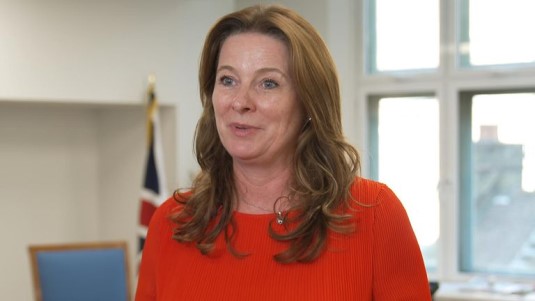
Speaking off the cuff while the mic was hot is now the least of Gillian Keegan's problems. As probably the most gaffe-prone Tory minister since Oliver Letwin was shut in the cupboard, in response to the crumbling schools scandal we have deflection (it's Local Education Authorities and councils' fault that classrooms are caving in), and we (reportedly) have the cynicism. Of the RAAC concrete crisis, Keegan apparently said "We just need to keep the lid on this for two years and then it’s someone else’s problem." I'm all for truthfulness in politics, and even telling lies about right wingers is bad. But at this point it has enough "truthiness" about it, whether she said it or not. Because this sort of devil may care attitude is not a bug, it's a feature. Remember, when he was Chancellor Rishi Sunak vetoed rebuilding money for half the schools on the emergency repairs list. And what do you know, those are the ones now presenting a danger to their occupants and disrupting children's education.

Mainstream takes on why this sort of thing happens time and again falls into two types. We have the idea it's "incompetence", which is a favourite accusation of Keir Starmer's and will no doubt get an airing at Wednesday's Prime Minister's Questions. The other is "ideology", that Tories are so blinded by their dogma that no amount of reality will make them change their ways. They are puppets in thrall to a set of propositions that sit in their heads. The idea of "shit state Tories", featured in the New Statesman to explain Tory actions, is a spin on this well-worn theme.

Neither explanation is satisfying because they don't take the Tories and their project seriously. The Conservative Party is a machine for inequality. It serves to protect and consolidate capitalist relations of production. That's its bottom line so the boss class can safely tend to their bottom line. This is how they manage British capitalism - policies that obviously undermine economic growth are preferred to GDP-enhancing measures if they keep labour dependent on capital, and work to disorganise it as a collective political subject. They employ a variety of strategies to varying effect to maintain this status quo. Of course, because this is politics this has to be continually performed and applied and is by no means guaranteed to be successful. Indeed, we're at a conjuncture where the Tory capacity to manage on these terms is increasingly exhausted and Labour are signalling that Starmer is ready to assume their task.

But because the Tories are exhausted doesn't mean they're going to stop trying. As explained here on several occasions, Tory strategy after the initial wave of Covid was to effectively put politics back in a box. Corbynism, despite its failure, managed to push the political envelope just enough that the the consensus around austerity realism was thoroughly punctured. And when Covid exploded in early 2020, despite the Tories dragging their feet, the state had to intervene to underwrite the nation's wage bill and reorganise public services to respond to the health emergency. It's no accident that no sooner were curbs on movement and Covid support packages in place that Boris Johnson and the right wing press started undermining their own efforts by talking up "freedom days" and, particularly, agitating for returns to work. They were conscious that the sudden expansion of emergency social security was completely at odds with the miserly class politics practised by the Tories since 2010, how they could raise political expectations and questions about how society should be organised. The situation could not be allowed to persist. Therefore, everything the Tories have done since, from winding down Covid mitigations to a vaccine-only strategy, and from there a no-vaccine strategy, to effectively ignoring striking workers, to refusing local government the money it requires, to refusing to bend to public pressure on environmental issues, and preferring that school children should have roofs fall on their heads than make available the money necessary to fix crumbling classrooms all come from the same place.

'Incompetence' and 'ideology' comprise an anti-Tory ideology in and of themselves because they distort what the Tories are about. They ignore other, most important I-word: interests. Without putting that at the heart of an analysis, mainstream commentators and politicians will never get to grips with them or the class relationships the Tories champion. Which, you might say, is precisely why they continue to push these limited and wrong arguments. They have an interest in not recognising these interests, because it means admitting that theirs and theirs are fundamentally the same.

Image Credit

Monday, 4 September 2023

Making the Counter-Revolution Permanent

A reshuffle plays to the absolute worst of political punditry. As if armed with a fantasy football score card, commentators delight in promotions and revel in demotions. Faces of old having spent eternities on the back benches are welcomed back, while gasps and shocks surround unexpected removals and resignations. And that's about the size of it. Which demonstrates the paucity of the lobby hacks who steal a living from writing on politics in this country. For Keir Starmer, as it is for Rishi Sunak, any other party leader, and every single council leader the cabinet is always about balances of power. A leader has to weigh their preferences and strategic direction against the strengths of the different wings of the party, and usually dishes out positions to the extent factional buy-in is secured. This basic truism was lost on Liz Truss, but not on Sunak who has locked in the right from the beginning.

Starmer might be (and in many ways, still is) limited about politics, but certainly not on this point. After the leadership contest his first shadow cabinet ranged across the entirety of the party. The soft left were the big winners while continuity Corbynism was given a few scraps. Very quickly, a pretext was found to get rid of the troublesome Rebecca Long-Bailey from Education and shifts right ensured her more junior colleagues resigned themselves away. When they were done, the soft left were evacuated from the Chancellery and Home Office shadows and in were drafted the horrors of Rachel Reeves and Yvette Cooper. Hilariously, Starmer tried removing Angela Rayner and was almost badly damaged when he found he could not. Yet , despite coming out of that episode strengthened, that has since been sapped by incessant anonymous briefings and her being powerless to get allies and supporters selected. That she couldn't save her significant other from the deselection axe shows how narrow her writ runs. Now, Starmer has moved to make his counter-revolution permanent. Blairites and Brownites dominate the shadow cabinet, and the soft left are relegated to a supporting role. In other words, Starmer feels the balance has shifted so far his way he doesn't have to bother with the big tent pretensions any more.

Still, it seems short sighted and unnecessary. His reshuffle demoted Lisa Nandy to shadow the non-existent international development portfolio, and in accepting it proves she's willing to eat any shit to remain, in her words, a "team player". It must be doubly galling to be junior to the foreign office brief she previously enjoyed, and especially having her loyalty rewarded with a bump down the ranks. Unlike nearly everyone else at the top table, Nandy can be a skilled performer when she dumps the dead-eyed wooden-top countenances mandated by front bencher media training. And she does have her own base, of sorts. You might recall that Nandy is commonly seen as being on the soft left - though she's done nothing to merit this positioning. And during the 2020 leadership contest, after Jess Phillips dropped out Nandy became the favoured candidate of the PLP right (Labour First weren't so stupid and constituted Starmer's back office from day one). Though she didn't win she showed a certain amount of across-the-party appeal - enough to be talked about as a future leader when a Starmer premiership hits the buffers. In a shadow cabinet of non-personalities, Nandy was at an advantage. She had to go.

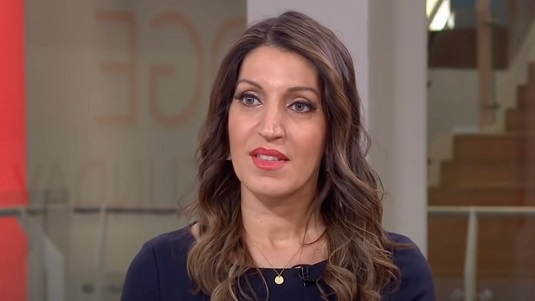
The most serious miscalculation has been the ditching of Rosena Allin-Khan. In her resignation letter addressed to Starmer, she said "you made clear that you do not see a space for a mental health portfolio in a Labour cabinet." As such, she would not serve in any other role if that position - whose introduction saw Jeremy Corbyn receive a rare moment of universal praise - was scrapped. And so back to the backbenches she goes. The politics of her removal aren't too difficult to fathom, even if you don't have a line on the gossip about shadow cabinet meetings. As a still serving A&E doctor, she has been an annoying presence in leadership meetings raising awkward questions about the role for business in the NHS. There is also a school of thought that she's too close to striking NHS workers. Her presence in cabinet might lead to conflicts of interest and her being seen as the BMA's woman on the inside. And lastly, her A&E work confers an authenticity virtually all her colleagues lack. Within government, she might have been seen as an embodiment of the NHS and its values, giving her a popular legitimacy independent of whatever position was doled out by Starmer, and with that a potential platform for a challenge. After all, Starmer has known for a year that she covets his job. Better neck the paracetamol of removal now than risking a splitting headache later.

While not on the left of the party, Allin-Khan is obviously a coming power. By giving her no choice but to leave, she's now free to build up support in the Commons and in the country before and during the early days of the government. She has a justified grievance, and through her work on mental health has proven more in tune with medical need and popular expectations than her erstwhile boss. The second, more serious problem, is how Starmer has added to the problem of his divided base. Whether he doesn't understand who supports him and why, or simply doesn't care because polls and elections keep pointing to a thumping majority, the effect is the same. Among the professional managerial class there are serious jitters about Starmer's leadership. That the more he talks about authoritarian modernisation, the less it resembles a programme of renewal. The prevaricating over fixing crumbling schools is a case in point. That makes some susceptible to lend their affections and their votes to other parties that diagnose the problem and have their own programmes of modernisation, threatening to fragment Labour's base. And others, without any real choice, will be compelled to confront a Starmer government just as they have done the Tories. Who knows where that might all end up.

While the resemblance between Starmer's programme and the Tories are often overstated, he has already taken on their bad governing habits: to their shared authoritarianism, you can now add the propensity to short-termism. Whether Allin-Khan and, to a lesser extent, Nandy will enact some sort of revenge down the line is neither here nor there, it's the alienation of the constituencies in and out of the party that they represent that are going to do for Starmer if he persists with his do-nothing politics.

Image Credit

Sunday, 3 September 2023

A Display of Utter Poltroonery

It's a perfect metaphor for how Rishi Sunak and his predecessors have run the country. As public services, the functioning of the state, and the parlous condition of local government are biting and costing the Tories dear, its physical infrastructure is literally crumbling. That an unknown number of public buildings, including former council housing, are at risk of falling down is news the Prime Minister could do without. An expert interviewed by the BBC said the expiration of aeriated concrete buildings "also includes health, defence, justice, local government, national government, and also a lot of the private sector." In other words, we've gone from nought to crisis in record time. This has immediately disrupted the beginning of the new school term, with ministers ordering about a hundred head teachers to shut their doors until safe alternatives can be sorted out.

This problem came to the government's attention in 2018, but it's fair to say they've done very little about it. With Theresa May focused on appeasing its back benches over Brexit, it must have got lost amid all the other pressing issues that were put on hold. As Boris Johnson seemed to never bother reading his papers, preferring instead government-on-the-hoof it's debateable whether he was aware so much of Britain's building stock was at the end of its useful life. Indeed, as Labour have rightly been arguing, had the Tories not cancelled the bulk of its Building Schools for the Future programme, at least where schooling is concerned the problem might not be so bad.

On Laura Kuenssberg this Sunday morning Jeremy Hunt for once committed the government to sorting the mess out. They "will spend what it takes" said the Chancellor. But before he gets any credit for making a clear cut pledge, it turns out "what it takes" will come from unallocated funds in the existing education budget. In other words, not a skies the limit promise because, as per everything Sunak does, the Tories cannot possibly be seen to make the state look effective lest political expectations are raised. An open goal for Labour, surely?

Keir Starmer tweets a good game. And, indeed, when Bridget Phillipson went on Kuenssberg she rightly castigated the Tories for their failures. Rightly, she wants a list of affected schools made public. It would be interesting to cross reference that with the BSF cancellations. But in one crucial aspect, what anxious parents would have wanted to hear, instead the shadow education secretary completely fluffed it. Asked three times if Labour would make a commitment like Hunt did, she waffled and prevaricated before settling on a "we need to know the extent of the problem". The dead hand of Rachel Reeves strikes again. Hilariously, she earlier criticised the Tories for "failing to fix the roof" without making any commitment that she would either. Astonishing.

Politically, such a non-answer is a non-starter. Parents and teachers want to know that a Labour government would fix the problem. End of story. By not giving a clear response, they've allowed the Tories to appear more decisive. When the immediate and expanded bases of Labour support are looking less than enthusiastic this side of the election and will have a short fuse when Starmer enters Number 10, this is plain stupid. Do they think saying nothing is going to win plaudits from the Tory press, while their editorials demand Sunak and Hunt take action? Equivocating over the costs of child safety at school - it's remarkable and shaming that Starmer's Labour has come to this.

If there was anything about Starmer he would seize this as a major opportunity. He likes talking about his "missions", and circumstances have bequeathed him a problem that, if approached seriously, could occasion an excuse for the largest stimulus since the Second World War. Not money for asset price inflation. Not money for jobless recoveries. But money that would replace crumbling infrastructure and provide full employment for a generation. No need for silly gimmicks. It could overcome the divisions in Labour's base, and ensure the Tories and the reactionary constituencies clinging to them would be marginalised from politics for good. Here we have a clear mission that calls for a national effort, and instead of rising to the occasion and committing Labour to this ambitious but entirely deliverable project we get nothing. If a Starmer supporter ever asks why people are sceptical that a Labour government would deliver, just orient them to today's display of utter poltroonery.

Saturday, 2 September 2023

Doing Young People a Disservice

A couple of months ago, Sebastian Payne co-authored a report bewailing the Millennials' hatred of the Tories, but made the complacent point that the generation were "shy capitalists" who needed feeding the right policy cocktail to bring them on side. He made similar points about so-called Generation Z, who "emphasise policies that promote equality but they are more like Boomers in their pro-business and low-tax focus" (Missing Millennials, p35). Lower taxes will do the job, apparently. But clearly that's not enough for Payne. Presumably to weld the rising generation to (often affected, never realised) Conservative concerns for community and country, what he'd like to see is the reintroduction of National Service for six months for 16-17 year olds.

You see, Payne is very worried. He writes that young people's mental health is poor, they're unhappy, unmoored from their social surroundings and (apparently) "unskilled". Mental illness referrals are sky high and suicide rates are surging. The problem he's alighted on are weakening social bonds. "The youngest are three times more likely than retirees to distrust their neighbours. And a clear majority state they are less patriotic than older generations."

Payne's solution is a Great British (because everything has to be Great British) national service scheme. 16 year olds would be required to undertake six months service, including a two-week residential, followed by an option of another year of volunteering. Naturally, Payne says nothing about whether youngsters would be paid for their time. He explicitly rules out the militaristic idea of national service - you know, the sort that gets certain groups of older people excited which they, conveniently, did not have to do, and instead favours a more civic-oriented scheme. A mix of the still-going Duke of Edinburgh Awards Scheme and badges from Akela, I suppose. Furthermore, what Payne favours is an opt-out system rather than opt-in, which mitigates objections that could be raised about its compulsory character.

As suggestions go, it's certainly better than what other Tories have offered this week. Provided compulsion is absent, there isn't a sniff of militarism, and participants are paid decently for their time, there isn't much to get annoyed about. Except it would seem Payne hasn't done his home work. A similar scheme has existed for 12 years. Launched as part of Dave's Big Society wheeze, it hasn't exactly gone from strength-to-strength. In 2019, its partner charity The Challenge liquidated following a funding dispute with the government. It was cut to ribbons by Boris Johnson, but nevertheless provides gainful employment for some. How Payne's reiteration might succeed where this didn't is left up in the air.

What's telling is how this manifests an avoidance of political realities. For understandable reasons, as a failed would-be Tory candidate talking about the consequences of the Covid lockdowns as if they were mere forces of nature, Payne utterly refuses to address the shitty deal young people are getting from his government. The Tories have allowed inflation to erode pay as a means of disciplining a work force who, for a brief moment, might have had their expectations raised by decisive state actions. This especially weighs down on young people who are at the bottom of the pay scale. The Tories have promoted an utterly bleak politics that allows no room for hope or the idea the future might be better. And the bargain successive governments have offered young people that working hard at school can be traded in for decent jobs afterwards is reneged on with joke apprenticeships and a higher education sector that prepares students for non-existent positions. As scapegoats go, refugees and trans people are the targets of choice, but young people generally are never far behind. Even those who might have caught a snatch of some Tory proposing a return of national service all adds to their perception of a hostile environment for young people.

And Payne is also refusing to look at why comparatively large numbers of young people are out of work. If he actually talked to real people instead of touring the pundits in his ridiculous book on the red wall, he might be surprised to learn that despite there being a "tight" labour market, the number of vacancies - as always - trails the numbers of unemployed. If he wants to consider the failings of his party's reckless management of Covid, the numbers are there to see. Long-term sickness has exploded by 400,000 since the onset of the pandemic, which will not only include some young people dealing with long Covid and its complications, but also saddle quite a few of them with caring responsibilities for an infirm family member.

Remembering that Tory values and philosophy are a fiction to cover for the fact there is nothing more anti-community and anti-social than the modern Conservative Party, the state they're in and their utter desperation for something, anything that can put the band of their 2019 electoral coalition back together, should they decide to run with Payne's scheme it will be another ham fisted effort at driving a wedge between the party's recent backers and their grand children. Things are too far gone for that to help turn the coming election around, but poison some minds it surely will.

Image Credit

Friday, 1 September 2023

Local Council By-Elections August 2023

This month saw 28,373 votes cast in 15 local authority contests. All percentages are rounded to the nearest single decimal place. Eight council seats changed hands. For comparison with July's results, see here.

Party
Number of Candidates
Total Vote
%
+/- Jul
+/- Aug 22
Avge/
Contest
+/-
Seats
Conservative
          15
 6,476
    22.8%
  -5.8
     +0.1
   432
    -5
Labour
          13
 7,993
    28.2%
  -2.7
     +6.2
   615
     0
Lib Dem
          14
 7,327
    25.8%
+12.4
      -7.7
   523
   +5
Green
          13
 3,245
    11.4%
  -2.3
     +7.7
   250
     0
SNP*
           0


     0
PC**
           1
  346
     1.2%
 +0.5
     +1.2
   346
     0
Ind***
           9
 1,033
     3.6%
  -5.1
    -14.0
   115
   +1
Other****
           8
 1,953
     6.9%
 +4.9
     +6.4
   244
    -1


* There were no by-elections in Scotland
** There was on by-election in Wales
*** There were two Independent clashes this month
**** Others consisted of Gwlad (8), SDP (24), TUSC (5, 28, 26), Upminster and Cranham Residents' Association (1,642), Vectis (178), Yorkshire Party (42)

Last month was a historic round up of by-election results because it marked the first time the Greens has overtaken the Liberal Democrats. As if to pooh-pooh that achievement, the LibDem vote surged and they picked up no fewer then five seats. The Greens meanwhile held both their seats that were up and still managed double figures, but that not the occasion we mark today. Instead, we look at the Conservatives and not only have they done awfully - losing every seat they were defending - in popular vote terms this is the first time they've come in third place.

Does this signify anything? Only that the Tories' poor showing in the polls is reflected in council by-elections. Except this is doubly bad because the Tories have some inbuilt advantages in local authority contests. Yes, I'm among the first to say that second order elections are not first order elections and people are more likely to protest than follow through come the general election (sorry LibDems, you won't be getting 26% of the vote in a year or so's time), but the more a party's base indulges a protest vote the more likely they are to turn away from them when it matters. It's how UKIP were able to build a strong following. That and wall-to-wall media coverage. A very bad month for the Tories then.

In September five more Tory seats are up. Will they crash and burn again?

3 August:
Dudley, Wollescote & Cradley, LDem gain from Lab
East Sussex, Meads, LDem gain from Con
Norfolk, Freebridge Lynn, LDem gain from Con
Reading, Norcot, Lab hold

10 August:
Havering, Upminster, Oth hold
Somerset, Castle Cary, LDem gain from Con
Wychavon, Evesham South, Grn hold

17 August:
Middlesbrough, Ayresome, Ind gain from Lab
St Albans, Marshalwick East & Jersey Farm, LDem hold

24 August:
Bristol, Bishopston & Ashley Down, Grn hold
Dudley, St James's, Lab gain from Con
Isle of Wight, Wootton Bridge, LDem gain from Oth

31 August:
Caerphilly, Penmaen, Lab hold
Derbyshire, Swadlincote South, Lab gain from Con
Kirklees, Batley East, Lab hold

Five Most Popular Posts in August

We might be in the first day of meteorological Autumn, but the sun always shines on this blog. As these most popular posts from last month attest.

1. The Repeated Surrender to Tory Framing
2. A Comment on Political Commentary
3. Does Greatness Await the Greens?
4. Keir Starmer's Radicalism
5. The Entitled End of Nadine Dorries

Critical Keir studies win out in the popularity stakes once again. As if to underline it, my piece from last night on Starmerism's divided base almost made its way on to the monthly list. I digress. Top of the pops was my piece looking at how Starmer has capitulated to Tory framing on every contentious issue, which is far worse than how Tony Blair handled Labour's approach to the 1997 election. He did at least have some things to say, as well as being unsparing in his criticisms. In at number two is one of an occasional series surveying the state of mainstream political commentary. Which typically describes, offers a little bit of gossip, and then reinforces one or more dominant frames for interpreting what's going on. Those who get paid for this really do steal a living. In third is the long-promised piece on the Green Party, but with attention paid to how they are carving up Tory seats at the local level. How does this fit in with my argument that they're well placed to do well out of Labour when Starmer is in Number 10? Speak of the devil, he's back at number four with a survey of his radicalism. It does exist, honest! And lastly, some Tory content brings up the rear with the long dance of Nadine Dorries's will-she-won't-she resignation finally leaving the stage.

As ever, let's have a couple more that didn't make the list. Going into recent history, let's have some of that ULEZ goodness. Or, to be more precise, petit bourgeois opposition to it. Therein also resides a warning for Labour. And let's get a bit chin-strokey and revisit Mario Tronti's interview on defeat.

Did I fail to mention the 2nd edition of my book came out on the 29th? I did. If you didn't read Falling Down, then The Party's Over is the book for you. Read all about it before you read it!

No idea what's happening next month, but the good news is (or bad news, depending) is that my writing mojo has returned and all being well there will be a touch more content to reflect on at the end of September. If you haven't already don't forget to follow the free weekly (mostly) newsletter, and if you like what I do (and you're not skint), you can help support the blog. Following me on Twitter and Facebook are cost-free ways of showing your backing for this corner of the internet.