Thursday, 2 March 2017

Unsolicited Advice for New Labour MPs

No, not New Labour MPs, as in Blairites, but Labour MPs that, um, happen to be new. Or will be new, soon. Like that there Gareth Snell recently returned from Stoke-on-Trent Central. Except not him, because he knows this stuff already. Here's some advice about the small p politics of being an honourable member from someone who has never been a MP and doesn't work in politics, but has opinions.

First, before you get there. If you're applying for a seat, especially if it's a by-election make sure your social media is thoroughly cleaned up before you've announced you're in the running. As soon as your name appears anywhere in connection to the seat, whether as a possible contender or a long listed candidate, there will be someone from a certain sewer-dwelling website going through your feeds looking for stinky stuff. In fact, don't wait until then. Sort it now.

Okay, well done, you've won your election and you're off to the Commons. All of a sudden you're expected to be an advocate, a lobbyist, a leader, a tribune, an example, and an office manager more or less from day one. Oh yes, and you don't have much power either. Did no one tell you that? But you do have a pretty hefty salary. Your first decision is what you're going to do with it. You can trouser the lot, but that's not recommended. Nor is doing the workers-MP-on-a-workers-wage schtick if you don't want ostracising, which isn't good for getting stuff done on behalf of the people you're representing. So, once the PLP has taken its share (ah, you weren't told about that either), and with plenty left over a yearly donation to CLP/branch funds is a must, whether the local party is cash strapped or not. Also, during this Parliament Ruth Smeeth was one of the few MPs to refuse the 10% pay rise and instead used that cash to fund charitable causes in her Stoke North and Kidsgrove constituency. Doing that or something similar is the right thing to do, and has the happy consequence of paying itself back many times over in goodwill.

That's the easy bit. Then comes sorting out your staffing. The first rule here is do not employ your family. Conservative MPs are buggers for doing this. Nearly every Tory MP whose office arrangements I know something about employ otherwise unemployable husbands and wives and sons and daughters. All at the top of IPSA pay scales, funnily enough. Also, they tend not to get too much heat from the media for it. As you're Labour, if you're daft and go down this route there's a much greater chance you'll cop for it. So don't. Second, it is absolutely crucial you have two operations, regardless of whether you represent a London constituency or not. You need parliamentary staff (one usually suffices when you're a backbencher) and staff in a constituency office. And this is more than just a matter of division of labour.

Your parliamentary assistant is useful for briefing notes, speeches, popping down to the Commons library, tours for constituents, babysitting guests and a thousand and one other things. Just don't get them washing your laundry or driving round London doing your shopping. That. Is. Not. What. They're. For. There is another, understated advantage for having permanent parliamentary staff. They will hang around and socialise with other bag carriers. This is good, so make sure you hire someone gregarious. Because they can do a lot of networking for you. If you're interested in making a splash in a particular policy area, a good staffer will have a working knowledge of what their mates are working on and might suggest meetings with such-and-such MP looking into something similar. That's the good, noble reason. Then there's gossip. You might have gathered by now, politics loves gossip and Westminster is full of it. Having a staffer helps keep you abreast of what's going on where indiscretions are rife and nothing stays under wraps for long. As much as you might dislike this sort of thing, you've got to have eyes and ears working for you.

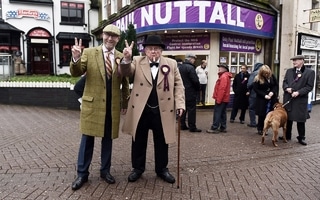
Constituency staff are slightly different but no less important. Unless you're from the the Paul Nuttall school of lazy arses, you're going to be in Parliament most of the time, so your constituency staff will be the primary means by which the constituency and the members interact with you. So choose wisely. You don't want staff watching Jeremy Kyle all day instead of doing work. You don't want anyone taking a haughty attitude to members, and you certainly don't want employees causing embarrassment by inappropriately using your constituency property when you're not around. My recommendations would be two or three staff who don't necessarily share your brand of Labourist politics, which is good for advice/speaking truth to power. So go on, hire a Progress member and a Corbynist. Make sure you take on people with good writing and communication skills - they will be making representations on your behalf to ministers and sending things to constituents in your name. Preferably, hire people who live in or will move into your constituency and so know what it's like living there. And, this cannot be emphasised enough, employ party members. Membership is no guarantee of good judgement, but party members more likely have an eye for bits and bobs of casework that have local and national party political ramifications. Also, as members in the local party they straight away strengthen your base and will likely build close relationships with councillors and key local activists. The gossip function applies here too. Staff, however, aren't robots. Turn over is quite high, partly because there is no career progression. So give them autonomy. Allow them to fill their notebooks with contacts, to go on visits to local employers, public bodies, charities, etc. Give them projects to do and goals to work towards. Don't be an overbearing boss, don't micromanage and ensure you don't employ anyone as office manager with that kind of attitude. If you treat them well, take them seriously, listen to them, you will have their loyalty and support beyond the terms of employment.

On your relationship to your constituency party, take it very seriously. Only fools don't believe the CLP is the boss. Remember, you're only going to Westminster because the Labour badge was against your name. So be hands on, but not too hands on. Make sure you turn up to constituency meetings and give your report. If you're invited to a local party event, make sure you're there much more than not. Go out for drinks with members after meetings. Organise affordable socials and muck in. Even accept the odd dinner invite, and not just with the nice middle class professionals who want to show you their bookshelves. Have time for people, don't give politicians' answers in meetings, and listen. One thing you'll find are lots of irritating members like me: people wanting to tell you how to do your job. Take the time to respond as the one thing you want to avoid is a reputation for having a tin ear. And if you haven't got it, you're going to have to dig deep wells of patience - there's no way round it. At the same time, don't be afraid to push your politics. The sad fact is the best place to go to avoid talking politics is a Labour Party meeting, so change that, politicise things, work to persuade members of the merits of your views. Also, be very clear and provide a political rationale for the two or three priorities/hobby horses you have and update folks on any progress made. The members chose you and are invested in your success, so make them feel part of it.

While we're talking constituencies, you simply must be all over yours like a rash. Good staff can cover for your absence some of the time, but you should lead from the front. This is doubly important in marginal seats, for obvious reasons, but also "stronghold" working class seats like Stoke Central to break the cycle of disenchantment and disengagement. Do the bulk of your surgeries. Make sure you or a staff member attends stuff you're invited to. Make sure you have an extremely good relationship with local unions and do what local members ask. Keep an eye on new businesses opening up and get in touch to offer support. Work to bring people together around common interests and projects. Build a good working relationship with the local authority, whether Labour-run or not, but do not be afraid to take them to task or go to war with them when necessary. And campaign hard by helping out local councillors, running your own doorknocking/leafleting sessions, and supporting local Labour Group priorities. Show you're an attentive, dynamic MP by putting yourself out there.

Last of all, remember you're a member of the PLP. You're in a privileged position, but that doesn't grant you a privileged point of view. You may be clever, be a good organiser, possess a silver tongue, great charisma, or an unaffected manner, but you're no better, smarter, or savvier than the great bulk of Labour activists. Luckier, maybe. Do bear that in mind as your brain starts playing host to the parliamentary ways of doing things. As an opposition MP, your powerlessness will be reinforced every time the Tories push through legislation that attacks our people. As you dwell inside a media bubble, all of a sudden things that barely registered when you were a civilian loom large in yours and others' imaginations. Both of these work together into a commonsense in which Parliament and getting power is the be-all and end-all, and that will work to distort your view of the world. Hence why you need good staff and good relations with your constituency party, these people can anchor you.

The second thing to remember is what politics is about. It's the interests, stupid. The Labour Party is the political expression of the labour movement, and was founded by the organised working class and the progressive middle class to prosecute their interests. Arguably, its failure to do so is the root of the party's present malaise. The story is the same in France, where too many of our people have been abandoned to the fascists, and in Italy. Your job as a Labour Party activist who happens to be a MP is to follow those interests through. The boarding school/pressure cooker environment can engender the feeling of all MPs being in it together, regardless of party. You start feeling that way you need to shut that shit down. Go ahead, pursue friendly, congenial relations with politicians from other parties, but never forget they're means to an end to get your way - the party's way. Because they will be doing exactly the same to you. Remember, it's only Labour that think the party's there for the common good, the Tories aren't naive enough to entertain such a delusion.

Karl Mannheim on the Death of Utopia

Thought that this was quite an arresting passage in Ideology and Utopia. Sounds very now:
... where the decline of ideology represents a crisis only for certain strata, and the objectivity which comes from unmasking ideologies always takes the form of self-calrification for society as a whole, the complete disappearance of the utopian element from human thought and action would mean human nature and human development would take on a totally new character. The disappearance of utopia brings about a static state of affairs in which man himself becomes no more than a thing. We could be faced with the greatest paradox imaginable, namely, that man, who has achieved the highest degree of rational mastery of existence, left without any ideals, becomes a mere creature of impulses. Thus after a long tortuous, but heroic development, just at the highest stage of awareness, when history is ceasing to be blind faith, and is becoming more and more man's own creation, with the relinquishment of utopias, man would lose his will to shape history and therewith his ability to understand it.
- Karl Mannheim 1936, pp 262-3.

Wednesday, 1 March 2017

Five Most Popular Posts in February


Phew, what a month! The five most read posts were:

1. On the Doors in Stoke Central
2. Is the Corbyn Moment Over?
3. At the Stoke Central Hustings
4. On Labour's Victorious Campaign in Stoke
5. Lies, Damned Lies, and Paul Nuttall

Crazy horses! Last month recorded 118,000 page views, making it the second highest on record. Would the blog like a base of 4,200 page views a day from here on in? You bet it would. As the story of the battle of Stoke-on-Trent Central fades from the memory and becomes the preserve of ragged trousered oral historians in the local party, and skinny jeaned politics geeks elsewhere, the normal service of calmly commenting on Britain's chaotic politics - among other things - continues.

Amid February's hurly burly, there are probably a few posts you missed. But the one I think you should read, and I hope to expand on in the future, is this on Labour and insecurity. Until we sort that problem out we can look forward to the Tories walking all over us, regardless of who is sitting in the leader's office.

Tuesday, 28 February 2017

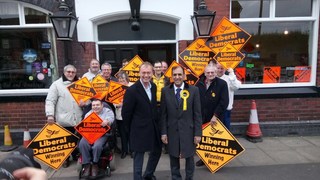
The Filthy LibDem Campaign in Stoke Central

Individually, some are great. I'd even count one of them as a friend. But as a party I cannot stand the bloody Liberal Democrats, and the Stoke-on-Trent Central by-election reminded me why.

The LibDems will be quite pleased with their performance last Thursday. As the spotlight was on the other parties, their vote quietly put on five percentage points, the deposit was saved, and they recaptured some of the support lost since 2015. The Wheatsheaf Hotel was their base in Stoke, which was perhaps a little too from the beaten track for many London journos to find. And, by the sounds of it, "celebrity" LibDems as well. Fresh from her triumph in Richmond, Sarah Olney was on hand and, well, that was about it. Oh yes, Tim Farron slid his way briefly into the constituency for a photo opp before a rapid, frictionless exit. They were never contenders, and having selected Dr Zulfiqar Ali - one of the few politicians to have lost more elections than Nigel Farage - they knew it too.

Their campaign was the typical, disingenuous campaign you could expect. I don't know if they bothered canvassing much but the leaflets, the leaflets. Next to me on the sofa are nine different pieces that made it through my letter box. Because we had a Labour poster in the window, perhaps their activists thought they were trolling me. Well, I'm biting. Letter one was from Adam Carter, a winner of a council seat from Labour in Rotherham. The message? Labour's taken you for granted so vote for us. Leaflet two, a Focus-style affair slamming Labour chaos and saying Britain needs a real opposition to stand up to the Conservatives. Yes, just like the LibDems did. Leaflet three, a faux letter from the candidate saying Stoke had been let down too long. A true museum piece this one - a doctor's note with legible handwriting. Fourth, an A3 sized colour leaflet pledging that the LibDems will fight for jobs, protect the NHS and end neglect. The thrust, again, is another attack on Labour with the Tories and UKIP bolted on as an afterthought. Fifth, another colour leaflet of a similar size attacking Labour for backing a UKIP-style hard Brexit. Six, a piece attacking Labour and UKIP for not standing up for the NHS and attacking Labour for its "botched PFI deals". If only the LibDems had been in a position to do something about them during the last six years. A nice little detail here is one side is red and purple, the other is yellow and the cross in the ballot cross next to Zulfiqar Ali is blue. Subtle. Seven, the real Focus deal itself promising that Dr Ali would deliver "real change" (interestingly, this was only posted out to Shelton, Hanley, University and Etruria - of which more shortly). Eight, their tabloid, Stoke-on-Trent News with a front page opposing the super local Zulfiqar Ali to the "UKIP candidate from Liverpool". They couldn't even bring themselves to name him. And lastly came the Take a Break-stylee Potteries Life. If you were in any doubt about Zulfiqar Ali's Stokie creds, the cover promised "true life tales from Stoke" and "Why I love living in Stoke: Dr Ali's Story". The political content was as thin as their principles but, again, it is Labour who were the main target.

This begs the question. How Labour can possibly enter into a so-called "progressive alliance" with such a scabby outfit? With UKIP hyped up to be a huge threat and all the calamitous consequences that a win would have entailed, could they please explain to folks interested in such an arrangement a) why in the face of blackest reaction the party's messaging was predominantly anti-Labour and b) why their campaigning efforts were concentrated around the student districts. We know why: talk of a progressive alliance is but a convenient fig leaf for them and their cheerleaders in the liberal press. It's something for people in Labour to fret about publicly, folks who should really know better like Lisa Nandy and Clive Lewis, but similar expectations aren't placed on the yellow party to show any serious intent in this direction. I'll also note in the Stoke case that their underhandedness went even further. It is my understanding that sundry LibDems went around the mosques saying Gareth Snell isn't interested in looking after Muslims or Asians, they need one of their own to do it. As they raised merry hell when a bunch of messages were texted to local Muslims threatening them with damnation if they didn't vote Labour, they clearly don't like it when someone tries playing their shitty little games against them.

And that is the Liberal Democrats. Rather than stand up to reaction, they tried undermining the one force opposing it. Rather than hit UKIP and attack the government, they concentrate their fire on Labour. While Nuttall and his helpers in the press play the politics of community division, they dilly-dally with it themselves. This was not an election campaign for them, it was an attempt to mug the Labour Party and damn the consequences. There is nothing liberal or democratic about this. It's rank opportunism.

UKIP's Stoke-on-Trent Central Campaign

Time for a little talk about UKIP. Oh not, not another one. Yah, I'm afraid so. I want to talk about their campaign in Stoke-on-Trent, the character of its vote and their relationship to the Tories and, more significantly, Tory voters.

What Stoke definitively showed was UKIP is something less than a political party. As a 30,000-strong army of Nigel Farage groupies, re-orienting themselves as a "proper" force without a domineering personality to cling to was always a big ask. Such formations tend not to attract strong people. It's a club for careerist losers, lickspittles, and human-shaped voids. Anyone with an ounce of talent and ability, such as the unlamented Steven Woolfe, tend not to last very long. And why vacant oafs like Paul Nuttall can rise without a trace. When the big daddy figure of these one-man populist parties (and it's almost always men, Marine Le Pen and Pauline Hanson notwithstanding) depart from the scene, which is what Farage is doing with his LBC/Fox News/White House stints, what is left behind is a shell, a simulacrum of a political party. It looks like a party, campaigns like one, complies with legislation (well, in UKIP's case, after a fashion), but there is no substance. Only crisis.

In UKIP's case, the problem could be terminal. Despite what lazy commentators and professional doom mongers say, the kippers have always posed the Tories more of a problem. At its strongest, they weren't so much a threat to Labour as a catch-all protest party that, in Labour areas, primarily consolidated the anti-Labour vote. Under Farage, they almost got there. When the Tories underwent a major organisational collapse after the passage of Equal Marriage legislation and UKIP announced its turn to the workers, this was the closest it came to building a viable base. However, without the solidifying force of Farage's personality, this coalition between disgruntled Tories and lumpenised Labour was destined to fray. Theresa May knows well that facing right on Brexit is enough to win back enough of the kipper coalition to see her safely through in 2020. Also clawing at UKIP's base is, somewhat counter-intuitively, the Liberal Democrats who are making inroads again into the none-of-the-above vote. UKIP is shrivelling as they empty of social content, leaving behind nothing but a useless gaggle of careerists stranded sans their tickets to the Euro gravy train.

This absolutely was on show in Stoke. They threw so much money at the campaign that Nuttall crashed through by-election spending limits and now smokes like a car wreck by the side of the road. Sundry Labour supporters await their returns with interest. Away from the minutiae of technicalities, UKIP's effort was probably the most fruitless and amateurish I have ever seen. Door knockers repeatedly canvassed the same area rather than spreading out across the constituency. For instance, the kippers came down the drive way of one of our members seven times. While out and about on the trail, rather than work toward pre-determined routes they would peel off and follow Labour canvassing teams. On the day itself, they had tellers dotted about polling stations taking voter numbers, but had no Voter ID so they could return that information and knock out their promises. The kipper mobile festooned with UKIP imagery driving round day after day, bampots wandering around Hanley in union jack suits and sandwich boards accosting randoms about immigrants and Brexit ... they gave an appearance of a campaign without mounting a campaign. I've heard Tories complain about the kippers' lackadaisical attitude during the EU referendum, and firsthand, we now know what they were talking about. Not that they really needed to mount one. While the national press were pumping out the usual hard right idiocies and their helpful friends in commentland were talking up Nuttall's chances, they also got a bit of a hand from the local paper. For example, when the news broke about his Hillsborough lies, this is how they chose to report it ... by concentrating on Gareth's old tweets. And they wonder why, in a Labour city, their circulation is on a downward spiral - I know lifelong Sentinel readers who've cancelled their subscription over their coverage.

A party without substance, a structure without structure, their loss means a permanent downgrade to council by-election also-rans is on the cards, and nothing less than the abolition of immigration controls or direct rule from Brussels will jumpstart their clapped out motor again. If only there was someone who'd been saying UKIP were born as a declining force while everyone else was tipping it as the new party of the working class ...

Concerning the Conservative vote, in Stoke Central it is worrying that the kipper/Tory vote easily eclipses that achieved by Labour. It is a warning but not an existential threat, at least not yet. Some wiseacres have argued that if either UKIP or the Tories had stood aside then one of them would have taken the seat. That's pretty much the same idiot empiricism that had UKIP down as a shoe-in because Stoke was Britain's "Brexit capital". This would unlikely be the case for two simple reasons. First, there are plenty of Tory voters that wouldn't touch UKIP with yours. In the Conservative imagination, they're a lumpen rabble of uncouth vagabonds stirring up the dangerous classes with their anti-immigration agitation and crude nationalism. For a section of the kipper vote, especially that dropping off from the Labour Party, there's more chance of The Canary becoming a Blairite mouthpiece than some of these lending the Tories their votes. They may not like Labour, some may harbour a deep antipathy, but coming from Labour backgrounds they know the Conservatives are the enemy. They know what Thatcher did to Stoke-on-Trent when she hammered steel and shut down the mines. There are parts of the city where the blue rosette is still absolutely toxic.

These irreconcilables cannot reconcile, but this cannot be relied on forever. After years of decline, the Tory switch back to one nationism is reviving the party. It's certainly having the desired effects on the polls. Labour's way forward is the road through the same territory. The Tories want to fight on the turf of security, of dispelling collective social anxiety. This should play to our strengths, but doesn't because, unfortunately, Labour from Blair through to Jeremy don't take this issue seriously enough. This must change or we will never win again, regardless of who leads.

Sunday, 26 February 2017

On Labour's Victorious Campaign in Stoke

While Copeland was important, the outcome didn't dangle the possibility of an existential crisis. That exactly what was in play at the Stoke-on-Trent Central by-election. For UKIP and their empty cipher of a leader, a viable future was at stake. Both Nuttall and Nigel Farage had made much of UKIP's need to become the party of the working class, and Stoke was seen as a test bed for this strategy. For Labour, a loss would have signalled a disastrous disengagement between the party and a core component of its electoral coalition. As the campaign wore on and Nuttall's person was swamped by a tsunami of lies, Labour's inability to win under those circumstances would have been nothing less than catastrophic.

It didn't happen. After an awful year of grievous retreats, the line was held. And about bloody time. It's the kippers who are now in disarray, and Labour lives to fight another day. The majority fell by a wee amount, and the Tories and UKIP put on small numbers of votes. But on the reduced turn out as per all by-elections, the proportions were roughly the same as the 2015 outing. Apart from the stakes and the media hype, including some truly stupid commentary bigging up UKIP's prospects, was this a pretty dull by-election with very little to say about the state of national politics? Not in the slightest.

As we saw in Copeland, the Corbyn factor combined with the insecurity factor to the detriment of our chances. Did the same happen in Stoke Central? Yes, but with mixed results. During my moments on the doors, the Labour leader only came up the once. It was an old bloke just getting into his motor, and he was voting UKIP. This wasn't because he hated immigrants or thought Labour was a pile of crap, it was a protest: he didn't think Jeremy was any good. And nothing, not the NHS, not Nuttall's lies were going to dissuade him. Having asked around quite a few comrades who worked intensively on the campaign, they found similar sentiments among too many older, white working class voters. These Jez sceptics were either voting for the kippers or abstaining. And yet this was balanced out by the very enthusiastic response he got in other quarters. In Penkhull and bits of Hartshill where there are more middle class and professional residents, and down in Shelton with its large student and Asian populations, Jeremy was a real motivator. When out with Gareth Snell around Shelton, one comrade tells me of how cars would suddenly stop to speak with him and have obligatory selfies taken. 2,500 new electors registered for the by-election, mostly in the student areas, and I would wager that an increased turn out here made up for the decline in the traditional support.

The additional Jeremy factor was evident in the campaign itself. UKIP have talked up its own support on the ground and the people working for it. The party even turned out regular paid-for coach loads from London to bus people in (I wonder if they will appear on their electoral returns?) But truly, the Labour effort was colossal and they were utterly swamped. Yes, plenty of old hands were about doing their bit. However, new members turned out in large numbers as well. For dozens, probably hundreds, The Potteries was their first taste of campaigning. Any analysis skipping the positive consequences of the 2015-16 Corbyn surge is one indifferent to the truth.

The actual campaign was impressive. Huge numbers ensured the entire constituency was covered multiple times. The party could have perhaps dispensed with a direct mail as there were folks enough to deliver them by hand. The strategy was spot on, too. The NHS, Brexit, and more, better jobs for Stoke were heavily featured. Gareth's Plan for the Potteries with his first few months mapped out was exactly the sort of thing our campaign needed to see. Labour did put out one tabloid, The Potter's Wheel, which craftily billed itself as the no spin guide to the by-election, and it spent its time doing over UKIP and Nuttall. It's not often a party leaflet makes me laugh, but as negative campaigning goes its pun-tastic tones were the best way of doing it. The only criticism I would have, and this was evident in Copeland too, was the initial stand-offish approach taken toward the national media. Prioritising local radio, papers and telly is fine, but making it look as though candidates are hiding from reporters is not a good look. Remember, folks everywhere are more likely to follow national news and papers than the local equivalents.

What did annoy me was the constant barrage of claims on the right and the left that Stoke Central CLP had selected a "poor candidate". Never mind the fact Gareth has a campaigning record that would be the envy of hyperactive Trots, never mind Labour Party people. Forget that his tenure as leader of Newcastle-under-Lyme Borough Council saw a no cuts budget (unless you want to get precious about perks for senior management), and increased funding for domestic and sexual violence services and preparing the council to uprate its lowest pay scales to the proper national living wage. Not one member of our national media did their job and properly investigated his record. Instead they lazily alighted upon tweets written a life time ago, including some apparently abusive criticisms of Jeremy that, in context, were crafted as warnings of being taken out of context. Irony. This occasioned a media carpet bombing of Gareth and should act as a warning for aspirant candidates to take the time and carefully clean up their social media now. And so Fleet Street dubbed our comrade rubbish on the basis of a string of 140 character missives. What a pathetic state of affairs. Ask anyone who knows anything about the Labour Party in North Staffordshire and they will tell you about his energy, his formidable organisational ability, his capacious memory for the minutiae of rules and procedure - a plus should he find himself facing an opponent across the dispatch box - and the fact he is Labour to the marrow. Gareth is among the best of us, as the rest of the Labour Party will see in due course.

The take homes from this then are the differential impacts Jeremy can have, and future by-election and local elections' strategy need to bear this in mind. A campaign should have a small number of, easy-to-remember messages with the promise to do something about insecurity at their heart, and should avoid going into siege mode with the media. Yes, they will trash the party, it's what they do. But resisting engagement is not a good look. There are other observations to be made about the UKIP, Tory and LibDem campaigns that have wider significance beyond Stoke, but they will have to wait.

Saturday, 25 February 2017

Local Council By-Elections February 2017

Party
Number of Candidates
Total Vote
%
+/- 
Jan
+/- Feb 16
Average/
Contest
+/-
Seats
Conservative
     20
 6,375
  23.5%
 +4.6%
      -5.0%
    319
    -7
Labour
     17
 6,332
  23.3%
  -2.5%
      -7.8%
    372
   +1
LibDem
     16
 7,421
  27.3%
 +4.5%
   +11.3%
    464
   +4
UKIP
     13
 2,532
    9.3%
 +1.5%
      -1.2%
    195
    -1
Green
     13
   965
    3.6%
 +2.6%
      -1.0%
     74
   +1
SNP*
      0


     0
PC**
      0


     0
Ind***
      3
   493
    1.8%
 +1.8%
      -4.0%
    164
     0
Other****
      4
 3,043
   11.2%
 +10.4%
    +11.2%
    761
   +2


* There were no by-elections in Scotland
** There were no by-elections in Wales
*** There was one Independent clash
**** Others this month consisted of Fylde Ratepayers (564), Bollington First (939), Uttlesford Residents (824 & 716)

Overall, 27,161 votes were cast over 20 local authority (tier one and tier two) contests. All percentages are rounded to the nearest single decimal place. 13 council seats changed hands in total. For comparison with January's results, see here.

With December and January out of the way, at last the by-election season gets back into the swing of things, and what a scrappy mess February proved to be. The Tories were hammered across the board, and nearly everyone gaining some, and losing some. At the risk of the making them even more insufferable, the LibDems took the popular vote. Yeah, yeah, it won't last forever. Their advance was only stymied by their double loss to the might of Uttlesford Residents' Association. Still, a net gain of four is not something to be sniffed at, mind.  When was the last time Labour performed as well? Nevertheless, February was something of a marker for my party: this is our first net gain since May last year. A small crumb of comfort after the loss of Copeland. Meanwhile, UKIP continues its slide into decrepitude, albeit with a small increase in their vote but an overall loss. Particularly interesting is that it was the Greens who administered them that kicking.

Friday, 24 February 2017

Labour and Insecurity

Two opposing stories have emerged about Labour's defeat in Copeland last night. The first is Jeremy Corbyn was a drag on the doors and cost us the seat. The second is Labour's vote saw long-term decline under Jamie Reed, because he was really a Tory. The former requires stuffing the latter down the memory hole. The latter demands ignoring the reception on the doors and the awful polling. For anyone trying to understand what's going on and to address the pickle our party is in, neither of these are particularly helpful.

Jolly old Lenin was fond of noting that one should try being as radical as reality itself, which means looking at things as they are. And, unfortunately, they do not present well. The Parliamentary Party had a good go at trashing Jeremy and making a train wreck out of Brexit, and we haven't recovered since. Pointing this out on social media, while true, isn't going to make it go away. The damage is done. There has been the populist turn in response, but there was little evidence of that on Copeland and Stoke by-election leaflets. In this relatively stable interregnum between the leadership contest and Brexit negotiations hitting the buffers, it's difficult to know what to do.

The key dynamic exploited by the Tories in Copeland was insecurity. Even now, after banging on about it for years, time and again we are ceding this ground to them and, unsurprisingly, we're losing. The three Albatross hanging around Jeremy's neck is his association - however unfair that might be - with terrorist groups, perceived weakness on national defence, and opposition to all things nuclear, which encompasses power stations. It's a truism of politics that people aren't going to follow a leader or a party that makes them feel unsafe. In Copeland, a constituency utterly dependent on Sellafield for its economic lifeblood, such a position was more toxic than spent uranium. Labour had big hopes that the NHS would pick up the slack, but it didn't and never could because, politically speaking, it is a weapon with limited range. Yes, everyone loves the NHS. Yes, people are worried about what's happening at the local hospital. And, yes, invariably thousands of voters in any given constituency will either have had recent dealings with hospital or know someone undergoing them. For most people at all other times, the NHS is a safety net. Few fret over A&E waiting times, lack of beds, and staff shortages until they have to use them themselves. It does not cut to the quick in the same way a potential threat to your livelihood will, and to be honest as the party of the labour movement it's a bad show that we're oblivious to this.

Ironically, pretty much the same reasons underpinning last night's defeat were behind the declining vote share under the dearly departed. Like most MPs, I'm sure Jamie Reed was fairly diligent when it came to representing constituents' interests and protecting local industry. Sellafield wouldn't have taken him on had this not been the case. But politically, throughout the Blair/Brown years, he was the local front man for a party that did little to stymie the complex of anxieties and insecurities their political economy gave succour to. People didn't stop voting Labour because it wasn't left enough. Like the centre left elsewhere more recently, they dropped off because the party didn't act in their interests and, in a number of cases, undermined them. As I'm fond of saying, the Tories don't ever make the mistake of attacking their base.

As leader, Jeremy ultimately has to take responsibility for the Copeland loss. But the underlying culprit is a congenital tin ear. Too many assume that a labourist party can get away with pushing policies inimical to the interests of the coalition of voters that back it up, and then, albeit from a different political standpoint, repeating the same feat and expecting a different result. Two cheeks of the same arse, one might say. Should Jeremy depart before the next general election, looking over the Chukas, the Jesses, the Dans, Yvettes, Lisas, and whoever else fancies a crack, there isn't a single one of them who recognises this is a problem, let alone have a solution. But there is someone who does talk quite a bit about it, despite their politics premised around perpetuating privilege and inequality. And she's riding miles high in the polls.

Thursday, 23 February 2017

Stoke Central Polling Day

Admittedly, I've never liked polling day much. Probably because my experiences of them are never the greatest. 2011 in Bentilee found me soaked and dispirited by the small numbers we turned out which, thankfully, were enough to see off the BNP. 2012, Springfields and Trent Vale: over a thousand Labour pledges and we still lost to the City Independents and their manifesto promising a ban on cervical smears(!). 2013 in Baddeley, Milton, and Norton - bloody miserable and another loss to the same crew. 2014 Newcastle-under-Lyme, alright I guess. So too was Stafford 2015, until I got home and saw that exit poll. Silverdale last year was uncharacteristically good as we took one off UKIP. And today?

Let me just say that this was the worst weather I've ever campaigned in. Storm Doris lured me in and gave us a good going over. Despite the multiple warnings from Carol on BBC Breakfast, it didn't look too bad out. Sure, trotting up to Hanley from Chateau BC was a touch windy, it was manageable. It was pleasant enough to pause briefly to admire the kippers going in and out of their HQ. I was asked by a plonker wearing a garish Union Jack-covered suit who I'd be voting for. "Not for your lot, mate." "Why?" "Hillsborough ... for starters." The deflated look was worth holding back the real explanation. Anyway, it was 9am and met up with brothers Tom and Lloyd at campaign HQ, and joined by sister N we hit the first doors around Hanley Park and Shelton.

This ward is predominantly populated by students with a large number of second generation Asian residents and an outer rim of white English locals. It was also the only ward in the whole city to have voted Remain in the EU referendum. A juicy morsel for our Liberal Democrat friends perhaps? Except, going door-to-door, they hadn't bothered going out early to drop off their polling day rounds. It was also quickly apparent that Doris had chosen this moment to do its worse. We were flung from house to house, my kipper-coloured brolly mutilated by the storm's gusty tendrils. As Tom put it, it felt like our hands were bloody stumps. Absolutely sodding soaked, Gareth Snell and Ruth Smeeth joined us just as we were beginning the second round. Thankfully this was a stone's throw from home, so I made my excuses and pegged it to change and put on more appropriate wear. Alas, the umbrella was beyond redemption. We'd had some good times ...

Back at base camp after a quick bite to eat, I went out with sister T and a couple of comrades who'd travelled up from Exeter. This was just down the road from the office and so made short work of a couple of rounds. Then back to recharge (bring me coffee or bring me death) and a chat to the poor bugger charged with hair drying all our soaked WARP sheets. By chance I bumped into me ode muckers Chris Williamson and Cllr Sarah Russell from Derby North CLP. Funnily enough, when I last went out with these motley comrades the weather was almost as appalling (snow storms in Mickleover don't come recommended). Off we headed with sister T and other Derby folks to Birches Head. This is a 1980s estate with plenty of detached housing and can be quite tricky for Labour. Here the big coat proved its worth as pulses of rain and beams of sun were cast down upon us, some times simultaneously. And for the finale, we had a double round back in Shelton with an expanded Stoke/Derby/Newcastle/Manchester/Matlock alliance. On this round especially we hit quite a lot of people who'd been and were about to head off to the polling booth. Interestingly, down one driveway I found a Rolls Royce. Not something you'd expect to see in those parts.

I'm sure you didn't want the diarising, but still. What this campaign has reminded me is that going out and doing the kind of slog others avoid like the plague can be and is a good laugh. Invariably, canvassing is not quite fun, but is always interesting and occasionally uplifting. And I've been heartened not just by the hundreds, if not thousands of comrades who've poured in from all over the country (and some times, from beyond) but also a good chunk of new members who signed up because of Jeremy Corbyn. A lot of old hands like to moan about the inactivity of these recently-activated folks, but they're no lazier than people who've been round the block a bit. Dozens upon dozens got their first taste of party campaign on the doorsteps of The Potteries, and I hope our shining pearl of North Staffordshire hasn't put them off future activity.

Back to business. The real reason why I don't like polling day is you're only left with an idea of how your vote turned out, whereas the normal go-find-your-voters canvassing gives you an overall glance of how the result might fall. That said, as the day went on turn out improved. Even the horrendous morning session wasn't a total loss. I am cheered by what comrades told me. Knowing someone who worked on the Heywood and Middleton by-election, which the kippers missed out on by a whisker, he said there was a palpable shift in their direction as the campaign wore on. No such shift was seen on the doors this time. Indeed, a few Tory-Labour switches (to keep UKIP out) were turned up - the job is to make them permanent rather than tactical voters. Overall then, the data points to a Labour win. But I don't do predictions any more - if that turns out to be wrong, and it might be, there are either a lot of shy kippers or we're not asking the right questions to flush them out.

The ballots are now in, and the result is beyond anyone's power. The tense night of counting now begins.