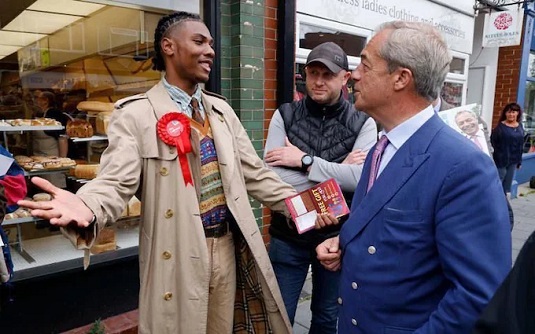
Labour's candidate, Jovan Owusu-Nepaul, was told to leave Clacton and instructed to campaign in a West Midlands target seat. There is also some suggestion his social media content, which includes him meeting Farage face-to-face and picking up complements for A1 sartorial choices, has upset party bosses. Only Keir Starmer is allowed to go viral, apparently. And how this looks is appalling. Not only is it bad enough that Labour have effectively disappeared another prominent black activist (albeit one of very recent providence), they're leaving the seat wide open for Farage. It means Labour cannot capitalise on the C4 News's racist reveal of the local Reform campaign, or do anything that might make his campaign wobble.
Let's be fair to Labour. Regardless of what one might think of their politics, as many of its candidates have run disciplined and active campaigns, they've basically carried a bungling leadership that has made life harder for them. It's fortunate that knowing oblivion awaits the Tories, the press and broadcast media are applying zero pressure and asking Starmer and co. next to no tricky questions. The two leaders' head-to-heads, the one on Wednesday evening and the other a few weeks ago did not jump the tracks of permissible debate. And so Labour have coasted, knowing that no matter what they do the election is in the bag. The Clacton decision is a product of this arrogant mindset.
Using the resources argument when the party is swimming in super rich cash is pure excuse. Running away from Farage is another episode in Starmer's political cowardice. Time and again, the leadership have never looked so comfortable when attacking and lecturing the left for purported infantile politics and being more concerned with protest than power. But when it comes to an argument with the right, it's capitulation after capitulation. On Rwanda specifically, Labour's opposition owes more to bean counting than politics. They have kept the framing of asylum as a problem, have refused to concede refugees any sort of personhood, and have framed it as a waste of taxpayers' cash and not the gut wrenching outrage it is. Quite happy to tell millions of the party's previous voters they're wrong, actually taking a lead and making the sorts of pro-asylum pro-immigration points Starmer himself used when he ran for leader is too much hard work, and risks alienating the reactionary bloc the Labour right want to appeal to. They want to appeal to them because the costs are lower, and the after politics rewards are better. No one has got wealthy from challenging and defeating divide-and-rule politics.
This is why they don't want to take on Farage. Fielding a young, energetic, and charismatic black candidate was, from the apparat's point of view, a mistake to begin with. Owusu-Nepaul's selection was a challenge to right wing racist voters to the seat. To have him campaign and, presumably, putting out anti-racist, anti-Farage literature, to persuade Reform-leaning punters that they're wrong and he offers a better politics was at odds with Labour's appeasement efforts. And so the effort had to be guillotined.
Except no right winger in Clacton is going to thank Labour for folding up their campaign. But what it does do is tell the party's loyal support that it is more serious fighting the left and other parties in closer political proximity than the far right. That racism and xenophobia is something to adapt to, not reject and challenge. And that it cannot be relied upon to act as a bulwark against the hard right Tory turn we might see following the election. The wider left and not a few Labour-friendly centrists are appalled as well. But it's too late now. Labour's traditional standing among minority ethnicity communities has been further jeopardised by ducking what, in this instance, might have been a doomed fight with Farage. But the politics of taking part were vital. Bottling Clacton will cost Labour a lot more in the medium to long run than any savings made from this stupid, venal, and short-sighted decision.
Image Credit
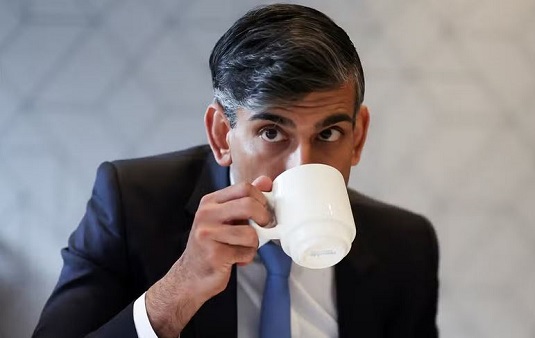
Those lower down the Tory herd have to make do with scantier troughs, but their faces are well and truly in there. I'm reminded of Scott Benton, the disgraced former MP for Blackpool South caught out in a cash-for-lobbying scandal. The sums involved were hundreds to thousands of pounds a pop. Again, for what was a relatively modest stipend, Owen Paterson was dumped out of the Commons for lobbying ministers on his employer's behalf. Quite a consequential event as it happens, ensuring Johnson was on the skids before the party gate revelations hit. Big risks for small change. If you're going to be corrupt, at least hold out for proper funds.
This is the context of the outbreak of the gambling scandal. Five people, four of which were close to the centre of Tory operations, are subject to investigation following the placing of a series of bets in the timing of the general election. Signs that the balloon was up were only evident late on the evening prior to the announcement. There was no lengthy speculation that the election was imminent and, indeed, most of the discourse up until Tuesday 21st May was whether it would be in early or late Autumn. The bets now under scrutiny were part of a surge of stakes placed in the days beforehand betting on a July contest (coincident with interesting movements in YouGov's share price too). Coming after years of Tory corruption, the situation couldn't look more suss.
The thing is, the stories don't have to be true. With the Tories now trailing Reform in a poll or two, we're now at the stage where waverers have made their minds up and most people, for whatever reason, have concluded the Tories can't go any lower. It doesn't matter if their client press are running lurid articles about Labour "supermajorities" and how Keir Starmer will collectivise second homes (or something similar), or that Nigel Farage is uniquely frightful because he won't toe the establishment line on Russia, the betting revelations confirms anti-Tory voters, right, left, and centre, that the party is a den of iniquity, if not a nest of thieves.
Apart from affirming what most people feel about the Conservatives, there are more consequences in the pipeline. As two of the accused are candidates it's interesting that Sunak has refused to suspend them. True, they haven't been found to have done anything wrong yet but the same was true of Tory politicians who had the whip taken from them during the last parliament. Albeit they were, invariably, accused of more serious wrongdoing. Sunak's kicking this can down the road for someone else, whoever that might be, to deal with. Their hope has got to be that none of the surviving rump of Tory MPs are so accused/found guilty, because a new leader needs a by-election like a hole in the head. Not that this will be any of Sunak's concern, seeing how he's more or less checked out of this campaign and has probably written his resignation letter already. He doesn't care, it's not his problem.
But this might also present something of a headache for Keir Starmer too. Making capital from the allegations, he's made it clear their suspension from the Labour Party would have been a foregone conclusion. But there are a lot of incoming new MPs, and some of whom had selection "interviews" no more elaborate than a phone call asking if they would be willing to stand. This is how things are done in the changed Labour Party. The problem is while (hopefully) no one would be stupid enough to expose themselves in the way our accused Conservatives have, the flattery from the press and, crucially, the bounty of freebies, VIP invites, and donations coming their way will turn heads. Already, the shadow cabinet have had their coffers stuffed with money from big business. I'm sure private health only donates to Wes Streeting because he's a nice chap.
The gambling allegations come to the Tories just as the party is extinguished in the ash tray. But despite Starmer's grandstanding, Labour are sowing the seeds for its own bumper crop of corruption scandals too.
Image Credit

I was glad to be continuing the literary SF with Emma Newman's first book in the Planetfall universe. Originality is hard to come by in SF these days, but Newman manages something that, to my mind (and relatively limited reading range) is new. Planetfall's focus is Ren, a 3D printer engineer on a small colony world a few centuries from now. This settlement of about a thousand people huddles in the shadow of God's City, a huge, alien biotech structure that drew Ren and her fellow pioneers there in the first place. It's a tale of girl meets weird plant. Girl falls into coma. Girl awakes full of religious zealotry and leads an interstellar mission to another world to meet God. This prophet is Suh, Ren's flatmate, best friend, and unrequited love interest, and she resides in 'God's city', where every year the colonists make an offering with the lucky chosen one coming back with Suh's divinely-inspired wisdom. Or do they?
The originality of Planetfall lies not in the premise but in the character study. Ren is a deeply damaged woman. She shies away from the company of her fellow colonists, preferring to keep herself to herself and never letting anyone into her house. As the narrative progresses her mental health keeps getting worse, which fuels her paranoia and forces her to retreat even more. Luckily their new world is relatively hospitable and is made more so through advanced printing, biotech, and recycling. Homesteading away from Earth isn't that much of a privation. Despite Ren's precarious health, for 20 years everything has worked like clockwork. Until Mac, the colony's de facto leader spots an impossible stranger approaching the settlement. Impossible, because they're supposed to be the only people on the planet.
Paragraph stuffed with spoilers below.
There are so many things that make Planetfall great. The slow burn reveal of what really happened as the planet was first explored appeals to the mystery many SF fans savour, while Ren's character study stands up to anything you'd find in mainstream literary fiction. And then there's the narrative pattern in the book, the double movement of closing and opening. As the story opens up and revelations are teased, Ren's mental health crisis gets worse and she withdraws - closes - even more. Ren's house is off limits until it's forcibly opened by Sung-Soo, our mysterious stranger from the wastes, and the entire colony ends up traipsing through. The secret Mac and Ren have been harbouring and the resulting toxic bond between them is busted wide open, with seemingly disastrous consequences for the settlement and the cohering effects of its faith. The colony's recycling system is a closed loop economy until it's raided, the printers are smashed, and key specialists are carted away. To survive, those remaining are going to have to find ways of living with the planet on its terms. And God's City, which is secretly visited by Ren at night, is closed and has to be broken into. But the secrets it holds come out into the open when Ren removes her environmental suit and risks death by exposing herself. The city responds to this opening by guiding her to the place where the final revelation is revealed. In the process, the ransacking of her house occasions a break down, the revealing of hers and Mac's secret plunges her into a deep crisis, but when the decks are cleared she recovers and manages to find fulfillment by opening herself to and merging with God's City.
Just one point about the various write ups about Planetfall. While Ren's portrayal is often praised, Newman is criticised for populating her narrative with two-dimensional characters. As criticism goes, you have to ask whether anyone pushing this point was actually paying attention. Because of the nature of Ren's illness, she views everyone as an imposition and potential threat. The "two-dimensionality" is not an effect of Newman's inability to write sympathetic and rounded others, but is framing them through Ren's standpoint. It's her that is reducing them from rounded personalities to factors that might implode her world. And, as we see, her paranoia turns out not to be groundless.
This was Newman's first SF novel and it's better than most titles from genre authors who've been writing for years. Disgracefully, her publishers passed on her short story collection, Before, After, Alone set in the same universe (because, apparently, collections of shorts don't sell any more) and so she was forced to self-publish. If they're anything up to the standard offered here, they would be well worth checking out. The rest of the Planetfall sequence was well received, but so often, quality is not matched by the sales figures it merits. But interestingly her current project is a new SF novel set in a utopian society. Wedding this premise to a cultural context more receptive for thinking about political alternatives to what we've got might giver her work the wider acclaim - and audiences - it deserves.
Image Credit
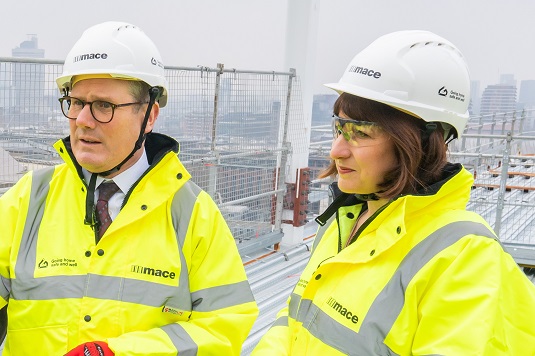
For those of us sad enough to watch Keir Starmer in debates and keep tabs on his interviews, this won't catch one unawares. Labour's pledges to fix all the things but not get drawn on where the money is coming from has spurred its own sub genre of election 2024 commentary. Starmer and Rachel Reeves have categorically ruled out another round of austerity, which has led to speculation about borrowing or more tax rises. But here too, Labour has met this with a wall of denial. Reeves's so-called fiscal rules want to get state debt down and is more of a priority than pushing the green transition. So much so, you'll recall, she scaled back Labour's spending commitments. On the other hand, whenever Starmer has promised not to raise taxes on "working people". National Insurance, income tax, and VAT are off limits. But if you're eagle-eyed enough, he hasn't ruled out all taxes.
The Graun splash reveals Labour are considering increases to capital gains tax, and changes to inheritance tax to prevent its avoidance through tax relief schemes and "gifting". Which is a very common practice among well heeled families. Taken together, they could raise up to £10bn/year. Useful in a pinch, but quite marginal compared to what the Greens are pressing for.
This begs the question. Why is the Labour leadership being shy about these deliberations? Indeed, even though nothing is set in stone there's no reason why there couldn't have been a passage in the manifesto explaining that, thanks to the state of public finances, an incoming government would explore more revenue raising measures. It's not as though the document lacks vague promises of investigations into and initiatives about this and that. Why would another one hurt?
All politicians want to occupy a zone of non-punishment, where negative criticisms are deflected or, if they're not, they do not become amplified. Over the last couple of years particularly, change in the "changed Labour Party" has meant dumping all policies that might cause a bit of friction with vested interests. And where they haven't been jettisoned, policy has got watered down. "Bomb proofing" the manifesto has meant not building anything the Tory press would consider worth dropping ordinance on. That way, the reasoning goes, Starmer glides along the path of least resistance into Number 10, benefiting from an electoral coalition stretching from the Stockholm syndrome left to the anti-immigration right. Promising little and saying little isn't political cowardice but is super smart grown up politics laser focused on winning.
What is ridiculous is having them in the manifesto would have helped halt the fraying of the Labour vote we're starting to see around the edges. For those who think the rich have had it all their way for too long, which includes not a few wealthy people, the promise of wealth taxes, as slim as these proposals are, offer a positive case to vote Labour. The party leadership knows this. So if not cowardice, how to explain this aversion to doing something popular? Unfortunately, it's for the same reasons why Rishi Sunak's premiership set out to offer nothing and, indeed, has delivered just that (apart from the most memorably cack-handed campaign of recent times). For Starmer and Reeves, the playing down of hope, the use of change as an empty signifier, the promise they won't do anything that defies the gods of money, etc. is an effort at managing expectations so they can keep control of the narrative about their government. If you start promising things, people's expectations are raised and politicians come unstuck as they refuse to meet popular pressure. Saying you want to tax a bit of wealth can immediately lead to questions about inequality, private ownership and, horror of horrors, class. Issues Starmer and friends absolutely don't want to deal with.
At the beginning of the campaign, Starmer said "Change means stability". In this instance, that means stability for them. Not raising expectations isn't just for the ease of campaigning. It makes for easy governing too.
Image Credit
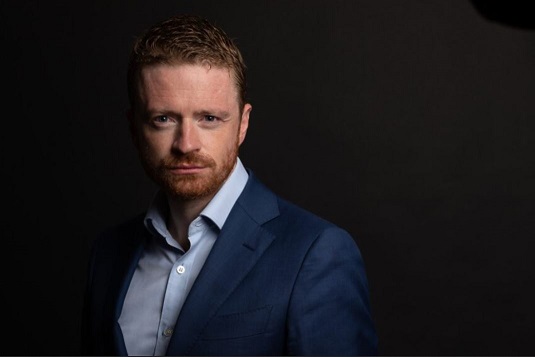
This week's profile of Morgan McSweeney, the new Labour right hatchet man in the Golding/Spellar tradition must have provoked similar mutters from that wing of the party. Thanks to his efforts, Keir Starmer's or, to be more accurate, the Labour right's writ reigns supreme. And of the methods employed to this end, the article isn't backward about being forward. It baldly states that McSweeney's aim was the removal of all the Labour left's institutional influence. The sacking and attempted removal of candidates had nothing to do with spurious concerns about "quality". The parachuting of Labour right notables into constituencies they have zero connection to is confirmed as "rewards" for services rendered. So much for the idea that being an MP is a selfless act of service.
How McSweeney came to prominence had little to do with assimilating Golding's rambling tome. Instead of backroom chicanery, what he pushed was a brazenly dishonest political project. As the former organiser for Liz Kendall's leadership campaign, his chief take home was that if you want to win in the Labour Party from the right, you have to lie. And this is what he did through the Labour Together vehicle, which for a while posed as a soft left organisation with the faces and endorsements to match, and then Starmer's own Corbyn-lite bid for the party's top job. It's an unsubtle strategy, but one that has worked over the last four years. That the press are uninterested and remain so, knowing they need a stable government that will pander to their interests now the Tories are no longer available has proven handy. But so has the quiescence of the trade unions who, despite a bit of chuntering over workers' rights, have been largely disciplined in not wanting to make life difficult for the Labour leader. But this only has so much mileage where mainstream politics are concerned, and Starmer has already copped unwelome questionning regarding past fibbing.
This record of skulduggery puts a question mark over McSweeney's future use. When his "genius" is built on manufacturing departures from the truth, what does he offer when the political costs of getting caught out are much higher than telling porkies about party malcontents? The article talks about him deserving a "big job", and with the unwelcome return of Nigel Farage and the rising polling fortunes of Reform, this is supposedly one of McSweeney's "concerns". How a felicity for bullshitting Labour activists and pressing deselect buttons could protect his boss's flanks from the far right remains to be seen. Likewise, one of his reputed superpowers is to mind read middle England and have a feel for their instincts. We know that's code for consuming the content of very important centrist personages and yes, reading Ian Dunt and listening to James O'Brien on the daily requires preternatural fortitude. But how will their stunning insights help fend off electoral opposition to a Labour government from the Liberal Democrats and the Greens when, let's be euphemistic, their read on politics leaves a lot to be desired?
The best way a Starmer government can see off attacks from the right and the left is through delivery. Not the weak sauce printed on a pledge card or the changey vapourware of the manifesto, but through real, tangible improvements to public service and the living standards of "working people". Political science isn't rocket science, after all. What does McSweeney bring to this table? With the party sewn up and the magical transformation of right wing NEC members into Labour MPs, he is functionally obsolete. But he needn't worry much about his immediate future. The favours banked and the secrets buried will see him given a role where, like his allies, he gets to feel important and in charge. He might even enjoy the status of feted guru, like dear old Peter Mandelson. But to all intents and purposes, his very useful uses are now at an end.
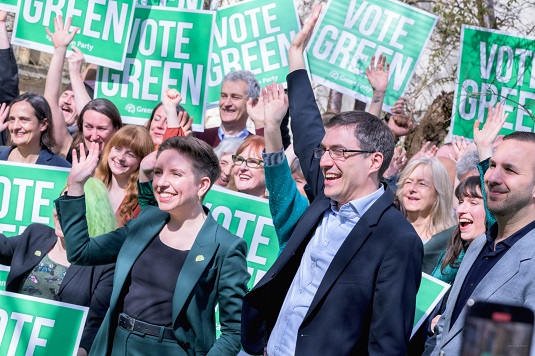
Contrary to Labour's manifesto, which demands a dollop of self-delusion to be described as a radical document, no such mental gyrations have to be performed while leafing through the Greens'. On page 15, we find a promise to explore mutualisation as an alternative form of ownership, including taking existing firms into cooperative ownership in some circumstances. Unlike Labour and its crash diet offer to workers, at least compared with a a couple of years ago, the Greens stand for repealing all the anti-trade union laws since 1979, a £15/hr minimum wage, strict pay ratios across the economy, the adoption of single status for workers (dumped by Labour after business lobbying), and working toward the four-day week (p.17). On social security, the two child limit for child benefit would be scrapped, as would the cruelty of waiting times. Elected Greens would press for the abolition of the bedroom tax, and an uprating of benefits by £40/week. State pensions would be linked to inflation, and experiments with the basic income would take place (p.19). And where the rich are concerned, those with over £10m would see their tax bill rise by one per cent, and billionaire wealth would be taxed by an annual 2%. Tax dodge free ports/enterprise zones would be scrapped, Labour's self-imposed fiscal rules binned, and VAT applied to private school fees and finance (p.20).
This wouldn't go far enough as far as some are concerned, but it does match the ambition and scope of Labour's Corbynist manifestos. But is this, as some centrist critics suggest, merely a shopping list likely to put off more than it attracts (because, in British politics, the grown ups have decided we're not allowed nice things), an effort at offering left policies to soak up support from the not insubstantial numbers who've grown disgusted with Labour and its leadership?
Actually, yes. On the left the Greens have long been regarded as a petit bourgeois party, albeit a radical one versus the populist right and those fishing in similar waters. As such, the Greens have traditionally appealed to a constituency not dissimilar to the Liberal Democrats - small business people, sections of the state/public sector, the professions. The party continues to appeal to this layer, and has made significant advances into Tory support in the countryside. They do so because they intersect with conservationist values, which has always been a concern for rural conservatives, and in this vein are the only party that takes environmentalism and climate change seriously. That and the Greens present themselves as an unsullied political force, one that would not raise the heckles that Labour might in certain corners of the country. Despite the Greens' radical left positions.
To be fair to the Greens, its positioning has been well to the left of the other parties for over 20 years. But this time, it's intersecting with the decomposition of the Labour base Jeremy Corbyn bequeathed Keir Starmer. Without going into the specifics, Starmer's purge of the left - which is now freely admitted - was always going to drive away some of the membership and a wider layer of diffuse support by turning against the interests and socially liberal values of the rising layer of, to use Starmer's favourite term, working people. Compounding this was the alienation of traditionally Labour-loyal communities, namely British Muslims and black Britons, and the abandonment of the most vulnerable. As the Greens have grown off the back of a new wave of activists flowing into the party from these quarters, it's beginning to acquire a new core support. As Starmer wants politics to tread lightly on people's lives, in reality it will continue stamping heavily on their interests and aspirations. The Greens are well positioned to make good the opportunities the Labour leader throws their way.
It's best then to think of the Green manifesto as an anchor. It reflects the values and ambitions of the rising class of immaterial workers more closely than Labour's programme for government does, and is cohering a new networks of stable support than the party has previously enjoyed. Manifestos are always more than what a party would do in government. It shows what interests they want to serve, and how they're going about articulating them. The Greens are showing that they're attuned to the class politics of the moment, and can expect to do well from them in the years to come.
Image Credit
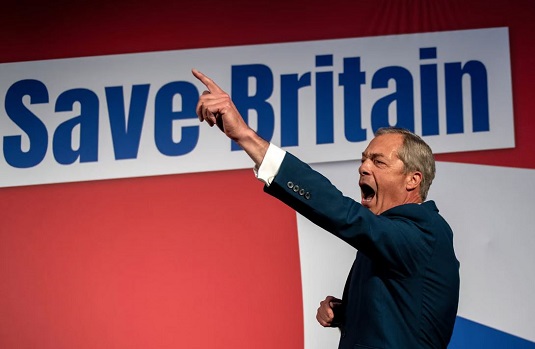
There's no doubting some on the right wing fringe of the soon-to-be-reduced Parliamentary Conservatve Party are shipping a post-election tie-up between Reform and the Tories. Just as the election was announced, Lucy Allan called for a vote for Reform in her Telford seat. A move that saw her expelled from the party. This last week Andrea Jenkyns has been caught pushing official party literature featuring her and Farage in a chummy photo. And trying to cash in on the sentiments of the Tories' thinning membership, Suella Braverman has said the Tories "should welcome" Farage into the fold.
From within the situational awareness of the Tory weltanschauung, this is not entirely mad. As argued before, the Tory obsession with race and immigration can, if you squint hard enough, be seen as an election winner. If the gate was opened to Farage and he was swept to the leadership of the Tories, his garrulous character and "truth telling" would contrast favourably with the lefty cultural Marxist wokery of Keir Starmer, and the party could quickly return to viability. After all, Brexit was won an anti-immigration politics, Boris Johnson won on anti-immigration politics, and the reason Sunak is flailing badly is because of his softness on immigration. Just take the Tory and Reform percentages and do the maths. A united right could see Labour down.
Provided Farage does get into the Commons, it's obvious there is a faction of the Tories - egged on by the press - that would happily have him. And if admitted and shenanigans don't get in the way, it's surely odds on the membership that voted for Liz Truss would endorse Farage as leader. This place has long forecasted a rightward turn for the Tories post-election as a means of cohering themselves following a shattering defeat. Just as they did after 1997. But this is not entirely nailed on. According to an analysis of Tory selections by Conservative Home's Paul Goodman, few new hard right candidates have been selected for the safest seats. With a lot of this wing getting taken out at the election, this might make for a more centrist - and I use that term advisedly - parliamentary party than has been the case for some years. And this changes things somewhat.
Just as a lot of Tories think going right can save the party, there are those who think a more centre-oriented pitch is the path to recovery. With the Lib Dems set to do well, abandoning more centrist positions and indulging every right wing hobby horse only strengthens the yellow party. If the Tories go hard right and/or get under the covers with Farage, the Lib Dems can choose between pitching to the left to capture discontent with Labour or start occupying land abandoned by the Conservatives, effectively presenting themselves as the grown up natural opposition to Starmer. Because Tory curious/right-leaning swing voters aren't going to be on board with a Farage or Farageist party, this could focus the minds of enough Tory MPs to block any leadership bid. And if that happens, with a semi-viable Reform party the Tories could well split with Farage taking some MPs and lots of members.
It's funny. Thinking back to writing the first draft of Falling Down during the first Covid lockdown and into that summer, I thought the thumping victory Johnson had achieved would stymie the Conservatives' long-term decline, and as such the process would only slowly take hold. The Tories would be competitive and could win against a lacklustre Starmer in 2024, but become progressively more difficult after that. But with Party Gate and Johnson's defenestration, the Truss debacle, and Sunak's do-nothing premiership, each of these moments have sped up the decomposition. Now this election, Farage standing, the D-Day clanger, and the possibility of post-election footsie that could rip the party to shreds, the rate at which the Tories are unravelling threatens to break the speed of causality. The only question left is there anything now, anything at all, that can make this happen even quicker? Recent history suggests it would be foolish to rule that out.
Image Credit
The truth is you can read into the manifesto what you want into it. If you are on the left and need convincing Keir Starmer's Labour are worth voting for, you'll find your justifications. For those particularly weird floating voters who read manifestos, they're not likely to find anything that would repel them. Those looking for reasons to criticise and go elsewhere will find plenty of ammunition here. But what is interesting about the manifesto is how insubstantial it is. At 136 pages, it's four times thicker than the Green Party's document (more on that anon), but is much less weighty. In fact, I can't recall ever reading such a thin document. There are probably more photos of Starmer than there are actual policies. This passage (p.86) from the small section on higher education typifies the tone.
The current higher education funding settlement does not work for the taxpayer, universities, staff, or students. Labour will act to create a secure future for higher education and the opportunities it creates across the UK. We will work with universities to deliver for students and our economy.
What does that mean? Yes, something is wrong. But where's the solution, where's even the clue to the policy agenda we're going to get to secure Britain's universities?
This patter is repeated throughout. A problem is acknowledged, often rightly being put at the feet of the last 14 wasted Tory years, but instead of a proposal we get hand waving. It's this void that beckons the praise and invites the brickbats. For those of a wonkish mindset, there is a lot of "we're going to study this" and "we will review that". What this means in real speak is an expansion of the civil service and local government, with plenty of opportunities for administrative solutions to social problems and the inherited dysfunctions of the state. It also gives the (likely hundreds) of new Labour MPs a chance to make a name for themselves by spotting a need and championing a policy. It's a Fabian's fever dream. But in the sense of what is wrong, of the moral thread that underpins Labourism, there a few signs it has been stitched into the manifesto. It's a technocratic document through and through, one befitting the the mindset of its leader and his coterie of suits and briefcases.
There are some welcome policies. As noted before, Starmer's original commitment to trade unions has been watered down thanks to constant lobbying by Labour's fear weather business friends, and Peter Mandelson. But it says everything that even their implementation in this reduced state would make a difference to workplace rights and trade union activism. Though, do note, the Tories' anti-union legislation on strikes, cooling off periods, picketing, secondary action, and ballot thresholds remain untouched. Also positive but overlooked in the commentary on Labour's offering is the commitment to activate the Socio-Economic Duty, a little known bit of law that was slipped into the 2010 Equality Act in the dying days of New Labour and not repealed (nor enforced) by the Tories since. This compels public authorities to reduce socio-economic disadvantage as an inescapable part of exercising their functions. This has been variously adopted by the devolved governments and various Labour-run councils, but the nature of local government funding has stymied the effects of its implementation. This is incompatible with austerity, which is why the Tories ignored it.
For everything that can and would make a difference, just to remind us of the character of Labourism there is something appalling. More power to the police and intelligence services because terrorism (p.15), the notion of putting more coppers onto the streets because of a non-existent crime epidemic, the waffle about wanting a Palestinian state while idly standing by as tens of thousands have been butchered, and a fast track asylum removals service. There's the fluffy language about helping disabled people back into work, a policy that gave us the hated Work Capability Assessment 16 years ago, and the contradictory idiocy of affirming trans rights while backing the flawed Cass review. Milquetoast progressivism and performative authoritarianism, it's a Blair-era call back.
In fact, what this manifesto reminds me of is the 2010 document that Gordon Brown put forward. Having rediscovered the most limited Keynesianism during the 2008 crash, the 2024 manifesto reads as its direct heir with the last three airbrushed out of existence. Instead of plagiarising Wikipedia, Rachel Reeves's "securonomics" is a cut and paste of the late Alastair Darling. Except he was honest about the "need" to cut public spending, whereas you'll find no such candour from the front bench about how they plan to pay for their modernisation of the state.
That said, it would be unfair to say there is no difference between what Labour and the Tories are offering. Their document is "Sunakism" distilled. I.e. An exercise in offering nothing but culture war stunts to avoid the hard graft of dealing with the problems they're responsible for. Starmer's authoritarian modernisation, like Sunak's politics-as-avoidance, fights shy of raising people's expectations as a means of assuming control of the political narrative and avoiding stirring up popular enthusiasm for policies they'd rather not enact. This is what one of Starmer's favourite phrases - for a politics that "treads lightly on people's lives" - is all about. But even then, if Labour sees through its promises and gestures, this will result in better outcomes than the cruelty and spite the Tory manifesto wants to inflict.
But better is a matter of degree. Making life a bit more bearable is hardly the most stirring of slogans or most ambitious of visions. This is why there is no enthusiasm for Starmer's "Changed Labour", and why it will be increasingly difficult to hold its coalition of support together after the election.
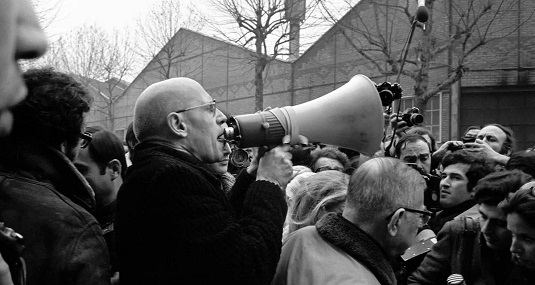
I'll be presenting something too, so I'm unlikely to surface from the Foucault mines this weekend. This is what my paper is on.
Retro Foucault, Our Contemporary? Revisiting The Subject and Power Afterword at a Time of Desubjectivation Crisis
The contemporary reception of Foucault as a theorist governance has proven extremely influential at explaining how Western governments have reshaped their institutions to encourage the formation of neoliberal subjectivities. However, with falling living standards, stagnant wages, and restricted housing supply, the offer of social mobility and material abundance that has worked as the carrot to the neoliberal stick of surveillance and punitive measures suggests the assemblage supporting this form of governance is breaking down. This is not a crisis of the passage from logics of discipline to logics of control (Deleuze 1992), but a more fundamental problem of desubjectivation. That is, a withering away of relations and motivations that provide neoliberal capitalism everyday legitimacy and justification, with more reliance on mechanisms of “machinic enslavement” (Lazzarato 2014). In Britain, the likely election of a government that defines itself in relation to an ethic of public service, has a programme of refurbishing institutions of state, and has the ambition to restore their authority, will have to face up to this problem. At the time of writing, the Labour Opposition’s discourse on social security and the centrality of employment suggests they do not recognise the challenge or are relying on the need to work – one machinic compulsion among many that Lazzarato identifies – to maintain the order necessary for their project. In parallel with this, Labour has emphasised its support for authoritarian state institutions, has ostentatiously dressed itself up in national colours, has flirted with socially conservative positions, regularly invokes ‘security’ as a theme, and has presided over an authoritarian internal party regime, which likely indicates its policy approach to domestic questions and law and order.
This is where the “old” Foucault of the microphysics of power might prove useful. By returning to his famous afterword, The Subject and Power, in Dreyfus and Rabinow (1982), we find a useful toolkit for analysing political efforts that either found post-neoliberal forms of subjectivation or co-opt other subjectivities that have grown up in resistance to neoliberal governance to patch up/maintain prevailing assemblages of extraction, exploitation, and control. As Labour is offering a state-centred political project, Foucault’s sketches of pastoral power and attacks on forms of individualism congenial to the operation of state institutions, his analytical separation of power from linguistics and sign systems, understanding as power as action on action, the constitution of “others”, and the how points of agonism and tension are incorporated into dominant modes of governance, as well as Foucault’s five methodological points for analysing power so we can make sense of what Negri (2017, p.161) calls a circulation of “command, exclusion and violence” are essential points of departure for analysing and anticipating what is likely to come. While accepting Deleuze’s (and Foucault’s!) argument that disciplinary techniques and logics are obsolete in the absence of a regime of control, a politics of re-founding and re-emphasising the state as the official centre of social life makes a return to the crude technologies of power more likely.
Image Credit
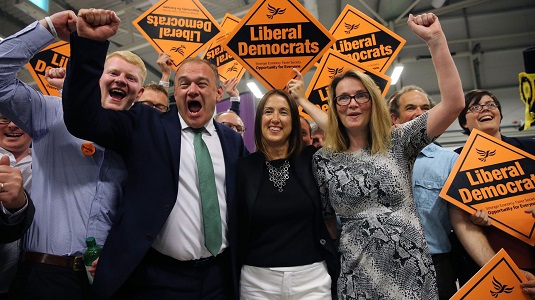
The Lib Dems aren't doing fantastic in the polls, what with Nigel Farage exciting the media pack (plus ça change) and the Greens eclipsing the yellow party in a couple of surveys. But they are worth keeping an eye on, and not just because they're positioned to do well out of a Keir Starmer government. There is a chance, a slim chance, they could be the official opposition after 4th July. Can you imagine it? No more Tory psychodrama hogging the headlines. Names like Suella Braverman forgotten. Their racist hobby horses and culture war rubbish no longer have political traction. Starmer will have his agenda, and from the Despatch Box Davey will take him on on the NHS, care, the single market, and other staples of liberal and centrist concerns. This is politics as Ian Dunt's dreams made flesh.
If you believe that's going to happen, I have a bridge to sell you.
Assuming the Lib Dems become HM's opposition, absolutely nothing will change when it comes to the discourse of British politics. This election campaign typifies it. Reform, if they're lucky, can look forward to returning a single MP - most likely Farage himself in Clacton. Yet, despite having a handful of councillors they are getting more coverage than the Greens (800+ councillors) and the Lib Dems combined. You can't put this down to the unique threat Reform poses the Tories. Chances are the Lib Dems will take more votes and seats off them. No, what the election is showing is the institutional predisposition toward the right. And that's not going to disappear simply because the parliamentary Tory party might end up holding its meetings in a phone box.
The Tory press, which to all intents and purposes are as much part of the party as its cadre of MPs, councillors, and the rest, have a sunk investment in the politics they peddle. They are as steadfast in the maintenance of bourgeois class relations, and that will inform their critique of the incoming Labour government. Not because they believe Starmer is going to outlaw landlordism and nationalise sausages. As hyper-class conscious partisans of capital the very idea of the Labour Party worries them. The trade union link, its dependence on supporters who don't have much of a stake in British capitalism, and the recent memory of Jeremy Corbyn's leadership makes them nervous. Despite Starmer's many assurances and the general cast of his project, they are concerned he might raise political expectations with his nebulous promises to fix things and make public services work.
So what? Aren't the press in long-term decline as well? Yes, but they still determine Britain's political conversation. Broadcast journalism and their online content accept them as the gatekeepers of what is and isn't an issue, and for a variety of (usually self-serving) reasons leading politicians except their talking points as legitimate concerns and will respond to them. Hence, in our imagined scenario Davey might press Starmer on the care crisis, but given his acceptance of right wing framing on so many things, the Labour leader has effectively chosen to be held accountable on right wing issues. And because of this, he's going to provide the press with enough hot air to reflate the busted Tory balloon and give them an opening for a partial return.
Even though the Tories suffering their deserved decline and fall, there is still a mass constituency for conservatism in this country. Its continuous erosion is the ultimate root of Tory woe, but for now it remains substantial. Over and over, in briefing and in policy terms, Labour has genuflected in this direction. And even as mass conservatism diminishes to a rump that can never win an election by itself again, the modus operandi of tacking right equalling super clever smart politics will still light up the Starmerist dashboard. As 1997 is the model, and tragedy and farce will befall the incoming government as they imitate Tony Blair's time in office, because he retained political dominance by owning so many traditional Tory (if not Thatcherite) concerns you can expect Starmer and co try the same trick.
Early on in the campaign, Starmer and Rachel Reeves had great fun telling the media that "stability means change". And vice versa. This applies to politics. We might be in store for a massive realignment where the Tories are so reduced that, for the first time since the early 20th century, they might get beaten by the Liberal Party. Or, to be more accurate, its direct successor. But apart from the change it would make to parliamentary arithmetic, we won't see the advent of "sensible" or "grown up" politics. It will still be dominated by scaremongering, racism, beggar-thy-neighbouring. Not a new liberal enlightenment but the usual divisive swill, and for Starmer and friends that will suit them fine.
Image Credit
