The Tories and their press like their Second World War similes, so here's one for them. Boris Johnson likes to affect a Churchillian pose, but rather than fighting the Omicron variant on the beaches or, to be blunt, anywhere, he's raised the white flag. But this is something worse then Neville Chamberlain's appeasement policy or, for that matter, the French authorities who declared Paris an open city just before the German army arrived. No, Johnson and his government are the Covid equivalent of Vidkun Quisling and his collaborationist government in Norway during the Nazi occupation. By letting Covid propagate in the schools, ensuring the mask mandates there are strictly time-limited and even dragging their heels on face coverings on public transport and indoors, if Covid was a conscious entity we'd be asking how large a donation had it given to their party.
And I'm afraid our Covid quislings are at it again. In the Sunday Times, we read plans are afoot to do away with free lateral flow tests in the coming weeks. The tests are only likely to be available in "high risk settings" while, simultaneously, the mysteriously over-expensive Test and Trace is to be scaled back further. The period of self-isolation is likely to be reduced from seven to five days to help the work absentee crisis. And all this while the country is posting record infections and between 200-300 deaths daily. Interviewed for the piece, health secretary Nadhim Zahawi said we are "witnessing the transition of the virus from pandemic to endemic", as if this was positive news. He goes on, "vaccines will get better and we are going to have polyvalent and multivalent vaccines by next year." These vaccines, which promise to target the body of the virus as opposed to the spike proteins Covid uses to latch onto and invade cells, are much more difficult for it to evolve around. In other words, Zahawi and the Tories are now fully committed to a silver bullet approach. As it seems are many other countries.
If we want to press the overused WWII button one more time, this is very similar to collaborationists enthusiastically carrying out the dirty work of their Nazi overlords right up until the Allied and Soviet armies roll in. As we saw with Delta before Omicron arrived, the Tories were content to let infections run hot, ensuring unnecessary illness, incapacity, and death, and straining the NHS right at the point exhausted staff could have taken a breather to prepare for the Winter wave that was forecast. Now we're seeing them doing exactly the same thing, except with hospitals overstretched, NHS trusts declaring major incidents, and medical staff being pushed to the brink - with the knock-on effect for waiting times and non-Covid emergencies. Instead of 40,000 - 50,000 infections a day we're at triple or quadruple that, with the flood into hospitals tailing infections. It was all so predictable.
One of the chief conceits of mainstream politics is that the number one priority of government and state is to keep its people safe. The Tories have disastrously failed this test time and again, preferring instead to prioritise capital and property. For the continued health of the wage relation and rent payments, tens of thousands have needlessly died: a clear cut case of social murder. And this is going to continue as we await for the vaccine cavalry. Now, some might not think this matters. We've got to learn to live with the virus, goes the tedious mantra. Here's what that means. Omicron is apparently less vicious than Delta, though the possibility of co-infection and the variants combining is quite likely, but the problem with all the Covid variants is the fact it's more than a respiratory disease. For one, there is nothing to suggest Long Covid is any less likely with Omicron, nor its symptoms less debilitating. Second, it is already well known that survivors are at higher risk of strokes and heart attacks versus other respiratory diseases. It's common knowledge Covid can attack the brain and potentially lead to long-term consequences. Hence the utter stupidity of letting an highly infectious variant run riot in schools where young people's brains are still developing.
The Tories know all this, but they're quite happy to let Covid do its work. At a minimum, it's paralysing the economy they pretend to care about with huge numbers of absences, not least where it matters most - in the NHS. And at worst, tens of thousands more people are going to suffer unnecessarily and die. They are entirely okay with this and the long-term health consequences that will entail, a habit of statecraft that has not altered one iota under the impact of the emergency and, if anything, they've retrenched in the face of the challenge. Unfortunately, with some notable exceptions in local government and Wales, Labour have been useless as well. At best, belatedly calling for the introduction of new precautions, at worst going along with the Tories. The unions have rightly looked out for their own members, and some members of the Socialist Campaign Group did try to push Zero Covid hard a year ago, but there's nothing joined up, no united labour movement-centred collective response. And for as long as this persists, so will the Tories' indifference to the illness and deaths of our loved ones.
Excellent piece from Daniel Sarah Karasik in new(ish) Canadian Magazine, Midnight Sun. Some comrades who are indifferent about the spread of Covid would do well to reflect on their piece. Here's the conclusion to Daniel's article:
The cultural theorist Mark Fisher coined the term “capitalist realism” for the feeling that there’s no imaginable alternative to the murderous political-economic system that shapes our lives. Today we’re drowning in a COVID-era version of the same ideological bog. Call it pandemic realism: the way capital and the state have convinced so many of us that there’s no alternative to the eugenics of mass infection. Yet that realism is a kind of capitalist fantasy made real by capitalist power. Not inevitable, not necessary; the experiences of the COVID Zero territories prove it. Who knows what impossibilities we might make real – human survival on this planet, even – if we manage to build a counterpower that’s equal to the challenges we face now?
Hopefully, I'll have some time to reflect on this in the not-too-distant.
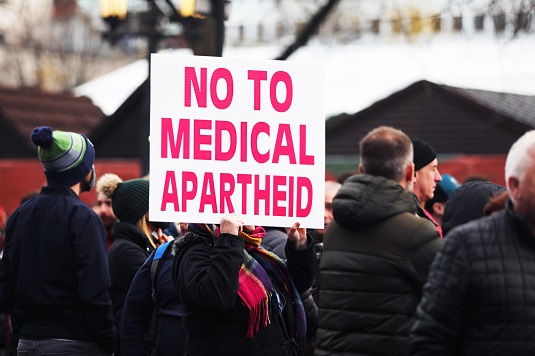
Unless they have dispensations for medical reasons, Tony Blair thinks they're idiots. Emmanuel Macron wants to "piss them off" and carry on doing so until the pandemic ends. And Boris Johnson mumbled something uncomprehendingly negative about them at Tuesday's Covid press conference. At home and overseas, we're seeing hints of a new biopolitical strategy: making the unvaccinated scapegoats for our present difficulties. And from the standpoint of our Tory government, it's the logical culmination of the politics of the pandemic they've peddled for two years.
As recently argued, prioritising public health sits in tension with received statecraft and governance that has prevailed these last 40 years. The messaging pushed by medicine and heeded by millions of people was to act as if they themselves were infected. I protect you and you protect me. If everyone acted in the same way, then transmission would not happen as easily. To put it another way, conduct was to be other-focused as opposed to self-interested. And this advice undoubtedly prevented hundreds of thousands of infections from taking place, and with it tens of thousands of cases of serious illness and death. But we can't well have a germ of solidaristic behaviour taking root, no matter how many times the Tories and their press helpers heralded the Blitz spirit.
I don't intend to go through everything the Tories have done since, except to note they have struggled (and largely succeeded) in reversing the axis of public health messaging. As time went on restrictions were portrayed as overly burdensome, even if they were something as simple as wearing a mask. Freedom days came and went, the middle class were encouraged to eat out, plans were afoot to enforce a mass return to work ... and then another two lockdowns, more restrictions, and then none again. Refusing to fix the roof when the sun was shining, to borrow a favourite phrase of a former Tory PM, the much-hyped freedoms were merely moments in which the virus could circulate at lower rates while the Tories didn't do anything to prepare for a winter wave nor a more infectious variant. Amid the incoherence and the refusal to intervene until it was too late, public health became more a matter of personal responsibility. Which suits the Tories down to the ground. Catching Covid wasn't their fault - contracting it is either hard luck or not taking the necessary precautions. You are the master of your own health, again.
Summer 2020 was when we saw a first overt push using public health as a new tool of divide and rule. Suddenly the press were awash with stories about young people having parties in contravention of the rules, and raves taking place deep in the woods that were a bit laissez-faire on social distancing. Less hands, face, space, more Everybody In The Place.. The broadcast news showed heat vision police footage to whip up concern. The yoof, always a potentially dangerous cast of characters in the right wing imaginary, were now responsible for keeping Covid going because they were flouting the regs. The numbers appeared to show it - infections among the youngest adult age brackets showed stubbornly higher rates than the general population. What didn't receive attention was the real reason why the young were disproportionately affected: because many of them had returned to work in hospitality and were therefore getting it and transmitting it in the workplace. It wasn't parties but the monomaniacal Tory obsession with forcing people back into work. Johnson, Sunak and co were Covid's useful idiots, not young people themselves. This angle of Covid scapegoating did not last long: it was hard to maintain the pretence when children were drummed back to school and further and higher education reopened, handily helping distribute the disease.
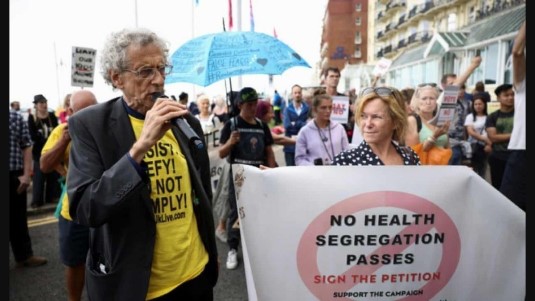
Now, time is increasingly ripe for another round of scapegoating. With the Tories on the ropes and Johnson's authority imperilled, if not now, when? The ground appears fertile for such a strategy. Early last month, YouGov found clear majorities among all age groups and political persuasions for bans on the unvaccinated going into "non-essential" shops and attending indoor events. Already, there is an identifiable 'out' population who, thanks to media coverage, are associated with the fringe idiocy of the anti-vax/Covid-denialist movement. If they're targeted, it's not terribly likely the wider population would listen to their concerns with a sympathetic ear. Second, with all the information available and demonstrable lower risk of illness from the vaccine than catching Covid, refusing the jabs marks one out as selfish and uninterested in keeping others safe. They've turned their nose up at the collective sacrifice made and seem to think being potential bed blockers in our overstretched hospitals won't happen to them. As crass as Macron's comments were, there are plenty on these shores who would lap them up. One should never underestimate the collective desire to give unworthy others a bit of a slap.
We should not forget about the politics of this, though. If the Tories go down this road it's not because they want to see people fit and healthy. Their seeming indifference/herd immunity approach to letting Omicron tear through schools and workplaces should put that notion to bed. Using the unvaccinated as scapegoats gets them off the hook. The lack of business support, pitiful sick pay, no meaningful health measures except for wearing a mask, the cavalcade of failures, their prioritising of their class interests can be memory holed and depoliticised if our prolonged health crisis is pinned on Piers Corbyn and his ilk. The Tories are past masters at the politics of divide and rule. Keep an eye out for it.
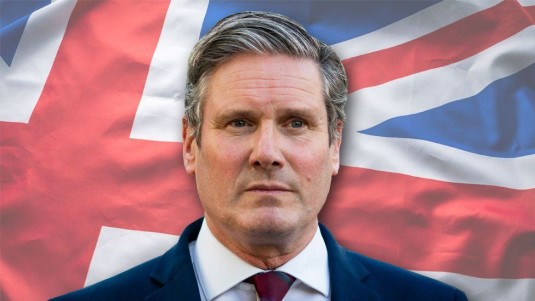
And it came to pass that Dear Keir, fresh off December's high took to a podium in Birmingham to deliver his new year speech. The objective? Convince those watching and/or paying attention to look at the Labour Party again. The theme, nodding awkwardly to his lawyerly past, was a "contract with the British people". And the specifics? The values of security, prosperity, and respect. Things absolutely no one anywhere can be against.
Anyone hoping for eye-catching policy were to be disappointed. The theme Starmer went biggest on was security (something I can't complain about seeing as this blog urged the last two Labour leaders to do the same). One part of this pitch was to the law and order crowd. Giving it a leftish spin, he said crime is a "social justice issue", and said he'd want more police on the beat and new local powers for coppers to bust drug dens. Given the well-documented issues the police have with institutional racism, I can't see that being misused at all. More usefully, security was expanded to include securing the NHS - a positive message as the Tories have used Covid to run the health service into the ground. And pleasingly, he reiterated Labour's commitment to workers' rights from day one of employment.
There was the usual Starmer boilerplate, as expected. Tory levelling up failures were referenced, and gestures towards a putative Labour modernisation programme (transform Humberside into a Hydrogen hub!) were made. He talked about patriotism again, and how the party was patriotic because it wanted to fix the country's problems, not simply moan about them. And then onto sounding like a Cultural Studies textbook from 20 years ago, he talked about the importance of place and how the nation helps give our lives meaning. He talked up the record of Labour's winners - Attlee, Wilson, and Blair, and how each of them had left Britain a better place than they found it. And to get the wonks excited, he re-announced the constitutional commission set up under Gordon Brown that's going to look at how the UK is run.
Not a lot of meat, and barely any gravy. Challenged by the assembled hacks about policy, he said this speech was about values. And that's true enough, apart from criticising the Tories and teasing what his government would look like, this has been consistent in pretty much all his set-piece addresses. The idea is straight forward: show Labour isn't an alien from Planet Bolshevik, because the leadership have imbibed the totally contrived notion that there's something inauthentic and anti-British about the party. Only then will the irredeemably conservative and small n nationalist British working class vote for them. This begs a second question: with the Labour hosted live stream topping out at only 434 people, who is the audience for this stuff? Certainly not the public, who had better things to do on a Tuesday morning. Nor the activists, even if they're fully paid up members of the Starmer project.
Going heavily on values instead of policy means the press and broadcast hacks have little to talk about except how Starmer thinks Johnson's not up to the job, and how patriotic the party is. When he did talk policy - the crime stuff, protecting the NHS, workers' rights - few are going to be opposed to that sort of thing, or at the very least it's not going to cause him political pain. Similarly, his invocation of Labour leaders past was vague but purposeful - they were paraded as winners, backed by vague plaudits about their positive legacies. Asked about Tony Blair's knighthood on Good Morning Britain, rather than plunge into detail he neutrally linked it to past public service rendered. This speech and the images it calls into being is not the articulation of a thought out political position but to establish vibes about Labour and its leader, an inchoate structure of feeling left deliberately vague at the moment to inculcate positive feelings of seriousness and good faith on the part of the public.
This also explains how Starmer handled some of the questions coming from the hacks. On the charge Labour hasn't announced policies, he pointed to the plethora of relatively small scale and marginal positions the party has taken up. Following the Ed Miliband play book, two years in he's still not minded to announce anything eye-catching. Invited to compare himself to Jeremy Corbyn, he ignored the question completely. And on the pledges he made during the leadership election but have since been abandoned, he said he still stood by them. Knowing it was unlikely to get picked up by the media, he felt a straight up lie would help him out of that tight spot.
Following his Prime Minister's impression, the LOTO team, the faithful, and Starmer himself will be quite satisfied with today's speech - even if he temporarily forgot his third value was 'respect'. The problem, however, is the lack of love shown the non-sticky base Labour has acquired and who must be kept on board ahead of the next election. If Starmer doesn't want to talk policy, he doesn't have to. Instead of vaguely talking about green manufacturing jobs, again designed specifically with the old working class in mind, he could genuflect towards their problems with property and renting, pay and aspirations, vocational and graduate opportunities, retraining and education. It's not difficult, and it's hardly going to get the backs up of the imagined voters he's presently targeting. "I for one cannot vote Labour any longer because Keir Starmer wants to pay my grandchildren properly" is not a difficulty the party is about to encounter.
In sum, there was little here we haven't heard already. Labour is patriotic, very British, and absolutely on your side. But the avoidance of engaging with the interests of the base Labour consolidated in 2017 and 2019 is looking less than an oversight and more of a pattern of behaviour, and it's a refusal that will cost him, his leadership, and the party down the line. Unless it's acted upon.
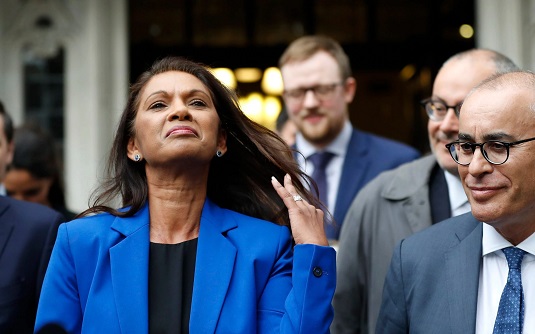
Twitter is littered with pranksters, and this from the notorious troll account Dr Robert 'Rob' Zands PhD had all the hallmarks. Posing as a leading figure of a new centrist party led by Remain celebrity, Gina Miller, the joke was turned on its head when I learned that the appointment wasn't true, the project was. Announced on the last day of last year, the True and Fair Party will have its official launch at some unspecified point in 2022. And, responding to the Zands tweets, Miller copied our old friend Chuka Umunna into the conversation. Please let him be involved in an official capacity.
The launch of T&F will be covered in-depth when the time comes, though it does pose a considerable analytical problem. If the old SDP was tragedy, and the founding of the Independent Group/Change UK/Independent Group for Change was farce, what comes after? We'll find out in due course, but there's an insurmountable difficulty facing this new, relatively high profile and media-connected centrist outfit. And that is who is the party supposed to appeal to? And the answer is (drum roll) ... everyone! With Boris Johnson and the Tories in the dock for corruption and egregious double standards, surely his disassembling and lies are enough to unite everyone against him! That's undoubtedly the aspiration, but political science and political sociology knows that different formations appeal to different classes, class fractions and, in more recent years, class cohorts. It should be uncontroversial by now to note the wealthier someone is, the greater their propensity to support the Conservatives. Likewise, if someone is of working age, they're more likely to support Labour. The old, buttressed by asset ownership, disproportionately support the party of privilege. And those without property, overwhelmingly younger age cohorts, do not. And there are the forms of consciousness associated with work in the 21st century that has political consequences too.
Where does his leave the other parties? The SNP have succeeded because Scottish Labour not only handed over its core constituency, they don't seem overly bothered about trying to win them back. That's if the worst ever results at last year's Holyrood elections are anything to go by. The Greens have long attracted a middle class and small business constituency, but there are now opportunities opening up for them to start cleaving into Labour's vote because, again, Keir Starmer appears to be of the belief that his party's core constituency has nowhere else to go. And then we have the Liberal Democrats.
Feeling satisfied after finishing last year with two new MPs in the bag, during the New Labour years they attracted a significant proportion of what would become a key prop of Corbynism with vaguely leftish platitudes, anti-war positioning, and a socially liberal up yours to the two main parties. This support along with 86% of their honourable members were traded in for ministerial portfolios and an opportunity to carve up the legacy remnants of the post-war settlement. Having lost their voters, and with Labour subsequently divided by the second referendum campaign after 2017, the LibDems thought they could get rich quick and short circuit the slow rebuild process by firstly going all in on the campaign, and then punt the idea of scrapping Brexit altogether. This worked in the 2019 EU elections partly because a significant chunk, perhaps the majority, of Labour's new base variously identified with the vague liberal internationalism the EU presented because they were aware continued membership was in their class interests. Then in the following election, the LibDems made a net loss of one seat but managed to keep 1.3 million of these voters - indicating the rising class of socialised/immaterial workers are not sticky when it comes to political labels. Interests and how these are refracted through their values conditions their voting behaviour.
Where does this leave the True and Fair Party and its prospects for success? Nowhere, if you think that the SNP, Labour, the Greens, and the LibDems have its target vote sewn up between them. For Gina Miller and friends, it appears a different set of considerations are in play. As argued previously, liberalism and centrism are diffuse elite movements rather than bodies of ideas, and while not identical to one another they do have a similar historic base: a subordinate section of capital, and particularly the professions - something the Labour Party front bench exemplifies, perfectly. Since the implosion of the old Liberal Party, these elites found a home, depending on their inclinations, in the two main parties and have variously dominated them intellectually and politically since. As recently as 2005-2015 this was the case, with the third party claiming the liberal mantle enjoying a level of prominence and governmental influence not seen in a century. But then, the cataclysm. The Brexit gambit brought the Tories back under the sway of the illiberal right, and rule changes overseen by Ed Miliband ushered in Corbynism, while the LibDems were shoved back to their historically minuscule levels of support. For the first time in a long time, liberalism was evacuated from its formal positions of political influence.
Without getting stuck into the nitty-gritty of the last five years, liberalism and centrism have restored some of their previous prominence. Its agitation around the second referendum, with Brexit having come as a profound shock that underlined their declining influence, helped connect it to millions via its rolling programme of set-piece demonstrations. And in the case of Labour, this was used successfully as a wedge to peel voters away from Corbynism while forcing on the party a Brexit position guaranteed to alienate not inconsiderable swathes of its supporters who voted Leave. Jeremy Corbyn was unpopular in the country, but adding to that a pledge to ignore the 2016 result was too much and those ballots went to the Tory elsewhere. But in the shape of Keir Starmer, after shamelessly lying to the membership about what he pledged to do as leader, they've got back what they believe is theirs by right. And there are signs liberalism/centrism is on its way back among the Tories too. Jostling among the pretenders to the Tory crown is one Rishi Sunak, who is basically George Osborne with Brexity characteristics. Liberalism is coming back. Its exile from the front rank of politics appears to have been temporary.
Which more or less begs the same question posed regarding liberalism's mass support. If this strata of capitalists and professionals have more or less pacified one of the parties of government, is seeing a modest revival in the fortunes of the party that bears their name, and there are reasons to believe liberalism can consolidate itself in the Tories post-Johnson, even as an elite project what space for the Gina Miller happy clappy party? We have to try and see matters from her perspective. Her allies in the Brexit wars are in charge of what were the pro-remain parties ... and that's the problem. Were. When the 2019 election was over, Keir Starmer dropped the second referendum even quicker than his leadership pledges. Brexit was a done deal, and to prove it Labour MPs were whipped to support Johnson's EU deal a year later. And the LibDems, the party that once pledged to scrap Brexit have kept a Trappist silence about it. Therefore, as a budding political entrepreneur Miller has espied an opportunity. The second issue is, despite the notion of a return to the EU being exiled from UK politics discourse, recent polling has found 24% of people don't just think leaving the EU was wrong, but that trying to get back in should be a political priority. Seemingly, there is a constituency for something like T&F if Return is its slogan. And lastly, as anyone active on Twitter will tell you, the persistence of remain irreconcilables, the lovable "fubpees", is a fact of online political life. Having learned nothing from the post-referendum struggle, not least the utter arrogance by which continuity remain conducted themselves, they, as per the zeitgeist, have transformed their position into a hard-edged political identity. And, as such, no party speaks for them. Not Labour, not the LibDems, not the Greens. And Miller and her friends see this every time they log on. Therefore, if one's political reality is mediated by polls and one's timeline, it appears a new, pro-EU and be-nice-to-everyone party is a real go-er.
You don't need me to tell you it won't be. Liberalism's political comeback, the lockdown of progressive support by four existing parties, and the small matter of other issues have more or less reduced Brexit and its consequences to a specialist interest few are now excited by. A space sketched out on a diagram is not the same as an actual gap in the politics market. I'm looking forward to Gina Miller's launch, and whichever gullible fools she's able to invite on board. But only to see their smug noses rubbed in abject failure.
I am sick of Robert Halfon. Nominally a "reasonable" Tory who was talking about blue collar conservatism before it was fashionable, as Chair of the Education Select Committee he has undermined public health messaging by loudly protesting against pupils masking up in the classroom now it's a (temporary) requirement. A position that is couched in oh so reasonable terms, but ultimately puts him in the same ballpark as his risible anti-mask colleagues.
Speaking to BBC Breakfast on Sunday morning, Halfon argued he was opposed to mask mandates because of their limited efficacy, and the documented impacts on children's mental health. First things first, the evidence for the role masking plays in limiting the spread of Covid is unequivocal. A US study found outbreaks were three-and-a-half times more likely in schools without masking than they were with. A wider, comparative study also found case rates were lower on average when masks were used than not. A review of evidence from this time last year found, without any doubt, that mask wearing was effective - though different kinds of masks have greater efficacy than others. On his worries about masks impacting the mental health and development of pupils, there is no firm evidence (only suggestions) that putting a mask on has deleterious effects. It is true restrictions involving absence from school does impact attainment, and which has a clear class gradient - but we're not taking about the same thing. The evidence so far suggests there are no long-term developmental consequences of masks in themselves. It's not like parents wear masks at home with their infant children.
Halfon might have genuine concerns about the impacts Covid mitigation has on the mental health and education of children, but where were these scruples these last 11 years when he nodded through every vindictive cut to social security? Taking money off social security recipients, predominantly women, are not going to do their children's mental health the world of good. How about cutting the Building Schools for the Future programme, forcing kids to sit in damp, draughty and crumbling buildings? His worries about the attainment of children forced into dilapidated classrooms didn't appear to trouble him? Hypocrisy is as natural to Halfon as lying is to the Prime Minister.
Let's not forget that Covid isn't a harmless case of the sniffles. With the highly infectious Omicron variant filling up hospitals in England, even with masking up and a smattering of air filters, numbers can only explode over the coming weeks. In case Halfon and those who think this doesn't matter, more infections means more strain on the NHS as disease spreads from children to parents and staff, and more people then have to take time off work. This is where the stupidity of "but the economy" thinking has led us. The second issue is the huge medical experiment the Tories are forcing our children to participate in. It has been well known from the beginning of the pandemic that Covid can and does cause neurological damage, especially among the seriously ill. Its ability to attack the brain raises issues about future disorders, and therefore questions around the long-term effects of Covid on young brains that are still developing. It might be that the link between serious illness and brain damage is the one that counts, and so infection ranging from the asymptomatic and mild symptoms, which is the lot for most children, won't carry the same risk od long-term complications. But then again we know that Long Covid can still hit, even if someone didn't experience illness.
With this wealth of information available at our fingertips, I refuse to believe Halfon is ignorant of the state of the science. So why has he taken it upon himself to become the reasonable face of the anti-mask wing of the Tory party? Writing in The Mail on Sunday, Halfon comes out with the usual guff about keeping children in schools, and noting in a throw away line that "My constituents are not at home, they’re working hard going out in their vans. They are making deliveries, they work in factories", affirming the Tory preoccupation of keeping at the beck and call of work. He argues for an "equivalent to a military campaign", with Nadhim Zawahi tasked with ringing up al 24,400 schools in England personally if needs be. He calls for a "taskforce" and a "database" that can swoop in to do what's necessary to keep our schools open. Except requiring children to wear masks, it seems.
Naturally, not everyone is aware of their interests, and this applies to politicians too. Given Halfon's pattern of behaviour - the shameless hypocrisy, the affected ignorance, the low level spreading of disinformation, desire to undercut schools' autonomy, and efforts to put himself in front of the cameras suggests something other than disinterested conduct and "genuine concerns". Not a leadership challenge - his backbench stable mates already have a favourite, but rather profile raising. Under Dave and Osborne, his star was on the rise until May dumped him from the Education Dept after her humiliation at the 2017 election. Since then, he has toadied his way round the parliamentary party looking for favour and preferment, which included a bizarre spat with the Board of Deputies. With a change of Tory leadership not beyond the bounds of possibility, you judge whether Halfon's anti-mask concerns and worry wart persona is heartfelt or a matter of career advancement. I've made my mind up.
Here are a smattering of new(ish) projects that caught the old eye over the course of the last month. Of course, pluggage does not necessaily mean agreement or political endorsement!
If you know of any new(ish) blogs, podcasts, channels, Facebook pages or whatever that haven't featured before then drop me a line via the comments, email, Facebook, or Twitter). Please note I'm looking for new media that has started within the last 12 months. The round up appears hereabouts when there are enough new entrants to justify a post!
What unites New Labour throwbacks and a section of the left? Their excitable response to Tony Blair news. And wasn't there some news last night. The Queen has bestowed upon His Blairness a knighthood, but not just any knighthood: a Knight Companion of the Most Noble Order of the Garter is the highest honour a British sovereign can bestow, and Blair joins virtually all his prime ministerial predecessors save Harold Macmillan and Alec Douglas-Home as a recipient of the honorific. Naturally, he's thrilled to bits as are his acolytes and epigoni. Those who believe he should be in irons at the Hague, less so.
There is a concerted establishment effort to launder Blair and absolve him of his pivotal role in the Iraq War. As he likes to say, he's proud of the fact he helped topple a repulsive dictator. One, we should remember, the Anglo-American alliance were very happy to support until Saddam Hussein slipped his leash. But the question is what is a reasonable blood price for regime change? Not only are there the hundreds of thousands killed directly by military assault and a decade's worth of sanctions, but we also have the warlordism and the rise (and fall) of ISIS. A bleak catalogue of appalling devastation and death that, in all likelihood, would not have happened if Blair hadn't provided George W Bush the political cover his Middle Eastern adventure needed. But it's okay, those affected by his actions seldom if ever come into his orbit. He doesn't have to sit across a dinner table from an Iraqi, whose family's bodies laid for months in the rubble of their home. One unforeseen political consequence was how Blair's decision has limited subsequent governments' room for manoeuvre. The invasion of Libya happened, bombs were dropped in Syria, the RAF are active, if largely unreported, participants in Saudi Arabia's war in Yemen, but undoubtedly there would have been less jaw jaw and more war war were it not for the disaster visited on Iraq and the exposure of the lies that justified it. For providing such a drag on Britain's ability to make war, it's a wonder the establishment are patting him on the head.
But, lest we forget, there was more to Blair than a war of dubious legality and humanitarian provenance. While no one seriously thought his 1997 government was going to imperil capital and unleash the Marxist hounds of hell, his 10 years in power bedded down rather than unpicked the Thatcherite settlement. Only Labour politicians are daft enough to treat neoliberal macroeconomics as articles of faith, but time and again government intervention in the economy was ruled out. Except for when the state was selling off what bits of the public infrastructure the Tories didn't get round to, or creating new market opportunities (mainly outsourcing) in public services and the NHS. On this score, John Major drew up the blueprints and Blair's governments took over and made their own. The Private Finance Initiative, faux competition between state-run services, expanding neoliberal governance, all provided capital with guaranteed public sums and the residual class consciousness befitting a period of class peace. Profits were up, employment was up, public amenities got a lick of paint, and pleasingly the collective power of the working class declined over the Blair and Brown period. For a party of the trade unions, they did everything they could - and then some - to prevent the re-emergence of a collective or collectivist consciousness. A point underlined by the Iraq War protests, which were overwhelmingly pacifistic and found their protest vote outlet in ... the Liberal Democrats.
Apart from services rendered to capital and tradition, there is a very personal reason why the Queen might decorate Blair in this way. On 31st August, 1997, Princess Diana met her untimely end in a Parisian tunnel. That morning a hesitant and borderline choked Tony Blair dubbed her the 'People's Princess' - an oxymoron if there ever was one - but a tribute that certainly caught the mood. Who was out of step with public feeling was the Windsor firm. As Diana was an arm's length exile from court, the stuffy institution paralysed by protocol and inflexibility did not have the wherewithal to respond to the outpouring of popular grief. Indeed, The Sun launched a campaign to get the Queen to fly the flag atop Buckingham Palace at half mast. The visible distance and refusal to respond might easily have spilled over into a terminal crisis for the monarchy. Remember, it had been plagued by scandal, leaks, and its legitimacy was under some pressure. But, to put no finer point on it, Blair saw it his duty to intervene to support it. He urged the Queen to appear in public while the machinery of government swung into action. There was inescapable wall-to-wall coverage, public events and normal TV and radio programming cancelled, and the emotional fervour it fanned originally settled on the perceived need to protect Diana's boys, before expanding to the rest of the front rank royals. Within a year the kind of press the Windsors had early in the decade was a memory.
Blair knew his hip, vague brand of modernising changey-progressivism, which counted for little when it came down to it, potentially sat uneasily with Britain's own hide bound and creaking peculiar institution. Embarking on his own programme of constitutional reform with the devolution referenda, he chose to embrace the monarchy, give it good PR and a soupçon of humility, and align it - the thousand year old symbol of national continuity - with his flash-in-the-plan project for a "young country". Whether Blair received political blessings at the time for his obsequious efforts is a matter of debate, though it doesn't seem to have done his ratings any harm. However, while he helped the monarchy get a nip and a tuck, its long-term popular legitimacy appears to be eroding again - if the mass indifference that greeted Prince Philip's funeral is anything to go by.
This is now and that was then. Blair bought the Queen valuable time, time enough for a toned down Prince Charles and a thoroughly modern Prince William to embed themselves in popular consciousness. Just don't talk about the rebellious royals or, cough cough, Prince Andrew. By royal decree, Blair has his just reward in time to see how, in the long run, his efforts at saving the monarchy are unravelling.
The critique of some of the left's attitude to restrictions ruffled a few feathers, if the day wasted responding to responses in Twitter was anything to go by. But also doing the business this month was a consideration of why Yvette Cooper is so overrated. It's all about the feels, and the possibility her advancement would float the boats of other careerists further down the ladder. Then we see Keir Starmer's national address hit the numbers. Naturally, the Starmer stans loved it but what might ordinary punters might think? Not a lot, by the looks of things. Tory tanking is thanks to their self-inflicted misfortunes, and has nothing to do with Starmer himself. Which brings us on to the dread Christmas party (parties). How is it a few soirees have done more damage to the government than 148,000 dead? Click on the link to find out why. And coming in at the end is a consideration of the political imaginary of anti-mask Tory backbenchers. Someone has to go there, and it might as well have been me.
What deserves a second look? In the spirit of know your enemy, I'd humbly suggest an acquaintance with Liz Truss is worth your time. At the moment, she's the one most likely to replace Johnson if his career is pushed out of a window. And I'll stick the meditation of dead cats on the tray for your consideration too.
Okay, 2022 is here. It's time to get down to business.