It's one of them (thankfully) rare moments. Up until Wednesday I am absolutely rammed with work so don't be surprised if blogging is very light. But there is stuff bubbling under, such as pieces on the Baddeley, Milton and Norton by-election here in Stoke, a 'new stage' of capitalism, and the collapse of generational difference - among other things. I bet you can hardly contain yourselves.
In lieu of blogging, here's a ditty from 2009.
Sunday, 17 November 2013

Friday, 15 November 2013
Joan Walley's Retirement Letter
At the constituency meeting of Stoke North Labour Party this evening, Joan Walley, the well-respected and - yes - much-loved Stoke-on-Trent North MP announced her retirement at the 2015 general election. In a brief speech at the end of her monthly parliamentary report, Joan spoke movingly of her tough decision, her record, and her hopes for the local party's future.
Below I've reproduced the text of her resignation note to the constituency chair, Tony Fradley.
Dear Tony,
I wanted you and the General Committee to be the first to know that I have decided not to seek re-election to Parliament at the next General Election in 2015.
As you can imagine this has been a decision I have not reached easily and has only been possible after a lot of soul searching. But, hard as it is to imagine, I shall be 71 at the end of the next parliament. Given the demands of constant travelling, working from both the constituency and in parliament, working weekends and long hours, I think that 2015 is the right time for me to hang up my boots.
I remember vividly the meeting in 'The Leopard' when I was chosen as the candidate to represent the Labour Party in the 1987 election. When I signed the acceptance on the nomination forms I used a cardboard advertisement from the brewery to rest my papers on. Its words were 'You have just won the opportunity of a lifetime'. Indeed I had. Not many MPs have the privilege of representing the area they are brought up in and belong to and I have been privileged to have had the local party's backing to do this since 1987. All officers of the party have been outstanding in their support of me but none more so than the ever-constant secretary Neil Dawson whose local knowledge, wisdom and commitment is second to none. I am also always aware that without the love and support of my family I could not do the job I do. For that I am truly grateful.
Environmental and health concerns have always been my priority and I have worked to secure advances in public health and well-being, working with local and national groups and the last Labour Government on this long-term agenda, including the rebuilding of local schools and Haywood Hospital. The return of the Kidsgrove wards to the constituency following boundary changes in 2010 has added a whole new dimension to our work and I hope we can succeed in various efforts to improve Kidsgrove, not least the bid for disabled access to the Railway Station. I have always sought to work alongside local people and businesses to enhance their ability to invest and bring the improvements the local area needs.
Investing in the right policies to secure the future we want in environmental terms - tackling environmental degradation and valuing nature - has always been and remains my mission. I regard my election by parliament to chair the Environmental Audit Select Committee as a great honour. You can be in no doubt that my chairmanship of that and indeed my work as constituency MP serving the interests of people here will continue right up until the referee blows the final whistle and the General Election is called in 2015.
I wanted to tell local members first and have done so now so that you have sufficient time to consider and decide the successor of your choice. I wanted to make sure that whoever the candidate is, they and you have time to prepare for the 2015 General Election and to win convincingly. In 2015 Stoke-on-Trent North will need a Labour MP more than ever.
Over my 26 years in parliament so far I have seen many changes and worked with many people over the years - some sadly no longer with us (Harry Edwards and John Locket amongst many) - with trade unions, community groups and institutions. I always have and always will value the support they and all of you have given and continue to give me.
This is not an easy decision as I feel as passionately as ever about my work. However, nothing lasts forever. I very much appreciate and count on your continued support. It goes without saying that I shall be out there working for a Labour Government and supporting our leader Ed Miliband to bring about the change our country and our city so desperately needs.
Yours in solidarity,
Joan Walley MP
Labour Member of Parliament for Stoke-on-Trent North
Chair Environmental Audit Select Committee
Wednesday, 13 November 2013
It's Time to Scrap Pairing

But look at the voting figures, it doesn't add up. 226 for Labour's motion, and yet the party sends 257 MPs to the House. Something's amiss. Among the 63 opposition MPs who were not present numbered our 46 absent Labour parliamentarians. What the bloody hell was going on?
It was the P-word - pairing.
The Commons is stuffed full of baffling, nay, alienating customs. Thanks to the unwritten constitution and our monarchy's rude refusal to flush itself down the royal convenience, the Mother of Parliaments is probably the most hidebound, theatrical, and procedurally ridiculous of the world's democratic legislatures. Of course, it wasn't always so. It was a pawn in feudal class struggles against the overweening power of the Crown. And in the Civil War Parliament was a weapon that deposed a king. By motion and musket, Parliament and all its subsequent absurdity fought for and won its right to exist. And there remain traces in the chambers' adversarial seating arrangements, the notion that at all times you face an opponent across the floor, an opponent you seek to permanently undermine and marginalise through the stratagems available to you as parliamentarians. And, over the course of the 20th century, written into the adversarial seating was the common sense of much of that age. On one side was the party of big business. On the other the political voice of the organised working class, and never the twain shall meet.
At least theoretically. The back and forth in the chamber sees more back and forth of an entirely sociable nature away from the camera's eyes. I know from past experience that friendly relations can exist across the divide. I knew of several Tory MPs the ex-boss liked and got on with. There were also a few times a junior minister would reply to constituency correspondence in toe-curlingly ingratiating ways. Perhaps they wanted a brush with the sought after Stoke-on-Trent glamour. The practice of pairing speaks of the sociability existing between our honourable members.
According to Parliament's helpful glossary, it is an informal arrangement sanctioned by the respective Whips' Office that requires one side of the pairing to absent themselves from a vote if their opposite number can't make it. I don't know who IBS pairs with, but as he chose to swan around a Parisian TV studio during yesterday's debate his "partner" did not cast their vote in favour of Labour's motion, as per agreement
This is all custom and practice, as the Labour Whips' office tweeted last night. So it wouldn't have made any difference in the grand scheme of things. Or would it?
The Glossary notes that "pairing is not allowed in divisions of great political importance". And we know why. Labour's ability to turn out the numbers, and the government's shoddy whip operation over Syria demonstrates that if you can get the numbers in, the Tories can be defeated. Clearly, and regrettably, by allowing pairing to take place during yesterday's debate either the Labour leadership was of the opinion that it wouldn't win anyway or, more seriously, didn't believe the bedroom tax was important enough. Just for the record, I don't think that is the case.
It is highly likely that had pairing been disallowed, by hook and by crook Dave would have made sure his MPs were there. But the Syria debacle shows there's a chance internal divisions, recalcitrant LibDems, and efficient mobilisations of Labour Members can defeat the government. And now, because of yesterday's pairing some on the left are asking why their Labour MP stayed away, and on the right hypocritical hay is to be had from gleefully flagging up many leading figures who stayed away from the House. It's a needless own goal and it reinforces the view Labour-types are no better than the Tories. Our party should stop giving the Tory Whip an easy life and make them work for every single vote.
It's time to scrap pairing.
Monday, 11 November 2013
The John Lewis Christmas Advert

Friend-of-the-blog Antonio Gramsci once observed that everyone was a philosopher. He could equally have made the same point about sociology which, indeed, Anthony Giddens did. But chillax, I'm not about to double your hermeneutics. There is, however, an absence of any pop-sociology comment. Even this BBC piece fails to wheel on an "expert" for a ponder. If you need a rent-a-gob sociologist, you know where I am, Auntie. Enough! The multiple "interpretations" their article offers boils down to branding, product synergies, emotional connections, career relaunches, etc. There are ten all told - it ain't bloody Finnegan's Wake you know.
Fancy something more substantial than the fulsome flattery of brand managers? Here's a few sociological takes.
1. The advert is absolutely the sort of yarn our society loves to tell itself. It's a tale of friendship. The hare and the bear (what a lovely couplet!) can see past their unique backgrounds, their different life courses, their incompatible trajectories through social space, and their genetic programming to run-away-from-bear/eat-hare. It's a story of hope, of hands (or rather, paws) across the ecological divide. But it's not just them at it. The party under the tree has foxes, deer, weasels, squirrels, owls, rabbits, badgers all cavorting and disporting themselves in a fey festive manner. Some will think they're being really sharp to point out the impossibility of this set up, and yet fail to pass comment on animals decorating a Christmas tree. They miss the obvious message, that we as a multicultural family-nation can put aside seemingly irreconcilable and come together as one in the season of goodwill. Isn't that nice?
2. At first, it appears the hare is compelling the bear to take part in forced festive fun. "Can't you see he's tired??!?", I wanted to shout at the screen. We all know that feeling. Christmas can be such a drag, and I'm sure I'm not the only one who has had an occasional desire to sleep through it. It turns out all he wants to do is hibernate, so the hare gets him an alarm clock so he doesn't miss out on the big day. And aaaah, the twinkle in bear's eyes is so, so sweet. John Lewis position the audience as the bear. They know the lead up is a tiring, stressful time. John Lewis themselves are the hare - they want you to have a lovely Christmas. They want you to enjoy the down time without the tiresome prep. They've got it covered. Off you go to your cave to hibernate or whatever, the hare/JL will sort it out. Et voila. The happy ending the advert pulls off so well. Do you want to relax like bear? John Lewis will sort your fuss-free winterval no probs.
3. Beware hares bearing gifts! The notion of the gift is an act of exchange sociologists and anthropologists have returned to time and again. Unsurprising as gifts have so many meanings across so many cultures. You don't need sociology to tell you the score. The receiving of a gift is never an innocent act. Whatever the motives of the gift giver, even if they absolutely definitely do not wish to receive something in return, the unstated assumption is that the receiver has to return the honour in some way. Even if it's utterly pointless, like the mutual exchange of Argos vouchers of equal value. The standing and perception of ourselves by others, usually close friends or family, is at stake. Which begs the question. Was hare's gift of an alarm clock truly an altruistic act so bear could attend his first Chrimbo? Was bear's presence thanks enough for hare's thoughtful pressie? Or come the Boxing Day hangover, will bear be consumed with guilt because he didn't get hare anything? Could it be that a selfless, altruistic act marks bear's slow side into fretful despair and anxiety. "I didn't get hare a present, I didn't get hare a present." Each tick of his new clock is a reminder of his thoughtlessness. Whatever will the squirrels think? There's no need to end up like bear though. John Lewis has officially marked the start of Christmas in an advert that doesn't actually sell anything. So why not thank them for their "gift" by popping into your nearest outlet?
4. John Lewis have produced a lovely advert to cure the cynical winter blues. It's a story of friendship, of thoughtfulness. And while you're cooing at the cute, life-affirming proceedings, the warm ideology is grinding away to make you forget John Lewis is a BIG CAPITALIST EVIL. Or something.
Sunday, 10 November 2013
How London-Centric is Political Blogging?

With the changing character of blogging, its professionalisation and part-absorption by established media outlets, you could say it's "natural" that those who make cash from contributing a column here, an article there live in London. Like writers who came up the old way there are advantages to be had not being too far from your publisher's office. But what about politics bloggers who don't write for a living, bloggers who may maintain their own sites but also contribute to the main collaborative blog semi-officially attached to their political party? After all, all three of the main parties are national parties (at least on paper) so there's no reason why contributors have to be Londoners. Do Conservative Home, LabourList and LibDem Voice fish from a pool outside the M25?
Before we begin to answer that question, just a quick note about 'London-centrism'. The term does not, as it implies, mean an obsession with London's local and metropolitan politics but solely and exclusively the present place of residence of contributors. The figures below exclude MPs and Lords, the majority of whom have London residences for obvious reasons, as this could easily skew the figures. By the same token, I've excluded MSPs, AMs and MEPs who might influence the balance in the other direction. Residence has been broken down by EU region, and the sample range of contributions is between Thursday 10th October and Saturday 9th November. Namely, last month. Accompanying the number of contributors are their post tallies. Again, to avoid skewing the results this excludes the editors for whom three or four posts a day are common. And lastly, places of residence are taken from Twitter, LinkedIn, and/or Facebook. Yes, I've had to cyber-stalk people for this.
Let's start with the Liberal Democrats. Between the dates there were 84 blog posts made by 55 contributors. Of these 24 posts came from 18 Londoners. The next highest was 21 posts from the WestMids (all bar one the work of the prolific Andy Boddington). The next largest number of contributors was the EastMids region with eight. The next was the South East with seven (but 10 posts) and three apiece for the South West, Eastern, Wales, Scotland and Yorkshire. The North West has two, the North East one and Overseas one. While London had a clear plurality at least every region of the island got an airing. London-centred? Certainly. But overly so? Not by much.
How did their coalition partners over at Conservative Home fair? The month saw 37 posts from 33 individuals. 22 bloggers hail from London. And the rest? Two each from the South West and WestMids, and one from the South East, EastMids and North West with four from overseas (Spain, Iceland, and two from the USA in case you were wondering). Scotland, Wales, North East, Yorkshire, Wales, Eastern - there were no voices hailing from those parts of the world. Here you have London domination in extremis.
While it's nice to feel smug, Labour are actually worse. The same period saw 44 blog posts from 32 contributors. 33 of these posts came from 23 Londoners. Five posts were provided by three dwelling in the South East and the remaining five came from the South West, Eastern, Wales, Yorkshire, North East and Scotland.
That means 72% of LabourList's contributors were from London, 67% of ConHome's, and just 33% of LibDem Voice's. In terms of output, London-based bloggers provided LabourList with three quarters of the month's content, for ConHome it was 70% and LibDem Voice just 29%. It's not very often you'd find me congratulating Liberal Democrats, but at least its editors are aware that political thought can happen in the provinces too. That it's a voluntary operation and both its co-editors live outside London could have something to do with it, I guess.
Now, it might well be that I picked a bad month to do this. That ConHome and LabourList are normally chock full of voices that reflect the full plurality of the regions. I don't know, I haven't checked. There's only so many hours in the day and I have a lecture to write. But knowing blogging, I strongly suspect it's quite representative of the blogs' content as a whole.
This is the internet. With the click of a mouse and a few taps of a keyboard you can be arguing politics anywhere. And yet, rather than opening up lines of communication it appears the two main blogs attached to the two main parties repeat London's dominance in the very space where geography is supposed to no longer matter. There is no plot to marginalise folk who live outside of the land of silly house prices, at least I don't think so. But you know how it is, so-and-so sees an editor at a seminar or soiree and asks, or are asked if they fancy writing something on something. We may live in the network society, but it's the offline networks that count the most.
There's your reason. But it's not a good reason. It's time for a bit of political rebalancing. I'm certain people from other parts of Britain are just as capable of writing well about national issues and the intricacies of Westminster wonkery, so let's see more geographical balance. How hard can it be?
Saturday, 9 November 2013

Friday, 8 November 2013
Poppy Conformity

Like many readers of a certain age I know, or sadly, knew people who fought in the Second World War. Both of my granddads did. One of them was a sapper in the Eighth Army stationed near Cairo and told me, when I was very little, that he could see the smoke and noise from the second battle of El Alamein rolling in over the desert. My other granddad, unfortunately, had a much tougher time. He saw action in Operation Torch, the Anglo-American invasion of Vichy North Africa. He then took part in Operation Shingle, the allied landings at Anzio in central Italy. There, besieged by German defenders occupying the high ground overlooking the British and American positions he was subject to the ceaseless and indiscriminate terror of the shell and the machine gun. He was captured and held as a POW where, he told me, the food was worse than pigswill. Near to the war's end the commandant released the British servicemen and they had to make their way toward allied lines across Germany, fearful of reprisals by locals and persistent rumours of fanatical Hitler Youth shooting POWs on sight. My granddad lived into his eighties, and died seven years ago. His wartime experiences were deep and profoundly disturbing, and they haunted him for the entirety of his adult life. Do I need a poppy to remember this?
The second reason is the total co-option of poppy-wearing by official society. No politician, no newsreader, no weather forecaster, no TV presenter, no one, absolutely no one is allowed on the television without a poppy pinned to blouses, jumpers, jackets. As Dan Hodges notes the ubiquity of the poppy this time every year is the occasion for a right old ding-dong. Just like The War on Christmas that's hauled out each December by a couple of knackered-looking reindeer. The thing is poppy conformity is entirely an establishment phenomenon.
I haven't worn a poppy since I was sporadically forced to at school. Even on the Labour election trail, where campaigners and canvassers are expected to stick one on, I have always resisted. And guess what? No one "normal" has ever asked me why I'm not wearing one - that is no one who hasn't been in some position of authority over me. It's because in the grand scheme of things, it's not an issue that troubles anyone apart from a handful of obsessives who want to make a statement about it. Pubs, bars, cafes, accommodation blocks ring with debates about the poppy, but they do the rest of the year about religion, sport, celebrity, the news. At best the poppy is a conversation filler, a chance for the bore to grandstand, or the rebellious to tentatively venture profane opinion. Few will fall out over it, and if they do things will be quickly patched up by gossip or the latest observations on Strictly. There is no expectant public for an invasion of the poppy wearers. No huge constituency demanding public figures so adorn their bodies.
I don't and never have had a problem with people wearing poppies. I just don't need one to commemorate the horrors of war or remember what it did to my granddad, and I certainly don't require the establishment to force one down my throat.
Thursday, 7 November 2013
The Decadence of BAE Systems

Whether you're of the "not a penny, not a man for this system" school of revolutionism, or a "be excellent to each other" Bill and Ted lefty, BAE Systems is the kind of company many could never be comfortable with. It churns out weapons of war for fuck's sake, so who would be? But what this affair shows up, again, is the complacency of our decadent ruling class. That is the powerful tendency to put short-term profiteering and the indolent life before doing what it takes to ensure its own long-term survival.
There's been a whiff of anti-Scottish chauvinism about the closures. Tory MP Caroline Dineage said English jobs were being sacrificed for Scottish jobs as a filip to the Better Together campaign ahead of next autumn's independence referendum. A thesis given legs by Alistair Carmichael's admission that the "business case stacks up for as long as the Clyde stays part of the United Kingdom". Well done that man for handing ammunition to the little minds of little England. But from the narrow point of view of the faceless BAE managers who've condemned Portsmouth to an economic shock, the recently upgraded and thoroughly modernised sister yards in Glasgow were always going to win over hundreds of years of shipbuilding traditions on the south coast, despite it recently getting updated too. Capital has little time for sentiment.
Or so the spin put on this story would have you believe. It's the cold hard logic of the market yet again, says BBC military journo Caroline Wyatt. The invisible hand strikes, leaving no one responsible for this week's decision.
Time to look a little deeper. BAE Systems is doing alright. Afterall, where there's blood there's brass. In 2012 it posted pre-tax operating profits of £1.64bn, up £60m on the previous year despite a slide in sales to the tune of £2bn. BAE acquired the Portsmouth facility after buying out the stake owned by shipbuilders the VT Group, who moved to Portsmouth from Southampton in 2003. And since then there has been constant speculation about the future of the yard after the completion of its sections of the HMS Queen Elizabeth and HMS Prince of Wales.
In the Commons yesterday, Jim Sheridan urged BAE Systems to seek more orders on the global market rather than reduce their capacity. Speaking for BAE (or the government, it's hard to tell where big business ends and the Tories begin) Philip Hammond replied "I am afraid I have seen no evidence to suggest that we are able to compete in what is a very aggressive global market for commercial shipping."
Hammond is either lying, doesn't know his brief, or has incompetent spads. Look what we have here. Three Brazilian warships manufactured this year by BAE Systems, two partly and one wholly in Portsmouth. Not bad for a company that cannot compete. But what else do we see in this article? "The contract ... also includes a manufacturing licence to enable further vessels of the same class to be constructed in Brazil, helping to support the country’s naval re-equipment programme and strengthen its maritime industrial capability." In other words, the company have closed themselves out of further manufacturing opportunities in Brazil by flogging it the blueprints. AND ENCOURAGING THE CREATION OF A COMPETITOR. Is this what BAE wants its shipping division to become? A sort of naval Nike that sells designs and slaps its branding on ships made elsewhere?
Secondly, true, there is a massive shift underway in commercial shipbuilding to - you guessed it - China and East Asia. But what has BAE Systems been doing to prepare its shipping division for the new facts of economic life? Has it been doing what German ship builders have been doing? To ask the question is to answer it: of course they haven't. Never mind the opportunities that exist for technologically sophisticated military and civilian ships in which European and North American firms remain the world leaders. Where was the necessary investment? Why has BAE got into such a position where Portsmouth has to be shut down? Hiding behind market necessity is not good enough.
I suppose from BAE's point of view they have no reason to bother. In perpetuity they can look forward to Royal Navy contracts. The German kriegsmarine of course is a distant memory, so its shipping industry has had to go out and seek markets. Here is one story of social security undermining work incentives you'll never hear a Tory MP utter. But also the relationship between state and BAE is extremely unhealthy, from the taxpayer point-of-view. According to the BBC, the government has recently kitted out the Clydeside yards in exchange for BAE Systems agreeing to cover half of the carrier projects' overruns. Excuse me? What idiot negotiated such a contract in the first place? Call me naive, but isn't the logic of contracting out orders to the private sector supposed to protect the taxpayer from risk? You can envisage the scene. The government's confirmation of the aircraft carrier orders land on the Board's desk. But appended to it is a post-it note on which is scribbled, "fill your boots gentlemen".
Oh, and don't forget the closure itself. BAE might have thought twice about shutting Portsmouth if they had to pick up the tab for redundancies, pensions and mothballing. Guess who will be doing instead? Got it in one. The public purse.
There we have it. A firm that not only fails to invest properly in its own future, a firm that fills shareholder pockets with taxpayers' cash, and a firm that actively undermines its own competitive position. It is yet another illustrative example of how decadent British capital and the class that leeches off it has become.
Wednesday, 6 November 2013
Žižek on Ideology
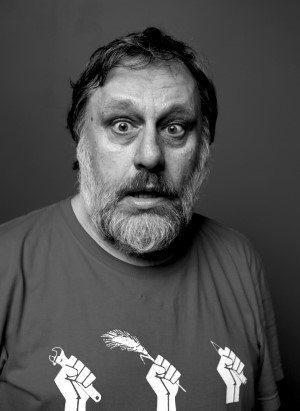
The traditional Marxist understanding of ideology - and by traditional I mean dominant wisdom - positions it as a sort of naive consciousness. That is people under the spell of ideology misrecognise the true state of affairs. They cannot identify their real position in the order of things, nor apprehend society as it really is - a stratified social formation in which the majority are exploited by a tiny but immensely powerful ruling class, who rest on their private ownership of the economy's commanding heights. To frustrate this state of affairs, it is the job of Marxists/revolutionaries to help people become conscious of the fact they're part of a collective mass with a direct material interest in getting rid of capitalism.
Žižek argues we need to get past this understanding. It's old hat.
If our concept of ideology remains the classic one in which the illusion is located in knowledge, then today's society must appear post-ideological: the prevailing ideology is that of cynicism; people no longer believe in ideological truth; they do not take ideological propositions seriously. The fundamental level of ideology, however, is not of an illusion masking the real state of things but that of an (unconscious) fantasy structuring our social reality itself. And at this level, we are of course far from being a post-ideological society. Cynical distance is just one way ... to blind ourselves to the structuring power of ideological fantasy: even if we do not take things seriously, even if we keep an ironical distance, we are still doing them. (Žižek 1989, p.33)Eh?
Ideology does mystify the real state of affairs, but it does not operate primarily at the cognitive level. Ideology is something other than people walking round with wrong ideas in their heads. It's far more powerful than that. Žižek demonstrates his argument in relation to Marx's theory of commodity fetishism. Because of our separation as wage earners from the fruits of our labour, as individuals that are simultaneously atomised and collectivised by the gigantic endeavour of commodity production, society can appear to be an immense collection of commodities. Objects - things - stand in for real relations between people. Commodity fetishism which is continuously reproduced is therefore responsible for promoting different ideologies, depending on your position within the overall scheme of things, that fundamentally misrecognise the fact that all of this is the alienated activity of human beings.
The step Žižek takes is on the basis of a very simple observation. People know that this is the state of affairs. When someone hands over money in exchange for a good, they are aware that money is not imbued with magical powers, that it doesn't grow by itself, and that it is a simple sign that works as an agreed medium of exchange between people. The thing is the way we have to act towards one another is as if money possesses fantastical powers, as if the whole system is one of objects, not people. Commodity fetishism is not observed by thought, rather it is a result of our practice. Thus the immense conglomerate of commodities, the roller coaster ride of a global economy driven by capital accumulation structures the activity of our species across the planet. But it, the alienating power, the abstract processes of capitalism are just that. They do not as such exist. It's just that we act as if they do. Hence we are guided by fetishistic illusions - and it is this what ideology really denotes, or rather as Žižek puts it, 'ideological fantasy'.
Tuesday, 5 November 2013
Campaign for a Permanent Labour Majority
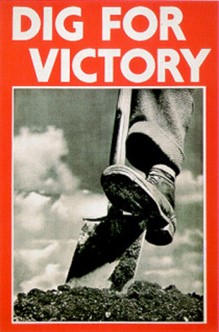
We know the Conservatives have a problem. Their membership has collapsed, their core vote is menaced by the populist right, they haven't won a general election for over 20 years - despite taking on a crisis-plagued and almost-hated government in 2010 - and electoral support over the long-term is one of decline. True, it isn't a bed of roses for Labour either but the Tories are feeling the pain. Really feeling the pain. And yet, this is remarkably after it has carried through policies that, on paper, should have boosted support for their party since the blessed Margaret took the helm. Thatcher's reign crudely fits into two halves. The first part of her premiership was about attacking the trade unions and inflicting a strategic defeat on the labour movement. She used the power of the state to wage war on the organised working class, and it was a fight her side won. The political potency of that movement was dulled to the extent it hasn't recovered 30 years on. So that rather overt bit of social engineering preceded the meat of the Tory programme - the gutting of the institutions of the post-war consensus. Finance was completely deregulated, mass privatisations of state-owned business went ahead, the great council house sell-off got underway, and there was a concerted effort by government to support small business. Reading these measures politically, privatisation was done with a view to creating a wider layer of share holders - aided and abetted by the new easing of restrictions on share trading. Offering families the chance to buy council houses at a discount saw millions become owner-occupiers for the first time. The government's enthusiasm for small business was an attempt to expand self-employment. And in each and every case, the expected conceit was the new shareholders, new homeowners, new business people would vote Tory in perpetuity. The real children of Thatcher were not champagne-swilling yuppies, but the ex-miner who had bought his council house and invested his redundancy money in a business of his own.
You can argue about how successful this was. Were these measures just enough to keep the Tories on in '87 and '92? It is difficult to say. But whatever the case, the Tories are now beavering away with yet more social engineering, but far more brazenly. Selling off Royal Mail ticks a few ideological boxes for the Tories, and helps massage those GDP figures. But ultimately the real prize is knocking out a powerful trade union, and spreading some of that small shareholder love to Middle England investors. Their appalling attacks on the unemployed and the disabled is about a divide-and-rule ideology in which the many are appalled by the "underclass" and are, by extension, appalled at the Labour Party for (imperfectly and haphazardly) defending them. Forget the hooey about work incentives, it's pure politics. The Help to Buy scheme for people wanting to get at the housing ladder is a short term (and short termist) measure to pull more mainly young, and mainly middle class voters in the Tory train. Same-sex marriage and tax breaks for married couples are rather crude attempts to "nudge" Tory-voting family units into being. Their attacks on the public sector is about breaking up what they see as a uniformly Labourist bloc. And again, throwing hundreds of thousands of civil servants out of work with the parachute of a modest redundancy will see not a few of them try their hands at business. Every single one of these measures has the fingerprint of political calculation all over them. But, so far, there is scant evidence the "beneficiaries" of these policies are gracing the Conservatives with their votes.
Of course, the blue team aren't the only ones to do this. The last Labour government had a go too, though with slightly different emphases. Even the dogs in the street know what triangulation is these days. The idea that as you rest on a core vote with no one else to support, the party is free to channel its energies and resources at the swing voters. And we know how this played out in the days of New Labour - neoliberalism untouched, and social democratic policies either left in the cupboard or snuck out under the radar. Mainly it was about appearing as managerial and as unthreatening as possible. Nevertheless in its attempt to become British capital's preferred party of government, it too bashed social security and immigrants when occasion required it. But most important were the measures New Labour took in opening up the state, local councils and the NHS to marketisation. In all essentials, Blair and Brown created markets where none existed before providing profitable business opportunities for enterprising firms. One effect of this, whether intentional or not, was the creation of an entire business sector that had New Labour to thank for its success. Theoretically, New Labour had politically annexed a section of British capital, which included some very wealthy people, smaller firms and the small investor. It wasn't just about neoliberal dogma - it was an attempt to put roots down among so-called wealth creators by stuffing their mouths with taxpayer gold.
And then there is today. Labour's emerging programme of government is much better than what went before, and represents a clear break with the Tories across most political fronts. I don't presume the dear leader frequents this corner of the internets, but after banging on about insecurity since returning to blogging for an age, I'm happy that the party has got some policies that aim to tackle it. And today's speech sits firmly within that theme. There appears to be the dawning realisation that neglecting the party's natural support or, worse, seeing through policies that distress and atomise it further isn't good news for the Labour Party. I might be naively optimistic, but there are flashes here and there that the leadership are groping toward the idea of a campaign for a permanent Labour majority. That is using the power of the state to push policies that benefit millions of working people, that offers us all more secure lives, greater opportunities, and sustainable costs of living. In other words, it too will have to engineer majorities through the promotion of new solidarities of working people, and giving wider layers of people a stake in returning Labour governments time after time.
It is easier said than done, mind. The Tory success is mixed, if that's the right word. Part of it is cultural - they do not realise how out of step they are with modern life. But part of it is the legacy of the violence they inflicted as British society was reshaped. That miner who used his redundancy to build a business. Yes, he is Thatcher's child. But that doesn't mean he's ever likely to vote for her kind. Echoes of conflict resonate down the years. Labour's problem is different. It has the task of winning people to a positive political programme in a context where mainstream politics is alienating and trust between it and the electorate is at an historic low. It also has the difficult task of selling a vision about social responsibility and, gasp, collectivism in a highly individuated culture. The cost of living crisis is a rich political seam that the Tories cannot locate, let alone contest Labour's rights to mine it and it has proven an astute tactical move that has thrown them into disarray. And it could carry Labour all the way back into Downing Street. But once we get there, it's not enough that we ease the lives of "our people" - we have to ensure that we use policy to strengthen the social forces our party and our movement rests on. In short, we must impose a new settlement that represents a permanent and irreversible shift in the balance of power and wealth to working people and their families.
Need social engineering be such a filthy phrase?
Subscribe to:
Posts (Atom)